

Predicting relapse after antidepressant withdrawal – a systematic review
Open accessThe DOI matches its Crossref record; 54 of the 55 references it cites were found in a registry or an index; 9 of the 48 sources its claims cite were checked for support.
Abstract
A substantial proportion of the burden of depression arises from its recurrent nature. The risk of relapse after antidepressant medication (ADM) discontinuation is high but not uniform. Predictors of individual relapse risk after antidepressant discontinuation could help to guide treatment and mitigate the long-term course of depression. We conducted a systematic literature search in PubMed to identify relapse predictors using the search terms '(depress* OR MDD*) AND (relapse* OR recurren*) AND (predict* OR risk) AND (discontinu* OR withdraw* OR maintenance OR maintain or continu*) AND (antidepress* OR medication OR drug)' for published studies until November 2014. Studies investigating predictors of relapse in patients aged between 18 and 65 years with a main diagnosis of major depressive disorder (MDD), who remitted from a depressive episode while treated with ADM and were followed up for at least 6 months to assess relapse after part of the sample discontinued their ADM, were included in the review. Although relevant information is present in many studies, only 13 studies based on nine separate samples investigated predictors for relapse after ADM discontinuation. There are multiple promising predictors, including markers of true treatment response and the number of prior episodes. However, the existing evidence is weak and there are no established, validated markers of individual relapse risk after antidepressant cessation. There is little evidence to guide discontinuation decisions in an individualized manner beyond overall recurrence risk. Thus, there is a pressing need to investigate neurobiological markers of individual relapse risk, focusing on treatment discontinuation.
Overview
CoChat Summary
TL;DR
This systematic review found only 13 studies based on nine separate datasets that examined predictors of relapse after antidepressant discontinuation, and no established, validated individual marker emerged. Promising signals include true drug response pattern and number of prior episodes, but the evidence remains weak and insufficient to guide individualized discontinuation decisions beyond overall recurrence risk.
Key findings
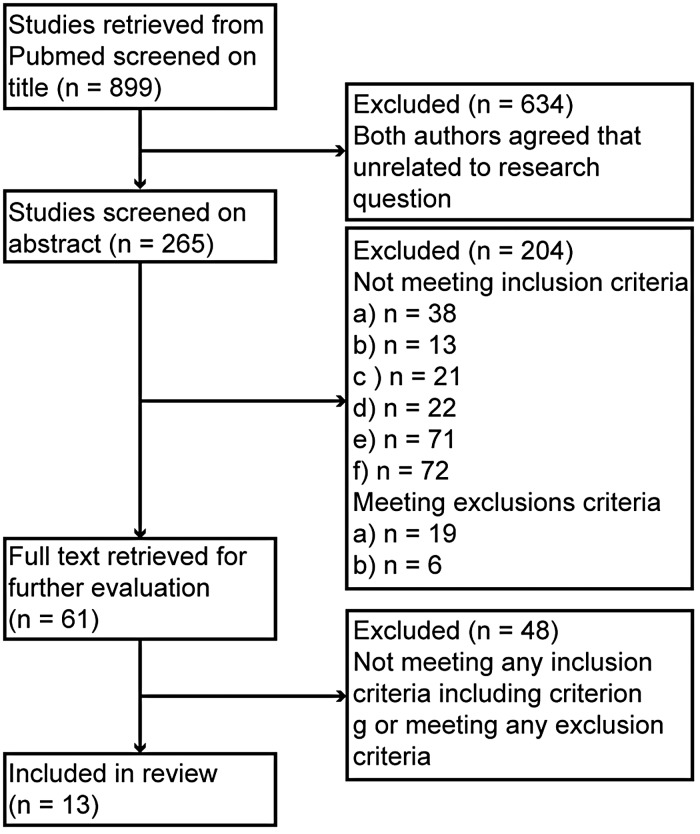
- The PubMed search retrieved 899 studies; 61 were read in full text, and 13 studies based on nine separate datasets met inclusion criteria. No study used neuroimaging predictors, no naturalistic study was identified, and all patients who discontinued received placebo.
- True drug response pattern was the most consistent signal: Stewart et al. (1998) found discontinuation increased relapse in likely true drug responders (log-rank = 22.37, p < 0.001 for 12 v. 26 weeks; log-rank = 8.23, df = 1, p < 0.005 for 26 v. 50 weeks), and Nierenberg et al. (2004) found relapse risk after discontinuation was larger in true than placebo response patterns (log-rank = 4.87, df = 1, p = 0.027). McGrath et al. (2006) failed to find a significant response-pattern × discontinuation interaction.
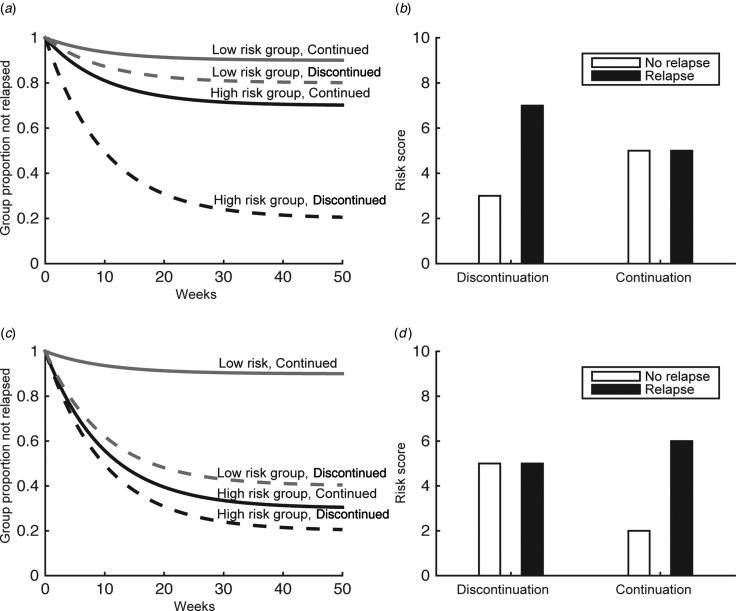
- Number of prior episodes did not significantly interact with treatment in four studies. In Keller et al. (1998), placebo relapse was 40% in first-episode patients v. 55% in recurrent patients, while sertraline relapse was 29% v. 24%; the treatment × prior episode interaction was not significant (p = 0.25).
- Other isolated signals included high anxiety increasing relapse in the discontinuation group (risk ratio = 1.632, p = 0.013; relapse rates 53.3% v. 40.7% for high v. low anxiety) but not the continuation group (28.5% v. 27.2%) in Joliat et al. (2004), and somatic pain interacting with treatment in Fava et al. (2009; hazard ratios 0.62 v. 0.25 in high- v. low-pain groups, p = 0.048).
Methods
- Systematic PubMed search until November 2014 using terms combining depression/MDD, relapse/recurrence, predictors/risk, discontinuation/withdrawal/maintenance/continuation, and antidepressant/medication/drug; 899 records were retrieved, with Cohen’s κ = 0.75 for abstract inter-rater agreement.
- Inclusion criteria: patients aged 18–65 years with a main diagnosis of MDD, remitted from a depressive episode while treated with antidepressant medication, followed for at least 6 months to assess relapse, with part of the sample discontinuing antidepressant medication; original research reporting relapse predictors in the discontinuation group alone or a treatment × predictor interaction. Exclusion criteria included anonymous prescription-record data and confounds with psychotherapy.
- The review narratively synthesized 13 studies from nine datasets; no meta-analysis was performed, and the authors did not formally evaluate study quality because results were overall weak.
Limitations
- The authors state that only one database was searched, full-text access was not available for all relevant studies, and eligible studies may have been missed; reporting/positive bias is possible because positive findings are more likely to be cited and to appear in titles used for initial screening.
- The authors state that they did not formally evaluate the quality of included studies, and they excluded psychotherapy studies to avoid confounding, although psychotherapy is known to prevent relapse.
- Evident from the text: the evidence base is very small (13 studies, nine datasets), sample sizes were often small, interaction testing and multiple-comparison corrections were inconsistent, and there was heterogeneity in definitions, relapse criteria, follow-up, and medications; the authors conclude the field is insufficient to draw either positive or negative conclusions.
Model-written summary. Check it against the paper before relying on it.
Integrity signals
Registry
Cites
Statistics
Figures
Verification
Claims the paper makes
9 Valid · 1 Not valid · 45 Not checked · 47 Own results and interpretations
The cited sources support only part of this claim — read each source’s verdict below.
In the paper
“Less ill patients are known to have a smaller relapse risk overall (e.g. Nierenberg et al. 2010)”
§ Predicting relapse after antidepressant withdrawal – a systematic review > Discussion
What the sources say
- Partly supportedcites Nierenberg et al. 2010 matched to “Residual symptoms after remission of major depressive disorder with citalopram and risk of relapse: a STAR*D report” (2010) sourceExperimental — accuracy not yet measured
The Results report that, among patients whose depression remitted with citalopram, more residual symptom domains were associated with a greater probability of relapse. This supports the direction of the claim, but the study does not establish that less ill patients generally have a smaller relapse risk overall; its finding concerns residual symptoms in remitters. (LLM, conf=0.86)
boostedstates an association- Asserted: passes — The authors put it forward as true.
- Checkable: passes — It can be checked against evidence.
- Load-bearing: unclear — It is unclear whether the paper’s conclusions depend on it.
- Based: passes — The paper gives a reason why it holds.
- Partly supported
The cited sources support only part of this claim — read each source’s verdict below.
In the paper
“and probably accounts for the impact of different definitions of remission on relapse risk (Dunlop et al. 2012).”
§ Predicting relapse after antidepressant withdrawal – a systematic review > Discussion
What the sources say
- Partly supportedcites Dunlop et al. 2012 matched to “Recovery and subsequent recurrence in patients with recurrent major depressive disorder” (2012) sourceExperimental — accuracy not yet measured
The Methods (section 2.3) distinguish recovery definitions by residual symptom severity, and the Discussion (section 4) reports better outcomes under stricter definitions. But the paper also identifies duration of wellness as affecting recurrence risk; it does not establish that residual symptom load alone accounts for the difference. It studies definitions of recovery and subsequent recurrence, rather than definitions of remission and relapse. (LLM, conf=0.84)
hedgedstates a possible cause- Asserted: passes — The authors put it forward as true.
- Checkable: passes — It can be checked against evidence.
- Load-bearing: unclear — It is unclear whether the paper’s conclusions depend on it.
- Based: passes — The paper gives a reason why it holds.
- Partly supported
The cited sources support only part of this claim — read each source’s verdict below.
In the paper
“Farb et al. (2011), for instance, found that a simple functional magnetic resonance imaging (fMRI) measure coupled with an emotion manipulation (sad movies) could near perfectly predict relapse overall independently of treatment”
§ Predicting relapse after antidepressant withdrawal – a systematic review > Conclusion
What the sources say
- Partly supportedcites Farb et al. 2011 matched to “Mood-linked responses in medial prefrontal cortex predict relapse in patients with recurrent unipolar depression” (2011) sourceExperimental — accuracy not yet measured
The Results (page not provided) report that fMRI responses to sad versus neutral films predicted relapse in the 16 remitted patients; a combined measure had 100% sensitivity and 83% specificity. The Results also say prediction persisted after controlling for antidepressant dosage, but the Methods and Materials state that all patients took antidepressants and received no cognitive or behavioral therapy. The study therefore does not establish prediction independently of treatment in general. (LLM, conf=0.88)
hedgedstates an association- Asserted: passes — The authors put it forward as true.
- Checkable: passes — It can be checked against evidence.
- Load-bearing: passes — The paper’s conclusions depend on it.
- Based: passes — The paper gives a reason why it holds.
- Partly supported
Every source the paper cites for this claim was checked and supports it.
In the paper
“Residual symptom load affects relapse risk overall (Nierenberg et al. 2010)”
§ Predicting relapse after antidepressant withdrawal – a systematic review > Discussion
What the sources say
- Supportedcites Nierenberg et al. 2010 matched to “Residual symptoms after remission of major depressive disorder with citalopram and risk of relapse: a STAR*D report” (2010) source
The Abstract Results report that a greater number of residual symptom domains was associated with a higher probability of relapse. The Discussion likewise says an increased number of residual domains was associated with relapse. The paper establishes an association, not a causal effect. (LLM, conf=0.90)
plainstates a cause- Asserted: passes — The authors put it forward as true.
- Checkable: passes — It can be checked against evidence.
- Load-bearing: passes — The paper’s conclusions depend on it.
- Based: passes — The paper gives a reason why it holds.
- Supported
In the paper
“McGrath et al. (2006) failed to find a significant interaction between response pattern and discontinuation.”
§ Predicting relapse after antidepressant withdrawal – a systematic review > Results > Disease course
What the sources say
- Not checked — no full text of the sourcecites McGrath et al. (2006) matched to “Predictors of Relapse in a Prospective Study of Fluoxetine Treatment of Major Depression” (2006) source
plain- Asserted: passes — The authors put it forward as true.
- Checkable: passes — It can be checked against evidence.
- Load-bearing: unclear — It is unclear whether the paper’s conclusions depend on it.
- Based: passes — The paper gives a reason why it holds.
52 more claims
Create a free account to see all 102 claims and to verify the 2 references still open.
- It may state two separate claims as one. 29
- Probably not a substantial claim. 21
- The quote only partly states this claim. 1
Claims other papers make about this one
Each is checked against this paper’s own text: does it say what the citing paper says it does?
The source backs part of the claim, not all of it — or backs it for a different population, condition or comparison.
In the citing paper
“Patients with comorbid anxiety were particularly likely to relapse if they discontinued ADM (Berwian et al., 2017) and there was evidence of a prognostic effect of psychiatric comorbidities (including anxiety disorders) on the risk of recurrence (Clarke et al., 2015; Hardeveld et al., 2010).”
From Risk factors for relapse and recurrence of depression in adults and how they operate: A four-phase systematic review and meta-synthesis (2018) · cites this paper as Berwian et al., 2017
Experimental — accuracy not yet measuredThe source backs part of the claim, not all of it — or backs it for a different population, condition or comparison.
In the citing paper
“On the whole, the evidence is largely unsupportive of a prescriptive effect by demographic factors.”
From Risk factors for relapse and recurrence of depression in adults and how they operate: A four-phase systematic review and meta-synthesis (2018) · cites this paper as Berwian et al., 2017
Experimental — accuracy not yet measuredThe source backs part of the claim, not all of it — or backs it for a different population, condition or comparison.
In the citing paper
“So, although widely accepted as a prescriptive index in the field, the quality of evidence to support this effect is relatively weak.”
From Risk factors for relapse and recurrence of depression in adults and how they operate: A four-phase systematic review and meta-synthesis (2018) · cites this paper as Berwian et al., 2017
Experimental — accuracy not yet measuredThe source backs part of the claim, not all of it — or backs it for a different population, condition or comparison.
In the citing paper
“On the whole, there is minimal evidence of a prescriptive effect.”
From Risk factors for relapse and recurrence of depression in adults and how they operate: A four-phase systematic review and meta-synthesis (2018) · cites this paper as Berwian et al., 2017
Experimental — accuracy not yet measuredThe source backs part of the claim, not all of it — or backs it for a different population, condition or comparison.
In the citing paper
“after treatment, a higher risk of relapse has been associated with the number and severity of previous episodes, the persistence of residual symptoms and a history of childhood maltreatment.9,15,19–23”
Experimental — accuracy not yet measured
6 more claims about this paper
Create a free account to see every claim other papers make about this one.
Self-check
Percentages, sums and reported differences re-computed from the paper’s own numbers.
Each contradiction between two passages listed here was confirmed by an independent check.
Rated minor: it would not touch a result — a value no result rests on, a p-value that stays on the same side of the significance level, or a conflict that is clerical, resolved elsewhere in the paper, or outside its own findings.
In the paper
§ Predicting relapse after antidepressant withdrawal – a systematic review > Results > Disease course
“Four studies have investigated the interaction of number of prior episodes and treatment. No significant results were reported (Keller et al. 1998; McGrath et al. 2000; Hochstrasser et al. 2001; Fava et al. 2009).”
§ Predicting relapse after antidepressant withdrawal – a systematic review > Results
“| Number of prior episodes | | | n.s. | n.s. | | n.s. | n.s. | | | | | | |”
Rated minor: it would not touch a result — a value no result rests on, a p-value that stays on the same side of the significance level, or a conflict that is clerical, resolved elsewhere in the paper, or outside its own findings.
In the paper
§ Predicting relapse after antidepressant withdrawal – a systematic review > Results > Disease course
“McGrath et al. (2006) failed to find a significant interaction between response pattern and discontinuation.”
§ Predicting relapse after antidepressant withdrawal – a systematic review > Results
“| Response pattern | n.s. | | | | | | | Sig | | Sig | | | |”
Rated minor: it would not touch a result — a value no result rests on, a p-value that stays on the same side of the significance level, or a conflict that is clerical, resolved elsewhere in the paper, or outside its own findings.
In the paper
§ Predicting relapse after antidepressant withdrawal – a systematic review > Discussion
“the odds ratio for relapse after discontinuation compared with continuation in first-episode patients was 0.12, while it was 0.31 in patients in their second or more episodes.”
§ Predicting relapse after antidepressant withdrawal – a systematic review > Discussion
“Kaymaz et al. (2008) came to the diametrically opposed conclusion, finding that an increasing number of prior episodes instead reduced the prophylactic effect of antidepressants.”
Rated minor: it would not touch a result — a value no result rests on, a p-value that stays on the same side of the significance level, or a conflict that is clerical, resolved elsewhere in the paper, or outside its own findings.
In the paper
§ Predicting relapse after antidepressant withdrawal – a systematic review > Results > Disease course
“Residual symptoms, i.e. subthreshold symptoms present at the time of randomization, failed to interact with treatment in four studies (Keller et al. 1998; Rouillon et al. 2000; McGrath et al. 2006; Fava et al. 2009)”
§ Predicting relapse after antidepressant withdrawal – a systematic review > Results
“| Residual symptoms | | | | | | n.s. | n.s. | | | | n.s. | n.s. | |”
Citations
Cites
Kessler, R. C., Berglund, P., Demler, O., Jin, R., Koretz, D., Merikangas, K. R., Rush, A. J., Walters, E. E., & Wang, P. S. (2003) · JAMA · doi:10.1001/jama.289.23.3095 · Cited by 7,988 · cited 2×
“Though these recommendations are well motivated by the natural course of depressive episodes (Frank et al. 1991; Kessler et al. 2003) and the protective effect of antidepressants, to our knowledge there are no systematic examinations of what predictors relate to discontinuation above and beyond…”
BackgroundWhiteford, H. A., Degenhardt, L., Rehm, J., Baxter, A. J., Ferrari, A. J., Erskine, H. E., Charlson, F. J., Norman, R. E., Flaxman, A. D., Johns, N., et al. (2013) · The Lancet · doi:10.1016/s0140-6736(13)61611-6 · Cited by 6,006 · cited 2×
“Predicting relapse after antidepressant withdrawal – a systematic review”
BackgroundRush, A. J., Trivedi, M. H., Wisniewski, S. R., Nierenberg, A. A., Stewart, J. W., Warden, D., Niederehe, G., Thase, M. E., Lavori, P. W., Lebowitz, B. D., et al. (2006) · American Journal of Psychiatry · doi:10.1176/ajp.2006.163.11.1905 · Cited by 5,643 · cited 2×
“Predicting relapse after antidepressant withdrawal – a systematic review”
BackgroundFrank, E. (1991) · Archives of General Psychiatry · doi:10.1001/archpsyc.1991.01810330075011 · Cited by 1,959 · cited 2×
“Though these recommendations are well motivated by the natural course of depressive episodes (Frank et al. 1991; Kessler et al. 2003) and the protective effect of antidepressants, to our knowledge there are no systematic examinations of what predictors relate to discontinuation above and beyond…”
Risk for recurrence in depression
Burcusa, S. L., & Iacono, W. G. (2007) · Clinical Psychology Review · doi:10.1016/j.cpr.2007.02.005 · Cited by 1,023
Relapse prevention with antidepressant drug treatment in depressive disorders: a systematic review
Geddes, J. R., Carney, S. M., Davies, C., Furukawa, T. A., Kupfer, D. J., Frank, E., & Goodwin, G. M. (2003) · The Lancet · doi:10.1016/s0140-6736(03)12599-8 · Cited by 945 · cited 3×
“Antidepressant medications (ADM) have proven utility not only in treating acute episodes of depression, but also in reducing the risk of relapse (Geddes et al. 2003; Kaymaz et al. 2008; Glue et al. 2010; Sim et al. 2015).”
BackgroundNational Collaborating Centre for Mental Health
Veale, D. M. (2006) · Research Portal (King's College London) · Cited by 941
Montague, P. R., Dolan, R. J., Friston, K. J., & Dayan, P. (2012) · Trends in Cognitive Sciences · doi:10.1016/j.tics.2011.11.018 · Cited by 809 · cited 1×
“In doing so, the field can now avail itself of novel techniques both from machine learning and computational psychiatry (Huys et al. 2011; Montague et al. 2012; Wolfers et al. 2015; Chekroud et al. 2016) to hopefully provide individually valid predictors of differential risk.”
BackgroundPrevention of Relapse following cognitive therapy vs medications in moderate to severe depression.
Hollon, S. D., DeRubeis, R. J., Shelton, R. C., Amsterdam, J. D., Salomon, R. M., O’Reardon, J. P., Lovett, M. L., Young, P. R., Haman, K. L., Freeman, B. B., et al. (2005) · Archives of General Psychiatry · doi:10.1001/archpsyc.62.4.417 · Cited by 735 · cited 1×
“…of the review is the fact that we excluded studies that investigated the effect of psychotherapy on relapse risk after antidepressant discontinuation as this would have confounded the findings given that psychotherapy is known to be effective in preventing relapses (e.g. Hollon et al. 2005).”
ResultKendler, K. S., Thornton, L. M., & Gardner, C. O. (2000) · American Journal of Psychiatry · doi:10.1176/appi.ajp.157.8.1243 · Cited by 721 · cited 3×
“…properties as predictors of relapse or recurrence risk independent of medication discontinuation: number of previous episodes (Berlanga et al. 1999; Kendler et al. 2000; Burcusa & Iacono, 2007; Hardeveld et al. 2010), residual symptoms (Hardeveld et al. 2010; Nierenberg et al. 2010) and other…”
Background
Research works printed but not linked: 1
- American Psychiatric Association (2000). Diagnostic and Statistical Manual Text Revision (DSM-IV-TR). American Psychiatric Association: Washington, DC.
Cited by
Buckman, J. E. J., Underwood, A., Clarke, K., Saunders, R., Hollon, S. D., Fearon, P., & Pilling, S. (2018) · Clinical Psychology Review · doi:10.1016/j.cpr.2018.07.005 · Cited by 398
“Patients with comorbid anxiety were particularly likely to relapse if they discontinued ADM (Berwian et al., 2017) and there was evidence of a prognostic effect of psychiatric comorbidities (including anxiety disorders) on the risk of recurrence (Clarke et al.”
BackgroundInfluentialLam, R. W., Kennedy, S. H., Adams, C., Bahji, A., Beaulieu, S., Bhat, V., Blier, P., Blumberger, D. M., Brietzke, E., Chakrabarty, T., et al. (2024) · The Canadian Journal of Psychiatry · doi:10.1177/07067437241245384 · Cited by 369
Li, Y., Song, W., Tong, Y., Zhang, X., Zhao, J., Gao, X., Yong, J., & Wang, H. (2021) · Journal of Neuroinflammation · doi:10.1186/s12974-020-02040-8 · Cited by 295
“Hence, novel therapies with higher efficacy and fewer adverse effects are urgently needed [2].”
BackgroundGoldberg, S. B., Flemotomos, N., Martinez, V. R., Tanana, M. J., Kuo, P. B., Pace, B. T., Villatte, J. L., Georgiou, P. G., Van Epps, J., Imel, Z. E., et al. (2020) · Journal of Counseling Psychology · doi:10.1037/cou0000382 · Cited by 141
“Psychotherapy is a frontline treatment approach (Cuijpers et al., 2014), with efficacy similar to psychotropic medications and with potentially longer lasting benefits and fewer side effects (Berwian, Walter, Seifritz, & Huys, 2017).”
BackgroundBerwian, I. M., Wenzel, J. G., Collins, A. G. E., Seifritz, E., Stephan, K. E., Walter, H., & Huys, Q. J. M. (2020) · JAMA Psychiatry · doi:10.1001/jamapsychiatry.2019.4971 · Cited by 113
Self-citationEsketamine Treatment for Depression in Adults: A PRISMA Systematic Review and Meta-Analysis
Fountoulakis, K. N., Saitis, A., & Schatzberg, A. F. (2025) · American Journal of Psychiatry · doi:10.1176/appi.ajp.20240515 · Cited by 90
Discontinuation of psychotropic medication: a synthesis of evidence across medication classes.
Vinkers, C. H., Kupka, R. W., Penninx, B. W., Ruhé, H. G., van Gaalen, J. M., van Haaren, P. C. F., Schellekens, A. F. A., Jauhar, S., Ramos-Quiroga, J. A., Vieta, E., et al. (2024) · Molecular Psychiatry · doi:10.1038/s41380-024-02445-4 · Cited by 51
“Risk factors for relapse or DS following discontinuation: To our knowledge, based on a systematic review, no consistent empirical evidence links patient characteristics to predicting DS, including residual symptoms, number of prior episodes, and duration of antidepressant use [25].”
BackgroundLangenecker, S. A., Jenkins, L. M., Stange, J. P., Chang, Y.-S., DelDonno, S. R., Bessette, K. L., Passarotti, A. M., Bhaumik, R., Ajilore, O., & Jacobs, R. H. (2018) · NeuroImage: Clinical · doi:10.1016/j.nicl.2018.10.004 · Cited by 47
“…depression symptoms, comorbid anxiety, and prior episodes are limited and often non-significant (Steinert et al., 2014; Bockting et al., 2015; Berwian et al., 2017; Kovacs et al., 2016; Chekroud et al., https://doi.org/10.1016/j.nicl.2018.10.004 Received 22 December 2017; Received in revised…”
InfluentialJiang, N., Zhang, Y., Yao, C., Huang, H. M., Wang, Q., Huang, S., He, Q., & Liu, X. (2022) · Frontiers in Nutrition · doi:10.3389/fnut.2022.868833 · Cited by 50
“selective 5-HT reuptake inhibitors (SSRIs), have a minimal potential therapeutic ratio, a long list of adverse effects, poorer clinical compliance, and a high rate of recurrence after drug withdrawal (4).”
BackgroundPharmacological management of depression: Japanese expert consensus
Sakurai, H., Uchida, H., Kato, M., Suzuki, T., Baba, H., Watanabe, K., Inada, K., Kikuchi, T., Katsuki, A., Kishida, I., et al. (2020) · Journal of Affective Disorders · doi:10.1016/j.jad.2020.01.149 · Cited by 54
Smith, R. S., Alkozei, A., Killgore, W. D. S., & Lane, R. D. (2017) · Brain Behavior and Immunity · doi:10.1016/j.bbi.2017.09.011 · Cited by 42
Kim, J., Stewart, R. J., Kang, H., Kim, J., Lee, H., Jhon, M., Lee, J., Kim, S., & Shin, I. (2020) · Journal of Affective Disorders · doi:10.1016/j.jad.2020.05.002 · Cited by 42
Lee, J., Lee, S.-B., Kim, D. W., Shin, N., Jeong, S.-J., Yang, C. H., & Son, C. (2021) · Science Advances · doi:10.1126/sciadv.abj3400 · Cited by 39
A Computational Theory of Mindfulness Based Cognitive Therapy from the “Bayesian Brain” Perspective
Manjaly, Z., & Iglesias, S. (2020) · Frontiers in Psychiatry · doi:10.3389/fpsyt.2020.00404 · Cited by 52
Berwian, I. M., Wenzel, J. G., Kuehn, L., Schnuerer, I., Kasper, L., Veer, I. M., Seifritz, E., Stephan, K. E., Walter, H., & Huys, Q. J. M. (2020) · Scientific Reports · doi:10.1038/s41598-020-79170-9 · Cited by 29
Self-citationPredicting treatment effects in unipolar depression: A meta-review
Gillett, G., Tomlinson, A., Efthimiou, O., & Cipriani, A. (2020) · Pharmacology & Therapeutics · doi:10.1016/j.pharmthera.2020.107557 · Cited by 36
Early relapse (ER) transcranial magnetic stimulation (TMS) in treatment resistant major depression
PRIDMORE, S. A., Erger, S., Rybak, M., Kelly, E., & May, T. (2018) · Brain stimulation · doi:10.1016/j.brs.2018.05.013 · Cited by 37
“Remission is difficult to achieve [1], relapse is common [2], and 30e60% of those who have one episode will have further episodes, with increasing frequency and severity over time [3].”
Snippe, E., Smit, A. C., Kuppens, P., Burger, H., & Ceulemans, E. (2023) · Journal of Psychopathology and Clinical Science · doi:10.1037/abn0000812 · Cited by 42
Graf, H., Malejko, K., Metzger, C. D., Walter, M., Grön, G., & Abler, B. (2019) · Journal of Clinical Medicine · doi:10.3390/jcm8030363 · Cited by 28
“Since early discontinuation compared to the recommended maintenance therapy over several months is related to increased rates of relapse [42], the side effect compromises the overall success of antidepressant treatment.”
BackgroundCosci, F., Mansueto, G., & Fava, G. A. (2020) · International Journal of Psychiatry in Clinical Practice · doi:10.1080/13651501.2020.1779308 · Cited by 29
Smit, A. C., & Snippe, E. (2022) · Psychological Medicine · doi:10.1017/s0033291722002069 · Cited by 36
“Restlessness may be a sign of sympathetic over-activation and hyperarousal, which may play a role in depression (Blake, Trinder, & Allen, 2018; Schiweck, Piette, Berckmans, Claes, & Vrieze, 2019) and the development of associated symptoms such as sleep problems and rumination (Blake et al., 2018).”
Lee, J., Kim, W., Jeon, Y.-J., Lee, S.-B., Lee, D., & Son, C. (2019) · Frontiers in Pharmacology · doi:10.3389/fphar.2019.00683 · Cited by 28
van Bronswijk, S. C., Lemmens, L. H. J. M., Keefe, J. R., Huibers, M. J. H., DeRubeis, R. J., & Peeters, F. P. M. L. (2018) · Depression and Anxiety · doi:10.1002/da.22868 · Cited by 27
“Post-treatment depression severity, or residual depression, has been found to have a strong prognostic value for an unfavorable course of depression (Berwian et al., 2017; Fava, Ruini, & Belaise, 2007; Hardeveld et al., 2010; Nierenberg et al., 2010; ten Doesschate, Bockting, Koeter, & Schene, 2010).”
BackgroundMethodPsychotherapy in recurrent depression: efficacy, pitfalls, and recommendations
Cosci, F., Guidi, J., Mansueto, G., & Fava, G. A. (2020) · Expert Review of Neurotherapeutics · doi:10.1080/14737175.2020.1804870 · Cited by 31
Hyperbaric oxygen in the treatment of acute retinal artery occlusion
Elder, M., Rawstron, J. A., & Davis, M. (2017) · Diving and Hyperbaric Medicine Journal · doi:10.28920/dhm47.4.233-238 · Cited by 26
Moreno‐Fernández, R. D., Nieto-Quero, A., Gómez-Salas, F. J., Chun, J. J. M., Estivill‐Torrús, G., de Fonseca, F. R., Santín, L. J., Pérez‐Martín, M., & Pedraza, C. (2018) · Disease Models & Mechanisms · doi:10.1242/dmm.035519 · Cited by 23
“, 2018), and a high percentage of patients relapse after an initial response (Berwian et al., 2017) or develop treatment resistance over time (Akil et al.”
BackgroundHemanny, C., Carvalho, C., Maia, N., Reis, D., Botelho, A. C., Bonavides, D., Seixas, C., & de Oliveira, I. R. (2020) · CNS Spectrums · doi:10.1017/s1092852919001457 · Cited by 18
“These levels of symptoms are explained by the literature, which indicates high rates of recurrence,(67) associated with the number of previous depressive episodes, residual symptoms and discontinuation of drug treatment.(68,69) The TAU group, which received only antidepressants in a naturalistic fashion, had a 60% dro…”
BackgroundBustamante, L. A., Barch, D. M., Solis, J., Oshinowo, T., Grahek, I., Konova, A. B., Daw, N. D., & Cohen, J. D. (2024) · Psychological Medicine · doi:10.1017/s0033291724002691 · Cited by 34
“The anhedonia association is consistent with some reports, (Sherdell et al., 2012; Tran et al., 2021; Yang et al., 2014), but not others, (Berwian, Walter, Seifritz, & Huys, 2017; Cathomas et al., 2021; Cléry-Melin et al., 2011; Vinckier et al., 2022; Wang et al., 2022; Yang et al., 2021; Zou et…”
Saunders, R., Cohen, Z. D., Ambler, G., DeRubeis, R. J., Wiles, N., Kessler, D., Gilbody, S., Hollon, S. D., Kendrick, T., Watkins, E., et al. (2021) · Journal of Personalized Medicine · doi:10.3390/jpm11121295 · Cited by 21
“Information on the risks of chronic depression and relapse might also inform treatment decisions on continuation or discontinuation of medications [69,70].”
BackgroundKaur, M., Naismith, S. L., Lagopoulos, J., Hermens, D. F., Lee, R. S. C., Carpenter, J. S., Fitzgerald, P. B., Hoy, K. E., Scott, E. M., & Hickie, I. B. (2018) · Psychiatry Research · doi:10.1016/j.psychres.2018.12.002 · Cited by 20
Amygdala Reactivity, Antidepressant Discontinuation, and Relapse
Erdmann, T., Berwian, I. M., Stephan, K. E., Seifritz, E., Walter, H., & Huys, Q. J. M. (2024) · JAMA Psychiatry · doi:10.1001/jamapsychiatry.2024.2136 · Cited by 18
Self-citationScholten, W., Batelaan, N., & Van Balkom, A. (2020) · Therapeutic Advances in Psychopharmacology · doi:10.1177/2045125320933404 · Cited by 17
Yue, Y., Ke, Y., Zheng, J., Wang, Z., Liu, H., & Liu, S. (2024) · Frontiers in Pharmacology · doi:10.3389/fphar.2024.1466336 · Cited by 18
“Currently, long-term use of fi rst-line antidepressants is prone to signi fi cant side effects and further aggravates gastrointestinal symptoms (Berwian et al., 2017).”
BackgroundWang, F., Jin, J., Wang, J., He, R., Li, K., Hu, X., Li, Y., & Zhu, Y. (2020) · Scientific Reports · doi:10.1038/s41598-020-63416-7 · Cited by 16
(2024) · doi:10.1016/j.psychres.2024.115926 · Cited by 15
Miljevic, A., Bailey, N. W., Herring, S. E., & Fitzgerald, P. B. (2019) · Journal of Affective Disorders · doi:10.1016/j.jad.2019.06.006 · Cited by 19
Lawrence, A. J., Stahl, D. R., Duan, S., Fennema, D., Jaeckle, T., Young, A. H., Dazzan, P., Moll, J., & Zahn, R. (2021) · Biological Psychiatry Cognitive Neuroscience and Neuroimaging · doi:10.1016/j.bpsc.2021.06.010 · Cited by 18
Berwian, I. M., Wenzel, J. G., Kuehn, L., Schnuerer, I., Seifritz, E., Stephan, K. E., Walter, H., & Huys, Q. J. M. (2022) · Scientific Reports · doi:10.1038/s41598-022-13893-9 · Cited by 13
Self-citationMeyer, M. F., Boor, M., Jansen, S., Pracht, E., Felsch, M., Klünter, H. D., Beutner, D., Grosheva, M., & Hüttenbrink, K. (2017) · Diving and Hyperbaric Medicine Journal · doi:10.28920/dhm47.4.216-222 · Cited by 13
Wikman, A., Skalkidou, A., Wikström, A., Lampa, E., Kramer, M. S., Yong, E., Skoglund, C. B., Epperson, N., & Poromaa, I. S. (2020) · Archives of Women s Mental Health · doi:10.1007/s00737-020-01050-y · Cited by 17
Zusso, M., Stokes, L., Moro, S., & Giusti, P. (2020) · Frontiers in Pharmacology · doi:10.3389/fphar.2020.00480 · Cited by 14
Durgam, S., Chen, C., Migliore, R., Prakash, C., & Thase, M. E. (2019) · Depression and Anxiety · doi:10.1002/da.22872 · Cited by 11
“A higher number of previous episodes (Berwian, Walter, Seifritz, & Huys, 2017; Kendler, Thornton, & Gardner, 2000), more residual symptoms (Berwian et al., 2017; Nierenberg et al., 2010), and failure”
BackgroundPredictors of successful discontinuation of antipsychotics and antidepressants
Lincoln, T. M., Sommer, D., Quazzola, M., Witzgall, T., & Schlier, B. (2021) · Psychological Medicine · doi:10.1017/s0033291721005146 · Cited by 13
Clinical Implications of Antidepressants and Associated Risk of Bleeding: A Narrative Review
Kaye, A. D., Cooper, H. D., Mashaw, S. A., Anwar, A. I., Hollander, A. V., Thomassen, A. S., Singh, A., & Shekoohi, S. (2025) · Current Pain and Headache Reports · doi:10.1007/s11916-025-01412-0 · Cited by 9
“These include the possibility of discontinuation syndrome, characterized by irritability, anxiety, agitation, flu-like symptoms, and an increased risk of depressive symptom recurrence or relapse [ 56 , 57].”
Hyperbaric oxygen-associated seizure leading to stroke
Warchol, J. M., Cooper, J. S., & Diesing, T. S. (2017) · Diving and Hyperbaric Medicine Journal · doi:10.28920/dhm47.4.260-262 · Cited by 10
Antidepressant Discontinuation: In Need of Scientific Evidence
Vinkers, C. H., Ruhé, H. G., & Penninx, B. W. J. H. (2021) · Journal of Clinical Psychopharmacology · doi:10.1097/jcp.0000000000001460 · Cited by 11
“With regard to the question who can discontinue antidepressants, a systematic review aimed to identify predictors of individual relapse (or recurrence) risk after antidepressant discontinuation.(16) This review showed that i.”
BackgroundMeißner, C., Warren, C. V., Fadai, T., Müller, A., Zapf, A., Lezius, S., Ozga, A., Falkenberg, I., Kircher, T. T. J., & Nestoriuc, Y. (2023) · BMC Psychiatry · doi:10.1186/s12888-023-04941-3 · Cited by 11
“Clinical and demographic variables were found to be of limited use as indicators of recurrence risk [41, 42].”
BackgroundPRIDMORE, S. A., Erger, S., & May, T. (2019) · Malaysian Journal of Medical Sciences · doi:10.21315/mjms2019.26.3.8 · Cited by 9
“Remission is difficult to achieve (1) and relapse frequently occurs (2).”
BackgroundAvula, S. K., Khan, A., Halim, S. A., Rehman, N. U., Karim, N., Khan, I., Csük, R., Das, B., & Al‐Harrasi, A. (2022) · Biomedicine & Pharmacotherapy · doi:10.1016/j.biopha.2022.113960 · Cited by 7
RetractedZaccoletti, D., Mosconi, C., Gastaldon, C., Benedetti, L., Gottardi, C., Papola, D., Ponzi, O., Purgato, M., Naudet, F., Cristea, I. A., et al. (2025) · The Lancet Psychiatry · doi:10.1016/s2215-0366(25)00330-x · Cited by 13
Identifying relapse predictors in individual participant data with decision trees
Böttcher, L., Breedvelt, J., Warren, F. C., Segal, Z. V., Kuyken, W., & Bockting, C. (2023) · BMC Psychiatry · doi:10.1186/s12888-023-05214-9 · Cited by 8
The 5-Year Course of Medication Treatment in Childhood Anxiety Disorders
Whiteside, S. P. H., Sim, L. A., Olsen, M. W., & Hord, M. K. (2019) · The Journal of Clinical Psychiatry · doi:10.4088/jcp.18m12318 · Cited by 7
Lam, R. W., Rnic, K., Nunez, J.-J., Ho, K., LeMoult, J., Nunes, A., Chakrabarty, T., Foster, J. A., Frey, B. N., Harkness, K. L., et al. (2025) · The Canadian Journal of Psychiatry · doi:10.1177/07067437251337603 · Cited by 6
Breznoščáková, D., Pallayová, M., Izáková, Ľ., & Kralova, M. (2024) · Frontiers in Psychiatry · doi:10.3389/fpsyt.2024.1429913 · Cited by 6
Huang, S., Chen, Y.-T., Su, M., Tsai, S., Chen, H.-H., Yang, A. C., Liu, Y., & Kuo, P. (2023) · The Pharmacogenomics Journal · doi:10.1038/s41397-023-00298-8 · Cited by 7
“Another topic of interest is how adverse effects require special attention and are often related to treatment withdrawal, making them a serious concern for depression relapse [23].”
BackgroundLost at sea: the medicine, physiology and psychology of prolonged immersion
Massey, H. C., Leach, J., Davis, M., & Vertongen, V. (2017) · Diving and Hyperbaric Medicine Journal · doi:10.28920/dhm47.4.239-247 · Cited by 13
Delayed hyperbaric intervention in life-threatening decompression illness
Perez, M. F., Perez, J. V. O., Serrano, A. R., Andal, M. P., & Aldover, M. C. (2017) · Diving and Hyperbaric Medicine Journal · doi:10.28920/dhm47.4.257-259 · Cited by 13
Larenseweg 14, H., & Querido, A. L. (2017) · Diving and Hyperbaric Medicine Journal · doi:10.28920/dhm47.4.253-256 · Cited by 17
“21,22”
Batail, J.-M. V., Corouge, I., Blanchard, T., Roy, J.-C., Robert, G. H., & Drapier, D. (2025) · Translational Psychiatry · doi:10.1038/s41398-025-03587-x · Cited by 11
“VMPFC has been identi fi ed to be involved in depression and linked with anhedonia in both animal model and human [79, 80].”
Clinical and sociodemographic associations with treatment selection in major depression
Rodenburg‐Vandenbussche, S., Carlier, I. V. E., van Vliet, I. M., van Hemert, A. M., Stiggelbout, A. M., & Zitman, F. G. (2018) · General Hospital Psychiatry · doi:10.1016/j.genhosppsych.2018.06.004 · Cited by 6
Bockting, C., Breedvelt, J., & Brouwer, M. E. (2021) · Elsevier eBooks · doi:10.1016/b978-0-12-818697-8.00224-7 · Cited by 6
Berwian, I. M., Tröndle, M., de Miquel, C., Ziogas, A., Stefanics, G., Walter, H., Stephan, K. E., & Huys, Q. J. M. (2024) · Biological Psychiatry Cognitive Neuroscience and Neuroimaging · doi:10.1016/j.bpsc.2024.05.001 · Cited by 10
“Unfortunately, clinically salient features have little value in predicting who will relapse after discontinuation (11,12).”
Self-citationPO Box 494, S. T. 7., & Wijk, C. H. V. (2017) · Diving and Hyperbaric Medicine Journal · doi:10.28920/dhm47.4.248-252 · Cited by 12
Effectiveness of mental therapy for poor medication adherence in depression: A review
Xu, S., Liu, B., & Zhang, Y. (2020) · Tropical Journal of Pharmaceutical Research · doi:10.4314/tjpr.v19i8.30 · Cited by 3
“A review of the ADM interruption study found no prescription consequences [50].”
BackgroundKim, J., Stewart, R. J., Kang, H., Kim, J., Lee, J., Ms, J., Lee, J.-Y., Kim, S., & Shin, I. (2021) · Journal of Affective Disorders · doi:10.1016/j.jad.2021.06.015 · Cited by 5
Muntingh, A., Batelaan, N. M., Scholten, W., & van Balkom, A. J. L. M. (2021) · Journal of Psychiatry and Neuroscience · doi:10.1503/jpn.200099 · Cited by 4
Berwian, I. M., Wenzel, J. G., Kuehn, L., Schnuerer, I., Seifritz, E., Stephan, K. E., Walter, H., & Huys, Q. J. M. (2020) · Biological Psychiatry · doi:10.1101/2020.01.28.922500 · Cited by 3
Self-citationBerwian, I. M., Wenzel, J. G., Kuehn, L., et al. (2020) · bioRxiv (Cold Spring Harbor Laboratory) · doi:10.1101/2020.02.06.937268 · Cited by 3
Self-citationDo discontinuation symptoms predict depression relapse after antidepressant cessation?
Volkmann, C., Abulikemu, S., Berwian, I. M., Huys, Q. J., & Walter, H. (2023) · doi:10.31234/osf.io/fxye5 · Cited by 2
Self-citationBerwian, I. M., Tröndle, M., Miquel, C. D., Ziogas, A., Stefanics, G., Walter, H., Stephan, K. E., & Huys, Q. J. M. (2023) · doi:10.1101/2023.07.05.547831 · Cited by 2
Self-citationBack to the future: occupational diver training in Australia
Smart, D. (2017) · Diving and Hyperbaric Medicine Journal · doi:10.28920/dhm47.4.214-215 · Cited by 3
A Computational Theory of Mindfulness Based Cognitive Therapy from the “Bayesian Brain” PerspectivePreprint
Manjaly, Z., & Iglesias, S. (2019) · PsyArXiv (OSF Preprints) · doi:10.31234/osf.io/qu5gb · Cited by 3
Challenges of Care in Patients with Severe Mental Disorders: An Integrative Review
Saber, S., & Kianian, T. (2023) · Knowledge of Nursing Journal · doi:10.61186/knjournal.1.3.238 · Cited by 1
Kim, J., Kang, H., Kim, J.-W., Jhon, M., Lee, J., Kim, S., Kim, M., & Shin, I. (2025) · Progress in Neuro-Psychopharmacology and Biological Psychiatry · doi:10.1016/j.pnpbp.2025.111360 · Cited by 2
Hao, X., Wang, L., Dou, L., Huang, Y., Chen, J., & Sun, P. (2025) · International Journal of Psychiatry in Clinical Practice · doi:10.1080/13651501.2025.2510244 · Cited by 1
The role of empathy in antidepressant withdrawal
van Schie, J., Lucassen, P. L., Birkenhäger, T. K., van Belkum, S. M., Bot, M., & Ligthart, S. A. (2025) · Therapeutic Advances in Psychopharmacology · doi:10.1177/20451253251397593 · Cited by 1
“17 21 Patients have also experienced a lack of knowledge and support in professionals when they attempt to discontinue antidepressants.”
Elad, D., Story, G. W., Berwian, I. M., Stephan, K. E., Walter, H., & Huys, Q. J. M. (2026) · Molecular Psychiatry · doi:10.1038/s41380-025-03402-5 · Cited by 3
“Other predictors are dif fi cult to reliably measure; for example, in clinical practice, previous response to treatment is often unclear [18].”
Self-citationEarly relapse treatment (ERT) or “maintenance” transcranial magnetic stimulation (TMS)?
PRIDMORE, S. A., Erger, S., Rybak, M., Kelly, E., & Lawson, F. (2017) · UTAS Research Repository · Cited by 3
Deprescribing Antidepressant Medications in Major Depressive Disorder
Gupta, S., Miller, R. A., & Cahill, J. D. (2019) · Oxford University Press eBooks · doi:10.1093/med/9780190654818.003.0008 · Cited by 1
Erdmann, T., Berwian, I. M., Stephan, K. E., Seifritz, E., Walter, H., & Huys, Q. J. M. (2024) · doi:10.31234/osf.io/zpf9c · Cited by 1
Self-citationElad, D., Story, G. W., Berwian, I. M., Stephan, K. E., Walter, H., & Huys, Q. J. M. (2024) · doi:10.31234/osf.io/5buq4 · Cited by 1
Self-citationPasterkiewicz, U. B. (2017) · UWSpace (University of Waterloo) · Cited by 1
Treating depression with activation
Nyström, M. B. T. (2018) · DiVA at Umeå University (Umeå University) · Cited by 1
Personalized treatment strategies for depression
van Bronswijk, S. C. (2020) · Research Publications (Maastricht University) · doi:10.26481/dis.20201211sb
Neuroinflammation and its Resolution: From Molecular Mechanisms to Therapeutic Perspectives
(2020) · Frontiers research topics · doi:10.3389/978-2-88963-854-3 · Cited by 1
Walter, H., Brandt, L., & Hennsler, J. (2022) · Elsevier eBooks · doi:10.1016/b978-3-437-23031-8.00019-4
Self-citationAdapted Acceptance and Commitment Therapy for a (mainly) older adult stroke population
Morris, R. C. (2019) · FPOP Bulletin Psychology of Older People · doi:10.53841/bpsfpop.2019.1.145.59
ความร่วมมือในการใช้ยาและปัจจัยที่เกี่ยวข้องของผู้สูงอายุโรคซึมเศร้า ณ โรงพยาบาลจุฬาลงกรณ์
ใจปินตา, ฐ., & ตั้งวงษ์ไชย, ส. (2021) · Chula Digiverse · doi:10.58837/chula.the.2021.1079
Mahdie, M., Momenzadeh, S., Reiisi, S., & Heidari, R. (2026) · BioMed Research International · doi:10.1155/bmri/6626244
Why did antidepressant deprescribing fail? A scoping review of contributing factors
Ayed, E., Gerard, E., Quindroit, P., Martino, C. D., Lamer, A., Bubrovszky, M., Baran, J., Calafiore, M., Standaert‐Vitse, A., & Beuscart, J. (2026) · BMJ Open · doi:10.1136/bmjopen-2025-115482
Metadata
- Authors
- Berwian, I. M., Walter, H., Seifritz, E., & Huys, Q. J. M.
- Affiliations
- University of Zurich (CH)
- Charité – Universitätsmedizin Berlin (DE)
- Corresponding author
- Berwian, I. M.
- Venue
- Psychological Medicine
- Publisher
- Cambridge University Press (CUP)
- Published
- 2016-10-27
- Volume
- 47
- Issue
- 3
- Pages
- 426-437
- ISSN
- 0033-2917 (ISSN-L)
- 1469-8978
- PMC
- PMC5244448
- OpenAlex
- W2546247999
- Cited by
- 93
- References
- 55
- Citations by year
- 2026: 3 · 2025: 8 · 2024: 12 · 2023: 8 · 2022: 5 · 2021: 11 · 2020: 17 · 2019: 10 · 2018: 8 · 2017: 11
- FWCI
- 1.10
- Type
- journal article
- Language
- en
- Open access
- hybrid
- doi.org
- Locations
- Psychological Medicine (publishedVersion, cc-by)
- PubMed Central (publishedVersion, cc-by)
- PubMed (publishedVersion)
- Zurich Open Repository and Archive (University of Zurich) (acceptedVersion, cc-by)
- UCL Discovery (University College London) (submittedVersion)
- Repository for Publications and Research Data (ETH Zurich) (submittedVersion, cc-by)
- Zurich Open Repository and Archive (University of Zurich) (submittedVersion, cc-by)
- ETH Zürich Research Collection
- Zurich Open Repository and Archive (University of Zurich)
- Funders
- National Science Foundation
- Schweizerischer Nationalfonds zur Förderung der Wissenschaftlichen Forschung (320030L_153449/1)
- Topics
- Health Sciences › Medicine › Pharmacology (medical) › Treatment of Major Depression
- Social Sciences › Psychology › Experimental and Cognitive Psychology › Anxiety, Depression, Psychometrics, Treatment, Cognitive Processes
- Health Sciences › Medicine › Psychiatry and Mental health › Mental Health Treatment and Access
- Keywords
- antidepressant discontinuation, recurrence prediction, major depressive disorder, relapse risk factors, treatment response biomarkers, neurobiological markers, individualized treatment decision-making
- MeSH terms
- Adolescent, Adult, Aged, Antidepressive Agents, Major Depressive Disorder, Humans, Middle Aged, Outcome Assessment, Health Care, Young Adult
About these checks
Registry, retraction, Cites and statistics results are computed, not judged, with one exception: a printed reference that no index lists is read once by a model before it counts as a citation error. Claims are extracted by a model and kept only when their quote appears verbatim in the text; each cited source is then checked, with a model’s help, for whether it says what the claim relies on. Those verdicts can be wrong — read the claim’s quote and the cited source before relying on one.
The claim verdicts this report counts are experimental: their accuracy is not yet measured.
A language model drew the claims from the paper on 2026-10-10, under version 3 of the claim definition (model deepseek-v4.1-flash, prompt extract-v3).
A second model labelled each claim on 2026-10-10 (model jev-1.13-20260917, definition revision gold-guideline-v0.2).
Cited sources are checked with a language model’s help (gpt-6-sol).
Statistics and arithmetic are recomputed, not judged.
Confidence bands are shown only for fields calibrated on our annotated test set. None is calibrated yet, so no band is shown.
What counts as a claim ›How we measure confidence ›How we check this ›
Are you an author, or do you see a problem with this page? Request a review
Data sources
Bibliographic data: Semantic Scholar, OpenAlex, Crossref.
Contains information from the Semantic Scholar Academic Graph Datasets, made available under the ODC Attribution License (ODC-BY 1.0).
Semantic Scholar’s data is described in: Kinney, R., et al. (2023). The Semantic Scholar Open Data Platform. arXiv:2301.10140.
