

Childhood maltreatment and adult suicidality: a comprehensive systematic review with meta-analysis
Open accessThe DOI matches its Crossref record; 100 of the 102 references it cites were found in a registry or an index; none of the 16 sources its claims cite is checked for support yet.
Abstract
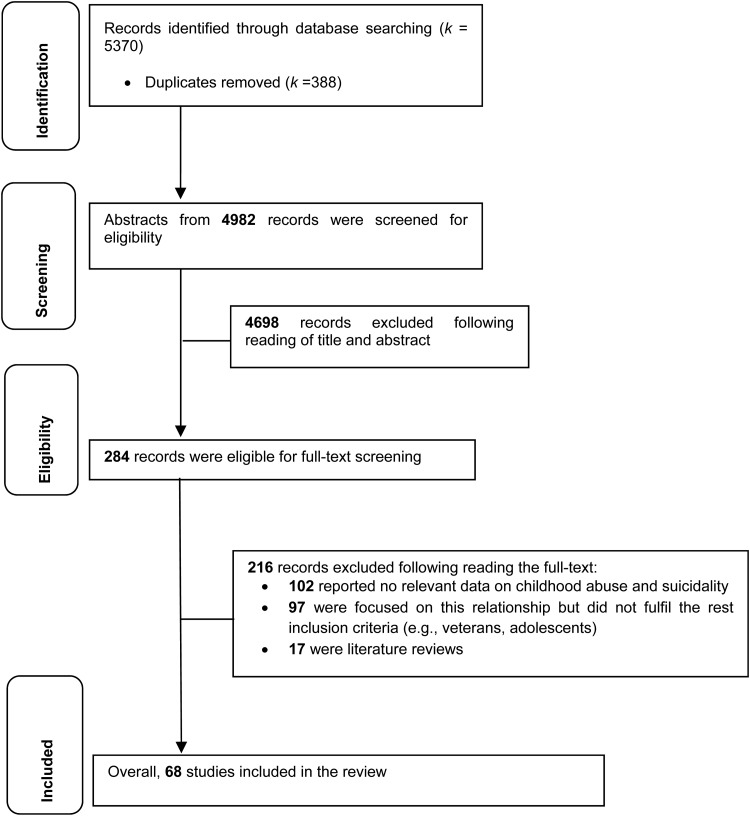
This comprehensive systematic review and meta-analysis aims to quantify the association between different types of childhood maltreatment and suicidality. We searched five bibliographic databases, including Medline, PsychINFO, Embase, Web of Science and CINAHL, until January 2018. Random-effects meta-analysis was employed followed by univariable and multivariable meta-regressions. Heterogeneity was quantified using the I2 statistic and formal publication bias tests were undertaken. The methodological quality of the studies was critically appraised and accounted in the meta-regression analyses. Data from 68 studies based on n = 261.660 adults were pooled. All different types of childhood maltreatment including sexual abuse [odds ratio (OR) 3.17, 95% confidence interval (CI) 2.76-3.64], physical abuse (OR 2.52, 95% CI 2.09-3.04) and emotional abuse (OR 2.49, 95% CI 1.64-3.77) were associated with two- to three-fold increased risk for suicide attempts. Similar results were found for the association between childhood maltreatment and suicidal ideation. Complex childhood abuse was associated with a particularly high risk for suicide attempts in adults (OR 5.18, 95% CI 2.52-10.63). Variations across the studies in terms of demographic and clinical characteristics of the participants and other core methodological factors did not affect the findings of the main analyses. We conclude that there is solid evidence that childhood maltreatment is associated with increased odds for suicidality in adults. The main outstanding challenge is to better understand the mechanisms which underpin the development of suicidality in people exposed to childhood maltreatment because current evidence is scarce.
Overview
CoChat Summary
## TL;DR
This systematic review and meta-analysis found that childhood maltreatment is associated with substantially higher odds of adult suicidality, including both suicide attempts and suicidal ideation. Across 68 studies and 261,660 adults, sexual, physical, emotional abuse, and neglect were generally linked to about two- to three-fold increased risk, with complex abuse showing the strongest association.
## Key findings
- Across 68 studies including 261,660 adults, all main maltreatment types were associated with increased odds of suicide attempts: sexual abuse (OR 3.17, 95% CI 2.76–3.64; k = 36), physical abuse (OR 2.52, 95% CI 2.09–3.04; k = 30), emotional abuse (OR 2.49, 95% CI 1.64–3.77; k = 12), emotional neglect (OR 2.29, 95% CI 1.79–2.94; k = 6), and any child abuse (OR 2.09, 95% CI 1.67–2.60; k = 16).
- Complex abuse in childhood had the strongest association with adult suicide attempts (OR 5.18, 95% CI 2.52–10.63; k = 7).
- For suicidal ideation, all maltreatment types were also associated with increased odds: sexual abuse (OR 2.15, 95% CI 1.77–2.62; k = 12), emotional abuse (OR 2.10, 95% CI 1.51–2.94; k = 5), physical abuse (OR 2.43, 95% CI 1.85–3.18; k = 11), any child abuse (OR 2.66, 95% CI 1.93–3.68; k = 7), emotional neglect (OR 1.40, 95% CI 1.02–1.93; k = 4), and physical neglect (OR 1.44, 95% CI 1.06–1.95; k = 4).
- In meta-regression, age moderated the association between physical abuse and suicide attempts (older participants showed a stronger association), and population appeared to matter for sexual abuse and suicide attempts but did not reach significance in the multivariable model.
## Methods
- Systematic review and meta-analysis following PRISMA and MOOSE, searching Medline, PsycINFO, Embase, Web of Science, and CINAHL up to 25 January 2018, plus reference checking and author contact.
- Included observational quantitative studies in English, peer-reviewed journals, with adults aged 18+ exposed to childhood maltreatment (abuse or neglect) and reporting suicidality outcomes; 68 independent studies were included.
- Used random-effects meta-analysis with odds ratios as the effect size, assessed heterogeneity with I², tested publication bias with funnel plots/Egger’s test, and conducted univariable and multivariable meta-regressions on study-level moderators.
## Limitations
- The paper states that heterogeneity was significant across most analyses, despite use of random-effects models and meta-regression.
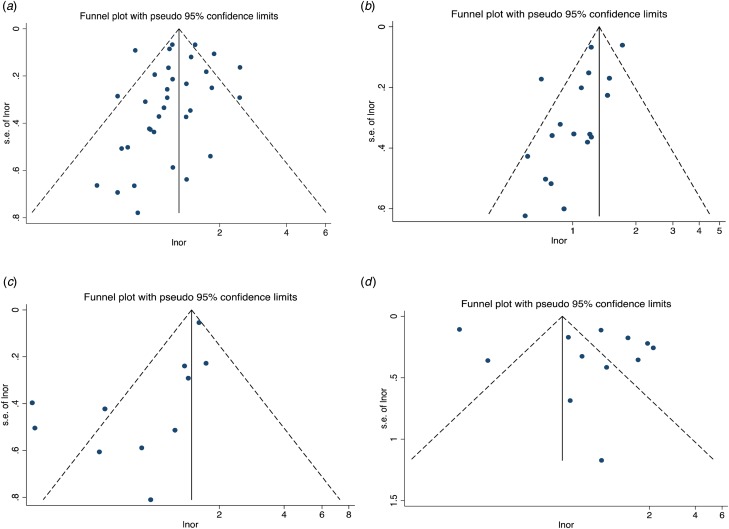
- The paper states that findings were derived from English-language peer-reviewed papers only, and one analysis (emotional abuse and suicide attempts) showed possible publication bias, so that result should be interpreted with caution.
- The paper states that many included studies were cross-sectional, limiting causal inference; the text also makes evident that some analyses were based on small numbers of studies, especially neglect outcomes, and that evidence on suicide deaths was sparse.
Model-written summary. Check it against the paper before relying on it.
Integrity signals
Registry
Cites
Statistics
Figures
Verification
Claims the paper makes
0 Valid · 0 Not valid · 9 Not checked · 29 Own results and interpretations
A result the paper reports from its own data — it cites no other source for it, so there is none to check. The quote shows it is in the paper.
In the paper
“emotional abuse (OR 2.49, 95% CI 1.64–3.77)”
- Also stated in: § Main meta-analyses: associations between types of childhood maltreatment and suicide attempts in adults · plain
“physical and emotional abuse were associated with a 2.5-fold increased risk for suicide attempts (k = 30, OR 2.52, 95% CI 2.09–3.04, I2 = 74.3% and k = 12, OR 2.49, 95% CI 1.64–3.77, I2 = 93.2%, respectively)”
§ Childhood maltreatment and adult suicidality: a comprehensive systematic review with meta-analysis > Abstract
plainstates an association- Asserted: passes — The authors put it forward as true.
- Checkable: passes — It can be checked against evidence.
- Load-bearing: passes — The paper’s conclusions depend on it.
- Based: passes — The paper gives a reason why it holds.
- Also stated in: § Main meta-analyses: associations between types of childhood maltreatment and suicide attempts in adults · plain
A result the paper reports from its own data — it cites no other source for it, so there is none to check. The quote shows it is in the paper.
In the paper
“Sexual abuse and emotional abuse were associated with a two-fold increased risk for suicidal ideation (k = 12, OR 2.15, 95% CI 1.77–2.62, I2 = 53.8% and k = 5, OR 2.10, 95% CI 1.51–2.94, I2 = 54.4%, respectively)”
§ Childhood maltreatment and adult suicidality: a comprehensive systematic review with meta-analysis > Results > Secondary meta-analyses: associations between types of childhood maltreatment and suicidal ideation in adults
plainstates an association- Asserted: passes — The authors put it forward as true.
- Checkable: passes — It can be checked against evidence.
- Load-bearing: passes — The paper’s conclusions depend on it.
- Based: passes — The paper gives a reason why it holds.
A result the paper reports from its own data — it cites no other source for it, so there is none to check. The quote shows it is in the paper.
In the paper
“The pooled effects of the main analyses indicate that all types of childhood maltreatment (except for physical neglect which is only based on four studies) were associated with significantly increased odds for suicide attempts in adults (Table 2).”
§ Childhood maltreatment and adult suicidality: a comprehensive systematic review with meta-analysis > Results > Main meta-analyses: associations between types of childhood maltreatment and suicide attempts in adults
hedgedstates an association- Asserted: passes — The authors put it forward as true.
- Checkable: passes — It can be checked against evidence.
- Load-bearing: passes — The paper’s conclusions depend on it.
- Based: passes — The paper gives a reason why it holds.
A result the paper reports from its own data — it cites no other source for it, so there is none to check. The quote shows it is in the paper.
In the paper
“whereas physical and any child abuse were associated with a 2.5-fold increased risk for suicidal ideation (k = 11, OR 2.43, 95% CI 1.85–3.18, I2 = 64.6% and k = 7, OR 2.66, 95% CI 1.93–3.68, I2 = 81.4%, respectively).”
§ Childhood maltreatment and adult suicidality: a comprehensive systematic review with meta-analysis > Results > Secondary meta-analyses: associations between types of childhood maltreatment and suicidal ideation in adults
plainstates an association- Asserted: passes — The authors put it forward as true.
- Checkable: passes — It can be checked against evidence.
- Load-bearing: passes — The paper’s conclusions depend on it.
- Based: passes — The paper gives a reason why it holds.
A result the paper reports from its own data — it cites no other source for it, so there is none to check. The quote shows it is in the paper.
In the paper
“Emotional and physical neglect were associated with 1.5-fold increased risk for suicidal ideation (k = 4, OR 1.40, 95% CI 1.02–1.93, I2 = 80.3% and k = 4, OR 1.44, 95% CI 1.06–1.95, I2 = 70.3%, respectively).”
§ Childhood maltreatment and adult suicidality: a comprehensive systematic review with meta-analysis > Results > Secondary meta-analyses: associations between types of childhood maltreatment and suicidal ideation in adults
plainstates an association- Asserted: passes — The authors put it forward as true.
- Checkable: passes — It can be checked against evidence.
- Load-bearing: passes — The paper’s conclusions depend on it.
- Based: passes — The paper gives a reason why it holds.
24 more claims
Create a free account to see all 38 claims and every source verdict.
- Probably not a substantial claim. 4
- It may state two separate claims as one. 6
Claims other papers make about this one
Each is checked against this paper’s own text: does it say what the citing paper says it does?
The source backs part of the claim, not all of it — or backs it for a different population, condition or comparison.
In the citing paper
“Victims of interpersonal violence, intimate partner violence, sexual violence, and childhood trauma have a substantial increase in likelihood of suicidality.14, 15, 16, 17”
From Global, regional, and national burden of suicide, 1990–2021: a systematic analysis for the Global Burden of Disease Study 2021 (2025) · cites this paper as [15]
Experimental — accuracy not yet measuredThe source backs part of the claim, not all of it — or backs it for a different population, condition or comparison.
In the citing paper
“Exposure to ACEs is associated with a higher risk of mental health disorders and suicidal behaviors in adulthood [6, 7], with a likely cumulative effect [8].”
From Association between adverse childhood experiences and suicidal behavior in affective disorders: A systematic review and meta-analysis (2025) · cites this paper as [6]
Experimental — accuracy not yet measured
Statistics that don’t add up
Each reported p-value recomputed from its test statistic and degrees of freedom, each partial η² from its F, and each ratio, mean difference or B printed with a p checked against its own confidence interval.
Rated major: it would touch a result — a value a result rests on, reported and recomputed p-values on opposite sides of the significance level, two passages that conflict with no sign which is right, or a cited work retracted before this paper was published.
In the paper
“χ2(3) = 3.99, p = 0.02”
§ Childhood maltreatment and adult suicidality: a comprehensive systematic review with meta-analysis > Results > Meta-regressions exploring the variance in the association between childhood maltreatment and suicide attempts
Reported p = .02 · recomputed p = .263
Rated major: it would touch a result — a value a result rests on, reported and recomputed p-values on opposite sides of the significance level, two passages that conflict with no sign which is right, or a cited work retracted before this paper was published.
In the paper
“χ2(3) = 3.11, p = 0.04”
§ Childhood maltreatment and adult suicidality: a comprehensive systematic review with meta-analysis > Results > Meta-regressions exploring the variance in the association between childhood maltreatment and suicide attempts
Reported p = .04 · recomputed p = .375
Statistics recomputed
Every reported test result, recomputed from its test statistic and degrees of freedom. A result shows as not adding up only once an independent check has confirmed it.
- Doesn’t add upχ²(3) = 3.11reported p = .04 · recomputed p = .375The two fall on opposite sides of .05
“χ2(3) = 3.11, p = .04”
- Doesn’t add upχ²(3) = 3.99reported p = .02 · recomputed p = .263The two fall on opposite sides of .05
“χ2(3) = 3.99, p = .02”
Self-check
Percentages, sums and reported differences re-computed from the paper’s own numbers.
Self-check results appear here once an independent check has confirmed them.
Citations
Cites
Preferred Reporting Items for Systematic Reviews and Meta-Analyses: the PRISMA statement
Moher, D., Liberati, A., Tetzlaff, J., Altman, D. G., & for the PRISMA Group (2009) · BMJ · doi:10.1136/bmj.b2535 · Cited by 83,823
Preferred Reporting Items for Systematic Reviews and Meta-Analyses: The PRISMA Statement
Moher, D., Liberati, A., Tetzlaff, J., Altman, D. G., & The PRISMA Group (2009) · PLoS Medicine · doi:10.1371/journal.pmed.1000097 · Cited by 64,042 · cited 2×
“This systematic review and meta-analysis is aligned with the Preferred Reporting Items for Systematic Reviews and MetaAnalyses (PRISMA) statement (Moher et al., 2009) and the Meta-Analysis of Observational Studies in Epidemiology (MOOSE; Stroup et al.”
Measuring inconsistency in meta-analyses
Higgins, J. P. T., Thompson, S. G., Deeks, J. J., & Altman, D. G. (2003) · BMJ · doi:10.1136/bmj.327.7414.557 · Cited by 63,139 · cited 1×
“Analyses were primarily conducted using a random effects model because we anticipated substantial heterogeneity, which was assessed with the I(2) statistic (Higgins et al., 2003).”
MethodBias in meta-analysis detected by a simple, graphical test
Egger, M., Smith, G. D., Schneider, M., & Minder, C. (1997) · BMJ · doi:10.1136/bmj.315.7109.629 · Cited by 56,722
Preferred reporting items for systematic reviews and meta-analyses: the PRISMA Statement.
(2009) · PubMed Central · Cited by 44,859
Dermyshi, E., Wang, Y., Yan, C., Hong, W., Qiu, G., Gong, X., & Zhang, T. (2017) · Neonatology · doi:10.1159/000454668 · Cited by 24,451
Meta-analysis of Observational Studies in Epidemiology<SUBTITLE>A Proposal for Reporting</SUBTITLE>
Stroup, D. F. (2000) · JAMA · doi:10.1001/jama.283.15.2008 · Cited by 20,623
Felitti, V. J., Anda, R. F., Nordenberg, D., Williamson, D. F., Spitz, A. M., Edwards, V., Koss, M. P., & Marks, J. S. (1998) · American Journal of Preventive Medicine · doi:10.1016/s0749-3797(98)00017-8 · Cited by 18,943 · cited 1×
“8% n/r Range = 18–64 5/6 Felitti et al. (1998) United States Crosssectional Questions from published surveys were used to construct the ACE Study questionnaire including the Conflicts Tactics Scale (CTS) and Wyatt (1985) Childhood physical, sexual and psychological abuse Behavioral Risk Factor…”
MethodWang, G., Ma, R., Qiao, G., Wada, K., Aizawa, Y., & Satoh, T. (2015) · Integrative Medicine International · doi:10.1159/000368408 · Cited by 18,657
Duval, S., & Tweedie, R. (2000) · Biometrics · doi:10.1111/j.0006-341x.2000.00455.x · Cited by 14,099 · cited 1×
“In case of possible publication bias, we used the Duval and Tweedie’s trim-and-fill method, which corrects the estimated effect size by yielding an estimate of the number of the missing studies (Duval and Tweedie, 2000).”
Method
Research works printed but not linked: 7
- 2013, Depression and Anxiety, 30, 924
- 2004, Social Psychiatry and Psychiatric Epidemiology, 39, 655
- 2016, Psychological Medicine, 47, 327
- 1991, Psychological Medicine, 121, 713
- 2015, Asia-Pacific Psychiatry, 8, 136
- 2015, Psychiatria Danubina, 27, 236
- 2013, American Journal of Public Health, 103, e69
Cited by
Items 101–200 of 461
Adult attachment: Its mediation role on childhood trauma and mobile phone addiction
Liang, H.-Y., Zhang, B., Jiang, H.-B., & Zhou, H.-L. (2021) · Journal of Psychology in Africa · doi:10.1080/14330237.2021.1952706 · Cited by 13
Suicide and self-harm in older adults
Connors, M. H., Draper, B., Wand, A. P. F., Leo, D. D., & Reppermund, S. (2025) · Nature Reviews Psychology · doi:10.1038/s44159-025-00454-w · Cited by 20
The Cycle of Violence: Abused and Neglected Girls to Adult Female Offenders
Widom, C. S., & Osborn, M. T. (2021) · Feminist Criminology · doi:10.1177/1557085120987628 · Cited by 25
“Women with histories of maltreatment report greater rates of self-harm and suicidality than those without such histories (Angelakis et al., 2019; McMahon et al., 2018), though the strength of these relationships differs by type of abuse (Glassman et al.”
BackgroundSuicide attempt, impulsivity, and exposure to trauma in college students
Lira, S. B., Vieira, F., Cavalcanti, D. E., Souza‐Marques, B., Netto, L. R., Correia‐Melo, F. S., Leal, G. C.-G., Pereira, J. L., Santos, L. L., Guedes, G. M., et al. (2022) · Brazilian Journal of Psychiatry · doi:10.1590/1516-4446-2021-2175 · Cited by 13
Xiao, Z., Obsuth, I., Meinck, F., & Murray, A. L. (2023) · Child and Adolescent Psychiatry and Mental Health · doi:10.1186/s13034-023-00572-4 · Cited by 15
“It has negative impacts on a wide range of mental health and behavioural outcomes, such as depression and anxiety [30], suicidality [4], and violence [27] [65, 66].”
BackgroundGregersen, M., Jepsen, J. R. M., Brandt, J. M., Søndergaard, A., Rohd, S. B., Veddum, L., Knudsen, C. B., Andreassen, A. K., Burton, B. K., Hjorthøj, C. R., et al. (2023) · Schizophrenia Bulletin · doi:10.1093/schbul/sbad052 · Cited by 14
Suicidal thoughts and behaviors in the Kingdom of Saudi Arabia
Altwaijri, Y. A., Benjet, C. L., Alhabeeb, A. A., Al‐Subaie, A., Akkad, M., Alammar, S., Bilal, L., & Naseem, M. T. (2024) · Journal of Affective Disorders · doi:10.1016/j.jad.2024.02.060 · Cited by 16
Dice, A. L. E., Lawn, R. B., Ratanatharathorn, A. D., Roberts, A. L., Denckla, C. A., Kim, A. H., de la Rosa, P. A., Zhu, Y., VanderWeele, T. J., & Koenen, K. C. (2024) · BMC Medicine · doi:10.1186/s12916-024-03360-9 · Cited by 14
“We triangulated results linking maltreatment to poorer outcomes across the domains of mental illness [10, 12], sleep disorders [90, 91], chronic pain [40], chronic lung diseases [8], risk behaviors [92–95], and socioeconomic status [19].”
BackgroundGidzgier, P., Bari, M., López-Atanes, M., Lotzin, A., Grundmann, J., Hiller, P., Schneider, B., & Schäfer, I. (2023) · Frontiers in Psychiatry · doi:10.3389/fpsyt.2022.1047274 · Cited by 16
Chang, Y., Buerke, M. L., Galfalvy, H., & Szántó, K. (2023) · International Psychogeriatrics · doi:10.1017/s1041610223000662 · Cited by 20
“For example, physical and sexual abuse have been the most consistent subtypes of childhood trauma experiences linked to suicidal behavior across the lifespan (Angelakis et al., 2019; Behr Gomes Jardim et al., 2018; Bruffaerts et al., 2010; Draper, 2015; Ng et al., 2018; Radford et al., 2017).”
BackgroundInfluentialDaneshmend, A., Stewart, J., Jarkas, D., Franklyn, S. I., Gabrys, R. L., Patterson, Z. R., Abizaid, A. B., Hellemans, K. G. C., & McQuaid, R. J. (2022) · International Journal of Environmental Research and Public Health · doi:10.3390/ijerph19159307 · Cited by 18
“Furthermore, several investigations have observed that individual subtypes of childhood trauma including emotional, physical, and sexual abuse were associated with two- to three-fold increased risk of suicide attempts, with similar findings for suicide ideation [39].”
ResultPOSITIVE SOLUTIONS TO A SEMILINEAR SYSTEM OF SECOND-ORDER TWO-POINT BOUNDARY VALUE PROBLEMS
Yao, & Qing-liu (2006) · 微分方程年刊:英文版 · Cited by 13
Suicidal Behaviors Among Medical Students: A Scoping Review of Systematic Reviews and Meta-Analyses
Agyapong-Opoku, F., Agyapong-Opoku, N., Agyapong, B., & Greenshaw, A. J. (2025) · Behavioral Sciences · doi:10.3390/bs15091215 · Cited by 25
“…et al., 2015), sleep disturbance/problems (Harris et al., 2020; Mudiyanselage et al., 2024; Pigeon et al., 2012), childhood mistreatment/adversity (Angelakis et al., 2019; Carrasco-Barrios et al., 2020), unemployment (Carrasco-Barrios et al., 2020; Harris et al., 2020; Pigeon et al., 2012),…”
European Forum for Primary Care: Position Paper for Primary Care Mental Health
Smit, D., Hill, L., Walton, I., Kendall, S. A., & Lepeleire, J. D. (2020) · Primary Health Care Research & Development · doi:10.1017/s1463423620000304 · Cited by 18
“, 2009), inequalities (Wilkinson and Pickett, 2017), maltreatment in childhood (Angelakis et al., 2019; Norman et al., 2012), poverty (Patel et al.”
BackgroundEvaluation of a Trauma-Informed Parenting Program for Resource Parents
Stenason, L., & Romano, E. (2022) · International Journal of Environmental Research and Public Health · doi:10.3390/ijerph192416981 · Cited by 15
Childhood Maltreatment and Amygdala-Mediated Anxiety and Posttraumatic Stress Following Adult Trauma
Harb, F., Liuzzi, M. T., Huggins, A. A., Webb, E. K., Fitzgerald, J. M., Krukowski, J. L., deRoon‐Cassini, T. A., & Larson, C. L. (2024) · Biological Psychiatry Global Open Science · doi:10.1016/j.bpsgos.2024.100312 · Cited by 22
“In addition to alterations of neural threat – related regions, experiences of childhood maltreatment have been consistently linked to fear-/threat-related psychopathology in adolescence and adulthood (2,3,6,25,26).”
BackgroundNavarro‐Mateu, F., Salmerón, D., Vilagut, G., Husky, M. M., Ballesta, M., Chirlaque, M., Huerta, J. M., Martínez, S., Navarro, C., Alonso, J., et al. (2020) · Revista de Psiquiatría y Salud Mental · doi:10.1016/j.rpsm.2020.10.002 · Cited by 15
Chen, L.-R., Wang, G., Xie, G.-D., He, Y., Chen, S.-S., Yuan, M., Chang, J.-J., Li, Y., & Su, P. (2020) · Journal of Affective Disorders · doi:10.1016/j.jad.2020.11.048 · Cited by 12
Handley, E. D., Warmingham, J. M., Rogosch, F. A., & Cicchetti, D. (2019) · Journal of Affective Disorders · doi:10.1016/j.jad.2019.06.051 · Cited by 15
“A recent meta-analysis found a two- to three-fold increased risk for suicide ideation and attempts among individuals who experienced sexual, physical, or emotional abuse as children, compared to those who did not experience childhood maltreatment (Angelakis et al., 2019).”
BackgroundGrandison, G., Karatzias, T., Fyvie, C., Hyland, P., O’Connor, R. C., & Dickson, A. (2020) · Archives of Suicide Research · doi:10.1080/13811118.2020.1758262 · Cited by 20
“The results of three meta-analyses conducted in recent years suggest that CEA, CPA, CSA, CEN, and CPN each confer significant suicide risk (Angelakis et al., 2019; Liu et al., 2017; Zatti et al., 2017).”
BackgroundResultInfluentialSuicidality in childhood abuse survivors – the contribution of identification with the aggressor
Lahav, Y. (2021) · Journal of Affective Disorders · doi:10.1016/j.jad.2021.08.138 · Cited by 13
Bochicchio, L. A., Xu, M., Veldhuis, C. B., McTavish, C., & Hughes, T. L. (2024) · Psychological Trauma Theory Research Practice and Policy · doi:10.1037/tra0001476 · Cited by 17
Yang, Y., Jimmy, J., Jones, E. E., Kreutzer, K. A., Bryan, C. J., & Gorka, S. M. (2023) · Journal of Psychiatric Research · doi:10.1016/j.jpsychires.2023.05.064 · Cited by 12
Telfar, S., McLeod, G. F. H., Dhakal, B., Henderson, J. M. T., Tanveer, S., Broad, H. E. T., Woolhouse, W., Macfarlane, S., & Boden, J. M. (2023) · Child Abuse & Neglect · doi:10.1016/j.chiabu.2023.106444 · Cited by 18
Xu, W., Shen, X., McDonnell, D., & Wang, J. (2024) · Child Abuse & Neglect · doi:10.1016/j.chiabu.2024.106732 · Cited by 12
Risk factors and their association network for young adults’ suicidality: a cross-sectional study
Lu, J., Jin, Y., Liang, S., Wang, Q., Li, X., & Li, T. (2024) · BMC Public Health · doi:10.1186/s12889-024-18860-9 · Cited by 13
“Previous studies have highlighted the strong correlation between these two factors and SA [25], with impulsivity emerging as a crucial contributing factor [26].”
BackgroundHuggett, C., Peters, S., Gooding, P. A., Berry, N., & Pratt, D. (2024) · Clinical Psychology Review · doi:10.1016/j.cpr.2024.102469 · Cited by 16
Blair, D.-L., Kingsbury, M. K., Eccles, H., Akther, A., Siddiqi, S., Condran, G., Obeegadoo, I., Murray, J., Geoffroy, M., Menezes, A. M. B., et al. (2025) · BMJ Global Health · doi:10.1136/bmjgh-2024-018129 · Cited by 15
“143 Regarding research gaps, additional studies on the associations between ACEs and suicidal behaviours from low-income countries and studies using cohort designs are needed.”
Identifying Distinguishable Clinical Profiles Between Single Suicide Attempters and Re-Attempters
Lübbert, M., Bahlmann, L., Josfeld, S., Bürger, J., Schulz, A., Bär, K., Polzer, U., Walter, M., Kastner, U. W., Sobanski, T., et al. (2021) · Frontiers in Psychiatry · doi:10.3389/fpsyt.2021.754402 · Cited by 16
Martins, L. C., Campos, R. C., & Morujão, I. S. (2021) · British Journal of Clinical Psychology · doi:10.1111/bjc.12338 · Cited by 16
Childhood Emotional Maltreatment and Romantic Relationships: The Role of Compassionate Goals
Sun, L., Canevello, A., Lewis, K. A., Li, J., & Crocker, J. (2021) · Frontiers in Psychology · doi:10.3389/fpsyg.2021.723126 · Cited by 16
“CEM relates to a range of serious cognitive, emotional, and behavioral consequences in adulthood (Briere and Runtz, 1990; Mullen et al., 1996; Angelakis et al., 2019).”
BackgroundWang, Z., Wang, X., Peng, Y., Liu, C., & He, J. (2022) · Journal of Adult Development · doi:10.1007/s10804-022-09422-7 · Cited by 13
“Young adults who experienced childhood trauma have a two to threefold higher risk of suicidal thoughts and behaviors than those without early traumatic experiences, according to a meta-analysis of 68 studies (Angelakis et al., 2019).”
BackgroundResultConsequences of Child Abuse and Neglect
Dodaj, A. (2020) · The Central European Journal of Paediatrics · doi:10.5457/p2005-114.275 · Cited by 17
“CSA is a well-known risk for suicidal behaviour in childhood and in adulthood (47-50).”
BackgroundMurray, K. J., Williams, B. M., Tunno, A. M., Shanahan, M. E., & Sullivan, K. M. (2021) · Child Abuse & Neglect · doi:10.1016/j.chiabu.2021.105185 · Cited by 12
Olgiati, P., Fanelli, G., & Serretti, A. (2023) · International Clinical Psychopharmacology · doi:10.1097/yic.0000000000000461 · Cited by 13
“The connection between childhood maltreatment and suicidality in adulthood is currently well established (Angelakis et al., 2019; Xiao et al., 2022) and there is growing evidence that childhood maltreatment might have negative consequences for MDD in terms of SI and comorbidities (Zisook et al.”
BackgroundLangevin, R., Kern, A., Esposito, T., & Hélie, S. (2023) · International Journal of Environmental Research and Public Health · doi:10.3390/ijerph20054151 · Cited by 10
Suicidality and mood disorders in psychiatric emergency patients: Results from SBQ‐R
Brousseau‐Paradis, C., LESAGE, A. D., Larue, C., Labelle, R. J., Giguère, C., & Rassy, J. (2023) · International Journal of Mental Health Nursing · doi:10.1111/inm.13161 · Cited by 13
Bennett, S., Robb, K. A., Andoh–Arthur, J., Chandler, A., Cleary, A., King, K., Oliffe, J. L., Rice, S., Scourfield, J., Seager, M., et al. (2024) · Psychology of Men & Masculinity · doi:10.1037/men0000448 · Cited by 12
“Several systematic reviews and meta-analyses have established the link between childhood challenges and suicidal behaviors (Angelakis et al., 2019; Liu et al., 2017).”
BackgroundWolf, J., Reinhard, M. A., Goerigk, S. A., Barton, B. B., Burkhardt, G., Tang, J., Eder, J., Amann, B. L., Bertsch, K., Jobst, A., et al. (2023) · Psychiatry Research · doi:10.1016/j.psychres.2023.115562 · Cited by 13
Specific effects of cumulative childhood trauma on suicidality among youths
Zheng, Q., Feng, Y., Du, J., Xu, S., Ma, Z., & Wang, Y. (2024) · Journal of Affective Disorders · doi:10.1016/j.jad.2024.05.027 · Cited by 13
The role of childhood maltreatment and mental health disorders on suicidal behaviour in adolescents
Gómez‐Vallejo, S., Díaz‐Marsá, M., Rodrigues, V. F., Andreo-Jover, J., Bobes-Bascarán, T., Cebrià, A. I., Crespo‐Facorro, B., Torres, N. G., González-Pinto, A. M., Jiménez-Teviño, L., et al. (2024) · Child Abuse & Neglect · doi:10.1016/j.chiabu.2024.107151 · Cited by 14
Zhang, Z., Jiang, C., Wang, X., Qiu, H., Li, J., Wang, Y., Luo, Q., & Ju, Y. (2025) · European Journal of Psychotraumatology · doi:10.1080/20008066.2025.2480884 · Cited by 18
“…that CM significantly increases the incidence of non-fatal self-harm but found no causal link between CM and suicide attempts ( OR = 1.09, P FDR = 0.573), which contrasts with some previous studies (Angelakis et al., 2019; Huang & Hou, 2023; Norman et al., 2012) and warrants further investigation.”
InfluentialHsieh, C., Charak, R., Cano-González, I., Gonzalez, L., Roley‐Roberts, M. E., & Hovey, J. D. (2020) · Death Studies · doi:10.1080/07481187.2020.1846227 · Cited by 16
“A meta-analysis of 68 studies indicated that exposure to childhood physical, sexual or emotional abuse was associated with 2-to-3-fold increased risk of suicidal ideation and attempts during adulthood (Angelakis et al., 2019).”
BackgroundChildhood Trauma and the Severity of past Suicide Attempts in Outpatients with Cocaine use Disorders
Icick, R., Karsinti, E., Brousse, G., Chrétienneau, C., Trabut, J., Belforte, B., Coeuru, P., Moisan, D., Deschenau, A., Cottencin, O., et al. (2022) · Substance Abuse · doi:10.1080/08897077.2021.1975875 · Cited by 14
“with a recent meta-regression, where associations between childhood trauma and adult suicidality were only modestly attenuated by the presence of severe mental illness.(15)”
BackgroundMethodResultInfluentialBerardelli, I., Sarubbi, S., Sarli, G., Rogante, E., Casale, A. D., Erbuto, D., Innamorati, M., Lester, D., & Pompili, M. (2021) · The Journal of Nervous and Mental Disease · doi:10.1097/nmd.0000000000001440 · Cited by 12
“…DOI: 10.1097/NMD.0000000000001440 276 www.jonmd.com The Journal of Ne Copyright © 2022 Wolters Kluwer H who experienced sexual, physical, or emotional abuse had a higher rate of suicidal attempts and suicidal ideation than those who did not have such experiences (Angelakis et al., 2019).”
BackgroundInfluentialBorges, G. L. G., Benjet, C. L., Orozco, R., Medina‐Mora, M. E., Mendez, E., & Molnar, B. E. (2021) · Journal of Psychiatric Research · doi:10.1016/j.jpsychires.2021.08.001 · Cited by 12
Angelakis, I., & Gooding, P. A. (2020) · Psychiatry Research · doi:10.1016/j.psychres.2020.112807 · Cited by 12
Self-citationGoldbach, R. E., Neukel, C., Panizza, A., Reinken, A., & Krause-Utz, A. (2023) · European Journal of Psychotraumatology · doi:10.1080/20008066.2023.2263317 · Cited by 14
Shi, X., Meng, Y., Cheng, B., Lu, L., Yin, L., Ye, A., Yi, X., & Ran, M. (2024) · Psychiatry Research · doi:10.1016/j.psychres.2024.115762 · Cited by 12
“Moreover, prior research has predominantly focused on long-term consequences of early life traumatic events in adulthood (Angelakis et al., 2019; Huffmaster et al., 2022; Liu et al., 2021; Tran et al., 2022), However, there is a need to redirect the focus towards prevention and minimizing the…”
Kim, S., Dunn, N., Moon, K., Casement, M. D., Nam, Y., Yeom, J. W., Cho, C., & Lee, H. (2024) · Journal of Affective Disorders · doi:10.1016/j.jad.2024.06.012 · Cited by 11
Chong, D., Qu, D., Xi, Y., & Chen, R. (2024) · Social Science & Medicine · doi:10.1016/j.socscimed.2024.117406 · Cited by 16
Álvarez, M.-J., Masramom, H., Boreu, Q. F., Tasa-Vinyals, E., Eslava, J. S. G., Poch, P. R., Llobet, S. E., & González, A. (2020) · The Journal of Nervous and Mental Disease · doi:10.1097/nmd.0000000000001253 · Cited by 12
“In nonpsychotic patients, the presence of CT has been related to suicide attempts (Angelakis et al., 2019).”
BackgroundAkça, S. Ö., Öztaş, G., Karadere, M. E., & Yazla, E. (2021) · Perspectives In Psychiatric Care · doi:10.1111/ppc.12997 · Cited by 12
Pengpid, S., & Peltzer, K. (2020) · Asia-Pacific Psychiatry · doi:10.1111/appy.12444 · Cited by 9
The association between childhood maltreatment and suicidal intrusions: A cross‐sectional study
van Bentum, J. S., Sijbrandij, M., Saueressig, F., & Huibers, M. J. H. (2022) · Journal of Traumatic Stress · doi:10.1002/jts.22821 · Cited by 13
Vulnerable dark traits mediate the association between childhood adversity and suicidal ideation
Wilson, K., Doorn, G. H. V., & Dye, J. (2022) · Personality and Individual Differences · doi:10.1016/j.paid.2022.111959 · Cited by 10
Göbbels-Koch, P. (2023) · Children and Youth Services Review · doi:10.1016/j.childyouth.2023.107008 · Cited by 12
Ryan, A. T., Daruwala, S. E., Perera, K. U., Lee‐Tauler, S. Y., Tucker, J., Grammer, G. G., Weaver, J. J., & Ghahramanlou‐Holloway, M. (2020) · International Journal of Environmental Research and Public Health · doi:10.3390/ijerph17082729 · Cited by 11
“Our findings regarding childhood sexual trauma differ from some previous research, which has shown similar relationships between childhood sexual trauma and suicide attempts in men and women [10].”
BackgroundResultInfluentialLee, W., Fang, S., Chen, Y., Liu, H., Huang, M., & McKetin, R. (2021) · Addictive Behaviors · doi:10.1016/j.addbeh.2021.107060 · Cited by 15
Iverson, G. L., Jamshidi, P., Fisher‐Hubbard, A., Deep‐Soboslay, A., Hyde, T. M., Kleinman, J. E., deJong, J. L., Shepherd, C. E., Hazrati, L., & Castellani, R. J. (2023) · Frontiers in Neurology · doi:10.3389/fneur.2023.1143882 · Cited by 10
Social Workers’ Perceptions of the Nature of Child Neglect: A Systematic Literature Review
Gibbs, J., Coughlan, B., Morgan, T., Mikushnica, A., Phippard, S., Crozier‐Roche, F., Drayak, T., Graham, D., Smith, J., & Duschinsky, R. (2024) · The British Journal of Social Work · doi:10.1093/bjsw/bcae102 · Cited by 28
Liu, M., Yu, X., Liu, A., Wu, X., & Lin, W. (2025) · Child Abuse & Neglect · doi:10.1016/j.chiabu.2025.107475 · Cited by 8
Takahashi, M., & Shelton, R. C. (2025) · Frontiers in Psychiatry · doi:10.3389/fpsyt.2025.1666599 · Cited by 18
Liuzzi, M. T., Harb, F., Petranu, K., Huggins, A. A., Webb, E. K., Fitzgerald, J. M., Krukowski, J. L., Miskovich, T. A., deRoon‐Cassini, T. A., & Larson, C. L. (2023) · Biological Psychiatry Cognitive Neuroscience and Neuroimaging · doi:10.1016/j.bpsc.2023.10.001 · Cited by 16
“Experiences of childhood maltreatment are related to several negative mental health outcomes across the lifespan, including depression, posttraumatic stress disorder (PTSD), and suicidal ideation and behavior (1-4).”
Zhou, Q., Liu, S., Chen, J., Tuersun, Y., Liang, Z., Wang, C., Sun, J., Yuan, L., & Qian, Y. (2024) · Journal of Affective Disorders · doi:10.1016/j.jad.2024.07.041 · Cited by 11
Childhood Maltreatment, Emotional Response Inhibition, and Suicide in Psychiatric Inpatients
Allen, J. D., Bozzay, M. L., Armey, M. F., Nugent, N. R., Miller, I. W., & Schatten, H. T. (2021) · Behavior Therapy · doi:10.1016/j.beth.2021.05.006 · Cited by 10
Teismann, T., Naghavi, A., Asgari, Z., Grundei, L., & Brailovskaia, J. (2022) · Current Psychology · doi:10.1007/s12144-022-03187-8 · Cited by 11
Navigating the grey zone in the response to child abuse and neglect in primary healthcare settings
Kuruppu, J., Humphreys, C., McKibbin, G., & Hegarty, K. L. (2023) · Children and Youth Services Review · doi:10.1016/j.childyouth.2023.107029 · Cited by 16
Coughlan, B., Duschinsky, R., Bakermans‐Kranenburg, M. J., Bakkum, L., Skinner, G. C. M., Markham, A., Beckwith, H., & van IJzendoorn, M. H. (2026) · JCPP Advances · doi:10.1002/jcv2.70081 · Cited by 15
Childhood Trauma and Self-harm in Youths with Bipolar Disorders
Janiri, D., Luzio, M. D., Montanari, S., Hirsch, D., Simonetti, A., Moccia, L., Conte, E., Contaldo, I., Veredice, C., Mercuri, E. M., et al. (2023) · Current Neuropharmacology · doi:10.2174/1570159x21666230213155249 · Cited by 15
“The distribution of childhood trauma in youths appears in line with previous findings in adults, where CT was associated with both BD diagnosis and life time self-harm/suicidal behaviors [25].”
ResultRost, K., Gossmann, E., Fegert, J. M., Ziegenhain, U., & Köhler‐Dauner, F. (2024) · Acta Psychologica · doi:10.1016/j.actpsy.2024.104169 · Cited by 18
Pengpid, S., & Peltzer, K. (2021) · South African Journal of Psychiatry · doi:10.4102/sajpsychiatry.v27i0.1566 · Cited by 8
Walker, J. H., Venta, A. C., Bechelli, J., Brewer, T. M., Boisvert, D. L., Bick, J. R., Lewis, R. H., Wells, J., & Armstrong, T. A. (2022) · Journal of Clinical Psychology · doi:10.1002/jclp.23347 · Cited by 9
Lengvenytė, A., Sundaresh, A., Strumila, R., Boukouaci, W., Wu, C., Sugunasabesan, S., Guillaume, S., Sénèque, M., Leboyer, M., Olié, É., et al. (2022) · Progress in Neuro-Psychopharmacology and Biological Psychiatry · doi:10.1016/j.pnpbp.2022.110617 · Cited by 8
Kisely, S. R., Strathearn, L., & Najman, J. M. (2022) · Child Maltreatment · doi:10.1177/10775595221127923 · Cited by 8
“For instance, in two recent comprehensive systematic reviews (Angelakis et al., 2019; Zatti et al., 2017), only one of the included studies looked at agency reported CM and this did not consider subtypes (Brown et al., 1999).”
BackgroundResultInfluentialChildhood trauma and real-world social experiences in psychosis
Steenkamp, L. R., Parrish, E. M., Chalker, S. A., Badal, V. D., Pinkham, A. E., Harvey, P. D., & Depp, C. A. (2023) · Schizophrenia Research · doi:10.1016/j.schres.2022.12.039 · Cited by 9
Goldman-Mellor, S. J., & Qin, P. (2024) · EClinicalMedicine · doi:10.1016/j.eclinm.2024.102442 · Cited by 6
“…violent injury and nonfatal suicidal behavior, but their focus is often exclusively on intimate partner violence or childhood adversity, 13 and their design precludes de fi nitive establishment of temporal precedence between violent injury and suicidality or examination of suicide death.”
BackgroundExploring the impact of child maltreatment on adult suicidal ideation and suicide attempts
Serebriakova, J., Forkmann, T., Teismann, T., Paashaus, L., Schreiber, D., Schönfelder, A., Juckel, G., & Glaesmer, H. (2025) · Journal of Affective Disorders · doi:10.1016/j.jad.2025.02.019 · Cited by 10
Olgiati, P., Luca, M., Luca, A., Ferri, R., & Serretti, A. (2025) · Journal of Psychiatric Research · doi:10.1016/j.jpsychires.2025.06.012 · Cited by 7
Lu, J., Li, S., Fan, T., Ni, X., Zhang, L., Chen, H., Chen, X., Tang, H., Ye, Y., Zhou, J., et al. (2025) · Journal of Medical Internet Research · doi:10.2196/79858 · Cited by 10
“CM may be associated with SI through multiple psychological pathways, such as emotional dysregulation, alexithymia, and feelings of powerlessness [36-38].”
Morelli, N. M., Straub, D., Hong, K., Nguyen, T., Tabibian, D. R., & Villodas, M. T. (2025) · Trauma Violence & Abuse · doi:10.1177/15248380251383938 · Cited by 8
Chen, P., Sun, X., Zhang, Q., Yang, C.-Y., Ye, X., Wang, Y., & Yang, X. (2022) · Current Psychology · doi:10.1007/s12144-022-03975-2 · Cited by 6
Cao, J., Xu, X., Man, X., Fu, X., Shen, Z., & Wang, S. (2023) · Stress and Health · doi:10.1002/smi.3300 · Cited by 8
Yang, Z., Pu, R., Zhang, Y., Zhang, Y., & Wu, Y. H. (2023) · Psychological Reports · doi:10.1177/00332941231216420 · Cited by 10
“SI (Angelakis et al., 2019).”
Maheshwari, P., Jith, A., Methala, S. P., et al. (2024) · Industrial Psychiatry Journal · doi:10.4103/ipj.ipj_132_23 · Cited by 6
“[24] The findings of our study could suggest that all types of childhood maltreatment operate on suicidality via a single mechanism.”
Miranda-Mendizábal, A., Castellví, P., Vilagut, G., Alayo, I., Almenara, J., Ballester, L., Echeburúa, E., Gabilondo, A., Gili, M., Mortier, P., et al. (2024) · Journal of Affective Disorders · doi:10.1016/j.jad.2024.02.084 · Cited by 7
Åsen, M. E., Schalinski, I., Lehmann, S., Lydersen, S., von Oertzen, T., & Greger, H. K. (2024) · Child Abuse & Neglect · doi:10.1016/j.chiabu.2024.107074 · Cited by 9
Lifetime risk of suicide among survivors of the atomic bombings of Japan
Amano, M. A., French, B. C., Sakata, R., Dekker, M., & Brenner, A. V. (2021) · Epidemiology and Psychiatric Sciences · doi:10.1017/s204579602100024x · Cited by 7
“…on prior studies that reported associations of trauma exposure during childhood and adolescence with mental health disorders and suicide attempts in adulthood (Kessler et al., 2010; Angelakis et al., 2019), we also explored effect modification by age at bombing, with a focus on young survivors.”
BackgroundXu, Y., Ajdacic‐Gross, V., Müller, M., Buadze, A., Seifritz, E., Kleim, B., von Känel, R., Wagner, E.-Y. N., Strippoli, M. F., Castelao, E., et al. (2021) · Comprehensive Psychiatry · doi:10.1016/j.comppsych.2021.152282 · Cited by 8
“CHAD exposure increases the risk for a broad range of mental health problems in adulthood, including depression [8,38], anxiety [21], post-traumatic stress disorder [47], substance use disorders [13,32] and suicidality [5].”
BackgroundFan, X., & Li, X. (2022) · Behavioral Sciences · doi:10.3390/bs12110464 · Cited by 6
Meyer, S., Atiénzar-Prieto, M., & Fitz‐Gibbon, K. (2024) · Child Protection and Practice · doi:10.1016/j.chipro.2024.100051 · Cited by 8
Suicidality among children and youth in Nordic child welfare services: A systematic review
Milde, A. M., Gramm, H. B., Paaske, I., Kleiven, P. G., Christiansen, Ø., & Havnen, K. J. S. (2021) · Child & Family Social Work · doi:10.1111/cfs.12832 · Cited by 4
Magalhães, E. T. P., Sarin, L. M., Sant, L. C. D., Lucchese, A. C., Nakahira, C., Tuena, M. A., Puertas, C. B., Fava, V. A. R., Delfino, R. S., Surjan, J. C., et al. (2021) · Frontiers in Psychiatry · doi:10.3389/fpsyt.2021.608499 · Cited by 9
Suicide in Older Adult Men Is Not Related to a Personal History of Participation in Football
Iverson, G. L., Deep‐Soboslay, A., Hyde, T. M., Kleinman, J. E., Erskine, B., Fisher‐Hubbard, A., deJong, J. L., & Castellani, R. J. (2021) · Frontiers in Neurology · doi:10.3389/fneur.2021.745824 · Cited by 7
“In adults, all different types of childhood maltreatment including sexual abuse, physical abuse, and emotional abuse are associated with increased risk for depression and suicidality (48, 49), and there is a statistically significant association between lifetime history of sexual abuse and a lifetime diagnosis of anxi…”
BackgroundMarín-Navarrete, R., Sánchez-Domínguez, R., Pérez-López, A., & Saracco-Álvarez, R. A. (2022) · Frontiers in Psychology · doi:10.3389/fpsyg.2022.936184 · Cited by 7
Stressful and potentially traumatic events and healthcare utilization: the 7th Tromsø survey
Thimm, J. C., Rognmo, K., Skre, I., & Wang, C. E. A. (2025) · BMC Health Services Research · doi:10.1186/s12913-025-12604-0 · Cited by 5
“SLE/PTE exposure is associated with a broad spectrum of unfavorable mental health outcomes, including, but not limited to, anxiety and depression [5–7].”
Tekeba, B., Tamir, T. T., Gebrehana, D. A., Abich, Y., Baykemagn, N. D., Mengstie, M. A., & Zegeye, A. F. (2025) · Child and Adolescent Psychiatry and Mental Health · doi:10.1186/s13034-025-00927-z · Cited by 9
“All these factors predispose adolescents to commit suicide [102].”
Peng, C., Zhang, N., Cheng, J., Rong, F., Hu, J., Xu, Z., Guan, M., & Yu, Y. (2025) · Scientific Reports · doi:10.1038/s41598-025-08139-3 · Cited by 6
“Considering that CM subtypes are complicated and overlapped 41,42 revealing the disclosing patterns of CM experiences is promising and profound to understand resources of adolescents’ mental and behavioral problems, which can also benefit decision-makers for taking targeted and specific…”
Smith, J. G., Oram, S., & Mantovani, N. (2025) · Journal of Family Violence · doi:10.1007/s10896-025-00953-7 · Cited by 12
The relationship of university students' childhood mental trauma with depression, anxiety and stress
Bahar, A. (2023) · The European Research Journal · doi:10.18621/eurj.1233618 · Cited by 8
Metadata
- Authors
- Angelakis, I., Gillespie, E. L., & Panagioti, M.
- Affiliations
- University of South Wales (GB)
- Manchester Academic Health Science Centre (GB)
- Corresponding author
- Angelakis, Ioannis
- Venue
- Psychological Medicine
- Publisher
- Cambridge University Press (CUP)
- Published
- 2019-01-04
- Volume
- 49
- Issue
- 07
- Pages
- 1057-1078
- ISSN
- 0033-2917 (ISSN-L)
- 1469-8978
- PMC
- PMC6498789
- OpenAlex
- W2908364980
- Cited by
- 479
- References
- 102
- Citations by year
- 2026: 94 · 2025: 86 · 2024: 64 · 2023: 68 · 2022: 60 · 2021: 55 · 2020: 37 · 2019: 14
- FWCI
- 6.54
- Type
- journal article
- Language
- en
- Open access
- hybrid
- doi.org
- Locations
- Psychological Medicine (publishedVersion, cc-by)
- PubMed Central (publishedVersion, cc-by)
- PubMed (publishedVersion)
- Research Explorer (The University of Manchester) (publishedVersion, cc-by)
- Topics
- Social Sciences › Psychology › Clinical Psychology › Child Abuse and Trauma
- Social Sciences › Psychology › Clinical Psychology › Suicide and Self-Harm Studies
- Social Sciences › Sociology and Political Science › Homicide, Infanticide, and Child Abuse
- Keywords
- child abuse, suicidality, suicide attempts, suicidal ideation, sexual abuse, physical abuse, emotional abuse, adult mental health
- MeSH terms
- Adverse Childhood Experiences, Correlation of Data, Adolescent, Adult, Child, Child Abuse, Child Abuse, Sexual, Female, Humans, Male, Middle Aged, Prisoners, Risk, Suicide, Suicide, Attempted, Prevalence, Odds Ratio, Young Adult, Suicidal Ideation
About these checks
Registry, retraction, Cites and statistics results are computed, not judged, with one exception: a printed reference that no index lists is read once by a model before it counts as a citation error. Claims are extracted by a model and kept only when their quote appears verbatim in the text; each cited source is then checked, with a model’s help, for whether it says what the claim relies on. Those verdicts can be wrong — read the claim’s quote and the cited source before relying on one.
A language model drew the claims from the paper on 2026-10-09, under version 3 of the claim definition (model deepseek-v4.1-flash, prompt extract-v3).
A second model labelled each claim on 2026-10-09 (model jev-1.13-20260917, definition revision gold-guideline-v0.2).
Statistics and arithmetic are recomputed, not judged.
Confidence bands are shown only for fields calibrated on our annotated test set. None is calibrated yet, so no band is shown.
What counts as a claim ›How we measure confidence ›How we check this ›
Are you an author, or do you see a problem with this page? Request a review
Data sources
Bibliographic data: Semantic Scholar, OpenAlex, Crossref.
Contains information from the Semantic Scholar Academic Graph Datasets, made available under the ODC Attribution License (ODC-BY 1.0).
Semantic Scholar’s data is described in: Kinney, R., et al. (2023). The Semantic Scholar Open Data Platform. arXiv:2301.10140.
