

Childhood maltreatment and adult suicidality: a comprehensive systematic review with meta-analysis
Open accessThe DOI matches its Crossref record; 100 of the 102 references it cites were found in a registry or an index; none of the 16 sources its claims cite is checked for support yet.
Abstract
This comprehensive systematic review and meta-analysis aims to quantify the association between different types of childhood maltreatment and suicidality. We searched five bibliographic databases, including Medline, PsychINFO, Embase, Web of Science and CINAHL, until January 2018. Random-effects meta-analysis was employed followed by univariable and multivariable meta-regressions. Heterogeneity was quantified using the I2 statistic and formal publication bias tests were undertaken. The methodological quality of the studies was critically appraised and accounted in the meta-regression analyses. Data from 68 studies based on n = 261.660 adults were pooled. All different types of childhood maltreatment including sexual abuse [odds ratio (OR) 3.17, 95% confidence interval (CI) 2.76-3.64], physical abuse (OR 2.52, 95% CI 2.09-3.04) and emotional abuse (OR 2.49, 95% CI 1.64-3.77) were associated with two- to three-fold increased risk for suicide attempts. Similar results were found for the association between childhood maltreatment and suicidal ideation. Complex childhood abuse was associated with a particularly high risk for suicide attempts in adults (OR 5.18, 95% CI 2.52-10.63). Variations across the studies in terms of demographic and clinical characteristics of the participants and other core methodological factors did not affect the findings of the main analyses. We conclude that there is solid evidence that childhood maltreatment is associated with increased odds for suicidality in adults. The main outstanding challenge is to better understand the mechanisms which underpin the development of suicidality in people exposed to childhood maltreatment because current evidence is scarce.
Overview
CoChat Summary
## TL;DR
This systematic review and meta-analysis found that childhood maltreatment is associated with substantially higher odds of adult suicidality, including both suicide attempts and suicidal ideation. Across 68 studies and 261,660 adults, sexual, physical, emotional abuse, and neglect were generally linked to about two- to three-fold increased risk, with complex abuse showing the strongest association.
## Key findings
- Across 68 studies including 261,660 adults, all main maltreatment types were associated with increased odds of suicide attempts: sexual abuse (OR 3.17, 95% CI 2.76–3.64; k = 36), physical abuse (OR 2.52, 95% CI 2.09–3.04; k = 30), emotional abuse (OR 2.49, 95% CI 1.64–3.77; k = 12), emotional neglect (OR 2.29, 95% CI 1.79–2.94; k = 6), and any child abuse (OR 2.09, 95% CI 1.67–2.60; k = 16).
- Complex abuse in childhood had the strongest association with adult suicide attempts (OR 5.18, 95% CI 2.52–10.63; k = 7).
- For suicidal ideation, all maltreatment types were also associated with increased odds: sexual abuse (OR 2.15, 95% CI 1.77–2.62; k = 12), emotional abuse (OR 2.10, 95% CI 1.51–2.94; k = 5), physical abuse (OR 2.43, 95% CI 1.85–3.18; k = 11), any child abuse (OR 2.66, 95% CI 1.93–3.68; k = 7), emotional neglect (OR 1.40, 95% CI 1.02–1.93; k = 4), and physical neglect (OR 1.44, 95% CI 1.06–1.95; k = 4).
- In meta-regression, age moderated the association between physical abuse and suicide attempts (older participants showed a stronger association), and population appeared to matter for sexual abuse and suicide attempts but did not reach significance in the multivariable model.
## Methods
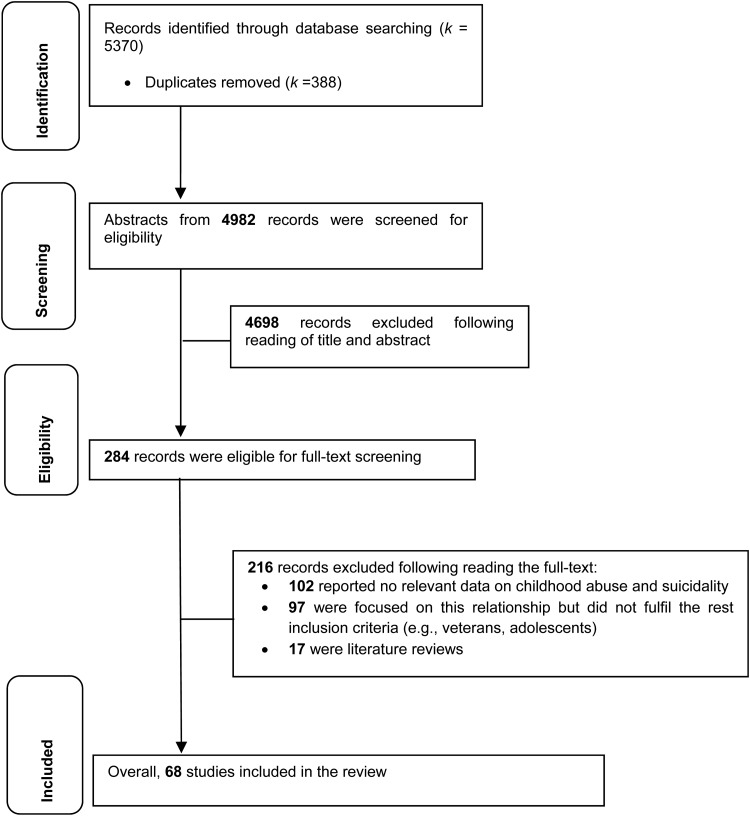
- Systematic review and meta-analysis following PRISMA and MOOSE, searching Medline, PsycINFO, Embase, Web of Science, and CINAHL up to 25 January 2018, plus reference checking and author contact.
- Included observational quantitative studies in English, peer-reviewed journals, with adults aged 18+ exposed to childhood maltreatment (abuse or neglect) and reporting suicidality outcomes; 68 independent studies were included.
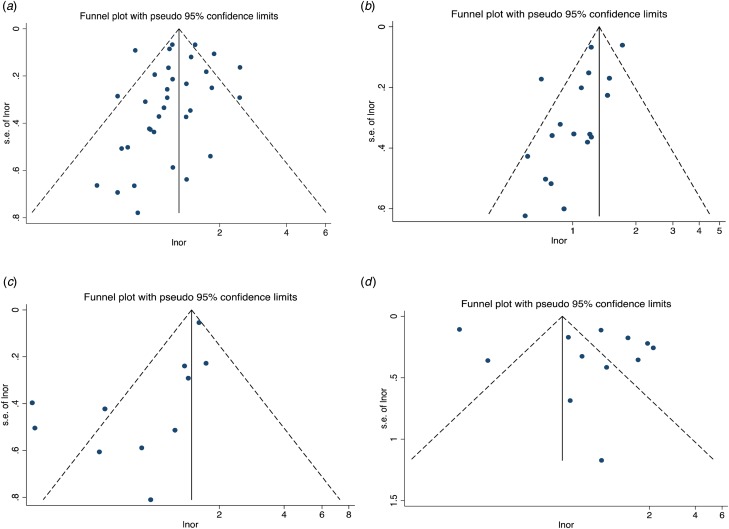
- Used random-effects meta-analysis with odds ratios as the effect size, assessed heterogeneity with I², tested publication bias with funnel plots/Egger’s test, and conducted univariable and multivariable meta-regressions on study-level moderators.
## Limitations
- The paper states that heterogeneity was significant across most analyses, despite use of random-effects models and meta-regression.
- The paper states that findings were derived from English-language peer-reviewed papers only, and one analysis (emotional abuse and suicide attempts) showed possible publication bias, so that result should be interpreted with caution.
- The paper states that many included studies were cross-sectional, limiting causal inference; the text also makes evident that some analyses were based on small numbers of studies, especially neglect outcomes, and that evidence on suicide deaths was sparse.
Model-written summary. Check it against the paper before relying on it.
Integrity signals
Registry
Cites
Statistics
Figures
Verification
Claims the paper makes
0 Valid · 0 Not valid · 9 Not checked · 29 Own results and interpretations
A result the paper reports from its own data — it cites no other source for it, so there is none to check. The quote shows it is in the paper.
In the paper
“emotional abuse (OR 2.49, 95% CI 1.64–3.77)”
- Also stated in: § Main meta-analyses: associations between types of childhood maltreatment and suicide attempts in adults · plain
“physical and emotional abuse were associated with a 2.5-fold increased risk for suicide attempts (k = 30, OR 2.52, 95% CI 2.09–3.04, I2 = 74.3% and k = 12, OR 2.49, 95% CI 1.64–3.77, I2 = 93.2%, respectively)”
§ Childhood maltreatment and adult suicidality: a comprehensive systematic review with meta-analysis > Abstract
plainstates an association- Asserted: passes — The authors put it forward as true.
- Checkable: passes — It can be checked against evidence.
- Load-bearing: passes — The paper’s conclusions depend on it.
- Based: passes — The paper gives a reason why it holds.
- Also stated in: § Main meta-analyses: associations between types of childhood maltreatment and suicide attempts in adults · plain
A result the paper reports from its own data — it cites no other source for it, so there is none to check. The quote shows it is in the paper.
In the paper
“Sexual abuse and emotional abuse were associated with a two-fold increased risk for suicidal ideation (k = 12, OR 2.15, 95% CI 1.77–2.62, I2 = 53.8% and k = 5, OR 2.10, 95% CI 1.51–2.94, I2 = 54.4%, respectively)”
§ Childhood maltreatment and adult suicidality: a comprehensive systematic review with meta-analysis > Results > Secondary meta-analyses: associations between types of childhood maltreatment and suicidal ideation in adults
plainstates an association- Asserted: passes — The authors put it forward as true.
- Checkable: passes — It can be checked against evidence.
- Load-bearing: passes — The paper’s conclusions depend on it.
- Based: passes — The paper gives a reason why it holds.
A result the paper reports from its own data — it cites no other source for it, so there is none to check. The quote shows it is in the paper.
In the paper
“The pooled effects of the main analyses indicate that all types of childhood maltreatment (except for physical neglect which is only based on four studies) were associated with significantly increased odds for suicide attempts in adults (Table 2).”
§ Childhood maltreatment and adult suicidality: a comprehensive systematic review with meta-analysis > Results > Main meta-analyses: associations between types of childhood maltreatment and suicide attempts in adults
hedgedstates an association- Asserted: passes — The authors put it forward as true.
- Checkable: passes — It can be checked against evidence.
- Load-bearing: passes — The paper’s conclusions depend on it.
- Based: passes — The paper gives a reason why it holds.
A result the paper reports from its own data — it cites no other source for it, so there is none to check. The quote shows it is in the paper.
In the paper
“whereas physical and any child abuse were associated with a 2.5-fold increased risk for suicidal ideation (k = 11, OR 2.43, 95% CI 1.85–3.18, I2 = 64.6% and k = 7, OR 2.66, 95% CI 1.93–3.68, I2 = 81.4%, respectively).”
§ Childhood maltreatment and adult suicidality: a comprehensive systematic review with meta-analysis > Results > Secondary meta-analyses: associations between types of childhood maltreatment and suicidal ideation in adults
plainstates an association- Asserted: passes — The authors put it forward as true.
- Checkable: passes — It can be checked against evidence.
- Load-bearing: passes — The paper’s conclusions depend on it.
- Based: passes — The paper gives a reason why it holds.
A result the paper reports from its own data — it cites no other source for it, so there is none to check. The quote shows it is in the paper.
In the paper
“Emotional and physical neglect were associated with 1.5-fold increased risk for suicidal ideation (k = 4, OR 1.40, 95% CI 1.02–1.93, I2 = 80.3% and k = 4, OR 1.44, 95% CI 1.06–1.95, I2 = 70.3%, respectively).”
§ Childhood maltreatment and adult suicidality: a comprehensive systematic review with meta-analysis > Results > Secondary meta-analyses: associations between types of childhood maltreatment and suicidal ideation in adults
plainstates an association- Asserted: passes — The authors put it forward as true.
- Checkable: passes — It can be checked against evidence.
- Load-bearing: passes — The paper’s conclusions depend on it.
- Based: passes — The paper gives a reason why it holds.
24 more claims
Create a free account to see all 38 claims and every source verdict.
- Probably not a substantial claim. 4
- It may state two separate claims as one. 6
Claims other papers make about this one
Each is checked against this paper’s own text: does it say what the citing paper says it does?
The source backs part of the claim, not all of it — or backs it for a different population, condition or comparison.
In the citing paper
“Victims of interpersonal violence, intimate partner violence, sexual violence, and childhood trauma have a substantial increase in likelihood of suicidality.14, 15, 16, 17”
From Global, regional, and national burden of suicide, 1990–2021: a systematic analysis for the Global Burden of Disease Study 2021 (2025) · cites this paper as [15]
Experimental — accuracy not yet measuredThe source backs part of the claim, not all of it — or backs it for a different population, condition or comparison.
In the citing paper
“Exposure to ACEs is associated with a higher risk of mental health disorders and suicidal behaviors in adulthood [6, 7], with a likely cumulative effect [8].”
From Association between adverse childhood experiences and suicidal behavior in affective disorders: A systematic review and meta-analysis (2025) · cites this paper as [6]
Experimental — accuracy not yet measured
Statistics that don’t add up
Each reported p-value recomputed from its test statistic and degrees of freedom, each partial η² from its F, and each ratio, mean difference or B printed with a p checked against its own confidence interval.
Rated major: it would touch a result — a value a result rests on, reported and recomputed p-values on opposite sides of the significance level, two passages that conflict with no sign which is right, or a cited work retracted before this paper was published.
In the paper
“χ2(3) = 3.99, p = 0.02”
§ Childhood maltreatment and adult suicidality: a comprehensive systematic review with meta-analysis > Results > Meta-regressions exploring the variance in the association between childhood maltreatment and suicide attempts
Reported p = .02 · recomputed p = .263
Rated major: it would touch a result — a value a result rests on, reported and recomputed p-values on opposite sides of the significance level, two passages that conflict with no sign which is right, or a cited work retracted before this paper was published.
In the paper
“χ2(3) = 3.11, p = 0.04”
§ Childhood maltreatment and adult suicidality: a comprehensive systematic review with meta-analysis > Results > Meta-regressions exploring the variance in the association between childhood maltreatment and suicide attempts
Reported p = .04 · recomputed p = .375
Statistics recomputed
Every reported test result, recomputed from its test statistic and degrees of freedom. A result shows as not adding up only once an independent check has confirmed it.
- Doesn’t add upχ²(3) = 3.11reported p = .04 · recomputed p = .375The two fall on opposite sides of .05
“χ2(3) = 3.11, p = .04”
- Doesn’t add upχ²(3) = 3.99reported p = .02 · recomputed p = .263The two fall on opposite sides of .05
“χ2(3) = 3.99, p = .02”
Self-check
Percentages, sums and reported differences re-computed from the paper’s own numbers.
Self-check results appear here once an independent check has confirmed them.
Citations
Cites
Preferred Reporting Items for Systematic Reviews and Meta-Analyses: the PRISMA statement
Moher, D., Liberati, A., Tetzlaff, J., Altman, D. G., & for the PRISMA Group (2009) · BMJ · doi:10.1136/bmj.b2535 · Cited by 83,823
Preferred Reporting Items for Systematic Reviews and Meta-Analyses: The PRISMA Statement
Moher, D., Liberati, A., Tetzlaff, J., Altman, D. G., & The PRISMA Group (2009) · PLoS Medicine · doi:10.1371/journal.pmed.1000097 · Cited by 64,042 · cited 2×
“This systematic review and meta-analysis is aligned with the Preferred Reporting Items for Systematic Reviews and MetaAnalyses (PRISMA) statement (Moher et al., 2009) and the Meta-Analysis of Observational Studies in Epidemiology (MOOSE; Stroup et al.”
Measuring inconsistency in meta-analyses
Higgins, J. P. T., Thompson, S. G., Deeks, J. J., & Altman, D. G. (2003) · BMJ · doi:10.1136/bmj.327.7414.557 · Cited by 63,139 · cited 1×
“Analyses were primarily conducted using a random effects model because we anticipated substantial heterogeneity, which was assessed with the I(2) statistic (Higgins et al., 2003).”
MethodBias in meta-analysis detected by a simple, graphical test
Egger, M., Smith, G. D., Schneider, M., & Minder, C. (1997) · BMJ · doi:10.1136/bmj.315.7109.629 · Cited by 56,722
Preferred reporting items for systematic reviews and meta-analyses: the PRISMA Statement.
(2009) · PubMed Central · Cited by 44,859
Dermyshi, E., Wang, Y., Yan, C., Hong, W., Qiu, G., Gong, X., & Zhang, T. (2017) · Neonatology · doi:10.1159/000454668 · Cited by 24,451
Meta-analysis of Observational Studies in Epidemiology<SUBTITLE>A Proposal for Reporting</SUBTITLE>
Stroup, D. F. (2000) · JAMA · doi:10.1001/jama.283.15.2008 · Cited by 20,623
Felitti, V. J., Anda, R. F., Nordenberg, D., Williamson, D. F., Spitz, A. M., Edwards, V., Koss, M. P., & Marks, J. S. (1998) · American Journal of Preventive Medicine · doi:10.1016/s0749-3797(98)00017-8 · Cited by 18,943 · cited 1×
“8% n/r Range = 18–64 5/6 Felitti et al. (1998) United States Crosssectional Questions from published surveys were used to construct the ACE Study questionnaire including the Conflicts Tactics Scale (CTS) and Wyatt (1985) Childhood physical, sexual and psychological abuse Behavioral Risk Factor…”
MethodWang, G., Ma, R., Qiao, G., Wada, K., Aizawa, Y., & Satoh, T. (2015) · Integrative Medicine International · doi:10.1159/000368408 · Cited by 18,657
Duval, S., & Tweedie, R. (2000) · Biometrics · doi:10.1111/j.0006-341x.2000.00455.x · Cited by 14,099 · cited 1×
“In case of possible publication bias, we used the Duval and Tweedie’s trim-and-fill method, which corrects the estimated effect size by yielding an estimate of the number of the missing studies (Duval and Tweedie, 2000).”
Method
Research works printed but not linked: 7
- 2013, Depression and Anxiety, 30, 924
- 2004, Social Psychiatry and Psychiatric Epidemiology, 39, 655
- 2016, Psychological Medicine, 47, 327
- 1991, Psychological Medicine, 121, 713
- 2015, Asia-Pacific Psychiatry, 8, 136
- 2015, Psychiatria Danubina, 27, 236
- 2013, American Journal of Public Health, 103, e69
Cited by
Angelakis, I., Austin, J. L., & Gooding, P. (2020) · JAMA Network Open · doi:10.1001/jamanetworkopen.2020.12563 · Cited by 385
Self-citationBaldwin, J. R., Wang, B., Karwatowska, L., Schoeler, T., Tsaligopoulou, A., Munafò, M. R., & Pingault, J.-B. (2023) · American Journal of Psychiatry · doi:10.1176/appi.ajp.20220174 · Cited by 313
“, within-article) variance, (3) between-study variance, and (4) between samples variance, and applied robust standard errors to the main meta-analytic models.”
BackgroundAssociation of Childhood Adversity With Morbidity and Mortality in US Adults: A Systematic Review
Grummitt, L. R., Kreski, N. T., Kim, S. G., Platt, J., Keyes, K. M., & McLaughlin, K. A. (2021) · JAMA Pediatrics · doi:10.1001/jamapediatrics.2021.2320 · Cited by 203
Johnson, D., Policelli, J., Li, M., Dharamsi, A., Hu, Q., Sheridan, M. A., McLaughlin, K. A., & Wade, M. (2021) · JAMA Pediatrics · doi:10.1001/jamapediatrics.2021.2511 · Cited by 172
Davis Weaver, N., Bertolacci, G. J., Rosenblad, E., Ghoba, S., Cunningham, M., Ikuta, K. S., Moberg, M. E., Mougin, V., Han, C., Wool, E. E., et al. (2025) · The Lancet Public Health · doi:10.1016/s2468-2667(25)00006-4 · Cited by 181
Kuzminskaite, E., Penninx, B. W. J. H., van Harmelen, A.-L., Elzinga, B. M., Hovens, J. G. F. M., & Vinkers, C. H. (2021) · Journal of Affective Disorders · doi:10.1016/j.jad.2021.01.054 · Cited by 165
Burden of Mental Disorders and Suicide Attributable to Childhood Maltreatment
Grummitt, L. R., Baldwin, J. R., Lafoa’i, J., Keyes, K. M., & Barrett, E. L. (2024) · JAMA Psychiatry · doi:10.1001/jamapsychiatry.2024.0804 · Cited by 239
Social Determinants of Health and Suicide-Related Outcomes: A Review of Meta-Analyses
Na, P. J., Shin, J., Kwak, H. R., Lee, J., Jester, D. J., Bandara, P., Kim, J. Y., Moutier, C. Y., Pietrzak, R. H., Oquendo, M. A., et al. (2025) · JAMA Psychiatry · doi:10.1001/jamapsychiatry.2024.4241 · Cited by 139
Biological bases of suicidal behaviours: a narrative review
Lengvenyte, A., Conejero, I., Courtet, P., & Olié, E. (2021) · European Journal of Neuroscience · doi:10.1111/ejn.14635 · Cited by 87
“Exposure to adversity during this period is a well-characterized risk factor of suicidal behaviour, and meta-analyses indicate a twofold to threefold increase in suicidality risk following ELA (Angelakis et al., 2019; Liu, Fang, et al., 2017; Zatti et al., 2017).”
BackgroundA scoping review of adult survivors’ experiences of shame following sexual abuse in childhood
MacGinley, M., Breckenridge, J., & Mowll, J. (2019) · Health & Social Care in the Community · doi:10.1111/hsc.12771 · Cited by 151
Work related sexual harassment and risk of suicide and suicide attempts: prospective cohort study
Hanson, L. L. M., Nyberg, A., Mittendorfer‐Rutz, E., Bondestam, F., & Madsen, I. E. H. (2020) · BMJ · doi:10.1136/bmj.m2984 · Cited by 95
Childhood maltreatment and suicide attempts in prisoners: a systematic meta-analytic review
Angelakis, I., Austin, J. L., & Gooding, P. (2020) · Psychological Medicine · doi:10.1017/s0033291719002848 · Cited by 74
“, 1996) and that these experiences are strongly linked to suicidal acts (Angelakis et al., 2019).”
BackgroundSelf-citationJordan, J. T., & McNiel, D. E. (2019) · Psychological Medicine · doi:10.1017/s0033291719001375 · Cited by 89
“, 2010), and childhood abuse or neglect (Angelakis et al., 2019), were also examined.”
BackgroundStagaki, M., Nolte, T., Feigenbaum, J., King‐Casas, B., Lohrenz, T. M., Fonagy, P., & Montague, P. R. (2022) · Child Abuse & Neglect · doi:10.1016/j.chiabu.2022.105576 · Cited by 97
“Specifically, the direct effect of childhood maltreatment on self-harm and suicidality corresponds to previous studies establishing childhood abuse as a robust risk factor for adult self-injurious and suicidal behavior (Angelakis et al., 2019; Yates et al., 2008).”
BackgroundResultThai, T. T., Cao, P. L. T., Kim, L. X., Tran, D. P., Bui, M. B., & Bui, H. H. T. (2020) · Asian Journal of Psychiatry · doi:10.1016/j.ajp.2020.102134 · Cited by 74
Li, S., Wang, S., Gao, X., Jiang, Z., Xu, H., Zhang, S., Sun, Y., Tao, F., Chen, R., & Wan, Y. (2021) · Journal of Affective Disorders · doi:10.1016/j.jad.2021.02.045 · Cited by 77
Contribution of early‐life unpredictability to neuropsychiatric symptom patterns in adulthood
Spadoni, A. D., Vinograd, M., Cuccurazzu, B., Torres, K., Glynn, L. M., Davis, E. P., Baram, T. Z., Baker, D. G., Nievergelt, C. M., & Risbrough, V. B. (2022) · Depression and Anxiety · doi:10.1002/da.23277 · Cited by 67
“While early‐life unpredictability was also related to trauma‐related symptoms and SI, childhood trauma was a stronger predictor, supporting a specific relationship between childhood traumatic experiences and adult trauma symptoms as well as SI (Angelakis et al., 2019; Brewin et al., 2000).”
BackgroundKongerslev, M., Bach, B., Rossi, G. M. P., Trauelsen, A. M., Ladegaard, N., Løkkegaard, S. S., & Bo, S. (2019) · Child Abuse & Neglect · doi:10.1016/j.chiabu.2019.104026 · Cited by 68
Association between Childhood Maltreatment and Suicidal Ideation: A Path Analysis Study
Berardelli, I., Sarubbi, S., Rogante, E., Erbuto, D., Giuliani, C., Lamis, D. A., Innamorati, M., & Pompili, M. (2022) · Journal of Clinical Medicine · doi:10.3390/jcm11082179 · Cited by 67
“However, it is in contrast with many other studies that have highlighted the contributory role of physical maltreatment on suicidal ideation and behavior [12,77].”
ResultSouza, K., Sosu, E. M., Thomson, S., & Rasmussen, S. (2024) · Health Psychology Review · doi:10.1080/17437199.2024.2336013 · Cited by 56
“Variables like adverse childhood experiences, insecure attachment, and perfectionism have also displayed strong associations with suicide risk in other reviews (Angelakis et al., 2019; Angelakis et al., 2020; O ’ Connor, 2007; Zortea et al., 2021b).”
Laghaei, M., Mehrabizadeh Honarmand, M., Jobson, L., Abdollahpour Ranjbar, H., & Habibi Asgarabad, M. (2023) · BMC Psychiatry · doi:10.1186/s12888-023-04699-8 · Cited by 45
“According to a recent meta-analysis, all types of ChT are linked to a two- to three-fold greater risk of SI [20].”
MethodThe neurophysiological embedding of child maltreatment
Holochwost, S. J., Wang, G., Kołacz, J., Mills-Koonce, R., Klika, J. B., & Jaffee, S. R. (2020) · Development and Psychopathology · doi:10.1017/s0954579420000383 · Cited by 71
Brar (2022) · doi:10.1016/j.jpsychires.2022.04.021 · Cited by 45
Childhood verbal abuse as a child maltreatment subtype: A systematic review of the current evidence
Dube, S. R., Li, E. T., Fiorini, G., Lin, C., Singh, N., Khamisa, K., McGowan, J., & Fonagy, P. (2023) · Child Abuse & Neglect · doi:10.1016/j.chiabu.2023.106394 · Cited by 77
“…evidence that exposure to child maltreatment contributes to negative social, behavioural, mental, and physical health across the lifespan (Angelakis et al., 2019; Bhushan et al., 2020; Carr et al., 2013; Caslini et al., 2016; Dube et al., 2009; Felitti et al., 1998; Gardner et al., 2019;…”
Gong, M., Zhang, S., Li, W., Wang, W., Wu, R., Guo, L., & Lu, C. (2020) · International Journal of Environmental Research and Public Health · doi:10.3390/ijerph17176025 · Cited by 51
“These results are similar to those of many other studies [9,40,41].”
ResultCollin‐Vézina, D., Sablonnière-Griffin, M. D. L., Sivagurunathan, M., Lateef, R., Alaggia, R., McElvaney, R., & Simpson, M. (2021) · Borderline Personality Disorder and Emotion Dysregulation · doi:10.1186/s40479-020-00142-6 · Cited by 54
Matjasko, J. L., Herbst, J. H., & Estefan, L. F. (2022) · American Journal of Preventive Medicine · doi:10.1016/j.amepre.2021.10.024 · Cited by 54
“28 ACEs are associated with psychopathy, psychosis, bipolar disorder, and suicidality in adulthood, 29–32 and there are strong associations between ACEs and violence throughout the lifespan.”
Anxiety and Depression Symptoms and Suicidal Ideation in Japan Rugby Top League Players
Ojio, Y., Matsunaga, A., Hatakeyama, K., Kawamura, S., Horiguchi, M., Yoshitani, G., Kanie, A., Horikoshi, M., & Fujii, C. (2021) · International Journal of Environmental Research and Public Health · doi:10.3390/ijerph18031205 · Cited by 47
“As other significant variables for the risk of suicidality, early life maltreatment and adverse childhood experience, including sexual abuse, had been reported in the previous review papers [36,37].”
ResultChildhood neglect and suicidal behavior: Findings from the National Comorbidity Survey Replication
Stickley, A., Waldman, K. E., Ueda, M., Koyanagi, A., Sumiyoshi, T., Narita, Z. C., Inoue, Y., DeVylder, J., & Oh, H. Y. (2020) · Child Abuse & Neglect · doi:10.1016/j.chiabu.2020.104400 · Cited by 44
Baldini, V., Gottardi, C., Di Stefano, R., Rindi, L. V., Pazzocco, G., Varallo, G., Purgato, M., De Ronchi, D., Barbui, C., & Ostuzzi, G. (2025) · European Psychiatry · doi:10.1192/j.eurpsy.2025.2452 · Cited by 41
“Exposure to ACEs is associated with a higher risk of mental health disorders and suicidal behaviors in adulthood [6, 7], with a likely cumulative effect [8].”
InfluentialYang, Q., Sjölander, A., Li, Y., Viktorin, A., Bertone‐Johnson, E. R., Ye, W., Fang, F., Valdimarsdóttir, U. A., & Lu, D. (2021) · BMC Medicine · doi:10.1186/s12916-021-01989-4 · Cited by 45
“, childhood abuse [57, 58], smoking [59, 60], and had considerable missing data on educational level.”
BackgroundSchönfelder, A., Rath, D., Forkmann, T., Paashaus, L., Lucht, L., Teismann, T., Stengler, K., Juckel, G., & Glaesmer, H. (2021) · British Journal of Clinical Psychology · doi:10.1111/bjc.12293 · Cited by 44
Steine, I. M., Nielsen, B., Porter, P. A., Krystal, J. H., Winje, D., Grønli, J., Milde, A. M., Bjorvatn, B., Nordhus, I. H., & Pallesen, S. (2020) · European Journal of Psychotraumatology · doi:10.1080/20008198.2020.1815282 · Cited by 42
“, 2002), lower perceived social support scores (Kleiman & Liu, 2013), and symptoms of posttraumatic stress (Angelakis et al., 2019; Bentley et al., 2016), anxiety (Bentley et al.”
BackgroundResultInfluentialWang, Y. Y., Warmenhoven, H., Feng, Y., Wilson, A. D., Guo, D., & Chen, R. (2021) · Journal of Affective Disorders · doi:10.1016/j.jad.2021.12.052 · Cited by 47
Currie, C. L., Sanders, J., Swanepoel, L.-M., & Davies, C. M. (2019) · Child Abuse & Neglect · doi:10.1016/j.chiabu.2019.104348 · Cited by 39
Angelakis, I., & Gooding, P. A. (2022) · Psychiatry Research · doi:10.1016/j.psychres.2022.114424 · Cited by 38
Self-citationThe Consequences of Childhood Emotional Abuse: A Systematic Review and Content Analysis
Korolevskaia, A., & Yampolskaya, S. (2022) · Families in Society The Journal of Contemporary Social Services · doi:10.1177/10443894221124565 · Cited by 34
Effect of child abuse and neglect on schizophrenia and other psychotic disorders
Chaiyachati, B. H., & Gur, R. E. (2021) · Pharmacology Biochemistry and Behavior · doi:10.1016/j.pbb.2021.173195 · Cited by 42
“Finally, as penultimate marker of emotional health, experiences of physical or sexual abuse are significantly associated with increased risk of suicidality in adolescents and adults (Evans, Hawton et al. 2005, Angelakis, Gillespie et al. 2019).”
BackgroundObsessive–Compulsive Disorder and Suicidal Experiences: The Role of Experiential Avoidance
Angelakis, I., & Gooding, P. (2020) · Suicide and Life-Threatening Behavior · doi:10.1111/sltb.12593 · Cited by 32
Self-citationHustedde, C. G. (2021) · Primary Care Clinics in Office Practice · doi:10.1016/j.pop.2021.05.005 · Cited by 45
Childhood trauma increases vulnerability to attempt suicide in adulthood through avoidant attachment
Ihme, H., Olié, É., Courtet, P., El‐Hage, W., Zendjidjian, X. Y., Mazzola‐Pomietto, P., Consoloni, J.-L., Deruelle, C., & Belzeaux-R, R. (2022) · Comprehensive Psychiatry · doi:10.1016/j.comppsych.2022.152333 · Cited by 40
“CT is not only linked to the pathogenesis of several mental disorders [16,17], more severe clinical courses, early onset, higher number of comorbidities, and lower treatment response [18] but also to a two-to-three-time higher risk to attempt suicide in adulthood [19].”
BackgroundAssociations between experienced aggression, poor sleep, and suicide risk among Chinese adolescents
Zhou, S., Wang, L., Wang, T., Wang, J., & Chen, J. (2022) · SLEEP · doi:10.1093/sleep/zsac048 · Cited by 29
Childhood maltreatment and adulthood victimization: An evidence-based model
Fereidooni, F., Daniels, J. K., Krause-Utz, A., Hagenaars, M. A., Smeets, T., Heins, J., Dorahy, M. J., van Emmerik, A., de Jong, P. J., Hoekstra, S., et al. (2023) · Journal of Psychiatric Research · doi:10.1016/j.jpsychires.2023.10.007 · Cited by 40
Childhood adversity and adulthood major depressive disorder
Zisook, S., Planeta, B. M., Hicks, P. B., Chen, P., Davis, L. L., Villarreal, G., Sapra, M., Johnson, G. R., & Mohamed, S. (2022) · General Hospital Psychiatry · doi:10.1016/j.genhosppsych.2022.03.008 · Cited by 34
Childhood Trauma and Suicide: Associations Between Impulsivity, Executive Functioning, and Stress
Rogerson, O., Baguley, T. S., & O'Connor, D. B. (2022) · Crisis · doi:10.1027/0227-5910/a000886 · Cited by 43
Segura, À. G., Mitjans, M., Jiménez, E., Fatjó‐Vilas, M., Ruíz, V., Sáiz, P. A., García‐Portilla, M. P., González-Blanco, L., Bobes, J., Vieta, E., et al. (2019) · Journal of Affective Disorders · doi:10.1016/j.jad.2019.05.014 · Cited by 30
Suicidality: An Evolutionary Concept Analysis
Keefner, T. P., & Stenvig, T. E. (2020) · Issues in Mental Health Nursing · doi:10.1080/01612840.2020.1793243 · Cited by 33
Suicide in Rural Australia: Are Farming-Related Suicides Different?
Kennedy, A. J., Adams, J., Dwyer, J., Rahman, M. A., & Brumby, S. A. (2020) · International Journal of Environmental Research and Public Health · doi:10.3390/ijerph17062010 · Cited by 37
“Violence has been clearly linked to suicide, with a recent international meta-analysis highlighting links between the experience of child abuse and suicide attempt in later life [39].”
BackgroundSchuster, I., & Tomaszewska, P. (2020) · Journal of Family Violence · doi:10.1007/s10896-020-00180-2 · Cited by 33
Childhood adversity and self-poisoning: A hospital case control study in Sri Lanka
Rajapakse, T. N., Russell, A. E., Kidger, J., Bandara, P., López-López, J. A., Senarathna, L., Metcalfe, C., Gunnell, D., & Knipe, D. W. (2020) · PLoS ONE · doi:10.1371/journal.pone.0242437 · Cited by 30
“We found that the risk of self-poisoning was elevated in individuals who experienced parental death/separation/divorce during childhood, similar to findings from other countries [26, 27].”
ResultPengpid, S., & Peltzer, K. (2020) · Behavioral Sciences · doi:10.3390/bs10110172 · Cited by 26
“For individuals who have experienced childhood maltreatment such as sexual abuse, early interventions to reduce suicide risk may be beneficial [16].”
BackgroundMethodInfluentialEmotion Regulation and Distress During the COVID-19 Pandemic: The Role of Childhood Abuse
Siegel, A., & Lahav, Y. (2021) · Journal of Interpersonal Violence · doi:10.1177/08862605211021968 · Cited by 29
“Childhood abuse survivors have been found to be at risk for psychiatric symptomatology such as PTSD, depression, anxiety, substance use disorders, borderline personality disorder, and suicidality (Angelakis et al., 2019; Gilbert et al., 2009; Lindert et al., 2014; Messman-Moore & Bhuptani, 2017).”
BackgroundSweeney, A., White, S. J., Kelly, K., Faulkner, A., Papoulias, C., & Gillard, S. (2022) · Health Expectations · doi:10.1111/hex.13585 · Cited by 25
Hennings, J. M., Ising, M., Uhr, M., Holsboer, F., & Lucae, S. (2021) · Psychoneuroendocrinology · doi:10.1016/j.psyneuen.2021.105286 · Cited by 27
Peng, C., Wang, M., Cheng, J., Tan, Y., Huang, Y., Rong, F., Kang, C., Ding, H., Wang, Y., & Yu, Y. (2021) · Epidemiology and Psychiatric Sciences · doi:10.1017/s2045796021000524 · Cited by 27
Yao, K., Chen, P., Zhou, H., Ruan, J., Chen, D., Yang, X., & Zhou, Y. (2023) · BMC Psychiatry · doi:10.1186/s12888-023-05348-w · Cited by 39
“Severe childhood abuse was associated with a high risk of attempted suicide in adulthood [Odds Ratio (OR) = 5.18, 95% CI: 2.52– 10.63] [6].”
BackgroundInfluentialKim, G., Shin, J., & Kim, J.-W. (2021) · Child and Adolescent Psychiatry and Mental Health · doi:10.1186/s13034-021-00434-x · Cited by 29
Marqués-Feixa, L., Moya-Higueras, J., Romero, S., Santamarina-Pérez, P., Rapado‐Castro, M., Zorrilla, E. P., Martín, M., Anglada, E., Lobato, M. J., Ramírez, M., et al. (2021) · Journal of Clinical Medicine · doi:10.3390/jcm10225293 · Cited by 38
“Although suicide is a multifactorial phenomenon, recent systematic reviews that focused on adolescents [15] and young adults [16] supported the finding that all types of CM are associated with an increased risk of SB.”
BackgroundMethodInfluentialYrondi, A., Vaiva, G., Walter, M., D Amato, T., Bellivier, F., Bennabi, D., Bougerol, T., Camus, V., Doumy, O., Genty, J.-B., et al. (2021) · Journal of Psychiatric Research · doi:10.1016/j.jpsychires.2020.12.055 · Cited by 21
Peng, C., Cheng, J., Rong, F., Wang, Y., Tan, Y., & Yu, Y. (2023) · Epidemiology and Psychiatric Sciences · doi:10.1017/s2045796023000604 · Cited by 25
“Some recent meta-analyses conclude that sexual abuse has stronger effect than other subtypes (Angelakis et al. , 2020, 2019).”
A Meta-Analysis of the Effects of Childhood Maltreatment on Elderly Depression
Wang, Y., Chen, X., Zhou, K., & Zhang, H. (2022) · Trauma Violence & Abuse · doi:10.1177/15248380211073838 · Cited by 32
“…that took place in childhood, young adulthood, or middle adulthood, while some other studies were conducted among samples of mixed ages (Angelakis et al., 2019; Azzopardi et al., 2019; Gardner et al., 2019; Nelson et al., 2017; Norman et al., 2012; Paolucci et al., 2001; Vlahovicova et…”
BackgroundResultPengpid, S., & Peltzer, K. (2021) · International Journal of Mental Health Systems · doi:10.1186/s13033-021-00483-x · Cited by 22
“Psychosocial distress risk factors of SB may include mental illness, including major depression and alcohol use disorders [1], experiencing adverse life events [1, 14, 15], and unemployment [11–13].”
BackgroundChia, A. Y. Y., Hartanto, A., Wan, T. S., Min, S. T. S., Sim, L., & Kasturiratna, K. T. A. S. (2025) · Psychiatry Research Communications · doi:10.1016/j.psycom.2025.100202 · Cited by 29
Almquist, Y. B., Rojas, Y., Vinnerljung, B., & Brännström, L. (2020) · JAMA Network Open · doi:10.1001/jamanetworkopen.2020.6639 · Cited by 24
Zortea, T. C., Gray, C. M., & O’Connor, R. C. (2019) · Suicide and Life-Threatening Behavior · doi:10.1111/sltb.12606 · Cited by 23
Pu, M., Guo, L., Cheng, P., Gao, Q., & Zhu, H. (2024) · Journal of Affective Disorders · doi:10.1016/j.jad.2024.11.025 · Cited by 30
Hu, C., Huang, W., & Zhang, W. (2025) · Frontiers in Psychiatry · doi:10.3389/fpsyt.2025.1660164 · Cited by 29
“Feelings of inadequacy, diminished self-worth, and emotional insecurity can amplify internal distress and hopelessness, substantially heightening vulnerability to suicidal ideation (34).”
Ketamine and esketamine for crisis management in patients with depression: Why, whom, and how?
Lengvenytė, A., Strumila, R., Olié, É., & Courtet, P. (2022) · European Neuropsychopharmacology · doi:10.1016/j.euroneuro.2022.02.004 · Cited by 21
Zoladz, P. R., Reneau, K. E., Weiser, J. N., Cordes, C. N., Virden, E. M., Helwig, S., Thebeault, C. K., Pfister, C. L., Getnet, B. A., Boaz, K. M., et al. (2022) · Brain Sciences · doi:10.3390/brainsci12111536 · Cited by 24
“It is also associated with increased suicide attempts [7] and non-suicidal self-injury [8], as well as a greater risk for the development of several physiological ailments, including cardiovascular disease, diabetes, and stroke [9].”
BackgroundLiao, S., Wang, Y., Zhou, X., Zhao, Q., Li, X., Guo, W., Ji, X., Lv, Q., Zhang, Y., Zhang, Y., et al. (2022) · Frontiers in Public Health · doi:10.3389/fpubh.2022.1042218 · Cited by 22
“In the model 1, childhood emotional abuse was found to be a predictor for suicide ideation, which was consistent with previous studies (18, 88, 89).”
ResultAshworth, E., Jarman, I. H., McCabe, P. G., McCarthy, M., Provazza, S., Crosbie, V., Quigg, Z., & Saini, P. (2023) · International Journal of Environmental Research and Public Health · doi:10.3390/ijerph20021251 · Cited by 23
“Rates have been seen to increase further recently, with data from the Office of National Statistics [3] reporting a 22% one-year increase in suicide rates for those under 25 years old, the largest rise amongst all age groups [4].”
MethodSUICIDIO Y TRASTORNO MENTAL: UNA CRÍTICA NECESARIA
Haro, J. G., de Asturias, S. D. S. D. P., García-Pascual, H., de Asturias, S. D. S. D. P., González, M. G., de Asturias, S. D. S. D. P., Barrio‐Martínez, S., Sanitaria, M. P. G., GARCÍA-PASCUAL, R. R., & de León, U. (2019) · Papeles del Psicólogo - Psychologist Papers · doi:10.23923/pap.psicol2020.2919 · Cited by 23
“Habría otros factores de riesgo; entre ellos los antecedentes de maltrato y abuso sexual infantil (Angelakis, Gillespie y Panagioti, 2019; Beghi, Rosenbaum, Cerri y Cornaggia, 2013) y los factores psicosociales (Baca-García et al., 2007).”
BackgroundOrri, M., Ahun, M. N., Naicker, S. N., Besharati, S. N., & Richter, L. (2022) · PLoS Medicine · doi:10.1371/journal.pmed.1003946 · Cited by 26
“, early separation and single-parent families) [18], and parental substance use problems [21], have all consistently been associated with mental health problems and suicide risk in HIC contexts [22].”
BackgroundMortier, P., Alonso, J., Auerbach, R. P., Bantjes, J. R., Benjet, C. L., Bruffaerts, R., Cuijpers, P. J., Ebert, D. D., Green, J. G., Hasking, P. A., et al. (2021) · Social Psychiatry and Psychiatric Epidemiology · doi:10.1007/s00127-021-02151-4 · Cited by 23
“It is important to note that a number of recent meta-analyses on the association between core types of childhood maltreatment have been carried out among children and young adults [10], adults [9], and prisoners [55].”
BackgroundResultWang, X., Li, X., Zhao, J., Du, X., Li, J., Zhao, W., Li, J., Liu, S., & Xu, Y. D. (2023) · Frontiers in Psychiatry · doi:10.3389/fpsyt.2023.748857 · Cited by 18
O’Shields, J., Graves, B. D., & Mowbray, O. P. (2023) · Brain Behavior & Immunity - Health · doi:10.1016/j.bbih.2023.100611 · Cited by 21
Ye, Y., Chen, B., Zhen, R., Li, Y., Liu, Z., & Zhou, X. (2024) · European Child & Adolescent Psychiatry · doi:10.1007/s00787-024-02442-6 · Cited by 23
Sexual and physical abuse and depressive symptoms in the UK Biobank
Chaplin, A. B., Jones, P. B., & Khandaker, G. M. (2021) · BMC Psychiatry · doi:10.1186/s12888-021-03207-0 · Cited by 32
“Experiences of childhood sexual/physical abuse may lead to feelings of entrapment, habituation to pain, and reduced fear for death which may result in greater capacity for suicidal behaviours as a means of escape [19].”
BackgroundRakovski, C., Lalli, M., Gu, J., Hobson, M., Wollenhaupt-Aguiar, B., Minuzzi, L., Kapczinski, F. P., Cardoso, T. D. A., & Frey, B. N. (2024) · Neuroscience & Biobehavioral Reviews · doi:10.1016/j.neubiorev.2024.105873 · Cited by 34
Nan, J., Nen, S. B., Chong, S. T., & Jiang, H. (2023) · BMC Psychiatry · doi:10.1186/s12888-023-04582-6 · Cited by 21
“The close relationship between emotional neglect, somatic neglect, emotional abuse, physical abuse and SI is consistent with previous studies [60, 61].”
ResultResilience following childhood adversity: The need for a heuristic multilevel dynamic framework
Pasteuning, J., Gathier, A. W., Vinkers, C. H., & Sep, M. S. C. (2024) · Neuroscience Applied · doi:10.1016/j.nsa.2024.104069 · Cited by 30
“…et al., 2017; Rameckers et al., 2021), psychosis (Morgan et al., 2016), substance abuse (Moustafa et al., 2021; Zhang et al., 2020), suicidality (Angelakis et al., 2019; Miller et al., 2013), cancer (Hughes et al., 2017; Hu et al., 2021a), cardiometabolic disease (Souama et al., 2023),…”
González‐Castro, T. B., Juárez‐Rojop, I. E., Tovilla‐Zárate, C. A., Ovando-Ricárdez, J. A., Hernández‐Díaz, Y., López‐Narváez, M. L., Mendoza, A. D. G., & Rodríguez-Pérez, C. (2023) · Journal of Psychiatric Research · doi:10.1016/j.jpsychires.2023.06.011 · Cited by 19
Bey, R., Cohen, A., Trebossen, V., Dura, B., Geoffroy, P. A., Jean, C., Landman, B., Petit-Jean, T., Châtellier, G., Sallah, K., et al. (2024) · npj Mental Health Research · doi:10.1038/s44184-023-00046-7 · Cited by 16
“Interestingly, we detected that violence -which was known as a risk factor of SA that strongly affects girls and young women-29,30 was more frequently reported in the discharge summaries of SA-caused stays after the pandemic outbreak, stressing its role in the atypical dynamic of SA in this…”
Nichter, B., Monteith, L. L., Norman, S. B., Maguen, S., Hill, M. L., Herzog, S., & Pietrzak, R. H. (2021) · General Hospital Psychiatry · doi:10.1016/j.genhosppsych.2021.08.007 · Cited by 18
Bevione, F., Panero, M., Daga, G. A., Cossu, G., Carta, M. G., & Preti, A. (2024) · Journal of Psychiatric Research · doi:10.1016/j.jpsychires.2024.07.024 · Cited by 37
“Childhood adversities, indeed, are a risk factor for suicide in both young people (Angelakis et al., 2020) and adults (Angelakis et al., 2019).”
Mechanisms of childhood trauma: an integrative review of a multimodal, transdiagnostic pathway
Pasteuning, J., Broeder, C., Broeders, T. A. A., Busby, R. M., Gathier, A. W., Kuzminskaite, E., Linsen, F., Souama, C., Verhoeven, J. E., Sep, M. S. C., et al. (2025) · Neurobiology of Stress · doi:10.1016/j.ynstr.2025.100737 · Cited by 24
“…twice as likely to experience recurrent depression, psychotic symptoms (Nanni et al., 2012; Trotta et al., 2015), and two to three times as likely to show suicidal or self-harming behavior (Agnew-Blais and Danese, 2016; Angelakis et al., 2019; Molendijk et al., 2017; Norman et al., 2012).”
Spangenberg, L., Friedrich, M., Forkmann, T., Hallensleben, N., Schönfelder, A., Rath, D., Paashaus, L., Teismann, T., & Glaesmer, H. (2022) · International Journal of Methods in Psychiatric Research · doi:10.1002/mpr.1940 · Cited by 15
Liang, X., Chang, W., Ran, H., Fang, D., Che, Y., Wang, S., Chen, L., Sun, H., Lü, J., & Xiao, Y. (2022) · BMC Psychiatry · doi:10.1186/s12888-022-04336-w · Cited by 14
“Some studies provide direct support on a stronger association between abuse and SI [31, 32].”
BackgroundCheng, F., Shi, L., Wang, S., Jin, Q., Xie, H., Wang, B., & Zhang, W. (2023) · BMC Psychiatry · doi:10.1186/s12888-023-04863-0 · Cited by 24
“The proportion of the study subjects with TCE was much higher than the prevalence of TCE in a community sample of adolescents [37], which is consistent with the results of a systematic review by Liu R T et al.”
ResultTraumatic Events in Dual Disorders: Prevalence and Clinical Characteristics
Blanco, L., Sio-Eroles, A., Hogg, B., Esteve, R., Raduà, J., Solanes, A., Gardoki-Souto, I., Sauras-Quetcuti, R. B., Farré, A., Castillo, C., et al. (2020) · Journal of Clinical Medicine · doi:10.3390/jcm9082553 · Cited by 19
“This finding is in line with a recent meta-analysis, which showed a two- to three-fold increased risk for suicide attempts and suicidal ideation in adults who experienced childhood adversities compared with adults who have not experienced maltreatment during childhood [61].”
ResultLeckning, B., He, V. Y., Condon, J. R., Hirvonen, T., Milroy, H., & Guthridge, S. L. (2021) · Child Abuse & Neglect · doi:10.1016/j.chiabu.2021.104931 · Cited by 15
A latent class analysis of physical, emotional, and sexual abuse history among suicidal inpatients
Luk, J. W., Bond, A. E., Gabrielli, J., LaCroix, J. M., Perera, K. U., Lee‐Tauler, S. Y., Goldston, D. B., Soumoff, A. A., & Ghahramanlou‐Holloway, M. (2021) · Journal of Psychiatric Research · doi:10.1016/j.jpsychires.2021.07.009 · Cited by 16
Mortier, P., Yang, X., Altwaijri, Y. A., Holdcraft, J. A., Lee, S., Sampson, N. A., Albor, Y., AlHadi, A. N., Alonso, J., Al-Saud, N. K., et al. (2025) · Psychiatry Research · doi:10.1016/j.psychres.2025.116555 · Cited by 18
“The associations of demographic variables, childhood adversities, and temporally prior mental disorders with STB persistence a,b .”
Thomson, M., & Sharma, V. (2020) · Expert Opinion on Pharmacotherapy · doi:10.1080/14656566.2020.1854727 · Cited by 16
“Identifying a history of childhood trauma is important as it has been associated with a multifold increase in the risk of suicide attempts [4,5].”
BackgroundA meta-analysis of brain morphometric aberrations in adolescents who experienced childhood trauma
Tymofiyeva, O., Hu, R., Kidambi, R., Nguyen, C., Max, J. E., & Yang, T. T. (2022) · Frontiers in Human Neuroscience · doi:10.3389/fnhum.2022.1022791 · Cited by 16
“Trauma experienced during childhood is known to be strongly associated with risks for developing psychiatric disorders and increased suicidality (Angelakis et al., 2019; LeMoult et al., 2020; McKay et al., 2021).”
BackgroundMolecular Changes Associated with Suicide
Navarro, D., Marín, M., Gasparyan, A., García‐Gutiérrez, M. S., Rubio, G., & Manzanares, J. (2023) · International Journal of Molecular Sciences · doi:10.3390/ijms242316726 · Cited by 21
“A growing body of research has found a strong association between childhood mal-treatment and suicide behavior during adulthood [75,77,78] (Figure 2).”
BackgroundInfluentialAndreo-Jover, J., Ramos, J. C., Bobes, J., Bravo‐Ortiz, M. F., Cebrià, A. I., Crespo‐Facorro, B., de la Torre‐Luque, A., Díaz‐Marsá, M., Fernández-Rodrigues, V., Torres, N. G., et al. (2024) · Journal of Psychiatric Research · doi:10.1016/j.jpsychires.2024.01.005 · Cited by 19
Childhood trauma and suicide risk: Investigating the role of adult attachment
Maydom, J. K., Blackwell, C., & O'Connor, D. B. (2024) · Journal of Affective Disorders · doi:10.1016/j.jad.2024.08.005 · Cited by 22
Olgiati, P., & Serretti, A. (2021) · International Clinical Psychopharmacology · doi:10.1097/yic.0000000000000380 · Cited by 16
“In the most comprehensive review, which analyzed over 260 000 individuals from 68 studies, CMT was associated with twofold to three-fold increased risks for suicide ideation and attempts (Angelakis et al., 2019).”
BackgroundKoppold, A., Kastrinogiannis, A., Kuhn, M., & Lonsdorf, T. B. (2023) · Psychophysiology · doi:10.1111/psyp.14253 · Cited by 18
Metadata
- Authors
- Angelakis, I., Gillespie, E. L., & Panagioti, M.
- Affiliations
- University of South Wales (GB)
- Manchester Academic Health Science Centre (GB)
- Corresponding author
- Angelakis, Ioannis
- Venue
- Psychological Medicine
- Publisher
- Cambridge University Press (CUP)
- Published
- 2019-01-04
- Volume
- 49
- Issue
- 07
- Pages
- 1057-1078
- ISSN
- 0033-2917 (ISSN-L)
- 1469-8978
- PMC
- PMC6498789
- OpenAlex
- W2908364980
- Cited by
- 479
- References
- 102
- Citations by year
- 2026: 94 · 2025: 86 · 2024: 64 · 2023: 68 · 2022: 60 · 2021: 55 · 2020: 37 · 2019: 14
- FWCI
- 6.54
- Type
- journal article
- Language
- en
- Open access
- hybrid
- doi.org
- Locations
- Psychological Medicine (publishedVersion, cc-by)
- PubMed Central (publishedVersion, cc-by)
- PubMed (publishedVersion)
- Research Explorer (The University of Manchester) (publishedVersion, cc-by)
- Topics
- Social Sciences › Psychology › Clinical Psychology › Child Abuse and Trauma
- Social Sciences › Psychology › Clinical Psychology › Suicide and Self-Harm Studies
- Social Sciences › Sociology and Political Science › Homicide, Infanticide, and Child Abuse
- Keywords
- child abuse, suicidality, suicide attempts, suicidal ideation, sexual abuse, physical abuse, emotional abuse, adult mental health
- MeSH terms
- Adverse Childhood Experiences, Correlation of Data, Adolescent, Adult, Child, Child Abuse, Child Abuse, Sexual, Female, Humans, Male, Middle Aged, Prisoners, Risk, Suicide, Suicide, Attempted, Prevalence, Odds Ratio, Young Adult, Suicidal Ideation
About these checks
Registry, retraction, Cites and statistics results are computed, not judged, with one exception: a printed reference that no index lists is read once by a model before it counts as a citation error. Claims are extracted by a model and kept only when their quote appears verbatim in the text; each cited source is then checked, with a model’s help, for whether it says what the claim relies on. Those verdicts can be wrong — read the claim’s quote and the cited source before relying on one.
A language model drew the claims from the paper on 2026-10-09, under version 3 of the claim definition (model deepseek-v4.1-flash, prompt extract-v3).
A second model labelled each claim on 2026-10-09 (model jev-1.13-20260917, definition revision gold-guideline-v0.2).
Statistics and arithmetic are recomputed, not judged.
Confidence bands are shown only for fields calibrated on our annotated test set. None is calibrated yet, so no band is shown.
What counts as a claim ›How we measure confidence ›How we check this ›
Are you an author, or do you see a problem with this page? Request a review
Data sources
Bibliographic data: Semantic Scholar, OpenAlex, Crossref.
Contains information from the Semantic Scholar Academic Graph Datasets, made available under the ODC Attribution License (ODC-BY 1.0).
Semantic Scholar’s data is described in: Kinney, R., et al. (2023). The Semantic Scholar Open Data Platform. arXiv:2301.10140.
