

Childhood maltreatment and adult suicidality: a comprehensive systematic review with meta-analysis
Open accessThe DOI matches its Crossref record; 100 of the 102 references it cites were found in a registry or an index; none of the 16 sources its claims cite is checked for support yet.
Abstract
This comprehensive systematic review and meta-analysis aims to quantify the association between different types of childhood maltreatment and suicidality. We searched five bibliographic databases, including Medline, PsychINFO, Embase, Web of Science and CINAHL, until January 2018. Random-effects meta-analysis was employed followed by univariable and multivariable meta-regressions. Heterogeneity was quantified using the I2 statistic and formal publication bias tests were undertaken. The methodological quality of the studies was critically appraised and accounted in the meta-regression analyses. Data from 68 studies based on n = 261.660 adults were pooled. All different types of childhood maltreatment including sexual abuse [odds ratio (OR) 3.17, 95% confidence interval (CI) 2.76-3.64], physical abuse (OR 2.52, 95% CI 2.09-3.04) and emotional abuse (OR 2.49, 95% CI 1.64-3.77) were associated with two- to three-fold increased risk for suicide attempts. Similar results were found for the association between childhood maltreatment and suicidal ideation. Complex childhood abuse was associated with a particularly high risk for suicide attempts in adults (OR 5.18, 95% CI 2.52-10.63). Variations across the studies in terms of demographic and clinical characteristics of the participants and other core methodological factors did not affect the findings of the main analyses. We conclude that there is solid evidence that childhood maltreatment is associated with increased odds for suicidality in adults. The main outstanding challenge is to better understand the mechanisms which underpin the development of suicidality in people exposed to childhood maltreatment because current evidence is scarce.
Overview
CoChat Summary
## TL;DR
This systematic review and meta-analysis found that childhood maltreatment is associated with substantially higher odds of adult suicidality, including both suicide attempts and suicidal ideation. Across 68 studies and 261,660 adults, sexual, physical, emotional abuse, and neglect were generally linked to about two- to three-fold increased risk, with complex abuse showing the strongest association.
## Key findings
- Across 68 studies including 261,660 adults, all main maltreatment types were associated with increased odds of suicide attempts: sexual abuse (OR 3.17, 95% CI 2.76–3.64; k = 36), physical abuse (OR 2.52, 95% CI 2.09–3.04; k = 30), emotional abuse (OR 2.49, 95% CI 1.64–3.77; k = 12), emotional neglect (OR 2.29, 95% CI 1.79–2.94; k = 6), and any child abuse (OR 2.09, 95% CI 1.67–2.60; k = 16).
- Complex abuse in childhood had the strongest association with adult suicide attempts (OR 5.18, 95% CI 2.52–10.63; k = 7).
- For suicidal ideation, all maltreatment types were also associated with increased odds: sexual abuse (OR 2.15, 95% CI 1.77–2.62; k = 12), emotional abuse (OR 2.10, 95% CI 1.51–2.94; k = 5), physical abuse (OR 2.43, 95% CI 1.85–3.18; k = 11), any child abuse (OR 2.66, 95% CI 1.93–3.68; k = 7), emotional neglect (OR 1.40, 95% CI 1.02–1.93; k = 4), and physical neglect (OR 1.44, 95% CI 1.06–1.95; k = 4).
- In meta-regression, age moderated the association between physical abuse and suicide attempts (older participants showed a stronger association), and population appeared to matter for sexual abuse and suicide attempts but did not reach significance in the multivariable model.
## Methods
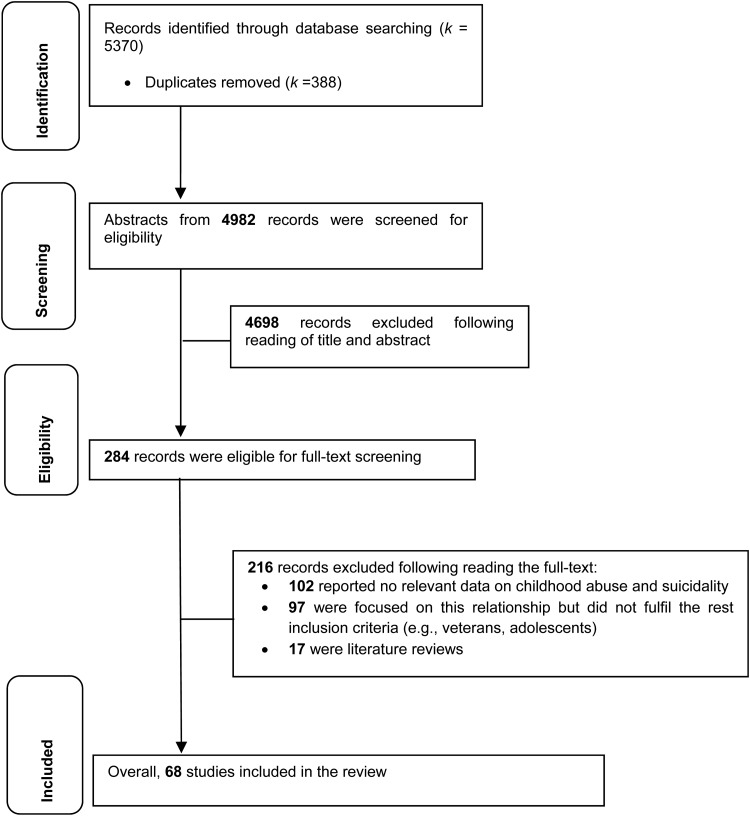
- Systematic review and meta-analysis following PRISMA and MOOSE, searching Medline, PsycINFO, Embase, Web of Science, and CINAHL up to 25 January 2018, plus reference checking and author contact.
- Included observational quantitative studies in English, peer-reviewed journals, with adults aged 18+ exposed to childhood maltreatment (abuse or neglect) and reporting suicidality outcomes; 68 independent studies were included.
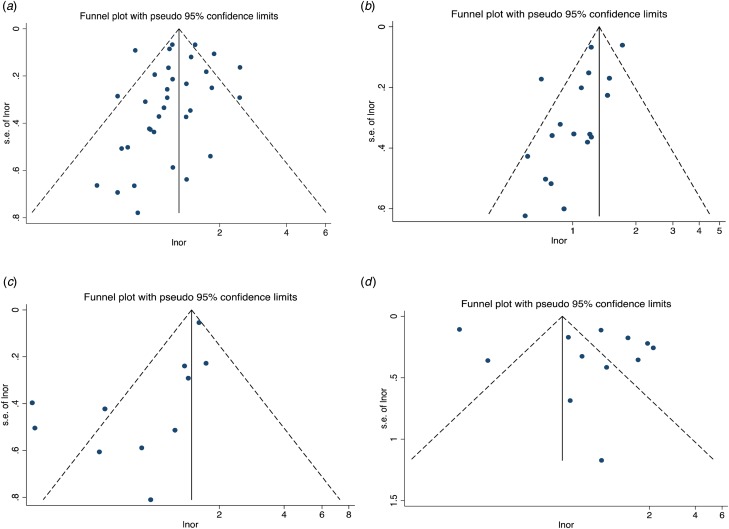
- Used random-effects meta-analysis with odds ratios as the effect size, assessed heterogeneity with I², tested publication bias with funnel plots/Egger’s test, and conducted univariable and multivariable meta-regressions on study-level moderators.
## Limitations
- The paper states that heterogeneity was significant across most analyses, despite use of random-effects models and meta-regression.
- The paper states that findings were derived from English-language peer-reviewed papers only, and one analysis (emotional abuse and suicide attempts) showed possible publication bias, so that result should be interpreted with caution.
- The paper states that many included studies were cross-sectional, limiting causal inference; the text also makes evident that some analyses were based on small numbers of studies, especially neglect outcomes, and that evidence on suicide deaths was sparse.
Model-written summary. Check it against the paper before relying on it.
Integrity signals
Registry
Cites
Statistics
Figures
Verification
Claims the paper makes
0 Valid · 0 Not valid · 9 Not checked · 29 Own results and interpretations
A result the paper reports from its own data — it cites no other source for it, so there is none to check. The quote shows it is in the paper.
In the paper
“emotional abuse (OR 2.49, 95% CI 1.64–3.77)”
- Also stated in: § Main meta-analyses: associations between types of childhood maltreatment and suicide attempts in adults · plain
“physical and emotional abuse were associated with a 2.5-fold increased risk for suicide attempts (k = 30, OR 2.52, 95% CI 2.09–3.04, I2 = 74.3% and k = 12, OR 2.49, 95% CI 1.64–3.77, I2 = 93.2%, respectively)”
§ Childhood maltreatment and adult suicidality: a comprehensive systematic review with meta-analysis > Abstract
plainstates an association- Asserted: passes — The authors put it forward as true.
- Checkable: passes — It can be checked against evidence.
- Load-bearing: passes — The paper’s conclusions depend on it.
- Based: passes — The paper gives a reason why it holds.
- Also stated in: § Main meta-analyses: associations between types of childhood maltreatment and suicide attempts in adults · plain
A result the paper reports from its own data — it cites no other source for it, so there is none to check. The quote shows it is in the paper.
In the paper
“Sexual abuse and emotional abuse were associated with a two-fold increased risk for suicidal ideation (k = 12, OR 2.15, 95% CI 1.77–2.62, I2 = 53.8% and k = 5, OR 2.10, 95% CI 1.51–2.94, I2 = 54.4%, respectively)”
§ Childhood maltreatment and adult suicidality: a comprehensive systematic review with meta-analysis > Results > Secondary meta-analyses: associations between types of childhood maltreatment and suicidal ideation in adults
plainstates an association- Asserted: passes — The authors put it forward as true.
- Checkable: passes — It can be checked against evidence.
- Load-bearing: passes — The paper’s conclusions depend on it.
- Based: passes — The paper gives a reason why it holds.
A result the paper reports from its own data — it cites no other source for it, so there is none to check. The quote shows it is in the paper.
In the paper
“The pooled effects of the main analyses indicate that all types of childhood maltreatment (except for physical neglect which is only based on four studies) were associated with significantly increased odds for suicide attempts in adults (Table 2).”
§ Childhood maltreatment and adult suicidality: a comprehensive systematic review with meta-analysis > Results > Main meta-analyses: associations between types of childhood maltreatment and suicide attempts in adults
hedgedstates an association- Asserted: passes — The authors put it forward as true.
- Checkable: passes — It can be checked against evidence.
- Load-bearing: passes — The paper’s conclusions depend on it.
- Based: passes — The paper gives a reason why it holds.
A result the paper reports from its own data — it cites no other source for it, so there is none to check. The quote shows it is in the paper.
In the paper
“whereas physical and any child abuse were associated with a 2.5-fold increased risk for suicidal ideation (k = 11, OR 2.43, 95% CI 1.85–3.18, I2 = 64.6% and k = 7, OR 2.66, 95% CI 1.93–3.68, I2 = 81.4%, respectively).”
§ Childhood maltreatment and adult suicidality: a comprehensive systematic review with meta-analysis > Results > Secondary meta-analyses: associations between types of childhood maltreatment and suicidal ideation in adults
plainstates an association- Asserted: passes — The authors put it forward as true.
- Checkable: passes — It can be checked against evidence.
- Load-bearing: passes — The paper’s conclusions depend on it.
- Based: passes — The paper gives a reason why it holds.
A result the paper reports from its own data — it cites no other source for it, so there is none to check. The quote shows it is in the paper.
In the paper
“Emotional and physical neglect were associated with 1.5-fold increased risk for suicidal ideation (k = 4, OR 1.40, 95% CI 1.02–1.93, I2 = 80.3% and k = 4, OR 1.44, 95% CI 1.06–1.95, I2 = 70.3%, respectively).”
§ Childhood maltreatment and adult suicidality: a comprehensive systematic review with meta-analysis > Results > Secondary meta-analyses: associations between types of childhood maltreatment and suicidal ideation in adults
plainstates an association- Asserted: passes — The authors put it forward as true.
- Checkable: passes — It can be checked against evidence.
- Load-bearing: passes — The paper’s conclusions depend on it.
- Based: passes — The paper gives a reason why it holds.
24 more claims
Create a free account to see all 38 claims and every source verdict.
- Probably not a substantial claim. 4
- It may state two separate claims as one. 6
Claims other papers make about this one
Each is checked against this paper’s own text: does it say what the citing paper says it does?
The source backs part of the claim, not all of it — or backs it for a different population, condition or comparison.
In the citing paper
“Victims of interpersonal violence, intimate partner violence, sexual violence, and childhood trauma have a substantial increase in likelihood of suicidality.14, 15, 16, 17”
From Global, regional, and national burden of suicide, 1990–2021: a systematic analysis for the Global Burden of Disease Study 2021 (2025) · cites this paper as [15]
Experimental — accuracy not yet measuredThe source backs part of the claim, not all of it — or backs it for a different population, condition or comparison.
In the citing paper
“Exposure to ACEs is associated with a higher risk of mental health disorders and suicidal behaviors in adulthood [6, 7], with a likely cumulative effect [8].”
From Association between adverse childhood experiences and suicidal behavior in affective disorders: A systematic review and meta-analysis (2025) · cites this paper as [6]
Experimental — accuracy not yet measured
Statistics that don’t add up
Each reported p-value recomputed from its test statistic and degrees of freedom, each partial η² from its F, and each ratio, mean difference or B printed with a p checked against its own confidence interval.
Rated major: it would touch a result — a value a result rests on, reported and recomputed p-values on opposite sides of the significance level, two passages that conflict with no sign which is right, or a cited work retracted before this paper was published.
In the paper
“χ2(3) = 3.99, p = 0.02”
§ Childhood maltreatment and adult suicidality: a comprehensive systematic review with meta-analysis > Results > Meta-regressions exploring the variance in the association between childhood maltreatment and suicide attempts
Reported p = .02 · recomputed p = .263
Rated major: it would touch a result — a value a result rests on, reported and recomputed p-values on opposite sides of the significance level, two passages that conflict with no sign which is right, or a cited work retracted before this paper was published.
In the paper
“χ2(3) = 3.11, p = 0.04”
§ Childhood maltreatment and adult suicidality: a comprehensive systematic review with meta-analysis > Results > Meta-regressions exploring the variance in the association between childhood maltreatment and suicide attempts
Reported p = .04 · recomputed p = .375
Statistics recomputed
Every reported test result, recomputed from its test statistic and degrees of freedom. A result shows as not adding up only once an independent check has confirmed it.
- Doesn’t add upχ²(3) = 3.11reported p = .04 · recomputed p = .375The two fall on opposite sides of .05
“χ2(3) = 3.11, p = .04”
- Doesn’t add upχ²(3) = 3.99reported p = .02 · recomputed p = .263The two fall on opposite sides of .05
“χ2(3) = 3.99, p = .02”
Self-check
Percentages, sums and reported differences re-computed from the paper’s own numbers.
Self-check results appear here once an independent check has confirmed them.
Citations
Cites
Preferred Reporting Items for Systematic Reviews and Meta-Analyses: the PRISMA statement
Moher, D., Liberati, A., Tetzlaff, J., Altman, D. G., & for the PRISMA Group (2009) · BMJ · doi:10.1136/bmj.b2535 · Cited by 83,823
Preferred Reporting Items for Systematic Reviews and Meta-Analyses: The PRISMA Statement
Moher, D., Liberati, A., Tetzlaff, J., Altman, D. G., & The PRISMA Group (2009) · PLoS Medicine · doi:10.1371/journal.pmed.1000097 · Cited by 64,042 · cited 2×
“This systematic review and meta-analysis is aligned with the Preferred Reporting Items for Systematic Reviews and MetaAnalyses (PRISMA) statement (Moher et al., 2009) and the Meta-Analysis of Observational Studies in Epidemiology (MOOSE; Stroup et al.”
Measuring inconsistency in meta-analyses
Higgins, J. P. T., Thompson, S. G., Deeks, J. J., & Altman, D. G. (2003) · BMJ · doi:10.1136/bmj.327.7414.557 · Cited by 63,139 · cited 1×
“Analyses were primarily conducted using a random effects model because we anticipated substantial heterogeneity, which was assessed with the I(2) statistic (Higgins et al., 2003).”
MethodBias in meta-analysis detected by a simple, graphical test
Egger, M., Smith, G. D., Schneider, M., & Minder, C. (1997) · BMJ · doi:10.1136/bmj.315.7109.629 · Cited by 56,722
Preferred reporting items for systematic reviews and meta-analyses: the PRISMA Statement.
(2009) · PubMed Central · Cited by 44,859
Dermyshi, E., Wang, Y., Yan, C., Hong, W., Qiu, G., Gong, X., & Zhang, T. (2017) · Neonatology · doi:10.1159/000454668 · Cited by 24,451
Meta-analysis of Observational Studies in Epidemiology<SUBTITLE>A Proposal for Reporting</SUBTITLE>
Stroup, D. F. (2000) · JAMA · doi:10.1001/jama.283.15.2008 · Cited by 20,623
Felitti, V. J., Anda, R. F., Nordenberg, D., Williamson, D. F., Spitz, A. M., Edwards, V., Koss, M. P., & Marks, J. S. (1998) · American Journal of Preventive Medicine · doi:10.1016/s0749-3797(98)00017-8 · Cited by 18,943 · cited 1×
“8% n/r Range = 18–64 5/6 Felitti et al. (1998) United States Crosssectional Questions from published surveys were used to construct the ACE Study questionnaire including the Conflicts Tactics Scale (CTS) and Wyatt (1985) Childhood physical, sexual and psychological abuse Behavioral Risk Factor…”
MethodWang, G., Ma, R., Qiao, G., Wada, K., Aizawa, Y., & Satoh, T. (2015) · Integrative Medicine International · doi:10.1159/000368408 · Cited by 18,657
Duval, S., & Tweedie, R. (2000) · Biometrics · doi:10.1111/j.0006-341x.2000.00455.x · Cited by 14,099 · cited 1×
“In case of possible publication bias, we used the Duval and Tweedie’s trim-and-fill method, which corrects the estimated effect size by yielding an estimate of the number of the missing studies (Duval and Tweedie, 2000).”
MethodPosttraumatic Stress Disorder in the National Comorbidity Survey
Kessler, R. C. (1995) · Archives of General Psychiatry · doi:10.1001/archpsyc.1995.03950240066012 · Cited by 10,379
Child abuse: Adolescent records vs. adult recall
Femina, D. D., Yeager, C. A., & Lewis, D. O. (1990) · Child Abuse & Neglect · doi:10.1016/0145-2134(90)90033-p · Cited by 8,820
How should meta‐regression analyses be undertaken and interpreted?
Thompson, S. G., & Higgins, J. P. T. (2002) · Statistics in Medicine · doi:10.1002/sim.1187 · Cited by 3,026 · cited 1×
“According to published guidance, each moderator value was based on a minimum of eight studies (Thompson and Higgins, 2002).”
MethodDube, S. R., Anda, R. F., Felitti, V. J., Chapman, D. P., Williamson, D. F., & Giles, W. H. (2001) · JAMA · doi:10.1001/jama.286.24.3089 · Cited by 2,296 · cited 11×
“Age (years) Q.A. Bryant and Range (1997) United States Crosssectional Child Sexual Abuse Questionnaire (CSAQ) and the Child Abuse Questionnaire Childhood physical and sexual abuse The Scale for Suicide Ideation, the Suicidal Behaviors Questionnaire, and the Brief Reasons for Living Inventory Suicidal ideation College…”
MethodInfluentialThomas, B. H., Ciliska, D., Dobbins, M., & Micucci, S. (2004) · Worldviews on Evidence-Based Nursing · doi:10.1111/j.1524-475x.2004.04006.x · Cited by 2,118 · cited 1×
“The methodological quality of the included studies was critically appraised by using six criteria which were adapted by the CRD’s guidance for undertaking reviews in health care (CRD, 2009) and the Quality Assessment Tool for Quantitative Studies (Thomas et al., 2004).”
MethodThe economic burden of child maltreatment in the United States and implications for prevention
Fang, X., Brown, D. S., Florence, C. S., & Mercy, J. A. (2012) · Child Abuse & Neglect · doi:10.1016/j.chiabu.2011.10.006 · Cited by 1,122 · cited 1×
“The economic burden of childhood maltreatment in terms of health care and medical costs, losses in productivity, welfare and special education costs are estimated around $124 billion in the USA alone (Fang et al., 2012).”
BackgroundPost-traumatic stress disorder in the community: an epidemiological study
Davidson, J. R. T., Hughes, D., Blazer, D. G., & George, L. K. (1991) · Psychological Medicine · doi:10.1017/s0033291700022352 · Cited by 969 · cited 1×
“Furthermore, childhood abuse has also been found to be strongly associated with a diagnosis of PTSD which is one of the most well-known risk factors for suicidality (Davidson et al., 1991; Panagioti et al., 2009, 2012; Tarrier and Gregg, 2004; Taylor et al., 2011).”
BackgroundEspinosa, J. C. (2004) · Cited by 939
Harbord, R. M., & Higgins, J. P. T. (2008) · The Stata Journal: Promoting communications on statistics and Stata · doi:10.1177/1536867x0800800403 · Cited by 897 · cited 1×
“We pooled all data in Stata 15 using the metan command and conducted univariable and multivariable meta-regressions to test the influence of study-level moderators on the associations between childhood maltreatment and suicide attempts using the metareg command (Harbord and Higgins, 2008).”
MethodHussey, J. M., Chang, J. J., & Kotch, J. B. (2006) · Pediatrics · doi:10.1542/peds.2005-2452 · Cited by 894 · cited 1×
“It is estimated that up to 30% of the general population have experienced childhood maltreatment (Hussey et al., 2006).”
BackgroundBROWN, J., COHEN, P., JOHNSON, J. G., & SMAILES, E. M. (1999) · Journal of the American Academy of Child & Adolescent Psychiatry · doi:10.1097/00004583-199912000-00009 · Cited by 842 · cited 1×
“…the Suicide Intent Scale Suicide attempts Participants with major depressive episode 136, response rate = 100% 36.03% male Mage = 39.5, S.D. = 12.9 3/5 Brown et al. (1999) United States Prospective Obtained from New York State Central Registry for Child Abuse and Neglect (NYSCR) Childhood…”
MethodInfluentialFERGUSSON, D. M., HORWOOD, L. J., & LYNSKEY, M. T. (1996) · Journal of the American Academy of Child & Adolescent Psychiatry · doi:10.1097/00004583-199610000-00024 · Cited by 826 · cited 1×
“…and the Health Appraisal Clinic’s questionnaire Suicide attempts General population 13 494, response rate = 70.5% 48% male Mage = 56.1 4/5 Fergusson et al. (1996) New Zealand Prospective A private structured interview Childhood sexual abuse A private structured Interview Suicide…”
BackgroundInfluentialViolence, Crime, and Abuse Exposure in a National Sample of Children and Youth: An Update
Finkelhor, D., Turner, H. A., Shattuck, A., & Hamby, S. L. (2013) · JAMA Pediatrics · doi:10.1001/jamapediatrics.2013.42 · Cited by 781 · cited 1×
“Physical, sexual and emotional or psychological abuse and neglect are among the most common types of maltreatment encountered by children and young people (Finkelhor et al., 2013).”
BackgroundAfifi, T. O., Enns, M. W., Cox, B. J., Asmundson, G. J. G., Stein, M. B., & Sareen, J. (2008) · American Journal of Public Health · doi:10.2105/ajph.2007.120253 · Cited by 563 · cited 12×
“Age (years) Q.A. Bryant and Range (1997) United States Crosssectional Child Sexual Abuse Questionnaire (CSAQ) and the Child Abuse Questionnaire Childhood physical and sexual abuse The Scale for Suicide Ideation, the Suicidal Behaviors Questionnaire, and the Brief Reasons for Living Inventory Suicidal ideation College…”
MethodInfluentialTowards an integrated motivational–volitional model of suicidal behaviour
O'connor, R. C. (2011) · International Handbook of Suicide Prevention · doi:10.1002/9781119998556.ch11 · Cited by 552
Brodsky, B. S., Oquendo, M., Ellis, S. P., Haas, G. L., Malone, K. M., & Mann, J. J. (2001) · American Journal of Psychiatry · doi:10.1176/appi.ajp.158.11.1871 · Cited by 438 · cited 1×
“…Suicidal ideation and suicide attempts Outpatients recruited for a randomized trial 311, response rate = 77.36% n/r Mage = 40.4, S.D. = 10.58 4/5 Brodsky et al. (2001) United States Crosssectional The Columbia Demographic and Treatment History Interview Childhood physical and sexual…”
BackgroundInfluentialThe role of defeat and entrapment in depression, anxiety, and suicide.
Taylor, P. J., Gooding, P., Wood, A. M., & Tarrier, N. (2011) · Psychological Bulletin · doi:10.1037/a0022935 · Cited by 417 · cited 1×
“Furthermore, childhood abuse has also been found to be strongly associated with a diagnosis of PTSD which is one of the most well-known risk factors for suicidality (Davidson et al., 1991; Panagioti et al., 2009, 2012; Tarrier and Gregg, 2004; Taylor et al., 2011).”
BackgroundImpact of childhood abuse on the clinical course of bipolar disorder
Garno, J. L., Goldberg, J. F., Ramirez, P. M., & Ritzler, B. A. (2005) · British Journal of Psychiatry · doi:10.1192/bjp.186.2.121 · Cited by 413 · cited 1×
“…Interview (CIDI) Suicidal ideation, suicide plans and suicide attempts Jewish-Israeli respondents 6656, response rate = 57.88% 49.15% male n/r 3/5 Garno et al. (2005) United States Crosssectional Childhood Trauma Questionnaire (CTQ) Childhood physical, sexual, emotional abuse and physical and…”
BackgroundInfluentialPrevalence and correlates of child sexual abuse: a national study
Pérez-Fuentes, G., Olfson, M., Villegas, L., Morcillo, C., Wang, S., & Blanco, C. (2013) · Comprehensive Psychiatry · doi:10.1016/j.comppsych.2012.05.010 · Cited by 377
Stein, D. J., Chiu, W. T., Hwang, I., Kessler, R. C., Sampson, N., Alonso, J., Borges, G., Bromet, E., Bruffaerts, R., de Girolamo, G., et al. (2010) · PLoS ONE · doi:10.1371/journal.pone.0010574 · Cited by 354
Joiner, T. E., Sachs-Ericsson, N. J., Wingate, L. R., Brown, J. S., Anestis, M. D., & Selby, E. A. (2007) · Behaviour Research and Therapy · doi:10.1016/j.brat.2006.04.007 · Cited by 335 · cited 1×
“…module Suicidal ideation, suicide plans and suicide attempts General population 2500, response rate = 54.76% 44% male 18 years and above 3/5 Joiner et al. (2007) United States Crosssectional The National Comorbidity Survey Childhood physical abuse, molestation, rape and verbal abuse…”
BackgroundInfluentialChildhood trauma and suicide attempt: a meta-analysis of longitudinal studies from the last decade
Zatti, C., Rosa, V., Barros, A., Valdivia, L., Calegaro, V. C., Freitas, L. H., Ceresér, K. M. M., Rocha, N. S. D., Bastos, A. G., & Schuch, F. B. (2017) · Psychiatry Research · doi:10.1016/j.psychres.2017.06.082 · Cited by 297 · cited 3×
“…of childhood maltreatment (e.g. use of the Childhood Trauma Questionnaire exclusively; CTQ; Liu et al., 2017), the study design (e.g. prospective studies only) and the date of publication (conducted within the last decade; Zatti et al., 2017), leading to the exclusion of several relevant studies.”
BackgroundResultPanagioti, M., Gooding, P. A., & Tarrier, N. (2012) · Comprehensive Psychiatry · doi:10.1016/j.comppsych.2012.02.009 · Cited by 280 · cited 1×
“Furthermore, childhood abuse has also been found to be strongly associated with a diagnosis of PTSD which is one of the most well-known risk factors for suicidality (Davidson et al., 1991; Panagioti et al., 2009, 2012; Tarrier and Gregg, 2004; Taylor et al., 2011).”
BackgroundSelf-citationChildhood sexual abuse as a precursor to depression and self‐destructive behavior in adulthood
Boudewyn, A. C., & Liem, J. H. (1995) · Journal of Traumatic Stress · doi:10.1002/jts.2490080307 · Cited by 277
Draper, B., Pfaff, J. J., Pirkis, J., Snowdon, J., Lautenschlager, N. T., Wilson, I., Almeida, O. P., & for the Depression and Early Prevention of Suicide in General Practice Study Group (2008) · Journal of the American Geriatrics Society · doi:10.1111/j.1532-5415.2007.01537.x · Cited by 275 · cited 1×
“…ideation and suicide attempts Participants with major depressive disorder 119, response rate = 100% 25.2% male Mage = 36.8, S.D. = 11.5 4/5 Draper et al. (2008) Australia Crosssectional Two questions in a postal questionnaire survey: ‘Were you the victim of any physical abuse before you…”
BackgroundInfluentialPost-traumatic stress disorder and suicidal behavior: A narrative review
Panagioti, M., Gooding, P., & Tarrier, N. (2009) · Clinical Psychology Review · doi:10.1016/j.cpr.2009.05.001 · Cited by 267
Self-citationWilliams, J. M. G., Barnhofer, T., Crane, C., & Beck, A. T. (2005) · Journal of Abnormal Psychology · doi:10.1037/0021-843x.114.3.421 · Cited by 250 · cited 2×
“…the Cry of pain model, and its antecessor, the Schematic Appraisals Model for Suicide (SAMS) suggest that childhood adversities give rise to increasingly worsening perceptions of defeat and entrapment which lead to suicidality as a means of escape (Johnson et al., 2008; Williams et al., 2005).”
BackgroundPredicting suicide attempts in young adults with histories of childhood abuse
Brezo, J., Paris, J., Vitaro, F., Hébert, M., Tremblay, R. E., & Turecki, G. (2008) · British Journal of Psychiatry · doi:10.1192/bjp.bp.107.037994 · Cited by 228 · cited 1×
“…suicidal ideation, and suicide attempts Suicidal ideation and suicide attempts College students 438, response rate = 100% 39.5% male Mage = 24.87 4/5 Brezo et al. (2008) Canada Prospective The Childhood Sexual Abuse Scale Suicidal ideation and College students 52.83% male 4/5 (Continued…”
BackgroundInfluentialPrevalence and Clinical Impact of Childhood Trauma in Patients With Severe Mental Disorders
Álvarez, M.-J., Roura, P., Osés, A., Foguet, Q., Solà, J., & Arrufat, F.-X. (2011) · Journal of Nervous & Mental Disease · doi:10.1097/nmd.0b013e31820c751c · Cited by 225 · cited 1×
“…via faceto-face interviews Suicidal ideation and suicide attempts General population 5692, response rate = 70.9% n/r 18 years and above 4/5 Álvarez et al. (2011) Spain Crosssectional The Traumatic Life Events Questionnaire (TLEQ) Childhood physical, sexual and psychological abuse Study…”
BackgroundInfluentialJohnson, J., Gooding, P., & Tarrier, N. (2008) · Psychology and Psychotherapy: Theory, Research and Practice · doi:10.1348/147608307x244996 · Cited by 222 · cited 4×
“…the Cry of pain model, and its antecessor, the Schematic Appraisals Model for Suicide (SAMS) suggest that childhood adversities give rise to increasingly worsening perceptions of defeat and entrapment which lead to suicidality as a means of escape (Johnson et al., 2008; Williams et al., 2005).”
BackgroundInfluentialSuicidal thoughts and behaviours in former sexual abuse victims.
Briere, J., & Runtz, M. (1986) · Canadian Journal of Behavioural Science / Revue canadienne des sciences du comportement · doi:10.1037/h0079962 · Cited by 218
Suicide risk in civilian PTSD patients: Predictors of suicidal ideation, planning and attempts
Tarrier, N., & Gregg, L. (2004) · Social Psychiatry and Psychiatric Epidemiology · doi:10.1007/s00127-004-0799-4 · Cited by 213 · cited 1×
“Furthermore, childhood abuse has also been found to be strongly associated with a diagnosis of PTSD which is one of the most well-known risk factors for suicidality (Davidson et al., 1991; Panagioti et al., 2009, 2012; Tarrier and Gregg, 2004; Taylor et al., 2011).”
BackgroundENNS, M. W., COX, B. J., AFIFI, T. O., DE GRAAF, R., TEN HAVE, M., & SAREEN, J. (2006) · Psychological Medicine · doi:10.1017/s0033291706008646 · Cited by 206 · cited 1×
“…measured using one item from the GMDS Suicidal ideation and suicide attempts Men with histories of CSA 487, response rate N/R, <70% 100% male Mage = 50.37, S.D. = 10.82 4/5 Enns et al. (2006) Netherlands Prospective Questions: ‘Before you reached the age of 16, were you ever psychologically abused?”
MethodInfluentialInteraction between Childhood Trauma and Serotonin Transporter Gene Variation in Suicide
Roy, A., Hu, X.-Z., Janal, M. N., & Goldman, D. (2007) · Neuropsychopharmacology · doi:10.1038/sj.npp.1301331 · Cited by 190 · cited 1×
“…question about ideation Suicidal ideation and suicide attempts Residential and outpatient drug addicts 2391, response rate = 33.46% 100% male n/r 3/5 Roy et al. (2007) United States Crosssectional Childhood Trauma Questionnaire (CTQ) Childhood physical, sexual, emotional abuse and physical and…”
BackgroundInfluentialFuller‐Thomson, E., Baird, S. L., Dhrodia, R., & Brennenstuhl, S. (2016) · Child: Care, Health and Development · doi:10.1111/cch.12351 · Cited by 183
Siddaway, A. P., Taylor, P. J., Wood, A. M., & Schulz, J. (2015) · Journal of Affective Disorders · doi:10.1016/j.jad.2015.05.046 · Cited by 183 · cited 1×
“A recent meta-analysis also highlighted the trans-diagnostic sequel of defeat and entrapment which is present in several conditions including depression, anxiety, PTSD and suicidality (Siddaway et al., 2015).”
Gibson, L. E., & Leitenberg, H. (2001) · Child Abuse & Neglect · doi:10.1016/s0145-2134(01)00279-4 · Cited by 178 · cited 1×
“Gibson and Leitenberg (2001) proposed that powerlessness mediates the relationship between sexual abuse and disengagement, defined as any form of cognitive or behavioral avoidance.”
BackgroundAssociations between suicidal behavior and childhood abuse and neglect: A meta-analysis
Liu, J., Fang, Y., Gong, J., Cui, X., Meng, T., Xiao, B., He, Y., Shen, Y., & Luo, X. (2017) · Journal of Affective Disorders · doi:10.1016/j.jad.2017.03.060 · Cited by 162 · cited 5×
“On the other hand, methodological restrictions have been applied regarding the definition of childhood maltreatment (e.g. use of the Childhood Trauma Questionnaire exclusively; CTQ; Liu et al., 2017), the study design (e.g. prospective studies only) and the date of publication (conducted within the last decade; Zatti…”
MethodResultInfluentialPompili, M., Innamorati, M., Lamis, D. A., Erbuto, D., Venturini, P., Ricci, F., Serafini, G., Amore, M., & Girardi, P. (2014) · Psychiatry Research · doi:10.1016/j.psychres.2014.07.056 · Cited by 139 · cited 12×
“Age (years) Q.A. Bryant and Range (1997) United States Crosssectional Child Sexual Abuse Questionnaire (CSAQ) and the Child Abuse Questionnaire Childhood physical and sexual abuse The Scale for Suicide Ideation, the Suicidal Behaviors Questionnaire, and the Brief Reasons for Living Inventory Suicidal ideation College…”
MethodInfluentialEmotional Abuse in Childhood Is a Differential Factor for the Development of Depression in Adults
Martins, C. M. S., Von Werne Baes, C., de Carvalho Tofoli, S. M., & Juruena, M. F. (2014) · Journal of Nervous & Mental Disease · doi:10.1097/nmd.0000000000000202 · Cited by 117 · cited 1×
“…Interview (CIDI) Suicidal ideation, suicide plans and suicide attempts General population 23 846, response rate = 3.47% n/r 18 years and above 3/5 Martins et al. (2014) Brazil Crosssectional Childhood Trauma Questionnaire (CTQ) Childhood physical, sexual, Beck Scale for Suicide Ideation…”
BackgroundInfluentialGender differences in responses to traumatic events: A prospective study
Freedman, S. A., Gluck, N., Tuval‐Mashiach, R., Brandes, D., Peri, T., & Shalev, A. Y. (2002) · Journal of Traumatic Stress · doi:10.1023/a:1020189425935 · Cited by 112 · cited 2×
“…and suicide attempts seems to be consistent with the extant literature which suggests that males and females do not differ in their exposure to the overall number of adversities in childhood but rather in their exposure to specific types of childhood maltreatment (Freedman et al., 2002).”
ResultRisk factors for unfavorable pregnancy outcome in women with adverse childhood experiences
Leeners, B., Rath, W. H., Block, E., Görres, G., & Tschudin, S. (2013) · Journal of Perinatal Medicine · doi:10.1515/jpm-2013-0003 · Cited by 104 · cited 1×
“…by clinicians Suicide ideation Psychiatric patients with a history of suicide attempts 338, response rate = 100% 35% Mage = 42.5 S.D. = 12.30 4/5 Leeners et al. (2014) Germany Crosssectional Interviews performed at support centers were used to diagnose Childhood physical and sexual…”
MethodInfluentialChildhood trauma and suicide attempts in patients with unipolar depression
Sarchiapone, M., Carli, V., Cuomo, C., & Roy, A. (2007) · Depression and Anxiety · doi:10.1002/da.20243 · Cited by 100 · cited 1×
“Age (years) Q.A. abuse and physical and emotional neglect Sarchiapone et al. (2007) Italy Crosssectional Childhood Trauma Questionnaire (CTQ) Childhood physical, sexual, emotional abuse and physical and emotional neglect A structured psychiatric interview Suicide attempts Patients with unipolar…”
BackgroundSuicide and fatal drug overdose in child sexual abuse victims: a historical cohort study
Cutajar, M. C., Mullen, P. E., Ogloff, J. R. P., Thomas, S. D., Wells, D. L., & Spataro, J. (2010) · Medical Journal of Australia · doi:10.5694/j.1326-5377.2010.tb03475.x · Cited by 97 · cited 2×
“We only identified one large retrospective study that presented relevant data on suicide deaths among 12 million participants (Cutajar et al., 2010); between 1964 and 1995 individuals who had been sexually abused had an 18-fold greater risk for dying by suicide (OR 18.”
BackgroundInfluentialAssessing suicidality in adults: Integrating childhood trauma as a major risk factor.
Read, J., Agar, K., Barker-Collo, S., Davies, E., & Moskowitz, A. (2001) · Professional Psychology: Research and Practice · doi:10.1037//0735-7028.32.4.367 · Cited by 97 · cited 1×
“…suicide plans and suicide attempts Psychiatric patients 163, response rate = 86% 49.08% male Mage = 42.1, S.D. = 14.2, range = 18 to 77 3/5 Read et al. (2001) New Zealand Crosssectional Files of clients whom were treated at a Community Mental Health Center Childhood physical and sexual…”
BackgroundInfluentialEaston, S. D., Renner, L. M., & O’Leary, P. (2013) · Child Abuse & Neglect · doi:10.1016/j.chiabu.2012.11.007 · Cited by 96 · cited 1×
“Suicide attempts General population (attending primary care) 26 824, response rate = 64.63% 54% male Mage = 56, S.D. = 15.2 3/5 Easton et al. (2013) United States Crosssectional Three questions: ‘About how many times were you sexually abused by the abuser?’”
BackgroundInfluentialMarshall, B. D. L., Galea, S., Wood, E., & Kerr, T. (2013) · American Journal of Public Health · doi:10.2105/ajph.2013.301257 · Cited by 92 · cited 1×
“…DIGS Suicidal ideation, suicidal attempts and suicidal intent Participants who attempted suicide 1563, response rate = 56.17% 29% Range = 18–75 3/5 Marshall et al. (2013) Prospective Childhood Trauma Questionnaire (CTQ) Childhood physical, sexual, emotional abuse and physical and emotional…”
BackgroundInfluentialChildhood traumatic experiences of patients with bipolar disorder type I and type II
Janiri, D., Sani, G., Danese, E., Simonetti, A., Ambrosi, E., Angeletti, G., Erbuto, D., Caltagirone, C., Girardi, P., & Spalletta, G. (2015) · Journal of Affective Disorders · doi:10.1016/j.jad.2014.12.055 · Cited by 92 · cited 1×
“…Neuropsychiatric Interview Suicide attempts Alcohol-dependent individuals 404, response rate = 95.54% 73.6% male Mage = 43.4, S.D. = 9.9 4/5 Janiri et al. (2015) Italy Crosssectional Childhood Trauma Questionnaire (CTQ) Childhood physical, sexual, emotional abuse and physical and emotional…”
InfluentialAnderson, P. L., Tiro, J. A., Price, A. W., Bender, M. A., & Kaslow, N. J. (2002) · Suicide and Life-Threatening Behavior · doi:10.1521/suli.32.2.131.24405 · Cited by 88 · cited 1×
“…live Suicide attempts Schizophrenia, bipolar disorder or schizoaffective disorder 102, response rate = 100% 53% male Mage = 39.4, S.D. = 10.4 4/5 Anderson et al. (2002) United States Crosssectional Three subscales of the Childhood Trauma Questionnaire (CTQ) Childhood physical, sexual and…”
BackgroundInfluentialChildhood Maltreatment, PTSD, and Suicidal Behavior Among African American Females
THOMPSON, M. P., KASLOW, N. J., LANE, D. B., & KINGREE, J. B. (2000) · Journal of Interpersonal Violence · doi:10.1177/088626000015001001 · Cited by 84 · cited 1×
“…reviews Death ideation, suicidal ideation and suicidal attempts Psychiatric patients 127, response rate = 100% 100% female 50 years and above 4/5 Thompson et al. (2000) United States Crosssectional Childhood Trauma Questionnaire (CTQ) Childhood physical, sexual, emotional abuse and physical…”
BackgroundHistory of childhood trauma as risk factors to suicide risk in major depression
Souza, L. D. D. M., Molina, M. L., da Silva, R. A., & Jansen, K. (2016) · Psychiatry Research · doi:10.1016/j.psychres.2016.11.002 · Cited by 84
Shattered childhood: a key issue in suicidal behavior among drug addicts?
Rossow, I., & Lauritzen, G. (2001) · Addiction · doi:10.1046/j.1360-0443.2001.9622275.x · Cited by 83 · cited 1×
“…files Suicidal ideation and suicide attempts Psychiatric patients 200, response rate = 100% 43% male Mage = 36.6, S.D. = 12.32, range = 18 to 69 3/5 Rossow and Lauritzen (2001) Norway Crosssectional Structured interview questionnaires with a question relating to childhood sexual abuse or…”
BackgroundInfluentialSuicidal behavior and abuse in psychiatric outpatients.
Kaplan, M., Asnis, G., Lipschitz, D., & Chorney, P. (1995) · Comprehensive Psychiatry · doi:10.1016/0010-440x(95)90087-c · Cited by 82 · cited 12×
“Age (years) Q.A. Kaplan et al. (1995) United States Crosssectional The Traumatic Experiences Questionnaire (TEQ) Childhood physical and sexual abuse Harkavy-Asnis Suicide Survey Suicidal ideation, suicide plans and suicide attempts Psychiatric outpatients 251, response rate = 100% 27% male Mage =…”
BackgroundInfluentialBruwer, B., Govender, R., Bishop, M., Williams, D. R., Stein, D. J., & Seedat, S. (2014) · BMJ Open · doi:10.1136/bmjopen-2013-004644 · Cited by 77 · cited 1×
“…Suicide attempts General population 1141, rate at baseline = 85.54%, follow-up response rate = 56% 52.27% male 18 years old at fourth assessment 5/6 Bruwer et al. (2014) South Africa Crosssectional A modified version of the Conflict Tactics Scale (CTS2) and a standardized definition of rape…”
BackgroundInfluentialGould, D. A. (1994) · Archives of Family Medicine · doi:10.1001/archfami.3.3.252 · Cited by 73 · cited 1×
“…neglect Semi-structured interview Suicide attempts Patients with bipolar disorder 100, response rate = 100% 51% male Mage = 41.6, S.D. = 12.3 4/5 Gould et al. (1994) United States Crosssectional An abuse questionnaire ascertaining information regarding six levels of unwanted physical contact…”
BackgroundInfluentialProtective Factors Against Suicidal Behavior in Depressed Adults Reporting Childhood Abuse
Dervic, K., Grunebaum, M. F., Burke, A. K., Mann, J. J., & Oquendo, M. A. (2006) · The Journal of Nervous and Mental Disease · doi:10.1097/01.nmd.0000243764.56192.9c · Cited by 72 · cited 1×
“…and suicide attempts Participants with major depressive disorder 473, response rate = 100% 16.3% male Mage = 36.2, S.D. = 11.4, range: 18–60 4/5 Dervic et al. (2006) United States Crosssectional Columbia Demographic and Treatment History Interview Childhood physical and sexual abuse Columbia…”
BackgroundInfluentialChildhood Adversities and Suicide Attempts: A Retrospective Study
Hardt, J., Sidor, A., Nickel, R., Käppis, B., Petrak, P., & Egle, U. T. (2008) · Journal of Family Violence · doi:10.1007/s10896-008-9196-1 · Cited by 68 · cited 1×
“…Adult Suicidal Ideation Questionnaire (ASIQ) Suicidal ideation College women 710, response rate = 90.7% 100% female Mage = 18.59, S.D. = 1.08 3/5 Hardt et al. (2008) Germany Crosssectional Sections of the Mainz Structured Biographical Interview (MSBI) Childhood physical and childhood sexual…”
BackgroundInfluentialBryan, C. J., McNaugton‐Cassill, M., Osman, A., & Hernandez, A. M. (2013) · Suicide and Life-Threatening Behavior · doi:10.1111/sltb.12011 · Cited by 66 · cited 1×
“…Diagnostic Interview (WHO CIDI) Suicidal ideation and suicide attempts General population 5089, response rate = 85.5% 46.3% male Mage = 37 4/5 Bryan et al. (2013) United States Crosssectional Presented with a list of potentially stressful or traumatic events and asked to indicate whether…”
BackgroundInfluentialType and severity of child abuse and college students' lifetime suicidality
Bryant, S. L., & Range, L. M. (1997) · Child Abuse & Neglect · doi:10.1016/s0145-2134(97)00092-6 · Cited by 66 · cited 12×
“Age (years) Q.A. Bryant and Range (1997) United States Crosssectional Child Sexual Abuse Questionnaire (CSAQ) and the Child Abuse Questionnaire Childhood physical and sexual abuse The Scale for Suicide Ideation, the Suicidal Behaviors Questionnaire, and the Brief Reasons for Living Inventory Suicidal ideation College…”
MethodInfluentialChildhood adversity and midlife suicidal ideation
Stansfeld, S. A., Clark, C., Smuk, M., Power, C., Davidson, T., & Rodgers, B. (2017) · Psychological Medicine · doi:10.1017/s0033291716002336 · Cited by 66
Child abuse and the prevalence of suicide attempts among those reporting suicide ideation
Martin, M. S., Dykxhoorn, J., Afifi, T. O., & Colman, I. (2016) · Social Psychiatry and Psychiatric Epidemiology · doi:10.1007/s00127-016-1250-3 · Cited by 59 · cited 1×
“…you ever attempted suicide in your lifetime’ Suicide attempts Illicit drug users 1634, response rate = 66.64% 67.9% male Median = 42, range: 19–71 3/5 Martin et al. (2016) Canada Crosssectional Childhood Experiences of Violence Questionnaire (CEVQ) Childhood sexual and physical abuse Three…”
BackgroundInfluentialChildhood Physical and Sexual Abuse in Depressed Patients with Single and Multiple Suicide Attempts
Andover, M. S., Zlotnick, C., & Miller, I. W. (2007) · Suicide and Life-Threatening Behavior · doi:10.1521/suli.2007.37.4.467 · Cited by 53 · cited 1×
“…African-American women presenting for medical care 392, response rate = 91.84% 100% female Mage = 32, S.D. = 10.38, range = 18–64 4/5 Andover et al. (2007) United States Crosssectional Clinician Administered Physical and Sexual Abuse Interview for Adults Childhood physical and…”
BackgroundInfluentialGender in Suicide Attempt Rates and Childhood Sexual Abuse Rates: Is There an Interaction?
Roy, A., & Janal, M. (2006) · Suicide and Life-Threatening Behavior · doi:10.1521/suli.2006.36.3.329 · Cited by 52 · cited 1×
“…and history of attempting suicide Suicide attempts Abstinent substancedependent patients 306, response rate = 83.99% 100% male 18 years and above 4/5 Roy and Janal (2006) United States Crosssectional Childhood Trauma Questionnaire (CTQ) Childhood physical, sexual, emotional abuse and physical and…”
BackgroundInfluentialDaray, F. M., Rojas, S. M., Bridges, A. J., Badour, C. L., Grendas, L. N., Rodante, D., Puppo, S., & Rebok, F. (2016) · Child Abuse & Neglect · doi:10.1016/j.chiabu.2016.06.011 · Cited by 52 · cited 1×
“…suicidality section of the MINIPlus Suicide risk Psychiatric outpatients 1245, response rate = 100% 39.6% male Mage = 38.1, S.D. = 13.2 4/5 Daray et al. (2016) Argentina Crosssectional A semi-structure interview and dichotomously coded as yes or no Childhood sexual abuse Identified during…”
InfluentialBornovalova, M. A., Tull, M. T., Gratz, K. L., Levy, R., & Lejuez, C. W. (2011) · Psychological Trauma: Theory, Research, Practice, and Policy · doi:10.1037/a0021579 · Cited by 51 · cited 1×
“…maltreatment Assessed in its own section of the WMHCIDI Suicidal ideation General population 20 013, response rate = 74.38% 47.9% male Mage = 45 4/5 Bornovalova et al. (2011) United States Crosssectional Emotional, physical, and sexual abuse subscales of the Childhood Trauma QuestionnaireShort…”
BackgroundInfluentialBakhiyi, C. L., Jaussent, I., Béziat, S., Cohen, R. F., Genty, C., Kahn, J., Leboyer, M., Vaou, P. L., Guillaume, S., & Courtet, P. (2017) · Journal of Psychiatric Research · doi:10.1016/j.jpsychires.2016.12.022 · Cited by 51
History of sexual abuse and suicide attempts in alcohol-dependent patients
Jakubczyk, A., Klimkiewicz, A., Krasowska, A., Kopera, M., Sławińska-Ceran, A., Brower, K. J., & Wojnar, M. (2014) · Child Abuse & Neglect · doi:10.1016/j.chiabu.2014.06.010 · Cited by 48 · cited 1×
“…with schizophrenia 361, response rate = 100% 67.87% male Mage (no trauma) = 39.47, S.D. = 13.1, Mage (with trauma) = 44.63, S.D. = 12.38 4/5 Jakubczyk et al. (2014) Poland Crosssectional Substance Abuse Outcomes Module (SAOM) Childhood sexual abuse MINI International Neuropsychiatric…”
InfluentialChildhood maltreatment, object relations, and suicidal behavior in women.
Twomey, H. B., Kaslow, N. J., & Croft, S. (2000) · Psychoanalytic Psychology · doi:10.1037//0736-9735.17.2.313 · Cited by 48 · cited 1×
“…for nonmedical reasons Suicide attempts Women from the general population 335, response rate = 100% 100% female Mage = 32.17, S.D. = 10.30 4/5 Twomey et al. (2000) United States Crosssectional Childhood Trauma Questionnaire (CTQ) Childhood physical, sexual, emotional abuse and physical and…”
BackgroundInfluentialPredictors of suicide in patients with conversion disorder
Güleç, M. Y., Ýnanç, L., Yanartaþ, Ö., Üzer, A., & Güleç, H. (2013) · Comprehensive Psychiatry · doi:10.1016/j.comppsych.2013.10.009 · Cited by 48 · cited 1×
“Suicide attempts General population (attending primary care) 778, response rate = 37.53% 28.77% male Mage (female) = 40, Mage (male) = 42 3/5 Güleç et al. (2014) Turkey Crosssectional Childhood Trauma Questionnaire (CTQ) Childhood physical, sexual, emotional abuse and physical and A…”
BackgroundInfluentialBeristianos, M. H., Maguen, S., Neylan, T. C., & Byers, A. L. (2016) · Depression and Anxiety · doi:10.1002/da.22485 · Cited by 48 · cited 1×
“…abuse Interview not specified Suicide attempts Participants with major depressive disorder 121, response rate = 76.86% 26.9% male Range: 18–65 2/5 Beristianos et al. (2016) United States Crosssectional The World Health Organization’s World Mental Health (WMH) survey Childhood…”
BackgroundInfluentialHistory of Childhood Abuse and Neglect and Suicidal Behavior at Hospital Admission
Sfoggia, A., Pacheco, M. A., & Grassi-Oliveira, R. (2008) · Crisis · doi:10.1027/0227-5910.29.3.154 · Cited by 45 · cited 1×
“…structured psychiatric interview Suicide attempts Patients with unipolar depression 108, response rate = 100% 38.89% male 8 years and above 4/5 Sfoggia et al. (2008) Brazil Crosssectional Childhood Trauma Questionnaire (CTQ) Childhood physical, sexual, emotional abuse and physical and…”
BackgroundInfluentialChildhood maltreatment increases the risk of suicide attempt in schizophrenia
Hassan, A. N., Stuart, E. A., & De Luca, V. (2016) · Schizophrenia Research · doi:10.1016/j.schres.2016.05.012 · Cited by 44 · cited 1×
“…Structured Biographical Interview (MSBI) Suicide attempts Psychiatric patients 575, response rate = 100% 25.22% male Mage = 44.7, S.D. = 11.6 3/5 Hassan et al. (2016) Canada Crosssectional Childhood Trauma Questionnaire (CTQ) Childhood physical, sexual, emotional abuse and physical and…”
BackgroundInfluentialKim, S.-W., Kang, H.-J., Kim, S.-Y., Kim, J.-M., Yoon, J.-S., Jung, S.-W., Lee, M.-S., Yim, H.-W., & Jun, T.-Y. (2013) · Depression and Anxiety · doi:10.1002/da.22088 · Cited by 44 · cited 2×
“…physical and sexual abuse Harkavy-Asnis Suicide Survey Suicidal ideation, suicide plans and suicide attempts Psychiatric outpatients 251, response rate = 100% 27% male Mage = 38.7, range: 18–87 3/5 Kim et al. (2013) Korea Prospective A checklist which allowed respondents to indicate events.”
BackgroundInfluentialLópez‐Castromán, J., Jaussent, I., Béziat, S., Genty, C., Olié, É., de León-Martínez, V., Baca‐García, E., Malafosse, A., Courtet, P., & Guillaume, S. (2012) · Journal of Affective Disorders · doi:10.1016/j.jad.2012.04.025 · Cited by 44
Sadeh, N., & McNiel, D. E. (2013) · Journal of Abnormal Psychology · doi:10.1037/a0032769 · Cited by 36 · cited 1×
“…Standardized definition of suicide attempts included Suicide attempts Abstinence, substance-dependent patients 1889, response rate = 100% 85.55% male Mage = 40.3, S.D. = 8.0 4/5 Sadeh and McNiel (2013) United States Prospective One questions: ‘Did anyone ever sexually abuse or assault you?’”
BackgroundInfluentialBrodbeck, J., Faßbinder, E., Schweiger, U., Fehr, A., Späth, C., & Klein, J. P. (2018) · Journal of Affective Disorders · doi:10.1016/j.jad.2017.12.077 · Cited by 35 · cited 1×
“…Suicidal ideation and suicide attempts Women presenting at the Crisis Counseling program 195, response rate = 100% 100% female Mage = 27.4 3/5 Brodbeck et al. (2018) Germany Crosssectional Childhood Trauma QuestionnaireShort Form (CTQ-SF) Childhood abuse and neglect The German version of…”
BackgroundInfluentialShinozaki, G., Romanowicz, M., Mrazek, D. A., & Kung, S. (2013) · Journal of Affective Disorders · doi:10.1016/j.jad.2013.05.028 · Cited by 35 · cited 2×
“…Module of the WMHCIDI Suicidal ideation and suicide attempts General population 125, response rate = 96% 40% male Mage = 42.5, S.D. = 15.6 4/5 Shinozaki et al. (2013a) United States Crosssectional Obtained from electronic records based on the selfreport of the patients during their thorough…”
BackgroundMethodInfluentialFuller‐Thomson, E., Baker, T. M., & Brennenstuhl, S. (2012) · Suicide and Life-Threatening Behavior · doi:10.1111/j.1943-278x.2012.00089.x · Cited by 34
Talbot, N. L., Duberstein, P. R., Cox, C., Denning, D., & Conwell, Y. (2004) · The American Journal of Geriatric Psychiatry · doi:10.1097/00019442-200409000-00014 · Cited by 33 · cited 11×
“Age (years) Q.A. Diagnostic Interview (CID) Talbot et al. (2004) United States Crosssectional A single-item question administered during structured interview and by chart reviews Childhood sexual abuse Scale of Suicidal Ideation (SSI), and patients’ self-report and chart reviews Death ideation, suicidal ideation and s…”
MethodInfluentialShinozaki, G., Romanowicz, M., Passov, V., Rundell, J. R., Mrazek, D. A., & Kung, S. (2012) · Journal of Affective Disorders · doi:10.1016/j.jad.2012.11.043 · Cited by 25 · cited 2×
“…Module of the WMHCIDI Suicidal ideation and suicide attempts General population 125, response rate = 96% 40% male Mage = 42.5, S.D. = 15.6 4/5 Shinozaki et al. (2013a) United States Crosssectional Obtained from electronic records based on the selfreport of the patients during their thorough…”
BackgroundMethodInfluentialImpact of childhood abuse on suicide-related behavior: Analysis using marginal structural models
Obikane, E., Shinozaki, T., Takagi, D., & Kawakami, N. (2018) · Journal of Affective Disorders · doi:10.1016/j.jad.2018.02.034 · Cited by 25 · cited 1×
“…variables and clinical variables Suicide attempts Outpatients with bipolar disorder 91, response rate = 100% 56% male Mage = 38.3, S.D. = 11.7 4/5 Obikane et al. (2018) Japan Crosssectional Two questions: ‘Have you been physically abused by one or both of your parents before you finished a…”
BackgroundInfluentialChildhood trauma and suicide risk in the population living in Z onguldak P rovince
Saraçlı, Ö., Atasoy, N., Şenormancı, Ö., Atik, L., Açıkgöz, H. O., Doğan, V., Sankır, H., Köktürk, F., & Örsel, S. (2015) · Asia-Pacific Psychiatry · doi:10.1111/appy.12214 · Cited by 22
Gutierrez, P. M. (2000) · Death Studies · doi:10.1080/074811800750036569 · Cited by 21 · cited 1×
“Age (years) Q.A. emotional neglect Gutierrez et al. (2000) United States Crosssectional The Childhood Sexual Experiences Questionnaire (CSEQ) and the Childhood Physical Experience Questionnaire (CPEQ) Childhood sexual and physical abuse The Multi-Attitude Suicide Tendency Scale (MAST) and the Adult…”
MethodCarlier, I. V. E., Hovens, J. G. F. M., Streevelaar, M. F., van Rood, Y. R., & van Veen, T. (2016) · International Journal of Social Psychiatry · doi:10.1177/0020764016629701 · Cited by 20 · cited 1×
“…Questionnaire, and the Brief Reasons for Living Inventory Suicidal ideation College students 486, response rate = 100% 26% male Mage = 23.6 3/5 Carlier et al. (2016) Netherlands Crosssectional Childhood Trauma Questionnaire (CTQ) Childhood physical, sexual, emotional abuse and emotional…”
MethodInfluentialCognitive styles and clinical correlates of childhood abuse in bipolar disorder
Perich, T., Mitchell, P. B., Loo, C., Hadzi‐Pavlovic, D., Roberts, G., Green, M., Frankland, A., Lau, P., & Corry, J. (2014) · Bipolar Disorders · doi:10.1111/bdi.12212 · Cited by 17 · cited 1×
“…(NESARC) survey Suicidal ideation and suicide attempts General population 34 653, response rate = 98.74% 47.79% male 18 years and above 4/5 Perich et al. (2014) Australia Crosssectional An interview schedule Childhood physical and sexual abuse A clinical psychiatric symptom interview…”
BackgroundInfluentialJeon, H. J., Lee, C., D, M. F. M., Mischoulon, D., Shim, E., Heo, J.-Y., Choi, H. Y., & Park, J. (2014) · The Journal of Nervous and Mental Disease · doi:10.1097/nmd.0000000000000217 · Cited by 17 · cited 1×
“…diagnosed with bipolar disorder (BD) I and bipolar disorder II 104, response rate = 100% 59.62% male Mage (BD-I) = 43.93, Mage (BD-II) = 46.32 4/5 Jeon et al. (2014) South Korea Crosssectional The Early Trauma Inventory Self Report-Short Form (ETISR-SF) Childhood physical, sexual and emotional…”
BackgroundInfluentialFudalej, S., Ilgen, M. A., Kołodziejczyk, I., Podgórska, A., Serafin, P., Barry, K. L., Wojnar, M., Blow, F. C., & Bohnert, A. M. (2015) · Journal of Addiction Medicine · doi:10.1097/adm.0000000000000153 · Cited by 15 · cited 2×
“…assessed using two main methods: (i) 44 studies used self-report questionnaires and (ii) 23 studies used clinical interviews and other objective methods (e.g. five studies retrieved relevant information by patient records; only one study by Fudalej et al. (2015) did not specify the tools utilized).”
BackgroundMethodInfluentialMcKenna, Á. E., & Gillen, A. M. C. (2015) · Journal of Psychiatric Research · doi:10.1016/j.jpsychires.2015.11.001 · Cited by 14 · cited 1×
“Age (years) Q.A. emotional abuse and physical and emotional neglect McKenna and Gillen (2016) N. Ireland Crosssectional A modified version of Conflict Tactics Scale (CTS) Sexual, physical abuse and neglect Suicidality module of the WMH CIDI Suicidality General population 1986 response rate = 45.76%…”
InfluentialFactors associated with suicide attempts in patients with bipolar disorder type I.
Mert, D. G., Kelleci, M., Mızrak, A., Semız, M., & Demir, M. (2015) · PubMed · Cited by 13
Child/Adolescent Abuse and Suicidal Behavior: Are They Sex Related?
Gal, G., Levav, I., & Gross, R. (2012) · Suicide and Life-Threatening Behavior · doi:10.1111/j.1943-278x.2012.00118.x · Cited by 9 · cited 2×
“Empirical research has shown strong links between several types of childhood maltreatment and adult suicidality among individuals in the community and those diagnosed with psychiatric disorders (Gal et al., 2012; Kim et al., 2013).”
BackgroundInfluential
Research works printed but not linked: 7
- 2013, Depression and Anxiety, 30, 924
- 2004, Social Psychiatry and Psychiatric Epidemiology, 39, 655
- 2016, Psychological Medicine, 47, 327
- 1991, Psychological Medicine, 121, 713
- 2015, Asia-Pacific Psychiatry, 8, 136
- 2015, Psychiatria Danubina, 27, 236
- 2013, American Journal of Public Health, 103, e69
Cited by
Angelakis, I., Austin, J. L., & Gooding, P. (2020) · JAMA Network Open · doi:10.1001/jamanetworkopen.2020.12563 · Cited by 385
Self-citationBaldwin, J. R., Wang, B., Karwatowska, L., Schoeler, T., Tsaligopoulou, A., Munafò, M. R., & Pingault, J.-B. (2023) · American Journal of Psychiatry · doi:10.1176/appi.ajp.20220174 · Cited by 313
“, within-article) variance, (3) between-study variance, and (4) between samples variance, and applied robust standard errors to the main meta-analytic models.”
BackgroundAssociation of Childhood Adversity With Morbidity and Mortality in US Adults: A Systematic Review
Grummitt, L. R., Kreski, N. T., Kim, S. G., Platt, J., Keyes, K. M., & McLaughlin, K. A. (2021) · JAMA Pediatrics · doi:10.1001/jamapediatrics.2021.2320 · Cited by 203
Johnson, D., Policelli, J., Li, M., Dharamsi, A., Hu, Q., Sheridan, M. A., McLaughlin, K. A., & Wade, M. (2021) · JAMA Pediatrics · doi:10.1001/jamapediatrics.2021.2511 · Cited by 172
Davis Weaver, N., Bertolacci, G. J., Rosenblad, E., Ghoba, S., Cunningham, M., Ikuta, K. S., Moberg, M. E., Mougin, V., Han, C., Wool, E. E., et al. (2025) · The Lancet Public Health · doi:10.1016/s2468-2667(25)00006-4 · Cited by 181
Metadata
- Authors
- Angelakis, I., Gillespie, E. L., & Panagioti, M.
- Affiliations
- University of South Wales (GB)
- Manchester Academic Health Science Centre (GB)
- Corresponding author
- Angelakis, Ioannis
- Venue
- Psychological Medicine
- Publisher
- Cambridge University Press (CUP)
- Published
- 2019-01-04
- Volume
- 49
- Issue
- 07
- Pages
- 1057-1078
- ISSN
- 0033-2917 (ISSN-L)
- 1469-8978
- PMC
- PMC6498789
- OpenAlex
- W2908364980
- Cited by
- 479
- References
- 102
- Citations by year
- 2026: 94 · 2025: 86 · 2024: 64 · 2023: 68 · 2022: 60 · 2021: 55 · 2020: 37 · 2019: 14
- FWCI
- 6.54
- Type
- journal article
- Language
- en
- Open access
- hybrid
- doi.org
- Locations
- Psychological Medicine (publishedVersion, cc-by)
- PubMed Central (publishedVersion, cc-by)
- PubMed (publishedVersion)
- Research Explorer (The University of Manchester) (publishedVersion, cc-by)
- Topics
- Social Sciences › Psychology › Clinical Psychology › Child Abuse and Trauma
- Social Sciences › Psychology › Clinical Psychology › Suicide and Self-Harm Studies
- Social Sciences › Sociology and Political Science › Homicide, Infanticide, and Child Abuse
- Keywords
- child abuse, suicidality, suicide attempts, suicidal ideation, sexual abuse, physical abuse, emotional abuse, adult mental health
- MeSH terms
- Adverse Childhood Experiences, Correlation of Data, Adolescent, Adult, Child, Child Abuse, Child Abuse, Sexual, Female, Humans, Male, Middle Aged, Prisoners, Risk, Suicide, Suicide, Attempted, Prevalence, Odds Ratio, Young Adult, Suicidal Ideation
About these checks
Registry, retraction, Cites and statistics results are computed, not judged, with one exception: a printed reference that no index lists is read once by a model before it counts as a citation error. Claims are extracted by a model and kept only when their quote appears verbatim in the text; each cited source is then checked, with a model’s help, for whether it says what the claim relies on. Those verdicts can be wrong — read the claim’s quote and the cited source before relying on one.
A language model drew the claims from the paper on 2026-10-09, under version 3 of the claim definition (model deepseek-v4.1-flash, prompt extract-v3).
A second model labelled each claim on 2026-10-09 (model jev-1.13-20260917, definition revision gold-guideline-v0.2).
Statistics and arithmetic are recomputed, not judged.
Confidence bands are shown only for fields calibrated on our annotated test set. None is calibrated yet, so no band is shown.
What counts as a claim ›How we measure confidence ›How we check this ›
Are you an author, or do you see a problem with this page? Request a review
Data sources
Bibliographic data: Semantic Scholar, OpenAlex, Crossref.
Contains information from the Semantic Scholar Academic Graph Datasets, made available under the ODC Attribution License (ODC-BY 1.0).
Semantic Scholar’s data is described in: Kinney, R., et al. (2023). The Semantic Scholar Open Data Platform. arXiv:2301.10140.
