

The development of cognitive flexibility and its implications for mental health disorders
Open accessThe DOI matches its Crossref record; 73 of the 75 references it cites were found in a registry or an index, and 2 are not checked yet; none of the 61 sources its claims cite is checked for support yet.
Checked 2026-10-05 · 2 references not checked yet
Overview
CoChat Summary
TL;DR
This editorial reviews the lifespan development of cognitive flexibility (CF) and its implications for mental health disorders, emphasizing environmental and modifiable influences. It argues CF is malleable across life stages, but evidence on training transfer and bilingualism remains inconclusive.
Key findings
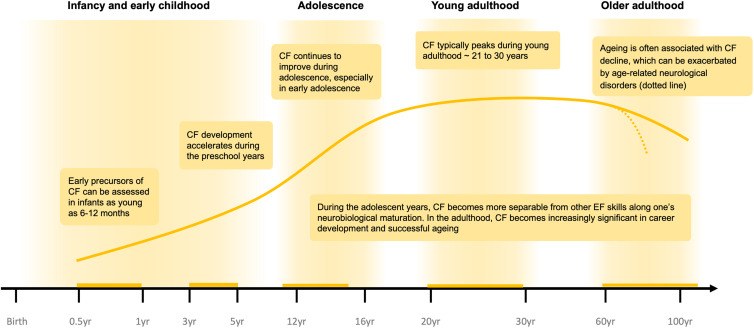
- CF has a protracted developmental trajectory: precursors emerge from 6–12 months, accelerate during preschool, approximate adult levels from ~12 years, peak around ages 21–30, remain stable until about age 50, and then slowly decline in older adulthood.
- CF is impaired in mental health disorders including autism spectrum disorder, obsessive-compulsive disorder (OCD), and schizophrenia; for example, 7- to 18-year-olds with autism show significant CF dysfunction on the CANTAB IED, and adults with OCD show severe CF impairment likely due to fronto-striatal circuitry disruptions.
- Modifiable factors may shape CF: quality of early caregiving, stress management via mindfulness and exercise, and second-language learning; twin studies suggest CF is influenced more by environmental than genetic factors compared with working memory.
- Interventions may improve CF at all life stages, but transfer effects are uncertain; one study suggests CF is separable from executive function, so CF training may not broadly transfer to other executive functions.
Methods
- Narrative editorial/review synthesizing prior literature across infancy, childhood, adolescence, young adulthood, and older adulthood; no primary empirical data, sample, or formal analysis are reported.
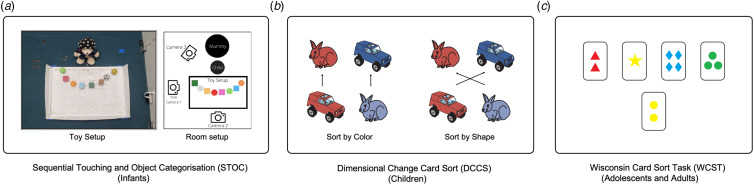
- Discusses age-appropriate CF tasks (e.g., Sequential Touching and Object Categorization, Dimensional Change Card Sort, Wisconsin Card Sort Task, CANTAB IED) and intervention examples (e.g., Attachment and Biobehavioral Catch-up, mindfulness/exercise, language learning) as illustrative.
- No systematic search strategy, meta-analysis, or quantitative synthesis is described.
Limitations
- Stated: more longitudinal data are required to understand CF across the lifespan, and stability before 24 months is unclear because studies have given mixed results.
- Stated: the relative paucity and specificity of age-appropriate tasks for measuring emerging executive function in infancy and childhood confounds interpretation of developmental differentiation; many child tasks require language skills.
- Stated: bilingualism findings remain inconclusive partly because bilingualism is often measured as a binary rather than a multifactorial continuum, and CF training research has inconsistent findings and ambiguous transfer effects. Evident: as an editorial, it is not a systematic review and provides no formal quality appraisal.
Model-written summary. Check it against the paper before relying on it.
Integrity signals
Registry
Cites
Statistics
Figures
Verification
Claims the paper makes
0 Valid · 0 Not valid · 48 Not checked · 8 Own results and interpretations
In the paper
“CF is also impaired in a number of mental health disorders, including autism spectrum disorder (ASD) (Hughes, Russell, & Robbins, 1994)”
§ The development of cognitive flexibility and its implications for mental health disorders > Overview
What the sources say
- Not checked yetcites Hughes, Russell, & Robbins, 1994
plainstates an association- Asserted: passes — The authors put it forward as true.
- Checkable: passes — It can be checked against evidence.
- Load-bearing: unclear — It is unclear whether the paper’s conclusions depend on it.
- Based: passes — The paper gives a reason why it holds.
None of the sources cited for this claim have been checked yet.
In the paper
“Specifically, factors such as caregiver interactions (Nelson, 2007), pronounced sensory deprivation (McLaughlin, Sheridan, & Lambert, 2014), prenatal exposure to substances (Mackey, Raizada, & Bunge, 2013), and early adverse experiences (Hodel, 2018) can impact PFC maturation.”
§ The development of cognitive flexibility and its implications for mental health disorders > Development of cognitive flexibility > Neurobiological origins
What the sources say
- Not checked yetcites Nelson, 2007
- Not checked yetcites McLaughlin, Sheridan, & Lambert, 2014
- Not checked yetcites Mackey, Raizada, & Bunge, 2013
plainstates a possible cause- Asserted: passes — The authors put it forward as true.
- Checkable: passes — It can be checked against evidence.
- Load-bearing: passes — The paper’s conclusions depend on it.
- Based: passes — The paper gives a reason why it holds.
In the paper
“Together with other core EF skills, CF development accelerates during the preschool years (Hughes, 1998) and is only thought to reach maturity during late childhood or early adolescence (Kupis & Uddin, 2023).”
§ The development of cognitive flexibility and its implications for mental health disorders > Development of cognitive flexibility > Measuring emerging cognitive flexibility
What the sources say
- Not checked yetcites Hughes, 1998
plainstates a cause- Asserted: passes — The authors put it forward as true.
- Checkable: passes — It can be checked against evidence.
- Load-bearing: unclear — It is unclear whether the paper’s conclusions depend on it.
- Based: passes — The paper gives a reason why it holds.
In the paper
“Although the PFC is relatively late maturing, this region already begins to undergo synaptic pruning and myelination from the first year of life (Collin & van den Heuvel, 2013).”
§ The development of cognitive flexibility and its implications for mental health disorders > Development of cognitive flexibility > Neurobiological origins
What the sources say
- Not checked yetcites Collin & van den Heuvel, 2013
plain- Asserted: passes — The authors put it forward as true.
- Checkable: passes — It can be checked against evidence.
- Load-bearing: unclear — It is unclear whether the paper’s conclusions depend on it.
- Based: passes — The paper gives a reason why it holds.
In the paper
“The emergence of CF is linked to maturation of the prefrontal cortex (PFC) and inferior parietal cortex (Ezekiel, Bosma, & Morton, 2013).”
§ The development of cognitive flexibility and its implications for mental health disorders > Development of cognitive flexibility > Neurobiological origins
What the sources say
- Not checked yetcites Ezekiel, Bosma, & Morton, 2013
plainstates an association- Asserted: passes — The authors put it forward as true.
- Checkable: passes — It can be checked against evidence.
- Load-bearing: passes — The paper’s conclusions depend on it.
- Based: passes — The paper gives a reason why it holds.
37 more claims
Create a free account to see all 56 claims and to verify the 61 references still open.
- It may state two separate claims as one. 13
- Probably not a substantial claim. 3
Claims other papers make about this one
Each is checked against this paper’s own text: does it say what the citing paper says it does?
The source backs part of the claim, not all of it — or backs it for a different population, condition or comparison.
In the citing paper
“Cognitive flexibility builds on working memory and inhibitory control and includes attentional shifting, strategy updating, response to feedback, reversal learning, task switching, exploration, and creative problem-solving (8, 24, 25).”
From Neural mechanisms underlying cognitive inflexibility in obsessive-compulsive disorder: a review (2026) · cites this paper as [24]
Experimental — accuracy not yet measured
Citations
Cites
Effects of stress throughout the lifespan on the brain, behaviour and cognition
Lupien, S. J., McEwen, B. S., Gunnar, M. R., & Heim, C. (2009) · Nature Reviews Neuroscience · doi:10.1038/nrn2639 · Cited by 6,256 · cited 1×
“Moreover, the brain is particularly vulnerable to toxic stress during early life and older adulthood (Lupien, McEwen, Gunnar, & Heim, 2009), so preventative interventions are indicated during these life stages.”
BackgroundFriedman, N. P., & Miyake, A. (2017) · Cortex · doi:10.1016/j.cortex.2016.04.023 · Cited by 1,834 · cited 1×
“In young adults, a model of three correlated factors, i.e., working memory, inhibitory control, and CF, emerges as the best EF model, termed ‘ unity and diversity ’ (Friedman & Miyake, 2017).”
BackgroundThe role of prefrontal cortex in cognitive control and executive function
Friedman, N. P., & Robbins, T. W. (2022) · Neuropsychopharmacology · doi:10.1038/s41386-021-01132-0 · Cited by 1,737
Age-related change in executive function: Developmental trends and a latent variable analysis
Huizinga, M., Dolan, C. V., & van der Molen, M. W. (2006) · Neuropsychologia · doi:10.1016/j.neuropsychologia.2006.01.010 · Cited by 1,636 · cited 1×
“Although adolescent CF approximates adult levels from ∼ 12 years (Huizinga, Dolan, & van der Molen, 2006), peak performance is achieved approximately between the ages of 21 and 30 (Cepeda, Kramer, & Gonzalez de Sather, 2001), during which the frontal-striatal networks maturation contributes to both…”
BackgroundThe Impact of Age on Cognition
Murman, D. (2015) · Seminars in Hearing · doi:10.1055/s-0035-1555115 · Cited by 1,619 · cited 1×
“As individuals age, cognitive abilities typically decline, including CF (Murman, 2015).”
BackgroundThe Dimensional Change Card Sort (DCCS): A method of assessing executive function in children
Zelazo, P. D. (2006) · Nature Protocols · doi:10.1038/nprot.2006.46 · Cited by 1,579 · cited 1×
“The task assesses their ability to shift between different sets of rules and adapt to new instructions (Zelazo, 2006).”
BackgroundMcLaughlin, K. A., Sheridan, M. A., & Lambert, H. K. (2014) · Neuroscience & Biobehavioral Reviews · doi:10.1016/j.neubiorev.2014.10.012 · Cited by 1,389 · cited 1×
“Specifically, factors such as care-giver interactions (Nelson, 2007), pronounced sensory deprivation (McLaughlin, Sheridan, & Lambert, 2014), prenatal exposure to substances (Mackey, Raizada, & Bunge, 2013), and early adverse experiences (Hodel, 2018) can impact PFC maturation.”
BackgroundRaz, N. (1997) · Cerebral Cortex · doi:10.1093/cercor/7.3.268 · Cited by 1,240
Brain potentials reveal unconscious translation during foreign language comprehension
Thierry, G., & Wu, Y. J. (2007) · Proceedings of the National Academy of Sciences · doi:10.1073/pnas.0609927104 · Cited by 728 · cited 1×
“Studies suggest that bilinguals maintain constant activations for both their languages (Thierry & Wu, 2007) and these continuously active language representations compete for selection during language use, necessitating monitoring and control from bilinguals to achieve successful communication…”
BackgroundPrinciples of Frontal Lobe Function
(2013) · Oxford University Press eBooks · doi:10.1093/med/9780199837755.001.0001 · Cited by 719
Executive function in preschoolers: Links with theory of mind and verbal ability
Hughes, C. (1998) · British Journal of Developmental Psychology · doi:10.1111/j.2044-835x.1998.tb00921.x · Cited by 709
Evidence for executive dysfunction in autism
Hughes, C., Russell, J., & Robbins, T. W. (1994) · Neuropsychologia · doi:10.1016/0028-3932(94)90092-2 · Cited by 707
Cognitive and behavioural flexibility: Neural mechanisms and clinical considerations
Uddin, L. Q. (2021) · Nature Reviews Neuroscience · doi:10.1038/s41583-021-00428-w · Cited by 698
Changes in executive control across the life span: Examination of task-switching performance.
Cepeda, N. J., Kramer, A. F., & Gonzalez de Sather, J. C. M. (2001) · Developmental Psychology · doi:10.1037/0012-1649.37.5.715 · Cited by 657 · cited 1×
“…adult levels from ∼ 12 years (Huizinga, Dolan, & van der Molen, 2006), peak performance is achieved approximately between the ages of 21 and 30 (Cepeda, Kramer, & Gonzalez de Sather, 2001), during which the frontal-striatal networks maturation contributes to both cognitive and behavioral…”
BackgroundNeurochemical Modulation of Response Inhibition and Probabilistic Learning in Humans
Chamberlain, S. R., Müller, U., Blackwell, A. D., Clark, L., Robbins, T. W., & Sahakian, B. J. (2006) · Science · doi:10.1126/science.1121218 · Cited by 573 · cited 4×
“In the Intra-Extra Dimensional set shift task (IED, from Cambridge Neuropsychological Test Automated Battery), typically-developing 5-year-old children already display successful attentional set-shifting, but 7 to 18-year-old children with autism show significant CF dysfunction (Hughes et al., 1994; Langley, Sahakian,…”
BackgroundResultInfluentialSelf-citationBeddington, J., Cooper, C. L., Field, J., Goswami, U., Huppert, F. A., Jenkins, R., Jones, H. S., Kirkwood, T. B. L., Sahakian, B. J., & Thomas, S. M. (2008) · Nature · doi:10.1038/4551057a · Cited by 554 · cited 1×
“A range of lifestyle factors, such as sleep, exercise, nutrition, stress management, social connection, and learning new skills, can enhance EF and combat the cognitive decline associated with ageing (Beddington et al., 2008).”
BackgroundSelf-citationBernier, A., Carlson, S. M., Deschênes, M., & Matte‐Gagné, C. (2012) · Developmental Science · doi:10.1111/j.1467-7687.2011.01093.x · Cited by 537
VALIAN, V. (2015) · Bilingualism: Language and Cognition · doi:10.1017/s1366728914000522 · Cited by 471
Longitudinal Development of Cortical and Subcortical Gray Matter from Birth to 2 Years
Gilmore, J. H., Shi, F., Woolson, S. L., Knickmeyer, R. C., Short, S. J., Lin, W., Zhu, H., Hamer, R. M., Styner, M., & Shen, D. (2012) · Cerebral Cortex · doi:10.1093/cercor/bhr327 · Cited by 456
The Inhibitory Advantage in Bilingual Children Revisited: Myth or Reality?
Duñabeitia, J. A., Hernández, J. A., Antón, E., Macizo, P., Estévez, A., Fuentes, L. J., & Carreiras, M. (2014) · Experimental Psychology · doi:10.1027/1618-3169/a000243 · Cited by 448
Avoiding Social Risk in Adolescence
Blakemore, S.-J. (2018) · Current Directions in Psychological Science · doi:10.1177/0963721417738144 · Cited by 304 · cited 1×
“The maturation of EF during adolescence may have interesting associations with higher levels of risk-taking behavior observed during this stage, as teenagers shift their priorities to avoid peer rejection, and inhibit health or legal concerns to engage in more risky behaviors (Blakemore, 2018).”
BackgroundVaghi, M. M., Vértes, P. E., Kitzbichler, M. G., Apergis-Schoute, A. M., van der Flier, F. E., Fineberg, N. A., Sule, A., Zaman, R., Voon, V., Kundu, P., et al. (2017) · Biological Psychiatry · doi:10.1016/j.biopsych.2016.08.009 · Cited by 290
Prefrontal Cortex Development in Health and Disease: Lessons from Rodents and Humans
Chini, M., & Hanganu-Opatz, I. L. (2021) · Trends in Neurosciences · doi:10.1016/j.tins.2020.10.017 · Cited by 253 · cited 5×
“The emergence of CF is linked to maturation of the prefrontal cortex (PFC) and inferior parietal cortex (Ezekiel, Bosma, & Morton, 2013).”
BackgroundInfluentialDiamond, A., & Ling, D. S. (2019) · Cognitive and Working Memory Training · doi:10.1093/oso/9780199974467.003.0008 · Cited by 247
Development and Plasticity of Cognitive Flexibility in Early and Middle Childhood
Buttelmann, F., & Karbach, J. (2017) · Frontiers in Psychology · doi:10.3389/fpsyg.2017.01040 · Cited by 243
Hauser, T. U., Iannaccone, R., Walitza, S., Brandeis, D., & Brem, S. (2015) · NeuroImage · doi:10.1016/j.neuroimage.2014.09.018 · Cited by 203 · cited 1×
“Recent studies have developed innovative paradigms to address these issues, aiming to translate lab-based paradigms to games with superior transfer in real-life contexts, also in clinical trials and practice (Hauser, Iannaccone, Walitza, Brandeis, & Brem, 2015; Langley et al., 2023).”
BackgroundMorris, L. S., Kundu, P., Dowell, N., Mechelmans, D. J., Favre, P., Irvine, M. A., Robbins, T. W., Daw, N., Bullmore, E. T., Harrison, N. A., et al. (2016) · Cortex · doi:10.1016/j.cortex.2015.11.004 · Cited by 198 · cited 1×
“…Dolan, & van der Molen, 2006), peak performance is achieved approximately between the ages of 21 and 30 (Cepeda, Kramer, & Gonzalez de Sather, 2001), during which the frontal-striatal networks maturation contributes to both cognitive and behavioral flexibility processes (Morris et al., 2016).”
Collin, G., & van den Heuvel, M. P. (2013) · The Neuroscientist · doi:10.1177/1073858413503712 · Cited by 198
Bernard, K., Hostinar, C. E., & Dozier, M. (2015) · JAMA Pediatrics · doi:10.1001/jamapediatrics.2014.2369 · Cited by 185
Plessow, F., Kiesel, A., & Kirschbaum, C. (2011) · Experimental Brain Research · doi:10.1007/s00221-011-2943-1 · Cited by 185
Doebel, S., & Zelazo, P. D. (2015) · Developmental Review · doi:10.1016/j.dr.2015.09.001 · Cited by 181
Brydges, C. R., Fox, A. M., Reid, C. L., & Anderson, M. (2014) · Intelligence · doi:10.1016/j.intell.2014.08.010 · Cited by 176
Ridderinkhof, K. R., Span, M. M., & van der Molen, M. W. (2002) · Brain and Cognition · doi:10.1006/brcg.2001.1506 · Cited by 170
A Neurobiological Perspective on Early Human Deprivation
Nelson, C. A. (2007) · Child Development Perspectives · doi:10.1111/j.1750-8606.2007.00004.x · Cited by 168 · cited 1×
“Specifically, factors such as care-giver interactions (Nelson, 2007), pronounced sensory deprivation (McLaughlin, Sheridan, & Lambert, 2014), prenatal exposure to substances (Mackey, Raizada, & Bunge, 2013), and early adverse experiences (Hodel, 2018) can impact PFC maturation.”
BackgroundKavanaugh, B. C., Dupont-Frechette, J. A., Jerskey, B. A., & Holler, K. A. (2017) · Applied Neuropsychology: Child · doi:10.1080/21622965.2015.1079712 · Cited by 166
Novelty, Challenge, and Practice: The Impact of Intensive Language Learning on Attentional Functions
Bak, T. H., Long, M. R., Vega-Mendoza, M., & Sorace, A. (2016) · PLOS ONE · doi:10.1371/journal.pone.0153485 · Cited by 164
Reinforcement and Reversal Learning in First-Episode Psychosis
Murray, G. K., Cheng, F., Clark, L., Barnett, J. H., Blackwell, A. D., Fletcher, P. C., Robbins, T. W., Bullmore, E. T., & Jones, P. B. (2008) · Schizophrenia Bulletin · doi:10.1093/schbul/sbn078 · Cited by 160
Rapid infant prefrontal cortex development and sensitivity to early environmental experience
Hodel, A. S. (2018) · Developmental Review · doi:10.1016/j.dr.2018.02.003 · Cited by 153
Filippetti, V. A., & Krumm, G. (2020) · Child Neuropsychology · doi:10.1080/09297049.2019.1711034 · Cited by 150
Dozier, M., & Bernard, K. (2017) · Current Opinion in Psychology · doi:10.1016/j.copsyc.2017.03.003 · Cited by 133
Guarino, A., Forte, G., Giovannoli, J., & Casagrande, M. (2020) · Aging & Mental Health · doi:10.1080/13607863.2019.1584785 · Cited by 120
Brain Dynamics Underlying Cognitive Flexibility Across the Lifespan
Kupis, L. B., Goodman, Z. T., Kornfeld, S., Hoang, S., Romero, C., Dirks, B., Dehoney, J., Chang, C., Spreng, R. N., Nomi, J. S., et al. (2021) · Cerebral Cortex · doi:10.1093/cercor/bhab156 · Cited by 115
Effects of short-term music and second-language training on executive control
Janus, M., Lee, Y., Moreno, S., & Bialystok, E. (2016) · Journal of Experimental Child Psychology · doi:10.1016/j.jecp.2015.11.009 · Cited by 114
Dougherty, M. R., Hamovitz, T., & Tidwell, J. W. (2016) · Psychonomic Bulletin & Review · doi:10.3758/s13423-015-0865-9 · Cited by 112 · cited 1×
“To harness this potential, more research is required on CF training to address inconsistent findings and ambiguous transfer effects (Dougherty, Hamovitz, & Tidwell, 2016).”
BackgroundBarac, R., Moreno, S., & Bialystok, E. (2016) · Child Development · doi:10.1111/cdev.12538 · Cited by 108
Johann, V. E., & Karbach, J. (2020) · Developmental Science · doi:10.1111/desc.12866 · Cited by 104
Ezekiel, F., Bosma, R. L., & Morton, J. B. (2012) · Developmental Cognitive Neuroscience · doi:10.1016/j.dcn.2012.12.001 · Cited by 91
Skandali, N., Rowe, J. B., Voon, V., Deakin, J. B., Cardinal, R. N., Cormack, F., Passamonti, L., Bevan-Jones, W. R., Regenthal, R., Chamberlain, S. R., et al. (2018) · Neuropsychopharmacology · doi:10.1038/s41386-018-0229-z · Cited by 89
Self-citationNon-linguistic effects of language switching training
Timmer, K., Calabria, M., & Costa, A. (2018) · Cognition · doi:10.1016/j.cognition.2018.09.001 · Cited by 81
Kaushanskaya, M., & Prior, A. (2014) · Bilingualism Language and Cognition · doi:10.1017/s1366728914000510 · Cited by 76
Lee, T., Mosing, M. A., Henry, J. D., Trollor, J. N., Ames, D. J., Martin, N. G., Wright, M. J., & Sachdev, P. S. (2012) · Behavior Genetics · doi:10.1007/s10519-012-9526-1 · Cited by 74
Impaired cognitive plasticity and goal-directed control in adolescent obsessive–compulsive disorder
Gottwald, J., de Wit, S., Apergis-Schoute, A. M., Morein-Zamir, S., Kaser, M., Cormack, F., Sule, A., Limmer, W., Morris, A. C., Robbins, T. W., et al. (2018) · Psychological Medicine · doi:10.1017/s0033291717003464 · Cited by 64 · cited 4×
“In adults with OCD, a severe impairment in CF has been shown.”
InfluentialSelf-citationExploring Age-Related Decline on the Wisconsin Card Sorting Test
Ashendorf, L., & McCaffrey, R. J. (2008) · The Clinical Neuropsychologist · doi:10.1080/13854040701218436 · Cited by 63
Striatal Dopamine Influences the Default Mode Network to Affect Shifting between Object Features
Dang, L. C., Donde, A., Madison, C., O'Neil, J. P., & Jagust, W. J. (2012) · Journal of Cognitive Neuroscience · doi:10.1162/jocn_a_00252 · Cited by 60
Infants flexibly use different dimensions to categorize objects.
Ellis, A. E., & Oakes, L. M. (2006) · Developmental Psychology · doi:10.1037/0012-1649.42.6.1000 · Cited by 60
Cambridge Neuropsychological Test Automated Battery (CANTAB)
Langley, C., Sahakian, B. J., & Robbins, T. W. (2023) · SAGE Publications Ltd eBooks · doi:10.4135/9781529789539.n28 · Cited by 59
Self-citationStress impairs cognitive flexibility in infants
Seehagen, S., Schneider, S., Rudolph, J., Ernst, S., & Zmyj, N. (2015) · Proceedings of the National Academy of Sciences · doi:10.1073/pnas.1508345112 · Cited by 57
Covid-19 and promising solutions to combat symptoms of stress, anxiety and depression
Vatansever, D., Wang, S., & Sahakian, B. J. (2021) · Neuropsychopharmacology · doi:10.1038/s41386-020-00791-9 · Cited by 54
Self-citationEffect of physical activity on cognitive flexibility, depression and RBD in healthy elderly
Lerche, S., Gutfreund, A., Brockmann, K., Hobert, M. A., Wurster, I., Sünkel, U., Eschweiler, G. W., Metzger, F. G., Maetzler, W., & Berg, D. (2018) · Clinical Neurology and Neurosurgery · doi:10.1016/j.clineuro.2018.01.008 · Cited by 54
MacNeill, L. A., Ram, N., Bell, M. A., Fox, N. A., & Pérez‐Edgar, K. E. (2018) · Child Development · doi:10.1111/cdev.13022 · Cited by 51
Stad, F. E., Wiedl, K. H., Vogelaar, B., Bakker, M., & Resing, W. C. M. (2018) · European Journal of Psychology of Education · doi:10.1007/s10212-018-0379-8 · Cited by 47
Gallo, F., Novitskiy, N., Myachykov, A. V., & Юрьевич, Ш. Ю. (2020) · Bilingualism Language and Cognition · doi:10.1017/s1366728920000486 · Cited by 45
Developmental Neuroimaging of Cognitive Flexibility: Update and Future Directions
Kupis, L. B., & Uddin, L. Q. (2023) · Annual Review of Developmental Psychology · doi:10.1146/annurev-devpsych-120221-035310 · Cited by 40
A cognitive neurogenetic approach to uncovering the structure of executive functions
Feng, J., Zhang, L., Chen, C., Sheng, J., Ye, Z., Feng, K., Liu, J., Cai, Y., Zhu, B., Yu, Z., et al. (2022) · Nature Communications · doi:10.1038/s41467-022-32383-0 · Cited by 39
Longitudinal development of executive function from infancy to late childhood
Broomell, A. P. R., & Bell, M. A. (2022) · Cognitive Development · doi:10.1016/j.cogdev.2022.101229 · Cited by 38
Environmental Influences on Prefrontal Development
Mackey, A. P., Raizada, R. D. S., & Bunge, S. A. (2013) · Oxford University Press eBooks · doi:10.1093/med/9780199837755.003.0013 · Cited by 38
Tong, K., Chan, Y. N., Cheng, X., Cheon, B. K., Ellefson, M. R., Fauziana, R., Feng, S., Fischer, N. L., Gulyás, B. Z., Hoo, N. P., et al. (2023) · PLoS ONE · doi:10.1371/journal.pone.0286208 · Cited by 36
Self-citationTraining in Language Switching Facilitates Bilinguals’ Monitoring and Inhibitory Control
Liu, C., Yang, C., Jiao, L., Schwieter, J. W., Sun, X., & Wang, R. (2019) · Frontiers in Psychology · doi:10.3389/fpsyg.2019.01839 · Cited by 36
Pieruccini‐Faria, F., Lord, S. R., Toson, B., KEMMLER, W. K., & Schoene, D. (2019) · Frontiers in Aging Neuroscience · doi:10.3389/fnagi.2019.00133 · Cited by 33
Cognitive and Motor Perseveration Are Associated in Older Adults
Sombric, C. J., & Torres‐Oviedo, G. (2021) · Frontiers in Aging Neuroscience · doi:10.3389/fnagi.2021.610359 · Cited by 26
Universality and context-specificity in early executive function development
Miller, S. E., Galvagno, L. G. G., & Elgier, Á. M. (2023) · Infant Behavior and Development · doi:10.1016/j.infbeh.2023.101841 · Cited by 25
Kappen, D. L., Mirza-Babaei, P., & Nacke, L. E. (2020) · Frontiers in Computer Science · doi:10.3389/fcomp.2020.530309 · Cited by 21
Discrimination and Reversal Learning by Toddlers Aged 15-23 Months
de Sousa, N. M., Gil, M. S. C. D. A., & McIlvane, W. J. (2014) · The Psychological Record · doi:10.1007/s40732-014-0084-1 · Cited by 16
The SAGE Handbook of Clinical Neuropsychology: Clinical Neuropsychological Assessment and Diagnosis
Boyle, G., Stern, Y., Stein, D. J., et al. (2023) · SAGE Publications Ltd eBooks · doi:10.4135/9781529789539 · Cited by 6
Tan, X. X., & Leong, V. (2023) · MethodsX · doi:10.1016/j.mex.2023.102273 · Cited by 6
Self-citation
Cited by
Guzmán-Muñoz, E., Concha‐Cisternas, Y., Jofré‐Saldía, E., Castillo-Paredes, A., Molina-Márquez, I., & Sepulveda, R. A. Y. (2025) · Brain Sciences · doi:10.3390/brainsci15111238 · Cited by 46
ÇELEBİ, G. Y., Güngör, S., & Kaya, F. (2025) · Scientific Reports · doi:10.1038/s41598-025-16858-w · Cited by 21
Luo, W., Zhao, X., Jiang, B., Fu, Q., & Zheng, J. (2025) · Behavioral Sciences · doi:10.3390/bs15081070 · Cited by 6
Zhu, Y., Li, S. M., Liu, Y., Niu, Y. Y., & Chen, S. (2025) · Cognitive Therapy and Research · doi:10.1007/s10608-025-10591-4 · Cited by 6
The adaptive value of behavioral inhibition
Sosa, R. (2025) · Current Opinion in Behavioral Sciences · doi:10.1016/j.cobeha.2025.101523 · Cited by 4
Metadata
- Authors
- Tong, K., Fu, X., Hoo, N. P., Kean Mun, L., Vassiliu, C., Langley, C., Sahakian, B. J., & Leong, V.
- Affiliations
- Nanyang Technological University (SG)
- Cambridge-NTU Centre for Lifelong Learning and Individualised Cognition (CLIC), Nanyang Technological University
- University of Cambridge (GB)
- Corresponding author
- Sahakian, Barbara J.
- Venue
- Psychological Medicine
- Publisher
- Cambridge University Press (CUP)
- Published
- 2024-09
- Volume
- 54
- Issue
- 12
- Pages
- 3203-3209
- ISSN
- 0033-2917 (ISSN-L)
- 1469-8978
- PMC
- PMC11496217
- OpenAlex
- W4402376520
- Cited by
- 23
- References
- 72
- Citations by year
- 2026: 14 · 2025: 9
- FWCI
- 5.59
- Type
- journal article
- Language
- en
- Open access
- hybrid
- doi.org
- Locations
- Psychological Medicine (publishedVersion, cc-by)
- PubMed Central (publishedVersion, cc-by)
- PubMed (publishedVersion)
- Apollo (University of Cambridge) (submittedVersion, cc-by)
- Funders
- National Institute for Health and Care Research (BRC1215-20014)
- National Research Foundation
- Ministry of Education - Singapore (MOE-T2EP40121-0001, MOE2020-SSHR-008, Tier 2)
- Ministry of Education, India
- NIHR Cambridge Biomedical Research Centre ((BRC-1215-20014))
- Topics
- Life Sciences › Neuroscience › Cognitive Neuroscience › Neural and Behavioral Psychology Studies
- Social Sciences › Psychology › Experimental and Cognitive Psychology › Cognitive Functions and Memory
- Social Sciences › Psychology › Experimental and Cognitive Psychology › Cognitive Abilities and Testing
- Keywords
- cognitive flexibility, executive function, mental illness, cognitive development, neuropsychology
About these checks
Registry, retraction, Cites and statistics results are computed, not judged, with one exception: a printed reference that no index lists is read once by a model before it counts as a citation error. Claims are extracted by a model and kept only when their quote appears verbatim in the text; each cited source is then checked, with a model’s help, for whether it says what the claim relies on. Those verdicts can be wrong — read the claim’s quote and the cited source before relying on one.
A language model drew the claims from the paper on 2026-10-05, under version 3 of the claim definition (model deepseek-v4.1-flash, prompt extract-v3).
A second model labelled each claim on 2026-10-05 (model jev-1.13-20260917, definition revision gold-guideline-v0.2).
Statistics and arithmetic are recomputed, not judged.
Confidence bands are shown only for fields calibrated on our annotated test set. None is calibrated yet, so no band is shown.
What counts as a claim ›How we measure confidence ›How we check this ›
Are you an author, or do you see a problem with this page? Request a review
Data sources
Bibliographic data: Semantic Scholar, OpenAlex, Crossref.
Contains information from the Semantic Scholar Academic Graph Datasets, made available under the ODC Attribution License (ODC-BY 1.0).
Semantic Scholar’s data is described in: Kinney, R., et al. (2023). The Semantic Scholar Open Data Platform. arXiv:2301.10140.
