

Criterion validity of the Wechsler Intelligence Scale for Children–Fourth Edition after pediatric traumatic brain injury
Open accessThe DOI matches its Crossref record, with a small difference in title or year; 26 of the 26 references it cites were found in a registry or an index; none of the 13 sources its claims cite is checked for support yet.
Abstract
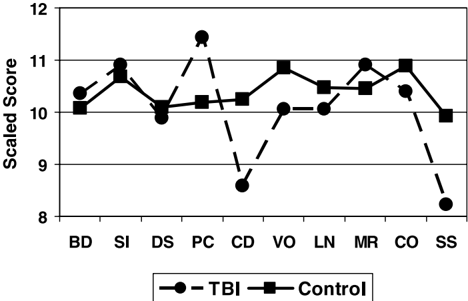
The performance of 40 children with complicated mild to severe traumatic brain injury on the Wechsler Intelligence Scale for Children-Fourth Edition (WISC-IV; Wechsler, 2003) was compared with that of 40 demographically matched healthy controls. Of the four WISC-IV factor index scores, only Processing Speed yielded a statistically significant group difference (p < .001) as well as a statistically significant negative correlation with length of coma (p < .01). Logistic regression, using Processing Speed to classify individual children, yielded a sensitivity of 72.50% and a specificity of 62.50%, with false positive and false negative rates both exceeding 30%. We conclude that Processing Speed has acceptable criterion validity in the evaluation of children with complicated mild to severe traumatic brain injury but that the WISC-IV should be supplemented with other measures to assure sufficient accuracy in the diagnostic process.
Overview
CoChat Summary
## TL;DR
This brief communication tested whether the WISC-IV has criterion validity in children after complicated mild to severe traumatic brain injury (TBI) by comparing 40 TBI patients with 40 matched healthy controls and relating scores to coma duration. The only index that consistently distinguished groups and tracked injury severity was Processing Speed; the authors conclude it is useful but not sufficient on its own for diagnosis.
## Key findings
- In the multivariate analysis, there was a significant overall group effect on WISC-IV factor scores, but this was driven entirely by Processing Speed: F(1,78) = 14.83, p < .0002, η² = 0.16.
- Processing Speed was about 2/3 SD lower in the TBI group than in controls, and 28% (n = 11) of the TBI sample scored at or below the 10th percentile on this index.
- Processing Speed was the only WISC-IV summary score significantly related to coma duration, with r = -0.44, p < .01, accounting for about 19% of the variance.
- Logistic regression using Processing Speed classified children as TBI vs control with 67.50% accuracy (54/80), 72.50% sensitivity (29/40), 62.50% specificity (25/40), a likelihood ratio of 1.93, and false positive and false negative rates both above 30%.
## Methods
- Brief communication comparing 40 children with complicated mild to severe TBI to 40 demographically matched healthy controls drawn from the WISC-IV standardization sample; TBI participants were 6–16 years old and tested within 1 year of injury.
- The clinical sample came from a 4-year consecutive series of referrals to a Midwestern rehabilitation hospital; all had intracranial lesions on neuroimaging and passed an effort test (Test of Memory Malingering or Word Memory Test).
- Main analyses were a multivariate analysis of variance on the four WISC-IV factor indices, Spearman correlations with length of coma, and logistic regression to see whether Processing Speed could classify individual children.
## Limitations
- The paper explicitly states that the sample was a referred convenience sample limited to children with intracranial lesions on neuroimaging, so the findings cannot be generalized to children with uncomplicated mild TBI.
- The authors also note they could not perform morphometric lesion analyses in the subacute or long-term phase after injury.
- The text makes evident that the sample was small (n = 40 per group) and from a single rehabilitation setting; this likely limits precision and broader generalizability, though this is an inference from the reported design rather than a stated limitation.
Model-written summary. Check it against the paper before relying on it.
Integrity signals
Registry
Cites
Statistics
Figures
Verification
Claims the paper makes
0 Valid · 0 Not valid · 7 Not checked · 26 Own results and interpretations
A result the paper states — it cites no source for it, so there is none to check. The quote shows it is in the paper.
In the paper
“This yielded a likelihood ratio (sensitivity 0 [1 2 specificity]) of 1.93.”
plain- Asserted: passes — The authors put it forward as true.
- Checkable: passes — It can be checked against evidence.
- Load-bearing: unclear — It is unclear whether the paper’s conclusions depend on it.
- Based: passes — The paper gives a reason why it holds.
A result the paper reports from its own data — it cites no other source for it, so there is none to check. The quote shows it is in the paper.
In the paper
“Of the four WISC-IV factor index scores, only Processing Speed yielded a statistically significant group difference ( p , .001) as well as a statistically significant negative correlation with length of coma ( p , .01).”
- Also stated in: § RESULTS · plain
“Spearman correlations between the various WISC-IV summary standard scores and length of coma in the clinical TBI group achieved statistical significance only for Processing Speed, with longer length of coma being associated with poorer performance on this variable; accounting for approximately 19% of the variance [ r 52 0.44; p , .01].”
plainstates an associationn = 40 ·- Asserted: passes — The authors put it forward as true.
- Checkable: passes — It can be checked against evidence.
- Load-bearing: passes — The paper’s conclusions depend on it.
- Based: passes — The paper gives a reason why it holds.
- Rests on an assumption not shown here.
- Also stated in: § RESULTS · plain
A result the paper reports from its own data — it cites no other source for it, so there is none to check. The quote shows it is in the paper.
In the paper
“Processing Speed classified 67.50% (54 0 80) of the participants correctly, with a sensitivity of 72.50% (29 0 40) and a specificity of 62.50% (25 0 40).”
plainstates an association- Asserted: passes — The authors put it forward as true.
- Checkable: passes — It can be checked against evidence.
- Load-bearing: passes — The paper’s conclusions depend on it.
- Based: passes — The paper gives a reason why it holds.
A result the paper reports from its own data — it cites no other source for it, so there is none to check. The quote shows it is in the paper.
In the paper
“None of the 5 WISC-IV summary standard scores showed a statistical degree of covariance with time since injury [ p . .10 for all variables].”
plain- Asserted: passes — The authors put it forward as true.
- Checkable: passes — It can be checked against evidence.
- Load-bearing: passes — The paper’s conclusions depend on it.
- Based: passes — The paper gives a reason why it holds.
A result the paper reports from its own data — it cites no other source for it, so there is none to check. The quote shows it is in the paper.
In the paper
“A multivariate analysis of variance with groups ( n 5 2) as the independent variable and WISC-IV factor index scores ( n 5 4) as the dependent variables yielded a statistically significant main effect of groups [ F (4,75) 5 6.69; p , .0001].”
plain- Asserted: passes — The authors put it forward as true.
- Checkable: passes — It can be checked against evidence.
- Load-bearing: unclear — It is unclear whether the paper’s conclusions depend on it.
- Based: passes — The paper gives a reason why it holds.
19 more claims
Create a free account to see all 33 claims and every source verdict.
- It may state two separate claims as one. 6
- Probably not a substantial claim. 6
Citations
Cites
Wechsler Adult Intelligence Scale--Third Edition
Wechsler, D. (2019) · PsycTESTS Dataset · doi:10.1037/t49755-000 · Cited by 2,327
Wechsler Intelligence Scale for Children, Fourth Edition
Wechsler, D. (2012) · PsycTESTS Dataset · doi:10.1037/t15174-000 · Cited by 1,577
Refining clinical diagnosis with likelihood ratios
Grimes, D. A., & Schulz, K. F. (2005) · The Lancet · doi:10.1016/s0140-6736(05)66422-7 · Cited by 828
Wechsler Intelligence Scale for Children–Fourth Edition
Dumont, R., Willis, J. O., Veizel, K., & Zibulsky, J. (2014) · Encyclopedia of Special Education · doi:10.1002/9781118660584.ese2522 · Cited by 634
Traumatic head injury in children
Broman, S. H., & Michel, M. E. (1995) · Oxford University Press eBooks · Cited by 322
Cognitive and Behavioral Outcome Following Mild Traumatic Head Injury in Children
Ponsford, J., Willmott, C., Rothwell, A., Cameron, P., Ayton, G., Nelms, R., Curran, C., & Ng, K. T. (1999) · Journal of Head Trauma Rehabilitation · doi:10.1097/00001199-199908000-00005 · Cited by 299
Keith, T. Z., Fine, J. G., Taub, G. E., Reynolds, M. R., & Kranzler, J. H. (2006) · STARS (University of Central Florida) · Cited by 261
Mild head injury in children and adolescents: A review of studies (1970–1995).
Satz, P., Zaucha, K., McCleary, C., Light, R., Asarnow, R., & Becker, D. (1997) · Psychological Bulletin · doi:10.1037/0033-2909.122.2.107 · Cited by 245 · cited 1×
“This investigation was limited to patients who had at least complicated mild or moderate TBI (as evidenced by the presence of intracranial lesions on neuroimaging), because uncomplicated mild TBI is typically not expected to be associated with significant lasting cognitive impairment in children who do not have compro…”
BackgroundWISC-IV Clinical Use and Interpretation : Scientist-Practitioner Perspectives
Prifetera, A., & Saklofske, D. (2004) · Cited by 213
Doyle, A. E., Biederman, J., Seidman, L. J., Weber, W., & Faraone, S. V. (2000) · Journal of Consulting and Clinical Psychology · doi:10.1037/0022-006x.68.3.477 · Cited by 209
Research works printed but not linked: 4
- American Educational Research Association, American Psychological Association, & National Council on Measurement in Education (1999). Standards for educational and psychological testing . Washington, DC: American Educational Research Association.
- Green, P. (2003). Green's Word Memory Test . Edmonton, AB: Green's Publishing.
- Wechsler, D. (2003). Wechsler Intelligence Scale for ChildrenFourth Edition . San Antonio, TX: Psychological Corporation.
- Wechsler, D. (1991). Wechsler Intelligence Scale for ChildrenThird Edition . San Antonio, TX: Psychological Corporation.
Cited by
Recommendations for the Use of Common Outcome Measures in Pediatric Traumatic Brain Injury Research
McCauley, S. R., Wilde, E. A., Anderson, V. A., Bedell, G., Beers, S. R., Campbell, T. F., Chapman, S. B., Ewing-Cobbs, L., Gerring, J. P., Gioia, G. A., et al. (2012) · Journal of Neurotrauma · doi:10.1089/neu.2011.1838 · Cited by 322
“As a measure of information processing rate, these indices from the WISC-III and WISC-IV are highly sensitive to the effects of TBI and its severity (Allen et al., 2010; Donders, 1997; Donders and Janke, 2008; Tremont et al., 1999; Yeates and Donders, 2005).”
Wechsler Intelligence Scale for Children
Olivier, T. W., Mahone, E. M., & Jacobson, L. A. (2018) · Encyclopedia of Clinical Neuropsychology · doi:10.1007/978-3-319-56782-2_1605-2 · Cited by 261
Oliveras-Rentas, R. E., Kenworthy, L., Roberson, R. B., Martin, A., & Wallace, G. L. (2012) · Journal of Autism and Developmental Disorders · doi:10.1007/s10803-011-1289-7 · Cited by 231
“Because studies of other clinical groups (e.g., children with traumatic brain injury) have shown profile differences when comparing the WISC-IV to older versions of the WISC (e.g., Donders and Jenke 2008 ), it is important to establish the WISC-IV profile in ASD.”
Wechsler Intelligence Scale for Children
Jacobson, L. A., & Mahone, E. M. (2010) · Springer eBooks · doi:10.1007/978-0-387-79948-3_1605 · Cited by 117
Wechsler Intelligence Scale for Children
Olivier, T. W., Mahone, E. M., & Jacobson, L. A. (2018) · Springer eBooks · doi:10.1007/978-3-319-57111-9_1605 · Cited by 111
Yang, P., Cheng, C. P., Chang, C. L., Liu, T. L., Hsu, H. Y., & Yen, C. F. (2013) · Psychiatry and Clinical Neurosciences · doi:10.1111/pcn.12014 · Cited by 108
“Children with ADHD have been shown to demonstrate slowed processing speed relative to typically developing peers in graphomotor speed, as measured by WISC-IV Processing Speed subtests.14,25 On the WISC-IV, PSI consists of Coding and Symbol Search as on the WISC-III.”
InfluentialEndogenous formaldehyde is a memory-related molecule in mice and humans
Ai, L., Tan, T., Tang, Y., Yang, J., Cui, D., Wang, R., Wang, A., Fei, X., Di, Y., Wang, X., et al. (2019) · Communications Biology · doi:10.1038/s42003-019-0694-x · Cited by 87
Kurowski, B. G., Wade, S. L., Kirkwood, M. W., Brown, T. M., Stancin, T., Cassedy, A. E., & Taylor, H. G. (2012) · Archives of Physical Medicine and Rehabilitation · doi:10.1016/j.apmr.2012.10.029 · Cited by 83
Dental care protocol based on visual supports for children with autism spectrum disorders
Cagetti, M., Mastroberardino, S., Campus, G., Olivari, B., Faggioli, R., Lenti, C., & Strohmenger, L. (2015) · Medicina Oral Patología Oral y Cirugia Bucal · doi:10.4317/medoral.20424 · Cited by 70
“A child psychiatrist (CL) measured the intellectual level of each child using the Wechsler Intelligence Scale for Children (23).”
Donders, J., & Strong, C.-A. H. (2015) · Assessment · doi:10.1177/1073191114530776 · Cited by 64
“These criteria were chosen, consistent with previous research with different instruments (Donders & Janke, 2008; Donders & Levitt, 2012) and because length of coma is one of the most commonly used determinants of injury severity after TBI (Stucky, Kirkwood, & Donders, 2014).”
MethodSelf-citationShultz, E. L., Hoskinson, K. R., Keim, M. C., Dennis, M., Taylor, H. G., Bigler, E. D., Rubin, K. H., Vannatta, K. A., Gerhardt, C. A., Stancin, T., et al. (2016) · Neuropsychology · doi:10.1037/neu0000288 · Cited by 73
“…set of higher order abilities, and processing speed, an estimate of an individual’s mental capacity and the speed of neural transmission, are two cognitive domains that are vulnerable in TBI, with deficits typically proportional to the severity of injury (Donders & Janke, 2008; Stuss, 1992).”
Memory and Attention Profiles in Pediatric Traumatic Brain Injury
Allen, D. N., Leany, B. D., Thaler, N. S., Cross, C., Sutton, G. P., & Mayfield, J. (2010) · Archives of Clinical Neuropsychology · doi:10.1093/arclin/acq051 · Cited by 55
“…Average cluster in this study may also exhibit more subtle signs of brain damage, as indicated by the relative decrease in processing speed inferred by relatively poorer performance on the Digit Symbol/Coding subtest compared to the other WISC subtests (Allen et al., 2010; Donders & Janke, 2008).”
Burns, T. G., King, T. Z., & Spencer, K. S. (2012) · Applied Neuropsychology Child · doi:10.1080/21622965.2012.682852 · Cited by 50
“Donders and Janke (2008) showed how the Processing Speed index supported a sensitivity of 72% and specificity of 63% for children diagnosed with traumatic brain injury on the WISC-IV.”
BackgroundValidity of the WISC–IV Spanish for a clinically referred sample of Hispanic children.
San Miguel Montes, L. E., Allen, D. N., Puente, A. E., & Neblina, C. (2010) · Psychological Assessment · doi:10.1037/a0018895 · Cited by 44
“Although the subtest and index scores obtained by the CLIN group were not as low as has been observed in children with structural brain damage (Allen et al., 2010; Donders & Janke, 2008), the PSI appears to be useful in identifying children with brain dysfunction on the WISC–IV Spanish.”
InfluentialAllen, D. N., Thaler, N. S., Donohue, B., & Mayfield, J. (2010) · Psychological Assessment · doi:10.1037/a0016056 · Cited by 43
A randomized problem-solving trial for adolescent brain injury: Changes in social competence.
Tlustos, S. J., Kirkwood, M. W., Taylor, H. G., Stancin, T., Brown, T. M., & Wade, S. L. (2016) · Rehabilitation Psychology · doi:10.1037/rep0000098 · Cited by 48
“Because moderate to severe TBI has negative effects on cognitive ability and on behavior ratings of executive dysfunction (Anderson et al., 2004; Donders & Janke, 2008; Mangeot, Armstrong, Colvin, Yeates, & Taylor, 2002; Sesma, Slomine, Ding, & McCarthy, 2008), these consequences may serve as…”
BackgroundIntellectual Profiles in Children with ADHD and Comorbid Learning and Motor Disorders
Parke, E. M., Thaler, N. S., Etcoff, L. M., & Allen, D. N. (2020) · Journal of Attention Disorders · doi:10.1177/1087054715576343 · Cited by 37
“Research with other clinical populations, such as children with traumatic brain injury, suggests that these changes have altered traditional profiles obtained with earlier versions of the WISC (Allen, Thaler, Donohue, & Mayfield, 2010; Donders & Janke, 2008).”
Smerbeck, A., Parrish, J. B., Yeh, E. A., et al. (2011) · The Clinical Neuropsychologist · doi:10.1080/13854046.2011.554445 · Cited by 35
“For example, patients with craniocerebral trauma are consistently slow in processing speed (Donders & Janke, 2008) and frequently suffer impairment in learning and memory (Lajiness-O’Neill, Erdodi, & Bigler, 2010).”
BackgroundCognitive functioning in children from Nigeria with sickle cell anemia
Oluwole, O. B., Noll, R. B., Winger, D. G., Akinyanju, O., & Novelli, E. M. (2016) · Pediatric Blood & Cancer · doi:10.1002/pbc.26126 · Cited by 33
Thaler, N. S., Bello, D. T., Randall, C., Goldstein, G., Mayfield, J. W., & Allen, D. N. (2010) · Archives of Clinical Neuropsychology · doi:10.1093/arclin/acq073 · Cited by 37
Peterson, R. L., Kirkwood, M. W., Taylor, H. G., Stancin, T., Brown, T. M., & Wade, S. L. (2012) · Journal of Head Trauma Rehabilitation · doi:10.1097/htr.0b013e318263f5ba · Cited by 33
Thaler, N. S., Barchard, K. A., Parke, E., Jones, W. P., Etcoff, L. M., & Allen, D. N. (2015) · Journal of Attention Disorders · doi:10.1177/1087054712459952 · Cited by 29
“…who sustained traumatic brain injury indicate that changes to the WISC-III Perceptual Organization Index in developing the WISC-IV PRI have decreased the sensitivity of the PRI to the effects of brain damage (Allen et al., 2010; Donders & Janke, 2008; Rackley, Allen, Fuhrman, & Mayfield, 2012).”
BackgroundCrowe, L. M., Catroppa, C., & Anderson, V. A. (2015) · Handbook of clinical neurology · doi:10.1016/b978-0-444-63521-1.00041-8 · Cited by 41
Does processing speed mediate the effect of pediatric traumatic brain injury on working memory?
Gorman, S. A., Barnes, M. A., Swank, P. R., Prasad, M. R., Cox, C. S., & Ewing‐Cobbs, L. (2016) · Neuropsychology · doi:10.1037/neu0000214 · Cited by 30
“Coding was significantly reduced following TBI, supporting previous findings that Coding effectively discriminates between head-injured and comparison children (Donders, & Janke, 2008; Ewing-Cobbs et al., 2008; Wozniak et al., 2007).”
ResultEffect of Cognitive Reserve on Children With Traumatic Brain Injury
Donders, J., & Kim, E. (2019) · Journal of the International Neuropsychological Society · doi:10.1017/s1355617719000109 · Cited by 26
“The sensitivity of especially the latter index to injury severity was consistent with prior research (Allen et al., 2010; Donders & Janke, 2008).”
BackgroundResultSelf-citationThaler, N. S., Allen, D. N., McMurray, J. C., & Mayfield, J. W. (2009) · The Clinical Neuropsychologist · doi:10.1080/13854040903277305 · Cited by 31
“It is apparent from research examining other instruments that revisions can appreciably alter psychometric characteristics, including subtest and index score sensitivity to clinical disorders (eg, Allen et al, in press; Donders & Janke, 2008 ).”
BackgroundInfluentialIdentification of a Social Cognition Construct for the WAIS-III
Allen, D. N., & Barchard, K. A. (2009) · Applied Neuropsychology · doi:10.1080/09084280903297727 · Cited by 27
“More recently, two confirmatory factor analytic studies of the 11 Wechsler Adult Intelligence Scale-Revised (WAIS-R) subtests (Wechsler, 1981 ), one examining high-functioning autism (Goldstein, Allen, Minshew, Williams, Volkmar, Klin, & Schulz, 2008 ) and the other schizophrenia (Allen, Strauss, Donohue, & van Kammen…”
MethodBigler, E. D., Jantz, P. B., Farrer, T. J., Abildskov, T. J., Dennis, M., Gerhardt, C. A., Rubin, K. H., Stancin, T., Taylor, H. G., Vannatta, K. A., et al. (2015) · Brain Injury · doi:10.3109/02699052.2015.1011234 · Cited by 24
“detecting residual effects from paediatric TBI, including mTBI [42].”
BackgroundComprehensive Trail Making Test performance in children and adolescents with traumatic brain injury.
Allen, D. N., Thaler, N. S., Ringdahl, E. N., Barney, S. J., & Mayfield, J. W. (2012) · Psychological Assessment · doi:10.1037/a0026263 · Cited by 25
LeBlond, E. I., Smith-Paine, J., Riemersma, J. J., Horn, P. S., Wade, S. L., & Kurowski, B. G. (2019) · Journal of the International Neuropsychological Society · doi:10.1017/s1355617719000444 · Cited by 23
“The information processing indexes are highly sensitive to TBI and its severity (Allen, Thaler, Donohue, & Mayfield, 2010; Donders & Janke, 2008; McCauley et al., 2012), with higher scores reflecting better processing speed.”
BackgroundLevan, A. J., Baxter, L. C., Kirwan, C. B., Black, G. M., & Gale, S. D. (2014) · Journal of Head Trauma Rehabilitation · doi:10.1097/htr.0000000000000040 · Cited by 24
Karver, C. L., Wade, S. L., Cassedy, A. E., Taylor, H. G., Brown, T. M., Kirkwood, M. W., & Stancin, T. (2013) · Child Neuropsychology · doi:10.1080/09297049.2013.796918 · Cited by 24
“…2003), attention (DeJong & Donders, 2008; Jacobs & Donders, 2008; Mottram & Donders, 2005), executive functions (Ganesalingam et al., 2006, 2007; Yeates et al., 2002), and processing speed (Donders, 1997; Donders & Janke, 2008; Tremont, Mittenberg, & Miller, 1999; van der Heijden & Donders, 2003).”
Cognitive functioning of pediatric patients with brain tumor: an investigation of the role of gender
Corti, C., Manfredi, V., Massimino, M., Bardoni, A., Borgatti, R., & Poggi, G. (2018) · Child s Nervous System · doi:10.1007/s00381-018-3982-8 · Cited by 17
Donders, J., Elzinga, B. M., Kuipers, D. P., Helder, E. J., & Crawford, J. R. (2012) · Child Neuropsychology · doi:10.1080/09297049.2012.723681 · Cited by 15
“Previous research (Allen, Thaler, Donohue, & Mayfield, 2010; Donders & Janke, 2008) has provided support for the criterion validity of the Processing Speed index of this instrument as being sensitive to the effects of traumatic brain injury (TBI) in children and adolescents.”
BackgroundResultSelf-citationSluggish cognitive tempo in children with traumatic brain injuries
Mahdavi, S., Hasper, E., & Donders, J. (2021) · Applied Neuropsychology: Child · doi:10.1080/21622965.2019.1674653 · Cited by 14
“The Processing Speed index has been shown to be one of the most sensitive measures of neurocognitive dysfunction following TBI in children (Donders & Janke, 2008) and thus was chosen as a variable of interest in this study.”
MethodResultSelf-citationThaler, N. S., Allen, D. N., Hart, J. S., Boucher, J. R., McMurray, J. C., & Mayfield, J. W. (2012) · Archives of Clinical Neuropsychology · doi:10.1093/arclin/acs042 · Cited by 18
“Participants completed the Wechsler Intelligence Scale for Children-Fourth Edition and the Digit Symbol—Coding and Symbol Search subtest scaled scores were selected and averaged to serve as a composite of processing speed (Allen et al., 2010; Donders and Janke, 2008).”
MethodVolpe, D. S. J., Oliveira, N. C. A. C., dos Santos, A. C., Linhares, M. B. M., & Carlotti, A. P. D. C. P. (2017) · Brain Injury · doi:10.1080/02699052.2017.1358398 · Cited by 18
“The neuropsychological outcome was assessed by the Brazilian version of Wechsler Intelligence Scale for Children (WISC) Fourth Edition, which is designed for assessing intellectual ability of children and adolescents between the ages of 6 and 16 years (19,20).”
MethodDifferential Sensitivity of TOMAL Subtests and Index Scores to Pediatric Traumatic Brain Injury
Thaler, N. S., Barney, S. J., Reynolds, C. R., Mayfield, J. W., & Allen, D. N. (2011) · Applied Neuropsychology · doi:10.1080/09084282.2011.595443 · Cited by 15
“…and adult TBI populations, and findings generally converge in identifying selectively impaired performance on working memory and processing speed subtests (Allen, Thaler, Donohue, & Mayfield, 2010; Calhoun & Mayes, 2005; Donders & Janke, 2008; Donders, Tulsky, & Zhu, 2001; Mayes & Calhoun, 2004).”
BackgroundAssisting Students With a Traumatic Brain Injury in School Interventions
Aldrich, E. M., & Obrzut, J. E. (2012) · Canadian Journal of School Psychology · doi:10.1177/0829573512455016 · Cited by 16
“Earlier work by Dalby and Obrzut (1991) and Farmer and Peterson (1995) as well as more recent work by Allen, Thaler, Donohue, and Mayfield (2010), Donders and Janke (2008), Galbiati et al., (2009), and Newsome et al., (2008), support this view.”
Generalizability of WISC-IV index and subtest score profiles in children with traumatic brain injury
Rackley, C., Allen, D. N., Fuhrman, L. J., & Mayfield, J. W. (2011) · Child Neuropsychology · doi:10.1080/09297049.2011.628308 · Cited by 18
“However, two recent studies suggest that while the WISC-IV PSI is sensitive to TBI and has acceptable criterion validity, the PRI did not appear uniquely sensitive to TBI and, in this regard, did not differ from the VCI and WMI ( Allen, Thaler, Donohue, & Mayfield, 2010 ; Donders & Janke, 2008 ).”
ResultThe Wechsler Intelligence Scale for Children-Fourth Edition in Neuropsychological Practice
Flanagan, D. P., Alfonso, V. C., Mascolo, J. T., & Hale, J. B. (2010) · Cited by 17
Agostino, S., Calandretti, M., Veglio, F., & Daga, F. A. (2023) · The Journal of Sports Medicine and Physical Fitness · doi:10.23736/s0022-4707.23.14996-6 · Cited by 15
Correlates of verbal learning and memory after pediatric traumatic brain injury
Johnson, V. M., & Donders, J. (2017) · Applied Neuropsychology Child · doi:10.1080/21622965.2017.1330688 · Cited by 8
“Processing speed, in particular, has been shown to be sensitive to TBI in children (Allen, Thaler, Donohue, & Mayfield, 2010; Donders & Janke, 2008).”
BackgroundSelf-citationMathematical Outcomes and Working Memory in Children With TBI and Orthopedic Injury
Raghubar, K. P., Barnes, M. A., Prasad, M. R., Johnson, C. P., & Ewing‐Cobbs, L. (2012) · Journal of the International Neuropsychological Society · doi:10.1017/s1355617712001312 · Cited by 11
“Given that severe TBI significantly affects processing speed (Donders & Janke, 2008; Murray, Shum, & McFarland, 1992), it is perhaps not surprising that children with TBI in this study, many of whom had severe injuries, performed less well than peers on a test of math fluency.”
BackgroundDonders, J., & Larsen, T. L. (2012) · Developmental Neuropsychology · doi:10.1080/87565641.2011.646448 · Cited by 12
“Part of this could be simply due to deficits in information processing speed, which are common after pediatric TBI ( Donders & Janke, 2008 ).”
BackgroundSelf-citationHale, C., Casey, J., & Ricciardi, P. W. (2013) · Archives of Clinical Neuropsychology · doi:10.1093/arclin/act086 · Cited by 9
“A high mean Picture Concepts score was also reported by Donders and Janke (2008) exploring WISC-IV performance in a TBI sample.”
ResultAllen, D. N., Stolberg, P. C., Thaler, N. S., Sutton, G. P., & Mayfield, J. W. (2012) · Applied Neuropsychology Child · doi:10.1080/21622965.2012.700531 · Cited by 10
“…are consistent with reports by other investigators on such measures as the WISC-III and WISC-IV for children with moderate-to-severe TBI (cf. Donders & Janke, 2008, with Allen et al., 2010; and cf. Donders & Warschausky, 1997, with Thaler et al., 2010), which provides some support for the…”
ResultYu, T., Howe, T.-H., & Hinojosa, J. (2012) · Journal of Occupational Therapy Schools & Early Intervention · doi:10.1080/19411243.2012.673320 · Cited by 9
“Mental processing speed was assessed by subtests of the WISC, which has good reliability (r = .85) and validity (Donders & Janke, 2008; Launey, Carroll, & Van Horn, 2007; Wechsler, 2003).”
MethodPhonological awareness and RAN contribute to Chinese reading and arithmetic for different reasons
Yang, X., Star, J. R., Zhu, X., Wang, R., Zhang, Y., Tong, J. S., & He, Z. (2024) · Cognitive Processing · doi:10.1007/s10339-024-01184-2 · Cited by 10
Donders, J., & Gardner, V. (2020) · Applied Neuropsychology Child · doi:10.1080/21622965.2020.1750109 · Cited by 6
Self-citationTraumatic brain injury in childhood
Kirkwood, M. W., Yeates, K. O., & Bernstein, J. H. (2010) · Cambridge University Press eBooks · doi:10.1017/cbo9780511674815.023 · Cited by 6
Gao, S., Treble‐Barna, A., Fabio, A., Beers, S. R., Kelly, M. K., Rosario, B. L., Bell, M. J., & Wisniewski, S. R. (2024) · Disability and Rehabilitation · doi:10.1080/09638288.2023.2297920 · Cited by 5
“The PSI has shown acceptable criterion validity in the evaluation of children with TBI [29].”
WISC-IV UK profiles of children with autism spectrum disorder in a specialist autism service
Stack, K., Murphy, R., Prendeville, P., & O’Halloran, M. (2017) · Educational and Child Psychology · doi:10.53841/bpsecp.2017.34.2.40 · Cited by 8
Yu, T., Hinojosa, J., Howe, T.-H., & Voelbel, G. T. (2011) · OTJR Occupational Therapy Journal of Research · doi:10.3928/15394492-20111209-02 · Cited by 7
“The Coding Subtest of the Wechsler Intelligence Scale for Children-IV (WISC-Coding) (Wechsler, 2003) measures mental processing speed and has good reliability (r = .85) (Wechsler, 2003) and validity (Donders & Janke, 2008; Launey, Carroll, & Van Horn, 2007; Wechsler, 2003).”
MethodProcessing Speed in Children with Traumatic Brain Injury: A narrative Review
Steiner, M., Lidzba, K., & Bigi, S. (2023) · Zeitschrift für Neuropsychologie · doi:10.1024/1016-264x/a000370 · Cited by 2
Cognitive Proficiency after Traumatic Brain Injury in Children
Donders, J., Bellesheim, K. R., & Korneli, F. (2025) · Assessment · doi:10.1177/10731911251360173
“This was the effect size that was reported for processing speed on the WISC–IV in the comparison of children with TBI with intracranial lesions to demographically matched controls in a previous study (Donders & Janke, 2008).”
Self-citationVolpe, D. S. J., Konell, H. G., Salmón, C. E. G., dos Santos, A. C., & Carlotti, A. P. D. C. P. (2025) · Journal of Neurosurgery Pediatrics · doi:10.3171/2025.3.peds24605 · Cited by 1
Volpe, D. D. S. J. (2023) · Digital Library of Theses and Dissertations (Universidade de São Paulo) · doi:10.11606/t.17.2023.tde-17112023-100815 · Cited by 1
Thébault, G. (2017) · theses.fr (ABES) · doi:10.70675/6af30b59z04afz4aefz97a7z80ee11902e3b · Cited by 1
Clinical Applications of the CAS2
Naglieri, J. A., & Otero, T. M. (2017) · Wiley eBooks · doi:10.1002/9781394259380.ch7
Naglieri, J. A., & Otero, T. M. (2017) · Wiley eBooks · doi:10.1002/9781394259380.bref
Karver, C. L. (2012) · OhioLink ETD Center (Ohio Library and Information Network)
Purcell, C. R. (2010) · Scholarship at UWindsor (University of Windsor) · Cited by 1
Metadata
- Authors
- DONDERS, J., & JANKE, K.
- Affiliations
- Mary Free Bed Rehabilitation Hospital (US)
- Calvin University (US)
- Corresponding author
- DONDERS, JACOBUS
- Venue
- Journal of the International Neuropsychological Society
- Publisher
- Cambridge University Press (CUP)
- Published
- 2008-06-25
- Volume
- 14
- Issue
- 4
- Pages
- 651-655
- ISSN
- 1355-6177 (ISSN-L)
- 1469-7661
- OpenAlex
- W2057365639
- Cited by
- 63
- References
- 24
- Citations by year
- 2025: 2 · 2024: 2 · 2023: 3 · 2020: 1 · 2019: 4 · 2018: 2 · 2017: 7 · 2016: 3 · 2015: 5 · 2014: 2 · 2013: 3 · 2012: 12
- FWCI
- 4.21
- Type
- journal article
- Language
- en
- Open access
- bronze
- doi.org
- Locations
- Journal of the International Neuropsychological Society (publishedVersion)
- PubMed (publishedVersion)
- Topics
- Health Sciences › Medicine › Clinical Neurology › Traumatic Brain Injury Research
- Social Sciences › Psychology › Applied Psychology › Psychological Testing and Assessment
- Health Sciences › Medicine › Clinical Neurology › Traumatic Brain Injury and Neurovascular Disturbances
- Keywords
- WISC-IV, criterion validity, pediatric traumatic brain injury, processing speed, diagnostic accuracy
- MeSH terms
- Adolescent, Brain Damage, Chronic, Brain Injuries, Child, Cognition Disorders, Coma, Female, Humans, Intelligence, Male, Psychometrics, Reaction Time, Reference Values, Wechsler Scales, Reproducibility of Results
About these checks
Registry, retraction, Cites and statistics results are computed, not judged, with one exception: a printed reference that no index lists is read once by a model before it counts as a citation error. Claims are extracted by a model and kept only when their quote appears verbatim in the text; each cited source is then checked, with a model’s help, for whether it says what the claim relies on. Those verdicts can be wrong — read the claim’s quote and the cited source before relying on one.
A language model drew the claims from the paper on 2026-10-10, under version 3 of the claim definition (model deepseek-v4.1-flash, prompt extract-v3).
A second model labelled each claim on 2026-10-10 (model jev-1.13-20260917, definition revision gold-guideline-v0.2).
Statistics and arithmetic are recomputed, not judged.
Confidence bands are shown only for fields calibrated on our annotated test set. None is calibrated yet, so no band is shown.
What counts as a claim ›How we measure confidence ›How we check this ›
Are you an author, or do you see a problem with this page? Request a review
Data sources
Bibliographic data: Semantic Scholar, OpenAlex, Crossref.
Contains information from the Semantic Scholar Academic Graph Datasets, made available under the ODC Attribution License (ODC-BY 1.0).
Semantic Scholar’s data is described in: Kinney, R., et al. (2023). The Semantic Scholar Open Data Platform. arXiv:2301.10140.
