

The DOI matches its Crossref record; 79 of the 80 references it cites were found in a registry or an index.
The absence of P2X7 receptors (P2rx7) on non-haematopoietic cells leads to selective alteration in mood-related behaviour with dysregulated gene expression and stress reactivity in mice
Open accessAbstract
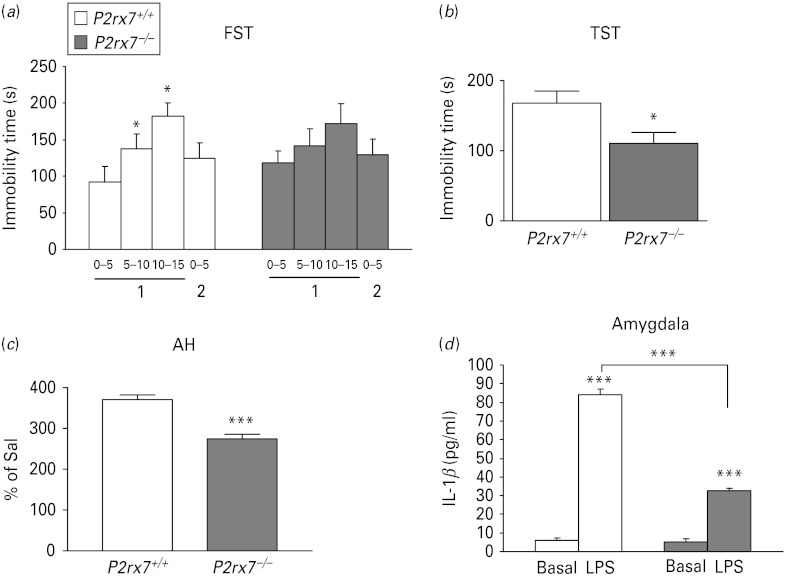
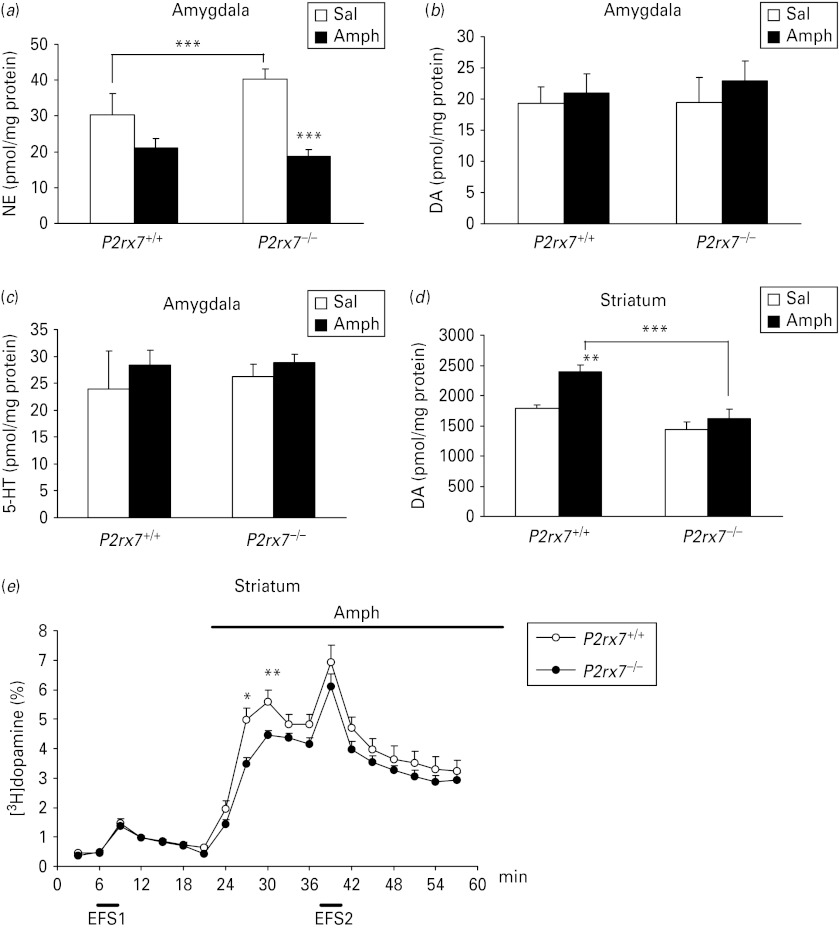
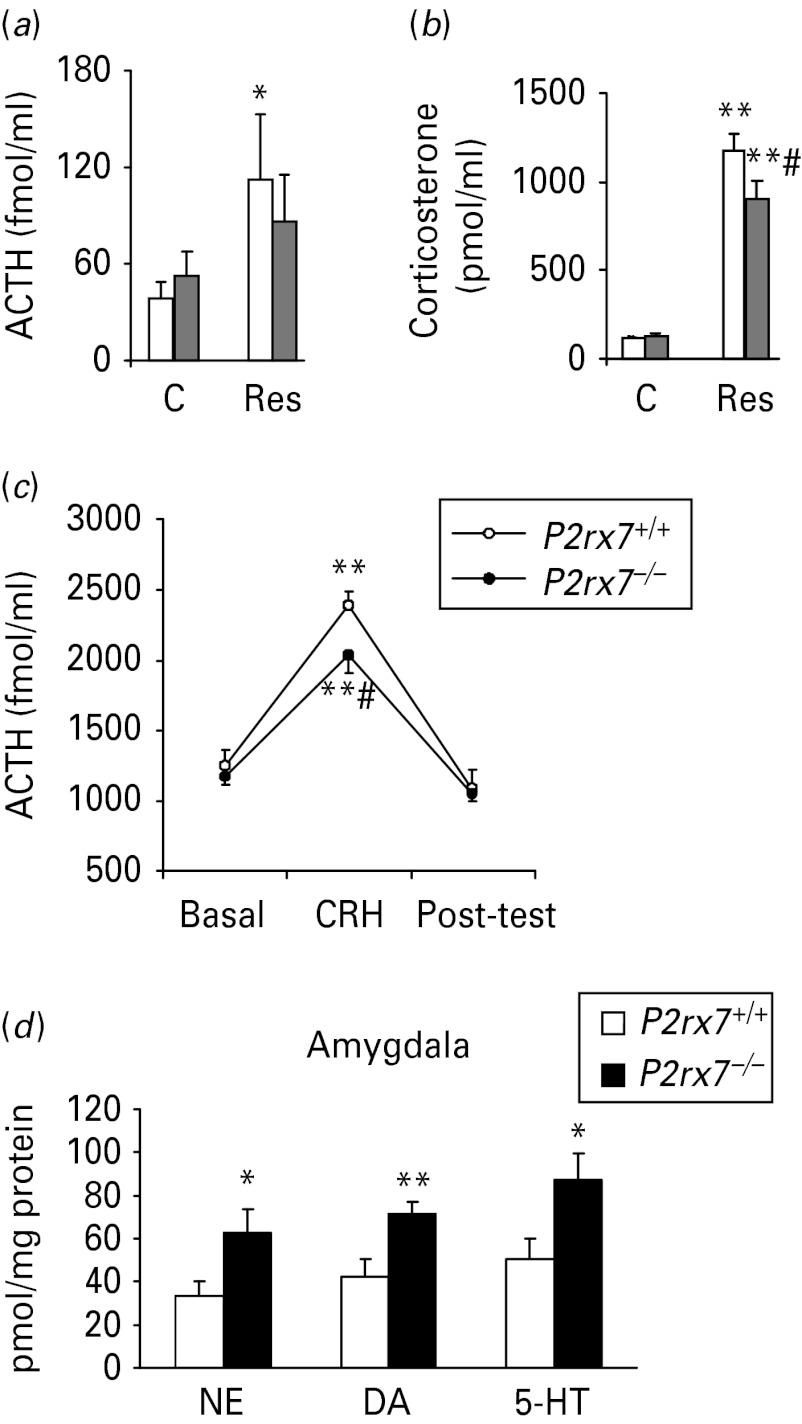
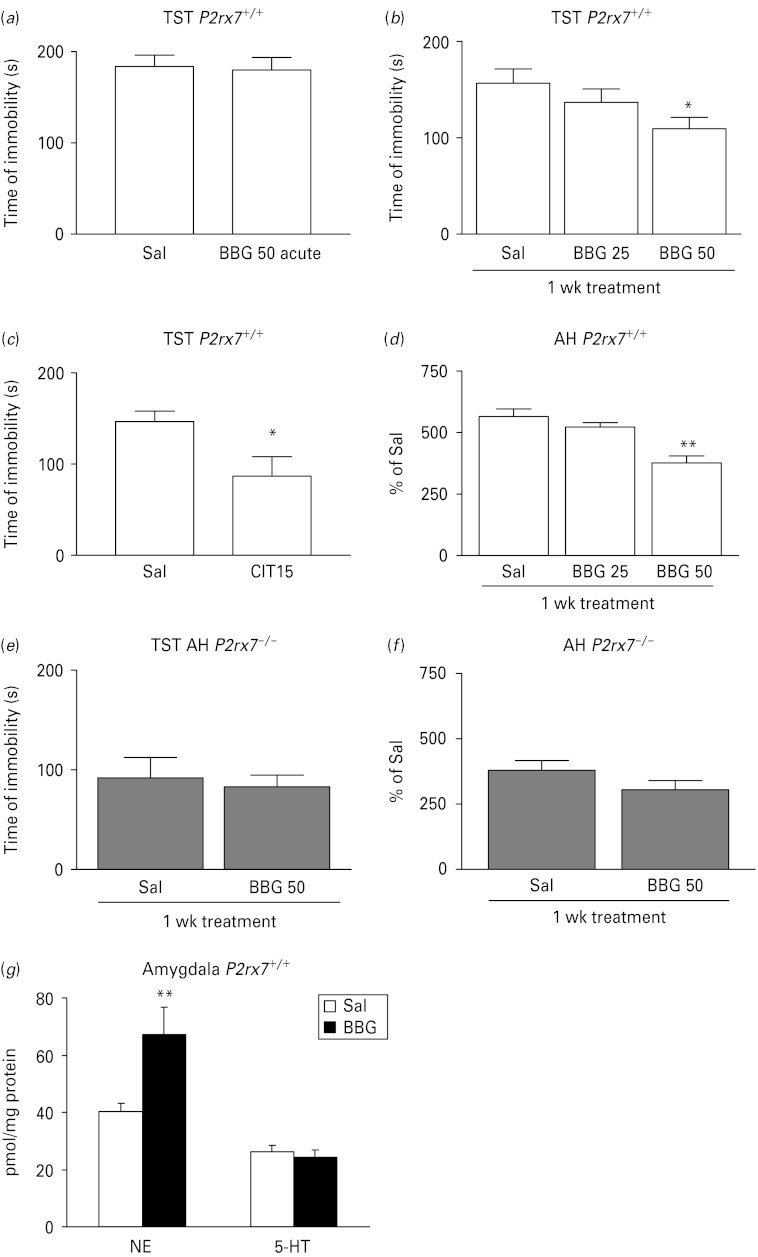
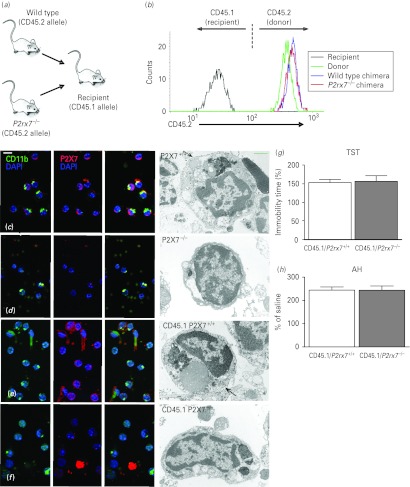
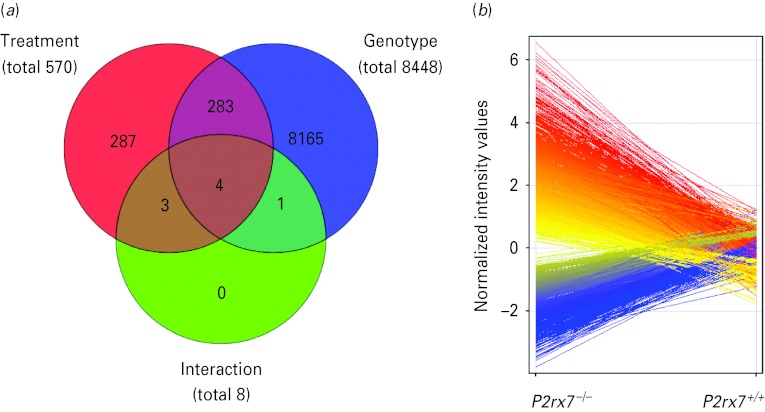
The purpose of this study was to explore how genetic deletion and pharmacological antagonism of the P2X7 receptor (P2rx7) alter mood-related behaviour, gene expression and stress reactivity in the brain. The forced swim test (FST), tail suspension test (TST) and amphetamine-induced hyperlocomotion (AH) tests were used in wild-type (P2rx7+/+) and P2rx7-deficient (P2rx7−/−) mice. Biogenic amine levels were analysed in the amygdala and striatum, adrenocorticotropic hormone (ACTH) and corticosterone levels were measured in the plasma and pituitary after restraint stress. Chimeric mice were generated by bone marrow transplantation. A whole genome microarray analysis with real-time polymerase chain reaction validation was performed on the amygdala. In the absence of P2rx7s decreased behavioural despair in the FST, reduced immobility in the TST and attenuated amphetamine-induced hyperactivity were detected. Basal norepinephrine levels were elevated in the amygdala, whereas stress-induced ACTH and corticosterone responses were alleviated in P2rx7−/− mice. Sub-acute treatment with the selective P2rx7 antagonist, Brilliant Blue G, reproduced the effect of genetic deletion in the TST and AH test in P2rx7+/+ but not P2rx7−/− mice. No change in behavioural phenotype was observed in chimeras lacking the P2rx7 in their haematopoietic compartment. Whole genome microarray analysis indicated a widespread up- and down-regulation of genes crucial for synaptic function and neuroplasticity by genetic deletion. Here, we present evidence that the absence of P2rx7s on non-haematopoietic cells leads to a mood-stabilizing phenotype in several behavioural models and suggest a therapeutic potential of P2rx7 antagonists for the treatment of mood disorders.
Overview
The claims and statistics of this paper haven’t been checked yet.
Run the check — free, no account needed. It reads the open-access text and checks the sources it cites.
Integrity signals
Registry
Cites
Statistics
Figures
Verification
Claims the paper makes
The claims and statistics of this paper haven’t been checked yet.
Run the check — free, no account needed. It reads the open-access text and checks the sources it cites.
Claims other papers make about this one
Each is checked against this paper’s own text: does it say what the citing paper says it does?
In the citing paper
“Noteworthy, gene knockout or pharmacological inhibition of P2X7 receptors induced antidepressant-like behavior in mice exposed to stress, accompanied by HPA axis restoration [163, 164].”
From Hyperactivation of P2X7 receptors as a culprit of COVID-19 neuropathology (2021) · cites this paper as [164]
In the citing paper
“Evidence from pharmacological studies have further corroborated this hypothesis, since treatment with P2X7R antagonists induce antidepressant-like effects in various animal models.”
From P2X7 Receptor Signaling in Stress and Depression (2019) · cites this paper as [85]
In the citing paper
“Altogether, data from P2X7R KO mice indicates that absence of the P2X7R results in increased resilience to stress, and a phenotype showing less depression-like characteristics.”
From P2X7 Receptor Signaling in Stress and Depression (2019) · cites this paper as [85]
In the citing paper
“Additional studies further corroborated these initial findings, with observations that P2X7R KO mice presents reduced immobility time in both the FST [85] and the TST [20,85].”
From P2X7 Receptor Signaling in Stress and Depression (2019) · cites this paper as [85]
In the citing paper
“Altogether, both pharmacological and genetic evidence strongly suggest that P2X7R stimulation during stress increase the vulnerability and subsequent development of behavioral adversities associated with the neurobiology of depression (Table 2).”
From P2X7 Receptor Signaling in Stress and Depression (2019) · cites this paper as [85]
In the citing paper
“and decreased the immobility time of mice exposed to TST [85].”
From P2X7 Receptor Signaling in Stress and Depression (2019) · cites this paper as [85]
Self-check
Percentages, sums and reported differences re-computed from the paper’s own numbers.
The self-check needs the paper’s full text.
Citations
Cites
PROTEIN MEASUREMENT WITH THE FOLIN PHENOL REAGENT
Lowry, O. H., Rosebrough, N., Farr, A. L., & Randall, R. (1951) · Journal of Biological Chemistry · doi:10.1016/s0021-9258(19)52451-6 · Cited by 316,394 · cited 2×
“The perchloric anion was precipitated by addition of 1 M KOH, removed by centrifugation and the protein content of the pellet was determined according to the method of Lowry et al. (1951).”
MethodVandesompele, J., De Preter, K., Pattyn, F., Poppe, B., Van Roy, N., De Paepe, A., & Speleman, F. (2002) · Genome Biology · doi:10.1186/gb-2002-3-7-research0034 · Cited by 20,038
Gene Expression Omnibus: NCBI gene expression and hybridization array data repository
Edgar, R. (2002) · Nucleic Acids Research · doi:10.1093/nar/30.1.207 · Cited by 13,288 · cited 2×
“The complete microarray expression data are deposited at NCBI’s Gene Expression Omnibus (Edgar et al. 2002) through GEO series accession number GSE21218 (http:// www.”
MethodFrom inflammation to sickness and depression: when the immune system subjugates the brain
Dantzer, R., O'Connor, J. C., Freund, G. G., Johnson, R. W., & Kelley, K. W. (2008) · Nature Reviews Neuroscience · doi:10.1038/nrn2297 · Cited by 7,395 · cited 2×
“Circulating cytokines, including IL-1b, are important mediators of depressive-like behaviour (Dantzer et al. 2008) and, therefore, peripheral IL-1b could be a mediator of P2rx7 activation on mood-related changes.”
BackgroundBehavioral despair in mice: a primary screening test for antidepressants.
Porsolt, R. D., Bertin, A., & Jalfre, M. (1977) · PubMed · Cited by 3,320
The Cytolytic P 2Z Receptor for Extracellular ATP Identified as a P 2X Receptor (P2X 7 )
Surprenant, A., Rassendren, F., Kawashima, E., North, R. A., & Buell, G. (1996) · Science · doi:10.1126/science.272.5262.735 · Cited by 1,739 · cited 1×
“The homo-oligomeric P2rx7 (Surprenant et al. 1996) has distinct structural, functional and pharmacological features within the P2X receptor family (Jarvis & Khakh, 2009 ; Sperlagh et al. 2006) : (1) its intracellular carboxyl-terminal domain is longer than those of other P2X receptor subunits ; (2)…”
BackgroundCryan, J. F., Mombereau, C., & Vassout, A. (2005) · Neuroscience & Biobehavioral Reviews · doi:10.1016/j.neubiorev.2005.03.009 · Cited by 1,674 · cited 1×
“Automated tail suspension test (TST) This test was performed using an automated tail suspension device (BIO-TST2, Bioseb, France), following the method described in Cryan et al. (2005), which was connected to a computer that recorded the activity of the animals during test sessions.”
MethodA review of the validity and variability of the Elevated Plus-Maze as an animal model of anxiety
Hogg, S. (1996) · Pharmacology Biochemistry and Behavior · doi:10.1016/0091-3057(95)02126-4 · Cited by 1,169
The P2X7 Receptor: A Key Player in IL-1 Processing and Release
Ferrari, D., Pizzirani, C., Adinolfi, E., Lemoli, R. M., Curti, A., Idzko, M., Panther, E., & Di Virgilio, F. (2006) · The Journal of Immunology · doi:10.4049/jimmunol.176.7.3877 · Cited by 1,025
Altered Cytokine Production in Mice Lacking P2X7Receptors
Solle, M., Labasi, J. M., Perregaux, D. G., Stam, E. J., Petrushova, N., Koller, B. H., Griffiths, R., & Gabel, C. A. (2001) · Journal of Biological Chemistry · doi:10.1074/jbc.m006781200 · Cited by 924 · cited 4×
“A major immunomodulatory function of P2rx7 activation is that it acts as a necessary costimulus for the post-translational processing and subsequent release of the pro-inflammatory cytokine interleukin (IL)-1b in peripheral immune cells in response to bacterial endotoxin (Ferrari et al. 2006; Solle et al. 2001).”
BackgroundMethodInfluentialTargeting the glutamatergic system to develop novel, improved therapeutics for mood disorders
Sanacora, G., Zarate, C. A., Krystal, J. H., & Manji, H. K. (2008) · Nature Reviews Drug Discovery · doi:10.1038/nrd2462 · Cited by 894 · cited 5×
“2001; Toro & Deakin, 2005), the antidepressant properties of glutamate receptor antagonists and modulators (Sanacora et al. 2008) and the regulation of glutamate receptor subunits by clinically used antidepressants (Nowak et al.”
BackgroundInfluentialPurinergic signalling and disorders of the central nervous system
Burnstock, G. (2008) · Nature Reviews Drug Discovery · doi:10.1038/nrd2605 · Cited by 662 · cited 2×
“2006), P2rx7s might also act as a ‘danger signal’ and contribute to neurodegenerative and neuroplasticity events underlying a variety of central nervous system disorders from Alzheimer’s disease to mood disorders (Burnstock, 2008 ; Skaper et al. 2010; Sperlagh et al. 2006).”
BackgroundIncreased Levels of Glutamate in Brains from Patients with Mood Disorders
Hashimoto, K., Sawa, A., & Iyo, M. (2007) · Biological Psychiatry · doi:10.1016/j.biopsych.2007.03.017 · Cited by 631 · cited 2×
“These include abnormalities in the level of glutamate (Hashimoto et al. 2007), genetic polymorphisms (Mundo et al. 2003), the differential expression of glutamate receptor subunits in bipolar and major depressive disorders (Meador-Woodruff et al. 2001; Toro & Deakin, 2005), the antidepressant…”
BackgroundGENECODIS: a web-based tool for finding significant concurrent annotations in gene lists
Carmona‐Sáez, P., Chagoyen, M., Tirado, F., Carazo, J. M., & Pascual-Montano, A. (2007) · Genome biology · doi:10.1186/gb-2007-8-1-r3 · Cited by 591 · cited 3×
“The GeneCodis analysis generated a relationship of 373 annotation groups characterized with the Gene Ontology (GO) Biological Process, including transport, ion transport, signal transduction, synaptic transmission, G-protein coupled receptor protein signalling pathway, ATP synthesis coupled proton transport, transcrip…”
MethodP2X 7 Receptor-Mediated Release of Excitatory Amino Acids from Astrocytes
Duan, S., Anderson, C. M., Keung, E. C., Chen, Y., Chen, Y., & Swanson, R. A. (2003) · The Journal of Neuroscience · doi:10.1523/jneurosci.23-04-01320.2003 · Cited by 489 · cited 2×
“These changes are consistent with previous results showing that the activation of P2rx7s in the brain leads to an increased glutamate and GABA release from nerve terminals (Papp et al. 2004; Patti et al. 2006; Sperlagh et al. 2002) and astrocytes (Duan et al. 2003).”
ResultHematopoietic origin of pathological grooming in Hoxb8 mutant mice
Chen, S.-K., Tvrdik, P., Peden, E., Cho, S., Wu, S., Spangrude, G., & Capecchi, M. R. (2010) · Cell · doi:10.1016/j.cell.2010.03.055 · Cited by 450 · cited 1×
“Recent studies have shown that certain behavioural patterns, such as pathological grooming, can be transferred from one animal to another by immune cell transplantation (Chen et al. 2010).”
BackgroundNogales‐Cadenas, R., Carmona‐Sáez, P., Vázquez, M., Vicente, C., Yang, X., Tirado, F., Carazo, J. M., & Pascual-Montano, A. (2009) · Nucleic Acids Research · doi:10.1093/nar/gkp416 · Cited by 446 · cited 3×
“The GeneCodis analysis generated a relationship of 373 annotation groups characterized with the Gene Ontology (GO) Biological Process, including transport, ion transport, signal transduction, synaptic transmission, G-protein coupled receptor protein signalling pathway, ATP synthesis coupled proton transport, transcrip…”
MethodPeng, W., Cotrina, M. L., Han, X., Yu, H., Bekar, L. K., Blum, L., Takano, T., Tian, G.-F., Goldman, S. A., & Nedergaard, M. (2009) · Proceedings of the National Academy of Sciences · doi:10.1073/pnas.0902531106 · Cited by 425 · cited 1×
“BBG is a non-toxic and fairly selective antagonist of P2rx7s, which is able to penetrate the blood–brain barrier (Peng et al. 2009).”
BackgroundP2X7 receptors in the nervous system
Sperlágh, B., Vizi, E. S., Wirkner, K., & Illés, P. (2006) · Progress in Neurobiology · doi:10.1016/j.pneurobio.2006.03.007 · Cited by 383 · cited 5×
“2006), P2rx7s might also act as a ‘danger signal’ and contribute to neurodegenerative and neuroplasticity events underlying a variety of central nervous system disorders from Alzheimer’s disease to mood disorders (Burnstock, 2008 ; Skaper et al. 2010; Sperlagh et al. 2006).”
BackgroundInfluentialSelf-citationThe P2X 7 Receptor Drives Microglial Activation and Proliferation: A Trophic Role for P2X 7 R Pore
Monif, M., Reid, C. A., Powell, K. L., Smart, M. L., & Williams, D. A. (2009) · The Journal of Neuroscience · doi:10.1523/jneurosci.5512-08.2009 · Cited by 374 · cited 2×
“By regulating the activation and proliferation of microglia and the subsequent pathological process leading to neuronal death (Monif et al. 2009; Skaper et al. 2006), P2rx7s might also act as a ‘danger signal’ and contribute to neurodegenerative and neuroplasticity events underlying a variety of…”
BackgroundSkolnick, P., Layer, R. T., Popik, P., Nowak, G., Paul, I. A., & Trullás, R. (1996) · Pharmacopsychiatry · doi:10.1055/s-2007-979537 · Cited by 344 · cited 2×
“…disorders (Meador-Woodruff et al. 2001; Toro & Deakin, 2005), the antidepressant properties of glutamate receptor antagonists and modulators (Sanacora et al. 2008) and the regulation of glutamate receptor subunits by clinically used antidepressants (Nowak et al. 1998; Skolnick et al. 1996).”
BackgroundThe P2X 7 purinergic receptor: from physiology to neurological disorders
Skaper, S. D., Debetto, P., & Giusti, P. (2009) · The FASEB Journal · doi:10.1096/fj.09-138883 · Cited by 340 · cited 2×
“2006), P2rx7s might also act as a ‘danger signal’ and contribute to neurodegenerative and neuroplasticity events underlying a variety of central nervous system disorders from Alzheimer’s disease to mood disorders (Burnstock, 2008 ; Skaper et al. 2010; Sperlagh et al. 2006).”
BackgroundJarvis, M. F., & Khakh, B. S. (2008) · Neuropharmacology · doi:10.1016/j.neuropharm.2008.06.067 · Cited by 327 · cited 1×
“The homo-oligomeric P2rx7 (Surprenant et al. 1996) has distinct structural, functional and pharmacological features within the P2X receptor family (Jarvis & Khakh, 2009 ; Sperlagh et al. 2006) : (1) its intracellular carboxyl-terminal domain is longer than those of other P2X receptor subunits ; (2)…”
BackgroundInvolvement of P2X7 receptors in the regulation of neurotransmitter release in the rat hippocampus
Sperlágh, B., Köfalvi, A., Deuchars, J., Atkinson, L., J. Milligan, C., Buckley, N. J., & Vizi, E. S. (2002) · Journal of Neurochemistry · doi:10.1046/j.1471-4159.2002.00920.x · Cited by 264 · cited 4×
“2003), followed by increased glutamate and subsequent c-aminobutyric acid (GABA) release (Alloisio et al. 2008; Papp et al. 2004; Patti et al. 2006; Sperlagh et al. 2002).”
BackgroundResultInfluentialSelf-citationLucae, S., Salyakina, D., Barden, N., Harvey, M., Gagné, B., Labbé, M., Binder, E. B., Uhr, M., Paez-Pereda, M., Sillaber, I., et al. (2006) · Human Molecular Genetics · doi:10.1093/hmg/ddl166 · Cited by 261
Dı́az-Hernández, M., Diez-Zaera, M., Sánchez‐Nogueiro, J., Gómez‐Villafuertes, R., Canals, J. M., Alberch, J., Miras‐Portugal, M. T., & Lucas, J. J. (2009) · The FASEB Journal · doi:10.1096/fj.08-122275 · Cited by 228 · cited 1×
“The doses were chosen based on literature data (Diaz-Hernandez et al. 2009) and preliminary tests.”
MethodMarsh, B., Stevens, S. L., Packard, A. E. B., Gopalan, B., Hunter, B., Leung, P. Y., Harrington, C. A., & Stenzel‐Poore, M. P. (2009) · Journal of Neuroscience · doi:10.1523/jneurosci.2496-09.2009 · Cited by 224 · cited 1×
“This treatment elicited the significant change of 570 transcripts with >2FC, which is comparable to the gene expression changes found by others in the brain after systemic endotoxin treatment (Marques et al. 2009; Marsh et al. 2009; Mastronardi et al. 2007; Perreau et al. 2007).”
ResultBasso, A. M., Bratcher, N. A., Harris, R. R., Jarvis, M. F., Decker, M. W., & Rueter, L. E. (2009) · Behavioural Brain Research · doi:10.1016/j.bbr.2008.10.018 · Cited by 224 · cited 5×
“In line with previous data (Basso et al. 2009), P2rx7x/x mice spent significantly less time with immobility (i.”
BackgroundMethodResultInfluentialPurinergic signalling in inflammation of the central nervous system
Virgilio, F. D., Ceruti, S., Bramanti, P., & Abbracchio, M. P. (2009) · Trends in Neurosciences · doi:10.1016/j.tins.2008.11.003 · Cited by 213 · cited 1×
“Accordingly, P2rx7s are involved in the regulation of different aspects of the hostdefence reaction (Chen & Brosnan, 2006 ; di Virgilio et al. 2009).”
BackgroundEmerging challenges of assigning P2X7 receptor function and immunoreactivity in neurons
Anderson, C. M., & Nedergaard, M. (2006) · Trends in Neurosciences · doi:10.1016/j.tins.2006.03.003 · Cited by 207 · cited 1×
“The primary role of P2rx7s in the brain is the modulation of neurotransmitter release (Anderson & Nedergaard, 2006; Sperlagh et al. 2006, 2007a).”
BackgroundBarden, N., Harvey, M., Gagné, B., Shink, É., Tremblay, M., Raymond, C., Labbé, M., Villeneuve, A., Rochette, D., Bordeleau, L., et al. (2006) · American Journal of Medical Genetics Part B Neuropsychiatric Genetics · doi:10.1002/ajmg.b.30303 · Cited by 203 · cited 2×
“2010) and are associated with bipolar disorder (Barden et al. 2006; Hejjas et al. 2009; McQuillin et al. 2009; Nagy et al. 2008; Soronen et al. 2011) and major depressive disorder (Lucae et al.”
BackgroundRacz, I., Nadal, X., Alferink, J., Baños, J. E., Rehnelt, J., Martín, M., Pintado, B., Gutierrez-Adan, A., Sanguino, E., Manzanares, J., et al. (2008) · The Journal of Neuroscience · doi:10.1523/jneurosci.3400-08.2008 · Cited by 195 · cited 1×
“Microglia was prepared following the method described by Racz et al. (2008), with slight modifications.”
MethodNicke, A., Kuan, Y., Masin, M., Rettinger, J., Marquez-Klaka, B., Bender, O., Górecki, D. C., Murrell‐Lagnado, R. D., & Soto, F. (2009) · Journal of Biological Chemistry · doi:10.1074/jbc.m109.033134 · Cited by 187 · cited 2×
“2006) : (1) its intracellular carboxyl-terminal domain is longer than those of other P2X receptor subunits ; (2) it has several splice variants that display different functionality in P2rx7+/+ and knockout mice lines (Nicke et al. 2009) ; (3) its persistent activation elicits the opening of a membrane pore permeable to”
BackgroundStokes, L., Fuller, S. J., Sluyter, R., Skarratt, K. K., Gu, B. J., & Wiley, J. S. (2010) · The FASEB Journal · doi:10.1096/fj.09-150862 · Cited by 174 · cited 2×
“…have revealed that non-synonymous single nucleotide polymorphisms in the human P2X7 gene (P2RX7) affect receptor function (Roger et al. 2010; Stokes et al. 2010) and are associated with bipolar disorder (Barden et al. 2006; Hejjas et al. 2009; McQuillin et al. 2009; Nagy et al. 2008;…”
BackgroundMethodToro, C. T., & Deakin, J. F. W. (2005) · Schizophrenia Research · doi:10.1016/j.schres.2005.07.003 · Cited by 153 · cited 1×
“…et al. 2003), the differential expression of glutamate receptor subunits in bipolar and major depressive disorders (Meador-Woodruff et al. 2001; Toro & Deakin, 2005), the antidepressant properties of glutamate receptor antagonists and modulators (Sanacora et al. 2008) and the regulation of…”
BackgroundLolait, S. J., Stewart, L. Q., Jessop, D. S., Young, W. S., & O’Carroll, A. (2006) · Endocrinology · doi:10.1210/en.2006-1309 · Cited by 149
Limitations on the use of the C57BL/6 mouse in the tail suspension test
Mayorga, A. J., & Lucki, I. (2001) · Psychopharmacology · doi:10.1007/s002130100687 · Cited by 147 · cited 1×
“In accordance with the observations of Mayorga & Lucki (2001), a proportion of the animals (8.9% on average, 0–16%, depending on the experiment) displayed tail-climbing behaviour.”
ResultInfluentialLavebratt, C., Åberg, E., Sjöholm, L. K., & Forsell, Y. (2010) · Journal of Affective Disorders · doi:10.1016/j.jad.2010.02.113 · Cited by 142 · cited 2×
“2011) and major depressive disorder (Lucae et al. 2006; Soronen et al. 2011; but see Green et al. 2009; Grigoroiu-Serbanescu et al. 2010; Lavebratt et al. 2010; Viikki et al. 2011).”
BackgroundMeador‐Woodruff, J. H., Hogg, A. J., & Smith, R. E. (2001) · Brain Research Bulletin · doi:10.1016/s0361-9230(01)00523-8 · Cited by 141 · cited 2×
“2003), the differential expression of glutamate receptor subunits in bipolar and major depressive disorders (Meador-Woodruff et al. 2001; Toro & Deakin, 2005), the antidepressant properties of glutamate receptor antagonists and modulators (Sanacora et al.”
BackgroundRoger, S., Mei, Z.-Z., Baldwin, J. M., Dong, L., Bradley, H., Baldwin, S. A., Surprenant, A., & Jiang, L. (2009) · Journal of Psychiatric Research · doi:10.1016/j.jpsychires.2009.10.005 · Cited by 139 · cited 2×
“Gene polymorphism studies have revealed that non-synonymous single nucleotide polymorphisms in the human P2X7 gene (P2RX7) affect receptor function (Roger et al. 2010; Stokes et al. 2010) and are associated with bipolar disorder (Barden et al. 2006; Hejjas et al. 2009; McQuillin et al. 2009; Nagy…”
BackgroundHilakivi, L. A., Ota, M., & Lister, R. G. (1989) · Pharmacology Biochemistry and Behavior · doi:10.1016/0091-3057(89)90516-9 · Cited by 137 · cited 1×
“In contrast to rats, isolation does not increase but slightly decreases depressionlike behaviour in mice, at least in the Swiss strain of this species (Hilakivi et al. 1989).”
BackgroundBipolar disorder: from genes to behavior pathways
Martinowich, K., Schloesser, R. J., & Manji, H. K. (2009) · Journal of Clinical Investigation · doi:10.1172/jci37703 · Cited by 126 · cited 1×
“Moreover, despite the emerging knowledge of the pathophysiology of mood disorders, a relatively high proportion of patients do not respond to existing medications (Martinowich et al. 2009; Sanacora et al. 2008), which urges the discovery and validation of new potential therapeutic targets.”
BackgroundFerrari, P. F., Palanza, P., Parmigiani, S., & Rodgers, R. J. (1998) · Physiology & Behavior · doi:10.1016/s0031-9384(97)00544-1 · Cited by 124 · cited 1×
“Mice establish strong dominance hierarchies in both their natural habitats and the laboratory (Capanna et al. 1984; Ferrari et al. 1998; Poshivalov 1980).”
BackgroundMarques, F., Sousa, J. C., Coppola, G., Falcão, A. M., Rodrigues, A. J., Geschwind, D. H., Sousa, N., Correia‐Neves, M., & Palha, J. A. (2009) · Journal of Cerebral Blood Flow & Metabolism · doi:10.1038/jcbfm.2009.15 · Cited by 122 · cited 1×
“This treatment elicited the significant change of 570 transcripts with >2FC, which is comparable to the gene expression changes found by others in the brain after systemic endotoxin treatment (Marques et al. 2009; Marsh et al. 2009; Mastronardi et al. 2007; Perreau et al. 2007).”
ResultJakus, Z., Simon, E., Frommhold, D., Sperandio, M., & Mócsai, A. (2009) · Journal of Experimental Medicine · doi:10.1084/jem.20081859 · Cited by 119 · cited 2×
“1 allele as described previously (Jakus et al. 2009).”
Self-citationMcQuillin, A., Bass, N. J., Choudhury, K., Puri, V., Kosmin, M., Lawrence, J., Curtis, D., & Gurling, H. (2008) · Molecular Psychiatry · doi:10.1038/mp.2008.6 · Cited by 117
Boucher, A. A., Arnold, J. C., Hunt, G. E., Spiro, A., Spencer, J., Brown, C., McGregor, I. S., Bennett, M. R., & Kassiou, M. (2011) · Neuroscience · doi:10.1016/j.neuroscience.2011.05.049 · Cited by 108 · cited 7×
“These observations confirm and extend previous data, which showed decreased immobility in the TST (Basso et al. 2009) and decreased floating time in the FST on the second day (Boucher et al. 2011) after genetic deletion.”
BackgroundMethodResultInfluentialMundo, E., Tharmalingham, S., Neves-Pereira, M., Dalton, E. J., Macciardi, F. M., Parikh, S. V., Bolonna, A. A., Kerwin, R. W., Arranz, M. J., MAKOFF, A. J., et al. (2003) · Molecular Psychiatry · doi:10.1038/sj.mp.4001218 · Cited by 105 · cited 2×
“These include abnormalities in the level of glutamate (Hashimoto et al. 2007), genetic polymorphisms (Mundo et al. 2003), the differential expression of glutamate receptor subunits in bipolar and major depressive disorders (Meador-Woodruff et al. 2001; Toro & Deakin, 2005), the antidepressant…”
BackgroundPurinergic modulation of microglial cell activation
Sperlágh, B., & Illés, P. (2006) · Purinergic Signalling · doi:10.1007/s11302-006-9043-x · Cited by 103 · cited 11×
“Systemic LPS administration (250 mg/ kg i.p.) caused a significant elevation in IL-1b levels (83.94¡3.01 pg/ml, n=8, F1,28=45.2, p 0.001, Fig.”
BackgroundInfluentialSelf-citationLack of ATP-evoked GABA and glutamate release in the hippocampus of P2X7 receptor-/- mice
Papp, L., Vizi, E. S., & Sperlágh, B. (2004) · Neuroreport · doi:10.1097/00001756-200410250-00017 · Cited by 102 · cited 2×
“The activation of P2rx7s elicits Ca2+ influx (Miras-Portugal et al. 2003), followed by increased glutamate and subsequent c-aminobutyric acid (GABA) release (Alloisio et al. 2008; Papp et al. 2004; Patti et al. 2006; Sperlagh et al. 2002).”
BackgroundResultAssociation between depression and the Gln460Arg polymorphism of P2RX7 gene: A dimensional approach
Hejjas, K., Szekely, A., Domotor, E., Halmai, Z., Balogh, G., Schilling, B., Sarosi, A., Faludi, G., Sasvari‐Szekely, M., & Nemoda, Z. (2009) · American Journal of Medical Genetics Part B Neuropsychiatric Genetics · doi:10.1002/ajmg.b.30799 · Cited by 100 · cited 2×
“2010) and are associated with bipolar disorder (Barden et al. 2006; Hejjas et al. 2009; McQuillin et al. 2009; Nagy et al. 2008; Soronen et al. 2011) and major depressive disorder (Lucae et al.”
BackgroundP2X7 Receptors in Rat Brain: Presence in Synaptic Terminals and Granule Cells
Miras‐Portugal, M. T., Dı́az-Hernández, M., Giráldez, L., Hervás, C., Gómez‐Villafuertes, R., Pérez‐Sen, R., Gualix, J., & Pintor, J. J. (2003) · Neurochemical Research · doi:10.1023/a:1025690913206 · Cited by 98 · cited 2×
“The activation of P2rx7s elicits Ca2+ influx (Miras-Portugal et al. 2003), followed by increased glutamate and subsequent c-aminobutyric acid (GABA) release (Alloisio et al. 2008; Papp et al. 2004; Patti et al. 2006; Sperlagh et al. 2002).”
BackgroundP2X7 receptors on microglial cells mediate injury to cortical neurons in vitro
Skaper, S. D., Facci, L., Culbert, A. A., Evans, N. A., Chessell, I. P., Davis, J. B., & Richardson, J. C. (2006) · Glia · doi:10.1002/glia.20379 · Cited by 98
Soronen, P., Mantere, O., Melartin, T. K., Suominen, K. H., Vuorilehto, M. S., Rytsälä, H. J., Arvilommi, P., Holma, I. A. K., Holma, M., Jylhä, P. J., et al. (2011) · American Journal of Medical Genetics Part B Neuropsychiatric Genetics · doi:10.1002/ajmg.b.31179 · Cited by 92
A final common pathway for depression? Progress toward a general conceptual framework
Stone, E. A., Lin, Y., & Quartermain, D. (2007) · Neuroscience & Biobehavioral Reviews · doi:10.1016/j.neubiorev.2007.08.007 · Cited by 85 · cited 1×
“According to the current view, major depressive disorder and bipolar disorder are caused by plastic alterations of distributed networks involving multiple neurotransmitters and pathways (Stone et al. 2008).”
BackgroundRegulation of Immune Response by P2X7 Receptor
Chen, L., & Brosnan, C. F. (2006) · Critical Reviews in Immunology · doi:10.1615/critrevimmunol.v26.i6.30 · Cited by 80 · cited 1×
“Accordingly, P2rx7s are involved in the regulation of different aspects of the hostdefence reaction (Chen & Brosnan, 2006 ; di Virgilio et al. 2009).”
BackgroundEinat, H. (2006) · Behavior Genetics · doi:10.1007/s10519-006-9093-4 · Cited by 72 · cited 1×
“As a behavioural model of manic pole of bipolar disorder (Einat, 2007), the AH test was used in our study.”
MethodP2RX7: A bipolar and unipolar disorder candidate susceptibility gene?
Green, E., Grozeva, D., Raybould, R., Elvidge, G. P., MacGregor, S., Craig, I., FARMER, A. E., McGuffin, P., Forty, L., Jones, L. A., et al. (2009) · American Journal of Medical Genetics Part B Neuropsychiatric Genetics · doi:10.1002/ajmg.b.30931 · Cited by 66 · cited 1×
“…bipolar disorder (Barden et al. 2006; Hejjas et al. 2009; McQuillin et al. 2009; Nagy et al. 2008; Soronen et al. 2011) and major depressive disorder (Lucae et al. 2006; Soronen et al. 2011; but see Green et al. 2009; Grigoroiu-Serbanescu et al. 2010; Lavebratt et al. 2010; Viikki et al. 2011).”
BackgroundCastro, J. E., Varea, E., Márquez, C., Cordero, M. I., Poirier, G. L., & Sandi, C. (2010) · PLoS ONE · doi:10.1371/journal.pone.0008618 · Cited by 63 · cited 1×
“Our findings also indicated P2rx7-dependent changes in monoamine levels in the amygdala, which is an intrinsic part of the neuronal circuitry regulating emotions and the site of action of antidepressants (Castro et al. 2010).”
BackgroundNowak, G., Legutko, B., Skolnick, P., & Popik, P. (1998) · European Journal of Pharmacology · doi:10.1016/s0014-2999(97)01589-6 · Cited by 61 · cited 2×
“…disorders (Meador-Woodruff et al. 2001; Toro & Deakin, 2005), the antidepressant properties of glutamate receptor antagonists and modulators (Sanacora et al. 2008) and the regulation of glutamate receptor subunits by clinically used antidepressants (Nowak et al. 1998; Skolnick et al. 1996).”
BackgroundFunctional evidence for presynaptic P2X7 receptors in adult rat cerebrocortical nerve terminals
Alloisio, S., Cervetto, C., Passalacqua, M., Barbieri, R., Maura, G., Nobile, M., & Marcoli, M. (2008) · FEBS Letters · doi:10.1016/j.febslet.2008.10.041 · Cited by 56 · cited 2×
“2003), followed by increased glutamate and subsequent c-aminobutyric acid (GABA) release (Alloisio et al. 2008; Papp et al. 2004; Patti et al. 2006; Sperlagh et al. 2002).”
BackgroundP2 receptor-mediated modulation of neurotransmitter release—an update
Sperlágh, B., Heinrich, A., & Csölle, C. (2007) · Purinergic Signalling · doi:10.1007/s11302-007-9080-0 · Cited by 56 · cited 1×
“The primary role of P2rx7s in the brain is the modulation of neurotransmitter release (Anderson & Nedergaard, 2006; Sperlagh et al. 2006, 2007a).”
BackgroundSelf-citationGrigoroiu‐Serbânescu, M., Herms, S., Mühleisen, T. W., Georgi, A., Diaconu, C. C., Strohmaier, J., Czerski, P. M., Hauser, J., Leszczyńska-Rodziewicz, A., Jamra, R. A., et al. (2009) · American Journal of Medical Genetics Part B Neuropsychiatric Genetics · doi:10.1002/ajmg.b.30952 · Cited by 55
Chromatographic analysis of dopamine metabolism in a Parkinsonian model
Baranyi, M., Milusheva, E., Vizi, E. S., & Sperlágh, B. (2006) · Journal of Chromatography A · doi:10.1016/j.chroma.2006.03.018 · Cited by 51 · cited 2×
“Biogenic amines were measured by a liquid–liquid, two-dimensional reversed phase and ion pair-reversed phase chromatographic separation, as described earlier (Baranyi et al. 2006) using a Gilson liquid chromatographic system (Gilson Medical Electronics Inc.”
MethodSelf-citationP2RX7 Gln460Arg polymorphism is associated with depression among diabetic patients
Nagy, G., Rónai, Z., Somogyi, A., Sasvári‐Székely, M., Rahman, O. A., Máté, A., Varga, T., & Nemoda, Z. (2008) · Progress in Neuro-Psychopharmacology and Biological Psychiatry · doi:10.1016/j.pnpbp.2008.08.021 · Cited by 47 · cited 2×
“2010) and are associated with bipolar disorder (Barden et al. 2006; Hejjas et al. 2009; McQuillin et al. 2009; Nagy et al. 2008; Soronen et al. 2011) and major depressive disorder (Lucae et al.”
BackgroundPatti, L., Raiteri, L., Grilli, M., Parodi, M., Raiteri, M., & Marchi, M. (2006) · Neuropharmacology · doi:10.1016/j.neuropharm.2005.11.016 · Cited by 46 · cited 2×
“The activation of P2rx7s elicits Ca2+ influx (Miras-Portugal et al. 2003), followed by increased glutamate and subsequent c-aminobutyric acid (GABA) release (Alloisio et al. 2008; Papp et al. 2004; Patti et al. 2006; Sperlagh et al. 2002).”
BackgroundResultSanacora, G. (2010) · Biological Psychiatry · doi:10.1016/j.biopsych.2010.01.003 · Cited by 45 · cited 1×
“Consistent with the presumed dysfunction of glutamatergic transmission and consequent neuroplasticity changes in depression (Sanacora, 2010 ; Sanacora et al. 2008), a downregulation of different a-amino-3-hydroxyl-5-methyl4-isoxazole-propionate (AMPA) and metabotropic glutamate receptor subunits…”
BackgroundZelena, D., Domokos, Á., Barna, I., Mergl, Z., Haller, J., & Makara, G. B. (2008) · Endocrinology · doi:10.1210/en.2007-1537 · Cited by 45 · cited 1×
“Adrenocorticotropic hormone (ACTH) and corticosterone in the trunk blood and in acutely isolated pituitaries were measured by radioimmunoassay in 50-ml unextracted samples as described previously (Zelena et al. 2008).”
MethodSelf-citationViikki, M., Kampman, O., Anttila, S. A. K., Illi, A., Setälä-Soikkeli, E., Huuhka, M., Mononen, N., Lehtimäki, T. J., & Leinonen, E. V. J. (2011) · Neuroscience Letters · doi:10.1016/j.neulet.2011.02.023 · Cited by 44 · cited 2×
“2011) and major depressive disorder (Lucae et al. 2006; Soronen et al. 2011; but see Green et al. 2009; Grigoroiu-Serbanescu et al. 2010; Lavebratt et al. 2010; Viikki et al. 2011).”
BackgroundCaspase 1 deficiency reduces inflammation-induced brain transcription
Mastronardi, C. A., Whelan, F., Yildiz, O. A., Hannestad, J. O., Elashoff, D. A., McCann, S. M., Licinio, J., & Wong, M. (2007) · Proceedings of the National Academy of Sciences · doi:10.1073/pnas.0701366104 · Cited by 42 · cited 1×
“This treatment elicited the significant change of 570 transcripts with >2FC, which is comparable to the gene expression changes found by others in the brain after systemic endotoxin treatment (Marques et al. 2009; Marsh et al. 2009; Mastronardi et al. 2007; Perreau et al. 2007).”
ResultKaryotype and intermale aggression in wild house mice: Ecology and speciation
Capanna, E., Corti, M., Mainardi, D., Parmigiani, S., & Brain, P. F. (1984) · Behavior Genetics · doi:10.1007/bf01065541 · Cited by 40
Csölle, C., & Sperlágh, B. (2009) · Journal of Neuroimmunology · doi:10.1016/j.jneuroim.2009.11.011 · Cited by 38 · cited 1×
“In contrast to rats, isolation does not increase but slightly decreases depressionlike behaviour in mice, at least in the Swiss strain of this species (Hilakivi et al. 1989).”
BackgroundSelf-citationCsölle, C., Heinrich, A., Kittel, Á., & Sperlágh, B. (2008) · Journal of Neurochemistry · doi:10.1111/j.1471-4159.2008.05391.x · Cited by 29 · cited 1×
“Adrenocorticotropic hormone (ACTH) and corticosterone in the trunk blood and in acutely isolated pituitaries were measured by radioimmunoassay in 50-ml unextracted samples as described previously (Zelena et al. 2008).”
MethodSelf-citationGene interactions in depression: pathways out of darkness
Harvey, M., Belleau, P., & Barden, N. (2007) · Trends in Genetics · doi:10.1016/j.tig.2007.08.011 · Cited by 24 · cited 1×
“These mutations might underlie the susceptibility to genetically related mood disorders (Harvey et al. 2007; Sluyter et al. 2010).”
BackgroundTHE INTEGRITY OF THE SOCIAL HIERARCHY IN MICE FOLLOWING ADMINISTRATION OF PSYCHOTROPIC DRUGS
Poshivalov, V. P. (1980) · British Journal of Pharmacology · doi:10.1111/j.1476-5381.1980.tb08712.x · Cited by 23 · cited 1×
“Mice establish strong dominance hierarchies in both their natural habitats and the laboratory (Capanna et al. 1984; Ferrari et al. 1998; Poshivalov 1980).”
BackgroundATP‐induced [Ca2+]i changes and depolarization in GH3 cells
Chung, H. S., Park, K., Cha, S. K., et al. (2000) · British Journal of Pharmacology · doi:10.1038/sj.bjp.0703253 · Cited by 22 · cited 1×
“Functional P2rx7s are expressed on pituitary cells (Chung et al. 2000), which, together with our in vitro results, suggests a direct ATP effect on ACTH secretion.”
BackgroundMelatonin treatment in old mice enables a more youthful response to LPS in the brain
Perreau, V. M., Bondy, S. C., Cotman, C. W., Sharman, K., & Sharman, E. H. (2006) · Journal of Neuroimmunology · doi:10.1016/j.jneuroim.2006.09.005 · Cited by 19 · cited 1×
“This treatment elicited the significant change of 570 transcripts with >2FC, which is comparable to the gene expression changes found by others in the brain after systemic endotoxin treatment (Marques et al. 2009; Marsh et al. 2009; Mastronardi et al. 2007; Perreau et al. 2007).”
ResultMilusheva, E., Baranyi, M., Kormos, E., Hracskó, Z., Vizi, E. S., & Sperlágh, B. (2009) · Neuropharmacology · doi:10.1016/j.neuropharm.2009.11.017 · Cited by 18 · cited 1×
“[3H]Dopamine release experiments [3H]Dopamine release experiments on acute striatal slices were performed according to the method described in Milusheva et al. (2010).”
MethodSelf-citationFunctional significance of P2RX7 polymorphisms associated with affective mood disorders
Sluyter, R., Stokes, L., Fuller, S. J., Skarratt, K. K., Gu, B. J., & Wiley, J. S. (2010) · Journal of Psychiatric Research · doi:10.1016/j.jpsychires.2010.04.013 · Cited by 17 · cited 1×
“These mutations might underlie the susceptibility to genetically related mood disorders (Harvey et al. 2007; Sluyter et al. 2010).”
Background
Cited by
Sorted by citations
P2X7 receptor: an emerging target in central nervous system diseases
Sperlágh, B., & Illes, P. (2014) · Trends in Pharmacological Sciences · doi:10.1016/j.tips.2014.08.002 · Cited by 390
Self-citationIwata, M., Ota, K. T., Li, X.-Y., Sakaue, F., Li, N., Dutheil, S., Banasr, M., Duric, V., Yamanashi, T., Kaneko, K., et al. (2016) · Biological Psychiatry · doi:10.1016/j.biopsych.2015.11.026 · Cited by 387
“This finding is consistent with a report that a nonselective P2X7R antagonist decreases immobility in the FST only after repeated testing (59).”
Update of P2X receptor properties and their pharmacology: IUPHAR Review 30
Illés, P., Müller, C. E., Jacobson, K. A., Grütter, T., Nicke, A., Fountain, S. J., Kennedy, C., Schmalzing, G., Jarvis, M. F., Stojilković, S. S., et al. (2020) · British Journal of Pharmacology · doi:10.1111/bph.15299 · Cited by 327
“The beneficial effects of BBB-permeable P2X7 receptor antagonists in AD animal models also support the notion of pathological microglial activation in AD (Csölle et al., 2013).”
BackgroundP2X7 Receptors: Channels, Pores and More
Volonté, C., Apolloni, S., Skaper, S. D., & Burnstock, G. (2012) · CNS & Neurological Disorders - Drug Targets · doi:10.2174/187152712803581137 · Cited by 259
“[154] Gene Deletion”
BackgroundThe microglial ATP‐gated ion channel P2X7 as a CNS drug target
Bhattacharya, A., & Biber, K. (2016) · Glia · doi:10.1002/glia.23001 · Cited by 221
“…in a model of sucrose consumption that is reflective of hedonic behavior, pharmacological antagonism of P2X7 (by AZ-10606120 and A-804598) restored the deficit observed in drinking sucrosewater (anhedonia) either under chronic stress or by systemic administration of LPS (Csolle et al., 2013b).”
BackgroundInfluential
Metadata
- Authors
- Csölle, C., Andó, R. D., Kittel, Á., Gölöncsér, F., Baranyi, M., Soproni, K., Zelena, D., Haller, J., Németh, T., Mócsai, A., & Sperlágh, B.
- Affiliations
- Laboratory of Molecular Pharmacology, Institute of Experimental Medicine, Hungarian Academy of Sciences (IEM HAS), Budapest, Hungary
- HUN-REN Institute of Experimental Medicine (HU)
- Semmelweis University (HU)
- Corresponding author
- Sperlágh, Beáta
- ORCID
- Venue
- International Journal of Neuropsychopharmacology
- Publisher
- Oxford University Press (OUP)
- Published
- 2013-02-01
- Volume
- 16
- Issue
- 1
- Pages
- 213-233
- ISSN
- 1461-1457 (ISSN-L)
- 1469-5111
- PMC
- PMC3666310
- OpenAlex
- W2102853311
- Semantic Scholar
- 6b74d60ae26da2b868b16b175ff8521099b8edeb
- Cited by
- 108
- References
- 80
- Citations by year
- 2026: 4 · 2025: 5 · 2024: 7 · 2023: 4 · 2022: 9 · 2021: 9 · 2020: 5 · 2019: 13 · 2018: 13 · 2017: 7 · 2016: 6 · 2015: 8 · 2014: 11 · 2013: 4
- FWCI
- 5.84
- Type
- journal article
- Language
- en
- Open access
- hybrid
- doi.org
- Licence
- cc-by-nc-sa
- Locations
- The International Journal of Neuropsychopharmacology (publishedVersion, cc-by-nc-sa)
- Europe PMC (PubMed Central) (publishedVersion, cc-by-nc-sa)
- PubMed Central (publishedVersion, cc-by-nc-sa)
- PubMed (publishedVersion)
- Repository of the Academy's Library (Library of the Hungarian Academy of Sciences) (acceptedVersion)
- Semmelweis University Repository (Semmelweis University) (submittedVersion)
- Funders
- Wellcome Trust (087782)
- Topics
- Life Sciences › Biochemistry, Genetics and Molecular Biology › Physiology › Adenosine and Purinergic Signaling
- Life Sciences › Neuroscience › Behavioral Neuroscience › Stress Responses and Cortisol
- Life Sciences › Neuroscience › Cellular and Molecular Neuroscience › Neurotransmitter Receptor Influence on Behavior
- Keywords
- P2X7 receptor, depression-like behavior, anxiety-like behavior, stress reactivity, Brilliant Blue G, P2X7 antagonists, norepinephrine, amygdala, striatum, ACTH, corticosterone, hematopoietic cells, gene expression, synaptic function, neuroplasticity, mood disorders
- MeSH terms
- Affect, Amygdala, Animals, Depression, Gene Expression Regulation, Male, Mice, Inbred C57BL, Stress, Psychological, Swimming, Microglia, Mice, Knockout, Mice, Receptors, Purinergic P2X7
About these checks
Registry, retraction, Cites and statistics results are computed, not judged, with one exception: a printed reference that no index lists is read once by a model before it counts as a citation error. Claims are extracted by a model and kept only when their quote appears verbatim in the text; each cited source is then checked, with a model’s help, for whether it says what the claim relies on. Those verdicts can be wrong — read the claim’s quote and the cited source before relying on one.
Statistics and arithmetic are recomputed, not judged.
Confidence bands are shown only for fields calibrated on our annotated test set. None is calibrated yet, so no band is shown.
What counts as a claim ›How we measure confidence ›How we check this ›
Are you an author, or do you see a problem with this page? Request a review
