

Heat Waves: Physical Understanding and Scientific Challenges
Open accessThe DOI matches its Crossref record; 440 of the 444 references it cites were found in a registry or an index, and 4 are not checked yet.
Abstract
Heat waves (HWs) can cause large socioeconomic and environmental impacts. The observed increases in their frequency, intensity and duration are projected to continue with global warming. This review synthesizes the state of knowledge and scientific challenges. It discusses different aspects related to the definition, triggering mechanisms, observed changes and future projections of HWs, as well as emerging research lines on subseasonal forecasts and specific types of HWs. We also identify gaps that limit progress and delineate priorities for future research. Overall, the physical drivers of HWs are not well understood, partly due to difficulties in the quantification of their interactions and responses to climate change. Influential factors convey processes at different spatio‐temporal scales, from global warming and the large‐scale atmospheric circulation to regional and local factors in the affected area and upwind regions. Although some thermodynamic processes have been identified, there is a lack of understanding of dynamical aspects, regional forcings and feedbacks, and their future changes. This hampers the attribution of regional trends and individual events, and reduces the ability to provide accurate forecasts and regional projections. Sustained observational networks, models of diverse complexity, narrative‐based methodological approaches and artificial intelligence offer new opportunities toward process‐based understanding and interdisciplinary research.
Overview
The claims and statistics of this paper haven’t been checked yet.
Free: it reads the open-access text and checks the first 5 claims that cite a source we can check. Create a free account to check every claim.
Integrity signals
Registry
Cites
Statistics
Figures











Verification
Claims the paper makes
The claims and statistics of this paper haven’t been checked yet.
Free: it reads the open-access text and checks the first 5 claims that cite a source we can check. Create a free account to check every claim.
Claims other papers make about this one
Each is checked against this paper’s own text: does it say what the citing paper says it does?
The source backs part of the claim, not all of it — or backs it for a different population, condition or comparison.
In the citing paper
“Conventional heatwave analysis has commonly relied on statistical methods, physical modeling, and conventional machine learning approaches [12, 13].”
From GPU-Accelerated Deep Learning for Heatwave Prediction and Urban Heat Risk Assessment (2026) · cites this paper as [12]
Experimental — accuracy not yet measuredThe source backs part of the claim, not all of it — or backs it for a different population, condition or comparison.
In the citing paper
“Accurate HW forecasting at weather lead times (1-15 days) is crucial but remains challenging due to the complex interplay of large-scale atmospheric circulation, regional feedbacks, and local meteorological phenomena [1, 5, 6].”
From Advancing Heatwave Forecasting via Distribution Informed-Graph Neural Networks (DI-GNNs): Integrating Extreme Value Theory with GNNs (2024) · cites this paper as [1]
Experimental — accuracy not yet measuredThe source backs part of the claim, not all of it — or backs it for a different population, condition or comparison.
In the citing paper
“Hot extremes are becoming more frequent, intense, and longer because of anthropogenic climate change (Dunn et al., 2020), with heatwaves being their most common manifestation (Barriopedro et al., 2023;Thompson et al., 2023).”
From Artificial intelligence for climate prediction of extremes: State of the art, challenges, and future perspectives (2024) · cites this paper as Barriopedro et al., 2023
Experimental — accuracy not yet measuredThe cited source says what the claim attributes to it.
In the citing paper
“These events have increased in frequency, intensity, and duration over recent decades due to anthropogenic climate change [1, 2].”
From Advancing Heatwave Forecasting via Distribution Informed-Graph Neural Networks (DI-GNNs): Integrating Extreme Value Theory with GNNs (2024) · cites this paper as [1]
Self-check
Percentages, sums and reported differences re-computed from the paper’s own numbers.
The self-check needs the paper’s full text.
Citations
Cites
Hersbach, H., Bell, B., Berrisford, P., Hirahara, S., Horányi, A., Muñoz‐Sabater, J., Nicolas, J., Peubey, C., Radu, R., Schepers, D., et al. (2020) · Quarterly Journal of the Royal Meteorological Society · doi:10.1002/qj.3803 · Cited by 31,882
The NCEP/NCAR 40-Year Reanalysis Project
Kalnay, E., Kanamitsu, M., Kistler, R., Collins, W., Deaven, D., Gandin, L., Iredell, M., Saha, S., White, G., Woollen, J., et al. (1996) · Bulletin of the American Meteorological Society · doi:10.1175/1520-0477(1996)077<0437:tnyrp>2.0.co;2 · Cited by 28,360
The ERA‐Interim reanalysis: configuration and performance of the data assimilation system
Dee, D. P., Uppala, S. M., Simmons, A. J., Berrisford, P., Poli, P., Kobayashi, S., Andrae, U., Balmaseda, M. A., Balsamo, G., Bauer, P., et al. (2011) · Quarterly Journal of the Royal Meteorological Society · doi:10.1002/qj.828 · Cited by 24,480 · cited 3×
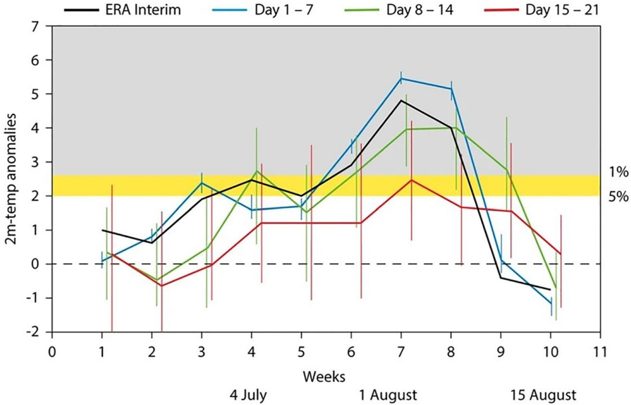
“Vertical lines represent the ensemble spread and the black curve is the verification from ERA-Interim (Dee et al., 2011).”
BackgroundInfluentialEyring, V., Bony, S., Meehl, G. A., Senior, C. A., Stevens, B., Stouffer, R. J., & Taylor, K. E. (2016) · Geoscientific Model Development · doi:10.5194/gmd-9-1937-2016 · Cited by 11,981 · cited 1×
“The model simulations considered for Figure 12 come from 23 Global Climate Models (GCMs) (Table A1) available in the CMIP6 archive (Eyring et al., 2016).”
MethodDeep learning and process understanding for data-driven Earth system science
Reichstein, M., Camps-Valls, G., Stevens, B., Jung, M., Denzler, J., Carvalhais, N., & Prabhat (2019) · Nature · doi:10.1038/s41586-019-0912-1 · Cited by 5,673 · cited 2×
“, 2018), the generation of data-driven weather forecasts (Dueben & Bauer, 2018; Scher & Messori, 2021), and potential applications in climate modeling (Reichstein et al., 2019; Schneider et al., 2017).”
BackgroundMethodThe energetic basis of the urban heat island
Oke, T. R. (1982) · Quarterly Journal of the Royal Meteorological Society · doi:10.1002/qj.49710845502 · Cited by 4,670 · cited 2×
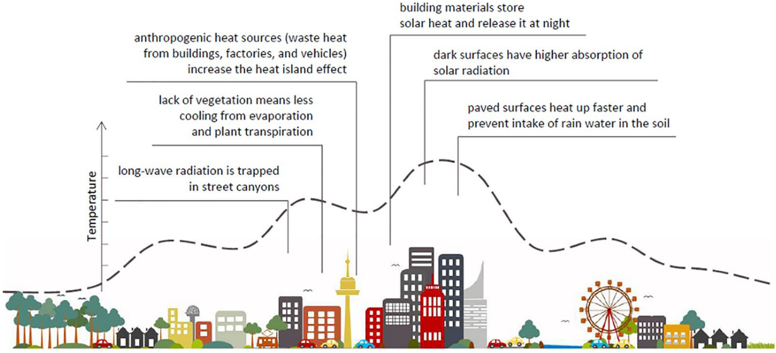
“This is referred to as the urban heat island (UHI) effect (Oke, 1982), which results from several factors (Figure 13).”
BackgroundGlobal observed changes in daily climate extremes of temperature and precipitation
Alexander, L. V., Zhang, X., Peterson, T. C., Caesar, J., Gleason, B., Klein Tank, A. M. G., Haylock, M., Collins, D., Trewin, B., Rahimzadeh, F., et al. (2006) · Journal of Geophysical Research: Atmospheres · doi:10.1029/2005jd006290 · Cited by 4,492
Influence of extreme weather disasters on global crop production
Lesk, C., Rowhani, P., & Ramankutty, N. (2016) · Nature · doi:10.1038/nature16467 · Cited by 3,883 · cited 1×
“These extreme events are of great concern as they can inflict devastating impacts on human health, ecosystems, agriculture and economy (e.g., Hoegh-Guldberg et al., 2018; R. M. Horton et al., 2016; Lesk et al., 2016; Mora et al., 2017).”
Background(2019) · Cited by 3,602
Global warming and recurrent mass bleaching of corals
Hughes, T. P., Kerry, J. T., Álvarez-Noriega, M., Álvarez-Romero, J. G., Anderson, K. D., Baird, A. H., Babcock, R. C., Beger, M., Bellwood, D. R., Berkelmans, R., et al. (2017) · Nature · doi:10.1038/nature21707 · Cited by 3,385
Research works printed but not linked: 12
- 10.1175/1520-0442(2002)015<1893:CTTJSW>2.0.CO;2 · doi:10.1175/1520-0442(2002)015
- Collins, M., Sutherland, M., Bouwer, L., Cheong, S.-M., Frölicher, T., Jacot Des Combes, H., et al. (2019). Extremes, abrupt changes and manag- ing risk. In H.-O. Pörtner, D. C. Roberts, V. Masson-Delmotte, P. Zhai, M. Tignor, E. Poloczanska, et al. (Eds.), IPCC special report on the ocean and cryosphere in a changing climate (pp. 589-655). Cambridge University Press. https://doi.org/10.1017/9781009157964. · DOI
- Kushnir, Y., Robinson, W. A., Bladé, I., Hall, N. M. J., Peng, P., & Sutton, R. (2002). Atmospheric GCM response to extratropical SST anoma- lies: Synthesis and evaluation. Journal of Climate, 15(16), 2233-2256. https://doi.org/10.1175/1520-0442(2002)015,2233:AGRTES.2.0.CO;2 · doi:10.1175/1520-0442(2002)015,2233:agrtes.2.0.co;2
- 10.1175/1520-0477(1996)077<1507:TJHWIT>2.0.CO;2 · doi:10.1175/1520-0477(1996)077
- 10.1175/1520-0442(2002)015 · doi:10.1175/1520-0442(2002)015
- Mann, M. E., Rahmstorf, S., Kornhuber, K., Steinman, B. A., Miller, S. K., & Coumou, D. (2017). Influence of anthropogenic climate change on planetary wave resonance and extreme weather events. Scientific Reports, 7(1), 45242. https://doi.org/10.1038/srep4524 · doi:10.1038/srep4524
- Peterson, T. C., Folland, C., Gruza, G., Hogg, W., Mokssit, A., & Plummer, N. (2001). Report on the activities of the working group on climate change detection and related Rapporteurs 1998-2001. WMO, Report WCDMP-47 (p. 143). WMO-TD 1071.
- Rohde, R., Muller, R., Jacobsen, R., Perlmutter, S., Rosenfeld, A., Wurtele, J., et al. (2013). Berkeley earth temperature averaging process. Geoin- formatics & Geostatistics: Overview, 1(2), 20-100. https://doi.org/10.4172/gigs.100010 · doi:10.4172/gigs.100010
- 10.1175/1520-0450(1979)018<0861:TAOSPI>2.0.CO;2 · doi:10.1175/1520-0450(1979)018
- Vijverberg, S., Schmeits, M., van der Wiel, K., & Coumou, D. (2020). Subseasonal statistical forecasts of eastern U.S. hot temperature events. Monthly Weather Review, 148(12), 4799-4822. https://doi.org/10.1175/mwrd-19-0409. · doi:10.1175/mwrd-19-0409
- 10.1175/mwrd-19-0409.1 · doi:10.1175/mwrd-19-0409.1
- WMO. (1992). International meteorological vocabulary. WMO-No. 182 (2nd ed.).
Cited by
Items 301–400 of 407
The climatology of extremely high warm‐season temperatures and their sensitivity to climate change
Zeppetello, L. R. V. (2025) · Quarterly Journal of the Royal Meteorological Society · doi:10.1002/qj.70048
Lateef, M. B. (2025) · Research Square · doi:10.21203/rs.3.rs-7199339/v1
Diodato, N., Kumar, V., & Bellocchi, G. (2025) · International Journal of Climatology · doi:10.1002/joc.70143 · Cited by 1
“This highlights Sicily and northern Tunisia as potential hotspots of rapid cloud cover change—where observational uncertainty remains large, particularly over complex regions of northern Africa (Barriopedro et al. 2023)—meriting further targeted investigation beyond the scope of the present EOF and correlation-based f…”
InfluentialHeatwaves in the Northern Brazil Region: Current and Future Perspectives
de Medeiros, F. J., Chebly, S. B., de Araújo, G. R. G., Neto, F. A. D. B., & Lima, K. C. (2025) · International Journal of Climatology · doi:10.1002/joc.70144
Influence of Soil Moisture on Surface Air Temperature in Monsoons
Takaya, Y., Ganeshi, N., Kosaka, Y., Liang, X. S., & Sato, T. (2025) · Geophysical Research Letters · doi:10.1029/2025gl115760 · Cited by 3
“In addition, the effects of SM on heatwaves in changing monsoon climates have drawn research attention (Barriopedro et al., 2023; Ganeshi et al., 2023; Lorenz et al., 2016).”
InfluentialValencia‐Méndez, O., Aguilar‐Medrano, R., Tena, R. A. C., & Calderón‐Aguilera, L. E. (2025) · Discover Oceans · doi:10.1007/s44289-025-00093-2
“Consequently, the ability to provide accurate forecasts and regional projections is limited [55].”
Zhao, R., Xie, X., Chen, Y., Wang, H., & Li, J. (2025) · International Journal of Climatology · doi:10.1002/joc.70152
Pérez‐Alarcón, A., Sorí, R., Stojanovic, M., Lobaina-Castillo, D., Záldivar, B. V., Trigo, R. M., Nieto, R., & Gimeno, L. (2025) · Weather and Climate Extremes · doi:10.1016/j.wace.2025.100827 · Cited by 3
Architecture as Thermopolitics
Gómez, D. T., Peiró, M. N., & Sánchez, C. S.-G. (2025) · Technology|Architecture + Design · doi:10.1080/24751448.2025.2534785 · Cited by 1
He, C., Peng, Y., & Yu, P. (2025) · Environmental Research Letters · doi:10.1088/1748-9326/ae2282 · Cited by 1
“Ongoing global warming not only intensifies heat waves (Dosio et al 2018, Barriopedro et al 2023, Martinez-Villalobos et al 2025), but also alters the hydrological cycle, increasing the frequency and severity of droughts and floods (Allan and Soden 2008, O’Gorman 2015, Diffenbaugh et has been…”
Han, M., & Yoo, K. S. (2025) · Religions · doi:10.3390/rel16121483 · Cited by 1
Mužić, I., Hodnebrog, Ø., Yılmaz, Y. A., Berntsen, T. K., Sillmann, J., Lawrence, D. M., & Dirmeyer, P. A. (2025) · Advances in statistical climatology, meteorology and oceanography · doi:10.5194/ascmo-11-273-2025
Lakshmi, S., Saraswathi, S., Pai, D. S., & Agnihotri, G. (2025) · International Journal of Climatology · doi:10.1002/joc.70205 · Cited by 1
北半球中高纬热浪的次季节预报技巧:区域性及热浪持续时间差异性
刘, 昊., 刘, 屹., Qing, B., 何, 编., & 段, 晚. (2025) · SCIENTIA SINICA Terrae · doi:10.1360/n072025-0166
Yang, X., Zhou, B., Zhang, X., Xie, W., Tu, Y., & Cheng, Y. (2025) · Climate Dynamics · doi:10.1007/s00382-025-07987-z · Cited by 1
“Previous studies on land–atmosphere coupling indicated that in arid regions, the positive feedback mechanism between dry soil and elevated temperature further intensifies the severity of extreme high temperature events (Fischer et al. 2007; Miralles et al. 2019; Barriopedro et al. 2023).”
Assessing the impacts and risks of specific extremes, and the wider consequences for sectors
Hay, J. E. (2025) · Elsevier eBooks · doi:10.1016/b978-0-323-95102-9.00006-9
Subseasonal-to-seasonal prediction of weather extremes
Vitart, F., Cunningham, C., DeFlorio, M. J., Domeisen, D. I. V., Ferranti, L., Golding, B., Hudson, D., Jones, C., Dutra, E., Lavaysse, C., et al. (2025) · Elsevier eBooks · doi:10.1016/b978-0-443-31538-1.00017-8
Jain, A., & Subrahamanyam, D. B. (2025) · Journal of Turbulence · doi:10.1080/14685248.2025.2601202
“Key contributing factors include the enhanced greenhouse effect, sea surface temperature anomalies, synoptic pressure systems, vegetation dynamics, and land-atmosphere feedbacks such as soil moisture and surface fluxes [3].”
Bragina, V., Volodin, E., Tarasevich, M., Vargin, P., Khan, V., & Sumerova, K. (2025) · Atmospheric Research · doi:10.1016/j.atmosres.2025.108700
Weather Prediction and the Ideal Gas Law
Limon, G., & Shaw, S. (2025) · Journal of Fluid Flow Heat and Mass Transfer · doi:10.11159/jffhmt.2025.046
Heatwaves in the Northern Brazil Region: Current and Future Perspectives
de Medeiros, F. J., Chebly, S. B., de Araújo, G. R. G., Neto, F. A. D. B., & Lima, K. C. (2025) · Biblioteca Digital da Memória Científica do INPE (National Institute for Space Research)
Minute-scale point source simulation: Rapid transient impact assessment
Li, L., Zhang, C., Zhang, W., Gui, H., Xue, W., Shi, Z., Wang, Z., & Yang, T. (2025) · Atmospheric Environment · doi:10.1016/j.atmosenv.2025.121757
Yermokhin, M. V., Табачишин, В. Г., & Табачишин, В. Г. (2025) · Current Studies in Herpetology · doi:10.18500/1814-6090-2025-25-3-4-128-143
Redundancy of macrobenthic functional traits boosts resilience to a simulated heatwave
Lam‐Gordillo, O., Douglas, E. J., Hailes, S. F., & Lohrer, A. M. (2026) · PLoS ONE · doi:10.1371/journal.pone.0340819 · Cited by 1
Park, M., & Johnson, N. C. (2026) · npj Climate and Atmospheric Science · doi:10.1038/s41612-025-01319-y
Kim, G.-H., & Kim, K.-R. (2026) · Journal of Environmental Science International · doi:10.5322/jesi.2026.35.1.13
ENSO-induced latitudinal variation of zonal wind modulates heatwaves over Northwestern South Asia
Adhikari, G. P., Nepal, B., Lamichhane, D., & Wang, G. (2026) · Theoretical and Applied Climatology · doi:10.1007/s00704-026-06068-3
Wang, J., Gu, X., Gu, T., Li, L., Jiang, Z., Xiao, W., & Wang, L. (2026) · Journal of Geophysical Research Atmospheres · doi:10.1029/2025jd045461 · Cited by 1
“These events typically arise from the synergistic interaction of multiple physical mechanisms and driving factors, which makes their attribution particularly challenging (Barriopedro et al., 2023; Ma et al., 2024; Scholz & Lora, 2024; Trenberth et al., 2015).”
Jhariya, H., Poonia, V., Mukherjee, A., & Swarnkar, S. (2026) · Springer eBooks · doi:10.1007/978-3-032-14457-7_2
High-resolution projections of extreme heat and thermal stress in southeastern U.S.
Lu, S., Do, K., Zhang, Y., Chen, X., Leung, R. P. C., & Bell, M. L. (2026) · Weather and Climate Extremes · doi:10.1016/j.wace.2026.100878 · Cited by 4
Zhang, L., & Yang, J. (2026) · Journal of Geophysical Research Atmospheres · doi:10.1029/2025jd045534
“During HW conditions, the depleted soil moisture in northern areas increases summer temperature variability due to more partitioning of radiation energy into sensible (Barriopedro et al., 2023).”
Anthropogenic climate change amplifies autumn heatwave risks for children during school reopening
Ye, Y., Qian, C., Dai, A., Li, S., Li, T., Cui, X., Ji, J. S., & Zhang, X. (2026) · Weather and Climate Extremes · doi:10.1016/j.wace.2026.100892 · Cited by 1
Yu, J., Zhao, Q., Gao, L., Meng, Q., & Lei, X. (2026) · Earth s Future · doi:10.1029/2025ef008013 · Cited by 1
“Early studies on heatwaves predominantly adopt metrics focused on temperature, including the daily extremes (highs and lows) and average temperature, to characterize extreme heat from a climatic perspective (Barriopedro et al., 2023; Wu et al., 2023).”
Iyer, S. R., Prajapati, S. K., Reji, M. J. K., Kedia, S., Patro, B. S., Vellore, R. K., & Singh, B. B. (2026) · Climate Dynamics · doi:10.1007/s00382-026-08104-4
AI-Based Anomaly Detection for Extreme Event Attribution: An Analysis of European Heatwaves
Zaninelli, P. G., Barriopedro, D., Pérez-Aracil, J., & Drouard, M. (2026) · Earth Systems and Environment · doi:10.1007/s41748-026-01122-6 · Cited by 1
“For heatwaves in particular, the representa - tion of regional forcings and associated feedbacks remains uncertain in many GCMs (Barriopedro et al, 2023,and refer - ences therein).”
InfluentialSelf-citationCompounding heat waves and extreme precipitation in India using event coincidence analysis
Saha, S., Sardana, D., Ashish Manoj, J., & Agarwal, A. (2026) · Journal of Water and Climate Change · doi:10.2166/wcc.2026.312
Bekris, Y., Ting, M., Singh, D., & Kalashnikov, D. A. (2026) · Geophysical Research Letters · doi:10.1029/2025gl118531
“Due to their human impacts, terrestrial heatwaves are widely studied (Barriopedro et al., 2023), while marine heatwave research has recently gained momentum (Oliver et al., 2021).”
Studying extreme heatwaves using novel theoretical approaches
Mascolo, V. (2024) · theses.fr (ABES) · doi:10.70675/5a23de6ez1208z4642z96bdz5caad7fc25e6
Statistical and dynamical aspects of extreme heatwaves in the mid-latitudes
Noyelle, R. (2024) · theses.fr (ABES) · doi:10.70675/b512aebfz4979z4354z8d4czfb0a45eac387 · Cited by 7
Gou, R., Wang, X., Zhu, L., Zhu, S., Yang, Y., & Mo, L. (2026) · Journal of Arid Environments · doi:10.1016/j.jaridenv.2026.105614
Recent temperature changes in South Asia’s agro-climatic zones
Srivastava, I. S., & Patra, A. K. (2026) · Journal of Earth System Science · doi:10.1007/s12040-026-02820-5
Maeseneire, D. D., Ayarzagüena, B., & Calvo, N. (2026) · Journal of Geophysical Research Atmospheres · doi:10.1029/2025jd045140
“Heatwaves and warm events can be defined in many different ways (Barriopedro et al., 2023).”
Assessing subkilometre‐scale weather models for an extreme heat event over Paris
Kumar, V. V. R. K., Franklin, C., Lipson, M. J., Lean, H. W., Wurtz, J., Kotthaus, S., Wales, S., & Masson, V. (2026) · Quarterly Journal of the Royal Meteorological Society · doi:10.1002/qj.70193
“Further, heatwaves are characterized by complex atmospheric-scale interactions as well as land–atmosphere interactions (Barriopedro et al. , 2023) with BL dynamics playing a key role (Miralles et al. , 2014).”
Sakaguchi, K., McGinnis, S., Leung, L.-Y. R., Bukovsky, M., McCrary, R., Chen, Z., Chang, C.-C., & Li, Y. (2026) · Geoscientific model development · doi:10.5194/gmd-19-3643-2026
Jaikumar, N. S., Garneau, M. G., Jarvis, B. A., Phippen, M. E., Phippen, W. B., Bates, P. D., & Sedbrook, J. C. (2026) · Frontiers in Plant Science · doi:10.3389/fpls.2026.1811992
Heatwave characterization in Chile according to the Excess Heat Factor (1979–2018)
Díaz-Poso, A., Royé, D., Lemus‐Canovas, M., Sarricolea, P., Fuentealba, M., & Meseguer-Ruiz, Ó. (2026) · Natural Hazards · doi:10.1007/s11069-026-08188-5 · Cited by 2
“This expansion mirrors trends identified in other global regions and supports recent evi - dence showing that not only are HW becoming more intense, but also more synchronized over larger areas (Lorenzo et al. 2021; Barriopedro et al. 2023).”
Vavassori, A., Žgela, M., & Brovelli, M. A. (2026) · Applied Geomatics · doi:10.1007/s12518-026-00734-x · Cited by 2
“Several methods have been proposed in the literature to identify HWs, as no universally accepted definition exists (Barriopedro et al. 2023 ).”
Asian zonal-dipole climate extremes in 2022 and 2025: role of upper-tropospheric zonal flow
He, C., Zhou, T., Wu, P., Jiang, X., Zheng, Y., & Wang, C. (2026) · Environmental Research Letters · doi:10.1088/1748-9326/ae6c3c · Cited by 1
Huntingford, T., Ye, K., & Osprey, S. (2026) · Environmental Research Letters · doi:10.1088/1748-9326/ae6d18 · Cited by 1
“The impact on human health includes increased mortality, exemplified by the over 70 000 deaths attributed to the 2003 Western European heatwave [6] and an estimated 61 672 heat-related deaths in Europe in 2022 [7], as well as heightened respiratory disease risk in urban areas [8].”
Skipp, M., & Verdon‐Kidd, D. C. (2026) · The Science of The Total Environment · doi:10.1016/j.scitotenv.2026.181880
VELUSAMY, G., Akasapu, D. R., Kopparthi, N., Satyanarayana, G. C., Goroshi, S., & Afandi, G. E. (2026) · Earth Systems and Environment · doi:10.1007/s41748-026-01220-5 · Cited by 1
“…features such as quantile regression layers, percentile-based bias correction strategies, and sophisticated feature attribution diagnostics like SHAP, we can significantly improve the realism of peak temperature predictions and enhance the interpretability of the models (Barriopedro et al. 2023).”
Tawsif, S., & Khan, M. S. (2026) · Springer eBooks · doi:10.1007/978-3-032-00457-4_14
Dynamic Mechanisms Governing Extreme Hot Days in Hanoi, VietnamPreprint
Bui, T. M., Nguyen, M. D., & HOANG, M. T. (2026) · Research Square · doi:10.21203/rs.3.rs-9531184/v1
Hao, H., Zhang, Y., Zhu, Q., Cheng, S. C., Zhang, R., Liu, Y., & Chang, H. H. (2026) · Journal of the American Heart Association · doi:10.1161/jaha.125.047065
“15 In the United States, extreme heat has been linked to thousands of cardiovascular-related emergency visits and deaths each year, 16 yet the role of temperature as a trigger for TTS, a stress-sensitive cardiovascular condition, remains largely unstudied.”
Qin, P., & Xie, Z. (2026) · Climate Dynamics · doi:10.1007/s00382-026-08223-y
“Therefore, it is urgent to better understand the characteristics and main drivers of heatwaves to respond heat-wave-related disaster risks (Barriopedro et al. 2023 ; Brogno et al. 2025; Il Jeong et al. 2025; Li et al. 2025a; Qin et al. 2025).”
InfluentialMiyaji, Y., Horinouchi, T., Kawatani, Y., & Watanabe, S. (2026) · SSRN Electronic Journal · doi:10.2139/ssrn.6865018
European Heatwaves Aggravated by Recent Summer Arctic ChangesPreprint
Kim, J., Noh, E., Kosaka, Y., Yeh, S.-W., Son, S., Kim, B.-M., Coumou, D., Kornhuber, K., Jun, S., Moon, W., et al. (2026) · Research Square · doi:10.21203/rs.3.rs-9416442/v1
Grass wars: how native and non-indigenous Sporobolus battle heatwaves in salt marshesPreprint
Drigo, F., Antolini, P., Trentin, R., Stefanelli, C., Colaianni, D., Battisti, D. D., Frasson, C., Airoldi, L., Sales, G., Moro, I., et al. (2026) · bioRxiv (Cold Spring Harbor Laboratory) · doi:10.64898/2026.05.29.728445
Climate Analysis of Temperature Over National Capital Region (NCR) Using ERA5 Data
Sikand, S., Baghel, A. S., Kumar, S., Ansari, M. A., & Kumari, N. (2026) · International Conference on Intelligent Systems in Engineering, Secured Systems and Cybersecurity (ICISESSC) · doi:10.1109/icisessc68634.2026.11542765
Tracing atmospheric heat and moisture pathways to understand compound drought–heatwave events
Gimeno, L., Nieto, R., Eiras‐Barca, J., Sorí, R., Stojanovic, M., Pérez‐Alarcón, A., Fernández‐Alvarez, J. C., Gimeno‐Sotelo, L., Coll‐Hidalgo, P., Alvarez‐Socorro, G., et al. (2026) · Weather and Climate Extremes · doi:10.1016/j.wace.2026.100923 · Cited by 2
Karrevula, N. R., Nayak, H., Nadimpalli, R., Sinha, P. C., Boyaj, A., Patel, P., Jadhav, H., Vinoj, V., Islam, S., Khare, M., et al. (2026) · Urban Climate · doi:10.1016/j.uclim.2026.102996
Kouras, L., Bouallag-Azoui, O., & Sharifi, A. (2026) · Sustainable Cities and Society · doi:10.1016/j.scs.2026.107639
Zhu, Y., kong, X., Liu, Y., Chen, H., Sun, J., & Tang, X. (2026) · Journal of Hydrology Regional Studies · doi:10.1016/j.ejrh.2026.103680
Heatwaves, A Decade-long issue and Ayurveda Drava-Dravyas as its Checkmate
Bhandari, S. (2026) · International Ayurvedic Medical Journal · doi:10.46607/iamj0814062026
Characterising Vento Norte Downslope Windstorms and Their Thermal Impacts in Southern Brazil
da Rosa, C. E., Stefanello, M., Portalanza, D. E., Rebelo, M. D. S., Degrazia, G. A., & Marquesin, M. (2026) · International Journal of Climatology · doi:10.1002/joc.70488
Dominant circulation patterns influencing the tropical night in the East Asian monsoon region
Chen, R., Lin, W., Tang, S., & Wei, L. (2026) · Atmospheric Research · doi:10.1016/j.atmosres.2026.109194
Klimiuk, T., Sánchez-Benítez, A., Ludwig, P., & Pinto, J. G. (2026) · Climate Dynamics · doi:10.1007/s00382-026-08205-0 · Cited by 1
Bešťáková, Z., Lhotka, O., Stryhal, J., & Kyselý, J. (. (2026) · Earth and Space Science · doi:10.1029/2025ea004784 · Cited by 1
“Middle Europe is a transition region where soil moisture can become a limiting factor during summer, making the land–atmosphere coupling particularly important for exacerbating heat waves (Barriopedro et al., 2023).”
A role for vegetation phenology in shaping patterns of ecosystem sensitivity to drought
Felton, A. J. (2026) · New Phytologist · doi:10.1111/nph.71429
Huang, H., Gong, X. Z., Wang, H., Mo, Z., Sun, L., & Wei, S. (2026) · Agricultural and Forest Meteorology · doi:10.1016/j.agrformet.2026.111362
Vulnerability and Resilience of Plant Biodiversity to Heat Stress Under Climate Change
Devi, S. B., Sharma, K., Kaur, L., & Jins, V. J. (2026) · Springer eBooks · doi:10.1007/978-3-032-29477-7_6
Heat Stress Impacts on the Himalayan Forest Ecosystems: Present Status and Future Perspectives
Manish, K., Jha, N. A., Devi, S. B., Sherpa, S. S. S. S., Chhetri, P., & Sharma, K. (2026) · Springer eBooks · doi:10.1007/978-3-032-29477-7_9
Temperature Pattern and the Escalation of Heat Waves
Malik, R., Mittal, T., Kanyal, D., Rana, S., Choudhury, T., Nzeyimana, B. S., Amesho, K. T. T., & Awasthi, A. (2026) · Springer eBooks · doi:10.1007/978-3-032-29477-7_1
Luo, W., Shi, Q., Xiao, C., Wang, J., Ge, K., & Chen, X. (2026) · International Journal of Disaster Risk Reduction · doi:10.1016/j.ijdrr.2026.106341
Subseasonal Prediction of the Wintertime North Pacific Blocking in AI‐Based Weather Models
Hwang, J., Deng, Y., Yook, S., & You, Z. (2026) · Journal of Geophysical Research Atmospheres · doi:10.1029/2026jd046695
“Droughts or heatwaves (i.e., warm anomalies) can be intensified around the center of blocking due to clear skies, enhanced subsiding motion, and atmosphere‐land interaction (Barriopedro et al., 2023; Domeisen et al., 2023; Rousi et al., 2023; Schaller et al., 2018; White et al., 2023).”
A Water Budget Evaluation of a Tile-Drain-Fed Irrigation Pond in the Willamette Valley, Oregon, USA
Bain, N. G., Ochoa, C. G., Godwin, D. C., Tomasek, A., & Singh, A. (2026) · Hydrology · doi:10.3390/hydrology13080211
“Agriculture worldwide is negatively affected by extreme weather events, such as droughts [1], heatwaves [2,3], and extreme precipitation events [4], which are projected to change in frequency and intensify through the end of the 21st century.”
Segura, R., Martilli, A., Krayenhoff, E. S., Badía, A., & Villalba, G. (2026) · Urban Climate · doi:10.1016/j.uclim.2026.103086
Córdoba‐Jabonero, C., Salgueiro, V., Costa, M. J., Duarte, E. D. S. F., López-Cayuela, M.-Á., Bortoli, D., & Guerrero-Rascado, J. L. (2026) · Remote Sensing · doi:10.3390/rs18162693
Heat Extremes Within Hot Summer Seasons Intensify More Than in Average Summers Under Global Warming
Pfleiderer, P., Noyelle, R., & Sippel, S. (2026) · Earth s Future · doi:10.1029/2026ef008241
Squintu, A., McAdam, R., Pérez-Aracil, J., Peláez-Rodríguez, C., Álvarez-Castro, M. C., Loukos, H., Barriopedro, D., Salcedo‐Sanz, S., & Scoccimarro, E. (2026) · Weather and Climate Extremes · doi:10.1016/j.wace.2026.100949
Self-citationEmerging Heat Wave Hotspots in Sri Lanka: The Role of Ocean–Atmosphere CouplingPreprint
Galagamage, P., Pathirana, U. P. G., Geng, X., Wang, D., & Premarthne, U. (2026) · Research Square · doi:10.21203/rs.3.rs-10697012/v1
ERA5 Can Overstate Changes in the Frequency of Extreme Heat: A New Zealand Case Study
Iqbal, S. W., Harrington, L. J., & Lewis, H. (2026) · International Journal of Climatology · doi:10.1002/joc.70571 · Cited by 1
Lim, S., Liu, R., & Li, Z. (2026) · Big Earth Data · doi:10.1080/20964471.2026.2726062
Wang, L., Chen, J., Han, Z., Du, H., Zhao, S., Hua, L., Wang, J., Liu, H., & Li, X. (2026) · Atmosphere · doi:10.3390/atmos17090863
Safeguarding global terrestrial vertebrate species from future sea level rise
Jiang, Z., Xiao, H. B., Hanson, J. O., Zeng, Y., Wilcove, D. S., Schuerch, M., Kirwan, M. L., Yan, Q.-F., Chen, Y., & Ma, L. (2026) · Science · doi:10.1126/science.aed5772 · Cited by 1
Hwangbo, N., & McKinnon, K. A. (2026) · Geophysical Research Letters · doi:10.1029/2026gl123725 · Cited by 1
“Multiple physical mechanisms, including atmospheric dynamics and land‐atmosphere interactions, are expected to cause spatial variability in heatwave trends (Barriopedro et al., 2023; Miralles et al., 2019), leading to uncertainty about future regional trends in heat.”
Zhang, Q., Zhu, Y., Xu, Y., & Chen, Y. (2026) · Atmospheric Research · doi:10.1016/j.atmosres.2026.109307
Teixeira-Coelho, F., cabrera, S., Li, Z., Aldakkan, A., Reis, G., Moraes, M., & Laitano, O. (2026) · American Journal of Physiology-Regulatory, Integrative and Comparative Physiology · doi:10.1152/ajpregu.00182.2026
Emerging compound air–soil heatwaves amplify global vegetation losses
Wu, S., Luo, M., Woolway, R. I., Liu, Z., Li, X., Zhang, H., Liao, W., Wang, X., Shi, M., Wang, Q., et al. (2026) · National Science Review · doi:10.1093/nsr/nwag603
“Although the mechanisms underlying independent air heatwaves have been extensively studied [28 –30 ], the local energetic processes accompanying compound air–soil heatwaves remain poorly understood, and how these processes differ from independent air or soil heatwave events is yet to be examined.”
Geesupalli, P. D., Pothier, C., & Arora, A. (2026) · Remote Sensing Applications Society and Environment · doi:10.1016/j.rsase.2026.102246
Brazilian heatwaves are shifting towards dry-hot thermodynamic regimes in transformed landscapes
Duarte, E. D. S. F. (2026) · Environmental Impact Assessment Review · doi:10.1016/j.eiar.2026.108749
Heatwave analysis in Iran: identification of regimes and scenario-based mapping of vulnerability
Shakiba, A., Esfandiari, N., & Mirbagheri, B. (2026) · Natural Hazards · doi:10.1007/s11069-026-08416-y
“Consequently, heatwaves are now regarded as one of the most significant climate hazards of the twenty-first century, requiring effective monitoring, assessment, and management across multiple planning and policy levels (Barriopedro et al. 2023 ).”
Bajare, Y., Tasgaonkar, P. P., & Sankpal, S. (2026) · Discover Geoscience · doi:10.1007/s44288-026-00754-5
“Therefore, the occurrence of HWs and SHWs across different geographical locations, indoor-outdoor measurements, future projections, and variations in the intensity and frequency of these extreme events are essential areas of study with major societal concerns [23].”
Evaluation of Heatwave Severity in Southeastern Europe Through the Excess Heat Factor
Malcheva, K., Chervenkov, H., & Bocheva, L. (2026) · Earth · doi:10.3390/earth7050161
Roemer, F. E., Fischer, E. M., Noyelle, R., & Knutti, R. (2026) · Weather and Climate Dynamics · doi:10.5194/wcd-7-1919-2026
Ennis, K. E., Arcodia, M. C., Fernandez, M. A., Maloney, E. D., & Barnes, E. A. (2026) · Meteorological Applications · doi:10.1002/met.70249 · Cited by 5
Urban heat as a structural development challenge in rapidly growing cities
Khan, A., Hamdi, R., Ahmed, T. M. F., Niyogi, D., Akbari, H., & Mattheos, S. (2026) · PLOS Climate · doi:10.1371/journal.pclm.0001010
Mortality during heatwaves in Spain, 2015–2025: heat metrics, patterns and future risks
García-García, D., León-Gómez, I., Pérez-Marín, L., & Gómez‐Barroso, D. (2026) · Environment International · doi:10.1016/j.envint.2026.110561
Metadata
- Authors
- Barriopedro, D., García‐Herrera, R., Ordóñez, C., Miralles, D. G., & Salcedo‐Sanz, S.
- Affiliations
- Universidad Complutense de Madrid (ES)
- Ghent University (BE)
- Universidad de Alcalá (ES)
- Corresponding author
- Barriopedro, D.
- Venue
- Reviews of Geophysics
- Publisher
- American Geophysical Union (AGU)
- Published
- 2023-05-08
- Volume
- 61
- Issue
- 2
- ISSN
- 0096-1043 (ISSN-L)
- 8755-1209
- 1944-9208
- OpenAlex
- W4367049346
- Semantic Scholar
- 29d2f40706ce3c0ab780f10788e19b4a4286daac
- Cited by
- 404
- References
- 431
- Citations by year
- 2026: 124 · 2025: 176 · 2024: 93 · 2023: 11
- FWCI
- 45.39
- Type
- journal article
- Language
- en
- Open access
- hybrid
- doi.org
- Licence
- Locations
- Reviews of Geophysics (publishedVersion, cc-by)
- Ghent University Academic Bibliography (Ghent University) (submittedVersion, cc-by)
- DIGITAL.CSIC (Spanish National Research Council (CSIC)) (submittedVersion, cc-by)
- Funders
- HORIZON EUROPE European Research Council (101088405)
- Ministerio de Economía y Competitividad (CGL2017‐83198‐R)
- Ministerio de Ciencia, Innovación y Universidades (RTI2018‐096402‐B‐I00)
- Ministerio de Ciencia e Innovación (PID2021‐122252OB‐I00, PID2020‐115454GB‐C21)
- Topics
- Physical Sciences › Environmental Science › Global and Planetary Change › Climate variability and models
- Physical Sciences › Earth and Planetary Sciences › Atmospheric Science › Meteorological Phenomena and Simulations
- Physical Sciences › Environmental Science › Global and Planetary Change › Climate Change and Environmental Impact
- Keywords
- heat waves, heat wave definition, climate change projections, subseasonal forecasting, atmospheric circulation, thermodynamic processes, observational networks, artificial intelligence
About these checks
Registry, retraction, Cites and statistics results are computed, not judged, with one exception: a printed reference that no index lists is read once by a model before it counts as a citation error. Claims are extracted by a model and kept only when their quote appears verbatim in the text; each cited source is then checked, with a model’s help, for whether it says what the claim relies on. Those verdicts can be wrong — read the claim’s quote and the cited source before relying on one.
Statistics and arithmetic are recomputed, not judged.
Confidence bands are shown only for fields calibrated on our annotated test set. None is calibrated yet, so no band is shown.
What counts as a claim ›How we measure confidence ›How we check this ›
Are you an author, or do you see a problem with this page? Request a review
Data sources
Bibliographic data: Semantic Scholar, OpenAlex, Crossref.
Contains information from the Semantic Scholar Academic Graph Datasets, made available under the ODC Attribution License (ODC-BY 1.0).
Semantic Scholar’s data is described in: Kinney, R., et al. (2023). The Semantic Scholar Open Data Platform. arXiv:2301.10140.
