

Returners and explorers dichotomy in human mobility
Open accessThe DOI matches its Crossref record; 45 of the 45 references it cites were found in a registry or an index.
Abstract
The availability of massive digital traces of human whereabouts has offered a series of novel insights on the quantitative patterns characterizing human mobility. In particular, numerous recent studies have lead to an unexpected consensus: the considerable variability in the characteristic travelled distance of individuals coexists with a high degree of predictability of their future locations. Here we shed light on this surprising coexistence by systematically investigating the impact of recurrent mobility on the characteristic distance travelled by individuals. Using both mobile phone and GPS data, we discover the existence of two distinct classes of individuals: returners and explorers. As existing models of human mobility cannot explain the existence of these two classes, we develop more realistic models able to capture the empirical findings. Finally, we show that returners and explorers play a distinct quantifiable role in spreading phenomena and that a correlation exists between their mobility patterns and social interactions.
Overview
The claims and statistics of this paper haven’t been checked yet.
Free: it reads the open-access text and checks the first 5 claims that cite a source we can check. Create a free account to check every claim.
Integrity signals
Registry
Cites
Statistics
Figures




Verification
Claims the paper makes
The claims and statistics of this paper haven’t been checked yet.
Free: it reads the open-access text and checks the first 5 claims that cite a source we can check. Create a free account to check every claim.
Claims other papers make about this one
Each is checked against this paper’s own text: does it say what the citing paper says it does?
The cited source says what the claim attributes to it.
In the citing paper
“Following Pappalardo et al. (2015), we use r g and r (k) g , which have been demonstrated to categorize individual mobility into two distinct classes: returners and explorers.”
From Visitation patterns across mobility groups: wandering, commuting, and exploring (2026) · cites this paper as Pappalardo et al. (2015)
Self-check
Percentages, sums and reported differences re-computed from the paper’s own numbers.
The self-check needs the paper’s full text.
Citations
Cites
(2008) · Data Mining and Market Intelligence for Optimal Marketing Returns · doi:10.4324/9780080878096-12 · Cited by 6,954
Understanding individual human mobility patterns
González, M. C., Hidalgo, C. A., & Barabási, A.-L. (2008) · Nature · doi:10.1038/nature06958 · Cited by 6,059
Self-citationLimits of Predictability in Human Mobility
Song, C., Qu, Z., Blumm, N., & Barabási, A.-L. (2010) · Science · doi:10.1126/science.1177170 · Cited by 3,234 · cited 1×
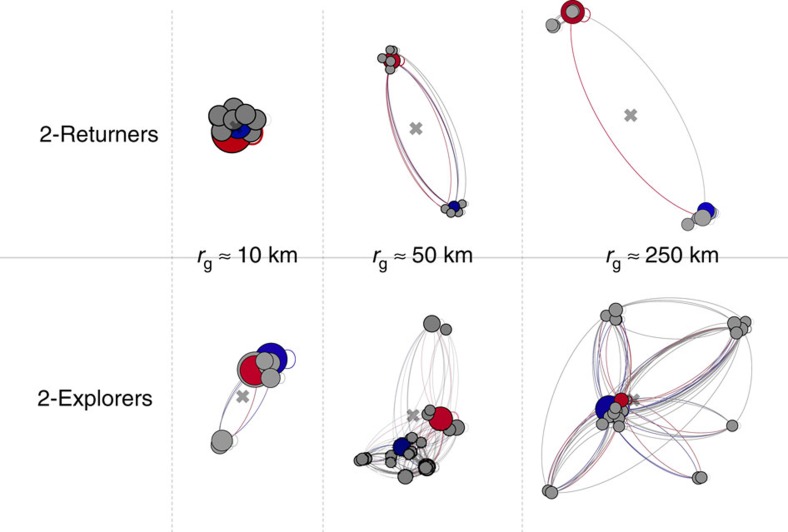
“Figure 5 shows some representative examples of individual mobility networks 3,31 of two-returners and two-explorers with different total r g .”
BackgroundSelf-citationBatty, M., Axhausen, K. W., Giannotti, F., Pozdnoukhov, A., Bazzani, A., Wachowicz, M., Ouzounis, G., & Portugali, Y. (2012) · The European Physical Journal Special Topics · doi:10.1140/epjst/e2012-01703-3 · Cited by 2,424 · cited 1×
“…microscope has attracted scientists from diverse disciplines, from physics and network science 1–4 to data mining 5–8 , and has fuelled advances from public health 9–14 to transportation engineering 15–17 , urban planning 18–21 , official statistics 22,23 and the design of smart cities 24–27 .”
BackgroundSelf-citationThe scaling laws of human travel
Brockmann, D., Hufnagel, L., & Geisel, T. (2006) · Nature · doi:10.1038/nature04292 · Cited by 2,205 · cited 1×
“This broad social microscope has attracted scientists from diverse disciplines, from physics and network science 1–4 to data mining 5–8 , and has fuelled advances from public health 9–14 to transportation engineering 15–17 , urban planning 18–21 , official statistics 22,23 and the design of smart…”
BackgroundBatty, M. (2013) · doi:10.7551/mitpress/9399.001.0001 · Cited by 1,700
A universal model for mobility and migration patterns
Simini, F., González, M. C., Maritan, A., & Barabási, A.-L. (2012) · Nature · doi:10.1038/nature10856 · Cited by 1,502
Self-citationThe Origins of Scaling in Cities
Bettencourt, L. M. A. (2013) · Science · doi:10.1126/science.1235823 · Cited by 1,480
Multiscale mobility networks and the spatial spreading of infectious diseases
Balcan, D., Colizza, V., Gonçalves, B., Hu, H., Ramasco, J. J., & Vespignani, A. (2009) · Proceedings of the National Academy of Sciences · doi:10.1073/pnas.0906910106 · Cited by 1,380 · cited 1×
“This modification is justified by the accuracy of the gravity model to estimate origin-destination matrices at the country level 34–37 .”
MethodModelling the scaling properties of human mobility
Song, C., Koren, T., Wang, P., & Barabási, A.-L. (2010) · Nature Physics · doi:10.1038/nphys1760 · Cited by 1,284 · cited 4×
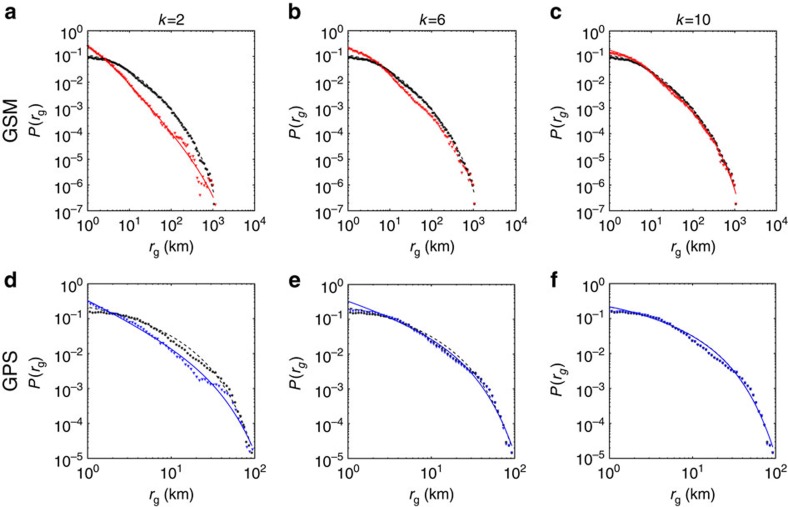
“Theparametersofthefittedtruncatedpowerlawsfor r from the population (see Supplementary Note 4, Supplementary Fig.”
BackgroundInfluentialSelf-citation
Research works printed but not linked: 4
- Giannotti, F., Nanni, M., Pinelli, F. & Pedreschi, D. in Proceedings of the 13th ACM SIGKDD International Conference on Knowledge Discovery and Data Mining (KDD) 330–339ACM (2007).
- Jiang, S. et al. in Proceedings of the 2nd ACM SIGKDD (International Workshop on Urban Computing (UrbComp'13)) 21–29ACM (2013).
- Rinzivillo, S. et al. in Proceedings of the 1st International Conference on Data Science and Advanced Analytics (DSAA'2014) IEEE Computer Society, Shanghai, China (2014).
- Wang, D., Pedreschi, D., Chaoming, S., Giannotti, F. & Barabási, A. L. in Proceedings of the 17th ACM SIGKDD International Conference on Knowledge Discovery and Data Mining (KDD) 1100–1108ACM New York, San Diego, CA, USA (2011).
Cited by
Items 101–200 of 491
Identifying latent activity behaviors and lifestyles using mobility data to describe urban dynamics
Yang, Y., Pentland, A., & Moro, E. (2023) · EPJ Data Science · doi:10.1140/epjds/s13688-023-00390-w · Cited by 50
“Those two distinct classes of individuals have been found in many different mobility studies [2, 8, 51], but also in other people’s activities like social network connections [52], web browsing [53], or knowledge discovery [54].”
BackgroundVisual exploration dynamics are low-dimensional and driven by intrinsic factors
Zangrossi, A., Cona, G., Celli, M., Zorzi, M., & Corbetta, M. (2021) · Communications Biology · doi:10.1038/s42003-021-02608-x · Cited by 42
On estimating the predictability of human mobility: the role of routine
Teixeira, D., Almeida, J. M., & Viana, A. C. (2021) · EPJ Data Science · doi:10.1140/epjds/s13688-021-00304-8 · Cited by 44
Xu, Y., Zou, D., Park, S., Li, Q., Zhou, S., & Li, X. (2022) · Computers Environment and Urban Systems · doi:10.1016/j.compenvurbsys.2021.101753 · Cited by 35
“First, it is possible that some visitors with a large M are “returners”, whose travel patterns are characterized by frequent and repetitive visits to some locations (Pappalardo et al., 2015).”
BackgroundAn activity space-based gravity model for intracity human mobility flows
Zhang, X., & Li, N. (2023) · Sustainable Cities and Society · doi:10.1016/j.scs.2023.105073 · Cited by 33
Unified underpinning of human mobility in the real world and cyberspace
Zhao, Y.-M., Zeng, A., Yan, X.-Y., Wang, W.-X., & Lai, Y.-C. (2016) · New Journal of Physics · doi:10.1088/1367-2630/18/5/053025 · Cited by 31
Characterizing preferred motif choices and distance impacts
Cao, J., Li, Q., Tu, W., & Wang, F. (2019) · PLoS ONE · doi:10.1371/journal.pone.0215242 · Cited by 34
Housing-industry symbiosis in rural China: A multi-scalar analysis through the lens of land use
Gao, J., Jiang, W., Chen, J., & Liu, Y. (2020) · Applied Geography · doi:10.1016/j.apgeog.2020.102281 · Cited by 35
Correlation between social proximity and mobility similarity
Fan, C., Liu, Y., Huang, J., Rong, Z., & Zhou, T. (2017) · Scientific Reports · doi:10.1038/s41598-017-12274-x · Cited by 36
Understanding vehicular routing behavior with location-based service data
Xu, Y., Clemente, R. D., & González, M. C. (2021) · EPJ Data Science · doi:10.1140/epjds/s13688-021-00267-w · Cited by 37
An Empirical Study of Travel Behavior Using Private Car Trajectory Data
Jiang, H., Zhang, Y., Xiao, Z. Q., Zhao, P., & Iyengar, A. (2020) · IEEE Transactions on Network Science and Engineering · doi:10.1109/tnse.2020.3025529 · Cited by 33
“Existing work has mainly focused on analyzing people’s travel patterns, lifestyles, interest, and so on, using transportation smart card data [16]–[22], mobile phone call data [23]– [28], and taxi trajectory data [29]–[34].”
BackgroundResultObserved mobility behavior data reveal social distancing inertiaPreprint
Ghader, S., Zhao, J. F., Lee, M., Zhou, W., Zhao, G., & Zhang, L. (2020) · arXiv (Cornell University) · doi:10.48550/arxiv.2004.14748 · Cited by 36
The formation and proximity mechanism of population flow networks under multiple traffic in China
Meng, H., Huang, X., Mao, X., Xia, Y., Lin, B., & Zhou, Y. F. (2023) · Cities · doi:10.1016/j.cities.2023.104211 · Cited by 30
Survey of Automated Fare Collection Solutions in Public Transportation
Bieler, M., Skretting, A., Budinger, P., & Grønli, T. (2022) · IEEE Transactions on Intelligent Transportation Systems · doi:10.1109/tits.2022.3161606 · Cited by 44
“Toleverage smart devices and apps to achieve human movement prediction, the differences of exploratory and recurring visits must be better understood [101].”
BackgroundEconomic modelling of electricity generation: long short-term memory and Q-rung orthopair fuzzy sets
An, J., Mikhaylov, A. Y., Dınçer, H., & Yüksel, S. (2022) · Heliyon · doi:10.1016/j.heliyon.2022.e12345 · Cited by 29
Higher-order non-Markovian social contagions in simplicial complexes
Lin, Z., Han, L., Feng, M., Liu, Y., & Tang, M. (2024) · Communications Physics · doi:10.1038/s42005-024-01666-x · Cited by 33
Duan, J., Wang, H., Liu, L., & Zhang, J. (2024) · Cities · doi:10.1016/j.cities.2024.105516 · Cited by 29
Wen, H., Zhao, D. W., Wang, W., Hua, X., & Yu, W. (2025) · Journal of Transport Geography · doi:10.1016/j.jtrangeo.2025.104144 · Cited by 35
Putting human behavior predictability in context
Zhang, W., Shen, Q., Teso, S., Lepri, B., Passerini, A., Bison, I., & Giunchiglia, F. (2021) · EPJ Data Science · doi:10.1140/epjds/s13688-021-00299-2 · Cited by 45
Adolescent offenders' current whereabouts predict locations of their future crimes
Bernasco, W. (2019) · PLoS ONE · doi:10.1371/journal.pone.0210733 · Cited by 32
“, [8, 10, 20, 22]), space-time budget data has two disadvantages.”
BackgroundResultInfluentialBouzaghrane, M. A., Obeid, H., González, M. C., & Walker, J. L. (2024) · EPJ Data Science · doi:10.1140/epjds/s13688-024-00463-4 · Cited by 31
“While research suggests individuals balance exploring new places with revisiting known ones [14], the pandemic’s influence on this balance is yet to be fully understood.”
BackgroundVehicle Trajectory Data Processing, Analytics, and Applications: A Survey
Liu, C., Xiao, Z. Q., Long, W., Li, T., Jiang, H., & Li, K. (2025) · ACM Computing Surveys · doi:10.1145/3715902 · Cited by 42
“Tu et al. [172] developed a system for electric taxi drivers that suggests routes that consider both cruising and station recharging.”
A framework for estimating crime location choice based on awareness space
Curtis‐Ham, S., Bernasco, W., Medvedev, O. N., & Polaschek, D. L. L. (2020) · Crime Science · doi:10.1186/s40163-020-00132-7 · Cited by 32
Xiao, Z. Q., Fang, H., Jiang, H., Bai, J., Havyarimana, V., & Chen, H. (2021) · IEEE Transactions on Intelligent Transportation Systems · doi:10.1109/tits.2021.3113705 · Cited by 28
Location Prediction for Individual Vehicles via Exploiting Travel Regularity and Preference
Long, W., Li, T., Xiao, Z. Q., Wang, D., Zhang, R., Regan, A., Chen, H., & Zhu, Y. (2022) · IEEE Transactions on Vehicular Technology · doi:10.1109/tvt.2022.3151762 · Cited by 28
Wang, J., Dong, L., Cheng, X., Yang, W., & Liu, Y. (2019) · Physica A Statistical Mechanics and its Applications · doi:10.1016/j.physa.2019.121921 · Cited by 33
Yoo, E., Pu, Q., Eum, Y., & Jiang, X. (2021) · International Journal of Environmental Research and Public Health · doi:10.3390/ijerph18042194 · Cited by 26
Xiong, Q., Liu, Y., Xie, P., Wang, Y., & Liu, Y. (2021) · Computers Environment and Urban Systems · doi:10.1016/j.compenvurbsys.2021.101682 · Cited by 25
Pedestrian Flow Prediction in Open Public Places Using Graph Convolutional Network
Liu, M., Li, L., Li, Q., Bai, Y., & Hu, C. (2021) · ISPRS International Journal of Geo-Information · doi:10.3390/ijgi10070455 · Cited by 28
“These open places, without definite space boundary, are likely to cause overcrowding with the inrush of massive pedestrians in a short period, which could arise evacuation problems, leading to the occurrence of stampedes [2,3].”
BackgroundExploring Human Mobility Patterns and Travel Behavior: A Focus on Private Cars
Xiao, Z. Q., Xiao, H., Jiang, H., Chen, W., Chen, H., & Regan, A. (2021) · IEEE Intelligent Transportation Systems Magazine · doi:10.1109/mits.2021.3098627 · Cited by 25
“Further, they investigated people’s returner and explorer behaviors based on a pay data set [28].”
BackgroundMobility Trace Analysis for Intelligent Vehicular Networks: Methods, Models, and Applications
Celes, C. S. F. D. S., Boukerche, A., & Loureiro, A. A. F. (2021) · ACM Computing Surveys · doi:10.1145/3446679 · Cited by 30
“Pappalardo et al. [2015] employed vehicular traces to show the existence of two frequency-based mobility profiles.”
BackgroundLarge-scale measurement of aggregate human colocation patterns for epidemiological modeling
Iyer, S., Karrer, B., Citron, D., Kooti, F., Maas, P., Wang, Z., Giraudy, E., Medhat, A., Dow, P. A., & Pompe, A. (2023) · Epidemics · doi:10.1016/j.epidem.2022.100663 · Cited by 25
Peláez-Rodríguez, C., Pérez‐Aracil, J., Fister, D., Torres-López, R., & Salcedo‐Sanz, S. (2023) · Expert Systems with Applications · doi:10.1016/j.eswa.2023.122264 · Cited by 33
Discovering temporal regularities in retail customers’ shopping behavior
Guidotti, R., Gabrielli, L., Monreale, A., Pedreschi, D., & Giannotti, F. (2018) · EPJ Data Science · doi:10.1140/epjds/s13688-018-0133-0 · Cited by 24
“there is a collective threshold for all the customers analyzed, either fixed and imposed like in [30] (with K = 2, 4, 6, .”
BackgroundSelf-citationChen, L., Chen, M., & Fan, C. H. (2024) · Cities · doi:10.1016/j.cities.2024.105493 · Cited by 23
Network percolation reveals adaptive bridges of the mobility network response to COVID-19
Deng, H., Du, J., Gao, J., & Wang, Q. (2021) · PLoS ONE · doi:10.1371/journal.pone.0258868 · Cited by 25
Reconciling big data and thick data to advance the new urban science and smart city governance
Hong, A., Baker, L., Prieto-Curiel, R., Duminy, J., Buswala, B., Guan, C., & Ravindranath, D. (2022) · Journal of Urban Affairs · doi:10.1080/07352166.2021.2021085 · Cited by 29
“Mobility data allow us to investigate complex phenomena relating to human movement (Rinzivillo et al., 2014), to classify different mobility behaviors (Pappalardo et al., 2015b), and to link the dynamics of mobility with levels and distributions of income and wealth (Pappalardo et al., 2015a).”
BackgroundGraph-based mobility profiling
Martin, H., Wiedemann, N., Reck, D. J., & Raubal, M. (2022) · Computers Environment and Urban Systems · doi:10.1016/j.compenvurbsys.2022.101910 · Cited by 24
Mobile Phone Indicators and Their Relation to the Socioeconomic Organisation of Cities
Cottineau, C., & Vanhoof, M. (2019) · ISPRS International Journal of Geo-Information · doi:10.3390/ijgi8010019 · Cited by 28
“…al., 2016), or credit card transactions (Lenormand et al., 2015; De Montjoye et al., 2015), is increasingly revealing the regularities behind human daily practices, such as mobility or social interactions (e.g. (Alessandretti et al., 2018; Pappalardo et al., 2015)), very often in an urban context.”
BackgroundCintia, P., Fadda, D., Giannotti, F., Pappalardo, L., Rossetti, G., Pedreschi, D., Rinzivillo, S., Bonato, P., Fabbri, F., Penone, F., et al. (2020) · arXiv (Cornell University) · Cited by 23
Self-citationThe Atlas for the Aspiring Network ScientistPreprint
Coscia, M. (2021) · arXiv (Cornell University) · doi:10.48550/arxiv.2101.00863 · Cited by 82
Wang, J., Liu, Y., & Kwan, M. (2025) · Journal of Transport Geography · doi:10.1016/j.jtrangeo.2025.104239 · Cited by 23
Understanding individuals' proclivity for novelty seeking
Amichi, L., Viana, A. C., Crovella, M. E., & Loureiro, A. A. F. (2020) · ACM SIGSPATIAL International Conference on Advances in Geographic Information Systems (SIGSPATIAL GIS) · doi:10.1145/3397536.3422248 · Cited by 24
“Human beings’ movements are a mixture of repetitive and regular transitions between known places and sporadic discoveries of new areas [3, 15, 17], both subject to a certain degree of uncertainty associated with free will and arbitrariness [13].”
BackgroundInfluentialLifestyle pattern analysis unveils recovery trajectories of communities impacted by disasters
Coleman, N., Liu, C., Zhao, Y., & Mostafavi, A. (2023) · Humanities and Social Sciences Communications · doi:10.1057/s41599-023-02312-7 · Cited by 30
Big Data Research in Italy: A Perspective
Bergamaschi, S., Carlini, E., Ceci, M., Furletti, B., Giannotti, F., Malerba, D., Mezzanzanica, M., Monreale, A., Pasi, G., Pedreschi, D., et al. (2016) · Engineering · doi:10.1016/j.eng.2016.02.011 · Cited by 22
“The explorers tend instead to move between a larger number of different locations and their systematic mobility gives only a small contribution toward their overall mobility [7].”
BackgroundSelf-citationDistorted insights from human mobility data
Gallotti, R., Maniscalco, D., Barthélemy, M., & Domenico, M. D. (2024) · Communications Physics · doi:10.1038/s42005-024-01909-x · Cited by 34
“The scienti fi c use of a dataset describing the vehicular movements in Italy, provided by Octotelematics, has given the opportunity for exploring different facts of human mobility behavior 3,4,71 – 74 .”
Kulshrestha, J., Oliveira, M., Karaçalık, O., Bonnay, D., & Wagner, C. (2021) · Proceedings of the International AAAI Conference on Web and Social Media · doi:10.1609/icwsm.v15i1.18064 · Cited by 36
Crime, inequality and public health: a survey of emerging trends in urban data science
Luca, M., Campedelli, G. M., Centellegher, S., Tizzoni, M., & Lepri, B. (2023) · Frontiers in Big Data · doi:10.3389/fdata.2023.1124526 · Cited by 33
“Nevertheless, CDRs have been proven valuable in studying and understanding humanmobility (Gonzalez et al., 2008; Simini et al., 2012; Csáji et al., 2013; Blondel et al., 2015; Pappalardo et al., 2015).”
BackgroundLiu, K., Jin, X., Cheng, S., Gao, S., Yin, L., & Lu, F. (2023) · International Journal of Geographical Information Systems · doi:10.1080/13658816.2023.2292570 · Cited by 21
Income estimation based on human mobility patterns and machine learning models
Gao, Q., Zhong, C., Yue, Y., Cao, R., & Zhang, B. (2023) · Applied Geography · doi:10.1016/j.apgeog.2023.103179 · Cited by 28
“The relationship between human movement and SES could be applied to fine-grained and timely socio-economic monitoring (e.g., income) associated with the advanced AI technology (Blasi et al., 2022; Pappalardo et al., 2015).”
An Entropy-Based Approach for Evaluating Travel Time Predictability Based on Vehicle Trajectory Data
Xu, T., Xu, X., Hu, Y., & Li, X. (2017) · Entropy · doi:10.3390/e19040165 · Cited by 21
“Commonly seen mobility research often focuses on the mobility patterns of independent individuals (person or vehicle) based on such as mobile phone data [22,30,31] and GPS data [22,32,33].”
BackgroundYabe, T., Tsubouchi, K., & Sekimoto, Y. (2017) · Proceedings of the ACM on Interactive Mobile Wearable and Ubiquitous Technologies · doi:10.1145/3130982 · Cited by 21
“There are other studies that have applied human mobility analysis to many fields such as traffic estimation [8, 16, 35], urban planning [13, 26], and public health [9, 27].”
BackgroundA dataset to assess mobility changes in Chile following local quarantines
Pappalardo, L., Cornacchia, G., Navarro, V., Bravo, L., & Ferres, L. (2023) · Scientific Data · doi:10.1038/s41597-022-01893-3 · Cited by 20
“[37] Pappalardo Luca, Simini Filippo, Rinzivillo Salvatore, Pedreschi Dino, Giannotti Fosca, and Barabási Albert-László.”
BackgroundSelf-citationWhen Do Offenders Commit Crime? An Analysis of Temporal Consistency in Individual Offending Patterns
van Sleeuwen, S. E. M., Steenbeek, W., & Ruiter, S. (2020) · Journal of Quantitative Criminology · doi:10.1007/s10940-020-09470-w · Cited by 22
Cornacchia, G., & Pappalardo, L. (2021) · Procedia Computer Science · doi:10.1016/j.procs.2021.03.035 · Cited by 22
Self-citationEum, Y., & Yoo, E. (2022) · Computers Environment and Urban Systems · doi:10.1016/j.compenvurbsys.2022.101823 · Cited by 26
Residency and worker status identification based on mobile device location data
Pan, Y., Sun, Q., Yang, M., Darzi, A., Zhao, G., Kabiri, A., Xiong, C., & Zhang, L. (2022) · Transportation Research Part C Emerging Technologies · doi:10.1016/j.trc.2022.103956 · Cited by 20
Urban infrastructure-mobility energy flux
Mohammadi, N., & Taylor, J. E. (2017) · Energy · doi:10.1016/j.energy.2017.05.189 · Cited by 21
Deep Learning for Human Mobility: a Survey on Data and Models.Preprint
Luca, M., Barlacchi, G., Lepri, B., & Pappalardo, L. (2020) · arXiv (Cornell University) · Cited by 20
Self-citationMobility heterogeneity of urban freight areas: Geospatial evidence from shared logistics dynamics
Yu, Z., Wang, H., & Liu, X. (2024) · Transportation Research Part E Logistics and Transportation Review · doi:10.1016/j.tre.2024.103657 · Cited by 19
On human mobility predictability via WLAN logs
Cao, P. Y., Li, G., Champion, A. C., Dong, X., Romig, S., & Zhao, W. (2017) · IEEE Conference on Computer Communications (INFOCOM) · doi:10.1109/infocom.2017.8057234 · Cited by 19
“[30] find two distinct profiles in human mobility through the study of CDR and GPS data.”
BackgroundZhao, Y., Zhu, X., Guo, W. J., She, B., Yue, H., & Li, M. (2019) · Sustainability · doi:10.3390/su11216152 · Cited by 22
Bonato, P., Cintia, P., Fabbri, F., Fadda, D., Giannotti, F., Lopalco, P. L., Mazzilli, S., Nanni, M., Pappalardo, L., Pedreschi, D., et al. (2020) · arXiv (Cornell University) · doi:10.48550/arxiv.2004.11278 · Cited by 19
“Mobile phone data, even when aggregated to preserve the privacy of individuals, are a useful data source to track the evolution in time of human mobility [8, 9], hence allowing for monitoring the effectiveness of control measures such as physical distancing [4, 5, 6].”
BackgroundSelf-citationLearning the complexity of urban mobility with deep generative network
Yuan, Y., Ding, J., Jin, D., & Li, Y. (2025) · PNAS Nexus · doi:10.1093/pnasnexus/pgaf081 · Cited by 22
Zhong, L., Zhou, Y., Gao, S., Yu, Z., Ma, Z., Li, X., Yue, Y., & Xia, J. (2022) · International Journal of Applied Earth Observation and Geoinformation · doi:10.1016/j.jag.2022.102848 · Cited by 18
One-year-later spontaneous EEG features predict visual exploratory human phenotypes
Celli, M., Mazzonetto, I., Zangrossi, A., Bertoldo, A., Cona, G., & Corbetta, M. (2022) · Communications Biology · doi:10.1038/s42003-022-04294-9 · Cited by 19
“Apparently complicated hand movements 61 , human navigation in cities 62 , and variability in reward inhibition 63 can be all explained by a small number of latent variables.”
Percolation transitions in urban mobility networks in America's 50 largest cities
Wang, R., Wang, Q., & Li, N. (2023) · Sustainable Cities and Society · doi:10.1016/j.scs.2023.104435 · Cited by 19
Deng, J., Cui, Y., Chen, X., Bachmann, C., & Yuan, Q. (2023) · International Journal of Digital Earth · doi:10.1080/17538947.2023.2218117 · Cited by 18
Epidemic thresholds and human mobility
Pardo-Araujo, M., García-García, D., Alonso, D., & Bartumeus, F. (2023) · Scientific Reports · doi:10.1038/s41598-023-38395-0 · Cited by 18
“The two types of mobility considered here (comprising “returners” and “explorers”) have also been observed in real-world mobility networks, and are expected to have different effects in spreading processes 9 .”
Infrequent activities predict economic outcomes in major American cities
Wang, S., Zheng, Y., Wang, G., Yabe, T., Moro, E., & Pentland, A. (2024) · Nature Cities · doi:10.1038/s44284-024-00051-7 · Cited by 22
“Economic outcomes could also be associated with the irregular mobility patterns at the microscale 9–11 , which facilitate the local governments to proactively monitor and develop the local economy through mobility-related interventions 4 .”
BackgroundMuffato, V., Toffalini, E., Meneghetti, C., Carbone, E., & Béni, R. D. (2017) · Personality and Individual Differences · doi:10.1016/j.paid.2017.03.023 · Cited by 21
Gallotti, R., Louf, R., Luck, J. M., & Barthélemy, M. (2018) · Journal of The Royal Society Interface · doi:10.1098/rsif.2017.0776 · Cited by 20
“Here we use CDR mobile phone data from Senegal [56] and, as commonly done [35, 36], extract the duration between calls of the users with extremely high average call frequency, in the same spirit as in [3].”
MethodTemporal understanding of human mobility: A multi-time scale analysis
Liu, T., Yang, Z., Zhao, Y., Wu, C., Zhou, Z., & Liu, Y. (2018) · PLoS ONE · doi:10.1371/journal.pone.0207697 · Cited by 18
Huang, F., Qiao, S., Peng, J., Guo, B., & Han, N. (2019) · IEEE Transactions on Emerging Topics in Computing · doi:10.1109/tetc.2019.2912839 · Cited by 18
“The problem of inferring unvisited POIs for users is called POI exploration, which is an important property of human behavior [32], [35].”
BackgroundCurtis‐Ham, S., Bernasco, W., Medvedev, O. N., & Polaschek, D. L. L. (2021) · ISPRS International Journal of Geo-Information · doi:10.3390/ijgi10020047 · Cited by 20
“This result is likely a combination of both missingness and reality: we have more complete data for some individuals than for others, and some individuals genuinely have more activity nodes than others, as found in criminal cohorts in the 3 studies above and in the general population [51,56,59,60].”
ResultA review of human mobility: Linking data, models, and real-world applications
Du, Y., Aoki, T., & Fujiwara, N. (2025) · Journal of Computational Social Science · doi:10.1007/s42001-025-00414-7 · Cited by 32
Human mobility in epidemic modeling
Lu, X. B., Feng, J., Lai, S., Holme, P., Liu, S., Du, Z., Yuan, X., Wang, S., Li, Y.-X., Zhang, X., et al. (2025) · Physics Reports · doi:10.1016/j.physrep.2025.10.010 · Cited by 32
Guo, B., Yang, H., Hui, Z., Huang, Z., Zhang, F., Xiao, L., & Wang, P. (2022) · Sustainable Cities and Society · doi:10.1016/j.scs.2022.103856 · Cited by 17
Big-Data Driven Framework to Estimate Vehicle Volume Based on Mobile Device Location Data
Yang, M., Luo, W., Ashoori, M., Mahmoudi, J., Xiong, C., Lu, J., Zhao, G., Namadi, S. S., Hu, S., Kabiri, A., et al. (2023) · Transportation Research Record Journal of the Transportation Research Board · doi:10.1177/03611981231174240 · Cited by 17
A multi-scale unified model of human mobility in urban agglomerations
Chen, Y., Xu, H., Chen, X. M., & Gao, Z. (2023) · Patterns · doi:10.1016/j.patter.2023.100862 · Cited by 20
“To explore the accuracy of the model, the EPR model, 15 three EPR variant models, 17,47,48 and the UMIP model are selected for performance comparison (see supplemental experimental procedures for details).”
BackgroundMethodSpatiotemporal-Augmented Graph Neural Networks for Human Mobility Simulation
Wang, Y.-Q., Zheng, T., Liu, S., Feng, Z., Chen, K., Hao, Y., & Song, M. (2024) · IEEE Transactions on Knowledge and Data Engineering · doi:10.1109/tkde.2024.3409071 · Cited by 19
“And spatial patterns include the preference for short distances [1], [21], the tendency to split into returnees and explorers [22], and the fact of visiting multiple sites for constant times for individuals [23].”
Background“Trust Us”: Mobile Phone Use Patterns Can Predict Individual Trust Propensity
Bati, G. F., & Singh, V. K. (2018) · CHI Conference on Human Factors in Computing Systems · doi:10.1145/3173574.3173904 · Cited by 22
Universal scaling laws of collective human flow patterns in urban regions
Shida, Y., Hideki Takayasu, C., Havlin, S., & Takayasu, M. (2020) · Scientific Reports · doi:10.1038/s41598-020-77163-2 · Cited by 16
PCT-TEE: Trajectory-based Private Contact Tracing System with Trusted Execution Environment
Kato, F., Cao, Y., & Yoshikawa, M. (2021) · ACM Transactions on Spatial Algorithms and Systems · doi:10.1145/3490491 · Cited by 21
“The synthetic dataset is generated by the density EPR model [44] implemented in scikit-mobility.”
MethodWang, R., Li, N., & Wang, Y. (2021) · Sustainable Cities and Society · doi:10.1016/j.scs.2021.102862 · Cited by 17
Finding disease outbreak locations from human mobility data
Schlosser, F., & Brockmann, D. (2021) · EPJ Data Science · doi:10.1140/epjds/s13688-021-00306-6 · Cited by 19
“The d-EPR model is a variation of the EPR model (exploration and preferential return) which was first proposed in [5] and subsequently expanded to include spatial density in [6].”
MethodEvidence for a conserved quantity in human mobility
Alessandretti, L., Sapieżyński, P., Sekara, V., Lehmann, S., & Baronchelli, A. (2018) · Nature Human Behaviour · doi:10.1038/s41562-018-0364-x · Cited by 250
“[22] Luca Pappalardo, Filippo Simini, Salvatore Rinzivillo, Dino Pedreschi, Fosca Giannotti, and AlbertLászló Barabási.”
InfluentialCarnevale, L., Celesti, A., Pietro, M. D., & Galletta, A. (2018) · IEEE Cloud Computing · doi:10.1109/mcc.2018.053711664 · Cited by 20
Meneghetti, C., Muffato, V., Toffalini, E., & Altoè, G. (2017) · Journal of Environmental Psychology · doi:10.1016/j.jenvp.2017.09.004 · Cited by 17
Liu, C., Cai, J., Wang, D., Tang, J., Wang, L., Chen, H., & Xiao, Z. Q. (2021) · IEEE Sensors Journal · doi:10.1109/jsen.2021.3088142 · Cited by 16
“In [19], the authors discovered two distinct groups: returners and explorers based on data collected from mobile phones and GPS. Gallotti et al. [6] illustrated the limits of purely descriptive models and provided a mechanistic view of human mobility.”
BackgroundQuantifying human performance in chess
Chowdhary, S., Iacopini, I., & Battiston, F. (2023) · Scientific Reports · doi:10.1038/s41598-023-27735-9 · Cited by 26
Khan, N. U., Wan, W., Riaz, R., Jiang, S., & Wang, X. (2023) · Applied Sciences · doi:10.3390/app13063517 · Cited by 23
Mobility census for monitoring rapid urban development
Xiu, G., Wang, J., Groß, T., Kwan, M., Peng, X., & Liu, Y. (2024) · Journal of The Royal Society Interface · doi:10.1098/rsif.2023.0495 · Cited by 16
“Furthermore, we incorporate certain geosta-tistical operators (e.g., the H-index and Gini coefficient, see SI ) to the basic statistics to cope with the human mobility partially driven by the places’ comprehensive functions [30].”
MethodGROUPS-NET: Group meetings aware routing in multi-hop D2D networks
Nunes, I. O., Celes, C. S. F. D. S., de Melo, P. O. S. V., & Loureiro, A. A. F. (2017) · Computer Networks · doi:10.1016/j.comnet.2017.08.012 · Cited by 16
“More recently, a dichotomy in individual mobility was revealed in [36] and [42].”
BackgroundHuman Mobility Prediction Based on Social Media with Complex Event Processing
Terroso-Sáenz, F., Cuenca-Jara, J., González-Vidal, A., & Skármeta, A. (2016) · International Journal of Distributed Sensor Networks · doi:10.1177/155014775836392 · Cited by 18
“Location prediction is based on the assumption that common people follow daily routines and, thus, have only a set of frequently visited locations [19].”
BackgroundHuman Mobility from theory to practice:Data, Models and Applications
Pappalardo, L., Barlacchi, G., Pellungrini, R., & Simini, F. (2019) · International World Wide Web Conference (WWW) · doi:10.1145/3308560.3320099 · Cited by 22
“such as trip distance [8, 13], radius of gyration [13, 24, 25], mobility entropy [19, 34], origin-destination matrix [7], mo-”
BackgroundSelf-citationModeling Adversarial Behavior Against Mobility Data Privacy
Pellungrini, R., Pappalardo, L., Simini, F., & Monreale, A. (2020) · IEEE Transactions on Intelligent Transportation Systems · doi:10.1109/tits.2020.3021911 · Cited by 20
“To recognize and eliminate small stops, such as traffic lights and traffic jams, we follow the strategy commonly used in literature [40], [41], ignoring stops shorter than 20 minutes.”
MethodSelf-citationReturners and Explorers Dichotomy in Web Browsing Behavior—A Human Mobility Approach
Barbosa, H., Neto, F. B. D. L., Evsukoff, A. G., & de Menezes, R. P. (2016) · Studies in computational intelligence · doi:10.1007/978-3-319-30569-1_13 · Cited by 17
Shoghri, A. E., Liebig, J., Gardner, L., Jurdak, R., & Kanhere, S. S. (2019) · IEEE International Symposium on a World of Wireless, Mobile and Multimedia Networks (WoWMoM) · doi:10.1109/wowmom.2019.8793018 · Cited by 15
“further split the individuals between returners and explorers [11].”
BackgroundInfluentialCommuting Analysis of the Budapest Metropolitan Area Using Mobile Network Data
Pintér, G., & Felde, I. (2022) · ISPRS International Journal of Geo-Information · doi:10.3390/ijgi11090466 · Cited by 15
Metadata
- Authors
- Pappalardo, L., Simini, F., Rinzivillo, S., Pedreschi, D., Giannotti, F., & Barabási, A.-L.
- Affiliations
- University of Pisa (IT)
- Northeastern University (US)
- Istituto di Scienza e Tecnologie dell'Informazione "Alessandro Faedo" (IT)
- Corresponding author
- Pappalardo, Luca
- Simini, Filippo
- Venue
- Nature Communications
- Published
- 2015-09-08
- Volume
- 6
- Issue
- 1
- Pages
- 8166-8166
- ISSN
- 2041-1723 (ISSN-L)
- PMC
- PMC4569739
- OpenAlex
- W2134946452
- Cited by
- 494
- References
- 45
- Citations by year
- 2026: 43 · 2025: 42 · 2024: 47 · 2023: 52 · 2022: 49 · 2021: 72 · 2020: 55 · 2019: 42 · 2018: 33 · 2017: 35 · 2016: 22 · 2015: 1
- FWCI
- 57.10
- Type
- journal article
- Language
- en
- Open access
- gold
- doi.org
- Licence
- cc-by
- creativecommons.org/licenses/by/4.0 (tdm)
- creativecommons.org/licenses/by/4.0 (vor)
- Locations
- Nature Communications (publishedVersion, cc-by)
- Europe PMC (PubMed Central) (publishedVersion, cc-by)
- PubMed Central (publishedVersion, cc-by)
- PubMed (publishedVersion)
- Bristol Research (University of Bristol) (publishedVersion, other-oa)
- Digital Access to Scholarship at Harvard (DASH) (Harvard University) (submittedVersion, cc-by)
- RePEc: Research Papers in Economics (submittedVersion)
- CINECA IRIS Institutial research information system (University of Pisa) (submittedVersion, cc-by)
- ISTI Open Portal (submittedVersion, other-oa)
- Open Research (Auckland University of Technology) (submittedVersion, cc-by)
- Explore Bristol Research (submittedVersion, other-oa)
- Funders
- European Commission (H2020 Program, FP7 ICT, 270833, H2020, 317532, 641191)
- Defense Threat Reduction Agency (HDTRA1)
- Horizon 2020 Framework Programme (641191)
- FP7 Information and Communication Technologies
- Topics
- Social Sciences › Transportation › Human Mobility and Location-Based Analysis
- Physical Sciences › Physics and Astronomy › Statistical and Nonlinear Physics › Complex Network Analysis Techniques
- Physical Sciences › Computer Science › Computer Networks and Communications › Opportunistic and Delay-Tolerant Networks
- Keywords
- human mobility, mobile phone data, GPS data, mobility models, epidemic spread, social interaction
- MeSH terms
- Exploratory Behavior, Humans, Interpersonal Relations, Models, Theoretical, Social Behavior, Travel, Geographic Information Systems, Cell Phone
About these checks
Registry, retraction, Cites and statistics results are computed, not judged, with one exception: a printed reference that no index lists is read once by a model before it counts as a citation error. Claims are extracted by a model and kept only when their quote appears verbatim in the text; each cited source is then checked, with a model’s help, for whether it says what the claim relies on. Those verdicts can be wrong — read the claim’s quote and the cited source before relying on one.
Statistics and arithmetic are recomputed, not judged.
Confidence bands are shown only for fields calibrated on our annotated test set. None is calibrated yet, so no band is shown.
What counts as a claim ›How we measure confidence ›How we check this ›
Are you an author, or do you see a problem with this page? Request a review
Data sources
Bibliographic data: Semantic Scholar, OpenAlex, Crossref.
Contains information from the Semantic Scholar Academic Graph Datasets, made available under the ODC Attribution License (ODC-BY 1.0).
Semantic Scholar’s data is described in: Kinney, R., et al. (2023). The Semantic Scholar Open Data Platform. arXiv:2301.10140.
