

Returners and explorers dichotomy in human mobility
Open accessThe DOI matches its Crossref record; 45 of the 45 references it cites were found in a registry or an index.
Abstract
The availability of massive digital traces of human whereabouts has offered a series of novel insights on the quantitative patterns characterizing human mobility. In particular, numerous recent studies have lead to an unexpected consensus: the considerable variability in the characteristic travelled distance of individuals coexists with a high degree of predictability of their future locations. Here we shed light on this surprising coexistence by systematically investigating the impact of recurrent mobility on the characteristic distance travelled by individuals. Using both mobile phone and GPS data, we discover the existence of two distinct classes of individuals: returners and explorers. As existing models of human mobility cannot explain the existence of these two classes, we develop more realistic models able to capture the empirical findings. Finally, we show that returners and explorers play a distinct quantifiable role in spreading phenomena and that a correlation exists between their mobility patterns and social interactions.
Overview
The claims and statistics of this paper haven’t been checked yet.
Free: it reads the open-access text and checks the first 5 claims that cite a source we can check. Create a free account to check every claim.
Integrity signals
Registry
Cites
Statistics
Figures




Verification
Claims the paper makes
The claims and statistics of this paper haven’t been checked yet.
Free: it reads the open-access text and checks the first 5 claims that cite a source we can check. Create a free account to check every claim.
Claims other papers make about this one
Each is checked against this paper’s own text: does it say what the citing paper says it does?
The cited source says what the claim attributes to it.
In the citing paper
“Following Pappalardo et al. (2015), we use r g and r (k) g , which have been demonstrated to categorize individual mobility into two distinct classes: returners and explorers.”
From Visitation patterns across mobility groups: wandering, commuting, and exploring (2026) · cites this paper as Pappalardo et al. (2015)
Self-check
Percentages, sums and reported differences re-computed from the paper’s own numbers.
The self-check needs the paper’s full text.
Citations
Cites
(2008) · Data Mining and Market Intelligence for Optimal Marketing Returns · doi:10.4324/9780080878096-12 · Cited by 6,954
Understanding individual human mobility patterns
González, M. C., Hidalgo, C. A., & Barabási, A.-L. (2008) · Nature · doi:10.1038/nature06958 · Cited by 6,059
Self-citationLimits of Predictability in Human Mobility
Song, C., Qu, Z., Blumm, N., & Barabási, A.-L. (2010) · Science · doi:10.1126/science.1177170 · Cited by 3,234 · cited 1×
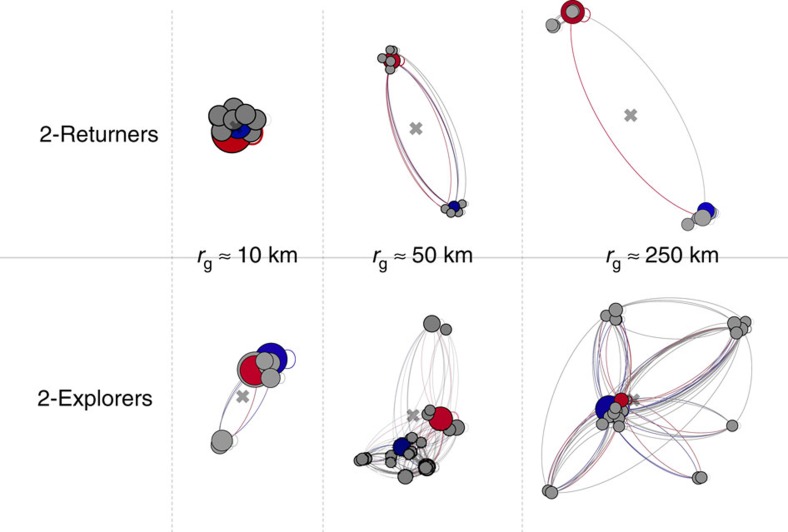
“Figure 5 shows some representative examples of individual mobility networks 3,31 of two-returners and two-explorers with different total r g .”
BackgroundSelf-citationBatty, M., Axhausen, K. W., Giannotti, F., Pozdnoukhov, A., Bazzani, A., Wachowicz, M., Ouzounis, G., & Portugali, Y. (2012) · The European Physical Journal Special Topics · doi:10.1140/epjst/e2012-01703-3 · Cited by 2,424 · cited 1×
“…microscope has attracted scientists from diverse disciplines, from physics and network science 1–4 to data mining 5–8 , and has fuelled advances from public health 9–14 to transportation engineering 15–17 , urban planning 18–21 , official statistics 22,23 and the design of smart cities 24–27 .”
BackgroundSelf-citationThe scaling laws of human travel
Brockmann, D., Hufnagel, L., & Geisel, T. (2006) · Nature · doi:10.1038/nature04292 · Cited by 2,205 · cited 1×
“This broad social microscope has attracted scientists from diverse disciplines, from physics and network science 1–4 to data mining 5–8 , and has fuelled advances from public health 9–14 to transportation engineering 15–17 , urban planning 18–21 , official statistics 22,23 and the design of smart…”
BackgroundBatty, M. (2013) · doi:10.7551/mitpress/9399.001.0001 · Cited by 1,700
A universal model for mobility and migration patterns
Simini, F., González, M. C., Maritan, A., & Barabási, A.-L. (2012) · Nature · doi:10.1038/nature10856 · Cited by 1,502
Self-citationThe Origins of Scaling in Cities
Bettencourt, L. M. A. (2013) · Science · doi:10.1126/science.1235823 · Cited by 1,480
Multiscale mobility networks and the spatial spreading of infectious diseases
Balcan, D., Colizza, V., Gonçalves, B., Hu, H., Ramasco, J. J., & Vespignani, A. (2009) · Proceedings of the National Academy of Sciences · doi:10.1073/pnas.0906910106 · Cited by 1,380 · cited 1×
“This modification is justified by the accuracy of the gravity model to estimate origin-destination matrices at the country level 34–37 .”
MethodModelling the scaling properties of human mobility
Song, C., Koren, T., Wang, P., & Barabási, A.-L. (2010) · Nature Physics · doi:10.1038/nphys1760 · Cited by 1,284 · cited 4×
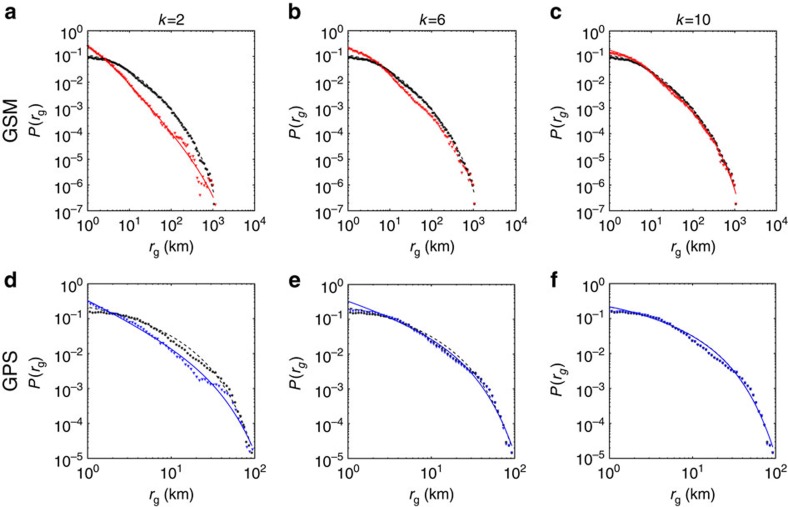
“Theparametersofthefittedtruncatedpowerlawsfor r from the population (see Supplementary Note 4, Supplementary Fig.”
BackgroundInfluentialSelf-citation
Research works printed but not linked: 4
- Giannotti, F., Nanni, M., Pinelli, F. & Pedreschi, D. in Proceedings of the 13th ACM SIGKDD International Conference on Knowledge Discovery and Data Mining (KDD) 330–339ACM (2007).
- Jiang, S. et al. in Proceedings of the 2nd ACM SIGKDD (International Workshop on Urban Computing (UrbComp'13)) 21–29ACM (2013).
- Rinzivillo, S. et al. in Proceedings of the 1st International Conference on Data Science and Advanced Analytics (DSAA'2014) IEEE Computer Society, Shanghai, China (2014).
- Wang, D., Pedreschi, D., Chaoming, S., Giannotti, F. & Barabási, A. L. in Proceedings of the 17th ACM SIGKDD International Conference on Knowledge Discovery and Data Mining (KDD) 1100–1108ACM New York, San Diego, CA, USA (2011).
Cited by
Items 401–491 of 491
A REVIEW ON MEASURING ENTREPRENEURS' SOCIAL BEHAVIOUR VIA SPATIAL ANALYSIS TECHNIQUES
Nawawi, N. M., Ujang, U., Azri, S., & Choon, T. L. (2019) · The international archives of the photogrammetry, remote sensing and spatial information sciences/International archives of the photogrammetry, remote sensing and spatial information sciences · doi:10.5194/isprs-archives-xlii-4-w16-481-2019 · Cited by 1
“varies in shape (Pappalardo et al., 2015) and size (Gonzalez et al.”
BackgroundHow disease spread dynamics evolve over time
Shoghri, A. E., Liebig, J., Jurdak, R., & Kanhere, S. S. (2021) · QUT ePrints (Queensland University of Technology) · Cited by 1
Mert, S. B., & Yardım, M. S. (2023) · Kent Akademisi · doi:10.35674/kent.1185715 · Cited by 1
Modeling Human Mobility Based on Temporal Characteristics
Xie, Y., Yu, Z., Zhang, Y., & Guo, B. (2022) · IEEE Smart World Congress (SWC) · doi:10.1109/smartworld-uic-atc-scalcom-digitaltwin-pricomp-metaverse56740.2022.00089 · Cited by 1
“A typical example is the d-EPR model [18].”
MethodBig Data in Migration Research: The Ethical Considerations
Turper, S. (2023) · Istanbul Bilgi University · doi:10.47613/reflektif.2023.139 · Cited by 1
A Laplacian Evolution Approach to Identify the Source-Sink Pattern of Human Mobility in Urban
Zhang, P., Cong, W., Shi, Y., Yang, J., & Wang, Q. (2024) · International Conference on Pattern Recognition Systems (ICPRS) · doi:10.1109/icprs62101.2024.10677813 · Cited by 1
“Pappalardo et al. [10] identified two categories of individuals (i.e., returners and explorers) and introduced a d-EPR model to replicate individual mobility patterns.”
MethodChen, Q., Wu, H., Hu, C., Huang, W., & Liu, C. (2024) · Transactions in GIS · doi:10.1111/tgis.13290 · Cited by 1
“Among the groups of people engaged in urban mobility, explor-ers can be defined as those who wander between a large number of different locations and stand out because of their frequent movement between various locations (Pappalardo et al. 2015).”
Sellaouti, A., & Hoffmann, S. (2025) · Transportation research procedia · doi:10.1016/j.trpro.2025.04.013 · Cited by 1
Spatiotemporal quasiperiodicity induced by all-ages vaccine hesitancy in an SIR model
Marca, R. D., d’Onofrio, A., Munafò, C. F., & Travaglini, R. (2025) · Physica D Nonlinear Phenomena · doi:10.1016/j.physd.2025.135010 · Cited by 1
The traffic concentration effects of urban navigation services
Cornacchia, G., Nanni, M., Pedreschi, D., & Pappalardo, L. (2026) · Nature Communications · doi:10.1038/s41467-026-75254-8 · Cited by 11
“The dataset’s validity and reliability are corroborated by its use in prior studies [49, 50, 51].”
Self-citationStudent clustering and learning atmosphere analysis based on trajectory data
Wang, S., Hu, Y., Liu, Y., Guo, Z., & Shou, G. (2017) · International Conference on Computer Science and Education · doi:10.1109/iccse.2017.8085490 · Cited by 1
Instantaneous success and influence promotion in cyberspace — how do they occur?
Ya, C., Li, X., Zhang, R., Huang, Z., & Lai, Y. (2020) · Physica A Statistical Mechanics and its Applications · doi:10.1016/j.physa.2020.124725 · Cited by 1
Considering a Method for Generating Human Mobility Model by Reinforcement Learning
Iwai, Y., & Fujihara, A. (2020) · Advances in intelligent systems and computing · doi:10.1007/978-3-030-57796-4_12 · Cited by 1
Influências Regionais na Mobilidade de Turistas e Residentes Usando Dados de Mídia Social
Veiga, D. A. M., Frizzo, G. B., Senefonte, H. C. D. M., Lüders, R., Delgado, M., & Silva, T. H. (2020) · doi:10.5753/sbrc.2020.12311 · Cited by 1
“Em seguida, foram estendidas as análises apresentadas em [Pappalardo et al. 2015] considerando os tipos de locais (ou categorias, como Restaurante) visitados por essas duas classes de usuários.”
BackgroundInfluentialApps, Places and People: strategies, limitations and trade-offs in the physical and digital worldsPreprint
Nadai, M. D., Cardoso, Â., Lima, A., Lepri, B., & Oliver, N. (2019) · arXiv (Cornell University) · doi:10.48550/arxiv.1904.09350 · Cited by 1
“[28] Luca Pappalardo, Filippo Simini, Salvatore Rinzivillo, Dino Pedreschi, Fosca Giannotti, and Albert-László Barabási, “Returners and explorers dichotomy in human mobility,” Nature communications 6, 8166 (2015).”
BackgroundMethodResultInfluentialLearning Analysis Behavior in SQL WorkloadsPreprint
Moreau, C., & Peralta, V. (2021) · HAL · Cited by 1
Improving vehicles' emissions reduction policies by targeting gross polluters.Preprint
Böhm, M., Nanni, M., & Pappalardo, L. (2021) · arXiv (Cornell University) · Cited by 1
Self-citationFrom centre to centres: polycentric structures in individual mobilityPreprint
Sahasrabuddhe, R., Lambiotte, R., & Alessandretti, L. (2021) · arXiv (Cornell University) · doi:10.48550/arxiv.2108.08113 · Cited by 4
Socialroute: A Low-Cost Opportunistic Routing Strategy Based on Social ContactsPreprint
Domingues, A. C. S. A., Santana, H. D. S., Silva, F. A., de Melo, P. O. S. V., & Loureiro, A. A. F. (2022) · SSRN Electronic Journal · doi:10.2139/ssrn.4064779 · Cited by 1
Socialroute: A Low-Cost Opportunistic Routing Strategy Based on Social ContactsPreprint
Domingues, A. C. S. A., Santana, H. D. S., Silva, F. A., de Melo, P. O. S. V., & Loureiro, A. A. F. (2022) · SSRN Electronic Journal · doi:10.2139/ssrn.4064776 · Cited by 1
Lifelong AI-driven zero-touch network slicing
Rezazadeh, F. (2023) · UPCommons institutional repository (Universitat Politècnica de Catalunya) · doi:10.5821/dissertation-2117-404782 · Cited by 1
Explorative pedestrian mobility geolocated data from a citizen science experiment in a neighbourhood
Larroya, F., Paez, R., Valtchanova, M., & Perelló, J. (2025) · Scientific Data · doi:10.1038/s41597-025-05307-y · Cited by 3
Aggregated Monitoring of Large-scale Network Systems and Control of Epidemics
Niazi, M. U. B. (2021) · doi:10.70675/8bd26d8bzbe23z47d1za7cbz385df0c003cf · Cited by 1
Visitation patterns across mobility groups: wandering, commuting, and exploring
Hołubowska, O., Smolak, K., Brum-Bastos, V., & Sila-Nowicka, K. (2026) · Journal of Geographical Systems · doi:10.1007/s10109-026-00501-x
Cooperative load balancing on human moving trajectory diversity in cellular networks
Chou, K.-P., & Lin, J. (2017) · International Conference on Communications · doi:10.1109/icc.2017.7997339
“Additionally, a previous study [3] categorize human characteristics into two categories in terms of mobility.”
MethodSpatial social networks identified from urban group travelPreprint
Sun, H., Zhu, K., Wu, J., Li, D., Gao, Z., Yin, H., Qu, Y., Yang, X., & Liu, H. (2018) · arXiv (Cornell University) · doi:10.48550/arxiv.1806.03834
A statistical approach for studying urban human dynamics
Santa, F. (2018) · Tesis Doctorals en Xarxa (Consorci de Serveis Universitaris de Catalunya) · doi:10.6035/14123.2018.738830
Phoneotypic modeling of human behaviors and propensities
Bati, G. F. (2019) · doi:10.7282/t3-mndr-a738
Modeling Individuals' Largest Daily Trip Displacement using Extreme Value Theory
Xie, K., Ma, L., Xiong, H., & Wu, S. (2019) · IEEE International Conference on Intelligent Transportation Systems (ITSC) · doi:10.1109/itsc.2019.8917413
“Previous researches have shown human mobility patterns through various massive datasets sources, such as cell phone calls [8], [9], the trace of bank notes [10], [11], GPS data [8], [12], and e-mail records [12].”
BackgroundUnderstanding individual behaviour: from virtual to physical patternsPreprint
Nadai, M. D., Lepri, B., & Oliver, N. (2020) · arXiv (Cornell University) · doi:10.48550/arxiv.2002.05500
“ints of human cognition [1, 10]. Similarly, some people tend to explore and change favourite places over time, as they do with friendships, while others tend always to maintain stable their behaviour [10, 11]. This exploration and exploitation behaviour is well known in many disciplines such as computer science, where…”
BackgroundHuman mobility and social ties in context: from places to personality
Stich, C. (2020) · University of Birmingham Institutional Research Archive (University of Birmingham)
A REVIEW PAPER ON DATA FORENSIC
Bharathi Kannan, B. (2018) · Journal of Emerging Technologies and Innovative Research
A Mobility Model for Return and Repeated Migration Based on Network MotifsPreprint
Prieto-Curiel, R., Domínguez, M. Q., Lora, E. A., & O’Clery, N. (2021) · Research Square · doi:10.21203/rs.3.rs-655935/v1
“These include, for example, data from social media (25), card transactions (26), mobile phone data (27; 28; 29), and others (30; 31; 32).”
BackgroundMethodPintér, G., & Felde, I. (2021) · arXiv (Cornell University) · doi:10.48550/arxiv.2108.09291
“Mobility indicators, such as Radius of Gyration or Entropy, are often calculated [16, 25] to describe and classify the subscribers’ mobility customs.”
BackgroundHow disease spread dynamics evolve over time
Shoghri, A. E., Liebig, J., Jurdak, R., & Kanhere, S. S. (2021) · IEEE/ACM International Conference on Advances in Social Networks Analysis and Mining (ASONAM) · doi:10.1145/3487351.3488352
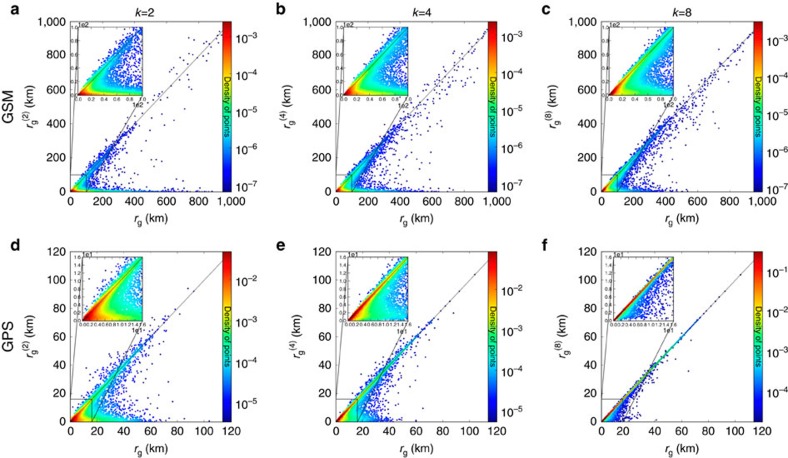
“To understand the effect of the most frequently visited locations on the mobility range of individuals, the authors of [25] define the k-radius of gyration, denoted rg.”
BackgroundInfluentialPhillips, R., West, M., & Burstow, D. J. (2000)
IT’S ABOUT TIME: Spatio-temporal aspects of offender decision-making
van Sleeuwen, S. E. M. (2022) · Utrecht University Repository (Utrecht University) · doi:10.33540/1152
Uncovering the Concentration Phenomenon of Vehicle Mobility in Urban AreasPreprint
ZOU, B. (2019) · doi:10.31219/osf.io/8yk29
SCOrE: um serviço de classificação de usuários móveis com base em seus aplicativos e suas cidades
Figueiredo, L. J. A. S., dos Santos, G. B., Souza, R. P. P. M., Silva, F. A., Silva, T. R. M. B., & Loureiro, A. A. F. (2022) · doi:10.5753/sbcup.2022.222828
Flexible Contact Tracing Mining Algorithms for Moving ObjectsPreprint
Chen, Y., Dai, H., Li, B., & Yang, G. (2022) · Research Square · doi:10.21203/rs.3.rs-2116755/v1
Do Social Event Attendees cluster based on Socioeconomic Status?Preprint
Szabó, K., Pintér, G., & Felde, I. (2023) · Preprints.org · doi:10.20944/preprints202301.0083.v1
Do Social Event Attendees Cluster Based on Socioeconomic Status?Preprint
Szabó, K., Pintér, G., & Felde, I. (2023) · Preprints.org · doi:10.20944/preprints202301.0083.v2
Geospatial Data: From Theory to Practice
Domingues, A. C. S. A., da Silva, F. N. L., & Loureiro, A. A. F. (2023) · doi:10.5753/sbc.12954.7.2
Brelsford, C. M., & Jones, A. (2021) · Lawrence Berkeley National Laboratory · doi:10.2172/2007465
Zhang, C., He, B., Fan, Q., Zhang, Q., Ping, X., Li, C., & Wang, Q. (2023) · SSRN Electronic Journal · doi:10.2139/ssrn.4633522
Knowledge Distillation-Based Robust UAV Swarm Communication Under Malicious Attacks
Wu, Q., Zhang, Y., Yang, Z., & Shikh‐Bahaei, M. (2024) · IEEE International Conference on Communications workshops · doi:10.1109/iccworkshops59551.2024.10615342
“Recent research works [11] have highlighted that the commonly used Random Waypoint (RWP) model, often applied in various research papers, is not an accurate model of real-world human movement patterns.”
BackgroundAnálise do impacto da pandemia de COVID-19 na mobilidade no Brasil sob uma visão semântica
dos Santos, G. B., Silva, F. A., & Silva, T. R. M. B. (2024) · doi:10.5753/courb.2024.3276
Analyzing Mobility Patterns at Scale in Pandemic Scenarios Leveraging the Mobile Network Ecosystem
Callejo, P., Gramaglia, M., Cuevas, R., Cuevas, √., & Tschantz, M. C. (2024) · Electronics · doi:10.3390/electronics13183654
Statistical Analysis of Human Mobility in Online Communities
Wang, Y., Yu, Z., Zhang, Y., Hu, S., & Guo, B. (2025) · Communications in computer and information science · doi:10.1007/978-981-96-2373-0_7
Treemob: Expressive Mobility Data Representation Through Tree-Based Structures
Fioravanti, M., Cappuccio, E., Rinzivillo, S., & Guidotti, R. (2025) · Lecture notes of the Institute for Computer Sciences, Social Informatics and Telecommunications Engineering · doi:10.1007/978-3-031-86370-7_4
Self-citationOptimal transport by a Lagrangian dynamics of population distribution
Benam, B., & Ramezanpour, A. (2026) · Physical review. E · doi:10.1103/vztw-pqy4
“The approaches range from individual-level models which use for instance the exploration and return strategy and its generalizations [11–13], to population-level models such as gravity, radiation, and intervening opportunities [14–17].”
Fine Grained Urban Grids Clustering of Mobile Phone Metadata with Deep Spatial Temporal Clustering
Hu, Z., Gauthier, V., Li, C., & Moungla, H. (2025) · International Joint Conference on Neural Networks (IJCNN) · doi:10.1109/ijcnn64981.2025.11227976 · Cited by 3
“Modern data sources, including GPS traces [1], bank transactions [2], and mobile phone metadata [3], enable cost-effective analysis of socio-economic activities.”
Where Next? A Behavioral and Explainable Framework for City and Neighborhood Recommendation
Santos, G. H., Delgado, M., Silver, D., & Silva, T. H. (2025) · Brazilian Symposium on Multimedia and the Web · doi:10.5753/webmedia.2025.15492
“…through the lens of high-interest and low-interest division and returners vs. explorers dichotomy: returners are individuals who frequently revisit a small number of familiar places, while explorers actively seek out novel destinations, i.e., their mobility patterns are less routine-driven [17].”
InfluentialLocation Diversity in Mobility Data
Hachem, F., & Damiani, M. L. (2025) · Encyclopedia of GIS · doi:10.1007/978-3-319-23519-6_1671-1
Zhao, C., Zeng, A., & Yeung, C. H. (2021) · Figshare · doi:10.6084/m9.figshare.13612235
Additional file 1 of Finding disease outbreak locations from human mobility data
Schlosser, F., & Brockmann, D. (2021) · Figshare · doi:10.6084/m9.figshare.16835080
Additional file 1 of Charting mobility patterns in the scientific knowledge landscape
Singh, C. K., Tupikina, L., Lécuyer, F., Starnini, M., & Santolini, M. (2024) · Figshare · doi:10.6084/m9.figshare.26683300
Yang, Y., Pentland, A., & Moro, E. (2023) · Figshare · doi:10.6084/m9.figshare.22949295
Beyond Aggregates: A Fine-Grained Analysis of Individual Mobility and Traffic Dependencies
Kouam, A. J., Viana, A. C., Beiró, M. G., Ferres, L., & Pappalardo, L. (2025) · ACM International Conference on Modeling, Analysis and Simulation of Wireless and Mobile Systems (MSWiM) · doi:10.1109/mswim67937.2025.11309071
“Research shows that individuals exhibit varied behaviors in their movement patterns [8] with a recent study [9] identifying three mobility profiles (i) Scouters , more inclined to explore and discover new areas; (ii) Routiners , who maintain a steady routine and rarely break their established…”
Self-citationImpact of federated data with local differential privacy for human mobility modeling
Gibbs, H. P., Musolesi, M., Cheshire, J. A., & Eggo, R. M. (2026) · EPJ Data Science · doi:10.1140/epjds/s13688-025-00611-4 · Cited by 1
“1d) [44, 45], which combines a mechanistic description of individual mobility, with information on the population-level distribution of travel.”
Lu, Y., Liu, G., Li, X., & Jin, Z. (2026) · Engineering Applications of Artificial Intelligence · doi:10.1016/j.engappai.2026.113759
Predicting the role of inequalities on human mobility patterns
Boldini, A., Lellis, P. D., Imperatore, S., Das, R., Ceferino, L., Heitor, M. V., & Porfiri, M. (2026) · PNAS Nexus · doi:10.1093/pnasnexus/pgaf407
Du, Y., Aoki, T., & Fujiwara, N. (2026) · Journal of Computational Social Science · doi:10.1007/s42001-025-00454-z
“Additionally, data have been used to fit general models of human mobility, including the gravity model [35], intervening opportunities model [36–40], radiation model [41–49], and exploration and preferential return (EPR) model [50–54].”
Urban Transport, Pandemics and Covid-19: Ankara Public Transit System
SHAHİN, H., & Şenbil, E. Y. (2021) · DergiPark (Istanbul University)
DeepTimeGeo: Trajectory Reconstruction From Sparse Data With Transformer
Cao, S., Wu, J., Kasliwal, A., Chen, B., Perona, G., & González, M. C. (2026) · IEEE Transactions on Intelligent Transportation Systems · doi:10.1109/tits.2026.3657275
“Inspired by previous models such as TimeGeo [14] and empirical findings in Pappalardo et al. [51], we formulate the auxiliary task as a module that predicts whether or not a given observed stay point is an exploration or return.”
Promoting sustainable human mobility for income segregation mitigation
Chen, Y., Liao, C., Cai, Z., Wanru, W., Xia, Y., Chen, X. M., Wu, J., & Gao, Z. (2026) · Patterns · doi:10.1016/j.patter.2025.101477
“19,21,37,38 As shown in Figure 7, SCHM markedly outperforms all EPR-based baselines (see Table S8”
Tillayeva, N., Tamura, N., Urano, K., Yonezawa, T., Kawaguchi, N., & Okumura, T. (2026) · Infectious Disease Modelling · doi:10.1016/j.idm.2026.03.006
“Finally, pseudo-data temporal resolution remains tied to that of the original real-world datasets (Pappalardo et al., 2015), limiting its ability to model short-term contact events.”
Predictability in Human Mobility : Interpretability, Extensions and Applications
Teixeira, D. (2021) · theses.fr (ABES) · doi:10.70675/6f925825z66c6z43b0zaecfze824a55a8934
Linking visual and spatial exploration dynamics during free navigation in a large–scale virtual cityPreprint
Schmidt, V., Nolte, D., Walter, J. L., Pacheco, T. S., & Peter König, B. (2026) · bioRxiv (Cold Spring Harbor Laboratory) · doi:10.64898/2026.04.06.714750
“Similarly, in the spatial domain, individuals differ in how they traverse an environment: "spatial explorers" prioritize broad coverage and novel routes, while "spatial exploiters" (or returners) optimize known paths and revisit familiar locations (Pappalardo et al., 2015).”
Raipat, V., & Yabe, T. (2026) · Humanities and Social Sciences Communications · doi:10.1057/s41599-026-07237-5 · Cited by 4
“These fi ndings align with and extend prior research on mobility pro fi les, such as the classi fi - cation of explorers and returners (Pappalardo et al., 2015), by showing that these characteristics also have implications on mobility behavior during emergencies.”
Discovering individual human mobility changes and mobility inequality due to the pandemic
Jiang, S., Zhao, P., & Zhao, H. (2026) · Transportation Research Interdisciplinary Perspectives · doi:10.1016/j.trip.2026.102057
Wang, J., Hu, H., Liu, H., Chen, S., & Qian, Y. (2026) · Physica A Statistical Mechanics and its Applications · doi:10.1016/j.physa.2026.131655
Reitzug, F., Iacovidou, M. A., Kabatereine, N. B., Nabatte, B., Eyre, M. T., Tinkitina, B., Byaruhanga, A. M., Lambiotte, R., & Chami, G. F. (2026) · Nature Health · doi:10.1038/s44360-026-00118-w · Cited by 1
“To do so, we selected the radius of gyration R g, i as our metric, as it measures the Euclidean typical displacement of individual i from their household location and is widely used in human mobility modelling 58–60 .”
Enhancing Human Mobility Prediction with Spatially Aware LLM-based Multi-Agent Systems
Lou, S., & Cui, Z. (2026) · Workshop on Human-In-the-Loop Data Analytics (HILDA) · doi:10.1145/3814573.3814949 · Cited by 2
Yang, W., Wu, C., Xu, T., & Zhang, G. (2026) · Journal of Transport Geography · doi:10.1016/j.jtrangeo.2026.104781
Wu, H., Liu, Y., Kwan, M., Li, F., & Zhang, G. (2026) · Building and Environment · doi:10.1016/j.buildenv.2026.115025
Tracing the unseen: a deep dive into mobility behavior exposure
Félix, L. G. S., Kouam, A. J., Viana, A. C., Achir, N., & Almeida, J. M. (2026) · EPJ Data Science · doi:10.1140/epjds/s13688-026-00680-z
“2-Radius of gyration [31] 2kRoG Captures the extent of displacement relative to the user’s two most dominant routine locations (typically home and work), which explains the “2” in the metric’s name.”
Integrating surveillance, mobility, and genomic data in pandemic models
Lazebnik, T. (2026) · Elsevier eBooks · doi:10.1016/b978-0-44-355525-1.00015-1
(2026) · Elsevier eBooks · doi:10.1016/b978-0-44-355525-1.00020-5
Zhuoyu, L. I. U., & Haiyan, H. A. O. (2026) · Reliability Engineering & System Safety · doi:10.1016/j.ress.2026.113367 · Cited by 1
Empirical Mobility Profiles: Crossing Mode-Use Style with Transit IntegrationPreprint
Svetlana, Z., Zacher, T., Loder, A., & Lienkamp, M. (2026) · SSRN Electronic Journal · doi:10.2139/ssrn.7358636
BAMTR: Behavior-Aware Mobile Phone Trajectory Recovery via Adaptive Historical Prior ReasoningPreprint
Tu, Y., Zhao, Z., Wu, S., Deng, B., Wang, P., Yu, D., Wu, Q., & Yang, S. (2026) · SSRN Electronic Journal · doi:10.2139/ssrn.7396621
Percolation transition of K -destinations reveals universal backbone of urban mobility networks
Zhang, W., Jia, F., Wang, J., Liu, Y., & Xiu, G. (2026) · Royal Society Open Science · doi:10.1098/rsos.251865
“The literature on place-to-place interactions emphasizes destinations’ attractiveness [11,18], which inherits diffusion-like mobility patterns with distance decay.”
Revealing exacerbated socioeconomic stratification of urban mobility: A case study in Beijing, China
Chen, L., Chen, M., Li, W., Han, M., Xu, X., Tang, S., & Jiang, H. (2026) · Computers Environment and Urban Systems · doi:10.1016/j.compenvurbsys.2026.102529
Li, Q., Ji, C., & Liu, X. (2026) · Engineering Applications of Artificial Intelligence · doi:10.1016/j.engappai.2026.116203 · Cited by 5
“Specifically, we adopt the gravity model, a classic framework in urban science and transportation research(Pappalardo et al. (2015)).”
Bouzige, G., Sommer, N. L., & Mahéo, Y. (2026) · Procedia Computer Science · doi:10.1016/j.procs.2026.08.377
How Behavioral Exposure Reveals Privacy Risks Beyond Location Uniqueness
Félix, L. G. S., Kouam, A. J., Viana, A. C., Achir, N., & Almeida, J. M. (2026) · Lecture notes in computer science · doi:10.1007/978-3-032-38695-3_14
Zhang, X., Zhang, R., Wang, C., & Zong, H. (2026) · Cities · doi:10.1016/j.cities.2026.107708
Metadata
- Authors
- Pappalardo, L., Simini, F., Rinzivillo, S., Pedreschi, D., Giannotti, F., & Barabási, A.-L.
- Affiliations
- University of Pisa (IT)
- Northeastern University (US)
- Istituto di Scienza e Tecnologie dell'Informazione "Alessandro Faedo" (IT)
- Corresponding author
- Pappalardo, Luca
- Simini, Filippo
- Venue
- Nature Communications
- Published
- 2015-09-08
- Volume
- 6
- Issue
- 1
- Pages
- 8166-8166
- ISSN
- 2041-1723 (ISSN-L)
- PMC
- PMC4569739
- OpenAlex
- W2134946452
- Cited by
- 494
- References
- 45
- Citations by year
- 2026: 43 · 2025: 42 · 2024: 47 · 2023: 52 · 2022: 49 · 2021: 72 · 2020: 55 · 2019: 42 · 2018: 33 · 2017: 35 · 2016: 22 · 2015: 1
- FWCI
- 57.10
- Type
- journal article
- Language
- en
- Open access
- gold
- doi.org
- Licence
- cc-by
- creativecommons.org/licenses/by/4.0 (tdm)
- creativecommons.org/licenses/by/4.0 (vor)
- Locations
- Nature Communications (publishedVersion, cc-by)
- Europe PMC (PubMed Central) (publishedVersion, cc-by)
- PubMed Central (publishedVersion, cc-by)
- PubMed (publishedVersion)
- Bristol Research (University of Bristol) (publishedVersion, other-oa)
- Digital Access to Scholarship at Harvard (DASH) (Harvard University) (submittedVersion, cc-by)
- RePEc: Research Papers in Economics (submittedVersion)
- CINECA IRIS Institutial research information system (University of Pisa) (submittedVersion, cc-by)
- ISTI Open Portal (submittedVersion, other-oa)
- Open Research (Auckland University of Technology) (submittedVersion, cc-by)
- Explore Bristol Research (submittedVersion, other-oa)
- Funders
- European Commission (H2020 Program, FP7 ICT, 270833, H2020, 317532, 641191)
- Defense Threat Reduction Agency (HDTRA1)
- Horizon 2020 Framework Programme (641191)
- FP7 Information and Communication Technologies
- Topics
- Social Sciences › Transportation › Human Mobility and Location-Based Analysis
- Physical Sciences › Physics and Astronomy › Statistical and Nonlinear Physics › Complex Network Analysis Techniques
- Physical Sciences › Computer Science › Computer Networks and Communications › Opportunistic and Delay-Tolerant Networks
- Keywords
- human mobility, mobile phone data, GPS data, mobility models, epidemic spread, social interaction
- MeSH terms
- Exploratory Behavior, Humans, Interpersonal Relations, Models, Theoretical, Social Behavior, Travel, Geographic Information Systems, Cell Phone
About these checks
Registry, retraction, Cites and statistics results are computed, not judged, with one exception: a printed reference that no index lists is read once by a model before it counts as a citation error. Claims are extracted by a model and kept only when their quote appears verbatim in the text; each cited source is then checked, with a model’s help, for whether it says what the claim relies on. Those verdicts can be wrong — read the claim’s quote and the cited source before relying on one.
Statistics and arithmetic are recomputed, not judged.
Confidence bands are shown only for fields calibrated on our annotated test set. None is calibrated yet, so no band is shown.
What counts as a claim ›How we measure confidence ›How we check this ›
Are you an author, or do you see a problem with this page? Request a review
Data sources
Bibliographic data: Semantic Scholar, OpenAlex, Crossref.
Contains information from the Semantic Scholar Academic Graph Datasets, made available under the ODC Attribution License (ODC-BY 1.0).
Semantic Scholar’s data is described in: Kinney, R., et al. (2023). The Semantic Scholar Open Data Platform. arXiv:2301.10140.
