

Returners and explorers dichotomy in human mobility
Open accessThe DOI matches its Crossref record; 45 of the 45 references it cites were found in a registry or an index.
Abstract
The availability of massive digital traces of human whereabouts has offered a series of novel insights on the quantitative patterns characterizing human mobility. In particular, numerous recent studies have lead to an unexpected consensus: the considerable variability in the characteristic travelled distance of individuals coexists with a high degree of predictability of their future locations. Here we shed light on this surprising coexistence by systematically investigating the impact of recurrent mobility on the characteristic distance travelled by individuals. Using both mobile phone and GPS data, we discover the existence of two distinct classes of individuals: returners and explorers. As existing models of human mobility cannot explain the existence of these two classes, we develop more realistic models able to capture the empirical findings. Finally, we show that returners and explorers play a distinct quantifiable role in spreading phenomena and that a correlation exists between their mobility patterns and social interactions.
Overview
The claims and statistics of this paper haven’t been checked yet.
Free: it reads the open-access text and checks the first 5 claims that cite a source we can check. Create a free account to check every claim.
Integrity signals
Registry
Cites
Statistics
Figures




Verification
Claims the paper makes
The claims and statistics of this paper haven’t been checked yet.
Free: it reads the open-access text and checks the first 5 claims that cite a source we can check. Create a free account to check every claim.
Claims other papers make about this one
Each is checked against this paper’s own text: does it say what the citing paper says it does?
The cited source says what the claim attributes to it.
In the citing paper
“Following Pappalardo et al. (2015), we use r g and r (k) g , which have been demonstrated to categorize individual mobility into two distinct classes: returners and explorers.”
From Visitation patterns across mobility groups: wandering, commuting, and exploring (2026) · cites this paper as Pappalardo et al. (2015)
Self-check
Percentages, sums and reported differences re-computed from the paper’s own numbers.
The self-check needs the paper’s full text.
Citations
Cites
(2008) · Data Mining and Market Intelligence for Optimal Marketing Returns · doi:10.4324/9780080878096-12 · Cited by 6,954
Understanding individual human mobility patterns
González, M. C., Hidalgo, C. A., & Barabási, A.-L. (2008) · Nature · doi:10.1038/nature06958 · Cited by 6,059
Self-citationLimits of Predictability in Human Mobility
Song, C., Qu, Z., Blumm, N., & Barabási, A.-L. (2010) · Science · doi:10.1126/science.1177170 · Cited by 3,234 · cited 1×
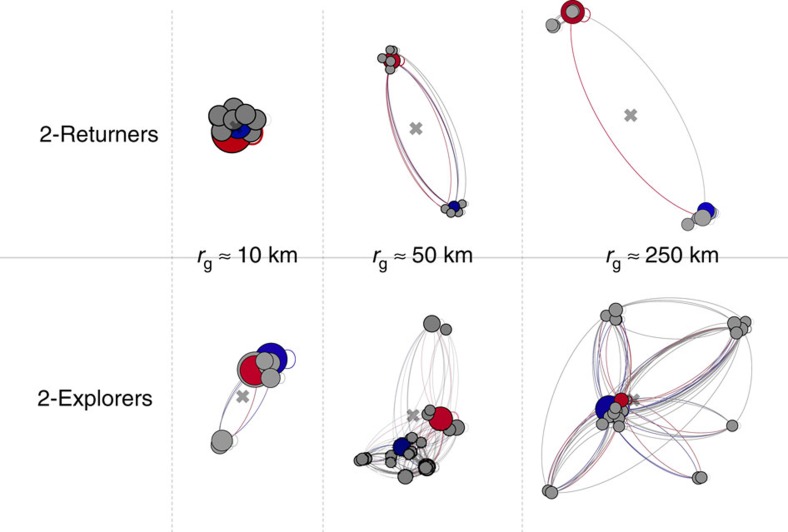
“Figure 5 shows some representative examples of individual mobility networks 3,31 of two-returners and two-explorers with different total r g .”
BackgroundSelf-citationBatty, M., Axhausen, K. W., Giannotti, F., Pozdnoukhov, A., Bazzani, A., Wachowicz, M., Ouzounis, G., & Portugali, Y. (2012) · The European Physical Journal Special Topics · doi:10.1140/epjst/e2012-01703-3 · Cited by 2,424 · cited 1×
“…microscope has attracted scientists from diverse disciplines, from physics and network science 1–4 to data mining 5–8 , and has fuelled advances from public health 9–14 to transportation engineering 15–17 , urban planning 18–21 , official statistics 22,23 and the design of smart cities 24–27 .”
BackgroundSelf-citationThe scaling laws of human travel
Brockmann, D., Hufnagel, L., & Geisel, T. (2006) · Nature · doi:10.1038/nature04292 · Cited by 2,205 · cited 1×
“This broad social microscope has attracted scientists from diverse disciplines, from physics and network science 1–4 to data mining 5–8 , and has fuelled advances from public health 9–14 to transportation engineering 15–17 , urban planning 18–21 , official statistics 22,23 and the design of smart…”
BackgroundBatty, M. (2013) · doi:10.7551/mitpress/9399.001.0001 · Cited by 1,700
A universal model for mobility and migration patterns
Simini, F., González, M. C., Maritan, A., & Barabási, A.-L. (2012) · Nature · doi:10.1038/nature10856 · Cited by 1,502
Self-citationThe Origins of Scaling in Cities
Bettencourt, L. M. A. (2013) · Science · doi:10.1126/science.1235823 · Cited by 1,480
Multiscale mobility networks and the spatial spreading of infectious diseases
Balcan, D., Colizza, V., Gonçalves, B., Hu, H., Ramasco, J. J., & Vespignani, A. (2009) · Proceedings of the National Academy of Sciences · doi:10.1073/pnas.0906910106 · Cited by 1,380 · cited 1×
“This modification is justified by the accuracy of the gravity model to estimate origin-destination matrices at the country level 34–37 .”
MethodModelling the scaling properties of human mobility
Song, C., Koren, T., Wang, P., & Barabási, A.-L. (2010) · Nature Physics · doi:10.1038/nphys1760 · Cited by 1,284 · cited 4×
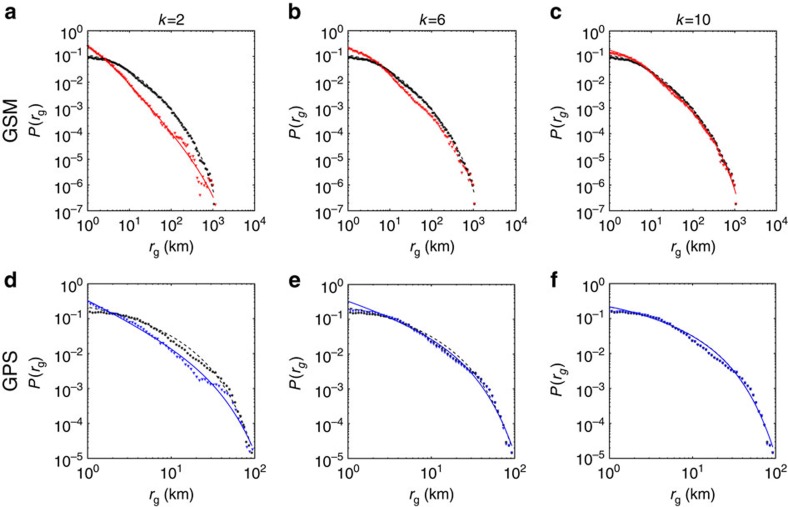
“Theparametersofthefittedtruncatedpowerlawsfor r from the population (see Supplementary Note 4, Supplementary Fig.”
BackgroundInfluentialSelf-citation
Research works printed but not linked: 4
- Giannotti, F., Nanni, M., Pinelli, F. & Pedreschi, D. in Proceedings of the 13th ACM SIGKDD International Conference on Knowledge Discovery and Data Mining (KDD) 330–339ACM (2007).
- Jiang, S. et al. in Proceedings of the 2nd ACM SIGKDD (International Workshop on Urban Computing (UrbComp'13)) 21–29ACM (2013).
- Rinzivillo, S. et al. in Proceedings of the 1st International Conference on Data Science and Advanced Analytics (DSAA'2014) IEEE Computer Society, Shanghai, China (2014).
- Wang, D., Pedreschi, D., Chaoming, S., Giannotti, F. & Barabási, A. L. in Proceedings of the 17th ACM SIGKDD International Conference on Knowledge Discovery and Data Mining (KDD) 1100–1108ACM New York, San Diego, CA, USA (2011).
Cited by
Human mobility: Models and applications
Barbosa, H., Barthelemy, M., Ghoshal, G., James, C. R., Lenormand, M., Louail, T., Menezes, R., Ramasco, J. J., Simini, F., & Tomasini, M. (2018) · Physics Reports · doi:10.1016/j.physrep.2018.01.001 · Cited by 1,027
“nurture)? The same can be said about regularities whereby human behavior is divided between those that are explorers or returners in their mobility pattern [89].”
BackgroundSelf-citationActivity-Based Human Mobility Patterns Inferred from Mobile Phone Data: A Case Study of Singapore
Jiang, S., Ferreira, J., & Gonzalez, M. C. (2017) · IEEE Transactions on Big Data · doi:10.1109/tbdata.2016.2631141 · Cited by 471
“Human mobility revealed from CDR data illustrates a pattern of preferential returns to previously visited locations and explorations of new places as a general and universal feature in human mobility [15]–[17].”
BackgroundThe universal visitation law of human mobility
Schläpfer, M., Dong, L., O’Keeffe, K., Santi, P., Szell, M., Salat, H., Anklesaria, S., Vazifeh, M., Ratti, C., & West, G. B. (2021) · Nature · doi:10.1038/s41586-021-03480-9 · Cited by 425
Measuring objective and subjective well-being: dimensions and data sources
Voukelatou, V., Gabrielli, L., Miliou, I., Cresci, S., Sharma, R., Tesconi, M., & Pappalardo, L. (2021) · International Journal of Data Science and Analytics · doi:10.1007/s41060-020-00224-2 · Cited by 365
Self-citationAlessandretti, L., Aslak, U., & Lehmann, S. (2020) · Nature · doi:10.1038/s41586-020-2909-1 · Cited by 361
The TimeGeo modeling framework for urban mobility without travel surveys
Jiang, S., Yang, Y., Gupta, S., Veneziano, D., Athavale, S., & González, M. C. (2016) · Proceedings of the National Academy of Sciences · doi:10.1073/pnas.1524261113 · Cited by 294
A Survey on Deep Learning for Human Mobility
Luca, M., Barlacchi, G., Lepri, B., & Pappalardo, L. (2023) · ACM Computing Surveys · doi:10.1145/3485125 · Cited by 278
“Several studies subsequently improved EPR by adding increasingly sophisticated spatial or social mechanisms [7, 12, 42, 140, 191].”
BackgroundInfluentialSelf-citationA Deep Gravity model for mobility flows generation
Simini, F., Barlacchi, G., Luca, M., & Pappalardo, L. (2021) · Nature Communications · doi:10.1038/s41467-021-26752-4 · Cited by 261
Self-citationMobility patterns are associated with experienced income segregation in large US cities
Moro, E., Calacci, D., Dong, X., & Pentland, A. (2021) · Nature Communications · doi:10.1038/s41467-021-24899-8 · Cited by 259
Universal model of individual and population mobility on diverse spatial scales
Yan, X.-Y., Wang, W.-X., Gao, Z.-Y., & Lai, Y.-C. (2017) · Nature Communications · doi:10.1038/s41467-017-01892-8 · Cited by 247
On data processing required to derive mobility patterns from passively-generated mobile phone data
Wang, F., & Chen, C. (2018) · Transportation Research Part C: Emerging Technologies · doi:10.1016/j.trc.2017.12.003 · Cited by 247
“Previous studies show that individuals’ trajectories are characterized by statistical regularity: preferable returns to a few locations and occasional explorations to other faraway locations (González et al., 2008; Pappalardo et al., 2015; Song et al., 2010a; Susilo and Axhausen, 2014).”
BackgroundHuman mobility and socioeconomic status: Analysis of Singapore and Boston
Xu, Y., Belyi, A., Bojic, I., & Ratti, C. (2018) · Computers, Environment and Urban Systems · doi:10.1016/j.compenvurbsys.2018.04.001 · Cited by 234
Tracking job and housing dynamics with smartcard data
Huang, J., Levinson, D., Wang, J., Zhou, J., & Wang, Z.-J. (2018) · Proceedings of the National Academy of Sciences · doi:10.1073/pnas.1815928115 · Cited by 191
Optimizing the deployment of electric vehicle charging stations using pervasive mobility data
Vazifeh, M. M., Zhang, H., Santi, P., & Ratti, C. (2019) · Transportation Research Part A: Policy and Practice · doi:10.1016/j.tra.2019.01.002 · Cited by 170
Understanding Private Car Aggregation Effect via Spatio-Temporal Analysis of Trajectory Data
Xiao, Z., Fang, H., Jiang, H., Bai, J., Havyarimana, V., Chen, H., & Jiao, L. (2023) · IEEE Transactions on Cybernetics · doi:10.1109/tcyb.2021.3117705 · Cited by 167
“The reason behind this is that people tend to exhibit regular spatiotemporal mobility patterns [9] when traveling on workdays.”
BackgroundThe secret life of predictive brains: what’s spontaneous activity for?
Pezzulo, G., Zorzi, M., & Corbetta, M. (2021) · Trends in Cognitive Sciences · doi:10.1016/j.tics.2021.05.007 · Cited by 163
Modeling real-time human mobility based on mobile phone and transportation data fusion
Huang, Z., Ling, X., Wang, P., Zhang, F., Mao, Y., Lin, T., & Wang, F. (2018) · Transportation Research Part C Emerging Technologies · doi:10.1016/j.trc.2018.09.016 · Cited by 149
An analytical framework to nowcast well-being using mobile phone data
Pappalardo, L., Vanhoof, M., Gabrielli, L., Smoreda, Z., Pedreschi, D., & Giannotti, F. (2016) · International Journal of Data Science and Analytics · doi:10.1007/s41060-016-0013-2 · Cited by 151
“human knowledge, from economy [49], to human mobility [47], social networks [4] and even sports [11,12].”
BackgroundMethodInfluentialSelf-citationIndividual mobility prediction using transit smart card data
Zhao, Z., Koutsopoulos, H. N., & Zhao, J. (2018) · Transportation Research Part C Emerging Technologies · doi:10.1016/j.trc.2018.01.022 · Cited by 136
“The most commonly used data in these studies is mobile phone network data (Pappalardo et al., 2015; Schneider et al., 2013; Song et al., 2010b; Eagle and Pentland, 2009; González et al., 2008).”
MethodDynamic assessment of exposure to air pollution using mobile phone data
Dewulf, B., Neutens, T., Lefebvre, W., Seynaeve, G., Vanpoucke, C., Beckx, C., & de Weghe, N. V. (2016) · International Journal of Health Geographics · doi:10.1186/s12942-016-0042-z · Cited by 155
Data-driven generation of spatio-temporal routines in human mobility
Pappalardo, L., & Simini, F. (2017) · Data Mining and Knowledge Discovery · doi:10.1007/s10618-017-0548-4 · Cited by 170
“As trajectory generator we propose the density-Exploration and Preferential Return model or d -EPR [52,50], a generative model able to reproduce realistic spatial mobility patterns, such as the heavy-tail distributions of trip distances [7,21, 49] and radii of gyration [21,49,52], as well as the…”
BackgroundMethodResultInfluentialSelf-citationInteractive COVID-19 Mobility Impact and Social Distancing Analysis Platform
Zhang, L., Ghader, S., Pack, M. L., Xiong, C., Darzi, A., Yang, M., Sun, Q., Kabiri, A., & Hu, S. (2021) · Transportation Research Record Journal of the Transportation Research Board · doi:10.1177/03611981211043813 · Cited by 130
“Other emerging mobile device location data sources, such as call detail record (CDR), cellular network data, and social media location-based services, have also been used by researchers to study mobility behavior ( 5 – 13 ).”
BackgroundFuture directions in human mobility science
Pappalardo, L., Manley, E., Sekara, V., & Alessandretti, L. (2023) · Nature Computational Science · doi:10.1038/s43588-023-00469-4 · Cited by 183
“Agent-based modeling have revealed how the observed patterns could result from simple decision-making mechanisms that are shared across individuals [6, 10, 11, 36, 42], but, in many cases, these hypotheses lack empirical demonstration.”
BackgroundSelf-citationUsing big data to study the link between human mobility and socio-economic development
Pappalardo, L., Pedreschi, D., Smoreda, Z., & Giannotti, F. (2015) · IEEE International Conference on Big Data (BigData) · doi:10.1109/bigdata.2015.7363835 · Cited by 126
Self-citationA Comprehensive Review of Driver Behavior Analysis Utilizing Smartphones
Chan, T. K., Chin, C. S., Chen, H., & Zhong, X. (2019) · IEEE Transactions on Intelligent Transportation Systems · doi:10.1109/tits.2019.2940481 · Cited by 122
Abkenar, F. S., Ramezani, P., Iranmanesh, S., Murali, S., Chulerttiyawong, D., Wan, X., Jamalipour, A., & Raad, R. (2022) · IEEE Communications Surveys & Tutorials · doi:10.1109/comst.2022.3211462 · Cited by 131
“Hence, a mobile MEC is a local middleware proxy dynamically activated in a logical bounded location to predict where people tend to stay for a while [171].”
BackgroundModelling Taxi Drivers’ Behaviour for the Next Destination Prediction
Rossi, A., Barlacchi, G., Bianchini, M., & Lepri, B. (2019) · IEEE Transactions on Intelligent Transportation Systems · doi:10.1109/tits.2019.2922002 · Cited by 113
“Despite being far from adequately addressing the mobility management optimization problem, nowadays the variability of massive data describing human movements allows planners and policy-makers to face relevant urban challenges through computational methods [6]–[9].”
BackgroundHuman migration: the big data perspective
Sîrbu, A., Andrienko, G., Andrienko, N. V., Boldrini, C., Conti, M., Giannotti, F., Guidotti, R., Bertoli, S., Kim, J., Muntean, C. I., et al. (2020) · International Journal of Data Science and Analytics · doi:10.1007/s41060-020-00213-5 · Cited by 137
“A large amount of work has been done using call data records (CDRs) in understanding individual [70,75,137,181] as well as group mobility [89,114,136,168].”
BackgroundSelf-citationSequences of purchases in credit card data reveal lifestyles in urban populations
Di Clemente, R., Luengo-Oroz, M., Travizano, M., Xu, S., Vaitla, B., & González, M. C. (2018) · Nature Communications · doi:10.1038/s41467-018-05690-8 · Cited by 105
“Figure S16: Returners and Explorer [39] cell tower residual activity [38].”
BackgroundMethodInfluentialPedreschi, D., Pappalardo, L., Ferragina, E., Baeza-Yates, R., Barabási, A.-L., Dignum, F., Dignum, V., Eliassi-Rad, T., Giannotti, F., Kertész, J., et al. (2025) · Artificial Intelligence · doi:10.1016/j.artint.2024.104244 · Cited by 102
Self-citationPappalardo, L., Simini, F., Barlacchi, G., & Pellungrini, R. (2022) · Journal of Statistical Software · doi:10.18637/jss.v103.i04 · Cited by 102
Self-citationOptimal allocation of local climate zones based on heat vulnerability perspective
Zhang, R., Yang, J., Ma, X., Xiao, X., & Xia, J. C. (2023) · Sustainable Cities and Society · doi:10.1016/j.scs.2023.104981 · Cited by 99
“GIS methods can be employed to conduct spatial analysis of geographical big data such as points of interest (POI) and mobile phone signaling (Pappalardo et al., 2015), and evaluate their interactions with urban thermal environments by establishing mathematical models (Zhi et al., 2020).”
MethodGross polluters and vehicle emissions reduction
Böhm, M., Nanni, M., & Pappalardo, L. (2022) · Nature Sustainability · doi:10.1038/s41893-022-00903-x · Cited by 110
Self-citationDong, B., Liu, Y., Fontenot, H. C., Ouf, M. M., Osman, M. G., Chong, A., Qin, S., Salim, F. D., Xue, H., Yan, D., et al. (2021) · Applied Energy · doi:10.1016/j.apenergy.2021.116856 · Cited by 98
Assessing the interplay between human mobility and mosquito borne diseases in urban environments
Massaro, E., Kondor, D., & Ratti, C. (2019) · Scientific Reports · doi:10.1038/s41598-019-53127-z · Cited by 88
Emergence of urban growth patterns from human mobility behavior
Xu, F., Li, Y., Jin, D., Lü, J., & Song, C. (2021) · Nature Computational Science · doi:10.1038/s43588-021-00160-6 · Cited by 100
“More recently, the d-EPR model generalizes the IMM by introducing a background field where an individual explores a new location with a probability proportional to its population density 29,30 .”
BackgroundMethodLucchini, L., Centellegher, S., Pappalardo, L., Gallotti, R., Privitera, F., Lepri, B., & Nadai, M. D. (2021) · Scientific Reports · doi:10.1038/s41598-021-04139-1 · Cited by 93
Self-citationLee, W. D., Qian, M., & Schwanen, T. (2021) · Health & Place · doi:10.1016/j.healthplace.2021.102563 · Cited by 80
“While other measures of mobility have equal merit, we use the radius of gyration as it is widely employed in studies using mobile phone data (González et al., 2008; Pappalardo et al, 2015, 2019).”
MethodMobility in China, 2020: a tale of four phases
Tan, S., Lai, S., Fang, F., Cao, Z., Sai, B., Song, B., Dai, B., Guo, S., Liu, C., Cai, M., et al. (2021) · National Science Review · doi:10.1093/nsr/nwab148 · Cited by 79
“Models [12–15] of human mobility demonstrate that human population movements are far from random, possessing a high degree of regularity [16] and predictability [17,18] at multiple spatio-temporal scales [19–22].”
BackgroundA universal opportunity model for human mobility
Liu, E., & Yan, X.-Y. (2020) · Scientific Reports · doi:10.1038/s41598-020-61613-y · Cited by 84
“[57] Pappalardo, L.”
Human-Enabled Edge Computing: Exploiting the Crowd as a Dynamic Extension of Mobile Edge Computing
Bellavista, P., Chessa, S., Foschini, L., Gioia, L., & Girolami, M. (2018) · IEEE Communications Magazine · doi:10.1109/mcom.2017.1700385 · Cited by 73
“Hence, a M2EC is a local middleware proxy dynamically activated in a logical bounded location where people tend to stay for a while in a repetitive and predictive way [5], thus realizing a mobile, opportunistic, and participatory edge node.”
BackgroundHuman Mobility Modelling: Exploration and Preferential Return Meet the Gravity Model
Pappalardo, L., Rinzivillo, S., & Simini, F. (2016) · Procedia Computer Science · doi:10.1016/j.procs.2016.04.188 · Cited by 71
Self-citationA novel visibility graph transformation of time series into weighted networks
Xu, P., Zhang, R., & Deng, Y. (2018) · Chaos, Solitons & Fractals · doi:10.1016/j.chaos.2018.07.039 · Cited by 68
On the Specialization of FDRL Agents for Scalable and Distributed 6G RAN Slicing Orchestration
Rezazadeh, F., Zanzi, L., Devoti, F., Chergui, H., Costa‐Pérez, X., & Verikoukis, C. V. (2022) · IEEE Transactions on Vehicular Technology · doi:10.1109/tvt.2022.3218158 · Cited by 92
“We let the model evolve adopting the default parameters described in [54].”
MethodCOVID-19 is linked to changes in the time–space dimension of human mobility
Santana, C., Botta, F., Barbosa, H., Privitera, F., de Menezes, R. P., & Clemente, R. D. (2023) · Nature Human Behaviour · doi:10.1038/s41562-023-01660-3 · Cited by 88
“CDR and LBS give us information about people’s daily motifs across urban locations 14 , their attitude in exploring different places 15 , the route of their commutes 16,17 and the purpose of their urban journey 18 .”
BackgroundMethodZheng, L., Kwan, M., Liu, Y., Liu, D., Huang, J. W., & Kan, Z. (2024) · Environmental Research · doi:10.1016/j.envres.2024.119499 · Cited by 76
A General Multi-Context Embedding Model for Mining Human Trajectory Data
Zhou, N., Zhao, W. X., Zhang, X., Wen, J.-R., & Wang, S. (2016) · IEEE Transactions on Knowledge and Data Engineering · doi:10.1109/tkde.2016.2550436 · Cited by 78
Panigutti, C., Tizzoni, M., Bajardi, P., Smoreda, Z., & Vittoria Colizza, A. (2017) · Royal Society Open Science · doi:10.1098/rsos.160950 · Cited by 65
“In particular, mobile phone data have proved to be an excellent source to describe human movements at the finest scales, providing unprecedented details on individual mobility patterns and highlighting some universal features, such as the high degree of predictability of individual trajectories which coexists with str…”
BackgroundWu, W., Dong, B., Wang, Q., Kong, M., Yan, D., An, J., & Liu, Y. (2020) · Applied Energy · doi:10.1016/j.apenergy.2020.115656 · Cited by 73
Inferring demographics from human trajectories and geographical context
Wu, L., Liu, Y., Huang, Z., Wang, Y., Chai, Y., Peng, X., & Liu, Y. (2019) · Computers Environment and Urban Systems · doi:10.1016/j.compenvurbsys.2019.101368 · Cited by 69
Probabilistic model for destination inference and travel pattern mining from smart card data
Cheng, Z., Trépanier, M., & Sun, L. (2020) · Transportation · doi:10.1007/s11116-020-10120-0 · Cited by 68
“The distinct pattern between commuters and noncommuters validates the returners and explorers dichotomy in human mobility (Pappalardo et al. 2015).”
BackgroundFeng, M., Cai, S., Tang, M., & Lai, Y. (2019) · Nature Communications · doi:10.1038/s41467-019-11763-z · Cited by 70
Xu, Y., Xue, J., Park, S., & Yue, Y. (2021) · Computers Environment and Urban Systems · doi:10.1016/j.compenvurbsys.2020.101593 · Cited by 63
Collective benefits in traffic during mega events via the use of information technologies
Xu, Y., & González, M. C. (2017) · Journal of The Royal Society Interface · doi:10.1098/rsif.2016.1041 · Cited by 75
A Data Mining Approach to Assess Privacy Risk in Human Mobility Data
Pellungrini, R., Pappalardo, L., Pratesi, F., & Monreale, A. (2017) · ACM Transactions on Intelligent Systems and Technology · doi:10.1145/3106774 · Cited by 76
“…Song et al. 2010b; Pappalardo et al. 2015), accurate predictions of future human whereabouts (Gambs et al. 2012; Lu et al. 2013), and the mathematical modeling of the main aspects of human mobility dynamics (Jiang et al. 2016; Pappalardo et al. 2016; Pappalardo and Simini 2016; Song et al. 2010a).”
BackgroundSelf-citationHow the individual human mobility spatio-temporally shapes the disease transmission dynamics
Changruenngam, S., Bicout, D., & Modchang, C. (2020) · Scientific Reports · doi:10.1038/s41598-020-68230-9 · Cited by 67
Bidargaddi, N., Musiat, P., Makinen, V.-P., Ermes, M., Schrader, G., & Licinio, J. (2017) · Molecular Psychiatry · doi:10.1038/mp.2016.224 · Cited by 60
Trackintel: An open-source Python library for human mobility analysis
Martin, H., Hong, Y., Wiedemann, N., Bucher, D., & Raubal, M. (2023) · Computers, Environment and Urban Systems · doi:10.1016/j.compenvurbsys.2023.101938 · Cited by 58
Mohammadi, N., & Taylor, J. E. (2017) · Applied Energy · doi:10.1016/j.apenergy.2017.03.044 · Cited by 63
Wang, J., Kwan, M., Xiu, G., Peng, X., & Liu, Y. (2023) · Landscape and Urban Planning · doi:10.1016/j.landurbplan.2023.104970 · Cited by 59
Gallotti, R., Sacco, P. L., & Domenico, M. D. (2021) · Complexity · doi:10.1155/2021/1782354 · Cited by 75
“…its fundamental constituents [71, 72], as well as about its function, directly related to the behavior of its inhabitants inferred from the data they generate, such as phone call detail records [47, 73–77], transactions [78–83], GPS trajectories [49, 84–88], and geo-tagged social media [89–101].”
BackgroundCharacterizing individual mobility perturbations in cities during extreme weather events
Zhang, X., & Li, N. (2022) · International Journal of Disaster Risk Reduction · doi:10.1016/j.ijdrr.2022.102849 · Cited by 56
Evaluation of home detection algorithms on mobile phone data using individual-level ground truth
Pappalardo, L., Ferres, L., Sacasa, M., Cattuto, C., & Bravo, L. (2021) · EPJ Data Science · doi:10.1140/epjds/s13688-021-00284-9 · Cited by 57
“Although these algorithms have been used in many works and tools [6, 7, 11, 24, 29–31, 35, 46], a thorough validation of their accuracy is still missing.”
MethodSelf-citationCrivellari, A., & Beinat, E. (2019) · ISPRS International Journal of Geo-Information · doi:10.3390/ijgi8030134 · Cited by 49
“Words were both points and axes in a multi-dimensional space, in which the proximity of similar words was guaranteed by their frequent co-occurrences.”
BackgroundSpatiotemporal model for assessing the stability of urban human convergence and divergence patterns
Fang, Z., Yang, X., Xu, Y., Shaw, S., & Yin, L. (2017) · International Journal of Geographical Information Systems · doi:10.1080/13658816.2017.1346256 · Cited by 49
Self-supervised human mobility learning for next location prediction and trajectory classification
Zhou, F., Dai, Y., Gao, Q., Wang, P., & Zhong, T. (2021) · Knowledge-Based Systems · doi:10.1016/j.knosys.2021.107214 · Cited by 52
Measuring migration 2.0: a review of digital data sources
Tjaden, J. (2021) · Comparative Migration Studies · doi:10.1186/s40878-021-00273-x · Cited by 67
“7 Measuring human mobility (within countries, regions or cities) is an exploding field of research spanning physics and network science, to data mining, and has fueled advances from public health to transportation engineering, urban planning, official statistics and the design of smart cities (see e.g. Song et al., 20…”
BackgroundCrowd intelligence for sustainable futuristic intelligent transportation system: a review
Shit, R. C. (2020) · IET Intelligent Transport Systems · doi:10.1049/iet-its.2019.0321 · Cited by 53
“Further, a lot of models based on principal component analysis (PCA) [137], explore return model [138], diverse scale model [139] and radiation models [140, 141] are suggested in the literature.”
MethodSeasonal and geographical impact on human resting periods
Monsivais, D., Bhattacharya, K., Ghosh, A., Dunbar, R., & Kaski, K. K. (2017) · Scientific Reports · doi:10.1038/s41598-017-11125-z · Cited by 51
Using social media to characterize urban mobility patterns: State-of-the-art survey and case-study
Manca, M., Boratto, L., Roman, V. M., Gallissà, O. M. I., & Kaltenbrunner, A. (2017) · Online Social Networks and Media · doi:10.1016/j.osnem.2017.04.002 · Cited by 59
Characterizing mobility patterns of private electric vehicle users with trajectory data
Yang, X., Zhuge, C., Shao, C., Huang, Y., Tang, J. H. C. G., Sun, M., Wang, P., & Wang, S. (2022) · Applied Energy · doi:10.1016/j.apenergy.2022.119417 · Cited by 48
Emergence of encounter networks due to human mobility
Riascos, A. P., & Mateos, J. L. (2017) · PLoS ONE · doi:10.1371/journal.pone.0184532 · Cited by 52
Aggregated responses of human mobility to severe winter storms: An empirical study
Wang, Y., Wang, Q., & Taylor, J. E. (2017) · PLoS ONE · doi:10.1371/journal.pone.0188734 · Cited by 50
Smart Disaster Detection and Response System for Smart Cities
Boukerche, A., & Coutinho, R. W. L. (2018) · IEEE Symposium on Computers and Communications (ISCC) · doi:10.1109/iscc.2018.8538356 · Cited by 57
“In peoplecentric sensing applications, sensing coverage is determined by the spatiotemporal location of mobile users’ devices, which in turn is influenced by human mobility, as well as other peculiar factors, such as routine [23] and the return and explorer [24] behaviors.”
BackgroundDiffusive transport on networks with stochastic resetting to multiple nodes
González, F. H., Riascos, A. P., & Boyer, D. (2021) · Physical review. E · doi:10.1103/physreve.103.062126 · Cited by 57
How does air pollution affect travel behavior? A big data field study
Xu, Y., Liu, Y., Chang, X., & Huang, W. W. (2021) · Transportation Research Part D Transport and Environment · doi:10.1016/j.trd.2021.103007 · Cited by 46
A data-driven travel mode share estimation framework based on mobile device location data
Yang, M., Pan, Y., Darzi, A., Ghader, S., Xiong, C., & Zhang, L. (2021) · Transportation · doi:10.1007/s11116-021-10214-3 · Cited by 50
Characterizing the activity patterns of outdoor jogging using massive multi-aspect trajectory data
Tian, Z., Yang, W., Zhang, T., Tinghua Ai, A., & Wang, Y. (2022) · Computers Environment and Urban Systems · doi:10.1016/j.compenvurbsys.2022.101804 · Cited by 44
Understanding the interplay between social and spatial behaviour
Alessandretti, L., Lehmann, S., & Baronchelli, A. (2018) · EPJ Data Science · doi:10.1140/epjds/s13688-018-0164-6 · Cited by 54
Zhao, Z., Shaw, S., Yin, L., Fang, Z., Yang, X., Zhang, F., & Wu, S. (2019) · International Journal of Geographical Information Systems · doi:10.1080/13658816.2019.1584805 · Cited by 46
“Pappalardo et al .”
MethodLiao, Y. J., Yeh, S., & Jeuken, G. S. (2019) · EPJ Data Science · doi:10.1140/epjds/s13688-019-0212-x · Cited by 48
“The names of the four groups are inspired by previous studies suggesting a returner-explorer dichotomy in human mobility using GPS log and mobile phone data [29, 54].”
BackgroundBig mobility data reveals hyperlocal air pollution exposure disparities in the Bronx, New York
Testi, I., Wang, A., Paul, S., Mora, S., Walker, E., Nyhan, M., Duarte, F., Santi, P., & Ratti, C. (2024) · Nature Cities · doi:10.1038/s44284-024-00093-x · Cited by 47
“There is no doubt that there is huge variability in people’s mobility patterns, especially in the amount of time that people spend away from home 13,14 .”
Zagatti, G. A., Gonzalez, M., Avner, P., Lozano‐Gracia, N., Brooks, C. J., Albert, M., Gray, J., Antos, S. E., Burci, P., zu Erbach-Schoenberg, E., et al. (2018) · Development Engineering · doi:10.1016/j.deveng.2018.03.002 · Cited by 42
Hadavi, S., Buldeo, H., Verlinde, S., Huang, H., Macharis, C., & Guns, T. (2020) · European Transport Research Review · doi:10.1186/s12544-020-00405-x · Cited by 52
“Additionally, in order to understand travel behavior in vehicles and humans, [16, 17, 52] group users into behavioral categories based on their travel patterns, and researchers in [53, 54] derive mobility measures and profiles for the users.”
BackgroundAn alternative approach to the limits of predictability in human mobility
Ikanovic, E. L., & Mollgaard, A. (2017) · EPJ Data Science · doi:10.1140/epjds/s13688-017-0107-7 · Cited by 42
Pintér, G., Mosavi, A. H., & Felde, I. (2020) · Entropy · doi:10.3390/e22121421 · Cited by 47
“CDR data has great potential to provide insight into mobility and human development in the modern urbanization era [23–26].”
BackgroundThe Universal Neighborhood Effect Averaging in Mobility-Dependent Environmental Exposures
Cai, J., & Kwan, M. (2024) · Environmental Science & Technology · doi:10.1021/acs.est.4c02464 · Cited by 45
On predictability of time series
Xu, P., Yin, L., Yue, Z., & Zhou, T. (2019) · Physica A Statistical Mechanics and its Applications · doi:10.1016/j.physa.2019.02.006 · Cited by 42
Scherrer, L., Tomko, M., Ranacher, P., & Weibel, R. (2018) · EPJ Data Science · doi:10.1140/epjds/s13688-018-0147-7 · Cited by 47
Monitoring Urban-Freight Transport Based on GPS Trajectories of Heavy-Goods Vehicles
Hadavi, S., Verlinde, S., Verbeke, W., Macharis, C., & Guns, T. (2018) · IEEE Transactions on Intelligent Transportation Systems · doi:10.1109/tits.2018.2880949 · Cited by 45
“Alternatively, [36] classifies users into returners and explorers, which brings discussions around energy consumption, gas emission and urban planning.”
BackgroundRidesharing car detection by transfer learning
Wang, L., Xu, G., Ma, X., Zhang, D., & Yang, Q. (2019) · Artificial Intelligence · doi:10.1016/j.artint.2018.12.008 · Cited by 48
Non-Markovian recovery makes complex networks more resilient against large-scale failures
Lin, Z.-H., Feng, M., Tang, M., Liu, Z., Xu, C., Hui, P. M., & Lai, Y. (2020) · Nature Communications · doi:10.1038/s41467-020-15860-2 · Cited by 51
Tracing hospitality and tourism graduates’ career mobility
Tolkach, D., & Tung, V. W. S. (2019) · International Journal of Contemporary Hospitality Management · doi:10.1108/ijchm-10-2018-0857 · Cited by 44
(So) Big Data and the transformation of the city
Andrienko, G., Andrienko, N. V., Boldrini, C., Caldarelli, G., Cintia, P., Cresci, S., Facchini, A., Giannotti, F., Gionis, A., Guidotti, R., et al. (2020) · International Journal of Data Science and Analytics · doi:10.1007/s41060-020-00207-3 · Cited by 38
“Pappalardo and Simini [79] suggest to use the d-EPR trajectory generator [80,81], which embeds mechanisms to explore new locations and return to already visited locations.”
BackgroundSelf-citationCharacteristics of human mobility patterns revealed by high-frequency cell-phone position data
Zhao, C., Zeng, A., & Yeung, C. H. (2021) · EPJ Data Science · doi:10.1140/epjds/s13688-021-00261-2 · Cited by 37
Xiao, Z. Q., Chen, Y., Alazab, M., & Chen, H. (2021) · IEEE Transactions on Intelligent Transportation Systems · doi:10.1109/tits.2021.3105550 · Cited by 36
Sallah, K., Giorgi, R., Bengtsson, L., Lu, X. B., Wetter, E. W., Adrien, P., Rebaudet, S., Piarroux, R., & Gaudart, J. (2017) · International Journal of Health Geographics · doi:10.1186/s12942-017-0115-7 · Cited by 36
“While these results were consistent across all three scenarios, it is obvious that mobility is driven by far more complex motivations at the individual level—which may explain the unpredictability of even the best model for any given area [25].”
ResultStrategies and limitations in app usage and human mobility
Nadai, M. D., Cardoso, Â., Lima, A., Lepri, B., & Oliver, N. (2019) · Scientific Reports · doi:10.1038/s41598-019-47493-x · Cited by 46
Effects of Data Preprocessing Methods on Addressing Location Uncertainty in Mobile Signaling Data
Xu, Y., Li, X., Shaw, S., Lu, F., Yin, L., & Chen, B. Y. (2020) · Annals of the American Association of Geographers · doi:10.1080/24694452.2020.1773232 · Cited by 36
“…from various perspectives, generating numerous insights into the regularities of individual movements (Gonzalez et al. 2008; Song et al. 2010a;b; Pappalardo et al. 2015; Xu et al. 2018), usage of urban space (Becker et al. 2013; Silm and Ahas 2014; Xu et al. 2015; Yuan and Raubal 2016),…”
BackgroundPredicTour: Predicting Mobility Patterns of Tourists Based on Social Media User’s Profiles
Senefonte, H. C. D. M., Delgado, M., Lüders, R., & Silva, T. H. (2022) · IEEE Access · doi:10.1109/access.2022.3143503 · Cited by 39
“Vector v class expresses user’s classification as returners or explorers, a concept and methodology proposed by [16].”
Background
Metadata
- Authors
- Pappalardo, L., Simini, F., Rinzivillo, S., Pedreschi, D., Giannotti, F., & Barabási, A.-L.
- Affiliations
- University of Pisa (IT)
- Northeastern University (US)
- Istituto di Scienza e Tecnologie dell'Informazione "Alessandro Faedo" (IT)
- Corresponding author
- Pappalardo, Luca
- Simini, Filippo
- Venue
- Nature Communications
- Published
- 2015-09-08
- Volume
- 6
- Issue
- 1
- Pages
- 8166-8166
- ISSN
- 2041-1723 (ISSN-L)
- PMC
- PMC4569739
- OpenAlex
- W2134946452
- Cited by
- 494
- References
- 45
- Citations by year
- 2026: 43 · 2025: 42 · 2024: 47 · 2023: 52 · 2022: 49 · 2021: 72 · 2020: 55 · 2019: 42 · 2018: 33 · 2017: 35 · 2016: 22 · 2015: 1
- FWCI
- 57.10
- Type
- journal article
- Language
- en
- Open access
- gold
- doi.org
- Licence
- cc-by
- creativecommons.org/licenses/by/4.0 (tdm)
- creativecommons.org/licenses/by/4.0 (vor)
- Locations
- Nature Communications (publishedVersion, cc-by)
- Europe PMC (PubMed Central) (publishedVersion, cc-by)
- PubMed Central (publishedVersion, cc-by)
- PubMed (publishedVersion)
- Bristol Research (University of Bristol) (publishedVersion, other-oa)
- Digital Access to Scholarship at Harvard (DASH) (Harvard University) (submittedVersion, cc-by)
- RePEc: Research Papers in Economics (submittedVersion)
- CINECA IRIS Institutial research information system (University of Pisa) (submittedVersion, cc-by)
- ISTI Open Portal (submittedVersion, other-oa)
- Open Research (Auckland University of Technology) (submittedVersion, cc-by)
- Explore Bristol Research (submittedVersion, other-oa)
- Funders
- European Commission (H2020 Program, FP7 ICT, 270833, H2020, 317532, 641191)
- Defense Threat Reduction Agency (HDTRA1)
- Horizon 2020 Framework Programme (641191)
- FP7 Information and Communication Technologies
- Topics
- Social Sciences › Transportation › Human Mobility and Location-Based Analysis
- Physical Sciences › Physics and Astronomy › Statistical and Nonlinear Physics › Complex Network Analysis Techniques
- Physical Sciences › Computer Science › Computer Networks and Communications › Opportunistic and Delay-Tolerant Networks
- Keywords
- human mobility, mobile phone data, GPS data, mobility models, epidemic spread, social interaction
- MeSH terms
- Exploratory Behavior, Humans, Interpersonal Relations, Models, Theoretical, Social Behavior, Travel, Geographic Information Systems, Cell Phone
About these checks
Registry, retraction, Cites and statistics results are computed, not judged, with one exception: a printed reference that no index lists is read once by a model before it counts as a citation error. Claims are extracted by a model and kept only when their quote appears verbatim in the text; each cited source is then checked, with a model’s help, for whether it says what the claim relies on. Those verdicts can be wrong — read the claim’s quote and the cited source before relying on one.
Statistics and arithmetic are recomputed, not judged.
Confidence bands are shown only for fields calibrated on our annotated test set. None is calibrated yet, so no band is shown.
What counts as a claim ›How we measure confidence ›How we check this ›
Are you an author, or do you see a problem with this page? Request a review
Data sources
Bibliographic data: Semantic Scholar, OpenAlex, Crossref.
Contains information from the Semantic Scholar Academic Graph Datasets, made available under the ODC Attribution License (ODC-BY 1.0).
Semantic Scholar’s data is described in: Kinney, R., et al. (2023). The Semantic Scholar Open Data Platform. arXiv:2301.10140.
