

Returners and explorers dichotomy in human mobility
Open accessThe DOI matches its Crossref record; 45 of the 45 references it cites were found in a registry or an index.
Abstract
The availability of massive digital traces of human whereabouts has offered a series of novel insights on the quantitative patterns characterizing human mobility. In particular, numerous recent studies have lead to an unexpected consensus: the considerable variability in the characteristic travelled distance of individuals coexists with a high degree of predictability of their future locations. Here we shed light on this surprising coexistence by systematically investigating the impact of recurrent mobility on the characteristic distance travelled by individuals. Using both mobile phone and GPS data, we discover the existence of two distinct classes of individuals: returners and explorers. As existing models of human mobility cannot explain the existence of these two classes, we develop more realistic models able to capture the empirical findings. Finally, we show that returners and explorers play a distinct quantifiable role in spreading phenomena and that a correlation exists between their mobility patterns and social interactions.
Overview
The claims and statistics of this paper haven’t been checked yet.
Free: it reads the open-access text and checks the first 5 claims that cite a source we can check. Create a free account to check every claim.
Integrity signals
Registry
Cites
Statistics
Figures




Verification
Claims the paper makes
The claims and statistics of this paper haven’t been checked yet.
Free: it reads the open-access text and checks the first 5 claims that cite a source we can check. Create a free account to check every claim.
Claims other papers make about this one
Each is checked against this paper’s own text: does it say what the citing paper says it does?
The cited source says what the claim attributes to it.
In the citing paper
“Following Pappalardo et al. (2015), we use r g and r (k) g , which have been demonstrated to categorize individual mobility into two distinct classes: returners and explorers.”
From Visitation patterns across mobility groups: wandering, commuting, and exploring (2026) · cites this paper as Pappalardo et al. (2015)
Self-check
Percentages, sums and reported differences re-computed from the paper’s own numbers.
The self-check needs the paper’s full text.
Citations
Cites
(2008) · Data Mining and Market Intelligence for Optimal Marketing Returns · doi:10.4324/9780080878096-12 · Cited by 6,954
Understanding individual human mobility patterns
González, M. C., Hidalgo, C. A., & Barabási, A.-L. (2008) · Nature · doi:10.1038/nature06958 · Cited by 6,059
Self-citationLimits of Predictability in Human Mobility
Song, C., Qu, Z., Blumm, N., & Barabási, A.-L. (2010) · Science · doi:10.1126/science.1177170 · Cited by 3,234 · cited 1×
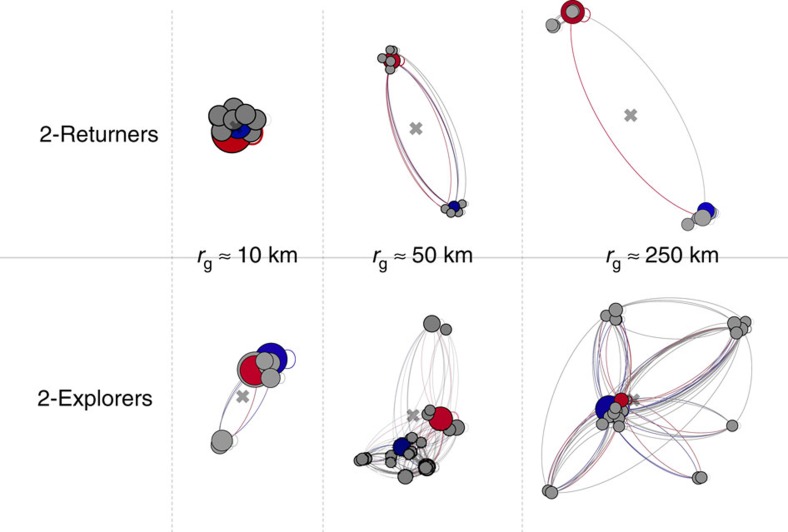
“Figure 5 shows some representative examples of individual mobility networks 3,31 of two-returners and two-explorers with different total r g .”
BackgroundSelf-citationBatty, M., Axhausen, K. W., Giannotti, F., Pozdnoukhov, A., Bazzani, A., Wachowicz, M., Ouzounis, G., & Portugali, Y. (2012) · The European Physical Journal Special Topics · doi:10.1140/epjst/e2012-01703-3 · Cited by 2,424 · cited 1×
“…microscope has attracted scientists from diverse disciplines, from physics and network science 1–4 to data mining 5–8 , and has fuelled advances from public health 9–14 to transportation engineering 15–17 , urban planning 18–21 , official statistics 22,23 and the design of smart cities 24–27 .”
BackgroundSelf-citationThe scaling laws of human travel
Brockmann, D., Hufnagel, L., & Geisel, T. (2006) · Nature · doi:10.1038/nature04292 · Cited by 2,205 · cited 1×
“This broad social microscope has attracted scientists from diverse disciplines, from physics and network science 1–4 to data mining 5–8 , and has fuelled advances from public health 9–14 to transportation engineering 15–17 , urban planning 18–21 , official statistics 22,23 and the design of smart…”
BackgroundBatty, M. (2013) · doi:10.7551/mitpress/9399.001.0001 · Cited by 1,700
A universal model for mobility and migration patterns
Simini, F., González, M. C., Maritan, A., & Barabási, A.-L. (2012) · Nature · doi:10.1038/nature10856 · Cited by 1,502
Self-citationThe Origins of Scaling in Cities
Bettencourt, L. M. A. (2013) · Science · doi:10.1126/science.1235823 · Cited by 1,480
Multiscale mobility networks and the spatial spreading of infectious diseases
Balcan, D., Colizza, V., Gonçalves, B., Hu, H., Ramasco, J. J., & Vespignani, A. (2009) · Proceedings of the National Academy of Sciences · doi:10.1073/pnas.0906910106 · Cited by 1,380 · cited 1×
“This modification is justified by the accuracy of the gravity model to estimate origin-destination matrices at the country level 34–37 .”
MethodModelling the scaling properties of human mobility
Song, C., Koren, T., Wang, P., & Barabási, A.-L. (2010) · Nature Physics · doi:10.1038/nphys1760 · Cited by 1,284 · cited 4×
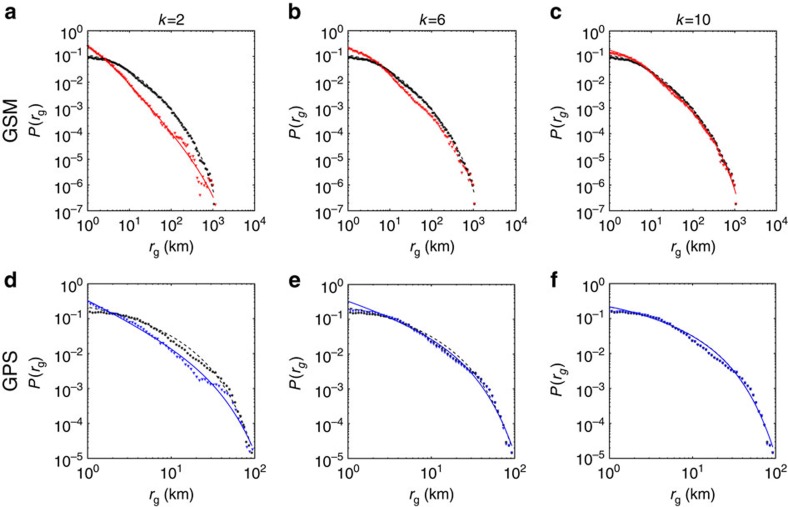
“Theparametersofthefittedtruncatedpowerlawsfor r from the population (see Supplementary Note 4, Supplementary Fig.”
BackgroundInfluentialSelf-citation
Research works printed but not linked: 4
- Giannotti, F., Nanni, M., Pinelli, F. & Pedreschi, D. in Proceedings of the 13th ACM SIGKDD International Conference on Knowledge Discovery and Data Mining (KDD) 330–339ACM (2007).
- Jiang, S. et al. in Proceedings of the 2nd ACM SIGKDD (International Workshop on Urban Computing (UrbComp'13)) 21–29ACM (2013).
- Rinzivillo, S. et al. in Proceedings of the 1st International Conference on Data Science and Advanced Analytics (DSAA'2014) IEEE Computer Society, Shanghai, China (2014).
- Wang, D., Pedreschi, D., Chaoming, S., Giannotti, F. & Barabási, A. L. in Proceedings of the 17th ACM SIGKDD International Conference on Knowledge Discovery and Data Mining (KDD) 1100–1108ACM New York, San Diego, CA, USA (2011).
Cited by
Items 201–300 of 491
Generation of individual daily trajectories by GPT-2
Mizuno, T., Fujimoto, S., & Ishikawa, A. (2022) · Frontiers in Physics · doi:10.3389/fphy.2022.1021176 · Cited by 18
“A realistic generative model should reproduce the tendency of individuals tomove preferentially within short distances [55]; [56], the heterogeneity of characteristic distances [55]; [56] and their scales [57], the tendency of individuals to split into returners and explorers [58], the routinary and predictable nature…”
BackgroundRevealing an Inherently Limiting Factor in Human Mobility Prediction
Amichi, L., Viana, A. C., Crovella, M. E., & Loureiro, A. A. F. (2022) · IEEE Transactions on Emerging Topics in Computing · doi:10.1109/tetc.2022.3229088 · Cited by 16
Crash Prediction and Risk Assessment with Individual Mobility Networks
Guidotti, R., & Nanni, M. (2020) · IEEE International Conference on Mobile Data Management (MDM) · doi:10.1109/mdm48529.2020.00030 · Cited by 15
“systematic trips [9], frequent locations vs.”
On Location Relevance and Diversity in Human Mobility Data
Damiani, M. L., Hachem, F., Quadri, C., Rossini, M., & Gaito, S. (2020) · ACM Transactions on Spatial Algorithms and Systems · doi:10.1145/3423404 · Cited by 15
“A slightly different metric trying to overcome this issue is the k-radius of gyration, denoted r (k) g [26].”
BackgroundTrajectory generation: a survey on methods and techniques
Chen, X., Huang, C., Wang, C., & Chen, L. (2025) · GeoInformatica · doi:10.1007/s10707-025-00545-z · Cited by 24
“Subsequent studies [74, 75, 77, 85–88] expand the ERP model.”
There's a Path for Everyone: A Data-Driven Personal Model Reproducing Mobility Agendas
Guidotti, R., Trasarti, R., Nanni, M., Giannotti, F., & Pedreschi, D. (2017) · IEEE International Conference on Data Science and Advanced Analytics (DSAA) · doi:10.1109/dsaa.2017.12 · Cited by 14
“mobility indicators: the radius of gyration (RG) [17] and the”
BackgroundMethodInfluentialSelf-citationTo Return or to Explore: Modelling Human Mobility and Dynamics in Cyberspace
Hu, T., Xia, Y., & Luo, J. (2019) · International World Wide Web Conference (WWW) · doi:10.1145/3308558.3313686 · Cited by 14
“For example, Pappalardo et al. develop a "returner and explorer dichotomy" for differentiating people of divergent mobility patterns [32].”
BackgroundMethodYoo, E. (2019) · Annals of the American Association of Geographers · doi:10.1080/24694452.2019.1586516 · Cited by 15
“Literature has shown that the number of visited places grows steadily over time (Song, Koren, et al. 2010; Pappalardo et al. 2015; Alessandretti et al. 2017; Alessandretti et al. 2018).”
BackgroundOptimal Control of Urban Human Mobility for Epidemic Mitigation
Niazi, M. U. B., de Wit, C. C., Kibangou, A. Y., & Bliman, P. (2021) · IEEE Conference on Decision and Control (CDC) · doi:10.1109/cdc45484.2021.9683343 · Cited by 14
Khan, N. U., Wan, W., Yu, S., Muzahid, A. A. M., Khan, S., & Hou, L. J. (2020) · ISPRS International Journal of Geo-Information · doi:10.3390/ijgi9120733 · Cited by 14
Analyses of characetristics of air passenger group mobility behaviors
Fei-Hu, H., Jian, P., & Mingyang, Y. (2016) · Acta Physica Sinica · doi:10.7498/aps.65.228901 · Cited by 14
Artificial Intelligence for Earth System Predictability (AI4ESP) (2021 Workshop Report)
Hickmon, N. L., Varadharajan, C., Hoffman, F. M., Wainwright, H. M., & Collis, S. (2022) · OSTI OAI (U.S. Department of Energy Office of Scientific and Technical Information) · doi:10.2172/1888810 · Cited by 19
Pan, Y., Darzi, A., Yang, M., Sun, Q., Kabiri, A., Zhao, G., Xiong, C., & Zhang, L. (2023) · Transportation Research Record Journal of the Transportation Research Board · doi:10.1177/03611981231189732 · Cited by 13
Charting mobility patterns in the scientific knowledge landscape
Singh, C. K., Tupikina, L., Lécuyer, F., Starnini, M., & Santolini, M. (2024) · EPJ Data Science · doi:10.1140/epjds/s13688-024-00451-8 · Cited by 21
“For example, individuals can be categorized into two classes, returners and explorers , depending on their propensity to come back to the same location or explore new ones [25].”
BackgroundMethodInfluentialAbbasabadi, N., & Ashayeri, M. (2024) · Energy and Buildings · doi:10.1016/j.enbuild.2024.114440 · Cited by 19
Evaluating the Effect of the Financial Status to the Mobility Customs
Pintér, G., & Felde, I. (2021) · ISPRS International Journal of Geo-Information · doi:10.3390/ijgi10050328 · Cited by 13
“These works usually consider the population as a homogeneous group and the classification is based on some of the mobility indicators [31].”
BackgroundMethodHow Data Mining and Machine Learning Evolved from Relational Data Base to Data Science
Amato, G. M., Candela, L., Castelli, D., Esuli, A., Falchi, F., Gennaro, C., Giannotti, F., Monreale, A., Nanni, M., Pagano, P., et al. (2017) · Studies in big data · doi:10.1007/978-3-319-61893-7_17 · Cited by 17
“objective of combining micro and macro laws has been pursued in [54] where taking”
BackgroundSelf-citationWeak Nodes Detection in Urban Transport Systems: Planning for Resilience in Singapore
Ferretti, M., Barlacchi, G., Pappalardo, L., Lucchini, L., & Lepri, B. (2018) · IEEE International Conference on Data Science and Advanced Analytics (DSAA) · doi:10.1109/dsaa.2018.00061 · Cited by 13
Self-citationKhan, N. U., Wan, W., & Yu, S. (2020) · ISPRS International Journal of Geo-Information · doi:10.3390/ijgi9020076 · Cited by 16
The correlation between human mobility and socio-demographic in megacity
Xie, K., Xiong, H., & Li, C. (2016) · IEEE International Smart Cities Conference (ISC2) · doi:10.1109/isc2.2016.7580733 · Cited by 13
“Previous researches have shown human mobility patterns through various massive datasets, such as cell phone calls [10], [11], [12], [13], the trace of bank notes [14], [15], GPS data [10], [16], and e-mail records [16].”
BackgroundThe secret life of predictive brains: what's spontaneous activity for?Preprint
Pezzulo, G., Zorzi, M., & Corbetta, M. (2020) · PsyArXiv (OSF Preprints) · doi:10.31234/osf.io/qus3h · Cited by 19
Activity triangles: a new approach to measure activity spaces
Siła-Nowicka, K., Fotheringham, A. S., & Demšar, U. (2023) · Journal of Geographical Systems · doi:10.1007/s10109-023-00414-z · Cited by 12
“Some recent studies, for example, suggest at least two if not three weeks of data are required to establish people’s routines (Pappalardo et al. 2015; Smolak et al. 2020).”
BackgroundJiang, X., Mao, Z., Zheng, Z., Lin, Z., Wang, Y., & Sheng, S. (2023) · International journal of law, crime and justice · doi:10.1016/j.ijlcj.2023.100647 · Cited by 11
Statistical patterns of human mobility in emerging Bicycle Sharing Systems
Chang, X., Shen, J., Lu, X., & Huang, S. (2018) · PLoS ONE · doi:10.1371/journal.pone.0193795 · Cited by 12
Wang, Y., Correia, G. H. D. A., & van Arem, B. (2019) · Advances in transport policy and planning · doi:10.1016/bs.atpp.2019.08.001 · Cited by 12
“Some people tend to explore new locations as much as possible, whilst the others tend to visit the places that they are familiar with (Pappalardo et al., 2015).”
BackgroundMobility between Colombian cities is predominantly repeat and return migration
Prieto-Curiel, R., Domínguez, M. Q., Lora, E. A., & O’Clery, N. (2022) · Computers Environment and Urban Systems · doi:10.1016/j.compenvurbsys.2022.101774 · Cited by 12
Ji, Y., Gao, S., Huynh, T., Scheele, C., Triveri, J., Kruse, J., Bennett, C., & Wen, Y. (2023) · Transactions in GIS · doi:10.1111/tgis.13043 · Cited by 12
“Investigation of individuals' visit patterns reveals limits in predictability (Song et al., 2010), similarity in mobility behavior for user profiling (Martin et al., 2023), and the returners and explorers dichotomy (Pappalardo et al., 2015), which was rooted in the inherent degree of regularity.”
BackgroundDiverged landscape of restaurant recovery from the COVID-19 pandemic in the United States
Wang, S., Huang, X., She, B., & Li, Z. (2023) · iScience · doi:10.1016/j.isci.2023.106811 · Cited by 12
“Thus, it advances our state-of-the-art understanding of the classic gravity law model 15–17 on human mobility that normally concentrates on the spatial dependence of mobility with the temporal perspective and within the context of COVID-19.”
Fast Estimation of Privacy Risk in Human Mobility Data
Pellungrini, R., Pappalardo, L., Pratesi, F., & Monreale, A. (2017) · Lecture notes in computer science · doi:10.1007/978-3-319-66284-8_35 · Cited by 12
“The availability of these data has offered the opportunity to observe human movements at large scales and in great detail, leading to the discovery of quantitative patterns (8), the mathematical modeling of human mobility (9; 14) etc.”
BackgroundMethodSelf-citationOn Non-Routine Places in Urban Human Mobility
Quadri, C., Zignani, M., Gaito, S., & Rossi, G. P. (2018) · IEEE International Conference on Data Science and Advanced Analytics (DSAA) · doi:10.1109/dsaa.2018.00075 · Cited by 12
“Starting from the seminal paper of Barabasi [10], we know that people can be roughly divided into returners and explorers; the former being very regular in moving back and forth between their favorite places, the latter inclined to explore new places while on the go [11]– [13].”
BackgroundUnveiling mobility complexity through complex network analysis
Guidotti, R., Monreale, A., Rinzivillo, S., Pedreschi, D., & Giannotti, F. (2016) · Social Network Analysis and Mining · doi:10.1007/s13278-016-0369-2 · Cited by 12
“Inspired by Pappalardo et al. (2015), we could categorize them as common drivers because they do not travel very much, going systematically in many complex POIs and in few not complex POIs.”
BackgroundSelf-citationKovalcsik, T., Elekes, Á., Boros, L., Könnyid, L., & Kovács, Z. (2022) · Sustainability · doi:10.3390/su142113826 · Cited by 11
GANs for Privacy-Aware Mobility Modeling
Fontana, I., Langheinrich, M., & Gjoreski, M. (2023) · IEEE Access · doi:10.1109/access.2023.3260981 · Cited by 12
“Regarding geographical criteria, the synthetic trajectories should emulate both classes of users: returners and explorers [22].”
BackgroundDeep Learning for Secure UAV Swarm Communication Under Malicious Attacks
Wu, Q., Zhang, Y., Yang, Z., & Shikh‐Bahaei, M. (2024) · IEEE Transactions on Wireless Communications · doi:10.1109/twc.2024.3419923 · Cited by 15
“Therefore, we consider a family of more realistic user mobility models, namely the EPR model [16], which can better represent the real-world human moving trajectory pattern.”
BackgroundMethodInfluentialSu, Z., Liu, X., Li, H., Zhang, T., Liu, X., & Jiang, Y. (2024) · Sustainable Cities and Society · doi:10.1016/j.scs.2024.106088 · Cited by 11
Toward Interactive Next Location Prediction Driven by Large Language Models
Chen, Y., Chi, B., Li, C., Zhang, Y., Liao, C., Chen, X. M., & Xie, N. (2025) · IEEE Transactions on Computational Social Systems · doi:10.1109/tcss.2024.3522965 · Cited by 11
“Empirical studies [24], [48] have shown that individuals typically move between a limited number of locations over a given period.”
Uncovering the differences and similarities between physical and virtual mobility
Hazarie, S. A., Barbosa, H., Frank, A., de Menezes, R. P., & Ghoshal, G. (2020) · Journal of The Royal Society Interface · doi:10.1098/rsif.2020.0250 · Cited by 12
“The model has seen several extensions, including visits to locations being based on a popularity measure as opposed to frequency of prior visits [18], as well as incorporating the gravity model [45] to partition the population into returners and explorers based on their mobility profiles [31].”
MethodPredicting and Explaining Privacy Risk Exposure in Mobility Data
Naretto, F., Pellungrini, R., Monreale, A., Nardini, F. M., & Musolesi, M. (2020) · Lecture notes in computer science · doi:10.1007/978-3-030-61527-7_27 · Cited by 12
“We also consider the radius of gyration [19] representing the characteristic distance travelled by a user during the”
BackgroundYang, J., Shi, Y., Zheng, Y., & Zhang, Z. (2023) · Scientific Reports · doi:10.1038/s41598-023-32529-0 · Cited by 13
“…between various influencing factors and the actual population density distribution, so as to predict the population spatial–temporal distribution 26–29 , Moreover, such methods can capture the trend, periodicity and other characteristics in the time series, but such models cannot describe the…”
BackgroundRidesourcing Behavior Analysis and Prediction: A Network Perspective
Chen, D., Shao, Q., Liu, Z., Yu, W., & Chen, C. L. P. (2020) · IEEE Transactions on Intelligent Transportation Systems · doi:10.1109/tits.2020.3023951 · Cited by 16
Identifying Highly Influential Travellers for Spreading Disease on a Public Transport System
Shoghri, A. E., Liebig, J., Jurdak, R., Gardner, L., & Kanhere, S. S. (2020) · QUT ePrints (Queensland University of Technology) · Cited by 11
Mobile phone indicators and their relation to the socioeconomic organisation of cities
Cottineau, C., & Vanhoof, M. (2019) · UCL Discovery (University College London) · Cited by 11
RCA: A route city attraction model for air passengers
Huang, F., Xiong, X., Peng, J., Guo, B., & Tong, B. (2017) · Physica A Statistical Mechanics and its Applications · doi:10.1016/j.physa.2017.08.081 · Cited by 11
Mobility constraints in segregation models
Gambetta, D., Mauro, G., & Pappalardo, L. (2023) · Scientific Reports · doi:10.1038/s41598-023-38519-6 · Cited by 12
Self-citationNUMOSIM: A Synthetic Mobility Dataset with Anomaly Detection Benchmarks
Stanford, C., Adari, S. K., Liao, X., He, B. Y., Jiang, Q., Kuai, C., Ma, J., Tung, E., Qian, Y., Zhao, L., et al. (2024) · doi:10.1145/3681765.3698455 · Cited by 10
“This procedure considered available data and literature on LA, including average commute times [16] total distance traveled per day [2, 22], radius of gyration [13, 23], number of locations visited per day [25], and Zipf’s law human movement [13, 32].”
MethodYi, D., Liu, Y., Qin, J., & Zhang, J. (2020) · Sustainability · doi:10.3390/su12229662 · Cited by 10
Pintér, G., & Felde, I. (2021) · Information · doi:10.3390/info12110468 · Cited by 10
“Mobility indicators, such as Radius of Gyration or Entropy, are often calculated [5,6] to describe and classify subscribers’ mobility customs.”
BackgroundLiu, T., & Xiao, W. (2022) · Population Space and Place · doi:10.1002/psp.2574 · Cited by 16
A vector field approach for identifying anomalous human mobility
Hu, Y., Li, M., Guo, B., Zhang, F., & Wang, P. (2022) · IET Intelligent Transport Systems · doi:10.1049/itr2.12220 · Cited by 12
Varieties of Mobility Measures: Comparing Survey and Mobile Phone Data during the COVID-19 Pandemic
Kalleitner, F., Schiestl, D. W., & Heiler, G. (2022) · Public Opinion Quarterly · doi:10.1093/poq/nfac042 · Cited by 13
“This measure is commonly used to estimate mobility patterns of the general population (Gonza´lez et al. 2008; Song et al. 2010; Pappalardo et al. 2015).”
Analytical Model of Spread of Epidemics in Open Finite Regions
Tian, D., Liu, C., Sheng, Z., Chen, M., & Wang, Y. (2017) · IEEE Access · doi:10.1109/access.2017.2699970 · Cited by 10
“Since the mobility of people, the number and the density of people change, which has been shown to have significant influence on the epidemics spread [14].”
BackgroundAnalyzing Privacy Risk in Human Mobility Data
Pellungrini, R., Pappalardo, L., Pratesi, F., & Monreale, A. (2018) · Lecture notes in computer science · doi:10.1007/978-3-030-04771-9_10 · Cited by 10
Self-citationYang, Y., Fang, Z., Xie, X., Zhang, F., Liu, Y., & Zhang, D. (2020) · Proceedings of the ACM on Interactive Mobile Wearable and Ubiquitous Technologies · doi:10.1145/3411827 · Cited by 10
“Our key idea is that human moves in their own patterns and are generally independent to the types of sensing systems they are exposed [34].”
BackgroundPrediction of Intra-Urban Human Mobility by Integrating Regional Functions and Trip Intentions
Shi, S., Wang, L., Xu, S., & Wang, X. (2020) · IEEE Transactions on Knowledge and Data Engineering · doi:10.1109/tkde.2020.3047406 · Cited by 10
Bridging human mobility and urban growth
Wang, P. (2021) · Nature Computational Science · doi:10.1038/s43588-021-00166-0 · Cited by 10
Muffato, V., Miola, L., Pazzaglia, F., & Meneghetti, C. (2023) · Frontiers in Psychology · doi:10.3389/fpsyg.2023.1240873 · Cited by 11
“Attitude in exploring is another wayfinding inclination that catches individuals’ tendencies of explorer mobility (Pappalardo et al., 2015).”
BackgroundShould We Stay or Should We Go? A Critical Review of Journey-to-Crime Research
Michaud, P. A. (2023) · Journal of Police and Criminal Psychology · doi:10.1007/s11896-023-09618-x · Cited by 10
Bertocchi, D., Bruzzone, F., & Nocera, S. (2025) · Journal of Transport Geography · doi:10.1016/j.jtrangeo.2025.104390 · Cited by 9
Urban groups: behavior and dynamics of social groups in urban space
Zignani, M., Quadri, C., Gaito, S., & Rossi, G. P. (2019) · EPJ Data Science · doi:10.1140/epjds/s13688-019-0187-7 · Cited by 10
Cornacchia, G., & Pappalardo, L. (2021) · ISPRS International Journal of Geo-Information · doi:10.3390/ijgi10090599 · Cited by 17
“Radius of Gyration r g , the typical distance travelled by an individual u during the period of observation [29,35].”
BackgroundSelf-citationYang, H., Lv, S., Guo, B., Dai, J., & Wang, P. (2024) · Physica A Statistical Mechanics and its Applications · doi:10.1016/j.physa.2024.129571 · Cited by 10
Fuzzy Modelling for Human Dynamics Based on Online Social Networks
Cuenca-Jara, J., Terroso-Sáenz, F., Valdés-Vela, M., & Skármeta, A. (2017) · Sensors · doi:10.3390/s17091949 · Cited by 9
“More recently, mobile phone networks have been adopted as another meaningful data source to come up with human mobility modelling [45].”
Cai, H., Xin, Y., Martin, H., & Raubal, M. (2022) · AGILE GIScience Series · doi:10.5194/agile-giss-3-3-2022 · Cited by 12
“Nevertheless, studies have shown that individual human mobility has a considerably high level of predictability (Gonzalez et al., 2008; Song et al., 2010b; Pappalardo et al., 2015; Cuttone et al., 2018).”
BackgroundA Generalized Model of Activity Space
Spielman, S. E., & Singleton, A. D. (2022) · Annals of the American Association of Geographers · doi:10.1080/24694452.2022.2077165 · Cited by 9
“One interesting potential approach to standardization lies in the work of Pappalardo et al. (2015), who used semantic information about activity, the kinds of places people go, as captured in a travel diary, to generatively simulate travel patterns.”
BackgroundChang, S., Gao, L., Zhang, C., Yu, T., Xiao, H., Si, B., & Mendes, J. F. F. (2024) · Chaos Solitons & Fractals · doi:10.1016/j.chaos.2024.115916 · Cited by 8
Mixing individual and collective behaviors to predict out-of-routine mobility
Bontorin, S., Centellegher, S., Gallotti, R., Pappalardo, L., Lepri, B., & Luca, M. (2025) · Proceedings of the National Academy of Sciences · doi:10.1073/pnas.2414848122 · Cited by 13
“However, in some cases, individuals may have a marked preference for exploring new destinations [31, 32, 34–36] or be forced to alter their routine due to external factors such as job loss, health issues, natural disasters, or epidemics [9, 37–45].”
BackgroundSelf-citationIndividual and collective stop-based adaptive trajectory segmentation
Bonavita, A., Guidotti, R., & Nanni, M. (2021) · GeoInformatica · doi:10.1007/s10707-021-00449-8 · Cited by 9
Metapopulation epidemic models with a universal mobility pattern on interconnected networks
Huang, J., & Chen, C. (2021) · Physica A Statistical Mechanics and its Applications · doi:10.1016/j.physa.2021.126692 · Cited by 10
Projecting Social Networks in Dynamic Environments for Tracking Purposes
Alanezi, M. M. K., & Mahmood, B. M. (2021) · International Conference on ICT for Rural Development (IC-ICTRuDev) · doi:10.1109/ic-ictrudev50538.2021.9655711 · Cited by 8
Validity of Markovian modeling for transient memory-dependent epidemic dynamics
Feng, M., Tian, L., Lai, Y., & Zhou, C. (2024) · Communications Physics · doi:10.1038/s42005-024-01578-w · Cited by 9
Advancing human mobility modeling: a novel path flow approach to mining traffic congestion dynamics
Shi, H., Zhao, Z., Tang, L., Kan, Z., & Du, Y. (2024) · International Journal of Geographical Information Systems · doi:10.1080/13658816.2024.2408293 · Cited by 8
“It is clear that the service capacity of different roads, defined by metrics such as the radius of gyration (Pappalardo et al .”
Profiling mobility patterns and driving behaviors of individual drivers via trajectory trait
Liu, Y., Gui, Z., Xu, Y., Gao, S., Zhao, A., Meng, F., Peng, D., Li, F., del Bo, L., Wu, H., et al. (2024) · The Innovation Geoscience · doi:10.59717/j.xinn-geo.2024.100114 · Cited by 8
How Mobility and Sociality Reshape the Context: A Decade of Experience in Mobile CrowdSensing
Girolami, M., Belli, D., Chessa, S., & Foschini, L. (2021) · Sensors · doi:10.3390/s21196397 · Cited by 9
Unlocking social network analysis methods for studying human mobility
Wiedemann, N., Martin, H., & Raubal, M. (2022) · AGILE GIScience Series · doi:10.5194/agile-giss-3-19-2022 · Cited by 8
“In contrast to previous work on human mobility (Alessandretti et al., 2020; González et al., 2008; Brockmann et al., 2006; Pappalardo et al., 2015; Schläpfer et al., 2021), the methods presented here not only regard the scales of mobility, but its topology, i.e. the relations between locations.”
BackgroundResultInfluentialHow regularly do people visit service places?
Zhong, S., & Bian, L. (2022) · Computers Environment and Urban Systems · doi:10.1016/j.compenvurbsys.2022.101896 · Cited by 9
The Empirical Study of Human Mobility: Potentials and Pitfalls of Using Traditional and Digital Data
Recchi, E., & Tittel, K. (2023) · Springer eBooks · doi:10.1007/978-3-031-16624-2_23 · Cited by 9
Mepparambath, R. M., Huynh, H. N., Oon, J., Song, J., Zhu, R., & Feng, L. (2023) · Transportation Research Interdisciplinary Perspectives · doi:10.1016/j.trip.2023.100883 · Cited by 8
Yin, J., Xu, Z., Zhang, Q., & Kang, Z. (2025) · Applied Spatial Analysis and Policy · doi:10.1007/s12061-025-09636-8 · Cited by 9
“Consequently, distance has always been recognized as a vital element in theories of migration (Pappalardo et al., 2015; Simini et al., 2012).”
A Cross-Scale Representation of Tourist Activity Space
Chen, X., Xu, Y., Park, S., Chen, Y., Liu, X., & Zhuge, C. (2023) · Annals of the American Association of Geographers · doi:10.1080/24694452.2023.2231533 · Cited by 7
“The role of accommodation locations to tou-rists is similar to that of home locations to urban residents, in that residents ’ homes usually serve as central points for residents ’ movements and their activity space (Song, Koren, et al. 2010; Pappalardo et al. 2015; Xu et al. 2015).”
BackgroundYang, Y., Gao, T., Xu, Z., Zhang, Y., Liu, C., Shang, F., & Li, R. (2024) · International Journal of Modern Physics C · doi:10.1142/s0129183124501080 · Cited by 7
“Attribute to accumulation of various types of geo-located data with high spatio-temporal resolution, e.g., cell detailed records [30–33], GPS [34, 35], credit card transactions [28], mobility patterns have been extensively studied over past decades [36] and its relation with socioeconomic status of…”
BackgroundReturners and explorers dichotomy in the face of natural hazards
He, Z., Hu, Y., Duan, L. L., & Michailidis, G. C. (2024) · Scientific Reports · doi:10.1038/s41598-024-64087-4 · Cited by 11
Cities Are Concentrators of Complex, MultiSectoral Interactions Within the Human‐Earth System
Brelsford, C. M., Jones, A. D., Pandey, B., Vahmani, P., Allen-Dumas, M. R., Rastogi, D., Sparks, K. A., Bukovsky, M., Dronova, I., Hong, T., et al. (2024) · Earth s Future · doi:10.1029/2024ef004481 · Cited by 7
“Fundamental patterns in human behavior like those described by (Alessandretti et al., 2020; Pappalardo et al., 2015; Schläpfer et al., 2021) and others can quantify human behavioral processes, providing an empirical mechanism for modeling or predicting sectoral interactions, and can thus help…”
Yang, Y., Yang, Y., Tang, Z., Wang, C., & Wang, F. (2025) · Applied Geography · doi:10.1016/j.apgeog.2025.103587 · Cited by 7
Understanding the role of mobility in real mobile ad-hoc networks connectivity
Cotta, L., de Melo, P. O. S. V., & Loureiro, A. A. F. (2017) · IEEE Symposium on Computers and Communications (ISCC) · doi:10.1109/iscc.2017.8024672 · Cited by 7
“Since then, it has been leveraged to find mobility patterns [10], [14] and to study mobility predictability [15].”
BackgroundRecurrent origin–destination network for exploration of human periodic collective dynamics
Chen, X., Xie, J., Xiao, C., Lu, B., & Shan, J. (2021) · Transactions in GIS · doi:10.1111/tgis.12849 · Cited by 7
“In recent years a large number of high spatial-temporal resolution location-based data sets have recorded the movement behaviors of people in the city, providing an objective description for urban dynamics (Pappalardo et al., 2015).”
BackgroundGenerating Activity-Based Mobility Plans from Trip-Based Models and Mobility Surveys
Adenaw, L., & Bachmeier, Q. (2022) · Applied Sciences · doi:10.3390/app12178456 · Cited by 7
Riskalyzer: Inferring Individual Risk-Taking Propensity Using Phone Metadata
Singh, V. K., Goyal, R., & Wu, S. (2018) · Proceedings of the ACM on Interactive Mobile Wearable and Ubiquitous Technologies · doi:10.1145/3191766 · Cited by 10
“Inspired by [57], we label a user as explorer (with value close to 0) when she tends to visit a large number of different places and returner (with larger value) when she performs recurrent visitation to a small number of destinations.”
BackgroundCross-Urban Point-of-Interest Recommendation for Non-Natives
Xu, T., Ma, Y., & Wang, Q. (2018) · International Journal of Web Services Research · doi:10.4018/ijwsr.2018070105 · Cited by 6
“…to uncover and model human mobility patterns (Gonzalez et al., 2008; Noulas et al., 2012; Hasan et al., 2013a; Schneider et al., 2013; Barchiesi et al., 2015; Pappalardo et al., 2015; Gallotti et al., 2016), to provide a deeper understanding of individual and collective mobility behaviors.”
BackgroundUnderstanding the spatial distribution of crime in hot crime areas
Wang, Z.-L., & Zhang, H. (2019) · Singapore journal of tropical geography · doi:10.1111/sjtg.12293 · Cited by 7
An individual-level ground truth dataset for home location detection
Pappalardo, L., Ferres, L., Sacasa, M., Cattuto, C., & Bravo, L. (2020) · arXiv · doi:10.48550/arxiv.2010.08814 · Cited by 7
“[22] Pappalardo Luca, Simini Filippo, Rinzivillo Salvatore, Pedreschi Dino, Giannotti Fosca, and Barabási Albert-László.”
BackgroundMethodSelf-citationAn attractiveness-based model for human mobility in all spatial ranges
Zhou, J., Fan, Z., Ng, K. T., & Tang, K. S. (2019) · New Journal of Physics · doi:10.1088/1367-2630/ab5da4 · Cited by 6
“the explorers [8], have also been studied.”
Trajectory test-train overlap in next-location prediction datasets
Luca, M., Pappalardo, L., Lepri, B., & Barlacchi, G. (2023) · Machine Learning · doi:10.1007/s10994-023-06386-x · Cited by 9
“All the works discussed suggest that models may memorize certain trajectories (e.g., routinary mobility) while not being able to generalize well on novel mobility (i.e., mobility not observed during the training phase).”
BackgroundMethodSelf-citationA severe local flood and social events show a similar impact on human mobility
Loreti, S., Keiler, M., & Zischg, A. P. (2025) · npj Complexity · doi:10.1038/s44260-025-00030-6 · Cited by 8
“We, therefore, associate those peaks of anomalies, that regularly happen at 8 a.m. every Sunday, to recurrent leisure activities, typical of weekends 64 – 66 .”
Improving recommendation by connecting user behavior in temporal and topological dimensions
Li, H., & Zeng, A. (2021) · Physica A Statistical Mechanics and its Applications · doi:10.1016/j.physa.2021.126378 · Cited by 6
Learning Behavioral Representations of Human Mobility
Damiani, M. L., Acquaviva, A., Hachem, F., & Rossini, M. (2020) · ACM SIGSPATIAL International Conference on Advances in Geographic Information Systems (SIGSPATIAL GIS) · doi:10.1145/3397536.3422255 · Cited by 6
“[1, 22]) measuring the distance from the trajectory ar X iv :2 00 9.”
BackgroundMining SQL workloads for learning analysis behavior
Moreau, C., Legroux, C., Peralta, V., & Hamrouni, M. A. (2022) · Information Systems · doi:10.1016/j.is.2022.102004 · Cited by 6
Awakening City: Traces of the Circadian Rhythm within the Mobile Phone Network Data
Pintér, G., & Felde, I. (2022) · Information · doi:10.3390/info13030114 · Cited by 6
“Identifying the home and work locations of a subscriber is a common [42, 60, 27, 54, 59, 63, 34, 41, 44] and crucial part of the CDR processing, as these locations fundamentally determine the people’s mobility customs.”
BackgroundMethodSpatial Interaction Modelling: A ManifestoPreprint
Rowe, F., Lovelace, R., & Dennett, A. (2022) · doi:10.31219/osf.io/xcdms · Cited by 6
The impact of human agents on spatial navigation and knowledge acquisition in a virtual environment
Pacheco, T. S., Mosquera, M. S., Gärtner, K., Schmidt, V., Nolte, D., König, S. U., Pipa, G., & Peter König, B. (2025) · Frontiers in Virtual Reality · doi:10.3389/frvir.2025.1497237 · Cited by 6
Mining location information from users' spatio-temporal data
Jenson, S., Reeves, M., Tomasini, M., & de Menezes, R. P. (2017) · IEEE SmartWorld, Ubiquitous Intelligence & Computing, Advanced & Trusted Computing, Scalable Computing & Communications, Cloud & Big Data Computing, Internet of People and Smart City Innovation (SmartWorld/SCALCOM/UIC/ATC/CBDCom/IOP/SCI) · doi:10.1109/uic-atc.2017.8397519 · Cited by 5
“[15] classified people based on differences in their radius of gyration, while Xiao et al.”
Background
Metadata
- Authors
- Pappalardo, L., Simini, F., Rinzivillo, S., Pedreschi, D., Giannotti, F., & Barabási, A.-L.
- Affiliations
- University of Pisa (IT)
- Northeastern University (US)
- Istituto di Scienza e Tecnologie dell'Informazione "Alessandro Faedo" (IT)
- Corresponding author
- Pappalardo, Luca
- Simini, Filippo
- Venue
- Nature Communications
- Published
- 2015-09-08
- Volume
- 6
- Issue
- 1
- Pages
- 8166-8166
- ISSN
- 2041-1723 (ISSN-L)
- PMC
- PMC4569739
- OpenAlex
- W2134946452
- Cited by
- 494
- References
- 45
- Citations by year
- 2026: 43 · 2025: 42 · 2024: 47 · 2023: 52 · 2022: 49 · 2021: 72 · 2020: 55 · 2019: 42 · 2018: 33 · 2017: 35 · 2016: 22 · 2015: 1
- FWCI
- 57.10
- Type
- journal article
- Language
- en
- Open access
- gold
- doi.org
- Licence
- cc-by
- creativecommons.org/licenses/by/4.0 (tdm)
- creativecommons.org/licenses/by/4.0 (vor)
- Locations
- Nature Communications (publishedVersion, cc-by)
- Europe PMC (PubMed Central) (publishedVersion, cc-by)
- PubMed Central (publishedVersion, cc-by)
- PubMed (publishedVersion)
- Bristol Research (University of Bristol) (publishedVersion, other-oa)
- Digital Access to Scholarship at Harvard (DASH) (Harvard University) (submittedVersion, cc-by)
- RePEc: Research Papers in Economics (submittedVersion)
- CINECA IRIS Institutial research information system (University of Pisa) (submittedVersion, cc-by)
- ISTI Open Portal (submittedVersion, other-oa)
- Open Research (Auckland University of Technology) (submittedVersion, cc-by)
- Explore Bristol Research (submittedVersion, other-oa)
- Funders
- European Commission (H2020 Program, FP7 ICT, 270833, H2020, 317532, 641191)
- Defense Threat Reduction Agency (HDTRA1)
- Horizon 2020 Framework Programme (641191)
- FP7 Information and Communication Technologies
- Topics
- Social Sciences › Transportation › Human Mobility and Location-Based Analysis
- Physical Sciences › Physics and Astronomy › Statistical and Nonlinear Physics › Complex Network Analysis Techniques
- Physical Sciences › Computer Science › Computer Networks and Communications › Opportunistic and Delay-Tolerant Networks
- Keywords
- human mobility, mobile phone data, GPS data, mobility models, epidemic spread, social interaction
- MeSH terms
- Exploratory Behavior, Humans, Interpersonal Relations, Models, Theoretical, Social Behavior, Travel, Geographic Information Systems, Cell Phone
About these checks
Registry, retraction, Cites and statistics results are computed, not judged, with one exception: a printed reference that no index lists is read once by a model before it counts as a citation error. Claims are extracted by a model and kept only when their quote appears verbatim in the text; each cited source is then checked, with a model’s help, for whether it says what the claim relies on. Those verdicts can be wrong — read the claim’s quote and the cited source before relying on one.
Statistics and arithmetic are recomputed, not judged.
Confidence bands are shown only for fields calibrated on our annotated test set. None is calibrated yet, so no band is shown.
What counts as a claim ›How we measure confidence ›How we check this ›
Are you an author, or do you see a problem with this page? Request a review
Data sources
Bibliographic data: Semantic Scholar, OpenAlex, Crossref.
Contains information from the Semantic Scholar Academic Graph Datasets, made available under the ODC Attribution License (ODC-BY 1.0).
Semantic Scholar’s data is described in: Kinney, R., et al. (2023). The Semantic Scholar Open Data Platform. arXiv:2301.10140.
