

Returners and explorers dichotomy in human mobility
Open accessThe DOI matches its Crossref record; 45 of the 45 references it cites were found in a registry or an index.
Abstract
The availability of massive digital traces of human whereabouts has offered a series of novel insights on the quantitative patterns characterizing human mobility. In particular, numerous recent studies have lead to an unexpected consensus: the considerable variability in the characteristic travelled distance of individuals coexists with a high degree of predictability of their future locations. Here we shed light on this surprising coexistence by systematically investigating the impact of recurrent mobility on the characteristic distance travelled by individuals. Using both mobile phone and GPS data, we discover the existence of two distinct classes of individuals: returners and explorers. As existing models of human mobility cannot explain the existence of these two classes, we develop more realistic models able to capture the empirical findings. Finally, we show that returners and explorers play a distinct quantifiable role in spreading phenomena and that a correlation exists between their mobility patterns and social interactions.
Overview
The claims and statistics of this paper haven’t been checked yet.
Free: it reads the open-access text and checks the first 5 claims that cite a source we can check. Create a free account to check every claim.
Integrity signals
Registry
Cites
Statistics
Figures

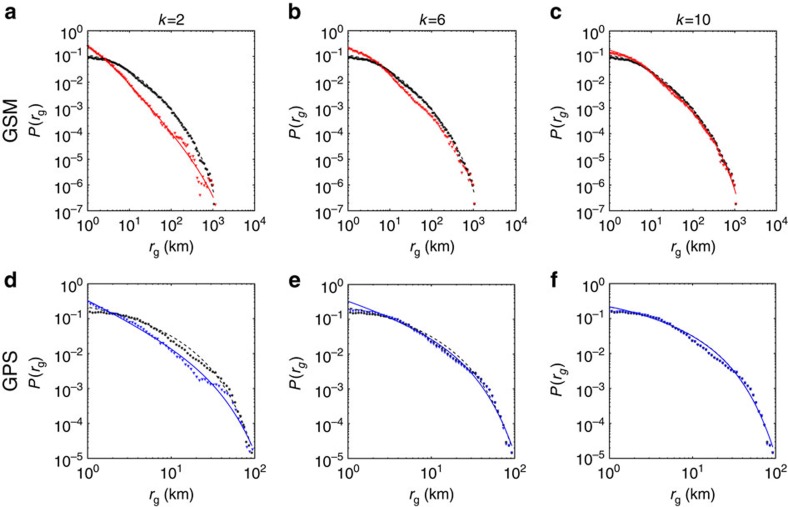
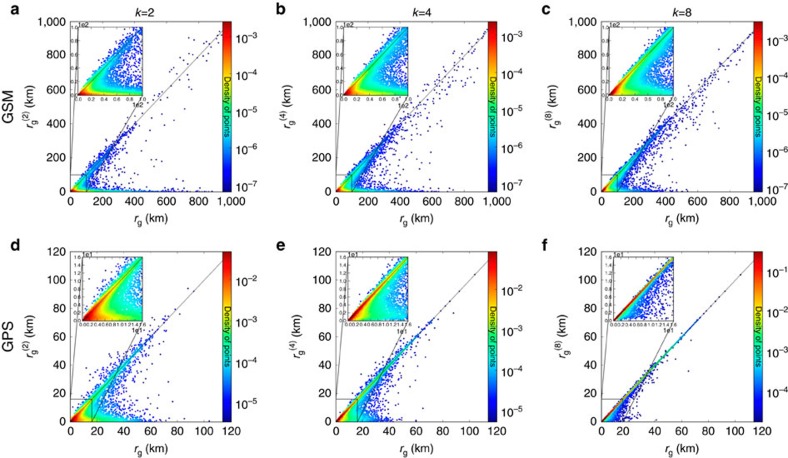


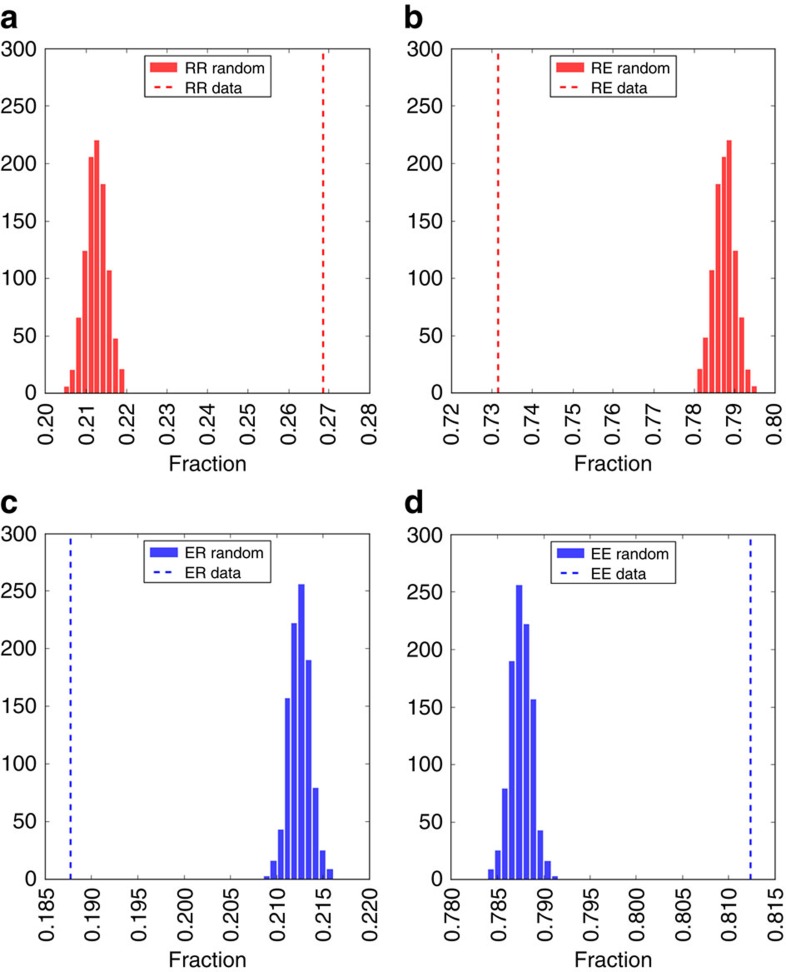

Verification
Claims the paper makes
The claims and statistics of this paper haven’t been checked yet.
Free: it reads the open-access text and checks the first 5 claims that cite a source we can check. Create a free account to check every claim.
Claims other papers make about this one
Each is checked against this paper’s own text: does it say what the citing paper says it does?
The cited source says what the claim attributes to it.
In the citing paper
“Following Pappalardo et al. (2015), we use r g and r (k) g , which have been demonstrated to categorize individual mobility into two distinct classes: returners and explorers.”
From Visitation patterns across mobility groups: wandering, commuting, and exploring (2026) · cites this paper as Pappalardo et al. (2015)
Self-check
Percentages, sums and reported differences re-computed from the paper’s own numbers.
The self-check needs the paper’s full text.
Citations
Cites
(2008) · Data Mining and Market Intelligence for Optimal Marketing Returns · doi:10.4324/9780080878096-12 · Cited by 6,954
Understanding individual human mobility patterns
González, M. C., Hidalgo, C. A., & Barabási, A.-L. (2008) · Nature · doi:10.1038/nature06958 · Cited by 6,059
Self-citationLimits of Predictability in Human Mobility
Song, C., Qu, Z., Blumm, N., & Barabási, A.-L. (2010) · Science · doi:10.1126/science.1177170 · Cited by 3,234 · cited 1×
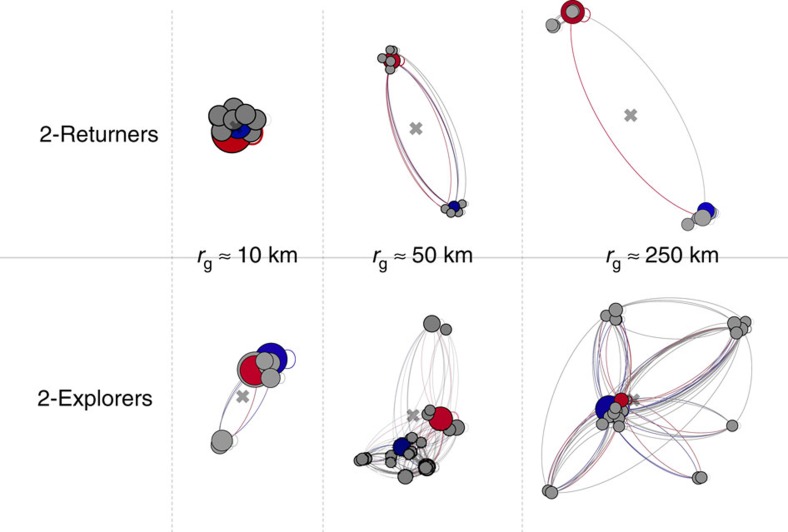
“Figure 5 shows some representative examples of individual mobility networks 3,31 of two-returners and two-explorers with different total r g .”
BackgroundSelf-citationBatty, M., Axhausen, K. W., Giannotti, F., Pozdnoukhov, A., Bazzani, A., Wachowicz, M., Ouzounis, G., & Portugali, Y. (2012) · The European Physical Journal Special Topics · doi:10.1140/epjst/e2012-01703-3 · Cited by 2,424 · cited 1×
“…microscope has attracted scientists from diverse disciplines, from physics and network science 1–4 to data mining 5–8 , and has fuelled advances from public health 9–14 to transportation engineering 15–17 , urban planning 18–21 , official statistics 22,23 and the design of smart cities 24–27 .”
BackgroundSelf-citationThe scaling laws of human travel
Brockmann, D., Hufnagel, L., & Geisel, T. (2006) · Nature · doi:10.1038/nature04292 · Cited by 2,205 · cited 1×
“This broad social microscope has attracted scientists from diverse disciplines, from physics and network science 1–4 to data mining 5–8 , and has fuelled advances from public health 9–14 to transportation engineering 15–17 , urban planning 18–21 , official statistics 22,23 and the design of smart…”
BackgroundBatty, M. (2013) · doi:10.7551/mitpress/9399.001.0001 · Cited by 1,700
A universal model for mobility and migration patterns
Simini, F., González, M. C., Maritan, A., & Barabási, A.-L. (2012) · Nature · doi:10.1038/nature10856 · Cited by 1,502
Self-citationThe Origins of Scaling in Cities
Bettencourt, L. M. A. (2013) · Science · doi:10.1126/science.1235823 · Cited by 1,480
Multiscale mobility networks and the spatial spreading of infectious diseases
Balcan, D., Colizza, V., Gonçalves, B., Hu, H., Ramasco, J. J., & Vespignani, A. (2009) · Proceedings of the National Academy of Sciences · doi:10.1073/pnas.0906910106 · Cited by 1,380 · cited 1×
“This modification is justified by the accuracy of the gravity model to estimate origin-destination matrices at the country level 34–37 .”
MethodModelling the scaling properties of human mobility
Song, C., Koren, T., Wang, P., & Barabási, A.-L. (2010) · Nature Physics · doi:10.1038/nphys1760 · Cited by 1,284 · cited 4×
“Theparametersofthefittedtruncatedpowerlawsfor r from the population (see Supplementary Note 4, Supplementary Fig.”
BackgroundInfluentialSelf-citation
Research works printed but not linked: 4
- Giannotti, F., Nanni, M., Pinelli, F. & Pedreschi, D. in Proceedings of the 13th ACM SIGKDD International Conference on Knowledge Discovery and Data Mining (KDD) 330–339ACM (2007).
- Jiang, S. et al. in Proceedings of the 2nd ACM SIGKDD (International Workshop on Urban Computing (UrbComp'13)) 21–29ACM (2013).
- Rinzivillo, S. et al. in Proceedings of the 1st International Conference on Data Science and Advanced Analytics (DSAA'2014) IEEE Computer Society, Shanghai, China (2014).
- Wang, D., Pedreschi, D., Chaoming, S., Giannotti, F. & Barabási, A. L. in Proceedings of the 17th ACM SIGKDD International Conference on Knowledge Discovery and Data Mining (KDD) 1100–1108ACM New York, San Diego, CA, USA (2011).
Cited by
Items 301–400 of 491
Kentsel Ulaşım, Salgınlar ve Covid-19: Ankara Toplu Taşıma Sistemi
SHAHİN, H., & Yetişkul, E. (2021) · İDEALKENT · doi:10.31198/idealkent.880890 · Cited by 5
Shuttleworth, I., Toger, M., Türk, U., & Östh, J. (2023) · Applied Spatial Analysis and Policy · doi:10.1007/s12061-023-09543-w · Cited by 8
“The radius of gyration was computed following the procedure common to human mobility research using cell-phone data (Gonzalez et al., 2008; Pappalardo et al., 2015; Xu et al., 2018; Gauvin et al., 2021; Barbosa et al. 2018; Matekenya et al., 2021; Blumenstock, 2012; Hernando et al., 2020; Bachir,…”
The migrant perspective: Measuring migrants' movements and interests using geolocated tweets
Mast, J., Sapena, M., Mühlbauer, M., Biewer, C., & Taubenböck, H. (2023) · Population Space and Place · doi:10.1002/psp.2732 · Cited by 7
The RePhrase Extended Pattern Set for Data Intensive Parallel Computing
Danelutto, M., Matteis, T. D., Sensi, D. D., Mencagli, G., Torquati, M., Aldinucci, M., & Kilpatrick, P. (2017) · International Journal of Parallel Programming · doi:10.1007/s10766-017-0540-z · Cited by 5
Recurrent Mobility: Urban Conduits for Diffusion of Energy Efficiency
Mohammadi, N., & Taylor, J. E. (2019) · Scientific Reports · doi:10.1038/s41598-019-56372-4 · Cited by 5
Clustering and Analysis of GPS Trajectory Data Using Distance-Based Features
Koh, Z., Zhou, Y., Lau, B. P. L., Liu, R., Chong, K. H., & Yuen, C. (2022) · IEEE Access · doi:10.1109/access.2022.3225646 · Cited by 6
“A commonly used metric that combines these is radius of gyration [27], which has been used in many papers [28], [29], [30].”
MethodThe urban impact of AI: modelling feedback loops in location-based recommender systems
Mauro, G., Minici, M., & Pappalardo, L. (2026) · Machine Learning · doi:10.1007/s10994-025-06904-z · Cited by 18
Self-citationGao, X., & Kwan, M. (2026) · Cities · doi:10.1016/j.cities.2026.106835 · Cited by 6
Pan, J., Xin, R., Yang, J., Yang, F., Li, T., Xu, B., & Jia, F. (2025) · IEEE Transactions on Intelligent Transportation Systems · doi:10.1109/tits.2025.3555809 · Cited by 5
“Typical fine-grained applications include inferring human mobility patterns through mobile signal data [2], recognizing the types of cargo carried by intercity trucks [3] to better understand regional economic dynamics and improve transportation logistics, and determining the types of ships engaged…”
Space-time cube simulation of urban population across years using pixel-based neighborhoods
Zhang, C., Fan, Q., He, B., Hu, J., Ping, X., Li, C., Xia, B., & Li, W. (2025) · Cities · doi:10.1016/j.cities.2025.106299 · Cited by 5
Nation Scale Mobile Ad Hoc Network for Normally Isolated Topologies
Oesch, S., & Schuchard, M. (2019) · IEEE International Conference on Internet of Things (iThings) and IEEE Green Computing and Communications (GreenCom) and IEEE Cyber, Physical and Social Computing (CPSCom) and IEEE Smart Data (SmartData) · doi:10.1109/ithings/greencom/cpscom/smartdata.2019.00047 · Cited by 4
“[19] proposed a model called the Exploration and Preferential Return Model (EPR) where agents are”
BackgroundMethodProceedings of the 22nd Python in Science Conference
(2023) · Proceedings of the Python in Science Conferences · doi:10.25080/gerudo-f2bc6f59-039 · Cited by 4
Understanding scholar-trajectories across scientific periodicals
Fan, Y., Blok, A., & Lehmann, S. (2024) · Scientific Reports · doi:10.1038/s41598-024-54693-7 · Cited by 5
“In particular, the radius of gyration, r g , is a well-known indicator in mobility analysis that measures the characteristic distance traveled by an individual 27–30 .”
BackgroundYu, Y., Wang, Y., Zhang, Y., Qu, H., & Liu, D. (2025) · IEEE Transactions on Visualization and Computer Graphics · doi:10.1109/tvcg.2025.3567117 · Cited by 9
“For instance, researchers try to explain the motivations behind mobility segregation by indexing the segregation and modeling the human daily activity trajectories [42] and suggest urban planning interventions to bridge segregated communities [44].”
Online route prediction based on clustering of meaningful velocity-change areas
Terroso-Sáenz, F., Valdés-Vela, M., & Skármeta, A. (2016) · Data Mining and Knowledge Discovery · doi:10.1007/s10618-016-0452-3 · Cited by 4
Mobility patterns of human population among university campuses
Zhang, S., & Li, X. (2016) · IEEE Asia Pacific Conference on Circuits and Systems (APCCAS) · doi:10.1109/apccas.2016.7803893 · Cited by 4
Sensing the cities with social-aware unmanned aerial vehicles
Chessa, S., Girolami, M., Mavilia, F., Dini, G., Perazzo, P., & Rasori, M. (2017) · IEEE Symposium on Computers and Communications (ISCC) · doi:10.1109/iscc.2017.8024542 · Cited by 4
Mobility and Location Choice of Offenders
Bernasco, W. (2018) · Oxford University Press eBooks · doi:10.1093/oxfordhb/9780190279707.013.17 · Cited by 4
Human migration patterns in China with the resume data
Nie, Q., Wu, J.-J., Yan, X.-Y., Liu, J.-H., & Wang, J. (2019) · Modern Physics Letters B · doi:10.1142/s0217984919500295 · Cited by 4
Gkiotsalitis, K., & Stathopoulos, A. (2020) · Journal of Transportation Engineering Part A Systems · doi:10.1061/jtepbs.0000336 · Cited by 4
Bursty visitation of locations in human mobility
Lv, J., Zhao, C., & Zeng, A. (2020) · Physica A Statistical Mechanics and its Applications · doi:10.1016/j.physa.2020.125674 · Cited by 4
Clustering sequences of multi-dimensional sets of semantic elements
Moreau, C., Chanson, A., Peralta, V., Devogèle, T., & de Runz, C. (2021) · ACM Symposium on Applied Computing · doi:10.1145/3412841.3441920 · Cited by 4
“Indeed, clustering methods are based on similarity measures like the ones described in previous subsections and are widely used for the discovery of human behavior, in particular in sequences of mobility [21, 31, 35].”
Methodde Mattos, E. P., Domingues, A. C. S. A., Silva, F. A., Ramos, H. S., & Loureiro, A. A. F. (2024) · Ad Hoc Networks · doi:10.1016/j.adhoc.2024.103567 · Cited by 9
Probing the interconnections between geo-exploration and information exploration behavior
Choi, D., Shah, C. S., & Singh, V. K. (2016) · ACM International Joint Conference on Pervasive and Ubiquitous Computing (UbiComp) · doi:10.1145/2971648.2971694 · Cited by 4
“Along the same line of (geo) explorers [29] and Web Explorers [2], diversity in geographical visits (location diversity) is revealed to have positive relationship with diversity of keywords during a search session (WD).”
BackgroundActivity Pattern Analysis of the Mobile Phone Network During a Large Social Event
Pintér, G., Nádai, L., Bognár, G., Biczó, Z., & Felde, I. (2019) · RIVF International Conference on Computing and Communication Technologies (RIVF) · doi:10.1109/rivf.2019.8713741 · Cited by 4
“Besides mobile phone data, other data sources are also used to analyze human mobility including GPS trajectories from taxis and cars [12] [13] [14] as well as social network data [15] [16] [17].”
MethodUncovering spatiotemporal structures from transit smart card data for individual mobility modeling
Zhao, Z., Koutsopoulos, H. N., & Zhao, J. (2019) · Elsevier eBooks · doi:10.1016/b978-0-12-815018-4.00007-3 · Cited by 4
Probe Vehicle Based Trajectory Data Visualization and Applications
Petrone, A., & Franz, M. L. (2018) · International Journal of Transportation · doi:10.14257/ijt.2018.6.1.05 · Cited by 4
Belli, D., Chessa, S., Foschini, L., & Girolami, M. (2020) · Pervasive and Mobile Computing · doi:10.1016/j.pmcj.2020.101231 · Cited by 4
Modelling individual routines and spatio-temporal trajectories in human mobility.Preprint
Pappalardo, L., & Simini, F. (2016) · arXiv (Cornell University) · Cited by 5
Self-citationModeling Taxi Drivers' Behaviour for the Next Destination PredictionPreprint
Rossi, A., Barlacchi, G., Bianchini, M., & Lepri, B. (2018) · arXiv (Cornell University) · doi:10.48550/arxiv.1807.08173 · Cited by 4
“Despite being far from adequately addressing the mobility management optimization problem, nowadays the variability of massive data describing human movements allows planners and policy-makers to face relevant urban challenges through computational methods [6,7,8,9].”
BackgroundSimini, F., Barlacchi, G., Luca, M., & Pappalardo, L. (2020) · arXiv (Cornell University) · doi:10.48550/arxiv.2012.00489 · Cited by 4
Self-citationData-Driven Framework for Generating Travelers with Demographic-Activity-Travel Information
Ye, J., Hu, Y., & Gao, L. (2024) · Transportation Research Record Journal of the Transportation Research Board · doi:10.1177/03611981241231796 · Cited by 3
“In addition, to ensure that the state transfer probabilities are reasonable, studies ( 13 , 22 ) also propose the use of an exploratory return mechanism ( 23 ) to constrain the spatiotemporal location.”
Kerouanton, C., Jolivet, L., Perrin‐Malterre, C., & Loison, A. (2024) · Journal of Outdoor Recreation and Tourism · doi:10.1016/j.jort.2024.100734 · Cited by 5
“…we now need to use empirical results, such as those obtained here, to build spatially-explicit models spatially of the behaviors of recreationists of different socio-demographic categories (see e.g. Gonz ´ alez, Hidalgo, and Barab ´ asi (2008), Pappalardo et al. (2015) and Taczanowska (2009)).”
MethodDesign of a smart parking space allocation system for higher energy efficiency
Terroso-Sáenz, F., Sidhu, N., Muñoz, A., & Arcas-Túnez, F. (2024) · Elsevier eBooks · doi:10.1016/b978-0-443-13462-3.00016-9 · Cited by 3
A novel data-driven approach for customizing destination choice set: A case study in the Netherlands
Zhang, B., Rasouli, S., & Feng, T. (2024) · Transportation Research Part A Policy and Practice · doi:10.1016/j.tra.2024.104278 · Cited by 3
Zhuang, C., Li, S., & Liu, X. (2025) · Annals of the American Association of Geographers · doi:10.1080/24694452.2025.2463508 · Cited by 3
“In addition, radius of gyration has been widely used in numerous studies to describe the primary activity range of individuals in their daily lives (Gonz (cid:1) alez, Hidalgo, and Barab (cid:1) asi 2008; Pappalardo et al. 2015).”
Lu, J., Zhou, S., & Xu, Y. (2025) · Applied Geography · doi:10.1016/j.apgeog.2025.103609 · Cited by 3
Mobility data uncover spillover impacts of freight activities on urban neighborhoods
Yang, Y., Chen, Y., Bai, Y., Liu, J., & Cheng, S. (2025) · Sustainable Cities and Society · doi:10.1016/j.scs.2025.107032 · Cited by 4
Coupling diversity across human behavior spaces
Fan, C., Huang, J., Rong, Z., & Zhou, T. (2018) · Europhysics Letters (EPL) · doi:10.1209/0295-5075/124/48001 · Cited by 3
Choi, D., Shah, C. S., & Singh, V. K. (2020) · Journal of Information Science · doi:10.1177/0165551520972285 · Cited by 3
“In past studies, individuals’ mobility patterns were categorised into either returner or explorer [7].”
BackgroundOn the Dual Nature of Adoption Processes in Complex Networks
Iacopini, I., & Latora, V. (2021) · Frontiers in Physics · doi:10.3389/fphy.2021.604102 · Cited by 4
“explorer dichotomy for human mobility [67].”
BackgroundSocialRoute: A low-cost opportunistic routing strategy based on social contacts
Domingues, A. C. S. A., Santana, H. D. S., Silva, F. A., de Melo, P. O. S. V., & Loureiro, A. A. F. (2022) · Ad Hoc Networks · doi:10.1016/j.adhoc.2022.102949 · Cited by 3
Jiang, H., Yi, D.-S., Liu, R., Luo, S., & Zhang, J. (2022) · Trans. GIS · doi:10.1111/tgis.12994 · Cited by 3
“For instance, mobile phone data, social media data, and taxi trajectory data (Jurdak et al., 2015; Pappalardo et al., 2015; Zheng et al., 2018).”
BackgroundTRANSPORT BEHAVIOUR, PERCEIVED EXPERIENCE AND SMART TECHNOLOGY USAGE OF TOURIST DESTINATION VISITORS
Kovačić, N., Car, T., & Stifanich, L. P. (2022) · Ekonomska misao i praksa · doi:10.17818/emip/2022/2.5 · Cited by 3
Spatial Microsimulation and Activity Allocation in Python: An Update on the Likeness Toolkit
Tuccillo, J., & Gaboardi, J. (2023) · Proceedings of the Python in Science Conferences · doi:10.25080/gerudo-f2bc6f59-00c · Cited by 3
“Individuals exhibit a variety of patterns of life dictating their behavior and interactions [5], which are in turn influenced by social, demographic, and economic characteristics.”
BackgroundFang, Z., Pei, T., Song, C., Yan, X., Liu, L., Guo, S., Liu, Y., Peng, Y. L., Ge, D., & Chen, J. (2024) · Applied Geography · doi:10.1016/j.apgeog.2024.103315 · Cited by 3
Urban-EPR: a universal model for simulating individual human mobility within intra-urban areas
Jin, X., Liu, K., Cao, Z., Yin, L., Luo, Y., & Zhao, X. (2025) · International Journal of Geographical Information Systems · doi:10.1080/13658816.2025.2456558 · Cited by 3
“Conversely, D-EPR shows superior performance in Jump Length , CPC , and Radius of Gyration compared with W-EPR, indicating that the Gravity model is still more suitable than the PDFs model for the spatial location choice of consecutive trajectory datasets in this city.”
InfluentialAlessandretti, L., & Szell, M. (2025) · Understanding complex systems · doi:10.1007/978-3-031-82666-5_4 · Cited by 7
Li, G., Xu, Y., Gui, Z., Guo, X., & Tang, L. (2025) · International Journal of Geographical Information Systems · doi:10.1080/13658816.2025.2534159 · Cited by 4
“Pappalardo et al .”
InfluentialIdentifying Highly Influential Travellers for Spreading Disease on a Public Transport System
Shoghri, A. E., Liebig, J., Jurdak, R., Gardner, L., & Kanhere, S. S. (2020) · IEEE International Symposium on a World of Wireless, Mobile and Multimedia Networks (WoWMoM) · doi:10.1109/wowmom49955.2020.00020 · Cited by 4
“The statistical measure used to compute the total mobility of an individual is the total radius of gyration rg , defined as [20]:”
BackgroundMethodInfluentialUnified Mobility Estimation Model
Ziegler, D., Betz, J., & Lienkamp, M. (2021) · IEEE International Conference on Intelligent Transportation Systems (ITSC) · doi:10.1109/itsc48978.2021.9564453 · Cited by 3
The Origin of Heterogeneity in Human Mobility Ranges.
Pappalardo, L. (2016) · EDBT/ICDT Workshops · Cited by 3
Self-citationHuman Mobility Simulator for Smart Applications
Paola, A. D., Giammanco, A., Re, G. L., & Morana, M. (2019) · International Symposium on Distributed Simulation and Real Time Applications (DS-RT) · doi:10.1109/ds-rt47707.2019.8958668 · Cited by 3
“It is worth noticing that our simulation tool does not allow to model exploratory users [15], i.e., random walkers which wander between a larger number of different locations.”
BackgroundNaghizade, E., Chan, J., & Tomko, M. (2020) · International Journal of Geographical Information Systems · doi:10.1080/13658816.2020.1730849 · Cited by 3
Self-Adapting Trajectory Segmentation
Bonavita, A., Guidotti, R., & Nanni, M. (2020) · Scuola Normale Superiore di Pisa · Cited by 3
Understanding Human Mobility for CrowdSensing Strategies with the ParticipAct Data Set
Chessa, S., Foschini, L., & Girolami, M. (2020) · Globecom · doi:10.1109/globecom42002.2020.9322541 · Cited by 3
“The radius of gyration quantifies the “typical distance travelled by an individual” [25].”
BackgroundSpatiotemporal Analysis of Residents in Shanghai by Utilizing Chinese Microblog Weibo Data
Hou, L. J., Liu, Q., Uddin, M., Khattak, H., & Asshad, M. (2021) · Mobile Information Systems · doi:10.1155/2021/8396771 · Cited by 3
Dynamics of COVID-19 Spread based on Human Mobility Patterns by Epidemic Stages in Seoul
Oh, H., & Kim, M. (2023) · The Journal of Korean Institute of Information Technology · doi:10.14801/jkiit.2023.21.4.153 · Cited by 3
Heterogeneous adoption of eco-innovation considering commuting mobility patterns
Li, W., Tian, L., Liu, H., & Su, Q. (2019) · Journal of Cleaner Production · doi:10.1016/j.jclepro.2019.119499 · Cited by 3
Urban Energy Flux: Human Mobility as a Predictor for Spatial ChangesPreprint
Mohammadi, N., & Taylor, J. E. (2016) · arXiv (Cornell University) · doi:10.48550/arxiv.1609.01239 · Cited by 3
Cost-effectiveness Analysis of Antiepidemic Policies and Global Situation Assessment of COVID-19Preprint
Xu, L., Zhang, H., Deng, Y., Wang, K., Li, F., Lü, Q., Yin, J., Di, Q., Liu, T., Yin, H. H., et al. (2020) · arXiv (Cornell University) · doi:10.48550/arxiv.2004.07765 · Cited by 6
Digital Twin for Citywide Energy Modeling and Management
Abbasabadi, N., & Ashayeri, M. (2024) · Wiley eBooks · doi:10.1002/9781394172092.ch12 · Cited by 11
Mobility Patterns before, During and after the COVID-19 Pandemic in Singapore
Zhou, J., Tan, S. X., Yean, S., Schläpfer, M., & Lee, B. (2023) · International Conference on Traffic and Logistic Engineering (ICTLE) · doi:10.1109/ictle59670.2023.10508873 · Cited by 2
“For example, the authors in [18] proposed the classification of users into returners and explorers by the radius of gyration of users.”
BackgroundMethodInfluentialZhang, X., Gui, Z., Liu, Y., Peng, D., Lan, Q., Shen, Z., Chen, H., Zuo, Y., Yao, Y., Wu, H., et al. (2025) · Geo-spatial Information Science · doi:10.1080/10095020.2025.2455005 · Cited by 3
“…TD avg , R IVL , radius of gyration ( r g ), top N r g , and four spatiotemporal-related entropies. r g highlights spatial range of traveling activities, and top N r g is defined by focusing only the N most frequently visited places to emphasize transitions among them (Pappalardo et al. 2015).”
Uncovering the scaling properties of battery electric vehicle charging location choice behavior
Zou, J., Li, X., Guo, Y., Qian, X., Zhang, X., & Zhong, M. (2026) · Sustainable Cities and Society · doi:10.1016/j.scs.2026.107613 · Cited by 2
Beyond Routines: Adaptive Mobility Prediction via Sequential-Relational Fusion
Sun, T., Liu, R., Jia, W., Zhao, K., Huang, W., & Chen, M. (2026) · ACM SIGKDD Conference on Knowledge Discovery and Data Mining (KDD) · doi:10.1145/3770854.3780268 · Cited by 2
The impact of medical service on the return behavior: A city-level study in China
Meng, M., Wang, Z., & Yu, J. (2022) · Frontiers in Public Health · doi:10.3389/fpubh.2022.1009454 · Cited by 2
“Because distance is a central factor in the spatial choices of migrants from a geographic perspective (27), the cost of companionship incurred away from home, family, and friends tend to increase with distance.”
BackgroundPredictability in Human Mobility: From Individual to Collective (Vision Paper)
Zhang, Y., Yu, Z., Dang, M., Xu, E., Guo, B., Liang, Y., Yin, Y., & Zimmermann, R. (2024) · ACM Transactions on Spatial Algorithms and Systems · doi:10.1145/3656640 · Cited by 2
“…there exist various opportunities to sense the user mobility data via, e.g., global positioning system (GPS) in smartphones [21, 31, 69] or vehicles [3, 36, 37]; call detail record logs (CDR) produced by the communication between phones and cellular network [4, 12, 56], or wireless-LAN (WLAN) [25].”
BackgroundMuffato, V., Miola, L., Pazzaglia, F., & Meneghetti, C. (2024) · Current Psychology · doi:10.1007/s12144-024-06628-8 · Cited by 5
“Indeed, at a behavioral level, some individuals tend to move around the same known locations repeatedly whereas others prefer to move around numerous places (Pappalardo et al., 2015).”
Understanding Individual-Space Relationships to Inform and Enhance Location-Based Applications
Amichi, L., Thakur, G. M., & Christopher, S. C. (2024) · ACM SIGSPATIAL Workshop Recommendations for Location-based Services and Social Networks · doi:10.1145/3681773.3699694 · Cited by 2
“Unlike other visit types, which exhibit less consistent patterns due to the limited data available in the Geolife dataset, G1 visits show a more stable trend throughout the week.”
Shape-based methods in mobility data analysis: effectiveness and limitations
Landi, C., & Guidotti, R. (2025) · GeoInformatica · doi:10.1007/s10707-025-00555-x · Cited by 5
“This paper focuses on Mobility Data Analysis (MDA), which refers to the process of analyzing mobility data to extract patterns [4], understand movement behaviors [5, 6], and support applications such as urban planning [7], transportation optimization [8], and location-based services [9].”
Liang, Y., Wang, S., Yu, J., Zhao, Z., Zhao, J., & Pentland, A. (2025) · Travel Behaviour and Society · doi:10.1016/j.tbs.2025.101171 · Cited by 11
Sequential Patterns of Daily Human Activity Extracted from Person Trip Survey Data
Wang, W., Osaragi, T., & Tagashira, M. (2021) · The urban book series · doi:10.1007/978-3-030-76059-5_14 · Cited by 2
Ranking locations in a city via the collective home-work relations in human mobility data
He, Y., Zhao, C., & Zeng, A. (2022) · Physica A Statistical Mechanics and its Applications · doi:10.1016/j.physa.2022.128283 · Cited by 2
Influence of tracking duration on the privacy of individual mobility graphs
Wiedemann, N., Martin, H., Süel, E., Hong, Y., & Xin, Y. (2023) · Journal of Location Based Services · doi:10.1080/17489725.2023.2239190 · Cited by 2
“Intuitively, some users commute between very few locations more frequently than other locations, whereas some users transit more evenly among locations (Pappalardo et al. 2015).”
BackgroundA Study of Information Seeking Behavior Using Physical and Online Explorations
Choi, D. (2016) · International ACM SIGIR Conference on Research and Development in Information Retrieval (SIGIR) · doi:10.1145/2911451.2911482 · Cited by 2
“Meanwhile, people show well-established mobility pattern in their daily life such as returners and explorers [1].”
BackgroundCharacteristics of human mobility patterns revealed by high-frequency cell-phone position dataPreprint
Zhao, C., Zeng, A., & Yeung, C. H. (2019) · arXiv (Cornell University) · doi:10.48550/arxiv.1907.03604 · Cited by 2
Tracking Disaster Dynamics for Urban Resilience: Human-Mobility and Semantic Perspectives
Wang, Y. (2018) · VTechWorks (Virginia Tech) · Cited by 2
The wisdom of the few: Predicting collective success from individual behaviorPreprint
Mariani, M. S., Gimenez, Y., Brea, J., Minnoni, M., Algesheimer, R., & Tessone, C. J. (2020) · arXiv (Cornell University) · doi:10.48550/arxiv.2001.04777 · Cited by 2
“This metric has been used to distinguish explorative individuals from ”returner” individuals who tend to only visit a small number of locations (Pappalardo et al. 2015).”
MethodModelling Human Mobility considering Spatial,Temporal and Social DimensionsPreprint
Cornacchia, G., Rossetti, G., & Pappalardo, L. (2020) · arXiv (Cornell University) · doi:10.48550/arxiv.2007.02371 · Cited by 2
“Subsequent studies confirm this finding on nation-wide trajectories of mobile-phone users [4] and region-wide trajectories of private vehicles [13, 17].”
BackgroundResultInfluentialSelf-citationA Preliminary Investigation of User- and Item-Centered Bias in POI Recommendation
Mauro, G., Minici, M., & Pugliese, C. (2024) · IEEE International Conference on Mobile Data Management (MDM) · doi:10.1109/mdm61037.2024.00058 · Cited by 3
“Additionally, we introduce a novel metric, inspired by previous research [24], to classify user behaviors as primarily exploratory or return-oriented.”
MethodAmoah-Mensah, A. (2024) · Journal on Innovation and Sustainability RISUS · doi:10.23925/2179-3565.2024v15i2p152-172 · Cited by 1
GeoGail: A Model-Based Imitation Learning Framework for Human Trajectory Synthesizing
Wu, Y., Wang, H., Gao, C., Jin, D., & Li, Y. (2024) · ACM Transactions on Knowledge Discovery from Data · doi:10.1145/3699961 · Cited by 1
“Some researchers present EPR models for returning action to increase prediction accuracy [4, 30].”
Efficiency of energy-consuming random walkers: Variability in energy helps
Nezhadhaghighi, M. G., & Ramezanpour, A. (2025) · Physical review. E · doi:10.1103/physreve.111.014301 · Cited by 1
Hong, Y., Xin, Y., Dirmeier, S., Pérez‐Cruz, F., & Raubal, M. (2025) · Transportation Research Interdisciplinary Perspectives · doi:10.1016/j.trip.2025.101398 · Cited by 3
“We start with the EPR model (Song et al., 2010a) as our baseline SCM and additionally introduce two EPR-based generative models, namely density (d)-EPR (Pappalardo et al., 2015) and individual preferential transition (IPT) (Zhao et al., 2021).”
Job loss disrupts individuals’ mobility and their exploratory patterns
Centellegher, S., Nadai, M. D., Tonin, M., Lepri, B., & Lucchini, L. (2025) · iScience · doi:10.1016/j.isci.2025.112892 · Cited by 8
The Silent Signature: Behavior-Based User Exposure in Mobility Data
Félix, L. G. S., Kouam, A. J., Viana, A. C., Achir, N., & Almeida, J. M. (2025) · IEEE International Conference on Mobile Data Management (MDM) · doi:10.1109/mdm65600.2025.00044 · Cited by 1
Semantic Motif-Based Analysis of Post-Pandemic Mobility Adaptation in Brazil Using Mobile Phone Data
dos Santos, G. F., Silva, F. A., Silva, T. R. D. M. B. E., & Aylon, L. B. R. (2025) · IEEE Annual International Computer Software and Applications Conference (COMPSAC) · doi:10.1109/compsac65507.2025.00256 · Cited by 1
“The explorer behavior observed in group 1 is discussed in [24], and can be linked to socioeconomic factors outlined in [6], [12], where higher income individuals adapted easily to COVID-19 restrictions.”
Mobile phone application data for activity plan generation
Tozluoğlu, Ç., Liao, Y. J., & Sprei, F. (2025) · Transportation · doi:10.1007/s11116-025-10679-6 · Cited by 2
“High urban density indicates central urban locations, while low urban density represents areas outside major population concentrations or urban areas [51].”
Scaling law of individual urban tour behavior
Lin, X.-J., Yang, Y., Nie, W., & Yan, X.-Y. (2026) · Physical review. E · doi:10.1103/9d5z-9xxt · Cited by 3
“Inspired by the d-EPR model [35, 36], we augment the exploration step of the TTC model by incorporating destination at-tractiveness and trip distance into the probability P ( j ) new of choosing the new location j , which is where O i is the population of the current location i , O j is the…”
Estimation of Daily Charging Profiles of Private Cars in Urban Areas Through Floating Car Data
Valentini, M. P., Conti, V., Corazza, M., Gemma, A., Karagulian, F., Lelli, M., Liberto, C., & Valenti, G. (2025) · Energies · doi:10.3390/en18236370 · Cited by 2
“This success is largely due to their capacity to reproduce emerging behavior and scaling laws (e.g., travel distances and gyration radius [19,20], waiting time location frequency [21], entropy [19,20,22], and individual mobility networks [22,23]) and to reconstruct complex individual mobility…”
Huang, M., Lin, C.-Y., Ke, M.-C., Li, W.-S., & Chang, T.-Y. (2026) · Scientific Reports · doi:10.1038/s41598-026-36255-1 · Cited by 1
Balancing Comfort and Growth: A Dual-Mode Theory of Human–AI Development
Riva, G., & Pedreschi, D. (2026) · ACM AI Letters · doi:10.1145/3811407 · Cited by 1
“As in human mobility’s “returner–explorer” balance [8], productive human–AI interaction requires managed tension between reliability and surprise.”
Self-citationDeep Activity Model: A Generative Deep Learning Approach for Human Mobility Pattern Synthesis
Liao, X., Jiang, Q., He, B. Y., Liu, Y., Kuai, C., & Ma, J. (2026) · IEEE Transactions on Intelligent Transportation Systems · doi:10.1109/tits.2026.3678542 · Cited by 1
“Prior research has focused on spatial (e.g., travel distance [24], preferred locations [25]) and temporal attributes (e.g., activity schedules [26]).”
Mbarak, M., Alam, M. H., & Abdalgader, K. (2026) · International Conference on Electrical/Electronics, Robotics, Artificial Intelligence, and Informatics (ICERAI) · doi:10.1109/icerai69511.2026.11494565 · Cited by 1
“[10].”
Chen, Q., Huang, X., Ji, S., & Chen, Y. (2026) · Knowledge and Information Systems · doi:10.1007/s10115-026-02788-0 · Cited by 1
“The distribution exhibits a pronounced long-tail pattern, indicating that users tend to explore new POIs within short time spans and that their exploration behavior is highly bursty [25].”
InfluentialPassively Collected Location Data Shopping Guide: A Literature Review on Data Quality Evaluation
Pan, Y., Sun, Q., Ashoori, M., Zhao, G., & Darzi, A. (2026) · Journal of Transportation Engineering Part A Systems · doi:10.1061/jtepbs.teeng-9802 · Cited by 1
Towards universal urban patterns-of-life simulation
Reia, S. M., de Arruda, H. F., Ruan, S., Anderson, T., Kavak, H., & Pfoser, D. (2026) · npj Complexity · doi:10.1038/s44260-026-00083-1 · Cited by 1
“The exploratory nature of human behavior reveals that the number of unique locations visited by individuals grows smoothly over time 63 , with people visiting from 30 to 60 unique locations over a period of 2 months 62 .”
LLM-aided representation of human commuting patterns in 42 Chinese cities with open data
Cao, E., Tang, J. H. C. G., Yang, X., Liu, J., & Zhuge, C. (2026) · Journal of Transport Geography · doi:10.1016/j.jtrangeo.2026.104749 · Cited by 2
A refined dichotomy on returners and explorers in urban mobility pattern
Shan, Q.-C., Dong, H., Li, H., & Jia, L. (2019) · International Journal of Modern Physics B · doi:10.1142/s0217979219502515 · Cited by 1
Metadata
- Authors
- Pappalardo, L., Simini, F., Rinzivillo, S., Pedreschi, D., Giannotti, F., & Barabási, A.-L.
- Affiliations
- University of Pisa (IT)
- Northeastern University (US)
- Istituto di Scienza e Tecnologie dell'Informazione "Alessandro Faedo" (IT)
- Corresponding author
- Pappalardo, Luca
- Simini, Filippo
- Venue
- Nature Communications
- Published
- 2015-09-08
- Volume
- 6
- Issue
- 1
- Pages
- 8166-8166
- ISSN
- 2041-1723 (ISSN-L)
- PMC
- PMC4569739
- OpenAlex
- W2134946452
- Cited by
- 494
- References
- 45
- Citations by year
- 2026: 43 · 2025: 42 · 2024: 47 · 2023: 52 · 2022: 49 · 2021: 72 · 2020: 55 · 2019: 42 · 2018: 33 · 2017: 35 · 2016: 22 · 2015: 1
- FWCI
- 57.10
- Type
- journal article
- Language
- en
- Open access
- gold
- doi.org
- Licence
- cc-by
- creativecommons.org/licenses/by/4.0 (tdm)
- creativecommons.org/licenses/by/4.0 (vor)
- Locations
- Nature Communications (publishedVersion, cc-by)
- Europe PMC (PubMed Central) (publishedVersion, cc-by)
- PubMed Central (publishedVersion, cc-by)
- PubMed (publishedVersion)
- Bristol Research (University of Bristol) (publishedVersion, other-oa)
- Digital Access to Scholarship at Harvard (DASH) (Harvard University) (submittedVersion, cc-by)
- RePEc: Research Papers in Economics (submittedVersion)
- CINECA IRIS Institutial research information system (University of Pisa) (submittedVersion, cc-by)
- ISTI Open Portal (submittedVersion, other-oa)
- Open Research (Auckland University of Technology) (submittedVersion, cc-by)
- Explore Bristol Research (submittedVersion, other-oa)
- Funders
- European Commission (H2020 Program, FP7 ICT, 270833, H2020, 317532, 641191)
- Defense Threat Reduction Agency (HDTRA1)
- Horizon 2020 Framework Programme (641191)
- FP7 Information and Communication Technologies
- Topics
- Social Sciences › Transportation › Human Mobility and Location-Based Analysis
- Physical Sciences › Physics and Astronomy › Statistical and Nonlinear Physics › Complex Network Analysis Techniques
- Physical Sciences › Computer Science › Computer Networks and Communications › Opportunistic and Delay-Tolerant Networks
- Keywords
- human mobility, mobile phone data, GPS data, mobility models, epidemic spread, social interaction
- MeSH terms
- Exploratory Behavior, Humans, Interpersonal Relations, Models, Theoretical, Social Behavior, Travel, Geographic Information Systems, Cell Phone
About these checks
Registry, retraction, Cites and statistics results are computed, not judged, with one exception: a printed reference that no index lists is read once by a model before it counts as a citation error. Claims are extracted by a model and kept only when their quote appears verbatim in the text; each cited source is then checked, with a model’s help, for whether it says what the claim relies on. Those verdicts can be wrong — read the claim’s quote and the cited source before relying on one.
Statistics and arithmetic are recomputed, not judged.
Confidence bands are shown only for fields calibrated on our annotated test set. None is calibrated yet, so no band is shown.
What counts as a claim ›How we measure confidence ›How we check this ›
Are you an author, or do you see a problem with this page? Request a review
Data sources
Bibliographic data: Semantic Scholar, OpenAlex, Crossref.
Contains information from the Semantic Scholar Academic Graph Datasets, made available under the ODC Attribution License (ODC-BY 1.0).
Semantic Scholar’s data is described in: Kinney, R., et al. (2023). The Semantic Scholar Open Data Platform. arXiv:2301.10140.
