

ROS in cancer therapy: the bright side of the moon
Open accessThe DOI matches its Crossref record; 166 of the 175 references it cites were found in a registry or an index; 46 of the 94 sources its claims cite were checked for support.
Abstract
Reactive oxygen species (ROS) constitute a group of highly reactive molecules that have evolved as regulators of important signaling pathways. It is now well accepted that moderate levels of ROS are required for several cellular functions, including gene expression. The production of ROS is elevated in tumor cells as a consequence of increased metabolic rate, gene mutation and relative hypoxia, and excess ROS are quenched by increased antioxidant enzymatic and nonenzymatic pathways in the same cells. Moderate increases of ROS contribute to several pathologic conditions, among which are tumor promotion and progression, as they are involved in different signaling pathways and induce DNA mutation. However, ROS are also able to trigger programmed cell death (PCD). Our review will emphasize the molecular mechanisms useful for the development of therapeutic strategies that are based on modulating ROS levels to treat cancer. Specifically, we will report on the growing data that highlight the role of ROS generated by different metabolic pathways as Trojan horses to eliminate cancer cells.
Overview
CoChat Summary
## TL;DR
This review argues that reactive oxygen species (ROS) have a dual role in cancer: they can promote tumor initiation and progression at moderate levels, but they can also be exploited therapeutically to push cancer cells into death pathways. It highlights multiple ROS-based anticancer strategies, including drugs and combinations that raise ROS beyond a threshold cancer cells can tolerate.
## Key findings
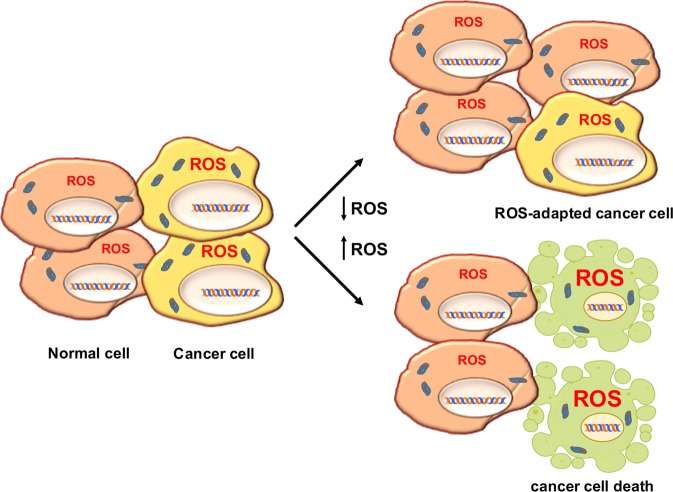
- Cancer cells typically maintain ROS at moderately elevated levels and rely on enhanced antioxidant systems; the paper argues this creates a therapeutic vulnerability that can be exploited by further increasing ROS to induce oxidative stress incompatible with cell survival.
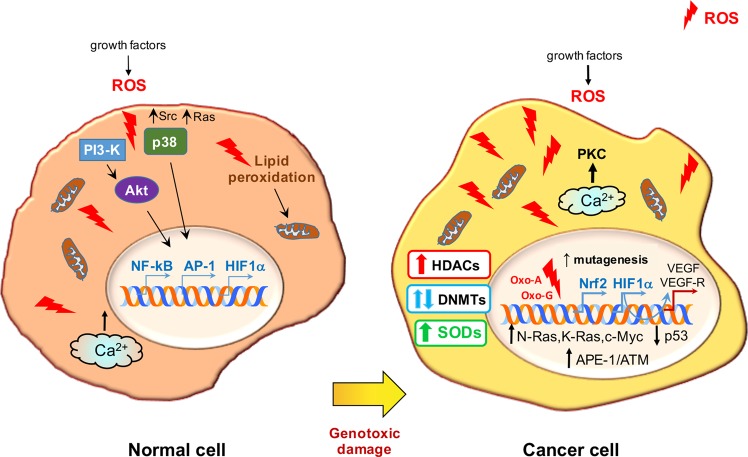
- ROS are linked to multiple cancer-relevant processes, including DNA damage and mutation, chromatin/epigenetic changes, HIF1α activation, proliferation, invasion, EMT, metastasis, and multidrug resistance.
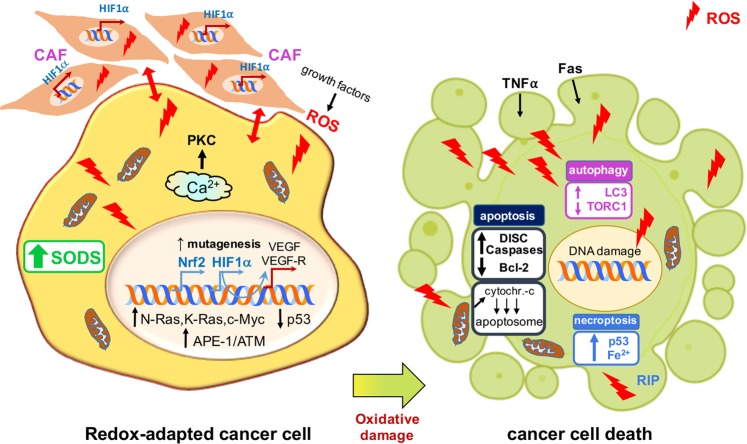
- The review states that ROS can induce several forms of programmed cell death, including apoptosis, autophagy, necroptosis, and ferroptosis, and gives examples of therapies that act through these mechanisms, such as imatinib, erlotinib, vemurafenib, rituximab, doxorubicin, arsenic trioxide, and photodynamic therapy.
- It notes specific quantitative observations from prior studies: each cell is exposed to about ~1.5 × 10^5 oxidative hits per day, and ~1 in 10^5 guanines is oxidized in normal cells, increasing by 35–50% in transformed cells.
## Methods
- Not an original study; this is a narrative review of the literature on ROS biology in cancer and ROS-based anticancer strategies.
- The paper synthesizes previously published findings on ROS generation, signaling, DNA damage, cell death pathways, antioxidant defenses, and therapeutic examples across cancer types.
- Main analysis is conceptual and integrative, organizing evidence by biological outcome and therapeutic mechanism rather than reporting a new dataset.
## Limitations
- The paper itself states that although many studies suggest benefits of antioxidant drugs in cancer therapy, “none has been supported by solid trials performed on a large scale.”
- It also states that more studies are required to increase the selectivity of ROS-related anticancer drugs.
- Evident from the text: this is a review, so its conclusions depend on heterogeneous prior studies rather than direct experimental validation in a single dataset.
Model-written summary. Check it against the paper before relying on it.
Integrity signals
Registry
Cites
Statistics
Figures
Verification
Claims the paper makes
30 Valid · 2 Not valid · 26 Not checked · 1 Own results and interpretations
Every source the paper cites for this claim was checked and supports it.
In the paper
“By interacting with proteins, ROS have an impact on several signaling pathways involved in the control of cell proliferation and apoptosis.”
§ ROS in cancer therapy: the bright side of the moon > Biological outcomes of oxidation by ROS > ROS and cytoplasmic signaling
What the sources say
- Supportedcites [8] Ray PD Huang BW Tsuji Y Reactive oxygen species (ROS) homeostasis and redox regulation in cellular signaling Cell. Signal. 2012 24 981 990 22286106 PMC3454471 source
The Conclusions state that ROS regulate proliferative and apoptotic pathways. Sections 2 and 3 describe how ROS affect signaling proteins, including protein tyrosine phosphatases and PTEN, in pathways involved in those processes. (LLM, conf=0.92)
- Supportedcites [9] Houee-Levin C Exploring oxidative modifications of tyrosine: an update on mechanisms of formation, advances in analysis and biological consequences Free Radic. Res. 2015 49 347 373 25812585 source
The Introduction (our copy, unpaginated) states that ROS/RNS 'generate a variety of different responses in living organisms, from apoptosis, growth arrest and cell death to activation, differentiation and proliferation' and act as 'regulatory mediators in signalling processes', and that 'protein oxidation is important in redox-dependent physiological signalling mechanisms' involving phosphatases, kinases and transcription factors. The Tyr-oxidation section adds that modification of Tyr residues in receptors 'impair[s] signalling pathways and cell regulation processes', and the proteasome section links oxidized proteins to 'initiation or continuation of signalling events and the induction of apoptosis'. Together these support the attributed general statement that protein-interacting ROS impact signalling pathways controlling proliferation and apoptosis. (LLM, conf=0.85)
plainstates a cause- Asserted: passes — The authors put it forward as true.
- Checkable: passes — It can be checked against evidence.
- Load-bearing: passes — The paper’s conclusions depend on it.
- Based: passes — The paper gives a reason why it holds.
- Supported
The cited sources support only part of this claim — read each source’s verdict below.
In the paper
“peroxidation of mitochondrial phospholipids may affect the integrity of permeability transition pores (PTPs) and disaggregate complexes I and III of the respiratory chain, thereby enhancing electron leakage within the mitochondrial intermembrane space5,6.”
§ ROS in cancer therapy: the bright side of the moon > Biological outcomes of oxidation by ROS > ROS and lipids
What the sources say
- Partly supportedcites [5] Paradies G Decrease in mitochondrial complex I activity in ischemic/reperfused rat heart: involvement of reactive oxygen species and cardiolipin Circulation Res. 2004 94 53 59 14656928 sourceExperimental — accuracy not yet measured
Split into 2 atoms — 0 confirmed, 2 partially supported, 0 disputed, 0 misattributed, 0 unverifiable. Expand the claim to see per-atom verdicts.
- Not checked — no full text of the sourcecites [6] Petrosillo G Ruggiero FM Di Venosa N Paradies G Decreased complex III activity in mitochondria isolated from rat heart subjected to ischemia and reperfusion: role of reactive oxygen species and cardiolipin FASEB J. 2003 17 714 716 12586737 source
hedgedstates a possible cause- Asserted: passes — The authors put it forward as true.
- Checkable: passes — It can be checked against evidence.
- Load-bearing: unclear — It is unclear whether the paper’s conclusions depend on it.
- Based: passes — The paper gives a reason why it holds.
- Partly supported
The cited sources support only part of this claim — read each source’s verdict below.
In the paper
“ROS, via oxidation of thioredoxin, enhance the nuclear localization of both the ataxia-telangiectasia mutated (ATM) serine/threonine kinase, which is involved in DNA damage repair31,32, and redox factor-1 (Ref-1), a multifunctional protein that enables Fos/Jun DNA-binding and is identical to the apurinic/apyrimidinic 1 (APE1) endonuclease33.”
§ ROS in cancer therapy: the bright side of the moon > Biological outcomes of oxidation by ROS > ROS and nuclear signaling
What the sources say
- Partly supportedcites [31] Guo Z Kozlov S Lavin MF Person MD Paull TT ATM activation by oxidative stress Science 2010 330 517 521 20966255 sourceExperimental — accuracy not yet measured
The FUNCTION IN CELLS section says ROS can activate ATM throughout the nucleus and links ATM to the DNA-damage response. The REDOX ENVIRONMENT IN CELLS section discusses thioredoxin, but neither passage says that its oxidation enhances ATM nuclear localization; the copy also does not establish the claimed effect on Ref-1. No page numbers were supplied for these passages. (LLM, conf=0.83)
- Not checked — no full text of the sourcecites [32] Svegliati S. Marrone G. Pezone A. Spadoni T. Grieco A. Moroncini G. Grieco D. Vinciguerra M. Agnese S. Jungel A. Distler O. Musti A. M. Gabrielli A. Avvedimento E. V. Oxidative DNA damage induces the ATM-mediated transcriptional suppression of the Wnt inhibitor WIF-1 in systemic sclerosis and fibrosis Science Signaling 2014 7 341 ra84 ra84 25185156 source
- Partly supportedcites [33] Tell G An ‘environment to nucleus’ signaling system operates in B lymphocytes: redox status modulates BSAP/Pax-5 activation through Ref-1 nuclear translocation Nucleic Acids Res. 2000 28 1099 1105 10666449 PMC102597 sourceExperimental — accuracy not yet measured
Our copy supports the Ref-1 half of the claim: the Abstract (p. 1) and Results ('The initial event in activation of Ref-1 is its translocation into the nucleus', pp. 3-4) show that H2O2/oxidative stress causes rapid translocation of Ref-1 from cytoplasm to nucleus in B lymphocytes, and the Discussion (p. 6) frames Ref-1 as the shuttle factor between cytoplasm and nucleus. However, ATM is never mentioned anywhere in our copy (searches for 'ATM / ataxia-telangiectasia mutated' and for a DNA-damage serine/threonine kinase returned no such passage), so the ATM half of the paraphrase is not attributable to this paper. The stated mechanism 'via oxidation of thioredoxin' is also unsupported: TRX appears only as a 'cytoplasmatic partner which seems to be involved in extracellular to nuclear environment signaling' (Discussion, p. 6, citing ref 39) and as a reducing enzyme (Introduction, p. 1), not as the oxidized intermediary driving Ref-1 nuclear entry. (LLM, conf=0.80)
plainstates a cause- Asserted: passes — The authors put it forward as true.
- Checkable: passes — It can be checked against evidence.
- Load-bearing: unclear — It is unclear whether the paper’s conclusions depend on it.
- Based: passes — The paper gives a reason why it holds.
- Partly supported
The cited sources support only part of this claim — read each source’s verdict below.
In the paper
“The latter factor is able to interact with thioredoxin to reduce a specific cysteine (Cys-62) in the Rel-homology domain (RHD) of the NF-kB subunit p50 that had been previously oxidized by ROS34, restoring its ability to interact with specific responsive DNA sequences35,36.”
§ ROS in cancer therapy: the bright side of the moon > Biological outcomes of oxidation by ROS > ROS and nuclear signaling
What the sources say
- Partly supportedcites [34] Ando K A new APE1/Ref-1-dependent pathway leading to reduction of NF-kappaB and AP-1, and activation of their DNA-binding activity Nucleic Acids Res. 2008 36 4327 4336 18586825 PMC2490748 sourceExperimental — accuracy not yet measured
The Results section (page not provided) identifies p50 Cys-62 as the target of APE1/Ref-1- and thioredoxin-assisted reduction and reports increased DNA binding. The Discussion (page not provided) says APE1/Ref-1 physically interacts with thioredoxin. The paper does not establish that ROS caused the prior oxidation of Cys-62; its DNA-binding experiment used p50 oxidized with diamide. (LLM, conf=0.86)
- Partly supportedcites [35] Toledano MB Leonard WJ Modulation of transcription factor NF-kappa B binding activity by oxidation-reduction in vitro Proc. Natl Acad. Sci. USA 1991 88 4328 4332 1903539 PMC51652 sourceExperimental — accuracy not yet measured
Our copy supports only the terminal clause of the sentence: RESULTS ('Oxidation Reversibly Inactivates NF-κB Binding in Vitro') show diamide abolished NF-κB binding, 'completely reversed by 2-ME ... or DTT', with sequence specificity confirmed by competition with unlabeled/mutated IgκB oligonucleotides, and the DISCUSSION states the redox sensitivity 'occurred through its KBF-1/p50 DNA-binding subunit'. However, the paper never mentions Ref-1/APE1, thioredoxin acting on p50, or ROS — its oxidant/reductant chemistry is purely in vitro (diamide, NEM, 2-ME) — and it explicitly leaves the responsible cysteine unidentified ('It is also unclear what role the sulfhydryls might play... Site-directed mutagenesis ... should allow clarification of this point', DISCUSSION), so 'Cys-62 in the Rel-homology domain' and the Ref-1/thioredoxin mechanism are not attributable to this source. Thioredoxin appears only as background on the viral/MITF-derived factor ADF (DISCUSSION), not as a p50-reducing system. (LLM, conf=0.75)
- Partly supportedcites [36] Matthews JR Kaszubska W Turcatti G Wells TN Hai RT Role of cysteine62 in DNA recognition by the p50 subunit of NF-kappa B Nucleic Acids Res. 1993 21 1727 1734 8493089 PMC309407 sourceExperimental — accuracy not yet measured
Our copy of Matthews et al. (1993) supports the residue-level part of the claim: the ABSTRACT concludes 'the sulphydryl group of Cys62 is an important determinant of DNA recognition by the p50 subunit of NF-xB', the DISCUSSION and Results show the C62S mutant (Cys62 lying in the rel-homologous DNA binding/dimerisation region, Figure 3) binds its specific xB site with a 10-fold higher KD and cannot discriminate specific from non-specific DNA, and the INTRODUCTION frames this as defining 'which amino acids were involved in the redox modulation of NF-xB DNA binding'. However, no passage in our copy mentions thioredoxin, reactive oxygen species, or the reduction of an oxidised Cys62 restoring DNA binding — the only reduction-by-a-partner-protein passage (INTRODUCTION) credits a redox mechanism in fos/jun involving a DNA repair enzyme (refs 22, 23), not p50. The thioredoxin/ROS mechanism attributed here is therefore not established by this source. (LLM, conf=0.68)
plainstates a cause- Asserted: passes — The authors put it forward as true.
- Checkable: passes — It can be checked against evidence.
- Load-bearing: unclear — It is unclear whether the paper’s conclusions depend on it.
- Based: passes — The paper gives a reason why it holds.
- Partly supported
Every source the paper cites for this claim was checked and supports it.
In the paper
“These data show that ROS can either activate or suppress the NF-kB signaling involved in the control of several important cellular processes, such as embryogenesis and cell proliferation and death, and the responses to a variety of stress stimuli37.”
§ ROS in cancer therapy: the bright side of the moon > Biological outcomes of oxidation by ROS > ROS and nuclear signaling
What the sources say
- Supportedcites [37] Lingappan K NF-kB in oxidative stress Curr. Opin. Toxicol. 2018 7 81 86 29862377 PMC5978768 source
The Abstract states that ROS can both activate and repress NF-κB signaling, depending on phase and context. The Abstract and “The NF-κB pathway” section identify embryogenesis, cell proliferation and apoptosis, and responses to noxious stimuli among the processes NF-κB regulates. (LLM, conf=0.95)
plainstates a cause- Asserted: passes — The authors put it forward as true.
- Checkable: passes — It can be checked against evidence.
- Load-bearing: unclear — It is unclear whether the paper’s conclusions depend on it.
- Based: passes — The paper gives a reason why it holds.
- Supported
25 more claims · 10 with their cited sources checked
Create a free account to see all 59 claims and to verify the 9 references still open.
- It may state two separate claims as one. 25
- Probably not a substantial claim. 4
Claims other papers make about this one
Each is checked against this paper’s own text: does it say what the citing paper says it does?
The cited source says what the claim attributes to it.
In the citing paper
“Typically, cancer cells exhibit higher basal levels of ROS compared with normal cells as a result of an imbalance between oxidants and antioxidants.”
From Reactive Oxygen Species in Cancer: Current Findings and Future Directions (2021) · cites this paper as [12]
The cited source says what the claim attributes to it.
In the citing paper
“In contrast, the production of ROS is reported to be elevated in cancer cells as a result of increased metabolic rate, gene mutation, and relative hypoxia.12”
From Reactive Oxygen Species in Cancer: Current Findings and Future Directions (2021) · cites this paper as [12]
In the citing paper
“Excessive concentrations of ROS result in cell‐cycle arrest and apoptosis.”
From Reactive Oxygen Species in Cancer: Current Findings and Future Directions (2021) · cites this paper as [12]
In the citing paper
“To prevent excessive intracellular ROS, cancer cells respond to oxidative stress by inducing the transcription of antioxidant enzymes.12”
From Reactive Oxygen Species in Cancer: Current Findings and Future Directions (2021) · cites this paper as [12]
In the citing paper
“and ROS are major mediators of chemotherapy-induced cell death28.”
From Microbiota-derived 3-IAA influences chemotherapy efficacy in pancreatic cancer (2023) · cites this paper as [28]
1 more claim about this paper
Create a free account to see every claim other papers make about this one.
Self-check
Percentages, sums and reported differences re-computed from the paper’s own numbers.
Self-check results appear here once an independent check has confirmed them.
Cited works that were retracted
Works this paper cites that were later retracted, from the retraction notices publishers deposit. Major when the notice came out before this paper was published.
A note, not an issue: for example, a cited work that was retracted only after this paper was published, which its authors could not have known.
In the paper
“Wang, H. et al. Targeted production of reactive oxygen species in mitochondria to overcome cancer drug resistance. Nat. Commun. https://doi.org/10.1038/s41467-018-02915-8 (2018).”
Cited work 10.1038/s41467-018-02915-8 · retracted 2026-06-26 · notice 10.1038/s41467-026-74649-x · this paper published 2020-02
Citations
Cites
1 retracted
Targeted production of reactive oxygen species in mitochondria to overcome cancer drug resistance
Wang, H., Gao, Z., Liu, X., Agarwal, P., Zhao, S., Conroy, D. W., Ji, G., Yu, J., Jaroniec, C. P., Liu, Z., et al. (2018) · Nature Communications · doi:10.1038/s41467-018-02915-8 · Cited by 331
RetractedHallmarks of Cancer: The Next Generation
Hanahan, D., & Weinberg, R. A. (2011) · Cell · doi:10.1016/j.cell.2011.02.013 · Cited by 66,590
Ferroptosis: An Iron-Dependent Form of Nonapoptotic Cell Death
Dixon, S. J., Lemberg, K. M., Lamprecht, M. R., Skouta, R., Zaitsev, E. M., Gleason, C. E., Patel, D. N., Bauer, A. J., Cantley, A. M., Yang, W. S., et al. (2012) · Cell · doi:10.1016/j.cell.2012.03.042 · Cited by 18,691
Understanding the Warburg Effect: The Metabolic Requirements of Cell Proliferation
Vander Heiden, M. G., Cantley, L. C., & Thompson, C. B. (2009) · Science · doi:10.1126/science.1160809 · Cited by 16,197
Green, D. R., & Reed, J. C. (1998) · Science · doi:10.1126/science.281.5381.1309 · Cited by 8,965
The language of covalent histone modifications
Strahl, B. D., & Allis, C. D. (2000) · Nature · doi:10.1038/47412 · Cited by 8,679
The NOX Family of ROS-Generating NADPH Oxidases: Physiology and Pathophysiology
Bedard, K., & Krause, K.-H. (2007) · Physiological Reviews · doi:10.1152/physrev.00044.2005 · Cited by 6,989
Free radicals, metals and antioxidants in oxidative stress-induced cancer
Valko, M., Rhodes, C. J., Moncol, J., Izakovic, M., & Mazur, M. (2006) · Chemico-Biological Interactions · doi:10.1016/j.cbi.2005.12.009 · Cited by 6,680
Targeting cancer cells by ROS-mediated mechanisms: a radical therapeutic approach?
Trachootham, D., Alexandre, J., & Huang, P. (2009) · Nature Reviews Drug Discovery · doi:10.1038/nrd2803 · Cited by 5,452
5-Fluorouracil: mechanisms of action and clinical strategies
Longley, D. B., Harkin, D. P., & Johnston, P. G. (2003) · Nature Reviews Cancer · doi:10.1038/nrc1074 · Cited by 5,332
Cited by
Items 201–300 of 2,168
Su, T., Cheng, F., Pu, Y., Cao, J., Lin, S., Zhu, G., & He, B. (2021) · Chemical Engineering Journal · doi:10.1016/j.cej.2021.128561 · Cited by 63
Totten, S. P., Im, Y. K., Cañedo, E. C., Najyb, O., Nguyen, A., Hébert, S., Ahn, R., Lewis, K., Lebeau, B., Selva, R. L., et al. (2021) · Nature Communications · doi:10.1038/s41467-021-23396-2 · Cited by 68
Chen, M., Liu, T.-Y., Chen, Y.-C., & Chen, Y.-C. (2021) · Nanomaterials · doi:10.3390/nano11071661 · Cited by 61
Monla, R. A., Dassouki, Z., Sari‐Chmayssem, N., Mawlawi, H., & Gali‐Muhtasib, H. U. (2022) · Molecules · doi:10.3390/molecules27020358 · Cited by 65
Nanomedicine Strategies for Management of Drug Resistance in Lung Cancer
Haider, M. A., Elsherbeny, A., Pittalà, V., Fallica, A. N., Alghamdi, M. A., Hussain, Z., Khoder, G., & Greish, K. F. (2022) · International Journal of Molecular Sciences · doi:10.3390/ijms23031853 · Cited by 65
Ghomi, M., Zare, E. N., Alidadi, H., Pourreza, N., Sheini, A., Rabiee, N., Mattoli, V., Chen, X., & Makvandi, P. (2023) · Advanced Composites and Hybrid Materials · doi:10.1007/s42114-022-00613-0 · Cited by 62
Zaer, M., Moeinzadeh, A., Abolhassani, H., Rostami, N., Yaraki, M. T., Seyedi, S. A., Nabipoorashrafi, S. A., Bashiri, Z., Moeinabadi‐Bidgoli, K., Moradbeygi, F., et al. (2023) · International Journal of Biological Macromolecules · doi:10.1016/j.ijbiomac.2023.126808 · Cited by 69
Sendtner, N., Seitz, R., Brandl, N., Müller, M., & Gülow, K. (2025) · International Journal of Molecular Sciences · doi:10.3390/ijms262010240 · Cited by 91
Chemically Designed Nanoscale Materials for Controlling Cellular Processes
Debnath, K., Pal, S., & Jana, N. R. (2021) · Accounts of Chemical Research · doi:10.1021/acs.accounts.1c00215 · Cited by 61
Wongkaewkhiaw, S., Wongrakpanich, A., Krobthong, S., Saengsawang, W., Chairoungdua, A., & Boonmuen, N. (2022) · PLoS ONE · doi:10.1371/journal.pone.0266044 · Cited by 65
Zhang, X., Walke, G. R., Horváth, I., Kumar, R., Blockhuys, S., Holgersson, S., Walton, P. H., & Wittung-Stafshede, P. E. (2022) · Proceedings of the National Academy of Sciences · doi:10.1073/pnas.2206905119 · Cited by 62
Lee, D., Jang, S.-Y., Kwon, S., Lee, Y., Park, E., & Koo, H. (2021) · ACS Applied Materials & Interfaces · doi:10.1021/acsami.1c02316 · Cited by 58
Cannabidiol Inhibits Tumorigenesis in Cisplatin-Resistant Non-Small Cell Lung Cancer via TRPV2
Misri, S., Kaul, K., Mishra, S., Charan, M., Verma, A. K., Barr, M. P., Ahirwar, D. K., & Ganju, R. K. (2022) · Cancers · doi:10.3390/cancers14051181 · Cited by 60
Recent Applications of Melanin-like Nanoparticles as Antioxidant Agents
Mavridi‐Printezi, A., Menichetti, A., Mordini, D., Amorati, R., & Montalti, M. (2023) · Antioxidants · doi:10.3390/antiox12040863 · Cited by 66
Signaling pathways of oxidative stress response: the potential therapeutic targets in gastric cancer
Liu, Y., Shi, Y., Han, R., Liu, C., Qin, X., Li, P., & Gu, R. (2023) · Frontiers in Immunology · doi:10.3389/fimmu.2023.1139589 · Cited by 77
Qin, S., Xu, Y., Li, H., Chen, H., & Yuan, Z. (2022) · Biomaterials Science · doi:10.1039/d1bm00317h · Cited by 56
Cellular Mechanisms of Circulating Tumor Cells During Breast Cancer Metastasis
Park, H., Brown, S. R., & Kim, Y. (2020) · International Journal of Molecular Sciences · doi:10.3390/ijms21145040 · Cited by 68
Nisticò, C., Pagliari, F., Chiarella, E., Guerreiro, J. F., Marafioti, M. G., Aversa, I., Genard, G., Hanley, R., García-Calderón, D., Bond, H. M., et al. (2021) · International Journal of Molecular Sciences · doi:10.3390/ijms221810102 · Cited by 59
Mitochondria-targeted graphene for advanced cancer therapeutics
Tabish, T. A., & Narayan, R. J. (2021) · Acta Biomaterialia · doi:10.1016/j.actbio.2021.04.054 · Cited by 56
Smart Nanoparticles for Chemo-Based Combinational Therapy
Shrestha, B., Wang, L., Brey, E. M., Romero, G., & Tang, L. (2021) · Pharmaceutics · doi:10.3390/pharmaceutics13060853 · Cited by 61
Sorolla, M. A., Hidalgo, I. A., Sorolla, A., Montal, R., Pallisé, O., Salud, A., & Parisi, E. (2021) · Cancers · doi:10.3390/cancers13205037 · Cited by 64
Farhan, M., & Rizvi, A. (2022) · Frontiers in Pharmacology · doi:10.3389/fphar.2022.929853 · Cited by 66
Stimuli-responsive nanoformulations for CRISPR-Cas9 genome editing
Fang, T., Cao, X., Ibnat, M., & Chen, G. (2022) · Journal of Nanobiotechnology · doi:10.1186/s12951-022-01570-y · Cited by 65
Edo, G. I., Samuel, P. O., Jikah, A. N., Onoharigho, F. O., Idu, L. I., Obasohan, P., Opiti, R. A., Electric, J., Ikpekoro, V. O., Otunuya, C. F., et al. (2023) · Food Chemistry Advances · doi:10.1016/j.focha.2023.100488 · Cited by 88
Possible Beneficial Effects of N-Acetylcysteine for Treatment of Triple-Negative Breast Cancer
Kwon, Y. (2021) · Antioxidants · doi:10.3390/antiox10020169 · Cited by 65
Roles of Reactive Oxygen Species in Biological Behaviors of Prostate Cancer
Han, C., Wang, Z., Xu, Y., Chen, S., Han, Y., Li, L., Wang, M., & Xun-bo, J. (2020) · BioMed Research International · doi:10.1155/2020/1269624 · Cited by 63
Studzińska-Sroka, E., Majchrzak‐Celińska, A., Zalewski, P., et al. (2021) · Pharmaceuticals · doi:10.3390/ph14121293 · Cited by 54
Modulation of reactive oxygen species to enhance sonodynamic therapy
Liu, X., Pan, X., Wang, C., & Liu, H. (2022) · Particuology · doi:10.1016/j.partic.2022.08.001 · Cited by 57
TRP Channels in Tumoral Processes Mediated by Oxidative Stress and Inflammation
Piciu, F., Balaș, M., Badea, M. A., & Cucu, D. (2023) · Antioxidants · doi:10.3390/antiox12071327 · Cited by 61
Targeting the Redox Landscape in Cancer Therapy
Narayanan, D., Ma, S., & Özcelik, D. (2020) · Cancers · doi:10.3390/cancers12071706 · Cited by 61
A comprehensive review of anticancer mechanisms of action of Alantolactone
Babaei, G., Aziz, S. G., Bazl, M. R., & Ansari, M. H. K. (2021) · Biomedicine & Pharmacotherapy · doi:10.1016/j.biopha.2021.111231 · Cited by 56
Lysosomal cyst(e)ine storage potentiates tolerance to oxidative stress in cancer cells
He, L., Chen, J., Deng, P., Huang, S., Liu, P., Wang, C., Huang, X., Li, Y., Chen, B., Shi, D., et al. (2023) · Molecular Cell · doi:10.1016/j.molcel.2023.08.032 · Cited by 59
Advances in nanoparticle-based radiotherapy for cancer treatment
He, M., Chen, S., Yu, H., Fan, X., Wu, H., Wang, Y., Wang, H., & Yin, X. (2024) · iScience · doi:10.1016/j.isci.2024.111602 · Cited by 71
Mahdikia, H., Saadati, F., Freund, E., Gaipl, U. S., Majidzadeh‐A, K., Shokri, B., & Bekeschus, S. (2020) · OncoImmunology · doi:10.1080/2162402x.2020.1859731 · Cited by 58
Kamarauskaitė, J., Banienė, R., Trumbeckas, D., Strazdauskas, A., & Trumbeckaitė, S. (2020) · BioMed Research International · doi:10.1155/2020/8855585 · Cited by 52
Radiotherapy resistance: identifying universal biomarkers for various human cancers
Larionova, I., Rakina, M. A., Ivanyuk, E. E., Trushchuk, Y. M., Чернышова, А. Л., & Denisov, E. V. (2022) · Journal of Cancer Research and Clinical Oncology · doi:10.1007/s00432-022-03923-4 · Cited by 60
Lan, D., Yao, C. H., Li, X., Liu, H., Wang, D. M., Wang, Y., & Qi, S. (2022) · Frontiers in Bioengineering and Biotechnology · doi:10.3389/fbioe.2022.938520 · Cited by 58
Investigating the anticancer efficacy of biogenic synthesized MgONPs: An in vitro analysis
Tabrez, S. S. M., Khan, A. U., Hoque, M., et al. (2022) · Frontiers in Chemistry · doi:10.3389/fchem.2022.970193 · Cited by 52
Chen, M., Lin, S., Chen, X., Wang, Y., Zhang, J., & Chen, T. (2023) · Sensors and Actuators B Chemical · doi:10.1016/j.snb.2023.133749 · Cited by 52
Bekeschus, S., Liebelt, G., Menz, J., Berner, J., Sagwal, S. K., Wende, K., Weltmann, K., Boeckmann, L., von Woedtke, T., Metelmann, H., et al. (2021) · Free Radical Biology and Medicine · doi:10.1016/j.freeradbiomed.2021.02.035 · Cited by 59
Lipid Catabolism and ROS in Cancer: A Bidirectional Liaison
Castelli, S., Falco, P. D., Ciccarone, F., Desideri, E., & Ciriolo, M. R. (2021) · Cancers · doi:10.3390/cancers13215484 · Cited by 64
Grilc, N. K., Sova, M., & Kristl, J. (2021) · Pharmaceutics · doi:10.3390/pharmaceutics13122137 · Cited by 58
Nguyen, H., Sangha, S., Pan, M., Shin, D. H., Park, H., Mohammed, A. I., & Cirillo, N. (2022) · International Journal of Molecular Sciences · doi:10.3390/ijms23094863 · Cited by 63
Cui, X. Y., Cui, X. Y., & Park, W. H. (2022) · Molecules · doi:10.3390/molecules27165207 · Cited by 57
Hypoxia-tolerant polymeric photosensitizer prodrug for cancer photo-immunotherapy
Yu, J., Wu, J., Huang, J., Xu, C., Xu, M., Koh, C. Z. H., Pu, K., & Zhang, Y. (2025) · Nature Communications · doi:10.1038/s41467-024-55529-8 · Cited by 75
Haq, A. T. A., Tseng, H., Chen, L., Wang, C., & Hsu, H.-L. (2022) · Cell Death and Disease · doi:10.1038/s41419-021-04486-x · Cited by 55
Youden, B., Jiang, R., Carrier, A. J., Servos, M. R., & Zhang, X. (2022) · ACS Nano · doi:10.1021/acsnano.2c06337 · Cited by 56
UCP2 as a Cancer Target through Energy Metabolism and Oxidative Stress Control
Luby, A., & Alves‐Guerra, M. (2022) · International Journal of Molecular Sciences · doi:10.3390/ijms232315077 · Cited by 58
Chung, J., Akter, S., Han, S., Shin, Y., Choi, T., Kang, I., & Kim, S. H. (2022) · International Journal of Molecular Sciences · doi:10.3390/ijms24010129 · Cited by 51
Redox balance and autophagy regulation in cancer progression and their therapeutic perspective
Khan, S. U., Fatima, K., Aisha, S., Hamza, B., & Malik, F. A. (2022) · Medical Oncology · doi:10.1007/s12032-022-01871-0 · Cited by 61
Phang, S. J., Teh, H. X., Looi, M. L., Arumugam, B., Fauzi, M. B., & Kuppusamy, U. R. (2023) · Journal of Applied Phycology · doi:10.1007/s10811-023-02913-4 · Cited by 56
Reductive stress in cancer: coming out of the shadows
Ge, M., Papagiannakopoulos, T. Y., & Bar‐Peled, L. (2023) · Trends in cancer · doi:10.1016/j.trecan.2023.10.002 · Cited by 59
Quinoxaline derivatives: Recent discoveries and development strategies towards anticancer agents
Montero, V., Montana, M., Carré, M., & Vanelle, P. (2024) · European Journal of Medicinal Chemistry · doi:10.1016/j.ejmech.2024.116360 · Cited by 54
Wnt-Independent and Wnt-Dependent Effects of APC Loss on the Chemotherapeutic Response
Stefanski, C. D., & Prosperi, J. R. (2020) · International Journal of Molecular Sciences · doi:10.3390/ijms21217844 · Cited by 59
Heterometallic nanomaterials: activity modulation, sensing, imaging and therapy
Li, S., Wang, A., Yuan, P.-X., Mei, L.-P., Zhang, L., & Feng, J. (2022) · Chemical Science · doi:10.1039/d2sc00460g · Cited by 48
Copper Sulfide Nanoparticle‐Redirected Macrophages for Adoptive Transfer Therapy of Melanoma
Xu, J., Zheng, B., Zhang, S., Liao, X., Tong, Q., Wei, G., Yu, S., Chen, G., Wu, A., Gao, S., et al. (2021) · Advanced Functional Materials · doi:10.1002/adfm.202008022 · Cited by 51
Boyenle, I. D., Oyedele, A.-Q. K., Ogunlana, A. T., Adeyemo, A. F., Oyelere, S. F., Akinola, O. B., Adelusi, T. I., Ehigie, L. O., & Ehigie, A. F. (2022) · Mitochondrion · doi:10.1016/j.mito.2022.01.006 · Cited by 51
Reactive Oxygen Species in Anticancer Immunity: A Double-Edged Sword
Wang, J., Liu, N., Jiang, H., Qian, L., & Xing, D. (2021) · Frontiers in Bioengineering and Biotechnology · doi:10.3389/fbioe.2021.784612 · Cited by 50
Recent Advances in Natural Product-Based Hybrids as Anti-Cancer Agents
Sflakidou, E., Leonidis, G., Foroglou, E., Siokatas, C., & Sarli, V. (2022) · Molecules · doi:10.3390/molecules27196632 · Cited by 53
Liu, G., Xie, X., Li, Y., Zhang, J., Jiao, X., Dou, X., Wang, X., & Tang, B. (2023) · TrAC Trends in Analytical Chemistry · doi:10.1016/j.trac.2023.117371 · Cited by 50
Dutta, S., Noh, S., Sanchis‐Gual, R., Chen, X., Pané, S., Nelson, B. J., & Choi, H. (2023) · Nano-Micro Letters · doi:10.1007/s40820-023-01259-3 · Cited by 52
Manoharan, D., Wang, L., Chen, Y., Li, W., & Yeh, C. (2024) · Advanced Healthcare Materials · doi:10.1002/adhm.202400746 · Cited by 52
Molecular mechanisms and cardiovascular implications of cancer therapy-induced senescence
Abdelgawad, I. Y., Sadak, K. T., Lone, D. W., Dabour, M. S., Niedernhofer, L. J., & Zordoky, B. N. M. (2020) · Pharmacology & Therapeutics · doi:10.1016/j.pharmthera.2020.107751 · Cited by 51
Nanotechnology assisted photo- and sonodynamic therapy for overcoming drug resistance
Li, R., Chen, Z., Dai, Z., & Yu, Y. (2021) · Cancer Biology and Medicine · doi:10.20892/j.issn.2095-3941.2020.0328 · Cited by 48
Linking Serine/Glycine Metabolism to Radiotherapy Resistance
Sánchez‐Castillo, A., Vooijs, M., & Kampen, K. R. (2021) · Cancers · doi:10.3390/cancers13061191 · Cited by 50
Sweet Cherries as Anti-Cancer Agents: From Bioactive Compounds to Function
Fonseca, L. R. S., Silva, G., Luís, Â., Cardoso, H. J., Correia, S., Vaz, C. V., Duarte, A. P., & Socorro, S. (2021) · Molecules · doi:10.3390/molecules26102941 · Cited by 50
Sathiyaseelan, A., Saravanakumar, K., & Wang, M. (2022) · International Journal of Biological Macromolecules · doi:10.1016/j.ijbiomac.2022.06.112 · Cited by 47
Micro-engineering and nano-engineering approaches to investigate tumour ecosystems
Kim, M., Panagiotakopoulou, M., Chen, C., Ruiz, S. B., Ganesh, K., Tammela, T., & Heller, D. A. (2023) · Nature reviews. Cancer · doi:10.1038/s41568-023-00593-3 · Cited by 57
TRPM2: bridging calcium and ROS signaling pathways—implications for human diseases
Maliougina, M., & Hiani, Y. E. (2023) · Frontiers in Physiology · doi:10.3389/fphys.2023.1217828 · Cited by 50
Cancer and Cardiovascular Disease
Alhuneafat, L., Guha, A., Blaes, A. H., & Konety, S. (2025) · JACC CardioOncology · doi:10.1016/j.jaccao.2025.07.001 · Cited by 67
Celesia, A., Morana, O., Fiore, T., Pellerito, C., D’Anneo, A., Lauricella, M., Carlisi, D., Blasio, A. D., Calvaruso, G., Giuliano, M., et al. (2020) · International Journal of Molecular Sciences · doi:10.3390/ijms21218135 · Cited by 49
Modification of Extracellular Vesicle Surfaces: An Approach for Targeted Drug Delivery
Mohammadi, A. H., Ghazvinian, Z., Bagheri, F., Harada, M., & Baghaei, K. (2023) · BioDrugs · doi:10.1007/s40259-023-00595-5 · Cited by 58
Chi, T., Sang, T., Wang, Y., & Ye, Z. (2023) · Bioconjugate Chemistry · doi:10.1021/acs.bioconjchem.3c00476 · Cited by 54
Reactive oxygen species of tumor microenvironment: Harnessing for immunogenic cell death
Malla, R. R., Kumari, S., Ganji, S. P., Srilatha, M., Nellipudi, H. R., & Nagaraju, G. P. (2024) · Biochimica et Biophysica Acta (BBA) - Reviews on Cancer · doi:10.1016/j.bbcan.2024.189154 · Cited by 63
Polymer-mediated protein/peptide therapeutic stabilization: Current progress and future directions
Sivasankaran, R. P., Snell, K., Kunkel, G. E., Georgiou, P. G., Puente, E. G., & Maynard, H. D. (2024) · Progress in Polymer Science · doi:10.1016/j.progpolymsci.2024.101867 · Cited by 57
Warkad, M. S., Kim, C.-H., Kang, B.-G., Park, S.-H., Jung, J., Feng, J., Inci, G., Kim, S.-C., Suh, H., Lim, S. S., et al. (2021) · Scientific Reports · doi:10.1038/s41598-021-93270-0 · Cited by 51
Peng, X., Zhang, S., Jiao, W., Zhong, Z., Yang, Y., Claret, F. X., Elkabets, M., Wang, F., Wang, R., Zhong, Y., et al. (2021) · Journal of Experimental & Clinical Cancer Research · doi:10.1186/s13046-021-02176-2 · Cited by 64
Metal Complexes or Chelators with ROS Regulation Capacity: Promising Candidates for Cancer Treatment
Li, X., Wang, Y., Li, M., Wang, H., & Dong, X. (2021) · Molecules · doi:10.3390/molecules27010148 · Cited by 57
Emerging Roles of the Copper–CTR1 Axis in Tumorigenesis
Su, Y., Zhang, X., Li, S., Xie, W., & Guo, J. (2022) · Molecular Cancer Research · doi:10.1158/1541-7786.mcr-22-0056 · Cited by 50
Wang, Y., Liu, X., Huang, W., Liang, J., & Chen, Y. (2022) · Pharmacology & Therapeutics · doi:10.1016/j.pharmthera.2022.108303 · Cited by 46
Dezhpour, A., Ghafouri, H., Jafari, S., & Nilkar, M. (2023) · Free Radical Biology and Medicine · doi:10.1016/j.freeradbiomed.2023.10.405 · Cited by 48
Inhibiting G6PD by quercetin promotes degradation of EGFR T790M mutation
Ge, Z., Xu, M. Y., Ge, Y., Huang, G., Chen, D., Ye, X., Xiao, Y., Zhu, H., Yin, R. H., Shen, H. M., et al. (2023) · Cell Reports · doi:10.1016/j.celrep.2023.113417 · Cited by 51
Mitochondrial homeostasis: shaping health and disease
Li, X., Jiang, O., Chen, M., & Wang, S. (2024) · Current Medicine · doi:10.1007/s44194-024-00032-x · Cited by 61
A Novel Nrf2 Pathway Inhibitor Sensitizes Keap1-Mutant Lung Cancer Cells to Chemotherapy
Zhang, D., Hou, Z., Aldrich, K. E., Lockwood, L. R., Odom, A. L., & Liby, K. T. (2021) · Molecular Cancer Therapeutics · doi:10.1158/1535-7163.mct-21-0210 · Cited by 47
Vekić, J., Zeljković, A., Stefanović, A., Giglio, R. V., Ciaccio, M., & Rizzo, M. (2021) · International Journal of Molecular Sciences · doi:10.3390/ijms222212409 · Cited by 56
Huang, J., Li, Y., Zhang, L., Wang, J., Xu, Z., Kang, Y., & Xue, P. (2022) · Biomaterials · doi:10.1016/j.biomaterials.2022.121572 · Cited by 44
Preparation of alginate coated Pt nanoparticle for radiosensitization of breast cancer tumor
Rashidzadeh, H., Seidi, F., Ghaffarlou, M., Salehiabar, M., Charmi, J., Yaray, K., Nosrati, H., & Ertas, Y. N. (2023) · International Journal of Biological Macromolecules · doi:10.1016/j.ijbiomac.2023.123273 · Cited by 43
Sun, F., Shen, H., Liu, Q., Chen, Y., Guo, W., Du, W., Xu, C., Wang, B., Xing, G., Jin, Z., et al. (2023) · ACS Nano · doi:10.1021/acsnano.3c04342 · Cited by 46
Evaluation of biogenically synthesized MgO NPs anticancer activity against breast cancer cells
Khan, M. R., Alafaleq, N. O., Ramu, A. K., Alhosaini, K. A., Khan, M. S., Zughaibi, T. A., & Tabrez, S. S. M. (2023) · Saudi Journal of Biological Sciences · doi:10.1016/j.sjbs.2023.103874 · Cited by 53
Navigating the redox landscape: reactive oxygen species in regulation of cell cycle
Mackova, V., Raudenská, M., Polanska, H. H., Jakubek, M., & Masařík, M. (2024) · Redox Report · doi:10.1080/13510002.2024.2371173 · Cited by 53
Sonodynamic therapy: transforming sound into light for hard-to-treat tumours
Cressey, P., Shukor, S. A., & Thanou, M. (2025) · Advanced Drug Delivery Reviews · doi:10.1016/j.addr.2025.115696 · Cited by 53
Liu, X., Hao, Y., Popovtzer, R., Feng, L., & Liu, Z. (2020) · Advanced Healthcare Materials · doi:10.1002/adhm.202001167 · Cited by 47
Clustering of catalytic nanocompartments for enhancing an extracellular non-native cascade reaction
Maffeis, V., Belluati, A., Craciun, I., et al. (2021) · Chemical Science · doi:10.1039/d1sc04267j · Cited by 43
Kwak, A., Lee, J., Lee, S., Seo, J., Park, J. W., Choi, Y. H., Cho, S., Yoon, G., Lee, M., & Shim, J. (2022) · Phytotherapy Research · doi:10.1002/ptr.7634 · Cited by 41
Biomarker‐Responsive Nanosystems for Chronic Disease Theranostics
Fu, Q., Yu, L., Wang, Y., Li, P., & Song, J. (2022) · Advanced Functional Materials · doi:10.1002/adfm.202206300 · Cited by 45
Giordano, F., Paolì, A., Forestiero, M., Marsico, S., Amicis, F. D., Marrelli, M., Naimo, G. D., Mauro, L., & Panno, M. L. (2023) · Journal of Translational Medicine · doi:10.1186/s12967-023-04015-8 · Cited by 46
Zhang, Z., Lo, H., Zhao, X., et al. (2023) · Journal of Nanobiotechnology · doi:10.1186/s12951-023-01910-6 · Cited by 42
Peng, Q., Zeng, Q., Wang, F., Wu, X., Zhang, R., Shi, G., & Zhang, M. (2023) · ACS Nano · doi:10.1021/acsnano.3c08499 · Cited by 46
Su, Y., Zhou, Q., Xu, H., Huang, M., Li, S., He, J., Cheng, K., & Wang, M. (2023) · Food Hydrocolloids · doi:10.1016/j.foodhyd.2023.109502 · Cited by 42
Antioxidant Enzymes and Their Potential Use in Breast Cancer Treatment
Vilchis‐Landeros, M. M., Vázquez‐Meza, H., Vázquez-Carrada, M., Uribe-Ramírez, D., & Matuz‐Mares, D. (2024) · International Journal of Molecular Sciences · doi:10.3390/ijms25115675 · Cited by 49
Metadata
- Authors
- Perillo, B., Di Donato, M., Pezone, A., Di Zazzo, E., Giovannelli, P., Galasso, G., Castoria, G., & Migliaccio, A.
- Affiliations
- Institute of Food Science (IT)
- University of Naples Federico II (IT)
- University of Campania "Luigi Vanvitelli" (IT)
- Corresponding author
- Perillo, Bruno
- ORCID
- Venue
- Experimental & Molecular Medicine
- Published
- 2020-02
- Volume
- 52
- Issue
- 2
- Pages
- 192-203
- ISSN
- 1226-3613 (ISSN-L)
- 2092-6413
- PMC
- PMC7062874
- OpenAlex
- W3005689864
- Semantic Scholar
- 21c9dd56cbc70db5a22ed731a92130d2e2ba5610
- Cited by
- 2,176
- References
- 175
- Citations by year
- 2026: 188 · 2025: 348 · 2024: 383 · 2023: 434 · 2022: 459 · 2021: 282 · 2020: 80
- FWCI
- 30.06
- Type
- journal article
- Language
- en
- Open access
- gold
- doi.org
- Licence
- cc-by
- creativecommons.org/licenses/by/4.0 (tdm)
- creativecommons.org/licenses/by/4.0 (vor, 13 d)
- Locations
- Experimental & Molecular Medicine (publishedVersion, cc-by)
- PubMed Central (publishedVersion, cc-by)
- PubMed (publishedVersion)
- DOAJ (DOAJ: Directory of Open Access Journals) (submittedVersion, cc-by-sa)
- Archivio Istituzionale della Ricerca - Università degli Studi della Campania "Luigi Vanvitelli" (submittedVersion)
- Funders
- Fondazione Umberto Veronesi
- Regione Calabria
- Topics
- Life Sciences › Biochemistry, Genetics and Molecular Biology › Molecular Biology › Redox biology and oxidative stress
- Life Sciences › Biochemistry, Genetics and Molecular Biology › Molecular Biology › Cancer and biochemical research
- Life Sciences › Biochemistry, Genetics and Molecular Biology › Cancer Research › Cancer, Hypoxia, and Metabolism
- Keywords
- reactive oxygen species, cancer therapy, tumor hypoxia, antioxidant enzymes, tumor progression, DNA mutations, programmed cell death, metabolic pathways, cancer metabolism
- MeSH terms
- DNA, Humans, Mutation, Neoplasms, Signal Transduction, Reactive Oxygen Species, Metabolic Networks and Pathways
About these checks
Registry, retraction, Cites and statistics results are computed, not judged, with one exception: a printed reference that no index lists is read once by a model before it counts as a citation error. Claims are extracted by a model and kept only when their quote appears verbatim in the text; each cited source is then checked, with a model’s help, for whether it says what the claim relies on. Those verdicts can be wrong — read the claim’s quote and the cited source before relying on one.
The claim verdicts this report counts are experimental: their accuracy is not yet measured.
A language model drew the claims from the paper on 2026-10-10, under version 3 of the claim definition (model deepseek-v4.1-flash, prompt extract-v3).
A second model labelled each claim on 2026-10-10 (model jev-1.13-20260917, definition revision gold-guideline-v0.2).
Cited sources are checked with a language model’s help (gpt-6-sol and qwen3.8-omni-flash).
Statistics and arithmetic are recomputed, not judged.
Confidence bands are shown only for fields calibrated on our annotated test set. None is calibrated yet, so no band is shown.
What counts as a claim ›How we measure confidence ›How we check this ›
Are you an author, or do you see a problem with this page? Request a review
Data sources
Bibliographic data: Semantic Scholar, OpenAlex, Crossref.
Contains information from the Semantic Scholar Academic Graph Datasets, made available under the ODC Attribution License (ODC-BY 1.0).
Semantic Scholar’s data is described in: Kinney, R., et al. (2023). The Semantic Scholar Open Data Platform. arXiv:2301.10140.
