

CD300E+ macrophages facilitate liver regeneration after splenectomy in decompensated cirrhotic patients
Open accessThe DOI matches its Crossref record; 59 of the 59 references it cites were found in a registry or an index.
Abstract
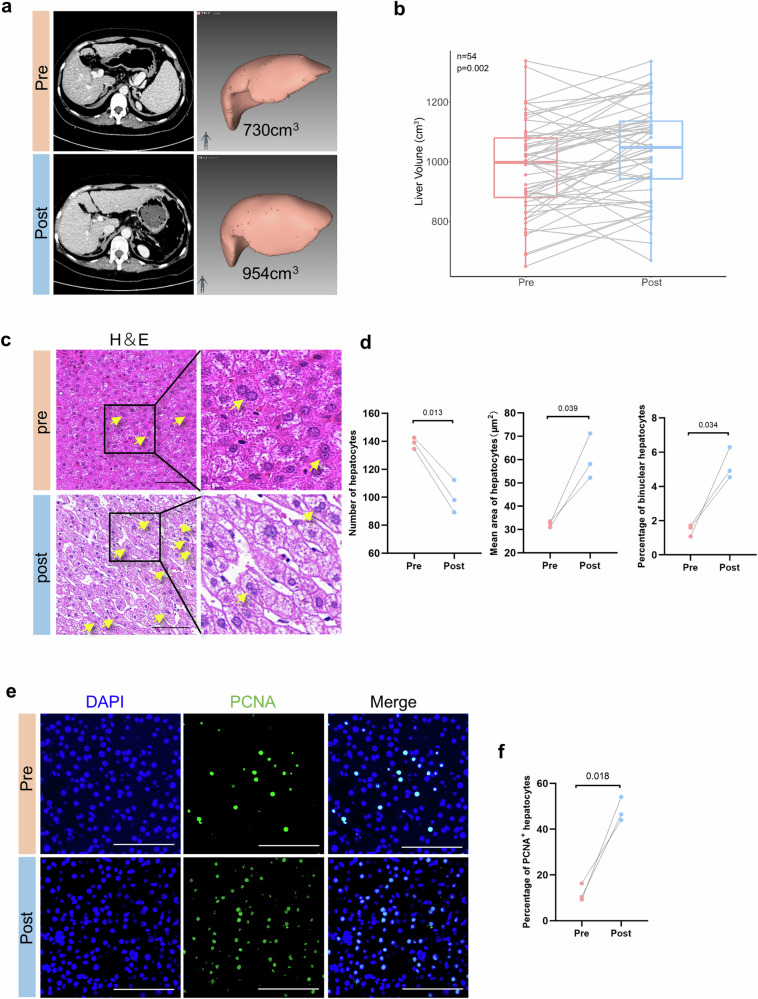
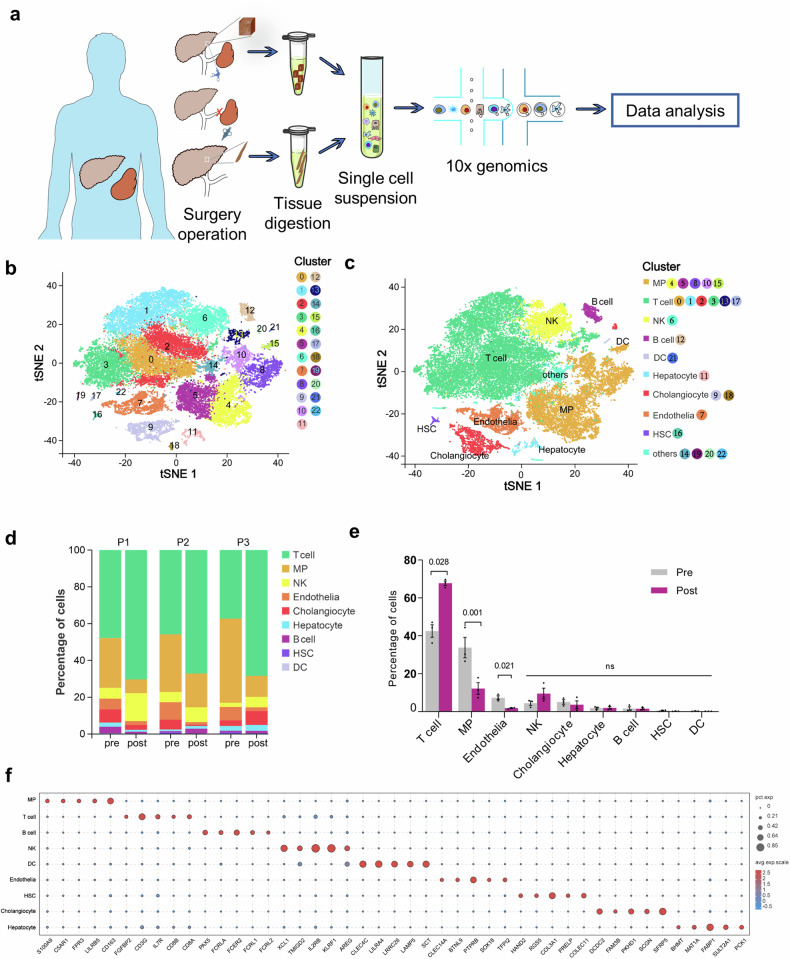
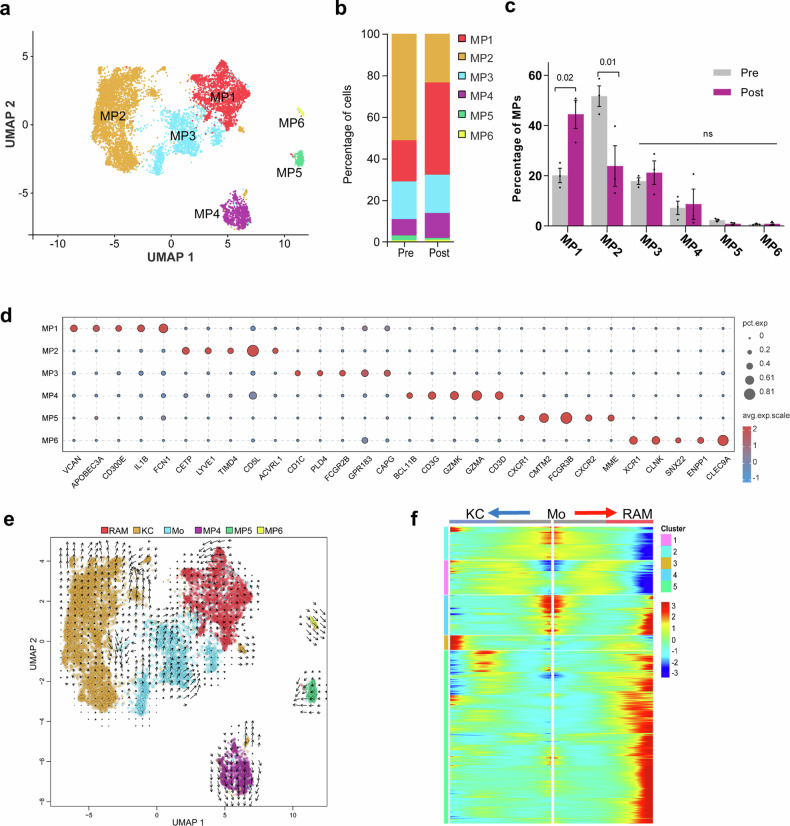
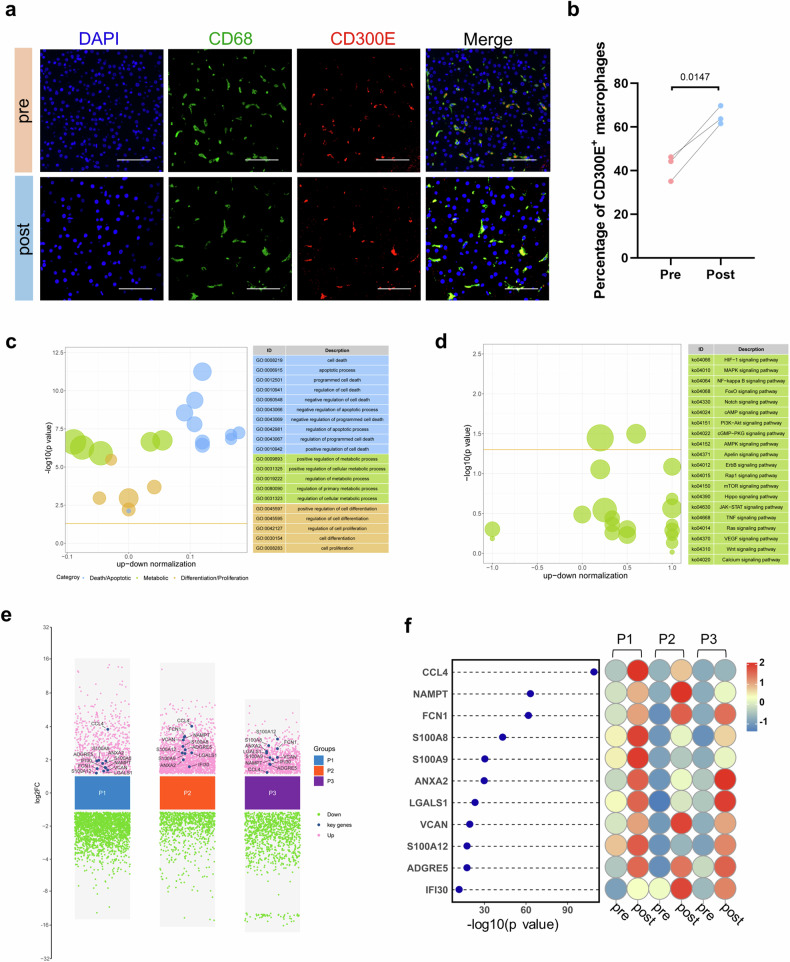
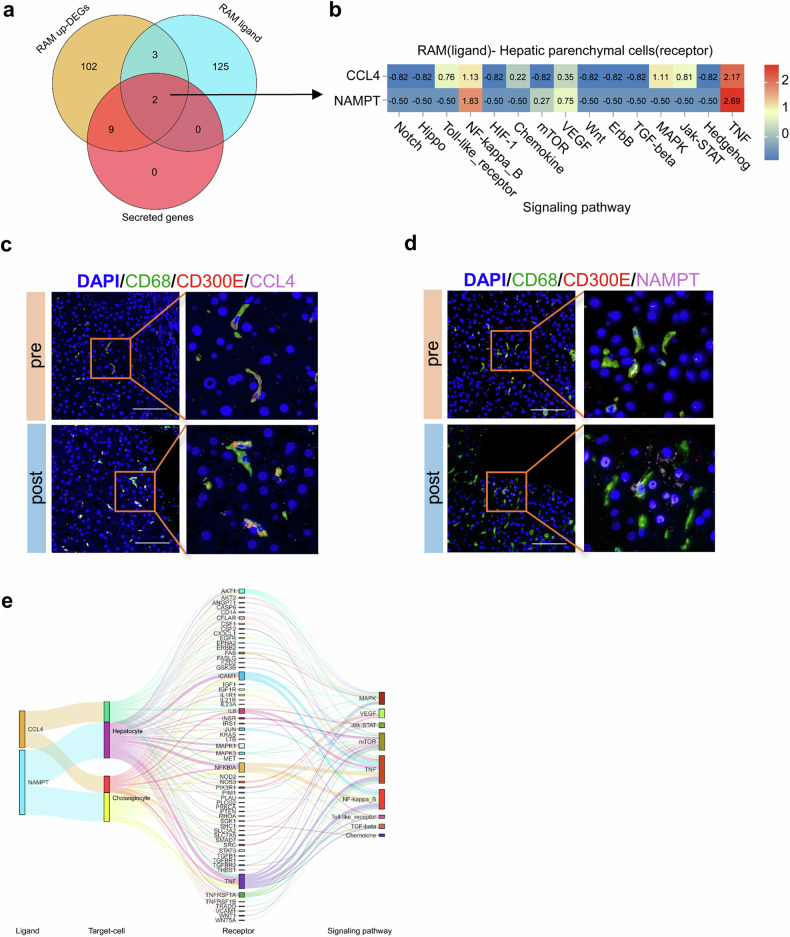
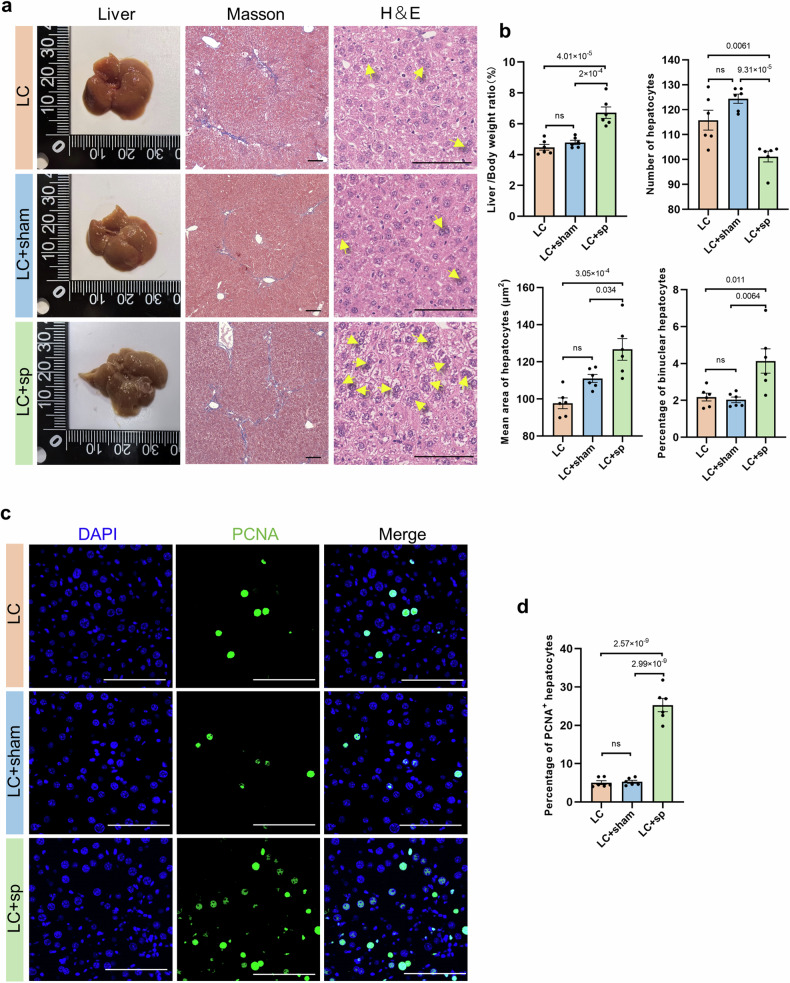
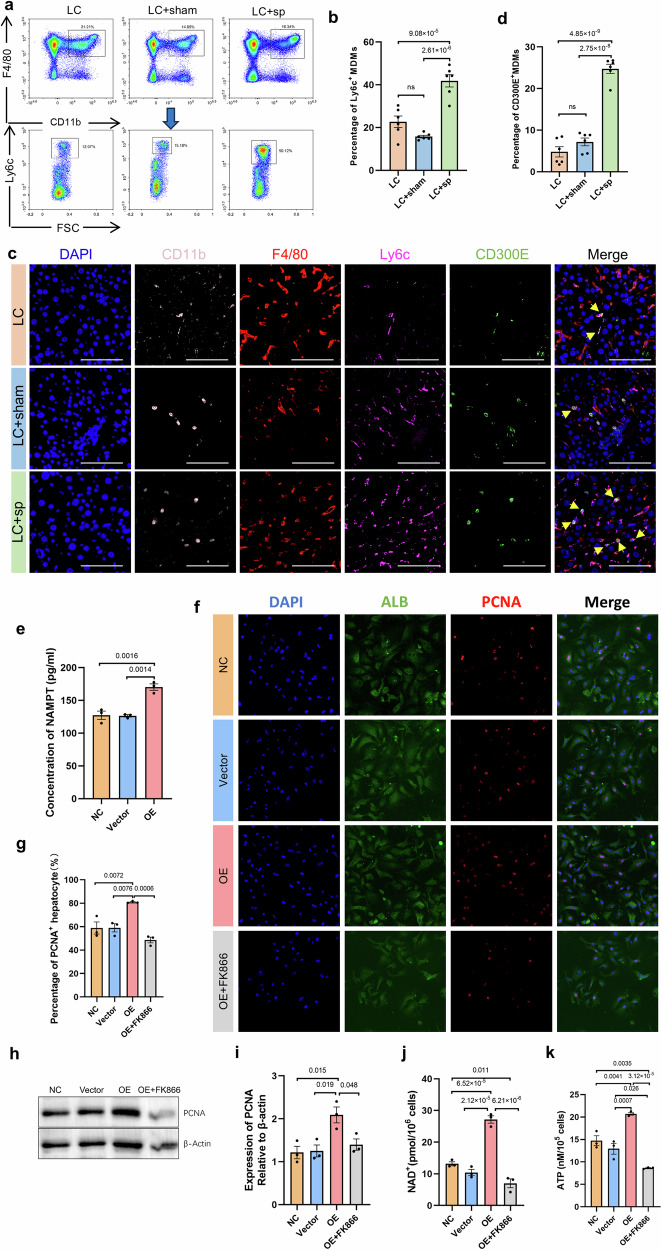
Liver cirrhosis is prognostically associated with poor life expectancy owing to subsequent liver failure. Thus, understanding liver regeneration processes during cirrhotic injury is highly important. This study explored the role of macrophage heterogeneity in liver regeneration following splenectomy. We collected detailed clinical information from 54 patients with decompensated cirrhosis before and after splenectomy. Obvious liver regeneration was observed after splenectomy in cirrhotic patients. Single-cell RNA sequencing (scRNA-seq) was performed on three paired liver tissues from patients before and after surgery to explore the immune microenvironment map and the characteristics of liver regeneration-associated macrophages (RAMs). scRNA-seq analysis revealed that the composition of hepatic immune cells changed after splenectomy; among these changes, the proportion of CD300E+ RAMs significantly increased after surgery, and high expression levels of functional genes associated with cell proliferation promoted liver regeneration. Moreover, a mouse model of carbon tetrachloride-induced cirrhosis and a coculture system consisting of primary bone marrow-derived macrophages and hepatocytes were established for validation. We observed a similar phenomenon of liver regeneration in cirrhotic mice and further confirmed that CD300E+ monocyte-derived macrophages facilitated hepatocyte NAD+ synthesis via the secretion of NAMPT, which subsequently promoted hepatocyte proliferation. This study characterized the hepatic immune microenvironment in patients with cirrhosis following splenectomy. Our findings demonstrated that CD300E+ macrophages play a crucial role in remodeling the hepatic immune microenvironment after splenectomy, thereby promoting liver regeneration in patients with decompensated cirrhosis. CD300E+ macrophages are anticipated to emerge as a novel therapeutic strategy for the treatment of liver cirrhosis.
Overview
The claims and statistics of this paper haven’t been checked yet.
Free: it reads the open-access text and checks the first 5 claims that cite a source we can check. Create a free account to check every claim.
Integrity signals
Registry
Cites
Statistics
Figures
Verification
Claims the paper makes
The claims and statistics of this paper haven’t been checked yet.
Free: it reads the open-access text and checks the first 5 claims that cite a source we can check. Create a free account to check every claim.
Claims other papers make about this one
Each is checked against this paper’s own text: does it say what the citing paper says it does?
The source backs part of the claim, not all of it — or backs it for a different population, condition or comparison.
In the citing paper
“In patients and mouse models with decompensated cirrhosis undergoing splenectomy, Yang et al. discovered an increased population of CD300E+ MoMFs.”
From Macrophage duality in liver diseases: heterogeneity, plasticity, and the quest for precision therapeutics (2026) · cites this paper as [68]
Experimental — accuracy not yet measured
Self-check
Percentages, sums and reported differences re-computed from the paper’s own numbers.
The self-check needs the paper’s full text.
Citations
Cites
Gene Ontology: tool for the unification of biology
Ashburner, M., Ball, C. A., Blake, J. A., Botstein, D., Butler, H., Cherry, J. M., Davis, A. P., Dolinski, K., Dwight, S. S., Eppig, J. T., et al. (2000) · Nature Genetics · doi:10.1038/75556 · Cited by 43,206
KEGG: Kyoto Encyclopedia of Genes and Genomes
Kanehisa, M. (2000) · Nucleic Acids Research · doi:10.1093/nar/28.1.27 · Cited by 37,077
KEGG: Kyoto Encyclopedia of Genes and Genomes
Ogata, H., Goto, S., Sato, K., Fujibuchi, W., Bono, H., & Kanehisa, M. (1999) · Nucleic Acids Research · doi:10.1093/nar/27.1.29 · Cited by 31,232
Fast, sensitive and accurate integration of single-cell data with Harmony
Korsunsky, I., Millard, N., Fan, J., Slowikowski, K., Zhang, F., Wei, K., Baglaenko, Y., Brenner, M., Loh, P.-R., & Raychaudhuri, S. (2019) · Nature Methods · doi:10.1038/s41592-019-0619-0 · Cited by 10,488
Trapnell, C., Cacchiarelli, D., Grimsby, J., Pokharel, P., Li, S., Morse, M., Lennon, N. J., Livak, K. J., Mikkelsen, T. S., & Rinn, J. L. (2014) · Nature Biotechnology · doi:10.1038/nbt.2859 · Cited by 7,314
Aran, D., Looney, A. P., Liu, L., Wu, E., Fong, V., Hsu, A., Chak, S., Naikawadi, R. P., Wolters, P. J., Abate, A. R., et al. (2019) · Nature Immunology · doi:10.1038/s41590-018-0276-y · Cited by 4,984
La Manno, G., Soldatov, R., Zeisel, A., Braun, E., Hochgerner, H., Petukhov, V., Lidschreiber, K., Kastriti, M. E., Lönnerberg, P., Furlan, A., et al. (2018) · Nature · doi:10.1038/s41586-018-0414-6 · Cited by 4,118
Efremova, M., Vento-Tormo, M., Teichmann, S. A., & Vento-Tormo, R. (2020) · Nature Protocols · doi:10.1038/s41596-020-0292-x · Cited by 3,449
NicheNet: Modeling intercellular communication by linking ligands to target genes
Browaeys, R., Saelens, W., & Saeys, Y. (2020) · Nature Methods · doi:10.1038/s41592-019-0667-5 · Cited by 2,192
Resolving the fibrotic niche of human liver cirrhosis at single-cell level
Ramachandran, P., Dobie, R., Wilson-Kanamori, J. R., Dora, E. F., Henderson, B. E. P., Luu, N. T., Portman, J. R., Matchett, K. P., Brice, M., Marwick, J. A., et al. (2019) · Nature · doi:10.1038/s41586-019-1631-3 · Cited by 1,784
Ginès, P., Krag, A., Abraldes, J. G., Solà, E., Fabrellas, N., & Kamath, P. S. (2021) · The Lancet · doi:10.1016/s0140-6736(21)01374-x · Cited by 1,663
Single cell RNA sequencing of human liver reveals distinct intrahepatic macrophage populations
MacParland, S. A., Liu, J. C., Ma, X.-Z., Innes, B. T., Bartczak, A. M., Gage, B. K., Manuel, J., Khuu, N., Echeverri, J., Linares, I., et al. (2018) · Nature Communications · doi:10.1038/s41467-018-06318-7 · Cited by 1,552
Liver Macrophages in Tissue Homeostasis and Disease
Krenkel, O., & Tacke, F. (2017) · Nature Reviews Immunology · doi:10.1038/nri.2017.11 · Cited by 1,424
Human housekeeping genes, revisited
Eisenberg, E., & Levanon, E. Y. (2013) · Trends in Genetics · doi:10.1016/j.tig.2013.05.010 · Cited by 1,282
Macrophage Polarization in Inflammatory Diseases
Liu, Y.-C., Zou, X.-B., Chai, Y.-F., & Yao, Y.-M. (2014) · International Journal of Biological Sciences · doi:10.7150/ijbs.8879 · Cited by 1,085
Macrophage heterogeneity in liver injury and fibrosis
Tacke, F., & Zimmermann, H. W. (2014) · Journal of Hepatology · doi:10.1016/j.jhep.2013.12.025 · Cited by 1,061
Mitochondrial dysfunction prevents repolarization of inflammatory macrophages
Van den Bossche, J., Baardman, J., Otto, N. A., van der Velden, S., Neele, A. E., van den Berg, S. M., Luque-Martin, R., Chen, H.-J., Boshuizen, M. C. S., Ahmed, M., et al. (2016) · Cell Reports · doi:10.1016/j.celrep.2016.09.008 · Cited by 1,027
Targeting hepatic macrophages to treat liver diseases
Tacke, F. (2017) · Journal of Hepatology · doi:10.1016/j.jhep.2017.02.026 · Cited by 1,003
Ramachandran, P., Pellicoro, A., Vernon, M. A., Boulter, L., Aucott, R. L., Ali, A., Hartland, S. N., Snowdon, V. K., Cappon, A., Gordon-Walker, T. T., et al. (2012) · Proceedings of the National Academy of Sciences · doi:10.1073/pnas.1119964109 · Cited by 1,001
Liver regeneration: biological and pathological mechanisms and implications
Michalopoulos, G. K., & Bhushan, B. (2021) · Nature Reviews Gastroenterology & Hepatology · doi:10.1038/s41575-020-0342-4 · Cited by 998
Single-cell landscape of the ecosystem in early-relapse hepatocellular carcinoma
Sun, Y., Wu, L., Zhong, Y., Zhou, K., Hou, Y., Wang, Z., Zhang, Z., Xie, J., Wang, C., Chen, D., et al. (2021) · Cell · doi:10.1016/j.cell.2020.11.041 · Cited by 895
Self-citationKarlmark, K. R., Weiskirchen, R., Zimmermann, H. W., Gassler, N., Ginhoux, F., Weber, C., Merad, M., Luedde, T., Trautwein, C., & Tacke, F. (2009) · Hepatology · doi:10.1002/hep.22950 · Cited by 782
Macrophage inflammatory protein-1
Maurer, M., & von Stebut, E. (2004) · The International Journal of Biochemistry & Cell Biology · doi:10.1016/j.biocel.2003.10.019 · Cited by 767
Single-cell transcriptomes from human kidneys reveal the cellular identity of renal tumors
Young, M. D., Mitchell, T. J., Vieira Braga, F. A., Tran, M. G. B., Stewart, B. J., Ferdinand, J. R., Collord, G., Botting, R. A., Popescu, D.-M., Loudon, K. W., et al. (2018) · Science · doi:10.1126/science.aat1699 · Cited by 762
Boulter, L., Govaere, O., Bird, T. G., Radulescu, S., Ramachandran, P., Pellicoro, A., Ridgway, R. A., Seo, S. S., Spee, B., Van Rooijen, N., et al. (2012) · Nature Medicine · doi:10.1038/nm.2667 · Cited by 747
Hypertrophy and Unconventional Cell Division of Hepatocytes Underlie Liver Regeneration
Miyaoka, Y., Ebato, K., Kato, H., Arakawa, S., Shimizu, S., & Miyajima, A. (2012) · Current Biology · doi:10.1016/j.cub.2012.05.016 · Cited by 461
Cellular Metabolism and Macrophage Functional Polarization
Zhu, L., Zhao, Q., Yang, T., Ding, W., & Zhao, Y. (2015) · International Reviews of Immunology · doi:10.3109/08830185.2014.969421 · Cited by 428
Self-citationThe carbon tetrachloride model in mice
Scholten, D., Trebicka, J., Liedtke, C., & Weiskirchen, R. (2015) · Laboratory Animals · doi:10.1177/0023677215571192 · Cited by 414
Holt, M. P., Cheng, L., & Ju, C. (2008) · Journal of Leukocyte Biology · doi:10.1189/jlb.0308173 · Cited by 399
Liver macrophages in health and disease
Guilliams, M., & Scott, C. L. (2022) · Immunity · doi:10.1016/j.immuni.2022.08.002 · Cited by 395
Preparation and culture of bone marrow-derived macrophages from mice for functional analysis
Toda, G., Yamauchi, T., Kadowaki, T., & Ueki, K. (2021) · STAR Protocols · doi:10.1016/j.xpro.2020.100246 · Cited by 387
Liver regeneration and inflammation: from fundamental science to clinical applications
Campana, L., Esser, H., Huch, M., & Forbes, S. (2021) · Nature Reviews Molecular Cell Biology · doi:10.1038/s41580-021-00373-7 · Cited by 307
Ma, P.-F., Gao, C.-C., Yi, J., Zhao, J.-L., Liang, S.-Q., Zhao, Y., Ye, Y.-C., Bai, J., Zheng, Q.-J., Dou, K.-F., et al. (2017) · Journal of Hepatology · doi:10.1016/j.jhep.2017.05.022 · Cited by 284
Statistical significance of variables driving systematic variation in high-dimensional data
Chung, N. C., & Storey, J. D. (2015) · Bioinformatics · doi:10.1093/bioinformatics/btu674 · Cited by 245
Myocardial Infarction Activates CCR2+ Hematopoietic Stem and Progenitor Cells
Dutta, P., Sager, H. B., Stengel, K. R., Naxerova, K., Courties, G., Saez, B., Silberstein, L., Heidt, T., Sebas, M., Sun, Y., et al. (2015) · Cell Stem Cell · doi:10.1016/j.stem.2015.04.008 · Cited by 221
Bird, T. G., Lu, W.-Y., Boulter, L., Gordon-Keylock, S., Ridgway, R. A., Williams, M. J., Taube, J., Thomas, J. A., Wojtacha, D., Gambardella, A., et al. (2013) · Proceedings of the National Academy of Sciences · doi:10.1073/pnas.1302168110 · Cited by 166
Lactylation: a Passing Fad or the Future of Posttranslational Modification
Qi, X., Wang, H., Li, Q., Liu, S., Qu, K., Liu, C., & Zhang, J. (2022) · Inflammation · doi:10.1007/s10753-022-01637-w · Cited by 159
Liver-spleen axis: Intersection between immunity, infections and metabolism
Tarantino, G. (2013) · World Journal of Gastroenterology · doi:10.3748/wjg.v19.i23.3534 · Cited by 157
Zhang, W., Hubbard, A., Jones, T., Racolta, A., Bhaumik, S., Cummins, N., Zhang, L., Garsha, K. E., Ventura, F. L., Lefever, M. R., et al. (2017) · Laboratory Investigation · doi:10.1038/labinvest.2017.37 · Cited by 113
Nicotinamide adenine dinucleotide biosynthesis promotes liver regeneration
Mukherjee, S., Chellappa, K., Moffitt, A., Ndungu, J., Dellinger, R. W., Davis, J. G., Agarwal, B., & Baur, J. A. (2017) · Hepatology · doi:10.1002/hep.28912 · Cited by 106
Feng, D., Xiang, X., Guan, Y., Guillot, A., Lu, H., Chang, C., He, Y., Wang, H., Pan, H., Ju, C., et al. (2023) · Journal of Clinical Investigation · doi:10.1172/jci166954 · Cited by 93
Kong, P., Dong, J., Li, W., Li, Z., Gao, R., Liu, X., Wang, J., Su, Q., Wen, B., Ouyang, W., et al. (2023) · Advanced Science · doi:10.1002/advs.202301244 · Cited by 86
Immune Cell Trafficking to the Liver
Chaudhry, S., Emond, J. C., & Griesemer, A. (2019) · Transplantation · doi:10.1097/tp.0000000000002690 · Cited by 67
Chong, M. C., Silva, A., James, P. F., Wu, S. S. X., & Howitt, J. A. (2022) · Aging Cell · doi:10.1111/acel.13647 · Cited by 64
Li, L., Wei, W., Li, Z., Chen, H., Li, Y., Jiang, W., Chen, W., Kong, G., Yang, J., & Li, Z. (2018) · Cellular Physiology and Biochemistry · doi:10.1159/000495276 · Cited by 62
Semerena, E., Nencioni, A., & Masternak, K. (2023) · Frontiers in Immunology · doi:10.3389/fimmu.2023.1268756 · Cited by 62
Single-cell immune profiling reveals distinct immune response in asymptomatic COVID-19 patients
Zhao, X.-N., You, Y., Cui, X.-M., Gao, H.-X., Wang, G.-L., Zhang, S.-B., Yao, L., Duan, L.-J., Zhu, K.-L., Wang, Y.-L., et al. (2021) · Signal Transduction and Targeted Therapy · doi:10.1038/s41392-021-00753-7 · Cited by 61
Laparoscopic splenectomy for hypersplenism secondary to liver cirrhosis and portal hypertension
Zhan, X., Ji, Y., & Wang, Y.-D. (2014) · World Journal of Gastroenterology · doi:10.3748/wjg.v20.i19.5794 · Cited by 55
Yamamoto, N., Okano, K., Oshima, M., Akamoto, S., Fujiwara, M., Tani, J., Miyoshi, H., Yoneyama, H., Masaki, T., & Suzuki, Y. (2015) · Surgery · doi:10.1016/j.surg.2015.05.008 · Cited by 46
Zeng, H., Wang, L., Li, J., Luo, S., Han, Q., Su, F., Wei, J., Wei, X., Wu, J., Ли, Б., et al. (2021) · Cell & Bioscience · doi:10.1186/s13578-021-00706-1 · Cited by 46
Cao, Z.-X., Chen, X., & Wu, Z.-D. (2003) · PubMed · Cited by 28
Self-citationLiver regeneration after splenectomy in patients with liver cirrhosis
Yamada, S., Morine, Y., Imura, S., Ikemoto, T., Arakawa, Y., Iwahashi, S., Saito, Y., Yoshikawa, M., Teraoku, H., & Shimada, M. (2015) · Hepatology Research · doi:10.1111/hepr.12573 · Cited by 26
Immunological consequences following splenectomy in patients with liver cirrhosis
Hirakawa, Y., Ogata, T., Sasada, T., Yamashita, T., Itoh, K., Tanaka, H., & Okuda, K. (2019) · Experimental and Therapeutic Medicine · doi:10.3892/etm.2019.7640 · Cited by 24
An Improved Time- and Labor- Efficient Protocol for Mouse Primary Hepatocyte Isolation
Feng, M., DiVall, S. A., & Wu, S. (2021) · Journal of Visualized Experiments · doi:10.3791/61812 · Cited by 20
Ji, F., Zhang, S., Huang, N., Deng, H. X., & Li, Z. (2013) · The Brazilian Journal of Infectious Diseases · doi:10.1016/j.bjid.2013.02.004 · Cited by 18
Molecular mechanisms of splenectomy-induced hepatocyte proliferation
Elchaninov, A. V., Fatkhudinov, T., Vishnyakova, P., Nikitina, M., Lokhonina, А. V., Макаров, А. В., Arutyunyan, I. V., Kananykhina, E. Y., Poltavets, A. S., Butov, K. R., et al. (2020) · PLoS ONE · doi:10.1371/journal.pone.0233767 · Cited by 18
Huang, N., Ji, F., Zhang, S., Li, Z., Li, J., Zhou, R., Zhang, S., Wei, W., Liang, L., Chen, H., et al. (2019) · Journal of Interferon & Cytokine Research · doi:10.1089/jir.2018.0121 · Cited by 14
Pei, Y., Zhang, Z., Mba'nbo‐koumpa, A., Chen, X., & Zhang, W. (2018) · Hepatology Research · doi:10.1111/hepr.13276 · Cited by 9
Self-citationYin, J., Wang, D., Li, Z., Dong, R., Yang, T., Huang, B., Yibo, S., Shixiong, L., Bai, Q., & Lu, J. (2022) · Frontiers in Surgery · doi:10.3389/fsurg.2022.905385 · Cited by 6
Self-citation
Cited by
Dey, P. (2025) · The FASEB Journal · doi:10.1096/fj.202502523rr · Cited by 18
“A 2025 study discovered a distinct population of CD300E+ macrophages that dramatically expands in the liver after splenectomy in cirrhotic patients, promoting regeneration via nicotinamide phosphoribosyl transferase (NAMPT) release, which promotes hepatocyte NAD+ production and proliferation [37].”
Shao, Y., Song, K., Yu, R., He, X., Li, C., Deng, Y., Zhang, Y., & Ren, Y. (2025) · International Journal of Molecular Medicine · doi:10.3892/ijmm.2025.5676 · Cited by 5
“This alteration aids in diminishing the inflammatory condition of adipose tissue and enhancing metabolic status (38). despite the reduction in pro‑inflammatory macrophages following bariatric surgery, the inflammatory gene expression levels, including those of TNF and IL‑6, persist at higher levels…”
Self-citationWilujeng, I. D. A., Pramono, A. P., Tjang, Y. S., & Puspita, R. (2025) · Molecular Biology Reports · doi:10.1007/s11033-025-10923-3 · Cited by 4
“The microRNA miR-223-3p contained in AD-MSC-EVs inhibits the transcription factor E2F1, slowing NAFLD progres - sion by approximately 30%, as confirmed by histological fibrosis assessment [ 41].”
InfluentialCrosstalk Between Liver and Extra-Liver Organs During Liver Regeneration in Mammals
Elchaninov, A. V., Bykova, D., Gantsova, E. A., Vishnyakova, P., Fatkhudinov, T., & Sukhikh, G. T. (2025) · Cells · doi:10.3390/cells14211691 · Cited by 3
Wang, W., Qin, Z., Wang, J., Zhang, L., Xu, B., Zhu, H., Ya, G., & Zhang, W. (2025) · Langenbeck s Archives of Surgery · doi:10.1007/s00423-025-03698-5 · Cited by 2
Metadata
- Authors
- Yang, T., Zhang, Y., Duan, C., Liu, H., Wang, D., Liang, Q., Chen, X., Ma, J., Cheng, K., Chen, Y., Zhuang, R., & Yin, J.
- Affiliations
- Tang Du Hospital (CN)
- Air Force Medical University (CN)
- Xijing Hospital (CN)
- Corresponding author
- Zhuang, Ran
- Yin, Jikai
- Venue
- Experimental & Molecular Medicine
- Published
- 2025-01-01
- Volume
- 57
- Issue
- 1
- Pages
- 72-85
- ISSN
- 1226-3613 (ISSN-L)
- 2092-6413
- PMC
- PMC11799435
- OpenAlex
- W4405931771
- Cited by
- 11
- References
- 58
- Citations by year
- 2026: 4 · 2025: 7
- FWCI
- 6.18
- Type
- journal article
- Language
- en
- Open access
- gold
- doi.org
- Licence
- cc-by
- creativecommons.org/licenses/by/4.0 (tdm)
- creativecommons.org/licenses/by/4.0 (vor)
- Locations
- Experimental & Molecular Medicine (publishedVersion, cc-by)
- PubMed Central (publishedVersion, cc-by)
- PubMed (publishedVersion)
- DOAJ (DOAJ: Directory of Open Access Journals) (submittedVersion, cc-by-sa)
- Funders
- National Natural Science Foundation of China (81871258)
- Topics
- Health Sciences › Medicine › Hepatology › Liver physiology and pathology
- Health Sciences › Medicine › Hepatology › Liver Disease and Transplantation
- Health Sciences › Medicine › Hepatology › Liver Diseases and Immunity
- Keywords
- liver regeneration, splenectomy, decompensated cirrhosis, liver cirrhosis, hepatic immune microenvironment, macrophage heterogeneity, visfatin, NAD+ synthesis, hepatocyte proliferation, carbon tetrachloride-induced cirrhosis, monocyte-derived macrophages
- MeSH terms
- Animals, Disease Models, Animal, Female, Humans, Liver, Liver Cirrhosis, Liver Regeneration, Macrophages, Male, Mice, Inbred C57BL, Middle Aged, Receptors, Immunologic, Splenectomy, Hepatocytes, Cell Proliferation, Mice
About these checks
Registry, retraction, Cites and statistics results are computed, not judged, with one exception: a printed reference that no index lists is read once by a model before it counts as a citation error. Claims are extracted by a model and kept only when their quote appears verbatim in the text; each cited source is then checked, with a model’s help, for whether it says what the claim relies on. Those verdicts can be wrong — read the claim’s quote and the cited source before relying on one.
Statistics and arithmetic are recomputed, not judged.
Confidence bands are shown only for fields calibrated on our annotated test set. None is calibrated yet, so no band is shown.
What counts as a claim ›How we measure confidence ›How we check this ›
Are you an author, or do you see a problem with this page? Request a review
Data sources
Bibliographic data: Semantic Scholar, OpenAlex, Crossref.
Contains information from the Semantic Scholar Academic Graph Datasets, made available under the ODC Attribution License (ODC-BY 1.0).
Semantic Scholar’s data is described in: Kinney, R., et al. (2023). The Semantic Scholar Open Data Platform. arXiv:2301.10140.
