

Ultrafast terahertz emission from emerging symmetry-broken materials
Open accessThe DOI matches its Crossref record; 268 of the 279 references it cites were found in a registry or an index, and 1 are not checked yet; 95 of the 170 sources its claims cite were checked for support.
Abstract
Nonlinear optical spectroscopies are powerful tools for investigating both static material properties and light-induced dynamics. Terahertz (THz) emission spectroscopy has emerged in the past several decades as a versatile method for directly tracking the ultrafast evolution of physical properties, quasiparticle distributions, and order parameters within bulk materials and nanoscale interfaces. Ultrafast optically-induced THz radiation is often analyzed mechanistically in terms of relative contributions from nonlinear polarization, magnetization, and various transient free charge currents. While this offers material-specific insights, more fundamental symmetry considerations enable the generalization of measured nonlinear tensors to much broader classes of systems. We thus frame the present discussion in terms of underlying broken symmetries, which enable THz emission by defining a system directionality in space and/or time, as well as more detailed point group symmetries that determine the nonlinear response tensors. Within this framework, we survey a selection of recent studies that utilize THz emission spectroscopy to uncover basic properties and complex behaviors of emerging materials, including strongly correlated, magnetic, multiferroic, and topological systems. We then turn to low-dimensional systems to explore the role of designer nanoscale structuring and corresponding symmetries that enable or enhance THz emission. This serves as a promising route for probing nanoscale physics and ultrafast light-matter interactions, as well as facilitating advances in integrated THz systems. Furthermore, the interplay between intrinsic and extrinsic material symmetries, in addition to hybrid structuring, may stimulate the discovery of exotic properties and phenomena beyond existing material paradigms.
Verified 2026-11-25 · 1 reference not checked yet
Overview
CoChat Summary
## TL;DR
This review argues that THz emission spectroscopy is a symmetry-sensitive, contact-free probe of ultrafast currents, quasiparticles, and order parameters in quantum materials. It surveys how broken symmetries in magnetic, correlated, topological, and nanostructured systems enable or enhance THz emission, and highlights designer low-dimensional structures as a route to new THz functionality.
## Key findings
- THz emission is especially sensitive to broken inversion, time-reversal, and combined symmetries, and the paper notes that even the presence of THz emission itself reveals a broken discrete symmetry.
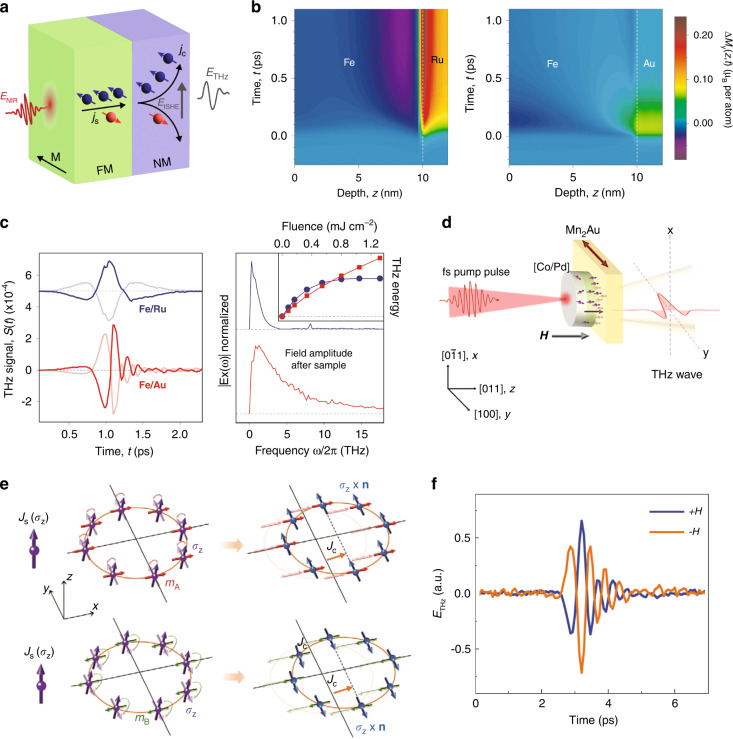
- In spintronic heterostructures, THz emission can be strongly enhanced: FM/NM systems are attributed to the inverse spin Hall effect, and tri-layer spintronic devices are reported to generate THz pulses with nearly 30 THz bandwidth and amplitudes rivaling optical rectification in ZnTe and GaP.
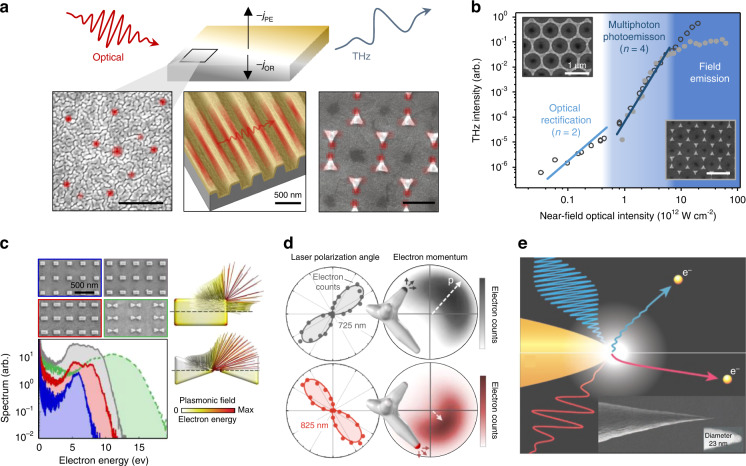
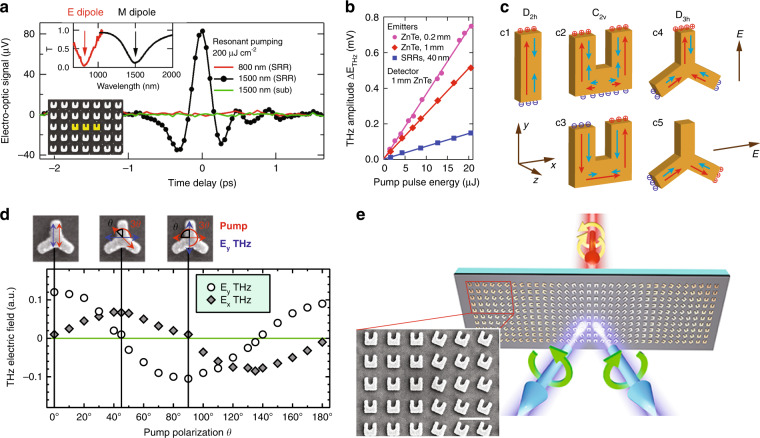
- In plasmonic metasurfaces, a 40 nm gold split-ring resonator layer on ITO/glass produced single-cycle broadband THz pulses up to 4 THz, with a field intensity approaching that from 5000-fold thicker 200 μm ZnTe crystals.
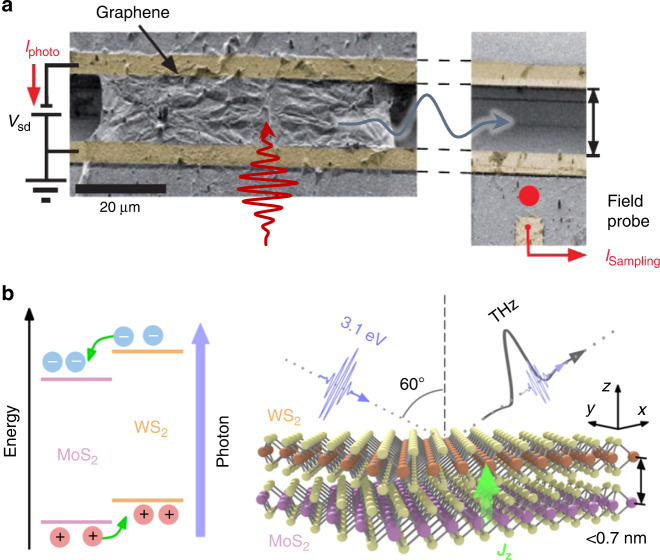
- In 2D heterostructures, THz emission detected sub-nanometer-scale interfacial currents in MoS2/WS2 monolayers with transfer efficiencies approaching 100%, underscoring angstrom-scale sensitivity.
## Methods
- Narrative review / perspective article: it synthesizes prior THz emission studies across symmetry-broken materials rather than presenting a new experimental dataset.
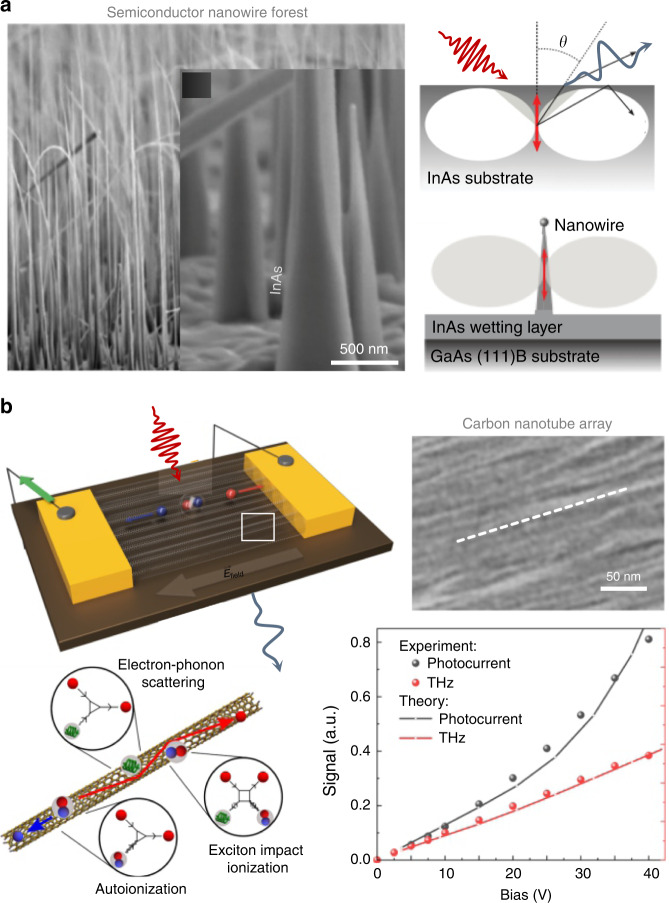
- Sources and examples span magnetic systems, superconductors, multiferroics, topological materials, nanostructured metals, plasmonic metasurfaces, 1D nanowires and nanotubes, and 2D materials/heterostructures.
- Main analysis is a symmetry-based framework: the authors organize mechanisms by broken parity/inversion, time-reversal, and point-group symmetries, then relate those symmetries to nonlinear response tensors, currents, and emitted THz waveforms.
## Limitations
- The paper itself states that it is “not exhaustive” and apologizes for potentially overlooking relevant work.
- It also says many areas are only briefly surveyed, especially in low-dimensional and emerging hybrid systems, so coverage is necessarily selective.
- Evident from the text: because this is a review, it does not provide a single unified dataset or new experimental test of its claims; instead, conclusions are drawn from previously published studies.
Model-written summary. Check it against the paper before relying on it.
Integrity signals
Registry
Cites
Statistics
Figures
Verification
Claims the paper makes
71 Valid · 1 Not valid · 40 Not checked · 77 Own results and interpretations
The cited sources support only part of this claim — read each source’s verdict below.
In the paper
“high- cuprates can likewise emit THz radiation under bias due to tunneling of Cooper pairs through the intrinsic Josephson junctions that develop between superconducting CuO2 layers and insulating BiO/SrO barrier layers, as occurs naturally within Bi2Sr2CaCu2O8+x (Bi-2212)67,68.”
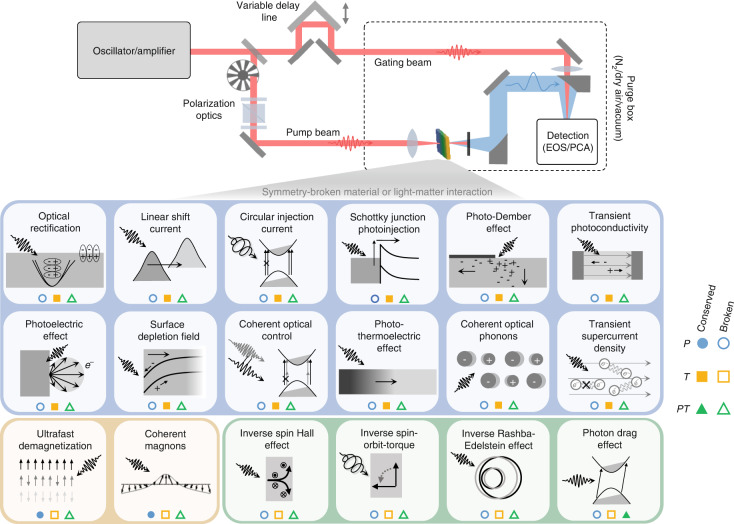
§ Ultrafast terahertz emission from emerging symmetry-broken materials > Transient currents in strongly correlated and topological materials The strength of THz emission spectroscopy stems from its sensitivity to symmetry breaking in the electronic state. Nowhere is this more apparent than in strongly correlated and topological material systems, as the presence of frustrated couplings provides an opportunity to explore unconventional symmetries and symmetry breaking that would otherwise be forbidden based on crystal structure alone. Here we will focus on the breaking of symmetry brought on intrinsically within some broken symmetry states or extrinsically by application of an external bias field. Within strongly correlated materials, such as high- superconductors or multiferroic oxides, we will focus on the use of THz emission to gain insights into the ordered ground state, while the nonlinear response in topological materials can go one step further by shedding light on the quantum geometrical properties that are characteristic of the topological state. Notably, light-induced photocurrents will feature prominently in the discussion, where we emphasize that THz emission in general provides an all-optical, contact-free means of tracking photocurrents that largely mitigates extraneous effects due to Schottky barriers, field screening, and generation of interfacial defects common to direct photocurrent readout. However, as compared to the continuous excitation used in static photocurrent measurements, pulsed excitations employed in THz emission can have unintended consequences, including laser heating. Often the degree to which heating influences the emitted THz spectra is material specific and can frequently be identified by a lack of polarization dependence in the spectra. Nonetheless, heating can be responsible for driving either reversible or irreversible phase transitions within a material and should be carefully monitored during the experiment. > Superconductors
What the sources say
- Partly supportedcites [67] Hu X Lin SZ Phase dynamics in a stack of inductively coupled intrinsic Josephson junctions and terahertz electromagnetic radiation Supercond. Sci. Technol. 2010 23 053001 sourceExperimental — accuracy not yet measured
The Introduction (p. 2) describes Cooper-pair tunneling across Josephson junctions and reports THz emission from voltage-biased BSCCO. Section III.1 (p. 17) places superconductivity mainly in CuO layers and describes the layered crystal as a stack of Josephson junctions. Our copy does not identify the insulating barriers specifically as BiO/SrO layers, so that structural detail is not supported. (LLM, conf=0.87)
- Not checked — no full text of the sourcecites [68] Kashiwagi T High temperature superconductor terahertz emitters: Fundamental physics and its applications Jpn J. Appl. Phys. 2012 51 010113 source
plainstates a cause- Asserted: passes — The authors put it forward as true.
- Checkable: passes — It can be checked against evidence.
- Load-bearing: unclear — It is unclear whether the paper’s conclusions depend on it.
- Based: passes — The paper gives a reason why it holds.
- Partly supported
The cited sources support only part of this claim — read each source’s verdict below.
In the paper
“Radiative ultrafast currents can also occur when symmetry is conserved but both and are broken, as in some centrosymmetric antiferromagnets44.”
§ Ultrafast terahertz emission from emerging symmetry-broken materials > Symmetries underlying pulsed terahertz emission > Symmetry breaking
What the sources say
- Partly supportedcites [44] Ahn J Guo GY Nagaosa N Low-frequency divergence and quantum geometry of the bulk photovoltaic effect in topological semimetals Phys. Rev. X 2020 10 041041 sourceExperimental — accuracy not yet measured
The symmetry analysis (p. 4) says PT-symmetric systems with broken inversion symmetry can generate linear injection and circular shift currents. But the Introduction (p. 2) says inversion symmetry forbids the bulk photovoltaic response, so the cited paper does not support the example of centrosymmetric antiferromagnets. The cited passages also do not characterize these currents as radiative or ultrafast. (LLM, conf=0.87)
plainstates a cause- Asserted: passes — The authors put it forward as true.
- Checkable: passes — It can be checked against evidence.
- Load-bearing: unclear — It is unclear whether the paper’s conclusions depend on it.
- Based: passes — The paper gives a reason why it holds.
- Partly supported
Every source the paper cites for this claim was checked and supports it.
In the paper
“the partial suppression of supercurrent density following optical excitation can transiently introduce magnetic flux in a manner akin to field cooling.”
§ Ultrafast terahertz emission from emerging symmetry-broken materials > Transient currents in strongly correlated and topological materials The strength of THz emission spectroscopy stems from its sensitivity to symmetry breaking in the electronic state. Nowhere is this more apparent than in strongly correlated and topological material systems, as the presence of frustrated couplings provides an opportunity to explore unconventional symmetries and symmetry breaking that would otherwise be forbidden based on crystal structure alone. Here we will focus on the breaking of symmetry brought on intrinsically within some broken symmetry states or extrinsically by application of an external bias field. Within strongly correlated materials, such as high- superconductors or multiferroic oxides, we will focus on the use of THz emission to gain insights into the ordered ground state, while the nonlinear response in topological materials can go one step further by shedding light on the quantum geometrical properties that are characteristic of the topological state. Notably, light-induced photocurrents will feature prominently in the discussion, where we emphasize that THz emission in general provides an all-optical, contact-free means of tracking photocurrents that largely mitigates extraneous effects due to Schottky barriers, field screening, and generation of interfacial defects common to direct photocurrent readout. However, as compared to the continuous excitation used in static photocurrent measurements, pulsed excitations employed in THz emission can have unintended consequences, including laser heating. Often the degree to which heating influences the emitted THz spectra is material specific and can frequently be identified by a lack of polarization dependence in the spectra. Nonetheless, heating can be responsible for driving either reversible or irreversible phase transitions within a material and should be carefully monitored during the experiment. > Superconductors
What the sources say
- Supportedcites [66] Tonouchi M Recent topics in high-Tc superconductive electronics Jpn J. Appl. Phys. 2005 44 7735 7749 source
Section 4.2, “Optical vortex manipulation” (page unavailable), says femtosecond laser illumination locally reduces supercurrent, allowing magnetic flux to form, and that vortices can become trapped as superconductivity relaxes. This supports the field-cooling analogy as a comparison about flux trapping, not a claim that the film undergoes a temperature-driven transition. (LLM, conf=0.86)
plainstates a cause- Asserted: passes — The authors put it forward as true.
- Checkable: passes — It can be checked against evidence.
- Load-bearing: unclear — It is unclear whether the paper’s conclusions depend on it.
- Based: passes — The paper gives a reason why it holds.
- Supported
Every source the paper cites for this claim was checked and supports it.
In the paper
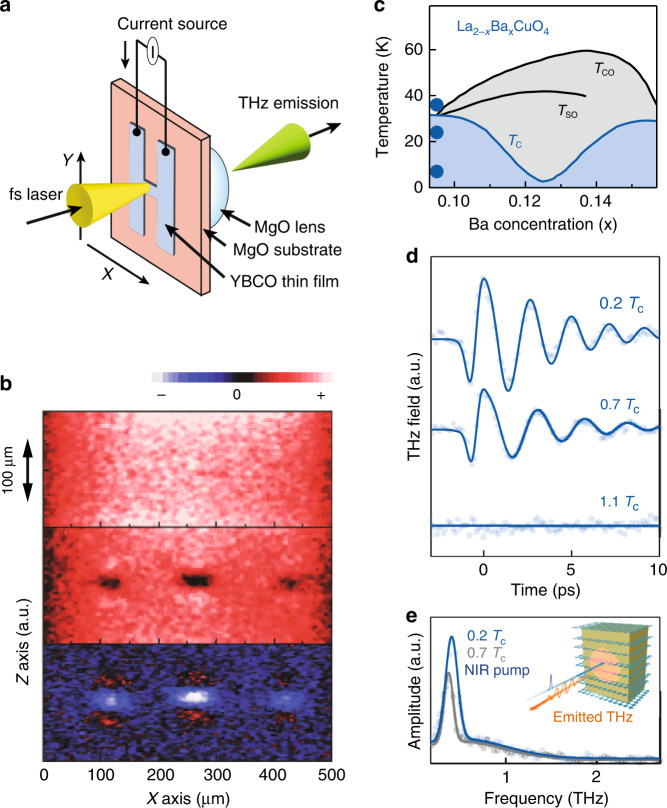
“the emission of narrow-band THz radiation following optical excitation occurs when fluctuating or incommensurate charge stripes coexist with superconductivity (Fig. 2c–e), leading to a breaking of inversion symmetry between CuO2 planes.”
§ Ultrafast terahertz emission from emerging symmetry-broken materials > Transient currents in strongly correlated and topological materials The strength of THz emission spectroscopy stems from its sensitivity to symmetry breaking in the electronic state. Nowhere is this more apparent than in strongly correlated and topological material systems, as the presence of frustrated couplings provides an opportunity to explore unconventional symmetries and symmetry breaking that would otherwise be forbidden based on crystal structure alone. Here we will focus on the breaking of symmetry brought on intrinsically within some broken symmetry states or extrinsically by application of an external bias field. Within strongly correlated materials, such as high- superconductors or multiferroic oxides, we will focus on the use of THz emission to gain insights into the ordered ground state, while the nonlinear response in topological materials can go one step further by shedding light on the quantum geometrical properties that are characteristic of the topological state. Notably, light-induced photocurrents will feature prominently in the discussion, where we emphasize that THz emission in general provides an all-optical, contact-free means of tracking photocurrents that largely mitigates extraneous effects due to Schottky barriers, field screening, and generation of interfacial defects common to direct photocurrent readout. However, as compared to the continuous excitation used in static photocurrent measurements, pulsed excitations employed in THz emission can have unintended consequences, including laser heating. Often the degree to which heating influences the emitted THz spectra is material specific and can frequently be identified by a lack of polarization dependence in the spectra. Nonetheless, heating can be responsible for driving either reversible or irreversible phase transitions within a material and should be carefully monitored during the experiment. > Superconductors
What the sources say
- Supportedcites [71] Nicoletti D Coherent emission from surface Josephson plasmons in striped cuprates Proc. Natl Acad. Sci. USA 2022 119 e2211670119 36126100 PMC9522412 source
Split into 2 atoms — 2 confirmed, 0 partially supported, 0 disputed, 0 misattributed, 0 unverifiable. Expand the claim to see per-atom verdicts.
plainstates a cause- Asserted: passes — The authors put it forward as true.
- Checkable: passes — It can be checked against evidence.
- Load-bearing: passes — The paper’s conclusions depend on it.
- Based: passes — The paper gives a reason why it holds.
- Supported
The cited sources support only part of this claim — read each source’s verdict below.
In the paper
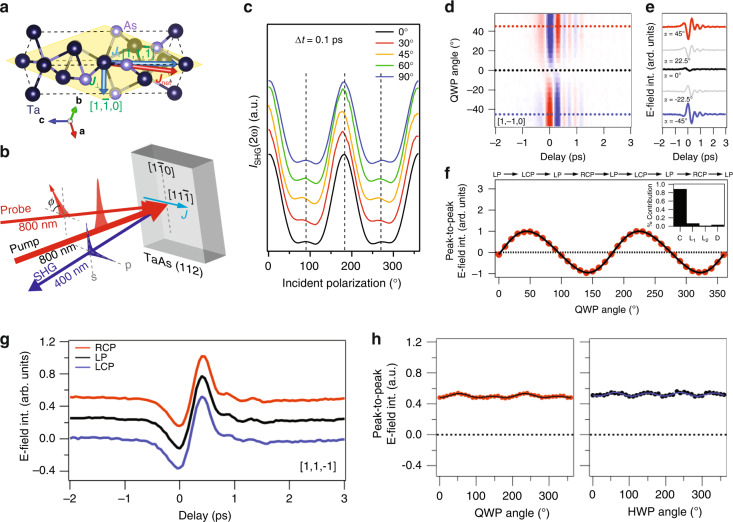
“Shift currents, resulting from the real space coherent shift of electron density following photoexcitation42, can be traced to a local geometric property defined by the difference in Berry connection between bands participating in the optical transition86,87.”
§ Ultrafast terahertz emission from emerging symmetry-broken materials > Transient currents in strongly correlated and topological materials The strength of THz emission spectroscopy stems from its sensitivity to symmetry breaking in the electronic state. Nowhere is this more apparent than in strongly correlated and topological material systems, as the presence of frustrated couplings provides an opportunity to explore unconventional symmetries and symmetry breaking that would otherwise be forbidden based on crystal structure alone. Here we will focus on the breaking of symmetry brought on intrinsically within some broken symmetry states or extrinsically by application of an external bias field. Within strongly correlated materials, such as high- superconductors or multiferroic oxides, we will focus on the use of THz emission to gain insights into the ordered ground state, while the nonlinear response in topological materials can go one step further by shedding light on the quantum geometrical properties that are characteristic of the topological state. Notably, light-induced photocurrents will feature prominently in the discussion, where we emphasize that THz emission in general provides an all-optical, contact-free means of tracking photocurrents that largely mitigates extraneous effects due to Schottky barriers, field screening, and generation of interfacial defects common to direct photocurrent readout. However, as compared to the continuous excitation used in static photocurrent measurements, pulsed excitations employed in THz emission can have unintended consequences, including laser heating. Often the degree to which heating influences the emitted THz spectra is material specific and can frequently be identified by a lack of polarization dependence in the spectra. Nonetheless, heating can be responsible for driving either reversible or irreversible phase transitions within a material and should be carefully monitored during the experiment. > Topological insulators and semimetals
What the sources say
- Partly supportedcites [86] Morimoto T Nagaosa N Topological nature of nonlinear optical effects in solids Sci. Adv. 2016 2 e1501524 27386523 PMC4928882 sourceExperimental — accuracy not yet measured
The Results (Floquet two-band model; page not provided) identify the local geometric quantity as the shift vector for the two bands involved in the optical transition. But the shift vector includes both the difference in their Berry connections and the momentum derivative of the transition-matrix-element phase; the Berry-connection difference alone does not define it. (LLM, conf=0.87)
- Supportedcites [87] Sotome M Spectral dynamics of shift current in ferroelectric semiconductor SbSI Proc. Natl Acad. Sci. USA 2019 116 1929 1933 30670652 PMC6369763 source
The passage labeled Abstract states that shift current emerges through a difference in Berry connection between the valence and conduction bands involved in an optical transition. It defines the shift vector using that difference alongside the transition-matrix-element phase, consistent with the claim's geometric description. (LLM, conf=0.91)
plainstates a cause- Asserted: passes — The authors put it forward as true.
- Checkable: passes — It can be checked against evidence.
- Load-bearing: unclear — It is unclear whether the paper’s conclusions depend on it.
- Based: passes — The paper gives a reason why it holds.
- Partly supported
112 more claims · 41 with their cited sources checked
Create a free account to see all 189 claims and to verify the 13 references still open.
- It may state two separate claims as one. 55
- Probably not a substantial claim. 22
- The quote only partly states this claim. 1
Citations
Cites
Electric Field Effect in Atomically Thin Carbon Films
Novoselov, K. S., Geim, A. K., Morozov, S. V., Jiang, D., Zhang, Y., Dubonos, S. V., Grigorieva, I. V., & Firsov, A. A. (2004) · Science · doi:10.1126/science.1102896 · Cited by 66,834
Colloquium : Topological insulators
Hasan, M. Z., & Kane, C. L. (2010) · Reviews of Modern Physics · doi:10.1103/revmodphys.82.3045 · Cited by 19,930
Light Propagation with Phase Discontinuities: Generalized Laws of Reflection and Refraction
Yu, N., Genevet, P., Kats, M. A., Aieta, F., Tetienne, J.-P., Capasso, F., & Gaburro, Z. (2011) · Science · doi:10.1126/science.1210713 · Cited by 10,361
Composite Medium with Simultaneously Negative Permeability and Permittivity
Smith, D. R., Padilla, W. J., Vier, D. C., Nemat-Nasser, S. C., & Schultz, S. (2000) · Physical Review Letters · doi:10.1103/physrevlett.84.4184 · Cited by 8,831
Magnetism from conductors and enhanced nonlinear phenomena
Pendry, J. B., Holden, A. J., Robbins, D. J., & Stewart, W. J. (1999) · IEEE Transactions on Microwave Theory and Techniques · doi:10.1109/22.798002 · Cited by 8,786
Experimental Verification of a Negative Index of Refraction
Shelby, R. A., Smith, D. R., & Schultz, S. (2001) · Science · doi:10.1126/science.1058847 · Cited by 8,347
Unconventional superconductivity in magic-angle graphene superlattices
Cao, Y., Fatemi, V., Fang, S., Watanabe, K., Taniguchi, T., Kaxiras, E., & Jarillo-Herrero, P. (2018) · Nature · doi:10.1038/nature26160 · Cited by 8,300
2D materials and van der Waals heterostructures
Novoselov, K. S., Mishchenko, A., Carvalho, A., & Castro Neto, A. H. (2016) · Science · doi:10.1126/science.aac9439 · Cited by 7,434
2D transition metal dichalcogenides
Manzeli, S., Ovchinnikov, D., Pasquier, D., Yazyev, O. V., & Kis, A. (2017) · Nature Reviews Materials · doi:10.1038/natrevmats.2017.33 · Cited by 6,075
Weyl and Dirac semimetals in three-dimensional solids
Armitage, N. P., Mele, E. J., & Vishwanath, A. (2018) · Reviews of Modern Physics · doi:10.1103/revmodphys.90.015001 · Cited by 4,528
Research works printed but not linked: 3
- Boyd, R. W. Nonlinear Optics. 3rd edn (Academic Press, 2008).
- Sipe JE Stegeman GI Nonlinear optical response of metal surfaces Mod. Probl. Condens. Matter Sci. 1982 1 661 701
- Keldysh LV Ionization in the field of a strong electromagnetic wave J. Exp. Theor. Phys. 1965 20 1307 1314
Cited by
Advances in Nanoengineered Terahertz Technology: Generation, Modulation, and Bio-Applications
Jin, Z., Lou, J., Shu, F., Hong, Z., & Qiu, C. (2025) · Research · doi:10.34133/research.0562 · Cited by 69
Light-driven nanoscale vectorial currents
Pettine, J., Padmanabhan, P., Shi, T., Gingras, L., McClintock, L., Chang, C., Kwock, K. W. C., Yuan, L., Huang, Y., Nogan, J. N., et al. (2024) · Nature · doi:10.1038/s41586-024-07037-4 · Cited by 75
“However, the broken spatial or temporal symmetries responsible for photocurrent generation in these materials 3 are typically either intrinsic to the lattice and thus constrained to specific light–matter interaction geometries or otherwise dependent on applied static fields, both of which are…”
BackgroundInfluentialSelf-citationHe, Y., Yang, L., Hu, Z., Zhang, L., Pan, X., Wei, Y., Guo, S., Lv, X., Jiang, M., Han, L., et al. (2023) · Advanced Functional Materials · doi:10.1002/adfm.202311008 · Cited by 45
Defect-induced helicity dependent terahertz emission in Dirac semimetal PtTe2 thin films
Chen, Z., Qiu, H., Cheng, X., Cui, J., Jin, Z., Tian, D., Zhang, X., Xu, K., Liu, R., Niu, W., et al. (2024) · Nature Communications · doi:10.1038/s41467-024-46821-8 · Cited by 52
“Ultrafast-laser-inducedTHzemissionbasedonsecond-ordernonlinear effects has been recognized as a versatile probe of the symmetry breaking 44 .”
Terahertz Emission in Quantum Materials
Yang, S., Cheng, L., & Qi, J. (2023) · Ultrafast Science · doi:10.34133/ultrafastscience.0047 · Cited by 31
Carbon-nanomaterial-enabled terahertz technology
Xie, L., Criollo, C., Zhou, R., Zhang, M., Dai, B., Doumani, J., Kritzell, T. E., Yin, J., Geng, W., Ying, Y. B., et al. (2025) · Nature Reviews Physics · doi:10.1038/s42254-025-00851-3 · Cited by 38
“In this effect, a photoelectric current is generated because of the transfer of photon momentum during the absorption of intense optical pulses 35,36,55 .”
Ultrafast inverse chirality-induced spin selectivity observed by THz emission
Dong, Y., McConnell, A., Hautzinger, M. P., Haque, M. A., Comstock, A. H., Theiler, P. M., Luther, J. M., Sercel, P. C., Sun, D., & Beard, M. C. (2025) · Science · doi:10.1126/science.ady4885 · Cited by 25
Coherent Terahertz Wave Generation from Mono- and Multilayer MoS 2 through Quantum Interference
He, Y., Chen, Y., La, X., Dai, C., Tian, Z., & 戴建明 (2024) · Ultrafast Science · doi:10.34133/ultrafastscience.0069 · Cited by 17
Quantitative modeling of spintronic terahertz emission due to ultrafast spin transport
Foggetti, F., & Oppeneer, P. M. (2025) · Physical Review Applied · doi:10.1103/physrevapplied.23.014067 · Cited by 19
Lan, Z., 李, Z. 章. L., 徐, H. 浩. X., 刘, F. 凡. L., 金, Z. 钻. J., 彭, Y. 滟. P., & 朱, Y. 亦. Z. (2024) · Chinese Physics Letters · doi:10.1088/0256-307x/41/4/044203 · Cited by 16
Local measurement of terahertz field-induced second harmonic generation in plasma filaments
Francis, K. J. G., & Zhang, X.-C. (2023) · Frontiers of Optoelectronics · doi:10.1007/s12200-023-00095-y · Cited by 14
“This value is nearly two orders stronger than that observed from SHG induced via plasma asymmetry in air even when spatio-temporally altered laser fields are used to increase the effect of symmetry breaking [97, 122].”
BackgroundUltrafast helicity-dependent photocurrents in Weyl Magnet Mn3Sn
Hamara, D., Lange, G. F., Kholid, F. N., Μάρκου, Α., Felser, C., Slager, R.-J., & Ciccarelli, C. (2023) · Communications Physics · doi:10.1038/s42005-023-01440-5 · Cited by 18
Kushnir, K., Khanmohammadi, S., Morissette, E. M., Doiron, C. W., Stoflet, R., Koski, K. J., Grimm, R. L., Ramasubramaniam, A., & Titova, L. V. (2024) · Advanced Optical Materials · doi:10.1002/adom.202400244 · Cited by 12
Chen, M., Jiang, T., Wang, J., He, Z., Wu, H., Li, J.-G., Guo, X., Li, W., Liu, P., Chen, H., et al. (2025) · ACS Applied Materials & Interfaces · doi:10.1021/acsami.4c17117 · Cited by 13
Self-citationDC electrical conductivity measurements of warm dense matter using ultrafast THz radiation
Ofori-Okai, B. K., Descamps, A., McBride, E. E., Mo, M., Weinmann, A., Seipp, L. E., Ali, S. J., Chen, Z., Fletcher, L. B., & Glenzer, S. H. (2024) · Physics of Plasmas · doi:10.1063/5.0193854 · Cited by 12
Lei, Z., Xi, Y., Shi, M., Xu, G., Huang, Y., & Xu, X. (2024) · Advanced Materials · doi:10.1002/adma.202416595 · Cited by 7
Comprehensive study of the ultrafast photoexcited carrier dynamics in Sb2Te3–GeTe superlattices
Ye, Z., 金, Z. 钻. J., 蒋, Y. 叶. J., 卢, Q. 琦. L., Jia, M., 钱, D. 冬. Q., 黄, X. 夏. H., 李, Z. 舟. L., 彭, Y. 滟. P., & 朱, Y. 亦. Z. (2024) · Chinese Physics B · doi:10.1088/1674-1056/ad432a · Cited by 7
Frontier of Terahertz Spectroscopy: Unveiling Its Potential in Biochemical Applications
Lee, Y. K., Kim, T., Chung, S. H., Seo, M., & Song, H. S. (2025) · BioChip Journal · doi:10.1007/s13206-025-00224-z · Cited by 7
“Based on this pioneer study, significant advancements have been made in the development of new materials responsive to THz waves [21] and in the optical control of various physical phenomena [6].”
Metasurface contact lenses: a futuristic leap in vision enhancement
Shaker, L. M., Al‐Amiery, A. A., Isahak, W. N. R. W., & Al‐Azzawi, W. K. (2023) · Journal of Optics · doi:10.1007/s12596-023-01322-7 · Cited by 6
Guo, Y., Chen, Z., Cai, M., Jin, Z., Wang, X., Zhang, C., Balakin, A. V., Shkurinov, A. P., Peng, Y., Zhu, Y., et al. (2026) · ACS Photonics · doi:10.1021/acsphotonics.5c02407 · Cited by 8
Observation of the Transient Vertical Currents in Quasi-2D Perovskites
Zu, X., Wang, C., Nie, X., Wang, H., Zhang, Z., Zhou, H., Yue, X., Liu, Z., Hu, Z., Zhan, Y., et al. (2025) · ACS Energy Letters · doi:10.1021/acsenergylett.5c01320 · Cited by 5
Shelukhin, L. A., Kuzikova, A. V., Telegin, A. V., Bessonov, V. D., Ognev, A. V., Samardak, A. S., Park, J., Kim, Y. K., & Kalashnikova, A. M. (2025) · Science and Technology of Advanced Materials · doi:10.1080/14686996.2024.2448417 · Cited by 6
Terahertz Nanoscopy on Low-Dimensional Materials: Toward Ultrafast Physical Phenomena
Wang, Y., Zhang, T., Ma, K., Bin, Z., Zhang, X., Tang, F., Xu, X., Yin, T., & Hu, M. (2024) · ACS Applied Materials & Interfaces · doi:10.1021/acsami.4c14419 · Cited by 5
Theory for anomalous terahertz emission in striped cuprate superconductors
Dolgirev, P. E., Michael, M. H., Curtis, J. B., Nicoletti, D., Buzzi, M., Fechner, M., Cavalleri, A., & Demler, E. (2023) · Physical review. B./Physical review. B · doi:10.1103/physrevb.108.l180508 · Cited by 7
Zhao, W., Hu, Y., Shen, M., & Feng, Q. (2024) · Photonics · doi:10.3390/photonics11121124 · Cited by 4
He, C., Chao, H., Wu, R., Wang, D., Qiang, L., Cao, Z., Xue, Z., Li, S.-L., Cao, X., Du, W., et al. (2024) · The Journal of Physical Chemistry C · doi:10.1021/acs.jpcc.4c03591 · Cited by 4
Making and breaking terahertz waves with fluid plasmas
Pettine, J., & Chen, H. (2023) · Photonics Insights · doi:10.3788/pi.2023.c05 · Cited by 4
Self-citationShahriar, B. Y., & Elezzabi, A. Y. (2025) · Applied Physics Letters · doi:10.1063/5.0294721 · Cited by 7
Hybrid Co/2D-WSe2-based THz spintronic emitter with tunable polarization
Buryakov, A. M., Gorbatova, A. V., Avdeev, P. Y., Lebedeva, E. D., Gusev, N. S., Karashtin, E. A., Pashen’kin, I. Y., Sapozhnikov, M. V., & Мишина, Е. Д. (2025) · Applied Physics Letters · doi:10.1063/5.0274793 · Cited by 6
Cheng, Y., Lin, X., Wang, C., Zhang, Z., Chen, W., Geng, L., Suo, P., Du, J., & Ma, G. (2025) · The Journal of Physical Chemistry Letters · doi:10.1021/acs.jpclett.5c00125 · Cited by 5
Lv, Z., Yuan, Q., Chen, J., & Li, R. (2024) · ACS Photonics · doi:10.1021/acsphotonics.4c01427 · Cited by 5
Nodal-line semimetals and their variance
Chang, P.-Y. (2025) · Materials Today Quantum · doi:10.1016/j.mtquan.2025.100057 · Cited by 11
Wang, Z., Wang, F., Xu, G., Cao, X., Xi, Y., Huang, Y., & Xu, X. (2025) · Advanced Optical Materials · doi:10.1002/adom.202403030 · Cited by 5
Time-domain terahertz emission spectroscopy on van der Waals materials
Gollner, C., Lindenberg, A. M., & Heinz, T. F. (2026) · MRS Communications · doi:10.1557/s43579-026-00940-z · Cited by 2
“…highlighted above and described as a cur - rent density from free charges j f , the total current density can include contributions from bound j b current distributions [20] (1) THz ∝ ∂ J ∂ t (2) Here the bound current can be considered as arising from polar - ization P and magnetization M terms.”
Probing Broken Time-Reversal Symmetry in 2D Materials with Tailored-Light Photocurrent Generation
Lesko, D., Weitz, T., Wittigschlager, S., Nöcker, S., Li, W., Hommelhoff, P., & Neufeld, O. (2026) · ACS Nano · doi:10.1021/acsnano.5c17857 · Cited by 13
Suo, P., Geng, L., Yang, Y., Wang, C., Zhang, Y., Lin, X., Zhang, C., Xiu, F., & Ma, G. (2026) · ACS Photonics · doi:10.1021/acsphotonics.5c02677 · Cited by 3
State-of-the-Art Emerging Materials under a Terahertz Emission Spotlight
Kar, S., Delfanazari, K., & Wen, Y. (2025) · ACS Materials Letters · doi:10.1021/acsmaterialslett.5c00915 · Cited by 2
Pressure‐Tunable Coherent Terahertz Emission in a Two‐Dimensional Gallium Telluride Crystal
Zhang, K., Xie, J., Wang, X., Huang, Z., Jia, D., Li, H., Li, E. Y., Gou, H., Su, F., Xu, X., et al. (2025) · Laser & Photonics Review · doi:10.1002/lpor.202501885 · Cited by 2
Mičica, M., Wright, A., Massabeau, S., Ayari, S., Rongione, E., Ribeiro, M., Husain, S., Sharma, R., Denneulin, T., Dunin‐Borkowski, R. E., et al. (2025) · Advanced Materials · doi:10.1002/adma.202506031 · Cited by 8
Curvature-assisted high harmonic generation in strongly-driven superconductors
Niedzielski, B., & Berakdar, J. (2024) · Optical Materials Express · doi:10.1364/ome.540829 · Cited by 2
THz probing of non-trivial topological states in Co2MnGe Heusler alloy thin films
Yadav, E., Nivedan, A., & Kumar, S. (2024) · Applied Physics Letters · doi:10.1063/5.0227193 · Cited by 2
Spatial and temporal thermal management of a spintronic terahertz emitter
Gandubert, G., Nkeck, J. E., Ropagnol, X., Morris, D., & Blanchard, F. (2024) · Applied Physics Express · doi:10.35848/1882-0786/ad6955 · Cited by 3
“6) There are many methods of generation, with two popular approaches, namely optical recti fi cation 7) using organic 8) or non-centrosymmetric inorganic crystals, 9) and photoconductive antennas.”
Nivedan, A., & Kumar, S. (2024) · Applied Physics Letters · doi:10.1063/5.0195204 · Cited by 2
Lan, Z., Jin, Z., Wang, S., Wang, Y., Li, H., Ye, C., Lu, B., Guo, Y., Li, Z., Balakin, A. V., et al. (2026) · Newton · doi:10.1016/j.newton.2026.100516 · Cited by 5
Visible and terahertz nonlinear responses in the topological noble metal dichalcogenide PdTe 2
de Coster, G. J., Lafetá, L., Heiserer, S., Coileáin, C. Ó., Sofer, Z., Hartschuh, A., Duesberg, G. S., & Seifert, P. (2026) · Physical review. B./Physical review. B · doi:10.1103/x5kl-blc5 · Cited by 2
An Unpatterned and Cost-Effective Terahertz Sensing Platform for Thin Film Detection
Chen, Q., Yang, S., Zhu, J., Chen, X., Zhu, T., Chen, H. D., Chen, X., & Zhang, X. P. (2026) · IEEE Transactions on Terahertz Science and Technology · doi:10.1109/tthz.2026.3662467 · Cited by 2
“Over the past two decades, researchers have developed large numbers of THz MM sensors based on different structures [17], [18] and substrates [19], [20], [21], in combination with various low-dimensional materials [22], [23], [24] and different sample-specific binding technologies [25], [26].”
Self-citationIntrinsic Ultrafast Edge Photocurrent Dynamics in WTe 2 Driven by Broken Crystal Symmetry
Chatterjee, S., Yoshioka, K., Wakamura, T., Perebeinos, V., & Kumada, N. (2025) · Nano Letters · doi:10.1021/acs.nanolett.5c04703 · Cited by 4
Cheng, Y., Zhang, H., & Tang, R. (2025) · Applied Physics Letters · doi:10.1063/5.0298932 · Cited by 1
Gustafson, J. K., Sirica, N., Combs, N. G., Cobas, E. D., Noyan, M. A., Li, C. H., & Erve, O. M. J. V. ‘. (2026) · Physical review. B./Physical review. B · doi:10.1103/3f1t-237k · Cited by 1
Self-citationQuantitative analysis of the spintronic terahertz pulse under bidirectional femtosecond pump
Tan, W., Zhu, Z., Deng, D., Zhu, G., Sun, S., He, K., Wen, S., Qian, H., Liu, Q., Liu, T., et al. (2025) · Journal of Physics D Applied Physics · doi:10.1088/1361-6463/adc016 · Cited by 1
“At such situation, the intrinsic THz electric field can be generalized as [7] Here P, M is electric polarization and magnetization respectively.”
光泵浦-太赫兹探测技术在过渡金属硫族化合物及其异质结中超快载流子动力学研究的应用
Lipeng, 朱. Z., Tanwen, 赖. L., Haochen, 蒋. J., Yachao, 马. M., & Jun, 董. D. (2025) · Laser & Optoelectronics Progress · doi:10.3788/lop242073 · Cited by 1
Chan, Y.-J., Faizanuddin, S. M., Kalaivanan, R., Raman, S., Lin, H., Kar, U., Singh, A. K., Lee, W., Ranganayakulu, V. K., Ou, M., et al. (2024) · Physical review. B./Physical review. B · doi:10.1103/physrevb.110.l201118 · Cited by 2
Observation of Hot Carrier Localization Affected by A Cations in Hybrid Perovskites
Yue, X., Ouyang, Y., Zhang, Z., Wang, C., Zu, X., Yin, Q., Liu, Z., Hu, Z., Zheng, Y., Sun, K., et al. (2024) · The Journal of Physical Chemistry Letters · doi:10.1021/acs.jpclett.4c02293 · Cited by 1
Terahertz radiation of plasmonic hot carriers
Taghinejad, M., Xia, C., Hrtoň, M., et al. (2024) · doi:10.1117/12.3010182 · Cited by 1
Theory for Anomalous Terahertz Emission in Striped Cuprate SuperconductorsPreprint
Dolgirev, P. E., Michael, M. H., Curtis, J. B., et al. (2021) · arXiv (Cornell University) · doi:10.3929/ethz-b-000648580 · Cited by 1
Alternating spintronics: Capacitive behavior of spin valves and resonator applications
Liu, Y., & Xiao, J. (2025) · Physical review. B./Physical review. B · doi:10.1103/c6b8-mrds · Cited by 1
Energy-Efficient Sub-Terahertz Photoresponse via Sublattice Magnetic Transition
Wu, H., Pan, X., Bao, Z., Long, X., Fan, H., Wei, Y., Wei, H., Long, M., Chen, X., Wang, X., et al. (2026) · ACS Photonics · doi:10.1021/acsphotonics.6c00877
Enhanced Terahertz Emission Enabled by Circular Photogalvanic Effect
Tian, D., Wang, L., Chen, Z., Song, A., Xu, K., Jiang, Z., Huang, J., Zhang, W., Wang, L., Liu, J., et al. (2026) · Physical Review Letters · doi:10.1103/zlmj-gpj9
Anonymous, Zhou, Y., Xi, Y., et al. (2026) · Physical review. B./Physical review. B · doi:10.1103/j9z4-5t1c
THz emission driven by inverse orbital Hall effect in Te/Fe3GaTe2 heterostructures
Hu, Y., Jiang, T., Chen, J., Li, J.-G., Li, W., Ye, Q., Lai, T., Jiang, W., Chen, K., Li, S., et al. (2026) · Applied Physics Letters · doi:10.1063/5.0324786
Optimizing spin-based terahertz emission from magnetic heterostructures
Foggetti, F., Cosco, F., Oppeneer, P. M., Jaffres, H., Nilforoushan, N., Mangeney, J., & Dhillon, S. S. (2026) · Physical Review Applied · doi:10.1103/dzc6-ndlr · Cited by 2
“It has been discussed recently whether the emitted THz electric field would be proportional to the charge current J c [11,32,65] or the time derivative of the charge current, ∂ J c = ∂ t [33,38,66].”
Rizvi, A. S., Murtaza, G., Niu, Q., et al. (2026) · Analytica Chimica Acta · doi:10.1016/j.aca.2026.345771
Directed Hot-Electron Transport in Quasi-One-Dimensional Antimony Selenide
Zhang, Z., Jiang, H., Zu, X., et al. (2026) · The Journal of Physical Chemistry Letters · doi:10.1021/acs.jpclett.6c00340
Perspectives on Terahertz Radiation and Clathrate Hydrates: An Overview of the State-of-the-Art
Mosetti, R., Macis, S., Mancini, T., Mosesso, L., Paolozzi, M. C., Lupi, S., & D’Arco, A. (2026) · Photonics · doi:10.3390/photonics13020122
Single-shot ultrafast terahertz near-field microscopy
Dong, J., Tomasino, A., You, P., Nisticò, G., Zitouni, A., Drogoff, B. L., Chaker, M., Yurtsever, A., & Morandotti, R. (2026) · Optica · doi:10.1364/optica.582035
Goodman, T. H., & Xiong, W. (2026) · Journal of Materials Chemistry C · doi:10.1039/d5tc04525h
Xian, 林. L., Suo, P., Zuanming, 金. J., Xinmao, Y., & Ma, G. (2026) · Acta Optica Sinica (Online) · doi:10.3788/aosol260439
Terahertz 3–8 decoder using graphene-based triple-meander-line filter metasurface
Zhao, G. Y., Zhang, X., Guo, M., et al. (2025) · Materials Research Express · doi:10.1088/2053-1591/ae2432
Enhanced Coherent Terahertz Emission from Critical Superconducting Fluctuations in YBa 2 Cu 3 O 6.6
Nicoletti, D., Rosenberg, M., Buzzi, M., Fechner, M., Liu, Y., Nakata, S., Keimer, B., Vitalone, R. A., Basov, D. N., Dolgirev, P. E., et al. (2025) · Physical Review X · doi:10.1103/lbph-97sg · Cited by 2
Han, H., Zhang, B., Guo, P., Lv, S., Cheng, Z., Li, Y., Li, Y., Zhang, Z., & Zhang, J. (2025) · Small Structures · doi:10.1002/sstr.202500402 · Cited by 5
Lei, D., Wang, J. T., Ratiu, B., et al. (2025) · Journal of Physics D Applied Physics · doi:10.1088/1361-6463/ae0b80
Dynamic signatures of spin-lattice coupling in the layered ferrimagnet Mn3Si2Te6
Martinez, L. M., Liu, Y., Petrović, C., Haldar, S., Griepe, T., Atxitia, U., Campbell, M., Pettes, M. T., Prasankumar, R. P., Santos, E. J. G., et al. (2025) · npj Spintronics · doi:10.1038/s44306-025-00101-3 · Cited by 2
Self-citationHannachi, H. E., Goerbig, M. O., & Jaziri, S. (2025) · Journal of Applied Physics · doi:10.1063/5.0279856
Characteristic terahertz emissions induced by optically excited collective orbital modes
Rajpurohit, S., Jooß, C., Techert, S., Ogitsu, T., Blöchl, P. E., & Tan, L. Z. (2024) · Physical review. B./Physical review. B · doi:10.1103/physrevb.110.104309
Reconfigurable Optoelectronic Metasurfaces
Pettine, J., Choi, Y., Chang, C., et al. (2024) · International Conference on Infrared, Millimeter, and Terahertz Waves (IRMMW-THz) · doi:10.1109/irmmw-thz60956.2024.10697871
“The generation of bias-free directional photocurrents is ubiquitous in material systems breaking the spatial inversion and/or time-reversal symmetries, such as in topological, magnetic and low-dimensional materials [1].”
BackgroundSelf-citationHot Carrier Localization Affected by A Cations in Hybrid PerovskitePreprint
Zhang, Z., Yue, X., Ouyang, Y., et al. (2024) · Research Square · doi:10.21203/rs.3.rs-4591709/v1
Terahertz wave radiation simulation in the Fe thin film*
Liu, L., Ren, Y., Robert, W., Wang, L., Wang, X., & Yang, C. (2024) · Journal of Physics Condensed Matter · doi:10.1088/1361-648x/ad4222
Vectorial Currents and Broadband Terahertz Vector Beams with Optoelectronic Metasurfaces
Pettine, J., Gingras, L., Adel, P., Chang, C., Prasankumar, R. P., Holzwarth, R., Taylor, A. J., Lin, S., Padmanabhan, P., & Chen, H. (2023) · International Conference on Infrared, Millimeter, and Terahertz Waves (IRMMW-THz) · doi:10.1109/irmmw-thz57677.2023.10298881
“On the most basic level, the rectification of optical fields into THz photocurrents requires a directionality within the material or light-matter interaction, either via broken spatial inversion symmetry or broken time-reversal symmetry [1].”
BackgroundSelf-citationLight-Driven Nanoscale Vectorial CurrentsPreprint
Pettine, J., Padmanabhan, P., Shi, T., et al. (2023) · arXiv (Cornell University) · doi:10.48550/arxiv.2307.11928
“However, the broken spatial or temporal symmetries responsible for photocurrent generation in these materials 3 are typically either intrinsic to the lattice and thus constrained to specific light–matter interaction geometries or otherwise dependent on applied static fields, both of which are…”
BackgroundInfluentialSelf-citationTian, D., Huang, L., Tao, Z., Zhang, C., & Jin, B. (2026) · Photonics Insights · doi:10.3788/pi.2026.r14
“Overall, THz generation has been demonstrated across a broad range of material states, including solids, liquids, gases, and laser-induced plasmas, by exploiting ultrafast charge-carrier dynamics and their associated transient currents [116] .”
Metadata
- Authors
- Pettine, J., Padmanabhan, P., Sirica, N., Prasankumar, R. P., Taylor, A. J., & Chen, H.-T.
- Affiliations
- Los Alamos National Laboratory (US)
- Corresponding author
- Chen, Hou-Tong
- ORCID
- Venue
- Light: Science & Applications
- Published
- 2023-06-01
- Volume
- 12
- Issue
- 1
- Pages
- 133-133
- ISSN
- 2047-7538 (ISSN-L)
- PMC
- PMC10232484
- OpenAlex
- W4378952027
- Semantic Scholar
- 4ddff6cc6d6313288f3c3c3d7af50545cd1123c6
- Cited by
- 81
- References
- 279
- Citations by year
- 2026: 20 · 2025: 27 · 2024: 25 · 2023: 8
- FWCI
- 1.34
- Type
- journal article
- Language
- en
- Open access
- gold
- doi.org
- Licence
- cc-by
- creativecommons.org/licenses/by/4.0 (tdm)
- creativecommons.org/licenses/by/4.0 (vor)
- Locations
- Light Science & Applications (publishedVersion, cc-by)
- PubMed Central (publishedVersion, cc-by)
- PubMed (publishedVersion)
- DOAJ (DOAJ: Directory of Open Access Journals) (submittedVersion, cc-by-sa)
- OSTI OAI (U.S. Department of Energy Office of Scientific and Technical Information) (submittedVersion)
- Funders
- DOE | LDRD | Los Alamos National Laboratory (20230124ER, 20210845PRD1, 20200419ER)
- DOE | Center for Integrated Nanotechnologies
- Topics
- Physical Sciences › Engineering › Electrical and Electronic Engineering › Terahertz technology and applications
- Physical Sciences › Physics and Astronomy › Atomic and Molecular Physics, and Optics › Laser-Matter Interactions and Applications
- Physical Sciences › Physics and Astronomy › Condensed Matter Physics › Topological Materials and Phenomena
- Keywords
- terahertz emission, symmetry breaking, point group symmetry, ultrafast dynamics, strongly correlated systems, magnetic materials, multiferroics, topological materials, low-dimensional materials, hybrid materials, light-matter interaction, nonlinear magnetization
About these checks
Registry, retraction, Cites and statistics results are computed, not judged, with one exception: a printed reference that no index lists is read once by a model before it counts as a citation error. Claims are extracted by a model and kept only when their quote appears verbatim in the text; each cited source is then checked, with a model’s help, for whether it says what the claim relies on. Those verdicts can be wrong — read the claim’s quote and the cited source before relying on one.
The claim verdicts this report counts are experimental: their accuracy is not yet measured.
A language model drew the claims from the paper on 2026-10-11, under version 3 of the claim definition (model deepseek-v4.1-flash, prompt extract-v3).
A second model labelled each claim on 2026-10-11 (model jev-1.13-20260917, definition revision gold-guideline-v0.2).
Cited sources are checked with a language model’s help (gpt-6-sol).
Statistics and arithmetic are recomputed, not judged.
Confidence bands are shown only for fields calibrated on our annotated test set. None is calibrated yet, so no band is shown.
What counts as a claim ›How we measure confidence ›How we check this ›
Are you an author, or do you see a problem with this page? Request a review
Data sources
Bibliographic data: Semantic Scholar, OpenAlex, Crossref.
Contains information from the Semantic Scholar Academic Graph Datasets, made available under the ODC Attribution License (ODC-BY 1.0).
Semantic Scholar’s data is described in: Kinney, R., et al. (2023). The Semantic Scholar Open Data Platform. arXiv:2301.10140.
