

Stretchable and durable HD-sEMG electrodes for accurate recognition of swallowing activities on complex epidermal surfaces
Open accessPublished version of a preprint
The DOI matches its Crossref record; 45 of the 46 references it cites were found in a registry or an index.
Abstract
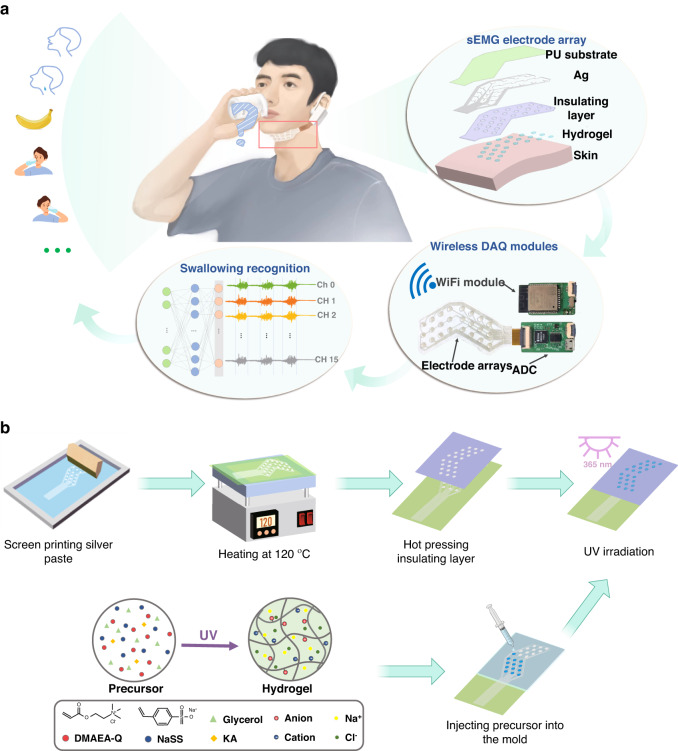
Surface electromyography (sEMG) is widely used in monitoring human health. Nonetheless, it is challenging to capture high-fidelity sEMG recordings in regions with intricate curved surfaces such as the larynx, because regular sEMG electrodes have stiff structures. In this study, we developed a stretchable, high-density sEMG electrode array via layer-by-layer printing and lamination. The electrode offered a series of excellent human‒machine interface features, including conformal adhesion to the skin, high electron-to-ion conductivity (and thus lower contact impedance), prolonged environmental adaptability to resist water evaporation, and epidermal biocompatibility. This made the electrode more appropriate than commercial electrodes for long-term wearable, high-fidelity sEMG recording devices at complicated skin interfaces. Systematic in vivo studies were used to investigate its ability to classify swallowing activities, which was accomplished with high accuracy by decoding the sEMG signals from the chin via integration with an ear-mounted wearable system and machine learning algorithms. The results demonstrated the clinical feasibility of the system for noninvasive and comfortable recognition of swallowing motions for comfortable dysphagia rehabilitation.
Overview
The claims and statistics of this paper haven’t been checked yet.
Free: it reads the open-access text and checks the first 5 claims that cite a source we can check. Create a free account to check every claim.
Integrity signals
Registry
Cites
Statistics
Figures
Verification
Claims the paper makes
The claims and statistics of this paper haven’t been checked yet.
Free: it reads the open-access text and checks the first 5 claims that cite a source we can check. Create a free account to check every claim.
Claims other papers make about this one
Each is checked against this paper’s own text: does it say what the citing paper says it does?
The source backs part of the claim, not all of it — or backs it for a different population, condition or comparison.
In the citing paper
“in the use of electromyography, AI aims to improve signal capture and analysis quality(3,17).”
From Artificial intelligence in the diagnosis and management of dysphagia: a scoping review (2025) · cites this paper as [17]
Experimental — accuracy not yet measured
Self-check
Percentages, sums and reported differences re-computed from the paper’s own numbers.
The self-check needs the paper’s full text.
Citations
Cites
Kim, D.-H., Lu, N., Ma, R., Kim, Y.-S., Kim, R.-H., Wang, S., Wu, J., Won, S. M., Tao, H., Islam, A., et al. (2011) · Science · doi:10.1126/science.1206157 · Cited by 4,836
Wearable sensors: modalities, challenges, and prospects
Heikenfeld, J., Jajack, A., Rogers, J., Gutruf, P., Tian, L., Pan, T., Li, R., Khine, M., Kim, J., Wang, J., et al. (2018) · Lab on a Chip · doi:10.1039/c7lc00914c · Cited by 1,434
Han, L., Liu, K., Wang, M., Wang, K., Fang, L., Chen, H., Zhou, J., & Lu, X. (2018) · Advanced Functional Materials · doi:10.1002/adfm.201704195 · Cited by 1,160
3D printing of conducting polymers
Yuk, H., Lu, B., Lin, S., Qu, K., Xu, J., Luo, J., & Zhao, X. (2020) · Nature Communications · doi:10.1038/s41467-020-15316-7 · Cited by 1,001 · cited 1×
“It can be enhanced by adding ions or by adding conductive fi llers such as carbon nanotubes and conductive polymers 28 – 31 .”
BackgroundClassification of Skin Disease Using Deep Learning Neural Networks with MobileNet V2 and LSTM
Srinivasu, P. N., SivaSai, J. G., Ijaz, M. F., Bhoi, A. K., Kim, W., & Kang, J. J. (2021) · Sensors · doi:10.3390/s21082852 · Cited by 759
Hydrogel interfaces for merging humans and machines
Yuk, H., Wu, J., & Zhao, X. (2022) · Nature Reviews Materials · doi:10.1038/s41578-022-00483-4 · Cited by 661 · cited 1×
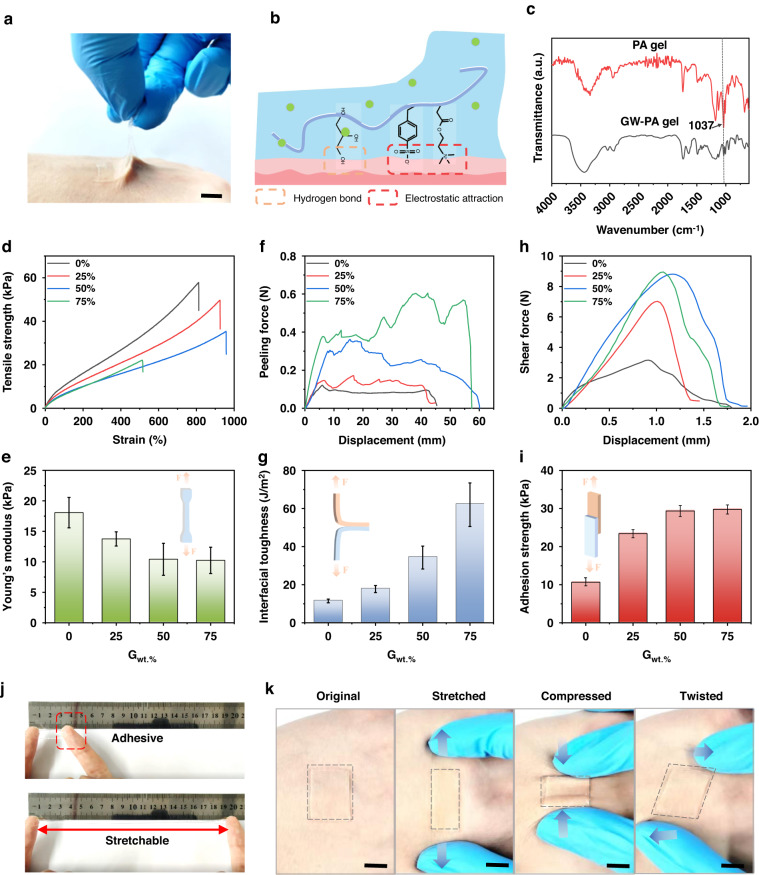
“Given that it has the lowest hardness of 10 kPa, which was similar to that of human soft tissue 37 , and the highest stretchability of 960%, the GW-PA gel with 50% (w/w) glycerol was chosen for construction of the GW-PA-Ag electrode.”
MethodAn electrically conductive silver–polyacrylamide–alginate hydrogel composite for soft electronics
Ohm, Y., Pan, C., Ford, M. J., Huang, X., Liao, J., & Majidi, C. (2021) · Nature Electronics · doi:10.1038/s41928-021-00545-5 · Cited by 546 · cited 1×
“The other category uses conductive fi llers fi lled with intrinsically stretchable composites, such as hydrogels or Poly-dimethylsiloxane (PDMS) fi lled with silver nanosh-eets 11,20 – 23 .”
Material‐Based Approaches for the Fabrication of Stretchable Electronics
Kim, D. C., Shim, H. J., Lee, W., Koo, J. H., & Kim, D. (2020) · Advanced Materials · doi:10.1002/adma.201902743 · Cited by 438
Solution-processable, soft, self-adhesive, and conductive polymer composites for soft electronics
Tan, P., Wang, H., Xiao, F., Lu, X., Shang, W., Deng, X., Song, H., Xu, Z., Cao, J., Gan, T., et al. (2022) · Nature Communications · doi:10.1038/s41467-022-28027-y · Cited by 403 · cited 1×
“In addition, commercial electrodes add a gel serving as a binder and ionic medium, which leads to loss of signal quality due to dehydration over long periods of use 5,6 .”
BackgroundWu, H., Yang, G., Zhu, K., Liu, S., Guo, W., Jiang, Z., & Li, Z. (2021) · Advanced Science · doi:10.1002/advs.202001938 · Cited by 395 · cited 1×
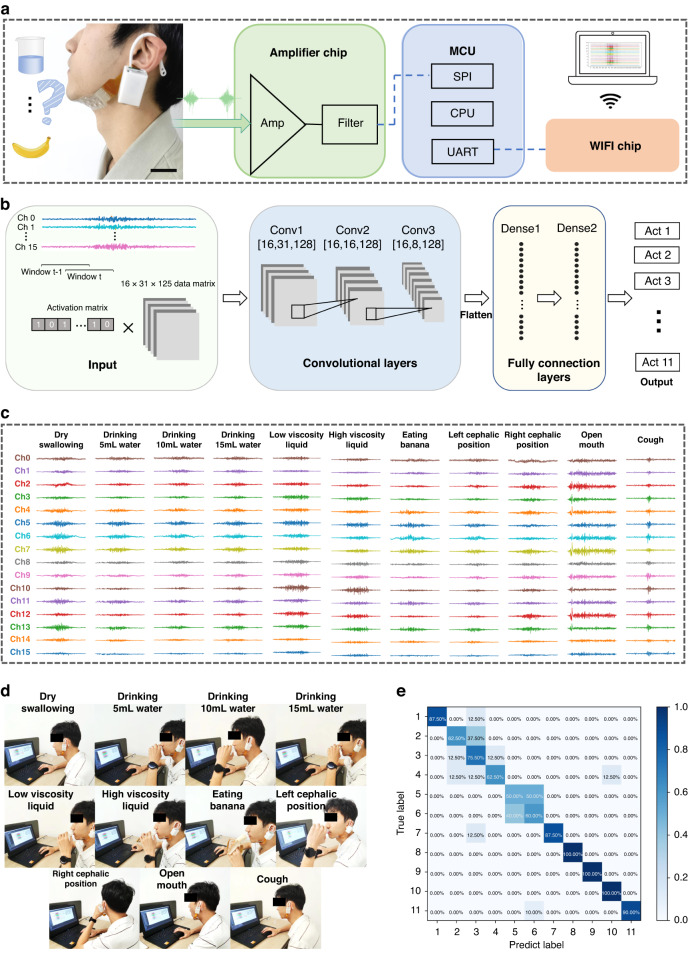
“This model enables real-time monitoring of the patient ’ s health status, and the data are processed and saved via wireless transmission, and the results are presented with simple visualizations 3,4 .”
MethodViscoelastic surface electrode arrays to interface with viscoelastic tissues
Tringides, C. M., Vachicouras, N., de Lázaro, I., Wang, H., Trouillet, A., Seo, B. R., Elosegui-Artola, A., Fallegger, F., Shin, Y., Casiraghi, C., et al. (2021) · Nature Nanotechnology · doi:10.1038/s41565-021-00926-z · Cited by 309 · cited 1×
“The other category uses conductive fi llers fi lled with intrinsically stretchable composites, such as hydrogels or Poly-dimethylsiloxane (PDMS) fi lled with silver nanosh-eets 11,20 – 23 .”
BackgroundUltrathin Hydrogel Films toward Breathable Skin‐Integrated Electronics
Cheng, S., Lou, Z., Zhang, L., Guo, H., Wang, Z., Guo, C., Fukuda, K., Ma, S., Wang, G., Someya, T., et al. (2023) · Advanced Materials · doi:10.1002/adma.202206793 · Cited by 291
Polyzwitterionic Hydrogels for Efficient Atmospheric Water Harvesting
Lei, C., Guo, Y., Guan, W., Lu, H., Shi, W., & Yu, G. (2022) · Angewandte Chemie International Edition · doi:10.1002/anie.202200271 · Cited by 271
Wang, S., Nie, Y., Zhu, H., Xu, Y., Cao, S., Zhang, J., Li, Y., Wang, J., Ning, X., & Kong, D. (2022) · Science Advances · doi:10.1126/sciadv.abl5511 · Cited by 246
Strong Tough Polyampholyte Hydrogels via the Synergistic Effect of Ionic and Metal–Ligand Bonds
Huang, Y., Xiao, L., Zhou, J., Liu, T., Yan, Y., Long, S., & Li, X. (2021) · Advanced Functional Materials · doi:10.1002/adfm.202103917 · Cited by 222 · cited 1×
“The neutral GW-PA gel had equal numbers of positive and negative charges (positively charged ammonium and negatively charged sulfonate) randomly distributed, which provides nonspeci fi c adhesion capacity 35 .”
BackgroundSelf-citationSelf‐Adjustable Adhesion of Polyampholyte Hydrogels
Roy, C. K., Guo, H. L., Sun, T. L., Ihsan, A. B., Kurokawa, T., Takahata, M., Nonoyama, T., Nakajima, T., & Gong, J. P. (2015) · Advanced Materials · doi:10.1002/adma.201504059 · Cited by 217 · cited 2×
“For example, Gong et al. reported a neutral polyampholyte hydrogel (PA gel), which showed rapid, strong, and reversible adhesion to charged hydrogels or biological tissues through coulombic interactions with its self-adjustable surface 27 .”
BackgroundAdvances in Screen Printing of Conductive Nanomaterials for Stretchable Electronics
Zavanelli, N., & Yeo, W.-H. (2021) · ACS Omega · doi:10.1021/acsomega.1c00638 · Cited by 207
Surface EMG crosstalk between knee extensor muscles: Experimental and model results
Farina, D., Merletti, R., Indino, B., Nazzaro, M., & Pozzo, M. (2002) · Muscle & Nerve · doi:10.1002/mus.10256 · Cited by 199 · cited 1×
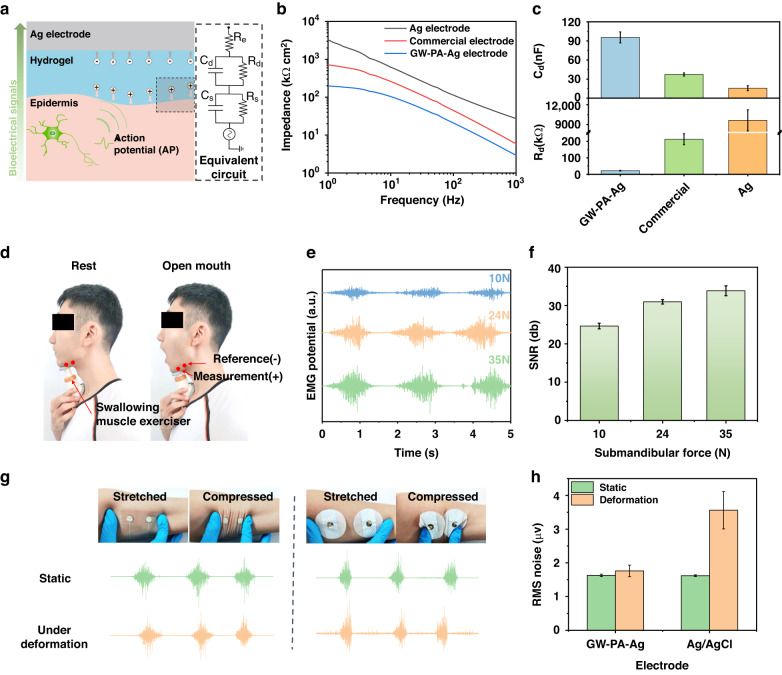
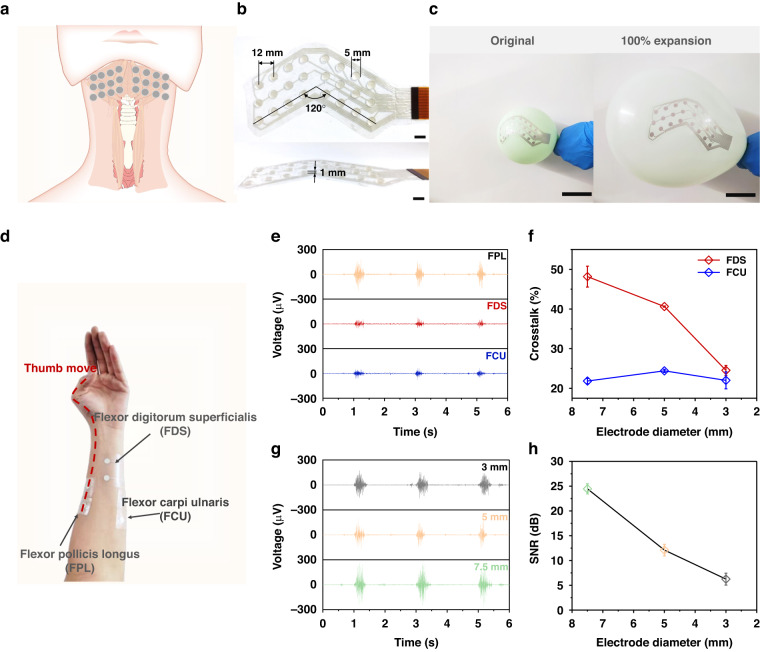
“The signal quality was assessed with the signal magnitude and crosstalk rate, the latter of which was determined by the ratio between the signal amplitudes recorded for the inactivated and activated muscles 43 .”
MethodHan, Q., Zhang, C., Guo, T., Tian, Y., Song, W., Lei, J., Li, Q., Wang, A., Zhang, M., Bai, S., et al. (2023) · Advanced Materials · doi:10.1002/adma.202209606 · Cited by 181
Yang, G., Zhu, K., Guo, W., Wu, D., Quan, X., Huang, X., Liu, S., Li, Y., Fang, H., Qiu, Y., et al. (2022) · Advanced Functional Materials · doi:10.1002/adfm.202200457 · Cited by 177 · cited 1×
“Moreover, sandwiching of the silver electrode between the hydrogel and PU substrate meant that this structure guaranteed little or no leakage of the silver electrode and little or no cytotoxicity to the surrounding tissues, which in turn enhanced the biocompatibility of the assembled electrode.”
BackgroundA Compliant Ionic Adhesive Electrode with Ultralow Bioelectronic Impedance
Pan, L., Cai, P., Mei, L., Cheng, Y., Zeng, Y., Wang, M., Wang, T., Jiang, Y., Ji, B., Li, D., et al. (2020) · Advanced Materials · doi:10.1002/adma.202003723 · Cited by 167 · cited 1×
“Hydrogels can establish robust bioelectronic interfaces with properties close to those of human tissue as well as easy processability with which to engineer the mechanical strength, biological adhesion, or electrical conductivity 24 – 26 .”
BackgroundAn epidermal sEMG tattoo-like patch as a new human–machine interface for patients with loss of voice
Liu, H., Dong, W., Li, Y., Li, F., Geng, J., Zhu, M., Chen, T., Zhang, H., Sun, L., & Lee, C. (2020) · Microsystems & Nanoengineering · doi:10.1038/s41378-019-0127-5 · Cited by 144
Printed Stretchable Liquid Metal Electrode Arrays for In Vivo Neural Recording
Dong, R., Wang, L., Hang, C., Chen, Z., Liu, X., Zhong, L., Qi, J., Huang, Y., Liu, S., Wang, L., et al. (2021) · Small · doi:10.1002/smll.202006612 · Cited by 143
Self-citationWu, L. H., Li, L., Qu, M., Wang, H., & Bin, Y. (2020) · ACS Applied Polymer Materials · doi:10.1021/acsapm.0c00264 · Cited by 135
Lee, H., Lee, S., Kim, J.-S., Jung, H., Yoon, K. J., Gandla, S., Park, H., & Kim, S. (2023) · npj Flexible Electronics · doi:10.1038/s41528-023-00246-3 · Cited by 132
Guo, W., Zheng, P., Huang, X., Zhuo, H., Wu, Y., Yin, Z., Li, Z., & Wu, H. (2019) · ACS Applied Materials & Interfaces · doi:10.1021/acsami.8b21836 · Cited by 125 · cited 1×
“The other category uses conductive fi llers fi lled with intrinsically stretchable composites, such as hydrogels or Poly-dimethylsiloxane (PDMS) fi lled with silver nanosh-eets 11,20 – 23 .”
BackgroundKim, M. K., Kantarcigil, C., Kim, B., Baruah, R. K., Maity, S., Park, Y., Kim, K., Lee, S., Malandraki, J. B., Avlani, S., et al. (2019) · Science Advances · doi:10.1126/sciadv.aay3210 · Cited by 109 · cited 2×
“With continuous advancements in medical technology, the prevention and rehabilitation processes for diseases with long treatment cycles, such as strokes, are becoming major concerns 1,2 .”
BackgroundAll-weather, natural silent speech recognition via machine-learning-assisted tattoo-like electronics
Wang, Y., Tang, T., Xu, Y., Bai, Y., Yin, L., Li, G., Zhang, H., Liu, H., & Huang, Y. (2021) · npj Flexible Electronics · doi:10.1038/s41528-021-00119-7 · Cited by 100 · cited 1×
“One is based on an elaborate structure such as serpentine, where a nonstretchable conductor is spatially endowed with deformability 7,9,13 – 19 .”
BackgroundA highly stable electrode with low electrode-skin impedance for wearable brain-computer interface
Hsieh, J.-C., Alawieh, H., Li, Y., Iwane, F., Zhao, L., Anderson, R., Abdullah, S. I., Tang, K. W. K., Wang, W., Pyatnitskiy, I., et al. (2022) · Biosensors and Bioelectronics · doi:10.1016/j.bios.2022.114756 · Cited by 94 · cited 1×
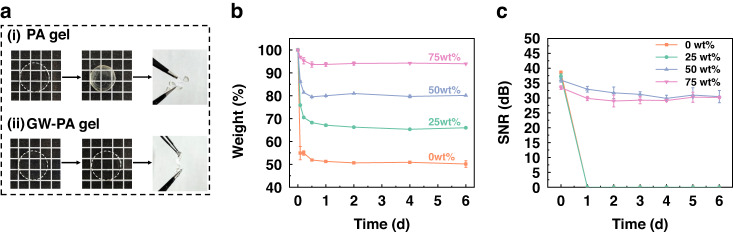
“In addition, to enable long-term monitoring of physiological signals, the resistance of the hydrogels to water loss can be enhanced by adding humectants in the network 32 .”
BackgroundIn Situ Forming Epidermal Bioelectronics for Daily Monitoring and Comprehensive Exercise
Tang, H., Li, Y., Chen, B., Chen, X., Han, Y., Guo, M., Xia, H.-Q., Song, R., Zhang, X., & Zhou, J. (2022) · ACS Nano · doi:10.1021/acsnano.2c03414 · Cited by 92
Kim, N., Lim, T., Song, K., Yang, S., & Lee, J. (2016) · ACS Applied Materials & Interfaces · doi:10.1021/acsami.6b05025 · Cited by 68
Zhu, M., Yu, B., Yang, W., Jiang, Y., Lu, L., Huang, Z., Chen, S., & Li, G. (2017) · BioMedical Engineering OnLine · doi:10.1186/s12938-017-0424-x · Cited by 68
High-resolution and large-size stretchable electrodes based on patterned silver nanowires composites
Lin, Y. Q., Li, Q., Ding, C., Wang, J., Yuan, W., Liu, Z., Su, W., & Cui, Z. (2022) · Nano Research · doi:10.1007/s12274-022-4088-x · Cited by 61
Jain, V., Ochoa, M., Jiang, H., Rahimi, R., & Ziaie, B. (2019) · Microsystems & Nanoengineering · doi:10.1038/s41378-019-0067-0 · Cited by 57
Self-citationWang, C., Cai, M., Hao, Z., Nie, S., Liu, C., Du, H.-G., Wang, J., Chen, W., & Song, J. (2021) · Advanced Intelligent Systems · doi:10.1002/aisy.202100031 · Cited by 57
Chae, H., Kwon, H., Kim, Y.-K., Won, Y., Kim, D., Park, H., Kim, S., & Gandla, S. (2019) · ACS Applied Materials & Interfaces · doi:10.1021/acsami.9b06363 · Cited by 56
Conformal electrodes for on‐skin digitalization
Wang, C., He, K., Li, J., & Chen, X. (2021) · SmartMat · doi:10.1002/smm2.1068 · Cited by 55 · cited 1×
“In addition, commercial electrodes add a gel serving as a binder and ionic medium, which leads to loss of signal quality due to dehydration over long periods of use 5,6 .”
BackgroundSoft Electronics Enabled Ergonomic Human-Computer Interaction for Swallowing Training
Lee, Y., Nicholls, B., Sup Lee, D., Chen, Y., Chun, Y., Siang Ang, C., & Yeo, W.-H. (2017) · Scientific Reports · doi:10.1038/srep46697 · Cited by 53 · cited 1×
“According to previous studies on the correlation between sEMG activities and swallowing 41 , the subchinococcygeal and subglottic muscle groups are the active muscles that generate swallowing action, and their sEMG signals can, to some extent, re fl ect the ease of hyoid elevation movements 42 .”
MethodA Flexible Wireless sEMG System for Wearable Muscle Strength and Fatigue Monitoring in Real Time
Gong, Q., Jiang, X., Liu, Y., Yu, M., & Hu, Y. (2023) · Advanced Electronic Materials · doi:10.1002/aelm.202200916 · Cited by 37
Intrinsically anti-freezing and anti-dehydration hydrogel for multifunctional wearable sensors
He, S., Cheng, Q., Liu, Y., Rong, Q., & Liu, M. (2022) · Science China Materials · doi:10.1007/s40843-021-2005-2 · Cited by 35
Zhu, K., Guo, W., Yang, G., Li, Z., & Wu, H. (2021) · ACS Applied Electronic Materials · doi:10.1021/acsaelm.0c01129 · Cited by 33
Khan, M. A., Saibene, M., Das, R., Brunner, I., & Puthusserypady, S. (2021) · Journal of Neural Engineering · doi:10.1088/1741-2552/ac36aa · Cited by 30
Noninvasive Measurement of Tongue Pressure and Its Correlation with Swallowing and Respiration
Shieh, W., Wang, C., Cheng, H. K., & Imbang, T. I. (2021) · Sensors · doi:10.3390/s21082603 · Cited by 18 · cited 1×
“This model enables real-time monitoring of the patient ’ s health status, and the data are processed and saved via wireless transmission, and the results are presented with simple visualizations 3,4 .”
MethodZhao, N., Zhao, B., Shen, G., Jiang, C., Wang, Z., Lin, Z., Zhou, L., & Liu, J. (2022) · Journal of Neural Engineering · doi:10.1088/1741-2552/acab2f · Cited by 14
Quantification of the Swallowing Mechanism Through Muscle Synergy Analysis
Murakami, C., SASAKI, M., Shimoda, S., & Tamada, Y. (2022) · Dysphagia · doi:10.1007/s00455-022-10523-4 · Cited by 9
Cited by
Lee, H. K., Yang, Y. J., Koirala, G. R., Oh, S., & Kim, T. (2024) · Biomaterials · doi:10.1016/j.biomaterials.2024.122632 · Cited by 56
Zhou, Z., Jin, Y., Fu, J., Si, S., Liu, M., Hu, Y., Gan, J., Deng, Y., Li, R., & Yang, J. (2025) · npj Flexible Electronics · doi:10.1038/s41528-025-00388-6 · Cited by 56
“With the aging population and the increasing prevalence of sedentary lifestyles, there has been a surge in demand for physiological monitoring devices, particularly for the continuous tracking of vital signs such as heart rate and respiration 1 – 14 .”
Soft skin-interfacing electrodes for wearable bioelectronics
Carneiro, M. R., Tavakoli, M., & Majidi, C. (2025) · Matter · doi:10.1016/j.matt.2025.102409 · Cited by 44
Li, R., Xiang, H., Liang, Q., Zhou, Y., Ma, X., Chao, D., Xin, M., Yuan, H., & Jia, X. (2024) · Nano Energy · doi:10.1016/j.nanoen.2024.109946 · Cited by 27
Zhong, G., Liu, Q., Huang, Y., Geng, H., & Xu, T. (2025) · Advanced Materials · doi:10.1002/adma.202508206 · Cited by 27
Metadata
- Authors
- Zhang, D., Chen, Z., Xiao, L., Zhu, B., Wu, R., Ou, C., Ma, Y., Xie, L., & Jiang, H.
- Affiliations
- South China University of Technology (CN)
- Corresponding author
- Xie, Longhan
- Jiang, Hongjie
- Venue
- Microsystems & Nanoengineering
- Published
- 2023-09-18
- Volume
- 9
- Issue
- 1
- Pages
- 115-115
- ISSN
- 2055-7434 (ISSN-L)
- PMC
- PMC10507084
- OpenAlex
- W4386835103
- Cited by
- 43
- References
- 46
- Citations by year
- 2026: 13 · 2025: 20 · 2024: 8 · 2023: 2
- FWCI
- 3.39
- Type
- journal article
- Language
- en
- Update notices
- correction (2023-11-24)
- Open access
- gold
- doi.org
- Licence
- cc-by
- creativecommons.org/licenses/by/4.0 (tdm)
- creativecommons.org/licenses/by/4.0 (vor)
- Locations
- Microsystems & Nanoengineering (publishedVersion, cc-by)
- Research Square (acceptedVersion, cc-by)
- PubMed Central (publishedVersion, cc-by)
- PubMed (publishedVersion)
- DOAJ (DOAJ: Directory of Open Access Journals) (submittedVersion, cc-by-sa)
- Funders
- National Natural Science Foundation of China (No. 52075177, 52075177, 42177440, Grant No. 52075177, 51903079)
- National Key Research and Development Program of China (No. 2021YFB3301400, 52075177, 2021YFB3301400)
- Topics
- Physical Sciences › Engineering › Biomedical Engineering › Advanced Sensor and Energy Harvesting Materials
- Physical Sciences › Engineering › Biomedical Engineering › Muscle activation and electromyography studies
- Life Sciences › Neuroscience › Cellular and Molecular Neuroscience › Neuroscience and Neural Engineering
- Keywords
- high-density electrode arrays, swallowing rehabilitation, laryngeal electromyography, layer-by-layer printing, lamination, contact impedance, wearable sensors
About these checks
Registry, retraction, Cites and statistics results are computed, not judged, with one exception: a printed reference that no index lists is read once by a model before it counts as a citation error. Claims are extracted by a model and kept only when their quote appears verbatim in the text; each cited source is then checked, with a model’s help, for whether it says what the claim relies on. Those verdicts can be wrong — read the claim’s quote and the cited source before relying on one.
Statistics and arithmetic are recomputed, not judged.
Confidence bands are shown only for fields calibrated on our annotated test set. None is calibrated yet, so no band is shown.
What counts as a claim ›How we measure confidence ›How we check this ›
Are you an author, or do you see a problem with this page? Request a review
Data sources
Bibliographic data: Semantic Scholar, OpenAlex, Crossref.
Contains information from the Semantic Scholar Academic Graph Datasets, made available under the ODC Attribution License (ODC-BY 1.0).
Semantic Scholar’s data is described in: Kinney, R., et al. (2023). The Semantic Scholar Open Data Platform. arXiv:2301.10140.
