

Big data approaches to decomposing heterogeneity across the autism spectrum
Open accessPublished version of a preprint
The DOI matches its Crossref record; 111 of the 111 references it cites were found in a registry or an index.
Abstract
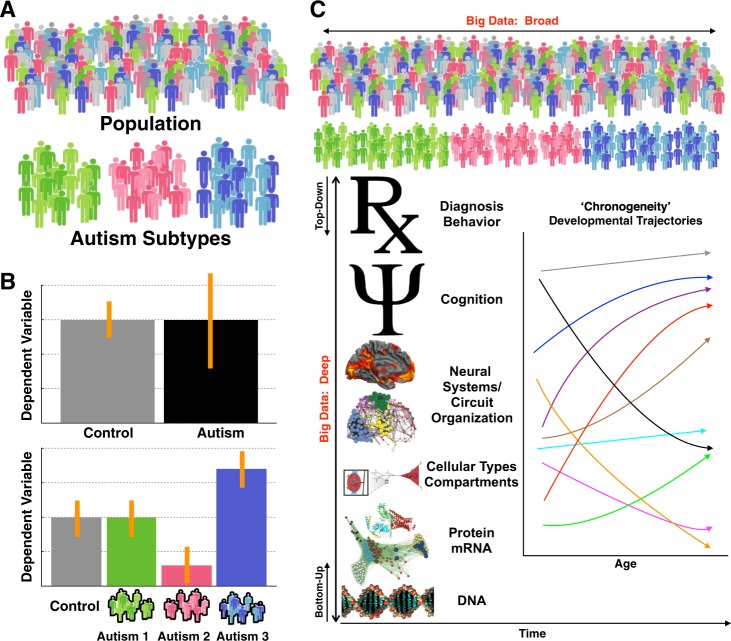
Autism is a diagnostic label based on behavior. While the diagnostic criteria attempt to maximize clinical consensus, it also masks a wide degree of heterogeneity between and within individuals at multiple levels of analysis. Understanding this multi-level heterogeneity is of high clinical and translational importance. Here we present organizing principles to frame research examining multi-level heterogeneity in autism. Theoretical concepts such as 'spectrum' or 'autisms' reflect non-mutually exclusive explanations regarding continuous/dimensional or categorical/qualitative variation between and within individuals. However, common practices of small sample size studies and case-control models are suboptimal for tackling heterogeneity. Big data are an important ingredient for furthering our understanding of heterogeneity in autism. In addition to being 'feature-rich', big data should be both 'broad' (i.e., large sample size) and 'deep' (i.e., multiple levels of data collected on the same individuals). These characteristics increase the likelihood that the study results are more generalizable and facilitate evaluation of the utility of different models of heterogeneity. A model's utility can be measured by its ability to explain clinically or mechanistically important phenomena, and also by explaining how variability manifests across different levels of analysis. The directionality for explaining variability across levels can be bottom-up or top-down, and should include the importance of development for characterizing changes within individuals. While progress can be made with 'supervised' models built upon a priori or theoretically predicted distinctions or dimensions of importance, it will become increasingly important to complement such work with unsupervised data-driven discoveries that leverage unknown and multivariate distinctions within big data. A better understanding of how to model heterogeneity between autistic people will facilitate progress towards precision medicine for symptoms that cause suffering, and person-centered support.
Overview
The claims and statistics of this paper haven’t been checked yet.
Free: it reads the open-access text and checks the first 5 claims that cite a source we can check. Create a free account to check every claim.
Integrity signals
Registry
Cites
Statistics
Figures
Verification
Claims the paper makes
The claims and statistics of this paper haven’t been checked yet.
Free: it reads the open-access text and checks the first 5 claims that cite a source we can check. Create a free account to check every claim.
Claims other papers make about this one
Each is checked against this paper’s own text: does it say what the citing paper says it does?
The source backs part of the claim, not all of it — or backs it for a different population, condition or comparison.
In the citing paper
“The scattered findings reported in studies about predictive coding and ASD may be related to a wide variety of factors, such as the dif ferences in tasks, the presence of co-occurring conditions, variations in medication use, potential cultural influences that shape responses and behaviors, as well as the intrinsic heterogeneity of ASD itself, which may manifest uniquely in each individual (Lomb”
From Predictive coding in neuropsychiatric disorders: a systematic transdiagnostic review. (2025) · cites this paper as Lombardo et al., 2019
Experimental — accuracy not yet measuredThe cited source says what the claim attributes to it.
In the citing paper
“Alongside the changes in classification systems, by now heterogeneity has already increased with regard to the expression and severity of the core and associated symptoms of ASD [4–6].”
From Autism spectrum disorder in ICD-11—a critical reflection of its possible impact on clinical practice and research (2024) · cites this paper as [4]
Self-check
Percentages, sums and reported differences re-computed from the paper’s own numbers.
The self-check needs the paper’s full text.
Citations
Cites
The Elements of Statistical Learning
Hastie, T., Tibshirani, R., & Friedman, J. (2009) · Springer Series in Statistics · doi:10.1007/978-0-387-84858-7 · Cited by 25,970
The Elements of Statistical Learning: Data Mining, Inference, and Prediction
John Lu, Z. Q. (2010) · Journal of the Royal Statistical Society Series A: Statistics in Society · doi:10.1111/j.1467-985x.2010.00646_6.x · Cited by 12,390
(1943) · The Nervous child · Cited by 8,870
Power failure: why small sample size undermines the reliability of neuroscience
Button, K. S., Ioannidis, J. P. A., Mokrysz, C., Nosek, B. A., Flint, J., Robinson, E. S. J., & Munafò, M. R. (2013) · Nature Reviews Neuroscience · doi:10.1038/nrn3475 · Cited by 7,641 · cited 2×
“Such inflated effects present an over-optimistic view on the identified effects and are prone to the winner’s curse [70].”
BackgroundInsel, T., Cuthbert, B., Garvey, M., Heinssen, R., Pine, D. S., Quinn, K., Sanislow, C., & Wang, P. (2010) · American Journal of Psychiatry · doi:10.1176/appi.ajp.2010.09091379 · Cited by 7,067
Baron-Cohen, S., Wheelwright, S., Skinner, R., Martin, J., & Clubley, E. (2001) · Journal of Autism and Developmental Disorders · doi:10.1023/a:1005653411471 · Cited by 6,450
Self-citationA New Initiative on Precision Medicine
Collins, F. S., & Varmus, H. (2015) · New England Journal of Medicine · doi:10.1056/nejmp1500523 · Cited by 5,202
Wing, L., & Gould, J. (1979) · Journal of Autism and Developmental Disorders · doi:10.1007/bf01531288 · Cited by 2,587 · cited 1×
“In the 1980s, Wing [56] and colleagues not only introduced the work of Hans Asperger into the English speaking world, but also conducted epidemiological studies that demonstrated the heterogeneity in social, language, motor, and cognitive abilities in the autistic and developmentally delayed population [57, 58].”
BackgroundLai, M.-C., Lombardo, M. V., & Baron-Cohen, S. (2014) · The Lancet · doi:10.1016/s0140-6736(13)61539-1 · Cited by 2,371
Self-citationDie „Autistischen Psychopathen” im Kindesalter
Asperger, H. (1944) · Archiv für Psychiatrie und Nervenkrankheiten · doi:10.1007/bf01837709 · Cited by 2,163 · cited 3×
“Moreover, both Leo Kanner and Hans Asperger recognized good cognitive potential in their child patients50, 52 and therefore autism was not necessarily tied to intellectual disability.”
Background
Research works printed but not linked: 1
- Loth E Ahmad J Mason L Crawley DV Hayward HL San Jose Caceres A Identifying cross-domain cognitive subtypes among children, adolescents, and adults with autism spectrum disorders 2017 San Francisco International Society for Autism Research
Cited by
Items 301–400 of 546
Chien, Y., Chen, Y.-J., Tseng, W., Hsu, Y., Wu, C., Tseng, W. I., & Gau, S. S. (2022) · Autism · doi:10.1177/13623613221125620 · Cited by 5
“Autism is a common, highly heritable neurodevelopmental condition with remarkable clinical and genetic heterogeneity, which presents a significant challenge in searching for the genetic etiology of the disorder (Lombardo et al., 2019).”
BackgroundCamodeca, A. (2022) · Current Psychology · doi:10.1007/s12144-022-04097-5 · Cited by 4
“More granular analysis could capture variation within the BAP more effectively, which would likely better elucidate known heterogeneity of the BAP (Amaral et al., 2019; Christ et al., 2010; Demetriou et al., 2019; Lombardo et al., 2019; Pender et al., 2020).”
BackgroundResultGray matter covariations in autism: out-of-sample replication using the ENIGMA autism cohort
Mei, T., Llera, A., Forde, N. J., van Rooij, D., Floris, D. L., Beckmann, C. F., & Buitelaar, J. K. (2024) · Molecular Autism · doi:10.1186/s13229-024-00583-8 · Cited by 9
“The discrepancy of results varies within sites may relate to the high clinical, biological, and etiologic heterogeneity within autistic individuals [17].”
BackgroundAnxiety and threat‐related attentional biases in adolescents with fragile X syndrome
Kelleher, B., Hogan, A. L., Ezell, J. A., Caravella, K. E., Schmidt, J., Wang, Q., & Roberts, J. E. (2020) · Journal of Intellectual Disability Research · doi:10.1111/jir.12715 · Cited by 6
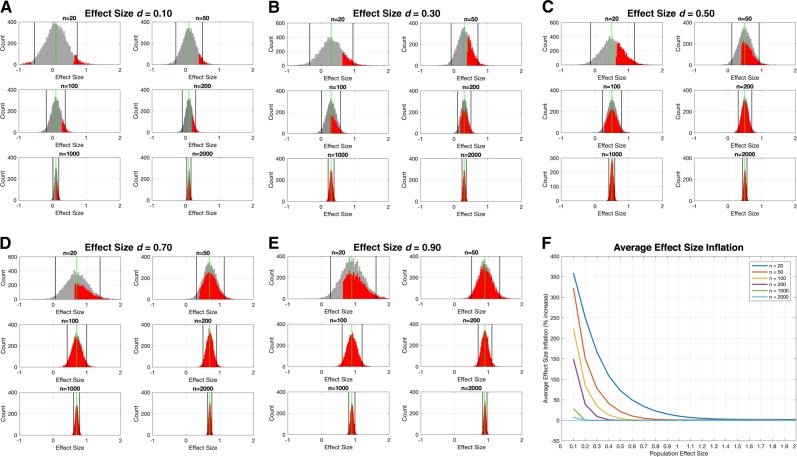
“In addition to compromising power, small samples can be vulnerable to unstable or inflated statistical estimates, particularly in regression models (Lombardo et al., 2019).”
BackgroundUsing Connectivity to Explain Neuropsychiatric Conditions: The Example of Autism
Adamek, J. H., Luo, Y., & Ewen, J. B. (2022) · Handbook of Neuroengineering · doi:10.1007/978-981-15-2848-4_90-1 · Cited by 6
A Hitchhiker’s Guide to Working with Large, Open-Source Neuroimaging DatasetsPreprint
Horien, C. L., Noble, S., Greene, A. S., Lee, K., Barron, D. S., Gao, S., O'Connor, D., Salehi, M., Dadashkarimi, J., Shen, X., et al. (2020) · Preprints.org · doi:10.20944/preprints202007.0153.v1 · Cited by 6
Bhavna, K., Banerjee, R., & Roy, D. (2023) · bioRxiv (Cold Spring Harbor Laboratory) · doi:10.1101/2023.01.21.525016 · Cited by 3
“In the past few years, DNNs have revolutionized the field of Ex-AI with major successes in applications such as computer vision, object recognition, natural scene processing, and natural language processing [12], [13].”
BackgroundTasnim, A., Alkislar, I., Hakim, R., Turecek, J., Abdelaziz, A., Orefice, L. L., & Ginty, D. D. (2023) · bioRxiv (Cold Spring Harbor Laboratory) · doi:10.1101/2023.05.09.539589 · Cited by 4
Clarke, N., Urchs, S. G. W., Nguyen, H. D., Moreau, C. A., Dansereau, C. L., Tam, A., Evans, A. C., & Bellec, P. (2025) · GigaScience · doi:10.1093/gigascience/giaf091 · Cited by 3
“This could help disentangle the heterogeneous relationships across these levels in ASD [ 3 , 6 ].”
Yang, Z., Chen, X., Li, Y., Feng, Y., Lin, L., & Hou, X. (2026) · Brain Behavior & Immunity - Health · doi:10.1016/j.bbih.2026.101189 · Cited by 5
“Such investigations could provide valuable insights into the potential role of SCFAs in ASD heterogeneity, as suggested by the dimensional approach to ASD proposed by Lombardo et al. (2019).”
Using Connectivity to Explain Neuropsychiatric Conditions: The Example of Autism
Adamek, J. H., Luo, Y., & Ewen, J. B. (2023) · Handbook of Neuroengineering · doi:10.1007/978-981-16-5540-1_90 · Cited by 4
Remote autism assessments – lessons learned from the Covid-19 pandemic: a service evaluation
Hartley, J., Purrington, J., & Hartley, G. (2023) · Advances in Autism · doi:10.1108/aia-08-2022-0043 · Cited by 3
Bennett, C. C., Stanojević, Č., Oh, J., Ahn, J., Jeon, Y., Son, K., & Abbott, N. (2024) · Wearable and Implantable Body Sensor Networks · doi:10.1109/bsn63547.2024.10780502 · Cited by 6
A cross-cultural examination of bi-directional mentalising in autistic and non-autistic adults
Schuster, B. A., Okamoto, Y., Takahashi, T., Kurihara, Y., Keating, C. T., Cook, J. L., Kosaka, H., Ide, M., Naruse, H., Kraaijkamp, C., et al. (2025) · Molecular Autism · doi:10.1186/s13229-025-00659-z · Cited by 3
“They are further line with a large body of work which attests high heterogeneity across many levels of analysis [92], and idiosyncratic behavioural [90, 93] and neural [94, 95] patterns within studied samples of autistic individuals, with some researchers arguing that autism lacks biological and…”
Chen, Q., Wang, Z., Wan, B., Chen, Q., Zhai, K., & Yu, J. Z. (2021) · Brain Sciences · doi:10.3390/brainsci11070859 · Cited by 4
Brain function and brain connectivity in autism
Trapani, J. A., Bednarz, H. M., & Kana, R. K. (2022) · Elsevier eBooks · doi:10.1016/b978-0-12-816393-1.00003-8 · Cited by 4
Santos, A., Caramelo, F. J., Melo, J. B., & Castelo-Branco, M. S. (2022) · Journal of Personalized Medicine · doi:10.3390/jpm12101579 · Cited by 5
Wilkinson, M. K., Keehn, R. J. J., Linke, A. C., You, Y., Gao, Y., Alemu, K., Correas, Á., Rosen, B. Q., Kohli, J. S., Wagner, L. C., et al. (2022) · Neuroimage Reports · doi:10.1016/j.ynirp.2022.100134 · Cited by 4
Early developmental milestone clusters of autistic children based on electronic health records
Ben‐Sasson, A., Guedalia, J., Ilan, K., Shefer, G., Cohen, R., & Gabis, L. V. (2024) · Autism Research · doi:10.1002/aur.3177 · Cited by 5
“Utilizing big data, rich in both quantity and quality, presents an opportunity for unsupervised data-driven discoveries of this variability (Lombardo et al., 2019).”
Vicente, A., Ábalos, Z., Martin-Gonzalez, I., Ramos‐Cabo, S., & Castroviejo, E. (2024) · Handbook of pragmatics online/Handbook of pragmatics · doi:10.1075/hop.27.aut4 · Cited by 4
Delineating a Pathway for the Discovery of Functional Connectome Biomarkers of Autism
Park, S., Thomson, P., Kiar, G., Castellanos, F. X., Milham, M. P., Bernhardt, B. C., & Martino, A. D. (2024) · Advances in neurobiology · doi:10.1007/978-3-031-69491-2_18 · Cited by 5
Adrien, J., Blanc, R., & Thiébaut, É. (2025) · Frontiers in Psychiatry · doi:10.3389/fpsyt.2024.1470466 · Cited by 4
Subgrouping autism and ADHD based on structural MRI population modelling centiles
Pecci-Terroba, C., Lai, M., Lombardo, M. V., Chakrabarti, B., Ruigrok, A. N. V., Suckling, J., Anagnostou, E. A., Lerch, J. P., Taylor, M. J., Nicolson, R., et al. (2025) · Molecular Autism · doi:10.1186/s13229-025-00667-z · Cited by 7
“…approaches have been the main technique used to study these conditions; however, they overlook phenotypic and likely, neurobiological diversity in such heterogeneous disorders [1–3] by combining all individuals into a single group, thereby masking potential differences behind the group average.”
Self-citationExploring the Relationship of Autism Spectrum Disorder Characteristics and Sleep Disturbances
Miner, S., McVoy, M. K., & Damato, E. G. (2026) · Autism & Developmental Language Impairments · doi:10.1177/23969415261419740 · Cited by 7
“These pathways may contribute to domain-speci fi c pro fi les (Bertelsen et al., 2021; Lombardo et al., 2019).”
Atypical genomic patterning of the cerebral cortex in autism with poor early language outcomePreprint
Lombardo, M. V., Eyler, L., Pramparo, T., Gazestani, V. H., Hagler, D. J., Chen, C., Dale, A. M., Seidlitz, J., Bethlehem, R. A. I., Bertelsen, N., et al. (2020) · bioRxiv (Cold Spring Harbor Laboratory) · doi:10.1101/2020.08.18.253443 · Cited by 3
Self-citationGatica‐Bahamonde, G., Alarcón, P., Méndez-Fadol, A., Allison, C. L., Baron‐Cohen, S., & Román-Urrestarazu, A. (2021) · PsyArXiv (OSF Preprints) · doi:10.31234/osf.io/qn4v3 · Cited by 4
Self-citationMandelli, V., Busuoli, E. M., Godel, M., Kojovic, N., Sinai-Gavrilov, Y., Gev, T., Contaldo, A., Courchesne, E., Pierce, K., Golan, O., et al. (2025) · medRxiv · doi:10.1101/2025.04.14.25325786 · Cited by 4
“…in society today and represents a broad population of individuals that are heterogeneous across multiple scales, from genotype to phenotype (Lombardo et al., 2019), across development (Gentles et al., 2023), and across important clinical outcomes (e.g., responses to intervention) (Godel et…”
Self-citationvan den Heuvel, R. M., Teunisse, J., Radhoe, T. A., van der Putten, W., Torenvliet, C., Wen, S., Wensing, M., & Geurts, H. M. (2025) · Journal of Autism and Developmental Disorders · doi:10.1007/s10803-025-06722-1 · Cited by 6
“…topic also suggests that there is a large heterogeneity in social network aspects within the group of autistic individuals, which is consistent with the notion of large heterogeneity between individuals on the autism spectrum in general (Agelink van Rentergem et al., 2021; Lombardo et al., 2019).”
Autism, Personality Pathology, and the Neural Response to Rewards
Barkley, S. B., Day, T. C., Lerner, M. D., & Nelson, B. D. (2025) · Journal of Autism and Developmental Disorders · doi:10.1007/s10803-025-06789-w · Cited by 2
“…categorical definition of ASD as a target for neuroscience research is therefore highly imprecise, which makes it more likely that case-control investigations of neurobiological under-pinnings of autism (i.e., reward systems) will yield mixed findings (Lenroot & Yeung, 2013; Lombardo et al., 2019).”
Multi-level graph self-supervised learning for multi-modal medical corpus construction
Lin, Y., Feng, J., Chen, X., Xue, R., Jiang, J., Tian, Z., & Wang, J. (2025) · Pattern Recognition · doi:10.1016/j.patcog.2025.112113 · Cited by 7
Wang, Y., Chen, Z., Song, P., Lam, G. Y. H., Kang, X., Wong, P. C. M., & Geng, X. (2025) · Progress in Neuro-Psychopharmacology and Biological Psychiatry · doi:10.1016/j.pnpbp.2025.111452 · Cited by 5
Latent trajectories in autistic individuals: A systematic review
Hiralal, K. R., Dieleman, G. C., Kok, B. R., Diederen, L. D., Duman, R. P., Hillegers, M. H. J., & Mous, S. E. (2025) · Autism · doi:10.1177/13623613251370818 · Cited by 3
“Autism heterogeneity poses well-recognized challenges for applying research to clinical practice (Lombardo et al., 2019).”
Alikadic, L., & Röer, J. P. (2025) · Auditory Perception & Cognition · doi:10.1080/25742442.2025.2562771 · Cited by 3
Myelin, white matter, and social deficits in autism spectrum disorder
Kimchi-Feldhorn, O., Nir, A., & Barak, B. (2025) · Neural Regeneration Research · doi:10.4103/nrr.nrr-d-25-00366 · Cited by 4
EEG neurosubtyping of infants predicts language trajectories
Blanco-Gomez, G., Wright, N., O’Reilly, C., Webb, S. J., Elsabbagh, M., & The BASIS Team (2025) · Journal of Neural Transmission · doi:10.1007/s00702-025-03063-2 · Cited by 2
Batrancea, L. M., Akgüller, Ö., Balcı, M. A., & Gãban, L. (2026) · Biomedicines · doi:10.3390/biomedicines14010137 · Cited by 3
Gut microbiome composition and strain-sharing in multiplex autism spectrum disorder families
Lu, W., Wong, O. W., Zhu, J., Chen, S., Tun, H. M., Wan, Y., Xu, Z., Cheung, C. P., Ching, J. Y. L., Cheong, P. K., et al. (2026) · Nature Communications · doi:10.1038/s41467-026-70142-7 · Cited by 3
Bhavna, K., Sharma, S., & Rosado-Muñoz, A. (2026) · Neurocomputing · doi:10.1016/j.neucom.2026.133145 · Cited by 2
Yang, C., Qiu-rong, Z., Wang, X.-K., Dong, W., Ma, S., Sun, F.-F., Cao, L.-F., & Yuan, L. C. (2026) · Brain Science and Child Development · doi:10.1016/j.bscd.2026.100003 · Cited by 4
Microbiome biomarkers in autism spectrum disorder: Toward prediction, diagnosis, and prognosis
Wong, O. W. H., Zheng, Z., Wang, M., Cao, A., Chan, F. K. L., Ng, S. C., & Su, Q. (2026) · Cell Reports Medicine · doi:10.1016/j.xcrm.2026.102780 · Cited by 3
Oxytocin and autism – A precision medicine framework to unpack mechanisms and evidence
Boulton, K., & Guastella, A. J. (2026) · Neuroscience & Biobehavioral Reviews · doi:10.1016/j.neubiorev.2026.106746 · Cited by 3
Modeling how autistic and non-autistic groups learn about their own and each other’s preferences
Cahalan, S. E., Perla, R., Block, S., Loughlin, M., Korn, C. W., & Rosenblau, G. (2026) · Nature Mental Health · doi:10.1038/s44220-026-00650-4 · Cited by 2
“Large samples are needed to systematically investigate whether and how individuals on the autism spectrum differ in social learning from non-autistic samples and to relate the larger heterogeneity in social learning to demographics and autistic traits 36,37,39,40 .”
Recent Progress of Large-Scale Biomarker Consortia and Paths Forward in Autism Biomarker Development
Griffin, J. W., Cairney, B. E., Carson, W. E., Chetcuti, L., Dubois, A. E. E., Dumas, G., Jacquemont, S., Jeste, S., Momsen, J., Naples, A. J., et al. (2026) · Biological Psychiatry · doi:10.1016/j.biopsych.2026.08.005 · Cited by 3
Mazetto, C. T. M., CARI Innovations in Psychology, S. P., Thiébaut, É., Vizona, T. A., CARI Innovations in Psychology, S. P., Nassif, M. C., CARI Innovations in Psychology, S. P., dos Santos, R. R., CARI Innovations in Psychology, S. P., Paulais, M.-A. B., et al. (2021) · Psychology Research and Applications · doi:10.22606/pra.2021.33001 · Cited by 3
“This variability is present not only in the developmental profiles observed from one individual to another, but it is also seen in the significant heterogeneity found in intra-individual development (Lombardo et al., 2019; Uljarević et al., 2018).”
Ko, C., Kang, S., Hong, S., & Park, Y. R. (2023) · BMC Psychiatry · doi:10.1186/s12888-023-04978-4 · Cited by 5
Zhang, X., Song, X., & So, W. (2023) · Journal of Autism and Developmental Disorders · doi:10.1007/s10803-023-06049-9 · Cited by 4
“In future research, the data sample should be both “broad” (covering a large population) and “deep” (covering multiple levels of data) (Lombardo et al., 2019).”
Zhang, W., & Liao, Y. (2024) · International Journal of Speech-Language Pathology · doi:10.1080/17549507.2024.2321939 · Cited by 2
“…participant characteristics of individuals in a sample, which is important for advancing rehabilitation specificity, guiding who might benefit most from a given treat-ment, and better understanding the relationships between brain and behaviour (Covington & Duff, 2021; Lombardo et al., 2019).”
Alikadic, L., & Röer, J. P. (2024) · Research in Autism · doi:10.1016/j.rasd.2024.102493 · Cited by 3
Lu, H., Wang, S., Gao, L., Xue, Z., Liu, J., Niu, X., Zhou, R., & Guo, X. (2024) · Brain Imaging and Behavior · doi:10.1007/s11682-024-00957-9 · Cited by 2
“Small sample studies will decrease statistical validity and the probability of uncovering authentic results (But-ton et al., 2013; Lombardo et al., 2019)); (2) subjects with full intelligence quotient (FIQ), handedness, and eye status values (eyes open/closed); (3) subjects had no undue head motion…”
Khuntia, A. T., Buciuman, M.-O., Fanning, J. F., Stolicyn, A., Vetter, C. S., Armio, R.-L., From, T., Goffi, F., Hahn, L., Kaufmann, T., et al. (2024) · Neuroscience Applied · doi:10.1016/j.nsa.2024.105407 · Cited by 3
“However, meeting this criterion requires large and heterogenous samples that are representative of the inherent heterogeneity of the mental disorder in question (Lombardo et al., 2019; Feczko et al., 2019).”
A Normative Model Representing Autistic Individuals Amidst Autism Spectrum Phenotypic Heterogeneity
Portolese, J., Gomes, C. D. S., Gastaldi, V. D., Paula, C. S., Caetano, S. C., Bordini, D., Brunoni, D., Mari, J. D. J., Vêncio, R. Z. N., & Brentani, H. (2024) · Brain Sciences · doi:10.3390/brainsci14121254 · Cited by 5
Ma, S., Wang, X., Yang, C., Dong, W., Chen, D., Song, C. L., Zhang, Q., Zang, Y., & Yuan, L. (2024) · Autism Research · doi:10.1002/aur.3303 · Cited by 2
“First, the striking clinical and biological heterogeneity in autism should be considered, which was often mentioned in previous literatures (Lin et al. 2015; Lombardo, Lai, and Baron-Cohen 2019; Wolfers et al. 2019; Feczko et al. 2019).”
Genetic neurocognitive profile of autism unveiled with gene transcription
Zhang, Y., Li, F., Wu, H., Du, W. D., Shu, J., Wang, A., Xu, C., Li, C., Wang, Y., & Hu, S. (2025) · Neurobiology of Disease · doi:10.1016/j.nbd.2025.106925 · Cited by 2
“Distinct conditions within ASD may exhibit varying abnormal neurocognitive processes(Lombardo et al., 2019), as identified by ge-netic and magnetic resonance imaging (MRI) analyses(Buch et al., 2023; Jeste and Geschwind, 2014).”
Bianco, T. D., Estrin, G. L., Lautarescu, A., Oakley, B. F. M., Eaton, E., Terčon, J., Douglas, S., Plas, J. R. D., Belton, D., Loth, E., et al. (2025) · Open Research Europe · doi:10.12688/openreseurope.19394.1 · Cited by 3
Parsing Autism Heterogeneity: Transcriptomic Subgrouping of Imaging-Derived Phenotypes in Autism
Leyhausen, J., Gurr, C., Berg, L. M., Seelemeyer, H., Hermila, B., Schäfer, T., Chiocchetti, A. G., Pretzsch, C. M., Loth, E., Oakley, B. F. M., et al. (2025) · Biological Psychiatry Cognitive Neuroscience and Neuroimaging · doi:10.1016/j.bpsc.2025.07.001 · Cited by 7
“Therefore, autistic individuals differ in both the magnitude and nature of the transcriptomic associations, further substantiating the growing evidence of significant heterogeneity in autism on the phenotypic and mechanistic level (13,52).”
Okamoto, Y., Kitada, R., Kochiyama, T., Naruse, H., Makita, K., Miyahara, M., Okazawa, H., & Kosaka, H. (2020) · Cerebral Cortex Communications · doi:10.1093/texcom/tgaa007 · Cited by 2
“According to the concept of heterogeneities (Ecker and Murphy 2014; Lombardo et al. 2019), some ASD individuals have more severe difficulties in social communication than those have sensory-motor difficulties, whereas other ASD individuals exhibit the opposite pattern.”
BackgroundUrchs, S. G. W., Nguyen, H. D., Moreau, C. A., Dansereau, C. L., Tam, A., Evans, A. C., & Bellec, P. (2020) · bioRxiv (Cold Spring Harbor Laboratory) · doi:10.1101/2020.06.01.127688 · Cited by 1
Olafson, E. R., Bedford, S. A., Devenyi, G. A., Patel, R., Tullo, S., Park, M. T. M., Parent, O., Anagnostou, E. A., Baron‐Cohen, S., Bullmore, E. T., et al. (2020) · bioRxiv (Cold Spring Harbor Laboratory) · doi:10.1101/2020.07.09.196212 · Cited by 2
“It is also possible that factors such as age, sex, FIQ, and symptom severity are influencing case-control differences in previous studies of cortical blurring in autism (Lombardo, Lai, and Baron-Cohen 2019).”
Self-citationConti, E., Turi, M., & Craig, F. (2022) · Frontiers in Neuroscience · doi:10.3389/fnins.2022.958650 · Cited by 3
“ASD is characterized by heterogeneity in terms of behavioral expression, onset, treatmentresponse, and comorbidities, along with heterogeneous genetic and neurobiological underpinnings (Lombardo et al., 2019).”
BackgroundRamanan, S., Akarca, D., Henderson, S., Rouse, M., Allinson, K., Patterson, K., Rowe, J., & Ralph, M. L. (2023) · medRxiv · doi:10.1101/2023.10.11.23296861 · Cited by 1
Petrović, P., Skoglund, C. B., & Sonuga-Barke, E. J. S. (2025) · Frontiers in Psychiatry · doi:10.3389/fpsyt.2025.1743127 · Cited by 2
Reduced sensitivity to curvature in adolescents diagnosed with ASD
Korisky, A., Goldstein, A., Zaidel, A., & Gordon, I. (2022) · Research in Autism · doi:10.1016/j.rasd.2022.101929 · Cited by 1
Brindley, S. R., Skyberg, A. M., Graves, A., Connelly, J. J., Puglia, M. H., & Morris, J. P. (2023) · Social Cognitive and Affective Neuroscience · doi:10.1093/scan/nsad055 · Cited by 5
“Autism is a complex phenotype, and it is critical that research aims to understand how the wide range of heterogeneity manifests by characterizing subtypes of autism (Lombardo et al. , 2019).”
BackgroundMethodEnhancing multi‐site autism research through the development of a collaborative data platform
Anderson, J. T., Roth, J. D., Rosenau, K. A., Dwyer, P. S. R., Kuo, A. A., & Martínez-Agosto, J. A. (2024) · Autism Research · doi:10.1002/aur.3167 · Cited by 2
“In contrast, individual studies with smaller sample sizes are often limited by imprecise effect size calculations relative to the true population (Lombardo et al., 2019).”
Diverse Minds, Infinite Potential: Navigating Neurodiversity in Today's Workplace
Khalique, F., Khan, N., Sarna, S., & Saini, K. (2024) · Advances in human resources management and organizational development book series · doi:10.4018/979-8-3693-1938-3.ch006 · Cited by 3
Mills, C., Tracey, D., & Sharp, N. L. (2025) · Health & Social Care in the Community · doi:10.1155/hsc/6830644 · Cited by 1
“However, there is wide heterogeneity observed in autistic individuals [6] who present with varied strengths, skills, and challenges and autism is often described as a “spectrum” to refect this diversity [7].”
Wired Differently? Brain Temporal Complexity and Intelligence in Autism Spectrum Disorder
Sokunbi, M. O., Soula, O., Ochieng, B. M. N., & Staff, R. T. (2025) · Brain Sciences · doi:10.3390/brainsci15080796 · Cited by 1
“ASD is also highly heterogeneous, manifesting with wide-ranging variability in symptom severity, cognitive abilities, neurodevelopmental trajectories, and adaptive functioning [2,3].”
Benign External Hydrocephalus in a Subgroup of Autistic Children Prior to Autism Diagnosis
Ben‐Arie, G., Shelef, I., Meiri, G., Menashe, I., Dinstein, I., & Arazi, A. (2025) · Autism Research · doi:10.1002/aur.70104 · Cited by 2
Prenatal exposure to heavy metals and the trajectory of autistic traits in childhood
Kim, J. I., Lee, D., Lee, Y. J., Lee, Y. A., Shin, C. H., Hong, Y., Kim, B.-N., & Lim, Y. (2025) · Environmental Research · doi:10.1016/j.envres.2025.123269 · Cited by 2
One Size Doesn’t Fit All: Variability in Autistic Children’s Response to Pivotal Response Treatment
Schuck, R. K., Jevtić, E., Ferguson, E. F., Millan, M. E., Slap, D. M., Uljarević, M., Phillips, J. M., Hardan, A. Y., & Gengoux, G. W. (2025) · Behavioral Sciences · doi:10.3390/bs15121629 · Cited by 3
“Autism is recognized as a vastly heterogeneous condition in regard to the onset, concurrent presentation, and trajectories of autistic features and co-occurring conditions (Chetcuti et al., 2025; Lombardo et al., 2019; Nordahl et al., 2022; Spackman et al., 2022).”
Norozi, M., Sarmukadam, K., Paterra, V., Parks, E. L., & Hogan, A. L. (2025) · Journal of Speech Language and Hearing Research · doi:10.1044/2025_jslhr-25-00219 · Cited by 2
Wong, O. W. H., Lam, A. M. W., Moore, T. M., Ruparel, K., Chan, S. S. M., Gur, R. E., & Gur, R. C. (2025) · Journal of the International Neuropsychological Society · doi:10.1017/s1355617725101653 · Cited by 2
“Autism spectrum disorder (ASD) is a heterogeneous neuro-developmental condition (Lombardo et al., 2019) and little is known about the drivers of its diverse presentation.”
DeStefani, S., Blain, S. D., Kraft, J. D., Locarno, L. R., Mathis, K., Lasagna, C. A., Colombi, C., Burton, C. Z., Turner, J. A., Thakkar, K. N., et al. (2026) · Research in Autism · doi:10.1016/j.reia.2026.202821 · Cited by 1
Xu, H., Li, M., Zhang, L., Zhang, W., Jiang, Y., Zhu, M., & Chi, X. (2026) · BMC Psychiatry · doi:10.1186/s12888-025-07766-4 · Cited by 1
“This approach, while valuable for identifying common neural signatures, likely obscures the subtype-specific pathophysiological mechanisms that underpin the vast clinical heterogeneity of the disorder [37].”
Jiang, H., Rodríguez‐Cruces, R., Xie, K., Kebets, V., Wang, Y., Weber, C. F., He, Y., Kember, J., Sweatman, H., Tabuenca, Z. G., et al. (2026) · NeuroImage · doi:10.1016/j.neuroimage.2026.121775 · Cited by 2
Autism data sharing: Benefits, challenges, and recommendations
Lautarescu, A., Trost, B., Kushki, A., Oakley, B. F. M., Heraty, S., Belton, D., Boyle, A., Douglas, S., Molloy, C. J., Holt, R., et al. (2026) · PLOS Digital Health · doi:10.1371/journal.pdig.0001249 · Cited by 3
“Data sharing can improve our understanding of these factors [56], informing interventions, supports, and societal changes that can improve the quality of life of autistic people [57], such as strategies for alleviating sleep difficulties [58].”
Adamou, M., Kehagias, A., & Antoniou, G. (2026) · Frontiers in Psychiatry · doi:10.3389/fpsyt.2026.1787120 · Cited by 1
A Developmental Neuroimmune Cascade Model of Autism Spectrum Disorder
Leisman, G., Melillo, R. J., & Alfasi, R. (2026) · International Journal of Molecular Sciences · doi:10.3390/ijms27125185 · Cited by 2
“These associations support the use of stratification approaches, including bioinformatics and machine learning methods, to identify immune-defined ASD subgroups [95,114,115].”
Hu, J., Jiang, Z., Wei, Y., & Shi, J. (2026) · Neuroscience & Biobehavioral Reviews · doi:10.1016/j.neubiorev.2026.106816 · Cited by 3
Korkmaz, S., Agathe, J. D. S., Cliquet, F., Martin, L. C., Barthome, E., Fleury, M., Segers, J., Bonnot-Briey, S., de Puget, V. G., Zhou, Y., et al. (2026) · Biological Psychiatry · doi:10.1016/j.biopsych.2026.10.003 · Cited by 1
Validating gene-brain-behavior associations in autism: A replication study
Zhou, D., Mei, T., Oldehinkel, M., Mennes, M., Forde, N. J., Dell’Acqua, F., Banaschewski, T., Ecker, C., Holt, R., Bourgeron, T., et al. (2026) · Biological Psychiatry Cognitive Neuroscience and Neuroimaging · doi:10.1016/j.bpsc.2026.10.003 · Cited by 1
Self-citationWolff, M., Nézereau, C., Psychology Office ESPAS-IDDEES, N. S. S., Gattegno, M. P., Paulais, M.-A. B., Psychology Office ESPAS-IDDEES, P.-S.-M., & Adrien, J. (2020) · Psychology Research and Applications · doi:10.22606/pra.2020.23001 · Cited by 2
“Then they suggest the use of “big data” methods, which is a very attractive idea and could be very helpful for analyses (Lombardo et al ., 2019).”
Schaeffer, J. C., & Grama, I. (2021) · Linguistic Approaches to Bilingualism · doi:10.1075/lab.21060.sch · Cited by 1
Judicial decision‐making in family court involving children with autism spectrum disorder
Lahaie, E., Poitras, K., & Birnbaum, R. (2023) · Family Court Review · doi:10.1111/fcre.12759 · Cited by 4
Stojanovska, I., Chatterjee, A., Syed, Y. A., & Trajkovski, V. (2024) · Research in Autism · doi:10.1016/j.rasd.2024.102329 · Cited by 3
Prediction of autism spectrum disorder using epigenetic, brain, and sensory behavioral factors
Cheong, Y. J., Bae, J., Lee, S., Ro, J. H., Kosaka, H., Lyu, I., & Jung, M. (2024) · International Winter Conference on Brain-Computer Interface (BCI) · doi:10.1109/bci60775.2024.10480486 · Cited by 1
“Machine learning (ML) provides new possibilities for classifying ASD using these heterogenous factors and for identifying core features of the disorder [15]–[18].”
BackgroundSmith, C., Lautarescu, A., Charman, T., Crosbie, J., Schachar, R. J., Iaboni, A., Georgiades, S., Nicolson, R., Kelley, E. A., Ayub, M., et al. (2024) · Molecular Autism · doi:10.1186/s13229-024-00630-4 · Cited by 2
“Autism is a highly heterogeneous condition with large variability in etiology, neurobiology, and phenotype [6, 14], reflecting the multiplicity of mechanisms that may drive the type and intensity of differences in the core and co-occurring domains.”
Optimizing functional connectivity scanning conditions for predicting autistic traits
Horien, C. L., Mandino, F., Greene, A. S., Shen, X., Powell, K. K., Vernetti, A., O'Connor, D., Adkinson, B. D., Tejavibulya, L., McPartland, J. C., et al. (2026) · Nature Mental Health · doi:10.1038/s44220-026-00623-7 · Cited by 4
Grivas, G., Vargason, T., & Hahn, J. (2019) · Industrial & Engineering Chemistry Research · doi:10.1021/acs.iecr.9b04108 · Cited by 1
Schäfer, T., Mann, C., Bletsch, A., Zimmermann, J., Seelemeyer, H., Herøy, N., & Ecker, C. (2021) · Kindheit und Entwicklung · doi:10.1026/0942-5403/a000329 · Cited by 1
AUTISMO: REFLEXÕES TEÓRICAS E PRÁTICAS
Parlato-Oliveira, É., Diniz, N. L. F., & Valadares, E. R. (2020) · Apae Ciência · doi:10.29327/216984.14.2-3 · Cited by 1
Mash, L. E., Linke, A. C., Gao, Y., Wilkinson, M. K., Olson, M. A., Keehn, R. J. J., & Müller, R. (2021) · Brain Connectivity · doi:10.1089/brain.2020.0910 · Cited by 1
“However, ASD is highly heterogeneous (Geschwind and State, 2015; Lombardo et al., 2019; Olsson et al., 2015), and functional connectivity magnetic resonance imaging (fcMRI) studies have often reported discrepant or mixed findings of overconnectivity and under-connectivity involving various…”
Nulman, I. (2022) · Progress in Medical Sciences · doi:10.47363/pms/2022(6)171 · Cited by 3
Muratori, F., & Calderoni, S. (2023) · RICERCHE DI PSICOLOGIA · doi:10.3280/rip2022oa15717 · Cited by 1
Portolese, J., Gomes, C. D. S., Gastaldi, V. D., Paula, C. S., Caetano, S. C., Bordini, D., Brunoni, D., Mari, J. D. J., Vêncio, R. Z. N., & Brentani, H. (2021) · medRxiv · doi:10.1101/2021.04.22.21255267 · Cited by 1
“Different studies showed that language ability, IQ and Vineland scores are the ones with greater variability and impact in ASD trajectories and not ASD core symptoms (Lombardo et al., 2019; Syriopoulou-Delli & Papaefstathiou, 2020; Al-Jabery et al., 2016; Stevens et al., 2019).”
BackgroundResultInfluentialUsing Connectivity to Explain AutismPreprint
Adamek, J. H., Luo, Y., & Ewen, J. B. (2019) · PsyArXiv (OSF Preprints) · doi:10.31234/osf.io/6rqdp · Cited by 1
Wong, N. M. L., Dipasquale, O., Turkheimer, F., Findon, J. L., Wichers, R., Dimitrov, M., Murphy, C. M., Stoencheva, V., Robertson, D., Murphy, D., et al. (2021) · bioRxiv (Cold Spring Harbor Laboratory) · doi:10.1101/2021.05.28.446151 · Cited by 1
Yeh, C., Tseng, R.-Y., Ni, H., Cocchi, L., Chang, J.-C., Hsu, M.-Y., Tu, E., Wu, Y., Chou, T., Gau, S. S., et al. (2021) · bioRxiv (Cold Spring Harbor Laboratory) · doi:10.1101/2021.10.11.464005 · Cited by 1
Opportunities and Limitations in the Analysis of Autistic Phenotypes - A Conceptual ReviewPreprint
Csanádi, É. M., Fóthi, Á., Pollner, P., Lörincz, A., & Kovàcs, B. (2022) · Preprints.org · doi:10.20944/preprints202203.0020.v1
The link between autism and sex-specific neuroanatomy, and associated cognition and gene expressionPreprint
Floris, D. L., Peng, H., Warrier, V., Lombardo, M. V., Pretzsch, C. M., Moreau, C. A., Tsompanidis, A., Gong, W., Mennes, M., Llera, A., et al. (2022) · medRxiv · doi:10.1101/2022.03.18.22272409 · Cited by 1
“This highlights the large heterogeneity inherent to autism and the importance of identifying biologically meaningful sub-groups (57, 58).”
BackgroundSelf-citation
Metadata
- Authors
- Lombardo, M. V., Lai, M.-C., & Baron-Cohen, S.
- Affiliations
- University of Cambridge (GB)
- Centre for Addiction and Mental Health (CA)
- Corresponding author
- Lombardo, Michael V.
- Venue
- Molecular Psychiatry
- Published
- 2019-01-07
- Volume
- 24
- Issue
- 10
- Pages
- 1435-1450
- ISSN
- 1359-4184 (ISSN-L)
- 1476-5578
- PMC
- PMC6754748
- OpenAlex
- W2951588804
- Cited by
- 537
- References
- 111
- Citations by year
- 2026: 75 · 2025: 65 · 2024: 84 · 2023: 77 · 2022: 75 · 2021: 74 · 2020: 64 · 2019: 20
- FWCI
- 7.38
- Type
- journal article
- Language
- en
- Open access
- hybrid
- doi.org
- Licence
- cc-by
- creativecommons.org/licenses/by/4.0 (tdm)
- Locations
- Molecular Psychiatry (publishedVersion, cc-by)
- bioRxiv (Cold Spring Harbor Laboratory) (acceptedVersion, cc-by-nc-nd)
- Europe PMC (PubMed Central) (publishedVersion, cc-by)
- PubMed Central (publishedVersion, cc-by)
- PubMed (publishedVersion)
- Apollo (University of Cambridge) (submittedVersion, cc-by)
- Apollo (cc-by)
- Funders
- EC | European Research Council (755816)
- Topics
- Life Sciences › Neuroscience › Cognitive Neuroscience › Autism Spectrum Disorder Research
- Life Sciences › Biochemistry, Genetics and Molecular Biology › Genetics › Genetics and Neurodevelopmental Disorders
- Social Sciences › Psychology › Experimental and Cognitive Psychology › Mental Health Research Topics
- Keywords
- autism spectrum disorder, autism heterogeneity, big data, dimensional versus categorical models, longitudinal development, precision medicine, person-centred support, sample size
- MeSH terms
- Autism Spectrum Disorder, Big Data, Humans, Longitudinal Studies, Case-Control Studies, Genetic Heterogeneity
About these checks
Registry, retraction, Cites and statistics results are computed, not judged, with one exception: a printed reference that no index lists is read once by a model before it counts as a citation error. Claims are extracted by a model and kept only when their quote appears verbatim in the text; each cited source is then checked, with a model’s help, for whether it says what the claim relies on. Those verdicts can be wrong — read the claim’s quote and the cited source before relying on one.
Statistics and arithmetic are recomputed, not judged.
Confidence bands are shown only for fields calibrated on our annotated test set. None is calibrated yet, so no band is shown.
What counts as a claim ›How we measure confidence ›How we check this ›
Are you an author, or do you see a problem with this page? Request a review
Data sources
Bibliographic data: Semantic Scholar, OpenAlex, Crossref.
Contains information from the Semantic Scholar Academic Graph Datasets, made available under the ODC Attribution License (ODC-BY 1.0).
Semantic Scholar’s data is described in: Kinney, R., et al. (2023). The Semantic Scholar Open Data Platform. arXiv:2301.10140.
