

Big data approaches to decomposing heterogeneity across the autism spectrum
Open accessPublished version of a preprint
The DOI matches its Crossref record; 111 of the 111 references it cites were found in a registry or an index.
Abstract
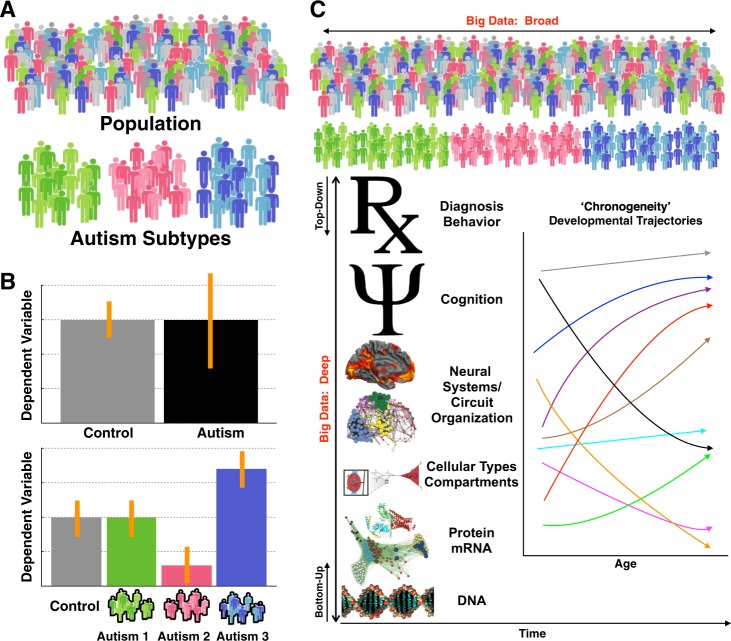
Autism is a diagnostic label based on behavior. While the diagnostic criteria attempt to maximize clinical consensus, it also masks a wide degree of heterogeneity between and within individuals at multiple levels of analysis. Understanding this multi-level heterogeneity is of high clinical and translational importance. Here we present organizing principles to frame research examining multi-level heterogeneity in autism. Theoretical concepts such as 'spectrum' or 'autisms' reflect non-mutually exclusive explanations regarding continuous/dimensional or categorical/qualitative variation between and within individuals. However, common practices of small sample size studies and case-control models are suboptimal for tackling heterogeneity. Big data are an important ingredient for furthering our understanding of heterogeneity in autism. In addition to being 'feature-rich', big data should be both 'broad' (i.e., large sample size) and 'deep' (i.e., multiple levels of data collected on the same individuals). These characteristics increase the likelihood that the study results are more generalizable and facilitate evaluation of the utility of different models of heterogeneity. A model's utility can be measured by its ability to explain clinically or mechanistically important phenomena, and also by explaining how variability manifests across different levels of analysis. The directionality for explaining variability across levels can be bottom-up or top-down, and should include the importance of development for characterizing changes within individuals. While progress can be made with 'supervised' models built upon a priori or theoretically predicted distinctions or dimensions of importance, it will become increasingly important to complement such work with unsupervised data-driven discoveries that leverage unknown and multivariate distinctions within big data. A better understanding of how to model heterogeneity between autistic people will facilitate progress towards precision medicine for symptoms that cause suffering, and person-centered support.
Overview
The claims and statistics of this paper haven’t been checked yet.
Free: it reads the open-access text and checks the first 5 claims that cite a source we can check. Create a free account to check every claim.
Integrity signals
Registry
Cites
Statistics
Figures
Verification
Claims the paper makes
The claims and statistics of this paper haven’t been checked yet.
Free: it reads the open-access text and checks the first 5 claims that cite a source we can check. Create a free account to check every claim.
Claims other papers make about this one
Each is checked against this paper’s own text: does it say what the citing paper says it does?
The source backs part of the claim, not all of it — or backs it for a different population, condition or comparison.
In the citing paper
“The scattered findings reported in studies about predictive coding and ASD may be related to a wide variety of factors, such as the dif ferences in tasks, the presence of co-occurring conditions, variations in medication use, potential cultural influences that shape responses and behaviors, as well as the intrinsic heterogeneity of ASD itself, which may manifest uniquely in each individual (Lomb”
From Predictive coding in neuropsychiatric disorders: a systematic transdiagnostic review. (2025) · cites this paper as Lombardo et al., 2019
Experimental — accuracy not yet measuredThe cited source says what the claim attributes to it.
In the citing paper
“Alongside the changes in classification systems, by now heterogeneity has already increased with regard to the expression and severity of the core and associated symptoms of ASD [4–6].”
From Autism spectrum disorder in ICD-11—a critical reflection of its possible impact on clinical practice and research (2024) · cites this paper as [4]
Self-check
Percentages, sums and reported differences re-computed from the paper’s own numbers.
The self-check needs the paper’s full text.
Citations
Cites
The Elements of Statistical Learning
Hastie, T., Tibshirani, R., & Friedman, J. (2009) · Springer Series in Statistics · doi:10.1007/978-0-387-84858-7 · Cited by 25,970
The Elements of Statistical Learning: Data Mining, Inference, and Prediction
John Lu, Z. Q. (2010) · Journal of the Royal Statistical Society Series A: Statistics in Society · doi:10.1111/j.1467-985x.2010.00646_6.x · Cited by 12,390
(1943) · The Nervous child · Cited by 8,870
Power failure: why small sample size undermines the reliability of neuroscience
Button, K. S., Ioannidis, J. P. A., Mokrysz, C., Nosek, B. A., Flint, J., Robinson, E. S. J., & Munafò, M. R. (2013) · Nature Reviews Neuroscience · doi:10.1038/nrn3475 · Cited by 7,641 · cited 2×
“Such inflated effects present an over-optimistic view on the identified effects and are prone to the winner’s curse [70].”
BackgroundInsel, T., Cuthbert, B., Garvey, M., Heinssen, R., Pine, D. S., Quinn, K., Sanislow, C., & Wang, P. (2010) · American Journal of Psychiatry · doi:10.1176/appi.ajp.2010.09091379 · Cited by 7,067
Baron-Cohen, S., Wheelwright, S., Skinner, R., Martin, J., & Clubley, E. (2001) · Journal of Autism and Developmental Disorders · doi:10.1023/a:1005653411471 · Cited by 6,450
Self-citationA New Initiative on Precision Medicine
Collins, F. S., & Varmus, H. (2015) · New England Journal of Medicine · doi:10.1056/nejmp1500523 · Cited by 5,202
Wing, L., & Gould, J. (1979) · Journal of Autism and Developmental Disorders · doi:10.1007/bf01531288 · Cited by 2,587 · cited 1×
“In the 1980s, Wing [56] and colleagues not only introduced the work of Hans Asperger into the English speaking world, but also conducted epidemiological studies that demonstrated the heterogeneity in social, language, motor, and cognitive abilities in the autistic and developmentally delayed population [57, 58].”
BackgroundLai, M.-C., Lombardo, M. V., & Baron-Cohen, S. (2014) · The Lancet · doi:10.1016/s0140-6736(13)61539-1 · Cited by 2,371
Self-citationDie „Autistischen Psychopathen” im Kindesalter
Asperger, H. (1944) · Archiv für Psychiatrie und Nervenkrankheiten · doi:10.1007/bf01837709 · Cited by 2,163 · cited 3×
“Moreover, both Leo Kanner and Hans Asperger recognized good cognitive potential in their child patients50, 52 and therefore autism was not necessarily tied to intellectual disability.”
BackgroundBox, G. E. P. (1976) · Journal of the American Statistical Association · doi:10.1080/01621459.1976.10480949 · Cited by 2,114
Asperger’s syndrome: a clinical account
Wing, L. (1981) · Psychological Medicine · doi:10.1017/s0033291700053332 · Cited by 1,913 · cited 4×
“In the 1980s, Lorna Wing and colleagues not only introduced the work of Hans Asperger into the English speaking world55 but also conducted epidemiological studies that demonstrated the heterogeneity in social, language, motor, and cognitive abilities in the autistic and developmentally delayed population56, 57.”
BackgroundInfluentialEquifinality and multifinality in developmental psychopathology
Cicchetti, D., & Rogosch, F. A. (1996) · Development and Psychopathology · doi:10.1017/s0954579400007318 · Cited by 1,842
Wong, C., Odom, S. L., Hume, K. A., Cox, A. W., Fettig, A., Kucharczyk, S., Brock, M. E., Plavnick, J. B., Fleury, V. P., & Schultz, T. R. (2015) · Journal of Autism and Developmental Disorders · doi:10.1007/s10803-014-2351-z · Cited by 1,584
Camerer, C. F., Dreber, A., Holzmeister, F., Ho, T.-H., Huber, J., Johannesson, M., Kirchler, M., Nave, G., Nosek, B. A., Pfeiffer, T., et al. (2018) · Nature Human Behaviour · doi:10.1038/s41562-018-0399-z · Cited by 1,521
Schreibman, L., Dawson, G., Stahmer, A. C., Landa, R., Rogers, S. J., McGee, G. G., Kasari, C., Ingersoll, B., Kaiser, A. P., Bruinsma, Y., et al. (2015) · Journal of Autism and Developmental Disorders · doi:10.1007/s10803-015-2407-8 · Cited by 1,421 · cited 1×
“Rather than advocating a ‘one-size-fits-all’ approach to treatment, most recent best practice recommendations specifically highlight the critical need for future research to identify factors that explain heterogeneity in response to treatment, in order to better individualize treatment and intervention approaches and…”
BackgroundAutism spectrum disorders: developmental disconnection syndromes
Geschwind, D. H., & Levitt, P. (2007) · Current Opinion in Neurobiology · doi:10.1016/j.conb.2007.01.009 · Cited by 1,411
Costs of Autism Spectrum Disorders in the United Kingdom and the United States
Buescher, A. V. S., Cidav, Z., Knapp, M., & Mandell, D. S. (2014) · JAMA Pediatrics · doi:10.1001/jamapediatrics.2014.210 · Cited by 1,296
Investigating population heterogeneity with factor mixture models.
Lubke, G. H., & Muthén, B. (2005) · Psychological Methods · doi:10.1037/1082-989x.10.1.21 · Cited by 1,143
Sex/Gender Differences and Autism: Setting the Scene for Future Research
Lai, M.-C., Lombardo, M. V., Auyeung, B., Chakrabarti, B., & Baron-Cohen, S. (2015) · Journal of the American Academy of Child & Adolescent Psychiatry · doi:10.1016/j.jaac.2014.10.003 · Cited by 1,120
Self-citationTime to give up on a single explanation for autism
Happé, F., Ronald, A., & Plomin, R. (2006) · Nature Neuroscience · doi:10.1038/nn1770 · Cited by 987
Kapur, S., Phillips, A. G., & Insel, T. R. (2012) · Molecular Psychiatry · doi:10.1038/mp.2012.105 · Cited by 980
Zwaigenbaum, L., Bauman, M. L., Choueiri, R., Kasari, C., Carter, A., Granpeesheh, D., Mailloux, Z., Smith Roley, S., Wagner, S., Fein, D., et al. (2015) · Pediatrics · doi:10.1542/peds.2014-3667e · Cited by 856
Disruptive CHD8 Mutations Define a Subtype of Autism Early in Development
Bernier, R., Golzio, C., Xiong, B., Stessman, H. A., Coe, B. P., Penn, O., Witherspoon, K., Gerdts, J., Baker, C., Vulto-van Silfhout, A. T., et al. (2014) · Cell · doi:10.1016/j.cell.2014.06.017 · Cited by 798
Diagnosis and definition of childhood autism
Rutter, M. (1978) · Journal of Autism and Childhood Schizophrenia · doi:10.1007/bf01537863 · Cited by 750
Gillberg, C. (2010) · Research in Developmental Disabilities · doi:10.1016/j.ridd.2010.06.002 · Cited by 742
The Simons Simplex Collection: a resource for identification of autism genetic risk factors
Fischbach, G. D., & Lord, C. (2010) · Neuron · doi:10.1016/j.neuron.2010.10.006 · Cited by 725
Enhancing studies of the connectome in autism using the autism brain imaging data exchange II
Di Martino, A., O’Connor, D., Chen, B., Alaerts, K., Anderson, J. S., Assaf, M., Balsters, J. H., Baxter, L., Beggiato, A., Bernaerts, S., et al. (2017) · Scientific Data · doi:10.1038/sdata.2017.10 · Cited by 710
An open resource for transdiagnostic research in pediatric mental health and learning disorders
Alexander, L. M., Escalera, J., Ai, L., Andreotti, C., Febre, K., Mangone, A., Vega-Potler, N., Langer, N., Alexander, A., Kovacs, M., et al. (2017) · Scientific Data · doi:10.1038/sdata.2017.181 · Cited by 651
What kinds of things are psychiatric disorders?
Kendler, K. S., Zachar, P., & Craver, C. (2011) · Psychological Medicine · doi:10.1017/s0033291710001844 · Cited by 617
Optimal outcome in individuals with a history of autism
Fein, D., Barton, M., Eigsti, I., Kelley, E., Naigles, L., Schultz, R. T., Stevens, M., Helt, M., Orinstein, A., Rosenthal, M., et al. (2013) · Journal of Child Psychology and Psychiatry · doi:10.1111/jcpp.12037 · Cited by 584
Reichow, B., Barton, E. E., Boyd, B. A., & Hume, K. (2012) · Cochrane Database of Systematic Reviews · doi:10.1002/14651858.cd009260.pub2 · Cited by 543
Gene hunting in autism spectrum disorder: on the path to precision medicine
Geschwind, D. H., & State, M. W. (2015) · The Lancet Neurology · doi:10.1016/s1474-4422(15)00044-7 · Cited by 471
Autism genetics: opportunities and challenges for clinical translation
Vorstman, J. A. S., Parr, J. R., Moreno-De-Luca, D., Anney, R. J. L., Nurnberger Jr, J. I., & Hallmayer, J. F. (2017) · Nature Reviews Genetics · doi:10.1038/nrg.2017.4 · Cited by 463
SPARK: A US Cohort of 50,000 Families to Accelerate Autism Research
Feliciano, P., Daniels, A. M., Green Snyder, L., Beaumont, A., Camba, A., Esler, A., Gulsrud, A. G., Mason, A., Gutierrez, A., Nicholson, A., et al. (2018) · Neuron · doi:10.1016/j.neuron.2018.01.015 · Cited by 455
Brief Report: Forecasting the Economic Burden of Autism in 2015 and 2025 in the United States
Leigh, J. P., & Du, J. (2015) · Journal of Autism and Developmental Disorders · doi:10.1007/s10803-015-2521-7 · Cited by 422
The idiosyncratic brain: distortion of spontaneous connectivity patterns in autism spectrum disorder
Hahamy, A., Behrmann, M., & Malach, R. (2015) · Nature Neuroscience · doi:10.1038/nn.3919 · Cited by 416
Pierce, K., Marinero, S., Hazin, R., McKenna, B., Barnes, C. C., & Malige, A. (2016) · Biological Psychiatry · doi:10.1016/j.biopsych.2015.03.032 · Cited by 379
Six Developmental Trajectories Characterize Children With Autism
Fountain, C., Winter, A. S., & Bearman, P. S. (2012) · Pediatrics · doi:10.1542/peds.2011-1601 · Cited by 372
The Autistic Spectrum : A Guide for Parents and Professionals
Wing, L. (1997) · Medical Entomology and Zoology · Cited by 369
Genetic risk for autism spectrum disorders and neuropsychiatric variation in the general population
iPSYCH-SSI-Broad Autism Group, Robinson, E. B., St Pourcain, B., Anttila, V., Kosmicki, J. A., Bulik-Sullivan, B., Grove, J., Maller, J., Samocha, K. E., Sanders, S. J., et al. (2016) · Nature Genetics · doi:10.1038/ng.3529 · Cited by 367
A Systematic Review of Medical Treatments for Children With Autism Spectrum Disorders
McPheeters, M. L., Warren, Z., Sathe, N., Bruzek, J. L., Krishnaswami, S., Jerome, R. N., & Veenstra-VanderWeele, J. (2011) · Pediatrics · doi:10.1542/peds.2011-0427 · Cited by 356 · cited 1×
“significantly affect the core characteristics of autism [65, 66].”
BackgroundLanguage, social, and cognitive impairments in autism and severe mental retardation
Wing, L. (1981) · Journal of Autism and Developmental Disorders · doi:10.1007/bf01531339 · Cited by 351
Howes, O. D., Rogdaki, M., Findon, J. L., Wichers, R. H., Charman, T., King, B. H., Loth, E., McAlonan, G. M., McCracken, J. T., Parr, J. R., et al. (2018) · Journal of Psychopharmacology · doi:10.1177/0269881117741766 · Cited by 342
Sucksmith, E., Roth, I., & Hoekstra, R. A. (2011) · Neuropsychology Review · doi:10.1007/s11065-011-9183-9 · Cited by 336
Wing, L. (1997) · The Lancet · doi:10.1016/s0140-6736(97)09218-0 · Cited by 332 · cited 4×
“The concept of heterogeneity in autism dates back to the original conceptions of an ‘autistic spectrum’ by Wing [37].”
BackgroundInfluentialSubgrouping the Autism Spectrum: Reflections on DSM-5
Lai, M.-C., Lombardo, M. V., Chakrabarti, B., & Baron-Cohen, S. (2013) · PLoS Biology · doi:10.1371/journal.pbio.1001544 · Cited by 330
Self-citationChildhood schizophrenia: Symposium, 1955: 6. Early infantile autism, 1943–55.
Eisenberg, L., & Kanner, L. (1956) · American Journal of Orthopsychiatry · doi:10.1111/j.1939-0025.1956.tb06202.x · Cited by 330
Szatmari, P., Georgiades, S., Duku, E., Bennett, T. A., Bryson, S., Fombonne, E., Mirenda, P., Roberts, W., Smith, I. M., Vaillancourt, T., et al. (2015) · JAMA Psychiatry · doi:10.1001/jamapsychiatry.2014.2463 · Cited by 322
Pickles, A., Anderson, D. K., & Lord, C. (2014) · Journal of Child Psychology and Psychiatry · doi:10.1111/jcpp.12269 · Cited by 318
Loth, E., Charman, T., Mason, L., Tillmann, J., Jones, E. J. H., Wooldridge, C., Ahmad, J., Auyeung, B., Brogna, C., Ambrosino, S., et al. (2017) · Molecular Autism · doi:10.1186/s13229-017-0146-8 · Cited by 299
Self-citationBiological sex affects the neurobiology of autism
Lai, M.-C., Lombardo, M. V., Suckling, J., Ruigrok, A. N. V., Chakrabarti, B., Ecker, C., Deoni, S. C. L., Craig, M. C., Murphy, D. G. M., Bullmore, E. T., et al. (2013) · Brain · doi:10.1093/brain/awt216 · Cited by 298
Self-citationEllegood, J., Anagnostou, E., Babineau, B. A., Crawley, J. N., Lin, L., Genestine, M., DiCicco-Bloom, E., Lai, J. K. Y., Foster, J. A., Peñagarikano, O., et al. (2015) · Molecular Psychiatry · doi:10.1038/mp.2014.98 · Cited by 288
The quantitative nature of autistic social impairment
CONSTANTINO, J. N. (2011) · Pediatric Research · doi:10.1203/pdr.0b013e318212ec6e · Cited by 282
Lai, M.-C., Anagnostou, E., Wiznitzer, M., Allison, C., & Baron-Cohen, S. (2020) · The Lancet Neurology · doi:10.1016/s1474-4422(20)30034-x · Cited by 250
Self-citationBaron-Cohen, S., Bowen, D. C., Holt, R. J., Allison, C., Auyeung, B., Lombardo, M. V., Smith, P., & Lai, M.-C. (2015) · PLOS ONE · doi:10.1371/journal.pone.0136521 · Cited by 238
Self-citationDifferent Functional Neural Substrates for Good and Poor Language Outcome in Autism
Lombardo, M. V., Pierce, K., Eyler, L. T., Carter Barnes, C., Ahrens-Barbeau, C., Solso, S., Campbell, K., & Courchesne, E. (2015) · Neuron · doi:10.1016/j.neuron.2015.03.023 · Cited by 213
Self-citationFrench, L., & Kennedy, E. M. M. (2018) · Journal of Child Psychology and Psychiatry · doi:10.1111/jcpp.12828 · Cited by 213
The role of sex-differential biology in risk for autism spectrum disorder
Werling, D. M. (2016) · Biology of Sex Differences · doi:10.1186/s13293-016-0112-8 · Cited by 208
Hu, V. W., Sarachana, T., Kim, K. S., Nguyen, A., Kulkarni, S., Steinberg, M. E., Luu, T., Lai, Y., & Lee, N. H. (2009) · Autism Research · doi:10.1002/aur.73 · Cited by 198
Developmental trajectories as autism phenotypes
Lord, C., Bishop, S., & Anderson, D. (2015) · American Journal of Medical Genetics Part C: Seminars in Medical Genetics · doi:10.1002/ajmg.c.31440 · Cited by 197
An historical framework for psychiatric nosology
Kendler, K. S. (2009) · Psychological Medicine · doi:10.1017/s0033291709005753 · Cited by 191
Exploring the ‘fractionation’ of autism at the cognitive level
Brunsdon, V. E., & Happé, F. (2014) · Autism · doi:10.1177/1362361313499456 · Cited by 186
The EU-AIMS Longitudinal European Autism Project (LEAP): clinical characterisation
Charman, T., Loth, E., Tillmann, J., Crawley, D., Wooldridge, C., Goyard, D., Ahmad, J., Auyeung, B., Ambrosino, S., Banaschewski, T., et al. (2017) · Molecular Autism · doi:10.1186/s13229-017-0145-9 · Cited by 183
Self-citationSubtyping cognitive profiles in Autism Spectrum Disorder using a Functional Random Forest algorithm
Feczko, E., Balba, N. M., Miranda-Dominguez, O., Cordova, M., Karalunas, S. L., Irwin, L., Demeter, D. V., Hill, A. P., Langhorst, B. H., Grieser Painter, J., et al. (2018) · NeuroImage · doi:10.1016/j.neuroimage.2017.12.044 · Cited by 173
Causes of infantile autism: Some considerations from recent research
Rutter, M., & Bartak, L. (1971) · Journal of Autism and Childhood Schizophrenia · doi:10.1007/bf01537740 · Cited by 170
Sonuga‐Barke, E. J. S., Cortese, S., Fairchild, G., & Stringaris, A. (2016) · Journal of Child Psychology and Psychiatry · doi:10.1111/jcpp.12496 · Cited by 165
Kim, S. H., Macari, S., Koller, J., & Chawarska, K. (2016) · Journal of Child Psychology and Psychiatry · doi:10.1111/jcpp.12448 · Cited by 160
Ameis, S. H., Lerch, J. P., Taylor, M. J., Lee, W., Viviano, J. D., Pipitone, J., Nazeri, A., Croarkin, P. E., Voineskos, A. N., Lai, M.-C., et al. (2016) · American Journal of Psychiatry · doi:10.1176/appi.ajp.2016.15111435 · Cited by 155
Self-citationSharing Heterogeneous Data: The National Database for Autism Research
Hall, D., Huerta, M. F., McAuliffe, M. J., & Farber, G. K. (2012) · Neuroinformatics · doi:10.1007/s12021-012-9151-4 · Cited by 152
Aoki, Y., Yoncheva, Y. N., Chen, B., Nath, T., Sharp, D., Lazar, M., Velasco, P., Milham, M. P., & Di Martino, A. (2017) · JAMA Psychiatry · doi:10.1001/jamapsychiatry.2017.2573 · Cited by 149
Chaste, P., Klei, L., Sanders, S. J., Hus, V., Murtha, M. T., Lowe, J. K., Willsey, A. J., Moreno-De-Luca, D., Yu, T. W., Fombonne, E., et al. (2015) · Biological Psychiatry · doi:10.1016/j.biopsych.2014.09.017 · Cited by 144
Identification and validation of biomarkers for autism spectrum disorders
Loth, E., Spooren, W., Ham, L. M., Isaac, M. B., Auriche-Benichou, C., Banaschewski, T., Baron-Cohen, S., Broich, K., Bölte, S., Bourgeron, T., et al. (2016) · Nature Reviews Drug Discovery · doi:10.1038/nrd.2015.7 · Cited by 140
Self-citationImaging sex/gender and autism in the brain: Etiological implications
Lai, M., Lerch, J. P., Floris, D. L., Ruigrok, A. N. V., Pohl, A., Lombardo, M. V., & Baron‐Cohen, S. (2017) · Journal of Neuroscience Research · doi:10.1002/jnr.23948 · Cited by 140
Self-citationMultidimensional Neuroanatomical Subtyping of Autism Spectrum Disorder
Hong, S.-J., Valk, S. L., Di Martino, A., Milham, M. P., & Bernhardt, B. C. (2018) · Cerebral Cortex · doi:10.1093/cercor/bhx229 · Cited by 128
JOURNAL OF CHILD PSYCHOLOGY AND PSYCHIATRY
&NA; (2009) · Journal of the American Academy of Child & Adolescent Psychiatry · doi:10.1097/01.chi.0000314068.12285.e0 · Cited by 125
Effect Size Estimation in Neuroimaging
Reddan, M. C., Lindquist, M. A., & Wager, T. D. (2017) · JAMA Psychiatry · doi:10.1001/jamapsychiatry.2016.3356 · Cited by 123 · cited 1×
“effect sizes become an even bigger problem [72].”
BackgroundHu, V. W., & Steinberg, M. E. (2009) · Autism Research · doi:10.1002/aur.72 · Cited by 113
Autism in flux: a history of the concept from Leo Kanner to DSM-5
Verhoeff, B. (2013) · History of Psychiatry · doi:10.1177/0957154x13500584 · Cited by 111
Lombardo, M. V., Pramparo, T., Gazestani, V., Warrier, V., Bethlehem, R. A. I., Barnes, C. C., Lopez, L., Lewis, N. E., Eyler, L. T., Pierce, K., et al. (2018) · Nature Neuroscience · doi:10.1038/s41593-018-0281-3 · Cited by 102
Self-citationEditorial Perspective: Longitudinal research in autism – introducing the concept of ‘chronogeneity’
Georgiades, S., Bishop, S. L., & Frazier, T. (2017) · Journal of Child Psychology and Psychiatry · doi:10.1111/jcpp.12690 · Cited by 100 · cited 3×
“with the lifespan developmental dimension across any level of analysis, or ‘chronogeneity’ [38].”
BackgroundWhy Autism Must be Taken Apart
Waterhouse, L. H., & Gillberg, C. (2014) · Journal of Autism and Developmental Disorders · doi:10.1007/s10803-013-2030-5 · Cited by 93
Waterhouse, L., London, E., & Gillberg, C. (2016) · Review Journal of Autism and Developmental Disorders · doi:10.1007/s40489-016-0085-x · Cited by 91
The gender of participants in published research involving people with autism spectrum disorders
Watkins, E. E., Zimmermann, Z. J., & Poling, A. D. (2013) · Research in Autism · doi:10.1016/j.rasd.2013.10.010 · Cited by 89
Unsupervised data-driven stratification of mentalizing heterogeneity in autism
Lombardo, M. V., Lai, M.-C., Auyeung, B., Holt, R. J., Allison, C., Smith, P., Chakrabarti, B., Ruigrok, A. N. V., Suckling, J., Bullmore, E. T., et al. (2016) · Scientific Reports · doi:10.1038/srep35333 · Cited by 88
Self-citationIn pursuit of neurophenotypes: The consequences of having autism and a big brain
Amaral, D. G., Li, D., Libero, L., Solomon, M., Van de Water, J., Mastergeorge, A., Naigles, L., Rogers, S., & Wu Nordahl, C. (2017) · Autism Research · doi:10.1002/aur.1755 · Cited by 87
Defining Precision Medicine Approaches to Autism Spectrum Disorders: Concepts and Challenges
Loth, E., Murphy, D. G., & Spooren, W. (2016) · Frontiers in Psychiatry · doi:10.3389/fpsyt.2016.00188 · Cited by 86
First glimpses of the neurobiology of autism spectrum disorder
Sanders, S. J. (2015) · Current Opinion in Genetics & Development · doi:10.1016/j.gde.2015.10.002 · Cited by 84 · cited 1×
“For example, a diversity of different developmental starting points or causal mechanisms in the genome may reach similar endpoints (equifinality) at levels more proximate to clinical outcomes or behavior [40].”
BackgroundBrain responses to biological motion predict treatment outcome in young children with autism
Yang, D., Pelphrey, K. A., Sukhodolsky, D. G., Crowley, M. J., Dayan, E., Dvornek, N. C., Venkataraman, A., Duncan, J., Staib, L., & Ventola, P. (2016) · Translational Psychiatry · doi:10.1038/tp.2016.213 · Cited by 84
Neural Connectivity Evidence for a Categorical-Dimensional Hybrid Model of Autism Spectrum Disorder
Elton, A., Di Martino, A., Hazlett, H. C., & Gao, W. (2016) · Biological Psychiatry · doi:10.1016/j.biopsych.2015.10.020 · Cited by 81
Clinical phenotype of ASD-associated DYRK1A haploinsufficiency
Earl, R. K., Turner, T. N., Mefford, H. C., Hudac, C. M., Gerdts, J., Eichler, E. E., & Bernier, R. A. (2017) · Molecular Autism · doi:10.1186/s13229-017-0173-5 · Cited by 72
Classifying Autism Spectrum Disorders by ADI-R: Subtypes or Severity Gradient?
Cholemkery, H., Medda, J. E., Lempp, T., & Freitag, C. M. (2016) · Journal of Autism and Developmental Disorders · doi:10.1007/s10803-016-2760-2 · Cited by 71
Hu, V. W., Addington, A., & Hyman, A. (2011) · PLoS ONE · doi:10.1371/journal.pone.0019067 · Cited by 69
Zhao, Y., & Castellanos, F. X. (2016) · Journal of Child Psychology and Psychiatry · doi:10.1111/jcpp.12503 · Cited by 62
Stefanik, L., Erdman, L., Ameis, S. H., Foussias, G., Mulsant, B. H., Behdinan, T., Goldenberg, A., O’Donnell, L. J., & Voineskos, A. N. (2017) · Neuropsychopharmacology · doi:10.1038/npp.2017.274 · Cited by 59
Amiet, C., Gourfinkel-An, I., Laurent, C., Bodeau, N., Génin, B., Leguern, E., Tordjman, S., & Cohen, D. (2013) · Molecular Autism · doi:10.1186/2040-2392-4-47 · Cited by 52
Developmental trajectories for young children with 16p11.2 copy number variation
Bernier, R., Hudac, C. M., Chen, Q., Zeng, C., Wallace, A. S., Gerdts, J., Earl, R., Peterson, J., Wolken, A., Peters, A., et al. (2017) · American Journal of Medical Genetics Part B: Neuropsychiatric Genetics · doi:10.1002/ajmg.b.32525 · Cited by 48
The Role of the Neurobiologist in Redefining the Diagnosis of Autism
London, E. (2007) · Brain Pathology · doi:10.1111/j.1750-3639.2007.00103.x · Cited by 45
Editorial: Time to give up on Autism Spectrum Disorder?
Müller, R., & Amaral, D. G. (2017) · Autism Research · doi:10.1002/aur.1746 · Cited by 45
Research Review: Crossing syndrome boundaries in the search for brain endophenotypes
Levy, Y., & Ebstein, R. P. (2009) · Journal of Child Psychology and Psychiatry · doi:10.1111/j.1469-7610.2008.01986.x · Cited by 43
Bacon, E. C., Dufek, S., Schreibman, L., Stahmer, A. C., Pierce, K., & Courchesne, E. (2014) · Autism Research and Treatment · doi:10.1155/2014/964704 · Cited by 41
Resources available for autism research in the big data era: a systematic review
Al‐Jawahiri, R., & Milne, E. (2017) · PeerJ · doi:10.7717/peerj.2880 · Cited by 39
Genetic risk for autism spectrum disorders and neuropsychiatric variation in the general populationPreprint
Robinson, E., Pourcain, B. S., Anttila, V., Kosmicki, J. A., Bulik-Sullivan, B. K., Grove, J., Maller, J., Samocha, K. E., Sanders, S., Ripke, S., et al. (2015) · bioRxiv (Cold Spring Harbor Laboratory) · doi:10.1101/027771 · Cited by 34
Normative age modelling of cortical thickness in autistic malesPreprint
Bethlehem, R. A. I., Seidlitz, J., Romero-García, R., Dumas, G., & Lombardo, M. V. (2018) · bioRxiv (Cold Spring Harbor Laboratory) · doi:10.1101/252593 · Cited by 29
Self-citationBio-collections in autism research
Reilly, J., Gallagher, L., Chen, J. L., Leader, G., & Shen, S. (2017) · Molecular Autism · doi:10.1186/s13229-017-0154-8 · Cited by 28
Neurogenetic analysis of childhood disintegrative disorder
Gupta, A. R., Westphal, A., Yang, D. Y. J., Sullivan, C. A. W., Eilbott, J., Zaidi, S., Voos, A., Vander Wyk, B. C., Ventola, P., Waqar, Z., et al. (2017) · Molecular Autism · doi:10.1186/s13229-017-0133-0 · Cited by 27
Exploring the heterogeneity of neural social indices for genetically distinct etiologies of autism
Hudac, C. M., Stessman, H. A. F., DesChamps, T. D., Kresse, A., Faja, S., Neuhaus, E., Webb, S. J., Eichler, E. E., & Bernier, R. (2017) · Journal of Neurodevelopmental Disorders · doi:10.1186/s11689-017-9199-4 · Cited by 24
Talebizadeh, Z., Arking, D. E., & Hu, V. W. (2013) · PLoS ONE · doi:10.1371/journal.pone.0067569 · Cited by 20
Unsupervised data-driven stratification of mentalizing heterogeneity in autismPreprint
Lombardo, M. V., Lai, M., Auyeung, B., et al. (2015) · bioRxiv (Cold Spring Harbor Laboratory) · doi:10.1101/034454 · Cited by 13
Self-citationDoes developmental regression in autism spectrum disorder have biological origins?
Parr, J. R. (2017) · Developmental Medicine & Child Neurology · doi:10.1111/dmcn.13506 · Cited by 8
Lai, M., Anagnostou, E. A., Wiznitzer, M., Allison, C. L., & Baron‐Cohen, S. (2018) · OSF Preprints (OSF Preprints) · doi:10.31219/osf.io/8z5rv · Cited by 7
Self-citation
Research works printed but not linked: 1
- Loth E Ahmad J Mason L Crawley DV Hayward HL San Jose Caceres A Identifying cross-domain cognitive subtypes among children, adolescents, and adults with autism spectrum disorders 2017 San Francisco International Society for Autism Research
Cited by
Lai, M.-C., Kassee, C., Besney, R., Bonato, S., Hull, L., Mandy, W., Szatmari, P., & Ameis, S. H. (2019) · The Lancet Psychiatry · doi:10.1016/s2215-0366(19)30289-5 · Cited by 1,892
Self-citationHuman Gut Microbiota from Autism Spectrum Disorder Promote Behavioral Symptoms in Mice
Sharon, G., Cruz, N. J., Kang, D.-W., Gandal, M. J., Wang, B., Kim, Y.-M., Zink, E. M., Casey, C. P., Taylor, B. C., Lane, C. J., et al. (2019) · Cell · doi:10.1016/j.cell.2019.05.004 · Cited by 1,182
“This is critical, as ASD is a heterogeneous condition, displaying a wide spectrum of symptom severity among affected individuals, with diverse inherent predispositions and extensive environmental exposures (Lombardo et al., 2019).”
BackgroundThe mentalizing approach to psychopathology: State of the art and future directions
Luyten, P., Campbell, C., Allison, E., & Fonagy, P. (2020) · Annual Review of Clinical Psychology · doi:10.1146/annurev-clinpsy-071919-015355 · Cited by 748
“Given the marked heterogeneity within the autism spectrum, the precise role (if any) of these deficits in the origin of autism and in approaches to help people with autism navigate their social world needs to be further determined (Lombardo et al. 2019).”
BackgroundThe Neurodiversity Approach(es): What Are They and What Do They Mean for Researchers?
Dwyer, P. (2022) · Human Development · doi:10.1159/000523723 · Cited by 672
“This claim is not only empirically dubious (Betancur, 2011; Lombardo et al., 2019), but arguably risks further stigmatizing neurodivergent people as being somehow other (Constantino, 2018).”
BackgroundTimmons, A. C., Duong, J. B., Simo Fiallo, N., Lee, T., Vo, H. P. Q., Ahle, M. W., Comer, J. S., Brewer, L. C., Frazier, S. L., & Chaspari, T. (2023) · Perspectives on Psychological Science · doi:10.1177/17456916221134490 · Cited by 263
Metadata
- Authors
- Lombardo, M. V., Lai, M.-C., & Baron-Cohen, S.
- Affiliations
- University of Cambridge (GB)
- Centre for Addiction and Mental Health (CA)
- Corresponding author
- Lombardo, Michael V.
- Venue
- Molecular Psychiatry
- Published
- 2019-01-07
- Volume
- 24
- Issue
- 10
- Pages
- 1435-1450
- ISSN
- 1359-4184 (ISSN-L)
- 1476-5578
- PMC
- PMC6754748
- OpenAlex
- W2951588804
- Cited by
- 537
- References
- 111
- Citations by year
- 2026: 75 · 2025: 65 · 2024: 84 · 2023: 77 · 2022: 75 · 2021: 74 · 2020: 64 · 2019: 20
- FWCI
- 7.38
- Type
- journal article
- Language
- en
- Open access
- hybrid
- doi.org
- Licence
- cc-by
- creativecommons.org/licenses/by/4.0 (tdm)
- Locations
- Molecular Psychiatry (publishedVersion, cc-by)
- bioRxiv (Cold Spring Harbor Laboratory) (acceptedVersion, cc-by-nc-nd)
- Europe PMC (PubMed Central) (publishedVersion, cc-by)
- PubMed Central (publishedVersion, cc-by)
- PubMed (publishedVersion)
- Apollo (University of Cambridge) (submittedVersion, cc-by)
- Apollo (cc-by)
- Funders
- EC | European Research Council (755816)
- Topics
- Life Sciences › Neuroscience › Cognitive Neuroscience › Autism Spectrum Disorder Research
- Life Sciences › Biochemistry, Genetics and Molecular Biology › Genetics › Genetics and Neurodevelopmental Disorders
- Social Sciences › Psychology › Experimental and Cognitive Psychology › Mental Health Research Topics
- Keywords
- autism spectrum disorder, autism heterogeneity, big data, dimensional versus categorical models, longitudinal development, precision medicine, person-centred support, sample size
- MeSH terms
- Autism Spectrum Disorder, Big Data, Humans, Longitudinal Studies, Case-Control Studies, Genetic Heterogeneity
About these checks
Registry, retraction, Cites and statistics results are computed, not judged, with one exception: a printed reference that no index lists is read once by a model before it counts as a citation error. Claims are extracted by a model and kept only when their quote appears verbatim in the text; each cited source is then checked, with a model’s help, for whether it says what the claim relies on. Those verdicts can be wrong — read the claim’s quote and the cited source before relying on one.
Statistics and arithmetic are recomputed, not judged.
Confidence bands are shown only for fields calibrated on our annotated test set. None is calibrated yet, so no band is shown.
What counts as a claim ›How we measure confidence ›How we check this ›
Are you an author, or do you see a problem with this page? Request a review
Data sources
Bibliographic data: Semantic Scholar, OpenAlex, Crossref.
Contains information from the Semantic Scholar Academic Graph Datasets, made available under the ODC Attribution License (ODC-BY 1.0).
Semantic Scholar’s data is described in: Kinney, R., et al. (2023). The Semantic Scholar Open Data Platform. arXiv:2301.10140.
