

Conceptualizing mental disorders as deviations from normative functioning
Open accessThe DOI matches its Crossref record; 45 of the 45 references it cites were found in a registry or an index.
Abstract
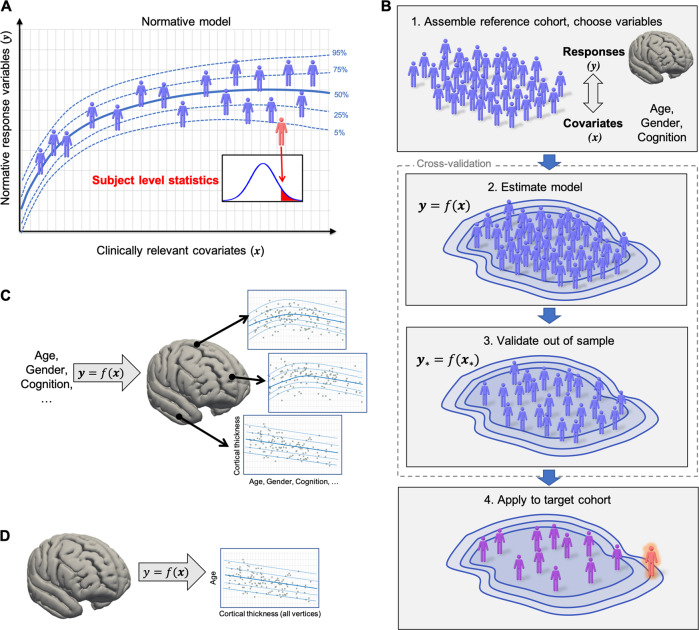
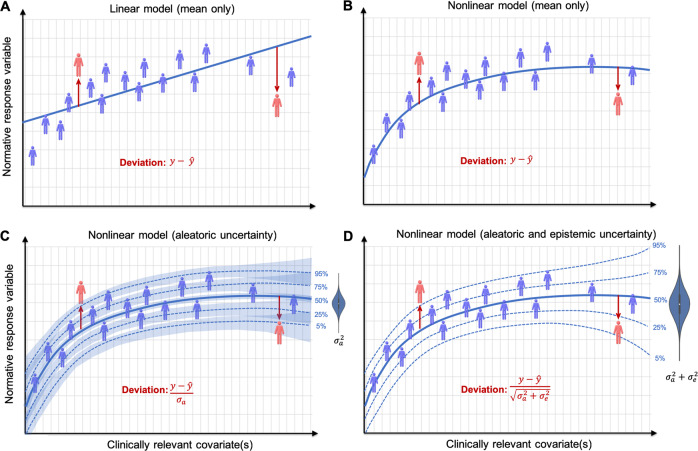
Normative models are a class of emerging statistical techniques useful for understanding the heterogeneous biology underlying psychiatric disorders at the level of the individual participant. Analogous to normative growth charts used in paediatric medicine for plotting child development in terms of height or weight as a function of age, normative models chart variation in clinical cohorts in terms of mappings between quantitative biological measures and clinically relevant variables. An emerging body of literature has demonstrated that such techniques are excellent tools for parsing the heterogeneity in clinical cohorts by providing statistical inferences at the level of the individual participant with respect to the normative range. Here, we provide a unifying review of the theory and application of normative modelling for understanding the biological and clinical heterogeneity underlying mental disorders. We first provide a statistically grounded yet non-technical overview of the conceptual underpinnings of normative modelling and propose a conceptual framework to link the many different methodological approaches that have been proposed for this purpose. We survey the literature employing these techniques, focusing principally on applications of normative modelling to quantitative neuroimaging-based biomarkers in psychiatry and, finally, we provide methodological considerations and recommendations to guide future applications of these techniques. We show that normative modelling provides a means by which the importance of modelling individual differences can be brought from theory to concrete data analysis procedures for understanding heterogeneous mental disorders and ultimately a promising route towards precision medicine in psychiatry.
Overview
The claims and statistics of this paper haven’t been checked yet.
Free: it reads the open-access text and checks the first 5 claims that cite a source we can check. Create a free account to check every claim.
Integrity signals
Registry
Cites
Statistics
Figures
Verification
Claims the paper makes
The claims and statistics of this paper haven’t been checked yet.
Free: it reads the open-access text and checks the first 5 claims that cite a source we can check. Create a free account to check every claim.
Claims other papers make about this one
Each is checked against this paper’s own text: does it say what the citing paper says it does?
The source backs part of the claim, not all of it — or backs it for a different population, condition or comparison.
In the citing paper
“A prerequisite for the application of growth charts in youth mental health is the availability of normative developmental data that comprise important domains of emerging psychopathology, such as cognition, emotion regulation, and sleep [92].”
From Towards a youth mental health paradigm: a perspective and roadmap (2023) · cites this paper as [92]
Experimental — accuracy not yet measuredThe source backs part of the claim, not all of it — or backs it for a different population, condition or comparison.
In the citing paper
“Newer hybrid models, such as normative modeling (19,59–61) or the functional random forest (FRF) (18,62), may overcome these limitations and enable new inferences from psychopathology studies.”
From Methods and challenges for assessing heterogeneity (2020) · cites this paper as [59]
Experimental — accuracy not yet measuredThe source backs part of the claim, not all of it — or backs it for a different population, condition or comparison.
In the citing paper
“Normative models (59) enable researchers to identify common (i.e., comorbid) mechanisms, identify potential subtypes or subfactors tied to an outcome of interest, and make pre- dictions on individual cases.”
From Methods and challenges for assessing heterogeneity (2020) · cites this paper as [59]
Experimental — accuracy not yet measuredThe cited source says what the claim attributes to it.
In the citing paper
“In this context, machine learning approaches have just recently embraced advances that allow the characterization of normative trajectories and parsing of the heterogeneity at the individual level 69 .”
From Candidate diagnostic biomarkers for neurodevelopmental disorders in children and adolescents: a systematic review (2023) · cites this paper as [69]
Self-check
Percentages, sums and reported differences re-computed from the paper’s own numbers.
The self-check needs the paper’s full text.
Citations
Cites
Insel, T., Cuthbert, B., Garvey, M., Heinssen, R., Pine, D. S., Quinn, K., Sanislow, C., & Wang, P. (2010) · American Journal of Psychiatry · doi:10.1176/appi.ajp.2010.09091379 · Cited by 7,067
The WU-Minn Human Connectome Project: An overview
Van Essen, D. C., Smith, S. M., Barch, D. M., Behrens, T. E. J., Yacoub, E., & Ugurbil, K. (2013) · NeuroImage · doi:10.1016/j.neuroimage.2013.05.041 · Cited by 5,651
Multimodal population brain imaging in the UK Biobank prospective epidemiological study
Miller, K. L., Alfaro-Almagro, F., Bangerter, N. K., Thomas, D. L., Yacoub, E., Xu, J., Bartsch, A. J., Jbabdi, S., Sotiropoulos, S. N., Andersson, J. L. R., et al. (2016) · Nature Neuroscience · doi:10.1038/nn.4393 · Cited by 2,020
Equifinality and multifinality in developmental psychopathology
Cicchetti, D., & Rogosch, F. A. (1996) · Development and Psychopathology · doi:10.1017/s0954579400007318 · Cited by 1,842
Kapur, S., Phillips, A. G., & Insel, T. R. (2012) · Molecular Psychiatry · doi:10.1038/mp.2012.105 · Cited by 980
The conception of the ABCD study: From substance use to a broad NIH collaboration
Volkow, N. D., Koob, G. F., Croyle, R. T., Bianchi, D. W., Gordon, J. A., Koroshetz, W. J., Pérez-Stable, E. J., Riley, W. T., Bloch, M. H., Conway, K., et al. (2018) · Developmental Cognitive Neuroscience · doi:10.1016/j.dcn.2017.10.002 · Cited by 970
Predicting Age Using Neuroimaging: Innovative Brain Ageing Biomarkers
Cole, J. H., & Franke, K. (2017) · Trends in Neurosciences · doi:10.1016/j.tins.2017.10.001 · Cited by 903
Insel, T. R., & Cuthbert, B. N. (2015) · Science · doi:10.1126/science.aab2358 · Cited by 840
Understanding heterogeneity in clinical cohorts using normative models: Beyond case-control studies
Marquand, A. F., Rezek, I., Buitelaar, J., & Beckmann, C. F. (2016) · Biological Psychiatry · doi:10.1016/j.biopsych.2015.12.023 · Cited by 683
Self-citationMapping the heterogeneous phenotype of schizophrenia and bipolar disorder using normative models
Wolfers, T., Doan, N. T., Kaufmann, T., Alnæs, D., Moberget, T., Agartz, I., Buitelaar, J. K., Ueland, T., Melle, I., Franke, B., et al. (2018) · JAMA Psychiatry · doi:10.1001/jamapsychiatry.2018.2467 · Cited by 508
Self-citation
Research works printed but not linked: 3
- 21. Bethlehem R, Seidlitz J, Romero-Garcia R, Lombardo M. Using normative age modelling to isolate subsets of individuals with autism expressing highly age-atypical cortical thickness features. BioRxiv 2018:1–23.
- 33. Gal Y Uncertainty in deep learning 2016 Cambridge University of Cambridge
- 43. Kia SM, Marquand A. Neural processes mixed-effect models for deep normative modeling of clinical neuroimaging data. arXiv. 2018;1812.04998.
Cited by
Items 201–300 of 433
The normative modelling framework for traumatic brain injury
Mitchell, J. E., McDonald, S. J., Sharp, D. J., Gan, G., Ponsford, J. L., Marquand, A. F., Wellington, C. L., Law, M., Shultz, S. R., & Spitz, G. (2025) · Brain · doi:10.1093/brain/awaf296 · Cited by 9
“95 Furthermore, its adaptability makes it a versatile tool for assessing individual differences across a wide range of measures.”
Self-citationWeissman, D. G., Baum, G. L., Sanders, A., Rosen, M. L., Barch, D. M., McLaughlin, K. A., & Somerville, L. H. (2023) · Imaging Neuroscience · doi:10.1162/imag_a_00021 · Cited by 8
“…subset, we generate the predicted brain feature ( y ij ) and combine it with the true value of the brain feature ( y ij ), the predictive uncertainty ( σ ij ), and the normative variance ( σ nj ) to create a z-score that quantifies deviation from normative neurodevelopment (Marquand et al., 2019).”
BackgroundKhundrakpam, B. S., Tuerk, C., & Booij, L. (2021) · Biological Psychiatry Cognitive Neuroscience and Neuroimaging · doi:10.1016/j.bpsc.2021.04.004 · Cited by 8
Cortical thinning over two years after first-episode psychosis depends on age of onset
Pina‐Camacho, L., Martínez, K., Díaz‐Caneja, C. M., Mezquida, G., Cuesta, M. J., Moreno, C., Amoretti, S., González-Pinto, A. M., Arango, C., Vieta, E., et al. (2022) · Schizophrenia · doi:10.1038/s41537-021-00196-7 · Cited by 8
Borges, M. S., Hoffmann, M. S., Simioni, A., Axelrud, L. K., Teixeira, D. S., Zugman, A., Jackowski, A. P., Pan, P. M., Bressan, R. A., Parker, N., et al. (2022) · Psychological Medicine · doi:10.1017/s0033291722002926 · Cited by 9
Explanatory latent representation of heterogeneous spatial maps of task-fMRI in large-scale datasetsPreprint
Zabihi, M., Kia, S. M., Wolfers, T., de Boer, A. A. A., Fraza, C., Soheili‐Nezhad, S., Dinga, R., Llera, A., Bzdok, D., Beckmann, C. F., et al. (2021) · bioRxiv (Cold Spring Harbor Laboratory) · doi:10.1101/2021.03.10.434856 · Cited by 7
“Last, to illustrate how this model can be used to understand inter-individual differences we applied normative model 47–49 on the UMAP of latent variables to separate variation in that is principally age-related (encoded by the normative model) from inter-individual differences that manifest as…”
MethodSelf-citationHe, Y., Byrge, L., & Kennedy, D. P. (2019) · doi:10.1101/640797 · Cited by 10
Fraza, C., Sønderby, I. E., Bøen, R., Shi, Y., Beckmann, C. F., & Marquand, A. F. (2024) · Nature Mental Health · doi:10.1038/s44220-024-00322-1 · Cited by 13
Self-citationZhang, X., Sun, Y., Wang, M., Zhao, Y., Yan, J. Y., Xiao, Q., Bai, H., Yao, Z., Chen, Y., Zhang, Z., et al. (2024) · Journal of Affective Disorders · doi:10.1016/j.jad.2024.12.031 · Cited by 6
Maccioni, L., Giacomel, A., Pinamonti, M., Francisci, M. D., Pup, F. D., Giubergia, A., Vallini, G., Visani, V., Barzon, L., Dipasquale, O., et al. (2025) · NeuroImage · doi:10.1016/j.neuroimage.2025.121637 · Cited by 10
Clinical connectomics: Mapping structural brain networks in disease
Zalesky, A., & Biase, M. A. D. (2026) · Neuron · doi:10.1016/j.neuron.2026.02.007 · Cited by 7
Kumar, S., Payne, P., & Sotiras, A. (2024) · IEEE International Symposium on Biomedical Imaging (ISBI) · doi:10.1109/isbi56570.2024.10635897 · Cited by 12
“The trained model can be used to detect deviations at subject-level re-lated to AD pathology [1, 2].”
Dia, M., Khodabandelou, G., Anwar, S. M., & Othmani, A. (2025) · Scientific Reports · doi:10.1038/s41598-025-98264-w · Cited by 11
Normative Modeling with the Predictive Clinical Neuroscience Toolkit (PCNtoolkit)
Rutherford, S. E., & Marquand, A. F. (2024) · Neuromethods · doi:10.1007/978-1-0716-4260-3_14 · Cited by 6
Self-citationHead Movement Patterns during Face-to-Face Conversations Vary with Age
McDonald, D. Q., Zampella, C., Sarıyanidi, E., Manakiwala, A., Dejardin, E., Herrington, J. D., Schultz, R. T., & Tunç, B. (2022) · INTERNATIONAL CONFERENCE ON MULTIMODAL INTERACTION · doi:10.1145/3536220.3563366 · Cited by 6
“of deviations from those norms [28], facilitating individual-level analysis (i.”
BackgroundFraza, C., Zabihi, M., Beckmann, C. F., & Marquand, A. F. (2025) · Human Brain Mapping · doi:10.1002/hbm.70281 · Cited by 11
“For example, we know that atypical brain development underlies many brain disorders (Insel 2014; Marquand et al. 2019).”
InfluentialSelf-citationBučková, B. R., Fraza, C., Rehák, R., Kolenič, M., Beckmann, C. F., Španiel, F., Marquand, A. F., & Hlinka, J. (2024) · eLife · doi:10.7554/elife.95823 · Cited by 30
Self-citationBayer, J., van Velzen, L. S., Pozzi, E., Davey, C. G., Han, L. K. M., Bauduin, S., Bauer, J., Benedetti, F., Berger, K., Bonnekoh, L. M., et al. (2025) · bioRxiv (Cold Spring Harbor Laboratory) · doi:10.1101/2025.03.17.643677 · Cited by 6
“Normative modelling 31,32 (NM) is an alternative approach to identifying morphological brain alterations, with a focus on positioning each individual’s brain measure on a normative scale.”
Self-citationA protocol for data harmonization in large cohorts
Neidhart, M., Kjelkenes, R., Jansone, K., Bučková, B. R., Holz, N. E., Nees, F., Walter, H., Schumann, G., Rapp, M. A., Banaschewski, T., et al. (2024) · Nature Mental Health · doi:10.1038/s44220-024-00315-0 · Cited by 5
Self-citationSampaio, I. W., Tassi, E., Bellani, M., Benedetti, F., Nenadić, I., Phillips, M. L., Piras, F., Yatham, L. N., Bianchi, A. M., Brambilla, P., et al. (2025) · Artificial Intelligence in Medicine · doi:10.1016/j.artmed.2024.103063 · Cited by 5
Sun, L., Wu, Y., Yang, J., Liang, J., Li, P., Yu, X., Meng, N., Sun, T., Wang, M., & Chen, C. (2025) · European Journal of Nuclear Medicine and Molecular Imaging · doi:10.1007/s00259-025-07337-5 · Cited by 5
“To minimize the influence of noise, a threshold of 40% was applied to the residual correlations, thereby eliminating weak residual connections, the Z-score map of resNET (ZCC) was computed in accordance with the same methodology employed in previous research [16].”
Ecker, C., Pretzsch, C. M., Leyhausen, J., Berg, L. M., Gurr, C., Seelemeyer, H., McAlonan, G. M., Puts, N. A. J., Loth, E., Dell’Acqua, F., et al. (2025) · Nature Communications · doi:10.1038/s41467-025-61927-3 · Cited by 11
“This approach was motivated by so-called normative modeling frameworks 48 , which place each individual within a normative range of expected neurotypical variation.”
Self-citationFraza, C., Bučková, B. R., Johansson, M. E., Helmich, R. C. G., Marquand, A. F., & Beckmann, C. F. (2025) · Scientific Reports · doi:10.1038/s41598-025-20484-x · Cited by 7
“Normative modeling is a method that can accurately map the heterogeneity at the population level and use it to make inferences for individuals 13,14 .”
Self-citationChen, J., Zhang, Y., Liu, S., Garcia‐Argibay, M., Jia, T., Kang, J., Li, W., Solmi, M., Hongyi, S., Liu, W., et al. (2025) · Nature Communications · doi:10.1038/s41467-025-65055-w · Cited by 10
“Since univariate statistical analysis tests only group effects while ignoring individual-level differences, we thus employed a normative model to obtain individual-speci fi c FA and GM volume deviation maps 70 – 75 .”
Hasan Hanafi’s Perspective Soul Theory
Syah, A. M., Christoph, N., & Rosario, F. T. (2022) · Journal International Dakwah and Communication · doi:10.55849/jidc.v2i2.200 · Cited by 5
Sun, L., Wu, Y., Sun, T., Li, P., Liang, J., Yu, X., Yang, J., Meng, N., Wang, M., & Chen, C.-L. (2025) · European Journal of Nuclear Medicine and Molecular Imaging · doi:10.1007/s00259-025-07081-w · Cited by 6
“It was established that the Z-score map of indNET_Fisher adhered to a symmetrical distribution, indicating that µ equaled zero [ 23].”
Dubois, A. E. E., Audet-Duchesne, E., Knoth, I. S., Martin, C.-O., Jizi, K., Tamer, P., Younis, N., Jacquemont, S., Dumas, G., & Lippé, S. (2025) · Translational Psychiatry · doi:10.1038/s41398-025-03324-4 · Cited by 7
Kobbersmed, J. R., Gohil, C., Marquand, A. F., & Vidaurre, D. (2026) · Progress in Neurobiology · doi:10.1016/j.pneurobio.2026.102906 · Cited by 7
Self-citationPoverty, Brain Development, and Mental Health: Progress, Challenges, and Paths Forward
Monk, C. S., & Hardi, F. A. (2023) · Annual Review of Developmental Psychology · doi:10.1146/annurev-devpsych-011922-012402 · Cited by 10
Lin, X., Huo, Y., Wang, Q., Liu, G., Shi, J., Yong Fan, A., Lü, L., Jing, R., & Li, P. (2024) · Cerebral Cortex · doi:10.1093/cercor/bhae003 · Cited by 5
Schizophrenia, bipolar disorder, or intracranial aneurysm? A case report
Shi, Y., Tang, Y., Wu, Z., Chen, J., Huang, J., & Fang, Y. (2021) · Brain and Behavior · doi:10.1002/brb3.2245 · Cited by 5
“Current research indicates that normative models can effectively reveal heterogeneous biology at an individual level (Marquand et al., 2019).”
BackgroundCooke, J., Molloy, C. J., Cáceres, A. S. J., Dinneen, T. J., Bourgeron, T., Murphy, D., Gallagher, L., & Loth, E. (2022) · Frontiers in Neuroscience · doi:10.3389/fnins.2022.806990 · Cited by 5
“, cognition, eyetracking, EEG, and MRI indices) which is akin to normative growth charts frequently used by pediatricians to assess a child’s height or weight (Marquand et al., 2019).”
BackgroundFraza, C., Sønderby, I. E., Bøen, R., Shi, Y., Beckmann, C. F., & Marquand, A. F. (2023) · medRxiv · doi:10.1101/2023.11.29.23298954 · Cited by 5
Self-citationUniversal differential equations as a unifying modeling language for neuroscience
El-Gazzar, A., & van Gerven, M. A. J. (2025) · Frontiers in Computational Neuroscience · doi:10.3389/fncom.2025.1677930 · Cited by 23
Generating synthetic task-based brain fingerprints for population neuroscience using deep learning
Serin, E., Ritter, K., Schumann, G., Banaschewski, T., Marquand, A. F., Walter, H., Schumann, G., Heinz, A., Ralser, M., Twardziok, S. O., et al. (2025) · Communications Biology · doi:10.1038/s42003-025-09158-6 · Cited by 7
Self-citationApplying biologically anchored subtypes to advance precision medicine in autism spectrum disorder
Choi, T.-Y., Gunawan, A., Seo, D., Park, J., Ahn, E. H., Suh, S. W., Fuccillo, M. V., & Choi, K. (2025) · Neurobiology of Disease · doi:10.1016/j.nbd.2025.107219 · Cited by 5
Wang, H. R., Liu, Z.-Q., Pozzi, E., Hussain, A. T., Sigar, P., Abdallah, C. G., Alexander, N., Baker, J., Bauer, J., Blackford, J. U., et al. (2026) · Biological Psychiatry · doi:10.1016/j.biopsych.2026.02.016 · Cited by 10
Normative modeling of MEG brain oscillations across the human lifespan
Zamanzadeh, M., Verduyn, Y., de Boer, A. A. A., Ros, T., Wolfers, T., Dinga, R., Postma, M., Marquand, A. F., van Wingerden, M., & Kia, S. M. (2026) · Communications Biology · doi:10.1038/s42003-026-09825-2 · Cited by 10
Self-citationAttentional development is altered in toddlers with congenital heart disease
Bonthrone, A. F., Kyriakopoulou, V., Mason, L., Chew, A. T. M., Falconer, S., Kelly, C. J., Simpson, J. M., Pushparajah, K., Johnson, M. H., Edwards, A. D., et al. (2024) · JCPP Advances · doi:10.1002/jcv2.12232 · Cited by 3
A normative model–based assessment framework for large-scale, multi-site EEG data
Dong, Q., Zhou, Y., Xiong, X., Liu, P., Li, J., Luo, C., Gong, D., Dong, L., & Yao, D. (2025) · Brain Research Bulletin · doi:10.1016/j.brainresbull.2025.111546 · Cited by 6
Li, L., Su, X., Zheng, Q., Xiao, J., Huang, X., Chen, W., Yang, K., Nie, L., Yang, X. C., Chen, H., et al. (2022) · Human Brain Mapping · doi:10.1002/hbm.25986 · Cited by 5
“…between demographic, cognitive, clinical, or behavioral variables and quantitative brain readouts derived from neuroimaging (such as brain volume (Marquand et al., 2019, Wolfers et al., 2020, Ziegler et al., 2014), cortical thickness (Bethlehem et al., 2018; Zabihi et al., 2019), brain activity…”
BackgroundMethodNormVAE: Normative Modeling on Neuroimaging Data using Variational Autoencoders.Preprint
Kumar, S., & Sotiras, A. (2021) · arXiv (Cornell University) · Cited by 4
Bayer, J., Thompson, P. M., Ching, C. R. K., Mengting.Liu, Chen, A. A., Panzenhagen, A. C., Jahanshad, N., Marquand, A. F., Schmaal, L., & Sämann, P. G. (2022) · doi:10.31234/osf.io/mpufv · Cited by 4
Self-citationRevealing Individual Neuroanatomical Heterogeneity in Alzheimer’s DiseasePreprint
Verdi, S., Kia, S. M., Yong, K. X. X., Tosun, D., Schott, J. M., Marquand, A. F., Cole, J. H., & Initiative, T. A. D. N. (2022) · medRxiv · doi:10.1101/2022.06.30.22277053 · Cited by 4
Self-citationMihailov, A., Pron, A., Lefèvre, J., Deruelle, C., Desnous, B., Bretelle, F., Manchon, A., Milh, M., Rousseau, F., Auzias, G., et al. (2024) · bioRxiv (Cold Spring Harbor Laboratory) · doi:10.1101/2024.03.07.583908 · Cited by 4
Bučková, B. R., Fraza, C., Rehák, R., Kolenič, M., Beckmann, C. F., Španiel, F., Marquand, A. F., & Hlinka, J. (2024) · eLife · doi:10.7554/elife.95823.1 · Cited by 4
Self-citationXie, S., Liu, J., Hu, Y., Liu, W., Ma, C., Jin, S., Zhang, L., Kang, Y., Ding, Y., Zhang, X., et al. (2023) · Social Cognitive and Affective Neuroscience · doi:10.1093/scan/nsad062 · Cited by 7
“We propose to combine the normative model (Marquand et al. , 2019) with naturalistic functional magnetic resonance imaging (fMRI) (Hasson et al. , 2004) to characterize an individual’s brain activity relevant to social–emotional maturity.”
MethodNeurofind: using deep learning to make individualised inferences in brain-based disorders
Vieira, S., Baecker, L., Pinaya, W. H. L., Garcia‐Dias, R., Scarpazza, C., Calhoun, V. D., & Mechelli, A. (2025) · Translational Psychiatry · doi:10.1038/s41398-025-03290-x · Cited by 6
“The recent widespread interest in personalised psychiatry and neurology, combined with the increasing availability of large imaging datasets, has propelled a renewed interest in normative modelling [12, 15, 78].”
Predicting Mental and Neurological Illnesses Based on Cerebellar Normative Features
Kim, M., Sharma, N., Leonardsen, E. H., Rutherford, S. E., Selbæk, G., Persson, K., Steen, N. E., Smeland, O. B., Ueland, T., Richard, G., et al. (2025) · Biological Psychiatry Global Open Science · doi:10.1016/j.bpsgos.2025.100541 · Cited by 3
“Normative modeling (35), similar to pediatric growth charts, addresses the limitation of case-control studies by mapping developmentalandagingtrajectoriesacrossthelifespan,thereby preserving individual-level inference in reference to large populations (36 – 38).”
Self-citationClarke, N., Urchs, S. G. W., Nguyen, H. D., Moreau, C. A., Dansereau, C. L., Tam, A., Evans, A. C., & Bellec, P. (2025) · GigaScience · doi:10.1093/gigascience/giaf091 · Cited by 3
“Thus, the signature may identify a subtype of ASD patients with particularly severe symptoms, which, since identification is based on strong dissimilarity with NTC, would be consistent with a view of neurodevelopmental disorders as a deviation from normal functioning [ 61 , 62 ].”
Hu, Y., Tang, Y., Li, W., Zheng, D., Jin, Y., Fan, Q., Buitelaar, J. K., Zhou, Y., & Chen, Z. (2026) · Molecular Psychiatry · doi:10.1038/s41380-025-03423-0 · Cited by 4
Self-citationBrain Morphometry is an Advanced Method of Neuroimaging Mapping in Children
Firumyants, A. I., Namazova-Baranova, L. S., Karkashadze, G. A., Kovtun, O. P., Dyachenko, V. V., Сергеевич, Ш. Н., Николаевна, Р. Е., Meshkov, A. V., Sergienko, N. S., Викторовна, Н. Ю., et al. (2024) · Вопросы современной педиатрии · doi:10.15690/vsp.v22i6.2707 · Cited by 3
Silver, I. A., Schwartz, J. A., & Allen, S. L. (2024) · Criminal Behaviour and Mental Health · doi:10.1002/cbm.2354 · Cited by 3
Marquand, A. F., Bučková, B. R., Cattarinussi, G., Flaaten, C. B., Busch, C., Lemvigh, C. K., Gupta, V., Fraza, C., Westlye, L. T., Andreassen, O. A., et al. (2025) · Schizophrenia Bulletin Open · doi:10.1093/schizbullopen/sgaf007 · Cited by 6
“21,25 30 More specifically, this project aims to: (i) apply normative modeling to cognitive data, to yield “cognitive growth charts”; (ii) develop machine learning (ML)-based tools to harmonize disparate cognitive data from independent studies to a common reference to enable this to be applied to a…”
Self-citationXi, F., Tu, L., Zhou, F., Zhou, Y.-J., Ma, J., & Peng, Y. (2025) · Frontiers in Neurology · doi:10.3389/fneur.2025.1573060 · Cited by 3
Aglinskas, A., Bergeron, A., & Anzellotti, S. (2025) · Psychiatry and Clinical Neurosciences · doi:10.1111/pcn.13829 · Cited by 3
Wang, P., Zheng, Y., Sun, L., Xiao, Y., Zang, X., Wang, J., Wang, J., & Xue, S. (2025) · NeuroImage · doi:10.1016/j.neuroimage.2025.121409 · Cited by 3
From mechanistic insight towards clinical implementation using normative modeling
Rieg, T., & Schwarz, E. (2022) · Nature Computational Science · doi:10.1038/s43588-022-00248-7 · Cited by 3
Disentangling the Heterogeneity of Autism Spectrum Disorder Using Normative Modeling
Wang, F. (2022) · Biological Psychiatry · doi:10.1016/j.biopsych.2022.03.005 · Cited by 3
From Complexity to Precision—Charting Decision-Making Through Normative Modeling
Kumar, P., Dayan, P., & Wolfers, T. (2023) · JAMA Psychiatry · doi:10.1001/jamapsychiatry.2023.4611 · Cited by 3
Self-citationMRI Insights Into Adolescent Neurocircuitry—A Vision for the Future
Tymofiyeva, O., Zhou, V. X., Lee, C. M., Xu, D., Hess, C. P., & Yang, T. T. (2020) · Frontiers in Human Neuroscience · doi:10.3389/fnhum.2020.00237 · Cited by 6
Chen, C., Hwang, T., Tung, Y.-H., Yang, L., Hsu, Y., Liu, C., Hwu, H., Lin, Y.-T., Hsieh, M. H., Liu, C., et al. (2020) · medRxiv · doi:10.1101/2020.11.09.20228064 · Cited by 5
Zhang, W., Vidaurre, D., & Bijsterbosch, J. D. (2021) · bioRxiv (Cold Spring Harbor Laboratory) · doi:10.1101/2021.03.12.435017 · Cited by 3
Detecting mild traumatic brain injury with MEG, normative modelling and machine learningPreprint
Itälinna, V., Kaltiainen, H., Forss, N., Liljeström, M., & Parkkonen, L. T. (2022) · medRxiv · doi:10.1101/2022.09.29.22280521 · Cited by 3
“A key question in normative modeling is the choice of the reference cohort, which should capture a wide range of variation in the population (Marquand et al., 2019).”
BackgroundMethodSinha, N., & Gugger, J. J. (2023) · Neurology · doi:10.1212/wnl.0000000000207280 · Cited by 3
Detecting accelerated retinal decline in mental disorders through normative modelingPreprint
Georgiadis, F., Kallen, N., Cecere, G., Rabe, F., Edkins, V., Barthelmes, D., Roguski, A., Smıth, D. J., Kirschner, M., & Homan, P. (2024) · medRxiv · doi:10.1101/2024.06.11.24308654 · Cited by 3
Embracing variability in the search for biological mechanisms of psychiatric illnessPreprint
Segal, A., Tiego, J., Holmes, A. J., André, & Fornito, A. (2024) · doi:10.31219/osf.io/5mz46 · Cited by 3
ComBatLS: A location- and scale-preserving method for multi-site image harmonizationPreprint
Gardner, M., Shinohara, R. T., Bethlehem, R. A. I., Romero-García, R., Warrier, V., Dorfschmidt, L., Shanmugan, S., Thompson, P. M., Seidlitz, J., Alexander‐Bloch, A. F., et al. (2024) · bioRxiv (Cold Spring Harbor Laboratory) · doi:10.1101/2024.06.21.599875 · Cited by 3
Bučková, B. R., Fraza, C., Rehák, R., Kolenič, M., Beckmann, C. F., Španiel, F., Marquand, A. F., & Hlinka, J. (2025) · eLife · doi:10.7554/elife.95823.3 · Cited by 3
Self-citationPan, N., Long, Y., Qin, K., Pope, I. Z., Chen, Q., Zhu, Z., Cao, Y., Li, L., Singh, M. K., McNamara, R. K., et al. (2025) · medRxiv · doi:10.1101/2025.03.27.25324802 · Cited by 3
“Normative modelling thus offers a more powerful framework for understanding atypical features in individuals than classical case-control comparisons, which rely only on contrasts of group means and ignore individual heterogeneity[13].”
Sun, L., Wen, Q., Liang, X., Wang, C., Men, W., Duan, Y., Fan, X.-R., Cai, Q., Qiu, S., Wang, M., et al. (2025) · bioRxiv (Cold Spring Harbor Laboratory) · doi:10.1101/2025.06.17.659820 · Cited by 9
“For cross-population comparisons, we developed Western-based models (56,339 participants, 50.3% female, 174 sites across Europe/North America/Oceania, excluding Asian ancestry).”
InfluentialYu, Q., Peterson, E. O., Parker, A. J., Briggs‐Gowan, M. J., Wakschlag, L. S., & Wiggins, J. L. (2025) · International Journal of Behavioral Development · doi:10.1177/01650254251344595 · Cited by 3
“…neurodevelopmental vulnerability, that is, susceptibility to environmental stressors or genetic predisposition to psychopathology, morph in their presentation through key developmental transitions is crucial to identifying mental health risk (Marquand et al., 2019; Mittal & Wakschlag, 2017).”
Toloknieiev, A., Voitsekhivskyi, D., Kholodkov, H., Lvovich, R., Matiushko, P., Rekretiuk, D., Dikhtiar, A., Viter, A., Pokras, V., Wunderlich, S., et al. (2025) · NeuroImage Clinical · doi:10.1016/j.nicl.2025.103856 · Cited by 2
Gao, Y., Zhou, Z., Bao, W., Chen, Y., Hu, X., Li, H., Zhang, L., Gong, Q., & Huang, X. (2025) · Nature Mental Health · doi:10.1038/s44220-025-00512-5 · Cited by 6
“Recent work has suggested the normative modeling is suitable for studying individual differences and parsing heterogeneity since it provides statistical inferences on the degree to which each individual deviates from the normative pattern 50–53 .”
Estimating Accelerated Retinal Decline in Mental Health Disorders Through Normative Modeling
Georgiadis, F., Rabe, F., Kallen, N., Cecere, G., Edkins, V., Barthelmes, D., Roguski, A., Smıth, D. J., Boudriot, E., Raabe, F. J., et al. (2025) · Schizophrenia Bulletin · doi:10.1093/schbul/sbaf178 · Cited by 7
“30 , 32-34 35-38 Nor mative databases have previously been estimated for macular structures, for example, in relation to glaucoma.”
Individualized cortical thickness asymmetry in autism spectrum disorder and schizophrenia
Echave, M. M., Schnack, H. G., Díaz‐Caneja, C. M., Pina‐Camacho, L., Janssen, N., Gordaliza, P. M., Kho, K. H., Buimer, E. E. L., van Haren, N. E. M., Cahn, W., et al. (2025) · Molecular Psychiatry · doi:10.1038/s41380-025-03359-5 · Cited by 3
Förster, K., Winter, N. R., Ernsting, J., Leenings, R., Fisch, L., Barkhau, C., Konowski, M., Emden, D., Kraus, A., Dohm, K., et al. (2025) · Molecular Psychiatry · doi:10.1038/s41380-025-03382-6 · Cited by 2
Transdiagnostic stage-based monitoring of public mental health
Buchweitz, C., Viduani, A. C., Herrman, H., Kohrt, B. A., McGorry, P. D., Salum, G. A., Sartor, C., Saxena, S., & Kieling, C. (2026) · Nature Reviews Psychology · doi:10.1038/s44159-025-00527-w · Cited by 5
A neuroimaging biomarker for disease staging in clinically diagnosed Alzheimer’s disease
Li, Z., Yan, S. Q., Zhao, K., Wang, D., Yao, H., Zhou, B., Zhang, Z., Wang, P., Liao, Z., Chen, Y., et al. (2026) · BMC Medicine · doi:10.1186/s12916-026-04674-6 · Cited by 3
Frileux, S., Kulakovskyi, A., Altunlu, E., Bergonzo, S., Jensen, O. C., Leboyer, M., Bonnot, O., Mouchabac, S., Koutsouleris, N., & Bourla, A. (2026) · L Encéphale · doi:10.1016/j.encep.2026.08.004 · Cited by 5
Harmonizing Ethno-Regionally Diverse Datasets to Advance the Global Epidemiology of Dementia
Lipnicki, D. M., Lam, B. C. P., Mewton, L. R., Crawford, J. D., & Sachdev, P. S. (2022) · Clinics in Geriatric Medicine · doi:10.1016/j.cger.2022.07.009 · Cited by 2
PyNM: a Lightweight Python implementation of Normative Modeling
Harvey, A., & Dumas, G. (2022) · The Journal of Open Source Software · doi:10.21105/joss.04321 · Cited by 5
Large-Scale Neuroimaging of Mental Illness
Ching, C. R. K., Kang, M. J. Y., & Thompson, P. M. (2024) · Current topics in behavioral neurosciences · doi:10.1007/7854_2024_462 · Cited by 3
Romascano, D., Rebsamen, M., Radojewski, P., Blattner, T., McKinley, R., Wiest, R., & Rummel, C. (2024) · NeuroImage Clinical · doi:10.1016/j.nicl.2024.103624 · Cited by 6
A Normative Model Representing Autistic Individuals Amidst Autism Spectrum Phenotypic Heterogeneity
Portolese, J., Gomes, C. D. S., Gastaldi, V. D., Paula, C. S., Caetano, S. C., Bordini, D., Brunoni, D., Mari, J. D. J., Vêncio, R. Z. N., & Brentani, H. (2024) · Brain Sciences · doi:10.3390/brainsci14121254 · Cited by 5
The Utility of Biomarkers for Assessment and Intervention in Neurodevelopmental Disorders
Guldner, S., Ernst, J., Nees, F., & Holz, N. E. (2024) · Integrated science · doi:10.1007/978-3-031-76414-1_3 · Cited by 3
Parsing Autism Heterogeneity: Transcriptomic Subgrouping of Imaging-Derived Phenotypes in Autism
Leyhausen, J., Gurr, C., Berg, L. M., Seelemeyer, H., Hermila, B., Schäfer, T., Chiocchetti, A. G., Pretzsch, C. M., Loth, E., Oakley, B. F. M., et al. (2025) · Biological Psychiatry Cognitive Neuroscience and Neuroimaging · doi:10.1016/j.bpsc.2025.07.001 · Cited by 7
“It thus places all data within the broader context of neurodiversity (50) and is consistent with previous approaches (14,15,51) emphasizing the conceptual relevance of elucidating neurodiversity in autism.”
Self-citationPromises and Pitfalls of the New Era of Computational Behavioral Neuroscience
Schmidt, M. V., & Koutsouleris, N. (2021) · Biological Psychiatry · doi:10.1016/j.biopsych.2021.02.965 · Cited by 2
Urchs, S. G. W., Nguyen, H. D., Moreau, C. A., Dansereau, C. L., Tam, A., Evans, A. C., & Bellec, P. (2020) · bioRxiv (Cold Spring Harbor Laboratory) · doi:10.1101/2020.06.01.127688 · Cited by 1
Dídac Vidal-piñeiro, A., Wang, Y., Krogsrud, S. K., Amlien, I. K., Baaré, W. F. C., Bartrés‐Faz, D., Bertram, L., Brandmaier, A. M., Drevon, C. A., Düzel, S., et al. (2021) · eLife · doi:10.7554/elife.69995.sa2 · Cited by 1
Examining real-world Alzheimer’s disease heterogeneity using neuroanatomical normative modellingPreprint
Loreto, F., Verdi, S., Kia, S. M., Duvnjak, A., Hakeem, H., Fitzgerald, A., Patel, N., Lilja, J., Win, Z., Perry, R. J., et al. (2022) · medRxiv · doi:10.1101/2022.11.02.22281597 · Cited by 4
Self-citationLawn, T., Giacomel, A., Martins, D., Veronese, M., Howard, M. A., Turkheimer, F., & Dipasquale, O. (2023) · bioRxiv (Cold Spring Harbor Laboratory) · doi:10.1101/2023.10.21.563428 · Cited by 2
“Normative modelling aims to robustly characterise what certain aspects of brain structure or function “should” look like across the spectrum of healthy ageing based on a set of predictor variables, typically demographics such as age and sex (26–30).”
BackgroundBrain Charts for People Living with Multiple SclerosisPreprint
Keshavan, A., Peterson, D., Alexander‐Bloch, A. F., & Leyden, K. M. (2023) · bioRxiv (Cold Spring Harbor Laboratory) · doi:10.1101/2023.11.02.565251 · Cited by 4
“In this context, normative models of brain MRI data may increase sensitivity to identify clinically-relevant alterations in individual patients (Marquand et al., 2019).”
BackgroundMultimodal normative modeling in Alzheimer’s Disease with introspective variational autoencodersPreprint
Kumar, S., Qiu, P., Yang, B., Bani, A., Payne, P., & Sotiras, A. (2024) · bioRxiv (Cold Spring Harbor Laboratory) · doi:10.1101/2024.12.12.628273 · Cited by 3
MEGaNorm: Normative Modeling of MEG Brain Oscillations Across the Human LifespanPreprint
Zamanzadeh, M., Verduyn, Y., de Boer, A. A. A., Ros, T., Wolfers, T., Dinga, R., Postma, M., Marquand, A. F., van Wingerden, M., & Kia, S. M. (2025) · bioRxiv (Cold Spring Harbor Laboratory) · doi:10.1101/2025.06.23.660997 · Cited by 2
Self-citationChai, L., Wang, Y., Shi, W., Zhang, Y., Liu, B., Jiang, T., & Fan, L. (2022) · SPIE Medical Imaging: Computer-Aided Diagnosis · doi:10.1117/12.2612266 · Cited by 1
Optimization of time series features to estimate brain age in children from electroencephalography
Iyer, K. K., Roberts, J. A., Waak, M., Kevat, A., Chawla, J., Lauronen, L., Vanhatalo, S., & Stevenson, N. J. (2023) · Annual International Conference of the IEEE Engineering in Medicine and Biology Society (EMBC) · doi:10.1109/embc40787.2023.10340663 · Cited by 1
“This method was chosen due to its extensive applications to brain age work [12].”
MethodPalma, M., Tavakoli, S., Brettschneider, J. A., Staicu, A., Nichols, T. E., & Initiative, A. D. N. (2025) · Human Brain Mapping · doi:10.1002/hbm.70185 · Cited by 1
“With imaging data, a z - value for each voxel can be computed so that each individual prediction is plotted as a so-called z-map (Ziegler et al. 2014; Marquand et al. 2019).”
Seeley, S. H., Fremont, R., Schreiber, Z., Morris, L. S., Cahn, L., Murrough, J. W., Schiller, D., Charney, D. S., Pietrzak, R. H., Pérez-Rodríguez, M. M., et al. (2025) · Biological Psychiatry Global Open Science · doi:10.1016/j.bpsgos.2025.100489 · Cited by 1
“Signi fi cant deviations from the norm in brain morphology are associated with the development of disease, particularly in psychiatric disorders (11).”
Zabihi, M., Biondo, F., O’Muircheartaigh, J., Wolfers, T., Deoni, S., Marquand, A. F., Bruchhage, M. M. K., & Cole, J. H. (2026) · Developmental Cognitive Neuroscience · doi:10.1016/j.dcn.2026.101766 · Cited by 3
Self-citation
Metadata
- Authors
- Marquand, A. F., Kia, S. M., Zabihi, M., Wolfers, T., Buitelaar, J. K., & Beckmann, C. F.
- Affiliations
- Radboud University Nijmegen (NL)
- Venue
- Molecular Psychiatry
- Published
- 2019-06-14
- Volume
- 24
- Issue
- 10
- Pages
- 1415-1424
- ISSN
- 1359-4184 (ISSN-L)
- 1476-5578
- PMC
- PMC6756106
- OpenAlex
- W2952396505
- Cited by
- 433
- References
- 45
- Citations by year
- 2026: 81 · 2025: 87 · 2024: 69 · 2023: 51 · 2022: 58 · 2021: 53 · 2020: 22 · 2019: 11
- FWCI
- 4.56
- Type
- journal article
- Language
- en
- Update notices
- correction (2019-06-26)
- Open access
- hybrid
- doi.org
- Licence
- cc-by
- creativecommons.org/licenses/by/4.0 (tdm)
- creativecommons.org/licenses/by/4.0 (vor)
- Locations
- Molecular Psychiatry (publishedVersion, cc-by)
- PubMed Central (publishedVersion, cc-by)
- Research portal (Tilburg University) (publishedVersion, cc-by)
- PubMed (publishedVersion)
- Radboud Repository (Radboud University) (submittedVersion)
- Radboud Repository (Radboud University) (submittedVersion, other-oa)
- Data Archiving and Networked Services (DANS) (submittedVersion, cc-by)
- Research Portal (King's College London) (submittedVersion, other-oa)
- Funders
- Nederlandse Organisatie voor Wetenschappelijk Onderzoek (016.156.415)
- Wellcome Trust (098369/Z/12/Z)
- Topics
- Life Sciences › Neuroscience › Cognitive Neuroscience › Functional Brain Connectivity Studies
- Social Sciences › Psychology › Experimental and Cognitive Psychology › Mental Health Research Topics
- Social Sciences › Arts and Humanities › Philosophy › Mental Health and Psychiatry
- Keywords
- normative modeling, mental illness, individual differences, clinical heterogeneity, neuroimaging biomarkers, precision psychiatry, psychiatric biomarkers
- MeSH terms
- Mental Disorders, Humans, Psychiatry, Models, Statistical, Biomarkers, Precision Medicine
About these checks
Registry, retraction, Cites and statistics results are computed, not judged, with one exception: a printed reference that no index lists is read once by a model before it counts as a citation error. Claims are extracted by a model and kept only when their quote appears verbatim in the text; each cited source is then checked, with a model’s help, for whether it says what the claim relies on. Those verdicts can be wrong — read the claim’s quote and the cited source before relying on one.
Statistics and arithmetic are recomputed, not judged.
Confidence bands are shown only for fields calibrated on our annotated test set. None is calibrated yet, so no band is shown.
What counts as a claim ›How we measure confidence ›How we check this ›
Are you an author, or do you see a problem with this page? Request a review
Data sources
Bibliographic data: Semantic Scholar, OpenAlex, Crossref.
Contains information from the Semantic Scholar Academic Graph Datasets, made available under the ODC Attribution License (ODC-BY 1.0).
Semantic Scholar’s data is described in: Kinney, R., et al. (2023). The Semantic Scholar Open Data Platform. arXiv:2301.10140.
