

Conceptualizing mental disorders as deviations from normative functioning
Open accessThe DOI matches its Crossref record; 45 of the 45 references it cites were found in a registry or an index.
Abstract
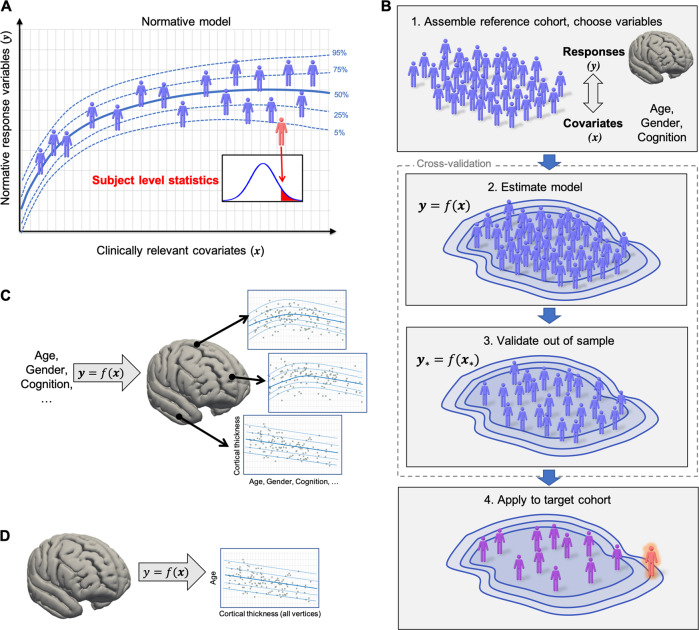
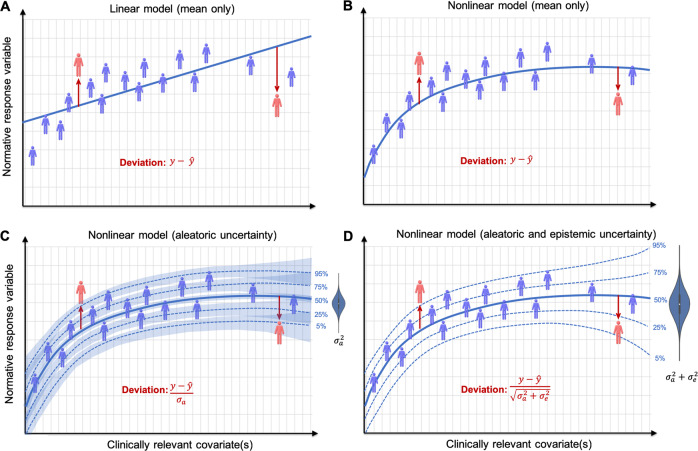
Normative models are a class of emerging statistical techniques useful for understanding the heterogeneous biology underlying psychiatric disorders at the level of the individual participant. Analogous to normative growth charts used in paediatric medicine for plotting child development in terms of height or weight as a function of age, normative models chart variation in clinical cohorts in terms of mappings between quantitative biological measures and clinically relevant variables. An emerging body of literature has demonstrated that such techniques are excellent tools for parsing the heterogeneity in clinical cohorts by providing statistical inferences at the level of the individual participant with respect to the normative range. Here, we provide a unifying review of the theory and application of normative modelling for understanding the biological and clinical heterogeneity underlying mental disorders. We first provide a statistically grounded yet non-technical overview of the conceptual underpinnings of normative modelling and propose a conceptual framework to link the many different methodological approaches that have been proposed for this purpose. We survey the literature employing these techniques, focusing principally on applications of normative modelling to quantitative neuroimaging-based biomarkers in psychiatry and, finally, we provide methodological considerations and recommendations to guide future applications of these techniques. We show that normative modelling provides a means by which the importance of modelling individual differences can be brought from theory to concrete data analysis procedures for understanding heterogeneous mental disorders and ultimately a promising route towards precision medicine in psychiatry.
Overview
The claims and statistics of this paper haven’t been checked yet.
Free: it reads the open-access text and checks the first 5 claims that cite a source we can check. Create a free account to check every claim.
Integrity signals
Registry
Cites
Statistics
Figures
Verification
Claims the paper makes
The claims and statistics of this paper haven’t been checked yet.
Free: it reads the open-access text and checks the first 5 claims that cite a source we can check. Create a free account to check every claim.
Claims other papers make about this one
Each is checked against this paper’s own text: does it say what the citing paper says it does?
The source backs part of the claim, not all of it — or backs it for a different population, condition or comparison.
In the citing paper
“A prerequisite for the application of growth charts in youth mental health is the availability of normative developmental data that comprise important domains of emerging psychopathology, such as cognition, emotion regulation, and sleep [92].”
From Towards a youth mental health paradigm: a perspective and roadmap (2023) · cites this paper as [92]
Experimental — accuracy not yet measuredThe source backs part of the claim, not all of it — or backs it for a different population, condition or comparison.
In the citing paper
“Newer hybrid models, such as normative modeling (19,59–61) or the functional random forest (FRF) (18,62), may overcome these limitations and enable new inferences from psychopathology studies.”
From Methods and challenges for assessing heterogeneity (2020) · cites this paper as [59]
Experimental — accuracy not yet measuredThe source backs part of the claim, not all of it — or backs it for a different population, condition or comparison.
In the citing paper
“Normative models (59) enable researchers to identify common (i.e., comorbid) mechanisms, identify potential subtypes or subfactors tied to an outcome of interest, and make pre- dictions on individual cases.”
From Methods and challenges for assessing heterogeneity (2020) · cites this paper as [59]
Experimental — accuracy not yet measuredThe cited source says what the claim attributes to it.
In the citing paper
“In this context, machine learning approaches have just recently embraced advances that allow the characterization of normative trajectories and parsing of the heterogeneity at the individual level 69 .”
From Candidate diagnostic biomarkers for neurodevelopmental disorders in children and adolescents: a systematic review (2023) · cites this paper as [69]
Self-check
Percentages, sums and reported differences re-computed from the paper’s own numbers.
The self-check needs the paper’s full text.
Citations
Cites
Insel, T., Cuthbert, B., Garvey, M., Heinssen, R., Pine, D. S., Quinn, K., Sanislow, C., & Wang, P. (2010) · American Journal of Psychiatry · doi:10.1176/appi.ajp.2010.09091379 · Cited by 7,067
The WU-Minn Human Connectome Project: An overview
Van Essen, D. C., Smith, S. M., Barch, D. M., Behrens, T. E. J., Yacoub, E., & Ugurbil, K. (2013) · NeuroImage · doi:10.1016/j.neuroimage.2013.05.041 · Cited by 5,651
Multimodal population brain imaging in the UK Biobank prospective epidemiological study
Miller, K. L., Alfaro-Almagro, F., Bangerter, N. K., Thomas, D. L., Yacoub, E., Xu, J., Bartsch, A. J., Jbabdi, S., Sotiropoulos, S. N., Andersson, J. L. R., et al. (2016) · Nature Neuroscience · doi:10.1038/nn.4393 · Cited by 2,020
Equifinality and multifinality in developmental psychopathology
Cicchetti, D., & Rogosch, F. A. (1996) · Development and Psychopathology · doi:10.1017/s0954579400007318 · Cited by 1,842
Kapur, S., Phillips, A. G., & Insel, T. R. (2012) · Molecular Psychiatry · doi:10.1038/mp.2012.105 · Cited by 980
The conception of the ABCD study: From substance use to a broad NIH collaboration
Volkow, N. D., Koob, G. F., Croyle, R. T., Bianchi, D. W., Gordon, J. A., Koroshetz, W. J., Pérez-Stable, E. J., Riley, W. T., Bloch, M. H., Conway, K., et al. (2018) · Developmental Cognitive Neuroscience · doi:10.1016/j.dcn.2017.10.002 · Cited by 970
Predicting Age Using Neuroimaging: Innovative Brain Ageing Biomarkers
Cole, J. H., & Franke, K. (2017) · Trends in Neurosciences · doi:10.1016/j.tins.2017.10.001 · Cited by 903
Insel, T. R., & Cuthbert, B. N. (2015) · Science · doi:10.1126/science.aab2358 · Cited by 840
Understanding heterogeneity in clinical cohorts using normative models: Beyond case-control studies
Marquand, A. F., Rezek, I., Buitelaar, J., & Beckmann, C. F. (2016) · Biological Psychiatry · doi:10.1016/j.biopsych.2015.12.023 · Cited by 683
Self-citationMapping the heterogeneous phenotype of schizophrenia and bipolar disorder using normative models
Wolfers, T., Doan, N. T., Kaufmann, T., Alnæs, D., Moberget, T., Agartz, I., Buitelaar, J. K., Ueland, T., Melle, I., Franke, B., et al. (2018) · JAMA Psychiatry · doi:10.1001/jamapsychiatry.2018.2467 · Cited by 508
Self-citation
Research works printed but not linked: 3
- 21. Bethlehem R, Seidlitz J, Romero-Garcia R, Lombardo M. Using normative age modelling to isolate subsets of individuals with autism expressing highly age-atypical cortical thickness features. BioRxiv 2018:1–23.
- 33. Gal Y Uncertainty in deep learning 2016 Cambridge University of Cambridge
- 43. Kia SM, Marquand A. Neural processes mixed-effect models for deep normative modeling of clinical neuroimaging data. arXiv. 2018;1812.04998.
Cited by
Brain charts for the human lifespan
Bethlehem, R. A. I., Seidlitz, J., White, S. R., Vogel, J. W., Anderson, K. M., Adamson, C., Adler, S., Alexopoulos, G. S., Anagnostou, E., Areces-Gonzalez, A., et al. (2022) · Nature · doi:10.1038/s41586-022-04554-y · Cited by 1,794
Towards a youth mental health paradigm: a perspective and roadmap
Uhlhaas, P. J., Davey, C. G., Mehta, U. M., Shah, J., Torous, J., Allen, N. B., Avenevoli, S., Bella-Awusah, T., Chanen, A., Chen, E. Y. H., et al. (2023) · Molecular Psychiatry · doi:10.1038/s41380-023-02202-z · Cited by 318
The normative modeling framework for computational psychiatry
Rutherford, S., Kia, S. M., Wolfers, T., Fraza, C., Zabihi, M., Dinga, R., Berthet, P., Worker, A., Verdi, S., Ruhe, H. G., et al. (2022) · Nature Protocols · doi:10.1038/s41596-022-00696-5 · Cited by 274
Self-citationA canonical trajectory of executive function maturation from adolescence to adulthood
Tervo-Clemmens, B., Calabro, F. J., Parr, A. C., Fedor, J., Foran, W., & Luna, B. (2023) · Nature Communications · doi:10.1038/s41467-023-42540-8 · Cited by 241
“As in these and related fi elds 65 , large-scale reproducible normative templates of change can be leveraged to better understand risk factors or consequences of mental and physical health conditions related to executive function during adolescence and across a range of experimental conditions.”
Charting brain growth and aging at high spatial precision
Rutherford, S., Fraza, C., Dinga, R., Kia, S. M., Wolfers, T., Zabihi, M., Berthet, P., Worker, A., Verdi, S., Andrews, D., et al. (2022) · eLife · doi:10.7554/elife.72904 · Cited by 214
Self-citationModern views of machine learning for precision psychiatry
Chen, Z. S., Kulkarni, P. (., Galatzer-Levy, I. R., Bigio, B., Nasca, C., & Zhang, Y. (2022) · Patterns · doi:10.1016/j.patter.2022.100602 · Cited by 210
“However, subtyping analysis is widely viewed as hypothesis generating and poses significant challenges related to reproducibility and physiological interpretability.(43,47) Linking subtype identification to a particular outcome or question using well-designed ML approaches is vital to address these challenges.”
BackgroundEvidence for embracing normative modeling
Rutherford, S., Barkema, P., Tso, I. F., Sripada, C., Beckmann, C. F., Ruhe, H. G., & Marquand, A. F. (2023) · eLife · doi:10.7554/elife.85082 · Cited by 175
Self-citationLv, J., Di Biase, M., Cash, R. F. H., Cocchi, L., Cropley, V. L., Klauser, P., Tian, Y., Bayer, J., Schmaal, L., Cetin-Karayumak, S., et al. (2021) · Molecular Psychiatry · doi:10.1038/s41380-020-00882-5 · Cited by 166
Mind the gap: Performance metric evaluation in brain‐age prediction
de Lange, A. G., Anatürk, M., Rokicki, J., Han, L. K. M., Franke, K., Alnæs, D., Ebmeier, K. P., Draganski, B., Kaufmann, T., Westlye, L. T., et al. (2022) · Human Brain Mapping · doi:10.1002/hbm.25837 · Cited by 160
“From a methodological point of view, prediction models can benefit from advancements such as incorporating uncertainties into the predictions (Hahn et al., 2021; Marquand et al., 2019; Peng, Gong, Beckmann, Vedaldi, & Smith, 2021).”
Vidal-Pineiro, D., Wang, Y., Krogsrud, S. K., Amlien, I. K., Baaré, W. F., Bartres-Faz, D., Bertram, L., Brandmaier, A. M., Drevon, C. A., Düzel, S., et al. (2021) · eLife · doi:10.7554/elife.69995 · Cited by 160
“Brain age models are related to other models such as normative brain charts ( Bethlehem, 2021 ; Dong et al., 2020 ) – akin to normative anthropometric charts – the main difference being that brain age models predict, rather than control for, age ( Marquand et al., 2019 ).”
Cortese, S., Solmi, M., Michelini, G., Bellato, A., Blanner, C., Canozzi, A., Eudave, L., Farhat, L. C., Højlund, M., Köhler‐Forsberg, O., et al. (2023) · World Psychiatry · doi:10.1002/wps.21037 · Cited by 147
“In this context, machine learning approaches have just recently embraced advances that allow the characterization of normative trajectories and parsing of the heterogeneity at the individual level 69 .”
BackgroundLiu, Z., Palaniyappan, L. K., Wu, X., Zhang, K., Du, J., Zhao, Q., Xie, C., Tang, Y., Su, W., Wei, Y., et al. (2021) · Molecular Psychiatry · doi:10.1038/s41380-021-01229-4 · Cited by 153
Warped Bayesian linear regression for normative modelling of big data
Fraza, C., Dinga, R., Beckmann, C. F., & Marquand, A. F. (2021) · NeuroImage · doi:10.1016/j.neuroimage.2021.118715 · Cited by 135
Self-citationWolfers, T., Floris, D. L., Dinga, R., van Rooij, D., Isakoglou, C., Kia, S. M., Zabihi, M., Llera, A., Chowdanayaka, R., Kumar, V. J., et al. (2019) · Neuroscience & Biobehavioral Reviews · doi:10.1016/j.neubiorev.2019.07.010 · Cited by 129
Self-citationSun, X., Sun, J., Lu, X., Dong, Q., Zhang, L., Wang, W., Liu, J., Ma, Q., Wang, X., Wei, D., et al. (2023) · Biological Psychiatry · doi:10.1016/j.biopsych.2023.05.021 · Cited by 129
Covington, N. V., & Duff, M. C. (2021) · American Journal of Speech-Language Pathology · doi:10.1044/2020_ajslp-20-00081 · Cited by 145
Atypical Brain Asymmetry in Autism—A Candidate for Clinically Meaningful Stratification
Floris, D. L., Wolfers, T., Zabihi, M., Holz, N. E., Zwiers, M. P., Charman, T., Tillmann, J., Ecker, C., Dell’Acqua, F., Banaschewski, T., et al. (2020) · Biological Psychiatry Cognitive Neuroscience and Neuroimaging · doi:10.1016/j.bpsc.2020.08.008 · Cited by 145
Self-citationParkes, L., Satterthwaite, T. D., & Bassett, D. S. (2020) · Current Opinion in Neurobiology · doi:10.1016/j.conb.2020.10.016 · Cited by 115
“Importantly, these techniques provide estimates of percentiles of variation within the healthy cohort [9].”
Ge, R., Yu, Y., Qi, Y. X., Fan, Y. V., Chen, S., Gao, C., Haas, S. S., New, F., Boomsma, D. I., Brodaty, H., et al. (2024) · The Lancet Digital Health · doi:10.1016/s2589-7500(23)00250-9 · Cited by 154
Self-citationEarly Social Adversity, Altered Brain Functional Connectivity, and Mental Health
Holz, N. E., Berhe, O., Sacu, S., Schwarz, E., Tesarz, J., Heim, C. C., & Tost, H. (2022) · Biological Psychiatry · doi:10.1016/j.biopsych.2022.10.019 · Cited by 142
“Here, important methodological work has been done to establish normative growth chart models for structural brain development for neuroimaging phenotypes that capture variation in the population (137,138).”
BackgroundBeyond the average patient: how neuroimaging models can address heterogeneity in dementia
Verdi, S., Marquand, A. F., Schott, J. M., & Cole, J. H. (2021) · Brain · doi:10.1093/brain/awab165 · Cited by 106
“cortical thickness) to estimate variation for a given brain region.(67,68) This is detailed in Box 2 and illustrated in Fig.”
BackgroundSelf-citationMapping human brain charts cross-sectionally and longitudinally
Biase, M. A. D., Tian, Y., Bethlehem, R. A. I., Seidlitz, J., Alexander‐Bloch, A. F., Yeo, B. T. T., & Zalesky, A. (2023) · Proceedings of the National Academy of Sciences · doi:10.1073/pnas.2216798120 · Cited by 125
Bethlehem, R. A. I., Seidlitz, J., Romero-Garcia, R., Trakoshis, S., Dumas, G., & Lombardo, M. V. (2020) · Communications Biology · doi:10.1038/s42003-020-01212-9 · Cited by 104
Parkes, L., Moore, T. M., Calkins, M. E., Cook, P. A., Cieslak, M., Roalf, D. R., Wolf, D. H., Gur, R. C., Gur, R. E., Satterthwaite, T. D., et al. (2021) · Translational Psychiatry · doi:10.1038/s41398-021-01342-6 · Cited by 112
Bayer, J., Thompson, P. M., Ching, C. R. K., Liu, M., Chen, A. A., Panzenhagen, A. C., Jahanshad, N., Marquand, A. F., Schmaal, L., & Sämann, P. G. (2022) · Frontiers in Neurology · doi:10.3389/fneur.2022.923988 · Cited by 130
“NM has been used in various neuroimaging applications and is conceptually universal and not specific to certain imaging modalities or features (53, 60).”
BackgroundMethodInfluentialSelf-citationCardiometabolic risk factors associated with brain age and accelerated brain ageing
Beck, D., de Lange, A. G., Pedersen, M. L., Alnæs, D., Maximov, I. I., Voldsbekk, I., Richard, G., Sanders, A., Ulrichsen, K. M., Dørum, E. S., et al. (2021) · Human Brain Mapping · doi:10.1002/hbm.25680 · Cited by 114
Methods and challenges for assessing heterogeneity
Feczko, E., & Fair, D. A. (2020) · Biological Psychiatry · doi:10.1016/j.biopsych.2020.02.015 · Cited by 96
“Normative models (59) enable researchers to identify common (i.”
BackgroundParola, A., Lin, J. M., Simonsen, A., Bliksted, V., Zhou, Y., Wang, H., Inoue, L., Koelkebeck, K., & Fusaroli, R. (2022) · Schizophrenia Research · doi:10.1016/j.schres.2022.07.002 · Cited by 122
Dimitrova, R., Pietsch, M., Ciarrusta, J., Fitzgibbon, S. P., Williams, L. Z. J., Christiaens, D., Cordero‐Grande, L., Batallé, D., Makropoulos, A., Schuh, A., et al. (2021) · NeuroImage · doi:10.1016/j.neuroimage.2021.118488 · Cited by 106
Wolfers, T., Rokicki, J., Alnæs, D., Berthet, P., Agartz, I., Kia, S. M., Kaufmann, T., Zabihi, M., Moberget, T., Melle, I. S., et al. (2021) · Human Brain Mapping · doi:10.1002/hbm.25386 · Cited by 87
“3 normative modeling [Marquand et al., 2016; Marquand et al., 2019] to chart variation in brain anatomy across individual patients showed highly idiosyncratic patterns of deviation, suggesting that such group effects are inaccurate reflections of the brain aberrations found at the individual level [Wolfers et al.”
BackgroundSelf-citationTung, Y.-H., Lin, H.-Y., Chen, C.-L., Shang, C.-Y., Yang, L.-Y., Hsu, Y.-C., Tseng, W.-Y. I., & Gau, S. S.-F. (2021) · American Journal of Psychiatry · doi:10.1176/appi.ajp.2020.20070999 · Cited by 79
Pinaya, W. H. L., Scarpazza, C., Garcia‐Dias, R., Vieira, S., Baecker, L., da Costa, P. F., Redolfi, A., Frisoni, G. B., Pievani, M., Calhoun, V. D., et al. (2021) · Scientific Reports · doi:10.1038/s41598-021-95098-0 · Cited by 107
Verdi, S., Kia, S. M., Yong, K. X. X., Tosun, D., Schott, J. M., Marquand, A. F., Cole, J. H., & Initiative, T. A. D. N. (2023) · Neurology · doi:10.1212/wnl.0000000000207298 · Cited by 96
“20,21 22-24 Such fi ndings motivate the fi rst application of neuroanatomical normative modeling to AD.”
BackgroundSelf-citationLawrence, K. E., Nabulsi, L., Santhalingam, V., Abaryan, Z., Villalon-Reina, J. E., Nir, T. M., Ba Gari, I., Zhu, A. H., Haddad, E., Muir, A. M., et al. (2021) · Brain Imaging and Behavior · doi:10.1007/s11682-021-00548-y · Cited by 79
The definition and measurement of heterogeneity
Nunes, A., Trappenberg, T. P., & Alda, M. (2020) · Translational Psychiatry · doi:10.1038/s41398-020-00986-0 · Cited by 97
Towards robust and replicable sex differences in the intrinsic brain function of autism
Floris, D. L., Filho, J. O. A., Lai, M.-C., Giavasis, S., Oldehinkel, M., Mennes, M., Charman, T., Tillmann, J., Dumas, G., Ecker, C., et al. (2021) · Molecular Autism · doi:10.1186/s13229-021-00415-z · Cited by 74
Self-citationCharting brain growth in tandem with brain templates at school age
Dong, H.-M., Castellanos, F. X., Yang, N., Zhang, Z., Zhou, Q., He, Y., Zhang, L., Xu, T., Holmes, A. J., Yeo, B. T. T., et al. (2020) · Science Bulletin · doi:10.1016/j.scib.2020.07.027 · Cited by 82
“normative GCs [12,36-39], whether and how brain templates affect the estimation of brain morphological GCs remains unknown.”
BackgroundSelf-citationClosing the life-cycle of normative modeling using federated hierarchical Bayesian regression
Kia, S. M., Huijsdens, H., Rutherford, S. E., de Boer, A. A. A., Dinga, R., Wolfers, T., Berthet, P., Mennes, M., Andreassen, O. A., Westlye, L. T., et al. (2022) · PLoS ONE · doi:10.1371/journal.pone.0278776 · Cited by 107
Self-citationHe, Y., Byrge, L., & Kennedy, D. P. (2020) · Human Brain Mapping · doi:10.1002/hbm.24879 · Cited by 71
“individually-sensitive analytic approaches (Byrge et al., 2015; Dubois & Adolphs, 2016; Marquand et al., 2019; Marquand, Rezek, Buitelaar, & Beckmann, 2016).”
Accommodating site variation in neuroimaging data using normative and hierarchical Bayesian models
Bayer, J., Dinga, R., Kia, S. M., Kottaram, A., Wolfers, T., Lv, J., Zalesky, A., Schmaal, L., & Marquand, A. F. (2022) · NeuroImage · doi:10.1016/j.neuroimage.2022.119699 · Cited by 87
Self-citationBest Practices in Structural Neuroimaging of Neurodevelopmental Disorders
Backhausen, L. L., Herting, M. M., Tamnes, C. K., & Vetter, N. C. (2021) · Neuropsychology Review · doi:10.1007/s11065-021-09496-2 · Cited by 79
“Pioneering studies in this field are emerging (Marquand et al., 2019).”
BackgroundFerschmann, L., Bos, M. G. N., Herting, M. M., Mills, K. L., & Tamnes, C. K. (2021) · Current Opinion in Psychology · doi:10.1016/j.copsyc.2021.09.014 · Cited by 95
Chinese Color Nest Project : An accelerated longitudinal brain-mind cohort
Liu, S., Wang, Y., Zhang, Q., Zhou, Q., Cao, L., Jiang, C., Zhang, Z., Yang, N., Dong, Q., & Zuo, X. (2021) · Developmental Cognitive Neuroscience · doi:10.1016/j.dcn.2021.101020 · Cited by 75
Detecting microstructural deviations in individuals with deep diffusion MRI tractometry
Chamberland, M., Genc, S., Tax, C. M. W., Shastin, D., Koller, K., Raven, E. P., Cunningham, A., Doherty, J., van den Bree, M. B. M., Parker, G. D., et al. (2021) · Nature Computational Science · doi:10.1038/s43588-021-00126-8 · Cited by 69
Hierarchical Bayesian Regression for Multi-site Normative Modeling of Neuroimaging Data
Kia, S. M., Huijsdens, H., Dinga, R., Wolfers, T., Mennes, M., Andreassen, O. A., Westlye, L. T., Beckmann, C. F., & Marquand, A. F. (2020) · Lecture notes in computer science · doi:10.1007/978-3-030-59728-3_68 · Cited by 78
“The deviations of clinical samples from the resulting normative range can be quantified as Z-scores at the individual level [13].”
BackgroundSelf-citationPromises and pitfalls of deep neural networks in neuroimaging-based psychiatric research
Eitel, F., Schulz, M.-A., Seiler, M., Walter, H., & Ritter, K. (2021) · Experimental Neurology · doi:10.1016/j.expneurol.2021.113608 · Cited by 80
“A related approach to utilizing intermediate (latent) representations of neuroimaging data for psychiatry is normative modeling [166, 21].”
BackgroundHippocampal circuit dysfunction in psychosis
Knight, S., McCutcheon, R. A., Dwir, D., Grace, A. A., O’Daly, O., McGuire, P. K., & Modinos, G. (2022) · Translational Psychiatry · doi:10.1038/s41398-022-02115-5 · Cited by 76
Sun, T., Wang, Z., Wu, Y., Gu, F., Li, X., Bai, Y., Shen, C., Hu, Z., Liang, D., Liu, X., et al. (2022) · European Journal of Nuclear Medicine and Molecular Imaging · doi:10.1007/s00259-022-05832-7 · Cited by 70
“This concern could be resolved by selecting a large number of control samples with distinct expression profiles, as this would increase the discriminatory power of the proposed framework [25].”
BackgroundInfluentialA stable and replicable neural signature of lifespan adversity in the adult brain
Holz, N. E., Zabihi, M., Kia, S. M., Monninger, M., Aggensteiner, P.-M., Siehl, S., Floris, D. L., Bokde, A. L. W., Desrivières, S., Flor, H., et al. (2023) · Nature Neuroscience · doi:10.1038/s41593-023-01410-8 · Cited by 76
“This issue could be addressed by referencing adversity-related effects to normative brain growth charts 17–20 , which, akin to pediatric growth charts, enable the quantification of individual variation with respect to population percentiles.”
Self-citationA perspective on brain-age estimation and its clinical promise
Gaser, C., Kalc, P., & Cole, J. H. (2024) · Nature Computational Science · doi:10.1038/s43588-024-00659-8 · Cited by 73
“Analogous to growth charts in pediatric care, normative modeling may present a possible alternative 85–87 .”
BackgroundMaglanoc, L. A., Kaufmann, T., Jonassen, R., Hilland, E., Beck, D., Landrø, N. I., & Westlye, L. T. (2020) · Human Brain Mapping · doi:10.1002/hbm.24802 · Cited by 61
“Alternatively, dimensional measures such as brain age prediction (Kaufmann et al., 2018) and normative modelling (Marquand et al., 2019; Marquand, Rezek, Buitelaar, & Beckmann, 2016) have shown promising results in elucidating brain heterogeneity in mental disorders such as schizophrenia (Wolfers…”
BackgroundCell type-specific manifestations of cortical thickness heterogeneity in schizophrenia
Biase, M. A. D., Geaghan, M. P., Reay, W. R., Seidlitz, J., Weickert, C. S., Pébay, A., Green, M. J., Quidé, Y., Atkins, J., Coleman, M. J., et al. (2022) · Molecular Psychiatry · doi:10.1038/s41380-022-01460-7 · Cited by 60
“, centiles) in regional CTh [3, 12, 13] were defined on healthy controls as a function of age and sex, and CTh deviations were then estimated for each individual with schizophrenia.”
MethodDinga, R., Fraza, C., Bayer, J., Kia, S. M., Beckmann, C. F., & Marquand, A. F. (2021) · bioRxiv (Cold Spring Harbor Laboratory) · doi:10.1101/2021.06.14.448106 · Cited by 81
“…modeling are to estimate centiles of a distribution of a specific brain phenotype in a population with respect to one or more variables and use these estimates to quantify the biological “abnormality” or deviation of previously unseen individuals from the reference model (Marquand et al. 2016).”
BackgroundSelf-citationBrucar, L. R., Feczko, E., Fair, D. A., & Zilverstand, A. (2022) · Biological Psychiatry · doi:10.1016/j.biopsych.2022.12.020 · Cited by 63
Modeling Individual Differences in Brain Development
Becht, A., & Mills, K. L. (2020) · Biological Psychiatry · doi:10.1016/j.biopsych.2020.01.027 · Cited by 64
Fusaroli, R., Grossman, R. B., Bilenberg, N., Cantio, C., Jepsen, J. R. M., & Weed, E. (2021) · Autism Research · doi:10.1002/aur.2661 · Cited by 68
“…explore this idea and its potential clinical applications, we need to construct even larger cross-linguistic datasets systematically covering the heterogeneity in clinical features—and beyond—of autistic people, and more explicit normative modeling of individual variability (Marquand et al., 2019).”
BackgroundBožek, J., Griffanti, L., Lau, S., & Jenkinson, M. (2023) · NeuroImage · doi:10.1016/j.neuroimage.2023.119864 · Cited by 71
Altered brain activity in unipolar depression unveiled using connectomics
Cash, R. F. H., Müller, V. I., Fitzgerald, P. B., Eickhoff, S. B., & Zalesky, A. (2023) · Nature Mental Health · doi:10.1038/s44220-023-00038-8 · Cited by 57
Embracing variability in the search for biological mechanisms of psychiatric illness
Segal, A., Tiego, J., Parkes, L., Holmes, A. J., Marquand, A. F., & Fornito, A. (2024) · Trends in Cognitive Sciences · doi:10.1016/j.tics.2024.09.010 · Cited by 71
Self-citationClinical and Translational Implications of an Emerging Developmental Substructure for Autism
Constantino, J. N., Charman, T., & Jones, E. J. H. (2021) · Annual Review of Clinical Psychology · doi:10.1146/annurev-clinpsy-081219-110503 · Cited by 60
“…that involve summing individual deviations across multiple neurocognitive measures (already used routinely at the clinical level) (e.g., Jacob et al. 2019, Marquand et al. 2019, Zabihi et al. 2019) and disaggregating groups with autism into different stratified subtypes (Wolfers et al. 2019).”
BackgroundTunç, B., Yankowitz, L. D., Parker, D., Alappatt, J. A., Pandey, J., Schultz, R. T., & Verma, R. (2019) · Molecular Autism · doi:10.1186/s13229-019-0301-5 · Cited by 57
“Although it is always possible to invert the linear mapping between variables to facilitate interpretations on regional neuroimaging metrics, one may also use other normative modeling approaches to achieve this directly [37, 38].”
BackgroundInfluentialJi, C., Patil, K. R., Yeo, B. T. T., & Eickhoff, S. B. (2022) · Biological Psychiatry · doi:10.1016/j.biopsych.2022.07.025 · Cited by 44
Mentis, A. A., Dardiotis, E., Katsouni, E., & Chrousos, G. P. (2021) · Translational Psychiatry · doi:10.1038/s41398-021-01257-2 · Cited by 71
Parola, A., Simonsen, A., Lin, J. M., Zhou, Y., Wang, H., Ubukata, S., Koelkebeck, K., Bliksted, V., & Fusaroli, R. (2023) · Schizophrenia Bulletin · doi:10.1093/schbul/sbac128 · Cited by 57
Non-Gaussian normative modelling with hierarchical Bayesian regression
de Boer, A. A. A., Bayer, J., Kia, S. M., Rutherford, S. E., Zabihi, M., Fraza, C., Barkema, P., Westlye, L. T., Andreassen, O. A., Hinne, M., et al. (2024) · Imaging Neuroscience · doi:10.1162/imag_a_00132 · Cited by 54
“These are reviewed in Marquand et al. (2019) and include quantile regression and hierarchical linear regression techniques.”
MethodSelf-citationDimitrova, R., Arulkumaran, S., Carney, O., Chew, A., Falconer, S., Ciarrusta, J., Wolfers, T., Batalle, D., Cordero-Grande, L., Price, A. N., et al. (2021) · Cerebral Cortex · doi:10.1093/cercor/bhab039 · Cited by 42
Self-citationPsychosis Risk and Development: What Do We Know From Population-Based Studies?
Mennigen, E., & Bearden, C. E. (2020) · Biological Psychiatry · doi:10.1016/j.biopsych.2019.12.014 · Cited by 40
Recommendations for a Better Understanding of Sex and Gender in the Neuroscience of Mental Health
Wierenga, L. M., Ruigrok, A. N. V., Aksnes, E. R., Barth, C., Beck, D., Burke, S., Crestol, A., van Drunen, L., Ferrara, M., Galea, L. A. M., et al. (2023) · Biological Psychiatry Global Open Science · doi:10.1016/j.bpsgos.2023.100283 · Cited by 54
“Examples of these approaches are network analysis of psychopathology [see for example (84,86)] and normative modeling to capture the heterogeneity of mental health problems (87,88).”
Navigating Early Alzheimer's Diagnosis: A Comprehensive Review of Diagnostic Innovations
Juganavar, A., Joshi, A., & Shegekar, T. (2023) · Cureus · doi:10.7759/cureus.44937 · Cited by 68
“A comparison of Alzheimer's disease diagnostic tools is summarised in Table 1 [10,18,32,37,44,46-54].”
Coupé, P., Manjón, J. V., Mansencal, B., Tourdias, T., Catheline, G., & Planche, V. (2022) · Human Brain Mapping · doi:10.1002/hbm.25850 · Cited by 40
“As explained in Marquand et al. (2019), normative lifespan modeling is similar to growth charts used in pediatric medicine to detect abnormal child development in terms of height or weight related to the age's subject.”
BackgroundMethodInfluentialRemiszewski, N., Bryant, J. E., Rutherford, S. E., Marquand, A. F., Nelson, E. A., Askar, I., Lahti, A. C., & Kraguljac, N. V. (2022) · JAMA Psychiatry · doi:10.1001/jamapsychiatry.2022.3010 · Cited by 40
Self-citationRegional patterns of human cortex development correlate with underlying neurobiology
Lotter, L. D., Saberi, A., Hansen, J. Y., Mišić, B., Paquola, C., Barker, G. J., Bokde, A. L. W., Desrivières, S., Flor, H., Grigis, A., et al. (2024) · Nature Communications · doi:10.1038/s41467-024-52366-7 · Cited by 56
“Normative modeling of large-scale neuroimaging data has received considerable attention as a tool to translate basic research into clinical applications 1,3,20,22,80 .”
The expanding horizons of network neuroscience: From description to prediction and control
Srivastava, P., Fotiadis, P., Parkes, L., & Bassett, D. S. (2022) · NeuroImage · doi:10.1016/j.neuroimage.2022.119250 · Cited by 42
“Note, there are many other bene-fits to normative modeling that are beyond the scope of this review and we direct interested readers to Marquand et al. (2019, 2016) for further discussion.”
BackgroundBerthet, P., Haatveit, B. C., Kjelkenes, R., Worker, A., Kia, S. M., Wolfers, T., Rutherford, S. E., Alnæs, D., Dinga, R., Pedersen, M. L., et al. (2024) · Schizophrenia Bulletin · doi:10.1093/schbul/sbae107 · Cited by 38
Self-citationFederated Multi-Site Normative Modeling using Hierarchical Bayesian RegressionPreprint
Kia, S. M., Huijsdens, H., Rutherford, S., Dinga, R., Wolfers, T., Mennes, M., Andreassen, O., Westlye, L., Beckmann, C., & Marquand, A. (2021) · bioRxiv · doi:10.1101/2021.05.28.446120 · Cited by 32
“Deviations of individuals from the normative range can be quantified as z-scores (Marquand et al., 2019).”
BackgroundMethodInfluentialSelf-citationBrain, lifestyle and environmental pathways linking physical and mental health
Tian, Y., Cole, J. H., Bullmore, E. T., & Zalesky, A. (2024) · Nature Mental Health · doi:10.1038/s44220-024-00303-4 · Cited by 45
“Notwithstanding the existence of alternative normative modeling approaches 39,53 , GAMLSS was used here due to its robustness and flexibility in modeling non-linear trajectories and recommendations by previous work 54,55 .”
Personalizing progressive changes to brain structure in Alzheimer's disease using normative modeling
Verdi, S., Rutherford, S. E., Fraza, C., Tosun, D., Altmann, A., Rakêt, L. L., Schott, J. M., Marquand, A. F., Cole, J. H., & Initiative, A. D. N. (2024) · Alzheimer s & Dementia · doi:10.1002/alz.14174 · Cited by 54
“14,15 Based on the well-established normative modeling concept, for example, height and weight growth charts for children, 16 the neuroanatomical version builds separate normative models per brain region, based on a large independent reference dataset.”
Self-citationElad, D., Karayumak, S. C., Zhang, F., Cho, K. I. K., Lyall, A. E., Seitz‐Holland, J., Ben‐Ari, R., Pearlson, G. D., Tamminga, C. A., Sweeney, J. A., et al. (2021) · Human Brain Mapping · doi:10.1002/hbm.25574 · Cited by 33
“…control group, and abnormalities are identified as those values that are out-liers relative to the distribution of the control group, that is, having z - scores with an absolute value larger than a threshold (Bouix et al., 2013; Marquand et al., 2019; Marquand, Rezek, Buitelaar, & Beckmann, 2016).”
InfluentialEpigenetics applied to child and adolescent mental health: Progress, challenges and opportunities
Cecil, C. A. M., Neumann, A., & Walton, E. (2022) · JCPP Advances · doi:10.1002/jcv2.12133 · Cited by 41
“…could be used to generate normative models (as done in paediatrics [i.e., growth charts] and increasingly in neuroimaging (Bethlehem et al., 2022; Marquand et al., 2019)), to estimate the degree to which DNAm levels in an individual at a given time point deviate from normative developmental…”
BackgroundThe Normative Modeling Framework for Computational PsychiatryPreprint
Rutherford, S. E., Kia, S. M., Wolfers, T., Fraza, C., Zabihi, M., Dinga, R., Berthet, P., Worker, A., Verdi, S., Ruhé, H. G., et al. (2021) · bioRxiv (Cold Spring Harbor Laboratory) · doi:10.1101/2021.08.08.455583 · Cited by 34
Self-citationBrain charts for the human lifespanPreprint
Bethlehem, R. A. I., Seidlitz, J., White, S. R., Vogel, J. W., Anderson, K., Adamson, C. L., Adler, S., Alexopoulos, G. S., Anagnostou, E. A., Areces-González, A., et al. (2021) · bioRxiv (Cold Spring Harbor Laboratory) · doi:10.1101/2021.06.08.447489 · Cited by 32
Savage, H. S., Mulders, P. C. R., van Eijndhoven, P., van Oort, J., Tendolkar, I., Vrijsen, J. N., Beckmann, C. F., & Marquand, A. F. (2024) · Communications Biology · doi:10.1038/s42003-024-06573-z · Cited by 36
Self-citationMaglanoc, L. A., Kaufmann, T., van der Meer, D., Marquand, A. F., Wolfers, T., Jonassen, R., Hilland, E., Andreassen, O. A., Landrø, N. I., & Westlye, L. T. (2019) · Biological Psychiatry · doi:10.1016/j.biopsych.2019.10.011 · Cited by 31
Self-citationShao, J., Qin, J., Wang, H., Sun, Y., Zhang, W., Wang, X., Wang, T., Li, X., Yao, Z., & Lü, Q. (2023) · Biological Psychiatry · doi:10.1016/j.biopsych.2023.08.005 · Cited by 31
Corrigan, N. M., Rokem, A., & Kuhl, P. K. (2024) · Proceedings of the National Academy of Sciences · doi:10.1073/pnas.2403200121 · Cited by 44
Analysing brain networks in population neuroscience: a case for the Bayesian philosophy
Bzdok, D., Floris, D. L., & Marquand, A. F. (2020) · Philosophical Transactions of the Royal Society B: Biological Sciences · doi:10.1098/rstb.2019.0661 · Cited by 30
“To provide a concrete example from imaging neuroscience, normative modelling is a recently introduced technique that aims tomap centiles of variation, such as the functional connectivity strength between amygdala and prefrontal cortex, across a reference cohort in an analogousmanner to the use of growth charts in paed…”
MethodSelf-citationBlok, E., Geenjaar, E., Geenjaar, E. A. W., Calhoun, V. D., & White, T. J. H. (2022) · Frontiers in Psychiatry · doi:10.3389/fpsyt.2022.846201 · Cited by 35
“Thus, we fit the model on all participants, which has been described as a viable option previously (15).”
MethodGaiser, C., Berthet, P., Kia, S. M., Frens, M. A., Beckmann, C. F., Muetzel, R. L., & Marquand, A. F. (2024) · Human Brain Mapping · doi:10.1002/hbm.26565 · Cited by 26
“Normative modeling approaches have recently emerged as a tool to better understand longitudinal developments with neuroimaging data (Marquand et al., 2019; Marquand, Rezek, et al., 2016).”
MethodSelf-citationChen, C., Hwang, T., Tung, Y.-H., Yang, L., Hsu, Y., Liu, C., Lin, Y.-T., Hsieh, M. H., Liu, C., Chien, Y., et al. (2022) · NeuroImage Clinical · doi:10.1016/j.nicl.2022.103003 · Cited by 32
“Normative modeling of neuroimaging data is an emerging approach to quantifying biological idiosyncrasy at an individual level with respect to a reference norm (Marquand et al., 2019).”
Duff, M. C., Morrow, E. L., Edwards, M., McCurdy, R. A., Clough, S., Patel, N. N., Walsh, K., & Covington, N. V. (2022) · Frontiers in Behavioral Neuroscience · doi:10.3389/fnbeh.2022.846919 · Cited by 33
Linking Personalized Brain Atrophy to Schizophrenia Network and Treatment Response
Ji, G., Zalesky, A., Wang, Y., He, K., Wang, L., Du, R., Sun, J., Bai, T., Chen, X., Tian, Y., et al. (2022) · Schizophrenia Bulletin · doi:10.1093/schbul/sbac162 · Cited by 29
Bučková, B. R., Fraza, C., Rehák, R., Kolenič, M., Beckmann, C. F., Španiel, F., Marquand, A. F., & Hlinka, J. (2025) · eLife · doi:10.7554/elife.95823.4 · Cited by 29
Self-citationGrowth charts of brain morphometry for preschool children
Zhang, H., Li, J., Su, X., Hu, Y., Liu, T., Ni, S., Li, H., Zuo, X., Fu, J., Yuan, T., et al. (2022) · NeuroImage · doi:10.1016/j.neuroimage.2022.119178 · Cited by 28
Subcortical Brain Alterations in Carriers of Genomic Copy Number Variants
Kumar, K., Modenato, C., Moreau, C. A., Ching, C. R. K., Harvey, A., Martin‐Brevet, S., Huguet, G., Jean‐Louis, M., Douard, E. A., Martin, C.-O., et al. (2023) · American Journal of Psychiatry · doi:10.1176/appi.ajp.20220304 · Cited by 29
Lu, B., Chen, X., Castellanos, F. X., Thompson, P. M., Zuo, X., Zang, Y., & Yan, C. (2024) · 中国科学通报:英文版 · doi:10.1016/j.scib.2024.03.006 · Cited by 30
Janssen, J., Díaz‐Caneja, C. M., Alloza, C., Schippers, A., de Hoyos, L., Santonja, J., Gordaliza, P. M., Buimer, E. E. L., van Haren, N. E. M., Cahn, W., et al. (2020) · Schizophrenia Bulletin · doi:10.1093/schbul/sbaa131 · Cited by 25
Shi, W., Fan, L., Wang, H., Liu, B., Li, W., Li, J., Cheng, L., Chu, C., Song, M., Sui, J., et al. (2022) · Cerebral Cortex · doi:10.1093/cercor/bhac301 · Cited by 26
Accommodating site variation in neuroimaging data using normative and hierarchical Bayesian modelsPreprint
Bayer, J., Dinga, R., Kia, S. M., Kottaram, A., Wolfers, T., Lv, J., Zalesky, A., Schmaal, L., & Marquand, A. F. (2021) · bioRxiv (Cold Spring Harbor Laboratory) · doi:10.1101/2021.02.09.430363 · Cited by 25
Self-citationChien, Y.-L., Lin, H.-Y., Tung, Y.-H., Hwang, T.-J., Chen, C.-L., Wu, C.-S., Shang, C.-Y., Hwu, H.-G., Tseng, W.-Y. I., Liu, C.-M., et al. (2022) · Molecular Psychiatry · doi:10.1038/s41380-022-01636-1 · Cited by 24
“Moreover, particularly for neuroimaging studies, brain maps of the “average patient” inferred from casecontrol differences might not be capable of capturing any particular individual, further resulting in heterogeneity across studies [15].”
BackgroundMethodInfluentialAge-atypical brain functional networks in autism spectrum disorder: a normative modeling approach
Jiang, A., Ma, X., Li, S., Wang, L., Yang, B., Wang, S., Li, M., & Dong, G. (2024) · Psychological Medicine · doi:10.1017/s0033291724000138 · Cited by 28
“In addition, there are many different normalization modeling methods, each with its own advantages and disadvantages (Marquand et al., 2019).”
Metadata
- Authors
- Marquand, A. F., Kia, S. M., Zabihi, M., Wolfers, T., Buitelaar, J. K., & Beckmann, C. F.
- Affiliations
- Radboud University Nijmegen (NL)
- Venue
- Molecular Psychiatry
- Published
- 2019-06-14
- Volume
- 24
- Issue
- 10
- Pages
- 1415-1424
- ISSN
- 1359-4184 (ISSN-L)
- 1476-5578
- PMC
- PMC6756106
- OpenAlex
- W2952396505
- Cited by
- 433
- References
- 45
- Citations by year
- 2026: 81 · 2025: 87 · 2024: 69 · 2023: 51 · 2022: 58 · 2021: 53 · 2020: 22 · 2019: 11
- FWCI
- 4.56
- Type
- journal article
- Language
- en
- Update notices
- correction (2019-06-26)
- Open access
- hybrid
- doi.org
- Licence
- cc-by
- creativecommons.org/licenses/by/4.0 (tdm)
- creativecommons.org/licenses/by/4.0 (vor)
- Locations
- Molecular Psychiatry (publishedVersion, cc-by)
- PubMed Central (publishedVersion, cc-by)
- Research portal (Tilburg University) (publishedVersion, cc-by)
- PubMed (publishedVersion)
- Radboud Repository (Radboud University) (submittedVersion)
- Radboud Repository (Radboud University) (submittedVersion, other-oa)
- Data Archiving and Networked Services (DANS) (submittedVersion, cc-by)
- Research Portal (King's College London) (submittedVersion, other-oa)
- Funders
- Nederlandse Organisatie voor Wetenschappelijk Onderzoek (016.156.415)
- Wellcome Trust (098369/Z/12/Z)
- Topics
- Life Sciences › Neuroscience › Cognitive Neuroscience › Functional Brain Connectivity Studies
- Social Sciences › Psychology › Experimental and Cognitive Psychology › Mental Health Research Topics
- Social Sciences › Arts and Humanities › Philosophy › Mental Health and Psychiatry
- Keywords
- normative modeling, mental illness, individual differences, clinical heterogeneity, neuroimaging biomarkers, precision psychiatry, psychiatric biomarkers
- MeSH terms
- Mental Disorders, Humans, Psychiatry, Models, Statistical, Biomarkers, Precision Medicine
About these checks
Registry, retraction, Cites and statistics results are computed, not judged, with one exception: a printed reference that no index lists is read once by a model before it counts as a citation error. Claims are extracted by a model and kept only when their quote appears verbatim in the text; each cited source is then checked, with a model’s help, for whether it says what the claim relies on. Those verdicts can be wrong — read the claim’s quote and the cited source before relying on one.
Statistics and arithmetic are recomputed, not judged.
Confidence bands are shown only for fields calibrated on our annotated test set. None is calibrated yet, so no band is shown.
What counts as a claim ›How we measure confidence ›How we check this ›
Are you an author, or do you see a problem with this page? Request a review
Data sources
Bibliographic data: Semantic Scholar, OpenAlex, Crossref.
Contains information from the Semantic Scholar Academic Graph Datasets, made available under the ODC Attribution License (ODC-BY 1.0).
Semantic Scholar’s data is described in: Kinney, R., et al. (2023). The Semantic Scholar Open Data Platform. arXiv:2301.10140.
