

Conceptualizing mental disorders as deviations from normative functioning
Open accessThe DOI matches its Crossref record; 45 of the 45 references it cites were found in a registry or an index.
Abstract
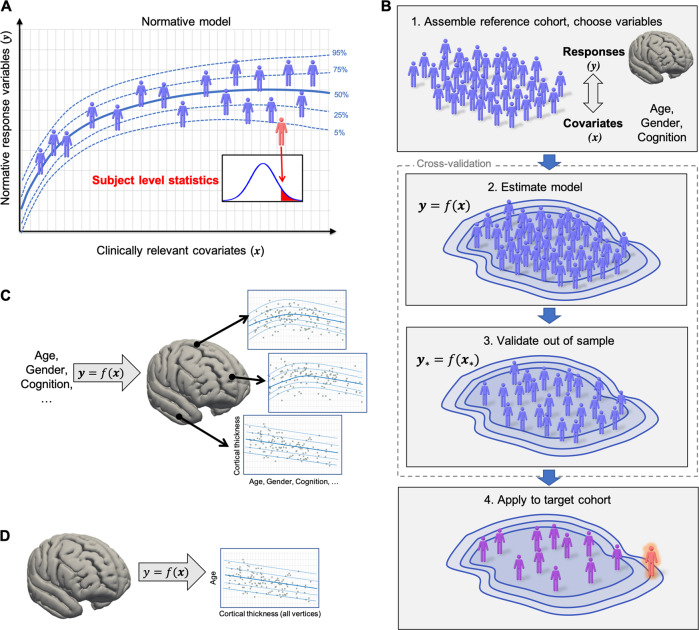
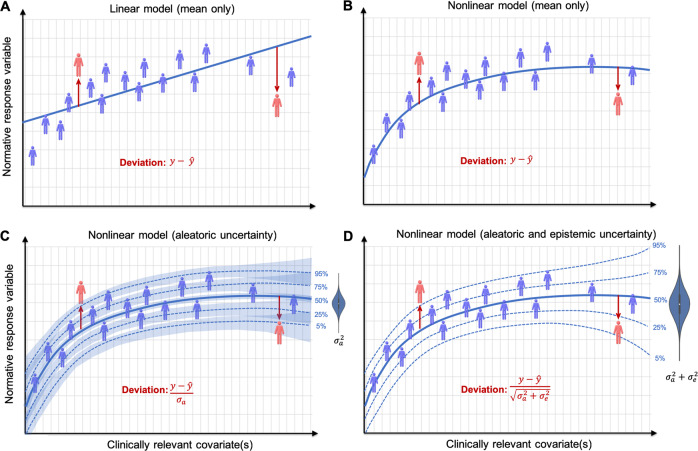
Normative models are a class of emerging statistical techniques useful for understanding the heterogeneous biology underlying psychiatric disorders at the level of the individual participant. Analogous to normative growth charts used in paediatric medicine for plotting child development in terms of height or weight as a function of age, normative models chart variation in clinical cohorts in terms of mappings between quantitative biological measures and clinically relevant variables. An emerging body of literature has demonstrated that such techniques are excellent tools for parsing the heterogeneity in clinical cohorts by providing statistical inferences at the level of the individual participant with respect to the normative range. Here, we provide a unifying review of the theory and application of normative modelling for understanding the biological and clinical heterogeneity underlying mental disorders. We first provide a statistically grounded yet non-technical overview of the conceptual underpinnings of normative modelling and propose a conceptual framework to link the many different methodological approaches that have been proposed for this purpose. We survey the literature employing these techniques, focusing principally on applications of normative modelling to quantitative neuroimaging-based biomarkers in psychiatry and, finally, we provide methodological considerations and recommendations to guide future applications of these techniques. We show that normative modelling provides a means by which the importance of modelling individual differences can be brought from theory to concrete data analysis procedures for understanding heterogeneous mental disorders and ultimately a promising route towards precision medicine in psychiatry.
Overview
The claims and statistics of this paper haven’t been checked yet.
Free: it reads the open-access text and checks the first 5 claims that cite a source we can check. Create a free account to check every claim.
Integrity signals
Registry
Cites
Statistics
Figures
Verification
Claims the paper makes
The claims and statistics of this paper haven’t been checked yet.
Free: it reads the open-access text and checks the first 5 claims that cite a source we can check. Create a free account to check every claim.
Claims other papers make about this one
Each is checked against this paper’s own text: does it say what the citing paper says it does?
The source backs part of the claim, not all of it — or backs it for a different population, condition or comparison.
In the citing paper
“A prerequisite for the application of growth charts in youth mental health is the availability of normative developmental data that comprise important domains of emerging psychopathology, such as cognition, emotion regulation, and sleep [92].”
From Towards a youth mental health paradigm: a perspective and roadmap (2023) · cites this paper as [92]
Experimental — accuracy not yet measuredThe source backs part of the claim, not all of it — or backs it for a different population, condition or comparison.
In the citing paper
“Newer hybrid models, such as normative modeling (19,59–61) or the functional random forest (FRF) (18,62), may overcome these limitations and enable new inferences from psychopathology studies.”
From Methods and challenges for assessing heterogeneity (2020) · cites this paper as [59]
Experimental — accuracy not yet measuredThe source backs part of the claim, not all of it — or backs it for a different population, condition or comparison.
In the citing paper
“Normative models (59) enable researchers to identify common (i.e., comorbid) mechanisms, identify potential subtypes or subfactors tied to an outcome of interest, and make pre- dictions on individual cases.”
From Methods and challenges for assessing heterogeneity (2020) · cites this paper as [59]
Experimental — accuracy not yet measuredThe cited source says what the claim attributes to it.
In the citing paper
“In this context, machine learning approaches have just recently embraced advances that allow the characterization of normative trajectories and parsing of the heterogeneity at the individual level 69 .”
From Candidate diagnostic biomarkers for neurodevelopmental disorders in children and adolescents: a systematic review (2023) · cites this paper as [69]
Self-check
Percentages, sums and reported differences re-computed from the paper’s own numbers.
The self-check needs the paper’s full text.
Citations
Cites
Insel, T., Cuthbert, B., Garvey, M., Heinssen, R., Pine, D. S., Quinn, K., Sanislow, C., & Wang, P. (2010) · American Journal of Psychiatry · doi:10.1176/appi.ajp.2010.09091379 · Cited by 7,067
The WU-Minn Human Connectome Project: An overview
Van Essen, D. C., Smith, S. M., Barch, D. M., Behrens, T. E. J., Yacoub, E., & Ugurbil, K. (2013) · NeuroImage · doi:10.1016/j.neuroimage.2013.05.041 · Cited by 5,651
Multimodal population brain imaging in the UK Biobank prospective epidemiological study
Miller, K. L., Alfaro-Almagro, F., Bangerter, N. K., Thomas, D. L., Yacoub, E., Xu, J., Bartsch, A. J., Jbabdi, S., Sotiropoulos, S. N., Andersson, J. L. R., et al. (2016) · Nature Neuroscience · doi:10.1038/nn.4393 · Cited by 2,020
Equifinality and multifinality in developmental psychopathology
Cicchetti, D., & Rogosch, F. A. (1996) · Development and Psychopathology · doi:10.1017/s0954579400007318 · Cited by 1,842
Kapur, S., Phillips, A. G., & Insel, T. R. (2012) · Molecular Psychiatry · doi:10.1038/mp.2012.105 · Cited by 980
The conception of the ABCD study: From substance use to a broad NIH collaboration
Volkow, N. D., Koob, G. F., Croyle, R. T., Bianchi, D. W., Gordon, J. A., Koroshetz, W. J., Pérez-Stable, E. J., Riley, W. T., Bloch, M. H., Conway, K., et al. (2018) · Developmental Cognitive Neuroscience · doi:10.1016/j.dcn.2017.10.002 · Cited by 970
Predicting Age Using Neuroimaging: Innovative Brain Ageing Biomarkers
Cole, J. H., & Franke, K. (2017) · Trends in Neurosciences · doi:10.1016/j.tins.2017.10.001 · Cited by 903
Insel, T. R., & Cuthbert, B. N. (2015) · Science · doi:10.1126/science.aab2358 · Cited by 840
Understanding heterogeneity in clinical cohorts using normative models: Beyond case-control studies
Marquand, A. F., Rezek, I., Buitelaar, J., & Beckmann, C. F. (2016) · Biological Psychiatry · doi:10.1016/j.biopsych.2015.12.023 · Cited by 683
Self-citationMapping the heterogeneous phenotype of schizophrenia and bipolar disorder using normative models
Wolfers, T., Doan, N. T., Kaufmann, T., Alnæs, D., Moberget, T., Agartz, I., Buitelaar, J. K., Ueland, T., Melle, I., Franke, B., et al. (2018) · JAMA Psychiatry · doi:10.1001/jamapsychiatry.2018.2467 · Cited by 508
Self-citation
Research works printed but not linked: 3
- 21. Bethlehem R, Seidlitz J, Romero-Garcia R, Lombardo M. Using normative age modelling to isolate subsets of individuals with autism expressing highly age-atypical cortical thickness features. BioRxiv 2018:1–23.
- 33. Gal Y Uncertainty in deep learning 2016 Cambridge University of Cambridge
- 43. Kia SM, Marquand A. Neural processes mixed-effect models for deep normative modeling of clinical neuroimaging data. arXiv. 2018;1812.04998.
Cited by
Items 101–200 of 433
Fraza, C., Rutherford, S. E., Bučková, B. R., Beckmann, C. F., & Marquand, A. F. (2025) · Neuroscience & Biobehavioral Reviews · doi:10.1016/j.neubiorev.2025.106284 · Cited by 37
“The normative modeling framework has progressed, moving from smaller datasets with 100 – 500 participants (Wolfers et al., 2018; Kia and Marquand, 2019) to large-scale models with sample sizes of 10,000 to 100,000 participants (Rutherford et al., 2022a; Ge et al., 2024; Bethle-hem et al., 2022;…”
Self-citationWiese, W., & Friston, K. J. (2021) · Behavioural Brain Research · doi:10.1016/j.bbr.2021.113704 · Cited by 27
“[141]—apart from the suggestion to use normative models [94] to quantify the extent to which individuals deviate from a statistical norm.”
BackgroundPerspectives on Understanding Aberrant Brain Networks in Epilepsy
Sinha, N., Joshi, R. B., Sandhu, M. R. S., Netoff, T. I., Zaveri, H. P., & Lehnertz, K. (2022) · Frontiers in Network Physiology · doi:10.3389/fnetp.2022.868092 · Cited by 24
Hwang, G., Wen, J., Sotardi, S. T., Brodkin, E. S., Chand, G. B., Dwyer, D., Erus, G., Doshi, J. J., Singhal, P., Srinivasan, D., et al. (2023) · JAMA Psychiatry · doi:10.1001/jamapsychiatry.2023.0409 · Cited by 28
Comprehensive volumetric phenotyping of the neonatal brain in Down syndrome
Fukami-Gartner, A., Baburamani, A. A., Dimitrova, R., Patkee, P. A., Ojinaga-Alfageme, O., Bonthrone, A. F., Cromb, D., Uus, A. U., Counsell, S. J., Hajnal, J. V., et al. (2023) · Cerebral Cortex · doi:10.1093/cercor/bhad171 · Cited by 24
Age-related brain deviations and aggression
Holz, N. E., Floris, D. L., Llera, A., Aggensteiner, P. M., Kia, S. M., Wolfers, T., Baumeister, S., Böttinger, B., Glennon, J. C., Hoekstra, P. J., et al. (2023) · Psychological Medicine · doi:10.1017/s003329172200068x · Cited by 23
“Given previous evidence for abnormalities in emotion processing and its underlying structures, we first applied normative modeling (Marquand et al., 2019) to a cross-sectional dataset, where variation in each time point across individuals is sampled, to investigate how DBD cases deviate from an…”
BackgroundMethodInfluentialSelf-citationThe Future of Disentangling the Heterogeneity of Autism With Neuroimaging Studies
Duan, X., Shan, X., Uddin, L. Q., & Chen, H. (2024) · Biological Psychiatry · doi:10.1016/j.biopsych.2024.08.008 · Cited by 31
Sex Differences in Lifespan Trajectories and Variability of Human Sulcal and Gyral Morphology
Díaz‐Caneja, C. M., Alloza, C., Gordaliza, P. M., Fernández‐Pena, A., de Hoyos, L., Santonja, J., Buimer, E. E. L., van Haren, N. E. M., Cahn, W., Arango, C., et al. (2021) · Cerebral Cortex · doi:10.1093/cercor/bhab145 · Cited by 26
Kjelkenes, R., Wolfers, T., Alnæs, D., van der Meer, D., Pedersen, M. L., Dahl, A., Voldsbekk, I., Moberget, T., Tamnes, C. K., Andreassen, O. A., et al. (2022) · Biological Psychiatry Global Open Science · doi:10.1016/j.bpsgos.2022.01.007 · Cited by 27
Self-citationKjelkenes, R., Wolfers, T., Alnæs, D., Norbom, L. B., Voldsbekk, I., Holm, M. C., Dahl, A., Berthet, P., Tamnes, C. K., Marquand, A. F., et al. (2022) · Developmental Cognitive Neuroscience · doi:10.1016/j.dcn.2022.101173 · Cited by 22
“in brain gray matter in patients with schizophrenia, bipolar disorder, autism spectrum disorder and attention-deficit hyperactivity disorder (Bethlehem et al., 2019; Marquand et al., 2019; Tunc et al., 2019; Wolfers et al., 2020, 2018; Zabihi et al., 2019).”
Self-citationAlzheimer's disease heterogeneity revealed by neuroanatomical normative modeling
Loreto, F., Verdi, S., Kia, S. M., Duvnjak, A., Hakeem, H., Fitzgerald, A., Patel, N., Lilja, J., Win, Z., Perry, R. J., et al. (2024) · Alzheimer s & Dementia Diagnosis Assessment & Disease Monitoring · doi:10.1002/dad2.12559 · Cited by 34
“Neuroanatomical normative modeling shifts the focus from group averages to intracohort variation, 9 aiming to gather individual-level information by comparison with extensive datasets of healthy con-trol participants.”
BackgroundSelf-citationA multimodal neural signature of face processing in autism within the fusiform gyrus
Floris, D. L., Llera, A., Zabihi, M., Moessnang, C., Jones, E. J. H., Mason, L., Haartsen, R., Holz, N. E., Mei, T., Elleaume, C., et al. (2025) · Nature Mental Health · doi:10.1038/s44220-024-00349-4 · Cited by 28
“Normative modeling is an emerging statistical technique that allows parsing heterogeneity by charting variation in brain–behavior mappings relative to a normative range and provides statistical inference at the level of the individual 97 .”
Self-citationTowards precision MRI biomarkers in epilepsy with normative modelling
Mito, R., Cole, J. H., Genc, S., Jackson, G. D., & Zalesky, A. (2025) · Brain · doi:10.1093/brain/awaf090 · Cited by 31
Ultra-low-field brain MRI morphometry: Test–retest reliability and correspondence to high-field MRI
Váša, F., Bennallick, C., Bourke, N., Padormo, F., Baljer, L., Briski, U., Cawley, P., Arichi, T., Wood, T., Lythgoe, D. J., et al. (2025) · Imaging Neuroscience · doi:10.1162/imag.a.930 · Cited by 32
Tissue volume estimation and age prediction using rapid structural brain scans
Hobday, H., Cole, J. H., Stanyard, R. A., Daws, R. E., Giampietro, V., O’Daly, O., Leech, R., & Váša, F. (2022) · Scientific Reports · doi:10.1038/s41598-022-14904-5 · Cited by 23
Using in silico perturbational approach to identify critical areas in schizophrenia
Mana, L., Vila‐Vidal, M., Köckeritz, C., Aquino, K. M., Fornito, A., Kringelbach, M. L., & Deco, G. (2023) · Cerebral Cortex · doi:10.1093/cercor/bhad067 · Cited by 26
Structural brain network deviations predict recovery after traumatic brain injury
Gugger, J. J., Sinha, N., Huang, Y., Walter, A. E., Lynch, C., Kalyani, P., Smyk, N. J., Sandsmark, D. K., Diaz-Arrastia, R. R., & Davis, K. A. (2023) · NeuroImage Clinical · doi:10.1016/j.nicl.2023.103392 · Cited by 24
Korbmacher, M., Gurholt, T. P., de Lange, A. G., van der Meer, D., Beck, D., Eikefjord, E., Lundervold, A., Andreassen, O. A., Westlye, L. T., & Maximov, I. I. (2023) · Frontiers in Psychology · doi:10.3389/fpsyg.2023.1117732 · Cited by 24
“For example, significant deviations from normative morphology values can signify the presence or development of disease (Marquand et al., 2019; Remiszewski et al., 2022).”
BackgroundBarkema, P., Rutherford, S. E., Lee, H.-C., Kia, S. M., Savage, H. S., Beckmann, C. F., & Marquand, A. F. (2023) · Wellcome Open Research · doi:10.12688/wellcomeopenres.19591.1 · Cited by 21
Self-citationTong, X., Xie, H., Wu, W., Keller, C. J., Fonzo, G. A., Chidharom, M., Carlisle, N. B., Etkin, A., & Zhang, Y. (2023) · Journal of Affective Disorders · doi:10.1016/j.jad.2024.01.177 · Cited by 22
Normative age modelling of cortical thickness in autistic malesPreprint
Bethlehem, R. A. I., Seidlitz, J., Romero-García, R., Dumas, G., & Lombardo, M. V. (2018) · bioRxiv (Cold Spring Harbor Laboratory) · doi:10.1101/252593 · Cited by 29
“modelling that all have pros and cons (see (Marquand et al., 2019) for an excellent review).”
BackgroundMethodHeterogeneity of morphometric similarity networks in health and schizophrenia
Janssen, J., Gallego, A. G., Díaz‐Caneja, C. M., Lois, N. G., Janssen, N., González‐Peñas, J., Gordaliza, P. M., Buimer, E. E. L., van Haren, N. E. M., Arango, C., et al. (2025) · Schizophrenia · doi:10.1038/s41537-025-00612-2 · Cited by 27
“However, we followed customary practices by training the model on healthy controls only 7,51 .”
Wiggins, J. L., Roy, A. K., & Wakschlag, L. S. (2023) · International Journal of Methods in Psychiatric Research · doi:10.1002/mpr.1990 · Cited by 21
“…specification method, which posited that behavioral atypicality should be defined as deviation from normative patterns within a developmental period (Wakschlag et al., 2010), an approach which has subsequently been put forth for trajectories of neural development (Marquand et al., 2019).”
BackgroundMethodAdolescent neurocognitive development and decision-making abilities regarding gender-affirming care
Ravindranath, O., Perica, M. I., Parr, A. C., Ojha, A., McKeon, S. D., Montano, G. T., Ullendorff, N., Luna, B., & Edmiston, E. K. (2024) · Developmental Cognitive Neuroscience · doi:10.1016/j.dcn.2024.101351 · Cited by 31
“Developmental researchers have theorized that the emergence of these disorders may reflect deviations from normative neurodevelopmental trajectories (Marquand et al., 2019; Parkes et al., 2021).”
BackgroundConditional VAEs for Confound Removal and Normative Modelling of Neurodegenerative Diseases
Aguila, A. L., Chapman, J., Janahi, M., & Altmann, A. (2022) · Lecture notes in computer science · doi:10.1007/978-3-031-16431-6_41 · Cited by 20
Wong, T. Y., Moore, T. M., Seidlitz, J., Yuen, K. S. L., Ruparel, K., Barzilay, R., Calkins, M. E., Alexander‐Bloch, A. F., Satterthwaite, T. D., Gur, R. E., et al. (2022) · Molecular Psychiatry · doi:10.1038/s41380-022-01908-w · Cited by 20
Kumar, S., Payne, P., & Sotiras, A. (2023) · SPIE Medical Imaging: Computer-Aided Diagnosis · doi:10.1117/12.2654369 · Cited by 39
“Regression models such as hierarchical linear models, support vector regression, and gaussian process regression (GPR) have traditionally been used as normative models (for an extensive list, see [10]).”
InfluentialItälinna, V., Kaltiainen, H., Forss, N., Liljeström, M., & Parkkonen, L. T. (2023) · PLoS Computational Biology · doi:10.1371/journal.pcbi.1011613 · Cited by 28
“A key question in normative modeling is the choice of the reference cohort, which should capture a wide range of variation in the population [26].”
BackgroundBonte, M. L., & Brem, S. (2024) · Developmental Cognitive Neuroscience · doi:10.1016/j.dcn.2024.101362 · Cited by 33
“Promising approaches based on machine learning model variability in a given brain-behavior association across a large and phenotypically diverse group of individuals and then quantify the placement of an individual ’ s data along a normative range (Marquand et al., 2019; Siugzdaite et al., 2020).”
BackgroundTervo‐Clemmens, B., Calabro, F. J., Parr, A. C., Fedor, J., Foran, W., & Luna, B. (2022) · doi:10.31234/osf.io/73yfv · Cited by 20
Ge, R., Yu, Y., Qi, Y. X., Fan, Y. V., Chen, S., Gao, C., Haas, S. S., Modabbernia, A., New, F., Agartz, I., et al. (2023) · bioRxiv (Cold Spring Harbor Laboratory) · doi:10.1101/2023.01.30.523509 · Cited by 20
Self-citationMeijer, J., Vieira, B. H., Elleaume, C., Baranczuk‐Turska, Z., Langer, N., & Floris, D. L. (2024) · Journal of Psychopathology and Clinical Science · doi:10.1037/abn0000914 · Cited by 27
Alterations in Structural and Functional Connectivity in ADHD: Implications for Theories of ADHD
González-Madruga, K., Staginnus, M., & Fairchild, G. F. (2022) · Current topics in behavioral neurosciences · doi:10.1007/7854_2022_345 · Cited by 23
Painter, D. R., Norwood, M. F., Marsh, C. H., Hine, T. J., Harvie, D. S., Libera, M., Bernhardt, J. A., Gan, L., & Zeeman, H. (2023) · Journal of NeuroEngineering and Rehabilitation · doi:10.1186/s12984-023-01283-9 · Cited by 18
“By extension, attention problems following brain injury may manifest distinctly across individuals in multidimensional trait space [82–84], defined here as individual-level behavioural performance patterns across a comprehensive suite of visuospatial attentional metrics.”
BackgroundMethodFrom multivariate methods to an AI ecosystem
Winter, N. R., Cearns, M., Clark, S. R., Leenings, R., Dannlowski, U., Baune, B. T., & Hahn, T. (2021) · Molecular Psychiatry · doi:10.1038/s41380-021-01116-y · Cited by 23
“, normative modeling approaches [10] (see Construction below).”
BackgroundMason, L., Shic, F., Falck‐Ytter, T., Chakrabarti, B., Charman, T., Loth, E., Tillmann, J., Banaschewski, T., Baron‐Cohen, S., Bölte, S., et al. (2021) · Molecular Autism · doi:10.1186/s13229-021-00476-0 · Cited by 22
Self-citationCharacterizing the heterogeneity of neurodegenerative diseases through EEG normative modeling
Tabbal, J., Ebadi, A., Mheich, A., Kabbara, A., Güntekin, B., Yener, G., Paban, V., Gschwandtner, U., Fuhr, P., Vérin, M., et al. (2025) · npj Parkinson's Disease · doi:10.1038/s41531-025-00957-6 · Cited by 31
“All data signals were downsampled to a common frequency (200 Hz), except for dataset 12, whichwasoriginallysampledat160 Hzandincludedwithoutresamplingas it was added after the preprocessing of other datasets.”
Improving Phenotype Prediction Using Long-Range Spatio-Temporal Dynamics of Functional Connectivity
Dahan, S., Williams, L. Z. J., Rueckert, D., & Robinson, E. C. (2021) · Lecture notes in computer science · doi:10.1007/978-3-030-87586-2_15 · Cited by 33
Neuroimaging brain growth charts: A road to mental health
Chen, L.-Z., Holmes, A. J., Zuo, X., & Dong, Q. (2021) · Psychoradiology · doi:10.1093/psyrad/kkab022 · Cited by 20
“…to establish brain growth charts (Dong et al., 2020), seeking to generate normative development curves across the lifespan (Ziegler et al., 2014; Marquand et al., 2016; Zuo et al., 2017; Reardon et al., 2018; Nobis et al., 2019; Bethlehem et al., 2021; Rutherford et al., 2021; Liu et al., 2021).”
Jing, R., Lin, X., Ding, Z., Chang, S., Shi, L., Liu, L., Wang, Q., Si, J., Yu, M., Zhuo, C., et al. (2023) · Human Brain Mapping · doi:10.1002/hbm.26266 · Cited by 20
“On the other hand, it has been shown that conventional group difference methods are not equipped to effectively characterize individual differences within groups (Marquand et al., 2019).”
BackgroundMapping cerebellar anatomical heterogeneity in mental and neurological illnesses
Kim, M., Leonardsen, E. H., Rutherford, S. E., Selbæk, G., Persson, K., Steen, N. E., Smeland, O. B., Ueland, T., Richard, G., Beckmann, C. F., et al. (2024) · Nature Mental Health · doi:10.1038/s44220-024-00297-z · Cited by 18
“In line with this expanded view of cerebellar function, the cerebellum has also been implicated in a wide range of mental and neurological illnesses characterized by both motor and cognitive deficits 8 .”
Self-citationLawn, T., Giacomel, A., Martins, D., Veronese, M., Howard, M. A., Turkheimer, F., & Dipasquale, O. (2024) · Communications Biology · doi:10.1038/s42003-024-06391-3 · Cited by 27
“Normative modelling aims to robustly characterise what certain aspectsofbrainstructureorfunction “ should ” look likeacrossthespectrum of healthy ageing based on a set of predictor variables, typically demo-graphicssuchasageandsex 18 – 22 .”
Addressing artifactual bias in large, automated MRI analyses of brain development
Elyounssi, S., Kunitoki, K., Clauss, J. A., Laurent, E., Kane, K. A., Hughes, D., Hopkinson, C. E., Bazer, O. M., Sussman, R. F., Doyle, A. E., et al. (2025) · Nature Neuroscience · doi:10.1038/s41593-025-01990-7 · Cited by 36
Harnessing electroencephalography connectomes for cognitive and clinical neuroscience
Zhang, Y., & Chen, Z. S. (2025) · Nature Biomedical Engineering · doi:10.1038/s41551-025-01442-4 · Cited by 31
“Deviations from the resulting normative model can be interpreted as subject-specific biomarkers for brain disorders or a precursor to an impending pathological shift 81,82 .”
Neural correlates of human fear conditioning and sources of variability in 2199 individuals
Raduà, J., Savage, H. S., Vilajosana, E., Jamieson, A. J., Abler, B., Åhs, F., Beckers, T., Cardoner, N., Cisler, J. M., Diniz, J. B., et al. (2025) · Nature Communications · doi:10.1038/s41467-025-63078-x · Cited by 27
“The article’s results underscore that findings on the neural correlates of aversive learning or fear conditioning studies in humans using fMRI may be quite different from brain observations using invasive approaches in rodents or other non-human animals.”
Self-citationFarroni, T., Valori, I., & Carnevali, L. (2022) · Brain Sciences · doi:10.3390/brainsci12020147 · Cited by 19
“This “diagnostic” approach is becoming less convincing, as it is clear that any specific deficits are not necessarily present in all individuals with ASD, not specific to ASD, and not sufficient to explain the heterogeneity of the spectrum [1,2].”
BackgroundNormative model detects abnormal functional connectivity in psychiatric disorders
Oliveira-Saraiva, D., & Ferreira, H. A. (2023) · Frontiers in Psychiatry · doi:10.3389/fpsyt.2023.1068397 · Cited by 19
“The main benefits of this approach are that it allows for the identification of pathological patterns underlying a variety of disorders and moreover it has the potential to deal with the heterogeneity of psychiatric disorders (8, 10).”
BackgroundMethodBhome, R., Verdi, S., Martin, S. A., Hannaway, N., Dobreva, I., Oxtoby, N. P., Leal, G. C., Rutherford, S. E., Marquand, A. F., Weil, R. S., et al. (2024) · NeuroImage Clinical · doi:10.1016/j.nicl.2024.103596 · Cited by 23
“Neuroanatomical normative modelling is a recently established framework that maps individual patterns of variation from the expected norm (based on age and sex) for a given neuroimaging measure (Verdi et al., 2021; Marquand et al., 2016; Marquand et al., 2019).”
Self-citationRegional patterns of human cortex development correlate with underlying neurobiologyPreprint
Lotter, L. D., Saberi, A., Hansen, J. Y., Mišić, B., Paquola, C., Barker, G. J., Bokde, A. L. W., Desrivières, S., Flor, H., Grigis, A., et al. (2023) · bioRxiv (Cold Spring Harbor Laboratory) · doi:10.1101/2023.05.05.539537 · Cited by 17
How do the resting EEG preprocessing states affect the outcomes of postprocessing?
Hu, S., Ruan, J., Valdes-Sosa, P. A., & Lv, Z. (2025) · NeuroImage · doi:10.1016/j.neuroimage.2025.121122 · Cited by 18
Personalized biomarkers of multiscale functional alterations in temporal lobe epilepsy
Xie, K., Sahlas, E., Ngo, A., Chen, J., Arafat, T., Royer, J., Zhou, Y., Rodríguez‐Cruces, R., Dascal, A., Caldairou, B., et al. (2025) · Nature Communications · doi:10.1038/s41467-025-65042-1 · Cited by 23
“Statistical signi fi cance was determined using 1000 permutation tests with randomly shuf fl ed participant labels, with the P -value ( i.e ., P perm ) calculated as the fraction of AUC values in null models that exceeded the empirical AUC.”
Seok, D., Smyk, N. J., Jaskir, M., Cook, P. A., Elliott, M. A., Girelli, T., Scott, J. C., Balderston, N. L., Beer, J. C., Stock, J., et al. (2020) · NeuroImage Clinical · doi:10.1016/j.nicl.2020.102489 · Cited by 18
Machine Learning for Neurodevelopmental Disorders
Moreau, C. A., Deruelle, C., & Auzias, G. (2023) · Neuromethods · doi:10.1007/978-1-0716-3195-9_31 · Cited by 19
Kirk, N., Hirsch, E., Alam, T., Wakschlag, L. S., Wiggins, J. L., & Roy, A. K. (2023) · International Journal of Methods in Psychiatric Research · doi:10.1002/mpr.1986 · Cited by 16
“…theory emphasizing the importance of contrasting normal versus abnormal behavioral patterns within the context of a particular developmental period (Marquand et al., 2019; Wakschlag et al., 2010) to meet the need for a developmentally specified pragmatic screener for adolescent neurodevelopmental…”
BackgroundMeinke, C., Lueken, U., Walter, H., & Hilbert, K. (2024) · Neuroscience & Biobehavioral Reviews · doi:10.1016/j.neubiorev.2024.105640 · Cited by 20
Educational fMRI: From the Lab to the Classroom
Seghier, M. L., Fahim, M. A., & Habak, C. (2019) · Frontiers in Psychology · doi:10.3389/fpsyg.2019.02769 · Cited by 24
Fraize, J., Fischer, C., Elmaleh, M., Kerdreux, E., Beggiato, A., Ntorkou, A. A., Duchesnay, É., Bekha, D., Boespflug‐Tanguy, O., Delorme, R., et al. (2023) · Human Brain Mapping · doi:10.1002/hbm.26348 · Cited by 21
“To move from classical group comparisons towards describing individual differences with respect to a common reference model (Marquand et al., 2019; Marquand, Wolfers, Mennes, Buitelaar, & Beckmann, 2016), we established reference scaling curves similarly to long-standing growth curves in pediatric…”
ResultHuang, X., Ming, Y., Zhao, W., Feng, R., Zhou, Y., Wu, L., Wang, J., Xiao, J., Li, L., Shan, X., et al. (2023) · Molecular Autism · doi:10.1186/s13229-023-00573-2 · Cited by 18
“…in autistic children warrants the elaboration of typical brain development, such as brain age models which can generate an interpretable score from complex multivariate pattern, and normative models which can estimate the individual difference with respect to an expected pattern [35–41].”
BackgroundDufumier, B., Gori, P., Petiton, S., Louiset, R., Mangin, J., Grigis, A., & Duchesnay, É. (2024) · NeuroImage · doi:10.1016/j.neuroimage.2024.120665 · Cited by 23
“…psychiatric disorders or neurocognitive impairment with brain age gap (Kout-souleris et al., 2014; Cole and Franke, 2017; Cole et al., 2018; Jonsson et al., 2019) or normative modeling (Marquand et al., 2019; Zabihi et al., 2020; Wolfers et al., 2018)), DL evaluation on psychiatric disorder…”
BackgroundNuclei-specific hypothalamus networks predict a dimensional marker of stress in humans
Jensen, D. E. A., Ebmeier, K. P., Suri, S., Rushworth, M. F. S., & Klein-Flügge, M. C. (2024) · Nature Communications · doi:10.1038/s41467-024-46275-y · Cited by 21
“Recently, in addition, this type of work has increasingly shifted towards a dimensional or trans-diagnostic perspective 3,4 .”
Sun, L., Wang, P., Zheng, Y., Wang, J., Wang, J., & Xue, S. (2025) · Journal of Affective Disorders · doi:10.1016/j.jad.2025.02.033 · Cited by 17
ComBatLS : A Location‐ and Scale‐Preserving Method for Multi‐Site Image Harmonization
Gardner, M., Shinohara, R. T., Bethlehem, R. A. I., Romero-García, R., Warrier, V., Dorfschmidt, L., Shanmugan, S., Thompson, P. M., Seidlitz, J., Alexander‐Bloch, A. F., et al. (2025) · Human Brain Mapping · doi:10.1002/hbm.70197 · Cited by 26
Lin, X., Jing, R., Chang, S., Liu, L., Wang, Q., Zhuo, C., Shi, J., Fan, Y., Lu, L., & Li, P. (2023) · Journal of Affective Disorders · doi:10.1016/j.jad.2023.01.109 · Cited by 17
Uncovering and mitigating bias in large, automated MRI analyses of brain developmentPreprint
Elyounssi, S., Kunitoki, K., Clauss, J. A., Laurent, E., Kane, K. A., Hughes, D., Hopkinson, C. E., Bazer, O. M., Sussman, R. F., Doyle, A. E., et al. (2023) · bioRxiv (Cold Spring Harbor Laboratory) · doi:10.1101/2023.02.28.530498 · Cited by 14
A methodological perspective on learning in the developing brain
van Duijvenvoorde, A. C. K., Whitmore, L. B., Westhoff, B., & Mills, K. L. (2022) · npj Science of Learning · doi:10.1038/s41539-022-00127-w · Cited by 23
We need an operational framework for heterogeneity in psychiatric research
Nunes, A., Trappenberg, T. P., & Alda, M. (2019) · Journal of Psychiatry and Neuroscience · doi:10.1503/jpn.190198 · Cited by 14
Lifespan Normative Models of White Matter Fractional Anisotropy: Applications to Early Psychosis
Cîrstian, R., Forde, N. J., Zhang, H. G., Hellemann, G. S., Beckmann, C. F., Kraguljac, N. V., & Marquand, A. F. (2025) · Biological Psychiatry · doi:10.1016/j.biopsych.2025.07.021 · Cited by 17
Self-citationIndividual-level deviations from normative brain morphology in violence, psychosis, and psychopathy
Haukvik, U. K., Wolfers, T., Tesli, N., Bell, C., Hjell, G., Fischer-Vieler, T., Bang, N., Melle, I. S., Andreassen, O. A., Rasmussen, K., et al. (2025) · Translational Psychiatry · doi:10.1038/s41398-025-03343-1 · Cited by 20
Self-citationLifespan normative modeling of brain microstructure
Villalón‐Reina, J. E., Zhu, A. H., Nabulsi, L., Thomopoulos, S. I., Moreau, C. A., Feng, Y., Chattopadhyay, T., Benavidez, S. M., Kushan, L., John, J. P., et al. (2026) · Nature Communications · doi:10.1038/s41467-026-72875-x · Cited by 23
Self-citationPrediction Along a Developmental Perspective in Psychiatry: How Far Might We Go?
Nees, F., Deserno, L., Holz, N. E., Romanos, M., & Banaschewski, T. (2021) · Frontiers in Systems Neuroscience · doi:10.3389/fnsys.2021.670404 · Cited by 14
Lancaster, T. M., Dimitriadis, S. I., Perry, G., Zammit, S., O’Donovan, M. C., & Linden, D. E. J. (2021) · Schizophrenia Bulletin · doi:10.1093/schbul/sbab125 · Cited by 16
Considerations on brain age predictions from repeatedly sampled data across time
Korbmacher, M., Wang, M., Eikeland, R., Buchert, R., Andreassen, O. A., Espeseth, T., Leonardsen, E. H., Westlye, L. T., Maximov, I. I., & Specht, K. (2023) · Brain and Behavior · doi:10.1002/brb3.3219 · Cited by 10
Jalbrzikowski, M. (2020) · Biological Psychiatry Cognitive Neuroscience and Neuroimaging · doi:10.1016/j.bpsc.2020.08.015 · Cited by 15
Pinaya, W. H. L., Scarpazza, C., Garcia‐Dias, R., Vieira, S., Baecker, L., da Costa, P. F., Redolfi, A., Frisoni, G. B., Pievani, M., Calhoun, V. D., et al. (2020) · bioRxiv (Cold Spring Harbor Laboratory) · doi:10.1101/2020.02.10.931824 · Cited by 12
“It is trained using only healthy controls, which enables the use of large cohorts of HC participants (Marquand et al., 2016, 2019), such as UK Biobank and Human Connectome Project (Van Essen et al., 2013).”
MethodVirtual reality gameplay classification illustrates the multidimensionality of visuospatial neglect
Painter, D. R., Norwood, M. F., Marsh, C. H., Hine, T. J., Woodman, C., Libera, M., Harvie, D. S., Dungey, K., Chen, B., Bernhardt, J. A., et al. (2024) · Brain Communications · doi:10.1093/braincomms/fcae145 · Cited by 11
“Although normative modelling is common in fields such as psychiatry and psychology, 82-85 it is rare in iVR neglect assessment 60 and has not informed neglect classification.”
MethodMultiscale Heterogeneity of White Matter Morphometry in Psychiatric Disorders
Segal, A., Smith, R. E., Chopra, S., Oldham, S., Parkes, L., Aquino, K. M., Kia, S. M., Wolfers, T., Franke, B., Hoogman, M., et al. (2025) · Biological Psychiatry Cognitive Neuroscience and Neuroimaging · doi:10.1016/j.bpsc.2025.03.014 · Cited by 12
Self-citationLeaning, I. E., Costanzo, A., Jagesar, R. R., Reus, L. M., Visser, P. J., Kas, M. J., Beckmann, C. F., Ruhé, H. G., & Marquand, A. F. (2025) · Journal of Medical Internet Research · doi:10.2196/64007 · Cited by 13
“All participants with schizophrenia, AD, or SCC were assigned to the validation set (as well as a subset of withheld HCs), so that the HMM could be trained on HCs, akin to training on a reference category [10].”
Self-citationLooden, T., Floris, D. L., Llera, A., Chauvin, R. J., Charman, T., Banaschewski, T., Murphy, D., Marquand, A. F., Buitelaar, J. K., Beckmann, C. F., et al. (2022) · Molecular Autism · doi:10.1186/s13229-022-00529-y · Cited by 14
“Normative modelling A normative model of potency edge values was built against age and sex from typically developing participants using the nispat implementation in python [14, 46].”
MethodSelf-citationBruin, W. B., Zhutovsky, P., van Wingen, G. A., Bas‐Hoogendam, J. M., Groenewold, N. A., Hilbert, K., Winkler, A. M., Zugman, A., Agosta, F., Åhs, F., et al. (2024) · Nature Mental Health · doi:10.1038/s44220-023-00173-2 · Cited by 14
Social attention in anorexia nervosa and autism spectrum disorder: Role of social motivation
Kerr‐Gaffney, J., Jones, E. J. H., Mason, L., Hayward, H., Murphy, D., Loth, E., & Tchanturia, K. (2021) · Autism · doi:10.1177/13623613211060593 · Cited by 13
“To compare attention to face, body and nonsocial AOIs in participants with AN and participants with ASD, we used a normative modelling approach (Marquand et al., 2019) to compute z-scores relative to the age and sex-modelled data from the respective TD groups.”
MethodGiacomel, A., Martins, D., Nordio, G., Easmin, R., Howes, O. D., Selvaggi, P., Williams, S., Turkheimer, F., de Groot, M., Dipasquale, O., et al. (2025) · Molecular Psychiatry · doi:10.1038/s41380-025-02938-w · Cited by 16
Scarpazza, C., Miolla, A., Zampieri, I., Melis, G., Sartori, G., Ferracuti, S., & Pietrini, P. (2021) · Frontiers in Psychiatry · doi:10.3389/fpsyt.2021.597918 · Cited by 13
“Finally, recent advances have proposed a normative modeling in neuroimaging analyses of psychiatric disorders (110, 111).”
BackgroundSchmaal, L. (2022) · JAMA Psychiatry · doi:10.1001/jamapsychiatry.2022.1606 · Cited by 14
Identification of rare cortical folding patterns using unsupervised deep learning
Guillon, L., Chavas, J., Bénézit, A., Moutard, M., Roca, P., Mellerio, C., Oppenheim, C., Rivière, D., & Mangin, J. (2024) · Imaging Neuroscience · doi:10.1162/imag_a_00084 · Cited by 11
Towards robust and replicable sex differences in the intrinsic brain function of autismPreprint
Floris, D. L., Filho, J. O. A., Lai, M., Giavasis, S., Oldehinkel, M., Mennes, M., Charman, T., Tillmann, J., Dumas, G., Ecker, C., et al. (2020) · bioRxiv (Cold Spring Harbor Laboratory) · doi:10.1101/2020.06.09.142471 · Cited by 10
Self-citationZabihi, M., Kia, S. M., Wolfers, T., de Boer, S., Fraza, C., Soheili‐Nezhad, S., Dinga, R., Arenas, A. L., Bzdok, D., Beckmann, C. F., et al. (2024) · PLoS ONE · doi:10.1371/journal.pone.0308329 · Cited by 20
“To achieve this, we applied a normative model [50–52] to a compressed representation of the latent variables, which was derived using the Uniform Manifold Approximation and Projection (UMAP) technique.”
Self-citationGage, A. T., Stone, J. R., Wilde, E. A., McCauley, S. R., Welsh, R. C., Mugler, J. P., Tustison, N., Avants, B., Whitlow, C. T., Lancashire, L., et al. (2024) · Journal of Neurotrauma · doi:10.1089/neu.2024.0128 · Cited by 9
Parker, N., & Ching, C. R. K. (2025) · Biological Psychiatry · doi:10.1016/j.biopsych.2025.02.009 · Cited by 12
Measuring heterogeneity in normative models as the effective number of deviation patterns
Nunes, A., Trappenberg, T. P., & Alda, M. (2020) · PLoS ONE · doi:10.1371/journal.pone.0242320 · Cited by 10
“…models can generate probability distributions over patterns of deviation from normal variation, RRH (here with units of ENDevs) can therefore be measured in any normative modeling study, although the normative modeling framework at present has been largely isolated to neuroimaging applications [1].”
InfluentialVáša, F., Hobday, H., Stanyard, R. A., Daws, R. E., Giampietro, V., O’Daly, O., Lythgoe, D. J., Seidlitz, J., Skare, S. T., Williams, S., et al. (2021) · Human Brain Mapping · doi:10.1002/hbm.25755 · Cited by 9
“One such criterion can be the selection of modalities predicted to show greatest deviations relative to large normative datasets (Marquand et al., 2019), based on previously acquired scans as well as knowledge of covariance across modalities.”
BackgroundMethodSelf-citationPersonalising Alzheimer’s Disease progression using brain atrophy markersPreprint
Verdi, S., Rutherford, S. E., Fraza, C., Tosun, D., Altmann, A., Rakêt, L. L., Schott, J. M., Marquand, A. F., & Cole, J. H. (2023) · medRxiv · doi:10.1101/2023.06.15.23291418 · Cited by 9
Self-citationKoike, S., Tanaka, S., & Hayashi, T. (2025) · Neuroscience & Biobehavioral Reviews · doi:10.1016/j.neubiorev.2025.106063 · Cited by 9
“This approach is essential to increase disease-derived sample variety and the analytical flexibility by overlaying a new dataset to the trajectory (Bethlehem et al., 2022, 2020; Marquand et al., 2019, 2016; Parkes et al., 2021).”
InfluentialKang, X., Lin, J., Zhao, K., Yan, S., Chen, P., Wang, D., Yao, H., Zhou, B., Yu, C., Wang, P., et al. (2025) · Radiology Artificial Intelligence · doi:10.1148/ryai.240508 · Cited by 8
Consistently lower volumes across thalamus nuclei in very premature-born adults
Thalhammer, M., Nimpal, M., Schulz, J., Meedt, V., Menegaux, A., Schmitz‐Koep, B., Daamen, M., Boecker, H., Zimmer, C., Priller, J., et al. (2024) · NeuroImage · doi:10.1016/j.neuroimage.2024.120732 · Cited by 9
Winter, N. R., & Hahn, T. (2020) · Fortschritte der Neurologie · Psychiatrie · doi:10.1055/a-1234-6247 · Cited by 10
Cohort Profile: Chinese Color Nest ProjectPreprint
Liu, S., Zhang, Z., Yang, N., Zhang, Q., Zhou, Q., & Zuo, X. (2020) · PsyArXiv (OSF Preprints) · doi:10.31234/osf.io/d8kpx · Cited by 8
Zheng, J., Zong, X., Tang, L., Guo, H., Zhao, P., Womer, F. Y., Zhang, X., Tang, Y., & Wang, F. (2024) · Psychological Medicine · doi:10.1017/s0033291724000886 · Cited by 8
“We chart individual GMV deviations utilizing a normative modeling method that maps inter-individual variances in reference to the healthy control range (Marquand et al., 2019), and use unsupervised clustering method to identify subtypes in patients with MDD and BD.”
Normative modeling for clinical neuroscience
Marquand, A. F., Rutherford, S. E., & Wolfers, T. (2024) · Elsevier eBooks · doi:10.1016/b978-0-443-13480-7.00014-4 · Cited by 8
Self-citationBiologically Annotated Heterogeneity of Depression Through Neuroimaging Normative Modeling
Li, J., Chen, H., & Liao, W. (2025) · Biological Psychiatry · doi:10.1016/j.biopsych.2025.07.002 · Cited by 13
Profiling brain morphology for autism spectrum disorder with two cross-culture large-scale consortia
Fan, X.-R., He, Y., Wang, Y.-S., Li, L., Adamson, C. L., Adler, S., Alexander‐Bloch, A. F., Anagnostou, E. A., Anderson, K. M., Gonzalez, A. A., et al. (2025) · Communications Biology · doi:10.1038/s42003-025-08573-z · Cited by 12
Metadata
- Authors
- Marquand, A. F., Kia, S. M., Zabihi, M., Wolfers, T., Buitelaar, J. K., & Beckmann, C. F.
- Affiliations
- Radboud University Nijmegen (NL)
- Venue
- Molecular Psychiatry
- Published
- 2019-06-14
- Volume
- 24
- Issue
- 10
- Pages
- 1415-1424
- ISSN
- 1359-4184 (ISSN-L)
- 1476-5578
- PMC
- PMC6756106
- OpenAlex
- W2952396505
- Cited by
- 433
- References
- 45
- Citations by year
- 2026: 81 · 2025: 87 · 2024: 69 · 2023: 51 · 2022: 58 · 2021: 53 · 2020: 22 · 2019: 11
- FWCI
- 4.56
- Type
- journal article
- Language
- en
- Update notices
- correction (2019-06-26)
- Open access
- hybrid
- doi.org
- Licence
- cc-by
- creativecommons.org/licenses/by/4.0 (tdm)
- creativecommons.org/licenses/by/4.0 (vor)
- Locations
- Molecular Psychiatry (publishedVersion, cc-by)
- PubMed Central (publishedVersion, cc-by)
- Research portal (Tilburg University) (publishedVersion, cc-by)
- PubMed (publishedVersion)
- Radboud Repository (Radboud University) (submittedVersion)
- Radboud Repository (Radboud University) (submittedVersion, other-oa)
- Data Archiving and Networked Services (DANS) (submittedVersion, cc-by)
- Research Portal (King's College London) (submittedVersion, other-oa)
- Funders
- Nederlandse Organisatie voor Wetenschappelijk Onderzoek (016.156.415)
- Wellcome Trust (098369/Z/12/Z)
- Topics
- Life Sciences › Neuroscience › Cognitive Neuroscience › Functional Brain Connectivity Studies
- Social Sciences › Psychology › Experimental and Cognitive Psychology › Mental Health Research Topics
- Social Sciences › Arts and Humanities › Philosophy › Mental Health and Psychiatry
- Keywords
- normative modeling, mental illness, individual differences, clinical heterogeneity, neuroimaging biomarkers, precision psychiatry, psychiatric biomarkers
- MeSH terms
- Mental Disorders, Humans, Psychiatry, Models, Statistical, Biomarkers, Precision Medicine
About these checks
Registry, retraction, Cites and statistics results are computed, not judged, with one exception: a printed reference that no index lists is read once by a model before it counts as a citation error. Claims are extracted by a model and kept only when their quote appears verbatim in the text; each cited source is then checked, with a model’s help, for whether it says what the claim relies on. Those verdicts can be wrong — read the claim’s quote and the cited source before relying on one.
Statistics and arithmetic are recomputed, not judged.
Confidence bands are shown only for fields calibrated on our annotated test set. None is calibrated yet, so no band is shown.
What counts as a claim ›How we measure confidence ›How we check this ›
Are you an author, or do you see a problem with this page? Request a review
Data sources
Bibliographic data: Semantic Scholar, OpenAlex, Crossref.
Contains information from the Semantic Scholar Academic Graph Datasets, made available under the ODC Attribution License (ODC-BY 1.0).
Semantic Scholar’s data is described in: Kinney, R., et al. (2023). The Semantic Scholar Open Data Platform. arXiv:2301.10140.
