

Conceptualizing mental disorders as deviations from normative functioning
Open accessThe DOI matches its Crossref record; 45 of the 45 references it cites were found in a registry or an index.
Abstract
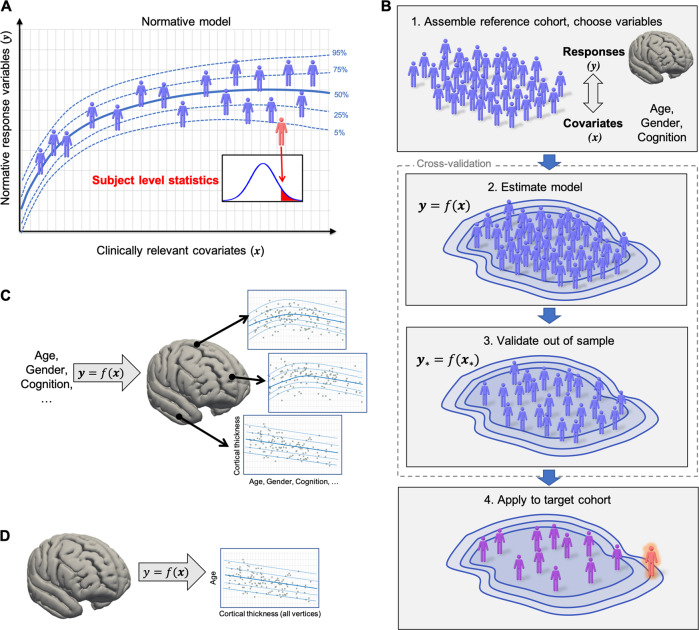
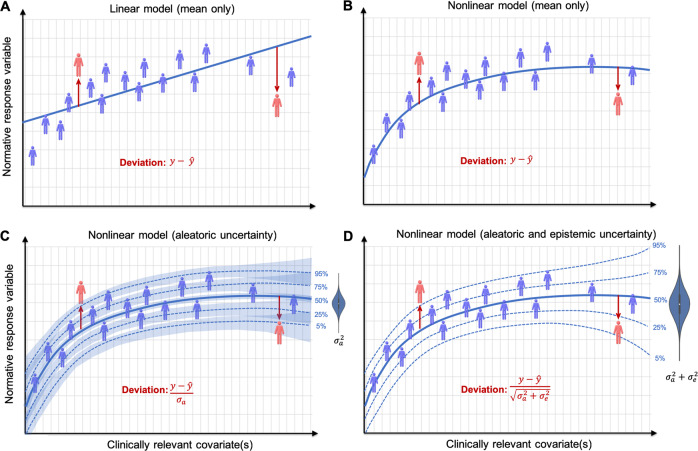
Normative models are a class of emerging statistical techniques useful for understanding the heterogeneous biology underlying psychiatric disorders at the level of the individual participant. Analogous to normative growth charts used in paediatric medicine for plotting child development in terms of height or weight as a function of age, normative models chart variation in clinical cohorts in terms of mappings between quantitative biological measures and clinically relevant variables. An emerging body of literature has demonstrated that such techniques are excellent tools for parsing the heterogeneity in clinical cohorts by providing statistical inferences at the level of the individual participant with respect to the normative range. Here, we provide a unifying review of the theory and application of normative modelling for understanding the biological and clinical heterogeneity underlying mental disorders. We first provide a statistically grounded yet non-technical overview of the conceptual underpinnings of normative modelling and propose a conceptual framework to link the many different methodological approaches that have been proposed for this purpose. We survey the literature employing these techniques, focusing principally on applications of normative modelling to quantitative neuroimaging-based biomarkers in psychiatry and, finally, we provide methodological considerations and recommendations to guide future applications of these techniques. We show that normative modelling provides a means by which the importance of modelling individual differences can be brought from theory to concrete data analysis procedures for understanding heterogeneous mental disorders and ultimately a promising route towards precision medicine in psychiatry.
Overview
The claims and statistics of this paper haven’t been checked yet.
Free: it reads the open-access text and checks the first 5 claims that cite a source we can check. Create a free account to check every claim.
Integrity signals
Registry
Cites
Statistics
Figures
Verification
Claims the paper makes
The claims and statistics of this paper haven’t been checked yet.
Free: it reads the open-access text and checks the first 5 claims that cite a source we can check. Create a free account to check every claim.
Claims other papers make about this one
Each is checked against this paper’s own text: does it say what the citing paper says it does?
The source backs part of the claim, not all of it — or backs it for a different population, condition or comparison.
In the citing paper
“A prerequisite for the application of growth charts in youth mental health is the availability of normative developmental data that comprise important domains of emerging psychopathology, such as cognition, emotion regulation, and sleep [92].”
From Towards a youth mental health paradigm: a perspective and roadmap (2023) · cites this paper as [92]
Experimental — accuracy not yet measuredThe source backs part of the claim, not all of it — or backs it for a different population, condition or comparison.
In the citing paper
“Newer hybrid models, such as normative modeling (19,59–61) or the functional random forest (FRF) (18,62), may overcome these limitations and enable new inferences from psychopathology studies.”
From Methods and challenges for assessing heterogeneity (2020) · cites this paper as [59]
Experimental — accuracy not yet measuredThe source backs part of the claim, not all of it — or backs it for a different population, condition or comparison.
In the citing paper
“Normative models (59) enable researchers to identify common (i.e., comorbid) mechanisms, identify potential subtypes or subfactors tied to an outcome of interest, and make pre- dictions on individual cases.”
From Methods and challenges for assessing heterogeneity (2020) · cites this paper as [59]
Experimental — accuracy not yet measuredThe cited source says what the claim attributes to it.
In the citing paper
“In this context, machine learning approaches have just recently embraced advances that allow the characterization of normative trajectories and parsing of the heterogeneity at the individual level 69 .”
From Candidate diagnostic biomarkers for neurodevelopmental disorders in children and adolescents: a systematic review (2023) · cites this paper as [69]
Self-check
Percentages, sums and reported differences re-computed from the paper’s own numbers.
The self-check needs the paper’s full text.
Citations
Cites
Insel, T., Cuthbert, B., Garvey, M., Heinssen, R., Pine, D. S., Quinn, K., Sanislow, C., & Wang, P. (2010) · American Journal of Psychiatry · doi:10.1176/appi.ajp.2010.09091379 · Cited by 7,067
The WU-Minn Human Connectome Project: An overview
Van Essen, D. C., Smith, S. M., Barch, D. M., Behrens, T. E. J., Yacoub, E., & Ugurbil, K. (2013) · NeuroImage · doi:10.1016/j.neuroimage.2013.05.041 · Cited by 5,651
Multimodal population brain imaging in the UK Biobank prospective epidemiological study
Miller, K. L., Alfaro-Almagro, F., Bangerter, N. K., Thomas, D. L., Yacoub, E., Xu, J., Bartsch, A. J., Jbabdi, S., Sotiropoulos, S. N., Andersson, J. L. R., et al. (2016) · Nature Neuroscience · doi:10.1038/nn.4393 · Cited by 2,020
Equifinality and multifinality in developmental psychopathology
Cicchetti, D., & Rogosch, F. A. (1996) · Development and Psychopathology · doi:10.1017/s0954579400007318 · Cited by 1,842
Kapur, S., Phillips, A. G., & Insel, T. R. (2012) · Molecular Psychiatry · doi:10.1038/mp.2012.105 · Cited by 980
The conception of the ABCD study: From substance use to a broad NIH collaboration
Volkow, N. D., Koob, G. F., Croyle, R. T., Bianchi, D. W., Gordon, J. A., Koroshetz, W. J., Pérez-Stable, E. J., Riley, W. T., Bloch, M. H., Conway, K., et al. (2018) · Developmental Cognitive Neuroscience · doi:10.1016/j.dcn.2017.10.002 · Cited by 970
Predicting Age Using Neuroimaging: Innovative Brain Ageing Biomarkers
Cole, J. H., & Franke, K. (2017) · Trends in Neurosciences · doi:10.1016/j.tins.2017.10.001 · Cited by 903
Insel, T. R., & Cuthbert, B. N. (2015) · Science · doi:10.1126/science.aab2358 · Cited by 840
Understanding heterogeneity in clinical cohorts using normative models: Beyond case-control studies
Marquand, A. F., Rezek, I., Buitelaar, J., & Beckmann, C. F. (2016) · Biological Psychiatry · doi:10.1016/j.biopsych.2015.12.023 · Cited by 683
Self-citationMapping the heterogeneous phenotype of schizophrenia and bipolar disorder using normative models
Wolfers, T., Doan, N. T., Kaufmann, T., Alnæs, D., Moberget, T., Agartz, I., Buitelaar, J. K., Ueland, T., Melle, I., Franke, B., et al. (2018) · JAMA Psychiatry · doi:10.1001/jamapsychiatry.2018.2467 · Cited by 508
Self-citation
Research works printed but not linked: 3
- 21. Bethlehem R, Seidlitz J, Romero-Garcia R, Lombardo M. Using normative age modelling to isolate subsets of individuals with autism expressing highly age-atypical cortical thickness features. BioRxiv 2018:1–23.
- 33. Gal Y Uncertainty in deep learning 2016 Cambridge University of Cambridge
- 43. Kia SM, Marquand A. Neural processes mixed-effect models for deep normative modeling of clinical neuroimaging data. arXiv. 2018;1812.04998.
Cited by
Items 301–400 of 433
Estimation of reference curves for brain atrophy and analysis of robustness to machine effects
Piot, E., Renard, F., Attyé, A., Krainik, A., Initiative, A. D. N., Weiner, M. W., Aisen, P. S. S., Petersen, R. C., Jack, C. R., Jagust, W., et al. (2025) · Scientific Reports · doi:10.1038/s41598-025-18073-z · Cited by 3
“A review 5 found that, among 13 normative modeling studies, 7 included only age as a covariate, 4 included both age and sex.”
Berg, J. K., Ruhé, H. G., Marquering, H. A., Reneman, L., & Caan, M. W. A. (2025) · Psychological Medicine · doi:10.1017/s0033291725101797 · Cited by 3
“…NM may leverage the knowledge included in the large body of healthy participants present in the UKB, and increasethepredictivevalue ofbiomarkersfor mentaland behavioral disorders in general (Marquand et al., 2019; Marquand, Rezek, Buitelaar, & Beckmann, 2016; Rutherford et al., 2023, 2022).”
Individualized mapping of aberrant cortical thickness via stochastic cortical self-reconstruction
Wachinger, C., Hedderich, D. M., Thalhammer, M., & Bongratz, F. (2025) · Medical Image Analysis · doi:10.1016/j.media.2025.103788 · Cited by 2
“The versatility of these reference models is evident in their application across a range of neurological and psychiatric disorders, including dementia, depression, psychosis, schizophrenia, bipolar disorder, autism, and ADHD [50, 40, 6, 67, 45].”
Jalalvandi, M., Shafaghi, L., & Batouli, S. A. H. (2026) · Brain Research Bulletin · doi:10.1016/j.brainresbull.2026.111786 · Cited by 2
Autism data sharing: Benefits, challenges, and recommendations
Lautarescu, A., Trost, B., Kushki, A., Oakley, B. F. M., Heraty, S., Belton, D., Boyle, A., Douglas, S., Molloy, C. J., Holt, R., et al. (2026) · PLOS Digital Health · doi:10.1371/journal.pdig.0001249 · Cited by 3
“…(e.g., autistic versus neuro-typical participants [65]) to more nuanced comparisons, such as ‘normative modelling’ approaches, which enable us to understand differences at the level of individual participants by comparing their data to the expected pattern in a large reference sample [66,67].”
Alzheimer’s Disease Classification Using Population-Referenced Brain Volumetric Percentiles
Shim, J. H., & Baek, H. (2026) · Brain Sciences · doi:10.3390/brainsci16030334 · Cited by 1
“By calculating percentile scores for each brain region, clinicians can identify where an individual’s regional volume falls within the distribution of a healthy population matched for demographic factors, and make conclusions based on the structural deficits related to the pathology [16,17,23].”
Todorova, I., Neubauer, P. R., & Bast, N. (2026) · JMIR Research Protocols · doi:10.2196/89237 · Cited by 1
Mallus, F., Yang, Y., Dinga, R., Kia, S. M., Grootswagers, T., Michela, A., Ros, T., & Wolfers, T. (2026) · Imaging Neuroscience · doi:10.1162/imag.a.1269 · Cited by 1
“Distinguishing between these possibilities requires careful clinical interpretation and domain expertise ( A. F. Marquand et al., 2019; Rutherford et al., 2024; Wolfers et al., 2018).”
InfluentialSelf-citationMultiscale heterogeneity of atypical functional connectivity in autism
Ilioska, I., Oldehinkel, M., Llera, A., Rovný, M., Mei, T., Kia, S. M., Floris, D. L., Tillmann, J., Holt, R., Loth, E., et al. (2026) · Nature Mental Health · doi:10.1038/s44220-026-00656-y · Cited by 4
“This approach has revealed highly individualized patterns of deviations in various measures of brain structure and function across psychiatric conditions, suggesting that group averages poorly represent individual patient profiles 8–12 .”
Self-citationChen, C. (2026) · Applied Neuropsychology Adult · doi:10.1080/23279095.2026.2691088 · Cited by 1
Resting-state fMRI and population neuroscience: Progresses and guidelines for reliability research
Luo, W., Luo, C., Yan, Z., Wang, Y., & Zuo, X. (2024) · Chinese Science Bulletin (Chinese Version) · doi:10.1360/tb-2024-0204 · Cited by 2
Xiao, Y., Li, M., Zhang, X., Zhang, Y., Ge, Y., Lu, Z., Ma, M., Song, Y., Tan, H. Y., Zhang, D., et al. (2025) · Biological Psychiatry Global Open Science · doi:10.1016/j.bpsgos.2025.100534 · Cited by 2
“Normative modeling quanti fi es each patient as an extreme deviation from normative expectations for MRI-derived phenotypes based on clinical or cognitive characteristics by incorporating neural alterations into a continuous spectrum derived from a large healthy population (44,45).”
Wang, H., Alda, M., Trappenberg, T., & Nunes, A. (2021) · Psychiatric Genetics · doi:10.1097/ypg.0000000000000304 · Cited by 1
“One promising approach to quantifying genetic etiological heterogeneity can be found in the neuroimaging literature, in the form of normative modelling (Marquand et al., 2019; Nunes et al., 2020c).”
BackgroundFactors Associated With Brain Heterogeneity in Schizophrenia—Reply
Alnæs, D., & Westlye, L. T. (2019) · JAMA Psychiatry · doi:10.1001/jamapsychiatry.2019.1855 · Cited by 1
Váša, F., Hobday, H., Stanyard, R. A., Daws, R. E., Giampietro, V., O’Daly, O., Lythgoe, D. J., Seidlitz, J., Skare, S. T., Williams, S., et al. (2021) · bioRxiv (Cold Spring Harbor Laboratory) · doi:10.1101/2021.02.12.430956 · Cited by 1
“deviations from a normative population (Marquand et al., 2019).”
BackgroundMethodInfluentialSelf-citationPortolese, J., Gomes, C. D. S., Gastaldi, V. D., Paula, C. S., Caetano, S. C., Bordini, D., Brunoni, D., Mari, J. D. J., Vêncio, R. Z. N., & Brentani, H. (2021) · medRxiv · doi:10.1101/2021.04.22.21255267 · Cited by 1
“Recently, the promising approach of “normative modeling” has been put forward to characterize the heterogeneity of psychiatric disorders (Marquand et al., 2019).”
BackgroundInfluentialUsing in silico perturbational approach to identify critical areas in schizophreniaPreprint
Mana, L., Vila‐Vidal, M., Köckeritz, C., Aquino, K. M., Fornito, A., Kringelbach, M. L., & Deco, G. (2022) · bioRxiv (Cold Spring Harbor Laboratory) · doi:10.1101/2022.12.15.520260 · Cited by 1
“2018), and potentially by an inadequate conceptualisation of the disease itself (Deacon and McKay 2015; Marquand et al. 2019).”
BackgroundWeissman, D. G., Baum, G. L., Sanders, A., Rosen, M. L., Barch, D. M., McLaughlin, K. A., & Somerville, L. H. (2023) · doi:10.31234/osf.io/7hwnb · Cited by 1
Giacomel, A., Martins, D., Nordio, G., Easmin, R., Howes, O. D., Selvaggi, P., Williams, S., Turkheimer, F., de Groot, M., Dipasquale, O., et al. (2023) · medRxiv · doi:10.1101/2023.11.27.23299051 · Cited by 1
A multimodal neural signature of face processing in autism within the fusiform gyrusPreprint
Floris, D. L., Llera, A., Zabihi, M., Moessnang, C., Jones, E. J. H., Mason, L., Haartsen, R., Holz, N. E., Mei, T., Elleaume, C., et al. (2024) · medRxiv · doi:10.1101/2024.01.04.23300134 · Cited by 3
“Here, we trained normative models 60,80,81 using Bayesian Linear Regression (BLR) 82 (https://pcntoolkit.readthedocs.io/en/latest) for each brain imaging modality within the right and left FFG ROI independently using age, sex and scanning site as covariates.”
Self-citationMultiscale heterogeneity of functional connectivity in autismPreprint
Ilioska, I., Oldehinkel, M., Llera, A., Rovný, M., Mei, T., Kia, S. M., Floris, D. L., Tillmann, J., Holt, R., Loth, E., et al. (2024) · medRxiv · doi:10.1101/2024.10.20.24315248 · Cited by 1
“…researchers to move beyond mean-centric analyses to quantify how individual values for a given phenotype deviate from a model of normative expectations given a person’s age, sex, and other relevant demographic characteristics (Marquand et al., 2019; Marquand, Rezek, Buitelaar, & Beckmann, 2016).”
BackgroundSelf-citationFairly evaluating the performance of normative models – Authors' reply
Ge, R., Yu, Y., Zhan, D., & Frangou, S. (2024) · The Lancet Digital Health · doi:10.1016/s2589-7500(24)00199-7 · Cited by 1
Bučková, B. R., Fraza, C., Rehák, R., Kolenič, M., Beckmann, C. F., Španiel, F., Marquand, A. F., & Hlinka, J. (2024) · eLife · doi:10.7554/elife.95823.2 · Cited by 1
Self-citationMapping cerebellar morphology in 15q11.2 CNV carriers using normative modeling
Kim, M., Leonardsen, E. H., Rutherford, S. E., Selbæk, G., Persson, K., Steen, N. E., Smeland, O. B., Richard, G., Alnæs, D., Bøen, R., et al. (2026) · Molecular Psychiatry · doi:10.1101/2025.05.28.25328353 · Cited by 1
“We estimated normative model on cerebellar volume and voxel-wise intensity accounting for sex, age, and scanning site using PCNtoolkit package (version 0.34) in Python 3.8 (Marquand et al., 2019; Rutherford, Kia, et al., 2022).”
InfluentialSelf-citationLifespan investigation of brain volumetric changes associated with substance use disordersPreprint
Shi, R., Xiang, S., Alnæs, D., Chen, D., Chen, D., Banaschewski, T., Barker, G. J., Bokde, A. L. W., Desrivières, S., Flor, H., et al. (2025) · medRxiv · doi:10.1101/2025.05.28.25328476 · Cited by 1
Yang, R., Wu, X., Lv, S., Li, J., Wang, Z., Zhu, W., Gao, T., & Yang, G. (2025) · bioRxiv (Cold Spring Harbor Laboratory) · doi:10.1101/2025.10.23.684286 · Cited by 1
Fan, Q., Gao, J., Wu, Y., Wang, Y., Zhang, L., Zhou, J., Feng, Y., Lu, Y., Wang, G., & Zhou, Y. (2025) · bioRxiv (Cold Spring Harbor Laboratory) · doi:10.64898/2025.12.07.692810 · Cited by 1
“As a result, these approaches cannot resolve the individual-specific structural anomalies that may underpin distinct MDD subtypes or pathological pathways[14].”
Ambroise, C. (2024) · theses.fr (ABES) · doi:10.70675/d2529d35z93e6z4d60zb2c5z752d5f0edda3 · Cited by 2
Associations between the environment, brain, mental health, and cognition across adolescencePreprint
Khan, Y. T., Seidlitz, J., Dorfschmidt, L., Tsompanidis, A., Allison, C. L., Barzilay, R., Alexander‐Bloch, A. F., Baron‐Cohen, S., Blakemore, S., & Bethlehem, R. A. I. (2026) · bioRxiv (Cold Spring Harbor Laboratory) · doi:10.64898/2026.04.27.721046 · Cited by 1
“More recent frameworks have also proposed that relative deviations 19 in brain structure from population norms may better explain individual differences in mental health and cognitive outcomes than raw brain volumes, though further large-scale research is required to better characterise these…”
A Unified Form of Batch Harmonization Equation for Normative Modeling: A Location–Scale FrameworkPreprint
Li, M., Wang, Y., Shen, Y., An, L., Jia, G., Bringas-Vega, M. L., & Valdes-Sosa, P. A. (2026) · bioRxiv (Cold Spring Harbor Laboratory) · doi:10.64898/2026.05.17.725713 · Cited by 2
Li, M., Wang, Y., Shen, Y., An, L., Jia, G., Bringas-Vega, M. L., & Valdes-Sosa, P. A. (2026) · bioRxiv (Cold Spring Harbor Laboratory) · doi:10.64898/2026.05.17.725772 · Cited by 2
“In medicine and neuroscience, normative modeling has emerged as a framework that goes beyond group-level comparisons to capture individual neurobiological “fingerprints” (Marquand et al., 2016, 2019).”
A sex-balanced longitudinal developmental task-free fMRI rat datasetPreprint
McLoone, D., Breen, A., McParland, C., Harkin, A., & Kelly, C. A. M. (2026) · bioRxiv (Cold Spring Harbor Laboratory) · doi:10.64898/2026.06.04.730202 · Cited by 1
“Evidence of deviation from growth curves for neurocognitive development could support the early identification of at-risk individuals, allowing us to intervene to divert developmental trajectories away from illness towards health 23,24 .”
Analyzing Brain Circuits in Population Neuroscience: A Case to Be a BayesianPreprint
Bzdok, D., Floris, D. L., & Marquand, A. F. (2019) · arXiv (Cornell University) · doi:10.48550/arxiv.1909.02527
“above), the importance of which is increasingly recognised in IQ prediction based on connectivity fingerprints and other successful examples (Finn et al., 2015; Foulkes and Blakemore, 2018; Marquand et al., 2019; Seghier and Price, 2018).”
BackgroundMethodInfluentialSelf-citationElucidating depression heterogeneity using clinical, neuroimaging and genetic data
Maglanoc, L. A. (2019) · NVA (Nasjonalt vitenarkiv)
Bruin, W. B., Zhutovsky, P., van Wingen, G. A., Bas‐Hoogendam, J. M., Groenewold, N. A., Hilbert, K., Winkler, A. M., Zugman, A., Agosta, F., Åhs, F., et al. (2022) · doi:10.31234/osf.io/exrm9
Zhang, Q., Wang, Y., Chen, L., Zhang, J., Zhou, Z.-X., & Zuo, X. (2022) · Chinese Science Bulletin (Chinese Version) · doi:10.1360/tb-2022-1170 · Cited by 10
Integrative Neurobiological Approaches to Assessment
Schwarz, E., Tost, H., & Meyer‐Lindenberg, A. (2023) · Springer eBooks · doi:10.1007/978-3-030-42825-9_116-1
Wang, Y., Ma, S., Ma, R., Xiao, L., Tang, S., Wei, Y., & Pan, Y. F. (2023) · bioRxiv (Cold Spring Harbor Laboratory) · doi:10.1101/2023.06.26.546426
“…models for location, scale and shape (GAMLSS) can be used to model multi-parameter distributions, where each parameter of the distribution, i.e., location, scale, and shape, can be modeled as a function of several input variables, thereby accommodating a wide range of distributions [53-55].”
MethodNeurodevelopmental Aspects of Behavioural Differences II. Autism Spectrum Disorder (ASD)
Stevenson, J. (2023) · Springer eBooks · doi:10.1007/978-3-031-45787-6_10
Romascano, D., Rebsamen, M., Radojewski, P., Blattner, T., McKinley, R., Wiest, R., & Rummel, C. (2024) · medRxiv · doi:10.1101/2024.02.27.24303078
GPT-based normative models of brain sMRI correlate with dimensional psychopathology
Mendes, S. L., Pinaya, W. H. L., Pan, P. M., Gadelha, A., Belangero, S. I., Jackowski, A. P., Rohde, L. A., Miguel, E. C., & Sato, J. R. (2024) · Imaging Neuroscience · doi:10.1162/imag_a_00204 · Cited by 4
“Third, as psychiatric conditions are highly heterogeneous ( Cannon & Keller, 2006; Cicchetti & Rogosch, 1996; Mar í n, 2016), our approach allows the detection and mapping of anomalies without requiring a consistent neurobiological signature among the evaluated subjects ( Marquand et al., 2019).”
BackgroundMethodInfluentialGenerating Synthetic Task-based Brain Fingerprints for Population Neuroscience Using Deep LearningPreprint
Serin, E., Ritter, K., Schumann, G., Banaschewski, T., Marquand, A. F., & Walter, H. (2024) · bioRxiv (Cold Spring Harbor Laboratory) · doi:10.1101/2024.08.03.606469
Self-citationThukral, R. A., Maximo, J. O., Lahti, A. C., Rutherford, S. E., Larson, J. S., Zhang, H. G., Marquand, A. F., & Kraguljac, N. V. (2024) · medRxiv · doi:10.1101/2024.08.23.24312480 · Cited by 1
Self-citationIntegrative Neurobiological Approaches to Assessment
Schwarz, E., Tost, H., & Meyer‐Lindenberg, A. (2024) · Springer eBooks · doi:10.1007/978-3-030-51366-5_116
Individualized cortical thickness asymmetry in Autism Spectrum Disorders and SchizophreniaPreprint
Echave, M. M., Schnack, H. G., Díaz‐Caneja, C. M., Pina‐Camacho, L., Janssen, N., Gordaliza, P. M., Kho, K. H., Buimer, E. E. L., van Haren, N. E. M., Kahn, R. S., et al. (2024) · medRxiv · doi:10.1101/2024.11.06.24316751
Deng, Q., Levitis, E., Adams, R. A., & Altmann, A. (2024) · bioRxiv (Cold Spring Harbor Laboratory) · doi:10.1101/2024.11.29.626043 · Cited by 1
Predicting Mental and Neurological Illnesses Based on Cerebellar Normative FeaturesPreprint
Kim, M., Sharma, N., Leonardsen, E. H., Rutherford, S. E., Selbæk, G., Persson, K., Steen, N. E., Smeland, O. B., Ueland, T., Richard, G., et al. (2024) · medRxiv · doi:10.1101/2024.12.10.24318590
Self-citationMethods and statistics for diffusion MRI tractometry
Chamberland, M., St‐Jean, S., Jones, D. K., Descoteaux, M., & Leemans, A. (2025) · Elsevier eBooks · doi:10.1016/b978-0-12-818894-1.00023-9 · Cited by 2
Cui, L., Wang, X.-Y., & Wang, H. (2024) · Psychoradiology · doi:10.1093/psyrad/kkae024
Normative Cerebral Perfusion Across the Lifespan
Zeng, X., Li, Y., Lu, R., Franco, L. L., Detre, J. A., & Wang, Z. (2025) · Proceedings on CD-ROM - International Society for Magnetic Resonance in Medicine. Scientific Meeting and Exhibition/Proceedings of the International Society for Magnetic Resonance in Medicine, Scientific Meeting and Exhibition · doi:10.58530/2025/4566 · Cited by 5
Essex, C. A., Bedggood, M. J., Merenstein, J. L., Morgan, C., Murray, H. C., Holdsworth, S. J., Faull, R. L. M., Hume, P. A., Theadom, A., & Pedersen, M. (2025) · medRxiv · doi:10.1101/2025.04.28.25326522
The Shifting Landscapes of Adolescent Mental Health
Sonkusare, S., & Iyer, K. K. (2025) · Biological Psychiatry Cognitive Neuroscience and Neuroimaging · doi:10.1016/j.bpsc.2025.02.011
van Uum, F. J. E., Xerxa, Y., Neumann, A., Pingault, J., Cecil, C. A. M., Shahisavandi, M., Bolhuis, K., Kovacs, B., Tiemeier, H. W., Muetzel, R. L., et al. (2025) · Research Square · doi:10.21203/rs.3.rs-6512872/v1
Bayesian Hierarchical Regression for Robust Multi-Site Neuroimaging Analysis
Wu, Y. (2025) · International Symposium on Computer Applications and Information Systems (ISCAIS) · doi:10.1109/iscait64916.2025.11010799
“This model is particularly useful in normative modeling, where the goal is to accurately model subject variability and quantify biases in reference models [6].”
Hu, Y., Tang, Y., Li, W. H., Zheng, D., Jin, Y., Fan, Q., Buitelaar, J. K., Zhou, Y., & Chen, Z. (2025) · bioRxiv (Cold Spring Harbor Laboratory) · doi:10.1101/2025.06.06.658269
Self-citationStructural Similarity Networks Reveal Brain Vulnerability in DementiaPreprint
Montagnese, M., Ebneabbasi, A., García-San-Martín, N., Pecci-Terroba, C., Romero-García, R., Morgan, S. E., Cole, J. H., Seidlitz, J., Rittman, T., & Bethlehem, R. A. I. (2025) · medRxiv · doi:10.1101/2025.06.10.25328978 · Cited by 1
“Longitudinal studies will be necessary to clarify how MIND-based deviations evolve over time and establish their prognostic value, as shown for traditional morphometric measures 15 .”
Explainable Normative Modeling: Subcortical Changes in Frontotemporal Dementia Subtypes
Pereira, H. R., Fonseca, J., & Ferreira, H. A. (2025) · IFIP advances in information and communication technology · doi:10.1007/978-3-031-97051-1_12
Wang, D., Hammond, C. J., Salmeron, B. J., Xiao, X., Murray, L., Gu, H., Zhai, T., Quam, A., Hill, J., Nguyen, H., et al. (2026) · Biological Psychiatry · doi:10.1016/j.biopsych.2026.03.230
Feveile, A., Ambrosen, K. S., Shalikashvili, K., Raghava, J. M., Nielsen, M. Ø., Bojesen, K. B., Bučková, B. R., Marquand, A. F., Glenthoj, B. Y., Syeda, W. T., et al. (2025) · medRxiv · doi:10.1101/2025.07.30.25332427
“This approach, akin to pediatric growth charts, allows researchers to map deviations from expected neurodevelopmental trajectories, thereby capturing the heterogeneity often observed in psychiatric populations (23,24).”
Self-citationKoike, S., Maikusa, N., Cai, L., Zhu, Y., Ueda, I., Tanaka, S., Yamashita, A., Yamashita, O., Nakamura, Y., Shibukawa, S., et al. (2025) · Research Square · doi:10.21203/rs.3.rs-6754122/v1
Mamat, M., Chen, Y., & Li, L. (2025) · bioRxiv (Cold Spring Harbor Laboratory) · doi:10.1101/2025.10.09.680886
“When applied to developmental and clinical cohorts, this shift in perspective often reveals that nominal group effects are driven by a minority of individuals with extreme, spatially focal deviations while many affected people fall within the expected range [12, 13, 14, 11].”
Jiang, Z., Liu, Z., Yang, Q., Zhang, W., Wang, X., Yang, K., Jun, J., Cui, Y., & Lei, T. (2025) · Annals of General Psychiatry · doi:10.1186/s12991-025-00606-5 · Cited by 1
“Normative modeling is a recent statistical method that maps characteristic heterogeneity at the individual level among patients [23, 24].”
Wu, P., & Chang, Y. (2025) · Frontiers in Psychology · doi:10.3389/fpsyg.2025.1701166
Normative Modeling of Cortical Thickness in Temporal Lobe Epilepsy
Yang, S., & Zhang, Z. (2025) · ICME International Conference on Complex Medical Engineering (CME) · doi:10.1109/cme67420.2025.11239395
“Cutting-edge computational frameworks now enable granular mapping of neuropathological heterogeneity, catalyzing the shift toward individualized brain disorder characterization, such as normative modeling, provided the technique to evaluate the individual deviations from the reference curve [1].”
Cîrstian, R., Forde, N. J., Bučková, B. R., Dell’Acqua, F., Charman, T., Loth, E., Oakley, B. F. M., Colomar, L., Yorke, I., Stones, R., et al. (2025) · bioRxiv (Cold Spring Harbor Laboratory) · doi:10.1101/2025.11.25.690402
“Normative modelling offers a framework for addressing this challenge by quantifying individual brain measure deviations from typical developmental patterns (31,32).”
Self-citationVisani, V., Pinamonti, M., Giacomel, A., Moretto, M., Anglani, M. G., Tamanti, A., Schubert, J. J., Turkheimer, F., Bertoldo, A., Calabrese, M., et al. (2025) · Annual International Conference of the IEEE Engineering in Medicine and Biology Society (EMBC) · doi:10.1109/embc58623.2025.11254517
“Specifically, NM models the relationship between brain measurements of interest — such as ChPV — and key covariates like age and gender within a healthy population [18].”
Looden, T., Floris, D. L., Llera, A., Chauvin, R. J., Charman, T., Banaschewski, T., Murphy, D., Marquand, A. F., Buitelaar, J. K., & Beckmann, C. F. (2024) · Figshare · doi:10.6084/m9.figshare.26557739
Self-citationFloris, D. L., Filho, J. O. A., Lai, M., Giavasis, S., Oldehinkel, M., Mennes, M., Charman, T., Tillmann, J., Dumas, G., Ecker, C., et al. (2021) · Figshare · doi:10.6084/m9.figshare.14140167
Self-citationFloris, D. L., Filho, J. O. A., Lai, M., Giavasis, S., Oldehinkel, M., Mennes, M., Charman, T., Tillmann, J., Dumas, G., Ecker, C., et al. (2021) · Figshare · doi:10.6084/m9.figshare.14140161
Self-citationFloris, D. L., Filho, J. O. A., Lai, M., Giavasis, S., Oldehinkel, M., Mennes, M., Charman, T., Tillmann, J., Dumas, G., Ecker, C., et al. (2021) · Figshare · doi:10.6084/m9.figshare.14140164
Self-citationMason, L., Shic, F., Falck-Ytter, T., Chakrabarti, B., Charman, T., Loth, E., Tillmann, J., Banaschewski, T., Baron‐Cohen, S., Bölte, S., et al. (2021) · Figshare · doi:10.6084/m9.figshare.17210335
Self-citationGhofrani-Jahromi, M., Amirmoezzi, Y., Abeyasinghe, P. M., Poudel, G. R., Razi, A., Paulsen, J. S., Hobbs, N. Z., Scahill, R. I., Tabrizi, S. J., Georgiou‐Karistianis, N., et al. (2025) · Movement Disorders · doi:10.1002/mds.70160
“17 A study highlighted this limitation, reporting that brain aging may involve up to 62 distinct aspects.”
Kim, M. K., Jeong, D. W., Yoo, D. Y., & Kwak, S. (2026) · Scientific Reports · doi:10.1038/s41598-025-33646-8 · Cited by 1
“In other words, individual differences in maladaptive traits may manifest not only as direct neural correlates corresponding to trait levels but also as deviations from the normative distribution in multiple directions 18,19 .”
Feveile, A., Ambrosen, K. S., Shalikashvili, K., Raghava, J. M., Nielsen, M. Ø., Bojesen, K. B., Bučková, B. R., Marquand, A. F., Glenthoj, B. Y., Syeda, W. T., et al. (2026) · Psychiatry and Clinical Neurosciences · doi:10.1111/pcn.70017 · Cited by 1
“24,25 It has been widely applied to imaging-derived phenotypes (IDPs) in patients with various neurodevelopmental and psychiatric conditions 26 – 30 and can be used to track longitudinal changes relative to age-normative baselines.”
Self-citationPRISMA: A precision functional imaging dataset of autistic and non-autistic adultsPreprint
Džinalija, N., Geurts, H. M., Scholte, H. S., & Bathelt, J. (2026) · bioRxiv (Cold Spring Harbor Laboratory) · doi:10.64898/2026.01.12.698952
Individual Brain Structure Deviations Predict Depressive Symptom Responses of Running Intervention
Di, S., Luo, N., Liu, S. S., & Jiang, T. (2025) · International Conference on Bioinformatics and Biomedical Science (ICBBS) · doi:10.1145/3778067.3778072
“This distribution enables the identification of the extent to which the corresponding metrics of the target cohort deviate from the reference [22].”
Lu, J., Cheng, Y., Zhang, X., Zhu, Z., Yu, Y., Wang, Y., Wu, J., Han, J., & Yu, N. (2026) · Journal of NeuroEngineering and Rehabilitation · doi:10.1186/s12984-026-01891-1
“Then the positive z-scores of matrices were reset as zero while the negative z-scores were reset as their absolute values, because we focused on the dynamic properties of the highly variable components (negative z-scores) in this study [50, 51].”
Predicting developmental norms from baseline cortical thickness in longitudinal studies
Seidel, P., Tobias, K., & Wolfers, T. (2026) · Biology of Sex Differences · doi:10.1186/s13293-026-00846-4
Self-citationUnsupervised Representation Learning Reveals Individualized Neurophysiological ProfilesPreprint
Lapatrie, M., Castanheira, J. D. S., Aydin, I., & Baillet, S. (2026) · bioRxiv (Cold Spring Harbor Laboratory) · doi:10.64898/2026.02.10.705127
“Ultimately, models trained to capture normative distributions of brain activity may support applications beyond differentiation, including quantifying disease-related deviations from typical neurophysiological structure [41, 42].”
Protocol Update: The Normative Modelling Paradigm for Computational PsychiatryPreprint
de Boer, A. A. A., Bayer, J., Fraza, C., Chavanne, A. V., Bučková, B. R., Tsilimparis, K., Serin, E., Bernas, A., Cîrstian, R., Zabihi, M., et al. (2026) · bioRxiv (Cold Spring Harbor Laboratory) · doi:10.64898/2026.02.17.706268
“However, such simple methods do not properly account for different variance components [7] and may not provide a good fit of the estimated centiles to the underlying data, which can bias downstream inferences [9, 27].”
InfluentialSelf-citationWang, D., Hammond, C. J., Salmeron, B. J., Xiao, X., Murray, L. K., Gu, H., Zhai, T., Quam, A., Hill, J., Nguyen, H., et al. (2026) · Nature Communications · doi:10.1038/s41467-026-69774-6 · Cited by 1
“Recently, this framework has been extended to measures of brain structure and function to quantify person-speci fi c deviations in developmental trajectories relative to typically developing controls 18 – 21 .”
Beyond severity: Mapping cognitive heterogeneity in schizophrenia at the structural levelPreprint
Chen, C. (2026) · medRxiv · doi:10.64898/2026.02.25.26347062
Spaeth, J., Fraza, C., Yilmaz, D., Deller, L., BrainTrain Working Group, CDP Working Group, Hasanaj, G., Kallweit, M. S., Korman, M., Hussain, M., et al. (2026) · medRxiv · doi:10.64898/2026.03.31.26349848 · Cited by 1
Lebrun‐Frénay, C., Renard, F., Mondot, L., Landes-Château, C., Stewart, A., Cohen, M., Okuda, D. T., & Attyé, A. (2026) · PLOS Digital Health · doi:10.1371/journal.pdig.0001374
“…practical implementation is challenged by critical pitfalls, notably the availability of biomarkers in clinical practice, population heterogeneity [23], high-dimensional data with numerous variables [24], and a sample size often too small to accommodate the complexity arising from these issues…”
Advancements in neuroimaging research for depression using normative modelling
Bao, S.-S., Zheng, L., Wang, Z., Du, N., Li, Y.-G., & Zhang, T. (2026) · Biomedical Signal Processing and Control · doi:10.1016/j.bspc.2026.110547
Le, L. N. N., Fletcher, E. M., Tosun, D., Qi, J., & Fan, A. P. (2026) · IEEE International Symposium on Biomedical Imaging (ISBI) · doi:10.1109/isbi61048.2026.11515499
“Many regression and data-driven models have been developed to be used for normative models [12], [13], [14].”
Sun, X., Shen, Y., Zhu, J., & Yu, Y. (2026) · Diagnostics · doi:10.3390/diagnostics16111632
“Brain structural abnormalities in MDD are often highly individualized, and such marked inter-individual variability un-derscores a major limitation of conventional group-average approaches, which may obscure biologically meaningful patient-specific alterations [57,58].”
McKeegan, G. F. (2026) · Evidence-based practices in behavioral health · doi:10.1007/978-3-032-18372-9_10
McKeegan, G. F. (2026) · Evidence-based practices in behavioral health · doi:10.1007/978-3-032-18372-9_14
Ge, Z., Liu, S., & Dou, W. (2026) · bioRxiv (Cold Spring Harbor Laboratory) · doi:10.64898/2026.05.29.728652
van Uum, F. J. E., Xerxa, Y., Neumann, A., Pingault, J., Cecil, C. A. M., Shahisavandi, M., Bolhuis, K., Kovacs, B. Z., Tiemeier, H. W., Muetzel, R. L., et al. (2026) · Journal of Child Psychology and Psychiatry · doi:10.1111/jcpp.70184 · Cited by 1
Yuan, D. Z., Wang, X., Fan, J., Zhang, Y., Xiao, C., Gao, F., Liu, Q., Han, Y., Cl, T., Situ, W., et al. (2026) · Molecular Psychiatry · doi:10.1038/s41380-026-03673-6
“Notably, this approach does not require atypicalities to converge on the same features across individuals, nor does it presuppose the existence of a uniform deviation pattern, making it particularly well suited to the marked heterogeneity observed in OCD [11, 12].”
Wang, K., Hu, Y., wang, X., Chu, C., Fan, L., & liu, C. (2026) · bioRxiv (Cold Spring Harbor Laboratory) · doi:10.64898/2026.06.24.734389
Ferrari, A., Wan, B., Kabbeck, J., Saberi, A., Kaiser, S., Kebets, V., Moreau, C. A., Thompson, P. M., van Erp, T. G. M., Turner, J. A., et al. (2026) · medRxiv · doi:10.64898/2026.06.30.26356921
Corrigan, N. M., Huber, E., Rokem, A., Zhao, T. C., & Kuhl, P. K. (2026) · Imaging Neuroscience · doi:10.1162/imag.a.1307
“Normative modeling is a statistical technique that can reveal whether measurements deviate from typical age-related development ( Marquand et al., 2016, 2019).”
Neuroimaging of Heterogeneity in Neuropsychiatric Disorders: Toward Disease Progression Modeling
Shao, J., Liu, H., Wang, T., Wang, Y., Zhang, W., Yao, Z., & Lü, Q. (2026) · Biological Psychiatry · doi:10.1016/j.biopsych.2026.06.023 · Cited by 1
Wen, Y., 周卓如, Li, M., He, C., Du, X., Zhang, T., Zheng, D., Hu, Z., Cai, X., & Zhou, H. (2026) · European Child & Adolescent Psychiatry · doi:10.1007/s00787-026-03027-1 · Cited by 1
“DL/ML can reveal normalized trajectories at the individual level and address heterogeneity [ 50], thus providing stronger functional predictive power than raw, unmodeled individual-level statistical data [ 28].”
Multiscale Circuit Architecture Associated With Memory Dysfunction in Temporal Lobe Epilepsy
Mo, J., Yuan, Q., Zhang, P., Sang, L., Zheng, Z., Zhao, B., Wang, X., Zhang, C., Hu, W., Shao, X., et al. (2026) · Advanced Science · doi:10.1002/advs.76346
“Normative modelling provides a framework for quantifying individual deviations from population-level reference trajectories, enabling the characterization of heterogeneous brain abnormalities beyond group-level contrasts [ 34 ].”
Dai, C., Ye, M., Li, X., Yan, Z. Y., Ye, L., Mao, Y., Wang, H. W., Li, Y., Chen, K., Liu, X. W., et al. (2026) · The Journal of Headache and Pain · doi:10.1186/s10194-026-02464-2
“Normative modeling addresses this problem by estimating the expected distribution of a brain phenotype for an individual with specified covariates and quantifying that person’s deviation from expectation [10–13].”
Metadata
- Authors
- Marquand, A. F., Kia, S. M., Zabihi, M., Wolfers, T., Buitelaar, J. K., & Beckmann, C. F.
- Affiliations
- Radboud University Nijmegen (NL)
- Venue
- Molecular Psychiatry
- Published
- 2019-06-14
- Volume
- 24
- Issue
- 10
- Pages
- 1415-1424
- ISSN
- 1359-4184 (ISSN-L)
- 1476-5578
- PMC
- PMC6756106
- OpenAlex
- W2952396505
- Cited by
- 433
- References
- 45
- Citations by year
- 2026: 81 · 2025: 87 · 2024: 69 · 2023: 51 · 2022: 58 · 2021: 53 · 2020: 22 · 2019: 11
- FWCI
- 4.56
- Type
- journal article
- Language
- en
- Update notices
- correction (2019-06-26)
- Open access
- hybrid
- doi.org
- Licence
- cc-by
- creativecommons.org/licenses/by/4.0 (tdm)
- creativecommons.org/licenses/by/4.0 (vor)
- Locations
- Molecular Psychiatry (publishedVersion, cc-by)
- PubMed Central (publishedVersion, cc-by)
- Research portal (Tilburg University) (publishedVersion, cc-by)
- PubMed (publishedVersion)
- Radboud Repository (Radboud University) (submittedVersion)
- Radboud Repository (Radboud University) (submittedVersion, other-oa)
- Data Archiving and Networked Services (DANS) (submittedVersion, cc-by)
- Research Portal (King's College London) (submittedVersion, other-oa)
- Funders
- Nederlandse Organisatie voor Wetenschappelijk Onderzoek (016.156.415)
- Wellcome Trust (098369/Z/12/Z)
- Topics
- Life Sciences › Neuroscience › Cognitive Neuroscience › Functional Brain Connectivity Studies
- Social Sciences › Psychology › Experimental and Cognitive Psychology › Mental Health Research Topics
- Social Sciences › Arts and Humanities › Philosophy › Mental Health and Psychiatry
- Keywords
- normative modeling, mental illness, individual differences, clinical heterogeneity, neuroimaging biomarkers, precision psychiatry, psychiatric biomarkers
- MeSH terms
- Mental Disorders, Humans, Psychiatry, Models, Statistical, Biomarkers, Precision Medicine
About these checks
Registry, retraction, Cites and statistics results are computed, not judged, with one exception: a printed reference that no index lists is read once by a model before it counts as a citation error. Claims are extracted by a model and kept only when their quote appears verbatim in the text; each cited source is then checked, with a model’s help, for whether it says what the claim relies on. Those verdicts can be wrong — read the claim’s quote and the cited source before relying on one.
Statistics and arithmetic are recomputed, not judged.
Confidence bands are shown only for fields calibrated on our annotated test set. None is calibrated yet, so no band is shown.
What counts as a claim ›How we measure confidence ›How we check this ›
Are you an author, or do you see a problem with this page? Request a review
Data sources
Bibliographic data: Semantic Scholar, OpenAlex, Crossref.
Contains information from the Semantic Scholar Academic Graph Datasets, made available under the ODC Attribution License (ODC-BY 1.0).
Semantic Scholar’s data is described in: Kinney, R., et al. (2023). The Semantic Scholar Open Data Platform. arXiv:2301.10140.
