

The DOI matches its Crossref record; 234 of the 235 references it cites were found in a registry or an index.
Modeling Alzheimer’s disease with iPSC-derived brain cells
Open accessAbstract
Alzheimer's disease is a devastating neurodegenerative disorder with no cure. Countless promising therapeutics have shown efficacy in rodent Alzheimer's disease models yet failed to benefit human patients. While hope remains that earlier intervention with existing therapeutics will improve outcomes, it is becoming increasingly clear that new approaches to understand and combat the pathophysiology of Alzheimer's disease are needed. Human induced pluripotent stem cell (iPSC) technologies have changed the face of preclinical research and iPSC-derived cell types are being utilized to study an array of human conditions, including neurodegenerative disease. All major brain cell types can now be differentiated from iPSCs, while increasingly complex co-culture systems are being developed to facilitate neuroscience research. Many cellular functions perturbed in Alzheimer's disease can be recapitulated using iPSC-derived cells in vitro, and co-culture platforms are beginning to yield insights into the complex interactions that occur between brain cell types during neurodegeneration. Further, iPSC-based systems and genome editing tools will be critical in understanding the roles of the numerous new genes and mutations found to modify Alzheimer's disease risk in the past decade. While still in their relative infancy, these developing iPSC-based technologies hold considerable promise to push forward efforts to combat Alzheimer's disease and other neurodegenerative disorders.
Overview
The claims and statistics of this paper haven’t been checked yet.
Run the check — free, no account needed. It reads the open-access text and checks the sources it cites.
Integrity signals
Registry
Cites
Statistics
Figures
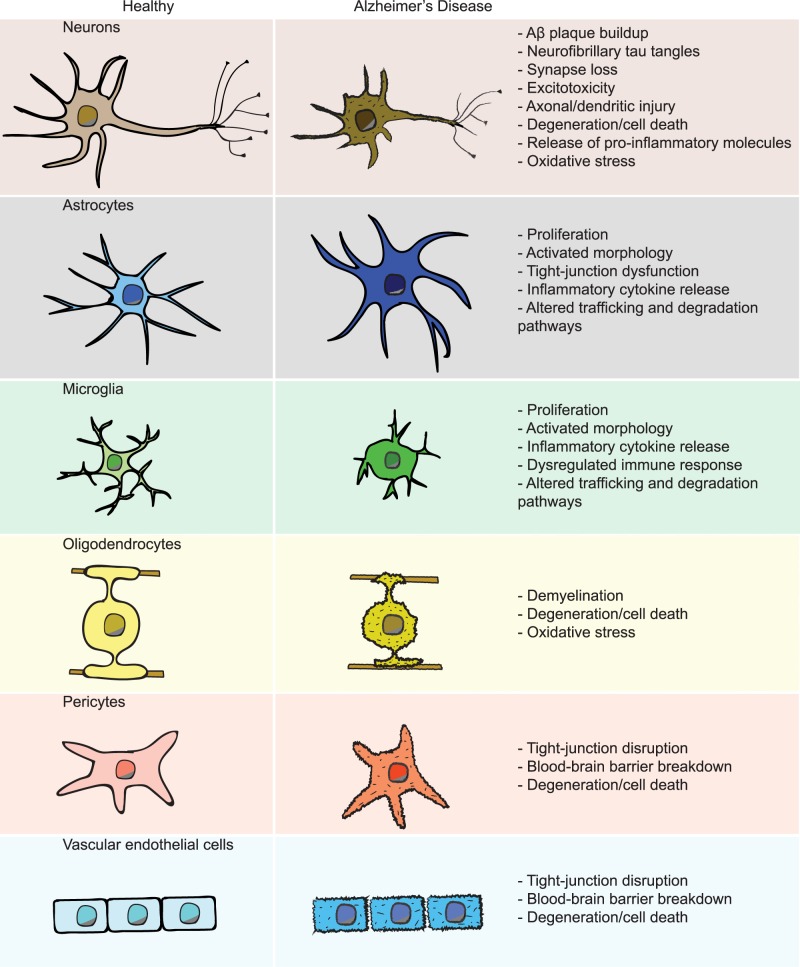
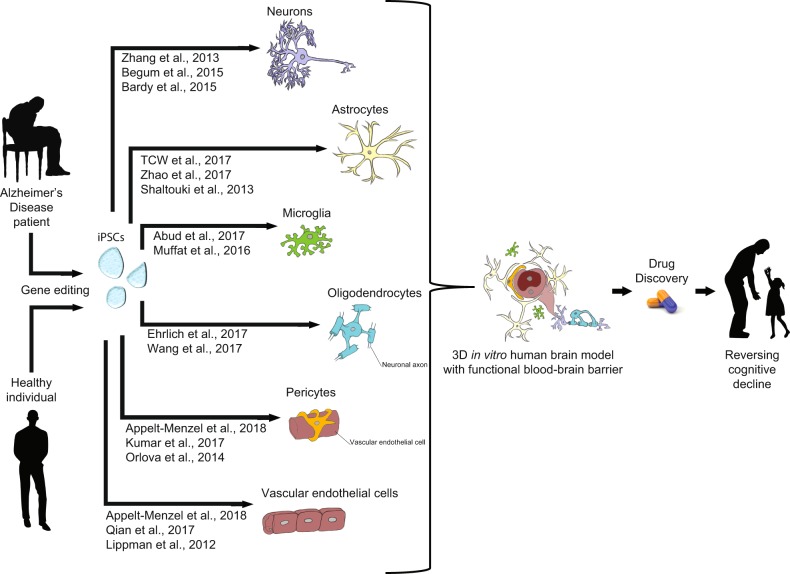
Verification
Claims the paper makes
The claims and statistics of this paper haven’t been checked yet.
Run the check — free, no account needed. It reads the open-access text and checks the sources it cites.
Claims other papers make about this one
Each is checked against this paper’s own text: does it say what the citing paper says it does?
The source backs part of the claim, not all of it — or backs it for a different population, condition or comparison.
In the citing paper
“A majority of AD risk genes identified through genome-wide association studies are highly expressed in microglia, the brain’s innate immune cells, suggesting a key role in microglial dysfunction (Kummer et al., 2021; Penney et al., 2020; Teipel et al., 2022).”
From A novel molecular class that recruits HDAC/MECP2 complexes to PU.1 motifs reduces neuroinflammation (2023) · cites this paper as Penney et al., 2020
Experimental — accuracy not yet measuredThe cited source says what the claim attributes to it.
In the citing paper
“Population genetics has revealed that AD risk variants are enriched in genes that are highly expressed in microglia (Penney et al., 2020).”
From A novel molecular class that recruits HDAC/MECP2 complexes to PU.1 motifs reduces neuroinflammation (2023) · cites this paper as Penney et al., 2020
In the citing paper
“While it is well documented that iPS cell systems can model aspects of AD pathology (Penney et al., 2020; Nelson et al., 2023)”
From APOE3 Christchurch modulates β-catenin/Wnt signaling in iPS cell-derived cerebral organoids from Alzheimer’s cases (2024) · cites this paper as Penney et al., 2020
Self-check
Percentages, sums and reported differences re-computed from the paper’s own numbers.
The self-check needs the paper’s full text.
Citations
Cites
McKhann, G. M., Knopman, D. S., Chertkow, H., Hyman, B. T., Jack, C. R., Kawas, C. H., Klunk, W. E., Koroshetz, W. J., Manly, J. J., Mayeux, R., et al. (2011) · Alzheimer's & Dementia · doi:10.1016/j.jalz.2011.03.005 · Cited by 18,657
Multiplex Genome Engineering Using CRISPR/Cas Systems
Cong, L., Ran, F. A., Cox, D., Lin, S., Barretto, R., Habib, N., Hsu, P. D., Wu, X., Jiang, W., Marraffini, L. A., et al. (2013) · Science · doi:10.1126/science.1231143 · Cited by 15,339
Corder, E. H., Saunders, A. M., Strittmatter, W. J., Schmechel, D. E., Gaskell, P. C., Small, G. W., Roses, A. D., Haines, J. L., & Pericak-Vance, M. A. (1993) · Science · doi:10.1126/science.8346443 · Cited by 9,429
Neurotoxic reactive astrocytes are induced by activated microglia
Liddelow, S. A., Guttenplan, K. A., Clarke, L. E., Bennett, F. C., Bohlen, C. J., Schirmer, L., Bennett, M. L., Münch, A. E., Chung, W.-S., Peterson, T. C., et al. (2017) · Nature · doi:10.1038/nature21029 · Cited by 7,971
Alzheimer's disease: the amyloid cascade hypothesis
Hardy, J. A., & Higgins, G. A. (1992) · Science · doi:10.1126/science.1566067 · Cited by 7,484
Cerebral organoids model human brain development and microcephaly
Lancaster, M. A., Renner, M., Martin, C.-A., Wenzel, D., Bicknell, L. S., Hurles, M. E., Homfray, T., Penninger, J. M., Jackson, A. P., & Knoblich, J. A. (2013) · Nature · doi:10.1038/nature12517 · Cited by 5,372
Goate, A., Chartier-Harlin, M.-C., Mullan, M., Brown, J., Crawford, F., Fidani, L., Giuffra, L., Haynes, A., Irving, N., James, L., et al. (1991) · Nature · doi:10.1038/349704a0 · Cited by 4,659
The precursor of Alzheimer's disease amyloid A4 protein resembles a cell-surface receptor
Kang, J., Lemaire, H.-G., Unterbeck, A., Salbaum, J. M., Masters, C. L., Grzeschik, K.-H., Multhaup, G., Beyreuther, K., & Müller-Hill, B. (1987) · Nature · doi:10.1038/325733a0 · Cited by 4,619
Meta-Analysis of 74,046 Individuals Identifies 11 New Susceptibility Loci for Alzheimer’s Disease
(EADI), E. A. D. I., Lambert, J.-C., (GERAD), G. A. E. R. I. A. D., Alzheimer's Disease Genetic Consortium (ADGC), (CHARGE), C. F. H. A. A. R. I. G. E., Ibrahim-Verbaas, C. A., Harold, D., Naj, A. C., Sims, R., Bellenguez, C., et al. (2013) · Nature Genetics · doi:10.1038/ng.2802 · Cited by 4,336
Hearing loss and cognitive decline in older adults
Lin, F. R., Yaffe, K., Xia, J., Xue, Q.-L., Harris, T. B., Purchase-Helzner, E., Satterfield, S., Ayonayon, H. N., Ferrucci, L., Simonsick, E. M., et al. (2013) · JAMA Internal Medicine · doi:10.1001/jamainternmed.2013.1868 · Cited by 4,017
Cited by
Sorted by citations
Items 301–400 of 482
Siciliano, B., Henkel, N., Ryan, W. G., Imami, A. S., Vergis, J. M., Xu, C., Arvay, T. O., Sahay, S., Pulvender, P., Hamoud, A.-R. A., et al. (2025) · Brain Behavior & Immunity - Health · doi:10.1016/j.bbih.2025.101044 · Cited by 4
Lish, A. M., & Young‐Pearse, T. L. (2026) · Current Opinion in Neurobiology · doi:10.1016/j.conb.2026.103165 · Cited by 3
Hao, Y., Li, Z., Lara, E., Ramos, D. M., Santiana, M., Jin, B., Epstein, J., Kowal, I., Camacho, J., Carmiol, N., et al. (2026) · Science Signaling · doi:10.1126/scisignal.adx8680 · Cited by 7
Current and emerging therapeutic approaches in Alzheimer’s disease
Chauhan, A., Devi, R., Singh, S., Thakur, R., Bhutani, K., Sharma, R., Kumari, A., Kumar, H., Pal, S., & Saini, A. K. (2026) · Discover Neuroscience · doi:10.1186/s13064-026-00290-5 · Cited by 3
Enhancing Multi-Stage Classification of Alzheimer's Disease with Attention Mechanism
Ching, W. P., Abdullah, S. S., & Shapiai, M. I. (2023) · IEEE International Conference on Artificial Intelligence in Engineering and Technology (IICAIET) · doi:10.1109/iicaiet59451.2023.10291792 · Cited by 3
Peter, M., Shipman, S. L., Heo, J., & Macklis, J. D. (2024) · iScience · doi:10.1016/j.isci.2024.109911 · Cited by 3
Gupta, A., Ghosh, A., Sharma, N., & Gorain, B. (2025) · Molecular Neurobiology · doi:10.1007/s12035-025-05003-3 · Cited by 4
miR-137: A therapeutic candidate or a key molecular regulator in Alzheimer's disease?
Wasim, M., Guo, J., Wang, Z., Parveen, R., Chen, R., Wang, Y., & Ma, G. (2025) · Journal of Alzheimer s Disease Reports · doi:10.1177/25424823251352166 · Cited by 3
Induced pluripotent stem cell technology: venturing into the second decade
Shi, Y., Inoue, H., Takahashi, J. B., & Yamanaka, S. (2020) · Elsevier eBooks · doi:10.1016/b978-0-12-818422-6.00095-2 · Cited by 4
Sontayananon, N., Redwood, C. S., Davies, B., & Gehmlich, K. (2020) · Biology · doi:10.3390/biology9110402 · Cited by 3
Jain, S., Swain, S., Das, L., Swain, S., Giri, L., Kondapi, A. K., & Unni, H. N. (2020) · Bioengineering · doi:10.3390/bioengineering7040162 · Cited by 3
Assessing the consistency of iPSC and animal models in cystic fibrosis modelling: A meta-analysis
Darwish, T., Al-Khulaifi, A., Ali, M., Mowafy, R., Arredouani, A., Doi, S. A. R., & Emara, M. M. (2022) · PLoS ONE · doi:10.1371/journal.pone.0272091 · Cited by 3
Phosphorylation of MAP 1A regulates hyperphosphorylation of Tau in Alzheimer's disease model
Cai, B., Shao, N., Ye, T., Zhou, P., Si, W., Song, H., Wang, G., & Kou, J. (2023) · Neuropathology and Applied Neurobiology · doi:10.1111/nan.12934 · Cited by 3
Srinivasan, N., Mehra, E., Dommaraju, S., & Kakavetsis, E. (2024) · Berkeley Pharma Tech Journal of Medicine · doi:10.52243/bptjm.v4i1.60 · Cited by 3
Sun, W., Chen, Y., Yang, Y., Wang, P., Gong, J., Han, X., Xu, C., Luan, H., Li, S., Li, R., et al. (2024) · Journal of Alzheimer s Disease · doi:10.3233/jad-240299 · Cited by 3
Lavekar, S. S., Hughes, J. M., Gomes, C., Huang, K.-C., Harkin, J., Canfield, S. G., & Meyer, J. S. (2024) · Fluids and Barriers of the CNS · doi:10.1186/s12987-024-00593-x · Cited by 3
Kshirsagar, S., Islam, M. A., Reddy, A. P., & Reddy, P. H. (2025) · Journal of Alzheimer s Disease Reports · doi:10.1177/25424823241310716 · Cited by 3
Kim, S., Kim, C., Moon, H. W., Han, J., Choi, S. W., Park, S. S., Kim, H., Choi, B., Kang, J. Y., Kim, J., et al. (2025) · Biomaterials Science · doi:10.1039/d5bm00535c · Cited by 3
Shibasaki, Y., Maeda, N., Oshimi, C., Shirakawa, Y., & Saito, M. (2021) · Chaos An Interdisciplinary Journal of Nonlinear Science · doi:10.1063/5.0048559 · Cited by 3
Namchaiw, P., Bunreangsri, P., Eiamcharoen, P., Eiamboonsert, S., & Poo-arporn, R. P. (2022) · PLoS ONE · doi:10.1371/journal.pone.0273458 · Cited by 3
Cuní‐López, C., Quek, H., Oikari, L. E., Stewart, R., Nguyen, T. H., Sun, Y., Guo, C. C., Lupton, M. K., & White, A. R. (2021) · Research Square · doi:10.21203/rs.3.rs-571254/v1 · Cited by 3
Distinct effects of disease-associated TREM2 R47H/+ and T66M mutations on iPSC-derived microgliaPreprint
Penney, J., Ralvenius, W. T., Loon, A. R., Cerit, O., Dileep, V., Milo, B., Woolf, H., & Tsai, L. (2022) · bioRxiv (Cold Spring Harbor Laboratory) · doi:10.1101/2022.10.05.511003 · Cited by 3
Self-citationExperimental Models of Alzheimer’s Disease
Ercan, M. (2024) · doi:10.69860/nobel.9786053359166.7 · Cited by 3
Hao, Y., Li, Z., Lara, E., Ramos, D. M., Santiana, M., Jin, B., Epstein, J., Camacho, J. J., Carmiol, N., Kowal, I., et al. (2025) · bioRxiv (Cold Spring Harbor Laboratory) · doi:10.1101/2025.03.25.645331 · Cited by 3
Tsarouchas, T. M., Zoupi, L., Williams, A., & Gibson, E. M. (2025) · STAR Protocols · doi:10.1016/j.xpro.2025.103609 · Cited by 2
Maina, M. B., Isah, M. B., Marsh, J. A., Muhammad, Z., Babazau, L., Idris, A. A., Aladyeva, E., Miller, N., Starr, E., Miller, K. J., et al. (2025) · Alzheimer s & Dementia · doi:10.1002/alz.70145 · Cited by 4
Chávez-López, L. M., Silvestre-Martínez, J. H., Lugo-Ibarra, K. C., & Castro-Ceseña, A. B. (2025) · Brain Research · doi:10.1016/j.brainres.2025.149718 · Cited by 3
Mapping key mitochondrial genes in Alzheimer’s disease through human tissue and iPSC derived neurons
Dong, D., Ahmed, W., Sagar, R., Boyd, R. J., & Mahairaki, V. (2025) · Scientific Reports · doi:10.1038/s41598-025-27019-4 · Cited by 3
Advanced Cellular Models for Neurodegenerative Diseases and PFAS-Related Environmental Risks
Rotondo, D., Lagostena, L., Magnelli, V., & Dondero, F. (2025) · NeuroSci · doi:10.3390/neurosci6040125 · Cited by 3
Modelling synaptic dysfunction in childhood dementia using human iPSC-derived cortical networks
Mazzachi, P., McDonald, E., Greenberg, Z., Puerta, A. N., Tran, J., Silva, M. I. D., Christensen, C., Adams, R., Loskarn, S., Beard, H., et al. (2026) · Nature Communications · doi:10.1038/s41467-026-71112-9 · Cited by 4
The Dual Role of Glial Extracellular Vesicles in Neurodegeneration: Insights from iPSC-Based Models
Scrivo, A., Bernardino, L. I., & Consiglio, A. (2026) · International Journal of Molecular Sciences · doi:10.3390/ijms27125182 · Cited by 2
Translating Alzheimer’s disease proteomics into drug discovery opportunities
Drummond, E., Werry, E. L., Kavanagh, T., Genoud, S., Cho, A., Chen, S., Du, J., Hibbs, D. E., & Kassiou, M. (2026) · Molecular Neurodegeneration Advances · doi:10.1186/s44477-026-00035-y · Cited by 2
Lipka, J., & Hoogenraad, C. (2019) · Neuron · doi:10.1016/j.neuron.2019.10.021 · Cited by 2
Stem Cells and Natural Agents in the Management of Neurodegenerative Diseases: A New Approach
Brockmueller, A., Mahmoudi, N., Moaveni, A. K., Mueller, A., Kajbafzadeh, A. M., Shakibaei, M., & Zolbin, M. M. (2022) · Neurochemical Research · doi:10.1007/s11064-022-03746-2 · Cited by 2
Recent Advances in Alzheimer’s Disease Treatments with Therapeutic Antibodies to Amyloid-β
Yang, J., & Bradford, A. (2022) · Journal of Student Research · doi:10.47611/jsrhs.v11i3.3453 · Cited by 2
Alzheimer Hastalığı’nda In Vivo ve In Vitro Modeller
Aru, B., DEVELİOĞLU, A., Gürel, G., & Demirel, G. Y. (2023) · Türkiye Sağlık Enstitüleri Başkanlığı Dergisi · doi:10.54537/tusebdergisi.1213712 · Cited by 3
Rontard, J., Maisonneuve, B. G. C., & Honegger, T. (2023) · Archives of Pharmacy and Pharmaceutical Sciences · doi:10.29328/journal.apps.1001039 · Cited by 2
A 3D Bioengineered Neural Tissue Model Generated from Human iPSC-Derived Neural Precursor Cells
Lomoio, S., & Tesco, G. (2023) · Methods in molecular biology · doi:10.1007/978-1-0716-3287-1_14 · Cited by 2
The enriched environment prevents degeneration of cerebellum Purkinje cells layer of rats
Mann, J., Clímaco, V. M., Nagashima, S., Stańczyk, D., Santer, M., Silva, I., & Pereira, L. F. (2023) · Acta Neurobiologiae Experimentalis · doi:10.55782/ane-2023-015 · Cited by 2
Lipid Profiling in Alzheimer’s Disease
Zivko, C., Sagar, R., Xydia, A., & Mahairaki, V. (2023) · Advances in experimental medicine and biology · doi:10.1007/978-3-031-31978-5_29 · Cited by 3
Promising Prospects for Human Cerebral Organoids to Advance Alzheimer's Disease Research
López, V., Rosca, A., Liste, I., Mateos-Martínez, P., Coronel, R., González-Sastre, R., Martín-Benito, S., & López, V. (2023) · Progress in Neurobiology · doi:10.60124/j.pneuro.2023.20.05 · Cited by 1
Harnessing diversity to study Alzheimer’s disease: A new iPSC resource from the NIH CARD and ADNI
Screven, L. A., Pantazis, C. B., Andersh, K. M., Hong, S., Vitale, D., Lara, E., Ku, R. Y., Heutink, P., Meyer, J. S., Faber, K. M., et al. (2024) · Neuron · doi:10.1016/j.neuron.2024.01.026 · Cited by 2
Rogal, J., Zamproni, L. N., Nikolakopoulou, P., Ygberg, S. E., Wedell, A., Wredenberg, A., & Herland, A. (2024) · Stem Cells Translational Medicine · doi:10.1093/stcltm/szae021 · Cited by 2
Evaluation of the impact of iPSC differentiation protocols on transcriptomic signatures
Chandrasekaran, V., Wellens, S., Bourguignon, A., Djidrovski, I., Fransen, L. F. H., Ghosh, S., Mazidi, Z., Murphy, C., Nunes, C., Singh, P., et al. (2024) · Toxicology in Vitro · doi:10.1016/j.tiv.2024.105826 · Cited by 3
Microglial dysfunction and genetic risk for neurodegenerative disease
MacDonald, D. S., & Penney, J. (2024) · Neural Regeneration Research · doi:10.4103/nrr.nrr-d-24-00146 · Cited by 2
Self-citationAranda, C. P. D. L. L., Tosat‐Bitrián, C., Porras, G., Dafinca, R., Muñoz‐Torrero, D., Talbot, K., Martín‐Requero, Á., Martı́nez, A., & Palomo, V. (2024) · ACS Chemical Neuroscience · doi:10.1021/acschemneuro.4c00328 · Cited by 2
Alzheimer’s Disease from Modeling to Mechanism Research
Sun, X., & Zhang, W. (2024) · Advances in neurobiology · doi:10.1007/978-3-031-69188-1_7 · Cited by 2
Alzheimer’s Disease: Pathological Mechanism and Treatment
Duan, W. (2025) · Theoretical and Natural Science · doi:10.54254/2753-8818/2024.19345 · Cited by 2
Schwarze‐Taufiq, T. A., Pranoto, I. K. A., Hui, K., Kinoshita, C., Yu, O., Crane, P. K., Gray, S. L., & Young, J. E. (2025) · Alzheimer s & Dementia Translational Research & Clinical Interventions · doi:10.1002/trc2.70040 · Cited by 3
Ahluwalia, A., Awuah, W. A., Shah, M. H., Sanker, V., Darko, K., Ben-Jaafar, A., Tan, J. K., Ranganathan, S., Tenkorang, P. O., Aderinto, N., et al. (2025) · Neuromethods · doi:10.1007/978-1-0716-4474-4_18 · Cited by 2
Kademani, A., Avraam, C., Montenegro, D., Paloh, A., Somannagari, N., Gupta, A., Lafi, A. W., Algaba, A. E., Islam, R., Fahima, C., et al. (2025) · Cureus · doi:10.7759/cureus.89629 · Cited by 3
Bahadur, A., Iqbal, S., Shoaib, M., Zulqarnain, M., Shah, M., Abd‐Rabboh, H. S. M., Perwez, U., Qayyum, M. A., & Zaman, A. (2021) · ChemistrySelect · doi:10.1002/slct.202101634 · Cited by 2
Cell-Autonomous Processes That Impair Xenograft Survival into the Cerebellum
Magrassi, L., Nato, G., Delia, D., & Buffo, A. (2022) · The Cerebellum · doi:10.1007/s12311-022-01414-3 · Cited by 2
Gezici, S., & Şekeroğlu, N. (2022) · Hacettepe University Journal of the Faculty of Pharmacy · doi:10.52794/hujpharm.1014770 · Cited by 2
Gaber, A. M., Ahmed, O. M., Khadrawy, Y. A., Zoheir, K. M. A., Abo‐Eleneen, R. E., Alblihed, M. A., & El-Bakry, A. M. (2023) · Biology · doi:10.3390/biology12070905 · Cited by 2
Induced pluripotent stem cells (iPSCs): Where are we and where are we heading?
Jamal, A. (2023) · Cellular and Molecular Biology · doi:10.14715/cmb/2023.69.11.13 · Cited by 2
Dorigatti, A. O., Hussong, S. A., Hernandez, S. F., Sills, A. M., Salmon, A. B., & Galván, V. (2020) · GeroScience · doi:10.1007/s11357-020-00284-z · Cited by 2
Understanding immune-driven brain aging by human brain organoid microphysiological analysis platformPreprint
Song, S., Ao, Z., Cai, H., Li, X., Miao, Y., Wu, Z., Krzesniak, J., Gu, M., Lee, L. P., & Guo, F. (2022) · bioRxiv (Cold Spring Harbor Laboratory) · doi:10.1101/2022.01.19.476989 · Cited by 2
Cuní‐López, C., Quek, H., Oikari, L. E., Stewart, R., Nguyen, T. H., Sun, Y., Guo, C. C., Lupton, M. K., & White, A. R. (2021) · Research Square · doi:10.21203/rs.3.rs-571254/v2 · Cited by 2
Lazaro, O., Li, S., Carter, W., Awosika, O., Robertson, S., Hickey, B. E., Angus, S. P., House, A., Clapp, D. W., Qadir, A. S., et al. (2024) · bioRxiv (Cold Spring Harbor Laboratory) · doi:10.1101/2024.05.02.591952 · Cited by 2
Amyloid β (Aβ) ELISA of Human iPSC-Derived Neuronal Cultures
Watanabe, H., Murakami, R., & Okano, H. (2021) · Methods in molecular biology · doi:10.1007/7651_2021_407 · Cited by 1
Reporter Alleles in hiPSCs: Visual Cues on Development and Disease
Cotta, G. C., dos Santos, R. C. T., Costa, G. M. J., & Lacerda, S. M. D. S. N. (2024) · International Journal of Molecular Sciences · doi:10.3390/ijms252011009 · Cited by 1
AI for Neurodegenerative Experimental Models: Advancements and Applications
Alkubaisy, M. M., Khazaal, W. M., Shakir, K. H., Muhammad, S. R., Habelalmateen, M. I., Ayad, H., & Saadoun, O. N. (2024) · International Conference on IoT, Communication and Automation Technology (ICICAT) · doi:10.1109/icicat62666.2024.10923433 · Cited by 1
An overview of stem cell application in regenerative medicine
Riaz, F., Asgharzadeh, F., Binabaj, M. M., Ghalami, S., Saeinasab, M., & Sefat, F. (2025) · Elsevier eBooks · doi:10.1016/b978-0-443-34152-6.00004-4 · Cited by 1
Liao, D., Zhang, M., Yang, Q., Li, T., Cao, Z., Liu, D., Zhang, Z., Li, X., Tian, Z., Li, X., et al. (2026) · Annals of Medicine · doi:10.1080/07853890.2025.2610559 · Cited by 1
Patwekar, F. I., Patwekar, M., Wei, L. S., Rather, G. A., Mohammed, A., Hussain, M. S., Gupta, G., Fuloria, S., & Fuloria, N. K. (2026) · Brain Research · doi:10.1016/j.brainres.2026.150208 · Cited by 1
Cell death detection in iPSC-derived cortical neurons as model of neurodegeneration
Colasuonno, F., D’Eletto, M., Bellanca, V., Piacentini, M., Sano, F. D., & Rossin, F. (2026) · Methods in cell biology · doi:10.1016/bs.mcb.2026.02.021 · Cited by 1
Human induced pluripotent stem cell-based models for studying neural repair
Agrawal, M., Desai, M., Ghumra, S., Bhorkar, Y., & Sahoo, P. K. (2026) · Progress in Neurobiology · doi:10.1016/j.pneurobio.2026.102907 · Cited by 1
Genome editing in Parkinson's disease: Unlocking therapeutic avenues through CRISPR-Cas systems
Singh, R. P. S., Maity, P., & Jaiswal, C. (2026) · Neurochemistry International · doi:10.1016/j.neuint.2026.106149 · Cited by 1
Hebisch, M., Kamin, V., Cenini, G., Piazzesi, A., Bertan, F., Weykopf, B., Schlee, J., Kaniyappan, S., Washicosky, K. J., Kim, D. Y., et al. (2026) · Cell Reports Methods · doi:10.1016/j.crmeth.2026.101365 · Cited by 1
The mitochondria-synapse axis in Alzheimer’s disease: Lost coordination in early stages
Sharma, P., Kaur, N., Vasal, N., Solanki, K., & Sunkaria, A. (2026) · Ageing Research Reviews · doi:10.1016/j.arr.2026.103168 · Cited by 1
Alghamdi, H. (2026) · Ageing Research Reviews · doi:10.1016/j.arr.2026.103322 · Cited by 1
The Emerging Role of AI in Dementia Research and Healthcare
Ranson, J. M., Bucholc, M., Lyall, D. M., Newby, D., Winchester, L. M., Oxtoby, N. P., Veldsman, M., Rittman, T., Marzi, S. J., Skene, N., et al. (2022) · Brain informatics and health · doi:10.1007/978-981-19-5272-2_4 · Cited by 1
Nanodrug delivery—a noble approach in neurodegenerative disorder and glioblastoma
Mishra, K., & Kakhlon, O. (2024) · Elsevier eBooks · doi:10.1016/b978-0-443-19129-9.00002-9 · Cited by 1
Lazaro, O., Li, S., Smiley, J. S., Carter, W., House, A., Awosika, O., Robertson, S., Haskell, A. K., Hinkel, R. D., Hickey, B. E., et al. (2026) · Scientific Reports · doi:10.1038/s41598-026-69205-y · Cited by 1
Genome Editing Technology for the Study and Correction of Neurodegenerative Diseases
Grivennikov, I. A., & Tarantul, V. Z. (2021) · Neurochemical Journal · doi:10.1134/s181971242104005x · Cited by 1
Perspectives of Stem Cell Therapy: A Promising Therapeutic for Cancer Model and Alzheimer’s Disease
Jeyachandran, S., Ganesan, G., Sangeetha, R., Paramasivan, V., Subbaraj, G. K., & Kulanthaivel, L. (2023) · Handbook of Animal Models and its Uses in Cancer Research · doi:10.1007/978-981-19-3824-5_32 · Cited by 1
Tam, R. W., & Keung, A. J. (2023) · Molecular and Cellular Neuroscience · doi:10.1016/j.mcn.2023.103876 · Cited by 1
Microfluidic Chip for Label-Free Removal of Teratoma-forming Cells from Therapeutic Human Stem CellsPreprint
Wellmerling, K., Lehmann, C., Singh, A., & Kirby, B. J. (2019) · bioRxiv (Cold Spring Harbor Laboratory) · doi:10.1101/830588 · Cited by 1
Disease specific alterations in the olfactory mucosa of patients with Alzheimer’s diseasePreprint
Lampinen, R., Fazaludeen, M. F., Avesani, S., Örd, T., Penttilä, E., Lehtola, J.-M., Saari, T. T., Hannonen, S., Saveleva, L., Kaartinen, E., et al. (2020) · bioRxiv (Cold Spring Harbor Laboratory) · doi:10.1101/2020.11.24.395947 · Cited by 1
Díaz, A. G., Belli, E., Mannini, B., Urrutia, G. A., & Vendruscolo, M. (2024) · bioRxiv (Cold Spring Harbor Laboratory) · doi:10.1101/2024.08.30.610594 · Cited by 1
Validating novel neurodegenerative targets for future dementia therapeutics
Murphy, E. J. (2025) · Expert Opinion on Therapeutic Targets · doi:10.1080/14728222.2025.2608022 · Cited by 1
A Multi-omics Data Resource for Frontotemporal Dementia Research
Heutink, P., Menden, K., & Dalmia, A. (2021) · Advances in experimental medicine and biology · doi:10.1007/978-3-030-51140-1_16
Modelling late-onset diseases with induced pluripotent stem cells: a matter of time management
Cossins, C., & Fairchild, P. J. (2021) · Cell and Gene Therapy Insights · doi:10.18609/cgti.2021.015
Kim, Y. A., Blaze, J., Winters, T., Kumar, A., Tein, E., Sproul, A. A., Teich, A. F., Bartolini, F., Akbarian, S., Hargus, G., et al. (2021) · bioRxiv (Cold Spring Harbor Laboratory) · doi:10.1101/2021.06.16.448614
Lee, C. (2021) · cIRcle (University of British Columbia) · doi:10.14288/1.0400595
Alzheimer’s Disease: Newly Proposed Pathologies and Predicted Therapies
Liu, H. (2022) · International Conference on Biotechnology, Life Science and Medical Engineering (BLSME) · doi:10.23977/blsme.2022023
Perspectives of Stem Cell Therapy: A Promising Therapeutic for Cancer Model and Alzheimer’s Disease
Jeyachandran, S., Ganesan, G., Sangeetha, R., Paramasivan, V., Subbaraj, G. K., & Kulanthaivel, L. (2022) · Handbook of Animal Models and its Uses in Cancer Research · doi:10.1007/978-981-19-1282-5_32-1
Human Embryonic Stem Cells as a Therapy for Alzheimer’s Disease
Adefegha, S. A. (2022) · Handbook of Animal Models and its Uses in Cancer Research · doi:10.1007/978-981-19-1282-5_40-1
Human Embryonic Stem Cells as a Therapy for Alzheimer’s Disease
Adefegha, S. A. (2023) · Handbook of Animal Models and its Uses in Cancer Research · doi:10.1007/978-981-19-3824-5_40
Efficacy and Potential of Stem Cell Therapy for Alzheimer’s Disease
Hussain, Y., & Agarwal, P. (2023) · Journal of Student Research · doi:10.47611/jsrhs.v12i1.4106
Advances in Alzheimer’s Disease Research: Human Cerebral Organoids
Liste, I. (2023) · American Journal of Biomedical Science & Research · doi:10.34297/ajbsr.2023.18.002421
Peter, M., Shipman, S. L., & Macklis, J. D. (2023) · bioRxiv (Cold Spring Harbor Laboratory) · doi:10.1101/2023.08.04.552012
KUŞAT, T., & Emrah, S. U. R. (2023) · doi:10.59287/sbyc.582
Transcription Factors in Brain Regeneration: A Potential Novel Therapeutic Target
Marzoog, B. A. (2023) · Current Drug Targets · doi:10.2174/0113894501279977231210170231
Varghese, R., Digholkar, G., Deshpande, A., & Kumar, D. (2023) · BENTHAM SCIENCE PUBLISHERS eBooks · doi:10.2174/9789815136142123010013 · Cited by 1
Schüler, J. B., Sjöman, H., & Kriesi, C. (2024) · Communications Biology · doi:10.1038/s42003-024-05843-0
Pomeshchik, Y., Velásquez, E., Gil, J., Klementieva, O. L., Gidlöf, R., Sydoff, M., Bagnoli, S., Nacmias, B., Sorbi, S., Westergren‐Thorsson, G., et al. (2023) · Figshare · doi:10.6084/m9.figshare.24151181
Pomeshchik, Y., Velásquez, E., Gil, J., Klementieva, O. L., Gidlöf, R., Sydoff, M., Bagnoli, S., Nacmias, B., Sorbi, S., Westergren‐Thorsson, G., et al. (2023) · Figshare · doi:10.6084/m9.figshare.24151178
Metadata
- Authors
- Penney, J., Ralvenius, W. T., & Tsai, L.-H.
- Affiliations
- Massachusetts Institute of Technology (US)
- Corresponding author
- Tsai, Li-Huei
- Venue
- Molecular Psychiatry
- Published
- 2019-08-07
- Volume
- 25
- Issue
- 1
- Pages
- 148-167
- ISSN
- 1359-4184 (ISSN-L)
- 1476-5578
- PMC
- PMC6906186
- OpenAlex
- W2964627277
- Cited by
- 471
- References
- 235
- Citations by year
- 2026: 54 · 2025: 66 · 2024: 78 · 2023: 84 · 2022: 77 · 2021: 65 · 2020: 41 · 2019: 6
- FWCI
- 4.18
- Type
- journal article
- Language
- en
- Open access
- hybrid
- doi.org
- Locations
- Molecular Psychiatry (publishedVersion, cc-by)
- PubMed Central (publishedVersion, cc-by)
- PubMed (publishedVersion)
- DSpace@MIT (Massachusetts Institute of Technology) (submittedVersion, cc-by-nc)
- IslandScholar (University of Prince Edward Island) (submittedVersion)
- Funders
- National Science Foundation
- Cure Alzheimer's Fund
- Robert A. and Renee E. Belfer Family Foundation
- Schweizerischer Nationalfonds zur Förderung der Wissenschaftlichen Forschung (177920)
- National Institutes of Health (NS051874)
- National Institute on Aging (RF1AG054012)
- National Institute of Neurological Disorders and Stroke (R37NS051874)
- Topics
- Life Sciences › Biochemistry, Genetics and Molecular Biology › Molecular Biology › Pluripotent Stem Cells Research
- Life Sciences › Neuroscience › Cellular and Molecular Neuroscience › Alzheimer's disease research and treatments
- Life Sciences › Neuroscience › Developmental Neuroscience › Neurogenesis and neuroplasticity mechanisms
- Keywords
- Alzheimer's disease, induced pluripotent stem cells, neurodegeneration, co-culture model, disease modeling, genome editing, Alzheimer's disease risk genes, preclinical research
- MeSH terms
- Alzheimer Disease, Brain, Cell Differentiation, Humans, Models, Biological, Neurons, Neurodegenerative Diseases, Induced Pluripotent Stem Cells
About these checks
Registry, retraction, Cites and statistics results are computed, not judged, with one exception: a printed reference that no index lists is read once by a model before it counts as a citation error. Claims are extracted by a model and kept only when their quote appears verbatim in the text; each cited source is then checked, with a model’s help, for whether it says what the claim relies on. Those verdicts can be wrong — read the claim’s quote and the cited source before relying on one.
Statistics and arithmetic are recomputed, not judged.
Confidence bands are shown only for fields calibrated on our annotated test set. None is calibrated yet, so no band is shown.
What counts as a claim ›How we measure confidence ›How we check this ›
Are you an author, or do you see a problem with this page? Request a review
