

The DOI matches its Crossref record; 234 of the 235 references it cites were found in a registry or an index.
Modeling Alzheimer’s disease with iPSC-derived brain cells
Open accessAbstract
Alzheimer's disease is a devastating neurodegenerative disorder with no cure. Countless promising therapeutics have shown efficacy in rodent Alzheimer's disease models yet failed to benefit human patients. While hope remains that earlier intervention with existing therapeutics will improve outcomes, it is becoming increasingly clear that new approaches to understand and combat the pathophysiology of Alzheimer's disease are needed. Human induced pluripotent stem cell (iPSC) technologies have changed the face of preclinical research and iPSC-derived cell types are being utilized to study an array of human conditions, including neurodegenerative disease. All major brain cell types can now be differentiated from iPSCs, while increasingly complex co-culture systems are being developed to facilitate neuroscience research. Many cellular functions perturbed in Alzheimer's disease can be recapitulated using iPSC-derived cells in vitro, and co-culture platforms are beginning to yield insights into the complex interactions that occur between brain cell types during neurodegeneration. Further, iPSC-based systems and genome editing tools will be critical in understanding the roles of the numerous new genes and mutations found to modify Alzheimer's disease risk in the past decade. While still in their relative infancy, these developing iPSC-based technologies hold considerable promise to push forward efforts to combat Alzheimer's disease and other neurodegenerative disorders.
Overview
The claims and statistics of this paper haven’t been checked yet.
Run the check — free, no account needed. It reads the open-access text and checks the sources it cites.
Integrity signals
Registry
Cites
Statistics
Figures
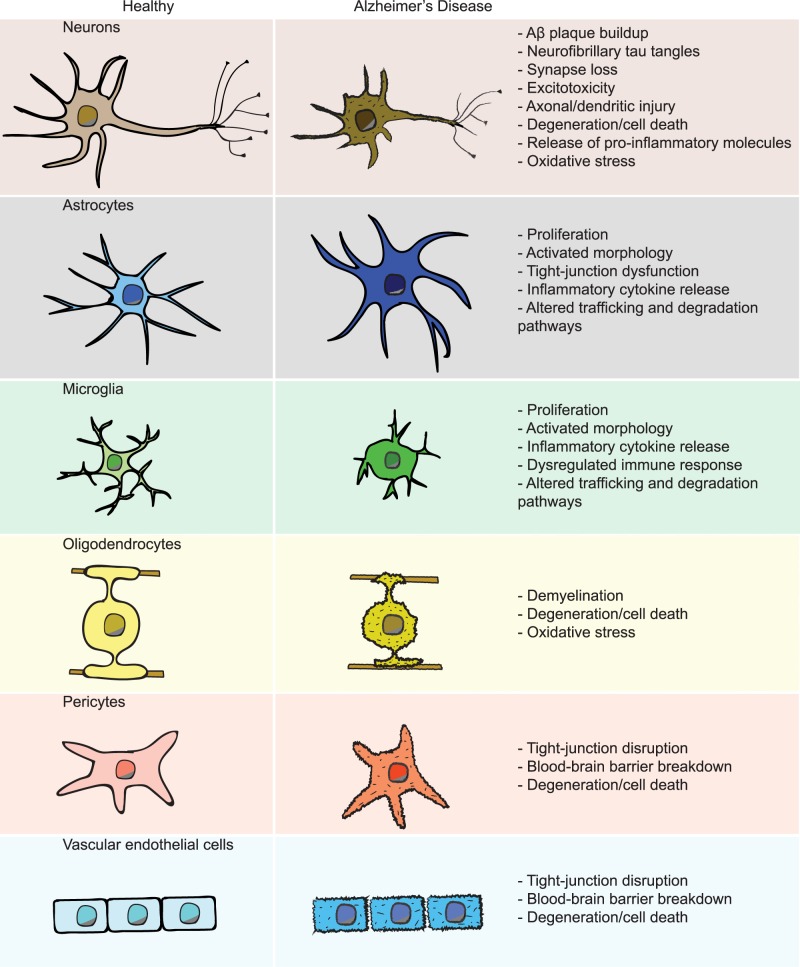
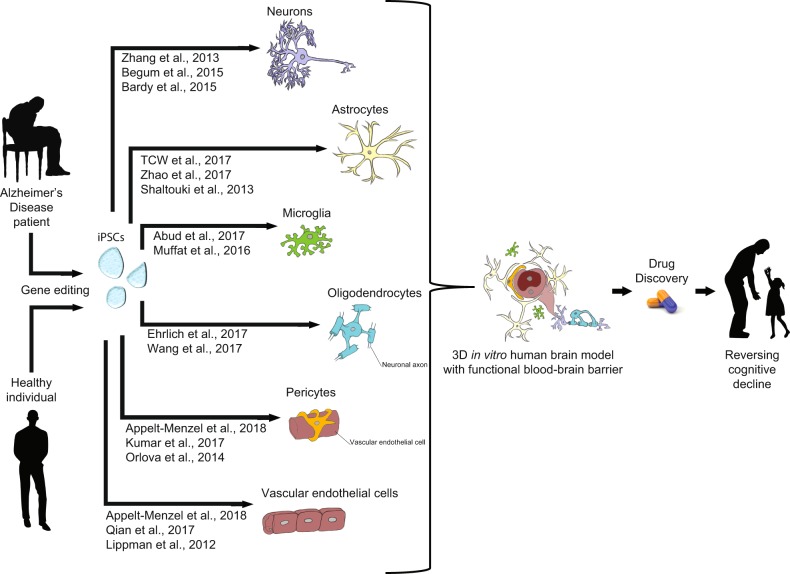
Verification
Claims the paper makes
The claims and statistics of this paper haven’t been checked yet.
Run the check — free, no account needed. It reads the open-access text and checks the sources it cites.
Claims other papers make about this one
Each is checked against this paper’s own text: does it say what the citing paper says it does?
The source backs part of the claim, not all of it — or backs it for a different population, condition or comparison.
In the citing paper
“A majority of AD risk genes identified through genome-wide association studies are highly expressed in microglia, the brain’s innate immune cells, suggesting a key role in microglial dysfunction (Kummer et al., 2021; Penney et al., 2020; Teipel et al., 2022).”
From A novel molecular class that recruits HDAC/MECP2 complexes to PU.1 motifs reduces neuroinflammation (2023) · cites this paper as Penney et al., 2020
Experimental — accuracy not yet measuredThe cited source says what the claim attributes to it.
In the citing paper
“Population genetics has revealed that AD risk variants are enriched in genes that are highly expressed in microglia (Penney et al., 2020).”
From A novel molecular class that recruits HDAC/MECP2 complexes to PU.1 motifs reduces neuroinflammation (2023) · cites this paper as Penney et al., 2020
In the citing paper
“While it is well documented that iPS cell systems can model aspects of AD pathology (Penney et al., 2020; Nelson et al., 2023)”
From APOE3 Christchurch modulates β-catenin/Wnt signaling in iPS cell-derived cerebral organoids from Alzheimer’s cases (2024) · cites this paper as Penney et al., 2020
Self-check
Percentages, sums and reported differences re-computed from the paper’s own numbers.
The self-check needs the paper’s full text.
Citations
Cites
McKhann, G. M., Knopman, D. S., Chertkow, H., Hyman, B. T., Jack, C. R., Kawas, C. H., Klunk, W. E., Koroshetz, W. J., Manly, J. J., Mayeux, R., et al. (2011) · Alzheimer's & Dementia · doi:10.1016/j.jalz.2011.03.005 · Cited by 18,657
Multiplex Genome Engineering Using CRISPR/Cas Systems
Cong, L., Ran, F. A., Cox, D., Lin, S., Barretto, R., Habib, N., Hsu, P. D., Wu, X., Jiang, W., Marraffini, L. A., et al. (2013) · Science · doi:10.1126/science.1231143 · Cited by 15,339
Corder, E. H., Saunders, A. M., Strittmatter, W. J., Schmechel, D. E., Gaskell, P. C., Small, G. W., Roses, A. D., Haines, J. L., & Pericak-Vance, M. A. (1993) · Science · doi:10.1126/science.8346443 · Cited by 9,429
Neurotoxic reactive astrocytes are induced by activated microglia
Liddelow, S. A., Guttenplan, K. A., Clarke, L. E., Bennett, F. C., Bohlen, C. J., Schirmer, L., Bennett, M. L., Münch, A. E., Chung, W.-S., Peterson, T. C., et al. (2017) · Nature · doi:10.1038/nature21029 · Cited by 7,971
Alzheimer's disease: the amyloid cascade hypothesis
Hardy, J. A., & Higgins, G. A. (1992) · Science · doi:10.1126/science.1566067 · Cited by 7,484
Cerebral organoids model human brain development and microcephaly
Lancaster, M. A., Renner, M., Martin, C.-A., Wenzel, D., Bicknell, L. S., Hurles, M. E., Homfray, T., Penninger, J. M., Jackson, A. P., & Knoblich, J. A. (2013) · Nature · doi:10.1038/nature12517 · Cited by 5,372
Goate, A., Chartier-Harlin, M.-C., Mullan, M., Brown, J., Crawford, F., Fidani, L., Giuffra, L., Haynes, A., Irving, N., James, L., et al. (1991) · Nature · doi:10.1038/349704a0 · Cited by 4,659
The precursor of Alzheimer's disease amyloid A4 protein resembles a cell-surface receptor
Kang, J., Lemaire, H.-G., Unterbeck, A., Salbaum, J. M., Masters, C. L., Grzeschik, K.-H., Multhaup, G., Beyreuther, K., & Müller-Hill, B. (1987) · Nature · doi:10.1038/325733a0 · Cited by 4,619
Meta-Analysis of 74,046 Individuals Identifies 11 New Susceptibility Loci for Alzheimer’s Disease
(EADI), E. A. D. I., Lambert, J.-C., (GERAD), G. A. E. R. I. A. D., Alzheimer's Disease Genetic Consortium (ADGC), (CHARGE), C. F. H. A. A. R. I. G. E., Ibrahim-Verbaas, C. A., Harold, D., Naj, A. C., Sims, R., Bellenguez, C., et al. (2013) · Nature Genetics · doi:10.1038/ng.2802 · Cited by 4,336
Hearing loss and cognitive decline in older adults
Lin, F. R., Yaffe, K., Xia, J., Xue, Q.-L., Harris, T. B., Purchase-Helzner, E., Satterfield, S., Ayonayon, H. N., Ferrucci, L., Simonsick, E. M., et al. (2013) · JAMA Internal Medicine · doi:10.1001/jamainternmed.2013.1868 · Cited by 4,017
Cited by
Sorted by citations
Items 401–482 of 482
Bai, B., Vanderwall, D., Li, Y., Wang, X., Poudel, S., Wang, H., Dey, K. K., Chen, P., Yang, K., & Peng, J. (2021) · Figshare · doi:10.6084/m9.figshare.15162179
Pomeshchik, Y., Velásquez, E., Gil, J., Klementieva, O. L., Gidlöf, R., Sydoff, M., Bagnoli, S., Nacmias, B., Sorbi, S., Westergren‐Thorsson, G., et al. (2023) · Figshare · doi:10.6084/m9.figshare.24151166
Pomeshchik, Y., Velásquez, E., Gil, J., Klementieva, O. L., Gidlöf, R., Sydoff, M., Bagnoli, S., Nacmias, B., Sorbi, S., Westergren‐Thorsson, G., et al. (2023) · Figshare · doi:10.6084/m9.figshare.24151172
Pomeshchik, Y., Velásquez, E., Gil, J., Klementieva, O. L., Gidlöf, R., Sydoff, M., Bagnoli, S., Nacmias, B., Sorbi, S., Westergren‐Thorsson, G., et al. (2023) · Figshare · doi:10.6084/m9.figshare.24151169
Can Stem Cell Therapy be an Effective Therapeutic Option for Complex and Neurological Conditions?
Lo, S., & Gantioque, R. (2024) · Advanced Journal of Graduate Research · doi:10.21467/ajgr.15.1.12-21
Swati, Sarma, K., Bhardwaj, R., Chauhan, L., Sharma, R., & Mal, P. (2024) · The Natural Products Journal · doi:10.2174/0122103155287645240528114302
Prospects of induced pluripotent stem cells in treating advancing Alzheimer's disease: A review.
Park, J. J., Rim, Y. A., Sohn, Y., Nam, Y., & Ju, J. H. (2025) · PubMed · doi:10.14670/hh-18-766
Espinosa, M. C. (2024) · Estudios y Perspectivas Revista Científica y Académica · doi:10.61384/r.c.a..v4i2.247
Díaz, A. G., Possenti, A., Urrutia, G. A., Bian, Y., Kedia, S., Böken, D., Lim, C. M., Licastro, D., Mannini, B., Klenerman, D., et al. (2024) · bioRxiv (Cold Spring Harbor Laboratory) · doi:10.1101/2024.09.01.610673
Enfermedad de Alzheimer: reporte de caso
Saquinaula, R. B. M., Portilla, R. V. S., & Rivas, R. J. M. (2024) · Anatomía Digital · doi:10.33262/anatomiadigital.v7i3.3.3182
Streubel-Gallasch, L., & Seibler, P. (2024) · Elsevier eBooks · doi:10.1016/b978-0-443-13550-7.00011-2
Phytotherapeutics for Alzheimer’s Disease
Kılıç, F. M. (2024) · doi:10.69860/nobel.9786053359241.7
Use of CRISPR system in genetic screening to detect neurodegenerative disease
Kar, K. (2024) · Elsevier eBooks · doi:10.1016/b978-0-443-23826-0.00009-x
Automated medical diagnosis of dementia through fine-tuned EfficientNet
Bansal, D., Chhikara, R. R., Khanna, K., Dua, R. K., & Malhotra, R. (2024) · Intelligent Decision Technologies · doi:10.3233/idt-240988
Son, B., Han, J., Han, D., Kwon, S.-Y., Jeong, A., Kang, J. H., Yoo, K. H., Yoo, H., Gweon, B., & Park, H. H. (2025) · SSRN Electronic Journal · doi:10.2139/ssrn.5165728
Advancements in Understanding Neurogenesis in Alzheimer's Disease: Current Research and Insights
Zhu, C. (2025) · Brain Conflux · doi:10.71321/4gjht115
Lidgerwood, G. E., Mirzaei, M., Hall, J. C., Hernández, D. G., Greferath, U., van de Meene, A., Jessica, Y. W., Karch, C. M. M., Goate, A., & Pébay, A. (2025) · Research Square · doi:10.21203/rs.3.rs-6556064/v1
Long, Y., Pan, N., Wang, S., Qin, K., Chen, Q., Vetter, C. S., Singh, M. K., Fornito, A., Chen, Y., & Gong, Q. (2025) · NeuroImage · doi:10.1016/j.neuroimage.2025.121402
Allahyani, W., Alrekabi, A., Almoqhem, R., Alyousef, A., Alasmari, F. F., Albaker, A. B., Al-Qerem, W. A., & Albasher, G. I. (2023) · Neurophysiology · doi:10.1007/s11062-025-09956-y
A 3D Human Neuron‐on‐Chip Platform to Monitor Neuronal Injury Responses
Tang, R., Latchoumane, C.-F. V., Chopra, A., Sarkar, M. M., Kim, C., Gonsalves, N., Wu, H., Sentmanat, J. C., Liu, A., Mhatre‐Winters, I., et al. (2026) · Advanced Healthcare Materials · doi:10.1002/adhm.202503457
P06-08 Investigation of the Effects of Naringin in an In vitroAlzheimer's Disease Model
Korkmaz, E., Secerlı, J., Erdoğan, H., & Bacanli, M. G. (2025) · Toxicology Letters · doi:10.1016/j.toxlet.2025.07.246
Fourrière, L., & Boncompain, G. (2025) · Biology of the Cell · doi:10.1111/boc.70035
Ullah, A., & Iftikhar, S. (2025) · Current Genetic Medicine Reports · doi:10.1007/s40142-025-00220-7
3D Bioprinting Neural Models: A New Era in Drug Discovery and Neuropharmacology
Karad, V., Patil, P. P. R. P. P. P. R., & Gupta, G. L. (2025) · Biomedical Materials & Devices · doi:10.1007/s44174-025-00530-y
Sherman, E., Qiu, K., Roberts, R., Shichman, L., Li, S., Sun, H., Ide, L., Tucker, A., Lee, S., Gniadzik, W., et al. (2025) · SSRN Electronic Journal · doi:10.1101/2025.10.17.683162 · Cited by 1
Burton, J. B., McHugh, T. L. M., Schurman, C. A., Bons, J., Sanchez, M., Ellerby, L., & Schilling, B. (2025) · bioRxiv (Cold Spring Harbor Laboratory) · doi:10.1101/2025.11.02.686128
iPSC-derived neurospheres: A cellular platform for Tau and Alzheimer’s disease immunotherapy
Chinnathambi, S., Adityan, A., Chandrashekar, M., & Velmurugan, G. (2025) · Advances in immunology · doi:10.1016/bs.ai.2025.11.001 · Cited by 1
Cuní‐López, C., Stewart, R., Oikari, L. E., Nguyen, T. H., Roberts, T. L., Sun, Y., Guo, C. C., Lupton, M. K., White, A. R., & Quek, H. (2024) · Figshare · doi:10.6084/m9.figshare.25237419
Pomeshchik, Y., Velásquez, E., Gil, J., Klementieva, O. L., Gidlöf, R., Sydoff, M., Bagnoli, S., Nacmias, B., Sorbi, S., Westergren‐Thorsson, G., et al. (2023) · Figshare · doi:10.6084/m9.figshare.24151190
Konstantinidis, E., Portal, B., Mothes, T., Beretta, C., Lindskog, M., & Erlandsson, A. (2023) · Figshare · doi:10.6084/m9.figshare.22603982
Cuní‐López, C., Stewart, R., Oikari, L. E., Nguyen, T. H., Roberts, T. L., Sun, Y., Guo, C. C., Lupton, M. K., White, A. R., & Quek, H. (2024) · Figshare · doi:10.6084/m9.figshare.26681788
Hashash, A. E. (2025) · Elsevier eBooks · doi:10.1016/b978-0-443-27414-5.00009-9
Pomeshchik, Y., Velásquez, E., Gil, J., Klementieva, O. L., Gidlöf, R., Sydoff, M., Bagnoli, S., Nacmias, B., Sorbi, S., Westergren‐Thorsson, G., et al. (2023) · Figshare · doi:10.6084/m9.figshare.24151193
Pomeshchik, Y., Velásquez, E., Gil, J., Klementieva, O. L., Gidlöf, R., Sydoff, M., Bagnoli, S., Nacmias, B., Sorbi, S., Westergren‐Thorsson, G., et al. (2023) · Figshare · doi:10.6084/m9.figshare.24151163
Cuní‐López, C., Stewart, R., Oikari, L. E., Nguyen, T. H., Roberts, T. L., Sun, Y., Guo, C. C., Lupton, M. K., White, A. R., & Quek, H. (2024) · Figshare · doi:10.6084/m9.figshare.25237386
Pomeshchik, Y., Velásquez, E., Gil, J., Klementieva, O. L., Gidlöf, R., Sydoff, M., Bagnoli, S., Nacmias, B., Sorbi, S., Westergren‐Thorsson, G., et al. (2023) · Figshare · doi:10.6084/m9.figshare.24151187
Cuní‐López, C., Stewart, R., Oikari, L. E., Nguyen, T. H., Roberts, T. L., Sun, Y., Guo, C. C., Lupton, M. K., White, A. R., & Quek, H. (2024) · Figshare · doi:10.6084/m9.figshare.26681785
Cuní‐López, C., Stewart, R., Oikari, L. E., Nguyen, T. H., Roberts, T. L., Sun, Y., Guo, C. C., Lupton, M. K., White, A. R., & Quek, H. (2024) · Figshare · doi:10.6084/m9.figshare.26681791
Cuní‐López, C., Stewart, R., Oikari, L. E., Nguyen, T. H., Roberts, T. L., Sun, Y., Guo, C. C., Lupton, M. K., White, A. R., & Quek, H. (2024) · Figshare · doi:10.6084/m9.figshare.26681779
Cuní‐López, C., Stewart, R., Oikari, L. E., Nguyen, T. H., Roberts, T. L., Sun, Y., Guo, C. C., Lupton, M. K., White, A. R., & Quek, H. (2024) · Figshare · doi:10.6084/m9.figshare.26681782
A Microglia Initiated Target Therapy in Neuroinflammation for Alzheimer’s Patients
Faiza, B. K., Abedi, A., Andrea, O. B. O., Tamar, G., & Chermahini, S. H. (2024) · Journal of Alzheimers Research and Therapy · doi:10.14302/issn.2998-4211.jalr-24-4926
Comolli, D., Murari, E., Cerovic, M., Soltuzu, L., Liao, W., Bianchi, A., Seminara, S., Craparotta, I., Fumagalli, S., Balducci, C., et al. (2026) · Research Square · doi:10.21203/rs.3.rs-8549806/v1
McInvale, J. J., Ayers, C. E., Sarmah, H., Kim, K., Reinhardt, P., Mahajan, A., Humala, N., Corneo, B., Sterneckert, J. L., Canoll, P., et al. (2026) · STAR Protocols · doi:10.1016/j.xpro.2025.104305
Nakamura, Y., Ito, M., Senoo, A., Oh, S., Niwa, A., Hashimoto, Y., Hagiwara, H., Uemura, Y., Tsuji, T., Ohnishi, H., et al. (2026) · Pediatrics International · doi:10.1111/ped.70326
Graß, T., Cosacak, I. M., Ordureau, A., Price, F. D., Kavali, S., Caldarelli, A., Qiao, M. N., Vardarajan, B. N., Paulo, J. A., Marass, M., et al. (2026) · bioRxiv (Cold Spring Harbor Laboratory) · doi:10.64898/2026.02.19.706886 · Cited by 1
SGK1 inhibition restores excitability of cortical neurons derived from Alzheimer's disease patients
Jiang, Z., Saleem, K., Fisher, E., Li, L., Yan, Z., & Feng, J. (2026) · Neurobiology of Disease · doi:10.1016/j.nbd.2026.107345
Son, B., Han, J., Kang, J., Jeong, I., Han, D., Kwon, S., Jung, A., Yoo, H., Gweon, B., & Park, H. H. (2026) · Nano Today · doi:10.1016/j.nantod.2026.103020
Krohn, J., Breuer, L., Wegmann, S., & Dean, C. (2026) · bioRxiv (Cold Spring Harbor Laboratory) · doi:10.64898/2026.03.19.712916
From mice to clinical relevance: humanizing neuroscience with human-based model systems
Bak, A., van Loo, K. M. J., Kronenberg‐Versteeg, D., & Koch, H. (2026) · Frontiers in Cellular Neuroscience · doi:10.3389/fncel.2026.1776439
Altered neuronal activity in the hippocampal CA3 region in an in vitro model of tauopathy
Goncalves, A. (2020) · theses.fr (ABES) · doi:10.70675/b42db6dez88a0z4a14z93eez8f51d19d46f5
Hemonnot-Girard, A.-L. (2021) · theses.fr (ABES) · doi:10.70675/9c8a4775zd774z494ez9bbazf7566faefa8f
Alzheimer’s disease : epistemology, ethics, innovation
Daly, T. P. (2021) · theses.fr (ABES) · doi:10.70675/6e99838az7dd4z402fz98fdzeca072d3ad13
The role of the α7 nicotinic acetylcholine receptor in a model of amyloid pathology
Santos, D. G. (2024) · theses.fr (ABES) · doi:10.70675/b3ed4de5zcd9ez4421za129z0a05130d86b9
Rejuvenating stem cells to reverse aging
Ranwa, S., Yadav, S., Nurboo, S., & Nazir, A. (2026) · Elsevier eBooks · doi:10.1016/b978-0-443-33159-6.00019-9
Qi, L., Bertucci, T. B., Borden, S. M., Arduini, B. L., Lotz, S., Bowles, K. R., Goate, A., Karch, C. M. M., Temple, S., & Geschwind, D. H. (2026) · SSRN Electronic Journal · doi:10.64898/2026.04.29.721747
Akter, S., Ullah, G., & Ullah, A. (2026) · Biophysica · doi:10.3390/biophysica6030042
WWOX in brain development and disease: Molecular mechanisms and therapeutic opportunities
Obeid, M., Wang, J., Abudiab, B., Akkawi, R., & Aqeilan, R. I. (2026) · Neurobiology of Disease · doi:10.1016/j.nbd.2026.107446 · Cited by 1
Rapid generation of human sensory neurons from iPSC for modeling of peripheral neuropathies
James, M. E., Chan, S. S. P., HU, B., & Farah, M. H. (2026) · Journal of Neuroscience Methods · doi:10.1016/j.jneumeth.2026.110837
Torres, A. P. C., Montesi, L., Loel, L., Yanovska, M., Venckute, J., Jessika, J., Wu, T., Benito‐Zarza, L., Cognetti, J. S., Fotouhi, O., et al. (2026) · bioRxiv (Cold Spring Harbor Laboratory) · doi:10.64898/2026.06.21.733618
Advances in 3D cell culture models for Alzheimer’s Disease drug discovery
Valdivia-Aviña, K., Ochoa-Hugo, S. E., Hernández-Sapiéns, M. A., & Canales-Aguirre, A. A. (2026) · Expert Opinion on Drug Discovery · doi:10.1080/17460441.2026.2691833
Evangelisti, A., Phillips, S. M., Jungverdorben, J., Walsh, R. M., Wu, Y., Bocchi, V. D., Zhou, T., & Studer, L. (2026) · bioRxiv (Cold Spring Harbor Laboratory) · doi:10.64898/2026.06.30.729930
Basha, S. K., & Khasim, S. (2026) · Lecture notes in networks and systems · doi:10.1007/978-3-032-08600-6_22
Jain, S., Kriti, K., & Acharya, R. (2026) · BENTHAM SCIENCE PUBLISHERS eBooks · doi:10.2174/9798898815523126010010
Ma, J., Hua, Z., Zhao, B., Xu, J., Bao, K., & Guo, R. (2026) · Stem Cell Research · doi:10.1016/j.scr.2026.104082
Cheng, Z., Bai, R., & Diao, Y. (2026) · Current Issues in Molecular Biology · doi:10.3390/cimb48080828
Ashakin, M. R., Stuetzle, C. S., Haider, M. R., Khan, R. I., & Roosan, D. (2026) · Computational and Structural Biotechnology Reports · doi:10.34133/csbr.0010
Kalra, P., Chaturvedi, D., Kumar, A., Grewal, A. K., Khan, H., Singh, V., Singh, T. G., Singh, T., Ahmad, S. F., & Attia, S. M. (2026) · NeuroMolecular Medicine · doi:10.1007/s12017-026-08947-4
Advances in hiPSC-Based Models of Complex Neurological Disorders
Giadone, R. M., Sartore, R., Arlotta, P., & Rubin, L. L. (2026) · Springer eBooks · doi:10.1007/978-3-032-31497-0_10
Vecino, R., Díaz‐Guerra, E., Arribas-González, E., Gil, D. S., Acosta, F. J. F., Serra, I., Moreno‐Jiménez, E. P., Moratalla, R., Navarrete, M., & Vicario‐Abejón, C. (2026) · Research Square · doi:10.21203/rs.3.rs-10968101/v1
이혜원, Park, S., & Chae, H. (2026) · Biomolecules · doi:10.3390/biom16101383
Krokidis, M. G., Sagar, R., Mustapić, M., Papatheodorou, M.-C. P., Exarchos, T. P., Lyketsos, C. G., Vlamos, P., Kapogiannis, D., & Mahairaki, V. (2026) · Frontiers in Pharmacology · doi:10.3389/fphar.2026.1917428
From Amyloid Exposure to Genetic Causality: Converging hiPSC-Based Models of Alzheimer’s Disease
Colasuonno, F., Valenza, A., Rossin, F., & Moreno, S. (2026) · Cells · doi:10.3390/cells15191793
Cha, Y., & Kim, K. (2026) · Cell Reports Medicine · doi:10.1016/j.xcrm.2026.103104
Rana, A., Plourde, M., Van, A. L., & Bernoud‐Hubac, N. (2026) · Biochimie · doi:10.1016/j.biochi.2026.10.005
Matta, C., Cheon, Y.-H., Vágó, J., Mészár, Z., Kim, E. H., Jiang, S., Balogh, A., Zana, M., Dinnyés, A., & Jin, E. (2026) · Materials Today Bio · doi:10.1016/j.mtbio.2026.103752
Qi, L., Bertucci, T. B., Borden, S. M., Arduini, B. L., Lotz, S., Bowles, K. R., Goate, A., Karch, C. M. M., Temple, S., & Geschwind, D. H. (2026) · Neuron · doi:10.1016/j.neuron.2026.09.022
Hwang, R. W., Li, Y. B., Marcotte, R., Costain, W., & Jezierski, A. (2026) · Stem Cell Reports · doi:10.1016/j.stemcr.2026.103116
Soares, L. K., Srivastava, G. K., Dwelle, C., Waggoner, B., Tedone, V., Hickman, J. J., & Guo, X. (2026) · CNS Neuroscience & Therapeutics · doi:10.1002/cns.71205
Yun, Y., Jena, S., Egido-Betancourt, H., Uzoechi, S., Kim, D. Y., Lee, J.-M., & Nguyen, J. (2026) · Advanced Drug Delivery Reviews · doi:10.1016/j.addr.2026.115982
Metadata
- Authors
- Penney, J., Ralvenius, W. T., & Tsai, L.-H.
- Affiliations
- Massachusetts Institute of Technology (US)
- Corresponding author
- Tsai, Li-Huei
- Venue
- Molecular Psychiatry
- Published
- 2019-08-07
- Volume
- 25
- Issue
- 1
- Pages
- 148-167
- ISSN
- 1359-4184 (ISSN-L)
- 1476-5578
- PMC
- PMC6906186
- OpenAlex
- W2964627277
- Cited by
- 471
- References
- 235
- Citations by year
- 2026: 54 · 2025: 66 · 2024: 78 · 2023: 84 · 2022: 77 · 2021: 65 · 2020: 41 · 2019: 6
- FWCI
- 4.18
- Type
- journal article
- Language
- en
- Open access
- hybrid
- doi.org
- Locations
- Molecular Psychiatry (publishedVersion, cc-by)
- PubMed Central (publishedVersion, cc-by)
- PubMed (publishedVersion)
- DSpace@MIT (Massachusetts Institute of Technology) (submittedVersion, cc-by-nc)
- IslandScholar (University of Prince Edward Island) (submittedVersion)
- Funders
- National Science Foundation
- Cure Alzheimer's Fund
- Robert A. and Renee E. Belfer Family Foundation
- Schweizerischer Nationalfonds zur Förderung der Wissenschaftlichen Forschung (177920)
- National Institutes of Health (NS051874)
- National Institute on Aging (RF1AG054012)
- National Institute of Neurological Disorders and Stroke (R37NS051874)
- Topics
- Life Sciences › Biochemistry, Genetics and Molecular Biology › Molecular Biology › Pluripotent Stem Cells Research
- Life Sciences › Neuroscience › Cellular and Molecular Neuroscience › Alzheimer's disease research and treatments
- Life Sciences › Neuroscience › Developmental Neuroscience › Neurogenesis and neuroplasticity mechanisms
- Keywords
- Alzheimer's disease, induced pluripotent stem cells, neurodegeneration, co-culture model, disease modeling, genome editing, Alzheimer's disease risk genes, preclinical research
- MeSH terms
- Alzheimer Disease, Brain, Cell Differentiation, Humans, Models, Biological, Neurons, Neurodegenerative Diseases, Induced Pluripotent Stem Cells
About these checks
Registry, retraction, Cites and statistics results are computed, not judged, with one exception: a printed reference that no index lists is read once by a model before it counts as a citation error. Claims are extracted by a model and kept only when their quote appears verbatim in the text; each cited source is then checked, with a model’s help, for whether it says what the claim relies on. Those verdicts can be wrong — read the claim’s quote and the cited source before relying on one.
Statistics and arithmetic are recomputed, not judged.
Confidence bands are shown only for fields calibrated on our annotated test set. None is calibrated yet, so no band is shown.
What counts as a claim ›How we measure confidence ›How we check this ›
Are you an author, or do you see a problem with this page? Request a review
