

Nucleus accumbens medium spiny neurons subtypes signal both reward and aversion
Open accessThe DOI matches its Crossref record; 71 of the 71 references it cites were found in a registry or an index.
Abstract
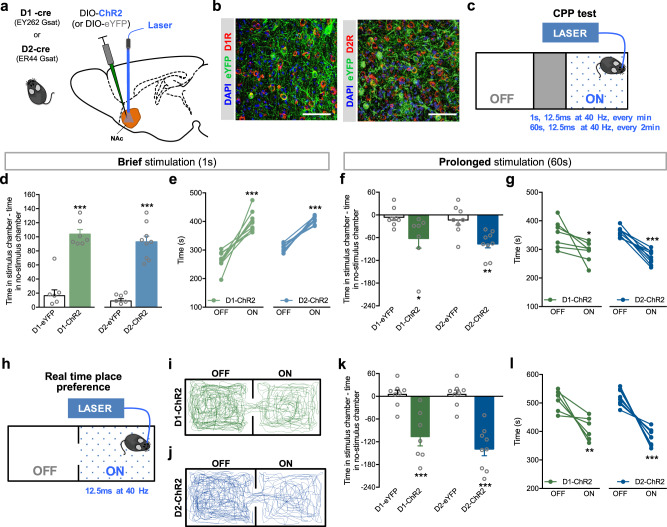
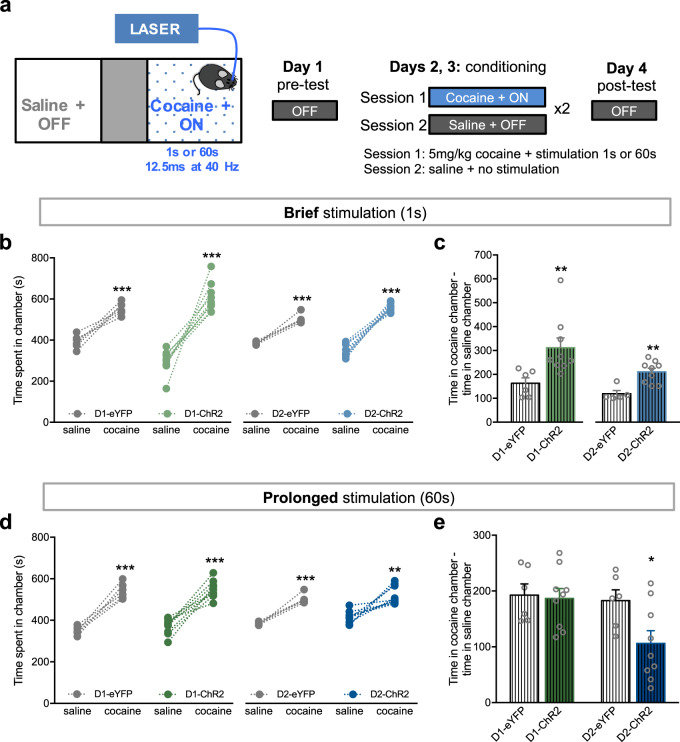
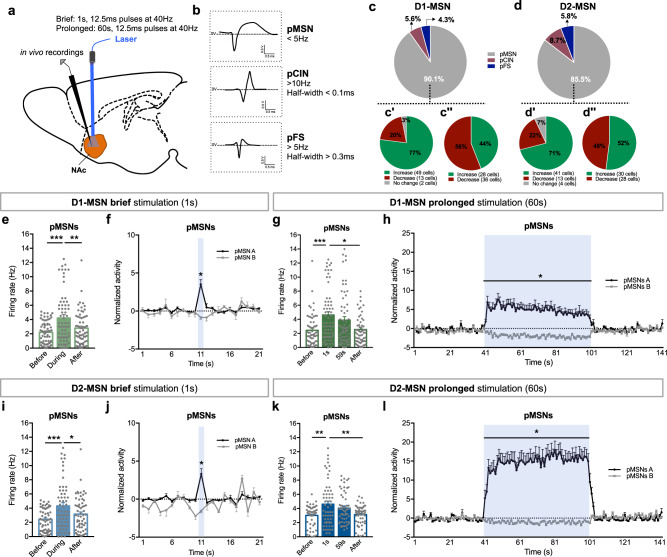
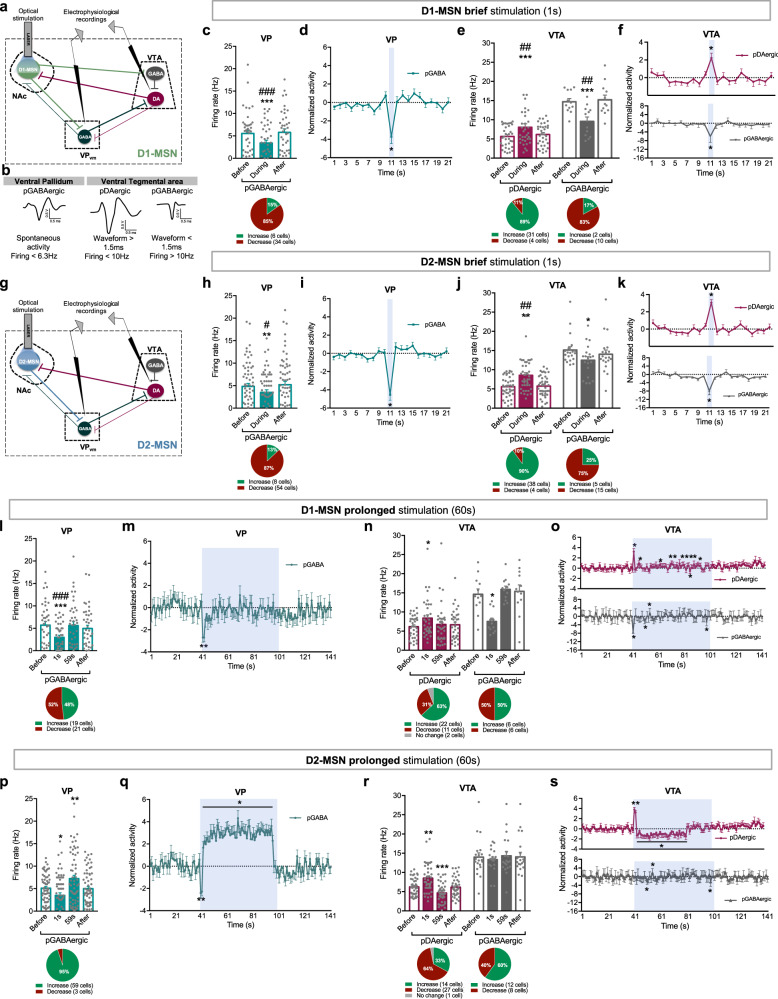
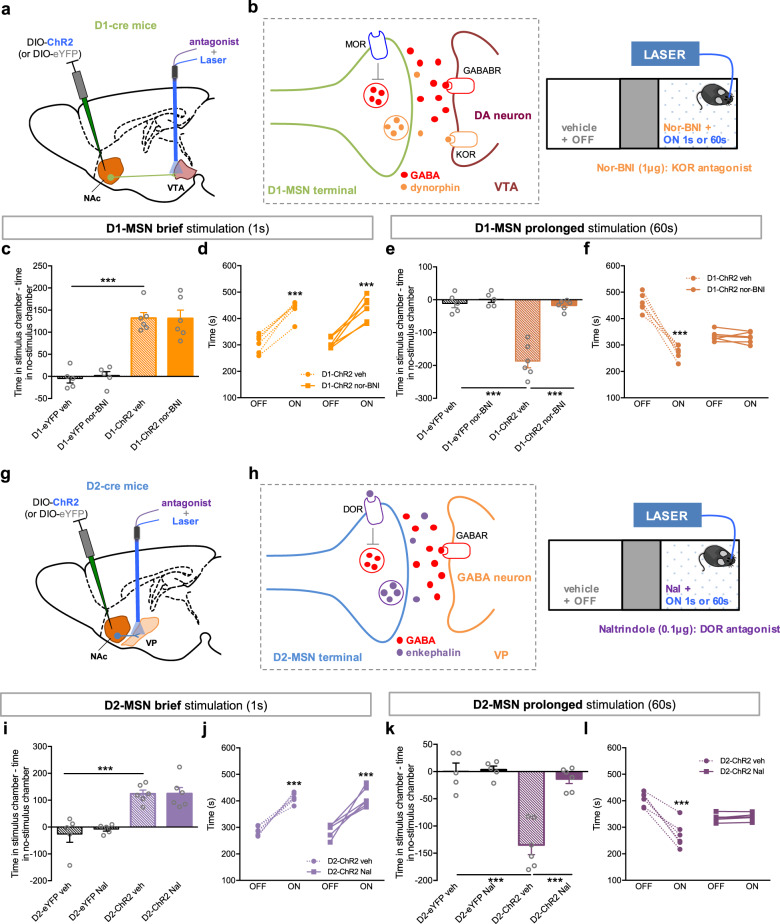
Deficits in decoding rewarding (and aversive) signals are present in several neuropsychiatric conditions such as depression and addiction, emphasising the importance of studying the underlying neural circuits in detail. One of the key regions of the reward circuit is the nucleus accumbens (NAc). The classical view on the field postulates that NAc dopamine receptor D1-expressing medium spiny neurons (D1-MSNs) convey reward signals, while dopamine receptor D2-expressing MSNs (D2-MSNs) encode aversion. Here, we show that both MSN subpopulations can drive reward and aversion, depending on their neuronal stimulation pattern. Brief D1- or D2-MSN optogenetic stimulation elicited positive reinforcement and enhanced cocaine conditioning. Conversely, prolonged activation induced aversion, and in the case of D2-MSNs, decreased cocaine conditioning. Brief stimulation was associated with increased ventral tegmenta area (VTA) dopaminergic tone either directly (for D1-MSNs) or indirectly via ventral pallidum (VP) (for D1- and D2-MSNs). Importantly, prolonged stimulation of either MSN subpopulation induced remarkably distinct electrophysiological effects in these target regions. We further show that blocking κ-opioid receptors in the VTA (but not in VP) abolishes the behavioral effects induced by D1-MSN prolonged stimulation. In turn, blocking δ-opioid receptors in the VP (but not in VTA) blocks the behavioral effects elicited by D2-MSN prolonged stimulation. Our findings demonstrate that D1- and D2-MSNs can bidirectionally control reward and aversion, explaining the existence of controversial studies in the field, and highlights that the proposed striatal functional opposition needs to be reconsidered.
Overview
The claims and statistics of this paper haven’t been checked yet.
Free: it reads the open-access text and checks the first 5 claims that cite a source we can check. Create a free account to check every claim.
Integrity signals
Registry
Cites
Statistics
Figures
Verification
Claims the paper makes
The claims and statistics of this paper haven’t been checked yet.
Free: it reads the open-access text and checks the first 5 claims that cite a source we can check. Create a free account to check every claim.
Claims other papers make about this one
Each is checked against this paper’s own text: does it say what the citing paper says it does?
In the citing paper
“More recent findings have established that these neat divisions do not apply as simplistically to the ventral striatum [221,222].”
From Plasticity of synapses and reward circuit function in the genesis and treatment of depression (2023) · cites this paper as [222]
Self-check
Percentages, sums and reported differences re-computed from the paper’s own numbers.
The self-check needs the paper’s full text.
Citations
Cites
The Mouse Brain in Stereotaxic Coordinates
Paxinos, G. (2001) · Cited by 13,440
Koob, G. F., & Volkow, N. D. (2010) · Neuropsychopharmacology · doi:10.1038/npp.2009.110 · Cited by 5,340
Bardo, M. T., & Hammer, R. P. (1991) · Neuroscience · doi:10.1016/0306-4522(91)90226-e · Cited by 3,219
Dopamine in motivational control: rewarding, aversive, and alerting
Bromberg-Martin, E. S., Matsumoto, M., & Hikosaka, O. (2010) · Neuron · doi:10.1016/j.neuron.2010.11.022 · Cited by 2,396
The debate over dopamine’s role in reward: the case for incentive salience
Berridge, K. C. (2007) · Psychopharmacology · doi:10.1007/s00213-006-0578-x · Cited by 2,347
The brain reward circuitry in mood disorders
Russo, S. J., & Nestler, E. J. (2013) · Nature Reviews Neuroscience · doi:10.1038/nrn3381 · Cited by 1,870
Multiple reward signals in the brain
Schultz, W. (2000) · Nature Reviews Neuroscience · doi:10.1038/35044563 · Cited by 1,303
Concurrent activation of striatal direct and indirect pathways during action initiation
Cui, G., Jun, S. B., Jin, X., Pham, M. D., Vogel, S. S., Lovinger, D. M., & Costa, R. M. (2013) · Nature · doi:10.1038/nature11846 · Cited by 1,301
Input-specific control of reward and aversion in the ventral tegmental area
Lammel, S., Lim, B. K., Ran, C., Huang, K. W., Betley, M. J., Tye, K. M., Deisseroth, K., & Malenka, R. C. (2012) · Nature · doi:10.1038/nature11527 · Cited by 1,300
Phasic Firing in Dopaminergic Neurons Is Sufficient for Behavioral Conditioning
Tsai, H.-C., Zhang, F., Adamantidis, A., Stuber, G. D., Bonci, A., de Lecea, L., & Deisseroth, K. (2009) · Science · doi:10.1126/science.1168878 · Cited by 1,266
Research works printed but not linked: 1
- Yang H de Jong JW Tak Y Peck J Bateup HS Lammel S Nucleus accumbens subnuclei regulate motivated behavior via direct inhibition and disinhibition of VTA dopamine subpopulations Neuron 2018 97 434 449.e4 29307710 PMC5773387 · DOI · Paper page
Cited by
Adams, M. J., Streit, F., Meng, X., Awasthi, S., Adey, B. N., Choi, K. W., Chundru, V. K., Coleman, J. R. I., Ferwerda, B., Foo, J. C., et al. (2025) · Cell · doi:10.1016/j.cell.2024.12.002 · Cited by 279
“29,30 The enrichment of expression signals in granule cells is of particular interest given the renewal of this cell type throughout adult life in the dentate gyrus, 31 its role in stress resilience, 32 and the increased hippocampal granule cell expansion associated with antidepressant treatment.”
Gasiorowska, A., Wydrych, M., Drapich, P., Zadrozny, M., Steczkowska, M., Niewiadomski, W., & Niewiadomska, G. (2021) · Frontiers in Aging Neuroscience · doi:10.3389/fnagi.2021.654931 · Cited by 184
A distinct D1-MSN subpopulation down-regulates dopamine to promote negative emotional state
Liu, Z., Le, Q., Lv, Y., Chen, X., Cui, J., Zhou, Y., Cheng, D., Ma, C., Su, X., Xiao, L., et al. (2021) · Cell Research · doi:10.1038/s41422-021-00588-5 · Cited by 121
A Molecular Calcium Integrator Reveals a Striatal Cell Type Driving Aversion
Kim, C. K., Sánchez, M. I., Hoerbelt, P., Fenno, L. E., Malenka, R. C., Deisseroth, K. A., & Ting, A. Y. (2020) · Cell · doi:10.1016/j.cell.2020.11.015 · Cited by 106
Biological Functions of Rat Ultrasonic Vocalizations, Arousal Mechanisms, and Call Initiation
Brudzyński, S. M. (2021) · Brain Sciences · doi:10.3390/brainsci11050605 · Cited by 125
“aversion and decreased rewarding effects [265].”
BackgroundGruber, J., Hanßen, R., Qubad, M., Bouzouina, A., Schack, V., Sochor, H., Schiweck, C., Aichholzer, M., Matura, S., Slattery, D. A., et al. (2023) · Neuroscience & Biobehavioral Reviews · doi:10.1016/j.neubiorev.2023.105179 · Cited by 100
Key transcription factors mediating cocaine-induced plasticity in the nucleus accumbens
Teague, C. D., & Nestler, E. J. (2021) · Molecular Psychiatry · doi:10.1038/s41380-021-01163-5 · Cited by 85
Zachry, J. E., Kutlu, M. G., Yoon, H. J., Leonard, M. Z., Chevée, M., Patel, D. D., Gaidici, A., Kondev, V., Thibeault, K. C., Bethi, R., et al. (2023) · Neuron · doi:10.1016/j.neuron.2023.11.023 · Cited by 88
The nucleus accumbens in reward and aversion processing: insights and implications
Xu, Y., Lin, Y., Yu, M., & Zhou, K. (2024) · Frontiers in Behavioral Neuroscience · doi:10.3389/fnbeh.2024.1420028 · Cited by 106
Propofol exerts anti-anhedonia effects via inhibiting the dopamine transporter
Zhu, X., Li, J., Qiu, G., Wang, L., Lu, C., Guo, Y., Yang, K., Cai, F., Xu, T., Yuan, T., et al. (2023) · Neuron · doi:10.1016/j.neuron.2023.02.017 · Cited by 77
Depression and substance use disorders: Clinical comorbidity and shared neurobiology
Calarco, C. A., & Lobo, M. K. (2020) · International review of neurobiology · doi:10.1016/bs.irn.2020.09.004 · Cited by 86
Soares‐Cunha, C., Domingues, A. V., Correia, R. G., Coimbra, B., Vieitas‐Gaspar, N., de Vasconcelos, N. A. P., Pinto, L., Sousa, N., & Rodrigues, A. J. (2022) · Cell Reports · doi:10.1016/j.celrep.2022.110380 · Cited by 71
Self-citationVentral pallidal regulation of motivated behaviors and reinforcement
Soares‐Cunha, C., & Heinsbroek, J. A. (2023) · Frontiers in Neural Circuits · doi:10.3389/fncir.2023.1086053 · Cited by 71
Self-citationUpdate on GPCR-based targets for the development of novel antidepressants
Mantas, I., Saarinen, M., Xu, Q., & Svenningsson, P. (2021) · Molecular Psychiatry · doi:10.1038/s41380-021-01040-1 · Cited by 61
Dopamine Receptors: Is It Possible to Become a Therapeutic Target for Depression?
Zhao, F., Cheng, Z., Piao, J., Cui, R., & Li, B. (2022) · Frontiers in Pharmacology · doi:10.3389/fphar.2022.947785 · Cited by 78
Walle, R., Petitbon, A., Fois, G. R., Varin, C., Montalban, E., Hardt, L., Contini, A., Angelo, M. F., Potier, M., Ortolé, R., et al. (2024) · Nature Communications · doi:10.1038/s41467-024-46874-9 · Cited by 59
A molecularly defined D1 medium spiny neuron subtype negatively regulates cocaine addiction
Zhao, Z., Han, X., Chen, R., Liu, Y., Bhattacherjee, A., Chen, W., & Zhang, Y. (2022) · Science Advances · doi:10.1126/sciadv.abn3552 · Cited by 47
“However, it is unknown whether the functional diversity of NAc can be attributed to its different neuronal substrates, and it remains challenging to explain some discordant findings regarding the causal roles of D1 medium spiny neurons (MSNs) in regulating reward-related behaviors ( 10 , 17 , 18 ).”
BackgroundResultInfluentialOettl, L., Scheller, M. F., Filosa, C., Wieland, S., Haag, F., Loeb, C., Durstewitz, D., Shusterman, R., Russo, E., & Kelsch, W. (2020) · Nature Communications · doi:10.1038/s41467-020-17257-7 · Cited by 51
Bayassi-Jakowicka, M., Lietzau, G., Czuba, E., Steliga, A., Waśkow, M., & Kowiański, P. (2021) · International Journal of Molecular Sciences · doi:10.3390/ijms22189806 · Cited by 43
Divergent projections of the prelimbic cortex mediate autism- and anxiety-like behaviors
Luo, Y., Lu, L., Song, H., Han, X., Zheng, Z.-W., Wu, Z., Jiang, C.-C., Tong, C., Yuan, H., Liu, X., et al. (2023) · Molecular Psychiatry · doi:10.1038/s41380-023-01954-y · Cited by 44
O’Neal, T. J., Bernstein, M. X., MacDougall, D. J., & Ferguson, S. M. (2022) · Journal of Neuroscience · doi:10.1523/jneurosci.1451-21.2021 · Cited by 41
Plasticity in astrocyte subpopulations regulates heroin relapse
Kruyer, A., Angelis, A., García‐Keller, C., Li, H., & Kalivas, P. W. (2022) · Science Advances · doi:10.1126/sciadv.abo7044 · Cited by 53
Causal Link between n-3 Polyunsaturated Fatty Acid Deficiency and Motivation Deficits
Ducrocq, F., Walle, R., Contini, A., Oummadi, A., Caraballo, B., van der Veldt, S., Boyer, M.-L., Aby, F., Tolentino‐Cortez, T., Helbling, J., et al. (2019) · Cell Metabolism · doi:10.1016/j.cmet.2020.02.012 · Cited by 55
Allichon, M., Ortiz, V., Pousinha, P. A., Andrianarivelo, A., Petitbon, A., Heck, N., Trifilieff, P., Barik, J., & Vanhoutte, P. (2021) · Frontiers in Synaptic Neuroscience · doi:10.3389/fnsyn.2021.799274 · Cited by 45
Plasticity of synapses and reward circuit function in the genesis and treatment of depression
Thompson, S. M. (2023) · Neuropsychopharmacology · doi:10.1038/s41386-022-01422-1 · Cited by 40
“More recent findings have established that these neat divisions do not apply as simplistically to the ventral striatum [221, 222].”
BackgroundFox, M. E., Wulff, A. B., Franco, D., Choi, E. Y., Calarco, C. A., Engeln, M., Turner, M. D., Chandra, R., Rhodes, V. M., Thompson, S. M., et al. (2022) · Biological Psychiatry · doi:10.1016/j.biopsych.2022.08.023 · Cited by 45
Cocaine shifts dopamine D2 receptor sensitivity to gate conditioned behaviors
Gong, S., Fayette, N., Heinsbroek, J. A., & Ford, C. (2021) · Neuron · doi:10.1016/j.neuron.2021.08.012 · Cited by 42
Morales, I. (2022) · Appetite · doi:10.1016/j.appet.2022.106146 · Cited by 43
Response Flexibility: The Role of the Lateral Habenula
Hones, V. I., & Mizumori, S. J. Y. (2022) · Frontiers in Behavioral Neuroscience · doi:10.3389/fnbeh.2022.852235 · Cited by 45
“Many studies have demonstrated the importance of the communication between the cortex and HPC in context memory and response flexibility (Spellman et al., 2015; Tamura et al., 2017; Avigan et al., 2020).”
BackgroundThe nucleus accumbens shell: a neural hub at the interface of homeostatic and hedonic feeding
Marinescu, A., & Labouesse, M. A. (2024) · Frontiers in Neuroscience · doi:10.3389/fnins.2024.1437210 · Cited by 53
Dutta, S., Beaver, J. N., Halcomb, C. J., & Jasnow, A. M. (2021) · Neurobiology of Stress · doi:10.1016/j.ynstr.2021.100365 · Cited by 44
“…this region plays an important role in regulating aversive motivation (Levita et al., 2002b, 2009; Reynolds and Berridge, 2003; Chen et al., 2012; Wenzel et al., 2015; Soares-Cunha et al., 2019), the precise functions of the core and shell in specific fear processes have not been fully delineated.”
Rodier, J.-A., Mclain, C., Minerva, A. R., Rashford, R. L., Bennett, S. N., Rogers, F. D., & Peña, C. J. (2023) · Journal of Neuroscience · doi:10.1523/jneurosci.0016-23.2023 · Cited by 44
Accumbens D2-MSN hyperactivity drives antipsychotic-induced behavioral supersensitivity
Kruyer, A., Parrilla-Carrero, J., Powell, C., Brandt, L., Gutwinski, S., Angelis, A., Chalhoub, R., Jhou, T. C., Kalivas, P. W., & Amato, D. (2021) · Molecular Psychiatry · doi:10.1038/s41380-021-01235-6 · Cited by 38
“Since D2-MSNs have been shown to mediate both aversion and reward [77], increased lever pressing during extinction and reinstatement may derive from the enduring motivation of subjects to either reduce aversion during antipsychotic discontinuation or to achieve reward.”
BackgroundLe Merrer, J., Detraux, B., Gandía, J., De Groote, A., Fonteneau, M., de Kerchove d’Exaerde, A., & Becker, J. A. J. (2024) · Biological Psychiatry · doi:10.1016/j.biopsych.2023.05.008 · Cited by 35
“Long-lasting stimulation increased neuronal activity in the VP, consistent with prior electrophysiological evidence (64,86).”
InfluentialIlluminating subcortical GABAergic and glutamatergic circuits for reward and aversion
Gordon-Fennell, A., & Stuber, G. D. (2021) · Neuropharmacology · doi:10.1016/j.neuropharm.2021.108725 · Cited by 37
Mitofusin-2 in nucleus accumbens D2-MSNs regulates social dominance and neuronal function
Ghosal, S., Gebara, E., Ramos‐Fernández, E., Chioino, A., Grosse, J., de Suduiraut, I. G., Zanoletti, O., Schneider, B. L., Zorzano, A., Astori, S., et al. (2023) · Cell Reports · doi:10.1016/j.celrep.2023.112776 · Cited by 36
Hernández-Ortiz, E., Luis-Islas, J., Tecuapetla, F., Gutiérrez, R., & Bermúdez‐Rattoni, F. (2023) · Cell Reports · doi:10.1016/j.celrep.2023.113365 · Cited by 35
Updating the striatal–pallidal wiring diagram
Fang, L. Z., & Creed, M. C. (2023) · Nature Neuroscience · doi:10.1038/s41593-023-01518-x · Cited by 77
“To date, no monosynaptic excitatory inputs to arkypallidal neurons in the GPe or VP have been conclusively identified, although input from thalamic or cortical nuclei has been proposed to account for the rapid onset of arkypallidal activity in response to task-relevant cues 63 .”
Ventral pallidum cellular and pathway specificity in drug seeking
Kupchik, Y. M., & Prasad, A. A. (2021) · Neuroscience & Biobehavioral Reviews · doi:10.1016/j.neubiorev.2021.09.007 · Cited by 36
Astrocyte ensembles manipulated with AstroLight tune cue-motivated behavior
Serra, I., Martín-Monteagudo, C., Romero, J. S., Quintanilla, J. P., Ganchala, D., Arévalo, M., García‐Marqués, J., & Navarrete, M. (2025) · Nature Neuroscience · doi:10.1038/s41593-025-01870-0 · Cited by 34
The role of the nucleus accumbens and ventral pallidum in feeding and obesity
Gendelis, S., Inbar, D., & Kupchik, Y. M. (2021) · Progress in Neuro-Psychopharmacology and Biological Psychiatry · doi:10.1016/j.pnpbp.2021.110394 · Cited by 32
Glycogen synthase kinase-3 signaling in cellular and behavioral responses to psychostimulant drugs
Barr, J. L., & Unterwald, E. M. (2020) · Biochimica et Biophysica Acta (BBA) - Molecular Cell Research · doi:10.1016/j.bbamcr.2020.118746 · Cited by 32
“However, optogenetic stimulation of D1 receptor- and D2 receptor-expressing medium spiny neurons indicates that activation of both receptors induce reward or aversion depending upon the level of stimulation (Soares-Cunha et al., 2019).”
BackgroundNishioka, T., Attachaipanich, S., Hamaguchi, K., Lazarus, M., d’Exaerde, A. D. K., Macpherson, T., & Hikida, T. (2023) · Nature Communications · doi:10.1038/s41467-023-38025-3 · Cited by 31
Domingues, A. V., Carvalho, T. T. A., Martins, G. J., Correia, R. G., Coimbra, B., Bastos-Gonçalves, R., Wezik, M., Gaspar, R., Pinto, L., Sousa, N., et al. (2025) · Nature Communications · doi:10.1038/s41467-024-55269-9 · Cited by 37
“The neuronal activity data is in agreement with behavioral studies showing that optogenetic manipulation of either D1-or D2-MSNs can drive place preference or place aversion in the same animal, depending on the pattern of activation of MSNs 10 .”
InfluentialSelf-citationProgress in opioid reward research: From a canonical two-neuron hypothesis to two neural circuits
Galaj, E., & Xi, Z. (2020) · Pharmacology Biochemistry and Behavior · doi:10.1016/j.pbb.2020.173072 · Cited by 74
“In the VTA, prolonged optogenetic stimulation of D1-MSN terminals leads to decreased activity of VTA GABA neurons and increase in the firing rate of VTA DA neurons during initial stimulation (Soares-Cunha et al., 2019).”
BackgroundLardner, C. K., van der Zee, Y. Y., Estill, M. S., Kronman, H. G., Salery, M., Cunningham, A. M., Godino, A., Parise, E. M., Kim, J. H., Neve, R. L., et al. (2021) · Biological Psychiatry · doi:10.1016/j.biopsych.2021.06.017 · Cited by 29
Threat and Bidirectional Valence Signaling in the Nucleus Accumbens Core
Ray, M. H., Moaddab, M., & McDannald, M. A. (2021) · Journal of Neuroscience · doi:10.1523/jneurosci.1107-21.2021 · Cited by 33
“Further, brief optogenetic simulation of the accumbens can induce approach, while prolonged stimulation can induce avoidance (Soares-Cunha et al., 2020).”
BackgroundA novel microRNA, novel-m009C, regulates methamphetamine rewarding effects
Zhu, L., Wu, F., Yan, Z., He, L., Wang, S., Hu, H., Goh, E. L. K., Zhu, Y., Guan, F., & Chen, T. (2022) · Molecular Psychiatry · doi:10.1038/s41380-022-01651-2 · Cited by 28
“Activation of D1R and D2R has been implicated in the drug-induced reinforcement behaviors [16, 43, 50, 51].”
BackgroundGastelum, C., Perez, L., Hernandez, J., Le, N., Vahrson, I., Sayers, S., & Wagner, E. J. (2021) · International Journal of Molecular Sciences · doi:10.3390/ijms22052728 · Cited by 30
“…that prolonged stimulation of these A 10 dopamine neurons activates dopamine D1 and D2 receptor-bearing medium spiny neurons that, in turn, increases the firing rate of GABAergic neurons in the ventral pallidum, decreases the excitability of A 10 dopamine neurons and reduces cocaine reward [92].”
Lefevre, E. M., Gauthier, E. A., Bystrom, L. L., Scheunemann, J., & Rothwell, P. E. (2022) · Journal of Neuroscience · doi:10.1523/jneurosci.0595-22.2022 · Cited by 26
Neuropeptides Modulate Feeding via the Dopamine Reward Pathway
Jin, R., Sun, S., Hu, Y., Zhang, H., & Sun, X. (2023) · Neurochemical Research · doi:10.1007/s11064-023-03954-4 · Cited by 28
A non-canonical striatopallidal Go pathway that supports motor control
Labouesse, M. A., Torres-Herraez, A., Chohan, M. O., Villarin, J. M., Greenwald, J. E., Sun, X., Zahran, M., Tang, A., Lam, S., Veenstra-VanderWeele, J. M., et al. (2023) · Nature Communications · doi:10.1038/s41467-023-42288-1 · Cited by 26
“Future work should also address whetherother neuropeptidesreleasedby dSPNs (dynorphin 87 , substance P 83,88 ) are differentially released at GPe/VP and SNr/VTA terminals to regulate local circuits.”
Guo, C., Wen, D., Zhang, Y. H., Mustaklem, R., Mustaklem, B., Zhou, M., Ma, T., & Ma, Y. (2022) · Molecular Psychiatry · doi:10.1038/s41380-022-01459-0 · Cited by 24
“Together with the reported involvement of D2-MSNs in (1) both reward and aversion [60], and (2) greater susceptibility to excitotoxicity from cortical inputs [61, 62], we conclude that mPFC-NAcD2 projection is the synaptic substrate in AβO-induced low motivation.”
BackgroundJiang, S. Z., Sweat, S. C., Dahlke, S. P., Loane, K., Drossel, G., Xu, W., Tejeda, H. A., Gerfen, C. R., & Eiden, L. E. (2020) · Journal of Neuroscience · doi:10.1523/jneurosci.1497-20.2020 · Cited by 24
Endocannabinoid Modulation of Nucleus Accumbens Microcircuitry and Terminal Dopamine Release
Covey, D. P., & Yocky, A. G. (2021) · Frontiers in Synaptic Neuroscience · doi:10.3389/fnsyn.2021.734975 · Cited by 31
Disentangling the role of NAc D1 and D2 cells in hedonic eating
Guillaumin, M. C. C., Viskaitis, P., Bracey, E. F., Burdakov, D., & Peleg‐Raibstein, D. (2023) · Molecular Psychiatry · doi:10.1038/s41380-023-02131-x · Cited by 26
“That our findings are not always in line with previous literature may reflect the discordance between 369 previous studies themselves: the precise NAc subregion targeted plays a role in the results obtained 370 [27, 77], the pattern (frequency, length) of the optogenetic modulation pattern also has an impact on 371 th…”
BackgroundResultLinking drug and food addiction: an overview of the shared neural circuits and behavioral phenotype
Passeri, A., Municchi, D., Cavalieri, G., Babicola, L., Ventura, R., & Segni, M. D. (2023) · Frontiers in Behavioral Neuroscience · doi:10.3389/fnbeh.2023.1240748 · Cited by 33
Nucleus accumbens local circuit for cue-dependent aversive learning
Belilos, A. J., Gray, C., Sanders, C., Black, D., Mays, E., Richie, C. T., Sengupta, A., Hake, H. S., & Francis, T. C. (2023) · Cell Reports · doi:10.1016/j.celrep.2023.113488 · Cited by 26
“D1-MSNs are thought to facilitate reward; however, the data presented here and data from others assessing activity in the NAc core 38,39 and NAc shell 40,41 suggest that aversive stimuli activate D1-MSNs.”
ResultBecker, J. A. J., Pellissier, L. P., Corde, Y., Laboute, T., Léauté, A., Gandía, J., & Merrer, J. L. (2020) · Neuropsychopharmacology · doi:10.1038/s41386-020-00927-x · Cited by 22
Sneddon, E. A., Schuh, K. M., Frankel, J. W., & Radke, A. K. (2021) · Neuropharmacology · doi:10.1016/j.neuropharm.2021.108497 · Cited by 26
Long-Term Impacts of Post-weaning Social Isolation on Nucleus Accumbens Function
Bendersky, C. J., Milian, A. A., Andrus, M. D., Torre, U. D. L., & Walker, D. M. (2021) · Frontiers in Psychiatry · doi:10.3389/fpsyt.2021.745406 · Cited by 24
MicroRNAs in drug addiction: Current status and future perspectives
Zhao, Y., Qin, F., Han, S., Li, S., Zhao, Y., Wang, H., Tian, J., & Cen, X. (2022) · Pharmacology & Therapeutics · doi:10.1016/j.pharmthera.2022.108215 · Cited by 25
Kim, H., Wei, J., Call, T., Ma, X., Quintus, N. T., Summers, A. J., Carotenuto, S., Johnson, R., Nguyen, A., Cui, Y., et al. (2024) · Biological Psychiatry · doi:10.1016/j.biopsych.2024.03.017 · Cited by 24
“Among them, the NAc-VTA circuits are a well-established mediator of depression, reward, and motivational processes (70 – 73).”
Hughes, B. W., Huebschman, J. L., Tsvetkov, E., Siemsen, B. M., Snyder, K. K., Akiki, R. M., Wood, D. J., Penrod, R. D., Scofield, M. D., Berto, S., et al. (2024) · Nature Communications · doi:10.1038/s41467-024-50099-1 · Cited by 23
Cross-talk between the HPA axis and addiction-related regions in stressful situations
Nikbakhtzadeh, M., Ranjbar, H., Moradbeygi, K., Zahedi, E., Bayat, M., Soti, M., & Shabani, M. (2023) · Heliyon · doi:10.1016/j.heliyon.2023.e15525 · Cited by 27
“D1R-MSNs in NAc convey reward signals, while D2R-MSNs encode aversion [75].”
BackgroundCorreia, R. G., Coimbra, B., Domingues, A. V., Wezik, M., Vieitas‐Gaspar, N., Gaspar, R., Sousa, N., Pinto, L., Rodrigues, A. J., & Soares‐Cunha, C. (2023) · Journal of Psychiatry and Neuroscience · doi:10.1503/jpn.220111 · Cited by 21
“The D1-MSNs project to the ventral tegmental area (VTA) and the ventral pallidum (VP), whereas the D2-MSNs project only to the VP.”
InfluentialSelf-citationRole of melanin-concentrating hormone in drug use disorders
Morganstern, I., Gulati, G., & LEIBOWITZ, S. F. (2020) · Brain Research · doi:10.1016/j.brainres.2020.146872 · Cited by 21
Pannu, A. S., & Goyal, R. K. (2024) · CNS & Neurological Disorders - Drug Targets · doi:10.2174/0118715273357909241126064951 · Cited by 29
Wu, H., Wu, W., Fan, H., Liu, L.-E., Zhan, J., Li, Y.-H., Chen, C., Jiang, S., Xiong, J., Yu, Z.-M., et al. (2022) · Neuropsychopharmacology · doi:10.1038/s41386-022-01323-3 · Cited by 24
“A major proportion of NAc neurons are MSNs [51].”
BackgroundZhu, Y., Xie, S., Peng, A.-B., Yu, X., Li, C., Fu, J., Shen, C.-J., Cao, S.-X., Zhang, Y., Chen, J., et al. (2023) · Biological Psychiatry · doi:10.1016/j.biopsych.2023.08.022 · Cited by 19
Licinio, J., & Wong, M. (2020) · Molecular Psychiatry · doi:10.1038/s41380-020-0798-1 · Cited by 22
Targeting cAMP in D1-MSNs in the nucleus accumbens, a new rapid antidepressant strategy
Zhang, Y., Gao, J., Li, N., Xu, P., Qu, S., Cheng, J., Wang, M., Li, X., Song, Y., Xiao, F., et al. (2023) · Acta Pharmaceutica Sinica B · doi:10.1016/j.apsb.2023.12.005 · Cited by 18
From valence encoding to motivated behavior: A focus on the nucleus accumbens circuitry
Vieitas‐Gaspar, N., Soares‐Cunha, C., & Rodrigues, A. J. (2025) · Neuroscience & Biobehavioral Reviews · doi:10.1016/j.neubiorev.2025.106125 · Cited by 23
Self-citationBagher, A. M., Young, A. P., Laprairie, R. B., Toguri, J. T., Kelly, M. E. M., & Denovan‐Wright, E. M. (2020) · Journal of Neuroscience Research · doi:10.1002/jnr.24716 · Cited by 18
“The D2 primary antibody has previously been validated in mouse brain sections and specifically in medium spiny neurons (Lu et al., 2018; Soares-Cunha et al., 2019).”
BackgroundMedial Accumbens Shell Spiny Projection Neurons Encode Relative Reward PreferencePreprint
Pedersen, C. E., Gowrishankar, R., Piantadosi, S. C., Castro, D. C., Hjort, M. M., Zhou, Z. C., Kan, S. A., Murphy, P. J., O’Neill, P., & Bruchas, M. R. (2022) · SSRN Electronic Journal · doi:10.1101/2022.09.18.508426 · Cited by 16
Representation of Anticipated Rewards and Punishments in the Human Brain
Ben‐Zion, Z., & Levy, I. (2024) · Annual Review of Psychology · doi:10.1146/annurev-psych-022324-042614 · Cited by 25
Inbar, K., Levi, L. A., & Kupchik, Y. M. (2022) · Neuropsychopharmacology · doi:10.1038/s41386-022-01285-6 · Cited by 22
“In addition, recent works suggest that D1- and D2-MSNs activity might not be completely antagonistic, but rather work together to generate learning and behavior [59] in a way that depends on their activity patterns [60, 61].”
BackgroundMcIntosh, A. M., & Lewis, C. M. (2024) · medRxiv · doi:10.1101/2024.04.29.24306535 · Cited by 25
Coss, A., Suaste, E., & Gutiérrez, R. (2022) · Neuroscience · doi:10.1016/j.neuroscience.2022.04.022 · Cited by 16
Brain circuit dysfunction in specific symptoms of depression
Lv, Q. Y., Chen, M., Li, Y., Yu, Y. W., & Liao, H. (2021) · European Journal of Neuroscience · doi:10.1111/ejn.15221 · Cited by 17
Glutathione in the nucleus accumbens regulates motivation to exert reward-incentivized effort
Zalachoras, I., Ramos‐Fernández, E., Hollis, F., Trovò, L., Rodrigues, J., Strasser, A., Zanoletti, O., Steiner, P., Preitner, N., Xin, L., et al. (2022) · eLife · doi:10.7554/elife.77791 · Cited by 22
Kolpakova, J., van der Vinne, V., Giménez‐Gómez, P., Le, T., & Martin, G. E. (2022) · Frontiers in Cellular Neuroscience · doi:10.3389/fncel.2022.1010121 · Cited by 18
“, 2020), and optogenetic manipulation of their excitability has been causally linked to reward-seeking behaviors (Ma et al., 2014; Soares-Cunha et al., 2020).”
BackgroundERα Stimulation Rapidly Modulates Excitatory Synapse Properties in Female Rat Nucleus Accumbens Core
Miller, C. K., Krentzel, A. A., & Meitzen, J. (2023) · Neuroendocrinology · doi:10.1159/000529571 · Cited by 18
“MSNs are often subdivided into subtypes expressing the D1 or D2 dopamine receptor, although this dichotomy oversimpli fi es the complexity of MSN subtypes in the NAcc [139, 140].”
BackgroundDopamine D2 receptors in nucleus accumbens cholinergic interneurons increase impulsive choice
Cavallaro, J., Yeisley, J., Akdoğan, B., Salazar, R. E., Floeder, J. R., Balsam, P. D., & Gallo, E. F. (2023) · Neuropsychopharmacology · doi:10.1038/s41386-023-01608-1 · Cited by 21
“First, CINs influence striatal output by modulating cortico-striatal plasticity in SPNs [26, 27], which are thought to play key roles in action selection and reward valuation [28, 29].”
BackgroundKondev, V., Najeed, M., Loomba, N., Brown, J. A., Winder, D. G., Grueter, B. A., & Patel, S. (2023) · Proceedings of the National Academy of Sciences · doi:10.1073/pnas.2300585120 · Cited by 15
“Yet, others have shown that both cell types can convey information related positive and negative valence stimuli depending on their stimulation patterns and down-stream targets (54, 55).”
BackgroundThe effect of reward on motor learning: different stage, different effect
Zhao, J., Zhang, G., & Xu, D. (2024) · Frontiers in Human Neuroscience · doi:10.3389/fnhum.2024.1381935 · Cited by 23
Ruffini, G., Castaldo, F., Lopez-Sola, E., Sanchez-Todo, R., & Vohryzek, J. (2024) · Entropy · doi:10.3390/e26110953 · Cited by 28
Kirouac, G. J. (2024) · Neuroscience & Biobehavioral Reviews · doi:10.1016/j.neubiorev.2024.105989 · Cited by 18
Simhadri, P. K., & Babu, P. P. (2020) · Molecular Neurobiology · doi:10.1007/s12035-020-02076-0 · Cited by 15
Mechanisms of nucleus accumbens deep brain stimulation in treating mental disorders
Ruan, H., Tong, G., Jin, M., Koch, K., & Wang, Z. (2024) · Fundamental Research · doi:10.1016/j.fmre.2024.06.009 · Cited by 14
“Manipulating different receptors on D1R and D2R MSNs in various regions leads to similar effects [ 22 , 34 ].”
Cell-type specific profiling of histone post-translational modifications in the adult mouse striatum
Carpenter, M. D., Fischer, D. K., Zhang, S., Bond, A. M., Czarnecki, K. S., Woolf, M. T., Song, H., & Heller, E. A. (2022) · Nature Communications · doi:10.1038/s41467-022-35384-1 · Cited by 14
Nucleus accumbens neurons dynamically respond to appetitive and aversive associative learning
Deseyve, C., Domingues, A. V., Carvalho, T. T. A., Armada, G., Correia, R. G., Vieitas‐Gaspar, N., Wezik, M., Pinto, L., Sousa, N., Coimbra, B., et al. (2024) · Journal of Neurochemistry · doi:10.1111/jnc.16063 · Cited by 19
“…more recent studies revealed that optogenetic activation of either D1-or D2-neurons in the NAc supports self-stimulation (Cole et al., 2018 ), and can trigger positive and negative reinforcement (Namvar et al., 2019 ; Natsubori et al., 2017 ; Soares-Cunha et al., 2016 , 2018 , 2020 , 2022 ).”
BackgroundSelf-citationdCA1-NAc shell glutamatergic projection mediates context-induced memory recall of morphine
Liu, Y., Liu, L., Zhu, L., Yang, X., Tong, K., You, Y., Yang, L., Gao, Y., Li, X., Chen, D., et al. (2021) · Pharmacological Research · doi:10.1016/j.phrs.2021.105857 · Cited by 14
Dichotomous regulation of striatal plasticity by dynorphin
Yang, R., Lalchandani, R. R., Hwang, F.-J., Bloodgood, D. W., Kong, D., & Ding, J. (2022) · Molecular Psychiatry · doi:10.1038/s41380-022-01885-0 · Cited by 15
“Constitutive knockout of dynorphin reduces anxiety and depression levels [38], and evoked dynorphin release in vivo by optogenetic activation of dSPNs leads to aversion [72].”
BackgroundLiu, J., Wu, R., Seaman, R. W., Manz, K. M., Johnson, B., Vu, J., Huang, Y., Zhang, Y., Robison, A. J., Neve, R. L., et al. (2022) · Molecular Psychiatry · doi:10.1038/s41380-022-01448-3 · Cited by 13
“neurons (MSNs) expressing D1 or D2 dopamine receptors [32].”
BackgroundSelective Modulation of Hippocampal Theta Oscillations in Response to Morphine versus Natural Reward
Jamali, S., Parto-Dezfouli, M., Kalbasi, A., Daliri, M. R., & Haghparast, A. (2023) · Brain Sciences · doi:10.3390/brainsci13020322 · Cited by 18
Jeanblanc, J., Bordy, R., Fouquet, G., Jeanblanc, V., & Naassïla, M. (2024) · Brain · doi:10.1093/brain/awae136 · Cited by 14
Dong, Y., Gan, Y., Fu, Y., Shi, H., Dai, S., Yu, R., Li, X., Zhang, K., Wang, F., Yuan, T., et al. (2024) · Neuropsychopharmacology · doi:10.1038/s41386-024-01869-4 · Cited by 14
A single-nucleus transcriptomic atlas of medium spiny neurons in the rat nucleus accumbens
Reiner, B. C., Chehimi, S. N., Merkel, R., Toikumo, S., Berrettini, W. H., Kranzler, H. R., Sanchez‐Roige, S., Kember, R. L., Schmidt, H. D., & Crist, R. C. (2024) · Scientific Reports · doi:10.1038/s41598-024-69255-0 · Cited by 21
Vaganova, A. N., Katolikova, N. V., Murtazina, R. Z., Kuvarzin, S. R., & Gainetdinov, R. R. (2022) · Biomolecules · doi:10.3390/biom12091259 · Cited by 14
“Both MSN subpopulations modulate social behavior [59], stress-coping response [60], reward, and aversion [61].”
Background
Metadata
- Authors
- Soares-Cunha, C., de Vasconcelos, N. A. P., Coimbra, B., Domingues, A. V., Silva, J. M., Loureiro-Campos, E., Gaspar, R., Sotiropoulos, I., Sousa, N., & Rodrigues, A. J.
- Affiliations
- University of Minho (PT)
- Centro de Inovação em Biomedicina e Biotecnologia (PT)
- Clinical Academic Center of Braga (PT)
- Corresponding author
- Sousa, Nuno
- Rodrigues, Ana João
- ORCID
- Venue
- Molecular Psychiatry
- Published
- 2019-08-28
- Volume
- 25
- Issue
- 12
- Pages
- 3241-3255
- ISSN
- 1359-4184 (ISSN-L)
- 1476-5578
- PMC
- PMC7714688
- OpenAlex
- W2971086441
- Cited by
- 256
- References
- 71
- Citations by year
- 2026: 34 · 2025: 40 · 2024: 46 · 2023: 47 · 2022: 44 · 2021: 29 · 2020: 12 · 2019: 3
- FWCI
- 10.51
- Type
- journal article
- Language
- en
- Update notices
- correction (2019-09-18)
- Open access
- hybrid
- doi.org
- Licence
- cc-by
- creativecommons.org/licenses/by/4.0 (tdm)
- creativecommons.org/licenses/by/4.0 (vor)
- Locations
- Molecular Psychiatry (publishedVersion, cc-by)
- PubMed Central (publishedVersion, cc-by)
- PubMed (publishedVersion)
- Portuguese National Funding Agency for Science, Research and Technology (RCAAP Project by FCT) (submittedVersion, other-oa)
- Portuguese National Funding Agency for Science, Research and Technology (RCAAP Project by FCT) (submittedVersion, cc-by-nc-nd)
- Funders
- Ministry of Education and Science | Fundação para a Ciência e a Tecnologia (SFRH/BD/51992/2012)
- Topics
- Life Sciences › Neuroscience › Cellular and Molecular Neuroscience › Neurotransmitter Receptor Influence on Behavior
- Life Sciences › Neuroscience › Cellular and Molecular Neuroscience › Neuroscience and Neuropharmacology Research
- Life Sciences › Neuroscience › Cognitive Neuroscience › Neural and Behavioral Psychology Studies
- Keywords
- nucleus accumbens, medium spiny neurons, dopamine D1 receptor, dopamine D2 receptor, reward, aversion, ventral tegmental area, ventral pallidum, kappa opioid receptor, delta opioid receptor, optogenetic stimulation, neuropsychiatric disorders
- MeSH terms
- Animals, Mice, Inbred C57BL, Mice, Transgenic, Neurons, Nucleus Accumbens, Reward, Receptors, Dopamine D1, Mice
About these checks
Registry, retraction, Cites and statistics results are computed, not judged, with one exception: a printed reference that no index lists is read once by a model before it counts as a citation error. Claims are extracted by a model and kept only when their quote appears verbatim in the text; each cited source is then checked, with a model’s help, for whether it says what the claim relies on. Those verdicts can be wrong — read the claim’s quote and the cited source before relying on one.
Statistics and arithmetic are recomputed, not judged.
Confidence bands are shown only for fields calibrated on our annotated test set. None is calibrated yet, so no band is shown.
What counts as a claim ›How we measure confidence ›How we check this ›
Are you an author, or do you see a problem with this page? Request a review
Data sources
Bibliographic data: Semantic Scholar, OpenAlex, Crossref.
Contains information from the Semantic Scholar Academic Graph Datasets, made available under the ODC Attribution License (ODC-BY 1.0).
Semantic Scholar’s data is described in: Kinney, R., et al. (2023). The Semantic Scholar Open Data Platform. arXiv:2301.10140.
