

Nucleus accumbens medium spiny neurons subtypes signal both reward and aversion
Open accessThe DOI matches its Crossref record; 71 of the 71 references it cites were found in a registry or an index.
Abstract
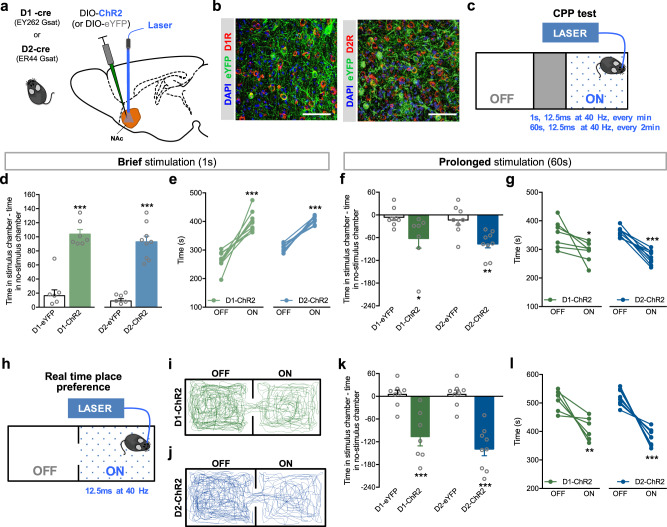
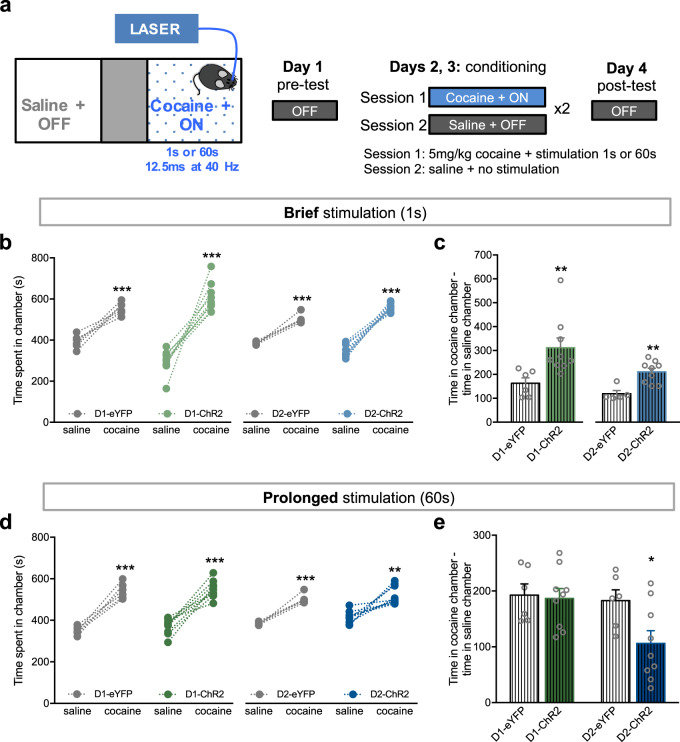
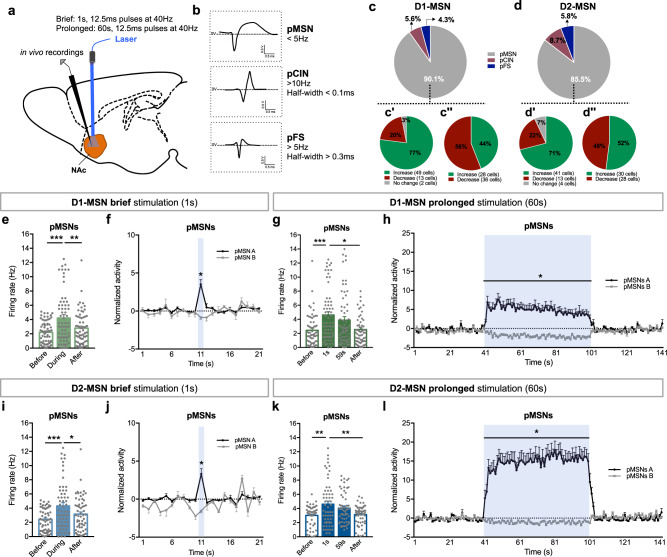
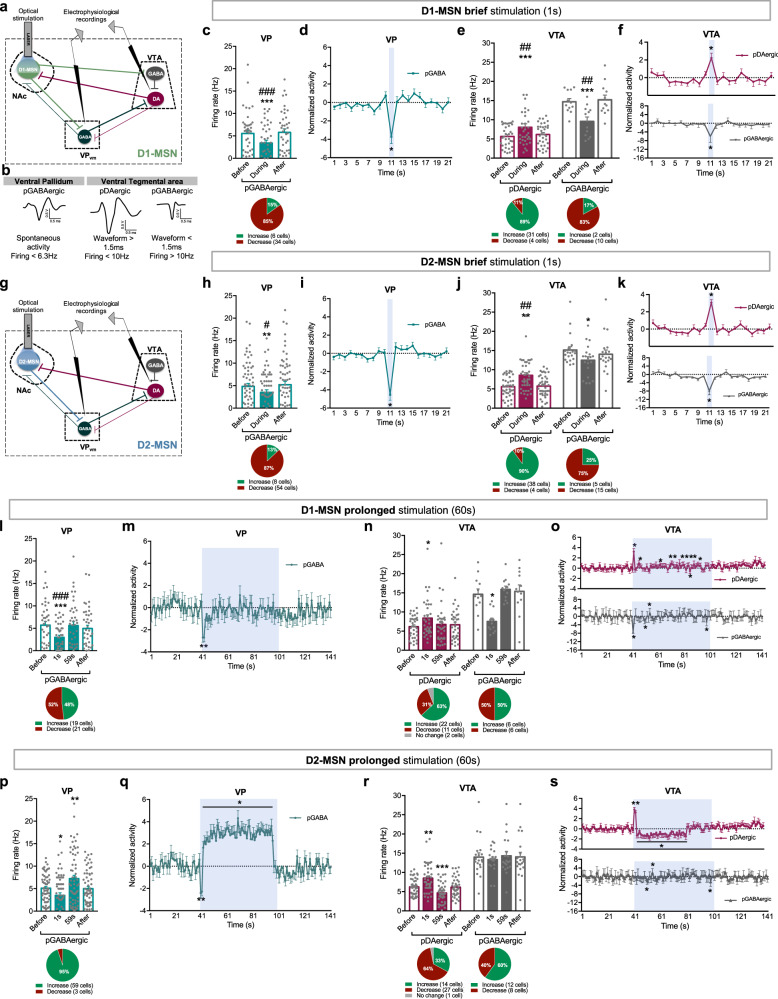
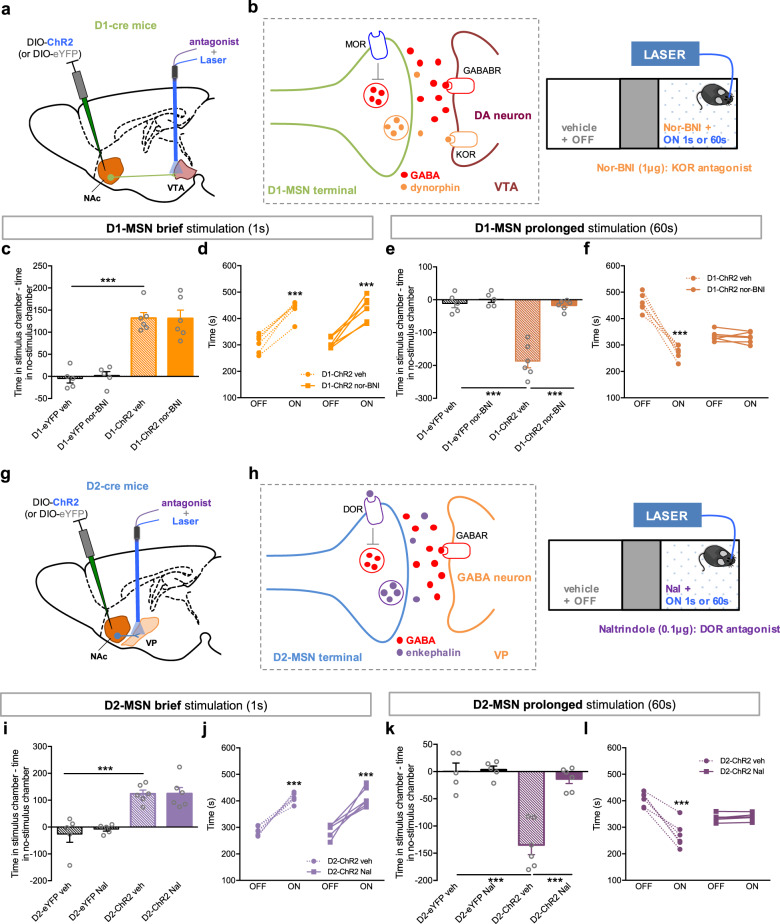
Deficits in decoding rewarding (and aversive) signals are present in several neuropsychiatric conditions such as depression and addiction, emphasising the importance of studying the underlying neural circuits in detail. One of the key regions of the reward circuit is the nucleus accumbens (NAc). The classical view on the field postulates that NAc dopamine receptor D1-expressing medium spiny neurons (D1-MSNs) convey reward signals, while dopamine receptor D2-expressing MSNs (D2-MSNs) encode aversion. Here, we show that both MSN subpopulations can drive reward and aversion, depending on their neuronal stimulation pattern. Brief D1- or D2-MSN optogenetic stimulation elicited positive reinforcement and enhanced cocaine conditioning. Conversely, prolonged activation induced aversion, and in the case of D2-MSNs, decreased cocaine conditioning. Brief stimulation was associated with increased ventral tegmenta area (VTA) dopaminergic tone either directly (for D1-MSNs) or indirectly via ventral pallidum (VP) (for D1- and D2-MSNs). Importantly, prolonged stimulation of either MSN subpopulation induced remarkably distinct electrophysiological effects in these target regions. We further show that blocking κ-opioid receptors in the VTA (but not in VP) abolishes the behavioral effects induced by D1-MSN prolonged stimulation. In turn, blocking δ-opioid receptors in the VP (but not in VTA) blocks the behavioral effects elicited by D2-MSN prolonged stimulation. Our findings demonstrate that D1- and D2-MSNs can bidirectionally control reward and aversion, explaining the existence of controversial studies in the field, and highlights that the proposed striatal functional opposition needs to be reconsidered.
Overview
The claims and statistics of this paper haven’t been checked yet.
Free: it reads the open-access text and checks the first 5 claims that cite a source we can check. Create a free account to check every claim.
Integrity signals
Registry
Cites
Statistics
Figures
Verification
Claims the paper makes
The claims and statistics of this paper haven’t been checked yet.
Free: it reads the open-access text and checks the first 5 claims that cite a source we can check. Create a free account to check every claim.
Claims other papers make about this one
Each is checked against this paper’s own text: does it say what the citing paper says it does?
In the citing paper
“More recent findings have established that these neat divisions do not apply as simplistically to the ventral striatum [221,222].”
From Plasticity of synapses and reward circuit function in the genesis and treatment of depression (2023) · cites this paper as [222]
Self-check
Percentages, sums and reported differences re-computed from the paper’s own numbers.
The self-check needs the paper’s full text.
Citations
Cites
The Mouse Brain in Stereotaxic Coordinates
Paxinos, G. (2001) · Cited by 13,440
Koob, G. F., & Volkow, N. D. (2010) · Neuropsychopharmacology · doi:10.1038/npp.2009.110 · Cited by 5,340
Bardo, M. T., & Hammer, R. P. (1991) · Neuroscience · doi:10.1016/0306-4522(91)90226-e · Cited by 3,219
Dopamine in motivational control: rewarding, aversive, and alerting
Bromberg-Martin, E. S., Matsumoto, M., & Hikosaka, O. (2010) · Neuron · doi:10.1016/j.neuron.2010.11.022 · Cited by 2,396
The debate over dopamine’s role in reward: the case for incentive salience
Berridge, K. C. (2007) · Psychopharmacology · doi:10.1007/s00213-006-0578-x · Cited by 2,347
The brain reward circuitry in mood disorders
Russo, S. J., & Nestler, E. J. (2013) · Nature Reviews Neuroscience · doi:10.1038/nrn3381 · Cited by 1,870
Multiple reward signals in the brain
Schultz, W. (2000) · Nature Reviews Neuroscience · doi:10.1038/35044563 · Cited by 1,303
Concurrent activation of striatal direct and indirect pathways during action initiation
Cui, G., Jun, S. B., Jin, X., Pham, M. D., Vogel, S. S., Lovinger, D. M., & Costa, R. M. (2013) · Nature · doi:10.1038/nature11846 · Cited by 1,301
Input-specific control of reward and aversion in the ventral tegmental area
Lammel, S., Lim, B. K., Ran, C., Huang, K. W., Betley, M. J., Tye, K. M., Deisseroth, K., & Malenka, R. C. (2012) · Nature · doi:10.1038/nature11527 · Cited by 1,300
Phasic Firing in Dopaminergic Neurons Is Sufficient for Behavioral Conditioning
Tsai, H.-C., Zhang, F., Adamantidis, A., Stuber, G. D., Bonci, A., de Lecea, L., & Deisseroth, K. (2009) · Science · doi:10.1126/science.1168878 · Cited by 1,266
Research works printed but not linked: 1
- Yang H de Jong JW Tak Y Peck J Bateup HS Lammel S Nucleus accumbens subnuclei regulate motivated behavior via direct inhibition and disinhibition of VTA dopamine subpopulations Neuron 2018 97 434 449.e4 29307710 PMC5773387 · DOI · Paper page
Cited by
Items 101–200 of 255
Zhang, Y., Nathan, J. B., Moreno, A., Merkel, R., Kahng, M. W., Hayes, M. R., Reiner, B. C., Crist, R. C., & Schmidt, H. D. (2023) · Neuropsychopharmacology · doi:10.1038/s41386-023-01634-z · Cited by 12
“It is provocative to think that endogenous CTR signaling in a speci fi c cluster of D1R-expressing cells functions to inhibit opioid taking [61 – 63].”
BackgroundFitzgerald, N. D., & Day, J. J. (2024) · Addiction Neuroscience · doi:10.1016/j.addicn.2024.100191 · Cited by 17
Borland, J. M. (2025) · Frontiers in Neuroendocrinology · doi:10.1016/j.yfrne.2025.101175 · Cited by 13
Alghamdi, B. S. A., & Alshehri, F. S. (2021) · Frontiers in Behavioral Neuroscience · doi:10.3389/fnbeh.2021.762297 · Cited by 12
“The NAc is an important brain region known to be critically involved in the learning process and rewards (Day and Carelli, 2007; Gold et al., 2019; Soares-Cunha et al., 2020).”
BackgroundLiu, D., Xu, F.-X., Yu, Z., Huang, X., Zhu, Y.-B., Wang, L.-J., Wu, C., Zhang, X., Cao, J., & Li, J. (2025) · Journal of Clinical Investigation · doi:10.1172/jci191270 · Cited by 16
“Consistent with our brain mapping data, which establishes complex neural connections between mNAcSh D2 neurons and different downstream and upstream brain regions, accumulating evidence suggests that specific input-output circuits of the NAc might underlie its different functions (14, 76).”
Temporal dynamics of nucleus accumbens neurons in male mice during reward seeking
Schall, T. A., Li, K.-L., Qi, X., Lee, B. T., Wright, W. J., Alpaugh, E. E., Zhao, R. J., Liu, J., Li, Q., Zeng, B., et al. (2024) · Nature Communications · doi:10.1038/s41467-024-53690-8 · Cited by 12
Dvorak, N. M., Wadsworth, P. A., Aquino-Miranda, G., Wang, P., Engelke, D. S., Zhou, J., Nguyen, N. H., Singh, A. K., Aceto, G., Haghighijoo, Z., et al. (2025) · Nature Communications · doi:10.1038/s41467-024-55554-7 · Cited by 14
Laterodorsal tegmentum–ventral tegmental area projections encode positive reinforcement signals
Coimbra, B., Domingues, A. V., Soares‐Cunha, C., Correia, R. G., Pinto, L., Sousa, N., & Rodrigues, A. J. (2021) · Journal of Neuroscience Research · doi:10.1002/jnr.24931 · Cited by 13
Self-citationReward System Dysfunction and the Motoric-Cognitive Risk Syndrome in Older Persons
Lauretani, F., Testa, C., Salvi, M., Zucchini, I., Lorenzi, B., Tagliaferri, S., Cattabiani, C., & Maggio, M. G. (2022) · Biomedicines · doi:10.3390/biomedicines10040808 · Cited by 12
“In particular, the dopaminergic stimulation of medium spiny neurons at the level of the nucleus accumbens is fundamental for selecting motivational stimuli connected with rewards [45].”
BackgroundMacpherson, T., Kim, J. Y., & Hikida, T. (2022) · Frontiers in Neuroscience · doi:10.3389/fnins.2022.885380 · Cited by 11
Modulation of neuronal excitability by binge alcohol drinking
Giménez‐Gómez, P., Le, T., & Martin, G. E. (2023) · Frontiers in Molecular Neuroscience · doi:10.3389/fnmol.2023.1098211 · Cited by 12
“, 2012), although this dichotomy might be more complex than initially thought (Soares-Cunha et al., 2020).”
BackgroundFrom avoidance to new action: the multifaceted role of the striatal indirect pathway
Lee, J., & Sabatini, B. L. (2025) · Nature reviews. Neuroscience · doi:10.1038/s41583-025-00925-2 · Cited by 10
“A recent study reported that brief versus prolonged iSPN self-stimulation differentially induces reinforcement versus aversion, respectively, and that the effect of prolonged stimulation is mediated by δ-opioid receptors in the ventral pallidum 130 .”
Distinct cell populations of ventral tegmental area process motivated behavior
Kim, M. J., & Kaang, B. (2022) · Korean Journal of Physiology and Pharmacology · doi:10.4196/kjpp.2022.26.5.307 · Cited by 13
“MSNs can be divided into two populations: dopamine receptor subunit 1 expressing MSNs (D1-MSNs) and dopamine receptor subunit 2 expressing MSNs (D2-MSNs) [23].”
BackgroundChapp, A. D., Nwakama, C. A., Jagtap, P. P., Phan, C.-M. H., Thomas, M. J., & Mermelstein, P. G. (2024) · Biological Psychiatry Global Open Science · doi:10.1016/j.bpsgos.2024.100295 · Cited by 17
“This is positing that D1R-MSNs drive appetitive behavior and D2R-MSNs drive aversive behavior (25,26), although it is recognized that the mechanisms that drive these disparate behaviors are more nuanced (27).”
BackgroundGuarino, S., Hagen, C. W., Nguyen, Q., & Papini, M. R. (2022) · Neurobiology of Learning and Memory · doi:10.1016/j.nlm.2023.107736 · Cited by 12
Bai, X., Zhang, K., Ou, C., Mu, Y., Chi, D., Zhang, J., Huang, J., Li, X., Zhang, Y., Huang, W., et al. (2023) · iScience · doi:10.1016/j.isci.2023.108227 · Cited by 8
Khayat, A., & Yaka, R. (2024) · Frontiers in Molecular Neuroscience · doi:10.3389/fnmol.2024.1271654 · Cited by 11
Nucleus accumbens shell modulates seizure propagation in a mouse temporal lobe epilepsy model
Zou, W., Guo, Z., Suo, L., Zhu, J., He, H., Li, X., Wang, K., & Chen, R. (2022) · Frontiers in Cell and Developmental Biology · doi:10.3389/fcell.2022.1031872 · Cited by 11
“Those discrepancies endow D1R-MSN and D2R-MSN of the NAc distinct functions in modulating reward and aversion (Ikemoto et al., 1997; Danjo et al., 2014; Soares-Cunha et al., 2020), motivation (Ikemoto et al.”
BackgroundA novel perspective on the role of nucleus accumbens neurons in encoding associative learning
Domingues, A. V., Rodrigues, A. J., & Soares‐Cunha, C. (2023) · FEBS Letters · doi:10.1002/1873-3468.14727 · Cited by 7
“In accordance, brief optical activation of the same neurons is sufficient to induce place preference [87].”
BackgroundInfluentialSelf-citationAraya, A., Gallegos, S., Maldonado, A., Rivera‐Meza, M., Chandra, R., Lobo, M. K., & Aguayo, L. G. (2022) · Neuropsychopharmacology · doi:10.1038/s41386-022-01459-2 · Cited by 8
“approach to overexpress α1 in nAc MSNs based on the fact that most of accumbal neurons have a GABAergic phenotype [30].”
BackgroundEarly-life influences of low-calorie sweetener consumption on sugar taste
Chometton, S., Tsan, L., Hayes, A., Kanoski, S. E., & Schier, L. A. (2023) · Physiology & Behavior · doi:10.1016/j.physbeh.2023.114133 · Cited by 8
Borland, J. M. (2024) · Neuroscience & Biobehavioral Reviews · doi:10.1016/j.neubiorev.2024.105809 · Cited by 8
Szabadi, E. (2024) · Journal of Psychopharmacology · doi:10.1177/02698811241261022 · Cited by 8
Martin, E., Chowdury, A., Kopchick, J. J., Thomas, P., Khatib, D., Rajan, U., Zajac‐Benitez, C., Haddad, L., Amirsadri, A., Robison, A. J., et al. (2024) · Frontiers in Psychiatry · doi:10.3389/fpsyt.2024.1337882 · Cited by 8
Motivational disturbances in rodent models of neuropsychiatric disorders
Canonica, T., & Zalachoras, I. (2022) · Frontiers in Behavioral Neuroscience · doi:10.3389/fnbeh.2022.940672 · Cited by 8
The Sleep-Reward-Pain Pathway Model: an Integrative Review
Reid, M. J., Climent‐Sanz, C., & Finan, P. H. (2022) · Current Sleep Medicine Reports · doi:10.1007/s40675-022-00232-7 · Cited by 7
Noursadeghi, E., & Haghparast, A. (2023) · Brain Research Bulletin · doi:10.1016/j.brainresbull.2023.03.003 · Cited by 8
Neuhofer, D., & Kalivas, P. W. (2023) · eNeuro · doi:10.1523/eneuro.0404-22.2023 · Cited by 8
“CPA could be blocked by the administration of the d opioid receptor antagonist naltrindole (Soares-Cunha et al., 2020).”
BackgroundFitzgerald, E., Arcego, D. M., Shen, M., O’Toole, N., Wen, X., Nagy, C., Mostafavi, S., Craig, K., Silveira, P. P., Rayan, N. A., et al. (2023) · EBioMedicine · doi:10.1016/j.ebiom.2023.104749 · Cited by 12
Clinical evaluation of the on-line Sensicath blood gas monitoring system.
Myklejord, D. J., PRITZKER, M. R., Nicoloff, D. M., Emery, A. M., & Emery, R. W. (1998) · PubMed · Cited by 8
Shi, Z., Wen, K., Sammudin, N. H., LoRocco, N. C., & Zhuang, X. (2025) · Molecular Psychiatry · doi:10.1038/s41380-025-03013-0 · Cited by 12
“In contrast, the D2 receptor expressing-indirect pathway is often implicated in extinction or aversive learning [14, 146, 147].”
Alsina‐Llanes, M., & Olazábal, D. E. (2024) · Neuroscience · doi:10.1016/j.neuroscience.2023.12.009 · Cited by 6
Shen, L., Fan, C., Wang, H., Li, X., Zeng, J.-L., Lan, P.-X., Li, H., Zhang, B., Hu, C., Xu, J., et al. (2024) · Molecular Psychiatry · doi:10.1038/s41380-024-02505-9 · Cited by 6
“The total number of visits, the number of consecutive sniffs for the same item, and the number of consecutive visits to four different items with their respective proportions were counted and analyzed.”
Huang, Y., Liu, M., Zheng, Z., Lu, R., Li, C., Su, M., Li, Y., & Xia, B. (2024) · Neuroreport · doi:10.1097/wnr.0000000000002033 · Cited by 6
“NAc neurons are predominantly medium-spiny neurons (MSN), consisting of D1R-MSNs and D2R-MSNs, with D1R neurons accounting for most of the MSNs [16], which are important in the generation of attraction and aversion to stimuli [17].”
BackgroundOrbitostriatal encoding of reward delayed gratification and impulsivity in chronic pain
Cerqueira-Nunes, M., Monteiro, C., Galhardo, V., & Cardoso-Cruz, H. (2024) · Brain Research · doi:10.1016/j.brainres.2024.149044 · Cited by 8
A Novel Role for the Histone Demethylase JMJD3 in Mediating Heroin-Induced Relapse-Like Behaviors
Mitra, S., Werner, C. T., Shwani, T., Lopez, A. G., Federico, D., Higdon, K. F., Li, X., Gobira, P. H., Thomas, S. A., Martin, J. A., et al. (2024) · Biological Psychiatry · doi:10.1016/j.biopsych.2024.06.028 · Cited by 6
Nicotinamide phosphoribosyltransferase contributes to cocaine addiction through sirtuin 1.
Singh, S. P., William, M., & Chu, X. (2019) · PubMed Central · Cited by 6
Merrer, J. L., Detraux, B., Gandía, J., Groote, A. D., Fonteneau, M., d’Exaerde, A. D. K., & Becker, J. A. J. (2022) · bioRxiv (Cold Spring Harbor Laboratory) · doi:10.1101/2022.11.28.518147 · Cited by 6
Transformation of value signaling in a striatopallidal circuitPreprint
Lee, D., Liu, L., & Root, C. M. (2023) · eLife · doi:10.7554/elife.90976.1 · Cited by 8
Xia, X.-X., Wang, Y., Wang, X.-Y., Liu, X., Hu, W., Liu, X., & Zhang, Y. (2025) · Cell Reports · doi:10.1016/j.celrep.2025.116716 · Cited by 9
Ma, M., Zhang, Y., Liu, Z., Lv, S., Tao, K., & Lu, Z. (2026) · Brain Research Bulletin · doi:10.1016/j.brainresbull.2026.111784 · Cited by 7
Cheng, C.-N., Kozłowska, A., Li, W.-L., Wu, C.-W., Wang, Y., & Huang, A. C. W. (2025) · Pharmacology Biochemistry and Behavior · doi:10.1016/j.pbb.2025.173957 · Cited by 5
Chen, H., Chen, L.-M., Yuan, Z., Yuan, J., Li, Y., Xu, Y., Wu, J., Zhang, L., Wang, G., & Li, J. (2022) · Frontiers in Cellular Neuroscience · doi:10.3389/fncel.2022.979078 · Cited by 6
“Normally, D1-MSNs encode cocaine reward, whereas D2-MSNs encode aversive responses in drug addiction (Hikida et al., 2010; Lobo et al., 2010; Kravitz et al., 2012; Soares-Cunha et al., 2020).”
BackgroundThe ion channel TRPA1 is a modulator of the cocaine reward circuit in the nucleus accumbens
Kim, Y.-J., Choi, S. J., Hong, S., Park, J.-C., Lee, Y., Ma, S.-X., Hur, K., Lee, Y., Kim, K.-M., Kim, H. Y., et al. (2024) · Molecular Psychiatry · doi:10.1038/s41380-024-02623-4 · Cited by 7
Reward expectation and receipt differentially modulate the spiking of accumbens D1+ and D2+ neurons
Faust, T. W., Mohebi, A., & Berke, J. D. (2025) · Current Biology · doi:10.1016/j.cub.2025.02.007 · Cited by 8
Castelhano-Carlos, M. J., Aslani, S., & Sousa, N. (2020) · Neuroscience · doi:10.1016/j.neuroscience.2020.01.040 · Cited by 5
Self-citationNeural basis of aggressive behavior toward newborns in Mice: Advances and future Challenges
Olazábal, D. E., & Alsina‐Llanes, M. (2025) · Neuroscience · doi:10.1016/j.neuroscience.2025.03.062 · Cited by 5
PVN–NAc Shell–VP Circuit OT and OTR Neurons Regulate Pair Bonding via D2R and D1R
Zhang, L., Qu, Y., Li, L., Sun, Y., Qian, W., Xiao, J., Huang, K., Han, X., Niu, H., Li, L., et al. (2025) · Journal of Neuroscience · doi:10.1523/jneurosci.2061-24.2025 · Cited by 4
Municchi, D., Mancini, C., Nutarelli, S., Tiberi, M., D’Addario, S. L., Chila, G., Passeri, A., Massa, G., Segni, M. D., Babicola, L., et al. (2025) · Molecular Psychiatry · doi:10.1038/s41380-025-03437-8 · Cited by 6
“Several studies have suggested a non-canonical, shared role for both NAc D1R and D2R in encoding positive valence and reward responses to drugs of abuse and food [88], suggesting that they may play synergistically in modulating the response to rewarding stimuli.”
Medina-Saldivar, C., Pardo, G. V. E., & Otalora, L. F. P. (2024) · Brazilian Journal of Medical and Biological Research · doi:10.1590/1414-431x2024e12857 · Cited by 4
“DA release in the NAc is subordinated to pleasurable or aversive experiences (12) and acts on its receptors D1 and D2, expressed mainly in GABAergic neurons (13,14).”
BackgroundWood, D. J., Huebschman, J. L., Martinez, D., Tsvetkov, E., Snyder, K. K., Tjhia, R., Kumar, J., Hughes, B. W., Taniguchi, M., Smith, L. N., et al. (2024) · Genes Brain & Behavior · doi:10.1111/gbb.12910 · Cited by 3
Requejo-Mendoza, N., Arias‐Montaño, J., & Gutiérrez, R. (2025) · PLoS ONE · doi:10.1371/journal.pone.0317605 · Cited by 6
A2A-Positive Neurons in the Nucleus Accumbens Core Regulate Effort Exertion
Shoemaker, C. T., Friedman, A. D., Lu, B., Jiang, Q., Kim, J., Li, S., Ruan, S., & Yin, H. H. (2025) · Journal of Neuroscience · doi:10.1523/jneurosci.1749-24.2025 · Cited by 5
Beneficial effects of Esketamine on Morphine preference reacquisition in male rats
Fontoura, M. B., da Rosa, J. L. O., Rossato, D. R., de Souza, L. E. M., Frozi, E., Ribeiro, M. E. M., de Souza, A. R., & Bürger, M. E. (2025) · Neuroscience · doi:10.1016/j.neuroscience.2025.03.011 · Cited by 4
Dopamine drives food craving during pregnancy
Luquet, S. H., & Gangarossa, G. (2022) · Nature Metabolism · doi:10.1038/s42255-022-00555-3 · Cited by 4
Evangelho, V. G. O., Bello, M. L., Castro, H. C., & Amorim, M. R. (2023) · Neuroscience Informatics · doi:10.1016/j.neuri.2023.100119 · Cited by 4
The Role of circTmeff-1 in Morphine Addiction Memory of Mice
Yu, H., Wen, B., Lu, Y., Xie, B., Yu, F., Zhang, M., Ma, C., Cong, B., Wen, D., & Bi, H. (2023) · Cells · doi:10.3390/cells12151985 · Cited by 4
Hughes, B. W., Tsvetkov, E., Siemsen, B. M., Snyder, K. K., Akiki, R. M., Wood, D. J., Penrod, R. D., Scofield, M. D., Berto, S., Taniguchi, M., et al. (2022) · bioRxiv (Cold Spring Harbor Laboratory) · doi:10.1101/2022.09.04.506434 · Cited by 4
Transformation of valence signaling in a mouse striatopallidal circuit
Lee, D., Lau, N., Liu, L., & Root, C. M. (2024) · eLife · doi:10.7554/elife.90976 · Cited by 7
A Drd1-cre mouse line with nucleus accumbens gene dysregulation exhibits blunted fentanyl seeking
Montemarano, A., Fox, L. D., Alkhaleel, F. A., Ostman, A. E., Sohail, H., Pandey, S., Murdaugh, L. B., & Fox, M. E. (2025) · Neuropsychopharmacology · doi:10.1038/s41386-025-02116-0 · Cited by 6
Teng, T., Wu, Q., Yin, B., Zhang, J., Li, X., Zhang, L., Zhou, X., & Xie, P. (2025) · Neuroscience Bulletin · doi:10.1007/s12264-025-01412-5 · Cited by 4
“A substantial body of research has elucidated the involvement of D1-MSNs and D2-MSNs in depression-related outcomes, depending on the signaling pathways of reward and aversion [69, 70].”
Contesse, T., Bektash, B. Y., Graziano, M., Forastieri, C., Contestabile, A., Hahne, S., Jung, F., Nikolakopoulou, I., Rubino, E., Cao, X., et al. (2025) · Science Advances · doi:10.1126/sciadv.adx9450 · Cited by 4
“This agrees with evidence that D1 + neuron subtypes in the ACB can encode negative motivational valence ( 45 , 46 ) and spatially organized Pdyn + /D1 + subtypes drive either aversion or reward ( 47 ).”
A circuit-based framework for depression: Reshaping the pathological attractor
Yuan, Z., Quan, J., Cui, Y., & Luo, M. (2026) · Neuron · doi:10.1016/j.neuron.2026.04.009 · Cited by 6
Dopamine ensembles regulating appetite, feeding, and energy homeostasis
Onimus, O., Peters, K. Z., Naneix, F., & Gangarossa, G. (2026) · Trends in Endocrinology and Metabolism · doi:10.1016/j.tem.2026.04.012 · Cited by 5
Linville, R. M., James, B. T., Galani, K., Ho, L., Shin, J. H., Oliver, E., Fass, S. B., Cameron, J. C., Fitzwalter, B. E., Bock, R., et al. (2026) · Cell · doi:10.1016/j.cell.2026.08.006 · Cited by 5
Kim, Y., Kook, W.-A., Ma, S., Lee, B., Ko, Y., Kim, S., Lee, Y., Lee, J.-G., Lee, S., Kim, K., et al. (2024) · Archives of Pharmacal Research · doi:10.1007/s12272-024-01491-4 · Cited by 3
Dopamine in the nucleus accumbens in valence-based learning: is it really important?
Rodrigues, A. J. (2024) · Current Opinion in Behavioral Sciences · doi:10.1016/j.cobeha.2024.101462 · Cited by 5
“Moreover, distinct patterns of optical activation of D1-and D2-MSNs can trigger positive and negative re-inforcement in the same animal [53].”
Self-citationHagen, C. W., Suárez, J., & Papini, M. R. (2025) · Neurobiology of Learning and Memory · doi:10.1016/j.nlm.2025.108073 · Cited by 3
Natsubori, A., Miyazawa, M., Kojima, T., & Honda, M. (2022) · Neuroscience Research · doi:10.1016/j.neures.2022.12.008 · Cited by 3
“As a part of the output of the mesolimbic pathway, the dopamine D2 receptor-expressing medium spiny neurons (D2-MSNs) in the NAc, one of the major neuronal types in the striatum, play an important role in reward processing as well as in aversive processing, including nociception (Durieux et al., 2009; Hikida et al., 2…”
BackgroundTheoretical Considerations for Optimizing the Use of Optogenetics with Complex Behavior
Glickman, B., & LaLumiere, R. T. (2023) · Current Protocols · doi:10.1002/cpz1.836 · Cited by 3
“For example, optogenetic stimulation of medium spiny neurons (MSNs) expressing D1 or D2 dopamine receptors in the nucleus accumbens differentially drove behavior in conditioned place preference depending on the duration of stimulation (Soares-Cunha et al., 2020).”
BackgroundMontalban, E., Giralt, A., Taing, L., Nakamura, Y., Pelosi, A., Brown, M., de Pins, B., Valjent, E., Martín, M., Nairn, A. C., et al. (2023) · Biological Psychiatry · doi:10.1016/j.biopsych.2023.08.006 · Cited by 6
“Early optogenetic studies indicated that D1SPNs and D2SPNs have opposing effects on reinforcement (31, 32), but further work showed that in the NAc both populations can encode reward and aversion depending on stimuli and activity patterns (33).”
Swinford-Jackson, S. E., Rich, M. T., Huffman, P. J., Knouse, M. C., Thomas, A. S., Mankame, S., Worobey, S. J., & Pierce, R. C. (2023) · Addiction Neuroscience · doi:10.1016/j.addicn.2023.100133 · Cited by 4
“However, recent work suggests D1DR-MSNs and D2DR-MSNs can each control reward and aversion under different stimulation parameters, indicating that this dichotomy may be condition-dependent [28].”
BackgroundResultJeong, Y., & Noh, J. (2024) · Behavioural Brain Research · doi:10.1016/j.bbr.2024.114983 · Cited by 3
Teague, C. D., Markovic, T., Zhou, X., Martínez-Rivera, F. J., Minier-Toribio, A. M., Zinsmaier, A. K., Pulido, N. V., Schmidt, K. H., Lucerne, K. E., Godino, A., et al. (2024) · Journal of Neuroscience · doi:10.1523/jneurosci.1327-23.2024 · Cited by 3
Niitani, K., Nishida, R., Futami, Y., Nishitani, N., Deyama, S., & Kaneda, K. (2024) · Neuropharmacology · doi:10.1016/j.neuropharm.2024.110181 · Cited by 4
Reward expectation selectively boosts the firing of accumbens D1+ neurons during motivated approachPreprint
Faust, T. W., Mohebi, A., & Berke, J. D. (2023) · bioRxiv (Cold Spring Harbor Laboratory) · doi:10.1101/2023.09.02.556060 · Cited by 3
“For example, brief optogenetic activation of either NAc D1+ or D2+ cells was reported to increase motivation in a progressive-ratio test (23), and to produce a conditioned place preference (24).”
BackgroundSex-specific mechanisms underlie long-term potentiation at hippocampus-nucleus accumbens synapsesPreprint
Copenhaver, A. E., & LeGates, T. A. (2024) · bioRxiv · doi:10.1101/2024.01.15.575709 · Cited by 2
Pizzagalli, D. A., Treadway, M. T., Kangas, B. D., Romoli, B., Breton, J., Bruchas, M. R., Graybiel, A. M., Hueske, E., Prakash, N., Der‐Avakian, A., et al. (2025) · bioRxiv (Cold Spring Harbor Laboratory) · doi:10.1101/2025.05.05.652258 · Cited by 3
“These receptors exert their influence primarily by modulating dopamine signaling, thereby affecting encoding of both rewarding and aversive stimuli [57].”
Sharp, B. M., Jiang, Q. L., Kim, P., & Chen, H. (2024) · Scientific Reports · doi:10.1038/s41598-024-53037-9 · Cited by 4
“Both subtypes of NAc MSN appear to be involved in reward and aversion 48–50 , depending in part on the duration of stimulation 49 .”
BackgroundAppings, R., Botterill, J. J., Zhao, M., Riaz, S., Kanani, A., Violi, F., Steininger, C. F. D., Ito, R., & Arruda-Carvalho, M. (2024) · eNeuro · doi:10.1523/eneuro.0487-24.2024 · Cited by 3
Saavedra, P., Meza, I., Riffo-Lepe, N., Martín, L. S., González-Sanmiguel, J., & Aguayo, L. G. (2025) · Journal of Alzheimer s Disease · doi:10.1177/13872877251378468 · Cited by 2
“22 – 25 In particular, the nAc is critical in mediating emotional behaviors such as pleasure, anxiety, and reward, 26,27 all of which are disrupted early on in humans and murine models of AD.”
Nakajima, S., Kabahizi, A., Aubailly, S., Naili-Douaouda, S., Tomita, A., Bosson, A., Alquier, T., Murphy‐Royal, C., & Fulton, S. (2025) · Brain Behavior and Immunity · doi:10.1016/j.bbi.2025.106154 · Cited by 4
Motivation meets sleep: tuning arousal via nucleus accumbens and Basal Ganglia circuits
Sayegh, F. J. P., & Bonnavion, P. (2025) · npj Biological Timing and Sleep · doi:10.1038/s44323-025-00059-9 · Cited by 2
Lima, G., Soares, C., Teixeira, M., Pais, M. L., Cabral, C., Rijo, P. M., & Castelo-Branco, M. S. (2025) · Scientific Reports · doi:10.1038/s41598-025-31431-1 · Cited by 2
“The NAc integrates VTA inputs with cortical signals to attribute value and salience to stimuli, shaping approach or avoidance behaviors 72 .”
Macpherson, T., Dixon, C. I., Robertson, J., Sindarto, M. M., Janak, P. H., Belelli, D., Lambert, J. J., Stephens, D., & King, S. L. (2023) · eNeuro · doi:10.1523/eneuro.0236-23.2023 · Cited by 2
“Interestingly, this proposed opposing role of NAc DRD1MSNs and DRD2-MSNs has been challenged by evidence that both MSN types are able to control reward and aversion (Soares-Cunha et al., 2019) and that a subtype of NAc DRD1-MSNs expressing tachykinin 2 are able to negatively regulate cocaine place preference (Zhao et…”
BackgroundMedium Spiny Neurons Mediate Timing Perception in Coordination with Prefrontal Neurons in Primates
Liu, X., Zhang, Z., Gan, L., Yu, P., & Dai, J. (2025) · Advanced Science · doi:10.1002/advs.202412963 · Cited by 3
PACAP induces increased excitability in D1- and D2-expressing nucleus accumbens medium spiny neurons
Ortega-Tinoco, S., Padilla‐Orozco, M., Hernández-Vázquez, F., Garduño, J., Mondragón-García, A., Ramírez-Sánchez, E., Bargas, J., & Hernández‐López, S. (2025) · Brain Research Bulletin · doi:10.1016/j.brainresbull.2025.111323 · Cited by 2
Xie, L., Hu, Y., Yan, D., McQuillan, P. M., Liu, Y., Zhu, S., Zhu, Z., Jiang, Y., & Hu, Z. (2021) · Pharmacological Research · doi:10.1016/j.phrs.2021.105440 · Cited by 2
Li, W., Hu, Z., Wang, C., Lan, X., Zhang, M., Zhang, F., You, Z., Ye, Y., Liu, H., Luo, Z., et al. (2023) · Depression and Anxiety · doi:10.1155/2023/4084004 · Cited by 3
“Soares-Cunha et al. found that subtypes of spiny neurons located in the nucleus accumbens, a critical area of the reward circuit, signal both reward and aversion to regulate depression-like symptoms [44].”
Involvement of nucleus accumbens D2-MSN projections to the ventral pallidum in anxious-like behaviorPreprint
Correia, R. G., Domingues, A. V., Coimbra, B., Vieitas‐Gaspar, N., Sousa, N., Pinto, L., Rodrigues, A. J., & Soares‐Cunha, C. (2022) · bioRxiv (Cold Spring Harbor Laboratory) · doi:10.1101/2022.05.23.493058 · Cited by 3
“Importantly, the decrease in VP GABAergic activity here observed may lead to increased VTA GABAergic activity (Soares-Cunha et al., 2020, 2018), suppressing VTA dopaminergic neurons to promote a generalized anxiety-like phenotype (Zweifel et al., 2011).”
BackgroundSelf-citationFox, M. E., Wulff, A. B., Franco, D., Choi, E. Y., Calarco, C. A., Engeln, M., Turner, M. D., Chandra, R., Rhodes, V. M., Thompson, S. M., et al. (2022) · bioRxiv (Cold Spring Harbor Laboratory) · doi:10.1101/2022.05.15.491856 · Cited by 2
Nucleus accumbens neurons dynamically encode positive and aversive associative learningPreprint
Deseyve, C., Domingues, A. V., Carvalho, T. T. A., Vieitas‐Gaspar, N., Pinto, L., Sousa, N., Coimbra, B., Rodrigues, A. J., & Soares‐Cunha, C. (2023) · bioRxiv (Cold Spring Harbor Laboratory) · doi:10.1101/2023.04.21.537763 · Cited by 2
Self-citationDomingues, A. V., Carvalho, T. T. A., Martins, G. J., Correia, R. G., Coimbra, B., Gonçalves, R., Wezik, M., Gaspar, R., Pinto, L., Sousa, N., et al. (2024) · bioRxiv (Cold Spring Harbor Laboratory) · doi:10.1101/2024.02.22.581563 · Cited by 2
Self-citationTransformation of valence signaling in a striatopallidal circuitPreprint
Lee, D., Liu, L., & Root, C. M. (2024) · eLife · doi:10.7554/elife.90976.2 · Cited by 3
Sex-divergent brain epigenetic reprogramming by chronic opioidsPreprint
Falconnier, C., Caparros-Roissard, A., Slavík, H., Gaikwad, M., Mathis, V., Diringer, M., Decraene, C., Megat, S., Ozkan, S., Yassine, M., et al. (2025) · bioRxiv (Cold Spring Harbor Laboratory) · doi:10.1101/2025.10.27.684830 · Cited by 2
Mo, B., Fex, V., McQueney, A., Olekanma, D. I., Reeves, C. A., Voutour, L. S., Simmons, S. C., Robison, A. J., Arguello, A. A., & Johnson, A. W. (2025) · Neuropsychopharmacology · doi:10.1038/s41386-025-02119-x · Cited by 2
“Furthermore, the VTA → NAc pathway can promote the suppression of cocaine-seeking behavior [18, 19] in part through evoking aversive responses [20 – 22].”
Dopamine neuron connectomes: Inputs and outputs
Watabe-Uchida, M., & Amo, R. (2025) · Handbook of behavioral neuroscience · doi:10.1016/b978-0-443-29867-7.00009-8 · Cited by 3
Carreira, C., Domingues, A. V., Soares‐Cunha, C., & Rodrigues, A. J. (2026) · Brain Organoid and Systems Neuroscience Journal · doi:10.1016/j.bosn.2025.11.001 · Cited by 1
Self-citationD1 and D2 neurons in medial nucleus accumbens participate in chronic orofacial pain phenotypes
Montes-Ángeles, C. D., Andrade-Gonzalez, R. D., Perrusquía-Hernández, E., González‐Alva, P., García‐Hernández, A. L., & Pérez-Martínez, I. O. (2026) · PAIN Reports · doi:10.1097/pr9.0000000000001402 · Cited by 1
Copenhaver, A. E., Vance, S., Snider, S. A., Befano, K., She, J. B., & LeGates, T. A. (2026) · Journal of Neuroscience · doi:10.1523/jneurosci.1225-25.2026 · Cited by 1
Metadata
- Authors
- Soares-Cunha, C., de Vasconcelos, N. A. P., Coimbra, B., Domingues, A. V., Silva, J. M., Loureiro-Campos, E., Gaspar, R., Sotiropoulos, I., Sousa, N., & Rodrigues, A. J.
- Affiliations
- University of Minho (PT)
- Centro de Inovação em Biomedicina e Biotecnologia (PT)
- Clinical Academic Center of Braga (PT)
- Corresponding author
- Sousa, Nuno
- Rodrigues, Ana João
- ORCID
- Venue
- Molecular Psychiatry
- Published
- 2019-08-28
- Volume
- 25
- Issue
- 12
- Pages
- 3241-3255
- ISSN
- 1359-4184 (ISSN-L)
- 1476-5578
- PMC
- PMC7714688
- OpenAlex
- W2971086441
- Cited by
- 256
- References
- 71
- Citations by year
- 2026: 34 · 2025: 40 · 2024: 46 · 2023: 47 · 2022: 44 · 2021: 29 · 2020: 12 · 2019: 3
- FWCI
- 10.51
- Type
- journal article
- Language
- en
- Update notices
- correction (2019-09-18)
- Open access
- hybrid
- doi.org
- Licence
- cc-by
- creativecommons.org/licenses/by/4.0 (tdm)
- creativecommons.org/licenses/by/4.0 (vor)
- Locations
- Molecular Psychiatry (publishedVersion, cc-by)
- PubMed Central (publishedVersion, cc-by)
- PubMed (publishedVersion)
- Portuguese National Funding Agency for Science, Research and Technology (RCAAP Project by FCT) (submittedVersion, other-oa)
- Portuguese National Funding Agency for Science, Research and Technology (RCAAP Project by FCT) (submittedVersion, cc-by-nc-nd)
- Funders
- Ministry of Education and Science | Fundação para a Ciência e a Tecnologia (SFRH/BD/51992/2012)
- Topics
- Life Sciences › Neuroscience › Cellular and Molecular Neuroscience › Neurotransmitter Receptor Influence on Behavior
- Life Sciences › Neuroscience › Cellular and Molecular Neuroscience › Neuroscience and Neuropharmacology Research
- Life Sciences › Neuroscience › Cognitive Neuroscience › Neural and Behavioral Psychology Studies
- Keywords
- nucleus accumbens, medium spiny neurons, dopamine D1 receptor, dopamine D2 receptor, reward, aversion, ventral tegmental area, ventral pallidum, kappa opioid receptor, delta opioid receptor, optogenetic stimulation, neuropsychiatric disorders
- MeSH terms
- Animals, Mice, Inbred C57BL, Mice, Transgenic, Neurons, Nucleus Accumbens, Reward, Receptors, Dopamine D1, Mice
About these checks
Registry, retraction, Cites and statistics results are computed, not judged, with one exception: a printed reference that no index lists is read once by a model before it counts as a citation error. Claims are extracted by a model and kept only when their quote appears verbatim in the text; each cited source is then checked, with a model’s help, for whether it says what the claim relies on. Those verdicts can be wrong — read the claim’s quote and the cited source before relying on one.
Statistics and arithmetic are recomputed, not judged.
Confidence bands are shown only for fields calibrated on our annotated test set. None is calibrated yet, so no band is shown.
What counts as a claim ›How we measure confidence ›How we check this ›
Are you an author, or do you see a problem with this page? Request a review
Data sources
Bibliographic data: Semantic Scholar, OpenAlex, Crossref.
Contains information from the Semantic Scholar Academic Graph Datasets, made available under the ODC Attribution License (ODC-BY 1.0).
Semantic Scholar’s data is described in: Kinney, R., et al. (2023). The Semantic Scholar Open Data Platform. arXiv:2301.10140.
