

Nucleus accumbens medium spiny neurons subtypes signal both reward and aversion
Open accessThe DOI matches its Crossref record; 71 of the 71 references it cites were found in a registry or an index.
Abstract
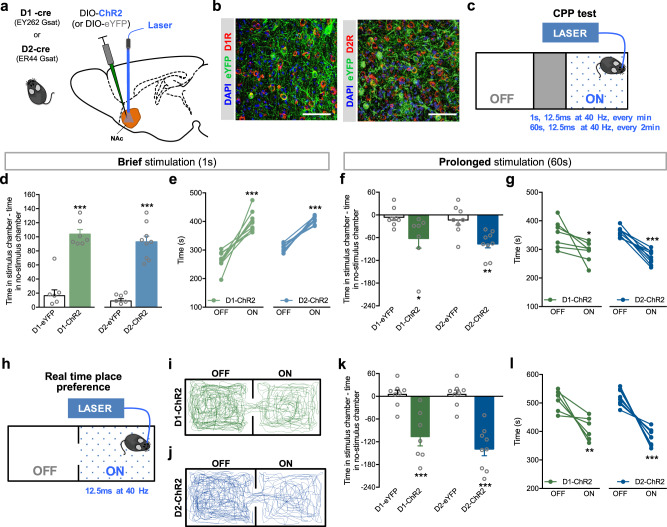
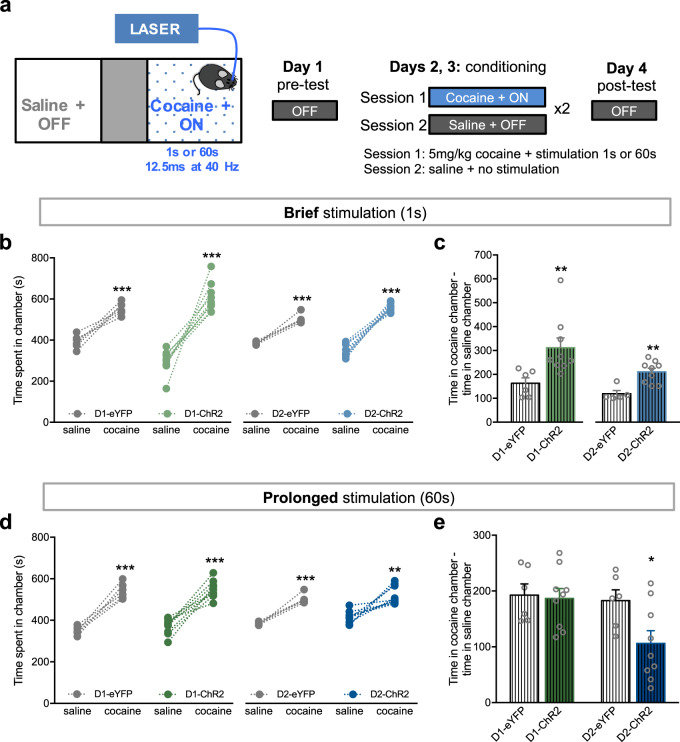
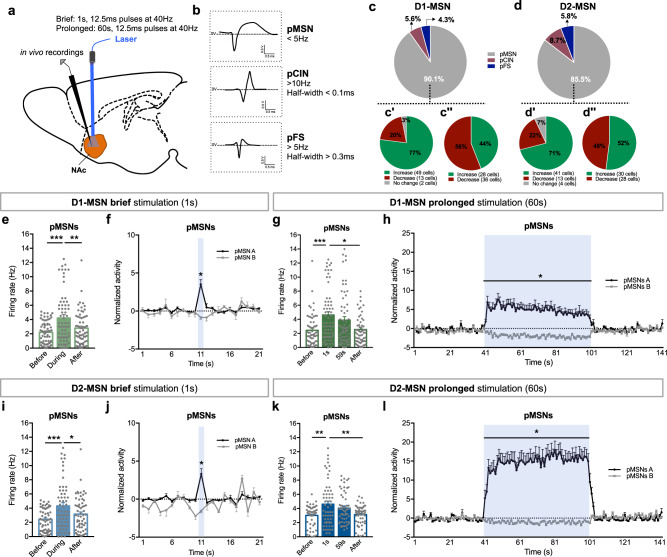
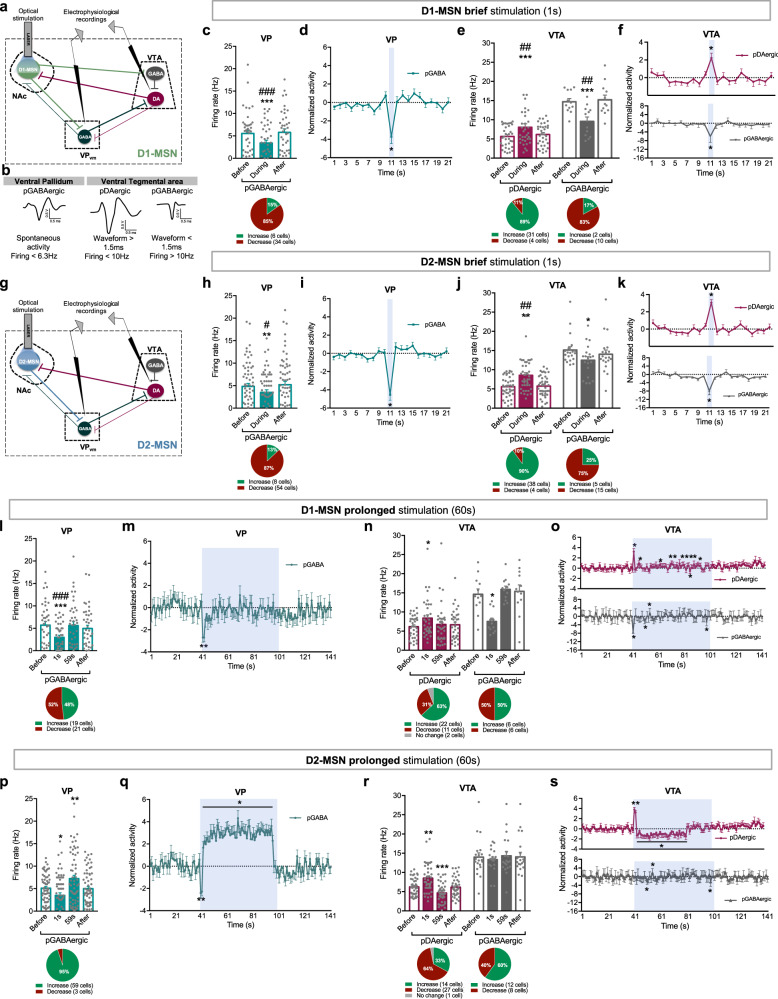
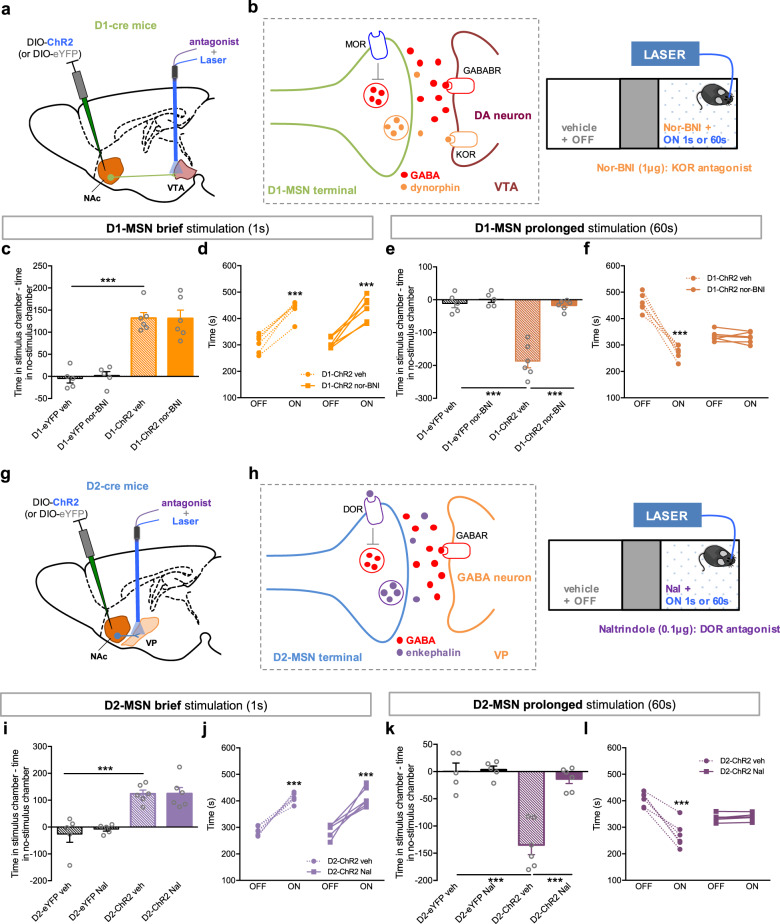
Deficits in decoding rewarding (and aversive) signals are present in several neuropsychiatric conditions such as depression and addiction, emphasising the importance of studying the underlying neural circuits in detail. One of the key regions of the reward circuit is the nucleus accumbens (NAc). The classical view on the field postulates that NAc dopamine receptor D1-expressing medium spiny neurons (D1-MSNs) convey reward signals, while dopamine receptor D2-expressing MSNs (D2-MSNs) encode aversion. Here, we show that both MSN subpopulations can drive reward and aversion, depending on their neuronal stimulation pattern. Brief D1- or D2-MSN optogenetic stimulation elicited positive reinforcement and enhanced cocaine conditioning. Conversely, prolonged activation induced aversion, and in the case of D2-MSNs, decreased cocaine conditioning. Brief stimulation was associated with increased ventral tegmenta area (VTA) dopaminergic tone either directly (for D1-MSNs) or indirectly via ventral pallidum (VP) (for D1- and D2-MSNs). Importantly, prolonged stimulation of either MSN subpopulation induced remarkably distinct electrophysiological effects in these target regions. We further show that blocking κ-opioid receptors in the VTA (but not in VP) abolishes the behavioral effects induced by D1-MSN prolonged stimulation. In turn, blocking δ-opioid receptors in the VP (but not in VTA) blocks the behavioral effects elicited by D2-MSN prolonged stimulation. Our findings demonstrate that D1- and D2-MSNs can bidirectionally control reward and aversion, explaining the existence of controversial studies in the field, and highlights that the proposed striatal functional opposition needs to be reconsidered.
Overview
The claims and statistics of this paper haven’t been checked yet.
Free: it reads the open-access text and checks the first 5 claims that cite a source we can check. Create a free account to check every claim.
Integrity signals
Registry
Cites
Statistics
Figures
Verification
Claims the paper makes
The claims and statistics of this paper haven’t been checked yet.
Free: it reads the open-access text and checks the first 5 claims that cite a source we can check. Create a free account to check every claim.
Claims other papers make about this one
Each is checked against this paper’s own text: does it say what the citing paper says it does?
In the citing paper
“More recent findings have established that these neat divisions do not apply as simplistically to the ventral striatum [221,222].”
From Plasticity of synapses and reward circuit function in the genesis and treatment of depression (2023) · cites this paper as [222]
Self-check
Percentages, sums and reported differences re-computed from the paper’s own numbers.
The self-check needs the paper’s full text.
Citations
Cites
The Mouse Brain in Stereotaxic Coordinates
Paxinos, G. (2001) · Cited by 13,440
Koob, G. F., & Volkow, N. D. (2010) · Neuropsychopharmacology · doi:10.1038/npp.2009.110 · Cited by 5,340
Bardo, M. T., & Hammer, R. P. (1991) · Neuroscience · doi:10.1016/0306-4522(91)90226-e · Cited by 3,219
Dopamine in motivational control: rewarding, aversive, and alerting
Bromberg-Martin, E. S., Matsumoto, M., & Hikosaka, O. (2010) · Neuron · doi:10.1016/j.neuron.2010.11.022 · Cited by 2,396
The debate over dopamine’s role in reward: the case for incentive salience
Berridge, K. C. (2007) · Psychopharmacology · doi:10.1007/s00213-006-0578-x · Cited by 2,347
The brain reward circuitry in mood disorders
Russo, S. J., & Nestler, E. J. (2013) · Nature Reviews Neuroscience · doi:10.1038/nrn3381 · Cited by 1,870
Multiple reward signals in the brain
Schultz, W. (2000) · Nature Reviews Neuroscience · doi:10.1038/35044563 · Cited by 1,303
Concurrent activation of striatal direct and indirect pathways during action initiation
Cui, G., Jun, S. B., Jin, X., Pham, M. D., Vogel, S. S., Lovinger, D. M., & Costa, R. M. (2013) · Nature · doi:10.1038/nature11846 · Cited by 1,301
Input-specific control of reward and aversion in the ventral tegmental area
Lammel, S., Lim, B. K., Ran, C., Huang, K. W., Betley, M. J., Tye, K. M., Deisseroth, K., & Malenka, R. C. (2012) · Nature · doi:10.1038/nature11527 · Cited by 1,300
Phasic Firing in Dopaminergic Neurons Is Sufficient for Behavioral Conditioning
Tsai, H.-C., Zhang, F., Adamantidis, A., Stuber, G. D., Bonci, A., de Lecea, L., & Deisseroth, K. (2009) · Science · doi:10.1126/science.1168878 · Cited by 1,266
Research works printed but not linked: 1
- Yang H de Jong JW Tak Y Peck J Bateup HS Lammel S Nucleus accumbens subnuclei regulate motivated behavior via direct inhibition and disinhibition of VTA dopamine subpopulations Neuron 2018 97 434 449.e4 29307710 PMC5773387 · DOI · Paper page
Cited by
Items 201–255 of 255
Aaron, C. C. A., Vassoler, F. M., & Byrnes, E. M. (2026) · Psychopharmacology · doi:10.1007/s00213-026-07019-6 · Cited by 1
Exercise modulates food reward: neurobiological mechanisms and implications for weight management
Qiu, J., Ji, P., Dai, X., Qiu, D., Fang, Q., Li, Y., Che, T., Qiu, F., & Zhang, S. (2026) · Frontiers in Nutrition · doi:10.3389/fnut.2026.1845848 · Cited by 2
“Created with BioGDP.com (164). that activation of D1-MSNs or inhibition of D2-MSNs in the NAc can facilitate drug reinstatement (63, 64).”
Cell-type-specific disruption of nucleus accumbens social representations in a mouse model of autism
Zhao, P., Chen, X., Bellafard, A., Murugesan, A., Quan, J., Aharoni, D., & Golshani, P. (2026) · Neuron · doi:10.1016/j.neuron.2026.08.007 · Cited by 18
Patton, M. S., & Mathur, B. N. (2023) · Elsevier eBooks · doi:10.1016/b978-0-12-823453-2.00010-2 · Cited by 1
Modeling Aggression in Syrian Hamsters: The Role of the Nucleus Accumbens
Borland, J. M., & Meisel, R. L. (2022) · Springer eBooks · doi:10.1007/978-3-030-98711-4_148-1 · Cited by 2
Amphetamine and the Biology of Neuronal Morphology
Tendilla‐Beltrán, H., Arroyo‐García, L. E., & Flores, G. (2022) · Springer eBooks · doi:10.1007/978-3-030-92392-1_115 · Cited by 1
Modeling Aggression in Syrian Hamsters: The Role of the Nucleus Accumbens
Borland, J. M., & Meisel, R. L. (2023) · Springer eBooks · doi:10.1007/978-3-031-31547-3_148 · Cited by 2
Distinct threat and valence signals in rat nucleus accumbens corePreprint
Ray, M. H., Moaddab, M., & McDannald, M. A. (2021) · bioRxiv (Cold Spring Harbor Laboratory) · doi:10.1101/2021.05.27.446063 · Cited by 1
“Further, differing accumbens optogenetic simulation patterns can induce approach versus avoidance behavior (Soares-Cunha et al., 2020).”
BackgroundWu, H., Liu, L.-E., Wu, W., Zhan, J., Li, Y., Chen, C., Jiang, S., Xiong, J., Yu, Z.-M., Wang, W., et al. (2022) · Research Square · doi:10.21203/rs.3.rs-1218831/v1 · Cited by 1
Transformation of valence signaling in a striatopallidal circuitPreprint
Lee, D., Lau, N., Liu, L., & Root, C. M. (2024) · eLife · doi:10.7554/elife.90976.3 · Cited by 1
A conserved population of genetically defined striatal neurons gates opioid rewardPreprint
Drake, O. R., Fiore, C. M., Jorgensen, E. T., Newman, C. E., Potter, L., Trull, A., Pradeep, A., Ianov, L., Peters, J., Heinsbroek, J. A., et al. (2026) · bioRxiv (Cold Spring Harbor Laboratory) · doi:10.64898/2026.07.28.741269 · Cited by 1
Chronic Pain in a Mouse Model of Multiple Sclerosis: Contributions of the Kappa Opioid System
Chadwick, C. I. (2021) · ERA: Education and Research Archive (University of Alberta) · doi:10.7939/r3-a0f8-qq14
Amphetamine and the Biology of Neuronal Morphology
Tendilla‐Beltrán, H., Arroyo‐García, L. E., & Flores, G. (2022) · Springer eBooks · doi:10.1007/978-3-030-67928-6_115-1 · Cited by 1
Dichotomic Regulation of Striatal Plasticity by DynorphinPreprint
Yang, R., Lalchandani, R. R., Hwang, F.-J., Bloodgood, D. W., Kong, D., & Ding, J. (2022) · bioRxiv (Cold Spring Harbor Laboratory) · doi:10.1101/2022.04.04.487051
Alsina‐Llanes, M., & Olazábal, D. E. (2022) · SSRN Electronic Journal · doi:10.2139/ssrn.4162517
Sharp, B. M., Jiang, Q. L., Kim, P., & Chen, H. (2023) · bioRxiv (Cold Spring Harbor Laboratory) · doi:10.1101/2023.03.07.531588
“2021), depending in part on the duration of stimulation (Soares-Cunha et al. 2020).”
BackgroundCell-type-specific striatal modulation of amygdalar acetylcholine in salience assignmentPreprint
Chen, A., Li, Y., Zhu, H., Gu, H., Weng, Y., Ye, Q., Guan, W., Sun, Q., Li, B., Xu, F., et al. (2024) · bioRxiv (Cold Spring Harbor Laboratory) · doi:10.1101/2024.07.30.605919 · Cited by 1
Temporal Dynamics of Nucleus Accumbens Neurons in Male Mice During Reward SeekingPreprint
Schall, T. A., Li, K.-L., Qi, X., Lee, B. T., Wright, W. J., Alpaugh, E. E., Zhao, R. J., Liu, J., Li, Q., Zeng, B., et al. (2024) · bioRxiv (Cold Spring Harbor Laboratory) · doi:10.1101/2024.09.27.615291
Contesse, T., Bektash, B. Y., Graziano, M., Forastieri, C., Contestabile, A., Hahne, S., Jung, F., Nikolakopoulou, I., Cao, X., Skara, V., et al. (2024) · bioRxiv (Cold Spring Harbor Laboratory) · doi:10.1101/2024.10.11.617042
Lewis, E., Muir, J., Li, Y. C., King, M., Adams, K. P., Glienke, J., Gooding, S. W., Bender, K. J., Kim, C. K., & Whistler, J. L. (2025) · bioRxiv (Cold Spring Harbor Laboratory) · doi:10.1101/2025.04.15.649037
“Medium spiny neurons (MSNs) in the NAc are typically classified into two major genetic subpopulations based on dopamine receptor expression: D1R-expressing and D2R-expressing neurons 39,40 .”
Fontoura, M. B., da Rosa, J. L. O., Rossato, D. R., de Souza, L. E. M., Dahleh, M. M. M., Prigol, M., Guerra, G. P., Segat, H. J., & Bürger, M. E. (2025) · Neuroscience Letters · doi:10.1016/j.neulet.2025.138256
Astrocytic CREB regulates transcriptional, neuronal, and behavioral responses to cocainePreprint
Holt, L. M., Minier-Toribio, A. M., Futamura, R., Browne, C. J., Martínez-Rivera, F. J., Markovic, T., Gyles, T. M., Yeh, S.-Y., Parise, E. M., Rivera, M., et al. (2025) · bioRxiv (Cold Spring Harbor Laboratory) · doi:10.1101/2025.06.04.657899 · Cited by 8
“Within the NAc, D1-MSNs are associated with positive valence and reward, while D2-MSNs generally signal aversion and extinction learning, albeit recent work suggests the contributions of these cellular populations is more complex and nuanced than this binary allocation 52,53 .”
Molina-Martínez, L. M., Yepez, J. E., & Juárez, J. (2025) · Neurological Research · doi:10.1080/01616412.2025.2521714
“…and the consequent inhibition of GABA-ergic neurons cause disinhibition of the VTA and induce greater dopamine release into the striatum [34], an increase that could impact motor activity, motivation, and the rewarding properties of various pharmacological treatments, such as those…”
Endocannabinoids regulation of the mesolimbic system
Melis, M., & Brandalise, F. (2025) · Handbook of behavioral neuroscience · doi:10.1016/b978-0-443-13908-6.00011-6
Liu, J., Feng, Y., Ye, Y., Ma, H., Shao, X., Yan, X., Wei, S., Yan, P., & Lai, J. (2025) · Neuropharmacology · doi:10.1016/j.neuropharm.2025.110774 · Cited by 1
Poggi, G., Queisser, D., Senn, A., Sigrist, H., Kúkeľová, D., Madur, L., Cuomo-Haymour, N., Robert, M., Schmid, S., Portalés, A., et al. (2025) · British Journal of Pharmacology · doi:10.1111/bph.70305 · Cited by 1
“HC-070 enhancement of deficient reward salience in CSS mice could have been related to the effects on NAc GABAergic medium spiny neuron activity, given their importance in the circuitry of reward responding, learning and motivation (Klawonn & Malenka, 2019; Soares-Cunha et al., 2019).”
Fonteneau, M., Terrier, C., Bolot, F., Pantouli, F., Brugoux, A., Malhaire, F., Wagnon, I. M., Borràs‐Tudurí, R., Rossolillo, P., McCort‐Tranchepain, I., et al. (2026) · Pharmacological Research · doi:10.64898/2026.01.12.699042
Dissociable neuronal substrates for positive and negative valence stimuli in the nucleus accumbensPreprint
Correia, R. G., Domingues, A. V., Aguiar, L. A. A., Cunha-Macedo, M., Vilasboas‐Campos, D., Vieitas‐Gaspar, N., Jungmann, R., Teixeira, E., Coimbra, B., Rodrigues, A. J., et al. (2026) · bioRxiv (Cold Spring Harbor Laboratory) · doi:10.64898/2026.01.24.701496
“We showed that optical activation of D1-or D2-MSNs enhances cue-driven motivation for food 9,15 and optogenetic activation of NAc core D1-or D2-MSNs drives reward or aversion, depending on specific activity patterns 14 .”
Self-citationBae, J., Ahn, S., Lee, S., Kim, Y., & Im, H. (2026) · Pharmacology Biochemistry and Behavior · doi:10.1016/j.pbb.2026.174167
Top-down corticostriatal gating of adaptive restraint during motivational conflictPreprint
Illescas-Huerta, E., Hernández-Ortiz, E., & Sotres-Bayón, F. (2026) · bioRxiv (Cold Spring Harbor Laboratory) · doi:10.64898/2026.02.09.704889
Zhou, D., Yang, X., Song, L., Wu, M., Zhang, H., Cao, J.-L., & Min, S. (2026) · Frontiers in Pharmacology · doi:10.3389/fphar.2026.1759544
Dual regulatory roles of CPT1C in chronic stress-induced depression-related outcomes
Tian, D., Xia, Z., Wang, S.-Y., Cao, T., Pan, Y., Zhao, Y., Zheng, L., Wei, B.-J., Yang, S.-W., Chen, W., et al. (2026) · Molecular Psychiatry · doi:10.1038/s41380-026-03516-4
“To further validate these fi ndings and investigate the therapeutic potential of D2-MSN CPT1C for stress-related disorders, we employed a Cre-dependent RNAi approach to selectively knock-down CPT1C in D2-MSN.”
Cue-Dependent Fear Learning Drives Nucleus Accumbens Spine PlasticityPreprint
Ratna, D. D., Gray, C., Lee, E., Kiaris, H., Hamilton, M., & Francis, T. C. (2026) · bioRxiv (Cold Spring Harbor Laboratory) · doi:10.64898/2026.02.25.707962
“In addition, D2-MSNs have been implicated in learning in other contexts, including negative reinforcement 13,14 , decision-37 making 12,15 , reversal learning 16,17 , and reward learning 12,14 .”
Mouse strain and network-level activity differences underlie social decision-makingPreprint
Illescas-Huerta, E., Villamizar, A., Cum, M., & Padilla-Coreano, N. (2026) · bioRxiv (Cold Spring Harbor Laboratory) · doi:10.64898/2026.03.06.710206
Li, B., Han, X., Song, J., Cheng, Z., & Geng, Z. (2026) · Research Square · doi:10.21203/rs.3.rs-9045113/v1
Pocheron, A.-L. (2019) · theses.fr (ABES) · doi:10.70675/29969b86z2649z4b67zb315za23a1106f4ef
Rôle des afférences thalamiques au noyau accumbens dans les comportements motivés chez le rat
Sicre, M. (2021) · theses.fr (ABES) · doi:10.70675/b8ead46dzaf07z4156zb06bzc3755176fcfc
Neuronal basis of decision-making under opposed valence affective states
Azraoui, A. E. (2024) · theses.fr (ABES) · doi:10.70675/deeb43a5z6accz4998z8619z6a33d6f4be8e
Socio-communicative and nucleus accumbens core dysfunctions in fragile X syndrome
Giua, G. (2023) · theses.fr (ABES) · doi:10.70675/e45d048ez2538z4905zba74z1de16201406a
Allichon, M., Espinosa, J., Cole, R. H., Ko, M.-C., Vanhoutte, P., & Joffe, M. E. (2026) · Frontiers in Cellular Neuroscience · doi:10.3389/fncel.2026.1774384 · Cited by 2
Fritz, T. H., Girbardt, J., Rullmann, M., Barthel, H., Zientek, F., Becker, G., Patt, M., Montgomery, M. A., Villringer, A., Hesse, S., et al. (2026) · European Journal of Nuclear Medicine and Molecular Imaging · doi:10.1007/s00259-026-07837-y
“D1R has been implicated in arousal modulation in the striatum and the nucleus accumbens (NAc), both D1-and D2-expressing medium spiny neurons of the NAc have been shown to drive both reward and aversion according to the respective neuro - nal stimulation pattern [ 10 ].”
Wang, Y., Yang, S., Yang, Z., Huang, C., Hu, S., Zhang, Q., Wang, D., Ji, Y., Huang, J., Jiang, R., et al. (2026) · Molecular Psychiatry · doi:10.1038/s41380-026-03631-2
Temporal cortex astrocytic Gi-GPCR signaling regulates learned threat responsesPreprint
Heimbach, S. N., Matute, A. C., Steininger, V., Rajadhyaksha, R., Klein, L., Ferguson, L., Sabir, Y. A., Huang, M., Cruz‐Martín, A., & Melzer, S. (2026) · bioRxiv (Cold Spring Harbor Laboratory) · doi:10.64898/2026.05.21.724789 · Cited by 1
“Notably, several of these regions have been implicated in threat-related processing and value encoding, positioning them as candidate modulators of TeA-dependent fear memory retrieval (Dalmay et al., 2019; Menegas et al., 2018; Soares-Cunha et al., 2020).”
Han, J.-M., Zhang, J.-Z., Wu, Y., Zhang, J., Xin-yu, W. A. N. G., Liu, X.-H., Wang, J., & Zhou, Z.-H. (2026) · World Journal of Psychiatry · doi:10.5498/wjp.v16.i6.116800
Differential roles of dopamine D1 and D2 receptors in pain modulation: a review
Huang, M., Li, X. Z., Miao, Y., Mao, W., Xu, C., & Gu, M. (2026) · Frontiers in Neurology · doi:10.3389/fneur.2026.1802976
“As illustrated in Figure 1 (third panel), the NAc contains two main populations of medium spiny neurons: D1-MSNs (direct pathway) and D2-MSNs (indirect pathway), which project to downstream targets including the VTA, substantia nigra reticulata (SNr), and ventral pallidum (VP) (85–87).”
VTA dopamine inputs activate accumbal D1 receptors to promote alcohol seeking
Xiong, J., Dou, M.-Y., Li, X. M., Zeng, T., Liu, Y., Dai, H., Du, C., Shi, X., Xu, X., Wang, X., et al. (2026) · iScience · doi:10.1016/j.isci.2026.116198
“42 Similarly, although our residual volume measurements indicated that >85% of delivered alcohol was consumed, finer-grained analysis of consummatory behavior (e.g., lick frequency) would further clarify the relationship between seeking and drinking.”
Siemonsmeier, G., Iyer, E. S., Schuler, H., Weinbaum, A. M., Huang, K., Lopez, J., & Bagot, R. C. (2026) · Neuropsychopharmacology · doi:10.1038/s41386-026-02460-9
Ventral striatal neuroimmune signalling biases the expression of social memory in male mice
Rinaudo, M., Autelitano, S., D’Amelio, C., Sarrapochiello, I. N., Puliatti, G., Boni, G., Sollazzo, R., Puma, D. D. L., Paciello, F., Natale, F., et al. (2026) · Brain Behavior and Immunity · doi:10.1016/j.bbi.2026.106879
Striatal control of amygdalar acetylcholine release during salience-associated processing
Chen, A., Li, Y., Zhu, H., Cui, X., Gu, H., Pan, Y., Weng, Y., Ye, Q., Guan, W., Sun, Q., et al. (2026) · Nature Neuroscience · doi:10.1038/s41593-026-02353-6
“Activation of NAc D1 or D2 MSNs can induce potent valence-related responses, either rewarding or aversive 47–50 .”
The Endogenous Opioid System in Compulsive Eating
Janbandhu, A., Leung, C., Wu, E., Tom, A., Chang, T., Shah, V., Kim, L., Lauterborn, E., & Lutfy, K. (2026) · Brain Sciences · doi:10.3390/brainsci16070741
Nucleus accumbens DRD2 receptor agonism attenuates escape behavior
Côté, B. E., Grafelman, E. M., Moster, L., Zimolzak, K., Hix, H. E., Cooper, M., Padula, G. N., Wheeler, D. S., Hearing, M. C., Mantsch, J. R., et al. (2026) · Frontiers in Neuroscience · doi:10.3389/fnins.2026.1881674
Strain-Dependent Network Activity Differences Underlie Social Decision-Making in Male Mice
Illescas-Huerta, E., Villamizar, A., Cum, M., & Padilla-Coreano, N. (2026) · eNeuro · doi:10.1523/eneuro.0207-26.2026
Top-down corticostriatal control of adaptive restraint during motivational conflict
Illescas-Huerta, E., Hernández-Ortiz, E., & Sotres-Bayón, F. (2026) · Science Advances · doi:10.1126/sciadv.aeg2327
Metadata
- Authors
- Soares-Cunha, C., de Vasconcelos, N. A. P., Coimbra, B., Domingues, A. V., Silva, J. M., Loureiro-Campos, E., Gaspar, R., Sotiropoulos, I., Sousa, N., & Rodrigues, A. J.
- Affiliations
- University of Minho (PT)
- Centro de Inovação em Biomedicina e Biotecnologia (PT)
- Clinical Academic Center of Braga (PT)
- Corresponding author
- Sousa, Nuno
- Rodrigues, Ana João
- ORCID
- Venue
- Molecular Psychiatry
- Published
- 2019-08-28
- Volume
- 25
- Issue
- 12
- Pages
- 3241-3255
- ISSN
- 1359-4184 (ISSN-L)
- 1476-5578
- PMC
- PMC7714688
- OpenAlex
- W2971086441
- Cited by
- 256
- References
- 71
- Citations by year
- 2026: 34 · 2025: 40 · 2024: 46 · 2023: 47 · 2022: 44 · 2021: 29 · 2020: 12 · 2019: 3
- FWCI
- 10.51
- Type
- journal article
- Language
- en
- Update notices
- correction (2019-09-18)
- Open access
- hybrid
- doi.org
- Licence
- cc-by
- creativecommons.org/licenses/by/4.0 (tdm)
- creativecommons.org/licenses/by/4.0 (vor)
- Locations
- Molecular Psychiatry (publishedVersion, cc-by)
- PubMed Central (publishedVersion, cc-by)
- PubMed (publishedVersion)
- Portuguese National Funding Agency for Science, Research and Technology (RCAAP Project by FCT) (submittedVersion, other-oa)
- Portuguese National Funding Agency for Science, Research and Technology (RCAAP Project by FCT) (submittedVersion, cc-by-nc-nd)
- Funders
- Ministry of Education and Science | Fundação para a Ciência e a Tecnologia (SFRH/BD/51992/2012)
- Topics
- Life Sciences › Neuroscience › Cellular and Molecular Neuroscience › Neurotransmitter Receptor Influence on Behavior
- Life Sciences › Neuroscience › Cellular and Molecular Neuroscience › Neuroscience and Neuropharmacology Research
- Life Sciences › Neuroscience › Cognitive Neuroscience › Neural and Behavioral Psychology Studies
- Keywords
- nucleus accumbens, medium spiny neurons, dopamine D1 receptor, dopamine D2 receptor, reward, aversion, ventral tegmental area, ventral pallidum, kappa opioid receptor, delta opioid receptor, optogenetic stimulation, neuropsychiatric disorders
- MeSH terms
- Animals, Mice, Inbred C57BL, Mice, Transgenic, Neurons, Nucleus Accumbens, Reward, Receptors, Dopamine D1, Mice
About these checks
Registry, retraction, Cites and statistics results are computed, not judged, with one exception: a printed reference that no index lists is read once by a model before it counts as a citation error. Claims are extracted by a model and kept only when their quote appears verbatim in the text; each cited source is then checked, with a model’s help, for whether it says what the claim relies on. Those verdicts can be wrong — read the claim’s quote and the cited source before relying on one.
Statistics and arithmetic are recomputed, not judged.
Confidence bands are shown only for fields calibrated on our annotated test set. None is calibrated yet, so no band is shown.
What counts as a claim ›How we measure confidence ›How we check this ›
Are you an author, or do you see a problem with this page? Request a review
Data sources
Bibliographic data: Semantic Scholar, OpenAlex, Crossref.
Contains information from the Semantic Scholar Academic Graph Datasets, made available under the ODC Attribution License (ODC-BY 1.0).
Semantic Scholar’s data is described in: Kinney, R., et al. (2023). The Semantic Scholar Open Data Platform. arXiv:2301.10140.
