

Molecular pathways of major depressive disorder converge on the synapse
Open accessThe DOI matches its Crossref record; 253 of the 253 references it cites were found in a registry or an index.
Abstract
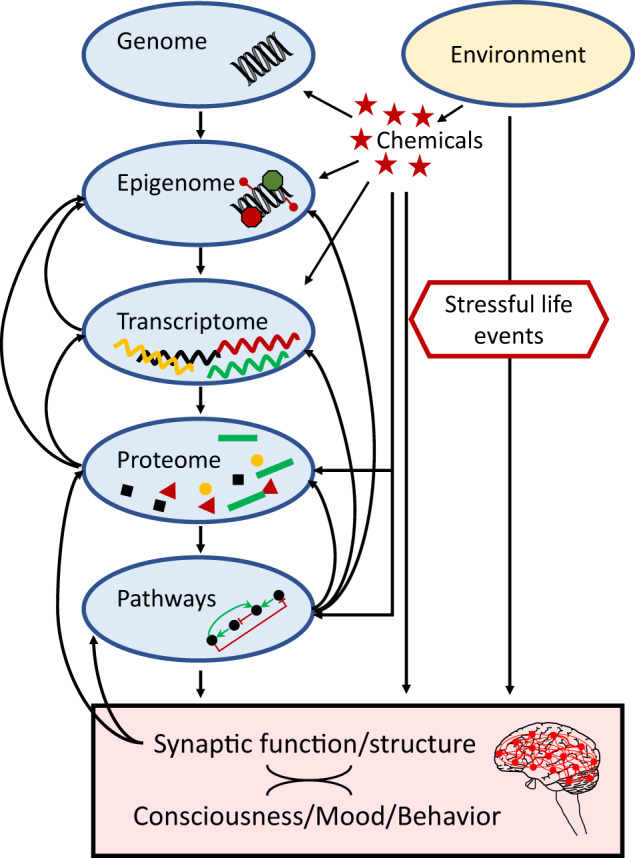
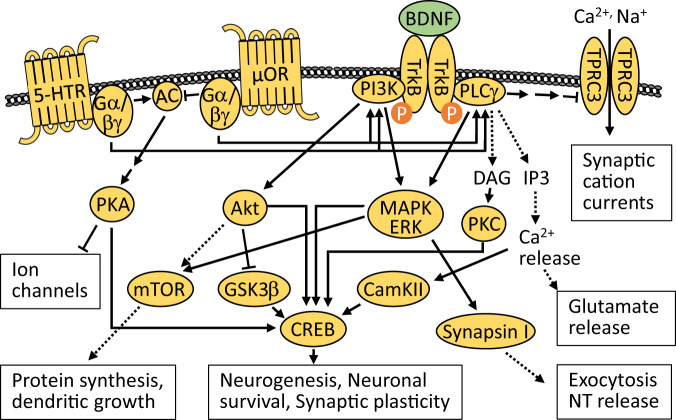
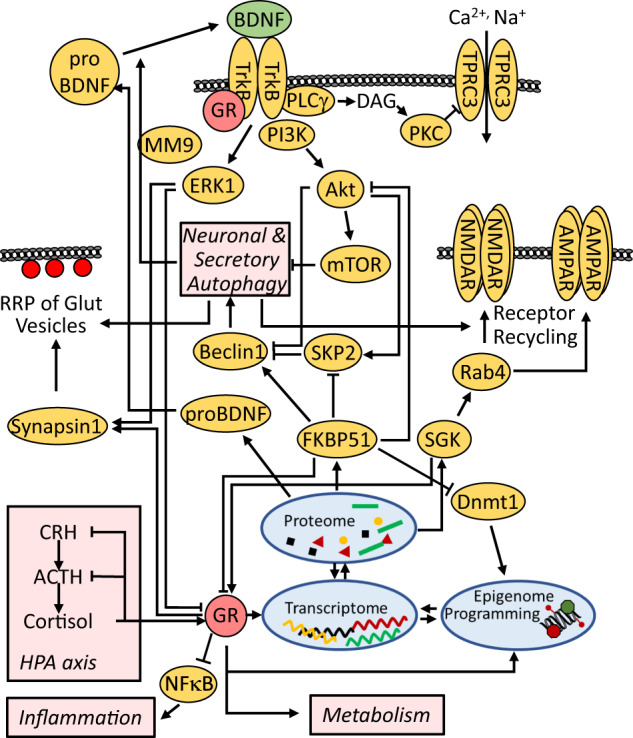
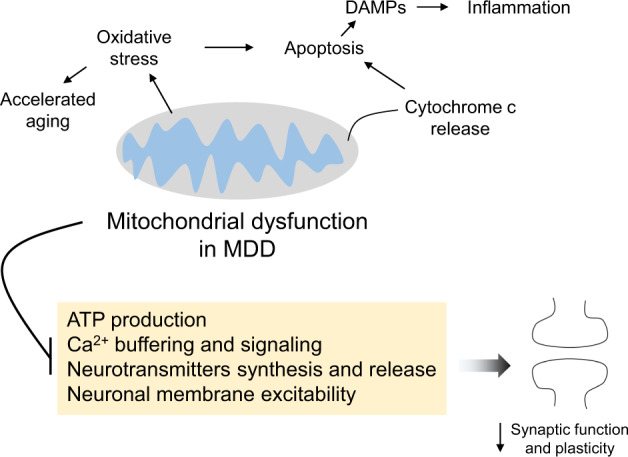
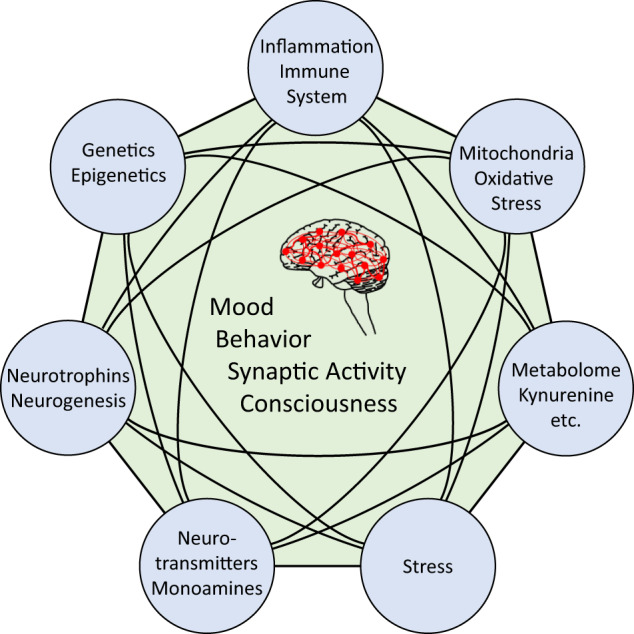
Major depressive disorder (MDD) is a psychiatric disease of still poorly understood molecular etiology. Extensive studies at different molecular levels point to a high complexity of numerous interrelated pathways as the underpinnings of depression. Major systems under consideration include monoamines, stress, neurotrophins and neurogenesis, excitatory and inhibitory neurotransmission, mitochondrial dysfunction, (epi)genetics, inflammation, the opioid system, myelination, and the gut-brain axis, among others. This review aims at illustrating how these multiple signaling pathways and systems may interact to provide a more comprehensive view of MDD’s neurobiology. In particular, considering the pattern of synaptic activity as the closest physical representation of mood, emotion, and conscience we can conceptualize, each pathway or molecular system will be scrutinized for links to synaptic neurotransmission. Models of the neurobiology of MDD will be discussed as well as future actions to improve the understanding of the disease and treatment options.
Overview
The claims and statistics of this paper haven’t been checked yet.
Free: it reads the open-access text and checks the first 5 claims that cite a source we can check. Create a free account to check every claim.
Integrity signals
Registry
Cites
Statistics
Figures
Verification
Claims the paper makes
The claims and statistics of this paper haven’t been checked yet.
Free: it reads the open-access text and checks the first 5 claims that cite a source we can check. Create a free account to check every claim.
Claims other papers make about this one
Each is checked against this paper’s own text: does it say what the citing paper says it does?
The source backs part of the claim, not all of it — or backs it for a different population, condition or comparison.
In the citing paper
“It has been proved that the changes in the structure and function of neurons may occur under the chronic stress and lead to the occurrence of MDD. 37 , 38”
From Major depressive disorder: hypothesis, mechanism, prevention and treatment (2024) · cites this paper as [38]
Experimental — accuracy not yet measuredThe source backs part of the claim, not all of it — or backs it for a different population, condition or comparison.
In the citing paper
“Stress induces cells to release damage-associated molecular patterns (DAMPs), endogenous danger signals, into the extracellular space.”
From Chronic stress, neuroinflammation, and depression: an overview of pathophysiological mechanisms and emerging anti-inflammatories (2023) · cites this paper as [23]
Experimental — accuracy not yet measuredThe source backs part of the claim, not all of it — or backs it for a different population, condition or comparison.
In the citing paper
“The chronic extracellular release of DAMPs and immune cell DAMP-PRR signaling creates a feed forward loop that accelerates peripheral and central inflammation.”
From Chronic stress, neuroinflammation, and depression: an overview of pathophysiological mechanisms and emerging anti-inflammatories (2023) · cites this paper as [23]
Experimental — accuracy not yet measuredThe source backs part of the claim, not all of it — or backs it for a different population, condition or comparison.
In the citing paper
“Concurrently, chronic stress disrupts key neurotransmitter systems, alters neuronal connectivity, and disturbs synaptic network activity, leading to, for example, dysregulated excitatory glutamatergic signaling, impaired dopaminergic transmission, and altered inhibitory GABAergic signaling in specific brain regions [4,24,29,35,36,37].”
From Comparative Analysis of HPA-Axis Dysregulation and Dynamic Molecular Mechanisms in Acute Versus Chronic Social Defeat Stress (2025) · cites this paper as [35]
Experimental — accuracy not yet measuredThe cited source says what the claim attributes to it.
In the citing paper
“DAMPs bind to pattern-recognition receptors (PRRs) on immune cells and activate the innate immune response.”
From Chronic stress, neuroinflammation, and depression: an overview of pathophysiological mechanisms and emerging anti-inflammatories (2023) · cites this paper as [23]
Self-check
Percentages, sums and reported differences re-computed from the paper’s own numbers.
The self-check needs the paper’s full text.
Citations
Cites
Diagnostic and Statistical Manual of Mental Disorders
American Psychiatric Association (2013) · doi:10.1176/appi.books.9780890425596 · Cited by 116,369
Santomauro, D. F., Mantilla Herrera, A. M., Shadid, J., Zheng, P., Ashbaugh, C., Pigott, D. M., Abbafati, C., Adolph, C., Amlag, J. O., Aravkin, A. Y., et al. (2021) · The Lancet · doi:10.1016/s0140-6736(21)02143-7 · Cited by 5,444 · cited 1×
“MDD represents a major burden on public health, ranking third in the leading causes of disability worldwide [2], with studies predicting a significant increase of MDD cases globally after the Covid-19 pandemic [3].”
BackgroundCryan, J. F., O'Riordan, K. J., Cowan, C. S. M., Sandhu, K. V., Bastiaanssen, T. F. S., Boehme, M., Codagnone, M. G., Cussotto, S., Fulling, C., Golubeva, A. V., et al. (2019) · Physiological Reviews · doi:10.1152/physrev.00018.2018 · Cited by 5,286 · cited 1×
“For the effects on brain function, some metabolites may cross the BBB and directly trigger relevant pathways, or may elicit a response in the periphery with repercussions on the brain, such as changing the hormone and cytokine profile in the blood or through neural effects linking to the brain [176, 177].”
BackgroundMalhi, G. S., & Mann, J. J. (2018) · The Lancet · doi:10.1016/s0140-6736(18)31948-2 · Cited by 4,099
Oxidative stress, aging, and diseases
Liguori, I., Russo, G., Curcio, F., Bulli, G., Aran, L., Della-Morte, D., Gargiulo, G., Testa, G., Cacciatore, F., Bonaduce, D., et al. (2018) · Clinical Interventions in Aging · doi:10.2147/cia.s158513 · Cited by 3,979 · cited 1×
“It can further cause DNA damage [212, 213], alter DNA methylation [214, 215], and induce accelerated aging [216], as reported for MDD [217].”
BackgroundThe role of inflammation in depression: from evolutionary imperative to modern treatment target
Miller, A. H., & Raison, C. L. (2016) · Nature Reviews Immunology · doi:10.1038/nri.2015.5 · Cited by 3,942 · cited 1×
“The inflammasome pathway is an important source of proinflammatory cytokines [131], which can be activated in response to elevated levels of damage-associated molecular patterns (DAMPs) and other stress molecules, resulting in the activation of IL-1β and IL-18 [132].”
BackgroundAutophagy and the Integrated Stress Response
Kroemer, G., Mariño, G., & Levine, B. (2010) · Molecular Cell · doi:10.1016/j.molcel.2010.09.023 · Cited by 3,506 · cited 1×
“It continuously operates at a basal level and is enhanced under various stressful conditions [116].”
BackgroundNicotinic acetylcholine receptor α7 subunit is an essential regulator of inflammation
Wang, H., Yu, M., Ochani, M., Amella, C. A., Tanovic, M., Susarla, S., Li, J. H., Wang, H., Yang, H., Ulloa, L., et al. (2003) · Nature · doi:10.1038/nature01339 · Cited by 3,228
The Bidirectional Relationship of Depression and Inflammation: Double Trouble
Beurel, E., Toups, M., & Nemeroff, C. B. (2020) · Neuron · doi:10.1016/j.neuron.2020.06.002 · Cited by 2,136 · cited 3×
“Immune cells mediate inflammation as an essential mechanism to maintain homeostasis by recognizing cell damage and aiding in tissue repair [126].”
BackgroundSynaptic Energy Use and Supply
Harris, J. J., Jolivet, R., & Attwell, D. (2012) · Neuron · doi:10.1016/j.neuron.2012.08.019 · Cited by 1,747 · cited 1×
“It is well-established that mitochondria support neurotransmission in several ways, including ATP production [166], Ca buffering and signaling, synthesis of neurotransmitters [167] establishing and maintaining membrane excitability, and in the organization of synaptic vesicle pools and neurotransmitter release [168].”
Background
Cited by
Items 201–300 of 506
Efficacy and safety of zuranolone in the treatment of major depressive disorder: a meta-analysis
Wang, S., Zhang, W., Liu, Z., Zhang, T., Wang, Y., & Li, W. (2024) · Frontiers in Neuroscience · doi:10.3389/fnins.2023.1332329 · Cited by 11
Deng, Y., Liang, X., Li, Y., Jiang, L. H., Wang, J., Tang, J., Li, J., Xie, Y., Xiao, K., Zhu, P., et al. (2024) · Neuropharmacology · doi:10.1016/j.neuropharm.2024.109908 · Cited by 6
DAMPs cross-talk interpretation of MDD mechanisms
Peng, Y., Chen, Z., Xu, Y., & Ren, B. (2025) · Science Advances · doi:10.1126/sciadv.adx3698 · Cited by 6
“…of depression,” and increased OS leads to further mitochondrial damage, increased apoptosis, and release of mt-DAMP, which binds to the corresponding receptors causing an immune-inflammatory response, which may contribute to the structural changes in the brain of depressed patients ( 75 ).”
Bai, Q., Zhao, Z., Duan, Y., Cai, R., Chen, Y., Zhou, C., Tian, X., Yang, Y., Wu, H., Li, M., et al. (2025) · Frontiers in Microbiology · doi:10.3389/fmicb.2025.1594012 · Cited by 7
Qin, Y., Li, J., Chen, F., Wang, L., Bo, T., Zhai, X., & Lu, Y. (2025) · Metabolic Brain Disease · doi:10.1007/s11011-025-01733-4 · Cited by 5
Dwivedi, Y., & Roy, B. (2025) · Molecular Psychiatry · doi:10.1038/s41380-025-03396-0 · Cited by 7
Zhou, X., Gao, Y., Liu, S., Zhao, Y., Wang, Z., & Liu, D. (2025) · Behavioural Brain Research · doi:10.1016/j.bbr.2025.115997 · Cited by 6
Qian, R. L., Huang, W., Ji, Y., Zheng, S., Huang, J. T., Zheng, H., Hu, J., Li, R., Zhang, C., Yu, Y., et al. (2026) · Translational Psychiatry · doi:10.1038/s41398-026-03892-z · Cited by 7
Lv, Z., Xie, Q., Li, K., Fan, Z., Cui, Y., & Dong, Y. (2026) · Molecular Psychiatry · doi:10.1038/s41380-026-03569-5 · Cited by 5
Chen, Y., Fu, W., Song, X., Hu, Y., Wang, J., Hao, W., He, L., Diané, M., Souaré, I. S., Guo, W., et al. (2024) · BMC Psychology · doi:10.1186/s40359-024-01964-7 · Cited by 8
“The re-enactment of snakebite scenes results in victims being in a continuous state of heightened stress, potentially leading to the overactivation of the hypotha - lamic–pituitary–adrenal axis and subsequent depressive symptoms [33].”
BackgroundParoxetine promotes longevity via ser-7-dop-4-IIS axis in Caenorhabditis elegans
Zhou, Y., Chen, L., Wang, M., Yang, Y., Hu, B., Li, G., & Wei, F. (2024) · GeroScience · doi:10.1007/s11357-024-01492-7 · Cited by 6
“The efficacy of most antidepressants is primarily attributed to their impact on different monoamine neurotransmitters, such as 5-hydroxytryptamine (5-HT, serotonin) and dopamine [8, 9].”
Hu, L., Wu, N., Wang, J., & Cai, D. (2025) · Scientific Reports · doi:10.1038/s41598-024-84771-9 · Cited by 6
Toma, F. M., Kalam, K. T., Haque, M. A., Reza, S., Akter, R., Islam, M. S., Islam, M. R., & Nahar, Z. (2025) · PLoS ONE · doi:10.1371/journal.pone.0317665 · Cited by 7
Tian, Y., Mu, J., Ye, J., Wei, J., Hu, L., Yuan, M., Huang, W. S., Yang, L., & Yuan, P. (2025) · Journal of Pineal Research · doi:10.1111/jpi.70070 · Cited by 6
Tan, L., Zhao, W., Wang, H. Y., Huang, X., Li, R., Lin, Y., Liu, X., Wang, J., Wu, N., & Wang, H. (2025) · Molecular Psychiatry · doi:10.1038/s41380-025-03167-x · Cited by 11
“In addition to the well-known hypotheses of neurotransmitter imbalance, neuroin fl ammation involving glial cells, mitochondrial dysfunction, and the brain-gut axis, emerging evidence suggests that dysregulated synaptic plasticity is implicated in the pathophysiology of depression [11].”
Sala-Cîrtog, M., & Sîrbu, I. O. (2024) · International Journal of Molecular Sciences · doi:10.3390/ijms25021114 · Cited by 5
Bikri, S., Fath, N., Aboubi, M. E., Lamtai, M., Douae, B., & Aboussaleh, Y. (2024) · Egyptian Journal of Basic and Applied Sciences · doi:10.1080/2314808x.2024.2343974 · Cited by 7
“Sustained immune responses, as seen in infection or autoimmune disease, may contribute to depression; and mitochondrial dysfunction generates free radicals and oxidative stress, contributing to neuronal damage and inflammatory signaling in MDD [2].”
Cristiano, N., Cabayé, A., Brabet, I., Glatthar, R., Tora, A. S., Goudet, C., Bertrand, H., Lamy, A., Flor, P. J., Pin, J., et al. (2024) · Journal of Medicinal Chemistry · doi:10.1021/acs.jmedchem.3c01924 · Cited by 5
Kéri, S., & Kelemen, O. (2024) · Religion Brain & Behavior · doi:10.1080/2153599x.2024.2349784 · Cited by 5
Neuronal TCF7L2 in Lateral Habenula Is Involved in Stress-Induced Depression
Li, X., Liu, X., Liu, J., Zhou, F., Li, Y., Zhao, Y., Yin, X., Shi, Y., & Shi, H. (2024) · International Journal of Molecular Sciences · doi:10.3390/ijms252212404 · Cited by 7
“The results of previous studies suggest that the dysregulation of TCF7L2 may contribute to altered neuronal activity and synaptic plasticity, processes that are essential for mood regulation [28–31].”
Wu, Y., Cai, J., Liu, H., Li, C., Tang, Q., & Zhang, Y. (2024) · Pharmaceuticals · doi:10.3390/ph17121637 · Cited by 7
“Additionally, more than one-third of depressive patients are non-responsive to the SSRI antidepressants [6–8], supporting the development of novel therapeutic drugs with a variety of pharmacological actions that can be selected for each individual patient [9,10].”
Neurobiological Mechanisms Underlying Psychological Dysfunction After Brain Injuries
Unadkat, P., Rebeiz, T. J., Ajmal, E., Souza, V. D., Xia, A., Jinu, J., Powell, K., & Li, C. (2025) · Cells · doi:10.3390/cells14020074 · Cited by 9
Diksha, Singh, L., & Bhatia, D. (2023) · Metabolic Brain Disease · doi:10.1007/s11011-023-01302-7 · Cited by 6
Wu, X., Wu, W., Teng, Y., Yang, D., & Yang, H. (2026) · British Journal of Pharmacology · doi:10.1111/bph.70341 · Cited by 4
RetractedLiu, Y.-J., Wang, Y., Wu, J.-W., Zhou, J., Song, B.-L., Jiang, Y., & Li, L. (2024) · Frontiers in Neuroscience · doi:10.3389/fnins.2024.1337207 · Cited by 7
Feng, L., Yuan, J., Li, L., & Tang, J. (2024) · Molecular Biotechnology · doi:10.1007/s12033-024-01252-0 · Cited by 4
“…critical to further understand the key mechanisms driving MDD pathogenesis and find novel molecular prognostic biomarkers, as well as promising therapeutic target for MDD. Evidence indicates that MDD is a multifactorial disease involving the inflammation, monoamines, neurogenesis and genetics [9].”
Bumrungthai, S., Buddhisa, S., Duangjit, S., Passorn, S., Sumala, S., & Prakobkaew, N. (2024) · Biomedical Reports · doi:10.3892/br.2024.1869 · Cited by 4
Ding, Y., Wang, Z., Huang, J., Yi, Y., & Wu, Z. (2025) · Neuropsychiatric Disease and Treatment · doi:10.2147/ndt.s530265 · Cited by 6
“31 BDNF, a critical member of the neurotrophin family, is essential for synaptic formation, plasticity, and neuronal survival.”
Effects of Intranasal Oxytocin Across Various Depressive Disorders
Wang, M., Hou, S., Tian, C., Fu, Z., & Jie, J. (2025) · Psychiatry Investigation · doi:10.30773/pi.2024.0320 · Cited by 5
“67 The nucleus accumbens septi contains several monoamine neurotransmitters including serotonin (5-HT) and dopamine, which play important roles in emotion and motor regulation.”
Unveiling the enigma of anxiety disorders and depression: from pathogenesis to treatment
Pan, H., Xia, T., Zhang, Y., Zhang, H., Xu, M., Guo, J., Liu, Y., Bai, X.-Y., Liu, Q., Liu, W.-Z., et al. (2025) · Science China Life Sciences · doi:10.1007/s11427-025-3024-y · Cited by 8
“…neurodevelopmental processes, synaptic transmission, and brain morphology (Levey et al., 2021), including NEGR1 (neuronal growth regulator 1), DRD2 (dopamine D2 receptor), CELF4 (RNA processing), GRIA1 (glutamate AMPAR subunit) and GABAR1 (GABA A R subunit) (Als et al., 2023; Fries et al., 2023).”
Jumnongprakhon, P., Nitjapol, A., Lonlab, K., Nudmamud‐Thanoi, S., Chomchalao, P., & Tiyaboonchai, W. (2025) · ACS Omega · doi:10.1021/acsomega.5c05780 · Cited by 4
Ping, L., Sun, D., Sun, S., He, M., Zhou, C., Chu, Z., Shen, Z., Xu, X., Chen, X., Yan, C., et al. (2025) · Translational Psychiatry · doi:10.1038/s41398-025-03715-7 · Cited by 5
“Thelongstanding hypothesis posits that dysregulation of neurotransmitter systems, such as serotonin, dopamine, and glutamate, is widely recognized as a core feature of MDD pathophysiology [69 – 72].”
Integrating Multi-Omics Summary Data Identifies Candidate Molecular Mechanisms for Major Depression
Nisbet, L., Wu, Y., Adams, M. J., Lynall, M.-E., Hjerling‐Leffler, J., Wray, N. R., McIntosh, A. M., & Shen, X. (2025) · Biological Psychiatry · doi:10.1016/j.biopsych.2025.11.024 · Cited by 7
“Functional annotation analysis of these genes found that they were enriched in sets related to cell adhesion, neuronal development, and synapse assembly in line with previous studies (5,15,29,30).”
Ehret, F., Rogers, C. L., Fontanesi, J., Wilson, G. D., Chitti, B., Starner, J., Sidiqi, B. U., Goenka, A., Schulder, M., Bruynzeel, A. M. E., et al. (2025) · Seminars in Radiation Oncology · doi:10.1016/j.semradonc.2025.08.005 · Cited by 6
Jester, H. M., Nicol, N. I., Yang, Q., Zhang, Y., Suhocki, A., Zhou, X., Underwood, E. B., Pourhadi, H., Cheng, D., Lee, J., et al. (2025) · Molecular Psychiatry · doi:10.1038/s41380-025-03408-z · Cited by 5
“Similarly, GFAP may be increased in schizophrenia, but many studies show different results [138].”
Depression: epigenetics and epitranscriptomic modifications
Banerjee, S., Shrilaxmi, M. S., Banerjee, S., Prajwal, B. G., Smith, C., D’Mello, S. R., & Dastidar, S. G. (2025) · The World Journal of Biological Psychiatry · doi:10.1080/15622975.2025.2602171 · Cited by 5
“Cell and molecular studies guided by genetic studies have broadly revealed synaptic dysfunction as the convergent point in MDD that regulates both the development and reversal of a depressive state (Vose and Stanton 2017; Takahashi et al. 2018; Fries et al. 2023).”
Yang, C., Zhang, X., Bie, J., Kang, W., Sun, G., Qing, Z., Lihua, L., & Hu, Q. (2026) · Pharmacological Research · doi:10.1016/j.phrs.2026.108161 · Cited by 4
Deng, T., Chen, H.-S., Wang, H.-J., Shi, Y., Long, L., Jin, Y., Yao, H., Si, T., Yu, X., Li, L., et al. (2026) · Molecular Psychiatry · doi:10.1038/s41380-026-03551-1 · Cited by 5
“Its pathogenesis is complex and heterogeneous, involving diverse mechanisms such as immune dysregulation, monoamine neurotransmitter de fi cits, and neuroglial dysfunction [4 – 6].”
Maji, S., Mohapatra, D., Jena, M., Srinivasan, A., & Maiti, R. (2024) · BMJ Open · doi:10.1136/bmjopen-2023-080500 · Cited by 4
Therapeutic potential of cannabidiol in depression
Guldager, M. B., Filho, A. M. C., Biojone, C., & Joca, S. R. L. (2024) · International review of neurobiology · doi:10.1016/bs.irn.2024.06.001 · Cited by 7
Buoli, M., Dozio, E., Caldiroli, L., Armelloni, S., Vianello, E., Romanelli, M. M. C., Castellano, G., & Vettoretti, S. (2024) · Geriatrics · doi:10.3390/geriatrics9040099 · Cited by 5
“Both MDD [11] and CKD [12] are characterized by abnormalities in different biological systems that are responsible for alterations in a number of detectable peripheral biomarkers.”
BackgroundGabryelska, A., Turkiewicz, S., Ditmer, M., Gajewski, A., Strzelecki, D., Białasiewicz, P., Chałubiński, M., & Sochal, M. (2024) · International Journal of Molecular Sciences · doi:10.3390/ijms25158469 · Cited by 5
“…in the levels of these neurotrophins have been implicated in the pathophysiology of a wide array of neuropsychiatric disorders, including depression [21–24], Alzheimer’s disease [25–27], and vascular dementia [28,29], further emphasizing their importance in maintaining neural health and function.”
BackgroundLian, K., Zhang, X., Shi, C., Yang, W., & Xu, X. (2025) · Journal of Affective Disorders · doi:10.1016/j.jad.2025.01.135 · Cited by 5
Zhu, L., Li, L., Lin, X.-Y., Hu, J., Wang, C., Wang, Y.-J., Zhou, Q., & Zhang, J. (2025) · Molecular Neurobiology · doi:10.1007/s12035-025-04948-9 · Cited by 7
Salahudeen, T., Maalouf, M., Elfadel, I. M., & Jelinek, H. F. (2025) · PLoS ONE · doi:10.1371/journal.pone.0320955 · Cited by 8
“Incorporating mitochondrial peptides in the assessment of the severity of depression holds significant promise [8].”
Noormohammadi, M., Etesam, F., Amini, A., Khosravian, P., Mohammadzadeh, M., & Shidfar, F. (2025) · BMC Psychiatry · doi:10.1186/s12888-025-07213-4 · Cited by 6
“The underlying cellular mechanisms involved in MDD are complex, encompassing the JAK/STAT signaling pathway (Janus kinase/signal transducer and activator of transcription), inflammation, neurotrophic factors, neurotransmitter systems, and stress-response pathways [3].”
Chang, L., Wang, T., Qu, Y., Fan, X., Zhou, X., Wei, Y., & Hashimoto, K. (2024) · Journal of Affective Disorders · doi:10.1016/j.jad.2024.04.029 · Cited by 6
Dynamic Human Gut Microbiome and Immune Shifts During an Immersive Psychosocial Therapeutic ProgramPreprint
Zhou, X., Ganz, A. B., Rayner, A., Cheng, T. Y., Oba, H., Rolnik, B. M., Lancaster, S. M., Lu, X., Li, Y., Johnson, J. S., et al. (2024) · bioRxiv (Cold Spring Harbor Laboratory) · doi:10.1101/2024.06.26.600881 · Cited by 4
Ni, L., Zhu, Y., Lv, L., Zhang, R., Xie, S., & Zhang, X. (2025) · Journal of Affective Disorders · doi:10.1016/j.jad.2025.04.126 · Cited by 3
Teng, T., Wu, Q., Yin, B., Zhang, J., Li, X., Zhang, L., Zhou, X., & Xie, P. (2025) · Neuroscience Bulletin · doi:10.1007/s12264-025-01412-5 · Cited by 4
“Research indicated that neuron-glia interactions are involved in the underlying pathophysiology of MDD including neurotransmitter function [5], synapse function [6], and cortical structure [7].”
Wang, M., Liang, X., Jin, K., Liu, Y., Luo, S., Zhang, Q., Wang, X., Dong, Z., & Zhang, X. (2025) · Scientific Reports · doi:10.1038/s41598-025-98306-3 · Cited by 6
“Numerous studies across diverse molecular levels have consistently demonstrated the undeniable importance of synaptic activity in the establishment of neural pathways that underlie cognitive, emotional, and behavioral functions 37 .”
Asiatic acid potentiates the activity of common antidepressant drugs in mice
Poleszak, E., Wośko, S., Szewczyk, B., Wyska, E., Szopa, A., Wróbel, A., Szponar, J., Właź, P., Ołtarzewska, D., Słotwińska, W., et al. (2025) · Psychopharmacology · doi:10.1007/s00213-025-06827-6 · Cited by 4
Current state of nutritional psychiatry: A scoping review of randomized controlled trials
Nagamine, T. (2025) · World Journal of Methodology · doi:10.5662/wjm.v15.i4.104664 · Cited by 4
Atagün, M. İ. (2025) · Psychiatry and Clinical Neurosciences Reports · doi:10.1002/pcn5.70221 · Cited by 5
“22 While neuroimaging literature is still in its early stages, 23 cross ‐ sectional studies have identified consistent abnormalities in MDD.”
Chen, Y., Guo, M., Qi, J., Wang, Y., Niu, Y., Cao, H., Mo, X., Cheng, Y., Xu, C., Sun, K. W., et al. (2025) · Journal of the Taiwan Institute of Chemical Engineers · doi:10.1016/j.jtice.2025.106440 · Cited by 3
Effects of heat environments on depressive disorders: Neurogenesis-mediated mechanisms
Kong, M.-H., Li, Q., & Chen, X. (2025) · Journal of Thermal Biology · doi:10.1016/j.jtherbio.2025.104304 · Cited by 3
Dahrendorff, J., Pages, K. P., Currier, G. W., Sarker, M. H., Graham, Z., Louis‐Jacques, A. F., Dagne, G. A., & Uddin, M. (2025) · BMC Medical Genomics · doi:10.1186/s12920-025-02240-2 · Cited by 4
“BDNF is a neurotrophic growth factor that is involved in neuronal growth, maintenance, and plasticity-key mechanisms identified to be dysregulated in MDD [34].”
Gao, C., Liu, M., Uzoechina, J. O., & Zhang, Z. (2025) · Translational Psychiatry · doi:10.1038/s41398-025-03765-x · Cited by 6
“…been proposed and extensively investigated, including the monoamine hypothesis, impaired synaptic plasticity, chronic low-grade in fl ammation causing peripheral-to-central in fl ammatory cascades, hypothalamic-pituitary-adrenal axis hyperactivation, and microglia-driven neu-roin fl ammation [8 – 11].”
Li, C., Wang, Y., Chen, J., Xiao, S., Lou, M., Ding, M., & Xing, Y. (2026) · BMC Psychiatry · doi:10.1186/s12888-025-07685-4 · Cited by 5
“Major Depressive Disorder (MDD) is one of the most common psychiatric disorders, with a lifetime prevalence estimated at ~ 12–15% and a one-year prevalence of ~ 6% worldwide [1–3].”
Amini, M., Motevaseli, E., Zahmatkesh, M., Yousefi, Z., Esmaeil-Jamaat, E., Hassanzadeh, G., & Mokhtari, T. (2026) · Molecular Neurobiology · doi:10.1007/s12035-025-05656-0 · Cited by 6
“TNF, upregulated in MDD, drives neuronal apoptosis and synaptic loss, impacting serotonin metabolism, as confirmed in human datasets [84, 85].”
Neamtu, M., Petreus, T., Temelie-Olinici, D., Stoica, L., Arcan, O. D., Stoica, B. A., & Moşoiu, C. (2026) · International Journal of Molecular Sciences · doi:10.3390/ijms27073127 · Cited by 4
Metabolic Reprogramming of Microglia in Neuroinflammation and Depression
Wu, Q., Tian, J., Gu, Y., Bi, X., & Zhang, H. (2026) · International Journal of Molecular Sciences · doi:10.3390/ijms27093984 · Cited by 3
“Current pathophysiological models highlight disruptions in monoamine neurotransmission, dysregulation of the hypothalamic-pituitary-adrenal (HPA) axis, impaired neurogenesis, and hyperactivation of inflammatory pathways [3].”
Xu, Y.-X., Zuo, M., Zhou, Y., Wan, Y., Su, P. Y., Fang-biao, T., & Sun, Y. (2024) · The Science of The Total Environment · doi:10.1016/j.scitotenv.2024.177088 · Cited by 3
New perspectives on galectin in major depressive disorder treatment
Peixoto, L. C., & da Rosa, M. M. (2025) · Biochemical Pharmacology · doi:10.1016/j.bcp.2025.116786 · Cited by 4
Nguyen, H. D. (2025) · Journal of Environmental Sciences · doi:10.1016/j.jes.2025.02.015 · Cited by 5
Association of optic neuritis with incident depressive disorder risk in a Korean nationwide cohort
Kim, J., Jang, S.-W., Choi, J., Han, K., Jung, J., Oh, S. Y., Park, K., & Min, J. (2025) · Scientific Reports · doi:10.1038/s41598-025-92370-5 · Cited by 3
“It has been hypothesized that dysregulation of synaptic activity governed by intricate coordination of molecular pathways and physiological processes plays a substantial role in the development of depression, although the precise underlying molecular mechanisms involved remain to be elucidated 18 .”
Luo, S., Qi, Z., Wu, F., Tao, D., Huang, S., Shi, C., Yang, C., Shi, Y., & Luo, Y. (2025) · Neuropharmacology · doi:10.1016/j.neuropharm.2025.110508 · Cited by 3
Ávila-González, D., Lugo-Baca, J., Camacho-Barrios, F., Castro, A. E., Arzate, D. M., Paredes, R. G., Díaz, N. F., & Portillo, W. (2025) · Progress in Neurobiology · doi:10.1016/j.pneurobio.2025.102831 · Cited by 3
Verma, A. K., Roy, B., & Dwivedi, Y. (2025) · Genomic psychiatry : · doi:10.61373/gp025h.0107 · Cited by 4
Goischke, H.-K. (2023) · Exploration of neuroscience · doi:10.37349/en.2023.00020 · Cited by 6
Lee, Y., Lee, J., & Kang, H. (2023) · Clinica Chimica Acta · doi:10.1016/j.cca.2023.117555 · Cited by 3
Congiu, P., Carta, M. G., Perra, A., Cantone, E., Lorrai, S., Pintus, E., Tusconi, M., Cossu, G., Redolfi, S., & Sancassiani, F. (2024) · Journal of Clinical Medicine · doi:10.3390/jcm13164870 · Cited by 4
“…same instrument suggests, if not proves, that the screening test primarily detects dysphoric depression, which is closer to the bipolar spectrum [58–60], while the second is an element closely linked to this area which can in many cases be an antecedent of the frank pathology it is known that…”
BackgroundJing, P., Yu, H., Wu, T., Yu, B.-H., Liang, M., Xia, T., Xu, X., Xu, T., Liu, L.-J., & Zhang, X. (2024) · World Journal of Psychiatry · doi:10.5498/wjp.v14.i11.1746 · Cited by 3
Association of Vitamin B12 and Polymorphism of TCN2 with Early-Onset Post-Stroke Depression
Zhang, J., Liao, Q., Chen, H., Liu, F., Sun, D., Luo, S., Xiao, Y., Xu, W., Tian, F., & Song, M. (2024) · Neuropsychiatric Disease and Treatment · doi:10.2147/ndt.s480417 · Cited by 3
“52 We speculate that vitamin B12 may influence PSD via the synthesis of myelin.”
Metabolic dysfunction contributes to mood disorders after traumatic brain injury
Liu, L., Jia, P., Liu, T., Liang, J., Dang, Y., Rastegar‐Kashkooli, Y., Li, Q., Liu, J., Man, J., Zhao, T., et al. (2024) · Ageing Research Reviews · doi:10.1016/j.arr.2024.102652 · Cited by 3
Lee, J., Choi, S., Lee, D.-E., Kang, H.-W., Lee, J., & Kim, J.-H. (2025) · International Journal of Molecular Sciences · doi:10.3390/ijms26052162 · Cited by 4
“These pathways intersect with NF-κ B and MAPK signaling, both of which are associated with the production of pro-inflammatory cytokines and stress-related mediators in MDD [35–38].”
Rafa–Zabłocka, K., Nalepa, I., & Kreiner, G. (2024) · Neuroscience · doi:10.1016/j.neuroscience.2024.10.020 · Cited by 2
Jing, P., Yu, H., Sun, W., Liang, M., Xia, T., Yang, H., Chen, P., Li, J., & Zhang, X. (2025) · Neuropsychiatric Disease and Treatment · doi:10.2147/ndt.s465744 · Cited by 2
“26 Our earlier familial study indicated a potential link between MDD and mitochondrial ND1 T3394C mutations.”
Luo, J., Wang, C., Ye, W., He, R., Huang, L., Fang, Z., Deng, Q., Qiu, M., Sun, L., & Gooneratne, R. (2025) · Foods · doi:10.3390/foods14020330 · Cited by 3
Exploring the diagnostic potential of IL1R1 in depression and its association with lipid metabolism
Gao, Y., Song, X.-N., Zhang, N., Liu, H.-H., Hu, J.-Z., Du, X.-Z., Song, G., & Liu, S. (2025) · Frontiers in Pharmacology · doi:10.3389/fphar.2025.1519287 · Cited by 3
New insights into the molecular pathophysiology and treatment of depression
Chattaraj, B., Karmakar, S., & Jash, R. (2025) · Neuroscience · doi:10.1016/j.neuroscience.2025.08.013 · Cited by 3
Jin, L., Jiang, Y., Luo, R., Tian, X., Jiang, S., Zhang, W., Gan, L., Yang, J., Zhu, Z., Yu, C., et al. (2025) · ACS Chemical Neuroscience · doi:10.1021/acschemneuro.5c00355 · Cited by 2
Xie, Z., Chen, M., Yi, W., Wang, S., Deng, D., An, L., Zhao, J., Bai, S., Yang, L., Shi, Y., et al. (2025) · Journal of Ethnopharmacology · doi:10.1016/j.jep.2025.120841 · Cited by 2
Kanashiro, A., Medeiros, P., Medeiros, A. C., Ferreira, F. R., Campos, A. C., Barichello, T., & Coimbra, N. C. (2025) · Neuroscience Letters · doi:10.1016/j.neulet.2025.138450 · Cited by 3
Tian, X., Yan, S., Lv, C., Song, X., Wang, J., Hao, W., He, L., Chen, Y., & Hu, Y. (2025) · BMC Public Health · doi:10.1186/s12889-025-25282-8 · Cited by 2
“Second, recurrent mental replays of the snake-bite event may hyperactivate the hypothalamic-pituitary-adrenal (HPA) axis, inducing chronic stress states and depressive symptoms [35].”
Zhai, Y., Xu, J., Zhang, Z., Wu, Y., Wu, Q., Lei, M., Wang, H., An, Q., Cai, W., Li, S., et al. (2025) · Journal of Affective Disorders · doi:10.1016/j.jad.2025.120700 · Cited by 2
Peng, Y., Yu, T., Qin, C., Li, F., Xu, Z., Fang, Q., Cheng, A., Zhai, X., Fu, X., Li, D., et al. (2025) · npj Science of Food · doi:10.1038/s41538-025-00651-0 · Cited by 3
Biney, R. P., Mensah, I. B., Karikari, A. A., Antwi, A. O., Wortsi, A., Nkansah, A. D., Barnieh, G. N. K., & Henneh, I. T. (2025) · Scientific Reports · doi:10.1038/s41598-025-27533-5 · Cited by 5
Mo, Y., Xu, H., Hu, Y., Liu, W., Yuan, J., & Wu, H. (2025) · Journal of Affective Disorders · doi:10.1016/j.jad.2025.121001 · Cited by 2
Rabl, M., Hartog, W. L., van der Flier, W. M., Pijnenburg, Y. A. L., Teunissen, C. E., Tsolaki, M., Freund‐Levi, Y., Vandenberghe, R. R., Froelich, L., Streffer, J. R., et al. (2025) · Alzheimer s & Dementia · doi:10.1002/alz.71054 · Cited by 8
“These pathways have also been found to be involved in the pathogenesis of major depression 37 and in AD.”
Huang, D., Lv, J., Li, X., Gong, W., Tian, J., Gao, X., Qin, X., Du, G., & Zhou, Y. (2026) · Food Bioscience · doi:10.1016/j.fbio.2026.108229 · Cited by 3
Qu, C., Wang, R., Liu, A., Liu, Y., Zhao, Z., Hao, W., & Chen, J. (2026) · Chinese Medicine · doi:10.1186/s13020-025-01315-7 · Cited by 5
“Disruptions in these pathways may result in neuronal dysfunction, impaired synaptic plasticity, and altered neurotransmitter signaling, all of which contribute to depressive symptoms [9].”
Synaptic density in the hippocampus of depressed patients: A quantitative electron microscopic study
Sebők-Tornai, A., Csabai, D., Szocsics, P., Gombás, P., Cobb, J. A., Mahajan, G., Stockmeier, C. A., & Czéh, B. (2026) · Progress in Neuro-Psychopharmacology and Biological Psychiatry · doi:10.1016/j.pnpbp.2026.111661 · Cited by 2
“…the role of dysfunctional synapses, suggesting that synaptic dysfunction and/or synaptic loss may underlie the emotional and cognitive disturbances that are characteristic of the disease (Price and Duman, 2020; Sanacora et al., 2022; Tartt et al., 2022; Fries et al., 2023; Thompson, 2023).”
Lu, Z., & Shi, W. (2026) · Translational Psychiatry · doi:10.1038/s41398-026-03862-5 · Cited by 3
“In this study, functional enrichment analysis revealed that shared target genes are signi fi cantly associated with neuronal projection development, synaptic signaling, memory impairment, and cognitive dysfunction, all of which are central to MDD pathogenesis [62].”
Fragola, N. R., Lancashire, L., Visser‐Rogers, J. K., Sharp, E. W., Blewitt, C. O., Goddeeris, M. M., & Fajgenbaum, D. C. (2026) · Psychiatry Research Communications · doi:10.1016/j.psycom.2026.100259 · Cited by 2
Shokr, M. M., Abu-Elsaoud, A. M., & Raish, S. M. A. (2026) · Molecular Neurobiology · doi:10.1007/s12035-026-06065-7 · Cited by 3
Endo, H., Ikeda, S., Harada, K., Yamagata, H., Matsubara, T., Matsuo, K., Kawahara, Y., & Yamashita, O. (2024) · Frontiers in Psychiatry · doi:10.3389/fpsyt.2024.1288808 · Cited by 5
Zheng, X., Zheng, Y., Zhai, Z., Chen, Y., Zhu, Y., Qiu, G., Wang, B., Wang, S., Chen, Y., & Yan, J. (2025) · Neuroscience · doi:10.1016/j.neuroscience.2025.02.049 · Cited by 2
Zheng, F., Hu, Z., Chen, H., Cheng, J., Hou, Q., Zheng, J., Gong, X., Ji, J., Zayniddin, N., Abduahadi, S., et al. (2025) · European Journal of Medicinal Chemistry · doi:10.1016/j.ejmech.2025.117538 · Cited by 2
Persister Intestinal Bacteria, Epigenetics and Major Depression
Vitetta, L., Bambling, M., & Strodl, E. S. (2025) · Frontiers in Bioscience-Landmark · doi:10.31083/fbl26837 · Cited by 2
“…dopamine (e.g., sertraline), noradrenaline (e.g., desipramine), or a combination of these neurotransmitters with the use of serotonin-noradrenaline specific reuptake inhibitors or inhibit monoamine oxidase enzymes that degrade these neurotransmitters (e.g., monoamine oxidase inhibitors) [3,4].”
Metadata
- Authors
- Fries, G. R., Saldana, V. A., Finnstein, J., & Rein, T.
- Affiliations
- The University of Texas MD Anderson Cancer Center (US)
- Quinnipiac University (US)
- Max Planck Institute of Psychiatry (DE)
- Corresponding author
- Fries, Gabriel R.
- Rein, Theo
- Venue
- Molecular Psychiatry
- Published
- 2022-10-06
- Volume
- 28
- Issue
- 1
- Pages
- 284-297
- ISSN
- 1359-4184 (ISSN-L)
- 1476-5578
- PMC
- PMC9540059
- OpenAlex
- W4302293782
- Cited by
- 504
- References
- 248
- Citations by year
- 2026: 134 · 2025: 177 · 2024: 133 · 2023: 59 · 2022: 1
- FWCI
- 13.29
- Type
- journal article
- Language
- en
- Open access
- hybrid
- doi.org
- Licence
- cc-by
- creativecommons.org/licenses/by/4.0 (tdm)
- creativecommons.org/licenses/by/4.0 (vor)
- Locations
- Molecular Psychiatry (publishedVersion, cc-by)
- PubMed Central (publishedVersion, cc-by)
- PubMed (publishedVersion)
- Digital Commons-TMC (Texas Medical Center) (submittedVersion)
- Funders
- U.S. Department of Health & Human Services | NIH | National Institute of Mental Health (K01 MH121580)
- Topics
- Health Sciences › Medicine › Pharmacology (medical) › Treatment of Major Depression
- Life Sciences › Neuroscience › Cellular and Molecular Neuroscience › Neuroscience and Neuropharmacology Research
- Life Sciences › Neuroscience › Cellular and Molecular Neuroscience › Neurotransmitter Receptor Influence on Behavior
- Keywords
- major depressive disorder, synaptic transmission, monoamines, stress, neurotrophins, neurogenesis, excitatory and inhibitory neurotransmission, mitochondrial dysfunction, epigenetics, inflammation, opioid system, myelination, gut-brain axis, neurobiology of depression, molecular pathways
- MeSH terms
- Depressive Disorder, Major, Major Depressive Disorder, Humans, Inflammation, Synaptic Transmission, Synapses, Signal Transduction
About these checks
Registry, retraction, Cites and statistics results are computed, not judged, with one exception: a printed reference that no index lists is read once by a model before it counts as a citation error. Claims are extracted by a model and kept only when their quote appears verbatim in the text; each cited source is then checked, with a model’s help, for whether it says what the claim relies on. Those verdicts can be wrong — read the claim’s quote and the cited source before relying on one.
Statistics and arithmetic are recomputed, not judged.
Confidence bands are shown only for fields calibrated on our annotated test set. None is calibrated yet, so no band is shown.
What counts as a claim ›How we measure confidence ›How we check this ›
Are you an author, or do you see a problem with this page? Request a review
Data sources
Bibliographic data: Semantic Scholar, OpenAlex, Crossref.
Contains information from the Semantic Scholar Academic Graph Datasets, made available under the ODC Attribution License (ODC-BY 1.0).
Semantic Scholar’s data is described in: Kinney, R., et al. (2023). The Semantic Scholar Open Data Platform. arXiv:2301.10140.
