

The DOI matches its Crossref record; 65 of the 65 references it cites were found in a registry or an index.
The gut microbiome modulates the transformation of microglial subtypes
Open accessAbstract
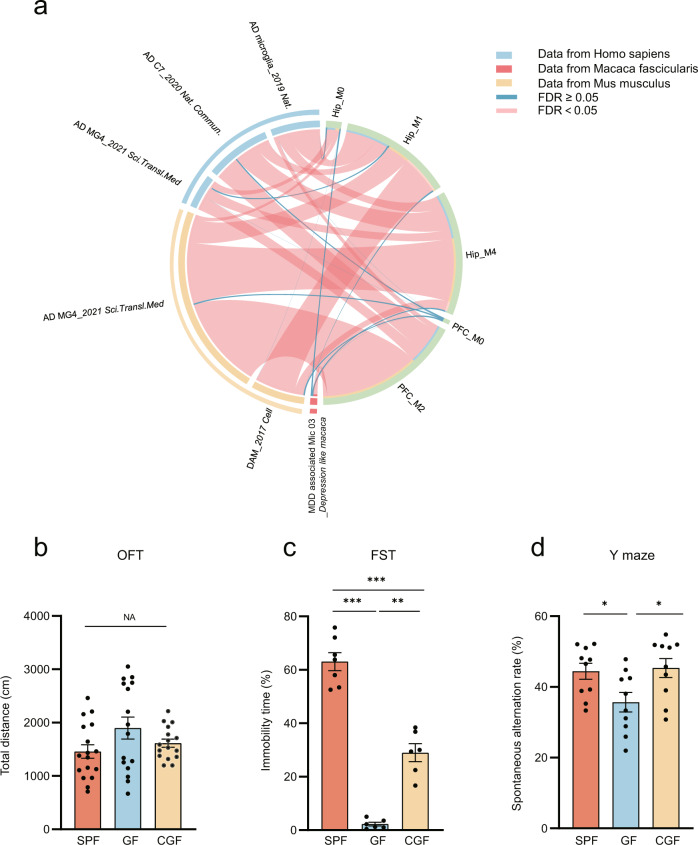
Clinical and animal studies have shown that gut microbiome disturbances can affect neural function and behaviors via the microbiota–gut–brain axis, and may be implicated in the pathogenesis of several brain diseases. However, exactly how the gut microbiome modulates nervous system activity remains obscure. Here, using a single-cell nucleus sequencing approach, we sought to characterize the cell type–specific transcriptomic changes in the prefrontal cortex and hippocampus derived from germ-free (GF), specific pathogen free, and colonized-GF mice. We found that the absence of gut microbiota resulted in cell-specific transcriptomic changes. Furthermore, microglia transcriptomes were preferentially influenced, which could be effectively reversed by microbial colonization. Significantly, the gut microbiome modulated the mutual transformation of microglial subpopulations in the two regions. Cross-species analysis showed that the transcriptome changes of these microglial subpopulations were mainly associated with Alzheimer’s disease (AD) and major depressive disorder (MDD), which were further supported by animal behavioral tests. Our findings demonstrate that gut microbiota mainly modulate the mutual transformation of microglial subtypes, which may lead to new insights into the pathogenesis of AD and MDD.
Overview
The claims and statistics of this paper haven’t been checked yet.
Run the check — free, no account needed. It reads the open-access text and checks the sources it cites.
Integrity signals
Registry
Cites
Statistics
Figures
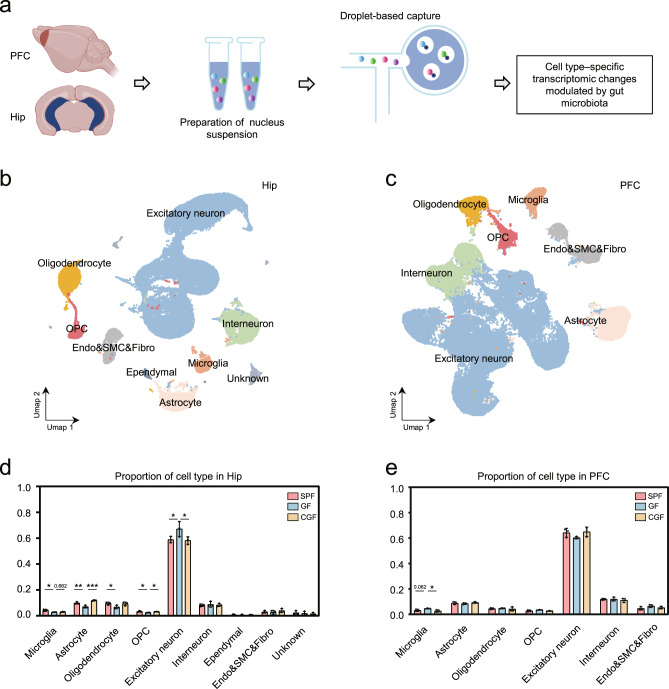
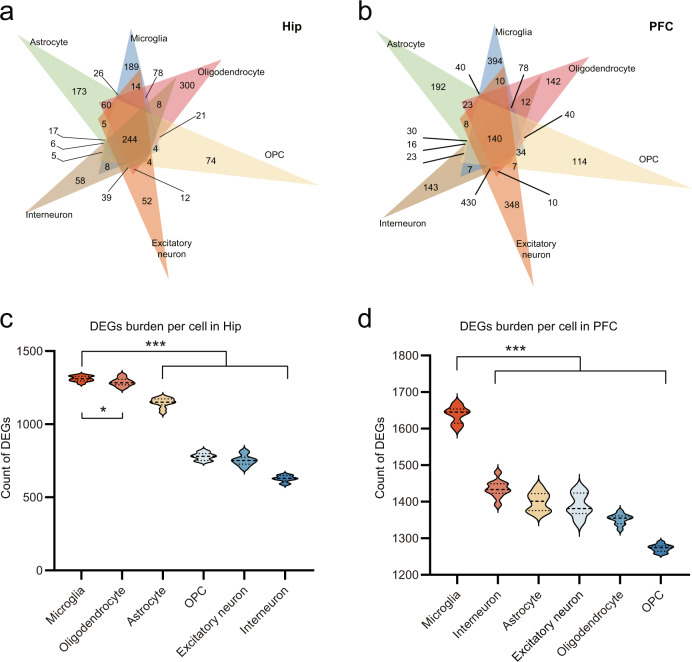
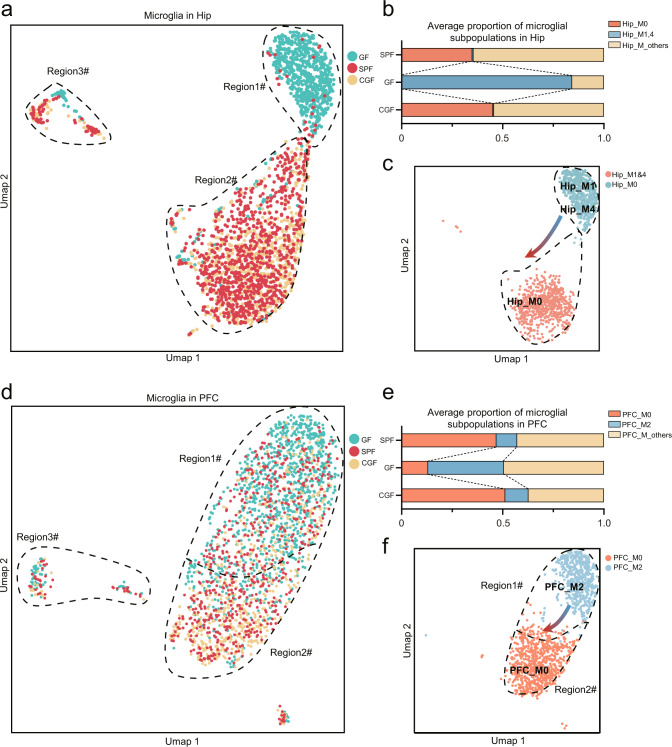
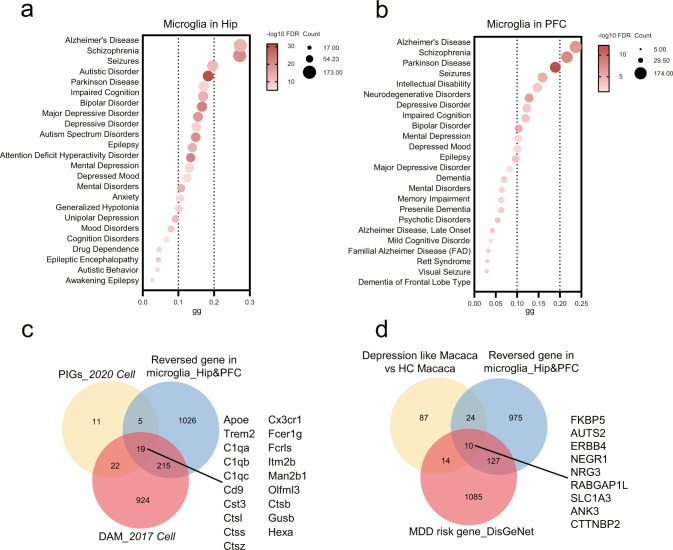
Verification
Claims the paper makes
The claims and statistics of this paper haven’t been checked yet.
Run the check — free, no account needed. It reads the open-access text and checks the sources it cites.
Claims other papers make about this one
Each is checked against this paper’s own text: does it say what the citing paper says it does?
In the citing paper
“Notably, among the neuronal and glial cells, microglia are the most vulnerable to alterations in the gut microbiome.189”
From Microbiota–gut–brain axis and its therapeutic applications in neurodegenerative diseases (2024) · cites this paper as [189]
Self-check
Percentages, sums and reported differences re-computed from the paper’s own numbers.
The self-check needs the paper’s full text.
Citations
Cites
Glutamate neurotoxicity and diseases of the nervous system
Choi, D. W. (1988) · Neuron · doi:10.1016/0896-6273(88)90162-6 · Cited by 8,188
A Unique Microglia Type Associated with Restricting Development of Alzheimer’s Disease
Keren-Shaul, H., Spinrad, A., Weiner, A., Matcovitch-Natan, O., Dvir-Szternfeld, R., Ulland, T. K., David, E., Baruch, K., Lara-Astaiso, D., Toth, B., et al. (2017) · Cell · doi:10.1016/j.cell.2017.05.018 · Cited by 5,493
Cryan, J. F., O'Riordan, K. J., Cowan, C. S. M., Sandhu, K. V., Bastiaanssen, T. F. S., Boehme, M., Codagnone, M. G., Cussotto, S., Fulling, C., Golubeva, A. V., et al. (2019) · Physiological Reviews · doi:10.1152/physrev.00018.2018 · Cited by 5,286 · cited 1×
“In recent years, important progress has been made in understanding how the gut microbiome affects the brain [1, 2], but its transcriptional changes at the single-cell level have not been uncovered.”
BackgroundReversed graph embedding resolves complex single-cell trajectories
Qiu, X., Mao, Q., Tang, Y., Wang, L., Chawla, R., Pliner, H. A., & Trapnell, C. (2017) · Nature Methods · doi:10.1038/nmeth.4402 · Cited by 5,070
Bravo, J. A., Forsythe, P., Chew, M. V., Escaravage, E., Savignac, H. M., Dinan, T. G., Bienenstock, J., & Cryan, J. F. (2011) · Proceedings of the National Academy of Sciences · doi:10.1073/pnas.1102999108 · Cited by 3,888
Gut microbiota regulate motor deficits and neuroinflammation in a model of Parkinson's disease
Sampson, T. R., Debelius, J. W., Thron, T., Janssen, S., Shastri, G. G., Ilhan, Z. E., Challis, C., Schretter, C. E., Rocha, S., Gradinaru, V., et al. (2016) · Cell · doi:10.1016/j.cell.2016.11.018 · Cited by 3,622
Host microbiota constantly control maturation and function of microglia in the CNS
Erny, D., Hrabě de Angelis, A. L., Jaitin, D., Wieghofer, P., Staszewski, O., David, E., Keren-Shaul, H., Mahlakoiv, T., Jakobshagen, K., Buch, T., et al. (2015) · Nature Neuroscience · doi:10.1038/nn.4030 · Cited by 3,569
Efremova, M., Vento-Tormo, M., Teichmann, S. A., & Vento-Tormo, R. (2020) · Nature Protocols · doi:10.1038/s41596-020-0292-x · Cited by 3,449
Piñero, J., Bravo, À., Queralt-Rosinach, N., Gutiérrez-Sacristán, A., Deu-Pons, J., Centeno, E., García-García, J., Sanz, F., & Furlong, L. I. (2017) · Nucleic Acids Research · doi:10.1093/nar/gkw943 · Cited by 2,680
Single-cell transcriptomic analysis of Alzheimer’s disease
Mathys, H., Davila-Velderrain, J., Peng, Z., Gao, F., Mohammadi, S., Young, J. Z., Menon, M., He, L., Abdurrob, F., Jiang, X., et al. (2019) · Nature · doi:10.1038/s41586-019-1195-2 · Cited by 2,568
The gut microbiota–brain axis in behaviour and brain disorders
Morais, L. H., Schreiber, H. L., & Mazmanian, S. K. (2021) · Nature Reviews Microbiology · doi:10.1038/s41579-020-00460-0 · Cited by 2,149
Zheng, P., Zeng, B., Zhou, C., Liu, M., Fang, Z., Xu, X., Zeng, L., Chen, J., Fan, S., Du, X., et al. (2016) · Molecular Psychiatry · doi:10.1038/mp.2016.44 · Cited by 2,023
Self-citationSingle-Cell Map of Diverse Immune Phenotypes in the Breast Tumor Microenvironment
Azizi, E., Carr, A. J., Plitas, G., Cornish, A. E., Konopacki, C., Prabhakaran, S., Nainys, J., Wu, K., Kiseliovas, V., Setty, M., et al. (2018) · Cell · doi:10.1016/j.cell.2018.05.060 · Cited by 1,976
The stressed hippocampus, synaptic plasticity and lost memories
Kim, J. J., & Diamond, D. M. (2002) · Nature Reviews Neuroscience · doi:10.1038/nrn849 · Cited by 1,543
Spatial and temporal heterogeneity of mouse and human microglia at single-cell resolution
Masuda, T., Sankowski, R., Staszewski, O., Böttcher, C., Amann, L., Sagar, Scheiwe, C., Nessler, S., Kunz, P., van Loo, G., et al. (2019) · Nature · doi:10.1038/s41586-019-0924-x · Cited by 1,310
Human Gut Microbiota from Autism Spectrum Disorder Promote Behavioral Symptoms in Mice
Sharon, G., Cruz, N. J., Kang, D.-W., Gandal, M. J., Wang, B., Kim, Y.-M., Zink, E. M., Casey, C. P., Taylor, B. C., Lane, C. J., et al. (2019) · Cell · doi:10.1016/j.cell.2019.05.004 · Cited by 1,182
Microglia development follows a stepwise program to regulate brain homeostasis
Matcovitch-Natan, O., Winter, D. R., Giladi, A., Vargas Aguilar, S., Spinrad, A., Sarrazin, S., Ben-Yehuda, H., David, E., Zelada González, F., Perrin, P., et al. (2016) · Science · doi:10.1126/science.aad8670 · Cited by 1,180 · cited 1×
“Interestingly, one of the marker genes of Hip_M1&4, Mafb [60], is a principal transcription factor that regulates adult microglial homeostasis.”
BackgroundMicroglia development and function
Nayak, D., Roth, T. L., & McGavern, D. B. (2014) · Annual Review of Immunology · doi:10.1146/annurev-immunol-032713-120240 · Cited by 1,154
The Gut Microbiota Mediates the Anti-Seizure Effects of the Ketogenic Diet
Olson, C. A., Vuong, H. E., Yano, J. M., Liang, Q. Y., Nusbaum, D. J., & Hsiao, E. Y. (2018) · Cell · doi:10.1016/j.cell.2018.04.027 · Cited by 1,057
Negative feedback control of neuronal activity by microglia
Badimon, A., Strasburger, H. J., Ayata, P., Chen, X., Nair, A., Ikegami, A., Hwang, P., Chan, A. T., Graves, S. M., Uweru, J. O., et al. (2020) · Nature · doi:10.1038/s41586-020-2777-8 · Cited by 979
Grubman, A., Chew, G., Ouyang, J. F., Sun, G., Choo, X. Y., McLean, C., Simmons, R. K., Buckberry, S., Vargas-Landin, D. B., Poppe, D., et al. (2019) · Nature Neuroscience · doi:10.1038/s41593-019-0539-4 · Cited by 956
A pathophysiological framework of hippocampal dysfunction in ageing and disease
Small, S. A., Schobel, S., Buxton, R. B., Witter, M. P., & Barnes, C. A. (2011) · Nature reviews. Neuroscience · doi:10.1038/nrn3085 · Cited by 955
Spatial Transcriptomics and In Situ Sequencing to Study Alzheimer’s Disease
Chen, W.-T., Lu, A., Craessaerts, K., Pavie, B., Sala Frigerio, C., Corthout, N., Qian, X., Laláková, J., Kühnemund, M., Voytyuk, I., et al. (2020) · Cell · doi:10.1016/j.cell.2020.06.038 · Cited by 949 · cited 3×
“Meanwhile, Erny et al. also observed increased LPS levels in GF mice relative to 0.0 0.1 0.2 0.3 10 20 30 -log10 FDR Count 17.00 54.23 173.00 0.00 0.05 0.10 0.15 0.20 0.25 5 10 -log10 FDR Count 5.00 29.50 174.00 Alzheimer's Disease Schizophrenia Seizures Autistic Disorder Parkinson Disease Impaired Cognition Bipolar D…”
InfluentialSingle-cell genomics identifies cell type–specific molecular changes in autism
Velmeshev, D., Schirmer, L., Jung, D., Haeussler, M., Perez, Y., Mayer, S., Bhaduri, A., Goyal, N., Rowitch, D. H., & Kriegstein, A. R. (2019) · Science · doi:10.1126/science.aav8130 · Cited by 927
Signaling inflammation across the gut-brain axis
Agirman, G., Yu, K. B., & Hsiao, E. Y. (2021) · Science · doi:10.1126/science.abi6087 · Cited by 867
Microbiome Influences Prenatal and Adult Microglia in a Sex-Specific Manner
Thion, M. S., Low, D., Silvin, A., Chen, J., Grisel, P., Schulte-Schrepping, J., Blecher, R., Ulas, T., Squarzoni, P., Hoeffel, G., et al. (2018) · Cell · doi:10.1016/j.cell.2017.11.042 · Cited by 779
Single cell RNA sequencing of human microglia uncovers a subset associated with Alzheimer’s disease
Olah, M., Menon, V., Habib, N., Taga, M. F., Ma, Y., Yung, C. J., Cimpean, M., Khairallah, A., Coronas-Samano, G., Sankowski, R., et al. (2020) · Nature Communications · doi:10.1038/s41467-020-19737-2 · Cited by 722
Zheng, P., Zeng, B., Liu, M., Chen, J., Pan, J., Han, Y., Liu, Y., Cheng, K., Zhou, C., Wang, H., et al. (2019) · Science Advances · doi:10.1126/sciadv.aau8317 · Cited by 704
Self-citationPotential roles of gut microbiome and metabolites in modulating ALS in mice
Blacher, E., Bashiardes, S., Shapiro, H., Rothschild, D., Mor, U., Dori-Bachash, M., Kleimeyer, C., Moresi, C., Harnik, Y., Zur, M., et al. (2019) · Nature · doi:10.1038/s41586-019-1443-5 · Cited by 700
Neuroinflammatory astrocyte subtypes in the mouse brain
Hasel, P., Rose, I. V. L., Sadick, J. S., Kim, R. D., & Liddelow, S. A. (2021) · Nature Neuroscience · doi:10.1038/s41593-021-00905-6 · Cited by 586
Henry, C. J., Huang, Y., Wynne, A. M., & Godbout, J. P. (2009) · Brain, Behavior, and Immunity · doi:10.1016/j.bbi.2008.09.002 · Cited by 565
Self-citationAdult hippocampal neurogenesis is involved in anxiety-related behaviors
Revest, J.-M., Dupret, D., Koehl, M., Funk-Reiter, C., Grosjean, N., Piazza, P.-V., & Abrous, D. N. (2009) · Molecular Psychiatry · doi:10.1038/mp.2009.15 · Cited by 549
Wang, S., Mustafa, M., Yuede, C. M., Salazar, S. V., Kong, P., Long, H., Ward, M., Siddiqui, O., Paul, R., Gilfillan, S., et al. (2020) · Journal of Experimental Medicine · doi:10.1084/jem.20200785 · Cited by 549
Single-cell analysis reveals T cell infiltration in old neurogenic niches
Dulken, B. W., Buckley, M. T., Navarro Negredo, P., Saligrama, N., Cayrol, R., Leeman, D. S., George, B. M., Boutet, S. C., Hebestreit, K., Pluvinage, J. V., et al. (2019) · Nature · doi:10.1038/s41586-019-1362-5 · Cited by 521
Mild cognitive impairment has similar alterations as Alzheimer's disease in gut microbiota
Li, B., He, Y., Ma, J., Huang, P., Du, J., Cao, L. H., Wang, Y., Xiao, Q., Tang, H., & Chen, S. (2019) · Alzheimer s & Dementia · doi:10.1016/j.jalz.2019.07.002 · Cited by 484
Microbiota modulate sympathetic neurons via a gut–brain circuit
Muller, P. A., Schneeberger, M., Matheis, F., Wang, P., Kerner, Z. J., Ilanges, A., Pellegrino, K., del Mármol, J. I., Castro, T. B. R., Furuichi, M., et al. (2020) · Nature · doi:10.1038/s41586-020-2474-7 · Cited by 465
The hippocampal–prefrontal pathway: The weak link in psychiatric disorders?
Godsil, B. P., Kiss, J., Spedding, M., & Jay, T. M. (2013) · European Neuropsychopharmacology · doi:10.1016/j.euroneuro.2012.10.018 · Cited by 459
Using single nuclei for RNA-seq to capture the transcriptome of postmortem neurons
Krishnaswami, S. R., Grindberg, R. V., Novotny, M., Venepally, P., Lacar, B., Bhutani, K., Linker, S. B., Pham, S., Erwin, J. A., Miller, J. A., et al. (2016) · Nature Protocols · doi:10.1038/nprot.2016.015 · Cited by 445
The microbiota regulate neuronal function and fear extinction learning
Chu, C., Murdock, M. H., Jing, D., Won, T. H., Chung, H., Kressel, A. M., Tsaava, T., Addorisio, M. E., Putzel, G. G., Zhou, L., et al. (2019) · Nature · doi:10.1038/s41586-019-1644-y · Cited by 421
Landscapes of bacterial and metabolic signatures and their interaction in major depressive disorders
Yang, J., Zheng, P., Li, Y., Wu, J., Tan, X., Zhou, J., Sun, Z., Chen, X., Zhang, G., Zhang, H., et al. (2020) · Science Advances · doi:10.1126/sciadv.aba8555 · Cited by 411
Self-citationMicrobiota regulate social behaviour via stress response neurons in the brain
Wu, W., Adame, M. D., Liou, C.-W., Barlow, J. T., Lai, T.-T., Sharon, G., Schretter, C. E., Needham, B. D., Wang, M., Tang, W., et al. (2021) · Nature · doi:10.1038/s41586-021-03669-y · Cited by 351
Spatial memory dissociations in mice lacking GluR1
Reisel, D., Bannerman, D. M., Schmitt, W. B., Deacon, R. M. J., Flint, J., Borchardt, T., Seeburg, P. H., & Rawlins, J. N. P. (2002) · Nature Neuroscience · doi:10.1038/nn910 · Cited by 346
Yaari, G., Bolen, C. R., Thakar, J., & Kleinstein, S. H. (2013) · Nucleic Acids Research · doi:10.1093/nar/gkt660 · Cited by 269
Prefrontal Cortex Development in Health and Disease: Lessons from Rodents and Humans
Chini, M., & Hanganu-Opatz, I. L. (2021) · Trends in Neurosciences · doi:10.1016/j.tins.2020.10.017 · Cited by 253
Jaeger, N., Gamini, R., Cella, M., Schettini, J. L., Bugatti, M., Zhao, S., Rosadini, C. V., Esaulova, E., Luccia, B. D., Kinnett, B., et al. (2021) · Nature Communications · doi:10.1038/s41467-021-22164-6 · Cited by 242
Hains, A. B., Vu, M. A. T., Maciejewski, P. K., van Dyck, C. H., Gottron, M., & Arnsten, A. F. T. (2009) · Proceedings of the National Academy of Sciences · doi:10.1073/pnas.0908563106 · Cited by 234
Zhuang, Z., Yang, R., Wang, W., Qi, L., & Huang, T. (2020) · Journal of Neuroinflammation · doi:10.1186/s12974-020-01961-8 · Cited by 220
Tran, M. N., Maynard, K. R., Spangler, A., Huuki, L. A., Montgomery, K. D., Sadashivaiah, V., Tippani, M., Barry, B. K., Hancock, D. B., Hicks, S. C., et al. (2021) · Neuron · doi:10.1016/j.neuron.2021.09.001 · Cited by 219
A Single-Cell Transcriptional Atlas of the Developing Murine Cerebellum
Carter, R. A., Bihannic, L., Rosencrance, C. D., Hadley, J. L., Tong, Y., Phoenix, T. N., Natarajan, S., Easton, J. B., Northcott, P. A., & Gawad, C. (2018) · Current Biology · doi:10.1016/j.cub.2018.07.062 · Cited by 190
Huang, L.-J., Mao, X.-T., Li, Y., Liu, D.-D., Fan, K.-Q., Liu, R., Wu, T.-T., Wang, H., Zhang, Y., Yang, B., et al. (2021) · Immunity · doi:10.1016/j.immuni.2021.07.004 · Cited by 183
Self-citationGut Microbial Signatures Can Discriminate Unipolar from Bipolar Depression
Zheng, P., Yang, J., Li, Y., Wu, J., Liang, W., Yin, B., Tan, X., Huang, Y., Chai, T., Zhang, H., et al. (2020) · Advanced Science · doi:10.1002/advs.201902862 · Cited by 177
Self-citationUncoupling the dopamine D1-D2 receptor complex exerts antidepressant-like effects
Pei, L., Li, S., Wang, M., Diwan, M., Anisman, H., Fletcher, P. J., Nóbrega, J. N., & Liu, F. (2010) · Nature Medicine · doi:10.1038/nm.2263 · Cited by 176
Shemer, A., Scheyltjens, I., Frumer, G. R., Kim, J.-S., Grozovski, J., Ayanaw, S., Dassa, B., Van Hove, H., Chappell-Maor, L., Boura-Halfon, S., et al. (2020) · Immunity · doi:10.1016/j.immuni.2020.09.018 · Cited by 175
Liu, C.-C., Zhao, J., Fu, Y., Inoue, Y., Ren, Y., Chen, Y., Doss, S. V., Shue, F., Jeevaratnam, S., Bastea, L., et al. (2022) · Nature Neuroscience · doi:10.1038/s41593-022-01127-0 · Cited by 168
Rosario, D., Bidkhori, G., Lee, S., Bedarf, J., Hildebrand, F., Le Chatelier, E., Uhlen, M., Ehrlich, S. D., Proctor, G., Wüllner, U., et al. (2021) · Cell Reports · doi:10.1016/j.celrep.2021.108807 · Cited by 167
Arnoriaga-Rodríguez, M., Mayneris-Perxachs, J., Burokas, A., Contreras-Rodríguez, O., Blasco, G., Coll, C., Biarnés, C., Miranda-Olivos, R., Latorre, J., Moreno-Navarrete, J.-M., et al. (2020) · Cell Metabolism · doi:10.1016/j.cmet.2020.09.002 · Cited by 157
Ueda, A., Shinkai, S., Shiroma, H., Taniguchi, Y., Tsuchida, S., Kariya, T., Kawahara, T., Kobayashi, Y., Kohda, N., Ushida, K., et al. (2021) · Cell Reports Medicine · doi:10.1016/j.xcrm.2021.100398 · Cited by 155
AD-linked R47H- TREM2 mutation induces disease-enhancing microglial states via AKT hyperactivation
Sayed, F. A., Kodama, L., Fan, L., Carling, G. K., Udeochu, J. C., Le, D., Li, Q., Zhou, L., Wong, M. Y., Horowitz, R., et al. (2021) · Science Translational Medicine · doi:10.1126/scitranslmed.abe3947 · Cited by 155
Self-citationSingle-Cell RNA Sequencing: Unraveling the Brain One Cell at a Time
Ofengeim, D., Γιαγτζόγλου, Ν., Huh, D., Zou, C., & Yuan, J. (2017) · Trends in Molecular Medicine · doi:10.1016/j.molmed.2017.04.006 · Cited by 150
How gut microbes could drive brain disorders
Willyard, C. (2021) · Nature · doi:10.1038/d41586-021-00260-3 · Cited by 124
Pyramidal neuron subtype diversity governs microglia states in the neocortex
Stogsdill, J. A., Kim, K., Binan, L., Farhi, S. L., Levin, J. Z., & Arlotta, P. (2022) · Nature · doi:10.1038/s41586-022-05056-7 · Cited by 121
Primate gastrulation and early organogenesis at single-cell resolution
Zhai, J., Guo, J., Wan, H., Qi, L. Q. L., Liu, L., Xiao, Z., Long, Y., Schmitz, D. A., Xu, Y., Yu, D., et al. (2022) · Nature · doi:10.1038/s41586-022-05526-y · Cited by 106
Self-citationIsoform cell-type specificity in the mouse primary motor cortex
Booeshaghi, A. S., Yao, Z., van Velthoven, C. T. J., Smith, K. A., Tasic, B., Zeng, H., & Pachter, L. S. (2021) · Nature · doi:10.1038/s41586-021-03969-3 · Cited by 81
Luczynski, P., Moquin, L., & Gratton, A. P. (2015) · Stress · doi:10.3109/10253890.2015.1073256 · Cited by 33
Szentes, N., Tékus, V., Mohos, V., Borbély, É., & Helyes, Z. (2019) · GeroScience · doi:10.1007/s11357-019-00059-1 · Cited by 24
Cited by
Sorted by citations
Microbiota–gut–brain axis and its therapeutic applications in neurodegenerative diseases
Loh, J. S., Mak, W. Q., Tan, L. K. S., Ng, C. X., Chan, H. H., Yeow, S. H., Foo, J. B., Ong, Y. S., How, C. W., & Khaw, K. Y. (2024) · Signal Transduction and Targeted Therapy · doi:10.1038/s41392-024-01743-1 · Cited by 1,193
Lu, S., Zhao, Q., Yu, G., Sun, Z., Li, W., Guo, S., & Zhang, A. (2024) · Biomedicine & Pharmacotherapy · doi:10.1016/j.biopha.2024.117207 · Cited by 191
Self-citationGut microbiome-targeted therapies for Alzheimer’s disease
Zhang, T., Gao, G., Kwok, L., & Sun, Z. (2023) · Gut Microbes · doi:10.1080/19490976.2023.2271613 · Cited by 162
Emerging role of the host microbiome in neuropsychiatric disorders: overview and future directions
Hashimoto, K. (2023) · Molecular Psychiatry · doi:10.1038/s41380-023-02287-6 · Cited by 143
Qian, X., Hai, W., Chen, S., Zhang, M., Jiang, X., & Tang, H. (2023) · Gut Microbes · doi:10.1080/19490976.2023.2282790 · Cited by 123
Metadata
- Authors
- Huang, Y., Wu, J., Zhang, H., Li, Y., Wen, L., Tan, X., Cheng, K., Liu, Y., Pu, J., Liu, L., Wang, H., Li, W., Perry, S. W., Wong, M.-L., Licinio, J., Zheng, P., & Xie, P.
- Affiliations
- The Affiliated Yongchuan Hospital of Chongqing Medical University (CN)
- Stomatological Hospital of Chongqing Medical University (CN)
- SUNY Upstate Medical University (US)
- Corresponding author
- Zheng, Peng
- Xie, Peng
- ORCID
- Venue
- Molecular Psychiatry
- Published
- 2023-03-13
- Volume
- 28
- Issue
- 4
- Pages
- 1611-1621
- ISSN
- 1359-4184 (ISSN-L)
- 1476-5578
- PMC
- PMC10208978
- OpenAlex
- W4324129695
- Cited by
- 111
- References
- 65
- Citations by year
- 2026: 33 · 2025: 37 · 2024: 31 · 2023: 10
- FWCI
- 11.36
- Type
- journal article
- Language
- en
- Open access
- hybrid
- doi.org
- Locations
- Molecular Psychiatry (publishedVersion, cc-by)
- PubMed Central (publishedVersion, cc-by)
- PubMed (publishedVersion)
- Funders
- State University of New York
- National Natural Science Foundation of China (82101596, 81820108015, 82171523, 81971296)
- China Postdoctoral Science Foundation (2021MD703928, 2021M693926, 2021TQ0396, 2020TQ0393)
- Chinese Academy of Medical Sciences (2019PT320002)
- Topics
- Life Sciences › Neuroscience › Neurology › Neuroinflammation and Neurodegeneration Mechanisms
- Life Sciences › Biochemistry, Genetics and Molecular Biology › Molecular Biology › Gut microbiota and health
- Life Sciences › Neuroscience › Biological Psychiatry › Tryptophan and brain disorders
- Keywords
- gut microbiota, microbiota-gut-brain axis, microglial subtypes, germ-free mice, microbial colonization, prefrontal cortex, hippocampus, cell type-specific transcriptomics, Alzheimer's disease, major depressive disorder, neuroinflammation
- MeSH terms
- Gastrointestinal Microbiome, Alzheimer Disease, Animals, Depression, Major Depressive Disorder, Prefrontal Cortex, Microglia, Mice
About these checks
Registry, retraction, Cites and statistics results are computed, not judged, with one exception: a printed reference that no index lists is read once by a model before it counts as a citation error. Claims are extracted by a model and kept only when their quote appears verbatim in the text; each cited source is then checked, with a model’s help, for whether it says what the claim relies on. Those verdicts can be wrong — read the claim’s quote and the cited source before relying on one.
Statistics and arithmetic are recomputed, not judged.
Confidence bands are shown only for fields calibrated on our annotated test set. None is calibrated yet, so no band is shown.
What counts as a claim ›How we measure confidence ›How we check this ›
Are you an author, or do you see a problem with this page? Request a review
