

Antibody drug conjugate: the “biological missile” for targeted cancer therapy
Open accessThe DOI matches its Crossref record; 275 of the 275 references it cites were found in a registry or an index.
Abstract
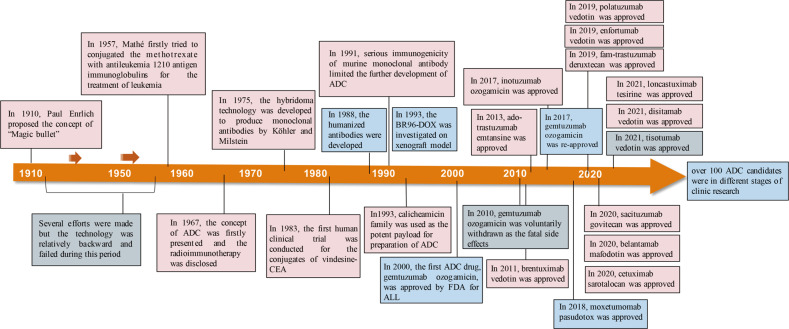
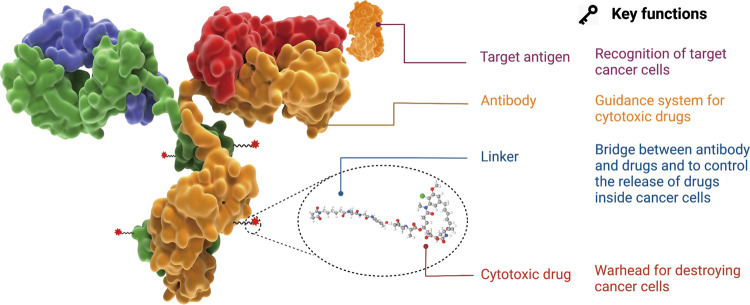
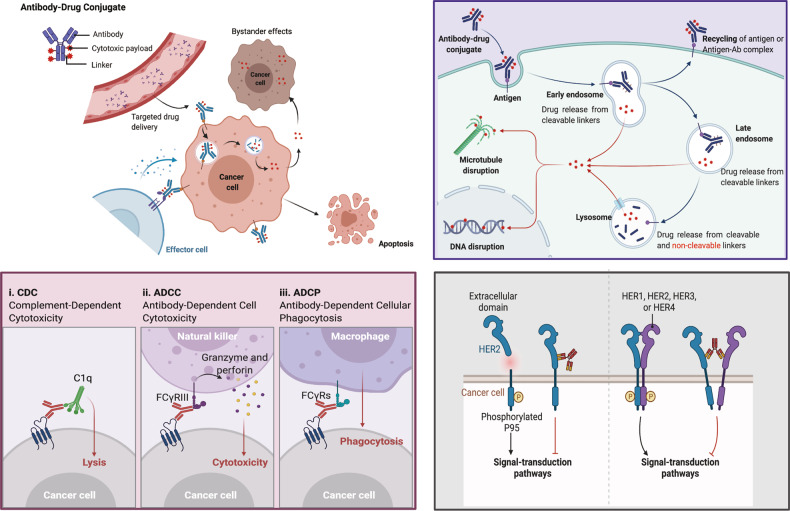
Antibody–drug conjugate (ADC) is typically composed of a monoclonal antibody (mAbs) covalently attached to a cytotoxic drug via a chemical linker. It combines both the advantages of highly specific targeting ability and highly potent killing effect to achieve accurate and efficient elimination of cancer cells, which has become one of the hotspots for the research and development of anticancer drugs. Since the first ADC, Mylotarg ® (gemtuzumab ozogamicin), was approved in 2000 by the US Food and Drug Administration (FDA), there have been 14 ADCs received market approval so far worldwide. Moreover, over 100 ADC candidates have been investigated in clinical stages at present. This kind of new anti-cancer drugs, known as “biological missiles”, is leading a new era of targeted cancer therapy. Herein, we conducted a review of the history and general mechanism of action of ADCs, and then briefly discussed the molecular aspects of key components of ADCs and the mechanisms by which these key factors influence the activities of ADCs. Moreover, we also reviewed the approved ADCs and other promising candidates in phase-3 clinical trials and discuss the current challenges and future perspectives for the development of next generations, which provide insights for the research and development of novel cancer therapeutics using ADCs.
Overview
The claims and statistics of this paper haven’t been checked yet.
Free: it reads the open-access text and checks the first 5 claims that cite a source we can check. Create a free account to check every claim.
Integrity signals
Registry
Cites
Statistics
Figures
Verification
Claims the paper makes
The claims and statistics of this paper haven’t been checked yet.
Free: it reads the open-access text and checks the first 5 claims that cite a source we can check. Create a free account to check every claim.
Claims other papers make about this one
Each is checked against this paper’s own text: does it say what the citing paper says it does?
The source backs part of the claim, not all of it — or backs it for a different population, condition or comparison.
In the citing paper
“However, hydrazone (t1/2 = 24 h) and carbonate (t1/2 = 36 h) linkers both suffer from instability in the plasma, with hydrolysis also occurring at physiological pH and contributing to off-target toxicity due to premature drug release54,58,59.”
From The evolving landscape of antibody-drug conjugates (ADCs) for treatment of prostate cancer (2025) · cites this paper as [54]
Experimental — accuracy not yet measuredThe source backs part of the claim, not all of it — or backs it for a different population, condition or comparison.
In the citing paper
“Enzyme-based linkers are utilized most commonly in ADCs: 8 out of 13 FDA-approved ADCs use a protease-cleavable linker, including the ADCs enfortumab vedotin and trastuzumab deruxtecan that have transformed the standard of care for metastatic urothelial and breast carcinomas54.”
From The evolving landscape of antibody-drug conjugates (ADCs) for treatment of prostate cancer (2025) · cites this paper as [54]
Experimental — accuracy not yet measuredThe source backs part of the claim, not all of it — or backs it for a different population, condition or comparison.
In the citing paper
“Hydrazone, carbonate, and silyl ether linkers are pH-sensitive, hydrolyzed in the acidic pH of lysosomes and endosomes upon target cell internalization54.”
From The evolving landscape of antibody-drug conjugates (ADCs) for treatment of prostate cancer (2025) · cites this paper as [54]
Experimental — accuracy not yet measured
Self-check
Percentages, sums and reported differences re-computed from the paper’s own numbers.
The self-check needs the paper’s full text.
Citations
Cites
Sung, H., Ferlay, J., Siegel, R. L., Laversanne, M., Soerjomataram, I., Jemal, A., & Bray, F. (2021) · CA: A Cancer Journal for Clinicians · doi:10.3322/caac.21660 · Cited by 108,699
Continuous cultures of fused cells secreting antibody of predefined specificity
KÖHLER, G., & MILSTEIN, C. (1975) · Nature · doi:10.1038/256495a0 · Cited by 17,229
Slamon, D. J., Clark, G. M., Wong, S. G., Levin, W. J., Ullrich, A., & McGuire, W. L. (1987) · Science · doi:10.1126/science.3798106 · Cited by 11,760 · cited 1×
“Solid tumors Ado-trastuzumab emtansine (Kadcyla, Roche): About 15%-20% of breast cancer patients show human epidermal growth factor receptor 2 (HER2) positive overexpression with a higher invasiveness.(191,192) Ado-trastuzumab emtansine, also known as T-DM1, is an ADC drug targeting HER2 and the first ADC to be approv…”
BackgroundToll-like receptors and innate immunity
Medzhitov, R. (2001) · Nature Reviews Immunology · doi:10.1038/35100529 · Cited by 4,308
Inhibition of Cell Division in Escherichia coli by Electrolysis Products from a Platinum Electrode
ROSENBERG, B., VAN CAMP, L., & KRIGAS, T. (1965) · Nature · doi:10.1038/205698a0 · Cited by 3,049
Strategies and challenges for the next generation of antibody–drug conjugates
Beck, A., Goetsch, L., Dumontet, C., & Corvaïa, N. (2017) · Nature Reviews Drug Discovery · doi:10.1038/nrd.2016.268 · Cited by 2,271
Trastuzumab deruxtecan in previously treated HER2-positive breast cancer
Modi, S., Saura, C., Yamashita, T., Park, Y. H., Kim, S.-B., Tamura, K., Andre, F., Iwata, H., Ito, Y., Tsurutani, J., et al. (2020) · New England Journal of Medicine · doi:10.1056/nejmoa1914510 · Cited by 2,006 · cited 3×
“0%).(207) Moreover, The recently updated data of DESTINY-Breast03, a global, head-to-head, randomized, open-label, pivotal phase 3 trial, demonstrated that DS-8201 had an significant superiority over T-DM1.”
BackgroundInfluentialTumor microenvironment as a therapeutic target in cancer
Xiao, Y., & Yu, D. (2021) · Pharmacology & Therapeutics · doi:10.1016/j.pharmthera.2020.107753 · Cited by 1,957
Rowinsky, E. K., & Donehower, R. C. (1995) · New England Journal of Medicine · doi:10.1056/nejm199504133321507 · Cited by 1,924
Sacituzumab Govitecan in Metastatic Triple-Negative Breast Cancer
Bardia, A., Hurvitz, S. A., Tolaney, S. M., Loirat, D., Punie, K., Oliveira, M., Brufsky, A., Sardesai, S. D., Kalinsky, K., Zelnak, A. B., et al. (2021) · New England Journal of Medicine · doi:10.1056/nejmoa2028485 · Cited by 1,711 · cited 1×
“The ASCENT study was performed in 529 patients with unresectable locally advanced or mTNBC who had relapsed after at least two prior chemotherapies, one of which could be in the neoadjuvant or adjuvant setting, if progression occurred within 12 months.(221) The enrolled patients were randomized into two groups, receiv…”
Method
Research works printed but not linked: 2
- Cortés, J. et al. LBA1 Trastuzumab deruxtecan (T-DXd) vs trastuzumab emtansine (T-DM1) in patients (Pts) with HER2+ metastatic breast cancer (mBC): Results of the randomized phase III DESTINY-Breast03 study. Ann. Oncol. 32, S1287–S1288 (2021). · DOI
- Spira, A. et al. OA03.03 Datopotamab deruxtecan (Dato-DXd; DS-1062), a TROP2 ADC, in patients with advanced NSCLC: updated results of TROPION-PanTumor01 phase 1 study. J. Thorac. Oncol. 16, S106–S107 (2021). · DOI
Cited by
Items 101–200 of 1,000
Treatment-related adverse events of antibody drug-conjugates in clinical trials
Tan, H. N., Morcillo, M. A., Lopez, J. S., Minchom, A. R., Sharp, A., Paschalis, A., Silva-Fortes, G., Raobaikady, B., & Banerji, U. (2025) · Journal of Hematology & Oncology · doi:10.1186/s13045-025-01720-3 · Cited by 60
Abdolvahab, M. H., Karimi, P., Mohajeri, N., Abedini, M., & Zare, H. (2024) · Cancer Cell International · doi:10.1186/s12935-024-03259-8 · Cited by 59
Immunometabolism: crosstalk with tumor metabolism and implications for cancer immunotherapy
Zhang, H., Fan, J., Kong, D., Sun, Y., Zhang, Q., Xiang, R., Lu, S., Yang, W., Feng, L., & Zhang, H. (2025) · Molecular Cancer · doi:10.1186/s12943-025-02460-1 · Cited by 59
Nanobody-based drug delivery systems for cancer therapy
Liu, L., Tu, B., Sun, Y., Liao, L., Lu, X., Liu, E., & Huang, Y. (2025) · Journal of Controlled Release · doi:10.1016/j.jconrel.2025.02.058 · Cited by 58
Anand, P., Zhang, Y., Patil, S., & Kaur, K. (2025) · Journal of Medicinal Chemistry · doi:10.1021/acs.jmedchem.4c02528 · Cited by 58
Self-citationUnlocking the Potential: Biomarkers of Response to Antibody-Drug Conjugates
Ascione, L., Guidi, L., Prakash, A., Trapani, D., LoRusso, P. M., Lou, E., & Curigliano, G. (2024) · American Society of Clinical Oncology Educational Book · doi:10.1200/edbk_431766 · Cited by 59
Maiti, R., Patel, B., Patel, N., Patel, M. M., Patel, A., & Dhanesha, N. (2023) · Archives of Pharmacal Research · doi:10.1007/s12272-023-01447-0 · Cited by 58
Engineering Versatile Nanomedicines for Ultrasonic Tumor Immunotherapy
Liang, J., Qiao, X., Qiu, L., Xu, H., Xiang, H., Ding, H., & Chen, Y. (2023) · Advanced Science · doi:10.1002/advs.202305392 · Cited by 57
Jhaveri, K. L., & Marmé, F. (2023) · Cancer Treatment Reviews · doi:10.1016/j.ctrv.2023.102670 · Cited by 56
Prodrug Approach as a Strategy to Enhance Drug Permeability
de Souza, M. M., Gini, A. L. R., Moura, J. A., Scarim, C. B., Chin, C. M., & dos Santos, J. L. (2025) · Pharmaceuticals · doi:10.3390/ph18030297 · Cited by 56
McFarland, J. M., Alečković, M., Coricor, G., Srinivasan, S., Tso, M., Lee, J., Nguyen, T., & Oneto, J. M. M. (2023) · ACS Central Science · doi:10.1021/acscentsci.3c00365 · Cited by 55
Yang, J., & Bae, H. (2023) · Experimental & Molecular Medicine · doi:10.1038/s12276-023-01080-3 · Cited by 56
The evolving landscape of antibody-drug conjugates in gynecologic cancers
Tolcher, A. W., Hamilton, E. P., & Coleman, R. L. (2023) · Cancer Treatment Reviews · doi:10.1016/j.ctrv.2023.102546 · Cited by 56
Research Progress of Conjugated Nanomedicine for Cancer Treatment
Zhao, B., Chen, S., Hong, Y., Jia, L., Zhou, Y. Y., He, X., Wang, Y., Tian, Z., Yang, Z., & Gao, D. (2022) · Pharmaceutics · doi:10.3390/pharmaceutics14071522 · Cited by 54
Parisi, C., Mahjoubi, L., Gazzah, A., & Barlési, F. (2023) · Cancer Treatment Reviews · doi:10.1016/j.ctrv.2023.102572 · Cited by 53
Maity, P., Chatterjee, J., Patil, K. T., Arora, S., Katiyar, M. K., Kumar, M., Samarbakhsh, A., Joshi, G., Bhutani, P., Chugh, M., et al. (2023) · Journal of Medicinal Chemistry · doi:10.1021/acs.jmedchem.2c01242 · Cited by 52
Unveiling the Immune Microenvironment’s Role in Breast Cancer: A Glimpse into Promising Frontiers
Kotsifaki, A., Alevizopoulos, N., Dimopoulou, V., & Armakolas, A. (2023) · International Journal of Molecular Sciences · doi:10.3390/ijms242015332 · Cited by 52
Jiang, M., Li, Q., & Xu, B. (2024) · Drug Resistance Updates · doi:10.1016/j.drup.2024.101086 · Cited by 52
Antibody-Drug Conjugates in Solid Tumor Oncology: An Effectiveness Payday with a Targeted Payload
Kondrashov, A., Sapkota, S., Sharma, A., Riaño, I., Kurzrock, R., & Adashek, J. J. (2023) · Pharmaceutics · doi:10.3390/pharmaceutics15082160 · Cited by 52
Zhu, Z., Shen, G., Li, J., Qiu, T., Fang, Q., Zheng, Y., Xin, Y., Liu, Z., Zhao, F., Ren, D., et al. (2023) · Critical Reviews in Oncology/Hematology · doi:10.1016/j.critrevonc.2023.103960 · Cited by 52
Current landscape of innovative drug development and regulatory support in China
Tan, R., Hua, H., Zhou, S., Yang, Z., Yang, C., Huang, G., Zeng, J., & Zhao, J. (2025) · Signal Transduction and Targeted Therapy · doi:10.1038/s41392-025-02267-y · Cited by 51
Chang, H., Le, H. K., & Shah, D. K. (2023) · Pharmaceutics · doi:10.3390/pharmaceutics15041132 · Cited by 51
Guo, Y. L., Shen, Z., Zhao, W., Lu, J., Song, Y., Shen, L., Yang, L., Wu, M., Shi, Q., Zhuang, W., et al. (2024) · Advanced Science · doi:10.1002/advs.202306309 · Cited by 51
Sortases: structure, mechanism, and implications for protein engineering
Amacher, J. F., & Antos, J. M. (2024) · Trends in Biochemical Sciences · doi:10.1016/j.tibs.2024.04.003 · Cited by 51
Zhao, Q., Zong, H., Zhu, P., Su, C., Tang, W., Chen, Z., & Jin, S. (2024) · Experimental Hematology and Oncology · doi:10.1186/s40164-024-00474-x · Cited by 50
Venkatesan, J., Murugan, D., Lakshminarayanan, K., Smith, A. R., Thirumalaiswamy, H. V., Kandhasamy, H., Zender, B., Zheng, G., & Rangasamy, L. (2024) · Pharmacology & Therapeutics · doi:10.1016/j.pharmthera.2024.108725 · Cited by 50
Drug conjugates for the treatment of lung cancer: from drug discovery to clinical practice
Zhou, L., Lu, Y., Liu, W., Wang, S., Wang, L., Zheng, P., Zi, G., Liu, H., Liu, W., & Wei, S. (2024) · Experimental Hematology and Oncology · doi:10.1186/s40164-024-00493-8 · Cited by 51
Peters, S., Loi, S., André, F., Chandarlapaty, S., Felip, E., Finn, S. P., Janne, P. A., Kerr, K. M., Munzone, E., Passaro, A., et al. (2024) · Annals of Oncology · doi:10.1016/j.annonc.2024.04.002 · Cited by 50
Resistance to TOP-1 Inhibitors: Good Old Drugs Still Can Surprise Us
Kumar, S., & Sherman, M. Y. (2023) · International Journal of Molecular Sciences · doi:10.3390/ijms24087233 · Cited by 50
Arora, S., Scott, A. M., & Janes, P. W. (2023) · Biomedicines · doi:10.3390/biomedicines11020315 · Cited by 50
Su, J., Liao, T., Ren, Z., Kuang, Y., Yu, W., Qiao, Q., Jiang, B., Chen, X., Xu, Z., & Li, C. (2023) · International Journal of Biological Macromolecules · doi:10.1016/j.ijbiomac.2023.124088 · Cited by 50
Valle, I., Grinda, T., Antonuzzo, L., & Pistilli, B. (2025) · npj Breast Cancer · doi:10.1038/s41523-025-00829-5 · Cited by 52
TRBC1-targeting antibody–drug conjugates for the treatment of T cell cancers
Nichakawade, T. D., Ge, J., Mog, B. J., Lee, B. S., Pearlman, A. H., Hwang, M. S., DiNapoli, S. R., Wyhs, N., Marcou, N., Glavaris, S. A., et al. (2024) · Nature · doi:10.1038/s41586-024-07233-2 · Cited by 49
Targeted drug conjugates in cancer therapy: Challenges and opportunities
Jia, G., Jiang, Y., & Li, X. (2024) · Pharmaceutical Science Advances · doi:10.1016/j.pscia.2024.100048 · Cited by 50
Yu, P., Zhu, C., You, X., Gu, W., Wang, X., Wang, Y., Bu, R., & Wang, K. (2024) · Cell Death and Disease · doi:10.1038/s41419-024-06837-w · Cited by 50
Antibody–Drug Conjugates—Evolution and Perspectives
Chiş, A. A., Dobrea, C. M., Arseniu, A. M., Frum, A., Rus, L. L., Cormoș, G., Georgescu, C., Morgovan, C., Butucă, A., Gligor, F. G., et al. (2024) · International Journal of Molecular Sciences · doi:10.3390/ijms25136969 · Cited by 50
Peng, L., Zhang, K., Li, Y., Chen, L., Gao, H., & Chen, H. (2022) · Evidence-based Complementary and Alternative Medicine · doi:10.1155/2022/7770380 · Cited by 49
Brignole, C., Calarco, E., Bensa, V., Giusto, E., Perri, P., Ciampi, E., Corrias, M. V., Astigiano, S., Cilli, M., Loo, D., et al. (2023) · Journal for ImmunoTherapy of Cancer · doi:10.1136/jitc-2023-007174 · Cited by 49
Strategic and Chemical Advances in Antibody–Drug Conjugates
Alradwan, I. A., Alnefaie, M. K., Fayez, N. A., Aodah, A. H., Majrashi, M. A., Alturki, M., Fallatah, M., Almughem, F. A., Tawfik, E. A., & Alshehri, A. A. (2025) · Pharmaceutics · doi:10.3390/pharmaceutics17091164 · Cited by 50
Advancements in antibody-drug conjugates as cancer therapeutics
Fong, J. Y., Phuna, Z. X., Chong, D., Heryanto, C. M., Low, Y. S., Oh, K. C., Lee, Y., Ng, A. W. R., In, L. L. A., & Teo, M. Y. M. (2025) · Journal of the National Cancer Center · doi:10.1016/j.jncc.2025.01.007 · Cited by 48
Trial watch: Toll-like receptor ligands in cancer therapy
Naour, J. L., & Kroemer, G. (2023) · OncoImmunology · doi:10.1080/2162402x.2023.2180237 · Cited by 48
Nickel-Catalyzed Antibody Bioconjugation
Bacauanu, V., Merz, Z. N., Hua, Z. L., & Lang, S. B. (2023) · Journal of the American Chemical Society · doi:10.1021/jacs.3c10185 · Cited by 48
Ajkunic, A., Sayar, E., Roudier, M. P., Patel, R. A., Coleman, I. M., Sarkar, N. D., Hanratty, B. P., Adil, M., Zhao, J. L., Zaidi, S., et al. (2024) · npj Precision Oncology · doi:10.1038/s41698-024-00599-6 · Cited by 48
Azobenzene‐Based Linker Strategy for Selective Activation of Antibody–Drug Conjugates
Xiao, D., Liu, L., Xie, F., Dong, J., Wang, Y., Xu, X., Zhong, W., Deng, H., Zhou, X., & Li, S. (2024) · Angewandte Chemie International Edition · doi:10.1002/anie.202310318 · Cited by 48
Self-citationMatsuda, Y., Chang, J. R., & Mendelsohn, B. A. (2025) · ChemBioChem · doi:10.1002/cbic.202500305 · Cited by 51
When will the immune-stimulating antibody conjugates (ISACs) be transferred from bench to bedside?
Fu, C. S., Tong, W., Yu, L., Miao, Y., Wei, Q., Yu, Z., Chen, B., & Wei, M. (2024) · Pharmacological Research · doi:10.1016/j.phrs.2024.107160 · Cited by 48
Manipulation of host phagocytosis by fungal pathogens and therapeutic opportunities
Jia, L., González, K., Orasch, T., Schmidt, F., & Brakhage, A. A. (2024) · Nature Microbiology · doi:10.1038/s41564-024-01780-0 · Cited by 47
Evolution of Pyrrolysyl-tRNA Synthetase: From Methanogenesis to Genetic Code Expansion
Koch, N. G., & Budiša, N. (2024) · Chemical Reviews · doi:10.1021/acs.chemrev.4c00031 · Cited by 47
Hu, X., Zhang, Q., Wang, L., Zhang, J., Ouyang, Q., Wang, X., Li, W., Xie, W., Tong, Z., Wang, S., et al. (2025) · Signal Transduction and Targeted Therapy · doi:10.1038/s41392-025-02149-3 · Cited by 46
Self-citationAptamer-functionalized liposomes for drug delivery
Wong, K., Wong, M., & Liu, J. (2023) · Biomedical Journal · doi:10.1016/j.bj.2023.100685 · Cited by 46
Targeting the tumour cell surface in advanced prostate cancer
Boixareu, C., Taha, T., Venkadakrishnan, V. B., Bono, J. S. D., & Beltran, H. (2025) · Nature Reviews Urology · doi:10.1038/s41585-025-01014-w · Cited by 46
Precision Oncology: Current Landscape, Emerging Trends, Challenges, and Future Perspectives
Qiao, D., Wang, R. C., & Wang, Z. (2025) · Cells · doi:10.3390/cells14221804 · Cited by 46
Engineered Proteins and Chemical Tools to Probe the Cell Surface Proteome
Leung, K., Schaefer, K., Lin, Z., Yao, Z. W., & Wells, J. A. (2025) · Chemical Reviews · doi:10.1021/acs.chemrev.4c00554 · Cited by 45
Gomena, J., Vári, B., Oláh-Szabó, R., Biri‐Kovács, B., Bősze, S. E., Borbély, A., Soós, Á., Ranđelović, I., Tóvári, J., & Mező, G. (2023) · International Journal of Molecular Sciences · doi:10.3390/ijms24043400 · Cited by 45
Single-Domain Antibodies as Antibody–Drug Conjugates: From Promise to Practice—A Systematic Review
Pérez, V. M. M., Baselga, M., & Schuhmacher, A. J. (2024) · Cancers · doi:10.3390/cancers16152681 · Cited by 46
Cheng, Y., Lü, J., Zhang, C., Yan, W., Zhu, P., Qin, Q., & Gong, L. (2025) · Antibody Therapeutics · doi:10.1093/abt/tbaf004 · Cited by 46
Mirvetuximab Soravtansine in Platinum-Resistant Ovarian Cancer
González-Ochoa, E., Veneziani, A. C., & Oza, A. M. (2023) · Clinical Medicine Insights Oncology · doi:10.1177/11795549231187264 · Cited by 45
Current Analytical Strategies for Antibody–Drug Conjugates in Biomatrices
Qin, Q., & Gong, L. (2022) · Molecules · doi:10.3390/molecules27196299 · Cited by 45
Recent Advances in Targeted Cancer Therapy: Are PDCs the Next Generation of ADCs?
Zhang, B., Wang, M., Sun, L., Liu, J., Yin, L., Xia, M., Zhang, L., Liu, X., & Cheng, Y. (2024) · Journal of Medicinal Chemistry · doi:10.1021/acs.jmedchem.4c00106 · Cited by 44
Antibody-Drug Conjugates for Lung Cancer: Payloads and Progress
Rosner, S., Valdivia, A., Hoe, H. J., Murray, J. C., Levy, B. P., Felip, E., & Solomon, B. (2023) · American Society of Clinical Oncology Educational Book · doi:10.1200/edbk_389968 · Cited by 44
Update on Combination Strategies of PARP Inhibitors
Lin, Z., Wang, L., Xing, Z., Wang, F., & Cheng, X. (2024) · Cancer Control · doi:10.1177/10732748241298329 · Cited by 44
Antibody–bottlebrush prodrug conjugates for targeted cancer therapy
Liu, B., Nguyen, H. V. ‐., Jiang, Y., Wang, A., Lensch, V., Sun, Z., Boyer, Z., Raftopoulos, P. A., Dai, Y., MacNicol, P. L., et al. (2025) · Nature Biotechnology · doi:10.1038/s41587-025-02772-z · Cited by 44
Current status and future expectations of nanobodies in oncology trials
Pauw, T. D., Mey, L. D., Debacker, J. M., Raes, G., Ginderachter, J. A. V., Groof, T. W. M. D., & Devoogdt, N. (2023) · Expert Opinion on Investigational Drugs · doi:10.1080/13543784.2023.2249814 · Cited by 43
Zhou, M., Huang, Z., Ma, Z., Chen, J., Lin, S., Yang, X., Gong, Q., Braunstein, Z., Wei, Y., Rao, X., et al. (2025) · Cancer Drug Resistance · doi:10.20517/cdr.2025.49 · Cited by 43
Scheuher, B., Ghusinga, K. R., McGirr, K., Nowak, M., Panday, S., Apgar, J. F., Subramanian, K., & Betts, A. M. (2023) · Journal of Pharmacokinetics and Pharmacodynamics · doi:10.1007/s10928-023-09884-6 · Cited by 43
Caracciolo, D., Mancuso, A., Polerà, N., Froio, C., D’Aquino, G., Riillo, C., Tagliaferri, P., & Tassone, P. (2023) · Experimental Hematology and Oncology · doi:10.1186/s40164-022-00368-w · Cited by 43
Feng, Y., Lee, J., Yang, L., Hilton, M. B., Morris, K., Seaman, S., Edupuganti, V. V. S. R., Hsu, K.-S., Dower, C. M., Yu, G., et al. (2023) · Cell Reports · doi:10.1016/j.celrep.2023.113503 · Cited by 43
Li, Q., Kong, Y., Zhong, Y., Huang, A., Ying, T., & Wu, Y. (2024) · MedComm · doi:10.1002/mco2.557 · Cited by 43
Small Molecule–Drug Conjugates Emerge as a New Promising Approach for Cancer Treatment
Wang, T., Li, M., Wei, R., Wang, X., Lin, Z., Chen, J., & Wu, X. (2024) · Molecular Pharmaceutics · doi:10.1021/acs.molpharmaceut.3c01049 · Cited by 43
Tong, Y., Fan, X., Liu, H., & Liang, T. (2024) · Frontiers in Immunology · doi:10.3389/fimmu.2024.1495675 · Cited by 42
Recent Advances in Peptide Linkers for Antibody-Drug Conjugates
Li, S., Guo, Y., Che, J., Dai, H., & Dong, X. (2025) · Journal of Medicinal Chemistry · doi:10.1021/acs.jmedchem.5c01982 · Cited by 42
Self-citationTrends in the Development of Antibody-Drug Conjugates for Cancer Therapy
Song, C. H., Jeong, M., In, H., Kim, J. H., Lin, C., & Han, K. H. (2023) · Antibodies · doi:10.3390/antib12040072 · Cited by 42
Chen, Y., Yang, J.-R., Wang, C., Wang, T., Zeng, Y., Li, X., Zuo, Y., Chen, H., Zhang, C., Cao, Y., et al. (2024) · Journal of Experimental & Clinical Cancer Research · doi:10.1186/s13046-024-03133-5 · Cited by 42
The Application of Machine Learning on Antibody Discovery and Optimization
Zheng, J., Wang, Y., Liang, Q., Cui, L., & Wang, L. (2024) · Molecules · doi:10.3390/molecules29245923 · Cited by 41
Evolution of TROP2: Biological insights and clinical applications
Zhang, X., Xiao, H. L., Na, F., Sun, J., Guan, Q., Liu, R., Cai, L., Li, H., & Zhao, M. (2025) · European Journal of Medicinal Chemistry · doi:10.1016/j.ejmech.2025.117863 · Cited by 41
Cheng, B., Lv, J., Xiao, Y., Song, C., Chen, J., & Shao, C. (2024) · European Journal of Medicinal Chemistry · doi:10.1016/j.ejmech.2024.117141 · Cited by 41
Stimuli‐Responsive Prodrug Chemistries for Cancer Therapy
Bargakshatriya, R., & Pramanik, S. K. (2023) · ChemBioChem · doi:10.1002/cbic.202300155 · Cited by 41
CMG901, a Claudin18.2-specific antibody-drug conjugate, for the treatment of solid tumors
Xu, G., Liu, W., Wang, Y., Wei, X., Liu, F., He, Y., Zhang, L., Qin, S., Li, Z., Wang, C., et al. (2024) · Cell Reports Medicine · doi:10.1016/j.xcrm.2024.101710 · Cited by 41
Nectin-4-directed antibody-drug conjugates (ADCs): Spotlight on preclinical and clinical evidence
Khosravanian, M. J., Mirzaei, Y., Mer, A. H., Keyhani-Khankahdani, M., Abdinia, F. S., Misamogooe, F., Amirkhani, Z., Bagheri, N., Meyfour, A., Jahandideh, S., et al. (2024) · Life Sciences · doi:10.1016/j.lfs.2024.122910 · Cited by 41
Paramasivam, G., Sanmugam, A., Palem, V. V., Sevanan, M., Sairam, A. B., Nachiappan, N. C., Youn, B., Lee, J. S., Nallal, M., & Park, K. H. (2023) · International Journal of Biological Macromolecules · doi:10.1016/j.ijbiomac.2023.127904 · Cited by 40
Current roles of metals in arming sonodynamic cancer therapy
Chen, Z., Wu, X., Liang, J., & Chao, H. (2024) · Coordination Chemistry Reviews · doi:10.1016/j.ccr.2024.216169 · Cited by 40
Innate immune cells: Key players of orchestra in modulating tumor microenvironment (TME)
Sadeghi, M., Dehnavi, S., Sharifat, M., Amiri, A. M., & Khodadadi, A. (2024) · Heliyon · doi:10.1016/j.heliyon.2024.e27480 · Cited by 40
Diverse drug delivery systems for the enhancement of cancer immunotherapy: an overview
Liu, X., Cheng, Y., Mu, Y., Zhang, Z., Tian, D., Liu, Y., Hu, X., & Wen, T. (2024) · Frontiers in Immunology · doi:10.3389/fimmu.2024.1328145 · Cited by 40
Oh, K.-S., Nam, A., Bang, J., Jeong, Y., Choo, S. Y., Kim, H. J., Lee, S. I., Kim, J., Yoon, J., Kim, T.-Y., et al. (2024) · Cell Communication and Signaling · doi:10.1186/s12964-024-01893-3 · Cited by 41
What influences the activity of Degrader−Antibody conjugates (DACs)
Guo, Y., Li, X., Xie, Y., & Wang, D. (2024) · European Journal of Medicinal Chemistry · doi:10.1016/j.ejmech.2024.116216 · Cited by 40
Antibody drug conjugates: hitting the mark in pancreatic cancer?
Wittwer, N. L., Brown, M. P., Liapis, V., & Staudacher, A. H. (2023) · Journal of Experimental & Clinical Cancer Research · doi:10.1186/s13046-023-02868-x · Cited by 40
Aptamers: Promising Reagents in Biomedicine Application
Zhou, H., Li, Y., & Wu, W. (2024) · Advanced Biology · doi:10.1002/adbi.202300584 · Cited by 39
Precision Nanomedicine for Cancer: Innovations, Strategies, and Translational Challenges
Wen, F., Wang, L., Li, X., Zhao, J., Xu, T., Zhu, J., Ma, L., & Wang, X. (2025) · OncoTargets and Therapy · doi:10.2147/ott.s550104 · Cited by 39
Matikonda, S. S., McLaughlin, R., Shrestha, P., Lipshultz, C., & Schnermann, M. J. (2022) · Bioconjugate Chemistry · doi:10.1021/acs.bioconjchem.2c00177 · Cited by 39
Buyukgolcigezli, I., Tenekeci, A. K., & Şahin, İ. H. (2025) · Cancers · doi:10.3390/cancers17060958 · Cited by 39
Antibody–Drug Conjugate Revolution in Breast Cancer: The Road Ahead
Grinda, T., Rassy, E., & Pistilli, B. (2023) · Current Treatment Options in Oncology · doi:10.1007/s11864-023-01072-5 · Cited by 39
Antibody‐Drug Conjugates to Treat Bacterial Biofilms via Targeting and Extracellular Drug Release
Tvilum, A., Johansen, M. I., Glud, L. N., Ivarsen, D. M., Khamas, A. B., Carmali, S., Mhatre, S., Søgaard, A. B., Faddy, E., de Vor, L., et al. (2023) · Advanced Science · doi:10.1002/advs.202301340 · Cited by 39
Cryo-electron microscopy-based drug design
Cebi, E., Lee, J., Subramani, V. K., Bak, N., Oh, C., & Kim, K. K. (2024) · Frontiers in Molecular Biosciences · doi:10.3389/fmolb.2024.1342179 · Cited by 39
Fu, Z., Liu, J., Li, S., Chen, S., & Zhang, Y. (2022) · EClinicalMedicine · doi:10.1016/j.eclinm.2022.101795 · Cited by 38
Self-citationTranslational Advances in Oncogene and Tumor-Suppressor Gene Research
Stojchevski, R., Sutanto, E. A., Sutanto, R., Hadzi‐Petrushev, N., Mladenov, M. I., Singh, S. P., Sinha, J. K., Ghosh, S., Yarlagadda, B., Singh, K. K., et al. (2025) · Cancers · doi:10.3390/cancers17061008 · Cited by 38
Claudin 1, 4, 6 and 18 isoform 2 as targets for the treatment of cancer (Review)
Katoh, M., & Katoh, M. (2024) · International Journal of Molecular Medicine · doi:10.3892/ijmm.2024.5424 · Cited by 38
Porębska, N., Ciura, K., Chorążewska, A., Zakrzewska, M., Otlewski, J., & Opaliński, Ł. (2023) · Biotechnology Advances · doi:10.1016/j.biotechadv.2023.108213 · Cited by 38
Jain, S., Griffith, J. I. G., Porath, K. A., Rathi, S., Le, J., Pasa, T. I., Decker, P. A., Gupta, S. K., Hu, Z., Carlson, B. L., et al. (2024) · Clinical Cancer Research · doi:10.1158/1078-0432.ccr-24-0426 · Cited by 38
Checkpoint therapy in cancer treatment: progress, challenges, and future directions
Bicak, M., Bozkus, C. C., & Bhardwaj, N. (2024) · Journal of Clinical Investigation · doi:10.1172/jci184846 · Cited by 37
Hu, J., Yan, L., Liu, J., Chen, M., Liu, P., Deng, D., Zhang, C., He, Y., Fan, B., Li, H., et al. (2025) · iMeta · doi:10.1002/imt2.70033 · Cited by 37
Metadata
- Authors
- Fu, Z., Li, S., Han, S., Shi, C., & Zhang, Y.
- Affiliations
- Huazhong University of Science and Technology (CN)
- China Pharmaceutical University (CN)
- Wuhan Union Hospital (CN)
- Corresponding author
- Zhang, Yu
- Venue
- Signal Transduction and Targeted Therapy
- Published
- 2022-03-22
- Volume
- 7
- Issue
- 1
- Pages
- 93-93
- ISSN
- 2059-3635 (ISSN-L)
- PMC
- PMC8941077
- OpenAlex
- W4220847494
- Cited by
- 1,643
- References
- 274
- Citations by year
- 2026: 374 · 2025: 510 · 2024: 433 · 2023: 283 · 2022: 43
- FWCI
- 54.06
- Type
- journal article
- Language
- en
- Open access
- gold
- doi.org
- Licence
- cc-by
- creativecommons.org/licenses/by/4.0 (tdm)
- creativecommons.org/licenses/by/4.0 (vor)
- Locations
- Signal Transduction and Targeted Therapy (publishedVersion, cc-by)
- PubMed Central (publishedVersion, cc-by)
- PubMed (publishedVersion)
- DOAJ (DOAJ: Directory of Open Access Journals) (submittedVersion, cc-by-sa)
- Funders
- National Natural Science Foundation of China (82073402)
- Topics
- Life Sciences › Immunology and Microbiology › Immunology › Monoclonal and Polyclonal Antibodies Research
- Life Sciences › Immunology and Microbiology › Immunology › Toxin Mechanisms and Immunotoxins
- Life Sciences › Biochemistry, Genetics and Molecular Biology › Molecular Biology › Protein Degradation and Inhibitors
- Keywords
- antibody-drug conjugates, targeted cancer therapy, monoclonal antibodies, cytotoxic drugs, chemical linkers, mechanism of action, gemtuzumab ozogamicin
- MeSH terms
- Antibodies, Monoclonal, Antineoplastic Agents, Humans, Neoplasms, United States, United States Food and Drug Administration, Immunoconjugates
About these checks
Registry, retraction, Cites and statistics results are computed, not judged, with one exception: a printed reference that no index lists is read once by a model before it counts as a citation error. Claims are extracted by a model and kept only when their quote appears verbatim in the text; each cited source is then checked, with a model’s help, for whether it says what the claim relies on. Those verdicts can be wrong — read the claim’s quote and the cited source before relying on one.
Statistics and arithmetic are recomputed, not judged.
Confidence bands are shown only for fields calibrated on our annotated test set. None is calibrated yet, so no band is shown.
What counts as a claim ›How we measure confidence ›How we check this ›
Are you an author, or do you see a problem with this page? Request a review
Data sources
Bibliographic data: Semantic Scholar, OpenAlex, Crossref.
Contains information from the Semantic Scholar Academic Graph Datasets, made available under the ODC Attribution License (ODC-BY 1.0).
Semantic Scholar’s data is described in: Kinney, R., et al. (2023). The Semantic Scholar Open Data Platform. arXiv:2301.10140.
