

Antibody drug conjugate: the “biological missile” for targeted cancer therapy
Open accessThe DOI matches its Crossref record; 275 of the 275 references it cites were found in a registry or an index.
Abstract
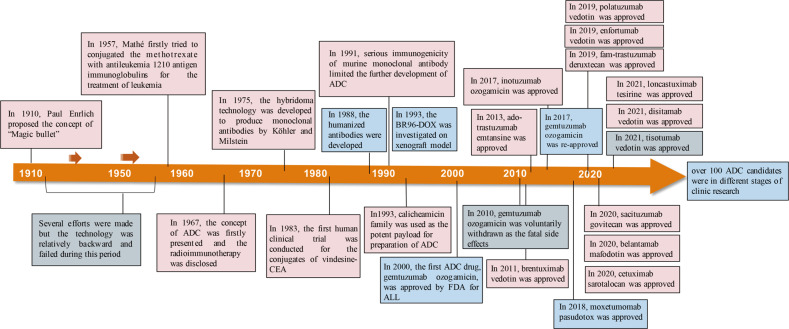
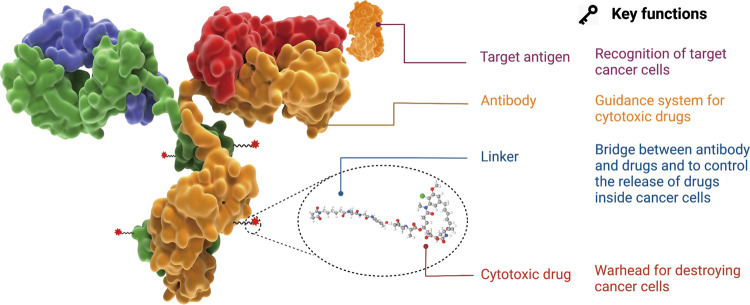
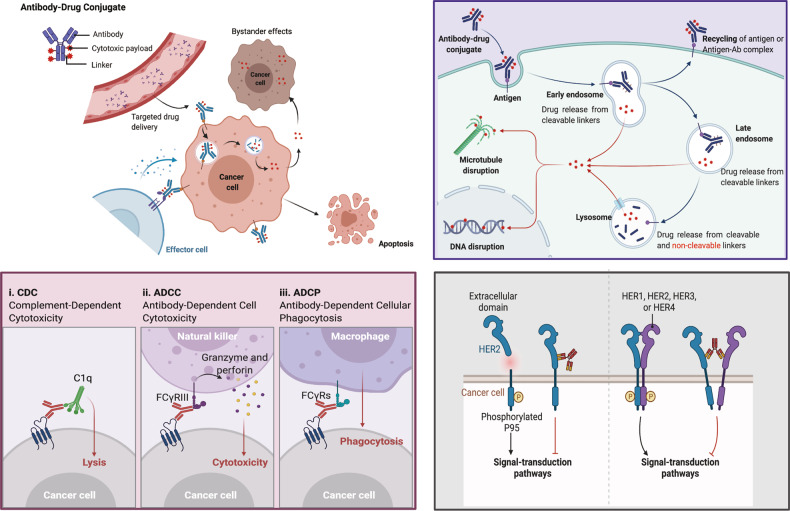
Antibody–drug conjugate (ADC) is typically composed of a monoclonal antibody (mAbs) covalently attached to a cytotoxic drug via a chemical linker. It combines both the advantages of highly specific targeting ability and highly potent killing effect to achieve accurate and efficient elimination of cancer cells, which has become one of the hotspots for the research and development of anticancer drugs. Since the first ADC, Mylotarg ® (gemtuzumab ozogamicin), was approved in 2000 by the US Food and Drug Administration (FDA), there have been 14 ADCs received market approval so far worldwide. Moreover, over 100 ADC candidates have been investigated in clinical stages at present. This kind of new anti-cancer drugs, known as “biological missiles”, is leading a new era of targeted cancer therapy. Herein, we conducted a review of the history and general mechanism of action of ADCs, and then briefly discussed the molecular aspects of key components of ADCs and the mechanisms by which these key factors influence the activities of ADCs. Moreover, we also reviewed the approved ADCs and other promising candidates in phase-3 clinical trials and discuss the current challenges and future perspectives for the development of next generations, which provide insights for the research and development of novel cancer therapeutics using ADCs.
Overview
The claims and statistics of this paper haven’t been checked yet.
Free: it reads the open-access text and checks the first 5 claims that cite a source we can check. Create a free account to check every claim.
Integrity signals
Registry
Cites
Statistics
Figures
Verification
Claims the paper makes
The claims and statistics of this paper haven’t been checked yet.
Free: it reads the open-access text and checks the first 5 claims that cite a source we can check. Create a free account to check every claim.
Claims other papers make about this one
Each is checked against this paper’s own text: does it say what the citing paper says it does?
The source backs part of the claim, not all of it — or backs it for a different population, condition or comparison.
In the citing paper
“However, hydrazone (t1/2 = 24 h) and carbonate (t1/2 = 36 h) linkers both suffer from instability in the plasma, with hydrolysis also occurring at physiological pH and contributing to off-target toxicity due to premature drug release54,58,59.”
From The evolving landscape of antibody-drug conjugates (ADCs) for treatment of prostate cancer (2025) · cites this paper as [54]
Experimental — accuracy not yet measuredThe source backs part of the claim, not all of it — or backs it for a different population, condition or comparison.
In the citing paper
“Enzyme-based linkers are utilized most commonly in ADCs: 8 out of 13 FDA-approved ADCs use a protease-cleavable linker, including the ADCs enfortumab vedotin and trastuzumab deruxtecan that have transformed the standard of care for metastatic urothelial and breast carcinomas54.”
From The evolving landscape of antibody-drug conjugates (ADCs) for treatment of prostate cancer (2025) · cites this paper as [54]
Experimental — accuracy not yet measuredThe source backs part of the claim, not all of it — or backs it for a different population, condition or comparison.
In the citing paper
“Hydrazone, carbonate, and silyl ether linkers are pH-sensitive, hydrolyzed in the acidic pH of lysosomes and endosomes upon target cell internalization54.”
From The evolving landscape of antibody-drug conjugates (ADCs) for treatment of prostate cancer (2025) · cites this paper as [54]
Experimental — accuracy not yet measured
Self-check
Percentages, sums and reported differences re-computed from the paper’s own numbers.
The self-check needs the paper’s full text.
Citations
Cites
Sung, H., Ferlay, J., Siegel, R. L., Laversanne, M., Soerjomataram, I., Jemal, A., & Bray, F. (2021) · CA: A Cancer Journal for Clinicians · doi:10.3322/caac.21660 · Cited by 108,699
Continuous cultures of fused cells secreting antibody of predefined specificity
KÖHLER, G., & MILSTEIN, C. (1975) · Nature · doi:10.1038/256495a0 · Cited by 17,229
Slamon, D. J., Clark, G. M., Wong, S. G., Levin, W. J., Ullrich, A., & McGuire, W. L. (1987) · Science · doi:10.1126/science.3798106 · Cited by 11,760 · cited 1×
“Solid tumors Ado-trastuzumab emtansine (Kadcyla, Roche): About 15%-20% of breast cancer patients show human epidermal growth factor receptor 2 (HER2) positive overexpression with a higher invasiveness.(191,192) Ado-trastuzumab emtansine, also known as T-DM1, is an ADC drug targeting HER2 and the first ADC to be approv…”
BackgroundToll-like receptors and innate immunity
Medzhitov, R. (2001) · Nature Reviews Immunology · doi:10.1038/35100529 · Cited by 4,308
Inhibition of Cell Division in Escherichia coli by Electrolysis Products from a Platinum Electrode
ROSENBERG, B., VAN CAMP, L., & KRIGAS, T. (1965) · Nature · doi:10.1038/205698a0 · Cited by 3,049
Strategies and challenges for the next generation of antibody–drug conjugates
Beck, A., Goetsch, L., Dumontet, C., & Corvaïa, N. (2017) · Nature Reviews Drug Discovery · doi:10.1038/nrd.2016.268 · Cited by 2,271
Trastuzumab deruxtecan in previously treated HER2-positive breast cancer
Modi, S., Saura, C., Yamashita, T., Park, Y. H., Kim, S.-B., Tamura, K., Andre, F., Iwata, H., Ito, Y., Tsurutani, J., et al. (2020) · New England Journal of Medicine · doi:10.1056/nejmoa1914510 · Cited by 2,006 · cited 3×
“0%).(207) Moreover, The recently updated data of DESTINY-Breast03, a global, head-to-head, randomized, open-label, pivotal phase 3 trial, demonstrated that DS-8201 had an significant superiority over T-DM1.”
BackgroundInfluentialTumor microenvironment as a therapeutic target in cancer
Xiao, Y., & Yu, D. (2021) · Pharmacology & Therapeutics · doi:10.1016/j.pharmthera.2020.107753 · Cited by 1,957
Rowinsky, E. K., & Donehower, R. C. (1995) · New England Journal of Medicine · doi:10.1056/nejm199504133321507 · Cited by 1,924
Sacituzumab Govitecan in Metastatic Triple-Negative Breast Cancer
Bardia, A., Hurvitz, S. A., Tolaney, S. M., Loirat, D., Punie, K., Oliveira, M., Brufsky, A., Sardesai, S. D., Kalinsky, K., Zelnak, A. B., et al. (2021) · New England Journal of Medicine · doi:10.1056/nejmoa2028485 · Cited by 1,711 · cited 1×
“The ASCENT study was performed in 529 patients with unresectable locally advanced or mTNBC who had relapsed after at least two prior chemotherapies, one of which could be in the neoadjuvant or adjuvant setting, if progression occurred within 12 months.(221) The enrolled patients were randomized into two groups, receiv…”
Method
Research works printed but not linked: 2
- Cortés, J. et al. LBA1 Trastuzumab deruxtecan (T-DXd) vs trastuzumab emtansine (T-DM1) in patients (Pts) with HER2+ metastatic breast cancer (mBC): Results of the randomized phase III DESTINY-Breast03 study. Ann. Oncol. 32, S1287–S1288 (2021). · DOI
- Spira, A. et al. OA03.03 Datopotamab deruxtecan (Dato-DXd; DS-1062), a TROP2 ADC, in patients with advanced NSCLC: updated results of TROPION-PanTumor01 phase 1 study. J. Thorac. Oncol. 16, S106–S107 (2021). · DOI
Cited by
Items 801–900 of 1,000
Antibody-drug conjugates in urinary tumors: clinical application, challenge, and perspectives
Li, K., Xie, G., Deng, X., Zhang, Y., Jia, Z., & Huang, Z. (2023) · Frontiers in Oncology · doi:10.3389/fonc.2023.1259784 · Cited by 7
Self-citationGao, A., Guo, X., Wen, J., Yang, P., & Ren, H. (2026) · Chemical Communications · doi:10.1039/d5cc06437f · Cited by 7
Feng, C., Lou, R., Chen, S., Lin, F., Ge, J., 张宇雯, Lin, C., & Huang, C. (2026) · Drug Delivery · doi:10.1080/10717544.2026.2645769 · Cited by 8
Elter, J. K., Liščáková, V., Moravec, O., Vragović, M., Filipová, M., Štěpánek, P., Šácha, P., & Hrubý, M. (2024) · Macromolecules · doi:10.1021/acs.macromol.3c02600 · Cited by 7
Yang, Y., Rao, R., Valliere‐Douglass, J. F., & Tremintin, G. (2024) · Journal of Chromatography B · doi:10.1016/j.jchromb.2024.124007 · Cited by 7
Rohrberg, K. S., Lopez, J. S., Milhem, M. M., Blank, C. U., Reijers, I. L. M., Thistlethwaite, F. C., Plummer, R., Piha-Paul, S. A., Janne, P. A., Shum, E., et al. (2025) · Cancer Research Communications · doi:10.1158/2767-9764.crc-25-0359 · Cited by 7
Bernstein, Z. J., Gierke, T. R., Dammen‐Brower, K., Tzeng, S. Y., Zhu, S. E., Chen, S. S., Wilson, D. S., Green, J. J., Yarema, K. J., & Spangler, J. B. (2024) · Journal of Biological Chemistry · doi:10.1016/j.jbc.2024.108005 · Cited by 7
Target and Gene-Based Therapeutic Strategies against Pancreatic Cancer: Current and Future Prospects
Dwivedi, M., Sanyal, S., Singh, S., Dwivedi, M., & Sanyal, S. (2024) · Current Gene Therapy · doi:10.2174/0115665232320846240910055032 · Cited by 7
Antibody-drug conjugates in oncology: A spotlight on overcoming resistance
Xu, X., Yu, T., & Wang, Z. (2025) · Critical Reviews in Oncology/Hematology · doi:10.1016/j.critrevonc.2025.105015 · Cited by 7
Development and application of antibody-drug conjugates in gynecological cancers
Zheng, R., Zhang, J., Zhou, J., Zhang, Z., Niu, M., Jing, F., Wu, K., Yi, M., & Li, T. (2025) · Science China Life Sciences · doi:10.1007/s11427-025-3016-4 · Cited by 7
Ren, J., Chen, Z.-Y., Bai, Y., & Han, P. (2024) · Frontiers in Pharmacology · doi:10.3389/fphar.2024.1377924 · Cited by 7
Design and synthesis of novel 4-aryl-2-benzoyl-imidazoles as colchicine binding site inhibitors
Albadari, N. G., Xie, Y., Wang, Q., Miller, D. J., Gruntz, J. Q., Oldham, M. L., Chen, H., Ma, D., Wu, Z., Miller, D. D., et al. (2025) · European Journal of Medicinal Chemistry · doi:10.1016/j.ejmech.2025.118021 · Cited by 7
Wojcik, J. B., Qian, M. G., Rosenbaum, A. I., Maes, E. M., Xue, Y., Kochansky, C. J., Boer, J., Chen, L. R., Descloux, S., Garofolo, F., et al. (2025) · Bioanalysis · doi:10.1080/17576180.2026.2617084 · Cited by 7
Subcutaneous Administration of Antibody-drug Conjugates
Yaseen, A. A., Rahman, M. A., & Tumey, L. N. (2026) · Current Pharmacology Reports · doi:10.1007/s40495-026-00442-5 · Cited by 7
Considerations for Single-Arm Trials to Support Accelerated Approval of Oncology Drugs
Lu, F., Wang, T., Lü, Y., & Chen, J. (2024) · The New England Journal of Statistics in Data Science · doi:10.51387/24-nejsds75 · Cited by 7
Aigbogun, O. P., Phenix, C. P., Krol, E. S., & Price, E. W. (2023) · Molecular Pharmaceutics · doi:10.1021/acs.molpharmaceut.2c00821 · Cited by 7
Chen, C., Pan, Y., Zhang, N., Yang, T., Shi, J., Ren, B., He, Y., & Zhang, X. (2026) · Journal of Controlled Release · doi:10.1016/j.jconrel.2026.114695 · Cited by 7
Yang, Y., Chen, C., Feng, Y., & Lv, Q. (2026) · Journal of Translational Medicine · doi:10.1186/s12967-026-07788-w · Cited by 8
Chen, C., Jiang, Y., Feng, C., Zhou, Q., Luo, X., Cai, L., & Zhao, L. (2025) · Molecular Therapy Oncology · doi:10.1016/j.omton.2025.201002 · Cited by 7
Can Patients with HER2-Low Breast Cancer Benefit from Anti-HER2 Therapies? A Review
Wang, J., Liao, D., Zhang, X., Miao, C., & Chen, K. (2023) · Breast Cancer Targets and Therapy · doi:10.2147/bctt.s407181 · Cited by 7
Suzuki, Y., Serada, S., Yamashita, M., Kawabata, K., Takahashi, T., Obata, K., Jo, A., Funajima, E., Doki, Y., & Naka, T. (2025) · Gastric Cancer · doi:10.1007/s10120-025-01647-1 · Cited by 7
Li, X., Liu, J. S., Meng, Y., Li, J., Zhao, J., Liu, D., & Zhang, X. (2026) · Pharmaceuticals · doi:10.3390/ph19020324 · Cited by 9
Modular in vivo antibody–ADC click to reverse drug resistance in tumours
Simó, C., Vanover, A., Albanus, R. D., Panikar, S. S., Shmuel, S., Benton, A., Giraldo-Guzmán, J., Luna, J. M., Xu, Y., Berry, N.-K., et al. (2026) · Nature · doi:10.1038/s41586-026-10789-w · Cited by 7
Jiang, K., & Wang, S. (2025) · Translational Breast Cancer Research · doi:10.21037/tbcr-24-38 · Cited by 7
Ahn, D., Park, S. H., Lee, Y. G., Jeong, M. S., Gone, G. B., Cho, Y., & Chung, S. J. (2025) · ACS Biomaterials Science & Engineering · doi:10.1021/acsbiomaterials.5c00224 · Cited by 7
Supramolecular Bioconjugation Strategy for Antibody-Targeted Delivery of siRNA
Ripoll, M., Cahuzac, H., Dovgan, I., Ursuegui, S., Neuberg, P., Erb, S., Cianférani, S., Kichler, A., Rémy, J.-S., & Wagner, A. (2024) · Bioconjugate Chemistry · doi:10.1021/acs.bioconjchem.4c00304 · Cited by 7
Alkhawaja, B. A., Abuarqoub, D. A., Alnatour, M., Alshaer, W., Abdallah, Q., Esawi, E., Jaber, M. A., Alkhawaja, N., Ghanim, B. Y., Qinna, N. A., et al. (2024) · Bioconjugate Chemistry · doi:10.1021/acs.bioconjchem.4c00275 · Cited by 7
New developments in the treatment of cervical cancer in 2026
Muzzarelli, A., Paderno, M., & Lorusso, D. (2025) · Current Opinion in Obstetrics & Gynecology · doi:10.1097/gco.0000000000001079 · Cited by 7
Fan, S., Zheng, H., Zhan, Y., Luo, J., Zang, H., Wang, H., Wang, W. G., & Xu, Y. (2023) · Critical Reviews in Oncology/Hematology · doi:10.1016/j.critrevonc.2023.104223 · Cited by 7
Fang, K., Jung, M., Sikorski, T. W., & Licea‐Perez, H. (2025) · Journal of Pharmaceutical and Biomedical Analysis · doi:10.1016/j.jpba.2025.117105 · Cited by 7
Tweed, J. A., Adams-Dam, F., Allanson, J., Holmes, K., Senior, R., Xu, H., Li, M., Bennett, G. S., & Jeffrey, P. (2023) · Bioanalysis · doi:10.4155/bio-2023-0189 · Cited by 7
Karunaratne, S. P., Moussa, E. M., Mills, B. J., & Weis, D. D. (2024) · Journal of Pharmaceutical Sciences · doi:10.1016/j.xphs.2024.05.008 · Cited by 7
Chandran, E. B. A., Atiq, S. O., Simon, N. I., Girardi, D. M., Ley, L., Cordes, L. M., Patel, R., Wang, T.-F., Kydd, A. R., Redd, B. A., et al. (2025) · Future Oncology · doi:10.1080/14796694.2025.2497719 · Cited by 7
Perfect Partners: Biocatalytic Halogenation and Metal Catalysis for Protein Bioconjugation
Montua, N., & Sewald, N. (2024) · ChemBioChem · doi:10.1002/cbic.202400496 · Cited by 6
Pharmacological frontiers in senescence: Transforming senescence with drug repurposing
Shahzadi, A., Özyazgan, S., & Çakatay, U. (2025) · Advances in pharmacology · doi:10.1016/bs.apha.2025.02.010 · Cited by 7
Krishnan, S. R., Sharma, D., Nazeer, Y., Bose, M., Rajkumar, T., Jayaraman, G., Madaboosi, N., & Gromiha, M. M. (2024) · Antibody Therapeutics · doi:10.1093/abt/tbae018 · Cited by 6
Nerella, S. G., Shaik, M. G., Singh, P., Arifuddin, M., Ullah, Q., & Supuran, C. T. (2025) · Bioorganic Chemistry · doi:10.1016/j.bioorg.2025.108408 · Cited by 6
Keshavarz, F., Soltanshahi, M., Ayadilord, M., Mortazavi, F. S., Shabani, M., & Jalali, S. A. (2026) · Cancer Cell International · doi:10.1186/s12935-025-04141-x · Cited by 6
Potential Targets and Biomarkers of Radionuclide Therapy in Breast Cancer
Tan, Y., Zeng, C., Wang, J., & Ma, F. (2026) · Cancer Innovation · doi:10.1002/cai2.70043 · Cited by 6
Estrogen receptor positive breast cancer: contemporary nuances to sequencing therapy
Schlefman, J., Brenin, C. M., Millard, T. A., & Dillon, P. M. (2023) · Medical Oncology · doi:10.1007/s12032-023-02255-8 · Cited by 6
The application of antibody-based agents in cancer therapy based on their mechanisms of action
Qian, K., Li, G., Zhang, S., Zou, Y., Ai, H., Zheng, X., Fu, W., Lei, C., & Hu, S. (2024) · Fundamental Research · doi:10.1016/j.fmre.2024.02.021 · Cited by 6
Mesenchymal stem cell therapy for premature ovarian insufficiency: progress and challenges
Shao, Z., Liang, L., Xue, Y., Zhu, T., & Wen, Q. (2026) · Journal of Ovarian Research · doi:10.1186/s13048-026-01976-4 · Cited by 6
Clinical trials of bispecific antibody therapy for colorectal cancer: advanced and next steps
Shao, W., Liu, Y., Huang, L., Lu, S., Zhai, Y., Xiong, Y., Chen, N., Ye, P., & Lv, Q. (2026) · Frontiers in Oncology · doi:10.3389/fonc.2026.1758251 · Cited by 6
Lin, H., Ma, X., Zhu, X., & Zhong, L. (2025) · Frontiers in Oncology · doi:10.3389/fonc.2025.1630056 · Cited by 6
Zhang, Y.-C., Luo, W., Li, J.-T., Wu, L., Chen, Z.-H., & Zhou, Q. H. (2026) · Journal of Controlled Release · doi:10.1016/j.jconrel.2026.114747 · Cited by 6
Self-citationDefining the tumor microenvironment of non‐small cell lung cancer
Embaye, K. S., Blick, T., Naei, V. Y., O'Byrne, K. J., Hughes, B. G. M., & Kulasinghe, A. (2026) · Immunology and Cell Biology · doi:10.1111/imcb.70114 · Cited by 6
Chemotherapy-free cancer treatment – not for everyone yet
Donzé, C., Eloy, J. A., & André, N. (2025) · Trends in cancer · doi:10.1016/j.trecan.2025.11.008 · Cited by 6
Masoud, I., Shaer, N. S. H. A., Masoud, A., Jandali, A. A., Aldahash, A., Jabri, A., Alsharif, M., Arshad, F., Arora, I., Khan, M. I., et al. (2026) · International Journal of Molecular Sciences · doi:10.3390/ijms27125196 · Cited by 7
Kumari, S., Cool, L. M., Howard, E., & Pawar, J. S. (2026) · Cancers · doi:10.3390/cancers18132102 · Cited by 6
Decoding CD24: Roles of chemoradiotherapy resistance and potential as therapeutic targets
HONG, Y., TANG, Y., ZHOU, W., LUO, H., Bu, L.-L., Qiu, H., & WU, Q. (2025) · Oncology Research Featuring Preclinical and Clinical Cancer Therapeutics · doi:10.32604/or.2025.059327 · Cited by 6
Cuffaro, D., Gregorio, L. D., Mangini, C., Taglieri, M., Matis, S., Benelli, R., Ardy, M., Salvini, L., Rossello, A., Poggi, A. D., et al. (2025) · Scientific Reports · doi:10.1038/s41598-025-22669-w · Cited by 6
Treatment options for advanced hepatocellular carcinoma: the potential of biologics
Rossari, F., Foti, S., Camera, S., Persano, M., Gardini, A. C., & Rimini, M. (2024) · Expert Opinion on Biological Therapy · doi:10.1080/14712598.2024.2363234 · Cited by 7
Zhuang, X., Lin, L., Li, J., Yu, G., Chen, B., Xu, Y., Chen, S., Yi, W., & Pan, L. (2026) · Cell chemical biology · doi:10.1016/j.chembiol.2026.02.015 · Cited by 6
Wang, H., Zhu, C., Swamynathan, M. M., Rajput, S., Jayanetti, K., Rendina, D., Takemura, K., Bogdan, D., Wang, L., Rizzo, R. C., et al. (2025) · Bioorganic & Medicinal Chemistry · doi:10.1016/j.bmc.2025.118136 · Cited by 6
Wu, J. R., Canjels, A., Miyauchi, R., & Kwon, E. J. (2025) · Bioconjugate Chemistry · doi:10.1021/acs.bioconjchem.5c00175 · Cited by 6
Azobenzene‐Based Linker Strategy for Selective Activation of Antibody–Drug Conjugates
Xiao, D., Liu, L., Xie, F., Dong, J., Wang, Y., Xu, X. M., Zhong, W., Deng, H., Zhou, X., & Li, S. (2024) · Angewandte Chemie · doi:10.1002/ange.202310318 · Cited by 6
Self-citationKinase inhibitors: 20 years of success and many new challenges and recent trends in their patents
Aboul‐Soud, M. A. M., Al‐Sheikh, Y. A., Ghneim, H. K., Supuran, C. T., & Carta, F. (2024) · Expert Opinion on Therapeutic Patents · doi:10.1080/13543776.2024.2355247 · Cited by 6
Rudolph, B., Davis, J. A., Hainzl, D., & Walles, M. (2024) · Xenobiotica · doi:10.1080/00498254.2024.2336576 · Cited by 6
The Future of Antibody Drug Conjugation by Comparing Various Methods of Site-Specific Conjugation
Okojie, J., McCollum, S., & Barrott, J. J. (2023) · Discovery Medicine · doi:10.24976/discov.med.202335179.87 · Cited by 6
Antibody-Drug-Conjugates (ADC): A Novel Treatment Option in Urothelial Carcinoma
Niegisch, G. (2023) · Methods in molecular biology · doi:10.1007/978-1-0716-3291-8_18 · Cited by 6
Development of a novel anti-CEACAM5 VHH for SPECT imaging and potential cancer therapy applications
Cong, Y., Biemans, R., Lieuwes, N. G., Suijlen, D., Lambin, P., Dijkgraaf, I., Bauwens, M., Yaromina, A., & Dubois, L. J. (2025) · European Journal of Nuclear Medicine and Molecular Imaging · doi:10.1007/s00259-025-07321-z · Cited by 6
Ahad, A., Saeed, H. K., del Solar, V., López‐Hernández, J. E., Michel, A. L., Mathew, J., Lewis, J. S., & Contel, M. (2023) · ACS Pharmacology & Translational Science · doi:10.1021/acsptsci.3c00270 · Cited by 6
Du, Q., Yao, S., Huang, Y., Zhang, J., Wangmo, S., Lu, X. J., Yang, J., Cheng, S., Wang, R., Xu, J., et al. (2025) · International Journal of Molecular Sciences · doi:10.3390/ijms262311761 · Cited by 6
Exploiting synthetic lethality in PDAC with antibody drug conjugates and ATR inhibition
Li, T., Yu, X., Wan, X., Liu, J., Zheng, J., Sun, Z., Zhao, Y., Chen, J., Chen, H., Yang, Y., et al. (2025) · European Journal of Medicinal Chemistry · doi:10.1016/j.ejmech.2025.117305 · Cited by 6
FGFR-Altered Urothelial Carcinoma: Resistance Mechanisms and Therapeutic Strategies
Benjamin, D. J., & Mita, A. C. (2024) · Targeted Oncology · doi:10.1007/s11523-024-01119-z · Cited by 6
Small-Cell Lung Cancer Updates
Nie, Y., & Chiang, A. C. (2025) · Seminars in Respiratory and Critical Care Medicine · doi:10.1055/a-2649-9240 · Cited by 6
Site-Selective Anti-PD-L1 Antibody–MMAE Conjugate for Enhanced NSCLC Therapy
Kwon, S. J., Son, J., & Chung, S. J. (2025) · ACS Medicinal Chemistry Letters · doi:10.1021/acsmedchemlett.5c00178 · Cited by 6
Shi, M., Chen, S., Feng, Y., Wang, S., Xia, Y., & He, J. (2025) · Frontiers in Marine Science · doi:10.3389/fmars.2024.1523246 · Cited by 7
Manabe, S., Senga, S., Iwamoto, S., Yarita, H., Takahashi, R., Mitani, A., Sumiyoshi, W., Hoshinoo, A., Hiranyakorn, M., Kinoshita, T., et al. (2026) · ACS Omega · doi:10.1021/acsomega.5c10898 · Cited by 6
Advances in adoptive cell therapies in small cell lung cancer
Bragasin, E. I., Cheng, J. K., Ford, L., Poei, D., Ali, S., & Hsu, R. C. (2025) · Exploration of Targeted Anti-tumor Therapy · doi:10.37349/etat.2025.1002302 · Cited by 6
Antibody therapeutics for epithelial ovarian cancer
Ruiz, M., Zhang, N., Sood, A. K., & An, Z. (2022) · Expert Opinion on Biological Therapy · doi:10.1080/14712598.2022.2141565 · Cited by 6
Liao, M. Z., Lu, D., Lu, T., Gibiansky, L. V., Deng, R., Samineni, D., Dere, R. C., Lin, A., Hirata, J. H., Shen, B., et al. (2024) · Advanced Drug Delivery Reviews · doi:10.1016/j.addr.2024.115193 · Cited by 6
Eltaib, L., Afzal, M., Maji, C., Malathi, H., Goyal, K., Ali, H., Gupta, G., & Hussain, M. S. (2025) · Cancer Chemotherapy and Pharmacology · doi:10.1007/s00280-025-04848-8 · Cited by 6
Pioneering the Way: The Revolutionary Potential of Antibody–Drug Conjugates in NSCLC
Chen, X., & Zeng, C. (2024) · Current Treatment Options in Oncology · doi:10.1007/s11864-024-01196-2 · Cited by 6
Drug resistance to antibody-drug conjugates: mechanisms, challenges, and perspectives
Liu, Y., Liu, Y., Wu, T., Bai, X., Wang, S., Zhang, L., Fu, Z., & Shi, C. (2026) · Cancer Biology and Medicine · doi:10.20892/j.issn.2095-3941.2025.0707 · Cited by 8
Self-citationTang, Z., Shen, S., Gu, C., Li, S., Ni, J., Yang, D., & Mi, Y. (2026) · International Journal of Nanomedicine · doi:10.2147/ijn.s579436 · Cited by 6
Self-citationHuang, J., Ojo, A., & Liaw, B. C.-H. (2026) · Current Oncology · doi:10.3390/curroncol33020103 · Cited by 6
Jin, S., Zhuang, X., Xu, Y., Nie, G., Chen, S., & Pan, L. (2024) · Nano Today · doi:10.1016/j.nantod.2024.102459 · Cited by 6
Advancing Antibody-Drug Conjugates: Current Perspectives and Future Directions
Etessami, J. D., Valenza, C., Tolcher, A. W., LoRusso, P. M., & Curigliano, G. (2026) · American Society of Clinical Oncology Educational Book · doi:10.1200/edbk-26-517110 · Cited by 6
Li, W., Zheng, C., Xu, X., Xia, Y., Zhang, K., Huang, A., Zhang, X., Yong, Z., Chen, G., & Zhang, S. (2024) · Cellular & Molecular Biology Letters · doi:10.1186/s11658-024-00555-z · Cited by 6
Making the Best Use of Available Weapons for the Inevitable Rivalry-Resistance to EGFR-TKIs
Li, D., Wang, J., Liu, C., Luo, Y., Xu, H., Wang, Y., Sun, N., & He, J. (2023) · Biomedicines · doi:10.3390/biomedicines11041141 · Cited by 6
Pavanello, M., Vieira, C. M., Arenhardt, M. P., & Nogueira‐Rodrigues, A. (2025) · Current Issues in Molecular Biology · doi:10.3390/cimb47090702 · Cited by 6
Exploring Metallaphotoredox Catalysis: A Synergistic Approach to Biomolecule Functionalization
Thedy, M. E. C., Hornink, M. M., Romero, E., & Molander, G. A. (2025) · ACS Catalysis · doi:10.1021/acscatal.5c06990 · Cited by 6
İlhan-Ayışığı, E., Saglam‐Metiner, P., Şancı, E., Bakan, B., Yıldırım, Y., Buhur, A., Yavaşoğlu, A., Yavaşoğlu, N. Ü. K., & Yeşil-Çeliktaş, Ö. (2024) · International Journal of Biological Macromolecules · doi:10.1016/j.ijbiomac.2024.129758 · Cited by 6
Yu, K., Wang, M., Wu, H., Ma, M., & Zhang, Y. (2026) · Analytical Methods · doi:10.1039/d6ay00209a · Cited by 6
Self-citationHype vs. Health: How Approved Nanomedicines Have Met (or Missed) Early Predictions
Fröhlich, E. (2026) · Nanomaterials · doi:10.3390/nano16050284 · Cited by 6
Wang, X., Chu, W., Du, F., Fan, H., Ye, Z., Xue, Y., Zhang, X., Yang, P., Xia, Y., Chen, Z., et al. (2025) · Materials Today Bio · doi:10.1016/j.mtbio.2025.101784 · Cited by 6
Li, X., Liang, L., Zhu, Z., Hua, H., & Qiu, Y. (2025) · Cancer Biology and Medicine · doi:10.20892/j.issn.2095-3941.2024.0586 · Cited by 6
Synthesis of site‐specific Fab‐drug conjugates using ADP‐ribosyl cyclases
Kim, H. S., Hariri, K., Zhang, X., Chen, L., Katz, B. B., Pei, H., Louie, S. G., & Zhang, Y. (2024) · Protein Science · doi:10.1002/pro.4924 · Cited by 6
Self-citationWang, S., Pan, H., Chen, Z., Zhou, H., Chen, J., Zou, G., Huang, J., & Mei, Q. (2025) · Expert Opinion on Drug Safety · doi:10.1080/14740338.2025.2449991 · Cited by 6
Chang, S.-R., Chou, C., Tu, H., Liu, C., Chang, K.-W., & Lin, S. (2024) · Journal of Dental Sciences · doi:10.1016/j.jds.2024.05.004 · Cited by 6
T-Cell Engagers In Multiple Myeloma: A Clinical Review
Al-Jarrad, A., Alouch, S. S., Chawla, Y., & Gonsalves, W. I. (2025) · Blood and Lymphatic Cancer Targets and Therapy · doi:10.2147/blctt.s492116 · Cited by 6
Targeting MET in EGFR-Mutated NSCLC
Saw, S. P. L., Li, M. S. C., Park, S., Hatano, H., Uehara, Y., Menis, J., Brandão, M., Hendriks, L. E. L., & Remón, J. (2026) · Journal of Thoracic Oncology · doi:10.1016/j.jtho.2026.103711 · Cited by 6
Upadhyay, A., Pal, D., & Kumar, A. (2025) · Critical Reviews in Biotechnology · doi:10.1080/07388551.2025.2506611 · Cited by 6
Zeng, F., Han, Q., Ding, T., Tian, C., & Jiang, M. (2025) · Discover Oncology · doi:10.1007/s12672-025-02457-8 · Cited by 6
Xiong, T., Jin, J., Liu, D., & Jin, C. (2025) · Molecules · doi:10.3390/molecules30071398 · Cited by 6
Yamada, T., Furusho, A., Kojima, K., Sugiyama, E., Mizuno, H., Tsukakoshi, K., Hayashi, H., Yamano, T., Hasebe, T., Toyo’oka, T., et al. (2024) · Biosensors and Bioelectronics · doi:10.1016/j.bios.2024.117108 · Cited by 6
Tan, F., Li, Y., Xia, H., & Yin, W. (2025) · PLoS ONE · doi:10.1371/journal.pone.0322378 · Cited by 6
The Impact of Conjugation Mode and Site on Tubulysin Antibody‐Drug‐Conjugate Efficacy and Stability
Yamazoe, S., Cheng, Q., Kotapati, S., Rangan, V. S., Sung, M., Deshpande, M., Jashnani, A., Cong, Q., Smith, M. J. P., Pan, C., et al. (2025) · ChemistryOpen · doi:10.1002/open.202400522 · Cited by 6
MARPLE: A Proximity‐Triggered CRISPR‐Cas13 Platform for Ultrasensitive Antibody Detection
Spezzani, E., Capelli, L., Lena, D., Chamorro-García, A., Ippodrino, R., Porchetta, A., & Bertucci, A. (2025) · Advanced Science · doi:10.1002/advs.202517799 · Cited by 6
Metadata
- Authors
- Fu, Z., Li, S., Han, S., Shi, C., & Zhang, Y.
- Affiliations
- Huazhong University of Science and Technology (CN)
- China Pharmaceutical University (CN)
- Wuhan Union Hospital (CN)
- Corresponding author
- Zhang, Yu
- Venue
- Signal Transduction and Targeted Therapy
- Published
- 2022-03-22
- Volume
- 7
- Issue
- 1
- Pages
- 93-93
- ISSN
- 2059-3635 (ISSN-L)
- PMC
- PMC8941077
- OpenAlex
- W4220847494
- Cited by
- 1,643
- References
- 274
- Citations by year
- 2026: 374 · 2025: 510 · 2024: 433 · 2023: 283 · 2022: 43
- FWCI
- 54.06
- Type
- journal article
- Language
- en
- Open access
- gold
- doi.org
- Licence
- cc-by
- creativecommons.org/licenses/by/4.0 (tdm)
- creativecommons.org/licenses/by/4.0 (vor)
- Locations
- Signal Transduction and Targeted Therapy (publishedVersion, cc-by)
- PubMed Central (publishedVersion, cc-by)
- PubMed (publishedVersion)
- DOAJ (DOAJ: Directory of Open Access Journals) (submittedVersion, cc-by-sa)
- Funders
- National Natural Science Foundation of China (82073402)
- Topics
- Life Sciences › Immunology and Microbiology › Immunology › Monoclonal and Polyclonal Antibodies Research
- Life Sciences › Immunology and Microbiology › Immunology › Toxin Mechanisms and Immunotoxins
- Life Sciences › Biochemistry, Genetics and Molecular Biology › Molecular Biology › Protein Degradation and Inhibitors
- Keywords
- antibody-drug conjugates, targeted cancer therapy, monoclonal antibodies, cytotoxic drugs, chemical linkers, mechanism of action, gemtuzumab ozogamicin
- MeSH terms
- Antibodies, Monoclonal, Antineoplastic Agents, Humans, Neoplasms, United States, United States Food and Drug Administration, Immunoconjugates
About these checks
Registry, retraction, Cites and statistics results are computed, not judged, with one exception: a printed reference that no index lists is read once by a model before it counts as a citation error. Claims are extracted by a model and kept only when their quote appears verbatim in the text; each cited source is then checked, with a model’s help, for whether it says what the claim relies on. Those verdicts can be wrong — read the claim’s quote and the cited source before relying on one.
Statistics and arithmetic are recomputed, not judged.
Confidence bands are shown only for fields calibrated on our annotated test set. None is calibrated yet, so no band is shown.
What counts as a claim ›How we measure confidence ›How we check this ›
Are you an author, or do you see a problem with this page? Request a review
Data sources
Bibliographic data: Semantic Scholar, OpenAlex, Crossref.
Contains information from the Semantic Scholar Academic Graph Datasets, made available under the ODC Attribution License (ODC-BY 1.0).
Semantic Scholar’s data is described in: Kinney, R., et al. (2023). The Semantic Scholar Open Data Platform. arXiv:2301.10140.
