

Antibody drug conjugate: the “biological missile” for targeted cancer therapy
Open accessThe DOI matches its Crossref record; 275 of the 275 references it cites were found in a registry or an index.
Abstract
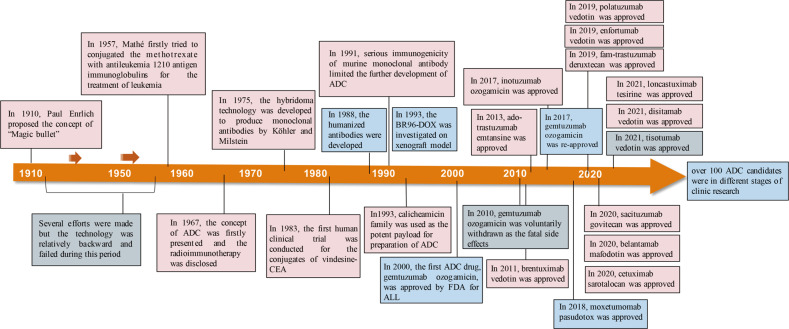
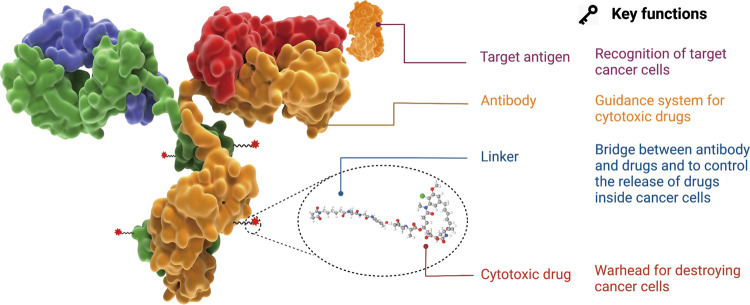
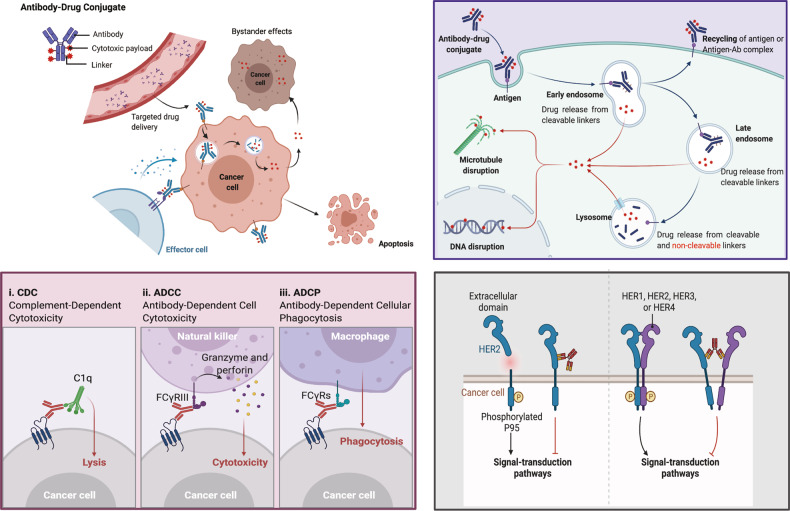
Antibody–drug conjugate (ADC) is typically composed of a monoclonal antibody (mAbs) covalently attached to a cytotoxic drug via a chemical linker. It combines both the advantages of highly specific targeting ability and highly potent killing effect to achieve accurate and efficient elimination of cancer cells, which has become one of the hotspots for the research and development of anticancer drugs. Since the first ADC, Mylotarg ® (gemtuzumab ozogamicin), was approved in 2000 by the US Food and Drug Administration (FDA), there have been 14 ADCs received market approval so far worldwide. Moreover, over 100 ADC candidates have been investigated in clinical stages at present. This kind of new anti-cancer drugs, known as “biological missiles”, is leading a new era of targeted cancer therapy. Herein, we conducted a review of the history and general mechanism of action of ADCs, and then briefly discussed the molecular aspects of key components of ADCs and the mechanisms by which these key factors influence the activities of ADCs. Moreover, we also reviewed the approved ADCs and other promising candidates in phase-3 clinical trials and discuss the current challenges and future perspectives for the development of next generations, which provide insights for the research and development of novel cancer therapeutics using ADCs.
Overview
The claims and statistics of this paper haven’t been checked yet.
Free: it reads the open-access text and checks the first 5 claims that cite a source we can check. Create a free account to check every claim.
Integrity signals
Registry
Cites
Statistics
Figures
Verification
Claims the paper makes
The claims and statistics of this paper haven’t been checked yet.
Free: it reads the open-access text and checks the first 5 claims that cite a source we can check. Create a free account to check every claim.
Claims other papers make about this one
Each is checked against this paper’s own text: does it say what the citing paper says it does?
The source backs part of the claim, not all of it — or backs it for a different population, condition or comparison.
In the citing paper
“However, hydrazone (t1/2 = 24 h) and carbonate (t1/2 = 36 h) linkers both suffer from instability in the plasma, with hydrolysis also occurring at physiological pH and contributing to off-target toxicity due to premature drug release54,58,59.”
From The evolving landscape of antibody-drug conjugates (ADCs) for treatment of prostate cancer (2025) · cites this paper as [54]
Experimental — accuracy not yet measuredThe source backs part of the claim, not all of it — or backs it for a different population, condition or comparison.
In the citing paper
“Enzyme-based linkers are utilized most commonly in ADCs: 8 out of 13 FDA-approved ADCs use a protease-cleavable linker, including the ADCs enfortumab vedotin and trastuzumab deruxtecan that have transformed the standard of care for metastatic urothelial and breast carcinomas54.”
From The evolving landscape of antibody-drug conjugates (ADCs) for treatment of prostate cancer (2025) · cites this paper as [54]
Experimental — accuracy not yet measuredThe source backs part of the claim, not all of it — or backs it for a different population, condition or comparison.
In the citing paper
“Hydrazone, carbonate, and silyl ether linkers are pH-sensitive, hydrolyzed in the acidic pH of lysosomes and endosomes upon target cell internalization54.”
From The evolving landscape of antibody-drug conjugates (ADCs) for treatment of prostate cancer (2025) · cites this paper as [54]
Experimental — accuracy not yet measured
Self-check
Percentages, sums and reported differences re-computed from the paper’s own numbers.
The self-check needs the paper’s full text.
Citations
Cites
Sung, H., Ferlay, J., Siegel, R. L., Laversanne, M., Soerjomataram, I., Jemal, A., & Bray, F. (2021) · CA: A Cancer Journal for Clinicians · doi:10.3322/caac.21660 · Cited by 108,699
Continuous cultures of fused cells secreting antibody of predefined specificity
KÖHLER, G., & MILSTEIN, C. (1975) · Nature · doi:10.1038/256495a0 · Cited by 17,229
Slamon, D. J., Clark, G. M., Wong, S. G., Levin, W. J., Ullrich, A., & McGuire, W. L. (1987) · Science · doi:10.1126/science.3798106 · Cited by 11,760 · cited 1×
“Solid tumors Ado-trastuzumab emtansine (Kadcyla, Roche): About 15%-20% of breast cancer patients show human epidermal growth factor receptor 2 (HER2) positive overexpression with a higher invasiveness.(191,192) Ado-trastuzumab emtansine, also known as T-DM1, is an ADC drug targeting HER2 and the first ADC to be approv…”
BackgroundToll-like receptors and innate immunity
Medzhitov, R. (2001) · Nature Reviews Immunology · doi:10.1038/35100529 · Cited by 4,308
Inhibition of Cell Division in Escherichia coli by Electrolysis Products from a Platinum Electrode
ROSENBERG, B., VAN CAMP, L., & KRIGAS, T. (1965) · Nature · doi:10.1038/205698a0 · Cited by 3,049
Strategies and challenges for the next generation of antibody–drug conjugates
Beck, A., Goetsch, L., Dumontet, C., & Corvaïa, N. (2017) · Nature Reviews Drug Discovery · doi:10.1038/nrd.2016.268 · Cited by 2,271
Trastuzumab deruxtecan in previously treated HER2-positive breast cancer
Modi, S., Saura, C., Yamashita, T., Park, Y. H., Kim, S.-B., Tamura, K., Andre, F., Iwata, H., Ito, Y., Tsurutani, J., et al. (2020) · New England Journal of Medicine · doi:10.1056/nejmoa1914510 · Cited by 2,006 · cited 3×
“0%).(207) Moreover, The recently updated data of DESTINY-Breast03, a global, head-to-head, randomized, open-label, pivotal phase 3 trial, demonstrated that DS-8201 had an significant superiority over T-DM1.”
BackgroundInfluentialTumor microenvironment as a therapeutic target in cancer
Xiao, Y., & Yu, D. (2021) · Pharmacology & Therapeutics · doi:10.1016/j.pharmthera.2020.107753 · Cited by 1,957
Rowinsky, E. K., & Donehower, R. C. (1995) · New England Journal of Medicine · doi:10.1056/nejm199504133321507 · Cited by 1,924
Sacituzumab Govitecan in Metastatic Triple-Negative Breast Cancer
Bardia, A., Hurvitz, S. A., Tolaney, S. M., Loirat, D., Punie, K., Oliveira, M., Brufsky, A., Sardesai, S. D., Kalinsky, K., Zelnak, A. B., et al. (2021) · New England Journal of Medicine · doi:10.1056/nejmoa2028485 · Cited by 1,711 · cited 1×
“The ASCENT study was performed in 529 patients with unresectable locally advanced or mTNBC who had relapsed after at least two prior chemotherapies, one of which could be in the neoadjuvant or adjuvant setting, if progression occurred within 12 months.(221) The enrolled patients were randomized into two groups, receiv…”
Method
Research works printed but not linked: 2
- Cortés, J. et al. LBA1 Trastuzumab deruxtecan (T-DXd) vs trastuzumab emtansine (T-DM1) in patients (Pts) with HER2+ metastatic breast cancer (mBC): Results of the randomized phase III DESTINY-Breast03 study. Ann. Oncol. 32, S1287–S1288 (2021). · DOI
- Spira, A. et al. OA03.03 Datopotamab deruxtecan (Dato-DXd; DS-1062), a TROP2 ADC, in patients with advanced NSCLC: updated results of TROPION-PanTumor01 phase 1 study. J. Thorac. Oncol. 16, S106–S107 (2021). · DOI
Cited by
Items 201–300 of 1,000
The Evolution of Antibody‐Drug Conjugates: Toward Accurate DAR and Multi‐specificity
Dong, W., Wang, W., & Cao, C. (2024) · ChemMedChem · doi:10.1002/cmdc.202400109 · Cited by 38
Recent advances in N- and C-terminus cysteine protein bioconjugation
Spears, R. J., & Chudasama, V. (2023) · Current Opinion in Chemical Biology · doi:10.1016/j.cbpa.2023.102306 · Cited by 37
Conditional PROTAC: Recent Strategies for Modulating Targeted Protein Degradation
Yim, J., Park, J., Kim, G., Lee, H. H., Chung, J. S., Jo, A., Koh, M., & Park, J. (2024) · ChemMedChem · doi:10.1002/cmdc.202400326 · Cited by 36
Targeting STAT3 for Cancer Therapy: Focusing on Y705, S727, or Dual Inhibition?
Berkley, K., Zalejski, J., & Sharma, A. K. (2025) · Cancers · doi:10.3390/cancers17050755 · Cited by 37
RIPTACs: A groundbreaking approach to drug discovery
Ma, Z., Bolinger, A. A., & Zhou, J. (2023) · Drug Discovery Today · doi:10.1016/j.drudis.2023.103774 · Cited by 36
The current and emerging immunotherapy paradigm in small-cell lung cancer
Qin, K., Gay, C. M., Byers, L. A., & Zhang, J. J. (2025) · Nature Cancer · doi:10.1038/s43018-025-00992-5 · Cited by 36
Zhang, T., Xu, J., Yin, J., Gao, Y., Zheng, H., Fu, B., Sun, J., Xu, Z., Tu, S., Mao, Y., et al. (2025) · PLoS ONE · doi:10.1371/journal.pone.0326691 · Cited by 36
Zhu, X., Li, Q., Kong, Y., Huang, K., Wang, G., Wang, Y.-J., Lu, J., Hua, G., Wu, Y., & Ying, T. (2023) · Acta Pharmacologica Sinica · doi:10.1038/s41401-023-01200-9 · Cited by 35
Pancreatic Cancer: Pathogenesis and Clinical Studies
Zhou, K., Liu, Y., Tang, C., & Zhu, H. (2025) · MedComm · doi:10.1002/mco2.70162 · Cited by 35
Hamdy, N. Μ., Eskander, G., & Basalious, E. B. (2022) · International Journal of Nanomedicine · doi:10.2147/ijn.s386037 · Cited by 35
Zana, A., Puig-Moreno, C., Bocci, M., Gilardoni, E., Nitto, C. D., Principi, L., Ravazza, D., Rotta, G., Prodi, E., Luca, R. D., et al. (2023) · Bioconjugate Chemistry · doi:10.1021/acs.bioconjchem.3c00244 · Cited by 35
Villacampa, G. J., Morgado, P. C., Carità, L., Navarro, V., Pascual, T., & Dienstmann, R. (2024) · Cancer Treatment Reviews · doi:10.1016/j.ctrv.2024.102847 · Cited by 35
Small molecules and conjugates as theranostic agents
Pratihar, S., Bhagavath, K. K., & Govindaraju, T. (2023) · RSC Chemical Biology · doi:10.1039/d3cb00073g · Cited by 35
Hobson, A. D., Xu, J., Welch, D. S., Marvin, C. C., McPherson, M. J., Gates, B. D., Liao, X., Hollmann, M., Gattner, M. J., Dzeyk, K., et al. (2023) · Journal of Medicinal Chemistry · doi:10.1021/acs.jmedchem.3c01174 · Cited by 35
The journey of antibody-drug conjugates for revolutionizing cancer therapy: A review
Akram, F., Ali, A. M., Akhtar, M. T., Fatima, T., Shabbir, I., & Haq, I. U. (2024) · Bioorganic & Medicinal Chemistry · doi:10.1016/j.bmc.2024.118010 · Cited by 35
Antibody drug conjugates in the clinic
Udofa, E., Sankholkar, D., Mitragotri, S., & Zhao, Z. (2024) · Bioengineering & Translational Medicine · doi:10.1002/btm2.10677 · Cited by 35
Targeting CD22 for B-cell hematologic malignancies
Xu, J., Luo, W., Li, C., & Mei, H. (2023) · Experimental Hematology and Oncology · doi:10.1186/s40164-023-00454-7 · Cited by 35
Kalinovsky, D. V., Kholodenko, I. V., Кибардин, А. В., Doronin, I. I., Svirshchevskaya, E. V., Ryazantsev, D. Y., Konovalova, M. V., Rozov, F. N., Larin, S. S., Deyev, S. M., et al. (2023) · International Journal of Molecular Sciences · doi:10.3390/ijms24021239 · Cited by 35
Mer, A. H., Mirzaei, Y., Misamogooe, F., Bagheri, N., Bazyari, A., Keshtkaran, Z., Meyfour, A., Shahedi, A., Amirkhani, Z., Jafari, A., et al. (2024) · Drug Delivery and Translational Research · doi:10.1007/s13346-024-01564-3 · Cited by 34
Breast Cancer: Molecular Pathogenesis and Targeted Therapy
Samad, M. A., Ahmad, I., Khan, M. R., Suhail, M., Zughaibi, T. A., Al-Abbasi, F. A., Alhosaini, K. A., Khan, M. S., Kumer, A., & Tabrez, S. S. M. (2025) · MedComm · doi:10.1002/mco2.70404 · Cited by 34
Tardito, S., Matis, S., Zocchi, M. R., Benelli, R., & Poggi, A. D. (2024) · International Journal of Molecular Sciences · doi:10.3390/ijms25137131 · Cited by 34
Current and Emerging Prodrug Strategies
Brown, D. G., & Park, H. (2025) · Journal of Medicinal Chemistry · doi:10.1021/acs.jmedchem.5c00826 · Cited by 34
Triple-negative breast cancer: from none to multiple therapeutic targets in two decades
Carvalho, F. M. (2023) · Frontiers in Oncology · doi:10.3389/fonc.2023.1244781 · Cited by 34
Pal, L. B., Bule, P., Khan, W., & Chella, N. (2023) · Pharmaceutics · doi:10.3390/pharmaceutics15071807 · Cited by 34
Hijacking Extracellular Targeted Protein Degrader–Drug Conjugates for Enhanced Drug Delivery
Zhao, F., Wu, Y., Schaefer, K., Zhang, Y., Miao, K., Yao, Z. W., Ganjave, S. D., Kumru, K. S., Peters-Clarke, T. M., Inague, A., et al. (2025) · Journal of the American Chemical Society · doi:10.1021/jacs.5c15047 · Cited by 35
Self-citationZhou, D., Zhai, X.-T., Zhang, L.-W., Xie, Z.-H., Wang, Y., Zhen, Y., Gao, R., & Miao, Q. (2024) · npj Precision Oncology · doi:10.1038/s41698-024-00584-z · Cited by 34
Aryal, S., Park, S., Park, H., Park, C., Kim, W. C., Thakur, D., Won, Y., & Key, J. (2023) · International Journal of Nanomedicine · doi:10.2147/ijn.s432839 · Cited by 33
Jacob, J., Francisco, L. E., Chatterjee, T., Liang, Z., Subramanian, S., Liu, Q. J., Rowe, J. H., & Carmon, K. S. (2023) · British Journal of Cancer · doi:10.1038/s41416-023-02192-3 · Cited by 34
Clinical translation and landscape of stimuli-responsive nanomedicines and microscale therapeutics
Kobzev, D., Kulyk, O., Barmin, R. A., Tatarets, A. L., Pallares, R. M., Kiessling, F. M., Lammers, T., & Peña, Q. (2026) · Chemical Society Reviews · doi:10.1039/d6cs00165c · Cited by 35
Fujii, T., & Matsuda, Y. (2023) · Expert Opinion on Biological Therapy · doi:10.1080/14712598.2023.2276873 · Cited by 35
Antibody-Drug Conjugates Containing Payloads from Marine Origin
Cheng‐Sánchez, I., Moya‐Utrera, F., Porras-Alcalá, C., López‐Romero, J. M., & Sarabia, F. (2022) · Marine Drugs · doi:10.3390/md20080494 · Cited by 33
Antibody-drug conjugates in cancer therapy: innovations, challenges, and future directions
Kumari, S., Raj, S., Babu, M. A., Bhatti, G. K., & Bhatti, J. S. (2023) · Archives of Pharmacal Research · doi:10.1007/s12272-023-01479-6 · Cited by 33
Mulati, Y., Shen, Q., Tian, Y., Chen, Y., Yao, K., Yu, W., Cui, Y., Shi, X., He, Z., Zhang, Q., et al. (2025) · Scientific Reports · doi:10.1038/s41598-025-06393-z · Cited by 33
Liu, F., Yin, G., Xue, S., Rehman, F. U., Liao, D., & Pan, Y. (2023) · Journal of Cancer · doi:10.7150/jca.86746 · Cited by 33
Lefebvre, A., Adam, J., Nicolazzi, C., Larois, C., Attenot, F., Falda-Buscaiot, F., Dib, C., Masson, N., Ternès, N., Bauchet, A.-L., et al. (2023) · Lung Cancer · doi:10.1016/j.lungcan.2023.107356 · Cited by 33
Shen, L., Monasson, O., Peroni, E., Bideau, F. L., & Messaoudi, S. (2023) · Angewandte Chemie International Edition · doi:10.1002/anie.202315748 · Cited by 33
Signature of click chemistry in advanced techniques for cancer therapeutics
Ragab, S. S. (2025) · RSC Advances · doi:10.1039/d5ra01196e · Cited by 32
Immunotherapy in cervical cancer: an innovative approach for better treatment outcomes
Dey, T., & Agrawal, S. (2025) · Exploration of Targeted Anti-tumor Therapy · doi:10.37349/etat.2025.1002296 · Cited by 32
Su, M., Liu, Y., Lin, H., Wang, X., Ying, D., Zhang, L., Yang, C., Jiang, M., Xu, L., Xie, W., et al. (2025) · Signal Transduction and Targeted Therapy · doi:10.1038/s41392-025-02399-1 · Cited by 32
Advancing protein therapeutics through proximity-induced chemistry
Cheng, L., Wang, Y., Guo, Y., Zhang, S. S., & Xiao, H. (2023) · Cell chemical biology · doi:10.1016/j.chembiol.2023.09.004 · Cited by 32
Camptothein-Based Anti-Cancer Therapies and Strategies to Improve Their Therapeutic Index
Gong, J., Zhang, W., & Balthasar, J. P. (2025) · Cancers · doi:10.3390/cancers17061032 · Cited by 33
Jaradat, S. K., Ayoub, N. M., Sharie, A. H. A., & Aldaod, J. M. (2024) · Technology in Cancer Research & Treatment · doi:10.1177/15330338241234780 · Cited by 32
The Extraordinary Benefit of Nature’s Chemistry to Health, Society, and the Economy
Moore, B. S., & Newman, D. J. (2025) · Journal of Natural Products · doi:10.1021/acs.jnatprod.5c00554 · Cited by 32
Dwivedy, A., Baskaran, D., Sharma, G., Hong, W., Gandavadi, D., Krissanaprasit, A., Han, J., Liu, Y., Zimmers, Z. A., Mafokwane, T., et al. (2025) · Advanced Functional Materials · doi:10.1002/adfm.202425394 · Cited by 32
Long, J., Shao, T., Wang, Y., Chen, T., Chen, Y., Chen, Y., Wang, Q., Xiong, Y., Yu, J., He, K., et al. (2025) · Bioconjugate Chemistry · doi:10.1021/acs.bioconjchem.4c00392 · Cited by 32
Hao, Y., & Song, Z. (2025) · Cancer Drug Resistance · doi:10.20517/cdr.2025.148 · Cited by 33
Kim, Y., Li, W., Zhelev, D. V., Mellors, J. W., Dimitrov, D. S., & Baek, D.-S. (2023) · Frontiers in Oncology · doi:10.3389/fonc.2023.1124039 · Cited by 32
Chen, L., Xin, X., Zhang, Y., Li, S., Zhao, X., Li, S., & Xu, Z. (2023) · Molecules · doi:10.3390/molecules28186745 · Cited by 32
Self-citationLin, S., Zhang, Y. L., Yao, J., Yang, J., Qiu, Y., Zhu, Z., & Hua, H. (2024) · Journal of Translational Medicine · doi:10.1186/s12967-024-05568-y · Cited by 32
Self-citationReforming solid tumor treatment: the emerging potential of smaller format antibody-drug conjugate
Ma, X., Wang, M., Ying, T., & Wu, Y. (2024) · Antibody Therapeutics · doi:10.1093/abt/tbae005 · Cited by 32
Unlocking New Horizons in Small-Cell Lung Cancer Treatment: The Onset of Antibody–Drug Conjugates
Belluomini, L., Sposito, M., Avancini, A., Insolda, J., Milella, M., Rossi, A., & Pilotto, S. (2023) · Cancers · doi:10.3390/cancers15225368 · Cited by 32
Abbood, A. (2023) · Journal of Analytical Methods in Chemistry · doi:10.1155/2023/8150143 · Cited by 32
Zero-shot design of drug-binding proteins via neural iterative selection−expansion
Fry, B. N., Slaw, K., & Polizzi, N. F. (2026) · Nature · doi:10.1038/s41586-026-10670-w · Cited by 31
Zhang, L., Yan, Y., Gao, Y., Chen, Y., Yu, J., Ren, N., & Sun, L. (2024) · Scientific Reports · doi:10.1038/s41598-024-68311-z · Cited by 31
Lin, J., Chen, Z., Zhang, D., Zhang, N., Chen, H., & Guo, D. (2025) · Macromolecular Rapid Communications · doi:10.1002/marc.202401051 · Cited by 31
Antibody–Drug Conjugates in Breast Cancer: Ascent to Destiny and Beyond—A 2023 Review
Xiao, T., Ali, S., Mata, D. G. D. M. M., Lohmann, A. E., & Blanchette, P. (2023) · Current Oncology · doi:10.3390/curroncol30070474 · Cited by 31
Glucocorticoids-based prodrug design: Current strategies and research progress
Liu, H., Ji, M., Xiao, P., Gou, J., Yin, T., He, H., Tang, X., & Zhang, Y. (2024) · Asian Journal of Pharmaceutical Sciences · doi:10.1016/j.ajps.2024.100922 · Cited by 31
Self-citationAntibody–Drug Conjugates: Ushering in a New Era of Cancer Therapy
Hurwitz, J., Haggstrom, L., & Lim, E. (2023) · Pharmaceutics · doi:10.3390/pharmaceutics15082017 · Cited by 33
Designing Bioorthogonal Reactions for Biomedical Applications
Zhang, Q., Kuang, G., Wang, L., Duan, P., Sun, W., & Ye, F. (2023) · Research · doi:10.34133/research.0251 · Cited by 31
Decoding TROP2 in breast cancer: significance, clinical implications, and therapeutic advancements
Yao, L., Chen, J., & Ma, W. (2023) · Frontiers in Oncology · doi:10.3389/fonc.2023.1292211 · Cited by 31
Antibody-Drug Conjugates for Breast Cancer Treatment: Emerging Agents, Targets and Future Directions
Yang, T.-L., Li, W., Huang, T., & Zhou, J. Y. (2023) · International Journal of Molecular Sciences · doi:10.3390/ijms241511903 · Cited by 31
Antibody-Drug Conjugates in Gynecologic Cancers
Anastasio, M. K., Shuey, S., & Davidson, B. A. (2024) · Current Treatment Options in Oncology · doi:10.1007/s11864-023-01166-0 · Cited by 31
Antibody–drug conjugates: the evolving field of targeted chemotherapy for breast cancer treatment
Marta, G. N., Molinelli, C., Debien, V., Martins-Branco, D. A., Aftimos, P. G., de Azambuja, E., & Awada, A. H. (2023) · Therapeutic Advances in Medical Oncology · doi:10.1177/17588359231183679 · Cited by 31
Meric‐Bernstam, F., Calvo, E., Lee, K. S., Moreno, V., Park, Y. H., Rha, S. Y., Chalasani, P., Zhong, W., Zhou, L., Pirie-Shepherd, S. R., et al. (2023) · Molecular Cancer Therapeutics · doi:10.1158/1535-7163.mct-23-0101 · Cited by 31
Targeted Drug Delivery Using a Plug-to-Direct Antibody–Nanogel Conjugate
Huynh, U., Wu, P., Qiu, J., Prachyathipsakul, T., Singh, K., Jerry, D. J., Gao, J., & Thayumanavan, S. (2023) · Biomacromolecules · doi:10.1021/acs.biomac.2c01269 · Cited by 31
Therapeutic antibodies in oncology: an immunopharmacological overview
Toledo‐Stuardo, K., Ribeiro, C. H., González‐Herrera, F., Matthies, D. J., Roy, M. S. L., Dietz-Vargas, C., Latorre, Y., Campos, I., Guerra, Y., Tello, S., et al. (2024) · Cancer Immunology Immunotherapy · doi:10.1007/s00262-024-03814-2 · Cited by 30
Deciphering the bone marrow microenvironment’s role in multiple myeloma immunotherapy resistance
Iannozzi, N. T., Giuliani, N., & Storti, P. (2025) · Frontiers in Immunology · doi:10.3389/fimmu.2025.1613265 · Cited by 30
Macrocyclization strategy for improving candidate profiles in medicinal chemistry
Darlami, O., Pun, R., Ahn, S., Kim, S., & Shin, D. (2024) · European Journal of Medicinal Chemistry · doi:10.1016/j.ejmech.2024.116501 · Cited by 30
Protein isoform-centric therapeutics: expanding targets and increasing specificity
Kjer-Hansen, P., Phan, T. G., & Weatheritt, R. J. (2024) · Nature Reviews Drug Discovery · doi:10.1038/s41573-024-01025-z · Cited by 30
Therapeutic Targets of Monoclonal Antibodies Used in the Treatment of Cancer: Current and Emerging
Effer, B. R., Perez, I., Ulloa, D., Mayer, C., Muñoz, F., Bustos, D., Rojas, C., Manterola, C., Vergara-Gómez, L., Dappolonnio, C., et al. (2023) · Biomedicines · doi:10.3390/biomedicines11072086 · Cited by 30
Economics of Antibody Drug Conjugates (ADCs): Innovation, Investment and Market Dynamics
Bhushan, A., & Misra, P. (2024) · Current Oncology Reports · doi:10.1007/s11912-024-01582-x · Cited by 30
Protacs in cancer therapy: mechanisms, design, clinical trials, and future directions
Vikal, A., Maurya, R., Patel, B. B., Sharma, R. K., Patel, P., Patil, U. K., & Kurmi, B. D. (2024) · Drug Delivery and Translational Research · doi:10.1007/s13346-024-01754-z · Cited by 32
Antonarelli, G., Corti, C., Tarantino, P., Salimbeni, B. T., Zagami, P., Marra, A., Trapani, D., Tolaney, S. M., Cortés, J., & Curigliano, G. (2023) · ESMO Open · doi:10.1016/j.esmoop.2023.101608 · Cited by 30
Progress on Phage Display Technology: Tailoring Antibodies for Cancer Immunotherapy
França, R. K. A. D. O., Studart, I. C., Bezerra, M. R. L., Pontes, L. Q., Barbosa, A. M. A., Brígido, M. M., Furtado, G. P., & Maranhão, A. Q. (2023) · Viruses · doi:10.3390/v15091903 · Cited by 30
Nanoparticle innovations in targeted cancer therapy: advancements in antibody–drug conjugates
Abdelhamid, M. S., Wadan, A.-H. S., Saad, H. A., El‐Dakroury, W. A., Hageen, A. W., Hesham, D., Mourad, S., Mohammed, O. A., Abdel‐Reheim, M. A., & Doghish, A. S. (2025) · Naunyn-Schmiedeberg s Archives of Pharmacology · doi:10.1007/s00210-024-03764-7 · Cited by 30
Advances in Targeted Therapy of Breast Cancer with Antibody-Drug Conjugate
Subhan, M. A., & Torchilin, V. P. (2023) · Pharmaceutics · doi:10.3390/pharmaceutics15041242 · Cited by 32
Alaoui, M. E., Sivadó, É., Jallas, A.-C., Mebarki, L., Dyson, M. R., Perrez, F., Valsesia‐Wittmann, S., & Alaoui, S. E. (2024) · Cell Death Discovery · doi:10.1038/s41420-024-01845-3 · Cited by 30
Vasculature organotropism in drug delivery
Amruta, A., Iannotta, D., Cheetham, S. W., Lammers, T., & Wolfram, J. (2023) · Advanced Drug Delivery Reviews · doi:10.1016/j.addr.2023.115054 · Cited by 29
Molecular glue meets antibody: next-generation antibody–drug conjugates
Tao, Y., Lu, Y., Yu, B., & Wang, D. (2025) · Trends in Pharmacological Sciences · doi:10.1016/j.tips.2025.04.002 · Cited by 31
Intratumour oxidative hotspots provide a niche for cancer cell dissemination
Ueda, Y., Kiyonaka, S., Selfors, L. M., Inoue, K., Harada, H., Doura, T., Onuma, K., Uchiyama, M., Kurogi, R., Yamada, Y., et al. (2025) · Nature Cell Biology · doi:10.1038/s41556-025-01617-w · Cited by 29
Guo, X., Wu, Y., Ying, X., Xie, N., & Shen, G. (2023) · Frontiers in Immunology · doi:10.3389/fimmu.2023.1291836 · Cited by 29
Khan, R., Zeng, Y., Lanihun, A.-A. A., Arisa, O. T., Horner, J., & Figg, W. D. (2025) · The AAPS Journal · doi:10.1208/s12248-025-01115-9 · Cited by 29
Li, W., Zhang, K., Wang, W., Liu, Y., Huang, J., Zheng, M., Li, L., Zhang, X., Xu, M., Chen, G., et al. (2024) · Journal of Experimental & Clinical Cancer Research · doi:10.1186/s13046-024-02981-5 · Cited by 29
Saini, S., Gulati, N., Awasthi, R., Arora, V., Singh, S. K., Kumar, S., Gupta, G., Dua, K., Pahwa, R., & Dureja, H. (2023) · Current Drug Delivery · doi:10.2174/1567201820666230731094258 · Cited by 29
Peng, L., Gao, Z., Liang, Y., Guo, X., Zhang, Q., & Cui, D. (2025) · Nanoscale · doi:10.1039/d4nr05114a · Cited by 29
A few good reasons to use nanobodies for cancer treatment
Jumapili, N. A., Živalj, M., Barthelmess, R. M., Raes, G., Groof, T. W. M. D., Devoogdt, N., Stijlemans, B., Vincke, C., & Ginderachter, J. A. V. (2023) · European Journal of Immunology · doi:10.1002/eji.202250024 · Cited by 29
Approved delivery strategies for biopharmaceuticals
Zoulikha, M., Chen, Z., Wu, J., & He, W. (2024) · Chinese Chemical Letters · doi:10.1016/j.cclet.2024.110225 · Cited by 28
Dacoregio, M. I., Michelon, I. F., Castro, C., de Moraes, F. C. A., de Almeida, G. R., Ravani, L. V., Vilbert, M., & Costa, R. L. B. (2024) · The Breast · doi:10.1016/j.breast.2024.103853 · Cited by 28
Jiménez-Labaig, P., Rullan, A., Hernando‐Calvo, A., Llop, S., Bhide, S. A., O’Leary, B., Braña, I., & Harrington, K. J. (2024) · Cancer Treatment Reviews · doi:10.1016/j.ctrv.2024.102772 · Cited by 28
More than Toxins—Current Prospects in Designing the Next Generation of Antibody Drug Conjugates
Schwach, J., Abdellatif, M., & Stengl, A. (2022) · Frontiers in Bioscience-Landmark · doi:10.31083/j.fbl2708240 · Cited by 28
Incidence and Mitigation of Corneal Pseudomicrocysts Induced by Antibody–Drug Conjugates (ADCs)
Lindgren, E. S., Yan, R., Çil, O., Verkman, A. S., Chan, M. F., Seitzman, G. D., Farooq, A. V., Huppert, L. A., Rugo, H. S., Pohlmann, P. R., et al. (2024) · Current Ophthalmology Reports · doi:10.1007/s40135-024-00322-5 · Cited by 28
Past, present and future of drug conjugates for cancer therapy
Cazzamalli, S., Puca, E., & Neri, D. (2025) · Nature Cancer · doi:10.1038/s43018-025-01042-w · Cited by 28
Long, P., Li, S., Pan, L., Wang, Y., Chen, W., & Wang, X. (2024) · Frontiers in Pharmacology · doi:10.3389/fphar.2024.1378010 · Cited by 28
Self-citationEpCAM- and EGFR-Specific Antibody Drug Conjugates for Triple-Negative Breast Cancer Treatment
Zhang, C., Sheng, W., Al-Rawe, M., Mohiuddin, T. M., Niebert, M., Zeppernick, F. A., Meinhold-Heerlein, I. M., & Hussain, A. F. (2022) · International Journal of Molecular Sciences · doi:10.3390/ijms23116122 · Cited by 28
Ocular surface toxicities associated with modern anticancer therapies
Boucher, R. C., Haigh, O. L., Barreau, E., Champiat, S., Lambotte, O., Adam, C., Labétoulle, M., & Rousseau, A. (2023) · Survey of Ophthalmology · doi:10.1016/j.survophthal.2023.10.002 · Cited by 27
Unlocking the potential of bispecific ADCs for targeted cancer therapy
Zeng, H., Ning, W., Liu, X., Luo, W., & Xia, N. (2024) · Frontiers of Medicine · doi:10.1007/s11684-024-1072-8 · Cited by 27
ADCNet: a unified framework for predicting the activity of antibody-drug conjugates
Chen, L., Li, B., Chen, Y., Lin, M., Zhang, S., Li, C., Pang, Y., & Wang, L. (2025) · Briefings in Bioinformatics · doi:10.1093/bib/bbaf228 · Cited by 27
Onkar, A., Khan, F., Goenka, A., Rajendran, R. L., Dmello, C., Hong, C. M., Mubin, N., Gangadaran, P., & Ahn, B. (2024) · ACS Applied Materials & Interfaces · doi:10.1021/acsami.3c16839 · Cited by 27
Recent Advances in Peptide Linkers of Antibody–Drug Conjugates
Yang, L., Ma, J., Liu, B., Li, Y., Ma, Y., Chen, H., & Han, Z. (2025) · Journal of Medicinal Chemistry · doi:10.1021/acs.jmedchem.5c01500 · Cited by 27
Recent developments in bioconjugation: From strategies to design and clinical applications
Samieipour, F., Dianat‐Moghadam, H., & Khanahmad, H. (2025) · Biomedicine & Pharmacotherapy · doi:10.1016/j.biopha.2025.118593 · Cited by 27
Metadata
- Authors
- Fu, Z., Li, S., Han, S., Shi, C., & Zhang, Y.
- Affiliations
- Huazhong University of Science and Technology (CN)
- China Pharmaceutical University (CN)
- Wuhan Union Hospital (CN)
- Corresponding author
- Zhang, Yu
- Venue
- Signal Transduction and Targeted Therapy
- Published
- 2022-03-22
- Volume
- 7
- Issue
- 1
- Pages
- 93-93
- ISSN
- 2059-3635 (ISSN-L)
- PMC
- PMC8941077
- OpenAlex
- W4220847494
- Cited by
- 1,643
- References
- 274
- Citations by year
- 2026: 374 · 2025: 510 · 2024: 433 · 2023: 283 · 2022: 43
- FWCI
- 54.06
- Type
- journal article
- Language
- en
- Open access
- gold
- doi.org
- Licence
- cc-by
- creativecommons.org/licenses/by/4.0 (tdm)
- creativecommons.org/licenses/by/4.0 (vor)
- Locations
- Signal Transduction and Targeted Therapy (publishedVersion, cc-by)
- PubMed Central (publishedVersion, cc-by)
- PubMed (publishedVersion)
- DOAJ (DOAJ: Directory of Open Access Journals) (submittedVersion, cc-by-sa)
- Funders
- National Natural Science Foundation of China (82073402)
- Topics
- Life Sciences › Immunology and Microbiology › Immunology › Monoclonal and Polyclonal Antibodies Research
- Life Sciences › Immunology and Microbiology › Immunology › Toxin Mechanisms and Immunotoxins
- Life Sciences › Biochemistry, Genetics and Molecular Biology › Molecular Biology › Protein Degradation and Inhibitors
- Keywords
- antibody-drug conjugates, targeted cancer therapy, monoclonal antibodies, cytotoxic drugs, chemical linkers, mechanism of action, gemtuzumab ozogamicin
- MeSH terms
- Antibodies, Monoclonal, Antineoplastic Agents, Humans, Neoplasms, United States, United States Food and Drug Administration, Immunoconjugates
About these checks
Registry, retraction, Cites and statistics results are computed, not judged, with one exception: a printed reference that no index lists is read once by a model before it counts as a citation error. Claims are extracted by a model and kept only when their quote appears verbatim in the text; each cited source is then checked, with a model’s help, for whether it says what the claim relies on. Those verdicts can be wrong — read the claim’s quote and the cited source before relying on one.
Statistics and arithmetic are recomputed, not judged.
Confidence bands are shown only for fields calibrated on our annotated test set. None is calibrated yet, so no band is shown.
What counts as a claim ›How we measure confidence ›How we check this ›
Are you an author, or do you see a problem with this page? Request a review
Data sources
Bibliographic data: Semantic Scholar, OpenAlex, Crossref.
Contains information from the Semantic Scholar Academic Graph Datasets, made available under the ODC Attribution License (ODC-BY 1.0).
Semantic Scholar’s data is described in: Kinney, R., et al. (2023). The Semantic Scholar Open Data Platform. arXiv:2301.10140.
