

Cerebral organoids reveal early cortical maldevelopment in schizophrenia-computational anatomy and genomics, role of FGFR1
Open accessThe DOI matches its Crossref record; 62 of the 62 references it cites were found in a registry or an index.
Abstract
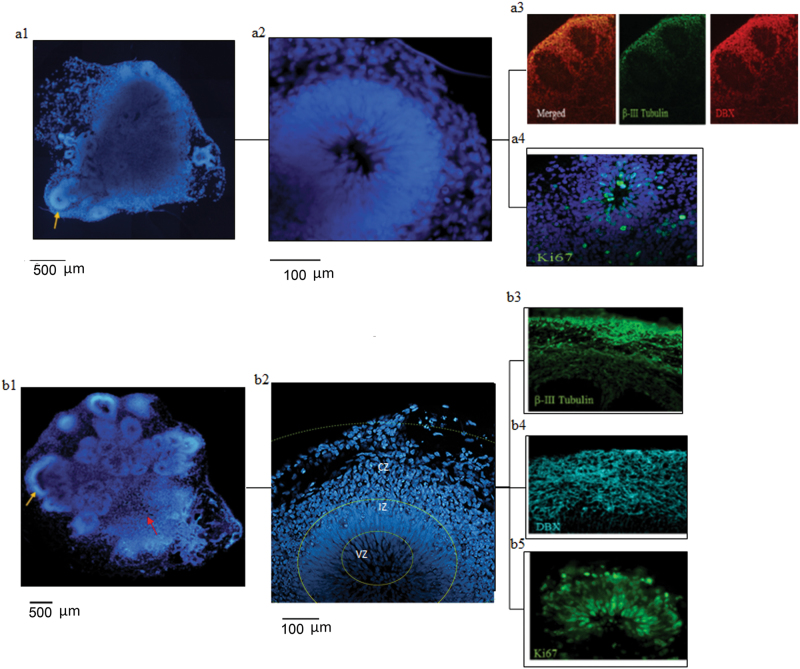
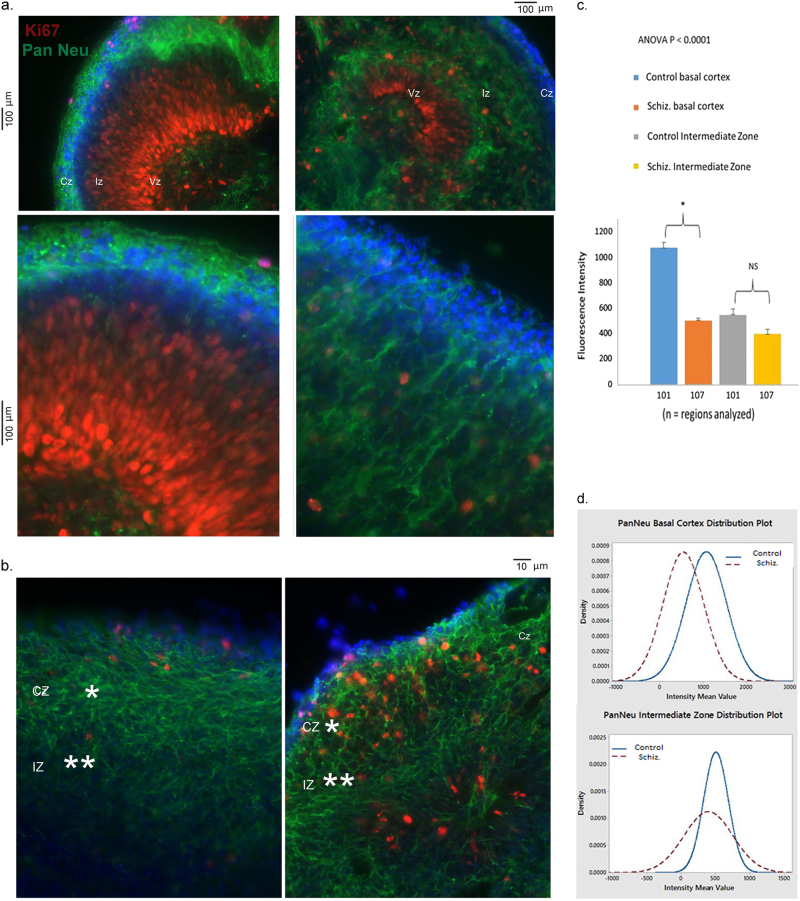
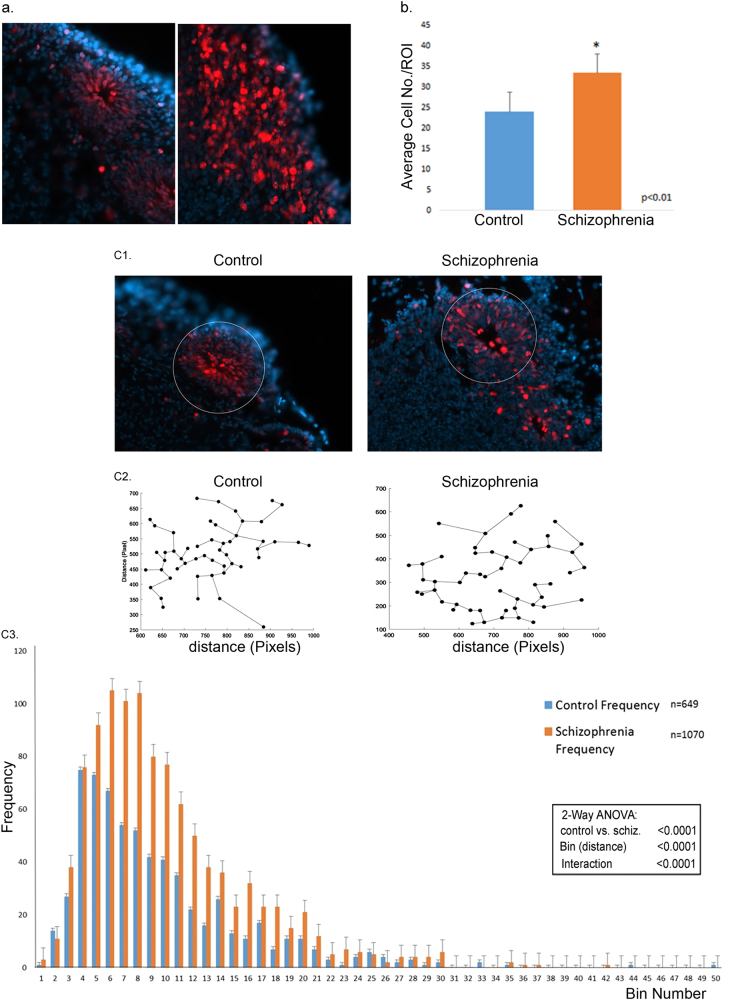
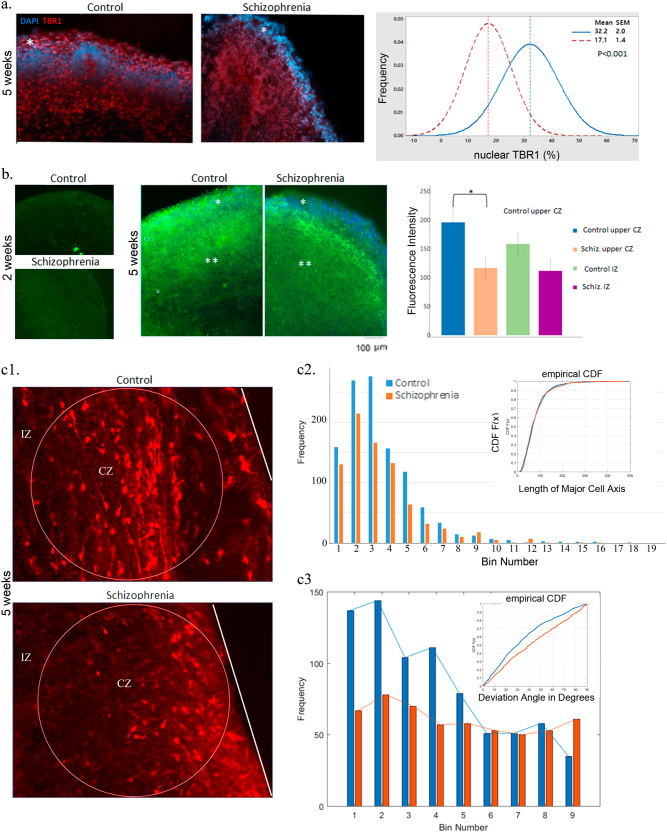
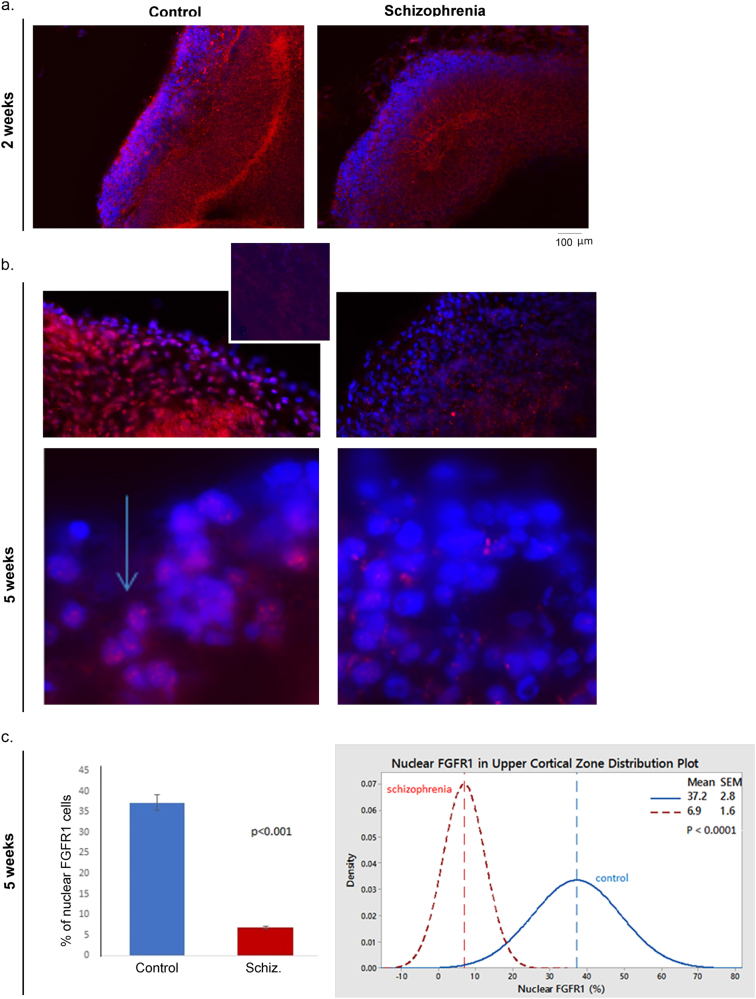
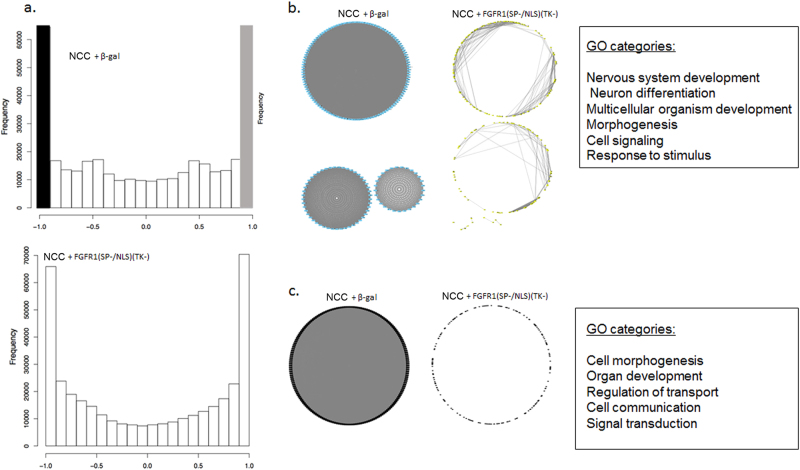
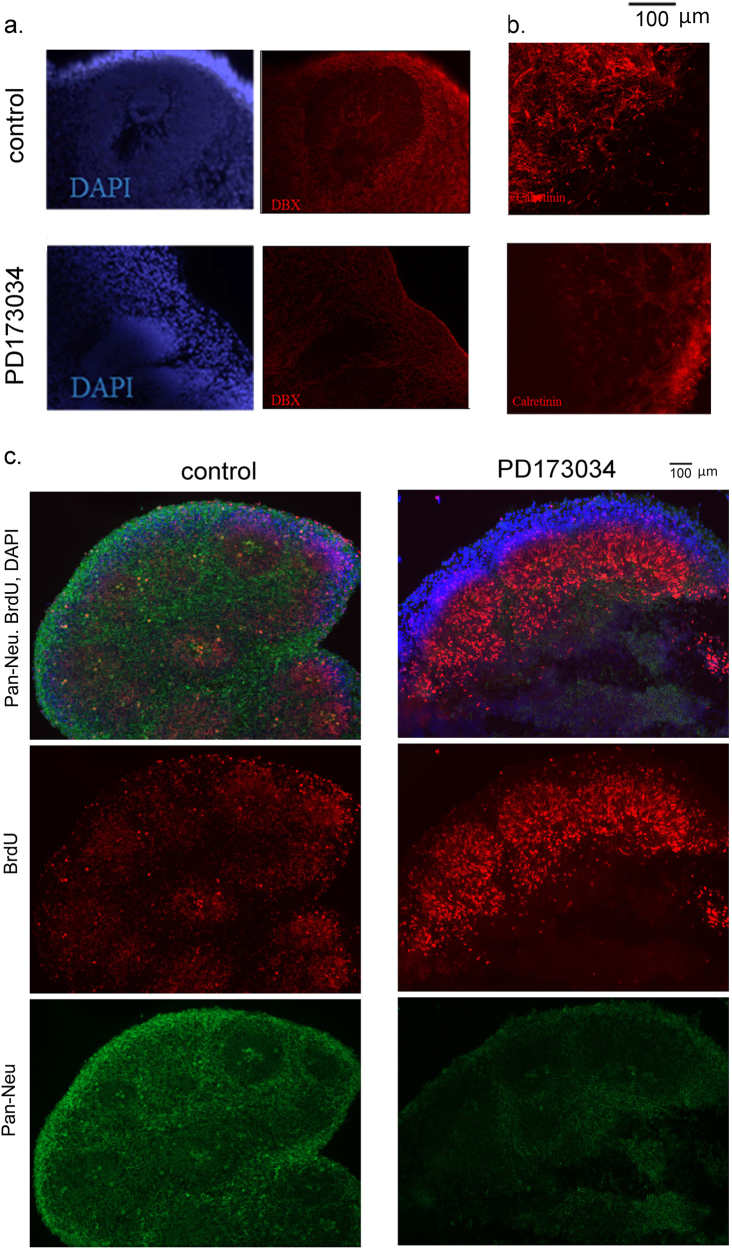
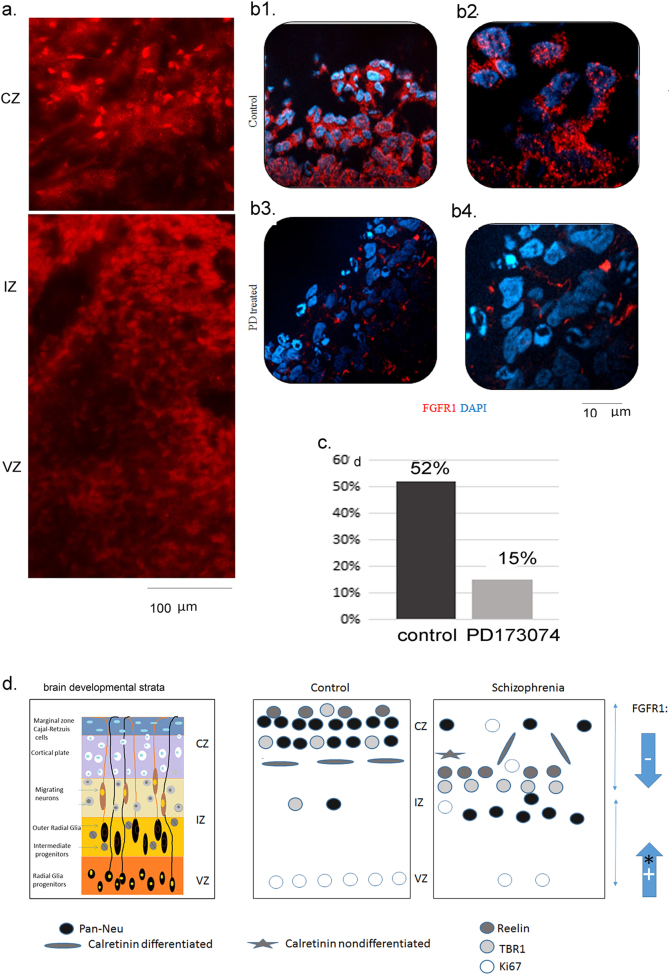
Studies of induced pluripotent stem cells (iPSCs) from schizophrenia patients and control individuals revealed that the disorder is programmed at the preneuronal stage, involves a common dysregulated mRNA transcriptome, and identified Integrative Nuclear FGFR1 Signaling a common dysregulated mechanism. We used human embryonic stem cell (hESC) and iPSC-derived cerebral organoids from four controls and three schizophrenia patients to model the first trimester of in utero brain development. The schizophrenia organoids revealed an abnormal scattering of proliferating Ki67+ neural progenitor cells (NPCs) from the ventricular zone (VZ), throughout the intermediate (IZ) and cortical (CZ) zones. TBR1 pioneer neurons and reelin, which guides cortico-petal migration, were restricted from the schizophrenia cortex. The maturing neurons were abundantly developed in the subcortical regions, but were depleted from the schizophrenia cortex. The decreased intracortical connectivity was denoted by changes in the orientation and morphology of calretinin interneurons. In schizophrenia organoids, nuclear (n)FGFR1 was abundantly expressed by developing subcortical cells, but was depleted from the neuronal committed cells (NCCs) of the CZ. Transfection of dominant negative and constitutively active nFGFR1 caused widespread disruption of the neuro-ontogenic gene networks in hESC-derived NPCs and NCCs. The fgfr1 gene was the most prominent FGFR gene expressed in NPCs and NCCs, and blocking with PD173074 reproduced both the loss of nFGFR1 and cortical neuronal maturation in hESC cerebral organoids. We report for the first time, progression of the cortical malformation in schizophrenia and link it to altered FGFR1 signaling. Targeting INFS may offer a preventive treatment of schizophrenia.
Overview
The claims and statistics of this paper haven’t been checked yet.
Free: it reads the open-access text and checks the first 5 claims that cite a source we can check. Create a free account to check every claim.
Integrity signals
Registry
Cites
Statistics
Figures
Verification
Claims the paper makes
The claims and statistics of this paper haven’t been checked yet.
Free: it reads the open-access text and checks the first 5 claims that cite a source we can check. Create a free account to check every claim.
Claims other papers make about this one
Each is checked against this paper’s own text: does it say what the citing paper says it does?
The source backs part of the claim, not all of it — or backs it for a different population, condition or comparison.
In the citing paper
“Using cerebral organoids, Stachowiak et al., 2017, showed that schizophrenia organoids displayed an abnormal pattern of Ki67+ neural progenitor cells from the ventricular, intermediate, and cortical zones not observed in 2D cultures [64].”
From Utility of iPSC-Derived Cells for Disease Modeling, Drug Development, and Cell Therapy (2022) · cites this paper as [64]
Experimental — accuracy not yet measured
Self-check
Percentages, sums and reported differences re-computed from the paper’s own numbers.
The self-check needs the paper’s full text.
Citations
Cites
Cerebral organoids model human brain development and microcephaly
Lancaster, M. A., Renner, M., Martin, C.-A., Wenzel, D., Bicknell, L. S., Hurles, M. E., Homfray, T., Penninger, J. M., Jackson, A. P., & Knoblich, J. A. (2013) · Nature · doi:10.1038/nature12517 · Cited by 5,372
Generation of cerebral organoids from human pluripotent stem cells
Lancaster, M. A., & Knoblich, J. A. (2014) · Nature Protocols · doi:10.1038/nprot.2014.158 · Cited by 1,823 · cited 3×
“Using the protocol of Lancaster et al.,40 in which the first step, an efficient generation of EBs, was modified as in Brennand et al.,33 we successfully generated cerebral organoids from hESCs (H9 and HUES8 lines) and from seven human iPSC lines.”
MethodInfluentialItskovitz-Eldor, J., Schuldiner, M., Karsenti, D., Eden, A., Yanuka, O., Amit, M., Soreq, H., & Benvenisty, N. (2000) · Molecular Medicine · doi:10.1007/bf03401776 · Cited by 1,500
Modelling schizophrenia using human induced pluripotent stem cells
Brennand, K. J., Simone, A., Jou, J., Gelboin-Burkhart, C., Tran, N., Sangar, S., Li, Y., Mu, Y., Chen, G., Yu, D., et al. (2011) · Nature · doi:10.1038/nature09915 · Cited by 1,375
Self-citationFOXG1-Dependent Dysregulation of GABA/Glutamate Neuron Differentiation in Autism Spectrum Disorders
Mariani, J., Coppola, G., Zhang, P., Abyzov, A., Provini, L., Tomasini, L., Amenduni, M., Szekely, A., Palejev, D., Wilson, M., et al. (2015) · Cell · doi:10.1016/j.cell.2015.06.034 · Cited by 1,149
Multilineage differentiation from human embryonic stem cell lines
Odorico, J. S., Kaufman, D. S., & Thomson, J. A. (2001) · Stem Cells · doi:10.1634/stemcells.19-3-193 · Cited by 969
The Neurodevelopmental Hypothesis of Schizophrenia, Revisited
Fatemi, S. H., & Folsom, T. D. (2009) · Schizophrenia Bulletin · doi:10.1093/schbul/sbn187 · Cited by 860
White Matter Changes in Schizophrenia: Evidence for Myelin-Related Dysfunction
Davis, K. L., Stewart, D. G., Friedman, J. I., Buchsbaum, M., Harvey, P. D., Hof, P. R., Buxbaum, J., & Haroutunian, V. (2003) · Archives of General Psychiatry · doi:10.1001/archpsyc.60.5.443 · Cited by 793
The utility of Ki-67 and BrdU as proliferative markers of adult neurogenesis
Kee, N., Sivalingam, S., Boonstra, R., & Wojtowicz, J. M. (2002) · Journal of Neuroscience Methods · doi:10.1016/s0165-0270(02)00007-9 · Cited by 775
Three-dimensional organotypic culture: experimental models of mammalian biology and disease
Shamir, E. R., & Ewald, A. J. (2014) · Nature Reviews Molecular Cell Biology · doi:10.1038/nrm3873 · Cited by 719
Research works printed but not linked: 2
- Brennand K Phenotypic differences in hiPSC NPCs derived from patients with schizophrenia Mol. Psychiatry 2015 20 361 368 10.1038/mp.2014.22 24686136 PMC4182344 · DOI · Paper page
- Narla ST Common developmental genome deprogramming in schizophrenia - Role of Integrative Nuclear FGFR1 Signaling (INFS) Schizophr. Res. 2017 185 17 32 10.1016/j.schres.2016.12.012 28094170 PMC5507209 · DOI
Cited by
Items 101–176 of 176
Dual-Hit Strategy for Therapeutic Targeting of Pancreatic Cancer in Patient-Derived Xenograft Tumors
Chaudhuri, T. R., Lin, Q., Stachowiak, E. K., Rosario, S. R., Spernyak, J. A., Ma, W. W., Stachowiak, M. K., Greene, M. K., Quinn, G. P., McDade, S. S., et al. (2024) · Clinical Cancer Research · doi:10.1158/1078-0432.ccr-23-0131 · Cited by 11
Self-citationTomaskovic‐Crook, E., Guerrieri-Cortesi, K., & Crook, J. M. (2021) · Brain Research Bulletin · doi:10.1016/j.brainresbull.2021.07.004 · Cited by 9
Modeling SARS-CoV-2 infection in individuals with opioid use disorder with brain organoids
Willner, M. J., Xiao, Y., Kim, H. S., Chen, X., Xu, B., & Leong, K. W. (2021) · Journal of Tissue Engineering · doi:10.1177/2041731420985299 · Cited by 10
Neural Responses to Hypoxic Injury in a Vascularized Cerebral Organoid Model
Li, Y., Sun, X.-Y., Zeng, P.-M., & Luo, Z. (2025) · Neuroscience Bulletin · doi:10.1007/s12264-025-01396-2 · Cited by 10
Biological age prediction in schizophrenia using brain MRI, gut microbiome and blood data
Han, R., Wang, W., Liao, J., Peng, R., Liang, L., Li, W., Feng, S., Huang, Y., Fong, L. M., Zhou, J., et al. (2025) · Brain Research Bulletin · doi:10.1016/j.brainresbull.2025.111363 · Cited by 7
“It is becoming increasingly clear that schizophrenia may also be associated with alterations in physiological processes that contribute to the aging of the brain and other organs (Pillinger et al., 2019; Severance et al., 2015; Stachowiak et al., 2017).”
Halonen, S. K. (2023) · Frontiers in Cellular and Infection Microbiology · doi:10.3389/fcimb.2023.1129451 · Cited by 9
Santarriaga, S., Gerlovin, K., Layadi, Y., & Karmacharya, R. (2023) · Schizophrenia Research · doi:10.1016/j.schres.2023.02.029 · Cited by 7
Ballav, S., Ranjan, A., Sur, S., & Basu, S. (2024) · Biochemistry · doi:10.5772/intechopen.114304 · Cited by 13
Phalnikar, K., Srividya, M., Mythri, S. V., Vasavi, N. S., Ganguly, A., Kumar, A. R., Padmaja, S., Kalia, K., Mishra, S., Dhanya, S. K., et al. (2024) · Oxford Open Neuroscience · doi:10.1093/oons/kvae007 · Cited by 9
“Another study found comparable topological deficits in organoids from Schizophrenia patients [60], which is pertinent since BD and Schizophrenia share overlapping mechanisms [18, 136, 137].”
ResultAkkouh, I. A., Osete, J. R., Szabó, A., Andreassen, O. A., & Djurovic, S. (2025) · Biological Psychiatry · doi:10.1016/j.biopsych.2025.02.012 · Cited by 9
“…in whole fore-brain organoids across multiple stages of differentiation and found no difference between patients with SCZ and control participants (12), suggesting that the increased NPC abundance may be a region-speci fi c feature caused by impaired migration from the ventricular zone (88).”
Mazzini, L., Marchi, F. D., Bużańska, L., Follenzi, A., Glover, J. C., Gelati, M., Lombardi, I., Maioli, M., Mesa-Herrera, F., Mitrečić, D., et al. (2024) · Expert Opinion on Biological Therapy · doi:10.1080/14712598.2024.2392307 · Cited by 8
“Patient-specific iPSCs have been used to derive organoid systems for modeling neural disorders (reviewed in [21]) including neurodegenerative diseases [22,23], and neurodevelopmental disorders [24–26].”
Model systems for emulating human tissue and physiology in psychiatric research
Cheng, K., Kathuria, A., Kshirsagar, A., Nixon, J., Lau, J., Yang, K., & Sawa, A. (2025) · Frontiers in Neuroscience · doi:10.3389/fnins.2025.1527826 · Cited by 7
Fibroblast Growth Factor: Promising Target for Schizophrenia
Talaeı, A., Farkhondeh, T., & Forouzanfar, F. (2020) · Current Drug Targets · doi:10.2174/1389450121666200628114843 · Cited by 6
Wolff, H. (2024) · Neuroethics · doi:10.1007/s12152-023-09541-2 · Cited by 6
Induced Pluripotent Stem Cells Reveal Common Neurodevelopmental Genome Deprograming in Schizophrenia
Narla, S. T., Decker, B., Sarder, P., Stachowiak, E. K., & Stachowiak, M. K. (2018) · Results and problems in cell differentiation · doi:10.1007/978-3-319-93485-3_6 · Cited by 7
Self-citationBioenergy Crisis in Coronavirus Diseases?
Dutta, A., Das, A., Kondziella, D., & Stachowiak, M. K. (2020) · Brain Sciences · doi:10.3390/brainsci10050277 · Cited by 7
“Also, computational anatomy and functional genomics were performed on the organoids [23] that are proposed to investigate genetic mechanisms underlying brain susceptibility to cytokine storms [19] and bioenergy crisis.”
BackgroundSelf-citationLee, D., Seo, J., Jeong, H. C., Lee, H., & Lee, S. B. (2021) · Frontiers in Molecular Neuroscience · doi:10.3389/fnmol.2021.756613 · Cited by 6
“Lastly, some studies also implicate the serotonin pathway in schizophrenia development (Abdolmaleky et al., 2004; Alex and Pehek, 2007; Stepnicki et al., 2018).”
BackgroundA Comprehensive Update of Cerebral Organoids between Applications and Challenges
Li, X., Shopit, A., & Wang, J. (2022) · Oxidative Medicine and Cellular Longevity · doi:10.1155/2022/7264649 · Cited by 6
“Besides, this can decrease the developmental abnormalities in cortical neurons through FGFR1 activation [96].”
Brown, J. S. (2023) · Neuroscience & Biobehavioral Reviews · doi:10.1016/j.neubiorev.2023.105206 · Cited by 6
Rothenbücher, T. S. P., & Martínez-Serrano, A. (2019) · Future Neurology · doi:10.2217/fnl-2018-0043 · Cited by 6
“modeled schizophrenia with cerebroids and investigated the role of FGFR1 [21].”
BackgroundInfluentialEffects of Medicinal Plants and Phytochemicals on Schizophrenia
Raju, N. R., Rashmitha, S., -, S. P., Torres, E. A., Kishor, M. R., & Achar, R. R. (2023) · Wiley eBooks · doi:10.1002/9781119794127.ch4 · Cited by 9
Human Brain Banking as a Convergence Platform of Neuroscience and Neuropsychiatric Research
Liu, F., Yin, X., Cong, C., Wang, Y., & Ma, C. (2022) · Human Brain · doi:10.37819/hb.001.001.0204 · Cited by 5
“…with neurodegeneration (Di Lullo & Kriegstein, 2017; Eiraku et al., 2011; Eiraku et al., 2008; Jo et al., 2016; Kawada et al., 2017; Lancaster et al., 2013; Mellios et al., 2018; Monzel et al., 2017; Nakano et al., 2012; Pasca et al., 2015; X. Y. Qian et al., 2018; Stachowiak et al., 2017).”
BackgroundHan, S., Gilmartin, M. R., Sheng, W., & Jin, V. X. (2025) · Schizophrenia Research · doi:10.1016/j.schres.2025.01.028 · Cited by 5
Caporale, N., & Testa, G. (2019) · Elsevier eBooks · doi:10.1016/b978-0-12-814879-2.00017-0 · Cited by 6
Human Brain Organoid Platform for Neuroengineering Optical Theranostics in Neonatal Sepsis
Karanth, S. S., Mujumdar, R., Sahoo, J. P., Das, A., Stachowiak, M. K., & Dutta, A. (2021) · Biosystems & biorobotics · doi:10.1007/978-3-030-70316-5_120 · Cited by 5
Self-citationModelling sex differences of neurological disorders in vitro
Castro‐Aldrete, L., Einsiedler, M., Cuní‐López, C., Vanhaelen, Q., Silvestri, A., Ferretti, M. T., de Gennaro, M. E., Putignano, G., Guix, M., Marino, N., et al. (2025) · Nature Reviews Bioengineering · doi:10.1038/s44222-025-00355-w · Cited by 4
“…role in the early differentiation and migration of neurons, synapse formation and neurogenesis 195 — was expressed in the nuclei of developing subcortical cells, its depletion from the nuclei of differentiating cortical neuronal cells led to the dysregulation of key neuro-ontogenic programmes 194 .”
InfluentialVaz, A., Salgado, A. J., Patrício, P., & Pinto, L. (2024) · Psychiatry Research · doi:10.1016/j.psychres.2024.116033 · Cited by 4
“…challenges that still lie ahead is the intensive labour, heterogeneity and high cost, however, it is consensual that these are valuable platforms for the study of neurodevelopment, neuropsychiatric and oncological diseases (Bian et al., 2018; Giandomenico et al., 2021; Stachowiak et al., 2017).”
BackgroundThree-dimensional models of human brain development
Tobon, A., Caporale, N., Trattaro, S., & Testa, G. (2020) · Elsevier eBooks · doi:10.1016/b978-0-12-814085-7.00011-8 · Cited by 4
Space Renaissance and Neurodegeneration
Marotta, D., Stoudemire, J., Clements, T., Loring, J. F., Grisanti, P., Noggle, S., & Fossati, V. (2022) · Springer eBooks · doi:10.1007/978-3-031-18440-6_9 · Cited by 4
Somuncu, O., Karaman, İ., Saraçoğlu, H. P., Yilmaz, E., & Akın, D. (2021) · Psychiatry and Clinical Psychopharmacology · doi:10.5152/pcp.2021.20181 · Cited by 4
Bioengineering of brain organoids: Advancements and challenges
Gopurappilly, R., & Pal, R. (2022) · Elsevier eBooks · doi:10.1016/b978-0-12-824064-9.00002-2 · Cited by 4
Harnessing stem cell-based approaches for clinically meaningful discoveries in schizophrenia
Lizano, P. L., & Karmacharya, R. (2024) · Schizophrenia Research · doi:10.1016/j.schres.2024.08.006 · Cited by 2
Proteomics and Schizophrenia: The Evolution of a Great Partnership
Smith, B. J., Carregari, V. C., & Martins‐de‐Souza, D. (2022) · Advances in experimental medicine and biology · doi:10.1007/978-3-030-97182-3_10 · Cited by 2
Identifying an Early Neuropathological Mechanism in Schizophrenia With Brain Organoids
Kim, J., & Park, I. (2024) · Biological Psychiatry · doi:10.1016/j.biopsych.2024.01.015 · Cited by 2
Nani, J. V. S., Krenn, V., Christoff, R. R., Rabello, T., Garcez, P. P., & Hayashi, M. A. F. (2024) · Brain Research · doi:10.1016/j.brainres.2024.149371 · Cited by 2
Neural tissue microphysiological systems in the era of patient-derived pluripotent stem cells
Mungenast, A. E., Aron, R., White, J. D., Tardiff, D. F., & Raja, W. K. (2018) · Elsevier eBooks · doi:10.1016/b978-0-12-813671-3.00009-8 · Cited by 3
David, F., Stachowiak, E. K., & Stachowiak, M. K. (2020) · Translational Neuroscience Research and Reviews · doi:10.36959/817/526 · Cited by 2
Self-citationMorphogenetic Designs, and Disease Models in Central Nervous System Organoids
Bock, M., Hong, S. J., Zhang, S., Yu, Y., Lee, S., Shin, H.-E., Choi, B. H., & Han, I. (2024) · International Journal of Molecular Sciences · doi:10.3390/ijms25147750 · Cited by 4
“The CNS is constantly exposed to numerous risk factors and is vulnerable to various diseases [1–4].”
BackgroundRepurposing medications to prevent psychosis
Cohen, B. M., McPhie, D. L., Sonntag, K., Lopes, C., & Babb, S. M. (2025) · npj Mental Health Research · doi:10.1038/s44184-025-00169-z · Cited by 2
“…and regional features of brain modeling, and they report de fi cits in regional (cortical) neuronal development in lines from people with SZs 67 , dysregulation of genes involved in synaptic biology 68 , and long-range connectivity reduction in lines with gene variants associated with SZs…”
Dutta, A., Biber, J. C., Bae, Y., Augustyniak, J., Liput, M., Stachowiak, E. K., & Stachowiak, M. K. (2022) · Annual International Conference of the IEEE Engineering in Medicine and Biology Society (EMBC) · doi:10.1109/embc48229.2022.9871376 · Cited by 3
“Cerebral organoids grown from induced pluripotent stem cells (iPSCs) from patients with Schizophrenia (SCZ) recapitulate cortical malformations [2] that were reflected in altered elastic modulus compared to that of control cerebral organoids as measured by AFM (Figure 2A).”
BackgroundSelf-citationA Protein-Centric View of in Vitro Biological Model Systems for Schizophrenia
Chandrasekaran, A., Jensen, P., Mohamed, F. A., Lancaster, M. A., Benros, M. E., Larsen, M. R., & Freude, K. (2021) · Stem Cells · doi:10.1002/stem.3447 · Cited by 1
“tion affecting the ventricular zone (VZ) being reduced to one layer as opposed to controls with 2 to 3 layers of proliferating NPCs in the VZ.(40) TBR1 is a critical transcription repressor during cortical develop-”
BackgroundInfluentialiPSC-based modeling in psychiatric disorders
Hoffmann, A., Ziller, M. J., & Spengler, D. (2022) · Elsevier eBooks · doi:10.1016/b978-0-12-823882-0.00010-2 · Cited by 1
SELENOPROTEIN T deficiency alters projection neuron migration during corticogenesis in mice
Carpentier, E., Falluel‐Morel, A., Brunet, L. J., Bénard, M., Alexandre, D., Godefroy, D., Mallouki, B. Y., Boukhzar, L., Arabo, A., & Anouar, Y. (2025) · Neuroscience · doi:10.1016/j.neuroscience.2025.09.015 · Cited by 1
Shekhar, B. R., Menon, S. R., Pande, S. S., & Das, D. K. (2026) · Stem Cells and Development · doi:10.1177/15473287251413992 · Cited by 1
“6,7 Moreover, hiPSCs-derived neurons of SCZ displayed abnormal synaptic plasticity, 8 as well as neural progenitor cell proliferation and differentiation associated with changes in cortical morphogenesis, 5,9,10 and altered DNA damage response and cell cycle control.”
Organoids: the third dimension of human brain development and disease
Kouroupi, G., Prodromidou, K., Papastefanaki, F., Taoufik, E., & Matsas, R. (2021) · The International Journal of Developmental Biology · doi:10.1387/ijdb.210158gk · Cited by 1
Handcock, S. A., Richards, K., Karle, T. J., Kairath, P., Soch, A., Chavez, C. A., Petrou, S., & Maljevic, S. (2025) · Organoids · doi:10.3390/organoids4010001 · Cited by 2
“Alternatively, mean fluorescence intensity is often used to measure overall antibody expression; however, this approach does not account for tissue size nor reveal the number of cells expressing specific markers [22,32,34,35].”
Pluripotent Stem Cell Based Cultures to Study Key Aspects of Human Cerebral Cortex Development
Ehsaei, Z., Collo, G., & Taylor, V. (2018) · Institutional Research Information System (Università degli Studi di Brescia) · doi:10.4172/neuropsychiatry.1000511 · Cited by 2
“Brain organoids hold promise for modeling the neurodegenerative and psychiatric diseases in a 3D environment and cerebral organoids have already provided important insights into human disease mechanisms including microcephaly [46], autism [62], Zika virus infection [63,64], and Miller Dieker syndrome (MDS) [65,66], au…”
BackgroundModeling Schizophrenia In Vitro: Challenges and Insights on Studying Brain Cells
Brandão‐Teles, C., Zuccoli, G. S., Smith, B. J., Vieira, G. M., & Crunfli, F. (2022) · Advances in experimental medicine and biology · doi:10.1007/978-3-030-97182-3_3 · Cited by 1
Human models as new tools for drug development and precision medicine
Dei-Ampeh, A. K., Shah, M. M., Cappuccio, G., Young, D. W., & Maletić‐Savatić, M. (2022) · Elsevier eBooks · doi:10.1016/b978-0-12-822277-5.00004-3 · Cited by 1
Jornet, J. M., Stachowiak, M. K., & Balasubramaniam, S. (2018) · Springer eBooks · doi:10.1007/978-3-319-32903-1_226-1 · Cited by 1
Self-citationIntegrated genome regulation of brain development
Stachowiak, M. K., Stachowiak, E. K., Handelmann, C. R., Decker, B., Balcerak, A., Desai, A., Bae, Y., & Jornet, J. M. (2018) · ACM International Conference on Nanoscale Computing and Communication (NANOCOM) · doi:10.1145/3233188.3233226
“We used iPSC derived cerebral organoids from controls and schizophrenia patients to model the first trimester of the human brain development [4].”
Self-citationPsychiatrische Erkrankungen mit Stammzelltechnologien verstehen
Stock, R., & Volkmer, H. (2020) · BIOspektrum · doi:10.1007/s12268-020-1321-6
Halonen, S. K. (2021) · Elsevier eBooks · doi:10.1016/b978-0-12-823808-0.00010-9 · Cited by 1
Pluripotent stem cell–derived brain-region-specific organoids
Nguyen, P. T., Song, H., & Ming, G. (2021) · Elsevier eBooks · doi:10.1016/b978-0-12-823809-7.00009-8
Induced pluripotent stem cell–derived neural stem cells
Roll, L., & Faissner, A. (2021) · Elsevier eBooks · doi:10.1016/b978-0-323-85545-7.00004-1
Jornet, J. M., Stachowiak, M. K., & Balasubramaniam, S. (2020) · Springer eBooks · doi:10.1007/978-3-319-78262-1_226
Self-citationCellular and supracellular models in the study of molecular mechanisms associated with schizophrenia
Karpov, D. S., & Голимбет, В. Е. (2022) · S S Korsakov Journal of Neurology and Psychiatry · doi:10.17116/jnevro202212211146
Advances in the Study of Human Brain Organoids in Neurodegenerative Diseases
韩, 晓. (2024) · Advances in Clinical Medicine · doi:10.12677/acm.2024.142488
Dhiman, S., Manoj, N., Liput, M., Sangwan, A., Diehl, J., Balcerak, A., Sudhakar, S., Augustyniak, J., Jornet, J. M., Bae, Y., et al. (2024) · International Journal of Molecular Sciences · doi:10.3390/ijms25115647
“…including genes in ontogenic programs for “development of the nervous system”, “development of the brain and its parts”, “stem cell self-renewal program”, “cell division and proliferation”, “neuronal differentiation”, “axonal guidance and growth”, “synapse formation”, “neuronal survival”, etc. [7].”
BackgroundMethodResultInfluentialSelf-citationEffects of Medicinal Plants and Phytochemicals on Schizophrenia
Mükemre, M., & Dalar, A. (2024) · doi:10.69860/nobel.9786053359241.6 · Cited by 1
Bringing “precision” to psychiatry: Challenges and promises
Gogos, J. A. (2024) · Elsevier eBooks · doi:10.1016/b978-0-323-98808-7.00017-5
Lower density of calretinin‐immunopositive neurons in the putamen of subjects with schizophrenia
Kelmer, P., Hoppa, P., Frank, E., Tyler, T., & Adorján, I. (2024) · Journal of Anatomy · doi:10.1111/joa.14180
“This approach already identified disrupted progenitor cell differentiation and decreased levels of functional, mature neurons in cerebral or-ganoid models derived from patients with Scheme (Notaras et al., 2022; Stachowiak et al., 2017 ).”
Kim, E., Kim, Y., Hong, S., Kim, I., Lee, J., Lee, K., An, M., Kim, S., Kim, S., & Shin, K. (2024) · bioRxiv (Cold Spring Harbor Laboratory) · doi:10.1101/2024.12.22.629557 · Cited by 1
Exploring hippocampal dysfunction in schizophrenia with pluripotent stem cell models
Kaji, D. A. (2025) · Schizophrenia Research · doi:10.1016/j.schres.2025.10.022
Dutta, M., Chowdhury, M. M., Kazi, M., & Khandaker, M. U. (2025) · Elsevier eBooks · doi:10.1016/b978-0-443-27414-5.00001-4
Zhang, X., Jiang, Y., Wang, H., & Hu, R. (2026) · Elsevier eBooks · doi:10.1016/b978-0-443-40423-8.00008-7
de Assis, D., Pentz, A. B., Osete, J. R., Ievglevskyi, O., Vandenberghe, M., Akkouh, I. A., Mäki‐Marttunen, T., Jönsson, E. G., Andreassen, O. A., Djurovic, S., et al. (2026) · Translational Psychiatry · doi:10.1038/s41398-026-03863-4 · Cited by 1
“Recent hCS studies in SZ and BD have found aberrant neuronal excitability, neurite outgrowth, neurogenesis [35 – 40], and brain energy metabolism [37, 39, 41].”
Wolfram, A., Arnold, V., Wolfram-Schauerte, M., Moskalchuk, A., Caroline M. Trust, Vontz, M., Scheurenbrand, M., Sampath‐Kumar, V., Ahari, S. H., Romero‐Nieto, C., et al. (2026) · Advanced Healthcare Materials · doi:10.1002/adhm.202504889 · Cited by 2
“Of the studies reviewed, 10.4% (20/192) focused on psychiatric conditions [583–602], with SCZ comprising 70.0% (14/20) [583– 596], followed by BD (15.0”
InfluentialMartin, C. B. (2023) · theses.fr (ABES) · doi:10.70675/8eea9293zdaadz4766z9baez15cec27b3b07
Criscuolo, L., Jensen, P., Bogetofte, H., Schmidt, S. I., Mohamed, F. A., Jakobsen, L. A., Øhlenschlæger, M. S., Frederiksen, H. R. S., Li, F., Orbe, E. B., et al. (2026) · bioRxiv (Cold Spring Harbor Laboratory) · doi:10.64898/2026.06.01.729183
Transcriptomic signatures and neural cell composition in schizophrenia iPSC-derived neuron cultures
Casas, B. S., Zúñiga-Hernández, J. M., Arizabalos, S., Maluenda, M., Letelier-Naritelli, C., Palma, V., & Montecino, M. A. (2026) · Cells and Development · doi:10.1016/j.cdev.2026.204097
Ni, P., Zhang, Q., Jiang, Y., Yao, H., Zhou, C., Tian, X., Gao, S., Zhao, J., Ren, X., Xu, N., et al. (2026) · Advanced Science · doi:10.1002/advs.76936
Using Brain Organoids to Explore Human Neurobiology
Marei, H. E. S., & Hasan, A. (2026) · Cellular and Molecular Neurobiology · doi:10.1007/s10571-026-01808-5
“For instance, in the case of schizophrenia, certain cerebral organoids that were derived from patients showed delayed maturation of neurons and aberrant FGFR1 nuclear signaling during early stages of corticogenesis (Stachowiak et al. 2017).”
Body-on-chip systems and clinical biomarkers discovery
Härtung, T., & Smirnova, L. (2026) · Elsevier eBooks · doi:10.1016/b978-0-443-16110-0.00008-x
Zhaksylyk, K., Sarikahya, M. H., Pérez-Valenzuela, E., Hardy, D. B., Rushlow, W. J., & Laviolette, S. R. (2026) · Journal of Neurochemistry · doi:10.1111/jnc.70548
“…abnormalities including reduced progenitor proliferation, premature neuronal differentiation and dysregulated synaptic gene expression (Stachowiak et al. 2017; Kathuria et al. 2020; Sawada et al. 2020; Notaras et al. 2021; Eichmüller and Knoblich 2022; Notaras et al. 2022; Dixon and…”
Metadata
- Authors
- Stachowiak, E. K., Benson, C. A., Narla, S. T., Dimitri, A., Chuye, L. E. B., Dhiman, S., Harikrishnan, K., Elahi, S., Freedman, D., Brennand, K. J., Sarder, P., & Stachowiak, M. K.
- Affiliations
- University at Buffalo, State University of New York (US)
- SUNY Fredonia (US)
- Icahn School of Medicine at Mount Sinai (US)
- Corresponding author
- Stachowiak, E. K.
- Stachowiak, M. K.
- Venue
- Translational Psychiatry
- Published
- 2017-11-17
- Volume
- 7
- Issue
- 11
- Pages
- 6-6
- ISSN
- 2158-3188 (ISSN-L)
- PMC
- PMC5802550
- OpenAlex
- W2769649226
- Cited by
- 179
- References
- 62
- Citations by year
- 2026: 8 · 2025: 15 · 2024: 23 · 2023: 13 · 2022: 30 · 2021: 36 · 2020: 22 · 2019: 18 · 2018: 13
- FWCI
- 5.92
- Type
- journal article
- Language
- en
- Open access
- gold
- doi.org
- Licence
- cc-by
- creativecommons.org/licenses/by/4.0 (tdm)
- creativecommons.org/licenses/by/4.0 (vor)
- Locations
- Translational Psychiatry (publishedVersion, cc-by)
- PubMed Central (publishedVersion, cc-by)
- PubMed (publishedVersion)
- Funders
- National Science Foundation (1706050, 1555720)
- New York Stem Cell Foundation
- New York State Department of Health (NYSTEM C026415, C026714)
- Lee Foundation
- New York State Stem Cell Science (C026415, C026714, C026714, C026415)
- National Institutes of Health (MH101454, R01-MH101454)
- National Institute of Mental Health (R01MH106056, R01MH101454)
- National Institute of Allergy and Infectious Diseases (T35AI089693)
- Division of Chemical, Bioengineering, Environmental, and Transport Systems (CBET-1555720, CBET-1706050)
- Topics
- Life Sciences › Biochemistry, Genetics and Molecular Biology › Molecular Biology › Pluripotent Stem Cells Research
- Life Sciences › Neuroscience › Developmental Neuroscience › Neurogenesis and neuroplasticity mechanisms
- Health Sciences › Medicine › Psychiatry and Mental health › Schizophrenia research and treatment
- Keywords
- schizophrenia, brain organoids, FGFR1 signaling, neural progenitor cells, reelin, calretinin interneurons, cortical connectivity, PD173074, induced pluripotent stem cells, human embryonic stem cells, intracortical connectivity
- MeSH terms
- Reelin Protein, Cerebral Cortex, Humans, Interneurons, Schizophrenia, Receptor, Fibroblast Growth Factor, Type 1, Embryonic Stem Cells, Calbindin 2
About these checks
Registry, retraction, Cites and statistics results are computed, not judged, with one exception: a printed reference that no index lists is read once by a model before it counts as a citation error. Claims are extracted by a model and kept only when their quote appears verbatim in the text; each cited source is then checked, with a model’s help, for whether it says what the claim relies on. Those verdicts can be wrong — read the claim’s quote and the cited source before relying on one.
Statistics and arithmetic are recomputed, not judged.
Confidence bands are shown only for fields calibrated on our annotated test set. None is calibrated yet, so no band is shown.
What counts as a claim ›How we measure confidence ›How we check this ›
Are you an author, or do you see a problem with this page? Request a review
Data sources
Bibliographic data: Semantic Scholar, OpenAlex, Crossref.
Contains information from the Semantic Scholar Academic Graph Datasets, made available under the ODC Attribution License (ODC-BY 1.0).
Semantic Scholar’s data is described in: Kinney, R., et al. (2023). The Semantic Scholar Open Data Platform. arXiv:2301.10140.
