

Cerebral organoids reveal early cortical maldevelopment in schizophrenia-computational anatomy and genomics, role of FGFR1
Open accessThe DOI matches its Crossref record; 62 of the 62 references it cites were found in a registry or an index.
Abstract
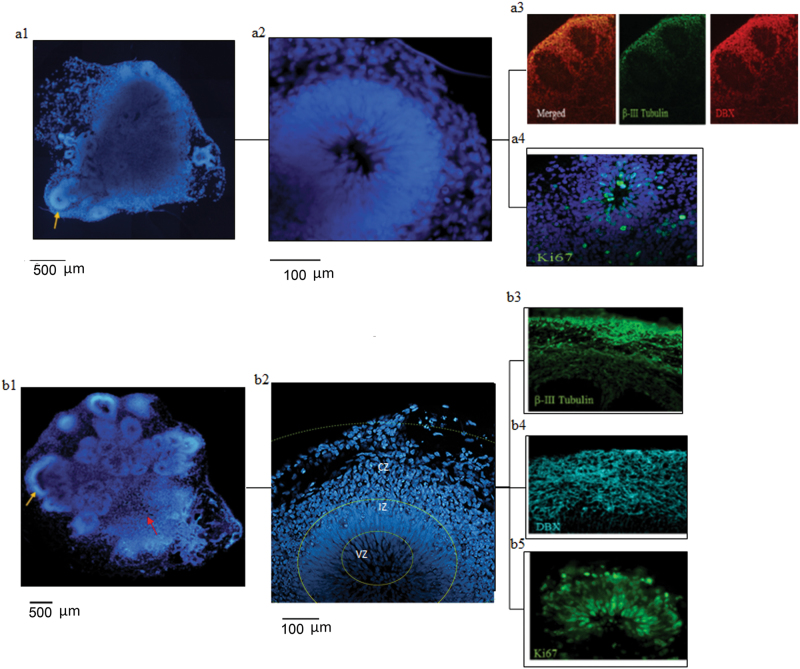
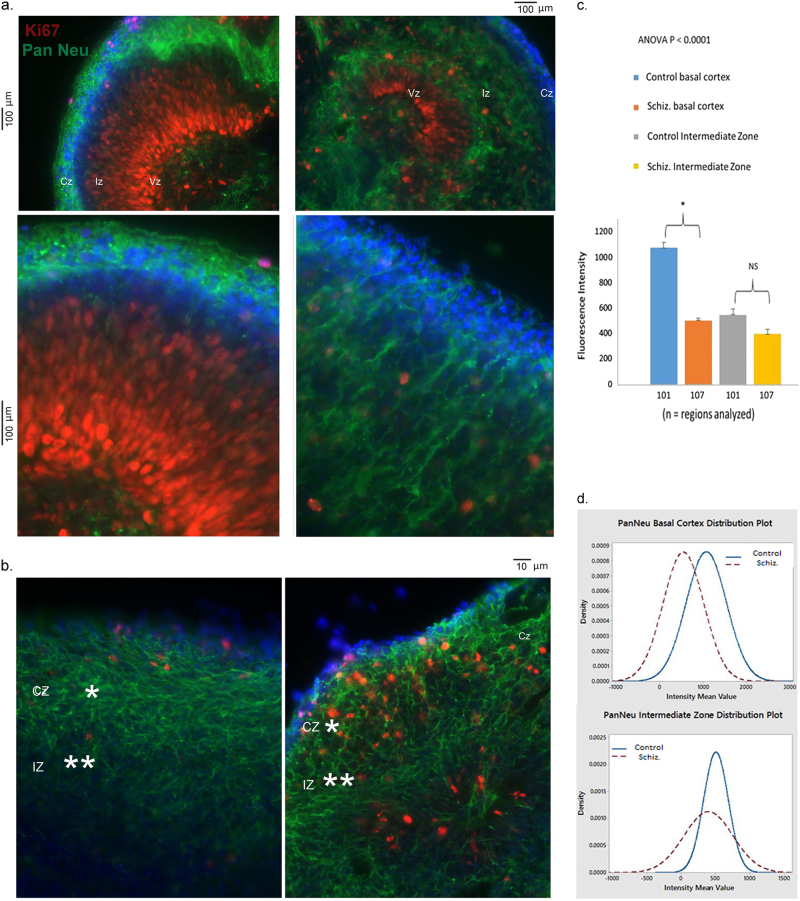
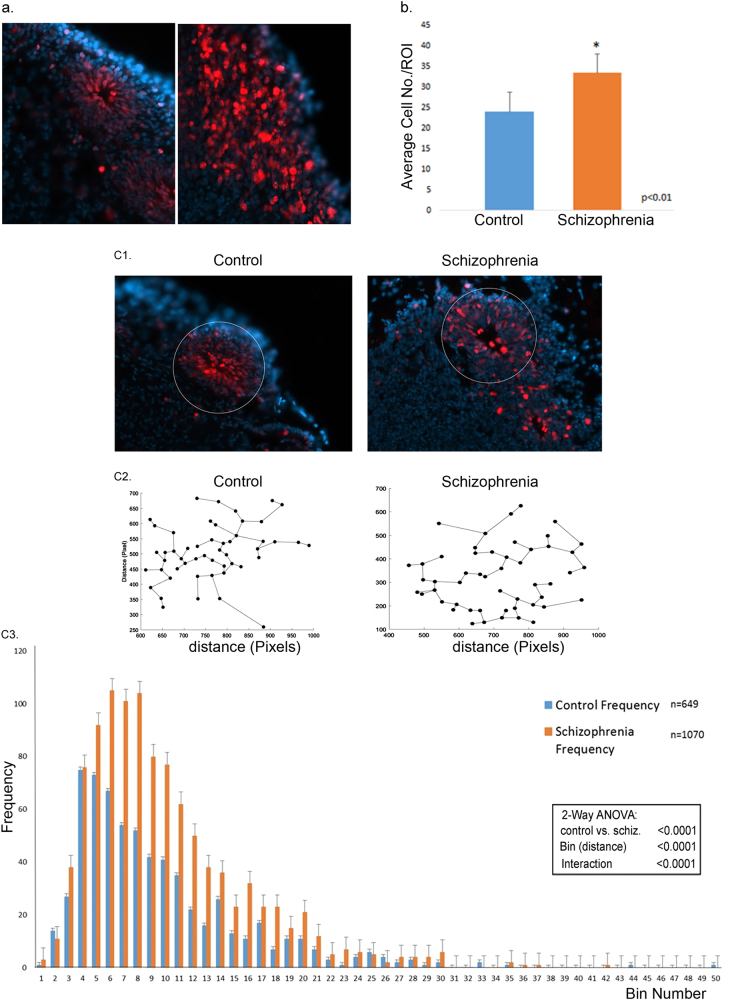
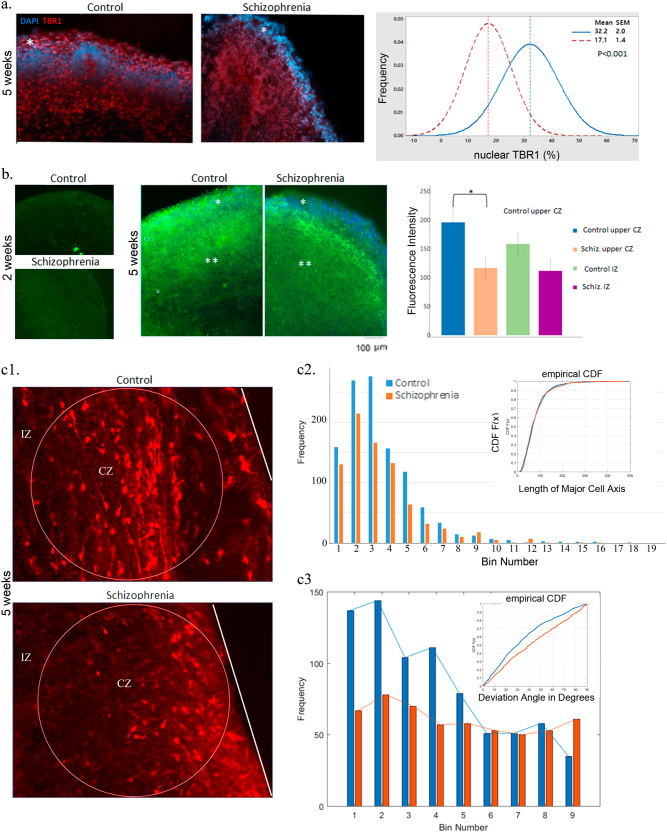
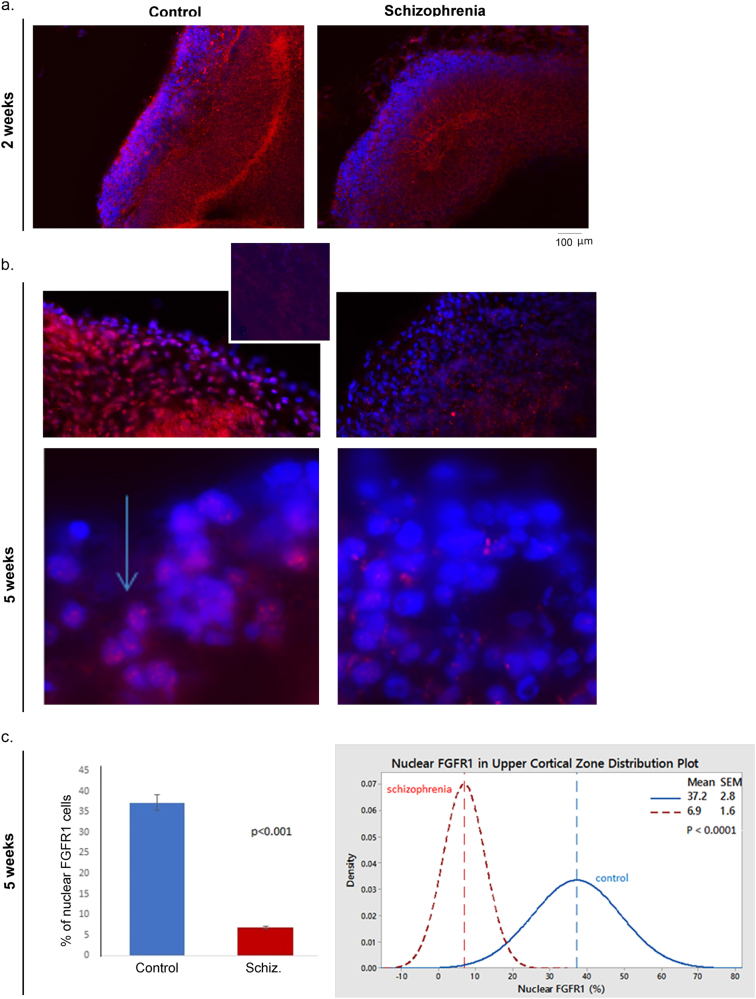
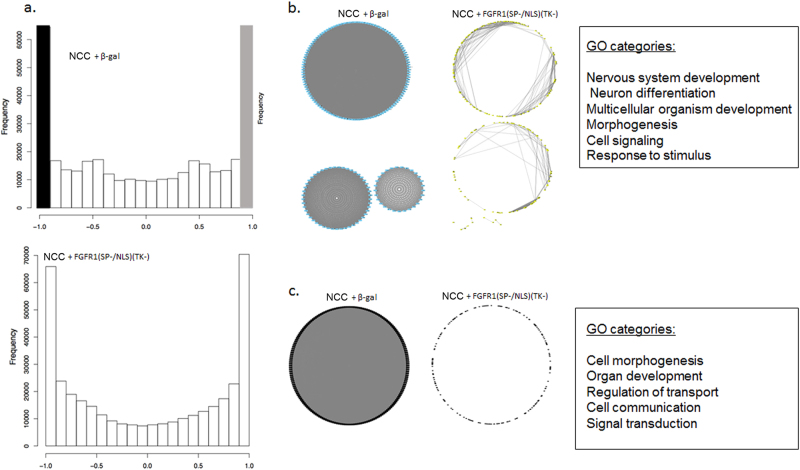
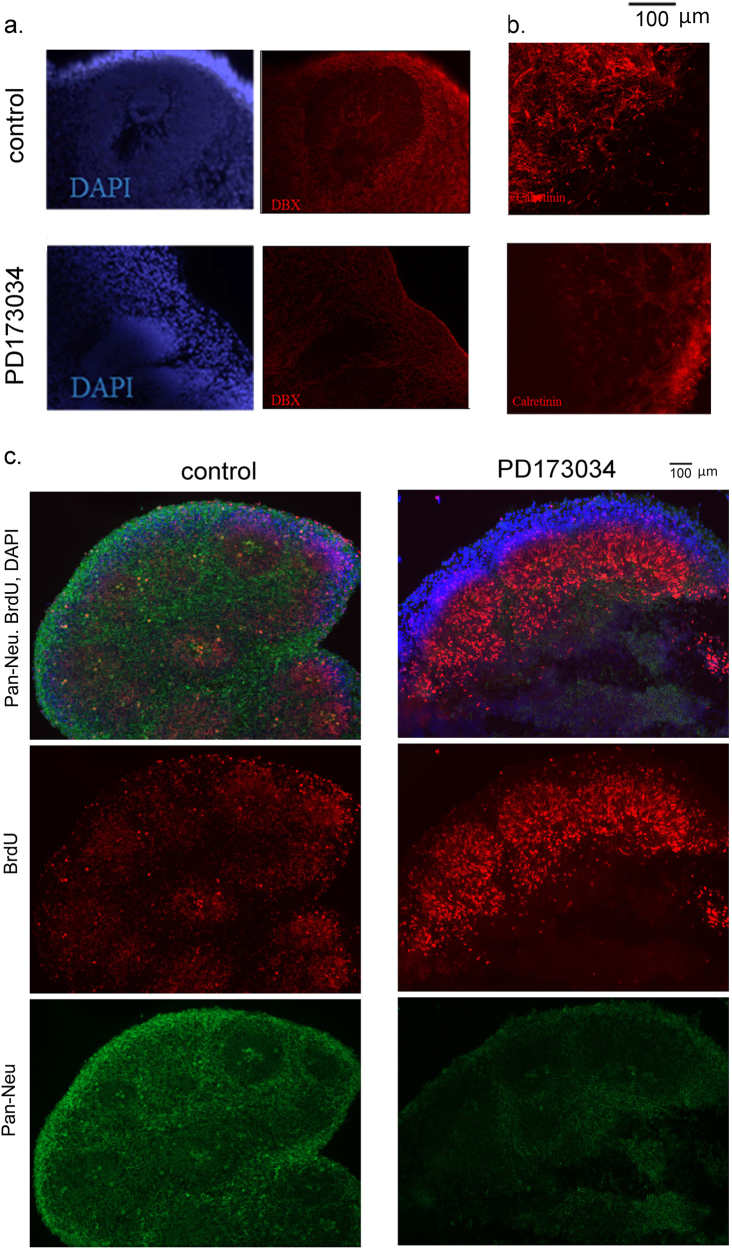
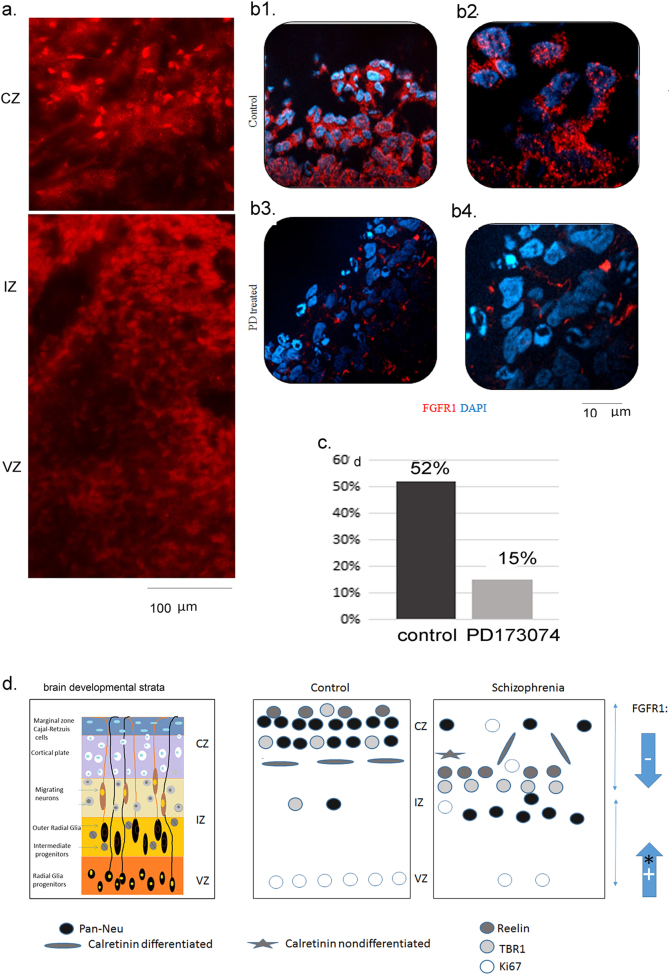
Studies of induced pluripotent stem cells (iPSCs) from schizophrenia patients and control individuals revealed that the disorder is programmed at the preneuronal stage, involves a common dysregulated mRNA transcriptome, and identified Integrative Nuclear FGFR1 Signaling a common dysregulated mechanism. We used human embryonic stem cell (hESC) and iPSC-derived cerebral organoids from four controls and three schizophrenia patients to model the first trimester of in utero brain development. The schizophrenia organoids revealed an abnormal scattering of proliferating Ki67+ neural progenitor cells (NPCs) from the ventricular zone (VZ), throughout the intermediate (IZ) and cortical (CZ) zones. TBR1 pioneer neurons and reelin, which guides cortico-petal migration, were restricted from the schizophrenia cortex. The maturing neurons were abundantly developed in the subcortical regions, but were depleted from the schizophrenia cortex. The decreased intracortical connectivity was denoted by changes in the orientation and morphology of calretinin interneurons. In schizophrenia organoids, nuclear (n)FGFR1 was abundantly expressed by developing subcortical cells, but was depleted from the neuronal committed cells (NCCs) of the CZ. Transfection of dominant negative and constitutively active nFGFR1 caused widespread disruption of the neuro-ontogenic gene networks in hESC-derived NPCs and NCCs. The fgfr1 gene was the most prominent FGFR gene expressed in NPCs and NCCs, and blocking with PD173074 reproduced both the loss of nFGFR1 and cortical neuronal maturation in hESC cerebral organoids. We report for the first time, progression of the cortical malformation in schizophrenia and link it to altered FGFR1 signaling. Targeting INFS may offer a preventive treatment of schizophrenia.
Overview
The claims and statistics of this paper haven’t been checked yet.
Free: it reads the open-access text and checks the first 5 claims that cite a source we can check. Create a free account to check every claim.
Integrity signals
Registry
Cites
Statistics
Figures
Verification
Claims the paper makes
The claims and statistics of this paper haven’t been checked yet.
Free: it reads the open-access text and checks the first 5 claims that cite a source we can check. Create a free account to check every claim.
Claims other papers make about this one
Each is checked against this paper’s own text: does it say what the citing paper says it does?
The source backs part of the claim, not all of it — or backs it for a different population, condition or comparison.
In the citing paper
“Using cerebral organoids, Stachowiak et al., 2017, showed that schizophrenia organoids displayed an abnormal pattern of Ki67+ neural progenitor cells from the ventricular, intermediate, and cortical zones not observed in 2D cultures [64].”
From Utility of iPSC-Derived Cells for Disease Modeling, Drug Development, and Cell Therapy (2022) · cites this paper as [64]
Experimental — accuracy not yet measured
Self-check
Percentages, sums and reported differences re-computed from the paper’s own numbers.
The self-check needs the paper’s full text.
Citations
Cites
Cerebral organoids model human brain development and microcephaly
Lancaster, M. A., Renner, M., Martin, C.-A., Wenzel, D., Bicknell, L. S., Hurles, M. E., Homfray, T., Penninger, J. M., Jackson, A. P., & Knoblich, J. A. (2013) · Nature · doi:10.1038/nature12517 · Cited by 5,372
Generation of cerebral organoids from human pluripotent stem cells
Lancaster, M. A., & Knoblich, J. A. (2014) · Nature Protocols · doi:10.1038/nprot.2014.158 · Cited by 1,823 · cited 3×
“Using the protocol of Lancaster et al.,40 in which the first step, an efficient generation of EBs, was modified as in Brennand et al.,33 we successfully generated cerebral organoids from hESCs (H9 and HUES8 lines) and from seven human iPSC lines.”
MethodInfluentialItskovitz-Eldor, J., Schuldiner, M., Karsenti, D., Eden, A., Yanuka, O., Amit, M., Soreq, H., & Benvenisty, N. (2000) · Molecular Medicine · doi:10.1007/bf03401776 · Cited by 1,500
Modelling schizophrenia using human induced pluripotent stem cells
Brennand, K. J., Simone, A., Jou, J., Gelboin-Burkhart, C., Tran, N., Sangar, S., Li, Y., Mu, Y., Chen, G., Yu, D., et al. (2011) · Nature · doi:10.1038/nature09915 · Cited by 1,375
Self-citationFOXG1-Dependent Dysregulation of GABA/Glutamate Neuron Differentiation in Autism Spectrum Disorders
Mariani, J., Coppola, G., Zhang, P., Abyzov, A., Provini, L., Tomasini, L., Amenduni, M., Szekely, A., Palejev, D., Wilson, M., et al. (2015) · Cell · doi:10.1016/j.cell.2015.06.034 · Cited by 1,149
Multilineage differentiation from human embryonic stem cell lines
Odorico, J. S., Kaufman, D. S., & Thomson, J. A. (2001) · Stem Cells · doi:10.1634/stemcells.19-3-193 · Cited by 969
The Neurodevelopmental Hypothesis of Schizophrenia, Revisited
Fatemi, S. H., & Folsom, T. D. (2009) · Schizophrenia Bulletin · doi:10.1093/schbul/sbn187 · Cited by 860
White Matter Changes in Schizophrenia: Evidence for Myelin-Related Dysfunction
Davis, K. L., Stewart, D. G., Friedman, J. I., Buchsbaum, M., Harvey, P. D., Hof, P. R., Buxbaum, J., & Haroutunian, V. (2003) · Archives of General Psychiatry · doi:10.1001/archpsyc.60.5.443 · Cited by 793
The utility of Ki-67 and BrdU as proliferative markers of adult neurogenesis
Kee, N., Sivalingam, S., Boonstra, R., & Wojtowicz, J. M. (2002) · Journal of Neuroscience Methods · doi:10.1016/s0165-0270(02)00007-9 · Cited by 775
Three-dimensional organotypic culture: experimental models of mammalian biology and disease
Shamir, E. R., & Ewald, A. J. (2014) · Nature Reviews Molecular Cell Biology · doi:10.1038/nrm3873 · Cited by 719
Ciruna, B., & Rossant, J. (2001) · Developmental Cell · doi:10.1016/s1534-5807(01)00017-x · Cited by 705
Akbarian, S. (1993) · Archives of General Psychiatry · doi:10.1001/archpsyc.1993.01820150007001 · Cited by 678
Patterns of neuronal migration in the embryonic cortex
Kriegstein, A. R., & Noctor, S. C. (2004) · Trends in Neurosciences · doi:10.1016/j.tins.2004.05.001 · Cited by 648
Bharali, D. J., Klejbor, I., Stachowiak, E. K., Dutta, P., Roy, I., Kaur, N., Bergey, E. J., Prasad, P. N., & Stachowiak, M. K. (2005) · Proceedings of the National Academy of Sciences · doi:10.1073/pnas.0504926102 · Cited by 622
Self-citationRogers, J. H. (1987) · The Journal of Cell Biology · doi:10.1083/jcb.105.3.1343 · Cited by 567
Synaptic dysregulation in a human iPS cell model of mental disorders
Wen, Z., Nguyen, H. N., Guo, Z., Lalli, M. A., Wang, X., Su, Y., Kim, N.-S., Yoon, K.-J., Shin, J., Zhang, C., et al. (2014) · Nature · doi:10.1038/nature13716 · Cited by 549
Erlenmeyer-Kimling, L., Rock, D., Roberts, S. A., Janal, M., Kestenbaum, C., Cornblatt, B., Adamo, U. H., & Gottesman, I. I. (2000) · American Journal of Psychiatry · doi:10.1176/appi.ajp.157.9.1416 · Cited by 512
A reduction of nonpyramidal cells in sector CA2 of schizophrenics and manic depressives
Benes, F. M., Kwok, E. W., Vincent, S. L., & Todtenkopf, M. S. (1998) · Biological Psychiatry · doi:10.1016/s0006-3223(98)00138-3 · Cited by 470
Endophenotypes in the Genetic Analyses of Mental Disorders
Cannon, T. D., & Keller, M. C. (2006) · Annual Review of Clinical Psychology · doi:10.1146/annurev.clinpsy.2.022305.095232 · Cited by 399
Segmental patterning of the vertebrate embryonic axis
Dequéant, M.-L., & Pourquié, O. (2008) · Nature Reviews Genetics · doi:10.1038/nrg2320 · Cited by 378
Phenotypic differences in hiPSC NPCs derived from patients with schizophrenia
Brennand, K., Savas, J. N., Kim, Y., Tran, N., Simone, A., Hashimoto-Torii, K., Beaumont, K. G., Kim, H. J., Topol, A., Ladran, I., et al. (2015) · Molecular Psychiatry · doi:10.1038/mp.2014.22 · Cited by 369
Self-citationCiruna, B. G., Schwartz, L., Harpal, K., Yamaguchi, T. P., & Rossant, J. (1997) · Development · doi:10.1242/dev.124.14.2829 · Cited by 331
Götz, M., & Barde, Y.-A. (2005) · Neuron · doi:10.1016/j.neuron.2005.04.012 · Cited by 318
Modeling Hippocampal Neurogenesis Using Human Pluripotent Stem Cells
Yu, D. X., Di Giorgio, F. P., Yao, J., Marchetto, M. C., Brennand, K., Wright, R., Mei, A., Mchenry, L., Lisuk, D., Grasmick, J. M., et al. (2014) · Stem Cell Reports · doi:10.1016/j.stemcr.2014.01.009 · Cited by 260
Self-citationPierri, J. N., Volk, C. L. E., Auh, S., Sampson, A., & Lewis, D. A. (2001) · Archives of General Psychiatry · doi:10.1001/archpsyc.58.5.466 · Cited by 257
Yoon, K.-J., Nguyen, H. N., Ursini, G., Zhang, F., Kim, N.-S., Wen, Z., Makri, G., Nauen, D., Shin, J. H., Park, Y., et al. (2014) · Cell Stem Cell · doi:10.1016/j.stem.2014.05.003 · Cited by 240
Blanchard, J. J., Kring, A. M., Horan, W. P., & Gur, R. (2011) · Schizophrenia Bulletin · doi:10.1093/schbul/sbq104 · Cited by 239
Robicsek, O., Karry, R., Petit, I., Salman-Kesner, N., Müller, F.-J., Klein, E., Aberdam, D., & Ben-Shachar, D. (2013) · Molecular Psychiatry · doi:10.1038/mp.2013.67 · Cited by 231
Partanen, J., Schwartz, L., & Rossant, J. (1998) · Genes & Development · doi:10.1101/gad.12.15.2332 · Cited by 224
Bogerts, B., Häntsch, J., & Herzer, M. (1983) · PubMed · Cited by 197
Foussias, G., Mann, S. W., Zakzanis, K. K., van Reekum, R., Agid, O., & Remington, G. J. (2011) · Schizophrenia Research · doi:10.1016/j.schres.2011.06.026 · Cited by 167
Coleman, S. J., Chioni, A., Ghallab, M., Anderson, R. K., Lemoine, N. R., Kocher, H. M., & Grose, R. P. (2014) · EMBO Molecular Medicine · doi:10.1002/emmm.201302698 · Cited by 167
Viral infection, inflammation and schizophrenia
Kneeland, R. E., & Fatemi, S. H. (2013) · Progress in Neuro-Psychopharmacology and Biological Psychiatry · doi:10.1016/j.pnpbp.2012.02.001 · Cited by 152
Arnold, S. E., Ruscheinsky, D. D., & Han, L.-Y. (1997) · Biological Psychiatry · doi:10.1016/s0006-3223(97)00142-x · Cited by 130
Primary visual cortex volume and total neuron number are reduced in schizophrenia
Dorph‐Petersen, K., Pierri, J. N., Wu, Q., Sampson, A. R., & Lewis, D. A. (2007) · Journal of Comparative Neurology · doi:10.1002/cne.21243 · Cited by 129
Reelin in the years: controlling neuronal migration and maturation in the mammalian brain
D'Arcangelo, G. (2014) · Advances in Neuroscience · doi:10.1155/2014/597395 · Cited by 120
Stachowiak, E. K., Fang, X., Myers, J., Dunham, S., & Stachowiak, M. K. (2003) · Journal of Neurochemistry · doi:10.1046/j.1471-4159.2003.01624.x · Cited by 109
Self-citationReynolds, G. P., Beasley, C. L., & Zhang, Z. J. (2002) · Journal of Neural Transmission · doi:10.1007/s007020200072 · Cited by 97
FGF/MAPK signaling is required in the gastrula epiblast for avian neural crest induction
Stuhlmiller, T. J., & García-Castro, M. I. (2012) · Development · doi:10.1242/dev.070276 · Cited by 89
Gudernová, I., Veselá, I., Bálek, L., Buchtová, M., Dosedělová, H., Bosakova, M. K., Pivnička, J., Jelínková, I., Roubalová, L., Kozubík, A., et al. (2015) · Human Molecular Genetics · doi:10.1093/hmg/ddv441 · Cited by 80
Frontal lobe alterations in schizophrenia: a review
Mubarik, A., & Tohid, H. (2016) · Trends in Psychiatry and Psychotherapy · doi:10.1590/2237-6089-2015-0088 · Cited by 79
INVESTIGATING THE NEURODEVELOPMENTAL HYPOTHESIS OF SCHIZOPHRENIA
Rehn, A. E., & Rees, S. M. (2005) · Clinical and Experimental Pharmacology and Physiology · doi:10.1111/j.1440-1681.2005.04257.x · Cited by 78
Control of CREB-binding Protein Signaling by Nuclear Fibroblast Growth Factor Receptor-1
Fang, X., Stachowiak, E. K., Dunham-Ems, S. M., Klejbor, I., & Stachowiak, M. K. (2005) · Journal of Biological Chemistry · doi:10.1074/jbc.m504400200 · Cited by 75
Self-citationTerranova, C. J., Narla, S. T., Lee, Y.-W., Bard, J., Parikh, A., Stachowiak, E. K., Tzanakakis, E. S., Buck, M. J., Birkaya, B. G., & Stachowiak, M. K. (2015) · PLoS ONE · doi:10.1371/journal.pone.0123380 · Cited by 67
Self-citationNarla, S. T., Lee, Y. W., Benson, C. A., Sarder, P., Brennand, K., Stachowiak, E. K., & Stachowiak, M. K. (2017) · Schizophrenia Research · doi:10.1016/j.schres.2016.12.012 · Cited by 64
Self-citationBaron, O., Förthmann, B., Lee, Y.-W., Terranova, C. J., Ratzka, A., Stachowiak, E. K., Grothe, C., Claus, P., & Stachowiak, M. K. (2012) · Journal of Biological Chemistry · doi:10.1074/jbc.m112.347831 · Cited by 63
Self-citationStachowiak, M. K., Kucinski, A. J., Curl, R., Syposs, C., Yang, Y., Narla, S. T., Terranova, C. J., Prokop, D., Klejbor, I., Bencherif, M., et al. (2012) · Schizophrenia Research · doi:10.1016/j.schres.2012.11.004 · Cited by 58
Self-citationT‐Brain‐1 – A Potential Master Regulator in Autism Spectrum Disorders
Chuang, H., Huang, T., & Hsueh, Y. (2015) · Autism Research · doi:10.1002/aur.1456 · Cited by 52
Stachowiak, M. K., & Stachowiak, E. K. (2016) · Journal of Cellular Physiology · doi:10.1002/jcp.25298 · Cited by 52
Self-citationLloyd, T., Dazzan, P., Dean, K., Park, S. B. G., Fearon, P., Doody, G. A., Tarrant, J., Morgan, K. D., Morgan, C., Hutchinson, G., et al. (2008) · Psychological Medicine · doi:10.1017/s0033291707001158 · Cited by 49
Schiller, D., ZUCKERMAN, L., & Weiner, I. (2005) · Journal of Psychiatric Research · doi:10.1016/j.jpsychires.2005.03.002 · Cited by 44
A unique subpopulation of Tbr1-expressing deep layer neurons in the developing cerebral cortex
Kolk, S. M., Whitman, M. C., Yun, M. E., Shete, P. B., & Donoghue, M. J. (2005) · Molecular and Cellular Neuroscience · doi:10.1016/j.mcn.2005.08.017 · Cited by 44
Connor, S. E. J., Ng, V., McDonald, C., Schulze, K., Morgan, K. D., Dazzan, P., & Murray, R. M. (2004) · Neuroradiology · doi:10.1007/s00234-004-1224-0 · Cited by 43
“Nuclear FGF Receptor‐1 and CREB Binding Protein: An Integrative Signaling Module”
Stachowiak, M. K., Birkaya, B. G., Aletta, J. M., Narla, S. T., Benson, C. A., Decker, B., & Stachowiak, E. K. (2014) · Journal of Cellular Physiology · doi:10.1002/jcp.24879 · Cited by 42
Self-citationStachowiak, E. K., Roy, I., Lee, Y., Capacchietti, M., Aletta, J. M., Prasad, P. N., & Stachowiak, M. K. (2009) · Integrative Biology · doi:10.1039/b902617g · Cited by 38
Self-citationLee, Y., Terranova, C. J., Birkaya, B. G., Narla, S. T., Kehoe, D. E., Parikh, A., Dong, S., Ratzka, A., Brinkmann, H., Aletta, J. M., et al. (2012) · Journal of Cellular Biochemistry · doi:10.1002/jcb.24170 · Cited by 34
Self-citationA unique subpopulation of Tbr1-expressing deep layer neurons in the developing cerebral cortex
Kolk, S. M., Whitman, M. C., Yun, M. E., Shete, P. B., & Donoghue, M. J. (2006) · Molecular and Cellular Neuroscience · doi:10.1016/j.mcn.2005.08.022 · Cited by 34
Lee, Y.-W., Stachowiak, E. K., Birkaya, B. G., Terranova, C. J., Capacchietti, M., Claus, P., Aletta, J. M., & Stachowiak, M. K. (2013) · PLoS ONE · doi:10.1371/journal.pone.0068931 · Cited by 33
Self-citationCalretinin immunoreactivity in focal cortical dysplasias and in non-malformed epileptic cortex
Barinka, F., Druga, R., Marusič, P., Kršek, P., & Zámečník, J. (2009) · Epilepsy Research · doi:10.1016/j.eplepsyres.2009.09.021 · Cited by 33
Bobbs, A. S., Saarela, A. V., Yatskievych, T. A., & Antin, P. B. (2012) · Journal of Biological Chemistry · doi:10.1074/jbc.m112.400598 · Cited by 32
Narla, S. T., Klejbor, I., Birkaya, B. G., Lee, Y., Moryś, J., Stachowiak, E. K., Prokop, D., Bencherif, M., & Stachowiak, M. K. (2013) · Stem Cells Translational Medicine · doi:10.5966/sctm.2012-0103 · Cited by 31
Self-citationBrisch, R., Bielau, H., Saniotis, A., Wolf, R. J., Bogerts, B., Krell, D., Steiner, J., Braun, K., Krzyżanowska, M., Krzyżanowski, M., et al. (2015) · Frontiers in Cellular Neuroscience · doi:10.3389/fncel.2015.00393 · Cited by 18
Research works printed but not linked: 2
- Brennand K Phenotypic differences in hiPSC NPCs derived from patients with schizophrenia Mol. Psychiatry 2015 20 361 368 10.1038/mp.2014.22 24686136 PMC4182344 · DOI · Paper page
- Narla ST Common developmental genome deprogramming in schizophrenia - Role of Integrative Nuclear FGFR1 Signaling (INFS) Schizophr. Res. 2017 185 17 32 10.1016/j.schres.2016.12.012 28094170 PMC5507209 · DOI
Cited by
Population-scale single-cell RNA-seq profiling across dopaminergic neuron differentiation
Jerber, J., Seaton, D. D., Cuomo, A. S. E., Kumasaka, N., Haldane, J., Steer, J., Patel, M., Pearce, D., Andersson, M., Bonder, M. J., et al. (2021) · Nature Genetics · doi:10.1038/s41588-021-00801-6 · Cited by 300
Genetics of human brain development
Zhou, Y., Song, H., & Ming, G.-L. (2024) · Nature Reviews Genetics · doi:10.1038/s41576-023-00626-5 · Cited by 166
“…growth, cell adhesion and synapse formation, among others) 133,151,152 and FGFR1 (which encodes a receptor tyrosine kinase for the growth factor FGF to regulate cell signalling) 153 in schizophrenia, and WWOX (which encodes an oxidoreductase enzyme) in epileptic encephalopathy 154 (Table 1 and Fig.”
Modelling human brain development and disease with organoids
Birtele, M., Lancaster, M. A., & Quadrato, G. (2024) · Nature Reviews Molecular Cell Biology · doi:10.1038/s41580-024-00804-1 · Cited by 189
Moral Limits of Brain Organoid Research
Koplin, J. J., & Savulescu, J. (2019) · Journal of Law, Medicine & Ethics · doi:10.1177/1073110519897789 · Cited by 154
Kathuria, A., Lopez-Lengowski, K., Jagtap, S., McPhie, D. L., Perlis, R. H., Cohen, B. M., & Karmacharya, R. (2020) · JAMA Psychiatry · doi:10.1001/jamapsychiatry.2020.0196 · Cited by 166
Metadata
- Authors
- Stachowiak, E. K., Benson, C. A., Narla, S. T., Dimitri, A., Chuye, L. E. B., Dhiman, S., Harikrishnan, K., Elahi, S., Freedman, D., Brennand, K. J., Sarder, P., & Stachowiak, M. K.
- Affiliations
- University at Buffalo, State University of New York (US)
- SUNY Fredonia (US)
- Icahn School of Medicine at Mount Sinai (US)
- Corresponding author
- Stachowiak, E. K.
- Stachowiak, M. K.
- Venue
- Translational Psychiatry
- Published
- 2017-11-17
- Volume
- 7
- Issue
- 11
- Pages
- 6-6
- ISSN
- 2158-3188 (ISSN-L)
- PMC
- PMC5802550
- OpenAlex
- W2769649226
- Cited by
- 179
- References
- 62
- Citations by year
- 2026: 8 · 2025: 15 · 2024: 23 · 2023: 13 · 2022: 30 · 2021: 36 · 2020: 22 · 2019: 18 · 2018: 13
- FWCI
- 5.92
- Type
- journal article
- Language
- en
- Open access
- gold
- doi.org
- Licence
- cc-by
- creativecommons.org/licenses/by/4.0 (tdm)
- creativecommons.org/licenses/by/4.0 (vor)
- Locations
- Translational Psychiatry (publishedVersion, cc-by)
- PubMed Central (publishedVersion, cc-by)
- PubMed (publishedVersion)
- Funders
- National Science Foundation (1706050, 1555720)
- New York Stem Cell Foundation
- New York State Department of Health (NYSTEM C026415, C026714)
- Lee Foundation
- New York State Stem Cell Science (C026415, C026714, C026714, C026415)
- National Institutes of Health (MH101454, R01-MH101454)
- National Institute of Mental Health (R01MH106056, R01MH101454)
- National Institute of Allergy and Infectious Diseases (T35AI089693)
- Division of Chemical, Bioengineering, Environmental, and Transport Systems (CBET-1555720, CBET-1706050)
- Topics
- Life Sciences › Biochemistry, Genetics and Molecular Biology › Molecular Biology › Pluripotent Stem Cells Research
- Life Sciences › Neuroscience › Developmental Neuroscience › Neurogenesis and neuroplasticity mechanisms
- Health Sciences › Medicine › Psychiatry and Mental health › Schizophrenia research and treatment
- Keywords
- schizophrenia, brain organoids, FGFR1 signaling, neural progenitor cells, reelin, calretinin interneurons, cortical connectivity, PD173074, induced pluripotent stem cells, human embryonic stem cells, intracortical connectivity
- MeSH terms
- Reelin Protein, Cerebral Cortex, Humans, Interneurons, Schizophrenia, Receptor, Fibroblast Growth Factor, Type 1, Embryonic Stem Cells, Calbindin 2
About these checks
Registry, retraction, Cites and statistics results are computed, not judged, with one exception: a printed reference that no index lists is read once by a model before it counts as a citation error. Claims are extracted by a model and kept only when their quote appears verbatim in the text; each cited source is then checked, with a model’s help, for whether it says what the claim relies on. Those verdicts can be wrong — read the claim’s quote and the cited source before relying on one.
Statistics and arithmetic are recomputed, not judged.
Confidence bands are shown only for fields calibrated on our annotated test set. None is calibrated yet, so no band is shown.
What counts as a claim ›How we measure confidence ›How we check this ›
Are you an author, or do you see a problem with this page? Request a review
Data sources
Bibliographic data: Semantic Scholar, OpenAlex, Crossref.
Contains information from the Semantic Scholar Academic Graph Datasets, made available under the ODC Attribution License (ODC-BY 1.0).
Semantic Scholar’s data is described in: Kinney, R., et al. (2023). The Semantic Scholar Open Data Platform. arXiv:2301.10140.
