

Evolving concepts in bone infection: redefining "biofilm", "acute vs. chronic osteomyelitis", "the immune proteome" and "local antibiotic therapy"
Open accessThe DOI matches its Crossref record; 275 of the 275 references it cites were found in a registry or an index.
Abstract
Osteomyelitis is a devastating disease caused by microbial infection of bone. While the frequency of infection following elective orthopedic surgery is low, rates of reinfection are disturbingly high.Staphylococcus aureus is responsible for the majority of chronic osteomyelitis cases and is often considered to be incurable due to bacterial persistence deep within bone. Unfortunately, there is no consensus on clinical classifications of osteomyelitis and the ensuing treatment algorithm. Given the high patient morbidity, mortality, and economic burden caused by osteomyelitis, it is important to elucidate mechanisms of bone infection to inform novel strategies for prevention and curative treatment. Recent discoveries in this field have identified three distinct reservoirs of bacterial biofilm including:Staphylococcal abscess communities in the local soft tissue and bone marrow, glycocalyx formation on implant hardware and necrotic tissue, and colonization of the osteocyte-lacuno canalicular network (OLCN) of cortical bone. In contrast,S. aureus intracellular persistence in bone cells has not been substantiated in vivo, which challenges this mode of chronic osteomyelitis. There have also been major advances in our understanding of the immune proteome against S. aureus, from clinical studies of serum antibodies and media enriched for newly synthesized antibodies (MENSA), which may provide new opportunities for osteomyelitis diagnosis, prognosis, and vaccine development. Finally, novel therapies such as antimicrobial implant coatings and antibiotic impregnated 3D-printed scaffolds represent promising strategies for preventing and managing this devastating disease. Here, we review these recent advances and highlight translational opportunities towards a cure.
Overview
The claims and statistics of this paper haven’t been checked yet.
Free: it reads the open-access text and checks the first 5 claims that cite a source we can check. Create a free account to check every claim.
Integrity signals
Registry
Cites
Statistics
Figures
Verification
Claims the paper makes
The claims and statistics of this paper haven’t been checked yet.
Free: it reads the open-access text and checks the first 5 claims that cite a source we can check. Create a free account to check every claim.
Claims other papers make about this one
Each is checked against this paper’s own text: does it say what the citing paper says it does?
The source backs part of the claim, not all of it — or backs it for a different population, condition or comparison.
In the citing paper
“Infected bone defects (IBDs) pose an arduous orthopedic healthcare challenge due to their complex pathophysiology: resilient biofilms and intracellular pathogens that evade conventional antibiotics, an immunosuppressive microenvironment that impairs bone regeneration, and large defects that are difficult to heal following surgical debridement [1,2].”
From Nanocatalytic magnesium osteoimplants with biodegradable self-adaptive interfaces for therapeutic repair of infected bone defects (2026) · cites this paper as [2]
Experimental — accuracy not yet measuredThe source backs part of the claim, not all of it — or backs it for a different population, condition or comparison.
In the citing paper
“Current treatments relying on debridement and antibiotics face limitations including antibiotic resistance and inability to eradicate biofilms or intracellular pathogens [2,3].”
From Nanocatalytic magnesium osteoimplants with biodegradable self-adaptive interfaces for therapeutic repair of infected bone defects (2026) · cites this paper as [2]
Experimental — accuracy not yet measuredThe source backs part of the claim, not all of it — or backs it for a different population, condition or comparison.
In the citing paper
“Moreover, existing implants lack targeted antimicrobial capability against biofilm-associated and intracellular pathogens [2,8].”
From Nanocatalytic magnesium osteoimplants with biodegradable self-adaptive interfaces for therapeutic repair of infected bone defects (2026) · cites this paper as [2]
Experimental — accuracy not yet measured
Self-check
Percentages, sums and reported differences re-computed from the paper’s own numbers.
The self-check needs the paper’s full text.
Citations
Cites
1 retracted
Genetic requirements for Staphylococcus aureus abscess formation and persistence in host tissues
Cheng, A. G., Kim, H. K., Burts, M. L., Krausz, T., Schneewind, O., & Missiakas, D. M. (2009) · The FASEB Journal · doi:10.1096/fj.09-135467 · Cited by 437 · cited 1×
“As a result, abscesses rarely resolve without exogenous antimicrobial treatment.(64) Peri-prosthetic abscess formation begins with neutrophil recruitment to the site of an acute infection, stimulated by the local release of cytokines and chemokines by host cells.”
BackgroundRetractedBacterial Biofilms: A Common Cause of Persistent Infections
Costerton, J. W., Stewart, P. S., & Greenberg, E. P. (1999) · Science · doi:10.1126/science.284.5418.1318 · Cited by 12,167 · cited 1×
“aureus is its ability to form biofilm matrices embedded with phenotypically altered bacterial cells.(77) As an adaptive response to environmental stress, unicellular bacteria often form biofilms to survive in a protected, multi-cellular community that is resistant to host immune response and antibiotic therapy.”
BackgroundFlemming, H.-C., & Wingender, J. (2010) · Nature Reviews Microbiology · doi:10.1038/nrmicro2415 · Cited by 10,137 · cited 1×
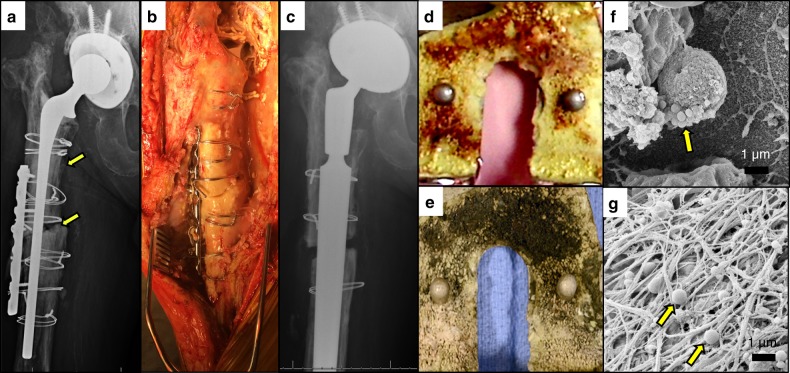
“2h), which encase the bacterial cells to mediate adhesion, provide mechanical stability and retain essential nutrients and enzymes.(78) As the biofilm matures, it becomes a complex and heterogeneous structure containing protected pods of bacteria (Fig.”
BackgroundPattern Recognition Receptors and Inflammation
Takeuchi, O., & Akira, S. (2010) · Cell · doi:10.1016/j.cell.2010.01.022 · Cited by 8,895
Mizgerd, J. P., Kubo, H., Kutkoski, G. J., Bhagwan, S. D., Scharffetter-Kochanek, K., Beaudet, A. L., & Doerschuk, C. M. (1997) · The Journal of Experimental Medicine · doi:10.1084/jem.186.8.1357 · Cited by 7,306
Bacterial biofilms: from the Natural environment to infectious diseases
Hall-Stoodley, L., Costerton, J. W., & Stoodley, P. (2004) · Nature Reviews Microbiology · doi:10.1038/nrmicro821 · Cited by 7,143
Staphylococcus aureus Infections
Lowy, F. D. (1998) · New England Journal of Medicine · doi:10.1056/nejm199808203390806 · Cited by 6,005
Mechanisms of biofilm resistance to antimicrobial agents
Mah, T.-F. C., & O'Toole, G. A. (2001) · Trends in Microbiology · doi:10.1016/s0966-842x(00)01913-2 · Cited by 3,921 · cited 1×
“For these reasons, bacteria within biofilms become very resistant to antimicrobial treatment and can survive drug dosing up to 1 000 times greater than their planktonic phenotype.(87) In addition to conferring long-term bacterial survival, biofilms can cause immense damage to the surrounding host tissue.”
BackgroundZimmerli, W., Trampuz, A., & Ochsner, P. E. (2004) · New England Journal of Medicine · doi:10.1056/nejmra040181 · Cited by 3,116
Global, regional, and national causes of child mortality in 2008: a systematic analysis
Black, R. E., Cousens, S., Johnson, H. L., Lawn, J. E., Rudan, I., Bassani, D. G., Jha, P., Campbell, H., Walker, C. F., Cibulskis, R., et al. (2010) · The Lancet · doi:10.1016/s0140-6736(10)60549-1 · Cited by 3,058 · cited 1×
“Antibiotic resistance is estimated to causes 10 million deaths/year by the year 2050.(226,227) This suggests that significant attention should be directed to the development of novel antimicrobial classes to circumvent the constantly evolving bacterial resistance mechanisms.”
Background
Cited by
Items 601–665 of 665
Community-Driven Osteomyelitis Prevention in Low-Resource Settings: A Case Study from Rwanda
Nsengiyumva, J. P., Kubahoniyesu, T., Ndabarora, E., Umutoniwase, B., & Mukamusoni, D. (2026) · East and Central African journal of surgery · doi:10.4314/ecajs.v31i1.4
Microstructural electromechanical coupling changes in bone under sepsis
Tang, C., Xing, Y., Tian, J., & Sun, Y. (2026) · Journal of Biomechanics · doi:10.1016/j.jbiomech.2026.113351
Chen, L., Chen, Y., Xie, X., Zhu, Z., Zhang, Y., Dong, Y., Gao, C., Zhu, M., Zhang, Z., Liu, B., et al. (2026) · Journal of Controlled Release · doi:10.1016/j.jconrel.2026.115008
Siddique, K. R., Bose, D., Bhattacharya, R., & Ali, A. (2026) · CABI Agriculture and Bioscience · doi:10.1079/ab.2026.0042
Sun, P., Ye, Y., Xie, S., Wang, G., Wei, J., & Niu, Y. (2026) · Biomaterials Science · doi:10.1039/d6bm00176a
Óleo-Taltavull, R. (2026) · Tesis Doctorals en Xarxa (Consorci de Serveis Universitaris de Catalunya)
Liu, C., Wang, D., & Zhong, J. (2026) · Computational Biology and Chemistry · doi:10.1016/j.compbiolchem.2026.109140
Antibiotic‐Impregnated Calcium Sulfate Beads for Local Therapy of Severe Skull Base Osteomyelitis
Lyutenski, S., Henze, A., James, P., & Bloching, M. (2026) · Clinical Case Reports · doi:10.1002/ccr3.72836
Satyam, S. M., Safaii, E., Shameer, I., Kumari, R., Prabhakar, S., Eltrabishi, M. T. Z. M., El‐Tanani, M., Rehman, A., & Abdelfattah, M. T. M. W. M. (2026) · Antibiotics · doi:10.3390/antibiotics15060583
“This persistence maintains chronic inflammatory signaling, thereby prolonging osteolytic activity and tissue damage [113,178].”
Yang, S., Yao, Y., Liu, Z., & Chu, L. (2026) · Materials Today · doi:10.1016/j.mattod.2026.103426
Gao, X., Zhang, X., Liu, H., Fu, X., Zhang, T., Liang, X., Ren, Y., Yang, X. L., Peng, X., Xu, L., et al. (2026) · Chemical Engineering Journal · doi:10.1016/j.cej.2026.178701
Saginova, D., Sorokina, M., Syundyukov, A., Kaliyeva, A., Alzhanov, Y., & Kaliyev, A. (2026) · Journal of Clinical Medicine · doi:10.3390/jcm15135008
“From a biological perspective, repeat surgical interventions may contribute to progressive periosteal devascularization, hematoma formation, and an increased risk of bacterial colonization, which is consistent with current understanding of the pathogenesis of implant-associated infection [9,10].”
Zhang, R., Chen, L., Stehle, Y. Y., Yang, M., Lin, M., Wang, C., Zhang, H., Yang, J., Hu, D., Huang, M., et al. (2026) · Bioactive Materials · doi:10.1016/j.bioactmat.2026.06.049
Liu, F., Wang, J., Zhang, J. C., Xue, Y. J., Wang, A., Wu, Q., Liu, H., & Shi, R. (2026) · Small · doi:10.1002/smll.74156
Yang, X., Chen, C., Rao, X., Wang, J., Bian, L., Wang, L., Wang, C., Wang, F., Cheng, S., Shi, W., et al. (2026) · ACS Applied Materials & Interfaces · doi:10.1021/acsami.6c09160
Deng, X., Zhang, L., Li, J. B., Yang, F., Peng, C., Peng, J., Yu, Y., Huang, X., Yang, X., & Yang, L. (2026) · Frontiers in Immunology · doi:10.3389/fimmu.2026.1878634
“Bacteria within bio fi lms exhibit markedly enhanced tolerance to antimicrobial agents and host immune responses, making the infection dif fi cult to eradicate completely (3 – 5).”
Musculoskeletal infections management: practice and state of art
Diallo, M., Bakriga, B., Dakoure, P. W. H., ABALO, A. G., Anoumou, M. N., Sié-Essoh, J.-B., & SAFO (2025) · doi:10.59510/86775541
Zimba, B. L., Yang, X., Sauli, E., Rwiza, M. J., & Wang, S. (2026) · Biomedical Materials · doi:10.1088/1748-605x/ae8e14
“In clinical settings, bacterial infection is a common complication of bone defects which significantly impairs bone healing and frequently results in chronic osteomyelitis, implant failure, or nonunion [12].”
Role of quorum sensing in the pathogenesis of ESKAPE pathogens
Kannappan, A., Priya, A., Nagaiah, H. P., Krishnan, S., Shi, C. Y., & MubarakAli, D. (2026) · Elsevier eBooks · doi:10.1016/b978-0-443-26726-0.00014-1
Dai, Z., Wang, Z., Wang, Y., Zhu, J. F., Yang, K., Cheng, S., Wu, C., Qiu, Q., Gao, W., & Chen, P. (2026) · Journal of Nanobiotechnology · doi:10.1186/s12951-026-04799-z
“In bone infections, biofilm formation enables bacteria to evade the host immune system, thereby increasing their resistance and pathogenicity [36].”
Polycaprolactone-Based scaffolds in osteomyelitis treatment
Ayyami, Y., Yekani, M., Adibkia, K., Dastgir, M., Nobakht, A., Lotfi, N., & Memar, M. Y. (2026) · European Polymer Journal · doi:10.1016/j.eurpolymj.2026.114972
Liu, H. Y., Bo, Y., Gao, P., Li, Z., 邱少东, Feng, G., Zb, Y., Zhang, H., & Mi, Z. (2026) · Expert Review of Medical Devices · doi:10.1080/17434440.2026.2691192
“It has been suggested that the combination of vancomycin PMMA and vancomycin calcium sulfate is more beneficial for the treatment of bone defect infections, and vancomycin can be well released in PMMA [49].”
Rabiser, K., Kampik, L., Lindtner, R. A., Klosterhuber, M., Putzer, D., Arora, R. R., Spiegel, C., Coraça-Huber, D. C., Schirmer, M., Apostolova, G., et al. (2026) · Spectrochimica Acta Part A Molecular and Biomolecular Spectroscopy · doi:10.1016/j.saa.2026.128537
Legler, J., Morgan, S., Beaulé, P. E., Abdelbary, H., Grammatopoulos, G. A., & Garceau, S. P. (2026) · Journal of Bone and Joint Infection · doi:10.5194/jbji-11-463-2026
Yin, S., Chen, Y., Li, J., Yang, H., Ren, Y., Cao, B., Geng, Q., Niu, J.-Q., Gong, H., & Zhang, H. (2026) · Frontiers in Cell and Developmental Biology · doi:10.3389/fcell.2026.1922621
“Biofilms not only restrict antibiotic penetration but also maintain bacteria in a low-metabolic or tolerant state, thereby increasing the risk of recurrence (Masters et al., 2019).”
Wang, G., Dai, W., Peng, S., Li, X., Wu, J., Sun, B., & Shuai, C. (2026) · ACS Applied Polymer Materials · doi:10.1021/acsapm.6c01897
Sogut, O., & Sezer, Ü. A. (2026) · ACS Omega · doi:10.1021/acsomega.6c04993
Feng, Q., Song, Y., & Ha, X. (2026) · Frontiers in Cellular and Infection Microbiology · doi:10.3389/fcimb.2026.1654595
Sudnitsyn, A. S., Stupina, T. A., Дюрягина, О. В., Тушина, Н. В., Варсегова, Т. Н., & Kubrak, N. V. (2026) · Genij Ortopedii · doi:10.18019/1028-4427-2026-32-4-540-551
“Однако небио-деградируемые материалы не обеспечивают пролонгированного высвобождения антибиотика [23, 24], их основными недостатками является несовместимость со многими противомикробными препаратами [25] и необходимость выполнения повторной операции по удалению такого спейсера [5, 26].”
Impact of polymeric gel on the rabbit organism under conditions of prolonged intraosseous exposure
Legonkova, O. A., Stafford, V. V., Antonov, V. V., Akhmedov, B. G., & Божкова, С. А. (2026) · Traumatology and Orthopedics of Russia · doi:10.17816/2311-2905-17870
An, J., Zhang, Y., Zhao, P., Ding, T., Sun, H., Yang, Z., Guan, H., Wang, Y., Fang, H., & Qiao, Z. (2026) · Frontiers in Bioscience-Landmark · doi:10.31083/fbl52014
Cao, X., He, Y., Zhu, Y., Gu, P., Dai, T., & Zheng, Y. (2026) · Frontiers in Cell and Developmental Biology · doi:10.3389/fcell.2026.1943374
Zhang, J.-Y., Yang, Y.-Q., Zhang, Z.-X., Jin, J.-L., Luo, Z.-Y., Wang, D.-Y., Ruan, C.-X., Dai, T.-Z., Huang, Y.-L., Xu, J., et al. (2026) · Bioactive Materials · doi:10.1016/j.bioactmat.2026.05.047
Current and emerging biomaterials for targeted drug delivery in osteomyelitis management
Rajendran, P., Sekar, R., Ali, E. M., Dayasankar, P. S., & Abdallah, B. M. (2026) · Discover Nano · doi:10.1186/s11671-026-04878-y
“Masters et al. emphasize that evolving definitions of “biofilm,” “acute vs. chronic osteomyelitis,” and “local antibiotic therapy” have not yet been systematically incorporated into clinical trial designs, leaving a gap between mechanistic biomaterial studies and outcome-driven human research [9].”
InfluentialStîngă, R.-I., & Nadăş, G. (2026) · Pathogens · doi:10.3390/pathogens15090963
“…bacteria exhibit profound physiological adaptations, including altered gene expression, metabolic heterogeneity, phenotypic tolerance, and enhanced resistance to both host immune defenses and antimicrobial therapy, collectively promoting chronic infection and treatment failure [11,22,45,61].”
Tian, X., Zhang, Y., Zhang, C., Qu, X., 孟祥红, Wang, X., & Wang, Z. (2026) · Biomedical Materials · doi:10.1088/1748-605x/aea5c5
“Infection-induced local ROS elevation and accumulation of acidic metabolic products further exacerbate oxidative stress, osteoclast activation, and osteogenesis inhibition [77].”
Wu, H., Yu, S., Sun, D., Wang, S., Wang, X., Fu, J., Xie, Z., & Shen, J. (2026) · Bone & Joint Open · doi:10.1302/2633-1462.79.bjo-2026-0015.r1
“3,15 These factors collectively contribute to prolonged hospitalization, increased healthcare costs, and heightened risks of limb loss or chronic osteomyelitis.”
Liao, S. T.-Y., King, P. C., Crawford, R. J., Ivanova, E. P., Thissen, H. W., & Kingshott, P. (2026) · ACS Biomaterials Science & Engineering · doi:10.1021/acsbiomaterials.6c00072
Lei, Q., Lin, L., Pu, P., Chen, J., Su, X., Liu, S., Tong, Y., & Yu, H. (2026) · MedComm · doi:10.1002/mco2.70981
Shi, Y., Wang, L., & Wang, T. (2026) · Animals and zoonoses. · doi:10.1016/j.azn.2026.09.005
Feng, J., Kun, H., Chen, S., Chen, F., Ding, Y., Zhang, Q., Feng, G., Xiong, J., Chen, Y., & Li, J. (2026) · Frontiers in Bioengineering and Biotechnology · doi:10.3389/fbioe.2026.1932272
“Their management therefore requires both infection control and restoration of bone structure and function (Ma L. et al., 2024; Masters et al., 2019; Yu et al., 2026a).”
Chen, X., Zhao, C., Zhang, W., Yu, Z., Zhang, X., Zhang, H., Li, H., Liu, G., Song, X., Shi, J., et al. (2026) · Frontiers in Surgery · doi:10.3389/fsurg.2026.1933516
Alqawlaq, A. K., Alruways, R. H. M., Alqurashi, W. A., Altaib, O. M., Awlia, A., Bannan, A., Awad, M. A. H., Hetaimish, B. M., Algethami, M. R., & Samargandi, R. (2026) · Journal of Clinical Medicine · doi:10.3390/jcm15197509
Lacayo-Holmann, L. S., Esterilla-Viafara, J., Arbeláez-Quintero, I., & Marmolejo-Tejada, C. A. (2026) · Salutem Scientia Spiritus
Wang, J., Chu, F., Zhang, Q., Qi, X., Zhang, L., Zhang, X., Zhang, Y., Lv, Y., Li, W., Cai, N., et al. (2026) · Frontiers in Microbiology · doi:10.3389/fmicb.2026.1914727
Campos, L. B., Silva, M. M. D. A., Kurihara, M. N. L., Tuma, R. S., Vieira, M. A. M., Sinigaglia‐Coimbra, R., Durigon, T. S., dos Reis, F. B., Gomes, T. A. T., & Salles, M. J. C. (2026) · Microbial Pathogenesis · doi:10.1016/j.micpath.2026.108873
Gao, J., Hou, J., You, Y., Hao, L., Leng, S., Li, Z., Chen, Y., Yang, W., Ma, M., Chen, M., et al. (2026) · Chemical Engineering Journal · doi:10.1016/j.cej.2026.182904
Шипицына, И. В., Stogov, M. V., Osipova, E. V., & Shastov, A. L. (2026) · Biomedical Engineering · doi:10.1007/s10527-026-10542-7
Coordination Reprogramming of Fe‐Antibiotic Assemblies Enables Valence‐Gated β‐Lactam Reactivation
许正江, Zhang, Y., Wu, B., Chen, J., Fu, Q., Fang, L., Wu, J., Ruan, C., Pan, H., Xia, Y. Q., et al. (2026) · Advanced Healthcare Materials · doi:10.1002/adhm.71836
Immunomodulation and biofilm disruption of piezoelectric materials in bone infection
Wang, Z., Zheng, K., Tang, Y., Zhang, Z., Zhong, Z., Wang, D., Chen, Z., Wang, Y., Chen, Z., Feng, P., et al. (2026) · Frontiers in Cell and Developmental Biology · doi:10.3389/fcell.2026.1976300
“Currently, the treatment of OM mainly relies on surgical debridement and antibiotic therapy; however, many patients eventually develop chronic osteomyelitis, largely due to bacterial biofilm formation and dysregulated host immune responses (Masters et al., 2019).”
Ye, K., Liu, X., Pei, Z., Jiang, C., Zhang, X., Lin, L., Fang, Q., Chen, B., Shen, L., Cheng, L., et al. (2026) · Advanced Materials · doi:10.1002/adma.75457
Penicillin binding protein 4: an emerging Staphylococcus aureus therapeutic target
Gondil, V. S., Stefaniak, M. A., Melander, C., & Dunman, P. M. (2026) · Frontiers in Cellular and Infection Microbiology · doi:10.3389/fcimb.2026.1940058
Decoding the risks of hydrogels for bone regeneration
Li, Y., Tang, Y., & Cui, W. (2026) · Nature Reviews Materials · doi:10.1038/s41578-026-00972-w
Özbaş, U. K., & Yavuz, H. İ. (2026) · Antioxidants · doi:10.3390/antiox15111395
Tang, R., Nakandalage, R., Velázquez‐Martínez, C. A., Beahm, N. P., Bergman, J., Neelakantan, P., Davies, N. M., & Doschak, M. R. (2026) · Pharmaceutics · doi:10.3390/pharmaceutics18111432
Bio-heterojunction Engineering: An Emerging Strategy for Infected Bone Defects Regeneration
Yang, Q., Kong, Y., Wang, L., Yuan, P., Bai, T., Wang, Z., Wang, Y., Yu, S., & Zhou, W. (2026) · Particuology · doi:10.1016/j.partic.2026.11.008
Emerging Multimodal AIE Theranostics with Key Diagnostic and Therapeutic Roles: A Review of Evidence
Zhang, J., Wang, X., Zou, H., Xu, K., Sun, H., Huang, Y., Liu, D., Wang, W., Tang, B. Z., & Xu, J. (2026) · International Journal of Nanomedicine · doi:10.2147/ijn.s642260
Rācenis, K., Apse, R., Berentsen, L., Maurins, S., Eglīte, D., Zrelovs, Ņ., Dąbrowska, K., Kaźmierczak, Z., Sierra, R., Andrey, D., et al. (2026) · Research Square · doi:10.21203/rs.3.rs-11661571/v1
Immune-instructive biofabrication for musculoskeletal tissue regeneration
Li, W., Chae, S., Ahn, Y., & Kim, G. (2026) · Applied Physics Reviews · doi:10.1063/5.0358280
Xin, W., and, Y. G., & Yue, B. (2022) · doi:10.3389/fbioe.2022.865250.s001
Chen, Z., Hua, G., Li, Z., Chen, H., Qin, Y., Zhao, X., Luo, T., Chen, L., Wu, D., & Cao, S. (2026) · Macromolecular Bioscience · doi:10.1002/mabi.70281
Peez, C., Chen, B., Henssler, L., Chittò, M., Onsea, J., Verhofstad, M. H. J., Arens, D., Constant, C., Zeiter, S., Obremskey, W., et al. (2025) · doi:10.3389/fcimb.2025.1547250.s001
Sherchand, S. P., Adhikari, R. P., Muthukrishnan, G., Kanipakala, T., Owen, J. R., Xie, C., Aman, M. J., Proctor, R. A., Schwarz, E. M., & Kates, S. L. (2022) · doi:10.3389/fcimb.2022.876898.s003
Self-citationJensen, N., Jensen, H. E., Aalbaek, B., Blirup-Plum, S. A., Soto, S. M., Cepas, V., López, Y., Gabasa, Y., Gutiérrez-del-Río, I., Villar, C. J., et al. (2022) · doi:10.3389/fmicb.2022.950855.s002
Metadata
- Authors
- Masters, E. A., Trombetta, R. P., de Mesy Bentley, K. L., Boyce, B. F., Gill, A. L., Gill, S. R., Nishitani, K., Ishikawa, M., Morita, Y., Ito, H., Bello-Irizarry, S. N., Ninomiya, M., Brodell, J. D., Lee, C. C., Hao, S. P., Oh, I., Xie, C., Awad, H. A., Daiss, J. L., Owen, J. R., Kates, S. L., Schwarz, E. M., & Muthukrishnan, G.
- Affiliations
- University of Rochester Medicine (US)
- Kyoto University (JP)
- Virginia Commonwealth University Medical Center (US)
- Corresponding author
- Schwarz, Edward M.
- ORCID
- Masters, Elysia A.
- Trombetta, Ryan P.
- Boyce, Brendan F
- Gill, Ann Lindley
- Gill, Steven R.
- Nishitani, Kohei
- Ishikawa, Masahiro
- Morita, Yugo
- Ito, Hiromu
- Ninomiya, Mark
- Brodell, James D.
- Lee, Charles C.
- Hao, Stephanie P.
- Oh, Irvin
- Xie, Chao
- Awad, Hani A.
- Daiss, John L.
- Owen, John R.
- Kates, Stephen L.
- Schwarz, Edward M.
- Muthukrishnan, Gowrishankar
- Venue
- Bone Research
- Published
- 2019-07-15
- Volume
- 7
- Issue
- 1
- Pages
- 20-20
- ISSN
- 2095-4700 (ISSN-L)
- 2095-6231
- PMC
- PMC6804538
- OpenAlex
- W2959071814
- Semantic Scholar
- e050fbf236fc8e3356c100a29eaca07668635d74
- Cited by
- 575
- References
- 273
- Citations by year
- 2026: 85 · 2025: 98 · 2024: 82 · 2023: 86 · 2022: 94 · 2021: 73 · 2020: 54 · 2019: 2
- FWCI
- 11.50
- Type
- journal article
- Language
- en
- Open access
- gold
- doi.org
- Licence
- cc-by
- creativecommons.org/licenses/by/4.0 (tdm)
- creativecommons.org/licenses/by/4.0 (vor)
- Locations
- Bone Research (publishedVersion, cc-by)
- Europe PMC (PubMed Central) (publishedVersion, cc-by)
- PubMed Central (publishedVersion, cc-by)
- PubMed (publishedVersion)
- Funders
- U.S. Department of Health & Human Services | NIH | National Institute of Arthritis and Musculoskeletal and Skin Diseases (P50 AR072000, P30 AR069655, R01 AR43510, R01 AG049994, P30 AR061307, T32 AR53459, R21 AR074571, R21 AR073321, R21 AR500710, P30 AR069655-01 Pilot, R01 AI119646)
- AO Foundation (Clinical Priority Program)
- Amedica Inc
- Bristol-Myers Squibb
- Astellas Pharma
- Asahi Kasei Pharma Corporation
- Bristol-Myers, Astellas and Asahi-Kasei
- Goldstein Award from the Department of Orthopaedics, University of Rochester, Rochester, NY
- Topics
- Health Sciences › Medicine › Surgery › Orthopedic Infections and Treatments
- Life Sciences › Biochemistry, Genetics and Molecular Biology › Molecular Biology › Bacterial biofilms and quorum sensing
- Health Sciences › Medicine › Infectious Diseases › Antimicrobial Resistance in Staphylococcus
- Keywords
- osteomyelitis, bone infection, bacterial biofilms, Staphylococcus aureus, chronic osteomyelitis, serum antibodies, implant-associated infection, vaccine development
About these checks
Registry, retraction, Cites and statistics results are computed, not judged, with one exception: a printed reference that no index lists is read once by a model before it counts as a citation error. Claims are extracted by a model and kept only when their quote appears verbatim in the text; each cited source is then checked, with a model’s help, for whether it says what the claim relies on. Those verdicts can be wrong — read the claim’s quote and the cited source before relying on one.
Statistics and arithmetic are recomputed, not judged.
Confidence bands are shown only for fields calibrated on our annotated test set. None is calibrated yet, so no band is shown.
What counts as a claim ›How we measure confidence ›How we check this ›
Are you an author, or do you see a problem with this page? Request a review
Data sources
Bibliographic data: Semantic Scholar, OpenAlex, Crossref.
Contains information from the Semantic Scholar Academic Graph Datasets, made available under the ODC Attribution License (ODC-BY 1.0).
Semantic Scholar’s data is described in: Kinney, R., et al. (2023). The Semantic Scholar Open Data Platform. arXiv:2301.10140.
