

Mechanical regulation of bone remodeling
Open accessThe DOI matches its Crossref record; 237 of the 238 references it cites were found in a registry or an index.
Abstract
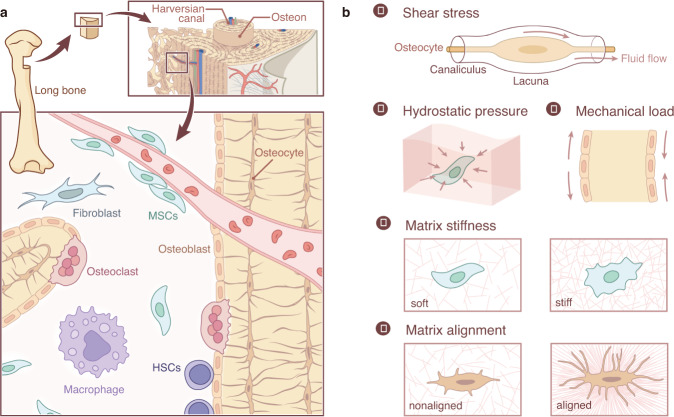
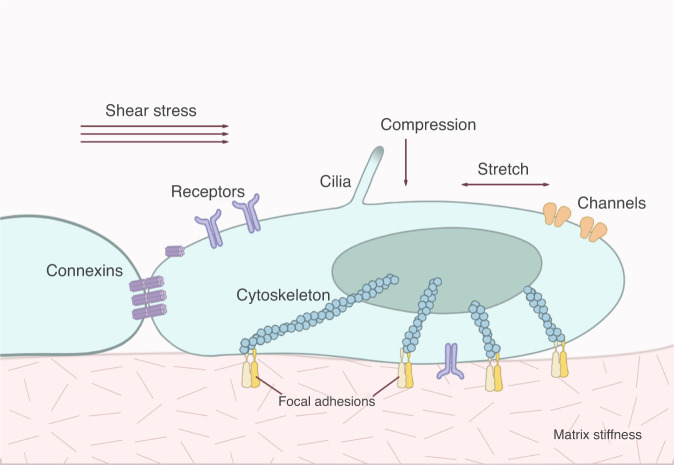
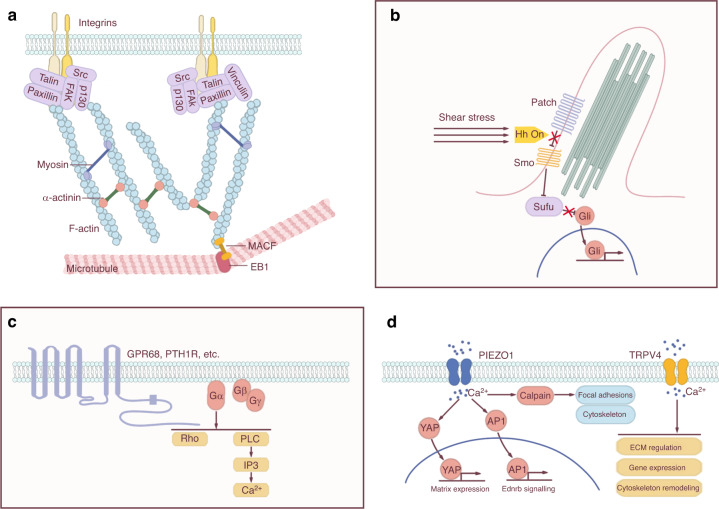
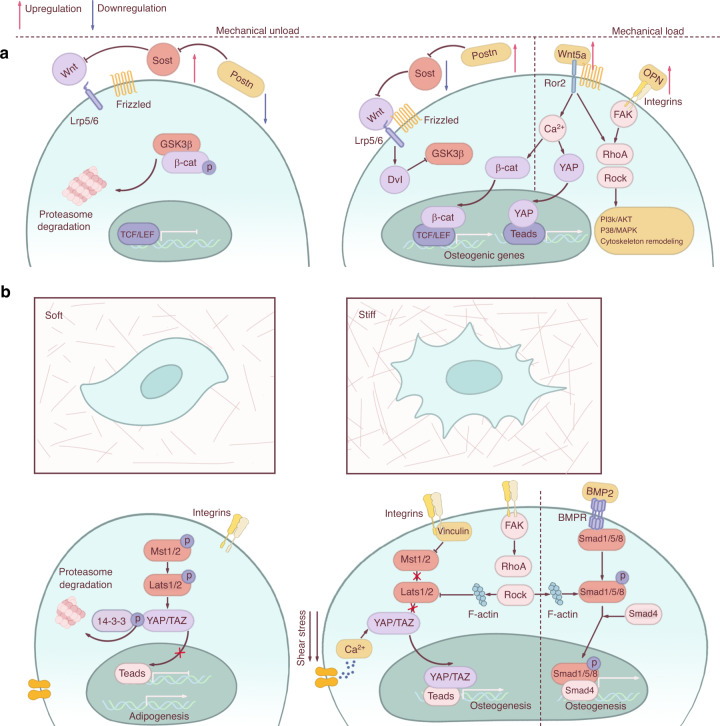
Bone remodeling is a lifelong process that gives rise to a mature, dynamic bone structure via a balance between bone formation by osteoblasts and resorption by osteoclasts. These opposite processes allow the accommodation of bones to dynamic mechanical forces, altering bone mass in response to changing conditions. Mechanical forces are indispensable for bone homeostasis; skeletal formation, resorption, and adaptation are dependent on mechanical signals, and loss of mechanical stimulation can therefore significantly weaken the bone structure, causing disuse osteoporosis and increasing the risk of fracture. The exact mechanisms by which the body senses and transduces mechanical forces to regulate bone remodeling have long been an active area of study among researchers and clinicians. Such research will lead to a deeper understanding of bone disorders and identify new strategies for skeletal rejuvenation. Here, we will discuss the mechanical properties, mechanosensitive cell populations, and mechanotransducive signaling pathways of the skeletal system.
Overview
The claims and statistics of this paper haven’t been checked yet.
Free: it reads the open-access text and checks the first 5 claims that cite a source we can check. Create a free account to check every claim.
Integrity signals
Registry
Cites
Statistics
Figures
Verification
Claims the paper makes
The claims and statistics of this paper haven’t been checked yet.
Free: it reads the open-access text and checks the first 5 claims that cite a source we can check. Create a free account to check every claim.
Claims other papers make about this one
Each is checked against this paper’s own text: does it say what the citing paper says it does?
The source backs part of the claim, not all of it — or backs it for a different population, condition or comparison.
In the citing paper
“Muscle-derived mechanical loading activates mechanosensors in osteocytes and osteoblast-lineage cells, including integrins and Piezo1, thereby inducing Ca2+-dependent signaling and Wnt/β-catenin-associated osteogenic pathways that promote osteoblast activity [47,48]”
From Interorgan Communications in Skeletal Pathophysiology: From Molecular Pathways to Multidisciplinary Therapies (2026) · cites this paper as [48]
Experimental — accuracy not yet measured
Self-check
Percentages, sums and reported differences re-computed from the paper’s own numbers.
The self-check needs the paper’s full text.
Citations
Cites
Hynes (2002) · doi:10.1016/s0092-8674(02)00971-6 · Cited by 8,606
Role of YAP/TAZ in mechanotransduction
Dupont, S., Morsut, L., Aragona, M., Enzo, E., Giulitti, S., Cordenonsi, M., Zanconato, F., Le Digabel, J., Forcato, M., Bicciato, S., et al. (2011) · Nature · doi:10.1038/nature10137 · Cited by 5,979 · cited 2×
“In contrast, a separate study found that overexpression of a constitutively active YAP mutant in MSCs promotes osteogenesis more than adipogenesis, even under soft matrix conditions.(186) Additionally, YAP overexpression has been reported to inhibit both the osteogenic and adipogenic abilities of MSCs through inhibiti…”
BackgroundWnt/β-catenin signaling and disease
Clevers, H., & Nusse, R. (2012) · Cell · doi:10.1016/j.cell.2012.05.012 · Cited by 5,554
Piezo1 and Piezo2 Are Essential Components of Distinct Mechanically Activated Cation Channels
Coste, B., Mathur, J., Schmidt, M., Earley, T. J., Ranade, S., Petrus, M. J., Dubin, A. E., & Patapoutian, A. (2010) · Science · doi:10.1126/science.1193270 · Cited by 3,316 · cited 1×
“identified prominent mechanosensitive cation PIEZO channels (PIEZO1/2) using RNA interference profiles in a mouse neuroblastoma cell line.(104) Although the PIEZO1 protein shares only 42% sequence homology with its homolog PIEZO2, their structures are similar: a three-bladed, propeller-like trimer with an extracellula…”
Backgroundβ-catenin is a target for the ubiquitin–proteasome pathway
Aberle, H., Bauer, A., Stappert, J., Kispert, A., & Kemler, R. (1997) · The EMBO Journal · doi:10.1093/emboj/16.13.3797 · Cited by 2,529
Focal adhesion kinase: in command and control of cell motility.
Mitra, S. K., Hanson, D. A., & Schlaepfer, D. D. (2005) · Nature Reviews Molecular Cell Biology · doi:10.1038/nrm1549 · Cited by 2,335
WNT signaling in bone homeostasis and disease: From human mutations to treatments
Baron, R., & Kneissel, M. (2013) · Nature Medicine · doi:10.1038/nm.3074 · Cited by 2,093
Non-muscle myosin II takes centre stage in cell adhesion and migration
Vicente-Manzanares, M., Ma, X., Adelstein, R. S., & Horwitz, A. R. (2009) · Nature Reviews Molecular Cell Biology · doi:10.1038/nrm2786 · Cited by 2,032 · cited 1×
“The activity and assembly of myosin II are regulated by the phosphorylation of its light and heavy chains through numerous kinases in diverse regulatory pathways, including myosin light chain kinase (MLCK; activated by Ca/ calmodulin), Rho kinase, citron kinase (activated by RhoA), and myotonic dystrophy kinase-relate…”
BackgroundHuang, J., Wu, S., Barrera, J., Matthews, K., & Pan, D. (2005) · Cell · doi:10.1016/j.cell.2005.06.007 · Cited by 1,863 · cited 1×
“LATS1/2 directly phosphorylates YAP and TAZ at multiple sites, thereby inhibiting their nuclear localization.(178) Phosphorylated YAP/TAZ is sequestered in the cytoplasm by interaction with the 14–3–3 protein and then degraded by the ubiquitin-proteasome system (Fig.”
BackgroundReduced cell motility and enhanced focal adhesion contact formation in cells from FAK-deficient mice
llić, D., Furuta, Y., Kanazawa, S., Takeda, N., Sobue, K., Nakatsuji, N., Nomura, S., Fujimoto, J., Okada, M., Yamamoto, T., et al. (1995) · Nature · doi:10.1038/377539a0 · Cited by 1,830
Research works printed but not linked: 1
- Wolff JDas Gesetz der transformation der Knochen A Hirshwald 1892 1 1 152
Cited by
Items 201–300 of 734
Hip Fractures: Clinical, Biomaterial and Biomechanical Insights into a Common Health Challenge
Luo, Y. (2025) · Bioengineering · doi:10.3390/bioengineering12060580 · Cited by 11
“Bone remodeling is a continuous process in which osteoclasts resorb old bone and osteoblasts secrete osteoid, a collagen-rich organic matrix that serves as the scaffold for subsequent mineralization [154,155].”
Kim, D.-G., Ha, G., Kim, M., Kwak, M., Kim, H., & Lee, J. (2025) · Advanced Healthcare Materials · doi:10.1002/adhm.202502773 · Cited by 11
Autonomous Polymer Frameworks for Sustainable Tissue‐Interfaced Plastic Bioelectronics
Boahen, E. K., Kong, Z., Kim, S., Oh, H., Yoo, H., Lim, J. S., Shin, H., Kim, J. H., & Kim, D. H. (2025) · Advanced Science · doi:10.1002/advs.202515320 · Cited by 11
Self-healing dental biomaterials: bioinspired pathways to sustainable dentistry
Khan, A. A. (2025) · Biomaterial Investigations in Dentistry · doi:10.2340/biid.v12.45229 · Cited by 11
“It is a dynamic, hierarchically organised composite that undergoes continuous remodelling through the coordinated activity of osteoclasts and osteoblasts [24, 25], thereby ensuring both mechanical competence and mineral homeostasis.”
Diagnóstico Capilaroscópico de la Salud Ósea. Parte 1.- Definición Capilaroscópica Operativa
Garza, V. A. A. (2026) · IECCMEXICO · doi:10.64784/279 · Cited by 13
Tong, X., Yang, Y., Gong, S., Han, X., Wu, Y., Ma, X., Lang, S., Ma, J., & Ma, X. (2022) · Evidence-based Complementary and Alternative Medicine · doi:10.1155/2022/1116923 · Cited by 12
“When the balance of bone formation and bone resorption is disrupted, the structures and qualities of bones will change, and abnormal bone remodeling will occur [40].”
BackgroundLi, Y., Yang, S., & Yang, S. (2022) · Molecular Metabolism · doi:10.1016/j.molmet.2022.101630 · Cited by 11
Recent technological advances in lab-on-a-chip for bone remodeling
Kim, S., Rajendran, A. K., Amirthalingam, S., Kim, J. H., So, K., & Hwang, N. S.-Y. (2023) · Biosensors and Bioelectronics X · doi:10.1016/j.biosx.2023.100360 · Cited by 11
Intravital imaging of osteocyte integrin dynamics with locally injectable fluorescent nanoparticles
Matthews, M. D., Cook, E., Naguib, N., Wiesner, U. B., & Lewis, K. J. (2023) · Bone · doi:10.1016/j.bone.2023.116830 · Cited by 11
Wang, J., Zhao, Z., Yang, K. G., & Bai, Y. (2024) · Frontiers in Bioengineering and Biotechnology · doi:10.3389/fbioe.2024.1340728 · Cited by 11
Alontseva, D. L., (Yantsen), Y. S., Voinarovych, S., Obrosov, A., Yamanoglu, R., Khoshnaw, F., Nessipbekova, A., Syzdykova, A., Yavuz, H. I., Kaliuzhnyi, S., et al. (2024) · Johnson Matthey Technology Review · doi:10.1595/205651325x17201903387613 · Cited by 11
García-Espinosa, M. E., Limas-Quezada, P., Ortega-Meléndez, A. I., Ballinas-Verdugo, M. A., Gómez, R. E. L., López-Espinosa, E., & Jiménez-Ortega, R. F. (2024) · Acupuncture and Herbal Medicine · doi:10.1097/hm9.0000000000000132 · Cited by 11
“This mechanism is responsible for adjusting bone microarchitecture and maintaining constantly changing mechanical needs, as well as repairing damage to the bone matrix and preventing bone tissue deterioration [3] .”
REGγ is essential to maintain bone homeostasis by degrading TRAF6, preventing osteoporosis
Du, Y., Chen, H., Zhou, L., Guo, Q., Gong, S., Feng, S., Guan, Q., Shi, P., Lv, T., Guo, Y., et al. (2024) · Proceedings of the National Academy of Sciences · doi:10.1073/pnas.2405265121 · Cited by 11
Zhang, J., Tong, Y., Liu, Y., Lin, M., Xiao, Y., & Liu, C. (2022) · Bone · doi:10.1016/j.bone.2022.116449 · Cited by 11
Takaoka, Y., Fujibayashi, S., Yabutsuka, T., Yamane, Y., Ishizaki, C., Goto, K., Otsuki, B., Kawai, T., Shimizu, T., Okuzu, Y., et al. (2023) · Scientific Reports · doi:10.1038/s41598-023-28701-1 · Cited by 11
Delineating the nexus between gut-intratumoral microbiome and osteo-immune system in bone metastases
Kapoor, S., Gupta, M., Sapra, L., Kaur, T., & Srivastava, R. K. (2024) · Bone Reports · doi:10.1016/j.bonr.2024.101809 · Cited by 10
Estévez, M., Batoni, E., Cicuéndez, M., Bonatti, A. F., Fernández‐Marcelo, T., Maria, C. D., González, B., Izquierdo‐Barba, I., & Vozzi, G. (2025) · Tissue Engineering and Regenerative Medicine · doi:10.1007/s13770-025-00711-2 · Cited by 10
Advances in Drug Delivery Systems for Osteochondral Tissue Regeneration
Shang, J., Zhang, J., Liu, L., Kou, W., Zhang, P., Sun, G., Zhou, H., Shi, W., Zhang, Y., Liu, C., et al. (2025) · BIO Integration · doi:10.15212/bioi-2025-0072 · Cited by 10
Wan, S., He, Y., Chong, B., Xia, Z., Qiu, Y., Zhang, R., Hu, M., An, Z., Li, Y., Xie, J., et al. (2025) · Biochemical and Biophysical Research Communications · doi:10.1016/j.bbrc.2025.152439 · Cited by 10
Molecular communication from bone to skeletal muscle: an overview
Li, G., Qi, M., Wang, Y., Liang, S., & Xu, H. (2025) · Frontiers in Cell and Developmental Biology · doi:10.3389/fcell.2025.1715009 · Cited by 11
“The activation and release of TGFβ occur in response to low pH conditions during osteoclast-mediated bone resorption or mechanical stretching (Wang et al., 2022).”
Chemotherapy-induced adipo-lineage cell senescence drives bone loss
Raut, G. K., Malachowski, T., Melam, A., Ramalho‐Oliveira, R., Holt, T., Luo, X., Yao, Z., Faget, D. V., Ren, Q., DeNardo, D. G., et al. (2025) · Nature Communications · doi:10.1038/s41467-025-67793-3 · Cited by 10
“Accumulating evidence has revealed that marrow adipo-lineage cells including CAR cells and BMAdscanexpressRANKLinpathologicalconditionsofboneloss 1,27,28 , Fig.”
Kong, D., Kang, Z., Jiang, C., Zhang, Z., Wang, X., Han, Q., & Shi, Y. (2023) · Materials & Design · doi:10.1016/j.matdes.2023.112184 · Cited by 10
Yang, D., Solidum, J. G. N., & Park, D. (2023) · Journal of Bone Metabolism · doi:10.11005/jbm.2023.30.3.231 · Cited by 10
“[16,29] On the other hand, coronal dental pulp cells can form odontoblasts specifically in post-injury repair, emphasizing the unique regulation and functionality of DPSC sub-populations.”
Advances in Skeletal Muscle Engineering in Biomedical Research
Zhao, M., Liu, H., Zhang, X., & Qin, J. (2023) · Advanced Materials Technologies · doi:10.1002/admt.202300595 · Cited by 10
Miura, T., Etani, Y., Noguchi, T., Hirao, M., Takami, K., Goshima, A., Kurihara, T., Fukuda, Y., Ochiai, N., Kanamoto, T., et al. (2024) · Bone · doi:10.1016/j.bone.2024.117026 · Cited by 10
Periodic static compression of micro-strain pattern regulates endochondral bone formation
Cheng, P., Zhao, X., Han, M., Zhuang, Y., Ning, F., Hu, Y., Lu, W., Miao, S., Zhao, C., Jia, L., et al. (2024) · Frontiers in Bioengineering and Biotechnology · doi:10.3389/fbioe.2024.1356135 · Cited by 10
“BMSCs were chosen as the research subject in this study primarily because of their potent chondrogenic potential and effective mechanical signal perception (Wang et al., 2022a; Sun et al., 2022).”
Incretins Beyond the Pancreas: Exploring the Impact of GIP and GLP-1/2 on Bone Remodeling
Zhao, H., Sun, J., & Ren, Z. (2024) · Discovery Medicine · doi:10.24976/discov.med.202436183.62 · Cited by 10
Randhawa, A., Ganguly, K., Dutta, S. D., Patil, T. V., & Lim, K. (2024) · Biomaterials · doi:10.1016/j.biomaterials.2024.122713 · Cited by 10
Rc3h1 negatively regulates osteoclastogenesis by limiting energy metabolism
Chen, L., Su, Y., Wang, C., Huang, Q., Chen, W., Hai, N., Wang, J., Lian, H., Zhao, J., Xu, J., et al. (2024) · Theranostics · doi:10.7150/thno.99565 · Cited by 10
Kalyanaraman, H., China, S. P., Cabriales, J. A., Moininazeri, J., Casteel, D. E., Garcia, J. J., Wong, V. W., Chen, A., Sah, R. L., Boss, G. R., et al. (2020) · Journal of Bone and Mineral Research · doi:10.1002/jbmr.4746 · Cited by 10
“The sexual dimorphism we found in the loading response of bone is unusual, although many studies on skeletal adaptation to loading have included only one sex.((43,79-81)) Lrp5 deficiency or osteocyte-specific Ctnnb1 (β-catenin) haploinsufficiency abolishes the anabolic bone response to loading in both male and femalem…”
BackgroundMuhib, F., Williams, K. E., LaBelle, S. A., Lin, A., Guldberg, R. E., & Weiss, J. A. (2025) · Journal of the mechanical behavior of biomedical materials/Journal of mechanical behavior of biomedical materials · doi:10.1016/j.jmbbm.2025.107065 · Cited by 9
Li, H., & Wang, H. (2025) · Osteoporosis International · doi:10.1007/s00198-025-07535-9 · Cited by 9
“This specific mechanical loading could activate osteocyte signaling, suppress sclerostin, and trigger the Wnt/ β -catenin pathway [31].”
A comprehensive review on hybrid lattice meta-structures for biomedical engineering applications
Shirzad, M., Zolfagharian, A., Nam, S. Y., & Bodaghi, M. (2025) · European Journal of Mechanics - A/Solids · doi:10.1016/j.euromechsol.2025.105878 · Cited by 9
Sun, Y., Zhang, Y., Wang, Y., Wang, K., Wang, Z., Wei, Z., Huang, L., Wang, Z., Chen, S., & Kang, X. (2025) · Environmental Pollution · doi:10.1016/j.envpol.2025.127379 · Cited by 9
Ghanta, P., Winschel, T., Hessel, E., Oyewumi, O., Czech, T., & Oyewumi, M. O. (2023) · Drug Delivery and Translational Research · doi:10.1007/s13346-023-01336-5 · Cited by 9
Wu, Z., Kaewmanee, R., Yang, Q., Wang, Z., Xie, E., Wei, J., & Zhang, C. (2023) · Journal of Materials Chemistry B · doi:10.1039/d3tb01546g · Cited by 9
Self-citationRecent advances in primary cilia in bone metabolism
Lian, F., Li, H., Ma, Y., Zhou, R., & Wu, W. (2023) · Frontiers in Endocrinology · doi:10.3389/fendo.2023.1259650 · Cited by 9
“The skeletal system is a dynamic and highly coordinated system that involves a balance between bone formation by osteoblasts and bone resorption by osteoclasts (22).”
BackgroundAntimicrobial peptides in bone regeneration: mechanism and potential
Wang, Z., Chen, X., Yan, L., Wang, W., Zheng, P., Atashbahar, M., & Liu, Q. (2024) · Expert Opinion on Biological Therapy · doi:10.1080/14712598.2024.2337239 · Cited by 9
“Conversely, osteoblast activity increases as the process progresses to the latter stages, and new bone is materialized, leading these cells to actively secrete and deposit bone matrix [160–162].”
BackgroundYang, F., Su, Y., Liang, J., Wang, K., Lian, H., Chen, J., Xu, J., Zhao, J., & Liu, Q. (2023) · International Journal of Molecular Medicine · doi:10.3892/ijmm.2023.5246 · Cited by 9
“Bone mass is regulated by both osteoclasts and osteoblasts (37).”
Bachmann, S., Pahr, D. H., & Synek, A. (2022) · Annals of Biomedical Engineering · doi:10.1007/s10439-022-03104-x · Cited by 9
Cojocaru, F.-D., Gardikiotis, I., Dodi, G., Rotaru, A., Bălan, V., Rezuş, E., & Vereștiuc, L. (2023) · Polymers · doi:10.3390/polym15061509 · Cited by 9
Ye, T., Yan, J., Kan, T., Xie, G., Zhang, Z., Yin, W., Zhao, B., Yu, Z., & Chu, L. (2025) · BMC Musculoskeletal Disorders · doi:10.1186/s12891-025-08419-z · Cited by 8
“One of the distinct characteristics of osteocytes is that they form central small chambers (lacunae) and surrounding fluid-filled pipes (canaliculi), which collectively shape into lacuna-canalicular network (LCN) [13].”
Balampanos, D., Kokkotis, C., Stampoulis, T., Avloniti, A. A., Pantazis, D., Protopapa, M., Retzepis, N.-O., Emmanouilidou, M., Aggelakis, P., Zaras, N. D., et al. (2025) · Journal of Functional Morphology and Kinesiology · doi:10.3390/jfmk10030262 · Cited by 8
“Mechanical loading from skeletal muscle promotes bone remodeling [15], while excess adiposity may impair bone integrity through inflammatory and endocrine pathways [16].”
Emami, A., Izadi, E., & Oskouie, I. M. (2025) · Tissue and Cell · doi:10.1016/j.tice.2025.103047 · Cited by 8
Huininga, K., Koromani, F., Zillikens, M., van Velsen, E. V., & Rivadeneira, F. (2025) · Journal of Bone and Mineral Research · doi:10.1093/jbmr/zjaf120 · Cited by 6
“13,14 On one hand, cortical bone provides most of the bone’s structural support reaching 40%-90% of the femoral neck’s total strength.”
Sustainable metal-organic framework (MOF) bio-films for biomedical applications
Shojaei, A. R., Zefreh, A. S., Malekli, M., Ramezanzadeh, B., & Mohammadloo, H. E. (2025) · Sustainable materials and technologies · doi:10.1016/j.susmat.2025.e01633 · Cited by 8
Magnetic-Responsive Material-Mediated Magnetic Stimulation for Tissue Engineering
Gu, J., Gui, L., Yan, D., Xia, X., Xie, Z., & Xue, L. (2025) · Magnetochemistry · doi:10.3390/magnetochemistry11100082 · Cited by 8
“These mechanical sensors include ion channels, integrins, connexins, actin filaments, focal adhesion kinase, and ECM components, ultimately promoting the proliferation and formation of osteoclasts and osteoblasts [146,168].”
Collagen Fibril Orientation In Vitro: From Formation to Advanced Biomaterial Development
Nashchekina, Y. A., & Нащекин, А. В. (2025) · Biomimetics · doi:10.3390/biomimetics10100644 · Cited by 8
“During the vital activity of the body, due to the movement of the limbs during walking, tissues are subjected to various mechanical loads, such as stretching, compression, and shear [74].”
Human preclinical multiple myeloma in vitro models for disease modeling and therapy screening
Ybarra, M., Lee, J., Chen, Y.-Y., Lin, J., Zhao, J., & Ma, C. (2025) · Journal of Biological Engineering · doi:10.1186/s13036-025-00570-4 · Cited by 8
“RCCS™, however, may not fully replicate the complex mechanical forces present in vivo, such as the precise shear stresses, compressive forces, and cyclic loading experienced by bone tissue during normal physiological activity [145, 146].”
Lin, Q., Sun, W., Zhao, B., Huang, J., Huang, H., Jin, X., Zou, Y., Yang, L., Zhu, X., Zhang, R., et al. (2025) · Journal of Nanobiotechnology · doi:10.1186/s12951-025-03743-x · Cited by 8
“Bone undergoes continuous remodeling, with approximately 10% of the skeleton renewed annually, a process dependent on the tight coordination between bone resorption and bone formation [2].”
Yang, J., Cong, N., Shi, D., Chen, S., Zhang, Z., & Zhao, P. (2024) · Journal of Ethnopharmacology · doi:10.1016/j.jep.2024.118366 · Cited by 8
Indarwulan, N., Savitri, M., Ashariati, A., Bintoro, S. U. Y., Diansyah, M. N., Amrita, P. N. A., & Romadhon, P. Z. (2024) · Diseases · doi:10.3390/diseases12110275 · Cited by 8
Li, Q., Wang, X., Cao, L., Chen, L., & Xiang, H. (2024) · Nano Energy · doi:10.1016/j.nanoen.2024.110542 · Cited by 8
Wang, L., Liang, L., Zhang, X., Chi, H., & Peng, F. L. (2025) · Scientific Reports · doi:10.1038/s41598-024-82243-8 · Cited by 8
“These opposite processes allow the bones to adapt to dynamic mechanical loads 24–26 .”
Self-citationXu, Y. L., Huang, M., Zhang, Y., Su, X., Huang, M., Zou, N. Y., Jiao, Y. R., Sun, Y., Liu, L., Lei, Y. H., et al. (2025) · Bone Research · doi:10.1038/s41413-024-00392-y · Cited by 8
“8 Research has revealed that immobilization intervention changes the ECM structure of the injured area and causes mesenchymal stem cells to undergo fate bias.”
Mechanical cues in tumor microenvironment on chip
Zhou, Z., Vessella, T., Wang, P., Cui, F., Wen, Q., & Zhou, H. S. (2023) · Biosensors and Bioelectronics X · doi:10.1016/j.biosx.2023.100376 · Cited by 8
Tomaszewska, E., Hułas‐Stasiak, M., Dobrowolski, P., Świątkiewicz, M., Muszyński, S., Tomczyk‐Warunek, A., Blicharski, T., Donaldson, J., Arciszewski, M. B., Świetlicki, M., et al. (2024) · International Journal of Molecular Sciences · doi:10.3390/ijms25041989 · Cited by 8
Melatonin antagonizes bone loss induced by mechanical unloading via IGF2BP1-dependent m6A regulation
Xu, L., Zhang, L., Sun, Q., Zhang, X., Zhang, J., Zhao, X., Hu, Z., Zhang, S., & Shi, F. (2025) · Cellular and Molecular Life Sciences · doi:10.1007/s00018-025-05588-x · Cited by 7
Self-citationThe role of collagen in mechanotransduction and its influence on bone metabolic activity
Li, M., Liu, X., Tian, E., & Liao, W. (2025) · International Journal of Biological Macromolecules · doi:10.1016/j.ijbiomac.2025.144968 · Cited by 7
Gao, Y., Zhou, R., Lin, X., Liu, Z., Su, Y., Lian, H., Lin, B., Ding, X., Liao, S., Li, X., et al. (2025) · Journal of Translational Medicine · doi:10.1186/s12967-025-06708-8 · Cited by 7
“Bone is a mineralized connective tissue that maintains metabolic homeostasis through the balance of osteoclast-mediated resorption and osteoblast-mediated formation [1, 2].”
Chen, Y., Yuan, W., Wang, Y., Liu, W., & Shi, J. (2025) · The FASEB Journal · doi:10.1096/fj.202501278rr · Cited by 7
“In TMJOA, cartilage extracellular matrix (ECM) stiffening is a hallmark pathological feature and a key mechanical cue known to modulate chondrocyte behavior [17–19].”
Current Mechanobiological Pathways and Therapies Driving Spinal Health
Kumar, R., Sporn, K., Kaur, H., Khanna, A., Paladugu, P., Zaman, N., & Tavakkoli, A. (2025) · Bioengineering · doi:10.3390/bioengineering12080886 · Cited by 8
“…osteointegration by enhancing osteoblast mechanosensitivity within a narrow stiffness window (~0.7–3 megapascals (MPa)), promoting maximal f-actin polymerization and mineral deposition at the bone-implant interface, thereby reducing stress shielding and improving long-term implant fixation [11–13].”
InfluentialConstantine, E. P., Enthoven, L. F., Kahan, R., Pflug, E. M., & Lauder, A. S. (2025) · Journal of the American Academy of Orthopaedic Surgeons · doi:10.5435/jaaos-d-24-01505 · Cited by 7
Muscle mass, not fat mass, predicts vertebral fracture risk: Vietnam osteoporosis study
Nguyen, H. T., Nguyen, B. T., Nguyen, Q. T., Tran, A. V., Thai, N. T. H., Phan, Q. T. X., Mai, L. D., Tran, T. S., Nguyen, T. V., & Ho-Pham, L. T. (2026) · Osteoporosis International · doi:10.1007/s00198-025-07831-4 · Cited by 7
Xiao, Y., Chen, L., Chen, D., Li, J., Cheng, Q., Yang, P., Zou, Z., Wu, J., Li, K., Yang, C., et al. (2026) · Arthritis Research & Therapy · doi:10.1186/s13075-026-03731-y · Cited by 7
“…signals, including with respect to integrin and focal adhesions, the actin cytoskeleton, primary cilium, and the activation of osteogenic-related mechanotransduction pathways, such as Yes-associated protein (YAP)/transcriptional coactivator with PDZ-binding motif (TAZ) signaling [13, 14].”
Koivisto, A., Steffen, K., Finnes, T. E., Pretorius, M., & Berge, H. M. (2023) · Frontiers in Sports and Active Living · doi:10.3389/fspor.2023.1246828 · Cited by 8
The potential health benefits and mechanisms of sesame lignans in age-related diseases
Li, Y., Chang, Y., Zhang, Y., Tu, W., Xu, F., Zhang, L., Wang, X., & Wang, L. (2024) · Food Bioscience · doi:10.1016/j.fbio.2024.105360 · Cited by 7
Self-citationGoel, B., Virmani, T., Jain, V., Kumar, G., Sharma, A., & Noman, A. A. (2024) · BioMed Research International · doi:10.1155/2024/5594542 · Cited by 7
“The lifelong process of bone remodelling maintains a balance between bone formation (osteogenesis) by osteoblasts (OBs) and resorption by osteoclasts (OCs), resulting in a mature, dynamic bone structure to safeguard internal organs [90, 91].”
Briffault, E., Reyes, R., García‐García, P., Rouco, H., Díaz-Gómez, L. A., Arnau, M. R., Évora, C., Díaz‐Rodríguez, P., & Delgado, A. (2024) · International Journal of Nanomedicine · doi:10.2147/ijn.s476546 · Cited by 7
“37 The use of ASOs to modulate their commitment and induce their differentiation towards osteoblasts can be a strategy to control bone remodeling.”
Zhao, H., Liu, W., Wang, P., Zhang, S., Xing, X., Yan, Z., Wang, L., Wu, Y., Wang, F., Yang, S., et al. (2024) · Chemical Engineering Journal · doi:10.1016/j.cej.2024.159079 · Cited by 7
Self-citationModeling Musculoskeletal Disorders in Zebrafish: Advancements in Muscle and Bone Research
Carbonare, L. D., Braggio, M., Minoia, A., Cominacini, M., Romanelli, M. G., Pessoa, J., Tiso, N., & Valenti, M. T. (2024) · Cells · doi:10.3390/cells14010028 · Cited by 7
Fu, R., Wang, C., Nusrat, S., Din, R. U., & Yang, H. (2025) · International Journal of Mechanical Sciences · doi:10.1016/j.ijmecsci.2025.109931 · Cited by 7
Ding, Z., Li, W., Qi, H., Fang, T., Zhu, Q., Qu, X., Chen, C., Sun, J., & Pang, Y. (2025) · Frontiers in Nutrition · doi:10.3389/fnut.2025.1538766 · Cited by 7
“Mechanically, higher body weight exerts greater stress on bones, stimulating adaptive remodeling according to Wolff’s law, thereby enhancing bone density and strength (36, 37).”
Guo, W., Peng, Z., Guo, S., Wang, E., Mao, Y., Huang, Y., Liu, B., Wang, S., You, H., & Long, Y. (2025) · Polymer Composites · doi:10.1002/pc.29568 · Cited by 7
“59 The effect of WF on the mechanical properties of PLA/WF materials themselves and porous scaffolds was evaluated by tensile tests on dumbbell-shaped solid specimens and compression tests on cubic porous scaffold specimens, as shown in Figure 3A,B.”
Research status of biomaterials based on physical signals for bone injury repair
Sun, Q., Li, C.-H., Liu, Q., Zhang, Y., Hu, B.-S., Feng, Q., & Lang, Y. (2025) · Regenerative Therapy · doi:10.1016/j.reth.2025.01.025 · Cited by 7
Mackey, C., Feng, Y., Liang, C., Liang, A., Tian, H., Narayan, O. P., Dong, J., Tai, Y., Hu, J., Mu, Y., et al. (2025) · Cancers · doi:10.3390/cancers17111851 · Cited by 7
“Mechanoreceptors located on the cell membrane, such as ion channels Piezo1, can receive mechanical forces and convert the signals to activate intracellular signaling, such as yes-associated protein (YAP) [188].”
Teng, K., Bie, X., Hu, X., Chen, Y., Cheng, J., Zeng, Y., Zhao, Y., & An, Q. (2025) · Chemical Engineering Journal · doi:10.1016/j.cej.2025.164674 · Cited by 7
Iqbal, M. J., Loren, P., Burgos, V., & Salazar, L. A. (2025) · Cosmetics · doi:10.3390/cosmetics12030124 · Cited by 7
Sun, C., Jin, M., Lian, Y., Jiang, A., & Zhai, H. (2025) · The International Journal of Biochemistry & Cell Biology · doi:10.1016/j.biocel.2025.106840 · Cited by 7
Rethinking Osteoporosis Drugs: Can We Simultaneously Address Sarcopenia?
Gavrilov, Z., & Lojk, J. (2025) · International Journal of Molecular Sciences · doi:10.3390/ijms26146924 · Cited by 7
“Mechanical stimuli increase the Wnt and Hippo signaling activity in osteocytes [39], which alters the processes of bone catabolism and anabolism to adjust bone strength.”
Culliton, K. N., Melkus, G., Sheikh, A. M., Liu, T., Berthiaume, A., Armbrecht, G., & Trudel, G. (2025) · Journal of Bone and Mineral Research · doi:10.1093/jbmr/zjaf119 · Cited by 7
“33 Inactivity, microgravity, and hibernation were shown to lead to BMAT accumulation and loss of BMD 5,17 To the contrary, exercise was correlated with lower BMAT content at the lumbar vertebrae.”
Bone adaptation and osteoporosis prevention in hibernating mammals
Donahue, S. W. (2023) · Comparative Biochemistry and Physiology Part A Molecular & Integrative Physiology · doi:10.1016/j.cbpa.2023.111411 · Cited by 7
Moga, R.-A., Olteanu, C. D., Botez, M. D., Buru, S. M., & Delean, A. G. (2023) · Medicina · doi:10.3390/medicina59111964 · Cited by 7
Fundamentals of Mechanobiology and Potential Applications in Spinal Fusion
Scott-Young, M. N., Nielsen, D., & Riar, S. (2023) · The International Journal of Spine Surgery · doi:10.14444/8562 · Cited by 7
Proximal Femur Bionic Nail (PFBN): A Panacea for Unstable Intertrochanteric Femur Fracture
Zhang, K., Chen, W., & Zhang, Y. (2024) · Engineering · doi:10.1016/j.eng.2024.01.010 · Cited by 7
Banimohamad‐Shotorbani, B., Azizsoltani, A., Khalaj, Z., Rafiei-Baharloo, M., Ghotaslou, A., & Fathi‐karkan, S. (2024) · Microgravity Science and Technology · doi:10.1007/s12217-024-10136-6 · Cited by 7
“This phenomenon is particularly prevalent among individuals stationed for extended periods in the micro-gravity environment of the ISS or space shuttle (Wang et al. 2022 ).”
Cheng, Y., Yi, Y., Bo, S., Jun, M., & Ma, J. (2025) · Frontiers in Physiology · doi:10.3389/fphys.2025.1589200 · Cited by 7
The Validation of an Experimental Model in Wistar Female Rats to Study Osteopenia and Osteoporosis
Pedroso, A. L., Canal, R., Gehrke, S. A., da Costa, E. M., Scarano, A., Zanelatto, F. B., & Pelegrine, A. A. (2025) · Bioengineering · doi:10.3390/bioengineering12070702 · Cited by 7
“Furthermore, other authors reinforce that a 2D analysis can be applied at different periods after ovariectomy to detect progressions in mineral loss and structural changes [27,28].”
Disuse (post-mobilization) osteoporosis: literature review and clinical case series
Grygorieva, N. V., Dedukh, N. V., Parubets, M. M., & Bystrytska, M. А. (2022) · PAIN JOINTS SPINE · doi:10.22141/pjs.12.3.2022.335 · Cited by 7
A potential function for MicroRNA-124 in normal and pathological bone conditions
Kolipaka, R., Magesh, I., Bharathy, A., Karthik, S. R., Saranya, I., & Selvamurugan, N. (2024) · Non-coding RNA Research · doi:10.1016/j.ncrna.2024.02.018 · Cited by 7
“It is a dynamic, metabolically active tissue with an innate ability to heal through continuous remodeling [1].”
BackgroundM-GENE: Multiview genes expression network ensemble for bone metabolism-related gene classification
Yu, K., Tan, W., Ge, J., Li, X., Wang, Y., Huang, J., Chen, X., Li, S., & Zeng, N. (2025) · Neurocomputing · doi:10.1016/j.neucom.2024.129318 · Cited by 6
Qiu, D., Yan, B., Xue, H., Xu, Z., Tan, G., & Liu, Y. (2025) · Experimental Cell Research · doi:10.1016/j.yexcr.2025.114457 · Cited by 6
Saldaña, L., Vallés, G., Vilaboa, N. E., & García‐Rey, E. (2025) · Scientific Reports · doi:10.1038/s41598-025-96726-9 · Cited by 6
“Genes regulated in the femoral head of both ONFH and OA patients were involved in cell division, migration and osteoblast differentiation, processes tightly regulated by mechanical forces 42 .”
Zhou, Y., Zhai, D., Huan, Z., Zhu, Y., & Wu, C. (2025) · Journal of Advanced Ceramics · doi:10.26599/jac.2025.9221086 · Cited by 6
Chen, G., Yun, Q., Ran, J., Zhou, Z., Zhang, P., & Li, R. (2025) · PLoS ONE · doi:10.1371/journal.pone.0326978 · Cited by 6
“Recent work shows that YAP/TAZ-mediated cell-matrix interactions are critical for stem cell fate determination, suggesting that microenvironmental stiffness or biochemical composition might modulate YAP/ β -catenin crosstalk during dentinogenesis [16].”
The dual roles of peptidoglycans: NOD1 and NOD2 inversely regulate bone metabolism
Park, O.-J., Kim, J., Lim, Y., Park, C. Y., Yun, C., & Han, S. H. (2025) · Experimental & Molecular Medicine · doi:10.1038/s12276-025-01522-0 · Cited by 6
“Bone undergoes continuous remodeling to maintain health, with tightly regulated processes of resorption and formation 1,2 .”
Finite Element Analysis of Trabecular Bone Response to Orthodontic Forces in Periodontal Breakdown
Ganea, M., Marcu, O. A., & Csep, A. N. (2024) · Asian Journal of Periodontics and Orthodontics · doi:10.51847/dvdnjkdpye · Cited by 6
Wu, L., Wang, L., Zhuang, Y., Luo, Y., Zhu, Q., Maimaitizunong, M., Wang, Y., Cheng, Z., Li, Y., Sheng, X., et al. (2025) · Communications Biology · doi:10.1038/s42003-025-09278-z · Cited by 6
“Osteoporosis occurs when this balance is disrupted, leading to excessive bone resorption and increased fracture risk 14 .”
Self-citationRomoff, M. R., Kim, M. S., Spitzer, C., Brunette, M., Thomas, H., Cuneo, C., Amirhekmat, A., Chalmers, C. E., Hashmi, S. Z., & Scolaro, J. A. (2025) · Journal of Orthopaedic Trauma · doi:10.1097/bot.0000000000003137 · Cited by 6
Bone-on-a-chip technology review: Clinical applications, scientific advancements, and challenges
Nejati, O., Madani, G., Mazhari, Z., Dayhimi, V., Gharivi, M., Babaeizad, A., Mofazali, P., & Farshid, S. (2025) · Journal of Drug Delivery Science and Technology · doi:10.1016/j.jddst.2025.107565 · Cited by 6
Metadata
- Authors
- Wang, L., You, X., Zhang, L., Zhang, C., & Zou, W.
- Affiliations
- Shanghai Jiao Tong University (CN)
- Chinese Academy of Sciences (CN)
- Corresponding author
- Zou, Weiguo
- Venue
- Bone Research
- Published
- 2022-02-18
- Volume
- 10
- Issue
- 1
- Pages
- 16-16
- ISSN
- 2095-4700 (ISSN-L)
- 2095-6231
- PMC
- PMC8857305
- OpenAlex
- W4212785156
- Semantic Scholar
- 819acc6a65ff622a02556e3cbc0c91ce3e7b054c
- Cited by
- 641
- References
- 238
- Citations by year
- 2026: 187 · 2025: 204 · 2024: 137 · 2023: 82 · 2022: 30
- FWCI
- 11.78
- Type
- journal article
- Language
- en
- Open access
- gold
- doi.org
- Licence
- cc-by
- creativecommons.org/licenses/by/4.0 (tdm)
- creativecommons.org/licenses/by/4.0 (vor)
- Locations
- Bone Research (publishedVersion, cc-by)
- PubMed Central (publishedVersion, cc-by)
- PubMed (publishedVersion)
- DOAJ (DOAJ: Directory of Open Access Journals) (submittedVersion, cc-by-sa)
- Funders
- National Natural Science Foundation of China (81725010, 81991512, 82102554, XDB19000000, 81672119)
- Chinese Academy of Sciences (HYZHXM01025, XDB19000000)
- Topics
- Life Sciences › Biochemistry, Genetics and Molecular Biology › Molecular Biology › Bone Metabolism and Diseases
- Health Sciences › Medicine › Orthopedics and Sports Medicine › Bone health and osteoporosis research
- Life Sciences › Biochemistry, Genetics and Molecular Biology › Cell Biology › Cellular Mechanics and Interactions
- Keywords
- bone remodeling, mechanical regulation, mechanotransduction, bone homeostasis, osteoblasts, osteoclasts, bone formation, bone resorption, disuse osteoporosis, fracture risk, mechanosensitive cells, bone mechanical properties, skeletal adaptation
About these checks
Registry, retraction, Cites and statistics results are computed, not judged, with one exception: a printed reference that no index lists is read once by a model before it counts as a citation error. Claims are extracted by a model and kept only when their quote appears verbatim in the text; each cited source is then checked, with a model’s help, for whether it says what the claim relies on. Those verdicts can be wrong — read the claim’s quote and the cited source before relying on one.
Statistics and arithmetic are recomputed, not judged.
Confidence bands are shown only for fields calibrated on our annotated test set. None is calibrated yet, so no band is shown.
What counts as a claim ›How we measure confidence ›How we check this ›
Are you an author, or do you see a problem with this page? Request a review
Data sources
Bibliographic data: Semantic Scholar, OpenAlex, Crossref.
Contains information from the Semantic Scholar Academic Graph Datasets, made available under the ODC Attribution License (ODC-BY 1.0).
Semantic Scholar’s data is described in: Kinney, R., et al. (2023). The Semantic Scholar Open Data Platform. arXiv:2301.10140.
