

Mechanical regulation of bone remodeling
Open accessThe DOI matches its Crossref record; 237 of the 238 references it cites were found in a registry or an index.
Abstract
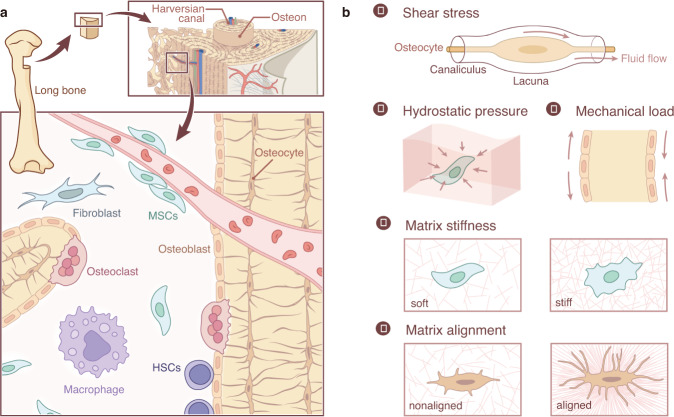
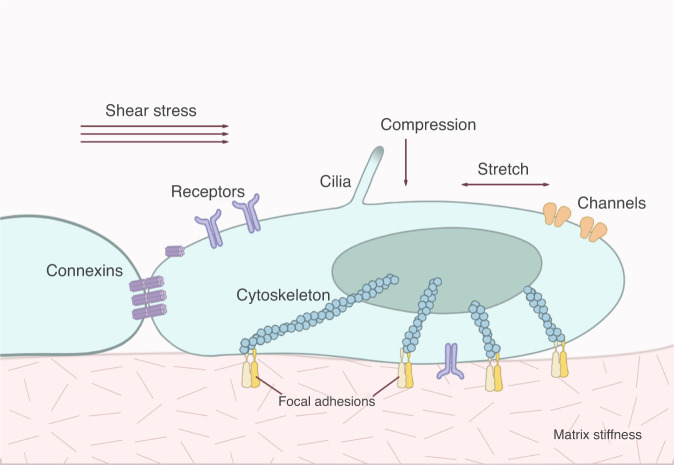
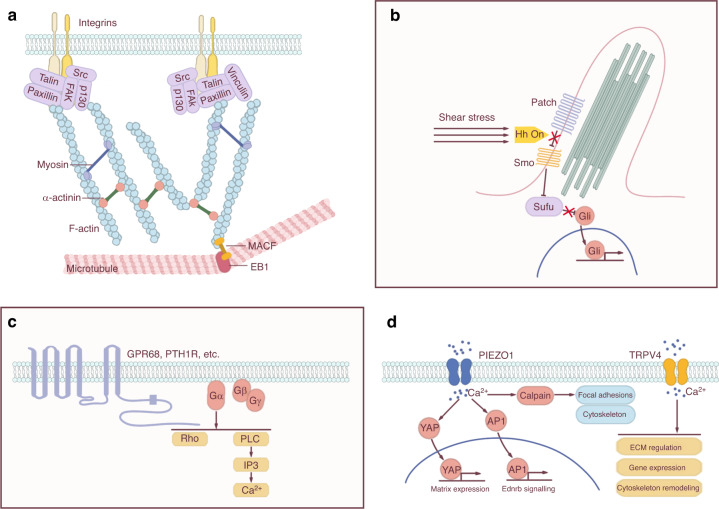
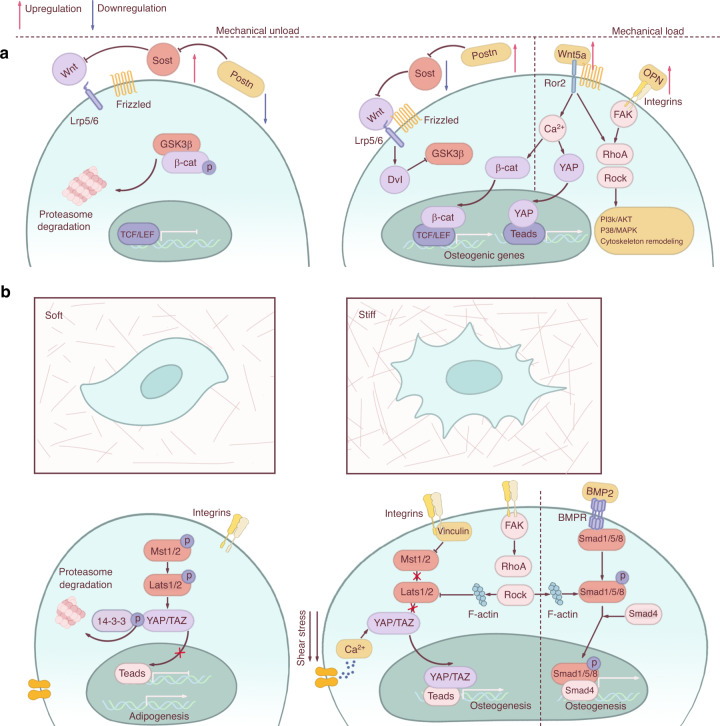
Bone remodeling is a lifelong process that gives rise to a mature, dynamic bone structure via a balance between bone formation by osteoblasts and resorption by osteoclasts. These opposite processes allow the accommodation of bones to dynamic mechanical forces, altering bone mass in response to changing conditions. Mechanical forces are indispensable for bone homeostasis; skeletal formation, resorption, and adaptation are dependent on mechanical signals, and loss of mechanical stimulation can therefore significantly weaken the bone structure, causing disuse osteoporosis and increasing the risk of fracture. The exact mechanisms by which the body senses and transduces mechanical forces to regulate bone remodeling have long been an active area of study among researchers and clinicians. Such research will lead to a deeper understanding of bone disorders and identify new strategies for skeletal rejuvenation. Here, we will discuss the mechanical properties, mechanosensitive cell populations, and mechanotransducive signaling pathways of the skeletal system.
Overview
The claims and statistics of this paper haven’t been checked yet.
Free: it reads the open-access text and checks the first 5 claims that cite a source we can check. Create a free account to check every claim.
Integrity signals
Registry
Cites
Statistics
Figures
Verification
Claims the paper makes
The claims and statistics of this paper haven’t been checked yet.
Free: it reads the open-access text and checks the first 5 claims that cite a source we can check. Create a free account to check every claim.
Claims other papers make about this one
Each is checked against this paper’s own text: does it say what the citing paper says it does?
The source backs part of the claim, not all of it — or backs it for a different population, condition or comparison.
In the citing paper
“Muscle-derived mechanical loading activates mechanosensors in osteocytes and osteoblast-lineage cells, including integrins and Piezo1, thereby inducing Ca2+-dependent signaling and Wnt/β-catenin-associated osteogenic pathways that promote osteoblast activity [47,48]”
From Interorgan Communications in Skeletal Pathophysiology: From Molecular Pathways to Multidisciplinary Therapies (2026) · cites this paper as [48]
Experimental — accuracy not yet measured
Self-check
Percentages, sums and reported differences re-computed from the paper’s own numbers.
The self-check needs the paper’s full text.
Citations
Cites
Hynes (2002) · doi:10.1016/s0092-8674(02)00971-6 · Cited by 8,606
Role of YAP/TAZ in mechanotransduction
Dupont, S., Morsut, L., Aragona, M., Enzo, E., Giulitti, S., Cordenonsi, M., Zanconato, F., Le Digabel, J., Forcato, M., Bicciato, S., et al. (2011) · Nature · doi:10.1038/nature10137 · Cited by 5,979 · cited 2×
“In contrast, a separate study found that overexpression of a constitutively active YAP mutant in MSCs promotes osteogenesis more than adipogenesis, even under soft matrix conditions.(186) Additionally, YAP overexpression has been reported to inhibit both the osteogenic and adipogenic abilities of MSCs through inhibiti…”
BackgroundWnt/β-catenin signaling and disease
Clevers, H., & Nusse, R. (2012) · Cell · doi:10.1016/j.cell.2012.05.012 · Cited by 5,554
Piezo1 and Piezo2 Are Essential Components of Distinct Mechanically Activated Cation Channels
Coste, B., Mathur, J., Schmidt, M., Earley, T. J., Ranade, S., Petrus, M. J., Dubin, A. E., & Patapoutian, A. (2010) · Science · doi:10.1126/science.1193270 · Cited by 3,316 · cited 1×
“identified prominent mechanosensitive cation PIEZO channels (PIEZO1/2) using RNA interference profiles in a mouse neuroblastoma cell line.(104) Although the PIEZO1 protein shares only 42% sequence homology with its homolog PIEZO2, their structures are similar: a three-bladed, propeller-like trimer with an extracellula…”
Backgroundβ-catenin is a target for the ubiquitin–proteasome pathway
Aberle, H., Bauer, A., Stappert, J., Kispert, A., & Kemler, R. (1997) · The EMBO Journal · doi:10.1093/emboj/16.13.3797 · Cited by 2,529
Focal adhesion kinase: in command and control of cell motility.
Mitra, S. K., Hanson, D. A., & Schlaepfer, D. D. (2005) · Nature Reviews Molecular Cell Biology · doi:10.1038/nrm1549 · Cited by 2,335
WNT signaling in bone homeostasis and disease: From human mutations to treatments
Baron, R., & Kneissel, M. (2013) · Nature Medicine · doi:10.1038/nm.3074 · Cited by 2,093
Non-muscle myosin II takes centre stage in cell adhesion and migration
Vicente-Manzanares, M., Ma, X., Adelstein, R. S., & Horwitz, A. R. (2009) · Nature Reviews Molecular Cell Biology · doi:10.1038/nrm2786 · Cited by 2,032 · cited 1×
“The activity and assembly of myosin II are regulated by the phosphorylation of its light and heavy chains through numerous kinases in diverse regulatory pathways, including myosin light chain kinase (MLCK; activated by Ca/ calmodulin), Rho kinase, citron kinase (activated by RhoA), and myotonic dystrophy kinase-relate…”
BackgroundHuang, J., Wu, S., Barrera, J., Matthews, K., & Pan, D. (2005) · Cell · doi:10.1016/j.cell.2005.06.007 · Cited by 1,863 · cited 1×
“LATS1/2 directly phosphorylates YAP and TAZ at multiple sites, thereby inhibiting their nuclear localization.(178) Phosphorylated YAP/TAZ is sequestered in the cytoplasm by interaction with the 14–3–3 protein and then degraded by the ubiquitin-proteasome system (Fig.”
BackgroundReduced cell motility and enhanced focal adhesion contact formation in cells from FAK-deficient mice
llić, D., Furuta, Y., Kanazawa, S., Takeda, N., Sobue, K., Nakatsuji, N., Nomura, S., Fujimoto, J., Okada, M., Yamamoto, T., et al. (1995) · Nature · doi:10.1038/377539a0 · Cited by 1,830
Research works printed but not linked: 1
- Wolff JDas Gesetz der transformation der Knochen A Hirshwald 1892 1 1 152
Cited by
Items 401–500 of 734
Choudhury, S., Mandal, P. S., Das, S., Changdar, S., Chowdhury, M. P., Barui, A., Dhara, S., Roy, S., & Chowdhury, A. R. (2026) · Journal of the mechanical behavior of biomedical materials/Journal of mechanical behavior of biomedical materials · doi:10.1016/j.jmbbm.2026.107373 · Cited by 2
Fatigue performance of additively manufactured porous titanium for orthopaedic applications
Leinwand, J., Lam, R., Patel, S. R., McGregor, M. E., McLachlin, S. D., & Vlasea, M. (2026) · Journal of the mechanical behavior of biomedical materials/Journal of mechanical behavior of biomedical materials · doi:10.1016/j.jmbbm.2026.107393 · Cited by 3
Yu, M., Wang, X., Gu, X., Luan, J. Y., Huang, J., Sun, W., Yuan, X., Cao, S., Pan, J., Mao, T., et al. (2026) · Biochemical and Biophysical Research Communications · doi:10.1016/j.bbrc.2026.153598 · Cited by 2
Strain‐Stiffening Polymer Networks as Advanced Biomimetic Materials
Kaur, K. (2026) · Advanced Functional Materials · doi:10.1002/adfm.202532202 · Cited by 2
“…proliferation, and migration [1–3], (ii) tough and rigid skeletal tissues efficiently distribute large mechanical forces while maintaining their structural integrity [4, 5], (iii) stiff and elastic vascular tissue resists deformationwhensubjectedtoalargestress,preventingtearsand aneurisms.”
Denervation induces rapid bone degeneration concurrent to neurovascular and mechanical changes
Pan, K., Cheng, X., Wu, Y., Orozco, E., Shin, S. H., Du, J., Ma, Y., Jerban, S., Hughes‐Austin, J. M., Bukata, S. V., et al. (2026) · Bone · doi:10.1016/j.bone.2026.117863 · Cited by 2
Biomimetic Nanoparticles for Bone Regeneration: Construction Strategies and Therapeutic Mechanisms
Wang, Z., Shen, N., Yang, T., Dong, S., Kaige, X., Zhao, K., Zhang, Y., Jiang, Y., & Li, T. (2026) · International Journal of Nanomedicine · doi:10.2147/ijn.s589003 · Cited by 2
Yan, Y., Zhang, J., Li, N., Li, J., Wen, Y., Wang, Y., & Huang, Y. (2026) · Frontiers in Immunology · doi:10.3389/fimmu.2026.1782149 · Cited by 2
“This may trigger an imbalance in bone remodeling (where bone resorption exceeds bone formation) (120, 121), which has been associated with osteocyte death, trabecular bone disruption, and osteoporosis (122), which subsequently contributes to the onset and progression of SONFH.”
Sella, F., Giommi, C., Carbonari, D., Lombó, M., & Carnevali, O. (2026) · General and Comparative Endocrinology · doi:10.1016/j.ygcen.2026.114932 · Cited by 2
Zhang, Y., Jiang, T., Zhou, R., Tong, W., Ye, H., Tu, J., Yi, M., Ma, X., Chen, S., Ping, Y., et al. (2026) · The FASEB Journal · doi:10.1096/fj.202502681rr · Cited by 2
Pathophysiology and Molecular Signalling in Osteoporosis: Linking Risk Factors to Bone Loss
Pramoda, G., Shivhare, K., Gupta, P. K., Sahebkar, A., Kesharwani, P., & Shukla, R. (2026) · Journal of Cellular and Molecular Medicine · doi:10.1111/jcmm.71155 · Cited by 2
Piezo1 in hypertrophic chondrocytes regulates osteoclastogenesis in endochondral ossification
Tschaffon, M. E. A., Schoppa, A., Eckl, F., Brylka, L., Haffner‐Luntzer, M., Yorgan, T. A., Dieterich, S., Kölbl, C., Amling, M., Schinke, T., et al. (2026) · International Journal of Biological Sciences · doi:10.7150/ijbs.126065 · Cited by 3
“Mechanical loading is a crucial regulator of bone formation during development, postnatal growth, and fracture healing, and is also central in bone remodeling (15, 16).”
Perinatal vulnerability: its impact on oral and craniofacial hard tissue development
Ono, T. (2026) · Frontiers in Physiology · doi:10.3389/fphys.2026.1773684 · Cited by 2
“Bone-constituting cells, especially osteocytes, harbor many other types of mechanosensory systems that can regulate jawbone metabolism under mechanical loading (Wang et al., 2022).”
Wu, J., Liu, Y., Shi, K., Huang, H., & Qian, Z. (2026) · EngMedicine · doi:10.1016/j.engmed.2026.100138 · Cited by 2
Zhang, L., Yan, W., Wang, D., & Ma, J. (2026) · Journal of Orthopaedic Translation · doi:10.1016/j.jot.2026.101118 · Cited by 2
“…stress, which can modulate cellular uptake, subcellular trafficking, and stress response pathways that crosstalk with the protein degradation machinery — for instance, by regulating ubiquitin-proteasome activity or autophagy flux via mechanosensitive adaptors such as HDAC6 and p62 [40,41].”
Self-citationGong, W., Zhang, J., Liu, X. X., Zhou, S., Huang, K., Jin, J., Gu, J., Cui, J., Li, A., Liang, H., et al. (2026) · Research · doi:10.34133/research.1307 · Cited by 2
Yin, H., Wan, T., Rao, S., He, Z.-H., Liu, Z., Wang, Z., Lin, Z.-R., Wang, Y., Jin, L., Liu, Y.-W., et al. (2026) · Materials Today Bio · doi:10.1016/j.mtbio.2026.103289 · Cited by 2
Hemodynamics and matrix stiffness shape the pathogenicity of SPP1+ macrophages
Zhang, H., Han, J., Zhu, S., Yi, M., Fan, K., Chang, R., Shi, Y., & Dong, H. (2026) · Frontiers in Immunology · doi:10.3389/fimmu.2026.1856522 · Cited by 2
“These phosphorylated proteins are subsequently sequestered in the cytoplasm for ubiquitin-mediated degradation, thereby preventing their nuclear translocation (77, 78).”
Hassan, M., Barsoum, I., & Rich, M. E. (2026) · Journal of Biomechanics Open · doi:10.1016/j.jbmo.2026.100012 · Cited by 2
Zarghami, V. (2026) · Journal of Materials Science Materials in Medicine · doi:10.1007/s10856-026-07102-6 · Cited by 2
Shao, B., He, Y., Wang, G., Liu, Z., & Wang, S. (2026) · Frontiers in Bioengineering and Biotechnology · doi:10.3389/fbioe.2026.1867122 · Cited by 2
“Natural bone tissue is a highly complex and metabolically active composite structure, primarily comprising an extracellular matrix (ECM) and various cellular components (Wang et al., 2022).”
Zhang, L., Wei, X., Zhang, K., Ding, F., Guo, Z., Zou, B., He, W., & Liu, W. (2026) · Cell Reports Medicine · doi:10.1016/j.xcrm.2026.102923 · Cited by 2
Self-citationFracture healing: from molecular and cellular mechanisms to therapeutic strategies
Staubli, F., ten Ham, R. M. T., Bergsma, J. E., Gawlitta, D., & Man, K. (2026) · Signal Transduction and Targeted Therapy · doi:10.1038/s41392-026-02967-z · Cited by 2
“212 Excessive shear or high-strain motion delays bridging despite biological callus activity and may prevent progression to union.”
Harold, R. E., Sweeney, P. T., Torchia, M. T., & Kramer, J. (2024) · Seminars in Arthroplasty JSES · doi:10.1053/j.sart.2023.12.011 · Cited by 2
Xiang, L., Xu, R., Ren, X., Li, Z., Xiang, S., & Wu, X. (2025) · International Journal of Surgery · doi:10.1097/js9.0000000000003161 · Cited by 2
“When mechanical stress is applied to a bone, it stimulates osteoblasts to deposit new bone tissue, increasing bone mass and density [ 45 ] .”
García-Ortiz, D., Martínez-Sanmiguel, J. J., Zárate-Triviño, D. G., Rodríguez-Padilla, C., Salceda-Delgado, G., Menchaca, J. L., Bedolla, M. A., & Rodríguez-Nieto, M. (2024) · Bone · doi:10.1016/j.bone.2024.117090 · Cited by 2
Responses of osteoblasts under varied tensile stress types induced by stretching basement materials
Geng, X., Li, Q., Yao, Y., Wang, L., & Fan, Y. (2024) · International Journal of Smart and Nano Materials · doi:10.1080/19475411.2024.2338737 · Cited by 2
Self-citationWang, J., Zhu, C., Ai, Y., Huang, Y. X., Chen, Q., Ding, H., Feng, G., Liu, L., & Song, Y. (2024) · BMC Musculoskeletal Disorders · doi:10.1186/s12891-024-07784-5 · Cited by 2
“Previous studies have shown that mechanical stress can activate osteogenic genes such as OCN and OPN, which are involved in bone matrix synthesis and mineralization [26–28].”
BackgroundFunctionalized Carbon Nanostructures for Bone Tissue Engineering
Das, S., Barik, B., Pattnaik, G., Deshmukh, K., & Moharana, S. (2024) · Springer eBooks · doi:10.1007/978-3-031-32150-4_78 · Cited by 2
Maksimova, E. A., Shevchenko, V. I., & Akatov, V. S. (2025) · BIOPHYSICS · doi:10.1134/s0006350925700241 · Cited by 2
“The effect of micropulsations of interstitial fluid caused by muscle contraction on mechanoreceptors can affect signaling pathways that determine cytokine secretion and activate local angiogenesis and bone remodeling through changes in local cytokine concentration [51].”
Xie, J., Xu, Y., Liu, X., Long, L., Chen, J., Shao, Y., Cai, Z., Zhang, Z., Zhou, R., Leng, J., et al. (2023) · eLife · doi:10.7554/elife.89613.1 · Cited by 2
Physical intervention and data-driven biomechanics in breast cancer bone metastases
Wang, S. (2024) · Library, Museums and Press - UDSpace (University of Delaware) · doi:10.58088/gm4b-8x32 · Cited by 2
Gan, D., Qin, L., & Xiao, G. (2026) · Research · doi:10.34133/research.1319 · Cited by 1
“Muscle-derived mechanical loading activates mechanosensors in osteocytes and osteoblast-lineage cells, including integrins and Piezo1, thereby inducing Ca 2 + -dependent signaling and Wnt/ β -catenin-associated osteogenic pathways that promote osteoblast activity [ 47 , 48 ].”
Zhang, Y., Kazákova, E., Chai, H., & Zhou, P. H. (2023) · Frigid Zone Medicine · doi:10.2478/fzm-2023-0027 · Cited by 1
The mechanical regulatory role of ATP13a3 in osteogenic differentiation of pre-osteoblasts
Cao, Z., Zhu, Y., Li, Y., Yuan, Z., Han, B., & Guo, Y. (2024) · Advances in Medical Sciences · doi:10.1016/j.advms.2024.07.003 · Cited by 1
Zhang, Z., Xiang, J., Xiao, C., Zhu, R., Zheng, Y., Yi, Y., Wang, J., & Xiong, X. (2024) · Journal of Cranio-Maxillofacial Surgery · doi:10.1016/j.jcms.2024.12.013 · Cited by 1
Gao, X., Yang, C., Zhu, J., Zhang, X., & Su, Y. (2025) · Macromolecular Chemistry and Physics · doi:10.1002/macp.202400438 · Cited by 1
da Silva, A. F., Lima, F. J., Moreira, A. R., Silva, C. D. N., Oliveira, I. B., Callera, A. F., Porfirio, A. L., Alves, L. H. V., Tibério, I. D. F. L. C., Velosa, A. P. P., et al. (2025) · Cells · doi:10.3390/cells14070503 · Cited by 1
Tomaszewska, A. (2025) · Acta Mechanica et Automatica · doi:10.2478/ama-2025-0017 · Cited by 1
Stress During Lactation: A Hidden Link to Offspring Bone Health
Chandrashekar, R., Mulakala, B. K., Gurung, M., Venna, G., Rearick, J. R., Onyekweli, B., Ruebel, M. L., Dado-Fox, J., Zeledon, J. A., Talatala, R., et al. (2025) · Calcified Tissue International · doi:10.1007/s00223-025-01378-6 · Cited by 1
Thermal profile of the spine for the assessment of bone metabolic disorders
der Strasse, W. A., Campos, D. P., Borba, V. Z. C., Nohama, P., & Mendes, J. G. (2025) · Scientific Reports · doi:10.1038/s41598-025-01798-2 · Cited by 1
“Brown adipose tissue promotes hematopoietic regeneration and provides the skeleton with the nutrients necessary for the bone matrix’s synthesis, deposition, and mineralization, with effective participation in the bone remodeling process 6,8,9 .”
Immobility Syndrome – Consequences of Lower Limb Unloading. A Systematic Literature Review
Liliana, A., Alexandra, R., Filipe, F., & Anna, Q. (2025) · International Journal of Geriatrics and Gerontology · doi:10.29011/2577-0748.100202 · Cited by 1
Inflammatory crosstalk between rotator cuff tissues is altered with age and sex
Kalčo, H., Pajevic, P. D., Thompson, L. V., & Connizzo, B. K. (2026) · Connective Tissue Research · doi:10.1080/03008207.2026.2723146 · Cited by 1
Liu, Y., Lei, J., Mao, W., Fu, K., & Liu, M. (2025) · Journal of Oral Rehabilitation · doi:10.1111/joor.70034 · Cited by 1
Osteoclast precursor cell-derived Flot2 is a novel therapeutic target for bone loss diseases
Zou, B., Zheng, J., He, W., Chen, Y., Li, L., Chen, Z., Liang, Q., Deng, W., & Li, X. (2025) · Pharmacological Research · doi:10.1016/j.phrs.2025.107903 · Cited by 1
Bhattacharjee, P., Szabo, A., Dungel, P., Streli, C., & Walter, A. (2025) · Reference series in biomedical engineering · doi:10.1007/978-3-031-91544-4_12 · Cited by 1
Mutations in Osteoclast Genes as Causes of Osteoclast-Related Diseases
Živković, J. M., Najdanović, J. G., & Najman, S. J. (2025) · DNA and Cell Biology · doi:10.1177/10445498251368298 · Cited by 1
Wang, X., Li, H., Xie, Y., Wang, Y., Sun, H., & Zhao, D. (2025) · Dentistry · doi:10.5772/intechopen.1011697 · Cited by 1
Meta-analysis of the effects of compressive stress on osteoblasts and osteoclasts growth
Miao, T., Ni, C., Meng, Q., Cheng, H., & Wei, Y. (2025) · BioMedical Engineering OnLine · doi:10.1186/s12938-025-01444-y · Cited by 1
“We posit that bone cells convert compressive cues into biochemical signals via integrin– FAK complexes, primary cilia and stretch-activated channels, which converge on Wnt/β-catenin, MAPK and PI3K–Akt cascades to regulate osteogenic genes and RANKL/OPG signalling [4].”
Xie, A., Wang, L., Zhang, Y., Zhang, S., Cao, J., Wang, C., Wu, H., & Dai, W. (2025) · Steroids · doi:10.1016/j.steroids.2025.109693 · Cited by 1
Self-citationDanmaigoro, A., Jaafar, S., Ahmed, H., Oyelowo, F. O., Mahmud, M. A., Kigir, E. S., Abdulmajeed, I., Abubakar, A. A., Ismaila, M. S., & Jaji, Z. A. (2025) · Journal of Animal Health and Production · doi:10.17582/journal.jahp/2025/13.4.1055.1066 · Cited by 1
Zhang, C. F., & Wang, Y. (2025) · View · doi:10.1002/viw.20250158 · Cited by 1
Self-citationLi, S., Xu, Y., Xu, W., Zhang, D., Lin, X., Hu, P., & Si, H. (2025) · Cell Death Discovery · doi:10.1038/s41420-025-02797-y · Cited by 1
“Such off-target infections are unlikely to maintain sustained viral activity, further minimizing non-bone gene modulation.”
Shi, C. H., Cano, M. C., Casar, J. R., Moradifar, P., Robinson, B. G., Kaltschmidt, J. A., Goodman, M. B., & Dionne, J. A. (2026) · Advanced Materials · doi:10.1002/adma.202522706 · Cited by 1
“It is well-established that mechanical stress aids in improving bone density and stimulates bone formation, while a lack of physical strain leads to fragile bones and disuse osteoporosis [2].”
Li, Y., Ni, Z., Fu, T., Xu, C., Zhao, Z., Kang, H., & Wang, F. (2025) · Journal of Orthopaedic Surgery and Research · doi:10.1186/s13018-025-06432-5 · Cited by 1
“This activation provides essential structural and metabolic support for bone tissue [41–43].”
Wei, Y., Lu, Q., Yu, J., & Tao, J. (2025) · BMC Oral Health · doi:10.1186/s12903-025-07400-5 · Cited by 1
Zhang, L., Wu, J., Zhou, N., Yang, S., Chen, J., Xu, C., Fan, S., Huang, W., Ying, X., & Zhang, L. (2025) · Molecular Biotechnology · doi:10.1007/s12033-025-01540-3 · Cited by 1
“Bone remodeling represents a critical physiological process essential for skeletal integrity, mineral homeostasis, and fracture repair [1, 2].”
Self-citationJiang, X., Li, B., Ma, Y., Huang, J., Gu, C., Jin, Y., Ding, H., & Ma, C. (2026) · Bone · doi:10.1016/j.bone.2026.117798 · Cited by 1
Ricciardi, G., Donadio, D., Ficarra, G., Nasso, C., Foglia, P., Bitto, A., Scarfì, R., Fadda, G., Corpina, F., Cutè, E., et al. (2026) · Bone · doi:10.1016/j.bone.2026.117801 · Cited by 1
Metabolic Bone Disease in Captive Flying Foxes: A Conceptual Framework and Future Perspectives
Faim, D., Pires, I., & Silva, F. (2026) · Metabolites · doi:10.3390/metabo16010087 · Cited by 1
“These processes depend on tightly regulated mineral homeostasis, mediated by the integrated function of bone, kidneys, and intestine [12,47,48].”
Mechanobiology in Osteochondral Tissue
Freeman, F. E. (2026) · Springer eBooks · doi:10.1007/978-3-031-80976-7_55-1 · Cited by 1
Luo, R., Wang, T., Tongmei, Z., Wang, Y., Sun, M., Liu, Y., Shen, J., & Li, R. (2026) · Advanced Healthcare Materials · doi:10.1002/adhm.202505446 · Cited by 1
Ocak, A., & Akyüz, M. (2026) · BMC Medical Imaging · doi:10.1186/s12880-026-02186-6 · Cited by 1
“In severely dilacerated roots, the curvature may modify the direction and magnitude of forces transmitted to the periradicular bone, creating a more heterogeneous strain field around the apex and stimulating microstructural reorganization that presents as a higher FD [36–38].”
Paulini, M. R., Pitol, D. L., Nascimento, G. C., Buchaim, D. V., da Cunha, M. R., Buchaim, R. L., & Issa, J. P. M. (2026) · ACS Omega · doi:10.1021/acsomega.5c11197 · Cited by 1
Jia, Y., Yu, F., & Wu, W. (2026) · International Journal of Molecular Sciences · doi:10.3390/ijms27052185 · Cited by 1
“While this cellular activity exerts a substantial influence on the skeletal system [33,34], the precise mechanisms by which osteocytes coordinate adaptive changes in bone mass and structure remain incompletely understood.”
Capturing the Multiscale Nature of Bone Behavior: Classical, Data-Driven and Hybrid Techniques
Mohammadkhah, M., Savari, A., & Klinge, S. (2026) · Annals of Biomedical Engineering · doi:10.1007/s10439-026-04043-7 · Cited by 1
“The lacuna-canalicular network (LCN) formed by osteocyte cells within the lacunae communicate through the canaliculi, enabling mechanosensing and strongly influencing remodeling responses [58, 59].”
Hao, K., Kong, L., Qi, Y., Wang, F., & Kang, H. (2026) · The American Journal of Sports Medicine · doi:10.1177/03635465261426334 · Cited by 1
“Quiescence” in the resting zone of the growth plate: a systematic review
Avijgan, M., Nazaraliyev, A., Blomgren, K., Gómez-Cabrero, D., & Newton, P. T. (2026) · Stem Cells · doi:10.1093/stmcls/sxag010 · Cited by 1
“…that systemic factors that are vital for bone health and growth, such as nutrition, 98 hormones, 99 inflammation, 100 or mechanical loading, 101 may interact with local actors, like Wnt, Hedgehog, BMP, PTHrP, and/or epigenetic modulators, to fine-tune the size, and activity of quiescent RZ…”
Advanced materials and devices strategies of mechanical stimulation for tissue regeneration
Huan, M., An, H., Sheng, X., Yin, L., & Wang, L. (2026) · Regenerative Biomaterials · doi:10.1093/rb/rbag054 · Cited by 1
Self-citationNovel therapeutic approaches targeting biomechanical pathway alterations in bone diseases
Kaur, M., & Nagpal, M. (2026) · Frontiers in Biophysics · doi:10.3389/frbis.2026.1773451 · Cited by 1
Chen, Y., Shen, H., Wang, Z., Zhu, W., Lu, W., Shen, J., Li, W., Zhang, Y., Yang, G., Wu, Y., et al. (2026) · Ecotoxicology and Environmental Safety · doi:10.1016/j.ecoenv.2026.120088 · Cited by 1
Self-citationExosome immobilization of 3D-printed polycaprolactone scaffolds for bone tissue engineering
Jun, I., Ahn, J., Ahn, G., Kim, H.-J., Ahn, J., Lim, H., Lee, J., & Park, S. A. (2026) · International Journal of Bioprinting · doi:10.36922/ijb026030021 · Cited by 1
Zhang, F., Liu, Z., Chen, X., Zheng, W., Gao, S., Lu, J., & Zhang, L. (2026) · Stem Cell Reviews and Reports · doi:10.1007/s12015-026-11108-6 · Cited by 1
“Once activated, FAK serves as a plat - form for the activation and signal transduction of intermediary proteins—including MAPK/ERK, JNK, Src kinase, and GTPases [ 40].”
Self-citationLiu, X., Liu, S., Xu, G., Chen, W. L., Shi, Y., Wang, G., Cao, Y., Lu, G., Ning, Y., & Zhao, Y. (2026) · Biochemical Pharmacology · doi:10.1016/j.bcp.2026.117962 · Cited by 1
Pratheesh, K. V., Carpenter, J., Cleon, B., Panebianco, C. J., Boerckel, J. D., Dean, D. R., & Vijayan, V. M. (2026) · Advanced Healthcare Materials · doi:10.1002/adhm.71881 · Cited by 1
Alveolar Bone Regeneration: Smart Biomaterials and Physical Stimulation
Zennifer, A., Srinivasan, S. S., Wijekoon, S., Yadav, S. K., Abdulmalik, S., & Kumbar, S. G. (2026) · Journal of Biomedical Materials Research Part B Applied Biomaterials · doi:10.1002/jbm.b.70082 · Cited by 1
Minku, Enakoutsa, K., Scerrato, D., Giorgio, I., & Allena, R. (2026) · Journal of Applied Mechanics · doi:10.1115/1.4071733 · Cited by 1
Novel bone-targeting nano-systems with red blood cell membrane carrying siRNA and oleanolic acid
Wang, Y. L., Xu, Y., Lyu, F., Wang, S., Jia, Y., Li, B., & Liu, J. W. (2026) · Materials Today Advances · doi:10.1016/j.mtadv.2026.100821 · Cited by 1
Zhou, H., Deng, J., Chen, J., Zhang, X., Wu, L., Qi, T., Zeng, H., Ren, K., & Yu, F. (2026) · PubMed Central · doi:10.12336/bmt.24.00078 · Cited by 1
“5 Osteoclasts are primarily responsible for the resorption phase, whereas osteoblasts are pivotal in bone remodelling, including the formation, mineralisation, and secretion activities of osteocytes.”
Bone Disease in Non-Cystic Fibrosis Bronchiectasis
Doumat, G., Haroon, S., Maalouf, N. M., & Jain, R. (2026) · CHEST Journal · doi:10.1016/j.chest.2026.05.034 · Cited by 1
Martins, A. A., de Araujo, A. A., Ribeiro, S. B., Lopes, M. L. D. D. S., Melo, R. C. D. O., de Araújo, V. S., da Silva, S. R., Leitão, R. F. D. C., da Silva, J. S. P., Bomio, M., et al. (2026) · BioMed Research International · doi:10.1155/bmri/8065442 · Cited by 1
“This mechanism allows it to adapt to the most diverse mechanical and biological stimuli to which it is constantly subjected [3, 4].”
Das, U. R., Jaffery, H., Tsimbouri, P. M., & Dalby, M. J. (2026) · Journal of Tissue Engineering · doi:10.1177/20417314261454194 · Cited by 2
Molecular mechanisms of ANKH function and regulation in skeletal mineralization
Wathuliyadde, N., Willmore, K. E., & Kelly, G. M. (2026) · JBMR Plus · doi:10.1093/jbmrpl/ziag100 · Cited by 1
The “osteostat”: A theory of bone mechanosensing and setpoint adaptation based on osteocytes
Pauchard, Y., & Buenzli, P. R. (2026) · Bone · doi:10.64898/2026.06.23.734120 · Cited by 1
Wang, Y., Lu, X., Qiu, X., Li, Y., Kong, Y., Tian, J., Li, J., & Kong, W. (2026) · International Journal of Bioprinting · doi:10.36922/ijb026210206 · Cited by 1
Sequential polarization of macrophages: an immunomodulatory strategy for novel bone repair materials
Gao, X., Dong, S., Zheng, X., Si, Y., & Zhang, C. (2026) · Regenerative Biomaterials · doi:10.1093/rb/rbag144 · Cited by 1
Self-citationThe role and therapeutic potential of vitamins in fracture healing
Yu, Q., Yu, G., Dong, H., Wang, C., Guan, M., Shi, B., & Li, Z. (2026) · Nutrition Journal · doi:10.1186/s12937-026-01360-4 · Cited by 1
“After the bone matrix matures, osteoblasts mainly follow one of three paths: they either embed in the matrix to become osteocytes, turn into inactive bone lining cells on the surface, or degenerate [46]. and the activation of β-catenin [60–63].”
Molecular mechanisms and translational prospects in osteoporosis
Xie, P., Cai, J., Yu, Z., Zhou, J., & Wang, J. Z. (2026) · Frontiers in Endocrinology · doi:10.3389/fendo.2026.1907271 · Cited by 1
“The fi rst operates through mechanical coupling: the Piezo1-Ca² + -YAP axis in osteoblasts senses mechanical loading and suppresses osteoclastogenesis by downregulating RANKL and upregulating OPG expression (7).”
Hu, L., Zhong, W., Wang, L., Liang, S., 贾云献, Wu, Z., Shen, J., Sun, J., & Qian, A. (2026) · Bone and Joint Research · doi:10.1302/2046-3758.157.bjr-2025-0343.r1 · Cited by 1
Self-citationGao, Y., & Bu, T. (2026) · Calcified Tissue International · doi:10.1007/s00223-026-01584-w · Cited by 1
Impact of systemic diseases on periodontal remodeling: Mechanisms, mediators, and clinical relevance
Wolf, M. F., Schulze‐Späte, U., Dyke, T. E. V., Wolfart, S., Dietrich, T., Ortíz, A., Wu, Z., & Jankowski, J. (2026) · Periodontology 2000 · doi:10.1111/prd.70048 · Cited by 1
Applications of DNA Hydrogels in Osteoporotic Bone Defects
Chen, J., Jia, H., Zhang, X., Liu, D., Jia, X., Gu, X., Wen, H., & Jin, Y. (2026) · Journal of Functional Biomaterials · doi:10.3390/jfb17080415 · Cited by 1
“Bone remodeling is achieved through a dynamic balance between osteoblast-mediated bone formation and osteoclast-driven bone resorption, ultimately resulting in structurally mature and functionally stable bone tissue [122].”
Motion as Medicine: Physical Activity, Joint Sensitivity, and Pain Management—A Narrative Review
Labusca, L. S., Puha, B., Dmour, B.-A., Onu, I., Tîrnovanu, M. C., Tîrnovanu, Ș.-D., & Dmour, A. (2026) · Medical Sciences · doi:10.3390/medsci14040495 · Cited by 1
“…abnormal cyclic loading can induce subchondral bone thickening and trabecular changes, whereas unloading or immobilization promotes subchondral bone atrophy, marrow expansion, increased osteoclastic activity at the osteochondral junction, and remodeling of the tidemark and calcified cartilage [45].”
Artificial intelligence virtual bone organoids (AIVBOs)
Ding, N., Yu, B., Lyu, X., Xu, K., Geng, Z., Su, J., & Bai, L. (2026) · Journal of Orthopaedic Translation · doi:10.1016/j.jot.2026.101196 · Cited by 1
“Work on bone-remodelling dynamics and mechanically driven evolution [84] suggests that the models worth keeping are those that capture the decisive coupling among osteoblasts, osteoclasts, and mechanical feedback, the RANKL-OPG and Wnt circuitry introduced earlier, rather than an inventory of every…”
Yang, Y., 乔礼芬, Huang, Y., Xia, Q., & Xie, H. (2026) · Biomedicines · doi:10.3390/biomedicines14091976 · Cited by 1
“Under osteoporotic conditions, this finely balanced homeostasis is disrupted, resulting in impaired osteogenesis and increased bone resorption by osteoclasts [3–7].”
Zhang, S., Li, S., Chen, W., Song, Q., Zhao, H., Wang, P., Zhang, Y., Liang, W., Zheng, S., Wang, J., et al. (2026) · Advanced Science · doi:10.1002/advs.77385 · Cited by 1
Sheng, Z., Zhang, Y., Wang, H., Zhen, W., Zhu, Y., Wang, H., & Zhang, H. (2026) · Med Research · doi:10.1002/mdr2.70086 · Cited by 1
Jayash, S. N., Dunbar, D., Guizard, S., Furniss, J., Daniels, R. R., Pitsillides, A. A., Staines, K. A., Robledo, D., Farquharson, C., & Stephen, L. A. (2026) · Bone Reports · doi:10.1016/j.bonr.2026.101953 · Cited by 1
Pinho, A. R., Henriques, M. C., Gomes, M. C., & Mano, J. F. (2026) · Cell stem cell · doi:10.1016/j.stem.2026.09.014 · Cited by 1
Gabetti, S., Daou, F., Masante, B., Kaur, R., Israel, S. L., Alahmad, S., Scatena, E., Achille, C., Pecci, R., Gaudio, C. D. G., et al. (2026) · Bioengineering & Translational Medicine · doi:10.1002/btm2.70184 · Cited by 1
“20 To gain deeper insight into the synergistic mechanotransduction mechanisms involved in osteogenesis, in this study we developed and tested a parallelized, automated bioreactor capable of applying combinations of FSS and intermittent HP stimulations to 3D bone tissue models.”
Gorgees, S. H. (2024) · Indonesian Journal of Physical Education and Sport Science · doi:10.52188/ijpess.v4i2.700 · Cited by 1
Metadata
- Authors
- Wang, L., You, X., Zhang, L., Zhang, C., & Zou, W.
- Affiliations
- Shanghai Jiao Tong University (CN)
- Chinese Academy of Sciences (CN)
- Corresponding author
- Zou, Weiguo
- Venue
- Bone Research
- Published
- 2022-02-18
- Volume
- 10
- Issue
- 1
- Pages
- 16-16
- ISSN
- 2095-4700 (ISSN-L)
- 2095-6231
- PMC
- PMC8857305
- OpenAlex
- W4212785156
- Semantic Scholar
- 819acc6a65ff622a02556e3cbc0c91ce3e7b054c
- Cited by
- 641
- References
- 238
- Citations by year
- 2026: 187 · 2025: 204 · 2024: 137 · 2023: 82 · 2022: 30
- FWCI
- 11.78
- Type
- journal article
- Language
- en
- Open access
- gold
- doi.org
- Licence
- cc-by
- creativecommons.org/licenses/by/4.0 (tdm)
- creativecommons.org/licenses/by/4.0 (vor)
- Locations
- Bone Research (publishedVersion, cc-by)
- PubMed Central (publishedVersion, cc-by)
- PubMed (publishedVersion)
- DOAJ (DOAJ: Directory of Open Access Journals) (submittedVersion, cc-by-sa)
- Funders
- National Natural Science Foundation of China (81725010, 81991512, 82102554, XDB19000000, 81672119)
- Chinese Academy of Sciences (HYZHXM01025, XDB19000000)
- Topics
- Life Sciences › Biochemistry, Genetics and Molecular Biology › Molecular Biology › Bone Metabolism and Diseases
- Health Sciences › Medicine › Orthopedics and Sports Medicine › Bone health and osteoporosis research
- Life Sciences › Biochemistry, Genetics and Molecular Biology › Cell Biology › Cellular Mechanics and Interactions
- Keywords
- bone remodeling, mechanical regulation, mechanotransduction, bone homeostasis, osteoblasts, osteoclasts, bone formation, bone resorption, disuse osteoporosis, fracture risk, mechanosensitive cells, bone mechanical properties, skeletal adaptation
About these checks
Registry, retraction, Cites and statistics results are computed, not judged, with one exception: a printed reference that no index lists is read once by a model before it counts as a citation error. Claims are extracted by a model and kept only when their quote appears verbatim in the text; each cited source is then checked, with a model’s help, for whether it says what the claim relies on. Those verdicts can be wrong — read the claim’s quote and the cited source before relying on one.
Statistics and arithmetic are recomputed, not judged.
Confidence bands are shown only for fields calibrated on our annotated test set. None is calibrated yet, so no band is shown.
What counts as a claim ›How we measure confidence ›How we check this ›
Are you an author, or do you see a problem with this page? Request a review
Data sources
Bibliographic data: Semantic Scholar, OpenAlex, Crossref.
Contains information from the Semantic Scholar Academic Graph Datasets, made available under the ODC Attribution License (ODC-BY 1.0).
Semantic Scholar’s data is described in: Kinney, R., et al. (2023). The Semantic Scholar Open Data Platform. arXiv:2301.10140.
