

Ibrutinib treatment inhibits breast cancer progression and metastasis by inducing conversion of myeloid-derived suppressor cells to dendritic cells
Open accessThe DOI matches its Crossref record; 54 of the 56 references it cites were found in a registry or an index.
Abstract
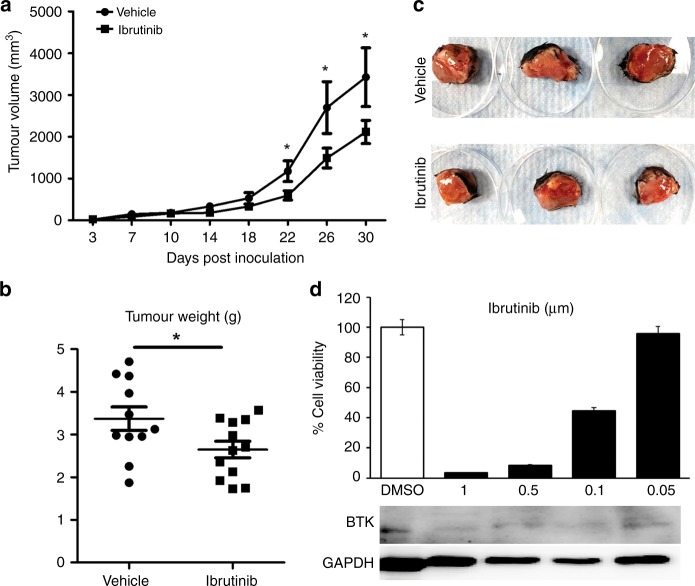
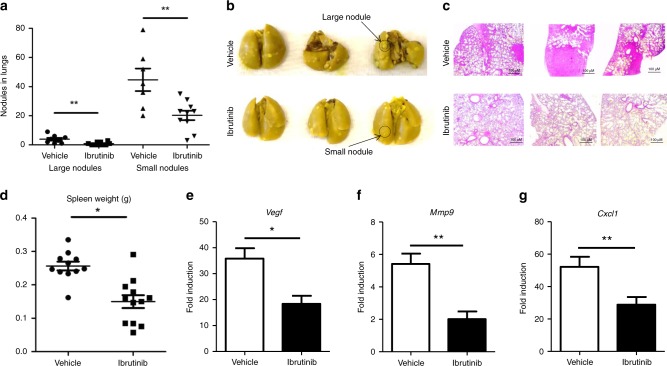
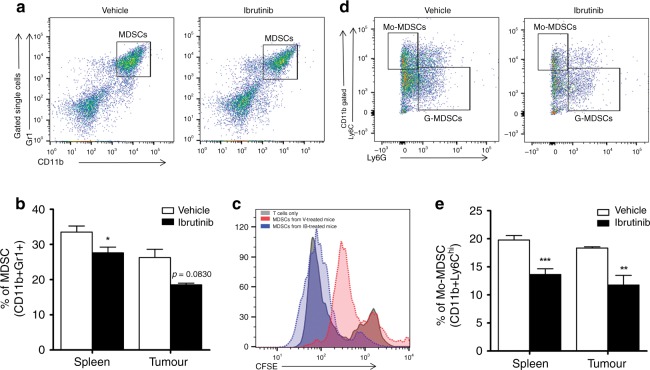
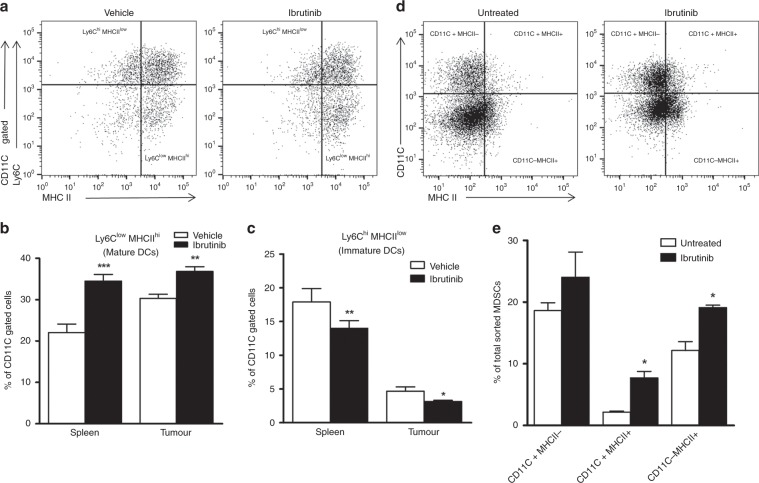
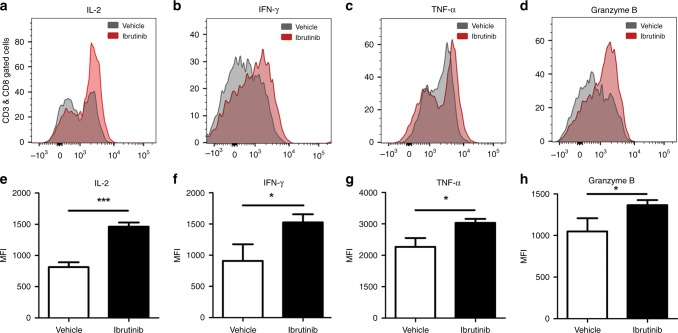
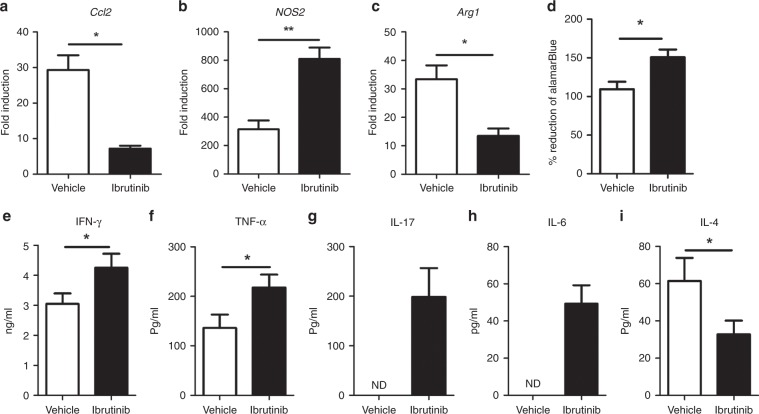
Abstract Background Ibrutinib is a Bruton’s tyrosine kinase (BTK) and interleukin-2-inducible kinase (ITK) inhibitor used for treating chronic lymphocytic leukaemia (CLL) and other cancers. Although ibrutinib is known to inhibit the growth of breast cancer cell growth in vitro, its impact on the treatment and metastasis of breast cancer is unclear. Methods Using an orthotopic mouse breast cancer model, we show that ibrutinib inhibits the progression and metastasis of breast cancer. Results Ibrutinib inhibited proliferation of cancer cells in vitro, and Ibrutinib-treated mice displayed significantly lower tumour burdens and metastasis compared to controls. Furthermore, the spleens and tumours from Ibrutinib-treated mice contained more mature DCs and lower numbers of myeloid-derived suppressor cells (MDSCs), which promote disease progression and are linked to poor prognosis. We also confirmed that ex vivo treatment of MDSCs with ibrutinib switched their phenotype to mature DCs and significantly enhanced MHCII expression. Further, ibrutinib treatment promoted T cell proliferation and effector functions leading to the induction of antitumour TH1 and CTL immune responses. Conclusions Ibrutinib inhibits tumour development and metastasis in breast cancer by promoting the development of mature DCs from MDSCs and hence could be a novel therapeutic agent for the treatment of breast cancer.
Overview
The claims and statistics of this paper haven’t been checked yet.
Free: it reads the open-access text and checks the first 5 claims that cite a source we can check. Create a free account to check every claim.
Integrity signals
Registry
Cites
Statistics
Figures
Verification
Claims the paper makes
The claims and statistics of this paper haven’t been checked yet.
Free: it reads the open-access text and checks the first 5 claims that cite a source we can check. Create a free account to check every claim.
Claims other papers make about this one
Each is checked against this paper’s own text: does it say what the citing paper says it does?
The source backs part of the claim, not all of it — or backs it for a different population, condition or comparison.
In the citing paper
“ibrutinib reportedly favors the depletion of MDSCs coupled to their differentiation toward a mature DClike phenotype associated with MHC class II upregulation and improved antigen-presentation capacity”
From Immunomodulation by targeted anticancer agents (2021) · cites this paper as Varikuti et al., 2020
Experimental — accuracy not yet measured
Self-check
Percentages, sums and reported differences re-computed from the paper’s own numbers.
The self-check needs the paper’s full text.
Citations
Cites
Oncology meets immunology: the cancer-immunity cycle.
Chen, D. S., & Mellman, I. (2013) · Immunity · doi:10.1016/j.immuni.2013.07.012 · Cited by 6,929
Myeloid-derived-suppressor cells as regulators of the immune system
Gabrilovich, D. I., & Nagaraj, S. (2009) · Nature Reviews Immunology · doi:10.1038/nri2506 · Cited by 6,753
Cancer Immunoediting: Integrating Immunity’s Roles in Cancer Suppression and Promotion
Schreiber, R. D., Old, L. J., & Smyth, M. J. (2011) · Science · doi:10.1126/science.1203486 · Cited by 6,474 · cited 1×
“This immune dysregulation of CD8+ T cells and impaired CTL effector responses can be attributed to prevailing immunosuppressive conditions in the tumour microenvironment.(50,51) In the present study, we found that ibrutinib treatment was associated with a significant enhancement of CTL activity as evident by significa…”
Cancer immunoediting: from immunosurveillance to tumor escape
Dunn, G. P., Bruce, A. T., Ikeda, H., Old, L. J., & Schreiber, R. D. (2002) · Nature Immunology · doi:10.1038/ni1102-991 · Cited by 5,393
A Gene Encoding an Antigen Recognized by Cytolytic T Lymphocytes on a Human Melanoma
van der Bruggen, P., Traversari, C., Chomez, P., Lurquin, C., De Plaen, E., Van den Eynde, B., Knuth, A., & Boon, T. (1991) · Science · doi:10.1126/science.1840703 · Cited by 3,545
Coordinated regulation of myeloid cells by tumours
Gabrilovich, D. I., Ostrand-Rosenberg, S., & Bronte, V. (2012) · Nature Reviews Immunology · doi:10.1038/nri3175 · Cited by 3,544
Steinman, R. M., Hawiger, D., & Nussenzweig, M. C. (2003) · Annual Review of Immunology · doi:10.1146/annurev.immunol.21.120601.141040 · Cited by 3,122
Recommendations for myeloid-derived suppressor cell nomenclature and characterization standards
Bronte, V., Brandau, S., Chen, S.-H., Colombo, M. P., Frey, A. B., Greten, T. F., Mandruzzato, S., Murray, P. J., Ochoa, A., Ostrand-Rosenberg, S., et al. (2016) · Nature Communications · doi:10.1038/ncomms12150 · Cited by 2,751
Cancer immunotherapy via dendritic cells
Palucka, K., & Banchereau, J. (2012) · Nature Reviews Cancer · doi:10.1038/nrc3258 · Cited by 2,049
The Nature of Myeloid-Derived Suppressor Cells in the Tumor Microenvironment
Kumar, V., Patel, S., Tcyganov, E., & Gabrilovich, D. I. (2016) · Trends in Immunology · doi:10.1016/j.it.2016.01.004 · Cited by 2,008
Cited by
Combination strategies to maximize the benefits of cancer immunotherapy
Zhu, S., Zhang, T., Zheng, L., Liu, H., Song, W., Liu, D., Li, Z., & Pan, C.-X. (2021) · Journal of Hematology & Oncology · doi:10.1186/s13045-021-01164-5 · Cited by 654
“Furthermore, ibrutinib is an irreversible ITK inhibitor which leads to a preferential inhibition of Th2 in favor of the Th1 differentiation [113], and conversion of MDSCs to dendritic cells [228].”
BackgroundImmunomodulation by targeted anticancer agents
Petroni, G., Buqué, A., Zitvogel, L., Kroemer, G., & Galluzzi, L. (2021) · Cancer Cell · doi:10.1016/j.ccell.2020.11.009 · Cited by 212
Rozkiewicz, D., Hermanowicz, J. M., Kwiatkowska, I., Krupa, A., & Pawlak, D. (2023) · Molecules · doi:10.3390/molecules28052400 · Cited by 124
“Moreover, the therapy with ibrutinib also resulted in a substantial decrease in the expression of vascular endothelial growth factor (Vegf), MMP-9, and C-X-C motif chemokine ligand 1 (Cxcl1), all of which are known to play a key role in the processes of carcinogenesis, angiogenesis, and metastasis [89].”
BackgroundBarnestein, R., Galland, L., Kalfeist, L., Ghiringhelli, F., Ladoire, S., & Limagne, E. (2022) · OncoImmunology · doi:10.1080/2162402x.2022.2120676 · Cited by 124
“demonstrated that ibrutinib was able to deplete and reprogram MDSCs to mature DCs, which boosts antitumor Th1 immune response and improves infiltration of cytotoxic T lymphocytes due to enhanced tumor-derived antigen presentation to CD8 T cells.(144) A combination of immunotherapy and ibrutinib was shown to suppress t…”
BackgroundRole of Tumor-Associated Myeloid Cells in Breast Cancer
Cha, Y. J., & Koo, J. S. (2020) · Cells · doi:10.3390/cells9081785 · Cited by 125
Myeloid-Derived Suppressor Cells in Solid Tumors
Ma, T., Renz, B. W., Ilmer, M., Koch, D. T., Yang, Y., Werner, J., & Bazhin, A. V. (2022) · Cells · doi:10.3390/cells11020310 · Cited by 122
Targeting myeloid-derived suppressor cells in tumor immunotherapy: Current, future and beyond
Zhao, Y., Du, J., & Shen, X. (2023) · Frontiers in Immunology · doi:10.3389/fimmu.2023.1157537 · Cited by 131
“Recent report showed that a vaccine based on heat-killed pathogens induced spleen M-MDSCs that can be activated to kill dendritic cells (DCs), an additional mechanism that may help to explain the difficulties found to develop a very successful antipathogen vaccine (168).”
BackgroundInfluentialSharma, M. D., Pacholczyk, R., Shi, H., Berrong, Z., Zakharia, Y., Greco, A., Chang, C.-S. S., Eathiraj, S., Kennedy, E. P., Cash, T., et al. (2021) · Immunity · doi:10.1016/j.immuni.2021.09.005 · Cited by 90
Nascimento, C., & Ferreira, F. (2021) · Biochimica et Biophysica Acta (BBA) - Reviews on Cancer · doi:10.1016/j.bbcan.2021.188587 · Cited by 80
Targeting Myeloid-Derived Suppressor Cells for Premetastatic Niche Disruption After Tumor Resection
Tang, F., Tie, Y., Hong, W., Wei, Y., Tu, C., & Wei, X. (2021) · Annals of Surgical Oncology · doi:10.1245/s10434-020-09371-z · Cited by 62
Immunological nanomaterials to combat cancer metastasis
Pan, Y., Cheng, J., Zhu, Y., Zhang, J., Fan, W., & Chen, X. S. (2024) · Chemical Society Reviews · doi:10.1039/d2cs00968d · Cited by 61
Ferrer, G., Jung, B., Chiu, P. Y., Aslam, R., Palacios, F., Mazzarello, A. N., Vergani, S., Bagnara, D., Chen, S., Yancopoulos, S., et al. (2021) · Leukemia · doi:10.1038/s41375-021-01249-7 · Cited by 64
The Immune Landscape of Breast Cancer: Strategies for Overcoming Immunotherapy Resistance
Retecki, K., Seweryn, M., Graczyk‐Jarzynka, A., & Bajor, M. (2021) · Cancers · doi:10.3390/cancers13236012 · Cited by 64
Cui, C., Ding, X., Wang, D., Chen, L., Xiao, F., Xu, T., Zheng, M., Luo, X., Jiang, H., & Chen, K. (2021) · Bioinformatics · doi:10.1093/bioinformatics/btab191 · Cited by 60
Zhu, S., Gokhale, S., Jung, J., Spirollari, E., Tsai, J., Arceo, J., Wu, B. W., Victor, E., & Xie, P. (2021) · Frontiers in Cell and Developmental Biology · doi:10.3389/fcell.2021.727531 · Cited by 59
Gao, Y., Xu, H., Li, N., Wang, H., Ma, L., Chen, S., Liu, J., Zheng, Y., & Zhang, Y. (2020) · Cell Communication and Signaling · doi:10.1186/s12964-020-00611-z · Cited by 56
Qi, Y., Zhang, L., Liu, Y., Li, Y., Liu, Y., & Zhang, Z. (2024) · Biomedicine & Pharmacotherapy · doi:10.1016/j.biopha.2024.117590 · Cited by 53
Depression in breast cancer patients: Immunopathogenesis and immunotherapy
Yu, S., Li, W., Tang, L., Fan, X., Yao, S., Zhang, X., Bi, Z., & Cheng, H. (2022) · Cancer Letters · doi:10.1016/j.canlet.2022.215648 · Cited by 54
Ibrutinib in the Treatment of Solid Tumors: Current State of Knowledge and Future Directions
Szklener, K., Michalski, A., Żak, K., Piwoński, M., & Mańdziuk, S. (2022) · Cells · doi:10.3390/cells11081338 · Cited by 50
“Stiff et al. [72] decided to focus on the influence of ibrutinib on MDSC—cells that, as mentioned previously, are linked to the loss of immune effector cell function and reduced efficacy of immune-based cancer therapies.”
BackgroundInfluentialRole of immune regulatory cells in breast cancer: Foe or friend?
Lan, H., Du, W., Liu, Y., Mao, C., Jin, K., & Yang, X. F. (2021) · International Immunopharmacology · doi:10.1016/j.intimp.2021.107627 · Cited by 48
Cancer Vaccines in the Immunotherapy Era: Promise and Potential
Verma, C., Pawar, V. A., Srivastava, S., Tyagi, A., Kaushik, G., Shukla, S. K., & Kumar, V. (2023) · Vaccines · doi:10.3390/vaccines11121783 · Cited by 44
Self-citationGood, L., Benner, B. N., & Carson, W. E. (2021) · Cancer Immunology Immunotherapy · doi:10.1007/s00262-021-02908-5 · Cited by 42
“1 3 MDSC (PMN-MDSC) exhibited no significant change [81].”
BackgroundInfluentialZhu, S., Jung, J., Victor, E., Arceo, J., Gokhale, S., & Xie, P. (2021) · Frontiers in Oncology · doi:10.3389/fonc.2021.737943 · Cited by 36
“Thus, ibrutinib and acalabrutinib can be of clinical use in abrogating inflammation-associated cancer progression and angiogenesis in the TME (2, 28, 29, 69, 95).”
BackgroundInfluentialDaly, R. J., Scott, A. M., Klein, O., & Ernst, M. (2022) · Molecular Cancer · doi:10.1186/s12943-022-01656-z · Cited by 40
“Ibrutinib treatment also reprograms MDSCs into mature DCs and enhances MHCII expression, highlighting another mechanism whereby Ibrutinib can enhance the immune response against cancers [133].”
BackgroundIshfaq, M., Pham, T. V., Beaman, C., Tamayo, P., Yu, A. L.-T., & Joshi, S. (2021) · Cancers · doi:10.3390/cancers13040817 · Cited by 36
“Ibrutinib, an irreversible inhibitor f BTK and ITK, has recently been shown to enhance antitumor immunity when used in combination with checkpoint blockade [18, 9].”
BackgroundWang, J. C. C., & Sun, L. (2022) · International Journal of Molecular Sciences · doi:10.3390/ijms23105837 · Cited by 33
Study on the mechanism of MDSC-platelets and their role in the breast cancer microenvironment
Han, X., Song, X., Xiao, Z., Zhu, G., Gao, R., Ni, B., & Li, J. (2024) · Frontiers in Cell and Developmental Biology · doi:10.3389/fcell.2024.1310442 · Cited by 33
The immunosuppressive role of MDSCs in HCC: mechanisms and therapeutic opportunities
Liu, X., Kang, X., Kang, H., & Yan, H. (2025) · Cell Communication and Signaling · doi:10.1186/s12964-025-02170-7 · Cited by 33
“A large body of research indicates that inhibiting the recruitment of MDSCs to tumor sites has the potential to overcome chemotherapy resistance and improve immunotherapy responses [118–120].”
Nanomedicines modulating myeloid-derived suppressor cells for improving cancer immunotherapy
Dai, X., Ren, L. F., Liu, M., Cai, H., Zhang, H., Gong, Q., Gu, Z., & Luo, K. (2021) · Nano Today · doi:10.1016/j.nantod.2021.101163 · Cited by 30
Ibrutinib in Gynecological Malignancies and Breast Cancer: A Systematic Review
Metzler, J. M., Burla, L., Fink, D. A., & Imesch, P. (2020) · International Journal of Molecular Sciences · doi:10.3390/ijms21114154 · Cited by 30
“Ibrutinib’s performance varied greatly between animal and human studies in the trials described [39,40].”
BackgroundMethodCazzaniga, M. E., Capici, S., Cordani, N., Cogliati, V., Pepe, F. F., Riva, F., & Cerrito, M. G. (2022) · Journal of Clinical Medicine · doi:10.3390/jcm11164710 · Cited by 29
“It has already been shown that ibrutinib has an antimetastatic effect on MCF-7 cells by activating the MAPK/NF-kB/AP-1 pathway and inhibiting MMP-9 expression [70]; reducing the viability of Erb2-positive (Erb2+) breast cancer cell lines by inhibiting the phosphorylation of receptor tyrosine kinases ErbB1, ErbB2, ErbB…”
BackgroundFan, R., Beule, N. D., Maes, A., Bruyne, E. D., Menu, E., Vanderkerken, K., Maes, K., Breckpot, K., & Veirman, K. D. (2022) · Frontiers in Immunology · doi:10.3389/fimmu.2022.1016059 · Cited by 30
“BTK has been described to be expressed by MDSC and treatment with ibrutinib was found to affect the MDSC generation and function in solid tumor models, indicating its therapeutic potential to increase immune-based therapies (107, 108).”
BackgroundPharmacological modulation of myeloid-derived suppressor cells to dampen inflammation
van Geffen, C., Heiss, C., Deißler, A., & Kolahian, S. (2022) · Frontiers in Immunology · doi:10.3389/fimmu.2022.933847 · Cited by 24
Targeting BTK Signaling in the Microenvironment of Solid Tumors as a Feasible Cancer Therapy Option
Messex, J. K., & Liou, G. (2021) · Cancers · doi:10.3390/cancers13092198 · Cited by 26
“Furthermore, treatment with ibrutinib in breast cancer xenografted mice decreased tumor growth and metastasis [63].”
BackgroundWang, Y., Wang, J., Zhu, F., Wang, H., Yi, L., Huang, K., & Zhai, Z. (2022) · Immunity Inflammation and Disease · doi:10.1002/iid3.616 · Cited by 23
Multifunctional Nanovaccine Sensitizes Breast Cancer to Immune Checkpoint Therapy
Peres, C., Matos, A. I., Carreira, B., Moura, L. I. F., Kleiner, R., Vaskovich‐Koubi, D., Reshef, K., Dulberg, S., Verdial, M., Conniot, J., et al. (2024) · Advanced Functional Materials · doi:10.1002/adfm.202401749 · Cited by 21
Self-citationIbrutinib Inhibits Angiogenesis and Tumorigenesis in a BTK-Independent Manner
Liu, J., Liu, Z., Zhang, J., Chen, X., Chen, J., Sui, L., & Yu, J. (2022) · Pharmaceutics · doi:10.3390/pharmaceutics14091876 · Cited by 18
“Ibrutinib could inhibit breast cancer cell-proliferation and metastasis by switching the phenotype of myeloid-derived suppressor cells to mature dendritic cells and enhancing the expression of major histocompatibility complex II in the orthotopic mouse model [29].”
BackgroundCutaneous adverse‐events in patients treated with Ibrutinib
Pileri, A., Guglielmo, A., Agostinelli, C., Evangelista, V., Bertuzzi, C., Alessandrini, A. M., Bruni, F., Starace, M. V. R., Massi, A., Broccoli, A., et al. (2020) · Dermatologic Therapy · doi:10.1111/dth.14190 · Cited by 17
“Indeed, Ibrutinib can induce a shift to a Th1 inflammatory milieu and a decrease in MDSC eventually leading to an uncontrolled inflammatory response.(28) Unlike El Halabi et al(23) who described one case of Sweet syndrome after Ibrutinib start, we observed three cases of leucocytoclastic vasculitis, reminding us of wh…”
BackgroundMyeloid-derived suppressor cells and the pathogenesis of human immunodeficiency virus infection
Yaseen, M. M., Abuharfeil, N. M., & Darmani, H. (2021) · Open Biology · doi:10.1098/rsob.210216 · Cited by 18
BTK, the new kid on the (oncology) block?
Grassilli, E., Cerrito, M. G., & Lavitrano, M. (2022) · Frontiers in Oncology · doi:10.3389/fonc.2022.944538 · Cited by 16
“Instead, in a breast cancer model ibrutinib inhibited tumor development and metastasis by promoting the development of mature dendritic cells from myeloid-derived suppressor cells (31).”
BackgroundAlbuquerque, L. F. F., Lins, F. V., Bispo, E. C. I., Borges, E. N., Silva, M. T., Gratieri, T., Filho, M. C., Alonso, A., Carvalho, J. L., Saldanha‐Araújo, F., et al. (2024) · Colloids and Surfaces B Biointerfaces · doi:10.1016/j.colsurfb.2024.113875 · Cited by 15
Role of lymphocytes, macrophages and immune receptors in suppression of tumor immunity
Singh, A., Anang, V., Kumari, K., Kottarath, S. K., & Verma, C. (2022) · Progress in molecular biology and translational science · doi:10.1016/bs.pmbts.2022.10.002 · Cited by 15
Self-citationFatima, F., & Anwer, M. K. (2023) · Applied Sciences · doi:10.3390/app13084984 · Cited by 13
MMDRP: drug response prediction and biomarker discovery using multi-modal deep learning
Taj, F., & Stein, L. D. (2024) · Bioinformatics Advances · doi:10.1093/bioadv/vbae010 · Cited by 17
“Additional validation of these predictions comes from recent research which confirms both the empiric and predictive results that ibrutinib treatment can inhibit breast cancer progression and metastasis in in vivo mouse models (Varikuti et al. 2020).”
ResultNanobiotechnology and Immunotherapy: Two Powerful and Cooperative Allies against Cancer
Mainini, F., Santis, F. D., Fucà, G., Nicola, M. D., Rivoltini, L., & Eccles, M. R. (2021) · Cancers · doi:10.3390/cancers13153765 · Cited by 13
Schwarz, E. J., Benner, B. N., Wesolowski, R., Quiroga, D. M., Good, L., Sun, S. H., Savardekar, H., Li, J., Jung, K. J., Duggan, M. C., et al. (2024) · JCI Insight · doi:10.1172/jci.insight.169927 · Cited by 12
“Classical monocytes (35.32% ± 2.80% to 22.31% ± 3.59%, P = 0.05), DCs (9.60% ± 1.54% to 5.79% ± 0.99%, P = 0.02), and mDC (6.37% ± 0.76% to 3.73% ± 0.57%, P = 0.003) decreased from C1D8 to C2D1 (Supplemental Figure 6, B and C).”
InfluentialPawar, V. A., Tyagi, A., Verma, C., Sharma, K. P., Ansari, S., Mani, I., Srivastva, S. K., Shukla, P. K., Kumar, A., & Kumar, V. (2023) · PubMed Central · Cited by 12
Self-citationSaad, A. A. A., Ge, L., Wang, H., Xia, Y., Li, J., Qiao, S., Cheng, Y., Wang, X., Wang, Z., Zhou, D., et al. (2025) · International Journal of Biological Sciences · doi:10.7150/ijbs.117999 · Cited by 9
“Additionally, it has shown anticancer activity in solid tumors such as breast cancer [21, 22].”
Guo, X., Wu, J., Feng, Y., Yang, Z., Fang, H., Chen, J., Guo, Z., Lın, L., Pang, X., & Tian, H. (2023) · Nano Today · doi:10.1016/j.nantod.2023.101915 · Cited by 11
Ren, S., Wang, X., & Jin, G. (2021) · International Journal of Biological Sciences · doi:10.7150/ijbs.64094 · Cited by 9
“BTK is also expressed by other immune cells, including myeloidderived suppressor cells (MDSCs) and tumorassociated macrophages (TAMs), and its immune regulatory effect on myeloid cells has an important impact on the tumor microenvironment (TME) [2].”
BackgroundInfluentialZhang, Z., Wang, S., Wang, J., Yao, Y., Hao, Y., Lou, Y., Liu, P., & Xu, L. X. (2025) · International Journal of Biological Sciences · doi:10.7150/ijbs.115232 · Cited by 8
Limsakul, P., Choochuen, P., Charupanit, G., & Charupanit, K. (2023) · Cancers · doi:10.3390/cancers15020403 · Cited by 8
“Furthermore, the inhibition of ITK by Ibrutinib was reported to inhibit tumor development and metastasis in breast cancer [69].”
BackgroundAlbuquerque, L. F. F., Souto, M. V., Saldanha‐Araújo, F., Carvalho, J. L., Gratieri, T., Filho, M. C., & Gelfuso, G. M. (2024) · Chemistry · doi:10.3390/chemistry6020014 · Cited by 8
“…residue is also present in other tyrosine kinase proteins, which allows IBR to act on additional molecular targets, such as four members of the TFK family (ITK, TEC, BMX, and RLK/TXK), three kinases of the EGFR family (EGFR, ErbB2/HER2, and ErbB4/HER4), and two other kinases, BLK and JAK3 [1–4].”
BackgroundLapčík, P., Pospisilova, A., Janáčová, L., Grell, P., Fabián, P., & Bouchal, P. (2020) · Cancers · doi:10.3390/cancers12092638 · Cited by 8
Bruton’s Tyrosine Kinase: A Double-Edged Sword in Cancer and Aging
Qusairy, Z., & Rada, M. (2025) · Kinases and Phosphatases · doi:10.3390/kinasesphosphatases3020010 · Cited by 7
“Furthermore, additional studies in breast cancer confirmed that ibrutinib significantly inhibits tumor angiogenesis by suppressing the expression of key pro-angiogenic factors such as VEGF, MMP9, and CXCL1, which are critical regulators of angiogenesis [74].”
Loganathan, T., & Doss, C. G. P. (2025) · Frontiers in Molecular Biosciences · doi:10.3389/fmolb.2025.1510896 · Cited by 10
Developing theragnostics for Alzheimer's disease: Insights from cancer treatment
Lee, H., Choi, H.-J., Jeong, Y. J., Na, Y., Hong, J. T., Han, J. M., Hoe, H., & Lim, K. (2024) · International Journal of Biological Macromolecules · doi:10.1016/j.ijbiomac.2024.131925 · Cited by 6
MDSCs in Breast Cancer: Metastasis, Lipid Metabolism, and Therapeutics
Kim, U., & Chakrabarti, R. (2025) · Molecular Cancer Research · doi:10.1158/1541-7786.mcr-24-0838 · Cited by 6
Bopp, A. R., Lamenza, F. F., Upadhaya, P., Ryan, N. M., Kazmierowicz, N., Jordanides, P. P., Siddiqui, A., Pracha, S. H., Roth, P., Iwenofu, O. H., et al. (2025) · Cancer Immunology Immunotherapy · doi:10.1007/s00262-025-04081-5 · Cited by 5
“…that inhibition of BTK led to significant reductions in tumor size, enhanced major histocompatibility complex II (MHC II) expression in myeloid cells, induction of CD8+ T cell anti-tumor response, and inhibition of myeloid-derived suppressor cell (MDSC) recruitment to the tumor site [15].”
Self-citationPan, B., Yang, M., Wei, X., Li, W., Wang, K., Yang, M., Lu, D., Wang, R., Cen, B., & Xu, X. (2020) · Aging · doi:10.18632/aging.203306 · Cited by 6
“A previous study focusing on breast cancer stated that Ibrutinib, an ITK inhibitor, could suppress tumor development and metastasis by stimulating the development of mature DCs from myeloid-derived suppressor cells (MDSCs) and might be an effective therapeutic method to treat breast cancer [40].”
Zhou, H., Liu, C., Hu, F., Shen, C., Shen, B. Q., He, W., & Du, J. (2023) · Experimental and Therapeutic Medicine · doi:10.3892/etm.2023.12066 · Cited by 5
“Furthermore, when the body is under pathological condi‐ tions, such as autoimmune diseases, tumors, inflammation or infections, these factors not only can block the normal differen‐ tiation of immature myeloid cells (IMCs), but also induce them to become a bone marrow‐derived inhibitor myeloid‐derived suppressor cells…”
BackgroundImmune Microenvironment in Breast Cancer Metastasis
Qian, B., & Ma, R. (2025) · Advances in experimental medicine and biology · doi:10.1007/978-3-031-70875-6_20 · Cited by 5
Receptors of immune cells mediates recognition for tumors
Anang, V., Singh, A., Kottarath, S. K., & Verma, C. (2022) · Progress in molecular biology and translational science · doi:10.1016/bs.pmbts.2022.09.009 · Cited by 5
Self-citationMDSC expansion during HIV infection: regulators, ART and immune reconstitution
Yaseen, M. M., Abuharfeil, N. M., & Darmani, H. (2024) · Genes and Immunity · doi:10.1038/s41435-024-00272-9 · Cited by 4
Yu, C.-C., Jia, C., Chen, G., Li, Y., Liu, Y., & Zhang, Y. (2025) · Frontiers in Immunology · doi:10.3389/fimmu.2025.1615631 · Cited by 2
Reversing the NK inhibitory tumor microenvironment by targeting suppressive immune effectors
Navin, I., & Parihar, R. (2023) · Elsevier eBooks · doi:10.1016/b978-0-12-822620-9.00011-2 · Cited by 2
Advances in the design and discovery of small-molecule tyrosine kinase inhibitors for breast cancer
Elwaie, T. A., Aref, M. M. A., & Ali, H. I. (2026) · RSC Advances · doi:10.1039/d6ra03011d · Cited by 1
Zhu, S., Shakarchi, J., Jung, J., Vaidya, D., Spirollari, E., Tsai, J., Gokhale, S., Tiger, Y. K., Munugalavadla, V., Covey, L. R., et al. (2026) · Molecular Immunology · doi:10.1016/j.molimm.2026.07.013 · Cited by 1
NMSDR: Drug repurposing approach based on transcriptome data and network module similarity
Ünsal, Ü., Cüvitoğlu, A., Turhan, K., & Işık, Z. (2023) · Molecular Informatics · doi:10.1002/minf.202200077 · Cited by 1
Mnikhovich, M. V., Romanov, A. V., Nguyen, T. M., Безуглова, Т. В., & Pastukhova, D. A. (2023) · Ultrastructural Pathology · doi:10.1080/01913123.2023.2209162 · Cited by 1
“Dendritic cells are representative of the tumor stroma cells of IDC NOS type that are also capable of exhibiting both pro- and anti-oncogenic properties.(41,42) These properties are directly associated with antigenic presentation and maturation of dendritic cells.”
BackgroundРодионов, С. В., Farber, A., Mv, S., & Butenko, A. V. (1993) · PubMed · Cited by 1
Systemic Regulation of Cancer Metastasis
Zhong, T. J. (2021) · doi:10.7916/d8-yk92-na89
Recent Progress of Irreversible BTK Inhibitors
Zhao, W. (2024) · Transactions on Materials Biotechnology and Life Sciences · doi:10.62051/cwmdpx30
“…cells (MDSCs), the signaling pathway of mammalian rapamycin target (Akt/mTOR) and serine/threonine-specific protein kinase, and other intrinsic kinases, ibrutinib has shown to be a successful treatment with significant benefits on the diseases in cellular or murine models mentioned above [13, 14].”
Ma, J., Xu, Y., Zhang, H., & Liu, J. (2025) · Asian Journal of Surgery · doi:10.1016/j.asjsur.2025.09.195
AlRammah, T., Wu, R., Chida, K., Kawashima, K., Hakamada, K., Ishikawa, T., Ebos, J. M. L., & Takabe, K. (2026) · World Journal of Oncology · doi:10.14740/wjon2708
“Varikut et al [68] showed that ibrutinib suppresses BC growth and metastasis by reprogramming MDSCs into mature DCs, thereby enhancing Th1 and cytotoxic T-lymphocyte responses.”
Liu, M., & Zhao, Z. (2026) · International Journal of Biological Sciences · doi:10.7150/ijbs.132248
Protein tyrosine kinases in dendritic cell-mediated anti-cancer immunity
Mao, M., Zhao, L., Kroemer, G., Kepp, O., & Liu, P. (2026) · Seminars in Immunology · doi:10.1016/j.smim.2026.102037
Polymeric Nanomedicines for Comprehensive Regulation of Tumor Microenvironment
Li, H., Wu, R.-Y., Mao, X.-T., Zhou, X.-R., Hao, K., & Tian, H.-Y. (2026) · Chinese Journal of Polymer Science · doi:10.1007/s10118-026-3678-6
Albuquerque, L. F. F. (2025) · RIUnB Institutional Repository (University of Brasília)
A Phase I/II Study of Ibrutinib Plus Trastuzumab in HER2‐Positive Metastatic Breast Cancer
O’Shaughnessy, J., Glidden, A., Locke, T., Scales, A., Gatewood, E., Blanck, J.-P., Castañeda-Gill, J., Patel, S., Mahnke, Y. D., Wang, X., et al. (2026) · Cancer Medicine · doi:10.1002/cam4.72085
Sonawane, Y. D., & Bhattacharya, S. (2026) · Therapeutic Delivery · doi:10.1080/20415990.2026.2721795
Sun, M., Dengju, L. I., & Wei, J. (2026) · MedComm · doi:10.1002/mco2.71029
“Additionally, BTK inhibition enhances antitumor immunity by synergizing with PD-L1 blockade and promoting differentiation of MDSCs into mature dendritic cells [ 200, 346 ].”
Metadata
- Authors
- Varikuti, S., Singh, B., Volpedo, G., Ahirwar, D. K., Jha, B. K., Saljoughian, N., Viana, A. G., Verma, C., Hamza, O., Halsey, G., Holcomb, E. A., Maryala, R. J., Oghumu, S., Ganju, R. K., & Satoskar, A. R.
- Affiliations
- The Ohio State University Wexner Medical Center (US)
- The Ohio State University (US)
- Corresponding author
- Satoskar, Abhay R.
- ORCID
- Venue
- British Journal of Cancer
- Published
- 2020-02-06
- Volume
- 122
- Issue
- 7
- Pages
- 1005-1013
- ISSN
- 0007-0920 (ISSN-L)
- 1532-1827
- PMC
- PMC7109110
- OpenAlex
- W3005025575
- Cited by
- 76
- References
- 56
- Citations by year
- 2026: 6 · 2025: 8 · 2024: 11 · 2023: 10 · 2022: 15 · 2021: 17 · 2020: 8
- FWCI
- 4.38
- Type
- journal article
- Language
- en
- Open access
- hybrid
- doi.org
- Licence
- cc-by
- creativecommons.org/licenses/by/4.0 (tdm)
- creativecommons.org/licenses/by/4.0 (vor)
- Locations
- British Journal of Cancer (publishedVersion, cc-by)
- Europe PMC (PubMed Central) (publishedVersion, cc-by)
- PubMed Central (publishedVersion, cc-by)
- PubMed (publishedVersion)
- Funders
- National Cancer Institute (K01CA207599)
- Topics
- Life Sciences › Immunology and Microbiology › Immunology › Immune cells in cancer
- Life Sciences › Immunology and Microbiology › Immunology › Immunotherapy and Immune Responses
- Health Sciences › Medicine › Oncology › Cancer Immunotherapy and Biomarkers
- Keywords
- ibrutinib, breast cancer, metastasis, myeloid-derived suppressor cells, dendritic cells, BTK inhibitors, tumor immunology, MHC class II expression, T cell proliferation, antitumor immunity, Th1 response, cytotoxic T lymphocytes, tumor progression
- MeSH terms
- Myeloid-Derived Suppressor Cells, Adenine, Animals, Breast Neoplasms, Dendritic Cells, Female, Humans, Neoplasm Metastasis, Piperidines, Disease Progression, Mice
About these checks
Registry, retraction, Cites and statistics results are computed, not judged, with one exception: a printed reference that no index lists is read once by a model before it counts as a citation error. Claims are extracted by a model and kept only when their quote appears verbatim in the text; each cited source is then checked, with a model’s help, for whether it says what the claim relies on. Those verdicts can be wrong — read the claim’s quote and the cited source before relying on one.
Statistics and arithmetic are recomputed, not judged.
Confidence bands are shown only for fields calibrated on our annotated test set. None is calibrated yet, so no band is shown.
What counts as a claim ›How we measure confidence ›How we check this ›
Are you an author, or do you see a problem with this page? Request a review
Data sources
Bibliographic data: Semantic Scholar, OpenAlex, Crossref.
Contains information from the Semantic Scholar Academic Graph Datasets, made available under the ODC Attribution License (ODC-BY 1.0).
Semantic Scholar’s data is described in: Kinney, R., et al. (2023). The Semantic Scholar Open Data Platform. arXiv:2301.10140.
