

Ibrutinib treatment inhibits breast cancer progression and metastasis by inducing conversion of myeloid-derived suppressor cells to dendritic cells
Open accessThe DOI matches its Crossref record; 54 of the 56 references it cites were found in a registry or an index.
Abstract
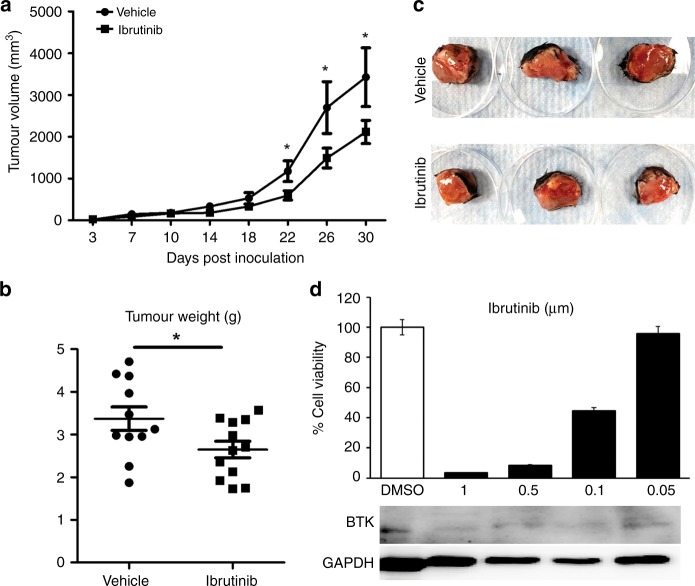
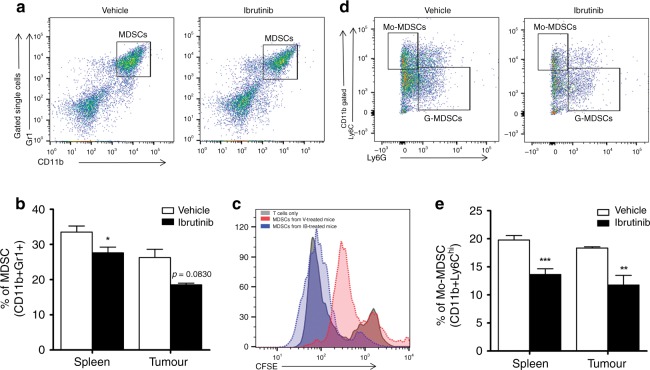
Abstract Background Ibrutinib is a Bruton’s tyrosine kinase (BTK) and interleukin-2-inducible kinase (ITK) inhibitor used for treating chronic lymphocytic leukaemia (CLL) and other cancers. Although ibrutinib is known to inhibit the growth of breast cancer cell growth in vitro, its impact on the treatment and metastasis of breast cancer is unclear. Methods Using an orthotopic mouse breast cancer model, we show that ibrutinib inhibits the progression and metastasis of breast cancer. Results Ibrutinib inhibited proliferation of cancer cells in vitro, and Ibrutinib-treated mice displayed significantly lower tumour burdens and metastasis compared to controls. Furthermore, the spleens and tumours from Ibrutinib-treated mice contained more mature DCs and lower numbers of myeloid-derived suppressor cells (MDSCs), which promote disease progression and are linked to poor prognosis. We also confirmed that ex vivo treatment of MDSCs with ibrutinib switched their phenotype to mature DCs and significantly enhanced MHCII expression. Further, ibrutinib treatment promoted T cell proliferation and effector functions leading to the induction of antitumour TH1 and CTL immune responses. Conclusions Ibrutinib inhibits tumour development and metastasis in breast cancer by promoting the development of mature DCs from MDSCs and hence could be a novel therapeutic agent for the treatment of breast cancer.
Overview
The claims and statistics of this paper haven’t been checked yet.
Free: it reads the open-access text and checks the first 5 claims that cite a source we can check. Create a free account to check every claim.
Integrity signals
Registry
Cites
Statistics
Figures
Verification
Claims the paper makes
The claims and statistics of this paper haven’t been checked yet.
Free: it reads the open-access text and checks the first 5 claims that cite a source we can check. Create a free account to check every claim.
Claims other papers make about this one
Each is checked against this paper’s own text: does it say what the citing paper says it does?
The source backs part of the claim, not all of it — or backs it for a different population, condition or comparison.
In the citing paper
“ibrutinib reportedly favors the depletion of MDSCs coupled to their differentiation toward a mature DClike phenotype associated with MHC class II upregulation and improved antigen-presentation capacity”
From Immunomodulation by targeted anticancer agents (2021) · cites this paper as Varikuti et al., 2020
Experimental — accuracy not yet measured
Self-check
Percentages, sums and reported differences re-computed from the paper’s own numbers.
The self-check needs the paper’s full text.
Citations
Cites
Oncology meets immunology: the cancer-immunity cycle.
Chen, D. S., & Mellman, I. (2013) · Immunity · doi:10.1016/j.immuni.2013.07.012 · Cited by 6,929
Myeloid-derived-suppressor cells as regulators of the immune system
Gabrilovich, D. I., & Nagaraj, S. (2009) · Nature Reviews Immunology · doi:10.1038/nri2506 · Cited by 6,753
Cancer Immunoediting: Integrating Immunity’s Roles in Cancer Suppression and Promotion
Schreiber, R. D., Old, L. J., & Smyth, M. J. (2011) · Science · doi:10.1126/science.1203486 · Cited by 6,474 · cited 1×
“This immune dysregulation of CD8+ T cells and impaired CTL effector responses can be attributed to prevailing immunosuppressive conditions in the tumour microenvironment.(50,51) In the present study, we found that ibrutinib treatment was associated with a significant enhancement of CTL activity as evident by significa…”
Cancer immunoediting: from immunosurveillance to tumor escape
Dunn, G. P., Bruce, A. T., Ikeda, H., Old, L. J., & Schreiber, R. D. (2002) · Nature Immunology · doi:10.1038/ni1102-991 · Cited by 5,393
A Gene Encoding an Antigen Recognized by Cytolytic T Lymphocytes on a Human Melanoma
van der Bruggen, P., Traversari, C., Chomez, P., Lurquin, C., De Plaen, E., Van den Eynde, B., Knuth, A., & Boon, T. (1991) · Science · doi:10.1126/science.1840703 · Cited by 3,545
Coordinated regulation of myeloid cells by tumours
Gabrilovich, D. I., Ostrand-Rosenberg, S., & Bronte, V. (2012) · Nature Reviews Immunology · doi:10.1038/nri3175 · Cited by 3,544
Steinman, R. M., Hawiger, D., & Nussenzweig, M. C. (2003) · Annual Review of Immunology · doi:10.1146/annurev.immunol.21.120601.141040 · Cited by 3,122
Recommendations for myeloid-derived suppressor cell nomenclature and characterization standards
Bronte, V., Brandau, S., Chen, S.-H., Colombo, M. P., Frey, A. B., Greten, T. F., Mandruzzato, S., Murray, P. J., Ochoa, A., Ostrand-Rosenberg, S., et al. (2016) · Nature Communications · doi:10.1038/ncomms12150 · Cited by 2,751
Cancer immunotherapy via dendritic cells
Palucka, K., & Banchereau, J. (2012) · Nature Reviews Cancer · doi:10.1038/nrc3258 · Cited by 2,049
The Nature of Myeloid-Derived Suppressor Cells in the Tumor Microenvironment
Kumar, V., Patel, S., Tcyganov, E., & Gabrilovich, D. I. (2016) · Trends in Immunology · doi:10.1016/j.it.2016.01.004 · Cited by 2,008
Immature, semi-mature and fully mature dendritic cells: which signals induce tolerance or immunity?
Lutz, M. B., & Schuler, G. (2002) · Trends in Immunology · doi:10.1016/s1471-4906(02)02281-0 · Cited by 1,349
Movahedi, K., Guilliams, M., Van den Bossche, J., Van den Bergh, R., Gysemans, C., Beschin, A., De Baetselier, P., & Van Ginderachter, J. A. (2008) · Blood · doi:10.1182/blood-2007-07-099226 · Cited by 1,234
Diaz-Montero, C. M., Salem, M. L., Nishimura, M. I., Garrett-Mayer, E., Cole, D. J., & Montero, A. J. (2009) · Cancer Immunology, Immunotherapy · doi:10.1007/s00262-008-0523-4 · Cited by 1,215 · cited 1×
“These cells expand in response to tumours, contribute to immunosuppression, and have been reported to play a role in tumour progression.(12,13) Together, immature DCs and MDSCs can facilitate cancer progression by stimulating the development of immunosuppressive TH2 cells and regulatory T cells and inhibiting antitumo…”
Fuertes, M. B., Kacha, A. K., Kline, J., Woo, S.-R., Kranz, D. M., Murphy, K. M., & Gajewski, T. F. (2011) · Journal of Experimental Medicine · doi:10.1084/jem.20101159 · Cited by 1,192
Dendritic Cells and Cancer Immunity
Gardner, A., & Ruffell, B. (2016) · Trends in Immunology · doi:10.1016/j.it.2016.09.006 · Cited by 907
Notch–RBP-J signaling controls the homeostasis of CD8− dendritic cells in the spleen
Caton, M. L., Smith-Raska, M. R., & Reizis, B. (2007) · The Journal of Experimental Medicine · doi:10.1084/jem.20062648 · Cited by 859 · cited 2×
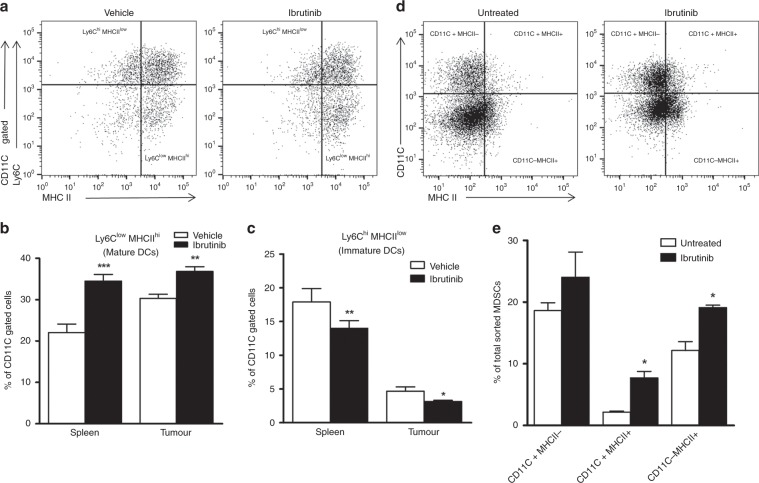
“Previous studies have also shown that maturation of DCs is characterised by the downregulation of Ly6C and upregulation of MHCII and CD80.(16,29,30) Hence, we analysed the mature (CD11C+Ly6C MHCII) and immature (CD11C+Ly6C MHCII) DC populations in the spleens of ibrutinib- and vehicle-treated mice.”
Dubovsky, J. A., Beckwith, K. A., Natarajan, G., Woyach, J. A., Jaglowski, S., Zhong, Y., Hessler, J. D., Liu, T.-M., Chang, B. Y., Larkin, K. M., et al. (2013) · Blood · doi:10.1182/blood-2013-06-507947 · Cited by 810 · cited 7×
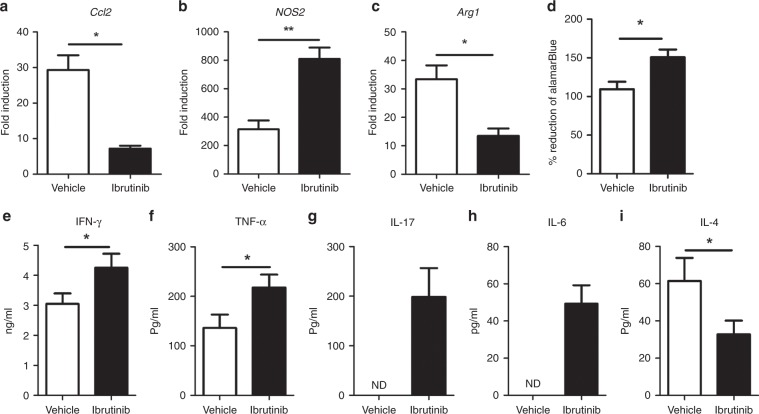
“Furthermore, ibrutinib has been shown to increase the production of proinflammatory cytokines IFN-γ, IL-6, and TNF-α and concomitantly suppress the production of anti-inflammatory cytokines IL-4, IL-13, and IL-10.(1,46) Consistent with these findings, we also found that the splenocytes of ibrutinib-treated mice showed…”
Self-citationSerafini, P., Meckel, K., Kelso, M., Noonan, K., Califano, J., Koch, W., Dolcetti, L., Bronte, V., & Borrello, I. (2006) · The Journal of Experimental Medicine · doi:10.1084/jem.20061104 · Cited by 766
Bruton Tyrosine Kinase–Dependent Immune Cell Cross-talk Drives Pancreas Cancer
Gunderson, A. J., Kaneda, M. M., Tsujikawa, T., Nguyen, A. V., Affara, N. I., Ruffell, B., Gorjestani, S., Liudahl, S. M., Truitt, M., Olson, P., et al. (2016) · Cancer Discovery · doi:10.1158/2159-8290.cd-15-0827 · Cited by 486
Tumor-Infiltrating Dendritic Cells in Cancer Pathogenesis
Tran Janco, J. M., Lamichhane, P., Karyampudi, L., & Knutson, K. L. (2015) · The Journal of Immunology · doi:10.4049/jimmunol.1403134 · Cited by 440 · cited 1×
“Furthermore, cancer cell-induced immunosuppressive microenvironment limits the activity of mature and functionally competent DCs while triggering the accumulation of tumour-promoting immature DC phenotypes.(10) These immature DCs induce immune tolerance by the expansion of suppressor T cell populations, which regulate…”
Plasticity of myeloid-derived suppressor cells in cancer
Tcyganov, E., Mastio, J., Chen, E., & Gabrilovich, D. I. (2018) · Current Opinion in Immunology · doi:10.1016/j.coi.2018.03.009 · Cited by 398
Ibrutinib treatment improves T cell number and function in CLL patients
Long, M., Beckwith, K., Do, P., Mundy, B. L., Gordon, A., Lehman, A. M., Maddocks, K. J., Cheney, C., Jones, J. A., Flynn, J. M., et al. (2017) · Journal of Clinical Investigation · doi:10.1172/jci89756 · Cited by 388
Zippelius, A., Batard, P., Rubio-Godoy, V., Bioley, G., Liénard, D., Lejeune, F., Rimoldi, D., Guillaume, P., Meidenbauer, N., Mackensen, A., et al. (2004) · Cancer Research · doi:10.1158/0008-5472.can-03-3066 · Cited by 361 · cited 1×
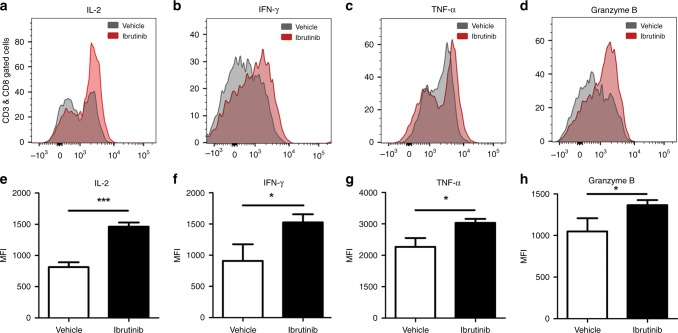
“However, some studies have shown that CTLs fail to produce inflammatory cytokines that promote tumour cell death.(33,34) Ibrutinib has been shown to promote both CD8+ and CD4+ T cells by driving TH1-selective pressure in T lymphocytes.”
Dendritic cell control of tolerogenic responses
Manicassamy, S., & Pulendran, B. (2011) · Immunological Reviews · doi:10.1111/j.1600-065x.2011.01015.x · Cited by 357
Meyer, C., Sevko, A., Ramacher, M., Bazhin, A. V., Falk, C. S., Osen, W., Borrello, I., Kato, M., Schadendorf, D., Baniyash, M., et al. (2011) · Proceedings of the National Academy of Sciences · doi:10.1073/pnas.1108121108 · Cited by 346
MDSC as a mechanism of tumor escape from sunitinib mediated anti-angiogenic therapy
Finke, J., Ko, J., Rini, B., Rayman, P., Ireland, J., & Cohen, P. (2011) · International Immunopharmacology · doi:10.1016/j.intimp.2011.01.030 · Cited by 281
Stiff, A., Trikha, P., Wesolowski, R., Kendra, K., Hsu, V., Uppati, S., McMichael, E., Duggan, M., Campbell, A., Keller, K., et al. (2016) · Cancer Research · doi:10.1158/0008-5472.can-15-1490 · Cited by 188
Mueller, H., Stadtmann, A., Van Aken, H., Hirsch, E., Wang, D., Ley, K., & Zarbock, A. (2010) · Blood · doi:10.1182/blood-2009-11-254185 · Cited by 164
Bergenfelz, C., Larsson, A.-M., von Stedingk, K., Gruvberger-Saal, S., Aaltonen, K., Jansson, S., Jernström, H., Janols, H., Wullt, M., Bredberg, A., et al. (2015) · PLOS ONE · doi:10.1371/journal.pone.0127028 · Cited by 152
Bose, A., Taylor, J. L., Alber, S. M., Watkins, S. C., García, J. A., Rini, B. I., Ko, J. S., Cohen, P. A., Finke, J. H., & Storkus, W. J. (2011) · International Journal of Cancer · doi:10.1002/ijc.25863 · Cited by 150
A gene encoding an antigen recognized by cytolytic T lymphocytes on a human melanoma.
van der Bruggen, P., Traversari, C., Chomez, P., Lurquin, C., Plaen, E. D., den Eynde, B. J. V., Knuth, A. K., & Boon, T. (2007) · PubMed · Cited by 133
A role for CCL2 in both tumor progression and immunosurveillance
Li, M., Knight, D. A., Snyder, L. A., Smyth, M. J., & Stewart, T. J. (2013) · OncoImmunology · doi:10.4161/onci.25474 · Cited by 125
Yin, Q., Sivina, M., Robins, H., Yusko, E., Vignali, M., O’Brien, S., Keating, M. J., Ferrajoli, A., Estrov, Z., Jain, N., et al. (2017) · The Journal of Immunology · doi:10.4049/jimmunol.1601190 · Cited by 116
Fiedler, K., Sindrilaru, A., Terszowski, G., Kokai, E., Feyerabend, T. B., Bullinger, L., Rodewald, H.-R., & Brunner, C. (2011) · Blood · doi:10.1182/blood-2010-04-281170 · Cited by 112
Ibrutinib inhibition of Bruton protein-tyrosine kinase (BTK) in the treatment of B cell neoplasms
Roskoski, R. J. (2016) · Pharmacological Research · doi:10.1016/j.phrs.2016.09.011 · Cited by 106
Regulation of dendritic cell maturation and function by Bruton's tyrosine kinase via IL-10 and Stat3
Kawakami, Y., Inagaki, N., Salek-Ardakani, S., Kitaura, J., Tanaka, H., Nagao, K., Kawakami, Y., Xiao, W., Nagai, H., Croft, M., et al. (2006) · Proceedings of the National Academy of Sciences · doi:10.1073/pnas.0509784103 · Cited by 94
Ibrutinib Inhibits ERBB Receptor Tyrosine Kinases and HER2-Amplified Breast Cancer Cell Growth
Chen, J., Kinoshita, T., Sukbuntherng, J., Chang, B. Y., & Elias, L. (2016) · Molecular Cancer Therapeutics · doi:10.1158/1535-7163.mct-15-0923 · Cited by 91
Behavior of immune players in the tumor microenvironment
Pittet, M. J. (2009) · Current Opinion in Oncology · doi:10.1097/cco.0b013e32831bc38a · Cited by 83
Miller, A. T., & Berg, L. J. (2002) · The Journal of Immunology · doi:10.4049/jimmunol.168.5.2163 · Cited by 80
Tyrosine Kinase Btk Is Required for NK Cell Activation
Bao, Y., Zheng, J. H., Han, C., Jin, J., Han, H., Liu, Y., Lau, Y., Tu, W., & Cao, X. (2012) · Journal of Biological Chemistry · doi:10.1074/jbc.m112.372425 · Cited by 77
Jadidi‐Niaragh, F., Ghalamfarsa, G., Memarian, A., Asgarian‐Omran, H., Razavi, S. M., Sarrafnejad, A., & Shokri, F. (2012) · Tumor Biology · doi:10.1007/s13277-012-0628-4 · Cited by 66
Th17/IL-17A Might Play a Protective Role in Chronic Lymphocytic Leukemia Immunity
Hus, I., Bojarska-Junak, A. A., Chocholska, S., Tomczak, W., Woś, J., Dmoszyńska, A., & Roliński, J. (2013) · PLoS ONE · doi:10.1371/journal.pone.0078091 · Cited by 61
Riazi‐Rad, F., Ajdary, S., Omranipour, R., Alimohammadian, M. H., & Saraf, Z. (1996) · PubMed Central · doi:10.6091/ibj.1289.2014 · Cited by 54
Ibrutinib enhances IL-17 response by modulating the function of bone marrow derived dendritic cells
Natarajan, G. K., Terrazas, C. A., Oghumu, S., Varikuti, S., Dubovsky, J. A., Byrd, J. C., & Satoskar, A. R. (2015) · OncoImmunology · doi:10.1080/2162402x.2015.1057385 · Cited by 47 · cited 2×
“We previously reported that ibrutinib enhances IL-17 responses, which modulate antigen presentation and DC functions.(17) Similarly, in our present study, we found that ibrutinib treatment was associated with a significant increase in IL-17 production, which could be responsible for enhancing T cell-mediated antitumou…”
Self-citationKontani, K., Sawai, S., Hanaoka, J., Tezuka, N., Inoue, S., & Fujino, S. (2001) · European Journal of Surgical Oncology · doi:10.1053/ejso.2000.1060 · Cited by 46
Varikuti, S., Oghumu, S., Elbaz, M., Volpedo, G., Ahirwar, D. K., Alarcon, P. C., Sperling, R. H., Moretti, E., Pioso, M. S., Kimble, J., et al. (2017) · OncoImmunology · doi:10.1080/2162402x.2017.1361088 · Cited by 46
Self-citationImpact of Sleep as a Specific Marker of Quality of Life in Allergic Rhinitis
González-Núñez, V., Valero, A. L., & Mullol, J. (2013) · Current Allergy and Asthma Reports · doi:10.1007/s11882-012-0330-z · Cited by 43
Singhal, E., Kumar, P., & Sen, P. (2011) · Journal of Biological Chemistry · doi:10.1074/jbc.m111.271247 · Cited by 40
GUAN, X., Liu, Z., Zhang, J., & Jin, X. (2018) · Advances in Clinical and Experimental Medicine · doi:10.17219/acem/70065 · Cited by 40
Sun, Y., Peng, I., Webster, J. D., Suto, E., Lesch, J., Wu, X., Senger, K., Francis, G., Barrett, K., Collier, J. L., et al. (2015) · Science Signaling · doi:10.1126/scisignal.aab0949 · Cited by 39
Daneshmandi, S., Pourfathollah, A. A., & Forouzandeh-Moghaddam, M. (2018) · Immunopharmacology and Immunotoxicology · doi:10.1080/08923973.2018.1510959 · Cited by 34
A Tec kinase BTK inhibitor ibrutinib promotes maturation and activation of dendritic cells
Natarajan, G. K., Oghumu, S., Terrazas, C. A., Varikuti, S., Byrd, J. C., & Satoskar, A. R. (2016) · OncoImmunology · doi:10.1080/2162402x.2016.1151592 · Cited by 25 · cited 4×
“A recent study from our group identified that ibrutinib-treatment-induced DC activation and maturation by upregulating CD80, MHC-II, and C-C chemokine receptor type 7.(16) In line with these findings, our present study revealed that ibrutinib treatment significantly increased mature DCs in the spleens as well as tumou…”
Self-citationTwo targets for the price of one
Ansell, S. M. (2013) · Blood · doi:10.1182/blood-2013-08-518548 · Cited by 8
Lee, Y.-K., Ju, J.-M., Shon, W.-J., Oh, S., Min, C., Kang, M.-S., Shin, D.-M., & Choi, E. Y. (2018) · Immune Network · doi:10.4110/in.2018.18.e44 · Cited by 5
Cited by
Combination strategies to maximize the benefits of cancer immunotherapy
Zhu, S., Zhang, T., Zheng, L., Liu, H., Song, W., Liu, D., Li, Z., & Pan, C.-X. (2021) · Journal of Hematology & Oncology · doi:10.1186/s13045-021-01164-5 · Cited by 654
“Furthermore, ibrutinib is an irreversible ITK inhibitor which leads to a preferential inhibition of Th2 in favor of the Th1 differentiation [113], and conversion of MDSCs to dendritic cells [228].”
BackgroundImmunomodulation by targeted anticancer agents
Petroni, G., Buqué, A., Zitvogel, L., Kroemer, G., & Galluzzi, L. (2021) · Cancer Cell · doi:10.1016/j.ccell.2020.11.009 · Cited by 212
Rozkiewicz, D., Hermanowicz, J. M., Kwiatkowska, I., Krupa, A., & Pawlak, D. (2023) · Molecules · doi:10.3390/molecules28052400 · Cited by 124
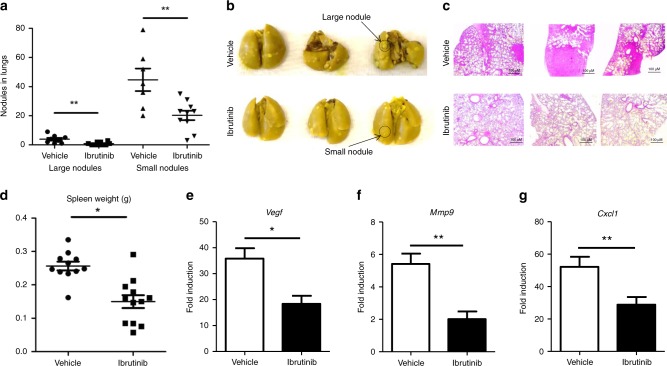
“Moreover, the therapy with ibrutinib also resulted in a substantial decrease in the expression of vascular endothelial growth factor (Vegf), MMP-9, and C-X-C motif chemokine ligand 1 (Cxcl1), all of which are known to play a key role in the processes of carcinogenesis, angiogenesis, and metastasis [89].”
BackgroundBarnestein, R., Galland, L., Kalfeist, L., Ghiringhelli, F., Ladoire, S., & Limagne, E. (2022) · OncoImmunology · doi:10.1080/2162402x.2022.2120676 · Cited by 124
“demonstrated that ibrutinib was able to deplete and reprogram MDSCs to mature DCs, which boosts antitumor Th1 immune response and improves infiltration of cytotoxic T lymphocytes due to enhanced tumor-derived antigen presentation to CD8 T cells.(144) A combination of immunotherapy and ibrutinib was shown to suppress t…”
BackgroundRole of Tumor-Associated Myeloid Cells in Breast Cancer
Cha, Y. J., & Koo, J. S. (2020) · Cells · doi:10.3390/cells9081785 · Cited by 125
Metadata
- Authors
- Varikuti, S., Singh, B., Volpedo, G., Ahirwar, D. K., Jha, B. K., Saljoughian, N., Viana, A. G., Verma, C., Hamza, O., Halsey, G., Holcomb, E. A., Maryala, R. J., Oghumu, S., Ganju, R. K., & Satoskar, A. R.
- Affiliations
- The Ohio State University Wexner Medical Center (US)
- The Ohio State University (US)
- Corresponding author
- Satoskar, Abhay R.
- ORCID
- Venue
- British Journal of Cancer
- Published
- 2020-02-06
- Volume
- 122
- Issue
- 7
- Pages
- 1005-1013
- ISSN
- 0007-0920 (ISSN-L)
- 1532-1827
- PMC
- PMC7109110
- OpenAlex
- W3005025575
- Cited by
- 76
- References
- 56
- Citations by year
- 2026: 6 · 2025: 8 · 2024: 11 · 2023: 10 · 2022: 15 · 2021: 17 · 2020: 8
- FWCI
- 4.38
- Type
- journal article
- Language
- en
- Open access
- hybrid
- doi.org
- Licence
- cc-by
- creativecommons.org/licenses/by/4.0 (tdm)
- creativecommons.org/licenses/by/4.0 (vor)
- Locations
- British Journal of Cancer (publishedVersion, cc-by)
- Europe PMC (PubMed Central) (publishedVersion, cc-by)
- PubMed Central (publishedVersion, cc-by)
- PubMed (publishedVersion)
- Funders
- National Cancer Institute (K01CA207599)
- Topics
- Life Sciences › Immunology and Microbiology › Immunology › Immune cells in cancer
- Life Sciences › Immunology and Microbiology › Immunology › Immunotherapy and Immune Responses
- Health Sciences › Medicine › Oncology › Cancer Immunotherapy and Biomarkers
- Keywords
- ibrutinib, breast cancer, metastasis, myeloid-derived suppressor cells, dendritic cells, BTK inhibitors, tumor immunology, MHC class II expression, T cell proliferation, antitumor immunity, Th1 response, cytotoxic T lymphocytes, tumor progression
- MeSH terms
- Myeloid-Derived Suppressor Cells, Adenine, Animals, Breast Neoplasms, Dendritic Cells, Female, Humans, Neoplasm Metastasis, Piperidines, Disease Progression, Mice
About these checks
Registry, retraction, Cites and statistics results are computed, not judged, with one exception: a printed reference that no index lists is read once by a model before it counts as a citation error. Claims are extracted by a model and kept only when their quote appears verbatim in the text; each cited source is then checked, with a model’s help, for whether it says what the claim relies on. Those verdicts can be wrong — read the claim’s quote and the cited source before relying on one.
Statistics and arithmetic are recomputed, not judged.
Confidence bands are shown only for fields calibrated on our annotated test set. None is calibrated yet, so no band is shown.
What counts as a claim ›How we measure confidence ›How we check this ›
Are you an author, or do you see a problem with this page? Request a review
Data sources
Bibliographic data: Semantic Scholar, OpenAlex, Crossref.
Contains information from the Semantic Scholar Academic Graph Datasets, made available under the ODC Attribution License (ODC-BY 1.0).
Semantic Scholar’s data is described in: Kinney, R., et al. (2023). The Semantic Scholar Open Data Platform. arXiv:2301.10140.
