

Single cell-derived spheroids capture the self-renewing subpopulations of metastatic ovarian cancer
Open accessThe DOI matches its Crossref record; 61 of the 61 references it cites were found in a registry or an index.
Abstract
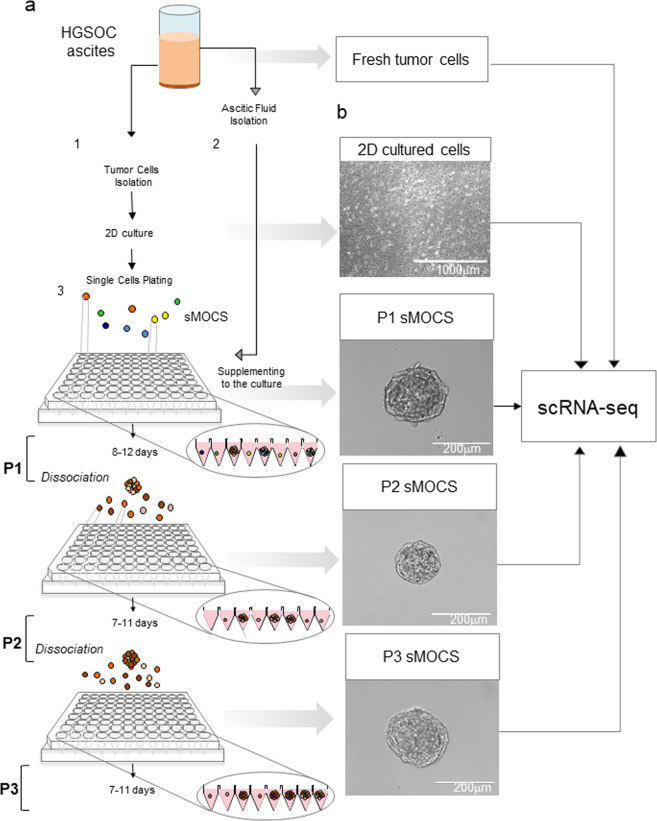
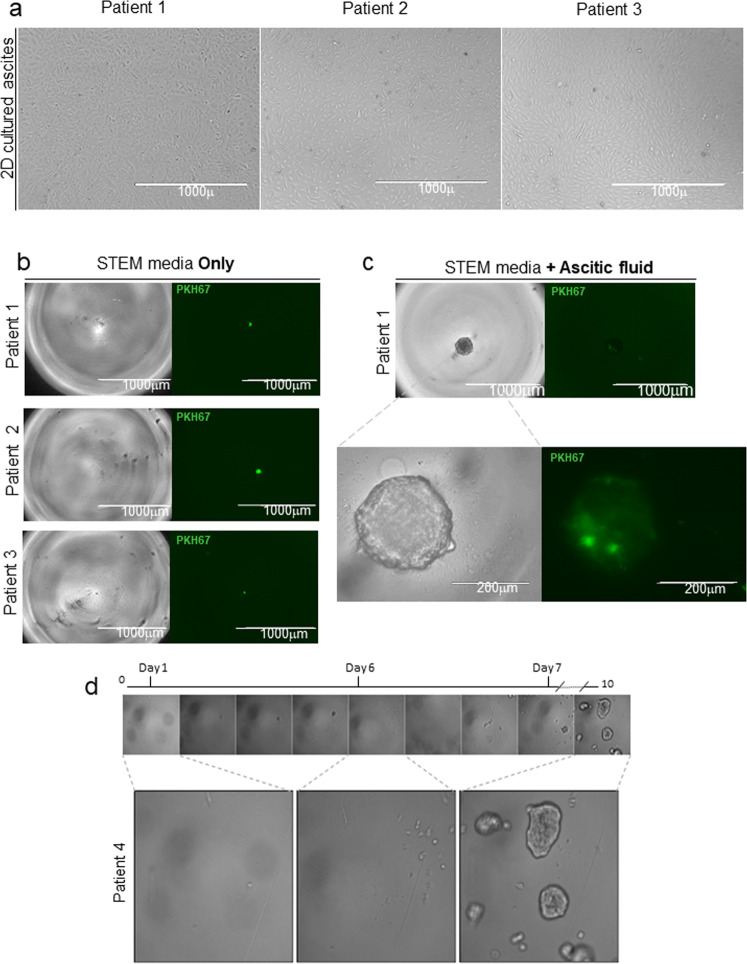
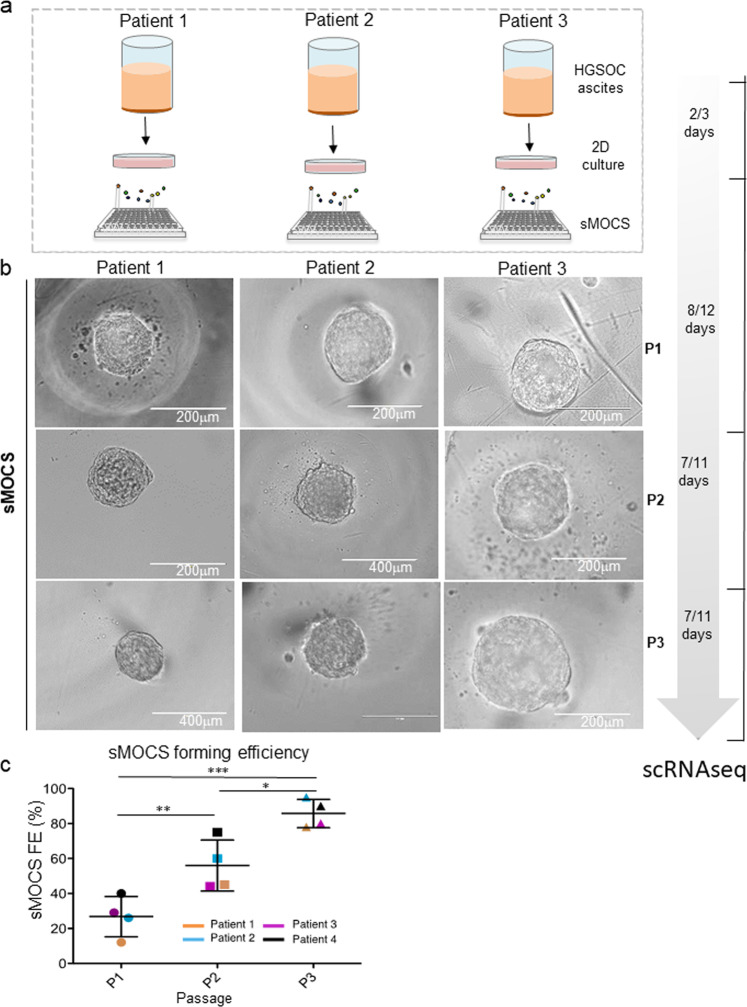
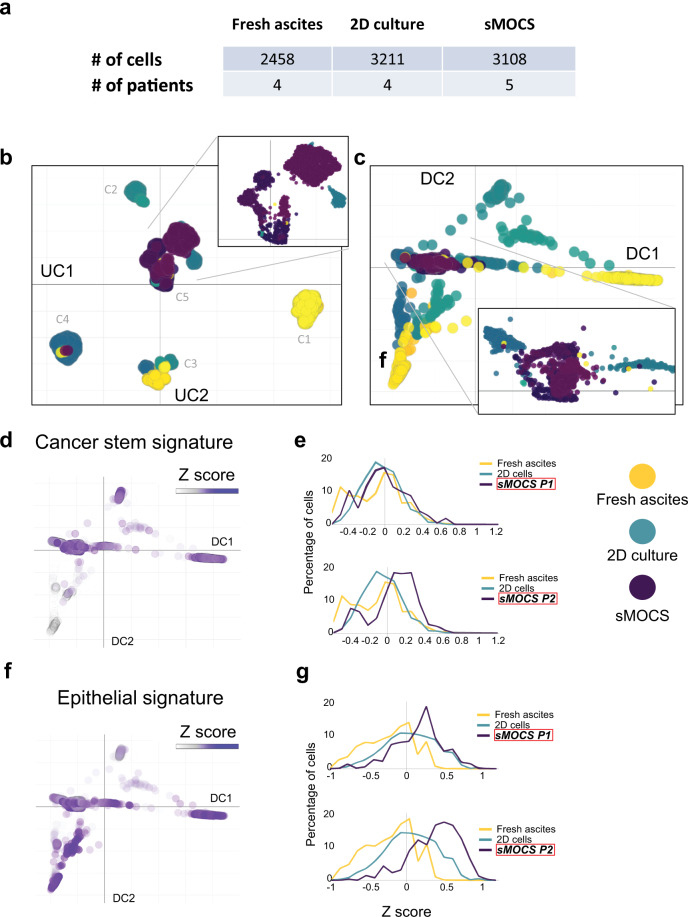
High Grade Serous Ovarian cancer (HGSOC) is a major unmet need in oncology, due to its precocious dissemination and the lack of meaningful human models for the investigation of disease pathogenesis in a patient-specific manner. To overcome this roadblock, we present a new method to isolate and grow single cells directly from patients' metastatic ascites, establishing the conditions for propagating them as 3D cultures that we refer to as single cell-derived metastatic ovarian cancer spheroids (sMOCS). By single cell RNA sequencing (scRNAseq) we define the cellular composition of metastatic ascites and trace its propagation in 2D and 3D culture paradigms, finding that sMOCS retain and amplify key subpopulations from the original patients' samples and recapitulate features of the original metastasis that do not emerge from classical 2D culture, including retention of individual patients' specificities. By enabling the enrichment of uniquely informative cell subpopulations from HGSOC metastasis and the clonal interrogation of their diversity at the functional and molecular level, this method provides a powerful instrument for precision oncology in ovarian cancer.
Overview
The claims and statistics of this paper haven’t been checked yet.
Free: it reads the open-access text and checks the first 5 claims that cite a source we can check. Create a free account to check every claim.
Integrity signals
Registry
Cites
Statistics
Figures
Verification
Claims the paper makes
The claims and statistics of this paper haven’t been checked yet.
Free: it reads the open-access text and checks the first 5 claims that cite a source we can check. Create a free account to check every claim.
Claims other papers make about this one
Each is checked against this paper’s own text: does it say what the citing paper says it does?
The source backs part of the claim, not all of it — or backs it for a different population, condition or comparison.
In the citing paper
“Spheroids represent a useful tool for maintaining patient-specific tumors in vitro and functional and genomic similarities between primary serous OC tumor tissue or ascites and matched spheroids have been shown (Dadgar et al., 2020; Marrella, 2020; Velletri et al., 2022).”
From Microphysiological systems as models for immunologically ‘cold’ tumors (2024) · cites this paper as Velletri et al., 2022
Experimental — accuracy not yet measured
Self-check
Percentages, sums and reported differences re-computed from the paper’s own numbers.
The self-check needs the paper’s full text.
Citations
Cites
Integrating single-cell transcriptomic data across different conditions, technologies, and species
Butler, A., Hoffman, P., Smibert, P., Papalexi, E., & Satija, R. (2018) · Nature Biotechnology · doi:10.1038/nbt.4096 · Cited by 13,174 · cited 2×
“Normalization was performed following Seurat48 pipeline.”
Epithelial-Mesenchymal Transitions in Development and Disease
Thiery, J. P., Acloque, H., Huang, R. Y. J., & Nieto, M. A. (2009) · Cell · doi:10.1016/j.cell.2009.11.007 · Cited by 9,931 · cited 1×
“Moreover, considering that more than 90% of malignant ovarian tumors have an epithelial origin and that epithelial mesenchymal transition (EMT) is both a crucial factor for cancer progression and a prerequisite for metastatization [28, 29], we also investigated the expression of EMT-associated genes along with those d…”
BackgroundUMAP: Uniform Manifold Approximation and Projection for Dimension Reduction
McInnes, L., Healy, J., & Melville, J. (2018) · arXiv · doi:10.48550/arxiv.1802.03426 · Cited by 7,101
Dimensionality reduction for visualizing single-cell data using UMAP
Becht, E., McInnes, L., Healy, J., Dutertre, C.-A., Kwok, I. W. H., Ng, L. G., Ginhoux, F., & Newell, E. W. (2019) · Nature Biotechnology · doi:10.1038/nbt.4314 · Cited by 5,358
Sato, T., Stange, D. E., Ferrante, M., Vries, R. G. J., van Es, J. H., van den Brink, S., van Houdt, W. J., Pronk, A., van Gorp, J., Siersema, P. D., et al. (2011) · Gastroenterology · doi:10.1053/j.gastro.2011.07.050 · Cited by 3,753
Organoid Models and Applications in Biomedical Research
Xinaris, C., Brizi, V., & Remuzzi, G. (2015) · Nephron · doi:10.1159/000433566 · Cited by 3,515
Targeting the IL-6/JAK/STAT3 signalling axis in cancer
Johnson, D. E., O'Keefe, R. A., & Grandis, J. R. (2018) · Nature Reviews Clinical Oncology · doi:10.1038/nrclinonc.2018.8 · Cited by 3,110 · cited 1×
“, Hypoxia Inducible Factors (HIFs) signaling genes have been shown to stimulate Notch and Oct4 pathways which control stem cell selfrenewal and multipotency [48]; high mobility group box-B protein (HMGB) that promotes tumor growth and metastasis in epithelial OC [49], IL-6/JAK/STAT3 pathway which is involved in prolif…”
BackgroundZhan, T., Rindtorff, N., & Boutros, M. (2017) · Oncogene · doi:10.1038/onc.2016.304 · Cited by 2,626 · cited 1×
“In addition, we found enrichment for the octamer binding transcription factor 4 (Oct-4) pathway, which regulates stem cell self-renewal and pluripotency with emerging roles in regulating tumor initiating cells [38, 39], and for the Wnt beta-catenin signaling pathway (Wnt/β), involved in stem cell regeneration and orga…”
BackgroundA living biobank of breast cancer organoids captures disease heterogeneity
Sachs, N., de Ligt, J., Kopper, O., Gogola, E., Bounova, G., Weeber, F., Balgobind, A. V., Wind, K., Gracanin, A., Begthel, H., et al. (2018) · Cell · doi:10.1016/j.cell.2017.11.010 · Cited by 1,973
Drost, J., & Clevers, H. (2018) · Nature Reviews Cancer · doi:10.1038/s41568-018-0007-6 · Cited by 1,790 · cited 1×
“3D organoid cultures have recently emerged as a powerful modeling approach for a variety of disorders to recapitulate salient features of the original tissue or organ and propagate in vitro relevant subpopulations of cells representative of the original in vivo complexity [10].”
BackgroundCoifman, R. R., Lafon, S., Lee, A. B., Maggioni, M., Nadler, B., Warner, F., & Zucker, S. W. (2005) · Proceedings of the National Academy of Sciences · doi:10.1073/pnas.0500334102 · Cited by 1,675 · cited 1×
“To examine the salient properties of our dataset, we then applied diffusion map, a dimensionality reduction method that preserves the underlying structure of the original dataset, thus enabling a meaningful measure of the distances and trajectories intervening across any two given cells [26, 27] (Fig.”
MethodLong-Term Culture of Genome-Stable Bipotent Stem Cells from Adult Human Liver
Huch, M., Gehart, H., van Boxtel, R., Hamer, K., Blokzijl, F., Verstegen, M. M. A., Ellis, E., van Wenum, M., Fuchs, S. A., de Ligt, J., et al. (2015) · Cell · doi:10.1016/j.cell.2014.11.050 · Cited by 1,619
Rethinking ovarian cancer: recommendations for improving outcomes
Vaughan, S., Coward, J. I., Bast, R. C., Berchuck, A., Berek, J. S., Brenton, J. D., Coukos, G., Crum, C. C., Drapkin, R., Etemadmoghadam, D., et al. (2011) · Nature Reviews Cancer · doi:10.1038/nrc3144 · Cited by 1,464 · cited 1×
“Not only they do not allow to correlate molecular aberrations to clinical histories [7] and are thus of no use to advance the precision oncology agenda, but they also fail to recapitulate the landscape of alterations observed in most primary tumor isolates [2, 8, 9].”
BackgroundEvaluating cell lines as tumour models by comparison of genomic profiles
Domcke, S., Sinha, R., Levine, D. A., Sander, C., & Schultz, N. (2013) · Nature Communications · doi:10.1038/ncomms3126 · Cited by 1,418 · cited 1×
“Not only they do not allow to correlate molecular aberrations to clinical histories [7] and are thus of no use to advance the precision oncology agenda, but they also fail to recapitulate the landscape of alterations observed in most primary tumor isolates [2, 8, 9].”
BackgroundLipid metabolic reprogramming in cancer cells
Beloribi-Djefaflia, S., Vasseur, S., & Guillaumond, F. (2016) · Oncogenesis · doi:10.1038/oncsis.2015.49 · Cited by 1,398 · cited 1×
“This is consistent with previous observations showing that abnormal expression levels and mutations of genes involved in the cholesterol homeostasis and lipid metabolism are related to cancer [41, 42] and OC [43, 44].”
ResultStaging classification for cancer of the ovary, fallopian tube, and peritoneum
Prat, J. (2014) · International Journal of Gynecology & Obstetrics · doi:10.1016/j.ijgo.2013.10.001 · Cited by 1,364
Hypoxia-Inducible Factors, Stem Cells, and Cancer
Keith, B., & Simon, M. C. (2007) · Cell · doi:10.1016/j.cell.2007.04.019 · Cited by 1,179
Spherical Cancer Models in Tumor Biology
Weiswald, L.-B., Bellet, D., & Dangles-Marie, V. (2015) · Neoplasia · doi:10.1016/j.neo.2014.12.004 · Cited by 1,141 · cited 2×
“CICs, characterized by cancer-maintaining potential, self-renewal and anoikis-resistance, have been isolated from solid tumors and OC mostly by enrichment through tumor-sphere cultures, harnessing their ability to proliferate under non-adherent conditions [21, 22].”
BackgroundSignalling to and from tight junctions
Matter, K., & Balda, M. S. (2003) · Nature Reviews Molecular Cell Biology · doi:10.1038/nrm1055 · Cited by 884 · cited 1×
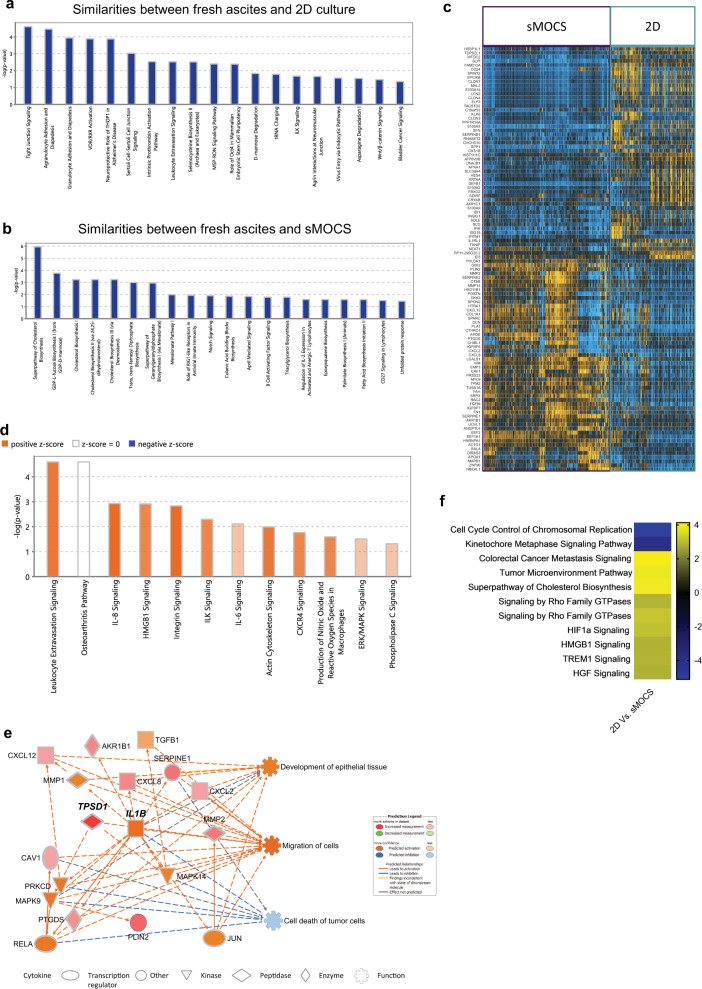
“The analysis on the gene modules whose transcriptional behavior is shared between fresh ascites and 2D cultures revealed an enrichment for pathways related to signal transduction that regulate cell proliferation and gene expression [33], diapedesis [34], activation of vitamin D receptor pathway (VDR/RXR) [35, 36], as…”
BackgroundAn organoid platform for ovarian cancer captures intra- and interpatient heterogeneity
Kopper, O., de Witte, C. J., Lõhmussaar, K., Valle-Inclan, J. E., Hami, N., Kester, L., Balgobind, A. V., Korving, J., Proost, N., Begthel, H., et al. (2019) · Nature Medicine · doi:10.1038/s41591-019-0422-6 · Cited by 834
In Vitro Expansion of Human Gastric Epithelial Stem Cells and Their Responses to Bacterial Infection
Bartfeld, S., Bayram, T., van de Wetering, M., Huch, M., Begthel, H., Kujala, P., Vries, R., Peters, P. J., & Clevers, H. (2015) · Gastroenterology · doi:10.1053/j.gastro.2014.09.042 · Cited by 820
Bapat, S. A., Mali, A. M., Koppikar, C. B., & Kurrey, N. K. (2005) · Cancer Research · doi:10.1158/0008-5472.can-04-3931 · Cited by 760 · cited 1×
“In addition, converging evidence points to the pharmacological resistance of specific subpopulations, varyingly referred to as cancer stem cells (CSCs) or cancer initiating cells (CICs), that can persist after chemotherapy [3, 4] and often remain quiescent for months in the peritoneal cavity from which they fuel renew…”
BackgroundThe Role of Cholesterol in Cancer
Kuzu, O. F., Noory, M. A., & Robertson, G. P. (2016) · Cancer Research · doi:10.1158/0008-5472.can-15-2613 · Cited by 708 · cited 1×
“This is consistent with previous observations showing that abnormal expression levels and mutations of genes involved in the cholesterol homeostasis and lipid metabolism are related to cancer [41, 42] and OC [43, 44].”
ResultDiffusion maps for high-dimensional single-cell analysis of differentiation data
Haghverdi, L., Buettner, F., & Theis, F. J. (2015) · Bioinformatics · doi:10.1093/bioinformatics/btv325 · Cited by 649
Lipid Desaturation Is a Metabolic Marker and Therapeutic Target of Ovarian Cancer Stem Cells
Li, J., Condello, S., Thomes-Pepin, J., Ma, X., Xia, Y., Hurley, T. D., Matei, D., & Cheng, J.-X. (2017) · Cell Stem Cell · doi:10.1016/j.stem.2016.11.004 · Cited by 579 · cited 1×
“This is consistent with previous observations showing that abnormal expression levels and mutations of genes involved in the cholesterol homeostasis and lipid metabolism are related to cancer [41, 42] and OC [43, 44].”
ResultCarr, S. A., Abbatiello, S. E., Ackermann, B. L., Borchers, C., Domon, B., Deutsch, E. W., Grant, R. P., Hoofnagle, A. N., Hüttenhain, R., Koomen, J. M., et al. (2014) · Molecular & Cellular Proteomics · doi:10.1074/mcp.m113.036095 · Cited by 561
Intra-tumour diversification in colorectal cancer at the single-cell level
Roerink, S. F., Sasaki, N., Lee-Six, H., Young, M. D., Alexandrov, L. B., Behjati, S., Mitchell, T. J., Grossmann, S., Lightfoot, H., Egan, D. A., et al. (2018) · Nature · doi:10.1038/s41586-018-0024-3 · Cited by 551
Exploring vitamin D metabolism and function in cancer
Jeon, S.-M., & Shin, E.-A. (2018) · Experimental & Molecular Medicine · doi:10.1038/s12276-018-0038-9 · Cited by 550 · cited 1×
“The analysis on the gene modules whose transcriptional behavior is shared between fresh ascites and 2D cultures revealed an enrichment for pathways related to signal transduction that regulate cell proliferation and gene expression [33], diapedesis [34], activation of vitamin D receptor pathway (VDR/RXR) [35, 36], as…”
BackgroundPrediction of DNA Repair Inhibitor Response in Short-Term Patient-Derived Ovarian Cancer Organoids
Hill, S. J., Decker, B., Roberts, E. A., Horowitz, N. S., Muto, M. G., Worley, M. J., Feltmate, C. M., Nucci, M. R., Swisher, E. M., Nguyen, H., et al. (2018) · Cancer Discovery · doi:10.1158/2159-8290.cd-18-0474 · Cited by 452
Prat, J. (2015) · Journal of Gynecologic Oncology · doi:10.3802/jgo.2015.26.2.87 · Cited by 411
Epithelial–mesenchymal transition in ovarian cancer
Vergara, D., Merlot, B., Lucot, J.-P., Collinet, P., Vinatier, D., Fournier, I., & Salzet, M. (2010) · Cancer Letters · doi:10.1016/j.canlet.2009.09.017 · Cited by 305 · cited 1×
“Moreover, considering that more than 90% of malignant ovarian tumors have an epithelial origin and that epithelial mesenchymal transition (EMT) is both a crucial factor for cancer progression and a prerequisite for metastatization [28, 29], we also investigated the expression of EMT-associated genes along with those d…”
BackgroundTargeting Notch signalling pathway of cancer stem cells
Venkatesh, V., Nataraj, R., Thangaraj, G. S., Karthikeyan, M., Gnanasekaran, A., Kaginelli, S. B., Kuppanna, G., Kallappa, C. G., & Basalingappa, K. M. (2018) · Stem Cell Investigation · doi:10.21037/sci.2018.02.02 · Cited by 275 · cited 1×
“Likewise, Notch signaling, that regulates cell proliferation, stem cell maintenance and that plays a critical role in the cross talk between angiogenesis and CICs self renewal, was also an enriched pathway defining the similarity between fresh ascites and sMOCS cells [45] (Fig.”
BackgroundFernandez, N. F., Gundersen, G. W., Rahman, A., Grimes, M. L., Rikova, K., Hornbeck, P., & Ma’ayan, A. (2017) · Scientific Data · doi:10.1038/sdata.2017.151 · Cited by 245
Beshiri, M. L., Tice, C. M., Tran, C., Nguyen, H. M., Sowalsky, A. G., Agarwal, S., Jansson, K. H., Yang, Q., McGowen, K. M., Yin, J., et al. (2018) · Clinical Cancer Research · doi:10.1158/1078-0432.ccr-18-0409 · Cited by 228
Prognostic significance of IL-6 and IL-8 ascites levels in ovarian cancer patients
Lane, D., Matte, I., Rancourt, C., & Piché, A. (2011) · BMC Cancer · doi:10.1186/1471-2407-11-210 · Cited by 190 · cited 2×
“Functional analysis of this set of genes by Ingenuity Pathway Analysis (IPA) [46] revealed an upregulation of pathways related to interleukin 8 (IL8) [47] and integrin Fig.”
MethodEfficient Use of Patient-Derived Organoids as a Preclinical Model for Gynecologic Tumors
Maru, Y., Tanaka, N., Itami, M., & Hippo, Y. (2019) · Gynecologic Oncology · doi:10.1016/j.ygyno.2019.05.005 · Cited by 162
Multiscale cytometry and regulation of 3D cell cultures on a chip
Sart, S., Tomasi, R. F.-X., Amselem, G., & Baroud, C. N. (2017) · Nature Communications · doi:10.1038/s41467-017-00475-x · Cited by 153 · cited 1×
“In this respect, the scalability of our method affords particular advantages, being uniquely suitable for single-cell high throughput plating, using microwells or micropillars [52, 53], thus optimizing the sample yield per experiment and streamlining patient-specific drug screenings.”
MethodFinding cancer stem cells: are aldehyde dehydrogenases fit for purpose?
Alison, M. R., Guppy, N., Lim, S. M. L., & Nicholson, L. J. (2010) · The Journal of Pathology · doi:10.1002/path.2772 · Cited by 150 · cited 1×
“In addition, converging evidence points to the pharmacological resistance of specific subpopulations, varyingly referred to as cancer stem cells (CSCs) or cancer initiating cells (CICs), that can persist after chemotherapy [3, 4] and often remain quiescent for months in the peritoneal cavity from which they fuel renew…”
BackgroundCD73 Regulates Stemness and Epithelial-Mesenchymal Transition in Ovarian Cancer-Initiating Cells
Lupia, M., Angiolini, F., Bertalot, G., Freddi, S., Sachsenmeier, K. F., Chisci, E., Kutryb-Zając, B. A., Confalonieri, S., Smolenski, R. T., Giovannoni, R., et al. (2018) · Stem Cell Reports · doi:10.1016/j.stemcr.2018.02.009 · Cited by 148 · cited 4×
“In particular, to assess whether our system is enriching for CICs, we employed markers that have been widely used for their isolation in solid tumors and specifically in HGSOC [22] (Table S1).”
BackgroundMethodSelf-citationFilippi, M. (2015) · Advances in immunology · doi:10.1016/bs.ai.2015.09.001 · Cited by 124 · cited 1×
“The analysis on the gene modules whose transcriptional behavior is shared between fresh ascites and 2D cultures revealed an enrichment for pathways related to signal transduction that regulate cell proliferation and gene expression [33], diapedesis [34], activation of vitamin D receptor pathway (VDR/RXR) [35, 36], as…”
BackgroundThe emerging roles of Oct4 in tumor-initiating cells
Wang, Y.-J., & Herlyn, M. (2015) · American Journal of Physiology-Cell Physiology · doi:10.1152/ajpcell.00212.2015 · Cited by 122 · cited 1×
“In addition, we found enrichment for the octamer binding transcription factor 4 (Oct-4) pathway, which regulates stem cell self-renewal and pluripotency with emerging roles in regulating tumor initiating cells [38, 39], and for the Wnt beta-catenin signaling pathway (Wnt/β), involved in stem cell regeneration and orga…”
BackgroundTakai, M., Terai, Y., Kawaguchi, H., Ashihara, K., Fujiwara, S., Tanaka, T., Tsunetoh, S., Tanaka, Y., Sasaki, H., Kanemura, M., et al. (2014) · Journal of Ovarian Research · doi:10.1186/1757-2215-7-76 · Cited by 114 · cited 1×
“Moreover, considering that more than 90% of malignant ovarian tumors have an epithelial origin and that epithelial mesenchymal transition (EMT) is both a crucial factor for cancer progression and a prerequisite for metastatization [28, 29], we also investigated the expression of EMT-associated genes along with those d…”
BackgroundKessler, M., Hoffmann, K., Fritsche, K., Brinkmann, V., Mollenkopf, H.-J., Thieck, O., Teixeira da Costa, A. R., Braicu, E. I., Sehouli, J., Mangler, M., et al. (2019) · Nature Communications · doi:10.1038/s41467-019-09144-7 · Cited by 109
Phosphoproteomics of Primary Cells Reveals Druggable Kinase Signatures in Ovarian Cancer
Francavilla, C., Lupia, M., Tsafou, K., Villa, A., Kowalczyk, K. M., Jersie-Christensen, R., Bertalot, G., Confalonieri, S., Brunak, S., Jensen, L. J., et al. (2017) · Cell Reports · doi:10.1016/j.celrep.2017.03.015 · Cited by 103 · cited 3×
“Primary tumor cell culture We isolated epithelial ovarian cancer (EOC) cells from metastatic peritoneal ascites of 9 patients according an already established protocol [23].”
MethodSelf-citationComplex Determinants of Epithelial: Mesenchymal Phenotypic Plasticity in Ovarian Cancer
Klymenko, Y., Kim, O., & Stack, M. (2017) · Cancers · doi:10.3390/cancers9080104 · Cited by 99
Farnesyl diphosphate synthase is important for the maintenance of glioblastoma stemness
Kim, H. Y., Kim, D. K., Bae, S.-H., Gwak, H., Jeon, J. H., Kim, J. K., Lee, B. I., You, H. J., Shin, D. H., Kim, Y.-H., et al. (2018) · Experimental & Molecular Medicine · doi:10.1038/s12276-018-0166-2 · Cited by 99
Fang, D., Chen, H., Zhu, J. Y., Wang, W., Teng, Y., Ding, H.-F., Jing, Q., Su, S.-B., & Huang, S. (2017) · Oncogene · doi:10.1038/onc.2016.323 · Cited by 96 · cited 1×
“Moreover, considering that more than 90% of malignant ovarian tumors have an epithelial origin and that epithelial mesenchymal transition (EMT) is both a crucial factor for cancer progression and a prerequisite for metastatization [28, 29], we also investigated the expression of EMT-associated genes along with those d…”
BackgroundSteffensen, K. D., Alvero, A. B., Yang, Y., Waldstrøm, M., Hui, P., Holmberg, J. C., Silasi, D., Jakobsen, A. K. M., Rutherford, T., & Mor, G. (2011) · Journal of Oncology · doi:10.1155/2011/620523 · Cited by 95 · cited 2×
“INTRODUCTION High Grade Serous Ovarian cancer (HGSOC) constitutes a major unmet need in oncology as one of the most lethal gynecological cancers, due to the failure of surgery and chemotherapy at eradicating the disease, the ensuing nearly invariable recurrence and very limited therapeutical progress over the past dec…”
BackgroundAssociation of Lipid Metabolism with Ovarian Cancer
Tania, M., Khan, M. A., & Song, Y. (2010) · Current Oncology · doi:10.3747/co.v17i5.668 · Cited by 94 · cited 1×
“This is consistent with previous observations showing that abnormal expression levels and mutations of genes involved in the cholesterol homeostasis and lipid metabolism are related to cancer [41, 42] and OC [43, 44].”
ResultConcise Review: Emerging Concepts in Clinical Targeting of Cancer Stem Cells
Rasheed, Z. A., Kowalski, J., Smith, B. D., & Matsui, W. H. (2011) · Stem Cells · doi:10.1002/stem.648 · Cited by 85
Jeong, S. H., Nam, Y., Jung, H., Kim, J., Rim, Y. A., Park, N., Lee, K.-J., Choi, S., Jang, Y., Kim, Y., et al. (2018) · Experimental & Molecular Medicine · doi:10.1038/emm.2017.301 · Cited by 84
Cancer stem cell detection and isolation
Moghbeli, M., Moghbeli, F., Forghanifard, M. M., & Abbaszadegan, M. R. (2014) · Medical Oncology · doi:10.1007/s12032-014-0069-6 · Cited by 81 · cited 1×
“In addition, converging evidence points to the pharmacological resistance of specific subpopulations, varyingly referred to as cancer stem cells (CSCs) or cancer initiating cells (CICs), that can persist after chemotherapy [3, 4] and often remain quiescent for months in the peritoneal cavity from which they fuel renew…”
BackgroundBeyond genomics: Critical evaluation of cell line utility for ovarian cancer research
Elias, K. M., Emori, M. M., Papp, E., MacDuffie, E., Konecny, G. E., Velculescu, V. E., & Drapkin, R. (2015) · Gynecologic Oncology · doi:10.1016/j.ygyno.2015.08.017 · Cited by 81 · cited 1×
“Not only they do not allow to correlate molecular aberrations to clinical histories [7] and are thus of no use to advance the precision oncology agenda, but they also fail to recapitulate the landscape of alterations observed in most primary tumor isolates [2, 8, 9].”
BackgroundVitamin D and VDR in Gynecological Cancers—A Systematic Review
Deuster, E., Jeschke, U., Yao, Y., Mahner, S., & Czogalla, B. (2017) · International Journal of Molecular Sciences · doi:10.3390/ijms18112328 · Cited by 79 · cited 1×
“The analysis on the gene modules whose transcriptional behavior is shared between fresh ascites and 2D cultures revealed an enrichment for pathways related to signal transduction that regulate cell proliferation and gene expression [33], diapedesis [34], activation of vitamin D receptor pathway (VDR/RXR) [35, 36], as…”
BackgroundNierode, G. J., Perea, B. C., McFarland, S. K., Pascoal, J. F., Clark, D. S., Schaffer, D. V., & Dordick, J. S. (2016) · Stem Cell Reports · doi:10.1016/j.stemcr.2016.10.001 · Cited by 64
Evaluation of UMAP as an alternative to t-SNE for single-cell dataPreprint
Becht, É., Dutertre, C., Kwok, I., et al. (2018) · bioRxiv (Cold Spring Harbor Laboratory) · doi:10.1101/298430 · Cited by 60 · cited 1×
“To first obtain a global representation of the dataset, we applied a non-linear dimensionality reduction visualization algorithm, Uniform Manifold Approximation and Projection (UMAP [24]), that has been shown to identify biologically meaningful cell clusters that retain consistency across a broad range of parameters v…”
MethodGermain, P.-L., Vitriolo, A., Adamo, A., Laise, P., Das, V., & Testa, G. (2016) · Nucleic Acids Research · doi:10.1093/nar/gkw448 · Cited by 44
Self-citationIntegrin-linked kinase activity modulates the pro-metastatic behavior of ovarian cancer cells
Bruney, L., Liu, Y., Grisoli, A., Ravosa, M. J., & Stack, M. S. (2016) · Oncotarget · doi:10.18632/oncotarget.7880 · Cited by 32 · cited 2×
“The analysis on the gene modules whose transcriptional behavior is shared between fresh ascites and 2D cultures revealed an enrichment for pathways related to signal transduction that regulate cell proliferation and gene expression [33], diapedesis [34], activation of vitamin D receptor pathway (VDR/RXR) [35, 36], as…”
BackgroundDual inhibiting OCT4 and AKT potently suppresses the propagation of human cancer cells
Li, W., Zhou, Y., Zhang, X., Yang, Y., Dan, S., Su, T., She, S., Dong, W., Zhao, Q. D., Jia, J., et al. (2017) · Scientific Reports · doi:10.1038/srep46246 · Cited by 26 · cited 1×
“In addition, we found enrichment for the octamer binding transcription factor 4 (Oct-4) pathway, which regulates stem cell self-renewal and pluripotency with emerging roles in regulating tumor initiating cells [38, 39], and for the Wnt beta-catenin signaling pathway (Wnt/β), involved in stem cell regeneration and orga…”
BackgroundFernandez, N., Gundersen, G. W., Duan, Q., Jones, M. R., Rouillard, A. D., McDermott, M. G., Rahman, A. H., & Ma’ayan, A. (2016) · doi:10.7490/f1000research.1113430.1 · Cited by 22
Cámara-Quílez, M., Barreiro-Alonso, A., Vizoso‐Vázquez, Á., Rodriguez-Belmonte, E. M., Varela, M. Q., Maceiras, M. L., & Cerdán, M. E. (2020) · Cancers · doi:10.3390/cancers12092435 · Cited by 18
Cited by
The Untapped Potential of Ascites in Ovarian Cancer Research and Treatment
Ford, C. E., Werner, B., Hacker, N. F., & Warton, K. (2020) · British Journal of Cancer · doi:10.1038/s41416-020-0875-x · Cited by 261
“A new method to grow ovarian cancer organoids derived from single cells isolated from ovarian-cancer-associated ascites has been described.(84) A comparison of expression profiles from five ovarian cancer patients using single-cell RNA-sequencing on clinical samples across primary tumours and metastatic sites revealed…”
Current concepts in tumour-derived organoids
Porter, R. J., Murray, G. I., & McLean, M. H. (2020) · British Journal of Cancer · doi:10.1038/s41416-020-0993-5 · Cited by 137
“Although the tissue for organoid culture is most commonly derived from surgical resection specimens,(27,28) organoid cultures have been successfully established from other tissue sources, for example, endoscopic biopsy from Barrett’s oesophagus,(27) needle biopsy for hepatocellular carcinoma,(29) endoscopic ultrasound…”
Background3D Tumor Spheroid and Organoid to Model Tumor Microenvironment for Cancer Immunotherapy
Zhu, Y., Kang, E., Wilson, M., Basso, T., Chen, E., Yu, Y., & Li, Y.-R. (2022) · Organoids · doi:10.3390/organoids1020012 · Cited by 67
Exploiting epigenetic dependencies in ovarian cancer therapy
Coughlan, A. Y., & Testa, G. (2021) · International Journal of Cancer · doi:10.1002/ijc.33727 · Cited by 61
Self-citationRakina, M. A., Казакова, А., Виллерт, А. Б., Коломиец, Л. А., & Larionova, I. (2022) · International Journal of Molecular Sciences · doi:10.3390/ijms23116215 · Cited by 55
“However, a comparison of expression profiles in patients with primary and metastatic tumors showed that ascites samples retained the molecular diversity of primary tumor samples and, therefore, could be fully used for investigations into novel therapeutic approaches [28,29].”
Background
Metadata
- Authors
- Velletri, T., Villa, C. E., Cilli, D., Barzaghi, B., Lo Riso, P., Lupia, M., Luongo, R., López-Tobón, A., De Simone, M., Bonnal, R. J. P., Marelli, L., Piccolo, S., Colombo, N., Pagani, M., Cavallaro, U., Minucci, S., & Testa, G.
- Affiliations
- Cogentech S.R.L. Società Benefit a Socio Unico soggetta all’attività di direzione e coordinamento di IFOM - Istituto Fondazione di Oncologia Molecolare ETS (Italy) (IT)
- Human Technopole (IT)
- European Institute of Oncology (IT)
- Istituto Nazionale Genetica Molecolare (IT)
- University of Padua (IT)
- University of Milan (IT)
- Corresponding author
- Minucci, Saverio
- Testa, Giuseppe
- ORCID
- Venue
- Cell Death & Differentiation
- Published
- 2021-11-29
- Volume
- 29
- Issue
- 3
- Pages
- 614-626
- ISSN
- 1350-9047 (ISSN-L)
- 1476-5403
- PMC
- PMC8901794
- OpenAlex
- W3217446792
- Cited by
- 48
- References
- 61
- Citations by year
- 2026: 9 · 2025: 12 · 2024: 9 · 2023: 13 · 2022: 3 · 2021: 1
- FWCI
- 5.60
- Type
- journal article
- Language
- en
- Open access
- hybrid
- doi.org
- Licence
- cc-by
- creativecommons.org/licenses/by/4.0 (tdm)
- creativecommons.org/licenses/by/4.0 (vor)
- Locations
- Cell Death and Differentiation (publishedVersion, cc-by)
- PubMed Central (publishedVersion, cc-by)
- PubMed (publishedVersion)
- Archivio Istituzionale della Ricerca (Universita Degli Studi Di Milano) (submittedVersion, cc-by)
- Lirias (submittedVersion, cc-by)
- BOA (University of Milano-Bicocca) (submittedVersion, cc-by)
- Padua Research Archive (University of Padova) (submittedVersion, cc-by)
- Funders
- Fondazione AIRC per la Ricerca sul Cancro EPIGEN Flagship Project
- Topics
- Health Sciences › Medicine › Oncology › Ovarian cancer diagnosis and treatment
- Health Sciences › Medicine › Oncology › Cancer Cells and Metastasis
- Life Sciences › Biochemistry, Genetics and Molecular Biology › Molecular Biology › Single-cell and spatial transcriptomics
- Keywords
- high-grade serous ovarian cancer, 3D cell culture, tumor cell subpopulations, self-renewal, clonal diversity, precision oncology, single-cell RNA sequencing
- MeSH terms
- Ascites, Female, Humans, Ovarian Neoplasms, Spheroids, Cellular, Cell Line, Tumor, Precision Medicine
About these checks
Registry, retraction, Cites and statistics results are computed, not judged, with one exception: a printed reference that no index lists is read once by a model before it counts as a citation error. Claims are extracted by a model and kept only when their quote appears verbatim in the text; each cited source is then checked, with a model’s help, for whether it says what the claim relies on. Those verdicts can be wrong — read the claim’s quote and the cited source before relying on one.
Statistics and arithmetic are recomputed, not judged.
Confidence bands are shown only for fields calibrated on our annotated test set. None is calibrated yet, so no band is shown.
What counts as a claim ›How we measure confidence ›How we check this ›
Are you an author, or do you see a problem with this page? Request a review
Data sources
Bibliographic data: Semantic Scholar, OpenAlex, Crossref.
Contains information from the Semantic Scholar Academic Graph Datasets, made available under the ODC Attribution License (ODC-BY 1.0).
Semantic Scholar’s data is described in: Kinney, R., et al. (2023). The Semantic Scholar Open Data Platform. arXiv:2301.10140.
