

Defining the role of the tumor vasculature in antitumor immunity and immunotherapy
Open accessThe DOI matches its Crossref record; 111 of the 112 references it cites were found in a registry or an index.
Abstract
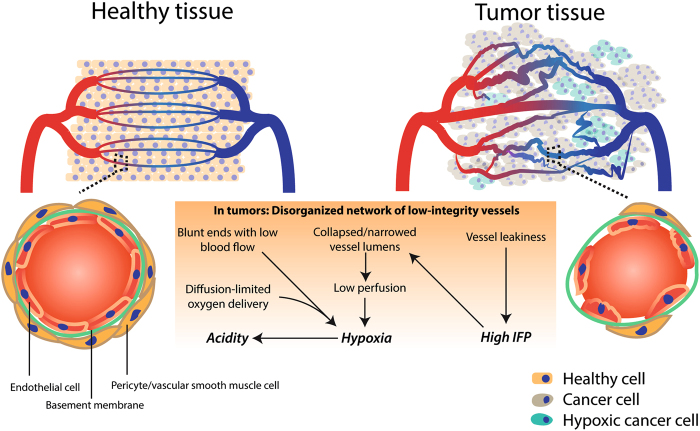
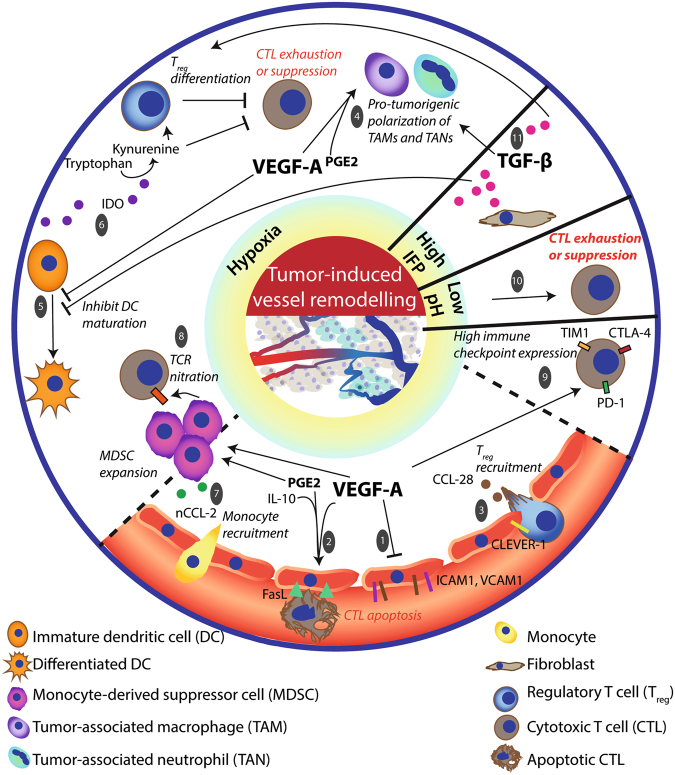
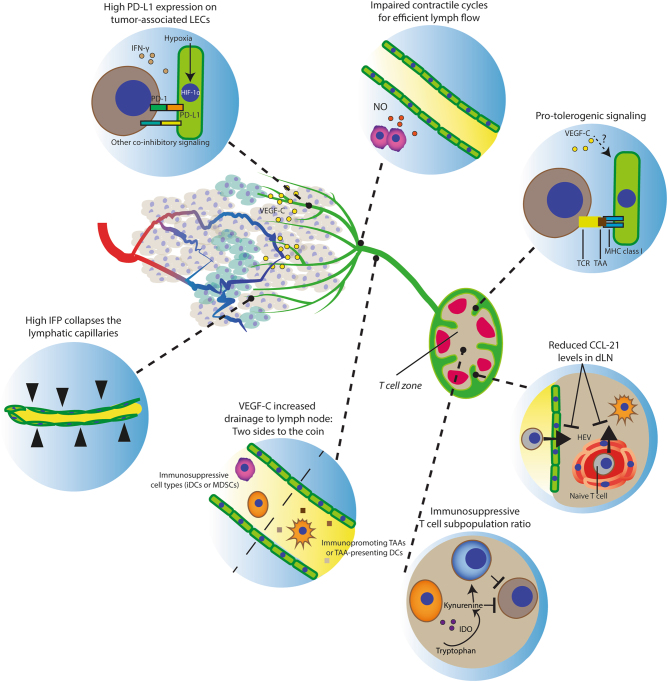
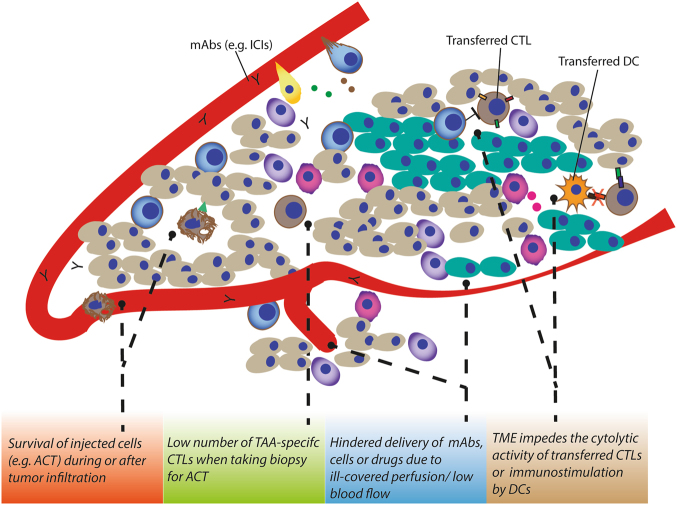
It is now well established that cancer cells co-exist within a complex environment with stromal cells and depend for their growth and dissemination on tight and plastic interactions with components of the tumor microenvironment (TME). Cancer cells incite the formation of new blood and lymphatic vessels from preexisting vessels to cope with their high nutrient/oxygen demand and favor tumor outgrowth. Research over the past decades has highlighted the crucial role played by tumor-associated blood and lymphatic vasculature in supporting immunoevasion and in subverting T-cell-mediated immunosurveillance, which are the main hallmarks of cancers. The structurally and functionally aberrant tumor vasculature contributes to the protumorigenic and immunosuppressive TME by maintaining a cancer cell's permissive environment characterized by hypoxia, acidosis, and high interstitial pressure, while simultaneously generating a physical barrier to T cells' infiltration. Recent research moreover has shown that blood endothelial cells forming the tumor vessels can actively suppress the recruitment, adhesion, and activity of T cells. Likewise, during tumorigenesis the lymphatic vasculature undergoes dramatic remodeling that facilitates metastatic spreading of cancer cells and immunosuppression. Beyond carcinogenesis, the erratic tumor vasculature has been recently implicated in mechanisms of therapy resistance, including those limiting the efficacy of clinically approved immunotherapies, such as immune checkpoint blockers and adoptive T-cell transfer. In this review, we discuss emerging evidence highlighting the major role played by tumor-associated blood and lymphatic vasculature in thwarting immunosurveillance mechanisms and antitumor immunity. Moreover, we also discuss novel therapeutic approaches targeting the tumor vasculature and their potential to help overcoming immunotherapy resistance.
Overview
The claims and statistics of this paper haven’t been checked yet.
Free: it reads the open-access text and checks the first 5 claims that cite a source we can check. Create a free account to check every claim.
Integrity signals
Registry
Cites
Statistics
Figures
Verification
Claims the paper makes
The claims and statistics of this paper haven’t been checked yet.
Free: it reads the open-access text and checks the first 5 claims that cite a source we can check. Create a free account to check every claim.
Claims other papers make about this one
Each is checked against this paper’s own text: does it say what the citing paper says it does?
The source backs part of the claim, not all of it — or backs it for a different population, condition or comparison.
In the citing paper
“‘cold’ tumors often suffer from impaired blood perfusion, restricting the effective delivery of therapeutics and cytotoxic immune cells, leading to hypoxia—a hallmark of the abnormal TME inducing immunosuppression (Schaaf et al., 2018).”
From Microphysiological systems as models for immunologically ‘cold’ tumors (2024) · cites this paper as Schaaf et al., 2018
Experimental — accuracy not yet measured
Self-check
Percentages, sums and reported differences re-computed from the paper’s own numbers.
The self-check needs the paper’s full text.
Citations
Cites
Angiogenesis in cancer and other diseases
Carmeliet, P., & Jain, R. K. (2000) · Nature · doi:10.1038/35025220 · Cited by 9,070 · cited 1×
“[6] MDSCs are a source of reactive nitrogen species that nitrate CCL-2 and tyrosines of the T-cell receptor that recruits more monocytes [7] and impedes CTL antigen recognition, [8] respectively.”
Accessories to the Crime: Functions of Cells Recruited to the Tumor Microenvironment
Hanahan, D., & Coussens, L. M. (2012) · Cancer Cell · doi:10.1016/j.ccr.2012.02.022 · Cited by 4,632
Polarization of Tumor-Associated Neutrophil Phenotype by TGF-β: “N1” versus “N2” TAN
Fridlender, Z. G., Sun, J., Kim, S., Kapoor, V., Cheng, G., Ling, L., Worthen, G. S., & Albelda, S. M. (2009) · Cancer Cell · doi:10.1016/j.ccr.2009.06.017 · Cited by 3,371
Immunogenic Cell Death in Cancer Therapy
Kroemer, G., Galluzzi, L., Kepp, O., & Zitvogel, L. (2013) · Annual Review of Immunology · doi:10.1146/annurev-immunol-032712-100008 · Cited by 3,303
Macrophage activation and polarization
Martinez, F. O. (2008) · Frontiers in Bioscience · doi:10.2741/2692 · Cited by 3,160
The Immunobiology of Cancer Immunosurveillance and Immunoediting
Dunn, G. P., Old, L. J., & Schreiber, R. D. (2004) · Immunity · doi:10.1016/j.immuni.2004.07.017 · Cited by 3,032
Natural Innate and Adaptive Immunity to Cancer
Vesely, M. D., Kershaw, M. H., Schreiber, R. D., & Smyth, M. J. (2011) · Annual Review of Immunology · doi:10.1146/annurev-immunol-031210-101324 · Cited by 2,560
Noman, M. Z., Desantis, G., Janji, B., Hasmim, M., Karray, S., Dessen, P., Bronte, V., & Chouaib, S. (2014) · Journal of Experimental Medicine · doi:10.1084/jem.20131916 · Cited by 2,166
Cancer immunotherapy via dendritic cells
Palucka, K., & Banchereau, J. (2012) · Nature Reviews Cancer · doi:10.1038/nrc3258 · Cited by 2,049
Gabrilovich, D. I., Chen, H. L., Girgis, K. R., Cunningham, H. T., Meny, G. M., Nadaf, S., Kavanaugh, D., & Carbone, D. P. (1996) · Nature Medicine · doi:10.1038/nm1096-1096 · Cited by 1,977
Cited by
Items 201–300 of 707
Meng, L., Zhao, Y., Bu, W., Li, X., Liu, X., Zhou, D., Chen, Y., Zheng, S., Lin, Q., Liu, Q., et al. (2020) · Cell Proliferation · doi:10.1111/cpr.12859 · Cited by 39
Du, M., Wang, T., Peng, W., Feng, R., Goh, M., & Chen, Z. (2024) · Journal of Nanobiotechnology · doi:10.1186/s12951-024-02437-0 · Cited by 38
Ascheid, D., Baumann, M., Pinnecker, J., Friedrich, M., Szi-Marton, D., Medved, C., Bundalo, M., Ortmann, V., Öztürk, A., Nandigama, R., et al. (2024) · Nature Communications · doi:10.1038/s41467-024-48010-z · Cited by 38
Ahmad, J., Rizwanullah, M., Suthar, T., Albarqi, H. A., Ahmad, M. Z., Vuddanda, P. R., Khan, M. A., & Jain, K. (2022) · Critical Reviews in Therapeutic Drug Carrier Systems · doi:10.1615/critrevtherdrugcarriersyst.2022040686 · Cited by 38
Kim, Y., Lee, D., Lee, J.-H., Lee, S., & Lawler, S. E. (2019) · PLoS ONE · doi:10.1371/journal.pone.0211041 · Cited by 38
Ultrafast Dynamic Contrast‐Enhanced MRI of the Breast: From Theory to Practice
Kataoka, M., Honda, M., Sagawa, H., Ohashi, A., Sakaguchi, R., Hashimoto, H., Iima, M., Takada, M., & Nakamoto, Y. (2023) · Journal of Magnetic Resonance Imaging · doi:10.1002/jmri.29082 · Cited by 38
Peptides that immunoactivate the tumor microenvironment
Furukawa, N., & Popel, A. S. (2021) · Biochimica et Biophysica Acta (BBA) - Reviews on Cancer · doi:10.1016/j.bbcan.2020.188486 · Cited by 37
Overcoming solid-tumor barriers: armored CAR-T cell therapy
Kwon, N., & Chen, Y. Y. (2025) · Trends in cancer · doi:10.1016/j.trecan.2025.08.009 · Cited by 37
Endothelial Cells as Tools to Model Tissue Microenvironment in Hypoxia-Dependent Pathologies
Majewska, A., Wilkus, K., Brodaczewska, K. K., & Kiéda, C. (2021) · International Journal of Molecular Sciences · doi:10.3390/ijms22020520 · Cited by 37
Resistance mechanisms in melanoma to immuneoncologic therapy with checkpoint inhibitors
Fenton, S. E., Sosman, J. A., & Chandra, S. (2019) · Cancer Drug Resistance · doi:10.20517/cdr.2019.28 · Cited by 37
Tumour vasculature: Friend or foe of oncolytic viruses?
Santry, L. A., van Vloten, J. P., Knapp, J. P., Matuszewska, K., McAusland, T. M., Minott, J. A., Mould, R. C., Stegelmeier, A. A., Major, P. P., Wootton, S. K., et al. (2020) · Cytokine & Growth Factor Reviews · doi:10.1016/j.cytogfr.2020.07.007 · Cited by 37
Functional and metabolic targeting of natural killer cells to solid tumors
Wang, J., & Matosevic, S. (2020) · Cellular Oncology · doi:10.1007/s13402-020-00523-7 · Cited by 36
The Tumour Vasculature as a Target to Modulate Leucocyte Trafficking
Zhao, Y., Ting, K. K., Coleman, P. R., Qi, Y., Chen, J., Vadas, M. A., & Gamble, J. R. (2021) · Cancers · doi:10.3390/cancers13071724 · Cited by 36
Hot or cold: Bioengineering immune contextures into in vitro patient-derived tumor models
Too, N. S. H., Ho, N. C. W., Adine, C., Iyer, N. G., & Fong, E. L. S. (2021) · Advanced Drug Delivery Reviews · doi:10.1016/j.addr.2021.05.001 · Cited by 35
Gadde, M., Phillips, C. M., Ghousifam, N., Sorace, A. G., Wong, E., Krishnamurthy, S., Syed, A., Rahal, O. M., Yankeelov, T. E., Woodward, W. A., et al. (2020) · Biotechnology and Bioengineering · doi:10.1002/bit.27487 · Cited by 35
Portillo, A. L., Monteiro, J. K., Rojas, E. A. P., Ritchie, T. M., Gillgrass, A. E., & Ashkar, A. A. (2023) · Frontiers in Immunology · doi:10.3389/fimmu.2023.1286750 · Cited by 35
MRPL13 is a Prognostic Cancer Biomarker and Correlates with Immune Infiltrates in Breast Cancer
Tao, Z., Suo, H., Zhang, L., Jin, Z., Wang, Z., Wang, D., Wu, M., Peng, N., Zhao, Y., & Chen, B. (2020) · OncoTargets and Therapy · doi:10.2147/ott.s263998 · Cited by 35
Igniting Hope for Tumor Immunotherapy: Promoting the “Hot and Cold” Tumor Transition
Chen, W., Ma, Y., Wang, F., Liao, Y., Chen, Y., Zhao, B., Zhao, Q., Wang, D., & Tang, D. (2022) · Clinical Medicine Insights Oncology · doi:10.1177/11795549221120708 · Cited by 34
Zhou, Y. J., Liu, Z., Yu, A., Zhao, G., & Chen, B. (2024) · ImmunoTargets and Therapy · doi:10.2147/itt.s494670 · Cited by 35
Subramanian, M., Kabir, A. U., Barisas, D. A. G., Krchma, K., & Choi, K. (2023) · Cell Reports Medicine · doi:10.1016/j.xcrm.2022.100896 · Cited by 34
Exploring the regulatory role of lncRNA in cancer immunity
Zhan, D., & Xian, H.-C. (2023) · Frontiers in Oncology · doi:10.3389/fonc.2023.1191913 · Cited by 34
A brief tour guide to cancer disease
Bisoyi, P. (2022) · Elsevier eBooks · doi:10.1016/b978-0-323-99883-3.00006-8 · Cited by 34
Intratumoral Microbiome: Foe or Friend in Reshaping the Tumor Microenvironment Landscape?
Kyriazi, A. A., Karaglani, M., Agelaki, S., & Baritaki, S. (2024) · Cells · doi:10.3390/cells13151279 · Cited by 33
Kataoka, M., Iima, M., Miyake, K. K., & Honda, M. (2023) · Investigative Radiology · doi:10.1097/rli.0000000000001044 · Cited by 33
Li, X., Chen, T., Li, X., Zhang, H., Li, Y., Zhang, S., Luo, S., & Zheng, T. (2024) · Experimental Hematology and Oncology · doi:10.1186/s40164-024-00564-w · Cited by 33
The Significance of Microenvironmental and Circulating Lactate in Breast Cancer
Frisardi, V., Canovi, S., Vaccaro, S., & Frazzi, R. (2023) · International Journal of Molecular Sciences · doi:10.3390/ijms242015369 · Cited by 33
Multifaceted Interplay between Hormones, Growth Factors and Hypoxia in the Tumor Microenvironment
Lappano, R., Todd, L. A., Stanic, M., Cai, Q., Maggiolini, M., Marincola, F., & Pietrobon, V. (2022) · Cancers · doi:10.3390/cancers14030539 · Cited by 32
Addressing Resistance to Immune Checkpoint Inhibitor Therapy: An Urgent Unmet Need
Hu‐Lieskovan, S., Malouf, G. G., Jacobs, I. A., Chou, J., Liu, L., & Johnson, M. L. (2021) · Future Oncology · doi:10.2217/fon-2020-0967 · Cited by 32
Facing the future: challenges and opportunities in adoptive T cell therapy in cancer
Magalhaes, I., Carvalho‐Queiroz, C., Hartana, C. A., Kaiser, A. M., Lukic, A., Mints, M., Nilsson, O., Grönlund, H., Mattsson, J., & Berglund, S. (2019) · Expert Opinion on Biological Therapy · doi:10.1080/14712598.2019.1608179 · Cited by 32
Engineering CAR‐T Therapeutics for Enhanced Solid Tumor Targeting
Zhu, D., Kim, W., Lee, H., Bao, X., & Kim, P. (2025) · Advanced Materials · doi:10.1002/adma.202414882 · Cited by 32
Inorganic Polyphosphate—Regulator of Cellular Metabolism in Homeostasis and Disease
Kuś, F., Smolenski, R. T., & Tomczyk, M. (2022) · Biomedicines · doi:10.3390/biomedicines10040913 · Cited by 32
Selective inhibition of mTORC1 in tumor vessels increases antitumor immunity
Wang, S., Raybuck, A. L., Shiuan, E. F., Cho, S. H., Wang, Q., Brantley‐Sieders, D. M., Edwards, D. N., Allaman, M. M., Nathan, J. A., Wilson, K. T., et al. (2020) · JCI Insight · doi:10.1172/jci.insight.139237 · Cited by 31
Xu, Y., Miller, C. P., Tykodi, S. S., Akilesh, S., & Warren, E. H. (2024) · Frontiers in Cell and Developmental Biology · doi:10.3389/fcell.2024.1387198 · Cited by 31
Recent advances in smart nanoplatforms for tumor non-interventional embolization therapy
Dong, H., Yang, D., Hu, Y., & Song, X. (2022) · Journal of Nanobiotechnology · doi:10.1186/s12951-022-01548-w · Cited by 31
Schaaf, M. B. E., Houbaert, D., Meçe, O., To, S. K., Ganne, M., Maes, H., & Agostinis, P. (2019) · Frontiers in Oncology · doi:10.3389/fonc.2019.00171 · Cited by 31
Self-citationInnovative CAR-T Cell Therapy for Solid Tumor; Current Duel between CAR-T Spear and Tumor Shield
Jo, Y., Ali, L. A., Shim, J. A., Lee, B. H., & Hong, C. (2020) · Cancers · doi:10.3390/cancers12082087 · Cited by 30
Nanomedicines for reversing immunosuppressive microenvironment of hepatocellular carcinoma
Pan, X., Ni, S., & Hu, K. (2024) · Biomaterials · doi:10.1016/j.biomaterials.2024.122481 · Cited by 30
Asiry, S., Kim, G., Filippou, P. S., Sanchez, L. R., Entenberg, D. R., Marks, D. K., Oktay, M. H., & Karagiannis, G. S. (2021) · Frontiers in Immunology · doi:10.3389/fimmu.2021.654877 · Cited by 31
Su, Y.-T., Butler, M. K., Zhang, M., Zhang, W., Song, H., Hwang, L. S., Tran, A. D., Bash, R., Schorzman, A. N., Pang, Y. K., et al. (2020) · Neuro-Oncology Advances · doi:10.1093/noajnl/vdaa065 · Cited by 30
Bhattacharya, R., Brown, J. S., Gatenby, R. A., & Ibrahim‐Hashim, A. (2024) · Seminars in Cancer Biology · doi:10.1016/j.semcancer.2024.06.003 · Cited by 29
Pires‐Afonso, Y., Muller, A., Grzyb, K., Oudin, A., Yabo, Y. A., Sousa, C., Scafidi, A., Poli, A., Cosma, A., Halder, R., et al. (2022) · Molecular Oncology · doi:10.1002/1878-0261.13287 · Cited by 29
Tumour interstitial fluid-enriched phosphoethanolamine suppresses T cell function
Wang, Y., Wilfahrt, D. N., Jonker, P. B., Lontos, K., Cai, C., Cameron, B., Xie, B., Peralta, R. M., Schoedel, E. R., Gunn, W. G., et al. (2025) · Nature Cell Biology · doi:10.1038/s41556-025-01650-9 · Cited by 29
Mechanistic rationales for combining immunotherapy with radiotherapy
Chi, A., & Nguyen, N. P. (2023) · Frontiers in Immunology · doi:10.3389/fimmu.2023.1125905 · Cited by 29
Kim, Y.-M., Sanborn, M. A., Vijeth, S., Gajwani, P., Wang, X., Jung, D., Vályi-Nagy, T., Chakraborty, S., Mancinelli, G. E., Tóth, P. T., et al. (2025) · Nature Cancer · doi:10.1038/s43018-025-00975-6 · Cited by 29
EphB4 and ephrinB2 act in opposition in the head and neck tumor microenvironment
Bhatia, S., Nguyen, D., Darragh, L. B., Court, B. V., Sharma, J., Knitz, M. W., Piper, M., Bukkapatnam, S., Gadwa, J., Bickett, T. E., et al. (2022) · Nature Communications · doi:10.1038/s41467-022-31124-7 · Cited by 29
Antibody‐drug therapeutic conjugates: Potential of antibody‐siRNAs in cancer therapy
Yarian, F., Alibakhshi, A., Eyvazi, S., Arezumand, R., & Ahangarzadeh, S. (2019) · Journal of Cellular Physiology · doi:10.1002/jcp.28490 · Cited by 29
Zhou, Y., Yu, F., Guo, M., Tang, Y., & Xu, Q. (2025) · Frontiers in Bioengineering and Biotechnology · doi:10.3389/fbioe.2025.1498141 · Cited by 28
Rustum, Y. M., Chintala, S., Durrani, F. A., & Bhattacharya, A. (2018) · International Journal of Molecular Sciences · doi:10.3390/ijms19113378 · Cited by 28
Cytokine profiles and the dynamic of gingivitis development in humans
Leite, F. R. M., Nascimento, G. G., Møller, H. J., Belibasakis, G. N., Bostancı, N., Smith, P. C., & López, R. (2021) · Journal Of Clinical Periodontology · doi:10.1111/jcpe.13565 · Cited by 28
Targeting tumor-associated macrophages for cancer immunotherapy
Cao, X., Lai, S. W. T., Chen, S., Wang, S., & Feng, M. (2022) · International review of cytology · doi:10.1016/bs.ircmb.2022.02.002 · Cited by 28
Ferreira, R. C., Batista, T. M., Duarte, S. S., Silva, D. K. F., Lisboa, T. M. H., Cavalcanti, R. F. P., Leite, F. C., Mangueira, V. M., de Sousa, T. K. G., de Abrantes, R. A., et al. (2020) · Biomedicine & Pharmacotherapy · doi:10.1016/j.biopha.2020.110247 · Cited by 28
Engineering tumor-oxygenated nanomaterials: advancing photodynamic therapy for cancer treatment
Zuo, T., Li, X., Ma, X., Zhang, Y., Li, X., Fan, X., Gao, M., Xia, D., & Cheng, H. (2024) · Frontiers in Bioengineering and Biotechnology · doi:10.3389/fbioe.2024.1383930 · Cited by 28
Nanoparticle Uptake in a Spontaneous and Immunocompetent Woodchuck Liver Cancer Model
Liu, L. Y., Ma, X., Ouyang, B., Ings, D. P., Marwah, S., Liu, J., Chen, A. Y., Gupta, R., Manuel, J., Chen, X., et al. (2020) · ACS Nano · doi:10.1021/acsnano.0c00468 · Cited by 28
The Patient-Derived Cancer Organoids: Promises and Challenges as Platforms for Cancer Discovery
Bae, J., Choi, Y. S., Cho, G., & Jang, S. J. (2022) · Cancers · doi:10.3390/cancers14092144 · Cited by 27
CMTM6 and CMTM4 as two novel regulators of PD-L1 modulate the tumor microenvironment
Zhang, T., Yu, H., Dai, X., & Zhang, X. (2022) · Frontiers in Immunology · doi:10.3389/fimmu.2022.971428 · Cited by 27
Avila, J. P., Carvalho, B. M., & Coimbra, E. C. (2023) · Cancers · doi:10.3390/cancers15041333 · Cited by 27
Su, L., Zhu, K., Ge, X., Wu, Y., Zhang, J., Wang, G., Daojia, L., Chen, L., Li, Q., Chen, J., et al. (2024) · Nano Letters · doi:10.1021/acs.nanolett.4c00223 · Cited by 26
New Immuno-oncology Targets and Resistance Mechanisms
Tokaz, M. C., Baik, C. S., Houghton, A. M., & Tseng, D. (2022) · Current Treatment Options in Oncology · doi:10.1007/s11864-022-01005-8 · Cited by 26
Neuroinflammation in Glioblastoma: The Role of the Microenvironment in Tumour Progression
Nóbrega, A. H. L., Pimentel, R. S., do Prado, A. P. S., Garcia, J., Frozza, R. L., & Bernardi, A. (2024) · Current Cancer Drug Targets · doi:10.2174/0115680096265849231031101449 · Cited by 26
Zhao, L., Chen, X., Wu, H., He, Q., Ding, L., & Yang, B. (2023) · Biochemical Pharmacology · doi:10.1016/j.bcp.2023.115724 · Cited by 26
Liao, X., Liu, C., He, J., Wang, L., & Zhang, T. (2019) · Oncology Letters · doi:10.3892/ol.2019.10893 · Cited by 26
Treatment of malignant pleural effusion in non-small cell lung cancer with VEGF-directed therapy
Xiang, Z., Deng, X., He, W., Yang, Q., Ni, L., Shasaltaneh, M. D., Maghsoudloo, M., Yang, G., Wu, J., İmani, S., et al. (2022) · Annals of Medicine · doi:10.1080/07853890.2022.2071977 · Cited by 26
Prostate cancer hijacks the microenvironment
Thienger, P., & Rubin, M. A. (2021) · Nature Cell Biology · doi:10.1038/s41556-020-00616-3 · Cited by 26
Engineering a Vascularized Hypoxic Tumor Model for Therapeutic Assessment
Ando, Y., Oh, J. M., Zhao, W., Tran, M., & Shen, K. (2021) · Cells · doi:10.3390/cells10092201 · Cited by 25
Zhao, Y., Wu, Y., Islam, K., Paul, R., Zhou, Y., Qin, X., Li, Q., & Liu, Y. (2024) · ACS Applied Materials & Interfaces · doi:10.1021/acsami.4c00391 · Cited by 25
Ling, T., Zhang, L., Peng, R., Yue, C., & Huang, L. (2022) · Frontiers in Immunology · doi:10.3389/fimmu.2022.1014063 · Cited by 25
Empowering brain tumor management: chimeric antigen receptor macrophage therapy
Feng, F., Shen, J., Qi, Q., Zhang, Y., & Ni, S. (2024) · Theranostics · doi:10.7150/thno.98290 · Cited by 25
Responsive Role of Nanomedicine in the Tumor Microenvironment and Cancer Drug Resistance
Sa, P., Sahoo, S. K., & Dilnawaz, F. (2022) · Current Medicinal Chemistry · doi:10.2174/0929867329666220922111336 · Cited by 24
Strategies of engineering nanomedicines for tumor retention
Qian, X., Xu, X., Wu, Y., Wang, J., Li, J., Chen, S., Wen, J., Li, Y., & Zhang, Z. (2022) · Journal of Controlled Release · doi:10.1016/j.jconrel.2022.04.006 · Cited by 24
Rediti, M., Fernández-Martínez, A., Venet, D., Rothé, F., Hoadley, K. A., Parker, J. S., Singh, B., Campbell, J. D., Ballman, K. V., Hillman, D. W., et al. (2023) · Nature Communications · doi:10.1038/s41467-023-42635-2 · Cited by 24
Endothelial cell autophagy in homeostasis and cancer
Verhoeven, J., Baelen, J., Agrawal, M., & Agostinis, P. (2021) · FEBS Letters · doi:10.1002/1873-3468.14087 · Cited by 24
Self-citationThe Role of Innate Immune Cells in Tumor Invasion and Metastasis
Huang, Y., Busuttil, R. A., & Boussioutas, A. (2021) · Cancers · doi:10.3390/cancers13235885 · Cited by 24
Recent advances on development of p21-activated kinase 4 inhibitors as anti-tumor agents
Li, Y., Lu, Q., Xie, C.-H., Yu, Y., & Zhang, A. (2022) · Frontiers in Pharmacology · doi:10.3389/fphar.2022.956220 · Cited by 24
Xu, Y., Liu, J., Liu, Z., Chen, G., Li, X., & Ren, H. (2021) · International Journal of Nanomedicine · doi:10.2147/ijn.s295445 · Cited by 24
Mirando, A. C., Patil, A., Rafie, C. I., Christmas, B. J., Pandey, N. B., Stearns, V., Jaffee, E. M., Torres, E. T. R., & Popel, A. S. (2020) · OncoImmunology · doi:10.1080/2162402x.2020.1760685 · Cited by 24
Combinations of Bevacizumab With Immune Checkpoint Inhibitors in Renal Cell Carcinoma
Gao, X. Y., & McDermott, D. F. (2018) · The Cancer Journal · doi:10.1097/ppo.0000000000000323 · Cited by 24
Vallejo-Ardila, D. L., Fifis, T., Burrell, L. M., Walsh, K. A., & Christophi, C. (2018) · Oncotarget · doi:10.18632/oncotarget.26174 · Cited by 23
Li, A., Muenst, S. E., Hoffman, J., Starck, L., Sarem, M., Fischer, A., Hütter, G., & Shastri, V. P. (2022) · Communications Biology · doi:10.1038/s42003-022-04236-5 · Cited by 23
Pereira, M., Matuszewska, K., Jamieson, C., & Petrik, J. (2021) · Frontiers in Endocrinology · doi:10.3389/fendo.2021.772349 · Cited by 23
Ellert‐Miklaszewska, A., Pilanc, P., Poleszak, K., Roura, A.-J., Cyranowski, S., Ghosh, M., Baluszek, S., Pasierbińska, M., Gielniewski, B., Swatler, J., et al. (2025) · Journal of Experimental & Clinical Cancer Research · doi:10.1186/s13046-025-03393-9 · Cited by 24
Vascular normalization and immunotherapy: Spawning a virtuous cycle
Swamy, K. (2022) · Frontiers in Oncology · doi:10.3389/fonc.2022.1002957 · Cited by 23
Application of Hypoxia-Activated Prodrugs in Tumor Therapy: Design Strategies and Perspectives
Liu, S., Zhang, M., Sun, X., Wang, P. G., Zhang, G., & Li, W. (2025) · Journal of Medicinal Chemistry · doi:10.1021/acs.jmedchem.5c02094 · Cited by 23
Lymphatic blood filling in CLEC-2-deficient mouse models
Haining, E. J., Lowe, K. L., Wichaiyo, S., Kataru, R. P., Nagy, Z., Kavanagh, D. P., Lax, S., Di, Y., Nieswandt, B., Ho‐Tin‐Noé, B., et al. (2020) · Platelets · doi:10.1080/09537104.2020.1734784 · Cited by 24
Esfahani, A. T., Mohammadpour, S., Jalali, P., Yaghoobi, A., Karimpour, R., Torkamani, S. S., Pardakhtchi, A., Salehi, Z., & Mojarad, E. N. (2024) · Scientific Reports · doi:10.1038/s41598-024-61000-x · Cited by 24
Current approaches in glioblastoma multiforme immunotherapy
Aghajani, M., Jalilzadeh, N., Aghebati‐Maleki, A., Yari, A., Tabnak, P., Mardi, A., Saeedi, H., Maleki, L. A., & Baradaran, B. (2024) · Clinical & Translational Oncology · doi:10.1007/s12094-024-03395-7 · Cited by 22
Longobardi, G., Moore, T. L., Conte, C., Ungaro, F., Satchi‐Fainaro, R., & Quaglia, F. (2024) · Wiley Interdisciplinary Reviews Nanomedicine and Nanobiotechnology · doi:10.1002/wnan.1990 · Cited by 22
Gaebler, D., Hachey, S. J., & Hughes, C. C. W. (2024) · Frontiers in Bioengineering and Biotechnology · doi:10.3389/fbioe.2024.1462293 · Cited by 22
Role of Microenvironmental Components in Head and Neck Squamous Cell Carcinoma
Jumaniyazova, E. D., Lokhonina, А. V., Dzhalilova, D. S., Kosyreva, A. M., & Fatkhudinov, T. (2023) · Journal of Personalized Medicine · doi:10.3390/jpm13111616 · Cited by 22
Drug penetration in pediatric brain tumors: Challenges and opportunities
Patel, J. P., Spiller, S. E., & Barker, E. D. (2021) · Pediatric Blood & Cancer · doi:10.1002/pbc.28983 · Cited by 22
Impact of Immune Cell Heterogeneity on HER2+ Breast Cancer Prognosis and Response to Therapy
Perrone, M., Talarico, G., Chiodoni, C., & Sangaletti, S. (2021) · Cancers · doi:10.3390/cancers13246352 · Cited by 22
Imaoka, H., Sasaki, M., Hashimoto, Y., Watanabe, K., Miyazawa, S., Shibuki, T., Mitsunaga, S., & Ikeda, M. (2021) · Diagnostics · doi:10.3390/diagnostics11071195 · Cited by 22
Cross Talk Between Macrophages and Cancer Cells in the Bone Metastatic Environment
Batoon, L., & McCauley, L. K. (2021) · Frontiers in Endocrinology · doi:10.3389/fendo.2021.763846 · Cited by 22
Lee, Y.-H., Yu, C., Yang, Y., Hong, J., & Chiang, C. (2021) · International Journal of Molecular Sciences · doi:10.3390/ijms22042091 · Cited by 22
Kedir, W. M., Li, L., Tan, Y. S., Bajalović, N., & Loke, D. K. (2024) · Journal of Materials Chemistry B · doi:10.1039/d4tb01667j · Cited by 21
Guo, J. X., Zeng, H., Liu, Y., Shi, X., Liu, Y., Liu, C., & Chen, Y. (2021) · International Journal of Pharmaceutics · doi:10.1016/j.ijpharm.2021.120533 · Cited by 21
Stromal Characteristics and Impact on New Therapies for Metastatic Triple-Negative Breast Cancer
Fertal, S. A., Poterala, J. E., Ponik, S. M., & Wisinski, K. B. (2022) · Cancers · doi:10.3390/cancers14051238 · Cited by 21
Abuwarwar, M. H., Baker, A. T., Harding, J. S., Payne, N. L., Nagy, A., Knoblich, K., & Fletcher, A. L. (2021) · International Journal of Molecular Sciences · doi:10.3390/ijms22041827 · Cited by 21
Michielon, E., González, M. L., Stolk, D. A., Stolwijk, J. G. C., Roffel, S., Waaijman, T., Lougheed, S. M., de Gruijl, T. D., & Gibbs, S. (2023) · Cancers · doi:10.3390/cancers15102849 · Cited by 21
Shin, H.-J., Gil, M., & Lee, I. (2022) · Journal of Personalized Medicine · doi:10.3390/jpm12040534 · Cited by 21
Huang, Y., Chen, H., Hsu, Y., Chen, H.-C., Chuang, C.-H., Huang, S., & Hsu, M. (2023) · International Journal of Molecular Sciences · doi:10.3390/ijms24076650 · Cited by 21
Metadata
- Authors
- Schaaf, M. B., Garg, A. D., & Agostinis, P.
- Affiliations
- KU Leuven (BE)
- Corresponding author
- Agostinis, Patrizia
- Venue
- Cell Death & Disease
- Published
- 2018-01-25
- Volume
- 9
- Issue
- 2
- Pages
- 115-115
- ISSN
- 2041-4889 (ISSN-L)
- PMC
- PMC5833710
- OpenAlex
- W2786753426
- Cited by
- 629
- References
- 112
- Citations by year
- 2026: 52 · 2025: 76 · 2024: 97 · 2023: 86 · 2022: 90 · 2021: 101 · 2020: 81 · 2019: 32 · 2018: 14
- FWCI
- 5.57
- Type
- journal article
- Language
- en
- Open access
- gold
- doi.org
- Licence
- cc-by
- creativecommons.org/licenses/by/4.0 (tdm)
- creativecommons.org/licenses/by/4.0 (vor)
- Locations
- Cell Death and Disease (publishedVersion, cc-by)
- PubMed Central (publishedVersion, cc-by)
- PubMed (publishedVersion)
- Lirias (KU Leuven) (submittedVersion, other-oa)
- Funders
- Fonds Wetenschappelijk Onderzoek (G060713N, G076617N, G070115N)
- KU Leuven ((C16/15/073))
- Vlaamse regering (G076617N, C16/15/073, G070115N)
- Topics
- Life Sciences › Biochemistry, Genetics and Molecular Biology › Molecular Biology › Angiogenesis and VEGF in Cancer
- Health Sciences › Medicine › Oncology › Cancer Immunotherapy and Biomarkers
- Health Sciences › Medicine › Oncology › Lymphatic System and Diseases
- Keywords
- tumor vasculature, tumor microenvironment, antitumor immunity, immune surveillance, immunotherapy resistance, tumor-associated lymphatic vessels, tumor-associated blood vessels, endothelial cells, immunosuppression, hypoxia, T cell infiltration, metastasis, immune checkpoint inhibitors, adoptive T cell therapy, anti-angiogenic therapy, treatment resistance
- MeSH terms
- Animals, Humans, Immunity, Immunosuppression Therapy, Immunotherapy, Neoplasms, Neovascularization, Pathologic, Tumor Microenvironment
About these checks
Registry, retraction, Cites and statistics results are computed, not judged, with one exception: a printed reference that no index lists is read once by a model before it counts as a citation error. Claims are extracted by a model and kept only when their quote appears verbatim in the text; each cited source is then checked, with a model’s help, for whether it says what the claim relies on. Those verdicts can be wrong — read the claim’s quote and the cited source before relying on one.
Statistics and arithmetic are recomputed, not judged.
Confidence bands are shown only for fields calibrated on our annotated test set. None is calibrated yet, so no band is shown.
What counts as a claim ›How we measure confidence ›How we check this ›
Are you an author, or do you see a problem with this page? Request a review
Data sources
Bibliographic data: Semantic Scholar, OpenAlex, Crossref.
Contains information from the Semantic Scholar Academic Graph Datasets, made available under the ODC Attribution License (ODC-BY 1.0).
Semantic Scholar’s data is described in: Kinney, R., et al. (2023). The Semantic Scholar Open Data Platform. arXiv:2301.10140.
