

Defining the role of the tumor vasculature in antitumor immunity and immunotherapy
Open accessThe DOI matches its Crossref record; 111 of the 112 references it cites were found in a registry or an index.
Abstract
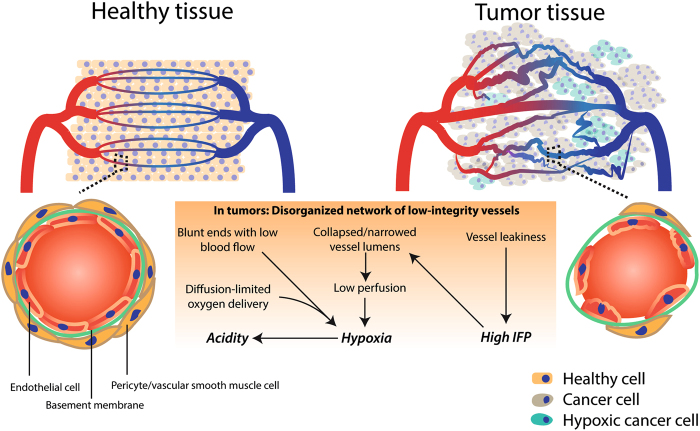
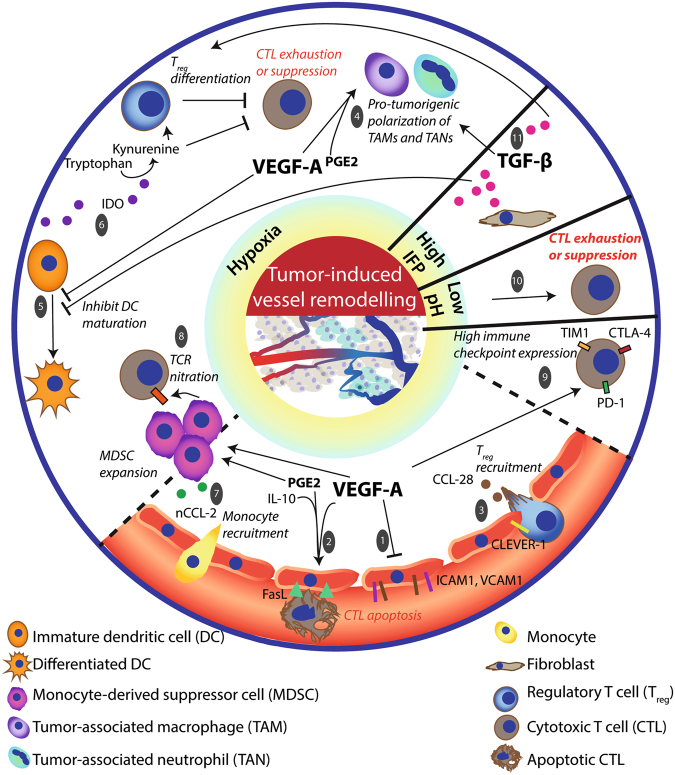
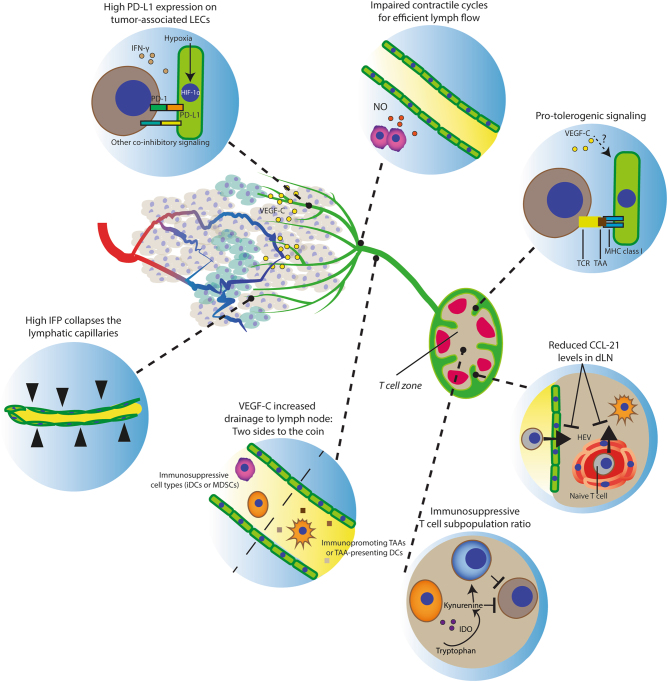
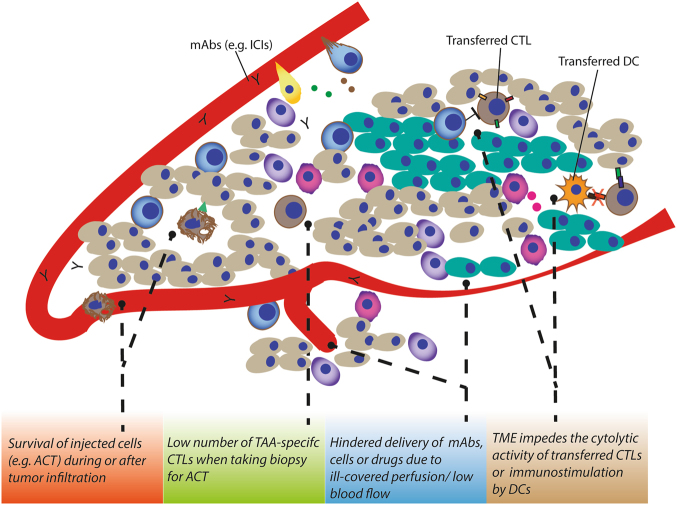
It is now well established that cancer cells co-exist within a complex environment with stromal cells and depend for their growth and dissemination on tight and plastic interactions with components of the tumor microenvironment (TME). Cancer cells incite the formation of new blood and lymphatic vessels from preexisting vessels to cope with their high nutrient/oxygen demand and favor tumor outgrowth. Research over the past decades has highlighted the crucial role played by tumor-associated blood and lymphatic vasculature in supporting immunoevasion and in subverting T-cell-mediated immunosurveillance, which are the main hallmarks of cancers. The structurally and functionally aberrant tumor vasculature contributes to the protumorigenic and immunosuppressive TME by maintaining a cancer cell's permissive environment characterized by hypoxia, acidosis, and high interstitial pressure, while simultaneously generating a physical barrier to T cells' infiltration. Recent research moreover has shown that blood endothelial cells forming the tumor vessels can actively suppress the recruitment, adhesion, and activity of T cells. Likewise, during tumorigenesis the lymphatic vasculature undergoes dramatic remodeling that facilitates metastatic spreading of cancer cells and immunosuppression. Beyond carcinogenesis, the erratic tumor vasculature has been recently implicated in mechanisms of therapy resistance, including those limiting the efficacy of clinically approved immunotherapies, such as immune checkpoint blockers and adoptive T-cell transfer. In this review, we discuss emerging evidence highlighting the major role played by tumor-associated blood and lymphatic vasculature in thwarting immunosurveillance mechanisms and antitumor immunity. Moreover, we also discuss novel therapeutic approaches targeting the tumor vasculature and their potential to help overcoming immunotherapy resistance.
Overview
The claims and statistics of this paper haven’t been checked yet.
Free: it reads the open-access text and checks the first 5 claims that cite a source we can check. Create a free account to check every claim.
Integrity signals
Registry
Cites
Statistics
Figures
Verification
Claims the paper makes
The claims and statistics of this paper haven’t been checked yet.
Free: it reads the open-access text and checks the first 5 claims that cite a source we can check. Create a free account to check every claim.
Claims other papers make about this one
Each is checked against this paper’s own text: does it say what the citing paper says it does?
The source backs part of the claim, not all of it — or backs it for a different population, condition or comparison.
In the citing paper
“‘cold’ tumors often suffer from impaired blood perfusion, restricting the effective delivery of therapeutics and cytotoxic immune cells, leading to hypoxia—a hallmark of the abnormal TME inducing immunosuppression (Schaaf et al., 2018).”
From Microphysiological systems as models for immunologically ‘cold’ tumors (2024) · cites this paper as Schaaf et al., 2018
Experimental — accuracy not yet measured
Self-check
Percentages, sums and reported differences re-computed from the paper’s own numbers.
The self-check needs the paper’s full text.
Citations
Cites
Angiogenesis in cancer and other diseases
Carmeliet, P., & Jain, R. K. (2000) · Nature · doi:10.1038/35025220 · Cited by 9,070 · cited 1×
“[6] MDSCs are a source of reactive nitrogen species that nitrate CCL-2 and tyrosines of the T-cell receptor that recruits more monocytes [7] and impedes CTL antigen recognition, [8] respectively.”
Accessories to the Crime: Functions of Cells Recruited to the Tumor Microenvironment
Hanahan, D., & Coussens, L. M. (2012) · Cancer Cell · doi:10.1016/j.ccr.2012.02.022 · Cited by 4,632
Polarization of Tumor-Associated Neutrophil Phenotype by TGF-β: “N1” versus “N2” TAN
Fridlender, Z. G., Sun, J., Kim, S., Kapoor, V., Cheng, G., Ling, L., Worthen, G. S., & Albelda, S. M. (2009) · Cancer Cell · doi:10.1016/j.ccr.2009.06.017 · Cited by 3,371
Immunogenic Cell Death in Cancer Therapy
Kroemer, G., Galluzzi, L., Kepp, O., & Zitvogel, L. (2013) · Annual Review of Immunology · doi:10.1146/annurev-immunol-032712-100008 · Cited by 3,303
Macrophage activation and polarization
Martinez, F. O. (2008) · Frontiers in Bioscience · doi:10.2741/2692 · Cited by 3,160
The Immunobiology of Cancer Immunosurveillance and Immunoediting
Dunn, G. P., Old, L. J., & Schreiber, R. D. (2004) · Immunity · doi:10.1016/j.immuni.2004.07.017 · Cited by 3,032
Natural Innate and Adaptive Immunity to Cancer
Vesely, M. D., Kershaw, M. H., Schreiber, R. D., & Smyth, M. J. (2011) · Annual Review of Immunology · doi:10.1146/annurev-immunol-031210-101324 · Cited by 2,560
Noman, M. Z., Desantis, G., Janji, B., Hasmim, M., Karray, S., Dessen, P., Bronte, V., & Chouaib, S. (2014) · Journal of Experimental Medicine · doi:10.1084/jem.20131916 · Cited by 2,166
Cancer immunotherapy via dendritic cells
Palucka, K., & Banchereau, J. (2012) · Nature Reviews Cancer · doi:10.1038/nrc3258 · Cited by 2,049
Gabrilovich, D. I., Chen, H. L., Girgis, K. R., Cunningham, H. T., Meny, G. M., Nadaf, S., Kavanaugh, D., & Carbone, D. P. (1996) · Nature Medicine · doi:10.1038/nm1096-1096 · Cited by 1,977
Cited by
Items 301–400 of 707
Vascular damage in tumors: a key player in stereotactic radiation therapy?
Kozin, S. V. (2022) · Trends in cancer · doi:10.1016/j.trecan.2022.06.002 · Cited by 21
Targeting tumor microenvironment and metastasis in children with solid tumors
Wessel, K. M., & Kaplan, R. N. (2021) · Current Opinion in Pediatrics · doi:10.1097/mop.0000000000001082 · Cited by 21
Huber, V., Guardo, L. D., Lalli, L., Giardiello, D., Cova, A., Squarcina, P., Frati, P., Giacomo, A. M. D., Pilla, L., Tazzari, M., et al. (2021) · Journal for ImmunoTherapy of Cancer · doi:10.1136/jitc-2020-001167 · Cited by 21
Su, W., Ling, Y., Yang, X., Wu, Y., & Xing, C. (2024) · Journal of Translational Medicine · doi:10.1186/s12967-024-05747-x · Cited by 21
Brachytherapy in a Single Dose of 10Gy as an “in situ” Vaccination
Jarosz–Biej, M., Smolarczyk, R., Cichoń, T., Drzyzga, A., Czapla, J., Urbaś, Z., Pilny, E., Matuszczak, S., & Wojcieszek, P. (2020) · International Journal of Molecular Sciences · doi:10.3390/ijms21134585 · Cited by 21
MiRNAs as Anti-Angiogenic Adjuvant Therapy in Cancer: Synopsis and Potential
Lahooti, B., Poudel, S., Mikelis, C. M., & Mattheolabakis, G. (2021) · Frontiers in Oncology · doi:10.3389/fonc.2021.705634 · Cited by 21
Zhao, J., Tang, Y., Hu, X., Yin, X., Chen, Y., Chen, J., Liu, H., Liu, H., Liang, J., Zhang, X., et al. (2024) · Molecular Cancer · doi:10.1186/s12943-024-02044-5 · Cited by 21
Next Generation Imaging Techniques to Define Immune Topographies in Solid Tumors
Pietrobon, V., Cesano, A., Marincola, F., & Kather, J. N. (2021) · Frontiers in Immunology · doi:10.3389/fimmu.2020.604967 · Cited by 14
In Vitro Models of Blood and Lymphatic Vessels—Connecting Tissues and Immunity
Bogseth, A., Ramirez, A., Vaughan, E., & Maisel, K. (2022) · Advanced Biology · doi:10.1002/adbi.202200041 · Cited by 20
Impact of tumor microenvironment on adoptive T cell transfer activity
Martín-Otal, C., Navarro, F. C., Casares, N., Lasarte-Cía, A., Sánchez-Moreno, I., Hervás‐Stubbs, S., Lozano, T., & Lasarte, J. J. (2022) · International review of cytology · doi:10.1016/bs.ircmb.2022.03.002 · Cited by 20
Molecular, metabolic, and functional CD4 T cell paralysis in the lymph node impedes tumor control
Guo, M., Abd-Rabbo, D., Bertol, B. C., Carew, M., Lukhele, S., Snell, L. M., Xu, W., Boukhaled, G. M., Elsaesser, H. J., Halaby, M. J., et al. (2023) · Cell Reports · doi:10.1016/j.celrep.2023.113047 · Cited by 20
Tumor Angiocrine Signaling: Novel Targeting Opportunity in Cancer
Oria, V. O., & Erler, J. T. (2023) · Cells · doi:10.3390/cells12202510 · Cited by 20
Age- and diet-instructed metabolic rewiring of the tumor–immune microenvironment
Plata-Gómez, A. B., & Ho, P. (2025) · The Journal of Experimental Medicine · doi:10.1084/jem.20241102 · Cited by 20
Katano, I., Hanazawa, A., Otsuka, I., Yamaguchi, T., Mochizuki, M., Kawai, K., Ito, R., Goto, M., Kagawa, T., & Takahashi, T. (2021) · Scientific Reports · doi:10.1038/s41598-021-00641-8 · Cited by 20
Li, R., Huang, D., Ju, M., Chen, H., Luan, C., Zhang, J.-A., & Chen, K. (2023) · Cell Death Discovery · doi:10.1038/s41420-023-01380-7 · Cited by 20
Hou, W., Xiao, C., Zhou, R., Yao, X., Chen, Q., Xu, T., Cao, F., Wang, Y., Li, X., Yan, O., et al. (2024) · Theranostics · doi:10.7150/thno.98285 · Cited by 20
Engineered Vasculature for Cancer Research and Regenerative Medicine
Nguyen, H. T., Peirsman, A., Tirpáková, Z., Mandal, K., Vanlauwe, F., Maity, S., Kawakita, S., Khorsandi, D., Herculano, R. D., Umemura, C., et al. (2023) · Micromachines · doi:10.3390/mi14050978 · Cited by 19
Schmid, R., Schmidt, S. K., Schrüfer, S., Schubert, D. W., Heltmann‐Meyer, S., Schicht, M., Paulsen, F. P., Horch, R. E., Bosserhoff, A., Kengelbach‐Weigand, A., et al. (2024) · Materials Today Bio · doi:10.1016/j.mtbio.2024.101071 · Cited by 19
Cholinergic T cells revitalize the tumor immune microenvironment: TIME to ChAT
Zheng, C., Liu, S., Modares, N. F., Paul, M. S., & Mak, T. W. (2025) · Nature Immunology · doi:10.1038/s41590-025-02144-4 · Cited by 19
Resistance and recurrence of malignancies after CAR-T cell therapy
Zeng, W., & Zhang, P. (2021) · Experimental Cell Research · doi:10.1016/j.yexcr.2021.112971 · Cited by 19
Sauvage, D., Bosseler, M., Viry, E., Kanli, G., Oudin, A., Berchem, G., Keunen, O., & Janji, B. (2022) · Cells · doi:10.3390/cells11182783 · Cited by 19
Kuo, C., Chou, H.-Y., Lien, H., Yeh, C.-A., Wang, J., Chen, C., Fan, C., Hsu, C., Kao, T., Ko, T.-M., et al. (2022) · Cancer Immunology Immunotherapy · doi:10.1007/s00262-022-03255-9 · Cited by 19
Zhang, Y., & Liu, Z. (2025) · Advanced Science · doi:10.1002/advs.202508692 · Cited by 18
Advancement in Cancer Vasculogenesis Modeling through 3D Bioprinting Technology
Shukla, A. K., Yoon, S., Oh, S., Lee, D., Ahn, M., & Kim, B. S. (2024) · Biomimetics · doi:10.3390/biomimetics9050306 · Cited by 18
Liu, L., Zhang, Y., Liu, H., Yang, J., Tian, Q., Chueakula, N., Ramasamy, S. K., Verma, N. K., Cheung, C., & Kusumbe, A. P. (2025) · Cancer Research · doi:10.1158/0008-5472.can-24-4744 · Cited by 18
Akter, Z., Salamat, N., Ali, M. Y., & Li, Z. (2023) · Frontiers in Oncology · doi:10.3389/fonc.2022.1072739 · Cited by 18
Kim, H., Cho, S., & Kim, H. N. (2025) · Macromolecular Bioscience · doi:10.1002/mabi.202500240 · Cited by 18
Zhang, H., Lu, X., Lu, B., Gullo, G., & Chen, L. (2024) · Future Oncology · doi:10.2217/fon-2023-0658 · Cited by 18
Pathophysiology-Driven Approaches for Overcoming Nanomedicine Resistance in Pancreatic Cancer
Nair, S. T., Abhi, C., Kamalasanan, K., Pavithran, K., Unni, A. R., Sithara, M. S., Sarma, M., & Mangalanandan, T. S. (2024) · Molecular Pharmaceutics · doi:10.1021/acs.molpharmaceut.4c00801 · Cited by 19
GM-CSF Nitration Is a New Driver of Myeloid Suppressor Cell Activity in Tumors
Calì, B., Agnellini, A. H. R., Cioccarelli, C., Sánchez‐Rodríguez, R., Predonzani, A., Toffolo, G. I., Viola, A., Bronte, V., Arrigoni, G., Zonta, F., et al. (2021) · Frontiers in Immunology · doi:10.3389/fimmu.2021.718098 · Cited by 18
Visualizing Spatial and Stoichiometric Barriers to Bispecific T-Cell Engager Efficacy
You, R., Artichoker, J., Ray, A., Velozo, H. G., Rock, D. A., Conner, K. P., & Krummel, M. F. (2022) · Cancer Immunology Research · doi:10.1158/2326-6066.cir-21-0594 · Cited by 18
Tertiary lymphoid structures: exploring opportunities to improve immunotherapy in ovarian cancer
Varghese, A., Hess, S. M., Chilakapati, S. R., Conejo-Garcia, J. R., McGray, A. R., & Zsíros, E. (2025) · Frontiers in Immunology · doi:10.3389/fimmu.2025.1473969 · Cited by 17
Microbiota and cancer: In vitro and in vivo models to evaluate nanomedicines
Ladaycia, A., Loretz, B., Passirani, C., Lehr, C., & Lepeltier, É. (2020) · Advanced Drug Delivery Reviews · doi:10.1016/j.addr.2020.12.015 · Cited by 17
Cancer Stem Cells Decide the Fate of Cancer Immunotherapy by Remodeling Tumor Microenvironment
Chakraborty, S., Basak, U., Mukherjee, S., Mukherjee, S., & Das, T. (2025) · Cancer Control · doi:10.1177/10732748251381441 · Cited by 17
Liu, A. J., Gammon, S. T., Pisaneschi, F., Boda, A. R., Ager, C. R., Piwnica-Worms, D. R., Hong, D. S., & Curran, M. A. (2024) · JCI Insight · doi:10.1172/jci.insight.169150 · Cited by 17
Tumor vessel normalization and immunotherapy in gastric cancer
Yu, X., He, S., Shen, J., Huang, Q., Peng, Y., Huang, L., Pu, D., Wang, L., Li, L., Liu, J., et al. (2022) · Therapeutic Advances in Medical Oncology · doi:10.1177/17588359221110176 · Cited by 17
Anderson, T. S., McCormick, A. L., Daugherity, E. A., Oladejo, M., Okpalanwaka, I. F., Smith, S. L., Appiah, D., Wood, L. M., & Lowe, D. B. (2023) · OncoImmunology · doi:10.1080/2162402x.2023.2260620 · Cited by 17
Immunometabolism of regulatory T cells in cancer
Galgani, M., Bruzzaniti, S., Rocca, C. L., Micillo, T., de Candia, P., Bifulco, M., & Matarese, G. (2020) · Molecular Aspects of Medicine · doi:10.1016/j.mam.2020.100936 · Cited by 17
Jester, M. T., Haley, R. M., Billingsley, M. M., Figueroa‐Espada, C. G., Joseph, R. A., Han, X., & Mitchell, M. J. (2025) · Molecular Therapy — Methods & Clinical Development · doi:10.1016/j.omtm.2025.101457 · Cited by 17
Bevacizumab combined with re-irradiation in recurrent glioblastoma
She, L., Su, L., & Liu, C. (2022) · Frontiers in Oncology · doi:10.3389/fonc.2022.961014 · Cited by 17
Delineating Pro-Angiogenic Myeloid Cells in Cancer Therapy
Johnson, B. W., Achyut, B. R., Fulzele, S., Mondal, A. K., Kolhe, R. B., & Arbab, A. S. (2018) · International Journal of Molecular Sciences · doi:10.3390/ijms19092565 · Cited by 16
Lansche, C., Ladaigue, S., Gropplero, G., Zimmermann, N., Nurmik, M., Veith, I., Nguyen, M., Brosseau, S., Poté, N., Mordant, P., et al. (2025) · Advanced Healthcare Materials · doi:10.1002/adhm.202403446 · Cited by 16
Voeltzke, K., Scharov, K., Funk, C. M., Kahler, A., Picard, D. J., Hauffe, L., Orth, M. F., Remke, M., Esposito, I., Kirchner, T., et al. (2022) · Cell Death Discovery · doi:10.1038/s41420-022-00963-0 · Cited by 16
Hoshi, R., Gorospe, K. A., Labouta, H. I., Azad, T., Lee, W. L., & Thu, K. L. (2024) · Pharmaceutics · doi:10.3390/pharmaceutics16091181 · Cited by 16
SMAC mimetic drives microglia phenotype and glioblastoma immune microenvironment
Snacel-Fazy, E., Soubéran, A., Grange, M., Joseph, K., Colin, C., Morando, P., Luche, H., Pagano, A., Brustlein, S., Debarbieux, F. C., et al. (2024) · Cell Death and Disease · doi:10.1038/s41419-024-07056-z · Cited by 16
Kümper, M., Hessenthaler, S., Zamek, J., Niland, S., Pach, E., Mauch, C., & Zigrino, P. (2021) · Journal of Investigative Dermatology · doi:10.1016/j.jid.2021.12.016 · Cited by 16
Wang, Y., Dong, J., Quan, Q., Liu, S., Chen, X., Cai, X., Qiu, H., Zhang, B., & Guo, G. (2021) · Frontiers in Oncology · doi:10.3389/fonc.2020.581051 · Cited by 16
Ray, S. K., Meshram, Y., & Mukherjee, S. (2020) · Current Molecular Medicine · doi:10.2174/1566524020666200824103749 · Cited by 16
Yu, J. S., & Bagheri, N. (2021) · Cell Systems · doi:10.1016/j.cels.2021.05.007 · Cited by 16
Merlano, M. C., Denaro, N., & Garrone, O. (2020) · Current Opinion in Oncology · doi:10.1097/cco.0000000000000623 · Cited by 16
Argentiero, A., Solimando, A. G., Ungaro, V., Laforgia, M., Strippoli, S., Pinto, D., Negri, A., Ferraiuolo, S., Zito, A., & Guida, M. (2020) · Frontiers in Oncology · doi:10.3389/fonc.2020.583781 · Cited by 16
Qu, D., Qin, Y., Liu, Y., Liu, T., Liu, C., Han, T., Chen, Y., Ma, C., & Li, X. (2020) · ACS Applied Materials & Interfaces · doi:10.1021/acsami.0c06949 · Cited by 16
Drzyzga, A., Cichoń, T., Czapla, J., Jarosz–Biej, M., Pilny, E., Matuszczak, S., Wojcieszek, P., Urbaś, Z., & Smolarczyk, R. (2021) · Cancers · doi:10.3390/cancers13163924 · Cited by 15
Peri, S. S., Narayanaa, Y. K., Hubert, T. D., Rajaraman, R., Arfuso, F., Sundaram, S., Archana, B., Warrier, S. R., Dharmarajan, A., & Perumalsamy, L. R. (2023) · Cancers · doi:10.3390/cancers15245847 · Cited by 15
Advances and Challenges in Human 3D Solid Tumor Models
Natesh, N. R., & Varghese, S. (2025) · Advanced Functional Materials · doi:10.1002/adfm.202419912 · Cited by 15
Deep Learning‐Powered Scalable Cancer Organ Chip for Cancer Precision Medicine
Yuan, Y. S., Xu, B., McCormack, J., Huang, X., Ma, J., Marshall, T., Sun, Y., Singh, H., Fanelli, A., Kulkarni, G., et al. (2026) · Advanced Science · doi:10.1002/advs.202516660 · Cited by 15
Ileiwat, Z. E., Tabish, T. A., Zinovkin, D. A., Yüzügülen, J., Arghiani, N., & Pranjol, M. Z. I. (2022) · Frontiers in Immunology · doi:10.3389/fimmu.2022.976677 · Cited by 15
Immunotherapy: breaching the barriers for cancer treatment
Martínez, V. G., Park, D., & Acton, S. E. (2019) · Philosophical Transactions of the Royal Society B Biological Sciences · doi:10.1098/rstb.2018.0214 · Cited by 15
m6A eraser ALKBH5/treRNA1/DDX46 axis regulates BCR expression
Kapadia, B. B., Roychowdhury, A., Kayastha, F. B., Lee, W. S., Nanaji, N. M., Windle, J. J., & Gartenhaus, R. B. (2025) · Neoplasia · doi:10.1016/j.neo.2025.101144 · Cited by 15
Hu, J., Wang, Z., Chen, Z., Li, A., Sun, J. P., Zheng, M., Wu, J., Shen, T., Qiao, J., Li, L., et al. (2020) · Biomedicine & Pharmacotherapy · doi:10.1016/j.biopha.2020.110229 · Cited by 15
Hoffmann, E., Gerwing, M., Krähling, T., Hansen, U. J., Kronenberg, K., Masthoff, M., Geyer, C., Höltke, C., Wachsmuth, L., Schinner, R., et al. (2023) · Breast Cancer Research · doi:10.1186/s13058-023-01658-9 · Cited by 15
Gong, X., Jin, T., Wang, Y., Zhang, R., Qi, W., & Xi, L. (2022) · Journal of Neural Engineering · doi:10.1088/1741-2552/ac5fcc · Cited by 15
Microphysiological systems as models for immunologically ‘cold’ tumors
Gaebler, D., Hachey, S. J., & Hughes, C. C. W. (2024) · Frontiers in Cell and Developmental Biology · doi:10.3389/fcell.2024.1389012 · Cited by 14
The Role of TAMs in the Regulation of Tumor Cell Resistance to Chemotherapy
McWhorter, R., & Bonavida, B. (2024) · Critical Reviews™ in Oncogenesis · doi:10.1615/critrevoncog.2024053667 · Cited by 14
Daum, S., Decristoforo, L., Mousa, M., Salcher, S., Plattner, C., Hosseinkhani, B., Trajanoski, Z., Wolf, D. G. F., Carmeliet, P., & Pircher, A. (2025) · Molecular Cancer · doi:10.1186/s12943-024-02221-6 · Cited by 14
Li, Q.-Q., Guo, M., He, G.-H., Xi, K.-H., Zhou, M., Shi, R., & Chen, G. (2024) · Oncogene · doi:10.1038/s41388-024-03038-9 · Cited by 14
Thrombospondins and remodeling of the tumor microenvironment
Stenina‐Adognravi, O., Muppala, S., & Gajeton, J. (2018) · Vessel Plus · doi:10.20517/2574-1209.2018.40 · Cited by 14
Li, Y., Yang, L., & Zd, L. (2025) · Critical Reviews in Oncology/Hematology · doi:10.1016/j.critrevonc.2025.104883 · Cited by 14
Beyond DNA-targeting in Cancer Chemotherapy. Emerging Frontiers - A Review
Mbugua, S. N., Njenga, L. W., Odhiambo, R. A., Wandiga, S. O., & Onani, M. O. (2020) · Current Topics in Medicinal Chemistry · doi:10.2174/1568026620666200819160213 · Cited by 15
Vascularization of Patient-Derived Tumoroid from Non-Small-Cell Lung Cancer and Its Microenvironment
Seitlinger, J., Nounsi, A., Idoux‐Gillet, Y., Pujol, E. S., Lê, H., Grandgirard, E., Olland, A., Lindner, V., Zaupa, C., Balloul, J., et al. (2022) · Biomedicines · doi:10.3390/biomedicines10051103 · Cited by 14
Mesenchymal stromal cell delivery of oncolytic immunotherapy improves CAR-T cell antitumor activity
McKenna, M. K., Englisch, A., Brenner, B., Smith, T., Hoyos, V., Suzuki, M., & Brenner, M. K. (2021) · Molecular Therapy · doi:10.1016/j.ymthe.2021.10.007 · Cited by 14
Cell death-based treatment of various diseases: a fifty-year journey
Kaminskyy, V. O., & Zhivotovsky, B. (2018) · Cell Death and Disease · doi:10.1038/s41419-017-0168-3 · Cited by 14
Microfluidic Reconstitution of Tumor Microenvironment for Nanomedical Applications
Oh, H. J., Kim, J., Kim, H., Choi, N., & Chung, S. H. (2021) · Advanced Healthcare Materials · doi:10.1002/adhm.202002122 · Cited by 13
Moresi, F., Noto, F., Vasudevan, J., Bisteau, X., Adriani, G., & Pavesi, A. (2025) · Advanced Therapeutics · doi:10.1002/adtp.202500098 · Cited by 13
Advances in 3D Vascularized Tumor-on-a-Chip Technology
Jung, S., Jo, H., Hyung, S., & Jeon, N. L. (2022) · Advances in experimental medicine and biology · doi:10.1007/978-3-031-04039-9_9 · Cited by 13
Effect of M2-like macrophages of the injured-kidney cortex on kidney cancer progression
Ishii, T., Mimura, I., Nagaoka, K., Naito, A., Sugasawa, T., Kuroda, R., Yamada, D., Kanki, Y., Kume, H., Ushiku, T., et al. (2022) · Cell Death Discovery · doi:10.1038/s41420-022-01255-3 · Cited by 13
Sicard, G., Fina, F., Fanciullino, R., Barlési, F., & Ciccolini, J. (2020) · Pharmaceutics · doi:10.3390/pharmaceutics12080758 · Cited by 13
Wang, K., He, H., & Feng, X. (2022) · Journal of Immunology Research · doi:10.1155/2022/2359349 · Cited by 13
The ambivalent nature of the relationship between lymphatics and cancer
Choi, J., Choi, E., & Choi, D. (2022) · Frontiers in Cell and Developmental Biology · doi:10.3389/fcell.2022.931335 · Cited by 13
Li, X., Li, J., Li, C., Guo, Q., Wu, M., Su, L., Dou, Y., Wu, X., Xiao, Z., & Zhang, X. (2021) · Journal of Materials Chemistry B · doi:10.1039/d1tb00990g · Cited by 13
Liposome-based nanomedicine for immune checkpoint blocking therapy and combinatory cancer therapy
Zhou, H., Yu, C., & Wei, H. (2024) · International Journal of Pharmaceutics · doi:10.1016/j.ijpharm.2024.123818 · Cited by 12
Non-hematopoietic Control of Peripheral Tissue T Cell Responses: Implications for Solid Tumors
Lane, R. S., & Lund, A. W. (2018) · Frontiers in Immunology · doi:10.3389/fimmu.2018.02662 · Cited by 12
The tumor ecosystem: Rewiring an open, systemically integrated network for therapeutic gain
Chiodelli, P., Papait, A., Agoni, L., Quaglia, F., Silini, A. R., & Parolini, O. (2026) · Biomedicine & Pharmacotherapy · doi:10.1016/j.biopha.2026.119047 · Cited by 12
Ex Vivo Evaluation of Combination Immunotherapy Using Tumor‐Microenvironment‐on‐Chip
Mu, H., Lin, C., Chu, L., Lin, Y., Li, J., Liu, C., Huang, H., Cheng, S., Lee, T., Lee, H. M., et al. (2023) · Advanced Healthcare Materials · doi:10.1002/adhm.202302268 · Cited by 12
Back to the Future: Spatiotemporal Determinants of NK Cell Antitumor Function
Li, J. H., & O’Sullivan, T. E. (2022) · Frontiers in Immunology · doi:10.3389/fimmu.2021.816658 · Cited by 12
Ma, K., Li, Q., Zhang, Y., Wang, J., Jia, W., Liu, J., Liu, B., Li, Q., Wang, Q., & Zeng, K. (2025) · Neoplasia · doi:10.1016/j.neo.2025.101186 · Cited by 12
Lu, Y., Feng, N., Du, Y., & Yu, R. (2022) · Nanomaterials · doi:10.3390/nano12162832 · Cited by 12
Immunological Role and Prognostic Potential of CLEC10A in Pan-CancerPreprint
Qin, Y., Zhang, L., Li, J., Liao, L., Huang, L., Li, W., & Yang, J. (2021) · SSRN Electronic Journal · doi:10.2139/ssrn.3932103 · Cited by 12
He, C., Zhang, X.-D., Zhu, S., Zheng, J., Wang, Y., Wang, Q., Yin, H., Fu, Y.-J., Song, X., Tang, J., et al. (2022) · Frontiers in Genetics · doi:10.3389/fgene.2022.998147 · Cited by 12
Singh, R. K., Srivastava, P., & Manna, P. P. (2024) · Medical Oncology · doi:10.1007/s12032-023-02289-y · Cited by 12
Advances in Nanoplatforms for Immunotherapy Applications Targeting the Tumor Microenvironment
Zhang, N., Zhou, J., Li, S., Cai, W., Ru, B., Hu, J., Liu, W., Liu, X., Tong, X., & Zheng, X. (2024) · Molecular Pharmaceutics · doi:10.1021/acs.molpharmaceut.3c00846 · Cited by 12
Kato, A., Nomura, S., Takahashi, M., Sukowati, E. W., Harashima, H., & Mukai, H. (2025) · Journal of Controlled Release · doi:10.1016/j.jconrel.2025.02.064 · Cited by 12
Anti-Angiogenetic and Anti-Lymphangiogenic Effects of a Novel 2-Aminobenzimidazole Derivative, MFB
Hsu, M., Chen, H., Chen, C., Lien, J., Gao, J., Huang, Y., Hsu, J. B., Lee, G. A., & Huang, S. (2022) · Frontiers in Oncology · doi:10.3389/fonc.2022.862326 · Cited by 12
Fornasarig, M., Capuano, A., Maiero, S., Pivetta, E., Guarnieri, G., Canzonieri, V., Zucchetto, A., Mongiat, M., Cannizzaro, R., & Spessotto, P. (2021) · Scientific Reports · doi:10.1038/s41598-021-00550-w · Cited by 12
Role of vascular endothelium and exosomes in cancer progression and therapy (Review)
Dai, Y., Yao, Y., He, Y., & Hu, X. (2024) · International Journal of Oncology · doi:10.3892/ijo.2024.5712 · Cited by 11
Roudnicky, F., Poyet, C., Buser, L., Saba, K., Wild, P. J., Otto, V. I., & Detmar, M. J. (2020) · American Journal Of Pathology · doi:10.1016/j.ajpath.2020.05.020 · Cited by 11
Vascular Disruption Therapy as a New Strategy for Cancer Treatment
Gómez-Escudero, J., Berlana-Galán, P., Guerra-Paes, E., Torre-Cea, I., Marcos-Zazo, L., Carrera-Aguado, I., Cáceres-Calle, D., Sánchez‐Juanes, F., & Muñoz‐Félix, J. M. (2025) · International Journal of Molecular Sciences · doi:10.3390/ijms262010085 · Cited by 11
Developing bioinspired delivery systems for enhanced tumor penetration of macromolecular drugs
Yang, J. P., Zeng, Z., Liu, Y., Li, Y., & Xu, X. (2025) · Journal of Controlled Release · doi:10.1016/j.jconrel.2025.113845 · Cited by 11
Jiang, M., Qin, B., Li, X., Liu, Y., Guan, G., & You, J. (2022) · Wiley Interdisciplinary Reviews Nanomedicine and Nanobiotechnology · doi:10.1002/wnan.1837 · Cited by 11
Cell-mediated barriers in cancer immunosurveillance
Rezaie, J., Chodari, L., Mohammadpour-Asl, S., Jafari, A., & Niknam, Z. (2024) · Life Sciences · doi:10.1016/j.lfs.2024.122528 · Cited by 11
Metadata
- Authors
- Schaaf, M. B., Garg, A. D., & Agostinis, P.
- Affiliations
- KU Leuven (BE)
- Corresponding author
- Agostinis, Patrizia
- Venue
- Cell Death & Disease
- Published
- 2018-01-25
- Volume
- 9
- Issue
- 2
- Pages
- 115-115
- ISSN
- 2041-4889 (ISSN-L)
- PMC
- PMC5833710
- OpenAlex
- W2786753426
- Cited by
- 629
- References
- 112
- Citations by year
- 2026: 52 · 2025: 76 · 2024: 97 · 2023: 86 · 2022: 90 · 2021: 101 · 2020: 81 · 2019: 32 · 2018: 14
- FWCI
- 5.57
- Type
- journal article
- Language
- en
- Open access
- gold
- doi.org
- Licence
- cc-by
- creativecommons.org/licenses/by/4.0 (tdm)
- creativecommons.org/licenses/by/4.0 (vor)
- Locations
- Cell Death and Disease (publishedVersion, cc-by)
- PubMed Central (publishedVersion, cc-by)
- PubMed (publishedVersion)
- Lirias (KU Leuven) (submittedVersion, other-oa)
- Funders
- Fonds Wetenschappelijk Onderzoek (G060713N, G076617N, G070115N)
- KU Leuven ((C16/15/073))
- Vlaamse regering (G076617N, C16/15/073, G070115N)
- Topics
- Life Sciences › Biochemistry, Genetics and Molecular Biology › Molecular Biology › Angiogenesis and VEGF in Cancer
- Health Sciences › Medicine › Oncology › Cancer Immunotherapy and Biomarkers
- Health Sciences › Medicine › Oncology › Lymphatic System and Diseases
- Keywords
- tumor vasculature, tumor microenvironment, antitumor immunity, immune surveillance, immunotherapy resistance, tumor-associated lymphatic vessels, tumor-associated blood vessels, endothelial cells, immunosuppression, hypoxia, T cell infiltration, metastasis, immune checkpoint inhibitors, adoptive T cell therapy, anti-angiogenic therapy, treatment resistance
- MeSH terms
- Animals, Humans, Immunity, Immunosuppression Therapy, Immunotherapy, Neoplasms, Neovascularization, Pathologic, Tumor Microenvironment
About these checks
Registry, retraction, Cites and statistics results are computed, not judged, with one exception: a printed reference that no index lists is read once by a model before it counts as a citation error. Claims are extracted by a model and kept only when their quote appears verbatim in the text; each cited source is then checked, with a model’s help, for whether it says what the claim relies on. Those verdicts can be wrong — read the claim’s quote and the cited source before relying on one.
Statistics and arithmetic are recomputed, not judged.
Confidence bands are shown only for fields calibrated on our annotated test set. None is calibrated yet, so no band is shown.
What counts as a claim ›How we measure confidence ›How we check this ›
Are you an author, or do you see a problem with this page? Request a review
Data sources
Bibliographic data: Semantic Scholar, OpenAlex, Crossref.
Contains information from the Semantic Scholar Academic Graph Datasets, made available under the ODC Attribution License (ODC-BY 1.0).
Semantic Scholar’s data is described in: Kinney, R., et al. (2023). The Semantic Scholar Open Data Platform. arXiv:2301.10140.
