

Defining the role of the tumor vasculature in antitumor immunity and immunotherapy
Open accessThe DOI matches its Crossref record; 111 of the 112 references it cites were found in a registry or an index.
Abstract
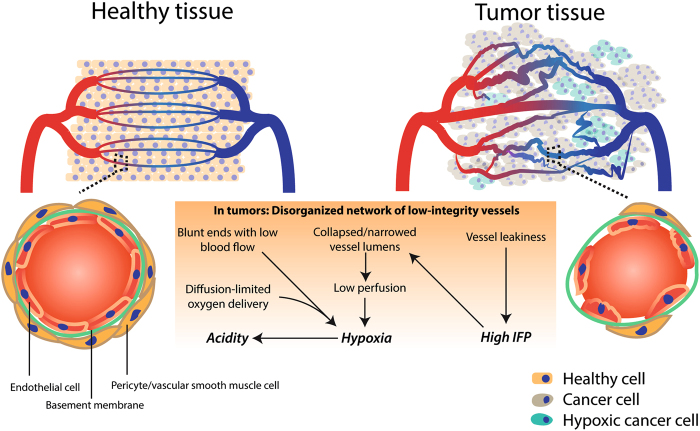
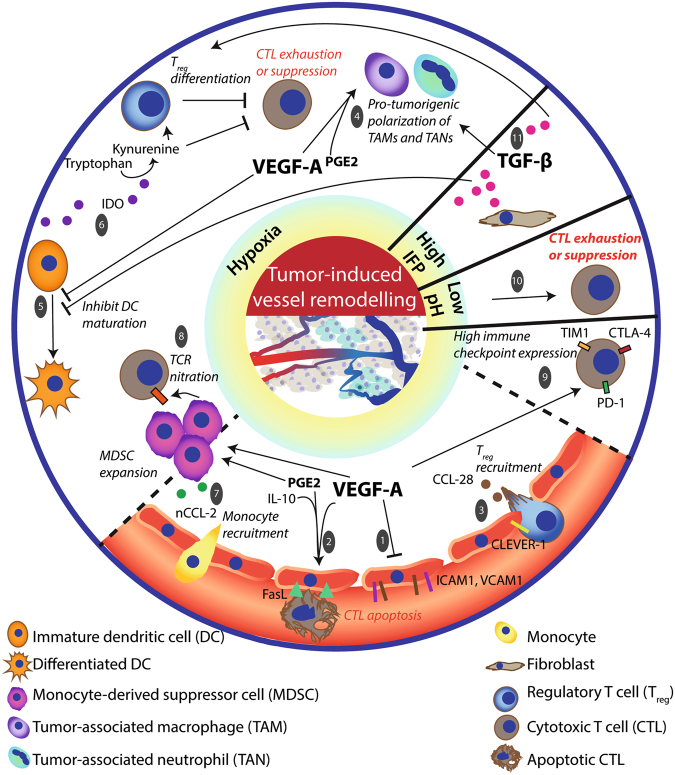
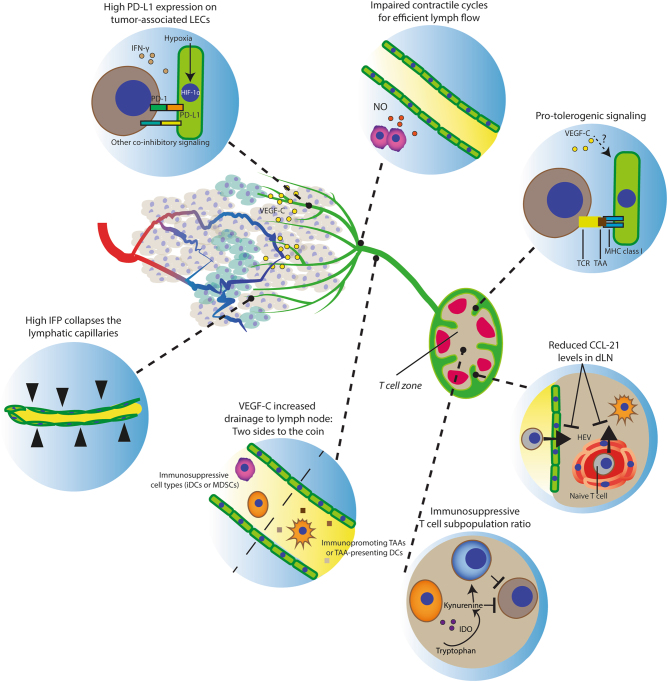
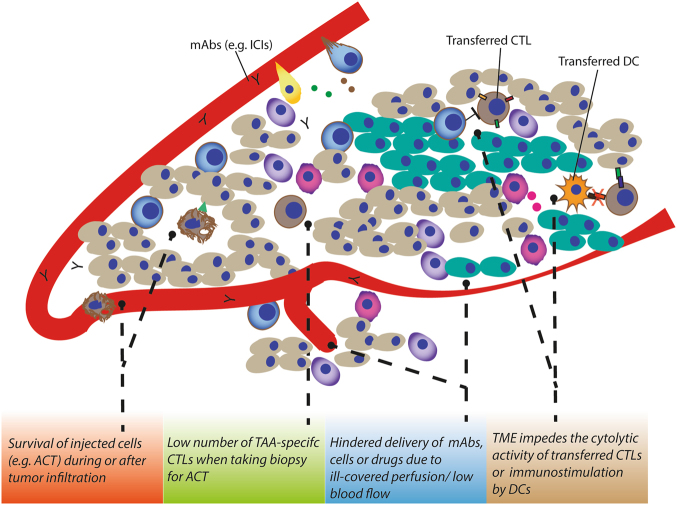
It is now well established that cancer cells co-exist within a complex environment with stromal cells and depend for their growth and dissemination on tight and plastic interactions with components of the tumor microenvironment (TME). Cancer cells incite the formation of new blood and lymphatic vessels from preexisting vessels to cope with their high nutrient/oxygen demand and favor tumor outgrowth. Research over the past decades has highlighted the crucial role played by tumor-associated blood and lymphatic vasculature in supporting immunoevasion and in subverting T-cell-mediated immunosurveillance, which are the main hallmarks of cancers. The structurally and functionally aberrant tumor vasculature contributes to the protumorigenic and immunosuppressive TME by maintaining a cancer cell's permissive environment characterized by hypoxia, acidosis, and high interstitial pressure, while simultaneously generating a physical barrier to T cells' infiltration. Recent research moreover has shown that blood endothelial cells forming the tumor vessels can actively suppress the recruitment, adhesion, and activity of T cells. Likewise, during tumorigenesis the lymphatic vasculature undergoes dramatic remodeling that facilitates metastatic spreading of cancer cells and immunosuppression. Beyond carcinogenesis, the erratic tumor vasculature has been recently implicated in mechanisms of therapy resistance, including those limiting the efficacy of clinically approved immunotherapies, such as immune checkpoint blockers and adoptive T-cell transfer. In this review, we discuss emerging evidence highlighting the major role played by tumor-associated blood and lymphatic vasculature in thwarting immunosurveillance mechanisms and antitumor immunity. Moreover, we also discuss novel therapeutic approaches targeting the tumor vasculature and their potential to help overcoming immunotherapy resistance.
Overview
The claims and statistics of this paper haven’t been checked yet.
Free: it reads the open-access text and checks the first 5 claims that cite a source we can check. Create a free account to check every claim.
Integrity signals
Registry
Cites
Statistics
Figures
Verification
Claims the paper makes
The claims and statistics of this paper haven’t been checked yet.
Free: it reads the open-access text and checks the first 5 claims that cite a source we can check. Create a free account to check every claim.
Claims other papers make about this one
Each is checked against this paper’s own text: does it say what the citing paper says it does?
The source backs part of the claim, not all of it — or backs it for a different population, condition or comparison.
In the citing paper
“‘cold’ tumors often suffer from impaired blood perfusion, restricting the effective delivery of therapeutics and cytotoxic immune cells, leading to hypoxia—a hallmark of the abnormal TME inducing immunosuppression (Schaaf et al., 2018).”
From Microphysiological systems as models for immunologically ‘cold’ tumors (2024) · cites this paper as Schaaf et al., 2018
Experimental — accuracy not yet measured
Self-check
Percentages, sums and reported differences re-computed from the paper’s own numbers.
The self-check needs the paper’s full text.
Citations
Cites
Angiogenesis in cancer and other diseases
Carmeliet, P., & Jain, R. K. (2000) · Nature · doi:10.1038/35025220 · Cited by 9,070 · cited 1×
“[6] MDSCs are a source of reactive nitrogen species that nitrate CCL-2 and tyrosines of the T-cell receptor that recruits more monocytes [7] and impedes CTL antigen recognition, [8] respectively.”
Accessories to the Crime: Functions of Cells Recruited to the Tumor Microenvironment
Hanahan, D., & Coussens, L. M. (2012) · Cancer Cell · doi:10.1016/j.ccr.2012.02.022 · Cited by 4,632
Polarization of Tumor-Associated Neutrophil Phenotype by TGF-β: “N1” versus “N2” TAN
Fridlender, Z. G., Sun, J., Kim, S., Kapoor, V., Cheng, G., Ling, L., Worthen, G. S., & Albelda, S. M. (2009) · Cancer Cell · doi:10.1016/j.ccr.2009.06.017 · Cited by 3,371
Immunogenic Cell Death in Cancer Therapy
Kroemer, G., Galluzzi, L., Kepp, O., & Zitvogel, L. (2013) · Annual Review of Immunology · doi:10.1146/annurev-immunol-032712-100008 · Cited by 3,303
Macrophage activation and polarization
Martinez, F. O. (2008) · Frontiers in Bioscience · doi:10.2741/2692 · Cited by 3,160
The Immunobiology of Cancer Immunosurveillance and Immunoediting
Dunn, G. P., Old, L. J., & Schreiber, R. D. (2004) · Immunity · doi:10.1016/j.immuni.2004.07.017 · Cited by 3,032
Noman, M. Z., Desantis, G., Janji, B., Hasmim, M., Karray, S., Dessen, P., Bronte, V., & Chouaib, S. (2014) · Journal of Experimental Medicine · doi:10.1084/jem.20131916 · Cited by 2,166
Natural Innate and Adaptive Immunity to Cancer
Vesely, M. D., Kershaw, M. H., Schreiber, R. D., & Smyth, M. J. (2011) · Annual Review of Immunology · doi:10.1146/annurev-immunol-031210-101324 · Cited by 2,101
Cancer immunotherapy via dendritic cells
Palucka, K., & Banchereau, J. (2012) · Nature Reviews Cancer · doi:10.1038/nrc3258 · Cited by 2,049
Gabrilovich, D. I., Chen, H. L., Girgis, K. R., Cunningham, H. T., Meny, G. M., Nadaf, S., Kavanaugh, D., & Carbone, D. P. (1996) · Nature Medicine · doi:10.1038/nm1096-1096 · Cited by 1,977
Cited by
Therapeutic Targeting of the Tumor Microenvironment
Bejarano, L., Jordāo, M. J. C., & Joyce, J. A. (2021) · Cancer Discovery · doi:10.1158/2159-8290.cd-20-1808 · Cited by 1,653
Conserved pan-cancer microenvironment subtypes predict response to immunotherapy
Bagaev, A., Kotlov, N., Nomie, K., Svekolkin, V., Gafurov, A., Isaeva, O., Osokin, N., Kozlov, I., Frenkel, F., Gancharova, O., et al. (2021) · Cancer Cell · doi:10.1016/j.ccell.2021.04.014 · Cited by 1,302
Extracellular Matrix in the Tumor Microenvironment and Its Impact on Cancer Therapy
Henke, E., Nandigama, R., & Ergün, S. (2020) · Frontiers in Molecular Biosciences · doi:10.3389/fmolb.2019.00160 · Cited by 1,142
Consensus guidelines for the definition, detection and interpretation of immunogenic cell death
Galluzzi, L., Vitale, I., Warren, S., Adjemian, S., Agostinis, P., Martinez, A. B., Chan, T. A., Coukos, G., Demaria, S., Deutsch, E., et al. (2020) · Journal for ImmunoTherapy of Cancer · doi:10.1136/jitc-2019-000337 · Cited by 1,119
Self-citationToward personalized treatment approaches for non-small-cell lung cancer
Wang, M., Herbst, R. S., & Boshoff, C. (2021) · Nature Medicine · doi:10.1038/s41591-021-01450-2 · Cited by 1,093
Miao, Y., Zhang, Q., Lei, Q., Luo, M., Xie, G., Wang, H., & Guo, A. (2020) · Advanced Science · doi:10.1002/advs.201902880 · Cited by 973
Targeting tumor-associated macrophages to synergize tumor immunotherapy
Xiang, X., Wang, J., Lu, D., & Xu, X. (2021) · Signal Transduction and Targeted Therapy · doi:10.1038/s41392-021-00484-9 · Cited by 966
Scharping, N. E., Rivadeneira, D. B., Menk, A. V., Vignali, P. D. A., Ford, B. R., Rittenhouse, N. L., Peralta, R., Wang, Y., Wang, Y., DePeaux, K., et al. (2021) · Nature Immunology · doi:10.1038/s41590-020-00834-9 · Cited by 897
Brain immunology and immunotherapy in brain tumours
Sampson, J. H., Gunn, M. D., Fecci, P. E., & Ashley, D. M. (2020) · Nature Reviews Cancer · doi:10.1038/s41568-019-0224-7 · Cited by 722
Lee, W. S., Yang, H., Chon, H. J., & Kim, C. (2020) · Experimental & Molecular Medicine · doi:10.1038/s12276-020-00500-y · Cited by 688
Proteogenomic characterization of pancreatic ductal adenocarcinoma
Cao, L., Huang, C., Cui Zhou, D., Hu, Y., Lih, T. M., Savage, S. R., Krug, K., Clark, D. J., Schnaubelt, M., Chen, L., et al. (2021) · Cell · doi:10.1016/j.cell.2021.08.023 · Cited by 578
The hallmarks of successful anticancer immunotherapy
Galluzzi, L., Chan, T. A., Kroemer, G., Wolchok, J. D., & López-Soto, A. (2018) · Science Translational Medicine · doi:10.1126/scitranslmed.aat7807 · Cited by 575
Aspects of the Tumor Microenvironment Involved in Immune Resistance and Drug Resistance
Khalaf, K., Hana, D., Chou, J. T.-T., Singh, C., Mackiewicz, A., & Kaczmarek, M. (2021) · Frontiers in Immunology · doi:10.3389/fimmu.2021.656364 · Cited by 513
Dendritic Cells and Their Role in Immunotherapy
Gardner, A., de Mingo Pulido, Á., & Ruffell, B. (2020) · Frontiers in Immunology · doi:10.3389/fimmu.2020.00924 · Cited by 485
Sung, Y.-C., Jin, P.-R., Chu, L.-A., Hsu, F.-F., Wang, M.-R., Chang, C.-C., Chiou, S.-J., Qiu, J. T., Gao, D.-Y., Lin, C.-C., et al. (2019) · Nature Nanotechnology · doi:10.1038/s41565-019-0570-3 · Cited by 452
Park, J., Choi, Y., Chang, H., Um, W., Ryu, J. H., & Kwon, I. C. (2019) · Theranostics · doi:10.7150/thno.37198 · Cited by 382
Role of Mast Cells in Shaping the Tumor Microenvironment
Komi, D. E. A., & Redegeld, F. A. (2020) · Clinical Reviews in Allergy & Immunology · doi:10.1007/s12016-019-08753-w · Cited by 362
Strategies to improve the EPR effect: A mechanistic perspective and clinical translation
Ikeda-Imafuku, M., Wang, L. L.-W., Rodrigues, D., Shaha, S., Zhao, Z., & Mitragotri, S. (2022) · Journal of Controlled Release · doi:10.1016/j.jconrel.2022.03.043 · Cited by 330
Contribution of Angiogenesis to Inflammation and Cancer
Aguilar-Cazares, D., Chavez-Dominguez, R., Carlos-Reyes, A., Lopez-Camarillo, C., Hernadez de la Cruz, O. N., & Lopez-Gonzalez, J. S. (2019) · Frontiers in Oncology · doi:10.3389/fonc.2019.01399 · Cited by 317
microRNAs Biogenesis, Functions and Role in Tumor Angiogenesis
Annese, T., Tamma, R., De Giorgis, M., & Ribatti, D. (2020) · Frontiers in Oncology · doi:10.3389/fonc.2020.581007 · Cited by 288
Influencing factors and strategies of enhancing nanoparticles into tumors in vivo
Zhang, M., Gao, S., Yang, D., Fang, Y., Lin, X., Jin, X., Liu, Y., Liu, X., Su, K., & Shi, K. (2021) · Acta Pharmaceutica Sinica B · doi:10.1016/j.apsb.2021.03.033 · Cited by 274
Mechanisms driving the immunoregulatory function of cancer cells
van Weverwijk, A., & de Visser, K. E. (2023) · Nature Reviews Cancer · doi:10.1038/s41568-022-00544-4 · Cited by 272
Metabolic reprogramming and therapeutic resistance in primary and metastatic breast cancer
Liu, S., Zhang, X., Wang, W., Li, X., Sun, X., Zhao, Y., Wang, Q., Li, Y., Hu, F., & Ren, H. (2024) · Molecular Cancer · doi:10.1186/s12943-024-02165-x · Cited by 246
Hypoxia as a driver of resistance to immunotherapy
Kopecka, J., Salaroglio, I. C., Perez-Ruiz, E., Sarmento-Ribeiro, A. B., Saponara, S., De Las Rivas, J., & Riganti, C. (2021) · Drug Resistance Updates · doi:10.1016/j.drup.2021.100787 · Cited by 246
Lactate: a rising star in tumors and inflammation
Liu, H., Pan, M., Liu, M., Zeng, L., Li, Y., Huang, Z., Guo, C., & Wang, H. (2024) · Frontiers in Immunology · doi:10.3389/fimmu.2024.1496390 · Cited by 244
Advanced Nitric Oxide Generating Nanomedicine for Therapeutic Applications
Wang, Z., Jin, A., Yang, Z., & Huang, W. (2023) · ACS Nano · doi:10.1021/acsnano.3c02303 · Cited by 229
Samstein, R. M., Krishna, C., Ma, X., Pei, X., Lee, K.-W., Makarov, V., Kuo, F., Chung, J., Srivastava, R. M., Purohit, T. A., et al. (2020) · Nature Cancer · doi:10.1038/s43018-020-00139-8 · Cited by 219
Applications of Surface Modification Technologies in Nanomedicine for Deep Tumor Penetration
Li, Z., Shan, X., Chen, Z., Gao, N., Zeng, W., Zeng, X., & Mei, L. (2021) · Advanced Science · doi:10.1002/advs.202002589 · Cited by 218
Cancer‐associated fibroblasts: Key players in shaping the tumor immune microenvironment
Desbois, M., & Wang, Y. (2021) · Immunological Reviews · doi:10.1111/imr.12982 · Cited by 216
Hayes, C., Donohoe, C. L., Davern, M., & Donlon, N. E. (2021) · Cancer Letters · doi:10.1016/j.canlet.2020.12.021 · Cited by 213
TGF-beta: a master immune regulator
Larson, C., Oronsky, B., Carter, C. A., Oronsky, A., Knox, S. J., Sher, D., & Reid, T. R. (2020) · Expert Opinion on Therapeutic Targets · doi:10.1080/14728222.2020.1744568 · Cited by 210
Xu, L., Zou, C., Zhang, S., Chu, T. S. M., Zhang, Y., Chen, W., Zhao, C., Yang, L., Xu, Z., Dong, S., et al. (2022) · Journal of Hematology & Oncology · doi:10.1186/s13045-022-01307-2 · Cited by 209
Context-Specific Determinants of the Immunosuppressive Tumor Microenvironment in Pancreatic Cancer
Falcomatà, C., Bärthel, S., Schneider, G., Rad, R., Schmidt-Supprian, M., & Saur, D. (2023) · Cancer Discovery · doi:10.1158/2159-8290.cd-22-0876 · Cited by 203
Immune-based therapies for hepatocellular carcinoma
Pinato, D. J., Guerra, N., Fessas, P., Murphy, R., Mineo, T., Mauri, F. A., Mukherjee, S. K., Thursz, M., Wong, C. N., Sharma, R., et al. (2020) · Oncogene · doi:10.1038/s41388-020-1249-9 · Cited by 202
Regulatory T Cells: Barriers of Immune Infiltration Into the Tumor Microenvironment
Scott, E. N., Gocher, A. M., Workman, C. J., & Vignali, D. A. A. (2021) · Frontiers in Immunology · doi:10.3389/fimmu.2021.702726 · Cited by 190
Choi, Y., & Jung, K. (2023) · Experimental & Molecular Medicine · doi:10.1038/s12276-023-01114-w · Cited by 188
Trial watch: IDO inhibitors in cancer therapy
Le Naour, J., Galluzzi, L., Zitvogel, L., Kroemer, G., & Vacchelli, E. (2020) · OncoImmunology · doi:10.1080/2162402x.2020.1777625 · Cited by 187
Direct and Indirect Modulation of T Cells by VEGF-A Counteracted by Anti-Angiogenic Treatment
Bourhis, M., Palle, J., Galy-Fauroux, I., & Terme, M. (2021) · Frontiers in Immunology · doi:10.3389/fimmu.2021.616837 · Cited by 184
Glaviano, A., Lau, H., Carter, L. M., Lee, E. H. C., Lam, H. Y., Okina, E., Tan, D. J. J., Tan, W., Ang, H. L., Carbone, D., et al. (2025) · Journal of Hematology & Oncology · doi:10.1186/s13045-024-01634-6 · Cited by 183
Kirchhammer, N., Trefny, M. P., Auf der Maur, P., Läubli, H., & Zippelius, A. (2022) · Science Translational Medicine · doi:10.1126/scitranslmed.abo3605 · Cited by 182
Nagl, L., Horvath, L., Pircher, A., & Wolf, D. (2020) · Frontiers in Cell and Developmental Biology · doi:10.3389/fcell.2020.00766 · Cited by 180
You, S., Li, S., Zeng, L., Song, J., Li, Z., Li, W., Ni, H., Xu, X., Deng, W., Li, H., et al. (2024) · Cancer Cell · doi:10.1016/j.ccell.2024.06.014 · Cited by 175
Pathogenesis and Current Treatment Strategies of Hepatocellular Carcinoma
Tümen, D., Heumann, P., Gülow, K., Demirci, C.-N., Cosma, L.-S., Müller, M., & Kandulski, A. (2022) · Biomedicines · doi:10.3390/biomedicines10123202 · Cited by 170
The Role of Tumor-Stroma Interactions in Drug Resistance Within Tumor Microenvironment
Ni, Y., Zhou, X., Yang, J., Shi, H., Li, H., Zhao, X., & Ma, X. (2021) · Frontiers in Cell and Developmental Biology · doi:10.3389/fcell.2021.637675 · Cited by 168
Tumor Burden and Immunotherapy: Impact on Immune Infiltration and Therapeutic Outcomes
Kim, S. I., Cassella, C. R., & Byrne, K. T. (2021) · Frontiers in Immunology · doi:10.3389/fimmu.2020.629722 · Cited by 168
Mathematical modeling of tumor-immune cell interactions
Mahlbacher, G. E., Reihmer, K. C., & Frieboes, H. B. (2019) · Journal of Theoretical Biology · doi:10.1016/j.jtbi.2019.03.002 · Cited by 166
Geldhof, V., de Rooij, L. P. M. H., Sokol, L., Amersfoort, J., Schepper, M. D., Rohlenová, K., Hoste, G., Vanderstichele, A., Delsupehe, A.-M., Isnaldi, E., et al. (2022) · Nature Communications · doi:10.1038/s41467-022-33052-y · Cited by 162
Mougel, A., Terme, M., & Tanchot, C. (2019) · Frontiers in Immunology · doi:10.3389/fimmu.2019.00467 · Cited by 161
Advanced drug delivery 2020 and beyond: Perspectives on the future
Bae, Y. H., & Park, K. (2020) · Advanced Drug Delivery Reviews · doi:10.1016/j.addr.2020.06.018 · Cited by 159
Modeling clear cell renal cell carcinoma and therapeutic implications
Wolf, M. M., Kimryn Rathmell, W., & Beckermann, K. E. (2020) · Oncogene · doi:10.1038/s41388-020-1234-3 · Cited by 154
Zhang, D., Li, A. M., Hu, G., Huang, M., Yang, F., Zhang, L., Wellen, K. E., Xu, X., Conn, C. S., Zou, W., et al. (2023) · Cell Metabolism · doi:10.1016/j.cmet.2023.01.010 · Cited by 152
Photodynamic therapy combined with immunotherapy: Recent advances and future research directions
Warszyńska, M., Repetowski, P., & Dąbrowski, J. M. (2023) · Coordination Chemistry Reviews · doi:10.1016/j.ccr.2023.215350 · Cited by 150
Immune Checkpoint Inhibitors in the Treatment of HCC
Donisi, C., Puzzoni, M., Ziranu, P., Lai, E., Mariani, S., Saba, G., Impera, V., Dubois, M., Persano, M., Migliari, M., et al. (2021) · Frontiers in Oncology · doi:10.3389/fonc.2020.601240 · Cited by 147
Hou, A., Hou, K., Huang, Q., Lei, Y., & Chen, W. (2020) · Frontiers in Immunology · doi:10.3389/fimmu.2020.00783 · Cited by 145
Ruan, R., Li, L., Li, X., Huang, C., Zhanmin, Z., Zhong, H., Zeng, S., Shi, Q., Yang, X., Zeng, Q., et al. (2023) · Molecular Cancer · doi:10.1186/s12943-023-01761-7 · Cited by 144
Ma, W., Wang, Y., Zhang, R., Yang, F., Zhang, D., Huang, M., Zhang, L., Dorsey, J. F., Binder, Z. A., O’Rourke, D. M., et al. (2020) · Nature Cancer · doi:10.1038/s43018-020-00147-8 · Cited by 143
(2020) · Journal for ImmunoTherapy of Cancer · doi:10.1136/jitc-2019-000337corr1 · Cited by 139
Self-citationRole of mTOR Signaling in Tumor Microenvironment: An Overview
Conciatori, F., Bazzichetto, C., Falcone, I., Pilotto, S., Bria, E., Cognetti, F., Milella, M., & Ciuffreda, L. (2018) · International Journal of Molecular Sciences · doi:10.3390/ijms19082453 · Cited by 138
Modulation of tumor microenvironment for immunotherapy: focus on nanomaterial-based strategies
Liu, Y., Guo, J., & Huang, L. (2020) · Theranostics · doi:10.7150/thno.42998 · Cited by 135
Normalizing Tumor Vasculature to Reduce Hypoxia, Enhance Perfusion, and Optimize Therapy Uptake
Matuszewska, K., Pereira, M., Petrik, D., Lawler, J., & Petrik, J. (2021) · Cancers · doi:10.3390/cancers13174444 · Cited by 134
Chang, C.-C., Dinh, T. K., Lee, Y.-A., Wang, F., Sung, Y., Yu, P.-L., Chiu, S., Shih, Y., Wu, C., Huang, Y.-D., et al. (2020) · ACS Applied Materials & Interfaces · doi:10.1021/acsami.0c08473 · Cited by 133
Nanobiomaterials Used in Cancer Therapy: An Up-To-Date Overview
Lungu, I. I., Grumezescu, A. M., Volceanov, A., & Andronescu, E. (2019) · Molecules · doi:10.3390/molecules24193547 · Cited by 129
mRNA-to-protein translation in hypoxia
Chee, N. T., Lohse, I., & Brothers, S. P. (2019) · Molecular Cancer · doi:10.1186/s12943-019-0968-4 · Cited by 126
Recent Advancements in Nanomedicine for ‘Cold’ Tumor Immunotherapy
Chen, Q., Sun, T., & Jiang, C. (2021) · Nano-Micro Letters · doi:10.1007/s40820-021-00622-6 · Cited by 124
Coagulome and the tumor microenvironment: an actionable interplay
Galmiche, A., Rak, J., Roumenina, L. T., & Saidak, Z. (2022) · Trends in cancer · doi:10.1016/j.trecan.2021.12.008 · Cited by 122
Park, J., Lee, Y.-K., Park, I., & Hwang, S. R. (2021) · Biomedicines · doi:10.3390/biomedicines9010085 · Cited by 122
Hypoxia and the phenomenon of immune exclusion
Pietrobon, V., & Marincola, F. M. (2021) · Journal of Translational Medicine · doi:10.1186/s12967-020-02667-4 · Cited by 119
Ultrasound in tumor immunotherapy: Current status and future developments
Ho, Y.-J., Li, J.-P., Fan, C., Liu, H.-L., & Yeh, C. (2020) · Journal of Controlled Release · doi:10.1016/j.jconrel.2020.04.023 · Cited by 119
Vitorino, R. M. P., Barros, A. S., Guedes, S. D. M., Caixeta, D. C., & Silva, R. S. (2023) · Photodiagnosis and Photodynamic Therapy · doi:10.1016/j.pdpdt.2023.103633 · Cited by 116
Zhang, J., Tavakoli, H., Ma, L., Li, X., Han, L., & Li, X. (2022) · Advanced Drug Delivery Reviews · doi:10.1016/j.addr.2022.114365 · Cited by 114
Multiparametric MRI for characterization of the tumour microenvironment
Hoffmann, E., Masthoff, M., Kunz, W. G., Seidensticker, M., Bobe, S., Gerwing, M., Berdel, W. E., Schliemann, C., Faber, C., & Wildgruber, M. (2024) · Nature Reviews Clinical Oncology · doi:10.1038/s41571-024-00891-1 · Cited by 113
Katsurada, M., Nagano, T., TACHIHARA, M. Y., Kiriu, T., Furukawa, K., KOYAMA, K., Otoshi, T., Sekiya, R., Hazama, D., Tamura, D., et al. (2019) · Anticancer Research · doi:10.21873/anticanres.13180 · Cited by 111
Liu, S., Zhang, Y., Liu, Y., Wang, W., Gao, S., Yuan, W., Sun, Z., Liu, L., & Wang, C. (2022) · British Journal of Cancer · doi:10.1038/s41416-022-02076-y · Cited by 111
3D cancer models: One step closer to in vitro human studies
Manduca, N., Maccafeo, E., Maria, R. D., Sistigu, A., & Musella, M. (2023) · Frontiers in Immunology · doi:10.3389/fimmu.2023.1175503 · Cited by 110
Biomimetic Nanoparticle Vaccines for Cancer Therapy
Kroll, A. V., Jiang, Y., Zhou, J., Holay, M., Fang, R. H., & Zhang, L. (2018) · Advanced Biosystems · doi:10.1002/adbi.201800219 · Cited by 110
Zalfa, C., & Paust, S. (2021) · Frontiers in Immunology · doi:10.3389/fimmu.2021.633205 · Cited by 107
Application of Nanoparticles in Cancer Treatment: A Concise Review
Sell, M., Lopes, A. R., Escudeiro, M., Esteves, B., Monteiro, A. R., Trindade, T., & Cruz‐Lopes, L. (2023) · Nanomaterials · doi:10.3390/nano13212887 · Cited by 102
Immune evasion in cell-based immunotherapy: unraveling challenges and novel strategies
Li, Y.-R., Halladay, T., & Yang, L. (2024) · Journal of Biomedical Science · doi:10.1186/s12929-024-00998-8 · Cited by 101
Surendran, V., Rutledge, D., Colmon, R., & Chandrasekaran, A. (2021) · Biofabrication · doi:10.1088/1758-5090/abe1cf · Cited by 99
HNSCC: Tumour Antigens and Their Targeting by Immunotherapy
Witzleben, A. V., Wang, C., Laban, S. A., Savelyeva, N., & Ottensmeier, C. H. H. (2020) · Cells · doi:10.3390/cells9092103 · Cited by 99
Recent advances in targeted nanomedicine as promising antitumor therapeutics
Hejmady, S., Pradhan, R., Alexander, A., Agrawal, M., Singhvi, G., Gorain, B., Tiwari, S., Kesharwani, P., & Dubey, S. K. (2020) · Drug Discovery Today · doi:10.1016/j.drudis.2020.09.031 · Cited by 99
Gatti, V., Fierro, C., Annicchiarico‐Petruzzelli, M., Melino, G., & Peschiaroli, A. (2019) · Molecular Oncology · doi:10.1002/1878-0261.12473 · Cited by 99
Cancer-Associated Angiogenesis: The Endothelial Cell as a Checkpoint for Immunological Patrolling
Solimando, A. G., Summa, S. D., Vacca, A., & Ribatti, D. (2020) · Cancers · doi:10.3390/cancers12113380 · Cited by 98
Nanomaterial-encapsulated STING agonists for immune modulation in cancer therapy
Chen, X., Xu, Z., Li, T., Thakur, A., Wen, Y., Zhang, K., Liu, Y., Liang, Q., Liu, W., Qin, J., et al. (2024) · Biomarker Research · doi:10.1186/s40364-023-00551-z · Cited by 96
3D tumor angiogenesis models: recent advances and challenges
Bhat, S. M., Badiger, V. A., Vasishta, S., Chakraborty, J., Seetharam, P., Ghosh, S., & Joshi, M. B. (2021) · Journal of Cancer Research and Clinical Oncology · doi:10.1007/s00432-021-03814-0 · Cited by 95
3D printed in vitro tumor tissue model of colorectal cancer
Chen, H., Cheng, Y., Wang, X., Wang, J., Shi, X., Li, X., Tan, W., & Tan, Z. (2020) · Theranostics · doi:10.7150/thno.52450 · Cited by 95
Rajani, C., Borisa, P., Karanwad, T. R., Borade, Y., Patel, V., Rajpoot, K., & Tekade, R. K. (2019) · Elsevier eBooks · doi:10.1016/b978-0-12-814527-2.00007-x · Cited by 95
Missiaen, R., Mazzone, M., & Bergers, G. (2018) · Seminars in Cancer Biology · doi:10.1016/j.semcancer.2018.06.002 · Cited by 94
Thiruppathi, J., Vijayan, V., Park, I., Lee, S. E., & Rhee, J. H. (2024) · Frontiers in Immunology · doi:10.3389/fimmu.2024.1375767 · Cited by 94
Regulation of VEGF-A expression and VEGF-A-targeted therapy in malignant tumors
Kang, Y., Li, H., Liu, Y., & Li, Z. (2024) · Journal of Cancer Research and Clinical Oncology · doi:10.1007/s00432-024-05714-5 · Cited by 94
Immunocompetent cancer-on-chip models to assess immuno-oncology therapy
Maulana, T. I., Kromidas, E., Wallstabe, L., Cipriano, M., Alb, M., Zaupa, C., Hudecek, M., Fogal, B., & Loskill, P. (2021) · Advanced Drug Delivery Reviews · doi:10.1016/j.addr.2021.03.015 · Cited by 93
Targeting tumor vascularization: promising strategies for vascular normalization
Zheng, R., Li, F., Li, F., & Gong, A. (2021) · Journal of Cancer Research and Clinical Oncology · doi:10.1007/s00432-021-03701-8 · Cited by 93
Exosomal cargos-mediated metabolic reprogramming in tumor microenvironment
Tan, S., Yang, Y., Yang, W., Han, Y., Huang, L., Yang, R., Hu, Z., Tao, Y., Liu, L., Li, Y., et al. (2023) · Journal of Experimental & Clinical Cancer Research · doi:10.1186/s13046-023-02634-z · Cited by 93
Vascular disrupting agents in cancer therapy
Smolarczyk, R., Czapla, J., Jarosz–Biej, M., Czerwinski, K., & Cichoń, T. (2020) · European Journal of Pharmacology · doi:10.1016/j.ejphar.2020.173692 · Cited by 92
Li, N., Tang, J., Yang, J., Zhu, B., Wang, X., Luo, Y., Yang, H., Jang, F., Zou, J., Liu, Z., et al. (2020) · Cancer Letters · doi:10.1016/j.canlet.2020.10.046 · Cited by 92
3D Culture Systems for Exploring Cancer Immunology
Fitzgerald, A. A., Li, E., & Weiner, L. M. (2020) · Cancers · doi:10.3390/cancers13010056 · Cited by 91
A highly selective and potent CXCR4 antagonist for hepatocellular carcinoma treatment
Song, J., Chang, C.-C., Wu, C.-H., Dinh, T. K., Jan, J., Huang, K., Chou, M., Shiue, T.-Y., Yeh, K., Ke, Y., et al. (2021) · Proceedings of the National Academy of Sciences · doi:10.1073/pnas.2015433118 · Cited by 91
Complete response of renal cell carcinoma vena cava tumor thrombus to neoadjuvant immunotherapy
Labbate, C. V., Hatogai, K., Werntz, R. P., Stadler, W. M., Steinberg, G. D., Eggener, S. E., & Sweis, R. F. (2019) · Journal for ImmunoTherapy of Cancer · doi:10.1186/s40425-019-0546-8 · Cited by 90
Metabolic determinants of tumour initiation
Brunner, J. S., & Finley, L. W. S. (2022) · Nature Reviews Endocrinology · doi:10.1038/s41574-022-00773-5 · Cited by 87
Immunotherapy for small cell lung cancer: mechanisms of resistance
Hamilton, G., & Rath, B. (2019) · Expert Opinion on Biological Therapy · doi:10.1080/14712598.2019.1592155 · Cited by 87
Metadata
- Authors
- Schaaf, M. B., Garg, A. D., & Agostinis, P.
- Affiliations
- KU Leuven (BE)
- Corresponding author
- Agostinis, Patrizia
- Venue
- Cell Death & Disease
- Published
- 2018-01-25
- Volume
- 9
- Issue
- 2
- Pages
- 115-115
- ISSN
- 2041-4889 (ISSN-L)
- PMC
- PMC5833710
- OpenAlex
- W2786753426
- Cited by
- 629
- References
- 112
- Citations by year
- 2026: 52 · 2025: 76 · 2024: 97 · 2023: 86 · 2022: 90 · 2021: 101 · 2020: 81 · 2019: 32 · 2018: 14
- FWCI
- 5.57
- Type
- journal article
- Language
- en
- Open access
- gold
- doi.org
- Licence
- cc-by
- creativecommons.org/licenses/by/4.0 (tdm)
- creativecommons.org/licenses/by/4.0 (vor)
- Locations
- Cell Death and Disease (publishedVersion, cc-by)
- PubMed Central (publishedVersion, cc-by)
- PubMed (publishedVersion)
- Lirias (KU Leuven) (submittedVersion, other-oa)
- Funders
- Fonds Wetenschappelijk Onderzoek (G060713N, G076617N, G070115N)
- KU Leuven ((C16/15/073))
- Vlaamse regering (G076617N, C16/15/073, G070115N)
- Topics
- Life Sciences › Biochemistry, Genetics and Molecular Biology › Molecular Biology › Angiogenesis and VEGF in Cancer
- Health Sciences › Medicine › Oncology › Cancer Immunotherapy and Biomarkers
- Health Sciences › Medicine › Oncology › Lymphatic System and Diseases
- Keywords
- tumor vasculature, tumor microenvironment, antitumor immunity, immune surveillance, immunotherapy resistance, tumor-associated lymphatic vessels, tumor-associated blood vessels, endothelial cells, immunosuppression, hypoxia, T cell infiltration, metastasis, immune checkpoint inhibitors, adoptive T cell therapy, anti-angiogenic therapy, treatment resistance
- MeSH terms
- Animals, Humans, Immunity, Immunosuppression Therapy, Immunotherapy, Neoplasms, Neovascularization, Pathologic, Tumor Microenvironment
About these checks
Registry, retraction, Cites and statistics results are computed, not judged, with one exception: a printed reference that no index lists is read once by a model before it counts as a citation error. Claims are extracted by a model and kept only when their quote appears verbatim in the text; each cited source is then checked, with a model’s help, for whether it says what the claim relies on. Those verdicts can be wrong — read the claim’s quote and the cited source before relying on one.
Statistics and arithmetic are recomputed, not judged.
Confidence bands are shown only for fields calibrated on our annotated test set. None is calibrated yet, so no band is shown.
What counts as a claim ›How we measure confidence ›How we check this ›
Are you an author, or do you see a problem with this page? Request a review
Data sources
Bibliographic data: Semantic Scholar, OpenAlex, Crossref.
Contains information from the Semantic Scholar Academic Graph Datasets, made available under the ODC Attribution License (ODC-BY 1.0).
Semantic Scholar’s data is described in: Kinney, R., et al. (2023). The Semantic Scholar Open Data Platform. arXiv:2301.10140.
