

Defining the role of the tumor vasculature in antitumor immunity and immunotherapy
Open accessThe DOI matches its Crossref record; 111 of the 112 references it cites were found in a registry or an index.
Abstract
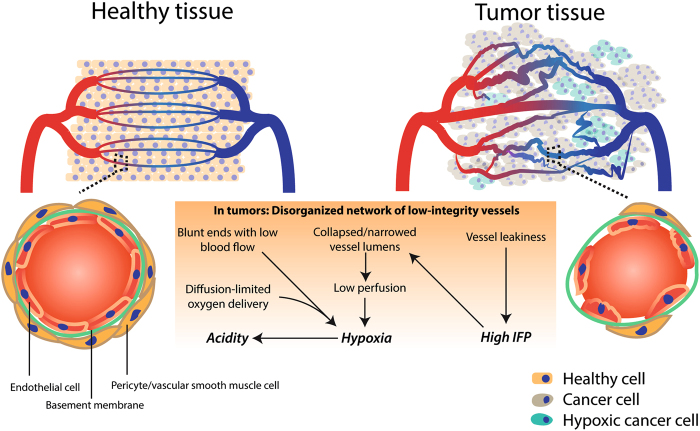
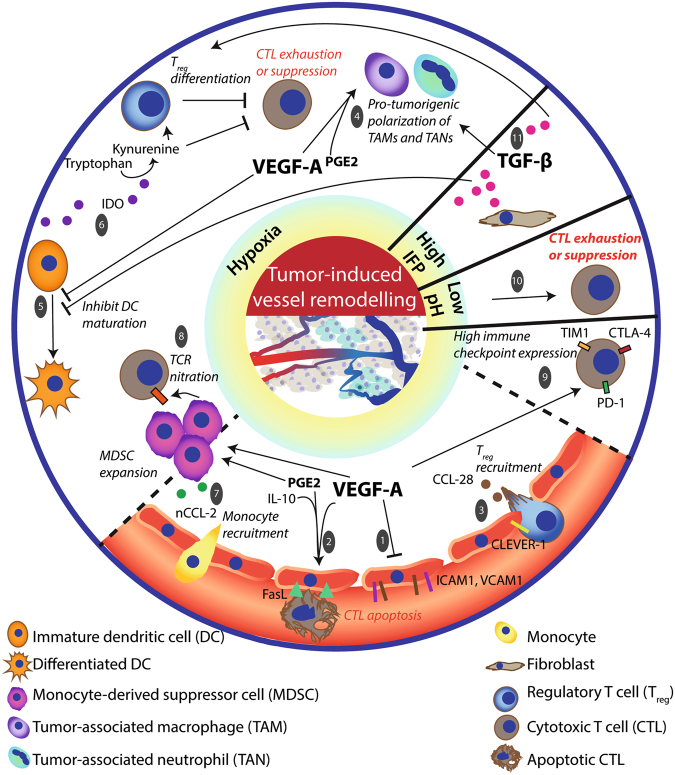
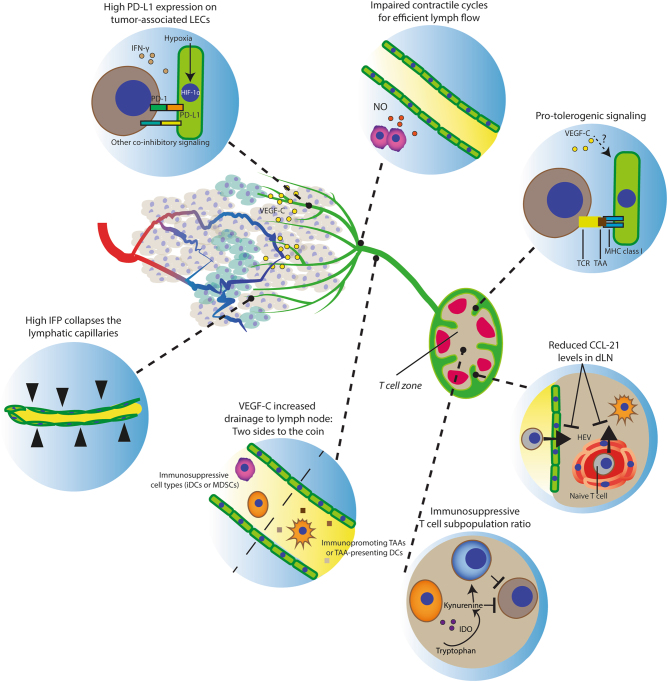
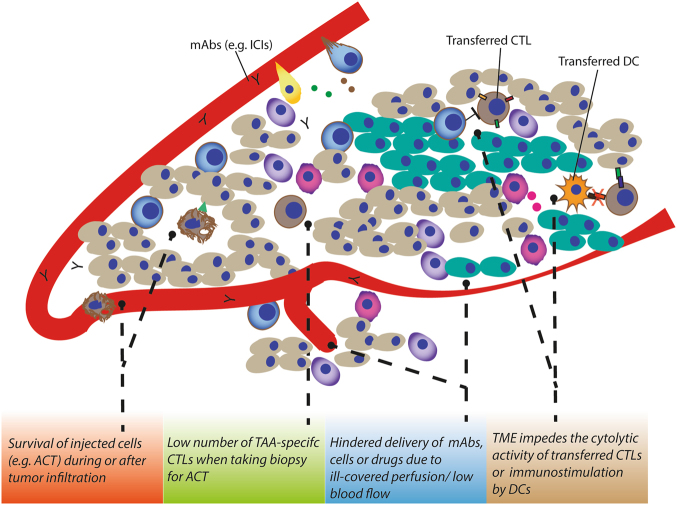
It is now well established that cancer cells co-exist within a complex environment with stromal cells and depend for their growth and dissemination on tight and plastic interactions with components of the tumor microenvironment (TME). Cancer cells incite the formation of new blood and lymphatic vessels from preexisting vessels to cope with their high nutrient/oxygen demand and favor tumor outgrowth. Research over the past decades has highlighted the crucial role played by tumor-associated blood and lymphatic vasculature in supporting immunoevasion and in subverting T-cell-mediated immunosurveillance, which are the main hallmarks of cancers. The structurally and functionally aberrant tumor vasculature contributes to the protumorigenic and immunosuppressive TME by maintaining a cancer cell's permissive environment characterized by hypoxia, acidosis, and high interstitial pressure, while simultaneously generating a physical barrier to T cells' infiltration. Recent research moreover has shown that blood endothelial cells forming the tumor vessels can actively suppress the recruitment, adhesion, and activity of T cells. Likewise, during tumorigenesis the lymphatic vasculature undergoes dramatic remodeling that facilitates metastatic spreading of cancer cells and immunosuppression. Beyond carcinogenesis, the erratic tumor vasculature has been recently implicated in mechanisms of therapy resistance, including those limiting the efficacy of clinically approved immunotherapies, such as immune checkpoint blockers and adoptive T-cell transfer. In this review, we discuss emerging evidence highlighting the major role played by tumor-associated blood and lymphatic vasculature in thwarting immunosurveillance mechanisms and antitumor immunity. Moreover, we also discuss novel therapeutic approaches targeting the tumor vasculature and their potential to help overcoming immunotherapy resistance.
Overview
The claims and statistics of this paper haven’t been checked yet.
Free: it reads the open-access text and checks the first 5 claims that cite a source we can check. Create a free account to check every claim.
Integrity signals
Registry
Cites
Statistics
Figures
Verification
Claims the paper makes
The claims and statistics of this paper haven’t been checked yet.
Free: it reads the open-access text and checks the first 5 claims that cite a source we can check. Create a free account to check every claim.
Claims other papers make about this one
Each is checked against this paper’s own text: does it say what the citing paper says it does?
The source backs part of the claim, not all of it — or backs it for a different population, condition or comparison.
In the citing paper
“‘cold’ tumors often suffer from impaired blood perfusion, restricting the effective delivery of therapeutics and cytotoxic immune cells, leading to hypoxia—a hallmark of the abnormal TME inducing immunosuppression (Schaaf et al., 2018).”
From Microphysiological systems as models for immunologically ‘cold’ tumors (2024) · cites this paper as Schaaf et al., 2018
Experimental — accuracy not yet measured
Self-check
Percentages, sums and reported differences re-computed from the paper’s own numbers.
The self-check needs the paper’s full text.
Citations
Cites
Angiogenesis in cancer and other diseases
Carmeliet, P., & Jain, R. K. (2000) · Nature · doi:10.1038/35025220 · Cited by 9,070 · cited 1×
“[6] MDSCs are a source of reactive nitrogen species that nitrate CCL-2 and tyrosines of the T-cell receptor that recruits more monocytes [7] and impedes CTL antigen recognition, [8] respectively.”
Accessories to the Crime: Functions of Cells Recruited to the Tumor Microenvironment
Hanahan, D., & Coussens, L. M. (2012) · Cancer Cell · doi:10.1016/j.ccr.2012.02.022 · Cited by 4,632
Polarization of Tumor-Associated Neutrophil Phenotype by TGF-β: “N1” versus “N2” TAN
Fridlender, Z. G., Sun, J., Kim, S., Kapoor, V., Cheng, G., Ling, L., Worthen, G. S., & Albelda, S. M. (2009) · Cancer Cell · doi:10.1016/j.ccr.2009.06.017 · Cited by 3,371
Immunogenic Cell Death in Cancer Therapy
Kroemer, G., Galluzzi, L., Kepp, O., & Zitvogel, L. (2013) · Annual Review of Immunology · doi:10.1146/annurev-immunol-032712-100008 · Cited by 3,303
Macrophage activation and polarization
Martinez, F. O. (2008) · Frontiers in Bioscience · doi:10.2741/2692 · Cited by 3,160
The Immunobiology of Cancer Immunosurveillance and Immunoediting
Dunn, G. P., Old, L. J., & Schreiber, R. D. (2004) · Immunity · doi:10.1016/j.immuni.2004.07.017 · Cited by 3,032
Natural Innate and Adaptive Immunity to Cancer
Vesely, M. D., Kershaw, M. H., Schreiber, R. D., & Smyth, M. J. (2011) · Annual Review of Immunology · doi:10.1146/annurev-immunol-031210-101324 · Cited by 2,560
Noman, M. Z., Desantis, G., Janji, B., Hasmim, M., Karray, S., Dessen, P., Bronte, V., & Chouaib, S. (2014) · Journal of Experimental Medicine · doi:10.1084/jem.20131916 · Cited by 2,166
Cancer immunotherapy via dendritic cells
Palucka, K., & Banchereau, J. (2012) · Nature Reviews Cancer · doi:10.1038/nrc3258 · Cited by 2,049
Gabrilovich, D. I., Chen, H. L., Girgis, K. R., Cunningham, H. T., Meny, G. M., Nadaf, S., Kavanaugh, D., & Carbone, D. P. (1996) · Nature Medicine · doi:10.1038/nm1096-1096 · Cited by 1,977
Cited by
Items 401–500 of 707
PAK in Pancreatic Cancer-Associated Vasculature: Implications for Therapeutic Response
Ansardamavandi, A., Nikfarjam, M., & He, H. Z. (2023) · Cells · doi:10.3390/cells12232692 · Cited by 11
Monteiro, I., Missiaglia, E., Sciarra, A., Santos, J. V., Bouilly, J., Romero, P. J., Sempoux, C. L., & de Leval, L. (2021) · Archiv für Pathologische Anatomie und Physiologie und für Klinische Medicin · doi:10.1007/s00428-021-03100-x · Cited by 11
Yao, Y., Zhou, X., Zhang, A., Ma, X., Zhu, H., Yang, Z., & Li, N. (2022) · European Journal of Radiology · doi:10.1016/j.ejrad.2022.110200 · Cited by 10
Treating Metastatic Brain Cancers With Stem Cells
Sadanandan, N., Shear, A., Brooks, B., Saft, M., Cabantan, D. A. G., Kingsbury, C., Zhang, H., Anthony, S., Wang, Z.-J., Salazar, F. E., et al. (2021) · Frontiers in Molecular Neuroscience · doi:10.3389/fnmol.2021.749716 · Cited by 10
Zheng, X., Kuai, J., & Shen, G. (2023) · Immunotherapy · doi:10.2217/imt-2022-0254 · Cited by 10
Mazzaglia, C., Huang, Y. Y. S., & Shields, J. D. (2024) · Advanced Drug Delivery Reviews · doi:10.1016/j.addr.2024.115485 · Cited by 10
Morimoto‐Kamata, R., Matsuki, S., Ohkura, N., & Yui, S. (2022) · Biological and Pharmaceutical Bulletin · doi:10.1248/bpb.b22-00447 · Cited by 10
Shen, X., Wang, X., Shen, H., Feng, M., Wu, D., Yang, Y., Li, Y., Yang, M., Ji, W., Wang, W., et al. (2021) · Frontiers in Oncology · doi:10.3389/fonc.2021.734407 · Cited by 10
Wei, Z., Feng, M., Wu, Z., Shen, S., & Zhu, D. (2021) · Frontiers in Oncology · doi:10.3389/fonc.2020.603702 · Cited by 10
In vitro 3D liver tumor microenvironment models for immune cell therapy optimization
Lam, M. S. Y., Reales‐Calderón, J. A., Ow, J. R., Adriani, G., & Pavesi, A. (2021) · APL Bioengineering · doi:10.1063/5.0057773 · Cited by 10
Nanomedicine-mediated modulation of tumor metabolism for enhanced immunotherapy
Liu, Y., Sun, D., Li, W., Zhang, Z., Li, C., Che, X., & Zhang, S. (2025) · Journal of Controlled Release · doi:10.1016/j.jconrel.2025.114587 · Cited by 10
Mastrogiovanni, M., Donnadieu, E., Pathak, R., & Bartolo, V. D. (2024) · Biology · doi:10.3390/biology13110860 · Cited by 10
Wang, M., Yang, S., Deng, J., Wu, D., He, C., Li, G., Dong, Y., Zhang, Y., & Li, Y. (2024) · Frontiers in Endocrinology · doi:10.3389/fendo.2024.1461047 · Cited by 10
Autophagy and ncRNAs: Dangerous Liaisons in the Crosstalk between the Tumor and Its Microenvironment
Eng, G. W. L., Zheng, Y., Yap, D. W. T., Teo, A. Y. T., & Cheong, J. K. (2021) · Cancers · doi:10.3390/cancers14010020 · Cited by 10
White, B., & Swietach, P. (2023) · Pflügers Archiv - European Journal of Physiology · doi:10.1007/s00424-023-02876-y · Cited by 10
Oncogenic and immunological values of RBM34 in osteosarcoma and its pan-cancer analysis.
Zhang, W., He, R. L., Cao, W., Li, D., Zheng, Q., & Zhang, Y. (2023) · PubMed Central · Cited by 10
Lymphangiogenesis in Breast Cancer: From Molecular Mechanisms to Clinical Implications
Kola, B., Kakkat, S., Suman, P., Crouch, E., Chakroborty, D., & Sarkar, C. (2025) · The FASEB Journal · doi:10.1096/fj.202500024r · Cited by 10
Small-molecule modulators of tumor immune microenvironment
Zhang, J., Yu, J., Liu, M., Xie, Z., Lei, X., Yang, X., Huang, S., Deng, X., Wang, Z., & Tang, G. (2024) · Bioorganic Chemistry · doi:10.1016/j.bioorg.2024.107251 · Cited by 10
Wu, Z., Ouyang, S., Gao, J., Hu, J., Qiu, G., Liu, D., & Ren, K. (2025) · Academic Radiology · doi:10.1016/j.acra.2024.12.039 · Cited by 10
Kashima, Y., Nishii, N., Tachinami, H., Furusawa, E., Nagai, S., Harada, H., & Azuma, M. (2020) · Biochemical and Biophysical Research Communications · doi:10.1016/j.bbrc.2020.03.022 · Cited by 10
Chu, M., Zheng, K., Li, X., Luo, Z., Yang, X., & Wei, C. (2022) · Analytical Cellular Pathology · doi:10.1155/2022/2371057 · Cited by 10
Expression features of targets for anti-glioma CAR-T cell immunotherapy
Zhang, P., Li, C., Wang, J., Chi, X., Sun, T., Zhang, Q., Zhang, Y., & Ji, N. (2024) · Journal of Neuro-Oncology · doi:10.1007/s11060-024-04855-4 · Cited by 10
Guerrero‐López, P., Alamán‐Díez, P., Hernández-Hatibi, S., Balsas, P., & Garcia-Aznar, J. M. (2026) · Advanced Drug Delivery Reviews · doi:10.1016/j.addr.2026.115836 · Cited by 9
Bhardwaj, J. S., Paliwal, S., Singhvi, G., & Taliyan, R. (2024) · Life Sciences · doi:10.1016/j.lfs.2024.123089 · Cited by 9
Effects of Exercise-Induced Changes in Myokine Expression on the Tumor Microenvironment
Gunasekara, N., Clauss, D., & Bloch, W. (2024) · Sports Medicine International Open · doi:10.1055/a-2283-1663 · Cited by 9
Valous, N. A., Moraleda, R. R., Jäger, D., Zörnig, I., & Halama, N. (2020) · Seminars in Immunology · doi:10.1016/j.smim.2020.101411 · Cited by 9
Dang, B.-T. N., Pham, K., Nguyen, A.-H., Park, J., Kwon, T. K., Kang, J., Jeong, J., & Yook, S. (2025) · Biomaterials Research · doi:10.34133/bmr.0289 · Cited by 9
Regulating the regulators via targeting CD38 in the tumor microenvironment
Dutta, N., Halder, N., Chini, E. N., Kim, S., & Manna, A. (2026) · Frontiers in Immunology · doi:10.3389/fimmu.2026.1745988 · Cited by 9
Imaging strategies for monitoring the immune response
Liu, X., Pan, L., Wang, K., Pan, W., Li, N., & Tang, B. (2022) · Chemical Science · doi:10.1039/d2sc03446h · Cited by 9
Mast Cell: A Mysterious Character in Skin Cancer
Alda, S., Ceauşu, R. A., Gaje, P. N., Raica, M., & Cosoroabă, R. M. (2023) · In Vivo · doi:10.21873/invivo.13410 · Cited by 9
Pérez-Regalado, S., León, J., & Feriche, B. (2022) · Journal of Cancer Research and Clinical Oncology · doi:10.1007/s00432-022-03918-1 · Cited by 9
Zhang, J., Su, Q., & Li, S. C. (2023) · Medical Sciences · doi:10.3390/medsci11010021 · Cited by 10
Sensitization strategy for sonodynamic therapy
Li, S., Yang, Z., Zhang, Y., Zhang, G., Cai, Z., Xie, Y., Bai, Z., Sun, J., Sun, H., Chen, Z., et al. (2026) · Theranostics · doi:10.7150/thno.130498 · Cited by 9
Induced Vascular Normalization—Can One Force Tumors to Surrender to a Better Microenvironment?
Sun, X., Nosrati, Z., Ko, J., Lee, C.-M., Bennewith, K. L., & Bally, M. B. (2023) · Pharmaceutics · doi:10.3390/pharmaceutics15082022 · Cited by 8
Chen, Y., Jia, L., Li, Y., Cui, W., Wang, J., Zhang, C., Bian, C., & Luo, T. (2024) · Frontiers in Oncology · doi:10.3389/fonc.2024.1364345 · Cited by 8
Feng, E., Yang, X., Yang, J., Qu, Q., & Li, X. (2025) · Brazilian Journal of Otorhinolaryngology · doi:10.1016/j.bjorl.2024.101551 · Cited by 8
Qiu, J., Wang, Z., Yu, Y., Zheng, Y., Li, M., & Lin, C. (2024) · International Immunopharmacology · doi:10.1016/j.intimp.2024.111940 · Cited by 8
Študentová, H., Zemánková, A., Spisarová, M., Škanderová, D., Tüdös, Z., Melichar, B., & Študent, V. (2022) · Medicina · doi:10.3390/medicina58030336 · Cited by 8
Cavitation-Mediated Immunomodulation and Its Use with Checkpoint Inhibitors
Maardalen, M., Carlisle, R. C., & Coussios, C. C. (2023) · Pharmaceutics · doi:10.3390/pharmaceutics15082110 · Cited by 8
Jin, T., An, J., Wu, W., Wang, C., & Zhou, F. (2024) · Urology · doi:10.1016/j.urology.2024.05.027 · Cited by 8
Pariente, A., Peled, E., Zlotver, I., & Sosnik, A. (2021) · Materials Today Chemistry · doi:10.1016/j.mtchem.2021.100613 · Cited by 8
Nanotherapeutic Formulations for the Delivery of Cancer Antiangiogenics
Ultimo, A., Jain, A., Gómez-González, E., Alex, T. S., Moreno-Borrallo, A., Jana, S., Ghosh, S., & Ruiz‐Hernández, E. (2025) · Molecular Pharmaceutics · doi:10.1021/acs.molpharmaceut.4c00822 · Cited by 8
The functional network of biglycan: A new frontier in tumor progression
Yu, L., Maishi, N., Matsuda, A., & Hida, K. (2023) · Proteoglycan Research · doi:10.1002/pgr2.11 · Cited by 8
Wu, F., Feng, X., Gao, W., Zeng, L., Xu, B., Chen, Z., Zheng, C., Hu, X., Shi-ying, X., Song, H., et al. (2025) · ACS Applied Materials & Interfaces · doi:10.1021/acsami.4c18469 · Cited by 8
Revolutionizing Cancer Care: The Role of 3D Printing in Personalized Oncology
Katamesh, A. A., Subaiea, G. M., Mostafa, M., Ibrahim, M., Alobaida, A., El‐Horany, H. E., Khalifa, N. E., Qelliny, M. R., & Sayed, M. M. E. (2025) · ACS Omega · doi:10.1021/acsomega.5c01642 · Cited by 8
Ma, B., Zhang, D.-J., Hu, Y., Chen, X., Gong, R., Lei, K., Yu, Q., & Ren, H. (2023) · Current Gene Therapy · doi:10.2174/1566523223666230720101531 · Cited by 8
Hao, Y., Gkasti, A., Managh, A. J., Dagher, J., Sifis, A., Tiron, L., Chriqui, L.-E., Marie, D. N., Silva, O. D. S., Christodoulou, M., et al. (2024) · Cancer Immunology Research · doi:10.1158/2326-6066.cir-24-0245 · Cited by 8
Microvascular flow ultrasound imaging for retinoblastoma
Ramasubramanian, A., Riemann, M. C., Brown, A., Abruzzo, T. A., & Gonçalves, L. F. (2024) · Journal of American Association for Pediatric Ophthalmology and Strabismus · doi:10.1016/j.jaapos.2023.10.003 · Cited by 8
Ferromagnetic Resonance Heating of Magnetic Nanoparticles Resovist for Biomedical Applications
Kuwahata, A., Szawro, W., Kagami, T., Takahashi, M., & Yabukami, S. (2023) · IEEE Transactions on Magnetics · doi:10.1109/tmag.2023.3285234 · Cited by 8
Tumors and their microenvironments: Learning from pediatric brain pathologies
Nussinov, R., Yavuz, B. R., & Jang, H. (2025) · Biochimica et Biophysica Acta (BBA) - Reviews on Cancer · doi:10.1016/j.bbcan.2025.189328 · Cited by 7
Biopterin metabolism and nitric oxide recoupling in cancer
Clark, G. C., Lai, A., Agarwal, A., Liu, Z., & Wang, X. (2024) · Frontiers in Oncology · doi:10.3389/fonc.2023.1321326 · Cited by 7
Chae, Y. K., Velcheti, V., Zhang, K., Hiremath, A., Chung, L. I., Maghsoudi, O. H., Chitalia, R., Lee, J., Li, H., Lee, S., et al. (2026) · Journal for ImmunoTherapy of Cancer · doi:10.1136/jitc-2025-013391 · Cited by 7
Therapeutic In Situ Cancer Vaccine Using Pulsed Stereotactic Body Radiotherapy—A Translational Model
Swamy, K. (2023) · Vaccines · doi:10.3390/vaccines12010007 · Cited by 7
Feng, X., Zeng, L., Wu, L., Chen, Z., Lin, W., Song, H., & Lan, F. (2024) · Biomedicine & Pharmacotherapy · doi:10.1016/j.biopha.2024.117220 · Cited by 7
Yang, P., Luo, H., Zhao, L., Xiong, F., & Tang, C. (2024) · Journal of Thoracic Disease · doi:10.21037/jtd-24-394 · Cited by 7
Tumor microenvironment-like conditions alter pancreatic cancer cell metabolism and behavior
Gardner, G. L., & Stuart, J. A. (2024) · American Journal of Physiology-Cell Physiology · doi:10.1152/ajpcell.00452.2024 · Cited by 7
Targeting collagen in “armored and cold” tumors: Overcoming barriers to cancer therapy
Wang, S., Li, J., & Zhao, Y. (2024) · Cancer Pathogenesis and Therapy · doi:10.1016/j.cpt.2024.11.001 · Cited by 7
Insights From the Ecology of Information to Cancer Control
Whelan, C. J., Avdieiev, S. S., & Gatenby, R. A. (2020) · Cancer Control · doi:10.1177/1073274820945980 · Cited by 7
Overcoming intratumoral transport barriers: Advances in local immunotherapy delivery platforms
Deeson, M. A., Chua, C. Y. X., & Grattoni, A. (2026) · Advanced Drug Delivery Reviews · doi:10.1016/j.addr.2026.115888 · Cited by 7
Li, G., Li, Z., Shen, J., Ma, X., Zheng, S., Zheng, Y., Cao, K., & Dong, N. (2024) · Gene · doi:10.1016/j.gene.2024.148796 · Cited by 7
Chi, H., Peng, G., Song, G., Zhang, J., Xie, X., Yang, J., Xu, J., Zhang, J., Xu, K., Wu, Q., et al. (2024) · Frontiers in Bioscience-Landmark · doi:10.31083/j.fbl2903130 · Cited by 7
Targeting tumor microenvironment as a treatment strategy for hepatocellular carcinoma
Lin, Z., Xiang, X., Lu, D., & Xu, X. L. (2020) · HepatoBiliary Surgery and Nutrition · doi:10.21037/hbsn.2020.03.24 · Cited by 7
Feng, Y. R., Zhi, X., Xiao, T., & Feng, L. (2026) · Mechanisms of Ageing and Development · doi:10.1016/j.mad.2026.112158 · Cited by 6
Nanomedicine for colorectal cancer therapy by remodeling the immune microenvironment
Wu, Y., Su, Y., Wei, Y., Shui, M., Li, W., Yang, L., & Luo, K. (2026) · Journal of Controlled Release · doi:10.1016/j.jconrel.2026.114915 · Cited by 6
Tumor-Agnostic Therapy—The Final Step Forward in the Cure for Human Neoplasms?
El-Sayed, M. M., Bianco, J. R., Li, Y., & Fábián, Z. (2024) · Cells · doi:10.3390/cells13121071 · Cited by 6
Role of PAI-1 in the progression and treatment resistance of non-small cell lung cancer
Masuda, T., & Hattori, N. (2025) · Biomedical Journal · doi:10.1016/j.bj.2025.100911 · Cited by 6
Targeting autophagy in dysfunctional tumor vasculature
Lin, Q., Cai, B., Ke, R., Ni, X., Wan, X., Chen, L., Huang, T., Shan, X., & Wang, B. (2025) · iScience · doi:10.1016/j.isci.2025.114084 · Cited by 6
Chen, P., Cheng, L., Zhao, C., Tang, Z., Wang, H., Shi, J., Li, X., & Zhou, C. (2024) · International Immunopharmacology · doi:10.1016/j.intimp.2024.113588 · Cited by 6
Wen, J., Huang, Q.-Y., Yao, J., Wei, W., Li, Z., Zhang, H., Chang, S., Pei, H., Cao, Y., & Li, H. (2023) · Mediators of Inflammation · doi:10.1155/2023/3648946 · Cited by 6
MRI and US imaging reveal evolution of spatial heterogeneity of murine tumor vasculature
Drzał, A., Jasiński, K., Gonet, M., Kowolik, E., Bartel, Ż., & Elas, M. (2022) · Magnetic Resonance Imaging · doi:10.1016/j.mri.2022.06.003 · Cited by 6
A mathematical model to study low-dose metronomic scheduling for chemotherapy
Arora, G., Bairagi, N., & Chatterjee, S. (2024) · Mathematical Biosciences · doi:10.1016/j.mbs.2024.109186 · Cited by 6
Kavvadas, E. (2020) · Medical Hypotheses · doi:10.1016/j.mehy.2020.110286 · Cited by 6
Icht, O., Domachevsky, L., Groshar, D., Dudnik, E., Rotem, O., Allen, A. M., Peled, N., Reinhorn, D. J., Jacobi, O., Shochat, T., et al. (2020) · Asia-Pacific Journal of Clinical Oncology · doi:10.1111/ajco.13360 · Cited by 6
Ding, Z., Zhang, X., Wang, Y., Ogino, K., Wu, Y., Yue, H., Jiao, Z., Cui, S., Lu, G., Wang, S., et al. (2023) · Nano Today · doi:10.1016/j.nantod.2023.101815 · Cited by 6
A minimal modeling framework of radiation and immune system synergy to assist radiotherapy planning
Montaseri, G., Alfonso, J. C. L., Hatzikirou, H., & Meyer‐Hermann, M. (2019) · Journal of Theoretical Biology · doi:10.1016/j.jtbi.2019.110099 · Cited by 6
Gallegos, C., Lü, Y., Song, P. N., Queiroz, R. G. D. P., Akça, U., Sridhar, S., Bartels, J. L., Zhang, Y., Li, L. L., Warram, J. M., et al. (2025) · Theranostics · doi:10.7150/thno.123588 · Cited by 6
Ren, H., Wang, Z., Zhang, L., Zhu, G., Li, F., & Chen, B. (2024) · BMC Cancer · doi:10.1186/s12885-024-12114-y · Cited by 6
Nanomodulation and nanotherapeutics of tumor-microenvironment
Dubey, R., Garg, S. S., & Gupta, J. (2022) · OpenNano · doi:10.1016/j.onano.2022.100099 · Cited by 5
ADAM10 modulates the efficacy of T‐cell‐mediated therapy in solid tumors
Abdalla, A. M. E., Miao, Y., Ming, N., & Ouyang, C. (2024) · Immunology and Cell Biology · doi:10.1111/imcb.12826 · Cited by 5
Song, J., Lee, Y., Kim, M.-S., Ha, G., Jang, W., Batjargal, U., Kim, Y. G., Kim, H., & Lee, J. (2025) · Lab on a Chip · doi:10.1039/d4lc00950a · Cited by 5
Jarrett, A. M., Song, P. N., Reeves, K. M., Lima, E. A. B. F., Larimer, B. M., Yankeelov, T. E., & Sorace, A. G. (2023) · Mathematical Biosciences · doi:10.1016/j.mbs.2023.109106 · Cited by 5
Ansardamavandi, A., Dumesny, C., Ma, Y., Dong, L., Ellis, S. L., Ang, C., Nikfarjam, M., & He, H. Z. (2025) · International Journal of Molecular Sciences · doi:10.3390/ijms26178357 · Cited by 5
Wang, Y.-K., Lv, X., Wang, Z., Zhou, Y., Jiang, B., Wang, S., & Chen, X.-D. (2023) · Journal of Cancer Research and Clinical Oncology · doi:10.1007/s00432-023-04709-y · Cited by 5
Swamy, K. (2021) · Medical Hypotheses · doi:10.1016/j.mehy.2021.110618 · Cited by 5
Thomas, A., Pathak, N., Moses, L., & Munirathinam, G. (2023) · Elsevier eBooks · doi:10.1016/b978-0-443-13212-4.00002-7 · Cited by 6
Zhang, H., Yu, H., Pan, S.-X., Zhang, C., Ma, Y., Zhang, Y., Zuo, L.-L., Hao, C., Lin, X., Geng, H., et al. (2024) · Biomaterials Science · doi:10.1039/d3bm01959d · Cited by 5
Donor-imine-acceptor-based small organic molecule for efficient photothermal therapy
Pham, T. C., Kim, H., Nguyen, V. K. T., Choi, Y., Kang, H. W., & Lee, S. (2025) · Dyes and Pigments · doi:10.1016/j.dyepig.2025.112664 · Cited by 5
Li, J., Zhang, Y., Hu, L., Ye, H., Yan, X., Li, X., Li, Y., Ye, S., Wu, B., & Li, Z. (2024) · Journal of Clinical and Translational Hepatology · doi:10.14218/jcth.2024.00238 · Cited by 5
Photoacoustic tomography and its applications
Rai, R., Rai, V. N., & Thakur, S. N. (2023) · Elsevier eBooks · doi:10.1016/b978-0-323-91732-2.00019-7 · Cited by 5
Hui, J.-J., Yan, H.-L., Ding, S., Qin, B., Jiao, X., & Zang, Y. (2025) · Cancer Control · doi:10.1177/10732748251320822 · Cited by 5
Hu, J., Zhou, W., Zhou, Y., Hu, H., Ran, S., & Zhang, Y. (2025) · Journal of Materials Chemistry B · doi:10.1039/d5tb00368g · Cited by 4
Nanotechnology-enhanced CAR-T therapy strategies in cancer, aging, and autoimmune diseases
Li, H., Li, J., Liu, X. D., Wei, X., Zeng, X., Wang, Q. Y., Han, Y., Huang, H., & Qian, P. (2026) · Journal of Hematology & Oncology · doi:10.1186/s13045-026-01805-7 · Cited by 4
Yang, J., Cheng, C., Luo, W., He, X., Li, Y., Hu, X., Cai, S., Zou, H., Mo, S., & Peng, J. (2026) · MedComm · doi:10.1002/mco2.70741 · Cited by 4
Potential Roles of Exercise and Quercetin in Modulating Cancer Pathways and Cognitive Function
Lei, P. (2025) · Phytotherapy Research · doi:10.1002/ptr.70016 · Cited by 4
Exploring the Molecular and Developmental Dynamics of Endothelial Cell Differentiation
Shin, Y. J., & Lee, J. H. (2023) · International Journal of Stem Cells · doi:10.15283/ijsc23086 · Cited by 4
Tumor Immune Engineering: Developing In Vitro Assays to Understand the Tumor–Immune Crosstalk
Iyer, R. N., Vartak, M., & Dey, T. (2025) · Advanced Biology · doi:10.1002/adbi.202400735 · Cited by 4
Tang, Y., Ding, Y., Wang, L., Yang, Y., Han, Y., Zhou, P., Qu, H., Deng, K., & Xia, J. (2026) · Cancer Medicine · doi:10.1002/cam4.71769 · Cited by 4
Investigation of tumour environments through advancements in microtechnology and nanotechnology
Liu, Z., Fan, Y. L., Cui, M., Wang, X., & Zhao, P. (2024) · Biomedicine & Pharmacotherapy · doi:10.1016/j.biopha.2024.117230 · Cited by 4
Tunçer, S., Solel, E., & Banerjee, S. (2020) · Bilecik Şeyh Edebali Üniversitesi Fen Bilimleri Dergisi · doi:10.35193/bseufbd.631769 · Cited by 4
Advanced biomaterials for the targeted delivery of immune checkpoint inhibitors to solid tumors
Henrich, E. M., & McHugh, K. J. (2025) · Journal of Controlled Release · doi:10.1016/j.jconrel.2025.113951 · Cited by 4
Metadata
- Authors
- Schaaf, M. B., Garg, A. D., & Agostinis, P.
- Affiliations
- KU Leuven (BE)
- Corresponding author
- Agostinis, Patrizia
- Venue
- Cell Death & Disease
- Published
- 2018-01-25
- Volume
- 9
- Issue
- 2
- Pages
- 115-115
- ISSN
- 2041-4889 (ISSN-L)
- PMC
- PMC5833710
- OpenAlex
- W2786753426
- Cited by
- 629
- References
- 112
- Citations by year
- 2026: 52 · 2025: 76 · 2024: 97 · 2023: 86 · 2022: 90 · 2021: 101 · 2020: 81 · 2019: 32 · 2018: 14
- FWCI
- 5.57
- Type
- journal article
- Language
- en
- Open access
- gold
- doi.org
- Licence
- cc-by
- creativecommons.org/licenses/by/4.0 (tdm)
- creativecommons.org/licenses/by/4.0 (vor)
- Locations
- Cell Death and Disease (publishedVersion, cc-by)
- PubMed Central (publishedVersion, cc-by)
- PubMed (publishedVersion)
- Lirias (KU Leuven) (submittedVersion, other-oa)
- Funders
- Fonds Wetenschappelijk Onderzoek (G060713N, G076617N, G070115N)
- KU Leuven ((C16/15/073))
- Vlaamse regering (G076617N, C16/15/073, G070115N)
- Topics
- Life Sciences › Biochemistry, Genetics and Molecular Biology › Molecular Biology › Angiogenesis and VEGF in Cancer
- Health Sciences › Medicine › Oncology › Cancer Immunotherapy and Biomarkers
- Health Sciences › Medicine › Oncology › Lymphatic System and Diseases
- Keywords
- tumor vasculature, tumor microenvironment, antitumor immunity, immune surveillance, immunotherapy resistance, tumor-associated lymphatic vessels, tumor-associated blood vessels, endothelial cells, immunosuppression, hypoxia, T cell infiltration, metastasis, immune checkpoint inhibitors, adoptive T cell therapy, anti-angiogenic therapy, treatment resistance
- MeSH terms
- Animals, Humans, Immunity, Immunosuppression Therapy, Immunotherapy, Neoplasms, Neovascularization, Pathologic, Tumor Microenvironment
About these checks
Registry, retraction, Cites and statistics results are computed, not judged, with one exception: a printed reference that no index lists is read once by a model before it counts as a citation error. Claims are extracted by a model and kept only when their quote appears verbatim in the text; each cited source is then checked, with a model’s help, for whether it says what the claim relies on. Those verdicts can be wrong — read the claim’s quote and the cited source before relying on one.
Statistics and arithmetic are recomputed, not judged.
Confidence bands are shown only for fields calibrated on our annotated test set. None is calibrated yet, so no band is shown.
What counts as a claim ›How we measure confidence ›How we check this ›
Are you an author, or do you see a problem with this page? Request a review
Data sources
Bibliographic data: Semantic Scholar, OpenAlex, Crossref.
Contains information from the Semantic Scholar Academic Graph Datasets, made available under the ODC Attribution License (ODC-BY 1.0).
Semantic Scholar’s data is described in: Kinney, R., et al. (2023). The Semantic Scholar Open Data Platform. arXiv:2301.10140.
