

Exosomal secretion of α-synuclein as protective mechanism after upstream blockage of macroautophagy
Open accessThe DOI matches its Crossref record; 59 of the 60 references it cites were found in a registry or an index.
Abstract
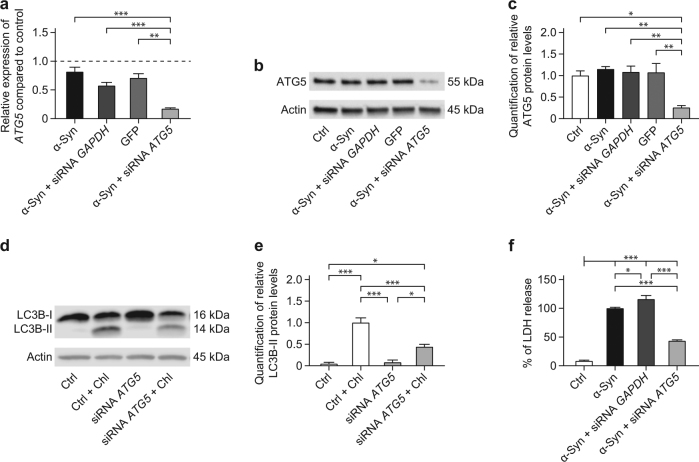
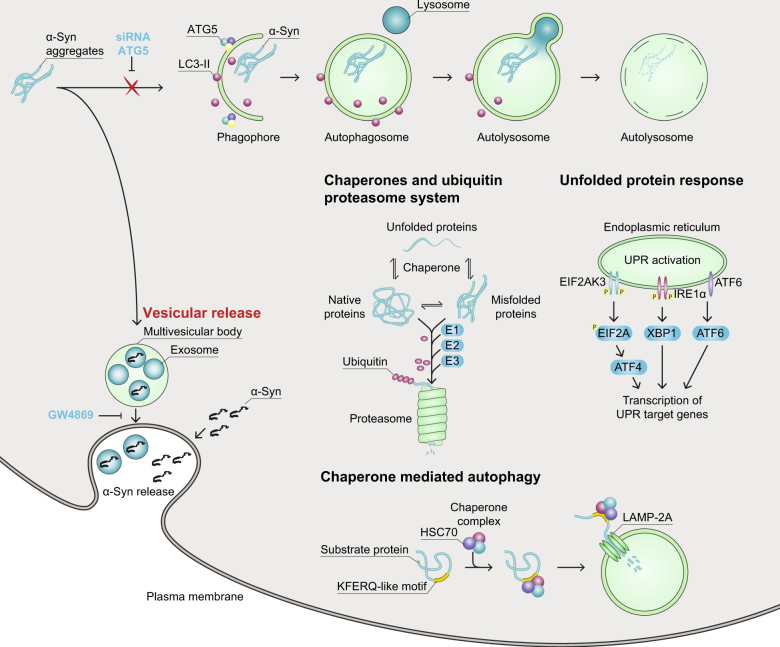
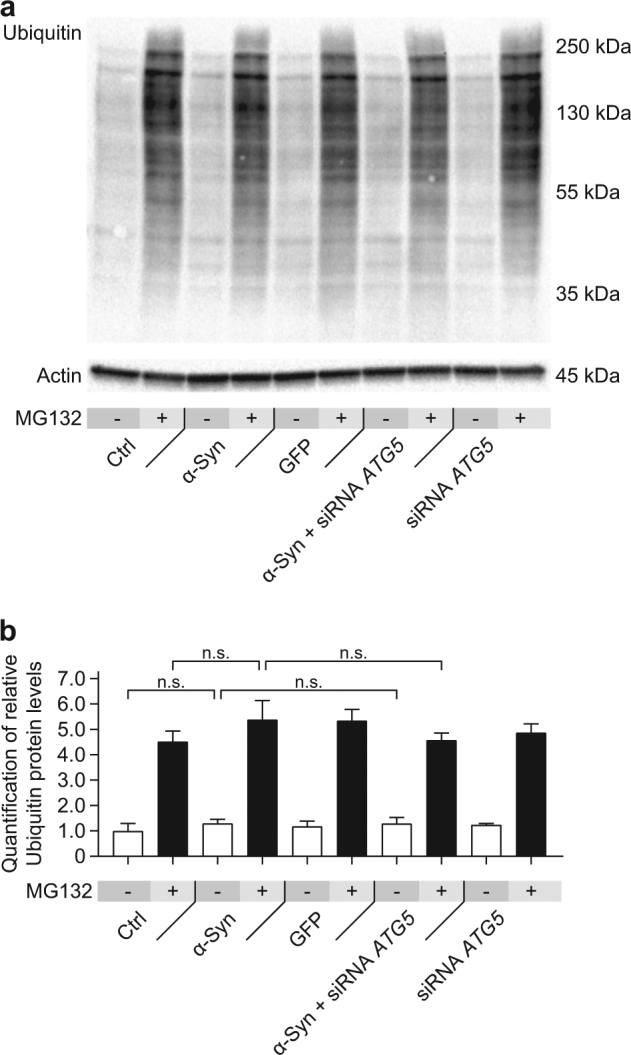
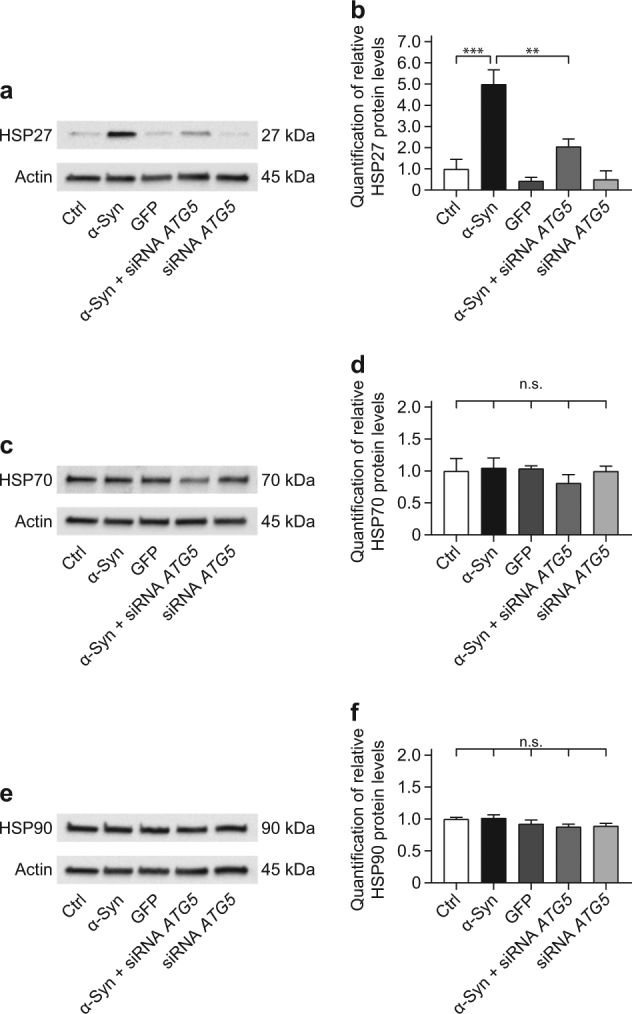
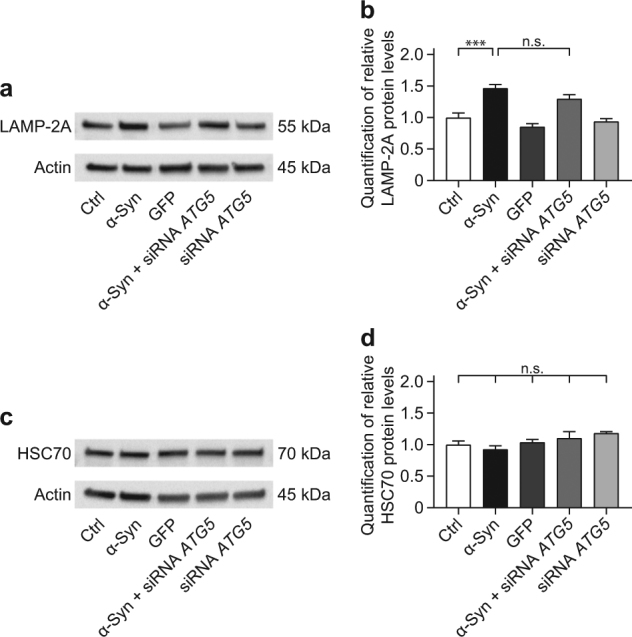
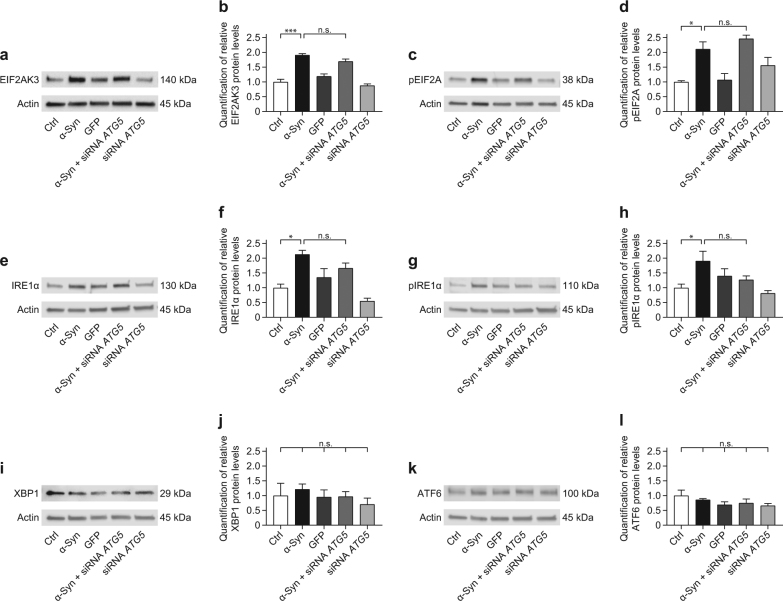
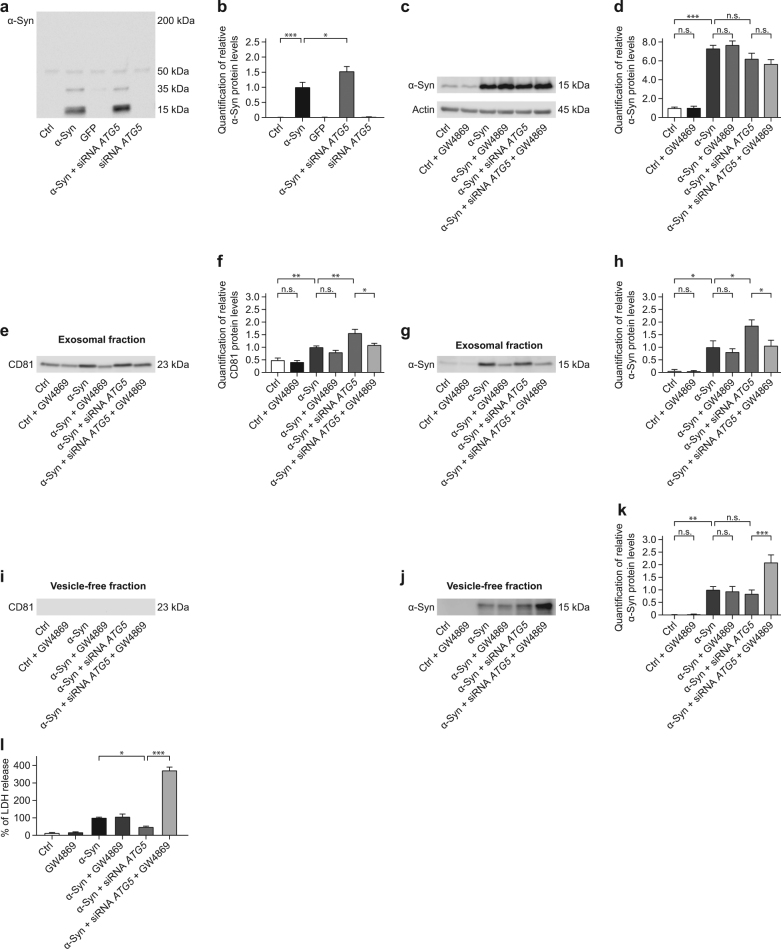
Accumulation of pathological α-synuclein aggregates plays a major role in Parkinson’s disease. Macroautophagy is a mechanism to degrade intracellular protein aggregates by wrapping them into autophagosomes, followed by fusion with lysosomes. We had previously shown that pharmacological activation of macroautophagy protects against α-synuclein-induced toxicity in human neurons. Here, we hypothesized that inhibition of macroautophagy would aggravate α-synuclein-induced cell death. Unexpectedly, inhibition of autophagosome formation by silencing of ATG5 protected from α-synuclein-induced toxicity. Therefore, we studied alternative cellular mechanisms to compensate for the loss of macroautophagy. ATG5 silencing did not affect the ubiquitin–proteasome system, chaperone systems, chaperone-mediated autophagy, or the unfolded protein response. However, ATG5 silencing increased the secretion of α-synuclein via exosomes. Blocking exosomal secretion exacerbated α-synuclein-induced cell death. We conclude that exosomal secretion of α-synuclein is increased after impaired formation of autophagosomes to reduce the intracellular α-synuclein burden. This compensatory mechanism prevents α-synuclein-induced neuronal cell death.
Overview
The claims and statistics of this paper haven’t been checked yet.
Free: it reads the open-access text and checks the first 5 claims that cite a source we can check. Create a free account to check every claim.
Integrity signals
Registry
Cites
Statistics
Figures
Verification
Claims the paper makes
The claims and statistics of this paper haven’t been checked yet.
Free: it reads the open-access text and checks the first 5 claims that cite a source we can check. Create a free account to check every claim.
Claims other papers make about this one
Each is checked against this paper’s own text: does it say what the citing paper says it does?
The source backs part of the claim, not all of it — or backs it for a different population, condition or comparison.
In the citing paper
“Similar to AD, disruption of cilia–autophagy crosstalk in PD has been shown to cause neurons to redirect α-syn into EVs, increasing its intercellular transfer, while autophagy inhibition further amplifies α-syn-containing EV release and spread [149,150].”
From The Impact of Neurotoxin Proteins Trafficked by Primary Cilia and Extracellular Vesicles in Neurodegenerative Diseases (2025) · cites this paper as [150]
Experimental — accuracy not yet measuredThe source backs part of the claim, not all of it — or backs it for a different population, condition or comparison.
In the citing paper
“Because TNT formation relies on actin-dependent machinery (e.g., M-Sec/RalA/exocyst) and ciliary Shh signaling regulates neuronal actin dynamics, ciliary dysfunction may promote TNT formation, while impaired autophagy increases EV loading, collectively enhancing α-syn dissemination (Figure 3B) [102,149,150,153,154,155].”
From The Impact of Neurotoxin Proteins Trafficked by Primary Cilia and Extracellular Vesicles in Neurodegenerative Diseases (2025) · cites this paper as [150]
Experimental — accuracy not yet measured
Self-check
Percentages, sums and reported differences re-computed from the paper’s own numbers.
The self-check needs the paper’s full text.
Citations
Cites
Mutation in the α-Synuclein Gene Identified in Families with Parkinson's Disease
Polymeropoulos, M. H., Lavedan, C., Leroy, E., Ide, S. E., Dehejia, A., Dutra, A., Pike, B., Root, H., Rubenstein, J., Boyer, R., et al. (1997) · Science · doi:10.1126/science.276.5321.2045 · Cited by 8,240
Extracellular vesicles: Exosomes, microvesicles, and friends
Raposo, G., & Stoorvogel, W. (2013) · Journal of Cell Biology · doi:10.1083/jcb.201211138 · Cited by 8,099
Guidelines for the use and interpretation of assays for monitoring autophagy (3rd edition).
Klionsky, D. J., Abdelmohsen, K., Abe, A., Abedin, M. J., Abeliovich, H., Acevedo Arozena, A., Adachi, H., Adams, C. M., Adams, P. D., Adeli, K., et al. (2016) · Autophagy · doi:10.1080/15548627.2015.1100356 · Cited by 5,894
α-Synuclein Locus Triplication Causes Parkinson's Disease
Singleton, A. B., Farrer, M., Johnson, J., Singleton, A., Hague, S., Kachergus, J., Hulihan, M., Peuralinna, T., Dutra, A., Nussbaum, R., et al. (2003) · Science · doi:10.1126/science.1090278 · Cited by 4,383
Ceramide Triggers Budding of Exosome Vesicles into Multivesicular Endosomes
Trajkovic, K., Hsu, C., Chiantia, S., Rajendran, L., Wenzel, D., Wieland, F., Schwille, P., Brügger, B., & Simons, M. (2008) · Science · doi:10.1126/science.1153124 · Cited by 3,627
Kowal, J., Arras, G., Colombo, M., Jouve, M., Morath, J. P., Primdal-Bengtson, B., Dingli, F., Loew, D., Tkach, M., & Théry, C. (2016) · Proceedings of the National Academy of Sciences · doi:10.1073/pnas.1521230113 · Cited by 3,426
How to Interpret LC3 Immunoblotting
Mizushima, N., & Yoshimori, T. (2007) · Autophagy · doi:10.4161/auto.4600 · Cited by 2,669
Impaired Degradation of Mutant α-Synuclein by Chaperone-Mediated Autophagy
Cuervo, A. M., Stefanis, L., Fredenburg, R., Lansbury, P. T., & Sulzer, D. (2004) · Science · doi:10.1126/science.1101738 · Cited by 2,024
Secretory Mechanisms and Intercellular Transfer of MicroRNAs in Living Cells
Kosaka, N., Iguchi, H., Yoshioka, Y., Takeshita, F., Matsuki, Y., & Ochiya, T. (2010) · Journal of Biological Chemistry · doi:10.1074/jbc.m110.107821 · Cited by 1,934
International Parkinson's Disease Genomics Consortium (IPDGC), Nalls, M. A., Parkinson's Study Group (PSG) Parkinson's Research: The Organized GENetics Initiative (PROGENI), 23andMe, GenePD, NeuroGenetics Research Consortium (NGRC), Hussman Institute of Human Genomics (HIHG), Investigator, T. A. J. D., (CHARGE), C. F. H. A. A. R. I. G. E., North American Brain Expression Consortium (NABEC), et al. (2014) · Nature Genetics · doi:10.1038/ng.3043 · Cited by 1,895
Research works printed but not linked: 1
- Lilienbaum A Relationship between the proteasomal system and autophagy Int. J. Biochem. Mol. Biol. 2013 4 1 26 23638318 PMC3627065
Cited by
Biological Functions of Autophagy Genes: A Disease Perspective
Levine, B., & Kroemer, G. (2019) · Cell · doi:10.1016/j.cell.2018.09.048 · Cited by 2,832
α-Synuclein pathology in Parkinson’s disease and related α-synucleinopathies
Henderson, M. X., Trojanowski, J. Q., & Lee, V. M.-Y. (2019) · Neuroscience Letters · doi:10.1016/j.neulet.2019.134316 · Cited by 291
Serum neuronal exosomes predict and differentiate Parkinson’s disease from atypical parkinsonism
Jiang, C., Hopfner, F., Katsikoudi, A., Hein, R., Catli, C., Evetts, S., Huang, Y., Wang, H., Ryder, J. W., Kuhlenbaeumer, G., et al. (2020) · Journal of Neurology, Neurosurgery & Psychiatry · doi:10.1136/jnnp-2019-322588 · Cited by 275
CNS-Derived Blood Exosomes as a Promising Source of Biomarkers: Opportunities and Challenges
Hornung, S., Dutta, S., & Bitan, G. (2020) · Frontiers in Molecular Neuroscience · doi:10.3389/fnmol.2020.00038 · Cited by 238
“In particular, disposal of unwanted cellular components via exosomes occurs to assist when other cellular clearance mechanisms, such as the proteasome and autophagy-lysosome system, gradually fail in eliminating aggregated amyloidogenic proteins (Alvarez-Erviti et al., 2011; Ihara et al., 2012; Urbanelli et al., 2013;…”
BackgroundMicroglia as modulators of exosomal alpha-synuclein transmission
Xia, Y., Zhang, G., Han, C., Ma, K., Guo, X., Wan, F., Kou, L., Yin, S., Liu, L., Huang, J., et al. (2019) · Cell Death & Disease · doi:10.1038/s41419-019-1404-9 · Cited by 206
Zhao, Z.-H., Chen, Z.-T., Zhou, R.-L., Zhang, X., Ye, Q.-Y., & Wang, Y.-Z. (2019) · Frontiers in Aging Neuroscience · doi:10.3389/fnagi.2018.00438 · Cited by 176
“If macroautophagy function was inhibited by silencing the key element autophagy related gene 5, the releasing of α-synuclein from cells by the pathway of exosomes would be observed as a kind of compensation (Fussi et al., 2018).”
BackgroundExosomes: Revisiting their role as “garbage bags”
Vidal, M. (2019) · Traffic · doi:10.1111/tra.12687 · Cited by 154
“Conversely, autophagy blockage was shown to increase exosomal secretion of PrPsc and α-synuclein, two proteins involved in neurological disorders.(52,53) Atg12-Atg3 has also been shown to control exosome biogenesis through its interaction with Alix.”
BackgroundPinnell, J. R., Cui, M., & Tieu, K. (2021) · Journal of Neurochemistry · doi:10.1111/jnc.15288 · Cited by 143
Extracellular Vesicles as Delivery Vehicles of Specific Cellular Cargo
Mir, B., & Goettsch, C. (2020) · Cells · doi:10.3390/cells9071601 · Cited by 153
Alpha-Synuclein: Mechanisms of Release and Pathology Progression in Synucleinopathies
Brás, I. C., & Outeiro, T. F. (2021) · Cells · doi:10.3390/cells10020375 · Cited by 136
Prion-Like Mechanisms in Parkinson’s Disease
Ma, J., Gao, J., Wang, J., & Xie, A. (2019) · Frontiers in Neuroscience · doi:10.3389/fnins.2019.00552 · Cited by 124
“…kinetics of amyloid formation in vitro in the presence of different lipid systems allow for the study of mechanistic details of the effects of lipids on α-syn aggregation and toxicity, and open a new therapeutic road to attenuate or prevent crucial events (Galvagnion, 2017; Suzuki et al., 2018).”
α-Synuclein in Parkinson’s disease: causal or bystander?
Riederer, P. F., Berg, D., Casadei, N., Cheng, F., Claßen, J., Dresel, C., Jost, W. H., Krüger, R., Müller, T., Reichmann, H., et al. (2019) · Journal of Neural Transmission · doi:10.1007/s00702-019-02025-9 · Cited by 131
“On the other hand, impaired formation auf autophagosomes, which under physiological conditions reduce the intracellular burden of α-syn, increases the exosomal formation of α-syn (Fussi et al. 2018).”
BackgroundGao, J., Perera, G., Bhadbhade, M., Halliday, G. M., & Dzamko, N. (2019) · Journal of Biological Chemistry · doi:10.1074/jbc.ra119.008733 · Cited by 113
“Macroautophagy, chaperone-mediated autophagy, and the ubiquitin– proteasome system have all been implicated in the clearance of -synuclein (15–20), and dysfunction of these pathway may promote the extracellular release of -synuclein (18, 21-23).”
BackgroundThe Vicious Cycle Between α ‐Synuclein Aggregation and Autophagic‐Lysosomal Dysfunction
Bellomo, G., Paciotti, S., Gatticchi, L., & Parnetti, L. (2019) · Movement Disorders · doi:10.1002/mds.27895 · Cited by 127
“The enhancement of aggregated α-syn exocytosis may represent a compensatory mechanism aimed at reducing the intracellular α-syn burden to prevent neuronal cell death.(116) On the other hand, ALP dysfunctions may also contribute in the progressive spreading of α-syn misfolding pathology by promoting recurring cycles of…”
BackgroundTau filaments are tethered within brain extracellular vesicles in Alzheimer’s disease
Fowler, S. L., Behr, T. S., Turkes, E., O'Brien, D. P., Cauhy, P. M., Rawlinson, I., Edmonds, M. J., Foiani, M. S., Schaler, A. W., Crowley, G., et al. (2024) · Nature Neuroscience · doi:10.1038/s41593-024-01801-5 · Cited by 130
“Association of lysosomal substrates with EVs has been observed as a consequence of lysosomal impairment 45–48 , including assembled protein substrates 48,49 .”
Transmission of α-synuclein seeds in neurodegenerative disease: recent developments
Karpowicz, R. J., Trojanowski, J. Q., & Lee, V. M.-Y. (2019) · Laboratory Investigation · doi:10.1038/s41374-019-0195-z · Cited by 103
“Exosomal secretion of α-syn aggregates has been observed in response to knockdown of macroautophagy component ATG5 [61].”
BackgroundUbiquitin signaling in neurodegenerative diseases: an autophagy and proteasome perspective
Guerroué, F. L., & Youle, R. J. (2020) · Cell Death and Differentiation · doi:10.1038/s41418-020-00667-x · Cited by 115
“mechanism when macroautophagy was impaired [57].”
Extracellular Vesicles as Nanotherapeutics for Parkinson’s Disease
Leggio, L., Paternò, G., Vivarelli, S., L’Episcopo, F., Tirolo, C., Raciti, G., Pappalardo, F., Giachino, C., Caniglia, S., Serapide, M. F., et al. (2020) · Biomolecules · doi:10.3390/biom10091327 · Cited by 100
“The presence of α-Syn in the vesicular fraction may have two effects in the context of PD: (i) to prevent the accumulation of aggregates inside the cell [158]; but also (ii) to spread the pathology to other districts [159,160].”
BackgroundBiomarkers for parkinsonian disorders in CNS-originating EVs: promise and challenges
Dutta, S., Hornung, S., Taha, H. B., & Bitan, G. (2023) · Acta Neuropathologica · doi:10.1007/s00401-023-02557-1 · Cited by 97
Qiao, C.-M., Sun, M.-F., Jia, X.-B., Shi, Y., Zhang, B.-P., Zhou, Z.-L., Zhao, L.-P., Cui, C., & Shen, Y.-Q. (2020) · Experimental Cell Research · doi:10.1016/j.yexcr.2019.111772 · Cited by 97
Exosomal cargos modulate autophagy in recipient cells via different signaling pathways
Hassanpour, M., Rezabakhsh, A., Rezaie, J., Nouri, M., & Rahbarghazi, R. (2020) · Cell & Bioscience · doi:10.1186/s13578-020-00455-7 · Cited by 102
“that following autophagy blockage by ATG5 silence, distribution of α-synuclein increased by the exosomes and toxicity in human neurons considerably diminished [83].”
BackgroundZou, J., Guo, Y., Wei, L., Yu, F. F., Yu, B., & Xu, A. (2020) · Neurotherapeutics · doi:10.1007/s13311-020-00842-5 · Cited by 100
Crosstalk between exosomes and autophagy: A review of molecular mechanisms and therapies
Xing, H., Tan, J., Miao, Y., Lv, Y., & Zhang, Q. (2021) · Journal of Cellular and Molecular Medicine · doi:10.1111/jcmm.16276 · Cited by 101
Schaeffer, E., Kluge, A., Böttner, M., Zunke, F., Cossais, F., Berg, D., & Arnold, P. (2020) · Frontiers in Cell and Developmental Biology · doi:10.3389/fcell.2020.573696 · Cited by 81
“…aSyn conformers can be released from the entire cell, most importantly not only from dying cells, but also within CNS-derived extracellular vesicles (exosomes), which can be found in the blood and CSF (Shi et al., 2014; Fussi et al., 2018; Parnetti et al., 2019; Jiang et al., 2020; Figure 1).”
BackgroundUbiquitin, Autophagy and Neurodegenerative Diseases
Watanabe, Y., Taguchi, K., & Tanaka, M. (2020) · Cells · doi:10.3390/cells9092022 · Cited by 92
Preserving Lysosomal Function in the Aging Brain: Insights from Neurodegeneration
Peng, W., Minakaki, G., Nguyen, M., & Krainc, D. (2019) · Neurotherapeutics · doi:10.1007/s13311-019-00742-3 · Cited by 79
Exosome Production Is Key to Neuronal Endosomal Pathway Integrity in Neurodegenerative Diseases
Mathews, P. M., & Levy, E. (2019) · Frontiers in Neuroscience · doi:10.3389/fnins.2019.01347 · Cited by 75
Xu, J., Yang, K., Go, N. E., Colborne, S., Ho, C. J., Hosseini‐Beheshti, E., Lystad, A. H., Simonsen, A., Guns, E. T., Morin, G. B., et al. (2022) · Autophagy · doi:10.1080/15548627.2022.2039535 · Cited by 83
Proteostatic imbalance and protein spreading in amyotrophic lateral sclerosis
Cicardi, M. E., Marrone, L., Azzouz, M., & Trotti, D. (2021) · The EMBO Journal · doi:10.15252/embj.2020106389 · Cited by 80
“…led to lower rates of EV externalization, while inhibition of autophagy by misfolded proteins induced increased cellular levels of toxic proteins, urging the EV secretory pathway to be recruited as the last resort to counteract the proteo-toxic stress (Fussi et al, 2018; Abdulrahman et al, 2018).”
Vandendriessche, C., Bruggeman, A., Van Cauwenberghe, C., & Vandenbroucke, R. E. (2020) · Cells · doi:10.3390/cells9112485 · Cited by 73
“As such, the EVs provide a compensatory rescue mechanism for impaired intracellular autophagy [112].”
BackgroundVassileff, N., Cheng, L., & Hill, A. F. (2020) · Journal of Cell Science · doi:10.1242/jcs.243139 · Cited by 72
Kumar, R., Tang, Q., Müller, S. A., Gao, P., Mahlstedt, D., Zampagni, S., Tan, Y., Klingl, A., Bötzel, K., Lichtenthaler, S. F., et al. (2020) · Advanced Science · doi:10.1002/advs.201902372 · Cited by 71
Self-citationXu, X., Iqbal, Z., Xu, L., Wen, C., Duan, L., Xia, J., Yang, N., Zhang, Y., & Liang, Y. (2024) · Psychiatry and Clinical Neurosciences · doi:10.1111/pcn.13610 · Cited by 68
“59 Stuendl et al . found that the CSF exosomes from patients with PD and Lewis bodies have α -synuclein and induce the aggregation of soluble α -synuclein in target cells.”
BackgroundBurbidge, K. J., Rademacher, D. J., Mattick, J., Zack, S. R., Grillini, A., Bousset, L., Kwon, O., Kubicki, K., Simon, A., Melki, R., et al. (2021) · Autophagy · doi:10.1080/15548627.2021.1967615 · Cited by 66
The Emerging Roles of Autophagy in Human Diseases
Lei, Y., & Klionsky, D. J. (2021) · Biomedicines · doi:10.3390/biomedicines9111651 · Cited by 71
Autophagy-Dependent Secretion: Crosstalk between Autophagy and Exosome Biogenesis
Zubkova, E., Kalinin, A., Bolotskaya, A., Beloglazova, I. B., & Menshikov, M. Y. (2024) · Current Issues in Molecular Biology · doi:10.3390/cimb46030142 · Cited by 75
“Autophagy induction can prevent, while ATG gene silencing or pharmacological inhibition can increase, the extracellular release of exosomes, including those containing pathogenic proteins like α -synuclein [72] and amyloid precursor protein [73].”
α-Synuclein-carrying astrocytic extracellular vesicles in Parkinson pathogenesis and diagnosis
Wang, P., Lan, G., Xu, B., Yu, Z., Tian, C., Lei, X., Meissner, W. G., Feng, T., Yang, Y., & Zhang, J. (2023) · Translational Neurodegeneration · doi:10.1186/s40035-023-00372-y · Cited by 73
“It should be noted that previous studies reported that lysosomal dysfunction could enhance EV secretion [53, 54].”
BackgroundHerman, S., Djaldetti, R., Mollenhauer, B., & Offen, D. (2023) · Brain · doi:10.1093/brain/awac261 · Cited by 62
Oh, C.-K., Dolatabadi, N., Cieplak, P., Diaz-Meco, M. T., Moscat, J., Nolan, J. P., Nakamura, T., & Lipton, S. A. (2022) · Journal of Neuroscience · doi:10.1523/jneurosci.1508-21.2022 · Cited by 65
“…has suggested that inhibition of autophagic flux might cause the buildup of abnormally folded a-syn in intracellular vesicles, thus promoting their secretion as extracellular vesicles (EVs), resulting in cell-to-cell transmission of aberrant a-syn (Fussi et al., 2018; Minakaki et al., 2018).”
BackgroundInfluentialYang, Y., Arnold, M. L., Lange, C. M., Sun, L.-H., Broussalian, M., Doroodian, S., Ebata, H., Choy, E. H. Y., Poon, K., Moreno, T. M., et al. (2024) · Nature Aging · doi:10.1038/s43587-023-00548-1 · Cited by 67
“Moreover, inhibition of autophagosome formation by silencing early-acting autophagy genes Atg5 or Vps34/Pik3c3 in neuronal cell culture models from mice and humans promotes exosomal secretion of aggregate-prone proteins, such as α-synuclein 61 , prions 62 or an amyloid precursor 63 .”
Extracellular Vesicles as Novel Diagnostic and Prognostic Biomarkers for Parkinson’s Disease
Leggio, L., Paternò, G., Vivarelli, S., Falzone, G. G., Giachino, C., Marchetti, B., & Iraci, N. (2021) · Aging and disease · doi:10.14336/ad.2021.0527 · Cited by 55
“For this reason, to avoid its intracellular accumulation, α-Syn may be loaded inside EVs and secreted outside [106, 110].”
BackgroundActivated microglia facilitate the transmission of α-synuclein in Parkinson's disease
Zheng, T., & Zhang, Z. (2021) · Neurochemistry International · doi:10.1016/j.neuint.2021.105094 · Cited by 61
Stykel, M. G., Humphries, K. M., Kamski‐Hennekam, E. R., Buchner-Duby, B., Porte-Trachsel, N., Ryan, T. L., Coackley, C. L., Bamm, V. V., Harauz, G., & Ryan, S. D. (2021) · Cell Reports · doi:10.1016/j.celrep.2021.109099 · Cited by 58
Neurons and Glia Interplay in α-Synucleinopathies
Mavroeidi, P., & Xilouri, M. (2021) · International Journal of Molecular Sciences · doi:10.3390/ijms22094994 · Cited by 64
Pradas, E., & Martínez‐Vicente, M. (2023) · Cells · doi:10.3390/cells12010191 · Cited by 56
Inhibition of nSMase2 Reduces the Transfer of Oligomeric α-Synuclein Irrespective of Hypoxia
Sackmann, V., Sinha, M. S., Sackmann, C., Civitelli, L., Bergström, J. J. E., Ansell, A., & Hallbeck, M. (2019) · Frontiers in Molecular Neuroscience · doi:10.3389/fnmol.2019.00200 · Cited by 50
Circulating extracellular vesicles: friends and foes in neurodegeneration
Calvani, R., Picca, A., Guerra, F., Coelho-Júnior, H. J., Bucci, C., & Marzetti, E. (2021) · Neural Regeneration Research · doi:10.4103/1673-5374.320972 · Cited by 51
“Similarly, an increase in α-syn release by EVs has been observed upon blockade of macroautophagy via silencing of the autophagy-related gene 5 with beneficial effect towards the prevention of intracellular accumulation of α-syn in lund human mesencephalic cells (Fussi et al., 2018).”
Bayati, A., & McPherson, P. S. (2024) · Journal of Biological Chemistry · doi:10.1016/j.jbc.2024.107742 · Cited by 51
“Exosomal release of a -syn internalization has garnered the most support in studying the intercellular transfer of a -syn aggregates (44, 134 – 138).”
BackgroundYuyama, K., Takahashi, K., Usuki, S., Mikami, D., Sun, H., Hanamatsu, H., Furukawa, J., Mukai, K., & Igarashi, Y. (2019) · Scientific Reports · doi:10.1038/s41598-019-53394-w · Cited by 49
Alpha-synuclein fragments trigger distinct aggregation pathways
Chakroun, T., Evsyukov, V., Nykänen, N.-P., Höllerhage, M., Schmidt, A., Kamp, F., Ruf, V., Wurst, W., Rösler, T. W., & Höglinger, G. U. (2020) · Cell Death and Disease · doi:10.1038/s41419-020-2285-7 · Cited by 42
Self-citationSepúlveda, D., Cisternas-Olmedo, M., Arcos, J., Nassif, M., & Vidal, R. L. (2022) · Frontiers in Molecular Neuroscience · doi:10.3389/fnmol.2022.805087 · Cited by 42
Zhao, Y., & Yang, G. (2021) · Neurochemistry International · doi:10.1016/j.neuint.2021.104974 · Cited by 39
In vitro models of synucleinopathies: informing on molecular mechanisms and protective strategies
Marvian, A. T., Koss, D. J., Aliakbari, F., Morshedi, D., & Outeiro, T. F. (2019) · Journal of Neurochemistry · doi:10.1111/jnc.14707 · Cited by 39
Exosomes and GPI-anchored proteins: Judicious pairs for investigating biomarkers from body fluids
Vidal, M. (2020) · Advanced Drug Delivery Reviews · doi:10.1016/j.addr.2020.08.006 · Cited by 41
Indellicato, R., & Trinchera, M. (2019) · International Journal of Molecular Sciences · doi:10.3390/ijms20133304 · Cited by 38
“Deposition of α-synuclein aggregates impairs vesicle trafficking [55], which disrupts traffic of GBA and other hydrolases to the lysosomes, favoring further α-synuclein accumulation and self-maintenance of the pathogenic process [54].”
BackgroundIncreased exosome secretion in neurons aging in vitro by NPC1-mediated endosomal cholesterol buildup
Guix, F. X., Marrero, A. D., Casadomé‐Perales, Á., Palomares-Pérez, I., Castillo, I. L. D., Miguel, V., Goedeke, L., Martín, M. G., Lamas, S., Peinado, H., et al. (2021) · Life Science Alliance · doi:10.26508/lsa.202101055 · Cited by 42
Autophagy pathways in the treatment of prion diseases
Abdelaziz, D. H., Abdulrahman, B., Gilch, S., & Schätzl, H. M. (2019) · Current Opinion in Pharmacology · doi:10.1016/j.coph.2019.04.013 · Cited by 33
The Rubicon–WIPI axis regulates exosome biogenesis during ageing
Yanagawa, K., Kuma, A., Hamasaki, M., Kita, S., Yamamuro, T., Nishino, K., Nakamura, S., Omori, H., Kaminishi, T., Oikawa, S., et al. (2024) · Nature Cell Biology · doi:10.1038/s41556-024-01481-0 · Cited by 38
“With the age-dependent decline of autophagic activity, exosomes may serve as an alternative pathway for the elimination of harmful molecules 78 .”
Extracellular Vesicles as Biomarkers for Parkinson’s Disease: How Far from Clinical Translation?
Gualerzi, A., Picciolini, S., Bedoni, M., Guerini, F. R., Clerici, M., & Agliardi, C. (2024) · International Journal of Molecular Sciences · doi:10.3390/ijms25021136 · Cited by 33
“It was also found that cells take advantage of the exosomal secretion of α -syn to discard α -syn in specific conditions, i.e., when autophagy is impaired [34].”
BackgroundJewett, K. A., Thomas, R. E., Phan, C. Q., Lin, B. C., Milstein, G., Yu, S., Bettcher, L., Neto, F. C., Djukovic, D., Raftery, D., et al. (2021) · PLoS Genetics · doi:10.1371/journal.pgen.1008859 · Cited by 33
Mavroeidi, P., Vetsi, M., Dionysopoulou, D., & Xilouri, M. (2022) · Biomolecules · doi:10.3390/biom12070957 · Cited by 34
Disease modification in Parkinsonism: obstacles and ways forward
Höllerhage, M., Klietz, M., & Höglinger, G. U. (2022) · Journal of Neural Transmission · doi:10.1007/s00702-022-02520-6 · Cited by 32
“However, also reduction of the formation of autophagosomes as one of the first steps of macroautophagy protected dopaminergic neurons in vitro from αSyninduced toxicity and bypassing of macroautophagy led to increased exosomal release of αSyn (Fussi et al. 2018).”
BackgroundSelf-citationBec, N., Bonhoure, A., Henry, L., Berry, L., Larroque, C., Coux, O., Stoebner, P., & Vidal, M. (2019) · Traffic · doi:10.1111/tra.12653 · Cited by 28
Wei, W., Pan, Y., Yang, X., Chen, Z., Heng, Y., Yang, B., Pu, M., Zuo, J., Lai, Z., Tang, Y., et al. (2022) · Journal of Inflammation Research · doi:10.2147/jir.s362865 · Cited by 29
Reciprocal Regulation of Chaperone-Mediated Autophagy/Microautophagy and Exosome Release
Oshima, M., Seki, T., Kurauchi, Y., Hisatsune, A., & Katsuki, H. (2019) · Biological and Pharmaceutical Bulletin · doi:10.1248/bpb.b19-00316 · Cited by 28
In Search of Effective Treatments Targeting α-Synuclein Toxicity in Synucleinopathies: Pros and Cons
Fouka, M., Mavroeidi, P., Tsaka, G., & Xilouri, M. (2020) · Frontiers in Cell and Developmental Biology · doi:10.3389/fcell.2020.559791 · Cited by 29
“Importantly, in cases of compromised cell proteolytic machineries, vesicle-associated α-synuclein release seems to be enhanced (Jang et al., 2010; Alvarez-Erviti et al., 2011; Danzer et al., 2012; Lee et al., 2013; Fussi et al., 2018).”
BackgroundLiu, X., Li, R., Chen, X., Yao, J., Wang, Q., Zhang, J., Jiang, Y., & Qu, Y.-Q. (2023) · Cancer Letters · doi:10.1016/j.canlet.2023.216400 · Cited by 27
ApoE4 expression disrupts tau uptake, trafficking, and clearance in astrocytes
Eisenbaum, M., Pearson, A., Ortiz, C., Mullan, M., Crawford, F., Ojo, J., & Bachmeier, C. (2024) · Glia · doi:10.1002/glia.24469 · Cited by 25
“As such, bypassing the autophagosome system may avoid pathogenic protein spread and toxicity, in a similar manner to what has been observed with α -synuclein (Fussi et al., 2018).”
ResultBurillo, J., Fernández‐Rhodes, M., Piquero, M., LOPEZ‐ALVARADO, P., Menéndez, J. C., Jiménez, B., González-Blanco, C., Marqués, P., Guillén, C., & Benito, M. (2021) · Biochimica et Biophysica Acta (BBA) - Molecular Cell Research · doi:10.1016/j.bbamcr.2021.118971 · Cited by 25
Drobny, A., Ngo, P. A., Neurath, M. F., Zunke, F., & López-Posadas, R. (2021) · Frontiers in Medicine · doi:10.3389/fmed.2021.655123 · Cited by 24
Loss of fragile X mental retardation protein precedes Lewy pathology in Parkinson’s disease
Tan, Y., Sgobio, C., Arzberger, T., Machleid, F., Tang, Q., Findeis, E., Tost, J., Chakroun, T., Gao, P., Höllerhage, M., et al. (2019) · Acta Neuropathologica · doi:10.1007/s00401-019-02099-5 · Cited by 29
“In addition, viral overexpression of α-syn in LUHMES cells induces dose-dependent neuronal death, thus offering a suitable model system to study α-syn-mediated neurodegeneration in human dopaminergic neurons [46, 68].”
BackgroundSelf-citationPropagation of Parkinson's disease by extracellular vesicle production and secretion
Shippey, L. E., Campbell, S. G., Hill, A. F., & Smith, D. P. (2022) · Biochemical Society Transactions · doi:10.1042/bst20220204 · Cited by 26
Exosomes: potential targets for the diagnosis and treatment of neuropsychiatric disorders
Li, H., Yuan, Y., Xie, Q., & Dong, Z. (2024) · Journal of Translational Medicine · doi:10.1186/s12967-024-04893-6 · Cited by 30
“The primary mechanism is to inhibit autophago-somes, thereby promoting EVs to secrete abnormal proteins (such as Aβ and α-syn), reducing intracellular accumulation and protecting neurons [99, 100].”
BackgroundBlood brain barrier inflammation and potential therapeutic role of phytochemicals
Welcome, M. O. (2020) · PharmaNutrition · doi:10.1016/j.phanu.2020.100177 · Cited by 22
Central Nervous System Cell‐Derived Exosomes in Neurodegenerative Diseases
Tian, Y., Fu, C., Wu, Y., Lu, Y. W., Liu, X., & Yunling, Z. (2021) · Oxidative Medicine and Cellular Longevity · doi:10.1155/2021/9965564 · Cited by 24
“Meanwhile, depleting exosomes by GW4896, a neutral sphingomyelinase (nSMase) inhibitor that blocks release of exosomes, was previously shown to cause heavier cell death in this model [55].”
ResultZhang, S., Yang, Y., Lv, X., Zhou, X., Zhao, W., Meng, L., Zhu, S., Zhang, Z., & Wang, Y. (2024) · Brain Sciences · doi:10.3390/brainsci14111049 · Cited by 25
SNARE Proteins Mediate α-Synuclein Secretion via Multiple Vesicular Pathways
Zhao, X., Guan, Y., Liu, F., Yan, S., Wang, Y., Hu, M., Li, Y., Li, R., & Zhang, C. X. (2021) · Molecular Neurobiology · doi:10.1007/s12035-021-02599-0 · Cited by 23
Interleukin-2 expands neuroprotective regulatory T cells in Parkinson’s disease
Marković, M., Yeapuri, P., Namminga, K. L., Lu, Y., Saleh, M., Olson, K. E., Gendelman, H. E., & Mosley, R. L. (2022) · NeuroImmune Pharmacology and Therapeutics · doi:10.1515/nipt-2022-0001 · Cited by 25
Schorova, L., Bedard, N., Khayachi, A., Ho, H.-H., Bolivar-Pedroso, J., Huynh, J., Piccirelli, M., Wang, Y., Plourde, M., Luo, W., et al. (2023) · npj Parkinson's Disease · doi:10.1038/s41531-023-00601-1 · Cited by 21
“While a small fraction of extracellular α -syn appears to be released together with exosomes 29,30 , other studies suggested an exosome-independent unconventional protein secretion pathway termed as misfolding-associated protein secretion (MAPS) to speci fi cally target misfolded proteins including…”
BackgroundCircadian regulation of microglia function: Potential targets for treatment of Parkinson’s Disease
Kou, L., Chi, X., Sun, Y., Yin, S., Wu, J., Zou, W., Wang, Y., Jin, Z., Huang, J., Xiong, N., et al. (2024) · Ageing Research Reviews · doi:10.1016/j.arr.2024.102232 · Cited by 23
“ATG5, a key macroautophagy initiation protein, is involved in the degradation, induction of inflammation, and exosomal secretion of α -Syn (Fussi et al., 2018; Han et al., 2019; Tu et al., 2021).”
Höllerhage, M., Fussi, N., Rösler, T. W., Wurst, W., Behrends, C., & Höglinger, G. U. (2019) · Neuropharmacology · doi:10.1016/j.neuropharm.2019.01.023 · Cited by 21
Self-citationAlpha Synuclein Toxicity and Non-Motor Parkinson’s
Mazzotta, G. M., & Conte, C. (2024) · Cells · doi:10.3390/cells13151265 · Cited by 22
“…dysfunction stimulates the release of α Syn-containing vesicles in recipient cells, and although the precise role remains to be elucidated, ubiquitination and sumoylation have been proposed as possible mechanisms for α Syn exosome secretion, especially in condition of impaired autophagy [173].”
BackgroundLi, A., Rastegar, C. T., & Mao, X. (2022) · Biomolecules · doi:10.3390/biom12070994 · Cited by 25
Tam, S., Wear, D., Morrone, C. D., & Yu, W. H. (2024) · Journal of Neurochemistry · doi:10.1111/jnc.16108 · Cited by 21
“It was also observed that blocking exosomal secretion aggravates ɑ- syn-induced cell toxicity and death (Fussi et al., 2018).”
Bernhardt, A. M., Nemati, M., Boros, F. A., Hopfner, F., Levin, J., Mollenhauer, B., Winkler, J., Zerr, I., Zunke, F., & Höglinger, G. U. (2024) · Movement Disorders · doi:10.1002/mds.29923 · Cited by 19
Self-citationMei, Z., Li, H., Huang, C., Ma, S., Li, Y., Deng, P., Zhou, S., Qian, A., Yang, B., & Li, J. (2025) · Journal of Nanobiotechnology · doi:10.1186/s12951-025-03478-9 · Cited by 26
“This is consistent with previous studies on exosomes enhancing autophagy in recipient cells [39, 40].”
Amyloid-β modulates the phase separation and aggregation of α-synuclein
Röntgen, A., Toprakcioglu, Z., Morris, O. M., & Vendruscolo, M. (2025) · Proceedings of the National Academy of Sciences · doi:10.1073/pnas.2501987122 · Cited by 25
Chen, B., Hasan, M. M., Zhang, H., Zhai, Q., Waliullah, A. S. M., Ping, Y., Zhang, C., Oyama, S., Mimi, M. A., Tomochika, Y., et al. (2023) · Biomedicines · doi:10.3390/biomedicines11061685 · Cited by 18
Sampaio-Marques, B., Pereira, H., Santos, A. R., Teixeira, A., & Ludovico, P. (2018) · Aging · doi:10.18632/aging.101675 · Cited by 14
“SNCA, an aggregation-prone protein, is a target for degradation by proteolytic systems including UPS and macroautophagy (hereafter called autophagy) (reviewed in [3-6]).”
BackgroundNam, D., Kim, A., Han, S. J., Lee, S.-I., Park, S., Seol, W., Son, I., & Ho, D. H. (2021) · Animal Cells and Systems · doi:10.1080/19768354.2021.1883735 · Cited by 16
Canonical and noncanonical autophagy: involvement in Parkinson’s disease
Sakurai, M., & Kuwahara, T. (2025) · Frontiers in Cell and Developmental Biology · doi:10.3389/fcell.2025.1518991 · Cited by 17
Dai, M., Yan, L., Yu, H., Chen, C., & Xie, Y. (2023) · Journal of Chemical Neuroanatomy · doi:10.1016/j.jchemneu.2023.102249 · Cited by 15
Mitochondria-lysosome-extracellular vesicles axis and nanotheranostics in neurodegenerative diseases
Kou, L., Wang, Y., Li, J., Zou, W., Jin, Z., Yin, S., Chi, X., Sun, Y., Wu, J., Wang, T., et al. (2024) · Experimental Neurology · doi:10.1016/j.expneurol.2024.114757 · Cited by 15
“…studies found that the inhibition of autophagy can promote the secretion and propagation of α -syn in an exosome-dependent manner, and the increased release of exosomes may be compensation for cells to maintain homeostasis after the blocking of autophagy (Fussi et al., 2018; Minakaki et al., 2018).”
BackgroundSano, T., Nagata, T., Ebihara, S., Yoshida‐Tanaka, K., Nakamura, A., Sasaki, A., Shimozawa, A., Mochizuki, H., Uchihara, T., Hasegawa, M., et al. (2024) · Acta Neuropathologica Communications · doi:10.1186/s40478-024-01766-3 · Cited by 16
“Pathogenic aSyn aggregates may be released by exocytosis from the affected neuron [24, 35], reabsorbed by the synaptic terminals of other neurons, and spread via the neural networks primarily in a synaptic retrograde manner (network propagation), as previously reported [29, 33, 38, 49, 54, 59, 72,…”
ResultFu, J., Lü, L., Wang, H., Hou, Y., & Dou, H. (2021) · International Journal of Medical Sciences · doi:10.7150/ijms.51654 · Cited by 13
“ATG5 is another key autophagy protein required for conjugation of the ubiquitin-like protein LC3 to the phagophore [42].”
BackgroundDeng, Z., Chen, H., Chen, J., Du, Z., Zhou, W., & Yuan, Z. (2025) · Biochimica et Biophysica Acta (BBA) - Molecular Basis of Disease · doi:10.1016/j.bbadis.2025.167960 · Cited by 17
Ryskalin, L., Biagioni, F., Morucci, G., Busceti, C. L., Frati, A., Puglisi‐Allegra, S., Ferrucci, M., & Fornai, F. (2022) · Cancers · doi:10.3390/cancers14061417 · Cited by 11
Shiraishi, T., Bono, K., Hiraki, H., Manome, Y., Oka, H., Iguchi, Y., & Okano, H. J. (2024) · Cellular and Molecular Life Sciences · doi:10.1007/s00018-024-05123-4 · Cited by 14
Cocaine Modulates the Neuronal Endosomal System and Extracellular Vesicles in a Sex-Dependent Manner
Barreto, B. R., D’Acunzo, P., Ungania, J. M., Das, S., Hashim, A., Goulbourne, C. N., Canals‐Baker, S., Saito, M., Saito, M., Sershen, H. W., et al. (2022) · Neurochemical Research · doi:10.1007/s11064-022-03612-1 · Cited by 15
α-Synuclein in Parkinson's Disease: 12 Years Later
Vekrellis, K., Emmanouilidou, E., Xilouri, M., & Stefanis, L. (2024) · Cold Spring Harbor Perspectives in Medicine · doi:10.1101/cshperspect.a041645 · Cited by 16
Metadata
- Authors
- Fussi, N., Höllerhage, M., Chakroun, T., Nykänen, N.-P., Rösler, T. W., Koeglsperger, T., Wurst, W., Behrends, C., & Höglinger, G. U.
- Affiliations
- German Center for Neurodegenerative Diseases (DE)
- Munich Cluster for Systems Neurology (DE)
- Corresponding author
- Höglinger, Günter U.
- ORCID
- Venue
- Cell Death & Disease
- Published
- 2018-07-09
- Volume
- 9
- Issue
- 7
- Pages
- 757-757
- ISSN
- 2041-4889 (ISSN-L)
- PMC
- PMC6037700
- OpenAlex
- W2836440195
- Cited by
- 161
- References
- 60
- Citations by year
- 2026: 10 · 2025: 17 · 2024: 30 · 2023: 15 · 2022: 22 · 2021: 23 · 2020: 17 · 2019: 25 · 2018: 2
- FWCI
- 11.38
- Type
- journal article
- Language
- en
- Open access
- gold
- doi.org
- Licence
- cc-by
- creativecommons.org/licenses/by/4.0 (tdm)
- creativecommons.org/licenses/by/4.0 (vor)
- Locations
- Cell Death and Disease (publishedVersion, cc-by)
- Europe PMC (PubMed Central) (publishedVersion, cc-by)
- PubMed Central (publishedVersion, cc-by)
- PubMed (publishedVersion)
- DOAJ (DOAJ: Directory of Open Access Journals) (submittedVersion)
- Open access LMU (Ludwid Maxmilian's Universitat Munchen) (submittedVersion, cc-by)
- mediaTUM – the media and publications repository of the Technical University Munich (Technical University Munich) (submittedVersion, other-oa)
- DZNE Pub (submittedVersion, other-oa)
- PuSH - Publication Server of Helmholtz Zentrum München (submittedVersion, cc-by)
- Funders
- Deutsche Forschungsgemeinschaft (HO2402/6‐2)
- Bundesministerium für Bildung und Forschung (01EK1605A, 01KU1403A EpiPD, 01EK1605A HitTau, 01EK1605C, 031A430E, 01KU1403A)
- NOMIS Stiftung
- Topics
- Health Sciences › Medicine › Clinical Neurology › Parkinson's Disease Mechanisms and Treatments
- Life Sciences › Biochemistry, Genetics and Molecular Biology › Cell Biology › Autophagy in Disease and Therapy
- Life Sciences › Biochemistry, Genetics and Molecular Biology › Molecular Biology › Extracellular vesicles in disease
- Keywords
- alpha-synuclein, exosomes, macroautophagy, ATG5, autophagosome formation, Parkinson's disease, neuronal cell death, protein aggregate clearance, neuroprotection
- MeSH terms
- Autophagosomes, Autophagy, Cell Line, Humans, Blotting, Western, RNA, Small Interfering, alpha-Synuclein, Exosomes, Real-Time Polymerase Chain Reaction
About these checks
Registry, retraction, Cites and statistics results are computed, not judged, with one exception: a printed reference that no index lists is read once by a model before it counts as a citation error. Claims are extracted by a model and kept only when their quote appears verbatim in the text; each cited source is then checked, with a model’s help, for whether it says what the claim relies on. Those verdicts can be wrong — read the claim’s quote and the cited source before relying on one.
Statistics and arithmetic are recomputed, not judged.
Confidence bands are shown only for fields calibrated on our annotated test set. None is calibrated yet, so no band is shown.
What counts as a claim ›How we measure confidence ›How we check this ›
Are you an author, or do you see a problem with this page? Request a review
Data sources
Bibliographic data: Semantic Scholar, OpenAlex, Crossref.
Contains information from the Semantic Scholar Academic Graph Datasets, made available under the ODC Attribution License (ODC-BY 1.0).
Semantic Scholar’s data is described in: Kinney, R., et al. (2023). The Semantic Scholar Open Data Platform. arXiv:2301.10140.
