

Exosomal secretion of α-synuclein as protective mechanism after upstream blockage of macroautophagy
Open accessThe DOI matches its Crossref record; 59 of the 60 references it cites were found in a registry or an index.
Abstract
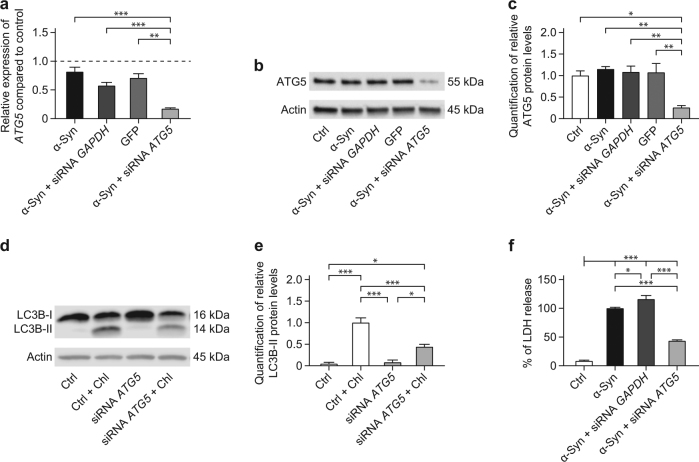
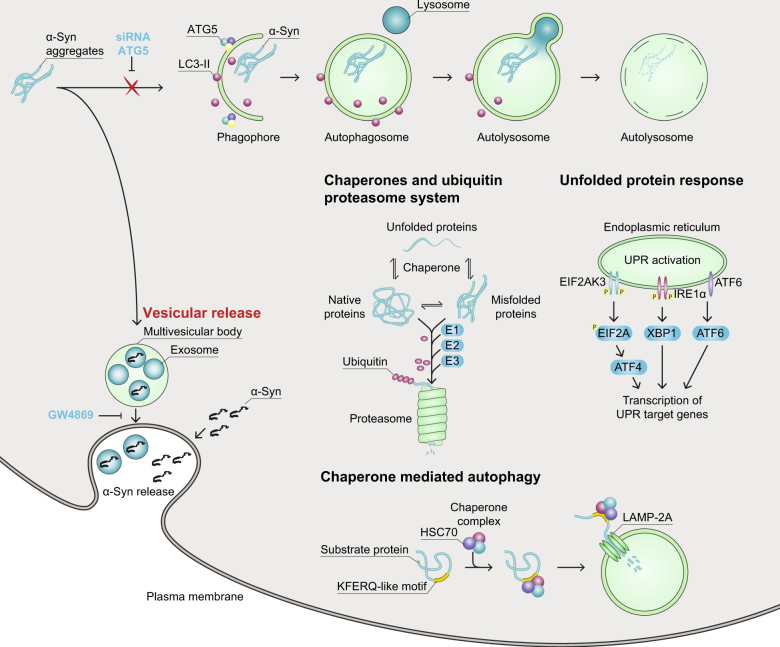
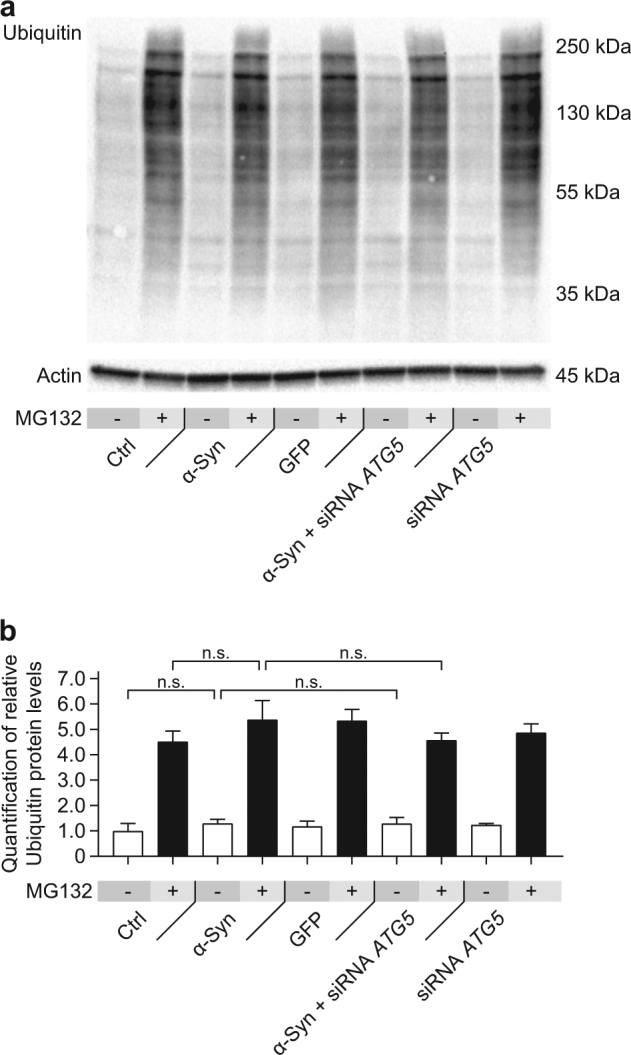
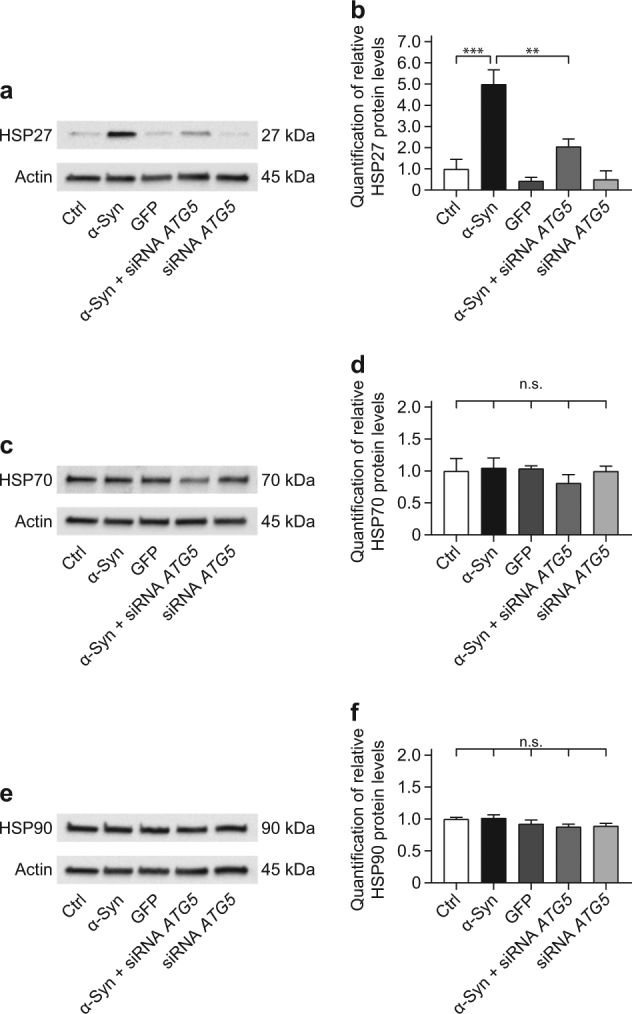
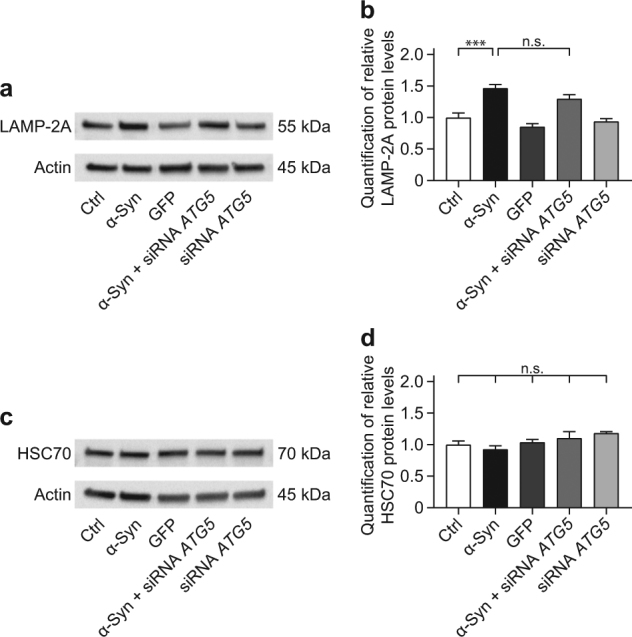
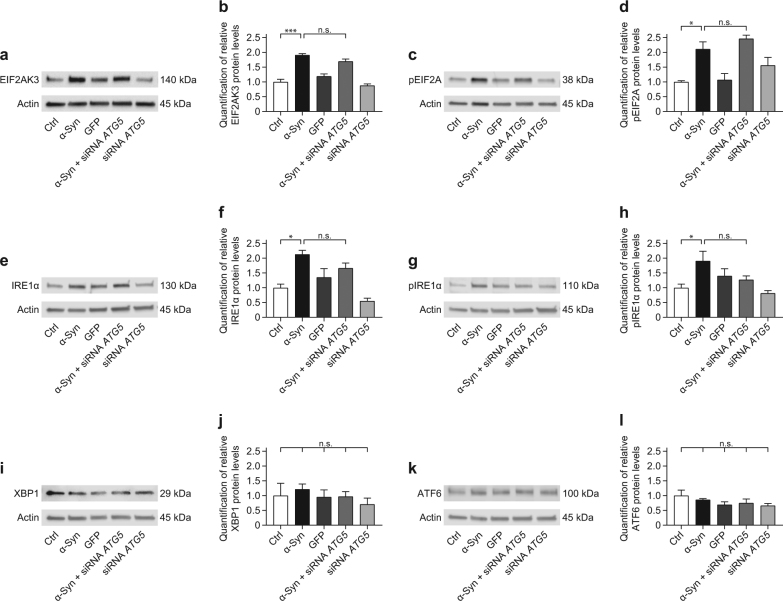
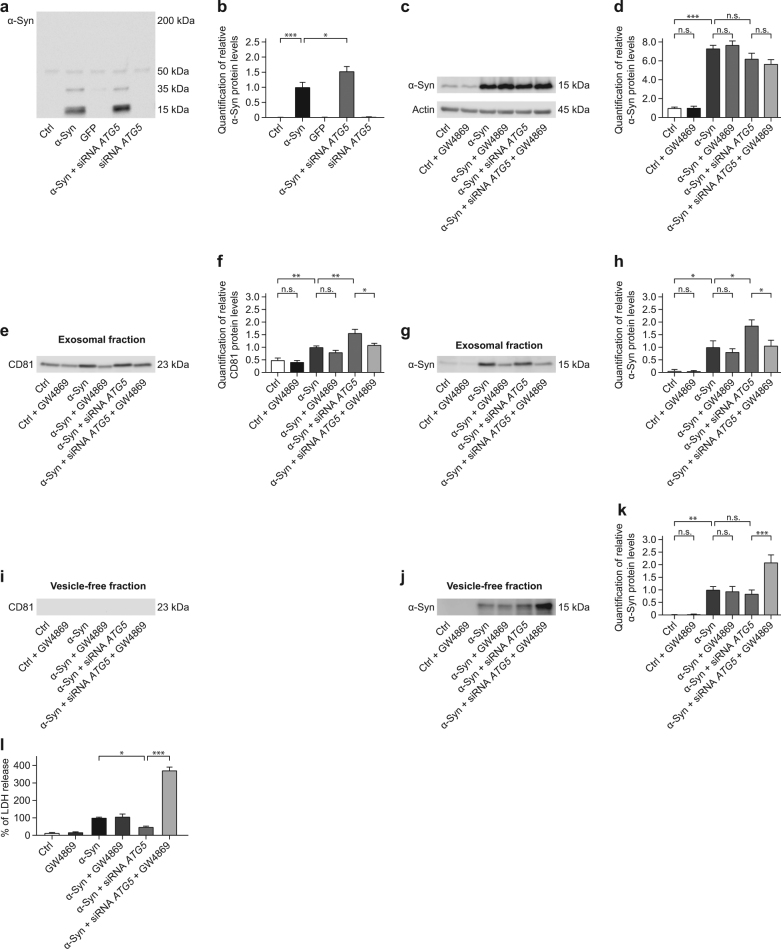
Accumulation of pathological α-synuclein aggregates plays a major role in Parkinson’s disease. Macroautophagy is a mechanism to degrade intracellular protein aggregates by wrapping them into autophagosomes, followed by fusion with lysosomes. We had previously shown that pharmacological activation of macroautophagy protects against α-synuclein-induced toxicity in human neurons. Here, we hypothesized that inhibition of macroautophagy would aggravate α-synuclein-induced cell death. Unexpectedly, inhibition of autophagosome formation by silencing of ATG5 protected from α-synuclein-induced toxicity. Therefore, we studied alternative cellular mechanisms to compensate for the loss of macroautophagy. ATG5 silencing did not affect the ubiquitin–proteasome system, chaperone systems, chaperone-mediated autophagy, or the unfolded protein response. However, ATG5 silencing increased the secretion of α-synuclein via exosomes. Blocking exosomal secretion exacerbated α-synuclein-induced cell death. We conclude that exosomal secretion of α-synuclein is increased after impaired formation of autophagosomes to reduce the intracellular α-synuclein burden. This compensatory mechanism prevents α-synuclein-induced neuronal cell death.
Overview
The claims and statistics of this paper haven’t been checked yet.
Free: it reads the open-access text and checks the first 5 claims that cite a source we can check. Create a free account to check every claim.
Integrity signals
Registry
Cites
Statistics
Figures
Verification
Claims the paper makes
The claims and statistics of this paper haven’t been checked yet.
Free: it reads the open-access text and checks the first 5 claims that cite a source we can check. Create a free account to check every claim.
Claims other papers make about this one
Each is checked against this paper’s own text: does it say what the citing paper says it does?
The source backs part of the claim, not all of it — or backs it for a different population, condition or comparison.
In the citing paper
“Similar to AD, disruption of cilia–autophagy crosstalk in PD has been shown to cause neurons to redirect α-syn into EVs, increasing its intercellular transfer, while autophagy inhibition further amplifies α-syn-containing EV release and spread [149,150].”
From The Impact of Neurotoxin Proteins Trafficked by Primary Cilia and Extracellular Vesicles in Neurodegenerative Diseases (2025) · cites this paper as [150]
Experimental — accuracy not yet measuredThe source backs part of the claim, not all of it — or backs it for a different population, condition or comparison.
In the citing paper
“Because TNT formation relies on actin-dependent machinery (e.g., M-Sec/RalA/exocyst) and ciliary Shh signaling regulates neuronal actin dynamics, ciliary dysfunction may promote TNT formation, while impaired autophagy increases EV loading, collectively enhancing α-syn dissemination (Figure 3B) [102,149,150,153,154,155].”
From The Impact of Neurotoxin Proteins Trafficked by Primary Cilia and Extracellular Vesicles in Neurodegenerative Diseases (2025) · cites this paper as [150]
Experimental — accuracy not yet measured
Self-check
Percentages, sums and reported differences re-computed from the paper’s own numbers.
The self-check needs the paper’s full text.
Citations
Cites
Mutation in the α-Synuclein Gene Identified in Families with Parkinson's Disease
Polymeropoulos, M. H., Lavedan, C., Leroy, E., Ide, S. E., Dehejia, A., Dutra, A., Pike, B., Root, H., Rubenstein, J., Boyer, R., et al. (1997) · Science · doi:10.1126/science.276.5321.2045 · Cited by 8,240
Extracellular vesicles: Exosomes, microvesicles, and friends
Raposo, G., & Stoorvogel, W. (2013) · Journal of Cell Biology · doi:10.1083/jcb.201211138 · Cited by 8,099
Guidelines for the use and interpretation of assays for monitoring autophagy (3rd edition).
Klionsky, D. J., Abdelmohsen, K., Abe, A., Abedin, M. J., Abeliovich, H., Acevedo Arozena, A., Adachi, H., Adams, C. M., Adams, P. D., Adeli, K., et al. (2016) · Autophagy · doi:10.1080/15548627.2015.1100356 · Cited by 5,894
α-Synuclein Locus Triplication Causes Parkinson's Disease
Singleton, A. B., Farrer, M., Johnson, J., Singleton, A., Hague, S., Kachergus, J., Hulihan, M., Peuralinna, T., Dutra, A., Nussbaum, R., et al. (2003) · Science · doi:10.1126/science.1090278 · Cited by 4,383
Ceramide Triggers Budding of Exosome Vesicles into Multivesicular Endosomes
Trajkovic, K., Hsu, C., Chiantia, S., Rajendran, L., Wenzel, D., Wieland, F., Schwille, P., Brügger, B., & Simons, M. (2008) · Science · doi:10.1126/science.1153124 · Cited by 3,627
Kowal, J., Arras, G., Colombo, M., Jouve, M., Morath, J. P., Primdal-Bengtson, B., Dingli, F., Loew, D., Tkach, M., & Théry, C. (2016) · Proceedings of the National Academy of Sciences · doi:10.1073/pnas.1521230113 · Cited by 3,426
How to Interpret LC3 Immunoblotting
Mizushima, N., & Yoshimori, T. (2007) · Autophagy · doi:10.4161/auto.4600 · Cited by 2,669
Impaired Degradation of Mutant α-Synuclein by Chaperone-Mediated Autophagy
Cuervo, A. M., Stefanis, L., Fredenburg, R., Lansbury, P. T., & Sulzer, D. (2004) · Science · doi:10.1126/science.1101738 · Cited by 2,024
Secretory Mechanisms and Intercellular Transfer of MicroRNAs in Living Cells
Kosaka, N., Iguchi, H., Yoshioka, Y., Takeshita, F., Matsuki, Y., & Ochiya, T. (2010) · Journal of Biological Chemistry · doi:10.1074/jbc.m110.107821 · Cited by 1,934
International Parkinson's Disease Genomics Consortium (IPDGC), Nalls, M. A., Parkinson's Study Group (PSG) Parkinson's Research: The Organized GENetics Initiative (PROGENI), 23andMe, GenePD, NeuroGenetics Research Consortium (NGRC), Hussman Institute of Human Genomics (HIHG), Investigator, T. A. J. D., (CHARGE), C. F. H. A. A. R. I. G. E., North American Brain Expression Consortium (NABEC), et al. (2014) · Nature Genetics · doi:10.1038/ng.3043 · Cited by 1,895
Genome-wide association study reveals genetic risk underlying Parkinson's disease
Simón-Sánchez, J., Schulte, C., Bras, J. M., Sharma, M., Gibbs, J. R., Berg, D., Paisan-Ruiz, C., Lichtner, P., Scholz, S. W., Hernandez, D. G., et al. (2009) · Nature Genetics · doi:10.1038/ng.487 · Cited by 1,751
The many faces of α-synuclein: from structure and toxicity to therapeutic target
Lashuel, H. A., Overk, C. R., Oueslati, A., & Masliah, E. (2013) · Nature Reviews Neuroscience · doi:10.1038/nrn3406 · Cited by 1,622
Molecular Chaperone Functions in Protein Folding and Proteostasis
Kim, Y. E., Hipp, M. S., Bracher, A., Hayer-Hartl, M., & Ulrich Hartl, F. (2013) · Annual Review of Biochemistry · doi:10.1146/annurev-biochem-060208-092442 · Cited by 1,475
α-Synuclein Is Degraded by Both Autophagy and the Proteasome
Webb, J. L., Ravikumar, B., Atkins, J., Skepper, J. N., & Rubinsztein, D. C. (2003) · Journal of Biological Chemistry · doi:10.1074/jbc.m300227200 · Cited by 1,429
Genetics of Parkinson's Disease
Klein, C., & Westenberger, A. (2012) · Cold Spring Harbor Perspectives in Medicine · doi:10.1101/cshperspect.a008888 · Cited by 1,358
A meta-analysis of genome-wide association studies identifies 17 new Parkinson's disease risk loci
Chang, D., Nalls, M. A., Hallgrímsdóttir, I. B., Hunkapiller, J., van der Brug, M., Cai, F., International Parkinson's Disease Genomics Consortium, 23andMe Research Team, Kerchner, G. A., Ayalon, G., et al. (2017) · Nature Genetics · doi:10.1038/ng.3955 · Cited by 1,112
Parkinson's disease: from monogenic forms to genetic susceptibility factors
Lesage, S., & Brice, A. (2009) · Human Molecular Genetics · doi:10.1093/hmg/ddp012 · Cited by 945
The molecular machinery of autophagy: unanswered questions
Klionsky, D. J. (2005) · Journal of Cell Science · doi:10.1242/jcs.01620 · Cited by 933
Exosomal cell-to-cell transmission of alpha synuclein oligomers
Danzer, K. M., Kranich, L. R., Ruf, W. P., Cagsal-Getkin, O., Winslow, A. R., Zhu, L., Vanderburg, C. R., & McLean, P. J. (2012) · Molecular Neurodegeneration · doi:10.1186/1750-1326-7-42 · Cited by 853
Bendor, J. T., Logan, T. P., & Edwards, R. H. (2013) · Neuron · doi:10.1016/j.neuron.2013.09.004 · Cited by 825
Autophagy: assays and artifacts
Barth, S., Glick, D., & Macleod, K. F. (2010) · The Journal of Pathology · doi:10.1002/path.2694 · Cited by 793
Vogiatzi, T., Xilouri, M., Vekrellis, K., & Stefanis, L. (2008) · Journal of Biological Chemistry · doi:10.1074/jbc.m801992200 · Cited by 683
Activation of the unfolded protein response in Parkinson’s disease
Hoozemans, J. J. M., van Haastert, E. S., Eikelenboom, P., de Vos, R. A. I., Rozemuller, J. M., & Scheper, W. (2007) · Biochemical and Biophysical Research Communications · doi:10.1016/j.bbrc.2007.01.043 · Cited by 525
Exosomes mediate the cell-to-cell transmission of IFN-α-induced antiviral activity
Li, J., Liu, K., Liu, Y., Xu, Y., Zhang, F., Yang, H., Liu, J., Pan, T., Chen, J., Wu, M., et al. (2013) · Nature Immunology · doi:10.1038/ni.2647 · Cited by 509
Mhyre, T. R., Boyd, J. T., Hamill, R. W., & Maguire-Zeiss, K. A. (2012) · Subcellular Biochemistry · doi:10.1007/978-94-007-5416-4_16 · Cited by 423
The unfolded protein response in neurodegenerative diseases: a neuropathological perspective
Scheper, W., & Hoozemans, J. J. M. (2015) · Acta Neuropathologica · doi:10.1007/s00401-015-1462-8 · Cited by 367
Signaling Pathways in Exosomes Biogenesis, Secretion and Fate
Urbanelli, L., Magini, A., Buratta, S., Brozzi, A., Sagini, K., Polchi, A., Tancini, B., & Emiliani, C. (2013) · Genes · doi:10.3390/genes4020152 · Cited by 355
Lysosomal Degradation of α-Synuclein in Vivo
Mak, S. K., McCormack, A. L., Manning-Boğ, A. B., Cuervo, A. M., & Di Monte, D. A. (2010) · Journal of Biological Chemistry · doi:10.1074/jbc.m109.074617 · Cited by 349
Unfolded proteins and endoplasmic reticulum stress in neurodegenerative disorders
Doyle, K. M., Kennedy, D., Gorman, A. M., Gupta, S., Healy, S. J. M., & Samali, A. (2011) · Journal of Cellular and Molecular Medicine · doi:10.1111/j.1582-4934.2011.01374.x · Cited by 321
How do delays in treatment affect patient prognosis in head and neck cancer?
Mohamedbhai, H., Thomas, S., Ali, S., Whitley, S., Liew, C., Sadiq, Z., Kalavrezos, N., & Hutchinson, I. (2017) · British Journal of Oral and Maxillofacial Surgery · doi:10.1016/j.bjoms.2017.08.058 · Cited by 304
Minakaki, G., Menges, S., Kittel, A., Emmanouilidou, E., Schaeffner, I., Barkovits, K., Bergmann, A., Rockenstein, E., Adame, A., Marxreiter, F., et al. (2018) · Autophagy · doi:10.1080/15548627.2017.1395992 · Cited by 272
Lotharius, J., Falsig, J., van Beek, J., Payne, S., Dringen, R., Brundin, P., & Leist, M. (2005) · The Journal of Neuroscience · doi:10.1523/jneurosci.1746-05.2005 · Cited by 262
Protein degradation pathways in Parkinson’s disease: curse or blessing
Ebrahimi-Fakhari, D., Wahlster, L., & McLean, P. J. (2012) · Acta Neuropathologica · doi:10.1007/s00401-012-1004-6 · Cited by 253
Xu, L., & Pu, J. (2016) · Parkinson's Disease · doi:10.1155/2016/1720621 · Cited by 230
Protein folding stress in neurodegenerative diseases: a glimpse into the ER
Matus, S., Glimcher, L. H., & Hetz, C. (2011) · Current Opinion in Cell Biology · doi:10.1016/j.ceb.2011.01.003 · Cited by 226
Autophagy modulates SNCA/α-synuclein release, thereby generating a hostile microenvironment
Poehler, A.-M., Xiang, W., Spitzer, P., May, V. E. L., Meixner, H., Rockenstein, E., Chutna, O., Outeiro, T. F., Winkler, J., Masliah, E., et al. (2014) · Autophagy · doi:10.4161/auto.36436 · Cited by 212
Regulation of exosome release by glycosphingolipids and flotillins
Phuyal, S., Hessvik, N. P., Skotland, T., Sandvig, K., & Llorente, A. (2014) · The FEBS Journal · doi:10.1111/febs.12775 · Cited by 212
Chaperone-mediated autophagy at a glance
Kaushik, S., Bandyopadhyay, U., Sridhar, S., Kiffin, R., Martinez-Vicente, M., Kon, M., Orenstein, S. J., Wong, E., & Cuervo, A. M. (2011) · Journal of Cell Science · doi:10.1242/jcs.073874 · Cited by 209
Small heat shock proteins protect against α-synuclein-induced toxicity and aggregation
Outeiro, T. F., Klucken, J., Strathearn, K. E., Liu, F., Nguyen, P., Rochet, J.-C., Hyman, B. T., & McLean, P. J. (2006) · Biochemical and Biophysical Research Communications · doi:10.1016/j.bbrc.2006.10.085 · Cited by 185
Gorbatyuk, M. S., Shabashvili, A., Chen, W., Meyers, C., Sullivan, L. F., Salganik, M., Lin, J. H., Lewin, A. S., Muzyczka, N., & Gorbatyuk, O. S. (2012) · Molecular Therapy · doi:10.1038/mt.2012.28 · Cited by 180
α-synuclein aggregation and its modulation
Ghosh, D., Mehra, S., Sahay, S., Singh, P. K., & Maji, S. K. (2017) · International Journal of Biological Macromolecules · doi:10.1016/j.ijbiomac.2016.10.021 · Cited by 175
Autophagy: More Than a Nonselective Pathway
Reggiori, F., Komatsu, M., Finley, K., & Simonsen, A. (2012) · International Journal of Cell Biology · doi:10.1155/2012/219625 · Cited by 152
Atg5: more than an autophagy factor
Codogno, P., & Meijer, A. J. (2006) · Nature Cell Biology · doi:10.1038/ncb1006-1045 · Cited by 137
Zourlidou, A., Payne Smith, M. D., & Latchman, D. S. (2004) · Journal of Neurochemistry · doi:10.1046/j.1471-4159.2003.02273.x · Cited by 129
Ancolio, K., da Costa, C. A., Uéda, K., & Checler, F. (2000) · Neuroscience Letters · doi:10.1016/s0304-3940(00)01049-1 · Cited by 128
Phenotypic spectrum of alpha-synuclein mutations: New insights from patients and cellular models
Petrucci, S., Ginevrino, M., & Valente, E. M. (2015) · Parkinsonism & Related Disorders · doi:10.1016/j.parkreldis.2015.08.015 · Cited by 128
Molecular Chaperones as Rational Drug Targets for Parkinsons Disease Therapeutics
Kalia, S. K., Kalia, L. V., & McLean, P. J. (2010) · CNS & Neurological Disorders - Drug Targets · doi:10.2174/187152710793237386 · Cited by 111
Molecular mechanisms of selective autophagy
Fimia, G. M., Kroemer, G., & Piacentini, M. (2012) · Cell Death and Differentiation · doi:10.1038/cdd.2012.97 · Cited by 97
Kaushik, S., & Cuervo, A. M. (2008) · Methods in Molecular Biology™ · doi:10.1007/978-1-59745-157-4_15 · Cited by 93
Ebrahimi-Fakhari, D., Saidi, L.-J., & Wahlster, L. (2013) · Acta Neuropathologica Communications · doi:10.1186/2051-5960-1-79 · Cited by 87
Höllerhage, M., Moebius, C., Melms, J. C., Chiu, W., Goebel, J. N., Chakroun, T., Koeglsperger, T., Oertel, W. H., Rösler, T. W., Bickle, M., et al. (2017) · Scientific Reports · doi:10.1038/s41598-017-11664-5 · Cited by 77
Self-citationXilouri, M., & Stefanis, L. (2015) · Molecular and Cellular Neuroscience · doi:10.1016/j.mcn.2015.01.003 · Cited by 72
Trifluoperazine rescues human dopaminergic cells from wild-type α-synuclein-induced toxicity
Höllerhage, M., Goebel, J. N., de Andrade, A., Hildebrandt, T., Dolga, A. M., Culmsee, C., Oertel, W. H., Hengerer, B., & Höglinger, G. U. (2014) · Neurobiology of Aging · doi:10.1016/j.neurobiolaging.2014.01.027 · Cited by 71
Self-citationDeregulation of calcium homeostasis mediates secreted α–synuclein-induced neurotoxicity
Melachroinou, K., Xilouri, M., Emmanouilidou, E., Masgrau, R., Papazafiri, P., Stefanis, L., & Vekrellis, K. (2013) · Neurobiology of Aging · doi:10.1016/j.neurobiolaging.2013.06.006 · Cited by 69
Molecular Chaperones and Co-Chaperones in Parkinson Disease
Dimant, H., Ebrahimi‐Fakhari, D., & McLean, P. J. (2012) · The Neuroscientist · doi:10.1177/1073858412441372 · Cited by 60
Châari, A., Hoarau-Véchot, J., & Ladjimi, M. M. (2013) · International Journal of Biological Macromolecules · doi:10.1016/j.ijbiomac.2013.05.032 · Cited by 55
Proteasome inhibitor-induced autophagy in PC12 cells overexpressing A53T mutant α-synuclein
Lan, D.-M., Wang, W., Zhuang, J., & Zhao, Z. (2014) · Molecular Medicine Reports · doi:10.3892/mmr.2014.3011 · Cited by 47
Xu, B., Wang, F., Wu, S., Deng, Y. L., Liu, W., Feng, S., Yang, T., & Xu, Z. (2013) · Molecular Neurobiology · doi:10.1007/s12035-013-8527-2 · Cited by 36
Batelli, S., Peverelli, E., Rodilossi, S., Forloni, G., & Albani, D. (2011) · Neuroscience · doi:10.1016/j.neuroscience.2011.08.030 · Cited by 28
Research works printed but not linked: 1
- Lilienbaum A Relationship between the proteasomal system and autophagy Int. J. Biochem. Mol. Biol. 2013 4 1 26 23638318 PMC3627065
Cited by
Biological Functions of Autophagy Genes: A Disease Perspective
Levine, B., & Kroemer, G. (2019) · Cell · doi:10.1016/j.cell.2018.09.048 · Cited by 2,832
α-Synuclein pathology in Parkinson’s disease and related α-synucleinopathies
Henderson, M. X., Trojanowski, J. Q., & Lee, V. M.-Y. (2019) · Neuroscience Letters · doi:10.1016/j.neulet.2019.134316 · Cited by 291
Serum neuronal exosomes predict and differentiate Parkinson’s disease from atypical parkinsonism
Jiang, C., Hopfner, F., Katsikoudi, A., Hein, R., Catli, C., Evetts, S., Huang, Y., Wang, H., Ryder, J. W., Kuhlenbaeumer, G., et al. (2020) · Journal of Neurology, Neurosurgery & Psychiatry · doi:10.1136/jnnp-2019-322588 · Cited by 275
CNS-Derived Blood Exosomes as a Promising Source of Biomarkers: Opportunities and Challenges
Hornung, S., Dutta, S., & Bitan, G. (2020) · Frontiers in Molecular Neuroscience · doi:10.3389/fnmol.2020.00038 · Cited by 238
“In particular, disposal of unwanted cellular components via exosomes occurs to assist when other cellular clearance mechanisms, such as the proteasome and autophagy-lysosome system, gradually fail in eliminating aggregated amyloidogenic proteins (Alvarez-Erviti et al., 2011; Ihara et al., 2012; Urbanelli et al., 2013;…”
BackgroundMicroglia as modulators of exosomal alpha-synuclein transmission
Xia, Y., Zhang, G., Han, C., Ma, K., Guo, X., Wan, F., Kou, L., Yin, S., Liu, L., Huang, J., et al. (2019) · Cell Death & Disease · doi:10.1038/s41419-019-1404-9 · Cited by 206
Metadata
- Authors
- Fussi, N., Höllerhage, M., Chakroun, T., Nykänen, N.-P., Rösler, T. W., Koeglsperger, T., Wurst, W., Behrends, C., & Höglinger, G. U.
- Affiliations
- German Center for Neurodegenerative Diseases (DE)
- Munich Cluster for Systems Neurology (DE)
- Corresponding author
- Höglinger, Günter U.
- ORCID
- Venue
- Cell Death & Disease
- Published
- 2018-07-09
- Volume
- 9
- Issue
- 7
- Pages
- 757-757
- ISSN
- 2041-4889 (ISSN-L)
- PMC
- PMC6037700
- OpenAlex
- W2836440195
- Cited by
- 161
- References
- 60
- Citations by year
- 2026: 10 · 2025: 17 · 2024: 30 · 2023: 15 · 2022: 22 · 2021: 23 · 2020: 17 · 2019: 25 · 2018: 2
- FWCI
- 11.38
- Type
- journal article
- Language
- en
- Open access
- gold
- doi.org
- Licence
- cc-by
- creativecommons.org/licenses/by/4.0 (tdm)
- creativecommons.org/licenses/by/4.0 (vor)
- Locations
- Cell Death and Disease (publishedVersion, cc-by)
- Europe PMC (PubMed Central) (publishedVersion, cc-by)
- PubMed Central (publishedVersion, cc-by)
- PubMed (publishedVersion)
- DOAJ (DOAJ: Directory of Open Access Journals) (submittedVersion)
- Open access LMU (Ludwid Maxmilian's Universitat Munchen) (submittedVersion, cc-by)
- mediaTUM – the media and publications repository of the Technical University Munich (Technical University Munich) (submittedVersion, other-oa)
- DZNE Pub (submittedVersion, other-oa)
- PuSH - Publication Server of Helmholtz Zentrum München (submittedVersion, cc-by)
- Funders
- Deutsche Forschungsgemeinschaft (HO2402/6‐2)
- Bundesministerium für Bildung und Forschung (01EK1605A, 01KU1403A EpiPD, 01EK1605A HitTau, 01EK1605C, 031A430E, 01KU1403A)
- NOMIS Stiftung
- Topics
- Health Sciences › Medicine › Clinical Neurology › Parkinson's Disease Mechanisms and Treatments
- Life Sciences › Biochemistry, Genetics and Molecular Biology › Cell Biology › Autophagy in Disease and Therapy
- Life Sciences › Biochemistry, Genetics and Molecular Biology › Molecular Biology › Extracellular vesicles in disease
- Keywords
- alpha-synuclein, exosomes, macroautophagy, ATG5, autophagosome formation, Parkinson's disease, neuronal cell death, protein aggregate clearance, neuroprotection
- MeSH terms
- Autophagosomes, Autophagy, Cell Line, Humans, Blotting, Western, RNA, Small Interfering, alpha-Synuclein, Exosomes, Real-Time Polymerase Chain Reaction
About these checks
Registry, retraction, Cites and statistics results are computed, not judged, with one exception: a printed reference that no index lists is read once by a model before it counts as a citation error. Claims are extracted by a model and kept only when their quote appears verbatim in the text; each cited source is then checked, with a model’s help, for whether it says what the claim relies on. Those verdicts can be wrong — read the claim’s quote and the cited source before relying on one.
Statistics and arithmetic are recomputed, not judged.
Confidence bands are shown only for fields calibrated on our annotated test set. None is calibrated yet, so no band is shown.
What counts as a claim ›How we measure confidence ›How we check this ›
Are you an author, or do you see a problem with this page? Request a review
Data sources
Bibliographic data: Semantic Scholar, OpenAlex, Crossref.
Contains information from the Semantic Scholar Academic Graph Datasets, made available under the ODC Attribution License (ODC-BY 1.0).
Semantic Scholar’s data is described in: Kinney, R., et al. (2023). The Semantic Scholar Open Data Platform. arXiv:2301.10140.
