

The DOI matches its Crossref record; 37 of the 37 references it cites were found in a registry or an index.
Inside out: optimization of lipid nanoparticle formulations for exterior complexation and in vivo delivery of saRNA
Open accessAbstract
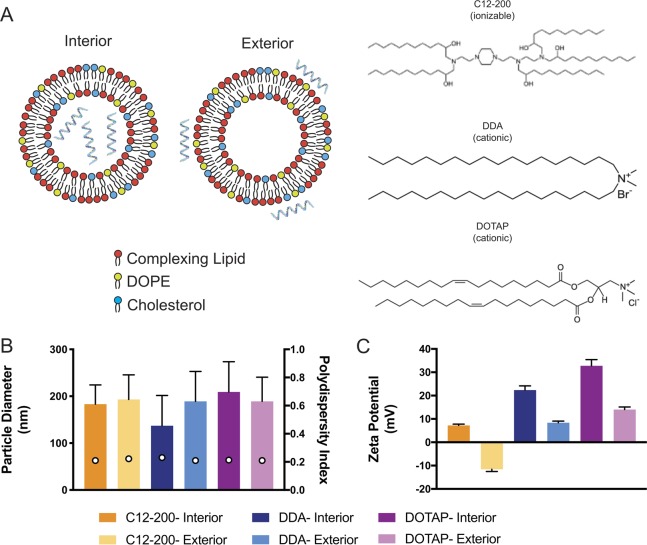
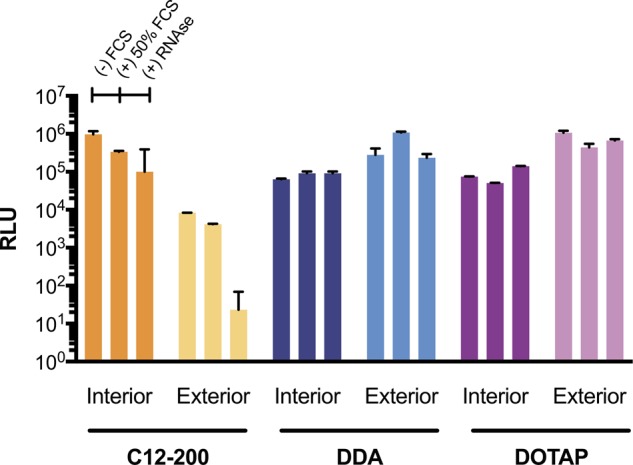
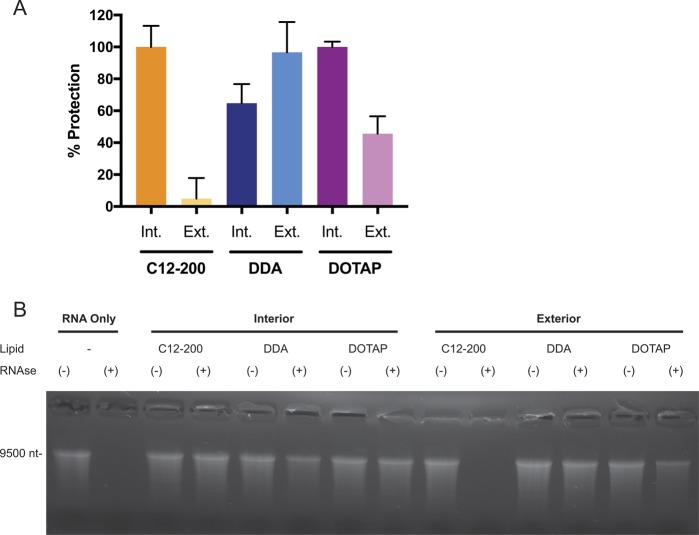
Self-amplifying RNA (saRNA) is a promising biotherapeutic tool that has been used as a vaccine against both infectious diseases and cancer. saRNA has been shown to induce protein expression for up to 60 days and elicit immune responses with lower dosing than messenger RNA (mRNA). Because saRNA is a large (~9500 nt), negatively charged molecule, it requires a delivery vehicle for efficient cellular uptake and degradation protection. Lipid nanoparticles (LNPs) have been widely used for RNA formulations, where the prevailing paradigm is to encapsulate RNA within the particle, including the first FDA-approved small-interfering siRNA therapy. Here, we compared LNP formulations with cationic and ionizable lipids with saRNA either on the interior or exterior of the particle. We show that LNPs formulated with cationic lipids protect saRNA from RNAse degradation, even when it is adsorbed to the surface. Furthermore, cationic LNPs deliver saRNA equivalently to particles formulated with saRNA encapsulated in an ionizable lipid particle, both in vitro and in vivo. Finally, we show that cationic and ionizable LNP formulations induce equivalent antibodies against HIV-1 Env gp140 as a model antigen. These studies establish formulating saRNA on the surface of cationic LNPs as an alternative to the paradigm of encapsulating RNA.
Overview
The claims and statistics of this paper haven’t been checked yet.
Run the check — free, no account needed. It reads the open-access text and checks the sources it cites.
Integrity signals
Registry
Cites
Statistics
Figures
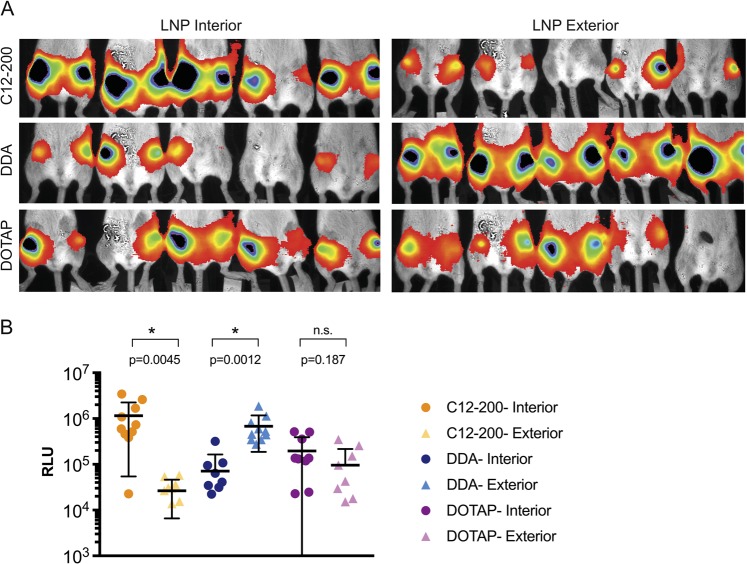
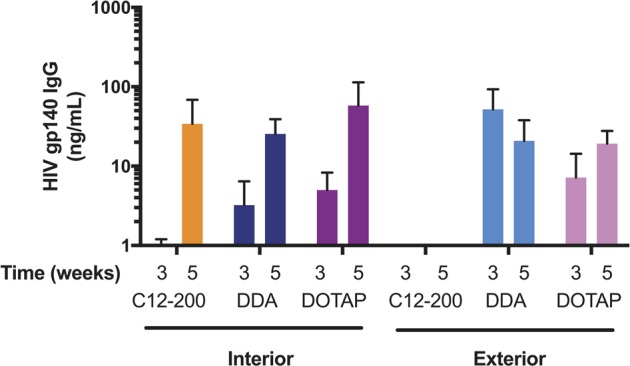
Verification
Claims the paper makes
The claims and statistics of this paper haven’t been checked yet.
Run the check — free, no account needed. It reads the open-access text and checks the sources it cites.
Claims other papers make about this one
Each is checked against this paper’s own text: does it say what the citing paper says it does?
In the citing paper
“Several preclinical studies have delivered mRNA vaccines encoding HIV proteins using multiple delivery vehicles, including cationic nanoemulsions109,161, DOTAP/DOPE liposomes162, polymers84,163,164 and ionizable LNPs165,166, but they have had varied success.”
From mRNA vaccines for infectious diseases: principles, delivery and clinical translation (2021) · cites this paper as [165]
In the citing paper
“These studies suggest that novel antigens are necessary to effectively target HIV in addition to potent delivery vehicles.”
From mRNA vaccines for infectious diseases: principles, delivery and clinical translation (2021) · cites this paper as [165]
In the citing paper
“This structural feature protects mRNA molecules from nuclease degradation and increases nanoparticle stability in physiological fluids17,46.”
From Lipid nanoparticles for mRNA delivery (2021) · cites this paper as [46]
Self-check
Percentages, sums and reported differences re-computed from the paper’s own numbers.
The self-check needs the paper’s full text.
Citations
Cites
mRNA vaccines — a new era in vaccinology
Pardi, N., Hogan, M. J., Porter, F. W., & Weissman, D. (2018) · Nature Reviews Drug Discovery · doi:10.1038/nrd.2017.243 · Cited by 4,667
Systemic RNA delivery to dendritic cells exploits antiviral defence for cancer immunotherapy
Kranz, L. M., Diken, M., Haas, H., Kreiter, S., Loquai, C., Reuter, K. C., Meng, M., Fritz, D., Vascotto, F., Hefesha, H., et al. (2016) · Nature · doi:10.1038/nature18300 · Cited by 1,819
Lipid-like materials for low-dose, in vivo gene silencing
Love, K. T., Mahon, K. P., Levins, C. G., Whitehead, K. A., Querbes, W., Dorkin, J. R., Qin, J., Cantley, W., Qin, L. L., Racie, T., et al. (2010) · Proceedings of the National Academy of Sciences · doi:10.1073/pnas.0910603106 · Cited by 969
Zika virus protection by a single low-dose nucleoside-modified mRNA vaccination
Pardi, N., Hogan, M. J., Pelc, R. S., Muramatsu, H., Andersen, H., DeMaso, C. R., Dowd, K. A., Sutherland, L. L., Scearce, R. M., Parks, R., et al. (2017) · Nature · doi:10.1038/nature21428 · Cited by 884
Kauffman, K. J., Dorkin, J. R., Yang, J. H., Heartlein, M. W., DeRosa, F., Mir, F. F., Fenton, O. S., & Anderson, D. G. (2015) · Nano Letters · doi:10.1021/acs.nanolett.5b02497 · Cited by 796
Lipid Nanoparticle Assisted mRNA Delivery for Potent Cancer Immunotherapy
Oberli, M. A., Reichmuth, A. M., Dorkin, J. R., Mitchell, M. J., Fenton, O. S., Jaklenec, A., Anderson, D. G., Langer, R., & Blankschtein, D. (2017) · Nano Letters · doi:10.1021/acs.nanolett.6b03329 · Cited by 719
Nonviral delivery of self-amplifying RNA vaccines
Geall, A. J., Verma, A., Otten, G. R., Shaw, C. A., Hekele, A., Banerjee, K., Cu, Y., Beard, C. W., Brito, L. A., Krucker, T., et al. (2012) · Proceedings of the National Academy of Sciences · doi:10.1073/pnas.1209367109 · Cited by 675
Bahl, K., Senn, J. J., Yuzhakov, O., Bulychev, A., Brito, L. A., Hassett, K. J., Laska, M. E., Smith, M., Almarsson, Ö., Thompson, J., et al. (2017) · Molecular Therapy · doi:10.1016/j.ymthe.2017.03.035 · Cited by 642
Vogel, A. B., Lambert, L., Kinnear, E., Busse, D., Erbar, S., Reuter, K. C., Wicke, L., Perkovic, M., Beissert, T., Haas, H., et al. (2018) · Molecular Therapy · doi:10.1016/j.ymthe.2017.11.017 · Cited by 501
Petsch, B., Schnee, M., Vogel, A. B., Lange, E., Hoffmann, B., Voss, D., Schlake, T., Thess, A., Kallen, K.-J., Stitz, L., et al. (2012) · Nature Biotechnology · doi:10.1038/nbt.2436 · Cited by 464
Pushko, P., Parker, M., Ludwig, G. V., Davis, N., Johnston, R. E., & Smith, J. (1997) · Virology · doi:10.1006/viro.1997.8878 · Cited by 444
Chahal, J. S., Khan, O. F., Cooper, C. L., McPartlan, J. S., Tsosie, J. K., Tilley, L. D., Sidik, S. M., Lourido, S., Langer, R., Bavari, S., et al. (2016) · Proceedings of the National Academy of Sciences · doi:10.1073/pnas.1600299113 · Cited by 414
Nanotechnologies in delivery of mRNA therapeutics using nonviral vector-based delivery systems
Guan, S., & Rosenecker, J. (2017) · Gene Therapy · doi:10.1038/gt.2017.5 · Cited by 389
A Cationic Nanoemulsion for the Delivery of Next-generation RNA Vaccines
Brito, L. A., Chan, M., Shaw, C. A., Hekele, A., Carsillo, T., Schaefer, M., Archer, J., Seubert, A., Otten, G. R., Beard, C. W., et al. (2014) · Molecular Therapy · doi:10.1038/mt.2014.133 · Cited by 338
Schubert, M., & Müller-Goymann, C. C. (2005) · European Journal of Pharmaceutics and Biopharmaceutics · doi:10.1016/j.ejpb.2005.03.006 · Cited by 297
Agger, E. M., Rosenkrands, I., Hansen, J. U., Brahimi, K., Vandahl, B., Aagaard, C., Werninghaus, K., Kirschning, C. J., Lang, R., Christensen, D., et al. (2008) · PLoS ONE · doi:10.1371/journal.pone.0003116 · Cited by 288
Pardi, N., Parkhouse, K., Kirkpatrick, E., McMahon, M., Zost, S. J., Mui, B. L., Tam, Y. K., Karikó, K., Barbosa, C. J., Madden, T. D., et al. (2018) · Nature Communications · doi:10.1038/s41467-018-05482-0 · Cited by 281
Cationic liposomes as vaccine adjuvants
Christensen, D., Korsholm, K. S., Andersen, P. L., & Agger, E. M. (2011) · Expert Review of Vaccines · doi:10.1586/erv.11.17 · Cited by 262
Pollard, C., Rejman, J., De Haes, W., Verrier, B., Van Gulck, E., Naessens, T., De Smedt, S., Bogaert, P., Grooten, J., Vanham, G., et al. (2013) · Molecular Therapy · doi:10.1038/mt.2012.202 · Cited by 248
A novel, disruptive vaccination technology: Self-adjuvanted RNActive ® vaccines
Kallen, K.-J., Heidenreich, R., Schnee, M., Petsch, B., Schlake, T., Thess, A., Baumhof, P., Scheel, B., Koch, S. D., & Fotin-Mleczek, M. (2013) · Human Vaccines & Immunotherapeutics · doi:10.4161/hv.25181 · Cited by 223
Schnee, M., Vogel, A. B., Voss, D., Petsch, B., Baumhof, P., Kramps, T., & Stitz, L. (2016) · PLOS Neglected Tropical Diseases · doi:10.1371/journal.pntd.0004746 · Cited by 212
Bogers, W. M., Oostermeijer, H., Mooij, P., Koopman, G., Verschoor, E. J., Davis, D., Ulmer, J. B., Brito, L. A., Cu, Y., Banerjee, K., et al. (2015) · Journal of Infectious Diseases · doi:10.1093/infdis/jiu522 · Cited by 181
Brito, L. A., Kommareddy, S., Maione, D., Uematsu, Y., Giovani, C., Scorza, F. B., Otten, G. R., Yu, D. L., Mandl, C. W., Mason, P. W., et al. (2014) · Advances in genetics · doi:10.1016/bs.adgen.2014.10.005 · Cited by 181
Fleeton, M. N., Chen, M., Berglund, P., Rhodes, G., Parker, S. E., Murphy, M., Atkins, G. J., & Liljeström, P. (2001) · The Journal of Infectious Diseases · doi:10.1086/319857 · Cited by 157
Brazzoli, M., Magini, D., Bonci, A., Buccato, S., Giovani, C., Kratzer, R., Zurli, V., Mangiavacchi, S., Casini, D., Brito, L. M., et al. (2016) · Journal of Virology · doi:10.1128/jvi.01786-15 · Cited by 154
Uchida, S., Kinoh, H., Ishii, T., Matsui, A., Tockary, T. A., Takeda, K. M., Uchida, H., Osada, K., Itaka, K., & Kataoka, K. (2015) · Biomaterials · doi:10.1016/j.biomaterials.2015.12.031 · Cited by 151
Sebastian, M., Papachristofilou, A., Weiß, C., Früh, M., Cathomas, R. L., Hilbe, W., Wehler, T., Rippin, G., Koch, S. D., Scheel, B., et al. (2014) · BMC Cancer · doi:10.1186/1471-2407-14-748 · Cited by 143
Polyethylenimine-based polyplex delivery of self-replicating RNA vaccines
Démoulins, T., Milona, P., Englezou, P. C., Ebensen, T., Schulze, K., Suter, R., Pichon, C., Midoux, P., Guzmán, C. A., Ruggli, N., et al. (2015) · Nanomedicine Nanotechnology Biology and Medicine · doi:10.1016/j.nano.2015.11.001 · Cited by 111
Nordly, P., Rose, F., Christensen, D., Nielsen, H. M., Andersen, P. L., Agger, E. M., & Foged, C. (2010) · Journal of Controlled Release · doi:10.1016/j.jconrel.2010.11.021 · Cited by 93
Alnylam prepares to land first RNAi drug approval
Morrison, C. (2018) · Nature Reviews Drug Discovery · doi:10.1038/nrd.2018.20 · Cited by 59
Rational Design of DNA-Expressed Stabilized Native-Like HIV-1 Envelope Trimers
Aldon, Y., McKay, P. F., Allen, J. D., Ozorowski, G., Lévai, R. F., Tolazzi, M., Rogers, P., He, L., de Val, N., Fábián, K., et al. (2018) · Cell Reports · doi:10.1016/j.celrep.2018.08.051 · Cited by 54
Self-citationStructural components for amplification of positive and negative strand VEEV splitzicons
Blakney, A. K., McKay, P. F., & Shattock, R. J. (2018) · Frontiers in Molecular Biosciences · doi:10.3389/fmolb.2018.00071 · Cited by 47
Self-citationCharacterization of polyplexes involving small RNA
Pereira, P., Jorge, A. F., Martins, R., Pais, A. A. C. C., de Sousa, F. P., & Figueiras, A. (2012) · Journal of Colloid and Interface Science · doi:10.1016/j.jcis.2012.07.088 · Cited by 41
Kubota, K., Kohei, O., Sawaki, K., Li, T., Mitsuoka, K., Sato, T., & Takeoka, S. (2017) · International Journal of Nanomedicine · doi:10.2147/ijn.s136426 · Cited by 36
Self-Amplifying Replicon RNA Vaccine Delivery to Dendritic Cells by Synthetic Nanoparticles
McCullough, K. C., Milona, P., Thomann, L., Démoulins, T., Englezou, P. C., Suter, R., & Ruggli, N. (2014) · Vaccines · doi:10.3390/vaccines2040735 · Cited by 35
Cosgrove, C. A., Lacey, C. J., Cope, A. V., Bartolf, A., Morris, G. C., Yan, C., Baden, S., Cole, T., Carter, D., Brodnicki, E., et al. (2016) · PLoS ONE · doi:10.1371/journal.pone.0152038 · Cited by 33
Self-citationBadamchi-Zadeh, A., McKay, P. F., Holland, M. J., Paes, W., Brzozowski, A. M., Lacey, C., Follmann, F., Tregoning, J. S., & Shattock, R. J. (2015) · PLoS ONE · doi:10.1371/journal.pone.0141209 · Cited by 23
Self-citation
Research works printed but not linked: 1
- Love KT, Mahon KP, Levins CG, Whitehead KA, Querbes W, Dorkin JR, et al. Lipid-like materials for low-dose, in vivo gene silencing. Proc Natl Acad Sci USA. 2010;107:1864–9. PubMed PMID: PMC2804742 · DOI · Paper page
Cited by
Sorted by citations
Lipid nanoparticles for mRNA delivery
Hou, X., Zaks, T., Langer, R., & Dong, Y. (2021) · Nature Reviews Materials · doi:10.1038/s41578-021-00358-0 · Cited by 4,076
mRNA vaccines for infectious diseases: principles, delivery and clinical translation
Chaudhary, N., Weissman, D., & Whitehead, K. A. (2021) · Nature Reviews Drug Discovery · doi:10.1038/s41573-021-00283-5 · Cited by 1,555
Self-amplifying RNA vaccines for infectious diseases
Bloom, K., van den Berg, F., & Arbuthnot, P. (2021) · Gene Therapy · doi:10.1038/s41434-020-00204-y · Cited by 487
McKay, P. F., Hu, K., Blakney, A. K., Samnuan, K., Brown, J. C., Penn, R., Zhou, J., Bouton, C. R., Rogers, P., Polra, K., et al. (2020) · Nature Communications · doi:10.1038/s41467-020-17409-9 · Cited by 462
Self-citationManufacturing Considerations for the Development of Lipid Nanoparticles Using Microfluidics
Roces, C. B., Lou, G., Jain, N., Abraham, S., Thomas, A. M., Halbert, G., & Perrie, Y. (2020) · Pharmaceutics · doi:10.3390/pharmaceutics12111095 · Cited by 346
Metadata
- Authors
- Blakney, A. K., McKay, P. F., Yus, B. I., Aldon, Y., & Shattock, R. J.
- Affiliations
- Imperial College London (GB)
- Corresponding author
- Shattock, Robin J.
- Venue
- Gene Therapy
- Published
- 2019-07-12
- Volume
- 26
- Issue
- 9
- Pages
- 363-372
- ISSN
- 0969-7128 (ISSN-L)
- 1476-5462
- PMC
- PMC6760535
- OpenAlex
- W2961919374
- Cited by
- 206
- References
- 37
- Citations by year
- 2026: 19 · 2025: 25 · 2024: 30 · 2023: 38 · 2022: 37 · 2021: 32 · 2020: 23 · 2019: 2
- FWCI
- 7.77
- Type
- journal article
- Language
- en
- Open access
- hybrid
- doi.org
- Locations
- Gene Therapy (publishedVersion, cc-by)
- PubMed Central (publishedVersion, cc-by)
- PubMed (publishedVersion)
- HAL (submittedVersion)
- Spiral (Imperial College London) (submittedVersion, cc-by)
- Funders
- Whitaker Foundation
- European Commission (794059, 681137)
- RCUK | Engineering and Physical Sciences Research Council (EP/R013764/1)
- EC | Horizon 2020 Framework Programme (681137)
- Topics
- Life Sciences › Biochemistry, Genetics and Molecular Biology › Molecular Biology › RNA Interference and Gene Delivery
- Physical Sciences › Materials Science › Biomaterials › Nanoparticle-Based Drug Delivery
- Life Sciences › Pharmacology, Toxicology and Pharmaceutics › Pharmaceutical Science › Advancements in Transdermal Drug Delivery
- Keywords
- self-amplifying RNA, lipid nanoparticles, cationic lipids, ionizable lipids, surface complexation, vaccine adjuvants, RNA encapsulation
- MeSH terms
- Quaternary Ammonium Compounds, Animals, Cations, Fatty Acids, Monounsaturated, Female, Humans, Lipids, Mice, Inbred BALB C, Particle Size, Ribonucleases, RNA, Messenger, Transfection, HIV Antibodies, RNA Stability, Luciferases, Firefly, Mice, Nanoparticles, env Gene Products, Human Immunodeficiency Virus, HEK293 Cells
About these checks
Registry, retraction, Cites and statistics results are computed, not judged, with one exception: a printed reference that no index lists is read once by a model before it counts as a citation error. Claims are extracted by a model and kept only when their quote appears verbatim in the text; each cited source is then checked, with a model’s help, for whether it says what the claim relies on. Those verdicts can be wrong — read the claim’s quote and the cited source before relying on one.
Statistics and arithmetic are recomputed, not judged.
Confidence bands are shown only for fields calibrated on our annotated test set. None is calibrated yet, so no band is shown.
What counts as a claim ›How we measure confidence ›How we check this ›
Are you an author, or do you see a problem with this page? Request a review
