

The Candida albicans transcription factor Cas5 couples stress responses, drug resistance and cell cycle regulation
Open accessThe DOI matches its Crossref record; 72 of the 72 references it cites were found in a registry or an index.
Abstract
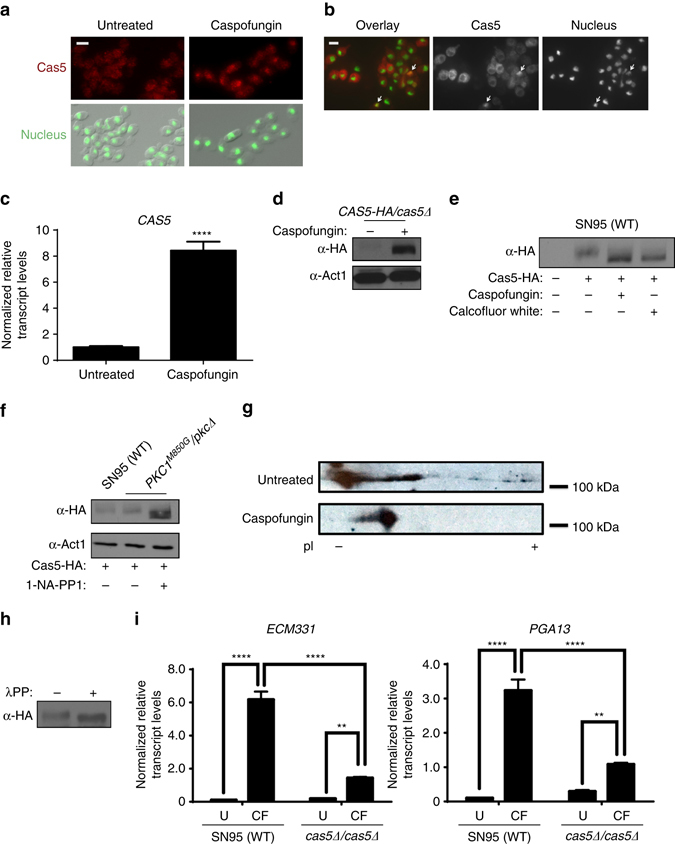
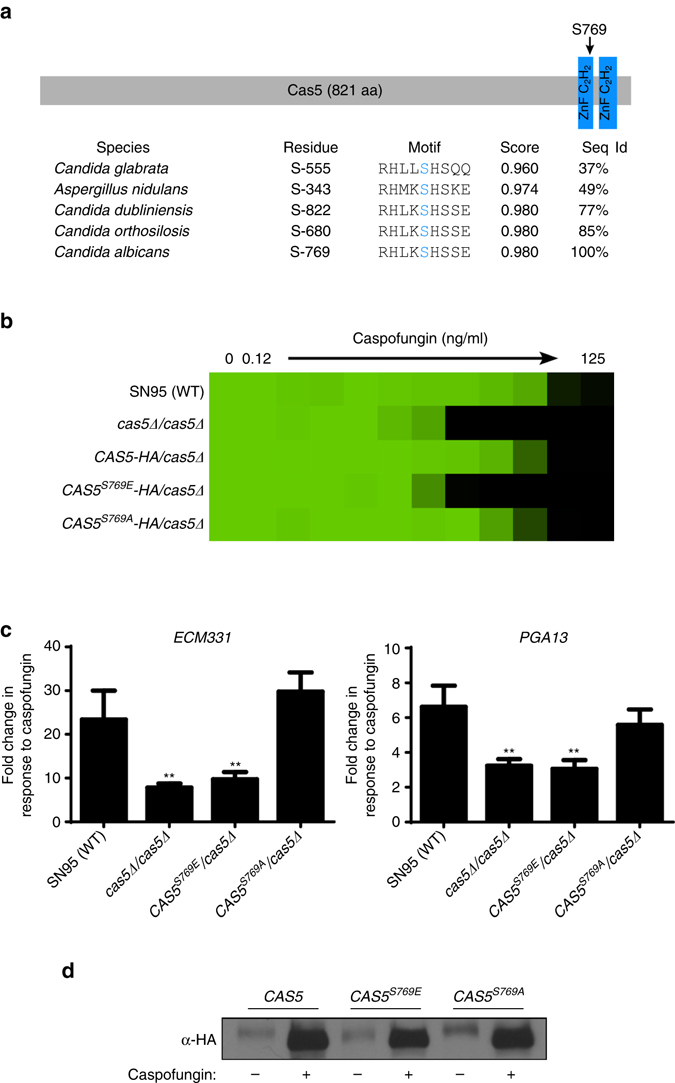
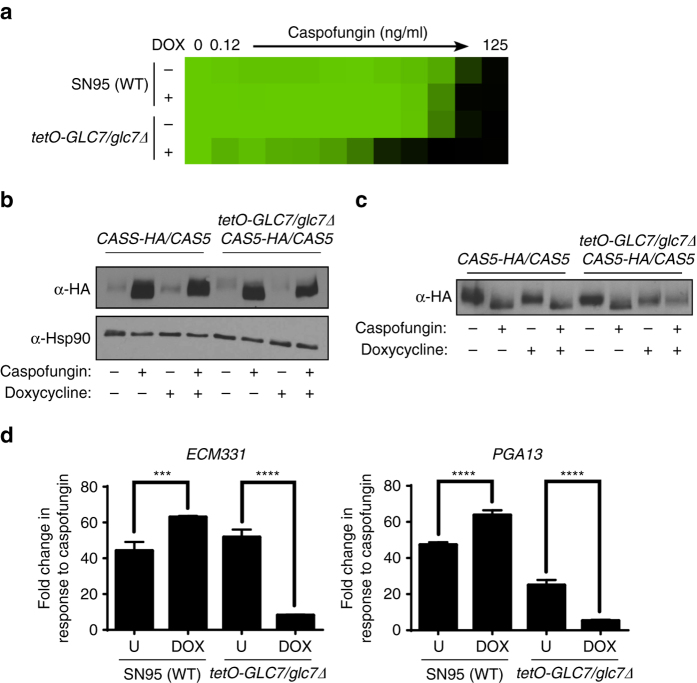
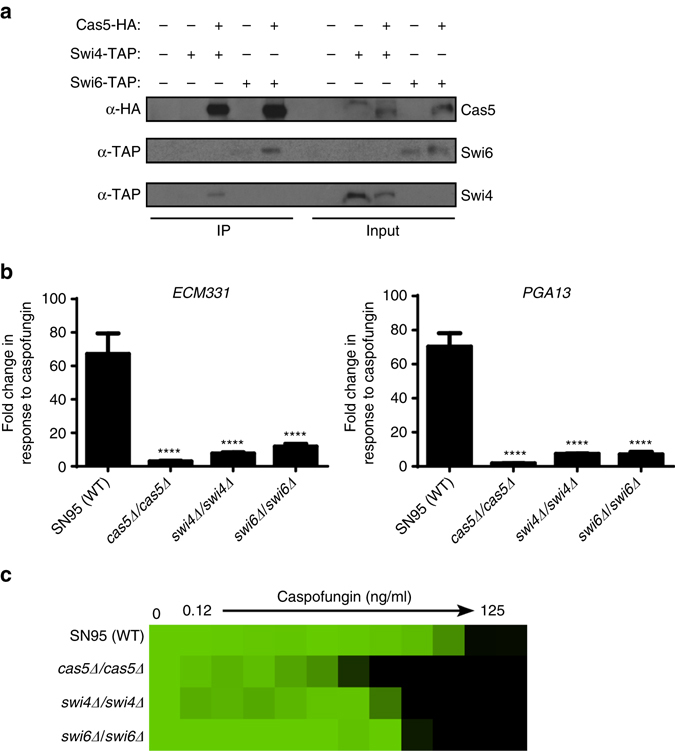
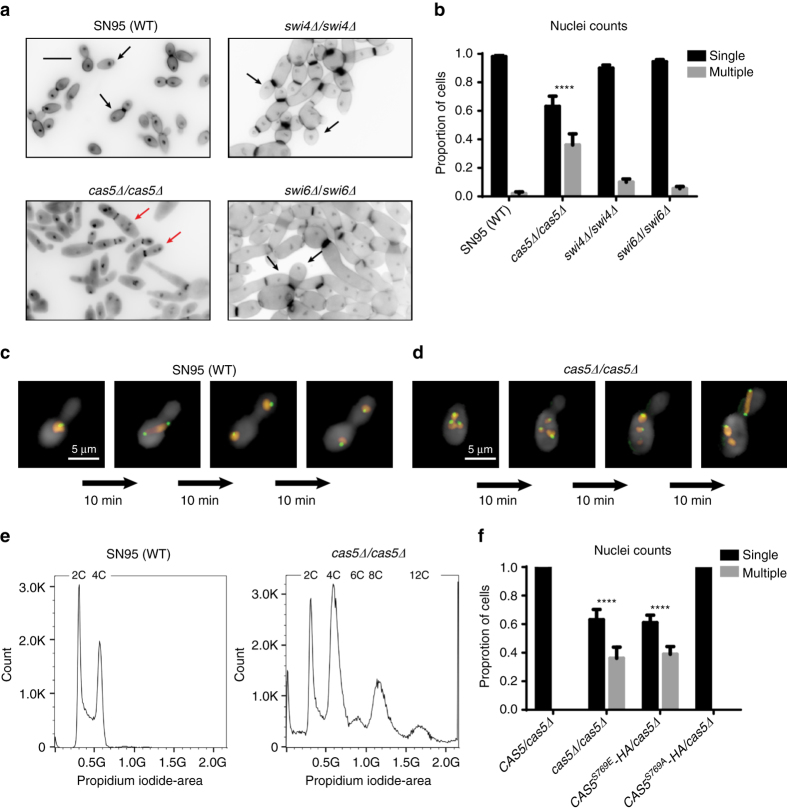
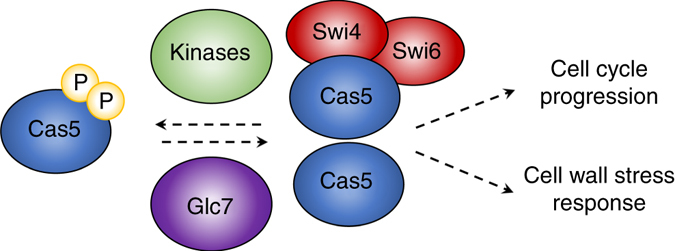
The capacity to coordinate environmental sensing with initiation of cellular responses underpins microbial survival and is crucial for virulence and stress responses in microbial pathogens. Here we define circuitry that enables the fungal pathogen Candida albicans to couple cell cycle dynamics with responses to cell wall stress induced by echinocandins, a front-line class of antifungal drugs. We discover that the C. albicans transcription factor Cas5 is crucial for proper cell cycle dynamics and responses to echinocandins, which inhibit β-1,3-glucan synthesis. Cas5 has distinct transcriptional targets under basal and stress conditions, is activated by the phosphatase Glc7, and can regulate the expression of target genes in concert with the transcriptional regulators Swi4 and Swi6. Thus, we illuminate a mechanism of transcriptional control that couples cell wall integrity with cell cycle regulation, and uncover circuitry governing antifungal drug resistance.
Overview
The claims and statistics of this paper haven’t been checked yet.
Free: it reads the open-access text and checks the first 5 claims that cite a source we can check. Create a free account to check every claim.
Integrity signals
Registry
Cites
Statistics
Figures
Verification
Claims the paper makes
The claims and statistics of this paper haven’t been checked yet.
Free: it reads the open-access text and checks the first 5 claims that cite a source we can check. Create a free account to check every claim.
Claims other papers make about this one
Each is checked against this paper’s own text: does it say what the citing paper says it does?
The source backs part of the claim, not all of it — or backs it for a different population, condition or comparison.
In the citing paper
“Compared to the Wild-type, the gcn5Δ mutant displayed decreased expression levels of a range of genes (e.g., CHS2, PGA52, RBE1, and UTR2) integral to cell wall stability and regulated by Cas5 under CAS treatment48 (Fig. 4e, Fig. S4a).”
From Targeting epigenetic regulators to overcome drug resistance in the emerging human fungal pathogen Candida auris (2025) · cites this paper as [48]
Experimental — accuracy not yet measuredThe cited source says what the claim attributes to it.
In the citing paper
“Genetic impairment of only one gene in our set, CAS5, was reported to reduce Fks1-mediated echinocandin resistance”
From Functional Genomic Screening Reveals Core Modulators of Echinocandin Stress Responses in Candida albicans (2018) · cites this paper as Xie et al., 2017
Self-check
Percentages, sums and reported differences re-computed from the paper’s own numbers.
The self-check needs the paper’s full text.
Citations
Cites
Bradford, M. M. (1976) · Analytical Biochemistry · doi:10.1016/0003-2697(76)90527-3 · Cited by 255,302
Cox, J., & Mann, M. (2008) · Nature Biotechnology · doi:10.1038/nbt.1511 · Cited by 14,855
Antibiotic resistance threats in the United States, 2019
(U.S.), C. F. D. C. A. P. (2019) · doi:10.15620/cdc:82532 · Cited by 5,782
Epidemiology of Invasive Candidiasis: a Persistent Public Health Problem
Pfaller, M. A., & Diekema, D. J. (2007) · Clinical Microbiology Reviews · doi:10.1128/cmr.00029-06 · Cited by 4,174
Blom, N., Sicheritz‐Pontén, T., Gupta, R., Gammeltoft, S., & Brunak, S. (2004) · PROTEOMICS · doi:10.1002/pmic.200300771 · Cited by 2,069
Candida albicans pathogenicity mechanisms
Mayer, F. L., Wilson, D., & Hube, B. (2013) · Virulence · doi:10.4161/viru.22913 · Cited by 1,848
Identification of protein coding regions by database similarity search
Gish, W., & States, D. J. (1993) · Nature Genetics · doi:10.1038/ng0393-266 · Cited by 1,664
Genomic binding sites of the yeast cell-cycle transcription factors SBF and MBF
Iyer, V. R., Horak, C. E., Scafe, C. S., Botstein, D., Snyder, M., & Brown, P. O. (2001) · Nature · doi:10.1038/35054095 · Cited by 1,083
Calderone, R. (2012) · ASM Press eBooks · Cited by 912
Michalski, A., Damoc, E., Hauschild, J.-P., Lange, O., Wieghaus, A., Makarov, A., Nagaraj, N., Cox, J., Mann, M., & Horning, S. (2011) · Molecular & Cellular Proteomics · doi:10.1074/mcp.m111.011015 · Cited by 832
Research works printed but not linked: 1
- Nadal, E. D. & Posas, F. in Stress Response in Microbiology (ed. Requena, J. M.) Ch. 11, 257–285 (Caister Academic Press, 2012).
Cited by
Antifungal Drug Resistance: Molecular Mechanisms in Candida albicans and Beyond
Lee, Y., Puumala, E., Robbins, N., & Cowen, L. E. (2021) · Chemical Reviews · doi:10.1021/acs.chemrev.0c00199 · Cited by 801
Self-citationAntifungal drug resistance: evolution, mechanisms and impact
Revie, N. M., Iyer, K. R., Robbins, N., & Cowen, L. E. (2018) · Current Opinion in Microbiology · doi:10.1016/j.mib.2018.02.005 · Cited by 516
Self-citationCosta-de-Oliveira, S., & Rodrigues, A. G. (2020) · Microorganisms · doi:10.3390/microorganisms8020154 · Cited by 229
Ma, Y., Wang, Z., Ma, Y., Han, Z., Zhang, M., Chen, H., & Gu, Y. (2018) · Angewandte Chemie International Edition · doi:10.1002/anie.201801195 · Cited by 94
Fungal Cell Wall Proteins and Signaling Pathways Form a Cytoprotective Network to Combat Stresses
Ibe, C., & Munro, C. A. (2021) · Journal of Fungi · doi:10.3390/jof7090739 · Cited by 85
The role of Candida albicans stress response pathways in antifungal tolerance and resistance
Iyer, K. R., Robbins, N., & Cowen, L. E. (2022) · iScience · doi:10.1016/j.isci.2022.103953 · Cited by 88
Self-citationSer/Thr protein phosphatases in fungi: structure, regulation and function
Ariño, J., Velázquez, D., & Casamayor, A. (2019) · Microbial Cell · doi:10.15698/mic2019.05.677 · Cited by 77
“Recent work has shown that Cas5 is activated by Glc7 in response to cell wall stress, playing a role not only in cell wall homeostasis but also in regulating nuclear division [44].”
Linking Cellular Morphogenesis with Antifungal Treatment and Susceptibility in Candida Pathogens
Sharma, J., Rosiana, S., Razzaq, I., & Shapiro, R. S. (2019) · Journal of Fungi · doi:10.3390/jof5010017 · Cited by 65
“albicans, as a key regulator coupling the response to cellular stress, drug resistance, and cell cycle regulation [205], which may help explain the pleiotropic role of this transcription factor.”
BackgroundSuwunnakorn, S., Wakabayashi, H., Kordalewska, M., Perlin, D. S., & Rustchenko, E. (2018) · Antimicrobial Agents and Chemotherapy · doi:10.1128/aac.02299-17 · Cited by 53
“suggesting that Cas5p can influence FKS1-mediated echinocandin resistance (21).”
BackgroundCaplan, T., Polvi, E. J., Xie, J. L., Buckhalter, S., Leach, M. D., Robbins, N., & Cowen, L. E. (2018) · Cell Reports · doi:10.1016/j.celrep.2018.04.084 · Cited by 56
Self-citationVeri, A. O., Miao, Z., Shapiro, R. S., Tebbji, F., O’Meara, T. R., Kim, S. H., Colazo, J., Tan, K., Vyas, V. K., Whiteway, M., et al. (2018) · PLoS Genetics · doi:10.1371/journal.pgen.1007270 · Cited by 51
Self-citationVera‐González, N., Bailey‐Hytholt, C. M., Langlois, L., Ribeiro, F. D. C., Santos, E. L. D. S., Junqueira, J. C., & Shukla, A. (2020) · Journal of Biomedical Materials Research Part A · doi:10.1002/jbm.a.36984 · Cited by 50
Flow Cytometry Analysis of Fungal Ploidy
Todd, R. T., Braverman, A. L., & Selmecki, A. M. (2018) · Current Protocols in Microbiology · doi:10.1002/cpmc.58 · Cited by 53
“Additionally, clear separation between G1 and G2 fluorescence can support the identification of samples containing cells with different ploidy levels, including a heterogeneous population of aneuploid and euploid cells (Todd, Forche, & Selmecki, 2017; Xie et al., 2017).”
BackgroundSelf-citationPan, X., Tang, M., You, J., Osire, T., Sun, C., Fu, W., Yi, G., Yang, T., Yang, S., & Rao, Z. (2021) · Nucleic Acids Research · doi:10.1093/nar/gkab1186 · Cited by 40
Molecular Determinants Involved in Candida Albicans Biofilm Formation and Regulation
Kumar, D., & Kumar, A. (2024) · Molecular Biotechnology · doi:10.1007/s12033-023-00796-x · Cited by 34
Cushion, M. T., Ashbaugh, A., Hendrix, K., Linke, M. J., Macioce-Tisdale, N. L., Sayson, S. G., & Porollo, A. (2018) · Antimicrobial Agents and Chemotherapy · doi:10.1128/aac.02513-17 · Cited by 46
“This infers that a complete cell cycle block resulted from the treatment, and perhaps in G1, as reported for other fungi treated with echinocandins (4).”
InfluentialChen, Y., Mauff, F. L., Wang, Y., Lu, R., Sheppard, D. C., Lü, L., & Zhang, S. (2020) · mBio · doi:10.1128/mbio.02329-20 · Cited by 41
“One strategy is to combine inhibitors of the stress response with conventional antifungals for treatment of fungal infections (40).”
BackgroundZhang, Y., Zeng, L., Huang, X., Wang, Y., Chen, G., Moses, M., Zou, Y., Xiong, S., Xue, W., Dong, Y., et al. (2025) · Nature Communications · doi:10.1038/s41467-025-59898-6 · Cited by 33
“Importantly, this pathway has been implicated in cell wall integrity and echinocandin resistance 46 – 48 .”
The Role of Candida albicans Transcription Factor RLM1 in Response to Carbon Adaptation
Oliveira-Pacheco, J., Alves, R. M. A., Costa‐Barbosa, A., Cerqueira-Rodrigues, B., Pereira‐Silva, P., Paiva, S., Silva, S. M., Henriques, M., Pais, C., & Sampaio, P. (2018) · Frontiers in Microbiology · doi:10.3389/fmicb.2018.01127 · Cited by 33
Lou, J. W., Iyer, K. R., Hasan, S. M. N., Cowen, L. E., & Mazhab‐Jafari, M. T. (2019) · Scientific Reports · doi:10.1038/s41598-019-49261-3 · Cited by 33
Self-citationHeredia, M. Y., Ikeh, M. A. C., Gunasekaran, D., Conrad, K. A., Filimonava, S., Marotta, D. H., Nobile, C. J., & Rauceo, J. M. (2020) · PLoS Genetics · doi:10.1371/journal.pgen.1008908 · Cited by 32
“Major “hallmark” genes for this response include SOU1, ENA21, YPD1, GPD2, RHR2, andHGT19 (Fig 4 and S2 Appendix); these genes are significantly upregulated in wild-type strains following NaCl treatment and are regulated by the Hog1 MAP kinase [41].”
BackgroundInfluentialPhysiological adventures in Candida albicans : farnesol and ubiquinones
Nickerson, K. W., Gutzmann, D. J., Boone, C. H. T., Pathirana, R. U., & Atkin, A. L. (2024) · Microbiology and Molecular Biology Reviews · doi:10.1128/mmbr.00081-22 · Cited by 28
“…given the role Tye7 and Rtg1 have in carbohydrate metabolism (169, 170); the regulation of dimorphism and adhesion, given the respective roles of Ahr1, Nrg1, Ash1, and Ssn6 (171–174); regulation of farnesol response by Sko1 and Cup9 (175); and stress response by Msn4, Sko1, and Cas5 (176–179).”
BackgroundSelf-citationEnnis, C. L., Hernday, A. D., & Nobile, C. J. (2021) · Microbiology Spectrum · doi:10.1128/spectrum.01820-21 · Cited by 23
Genomic Insights Into Sugar Adaptation in an Extremophile Yeast Zygosaccharomyces rouxii
Guo, H., Qiu, Y., Wei, J., Niu, C., Zhang, Y., Yuan, Y., & Yue, T. (2020) · Frontiers in Microbiology · doi:10.3389/fmicb.2019.03157 · Cited by 27
“For example, FKS1, encoding β-1,3-glucan synthase involved in glucan synthesis, affects cell wall integrity (Qiu et al., 2018) and is the target of antifungal agent (Xie et al., 2017).”
BackgroundSignalling mechanisms involved in stress response to antifungal drugs
Víglaš, J., & Olejníková, P. (2020) · Research in Microbiology · doi:10.1016/j.resmic.2020.10.001 · Cited by 24
Efg1 and Cas5 Orchestrate Cell Wall Damage Response to Caspofungin in Candida albicans
Xiong, K., Su, C., Sun, Q., & Lü, Y. (2020) · Antimicrobial Agents and Chemotherapy · doi:10.1128/aac.01584-20 · Cited by 24
“Cas5 has been shown to be a key transcriptional regulator in this process (6, 7).”
BackgroundResultInfluentialTranscriptional regulation of the caspofungin-induced cell wall damage response in Candida albicans
Heredia, M. Y., Gunasekaran, D., Ikeh, M. A. C., Nobile, C. J., & Rauceo, J. M. (2020) · Current Genetics · doi:10.1007/s00294-020-01105-8 · Cited by 23
Perrine-Walker, F. M. (2022) · Brazilian Journal of Microbiology · doi:10.1007/s42770-022-00739-9 · Cited by 23
Hgc1 Independence of Biofilm Hyphae in Candida albicans
Sharma, A., Solis, N. V., Huang, M. Y., Lanni, F., Filler, S. G., & Mitchell, A. P. (2023) · mBio · doi:10.1128/mbio.03498-22 · Cited by 21
Lee, Y., Liston, S. D., Lee, D., Robbins, N., & Cowen, L. E. (2022) · iScience · doi:10.1016/j.isci.2022.104432 · Cited by 18
“albicans, SBF mediates cell wall and cell membrane stresses through interaction with the Slt2 ortholog Mkc1, and the transcriptional regulator Cas5 (LaFayette et al., 2010; Xie et al., 2017).”
BackgroundSelf-citationQasim, M. N., Arevalo, A. V., Nobile, C. J., & Hernday, A. D. (2021) · Journal of Fungi · doi:10.3390/jof7010037 · Cited by 20
Tan, K., & Wong, K. H. (2019) · Biophysical Reviews · doi:10.1007/s12551-018-00497-9 · Cited by 19
Self-citationMa, Y., Wang, Z., Ma, Y., Han, Z., Zhang, M., Chen, H., & Gu, Y. (2018) · Angewandte Chemie · doi:10.1002/ange.201801195 · Cited by 19
β-Nitrostyrene derivatives as broad range potential antifungal agents targeting fungal cell wall
Ramzan, A., Padder, S. A., Masoodi, K. Z., Shafi, S., Tahir, I., Rehman, R. U., Prasad, R., & Shah, A. H. (2022) · European Journal of Medicinal Chemistry · doi:10.1016/j.ejmech.2022.114609 · Cited by 16
Our pursuit for effective antifungal agents targeting fungal cell wall components: where are we?
Ibe, C., Oladele, R. O., & Alamir, O. (2021) · International Journal of Antimicrobial Agents · doi:10.1016/j.ijantimicag.2021.106477 · Cited by 17
Sun, Q., Xiong, K., Yuan, Y., Yu, J., Yang, L., Shen, C., Su, C., & Lü, Y. (2019) · Antimicrobial Agents and Chemotherapy · doi:10.1128/aac.02046-19 · Cited by 16
“Next, we compared the impact of GGTase I with that of Cas5, an important transcription factor that regulates cell wall stability during periods of cell wall stress (18, 19), on caspofungin sensitivity.”
BackgroundGuo, J., Dang, J., Wang, K., Zhang, J., & Fang, J. (2018) · Journal of Physics D Applied Physics · doi:10.1088/1361-6463/aab8c8 · Cited by 13
Reuter-Weissenberger, P., Meir, J., & Pérez, J. C. (2021) · mBio · doi:10.1128/mbio.03020-21 · Cited by 12
“albicans is termed CAS5 (C4_01190W) and has been reported to regulate cell wall stability and cell cycle dynamics in this species (42).”
BackgroundJia, C., Zhang, J., Zhuge, Y., Xu, K., Liu, J., Wang, J., Li, L., & Chu, M. (2019) · Free Radical Research · doi:10.1080/10715762.2019.1610563 · Cited by 12
He, K., An, S., Liu, F., Chen, Y., Xiang, G., & Wang, H. (2023) · International Journal of Biological Sciences · doi:10.7150/ijbs.83862 · Cited by 10
“Although many types of cancer are initially susceptible to chemotherapy [41-43, 46-50], they can subsequently develop resistance through certain underlying mechanisms, such as DNA mutations, cell cycle, stem cell and metabolic changes that promote drug inhibition and degradation [51-61].”
BackgroundSah, S. K., Bhattacharya, S., Yadav, A., Husain, F., Ndiaye, A. B. K. T., Kruppa, M., Hayes, J. J., & Rustchenko, E. P. (2022) · Antimicrobial Agents and Chemotherapy · doi:10.1128/aac.00977-22 · Cited by 11
Ichikawa, Y., Bruno, V. M., Woolford, C. A., Kim, H., Do, E., Brewer, G. C., & Mitchell, A. P. (2021) · Genetics · doi:10.1093/genetics/iyab075 · Cited by 9
Roles of P-body factors in Candida albicans filamentation and stress response
Tosiano, M. A., Lanni, F., Mitchell, A. P., & McManus, C. J. (2025) · PLoS Genetics · doi:10.1371/journal.pgen.1011632 · Cited by 10
“Interestingly, while most TFs shifted in the same direction in both conditions, hyphal repressor NRG1 [62,63] and cell cycle/cell wall stress regulator SWI6 [64,65] were downregulated in YPD but upregulated in RPMI (Fig 5F).”
The Role of Sfp1 in Candida albicans Cell Wall Maintenance
Chang, C.-K., Yang, M.-C., Chen, H., Liao, Y.-L., & Lan, C. (2022) · Journal of Fungi · doi:10.3390/jof8111196 · Cited by 10
“Interestingly, deletion of CAS5 leads to the activation of the Mkc1 CWI pathway even in the absence of cell wall stress [17].”
BackgroundResultInfluentialGutzmann, D. J., Kramer, J. J., Toomey, B. M., Boone, C. H. T., Atkin, A. L., & Nickerson, K. W. (2023) · G3 Genes Genomes Genetics · doi:10.1093/g3journal/jkad172 · Cited by 8
Self-citationGenome-Wide DNA Changes Acquired by Candida albicans Caspofungin-Adapted Mutants
Zuber, J., Sah, S. K., Mathews, D. H., & Rustchenko, E. P. (2023) · Microorganisms · doi:10.3390/microorganisms11081870 · Cited by 6
Jiang, Y., Zhuge, B., Qin, Y., Zong, H., & Lu, X. (2022) · Current Microbiology · doi:10.1007/s00284-022-02893-7 · Cited by 5
“cerevisiae and most other eukaryotes, but the zinc finger transcription factor CaCAS5 in Candida albicans serves as a key transcriptional regulator of responses to cell wall stress [24].”
BackgroundDán, K., Zsindely, N., Kele, Z., Laczi, K., Karemera, K. J., Papp, C., Farkas, A., Maróti, G., Borics, A., Bodai, L., et al. (2025) · International Journal of Biological Macromolecules · doi:10.1016/j.ijbiomac.2025.146558 · Cited by 4
Wang, M., Xu, Z., Huang, Y., & Dong, B. (2025) · Journal of Hazardous Materials · doi:10.1016/j.jhazmat.2025.138543 · Cited by 4
Kim, J.-M., Moon, H. Y., Lee, D. W., Kang, H. A., & Kim, J. (2021) · The Journal of Microbiology · doi:10.1007/s12275-021-1326-y · Cited by 4
Zamith‐Miranda, D., Amatuzzi, R. F., Martins, S. T., Vieira, A. Z., da Rocha, I. M., Rodrigues, M. L., Trentin, G., Almeida, F. B. D. R., Nakayasu, E. S., Nosanchuk, J. D., et al. (2020) · bioRxiv (Cold Spring Harbor Laboratory) · doi:10.1101/2020.12.04.411843 · Cited by 3
“In the presence of caspofungin, the stress caused by this antifungal led to distinct response, and the upregulated pathways were related to cell cycle, DNA replication and meiosis (56).”
BackgroundQin, Y., Lv, Q., Xu, H., Cao, Y., & Han, B. (2025) · Mycology: An International Journal on Fungal Biology · doi:10.1080/21501203.2024.2432424 · Cited by 2
“…factors in C. albicans of which 6 classical ones have been identified as being involved in the regulation of antifungal drug resistance, including Upc1p, Mrr1p, Cap1p, Tac1p, Cas5p, and Ndt80p (MacPherson et al. 2005; Sasse et al. 2011; Xie et al. 2017; Feng et al. 2018; Liu et al. 2020).”
Zhang, Q., Li, G., Wang, Y., Yang, C., Bai, W., Li, Q., Zhang, J., & Zhang, P. (2025) · Microorganisms · doi:10.3390/microorganisms13030683 · Cited by 2
“Moreover, the depletion of Cas5 reduces the resistance of strains carrying mutations in FKS1 , a well-accepted echinocandin target gene [23].”
InfluentialShao, T., Zhang, Y., Xue, B., & Chu, W. (2026) · Microbial Biotechnology · doi:10.1111/1751-7915.70331 · Cited by 3
“For instance, resistance mutations have already been reported for newer drugs such as eposin (Xie et al. 2017).”
Qiu, J., Wu, H., Wei, Q., Lu, S., Meng, J., Li, R., & Chen, B. (2025) · Phytopathology Research · doi:10.1186/s42483-025-00384-8 · Cited by 1
“In C. albicans , the transcription factor Cas5, which has distinct transcriptional targets under basal and stress conditions, is activated by the phosphatase Glc7 and can regulate the expression of target genes in concert with the transcriptional regulators Siw4 and Siw6 (Xie et al. 2017).”
Qiao, Y., Zhang, L., Qi, Q., Jia-Hui, N., Ze-Mei, R., Hai-Mei, Y., Chen-Chen, Z., Hong-Ju, P., Nan-Nan, D., & Qing-shan, L. (2020) · Medical Mycology · doi:10.1093/mmy/myaa070 · Cited by 1
Functional Genomic and Chemical Biology Analysis of Echinocandin Resistance in Candida albicans
Caplan, T. (2018) · TSpace (University of Toronto) · Cited by 2
Targeting Casein Kinases in the Fungal Pathogen Candida albicans
Hyde, S. (2020) · TSpace (University of Toronto)
Regulación por NDR kinasas durante el crecimiento polarizado en C. albicans
Almeida, A. S. (2021) · Gredos (University of Salamanca) · doi:10.14201/gredos.148417
Kim, J.-M., Moon, H. Y., Lee, D. W., Kang, H. A., & Kim, J. (2021) · The Journal of Microbiology · doi:10.1007/s12275-021-0326-2
Isolate Specific Transcriptome Changes Exerted by Isavuconazole Treatment in Candida auris
Balla, N., Kovács, F., Tóth, Z., Harmath, A., Bozó, A., Majoros, L., Kovács, R., & Jakab, Á. (2024) · Mycopathologia · doi:10.1007/s11046-024-00919-1 · Cited by 2
“ISA exposure increased the transcription of CAS5 , a crucial cell wall and cell cycle regulator, as well as genes involved in sphingolipid and ergosterol biosynthesis [52, 53].”
Samaka, H. M. A. (2024) · Acta Scientiarum Biological Sciences · doi:10.4025/actascibiolsci.v46i1.70809
“…caspofungin due to the role of the cas5 transcription factor in mediating the cell wall stress signalling caused by caspofungin and leads to increased susceptibility to various cell wall and plasma membrane stresses and interferes with pathogenicity in vivo (Bruno et al ., 2006; Xie et al ., 2017).”
Functional Genomic Analysis of Protein Kinases in the Human Fungal Pathogen Candida albicans
Lee, Y. (2023) · TSpace (University of Toronto)
Az Aspergillus (Neosartorya) fischeri antifungális fehérje 2 hatásmechanizmusa Candida albicans–ban
Dán, K. (2025) · SZTE Repository of Dissertations (University of Szeged) · doi:10.14232/phd.12906
The calcium signaling links to fungal pathogenicity by a dual-action regulator
Wang, Y., Wu, Y., Zhang, L., Liu, J., Liu, S., Gao, N., Huang, X., Xue, W., Dong, Y., Huang, J., et al. (2026) · Cell chemical biology · doi:10.1016/j.chembiol.2026.10.001
Metadata
- Authors
- Xie, J. L., Qin, L., Miao, Z., Grys, B. T., Diaz, J. D. L. C., Ting, K., Krieger, J. R., Tong, J., Tan, K., Leach, M. D., Ketela, T., Moran, M. F., Krysan, D. J., Boone, C., Andrews, B. J., Selmecki, A., Ho Wong, K., Robbins, N., & Cowen, L. E.
- Affiliations
- University of Toronto (CA)
- University of Macau (MO)
- University of Rochester (US)
- Hospital for Sick Children (CA)
- University of Rochester Medicine (US)
- Creighton University (US)
- Corresponding author
- Cowen, Leah E.
- ORCID
- Venue
- Nature Communications
- Published
- 2017-09-11
- Volume
- 8
- Issue
- 1
- Pages
- 499-499
- ISSN
- 2041-1723 (ISSN-L)
- PMC
- PMC5593949
- OpenAlex
- W2751938171
- Cited by
- 60
- References
- 72
- Citations by year
- 2026: 1 · 2025: 7 · 2024: 2 · 2023: 5 · 2022: 7 · 2021: 9 · 2020: 11 · 2019: 6 · 2018: 12
- FWCI
- 3.24
- Type
- journal article
- Language
- en
- Open access
- gold
- doi.org
- Licence
- cc-by
- creativecommons.org/licenses/by/4.0 (tdm)
- creativecommons.org/licenses/by/4.0 (vor)
- Locations
- Nature Communications (publishedVersion, cc-by)
- PubMed Central (publishedVersion, cc-by)
- PubMed (publishedVersion)
- RePEc: Research Papers in Economics (submittedVersion)
- Aberdeen University Research Archive (Aberdeen University) (submittedVersion)
- Creighton Digital Repository (CDR) (submittedVersion)
- DOAJ (DOAJ: Directory of Open Access Journals) (submittedVersion)
- DOAJ (DOAJ: Directory of Open Access Journals) (submittedVersion, cc-by-sa)
- Funders
- U.S. Department of Health and Human Services (LB506)
- Creighton University
- University of Rochester
- Wellcome Trust (096072)
- Nebraska Department of Health and Human Services (LB506-2017-55, LB506)
- Universidade de Macau
- Fundo para o Desenvolvimento das Ciências e da Tecnologia (085/2014/A2)
- Canadian Institutes of Health Research (119520_1, FDN-143264, MOP-86452)
- Natural Sciences and Engineering Research Council of Canada (477598, 462167, 06261)
- National Institute of General Medical Sciences (R25GM064133)
- National Institute of Allergy and Infectious Diseases (R01AI098450)
- Topics
- Life Sciences › Biochemistry, Genetics and Molecular Biology › Molecular Biology › Fungal and yeast genetics research
- Health Sciences › Medicine › Infectious Diseases › Antifungal resistance and susceptibility
- Life Sciences › Biochemistry, Genetics and Molecular Biology › Genetics › Bacterial Genetics and Biotechnology
- Keywords
- Candida albicans, echinocandin resistance, antifungal resistance, cell wall stress, cell cycle regulation, Swi4, Swi6, cell wall integrity, transcriptional regulation, fungal pathogens
- MeSH terms
- Antifungal Agents, Candida albicans, Cell Wall, Microbial Sensitivity Tests, Mutation, Phosphorylation, Transcription Factors, Blotting, Western, Gene Expression Regulation, Fungal, Reverse Transcriptase Polymerase Chain Reaction, Drug Resistance, Fungal, beta-Glucans, Echinocandins, Cell Cycle Checkpoints
About these checks
Registry, retraction, Cites and statistics results are computed, not judged, with one exception: a printed reference that no index lists is read once by a model before it counts as a citation error. Claims are extracted by a model and kept only when their quote appears verbatim in the text; each cited source is then checked, with a model’s help, for whether it says what the claim relies on. Those verdicts can be wrong — read the claim’s quote and the cited source before relying on one.
Statistics and arithmetic are recomputed, not judged.
Confidence bands are shown only for fields calibrated on our annotated test set. None is calibrated yet, so no band is shown.
What counts as a claim ›How we measure confidence ›How we check this ›
Are you an author, or do you see a problem with this page? Request a review
Data sources
Bibliographic data: Semantic Scholar, OpenAlex, Crossref.
Contains information from the Semantic Scholar Academic Graph Datasets, made available under the ODC Attribution License (ODC-BY 1.0).
Semantic Scholar’s data is described in: Kinney, R., et al. (2023). The Semantic Scholar Open Data Platform. arXiv:2301.10140.
