

Toward a universal decoder of linguistic meaning from brain activation
Open accessThe DOI matches its Crossref record; 54 of the 54 references it cites were found in a registry or an index.
Abstract
Prior work decoding linguistic meaning from imaging data has been largely limited to concrete nouns, using similar stimuli for training and testing, from a relatively small number of semantic categories. Here we present a new approach for building a brain decoding system in which words and sentences are represented as vectors in a semantic space constructed from massive text corpora. By efficiently sampling this space to select training stimuli shown to subjects, we maximize the ability to generalize to new meanings from limited imaging data. To validate this approach, we train the system on imaging data of individual concepts, and show it can decode semantic vector representations from imaging data of sentences about a wide variety of both concrete and abstract topics from two separate datasets. These decoded representations are sufficiently detailed to distinguish even semantically similar sentences, and to capture the similarity structure of meaning relationships between sentences.
Overview
The claims and statistics of this paper haven’t been checked yet.
Free: it reads the open-access text and checks the first 5 claims that cite a source we can check. Create a free account to check every claim.
Integrity signals
Registry
Cites
Statistics
Figures
Verification
Claims the paper makes
The claims and statistics of this paper haven’t been checked yet.
Free: it reads the open-access text and checks the first 5 claims that cite a source we can check. Create a free account to check every claim.
Claims other papers make about this one
Each is checked against this paper’s own text: does it say what the citing paper says it does?
The source backs part of the claim, not all of it — or backs it for a different population, condition or comparison.
In the citing paper
“Large Language Models (LLMs) have shown success in predicting neural signals associated with narrative processing”
From Incremental accumulation of linguistic context in artificial and biological neural networks (2025) · cites this paper as [1]
Experimental — accuracy not yet measuredThe source backs part of the claim, not all of it — or backs it for a different population, condition or comparison.
In the citing paper
“Previous studies in the neural encoding literature all used LLMs that were only aware of the short-term context, i.e., where the context window size was as large as several tens of words1–10.”
From Incremental accumulation of linguistic context in artificial and biological neural networks (2025) · cites this paper as [1]
Experimental — accuracy not yet measuredThe cited source says what the claim attributes to it.
In the citing paper
“This was the case even though the participants in these studies were exposed to language stimuli that encompassed hundreds and even thousands of words.”
From Incremental accumulation of linguistic context in artificial and biological neural networks (2025) · cites this paper as [1]
Self-check
Percentages, sums and reported differences re-computed from the paper’s own numbers.
The self-check needs the paper’s full text.
Citations
Cites
Glove: Global Vectors for Word Representation
Pennington, J., Socher, R., & Manning, C. (2014) · Proceedings of the 2014 Conference on Empirical Methods in Natural Language Processing (EMNLP) · doi:10.3115/v1/d14-1162 · Cited by 34,071
Distributed Representations of Words and Phrases and their Compositionality
Mikolov, T., Sutskever, I., Chen, K., Corrado, G., & Dean, J. (2013) · arXiv · doi:10.48550/arxiv.1310.4546 · Cited by 24,533
The Elements of Statistical Learning
Hastie, T., Friedman, J., & Tibshirani, R. (2001) · Springer Series in Statistics · doi:10.1007/978-0-387-21606-5 · Cited by 24,162
Indexing by latent semantic analysis
Deerwester, S., Dumais, S. T., Furnas, G. W., Landauer, T. K., & Harshman, R. (1990) · Journal of the American Society for Information Science · doi:10.1002/(sici)1097-4571(199009)41:6<391::aid-asi1>3.0.co;2-9 · Cited by 12,751
Ambrose, A., Wittgenstein, L., & Anscombe, G. E. M. (1954) · Philosophy and Phenomenological Research · doi:10.2307/2103745 · Cited by 12,192
Jenkinson, M., Beckmann, C. F., Behrens, T. E. J., Woolrich, M. W., & Smith, S. M. (2012) · NeuroImage · doi:10.1016/j.neuroimage.2011.09.015 · Cited by 11,314
A tutorial on spectral clustering
von Luxburg, U. (2007) · Statistics and Computing · doi:10.1007/s11222-007-9033-z · Cited by 10,349
The Brain's Default Network: Anatomy, Function, and Relevance to Disease
Buckner, R. L., Andrews‐Hanna, J. R., & Schacter, D. L. (2008) · Annals of the New York Academy of Sciences · doi:10.1196/annals.1440.011 · Cited by 9,761
Power, J. D., Barnes, K. A., Snyder, A. Z., Schlaggar, B. L., & Petersen, S. E. (2012) · NeuroImage · doi:10.1016/j.neuroimage.2011.10.018 · Cited by 7,429
Functional Network Organization of the Human Brain
Power, J. D., Cohen, A. L., Nelson, S. M., Wig, G. S., Barnes, K. A., Church, J. A., Vogel, A. C., Laumann, T. O., Miezin, F. M., Schlaggar, B. L., et al. (2011) · Neuron · doi:10.1016/j.neuron.2011.09.006 · Cited by 4,124
Research works printed but not linked: 1
- Ringgaard, M., Gupta, R., and Pereira, F. C. N. SLING: a framework for frame semantic parsing. Preprint arXiv:1710.07032 (2017). · arXiv
Cited by
Items 101–200 of 445
Deep learning models to study sentence comprehension in the human brain
Arana, S., Lerousseau, J. P., & Hagoort, P. (2023) · Language Cognition and Neuroscience · doi:10.1080/23273798.2023.2198245 · Cited by 37
“First, this result has been replicated using complete sentences rather than single words (Anderson et al., 2019; Huth et al., 2016; Millet & King, 2021; Millet et al., 2022; Pereira et al., 2018; Wehbe et al., 2014).”
Hultén, A., van Vliet, M., Kivisaari, S. L., Lammi, L., Lindh‐Knuutila, T., Faisal, A., & Salmelin, R. H. (2021) · Human Brain Mapping · doi:10.1002/hbm.25593 · Cited by 35
“Important advances regarding the structure of the semantic space in the brain have been made by using multivariate analyses and decoding (Huth, de Heer, Griffiths, Theunissen, & Gallant, 2016; Mitchell et al., 2008; Pereira et al., 2018).”
MethodInducing brain-relevant bias in natural language processing modelsPreprint
Schwartz, D., Toneva, M., & Wehbe, L. (2019) · arXiv (Cornell University) · doi:10.48550/arxiv.1911.03268 · Cited by 36
“…of words, sentences, and stories taken from off-the-shelf NLP models and investigated how these vectors correspond to fMRI or MEG recordings of brain activity (Mitchell et al. , 2008; Murphy et al. , 2012; Wehbe et al. , 2014b,a; Huth et al. , 2016; Jain and Huth, 2018; Pereira et al. , 2018).”
BackgroundAbdou, M., González, A. V., Toneva, M., Hershcovich, D., & Søgaard, A. (2021) · arXiv (Cornell University) · doi:10.48550/arxiv.2101.12608 · Cited by 34
“Since this paper was introduced, many works have attempted to isolate other features that enable prediction and interpretation of brain activity (Frank et al., 2015; Brennan et al., 2016; Lopopolo et al., 2017; Anderson et al., 2017; Pereira et al., 2018; Wang et al., 2020).”
BackgroundDecoding individual identity from brain activity elicited in imagining common experiences
Anderson, A. J., McDermott, K., Rooks, B., Heffner, K. L., Dodell‐Feder, D., & Lin, F. V. (2020) · Nature Communications · doi:10.1038/s41467-020-19630-y · Cited by 33
An fMRI Dataset for Concept Representation with Semantic Feature Annotations
Wang, S., Zhang, Y., Zhang, X., Sun, J., Lin, N., Zhang, J., & Zong, C. (2022) · Scientific Data · doi:10.1038/s41597-022-01840-2 · Cited by 33
“Then, following Pereira et al.18, we selected the most informative 5,000 voxels and used the t value of these voxels as the brain activation features.”
MethodHollenstein, N., Barrett, M., & Beinborn, L. (2020) · Research at the University of Copenhagen (University of Copenhagen) · Cited by 33
What Are Large Language Models Mapping to in the Brain? A Case Against Over-Reliance on Brain ScoresPreprint
Feghhi, E., Hadidi, N., Song, B., Blank, I., & Kao, J. C. (2024) · arXiv (Cornell University) · doi:10.48550/arxiv.2406.01538 · Cited by 32
“Pereira is released under the Creative Commons License [8].”
BackgroundExpert Programmers Have Fine-Tuned Cortical Representations of Source Code
Ikutani, Y., Kubo, T., Nishida, S., Hata, H., Matsumoto, K., Ikeda, K., & Nishimoto, S. (2020) · eNeuro · doi:10.1523/eneuro.0405-20.2020 · Cited by 31
“Other studies have also used word-based distributed representations to systematically map semantic selectivity across the cortex (Huth et al., 2016; Pereira et al., 2018).”
BackgroundBeyond linear regression: mapping models in cognitive neuroscience should align with research goals
Ivanova, A. A., Schrimpf, M., Anzellotti, S., Zaslavsky, N., Fedorenko, E. G., & Işık, L. (2022) · Neurons Behavior Data analysis and Theory · doi:10.51628/001c.37507 · Cited by 32
Self-citationArtificial intelligence based multimodal language decoding from brain activity: A review
Zhao, Y., Chen, Y., Cheng, K., & Huang, W. (2023) · Brain Research Bulletin · doi:10.1016/j.brainresbull.2023.110713 · Cited by 30
High-level language brain regions process sublexical regularities
Regev, T. I., Kim, H. S., Chen, X., Affourtit, J., Schipper, A. E., Bergen, L., Mahowald, K., & Fedorenko, E. (2024) · Cerebral Cortex · doi:10.1093/cercor/bhae077 · Cited by 21
Self-citationRelating Simple Sentence Representations in Deep Neural Networks and the Brain
Jat, S., Tang, H., Talukdar, P. P., & Mitchell, T. M. (2019) · Proceedings of the conference - Association for Computational Linguistics. Meeting · doi:10.18653/v1/p19-1507 · Cited by 30
“Prior research by Mitchell et al. [2008], Wehbe et al. [2014b], Jain and Huth [2018], Hale et al. [2018], Pereira et al. [2018], and Sun et al. [2019] have established a general correspondence between a computational model and brain’s re-Figure 6: Average sign agreement activity for noun…”
MethodThe promise of awake behaving infant fMRI as a deep measure of cognition
Yates, T. S., Ellis, C. T., & Turk-Browne, N. B. (2021) · Current Opinion in Behavioral Sciences · doi:10.1016/j.cobeha.2020.11.007 · Cited by 29
“In adults, co-occurrences in large text corpora can be used to accurately predict fMRI activity to concrete words [43] and abstract concepts [44].”
BackgroundHadidi, N., Feghhi, E., Song, B. H., Blank, I., & Kao, J. C. (2026) · Nature Communications · doi:10.1038/s41467-026-72253-7 · Cited by 30
“Our conclusions are scoped to the three neural datasets analyzed in that study ( Pereira2018, Fedorenko2016, Blank2014 ).”
InfluentialBrain2Word: Decoding Brain Activity for Language GenerationPreprint
Affolter, N., Egressy, B., Pascual, D., & Wattenhofer, R. P. (2020) · arXiv (Cornell University) · doi:10.48550/arxiv.2009.04765 · Cited by 29
“minutes (Pereira et al. 2018).”
BackgroundMethodResultInfluentialMultimodal foundation models are better simulators of the human brainPreprint
Lu, H., Zhou, Q., Fei, N., Lu, Z., Ding, M., Wen, J., Du, C., Zhao, X., Sun, H., He, H., et al. (2022) · arXiv (Cornell University) · doi:10.48550/arxiv.2208.08263 · Cited by 29
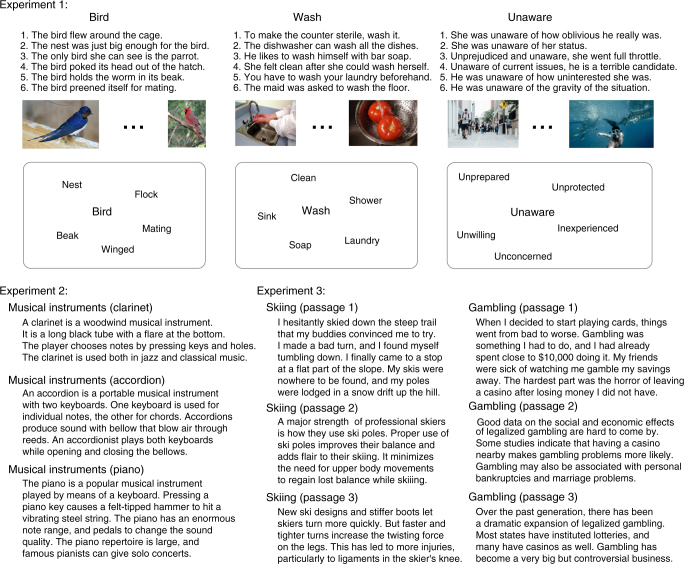
“The neural data used for lingual neural encoding is a subset of the benchmark dataset collected by [41], including three experiments.”
BackgroundMethodInfluentialVisual Grounding Helps Learn Word Meanings in Low-Data Regimes
Zhuang, C., Fedorenko, E. G., & Andreas, J. (2024) · Conference of the North American Chapter of the Association for Computational Linguistics: Human Language Technologies (NAACL-HLT) · doi:10.18653/v1/2024.naacl-long.71 · Cited by 28
Self-citationBrain and Cognitive Science Inspired Deep Learning: A Comprehensive Survey
Zhang, Z., Ding, X., Liang, X., Zhou, Y., Qin, B., & Liu, T. (2025) · IEEE Transactions on Knowledge and Data Engineering · doi:10.1109/tkde.2025.3527551 · Cited by 28
“These stimuli could be either words [129], [130], [131], [132], [133], [134] or sentences [135], [136], [137].”
Şenel, L. K., Şahinuç, F., Yücesoy, V., Schütze, H., Çukur, T., & Koç, A. (2022) · Information Processing & Management · doi:10.1016/j.ipm.2022.102925 · Cited by 28
Mapping Brains with Language Models: A Survey
Karamolegkou, A., Abdou, M., & Søgaard, A. (2023) · Findings of the Association for Computational Linguistics: ACL (Findings of ACL) · doi:10.18653/v1/2023.findings-acl.618 · Cited by 28
Cao, L., Huang, D., Zhang, Y., Jiang, X., & Chen, Y. (2021) · Proceedings of the AAAI Conference on Artificial Intelligence · doi:10.1609/aaai.v35i14.17493 · Cited by 27
Kim, H. J., Lux, B. K., Lee, E., Finn, E. S., & Woo, C. (2024) · Proceedings of the National Academy of Sciences · doi:10.1073/pnas.2401959121 · Cited by 27
Wills Aligner: Multi-Subject Collaborative Brain Visual Decoding
Bao, G., Zhang, Q., Gong, Z., Zhou, J., Fan, W., Yi, K., Naseem, U., Hu, L. Z., & Miao, D. (2025) · Proceedings of the AAAI Conference on Artificial Intelligence · doi:10.1609/aaai.v39i13.33554 · Cited by 27
“…is crucial for unraveling the complexities of the brain, advancing brain-inspired computational models (Du et al. 2023; Palazzo et al. 2020; Pereira et al. 2018; Nie et al. 2023), and offering numerous applications in clinical medicine (Linden 2021) and brain-computer interfaces (Naselaris…”
Traces of Meaning Itself: Encoding Distributional Word Vectors in Brain Activity
Sassenhagen, J., & Fiebach, C. J. (2019) · Neurobiology of Language · doi:10.1162/nol_a_00003 · Cited by 27
A neural decoding algorithm that generates language from visual activity evoked by natural images
Huang, W., Yan, H., Cheng, K., Wang, C., Li, J., Wang, Y., Li, C., Li, C., Li, Y., Zuo, Z., et al. (2021) · Neural Networks · doi:10.1016/j.neunet.2021.08.006 · Cited by 26
Russo, A. G., Martino, M. D., Mancuso, A., İaconetta, G., Manara, R., Elia, A., Laudanna, A., Salle, F. D., & Esposito, F. (2020) · NeuroImage · doi:10.1016/j.neuroimage.2020.117281 · Cited by 26
“address the neurological bases of semantics in different naturalistic experimental settings (Nishida and Nishimoto, 2017; Pereira et al., 2018; Wang et al., 2018).”
BackgroundMethodCombining Concepts Across Categorical Domains: A Linking Role of the Precuneus
Rabini, G., Ubaldi, S., & Fairhall, S. L. (2021) · Neurobiology of Language · doi:10.1162/nol_a_00039 · Cited by 26
Joint processing of linguistic properties in brains and language modelsPreprint
Oota, S. R., Gupta, M., & Toneva, M. (2022) · arXiv (Cornell University) · doi:10.48550/arxiv.2212.08094 · Cited by 26
“A number of studies have related brain responses to word embedding methods (Pereira et al., 2016; Anderson et al., 2017; Pereira et al., 2018; Toneva and Wehbe, 2019; Hollenstein et al., 2019; Wang et al., 2020), sentence representation models (Sun et al.”
BackgroundProbabilistic analogical mapping with semantic relation networks.
Lu, H., Ichien, N., & Holyoak, K. J. (2022) · Psychological Review · doi:10.1037/rev0000358 · Cited by 25
Distributed Code for Semantic Relations Predicts Neural Similarity during Analogical Reasoning
Chiang, J. N., Peng, Y., Lu, H., Holyoak, K. J., & Monti, M. M. (2020) · Journal of Cognitive Neuroscience · doi:10.1162/jocn_a_01620 · Cited by 27
“We also tested a similar model, Word2vec-sum (Pereira et al., 2018; Mikolov et al., 2013), which aggregates a word pair via vector addition rather than concatenation.”
MethodIncremental accumulation of linguistic context in artificial and biological neural networks
Tikochinski, R., Goldstein, A., Meiri, Y., Hasson, U., & Reichart, R. (2025) · Nature Communications · doi:10.1038/s41467-025-56162-9 · Cited by 24
Studying memory narratives with natural language processing
Fenerci, C., Cheng, Z., Addis, D. R., Bellana, B., & Sheldon, S. (2025) · Trends in Cognitive Sciences · doi:10.1016/j.tics.2025.02.003 · Cited by 24
A common neural code for meaning in discourse production and comprehension
Patel, T., Morales, M., Pickering, M. J., & Hoffman, P. (2023) · NeuroImage · doi:10.1016/j.neuroimage.2023.120295 · Cited by 24
Semantic language decoding across participants and stimulus modalities
Tang, J., & Huth, A. G. (2025) · Current Biology · doi:10.1016/j.cub.2025.01.024 · Cited by 24
Different computational relations in language are captured by distinct brain systems
Fu, Z., Wang, X., Wang, X., Yang, H., Wang, J., Wei, T., Liao, X., Liu, Z., Chen, H., & Bi, Y. (2022) · Cerebral Cortex · doi:10.1093/cercor/bhac117 · Cited by 24
“…from brain activity patterns: with neural activity in distributed brain regions (count model, Huth et al. 2016; Mitchell et al. 2008); (GloVe model, Pereira et al. 2018; Anderson et al. 2019); and with the brain activity patterns of more specialized language processing regions/networks…”
BackgroundResultDo Large Language Models Mirror Cognitive Language Processing?Preprint
Ren, Y., Jin, R., Zhang, T., & Xiong, D. (2024) · arXiv (Cornell University) · doi:10.48550/arxiv.2402.18023 · Cited by 24
“The fMRI data utilized in our experiments was Pereira (Pereira et al., 2018), which is recorded on a whole-body 3-Tesla Siemens Trio scanner by 5 adult subjects, including 4 native English speakers who grew up in an environment where English is the primary language and 1 bilingual speaker who are fluent in two languag…”
Incremental Accumulation of Linguistic Context in Artificial and Biological Neural Networks
(2024) · doi:10.1101/2024.01.15.575798 · Cited by 24
Wu, W., Morales, M., Patel, T., Pickering, M. J., & Hoffman, P. (2022) · Cortex · doi:10.1016/j.cortex.2022.08.002 · Cited by 23
Nakai, T., & Nishimoto, S. (2022) · Communications Biology · doi:10.1038/s42003-022-04221-y · Cited by 23
Deep Representation Learning for Open Vocabulary Electroencephalography-to-Text Decoding
Amrani, H., Micucci, D., & Napoletano, P. (2024) · IEEE Journal of Biomedical and Health Informatics · doi:10.1109/jbhi.2024.3416066 · Cited by 25
“Then, the last hidden states from the BART decoder are fed into a multi-layer perception (MLP) to generate English tokens y n from the BART vocabulary V .”
Iordan, M. C., Giallanza, T., Ellis, C. T., Beckage, N., & Cohen, J. D. (2022) · Cognitive Science · doi:10.1111/cogs.13085 · Cited by 23
“…Smith & Medin, 1981; Tversky, 1977), with implications that range broadly from neuroscience (Huth, De Heer, Griffiths, Theunissen, & Gallant, 2016; Pereira et al., 2018) to computer science (Bojanowski, Grave, Joulin, & Mikolov, 2017; Mikolov, Yih, & Zweig, 2013; Rossiello, Basile, & Semeraro,…”
InfluentialCogTaskonomy: Cognitively Inspired Task Taxonomy Is Beneficial to Transfer Learning in NLP
Luo, Y., Xu, M., & Xiong, D. (2022) · Proceedings of the conference - Association for Computational Linguistics. Meeting · doi:10.18653/v1/2022.acl-long.64 · Cited by 22
“The brain fMRI dataset in our experiments is from Pereira et al. (2018), which is recorded on a whole-body 3-Tesla Siemens Trio scanner with a 32-channel head coil by showing 627 natural language sentences to 5 adult subjects.”
BackgroundMethodProbing Brain Activation Patterns by Dissociating Semantics and Syntax in Sentences
Wang, S., Zhang, J., Lin, N., & Zong, C. (2020) · Proceedings of the AAAI Conference on Artificial Intelligence · doi:10.1609/aaai.v34i05.6457 · Cited by 22
“Recent studies have shown that such a method can be applied to natural sentences and stories (Wehbe et al. 2014; Anderson et al. 2016; Pereira et al. 2018; Sun et al. 2019).”
BackgroundMethodBehavioral correlates of cortical semantic representations modeled by word vectors
Nishida, S., Blanc, A., Maeda, N., Kado, M., & Nishimoto, S. (2021) · PLoS Computational Biology · doi:10.1371/journal.pcbi.1009138 · Cited by 22
“Another line of studies has successfully recovered perceived semantic contents from brain responses by using word vector spaces [11,17,18].”
BackgroundSun, J., & Moens, M. (2023) · International Joint Conference on Artificial Intelligence · doi:10.24963/ijcai.2023/577 · Cited by 21
“We utilize the fMRI data published in the study conducted by [Pereira et al. , 2018].”
MethodInfluentialUnraveling lexical semantics in the brain: Comparing internal, external, and hybrid language models
Yang, Y., Li, L., Deyne, S. D., Li, B., Wang, J., & Cai, Q. (2023) · Human Brain Mapping · doi:10.1002/hbm.26546 · Cited by 20
“Word vector similarities derived from these models were found to correlate with similarities computed from brain activity patterns (Anderson et al., 2019; Carota et al., 2017; Carota et al., 2021; Fu et al., 2022; Pereira et al., 2018; Xu et al., 2018).”
BackgroundfMRI Semantic Category Decoding Using Linguistic Encoding of Word Embeddings
Oota, S. R., Manwani, N., & Bapi, R. S. (2018) · Lecture notes in computer science · doi:10.1007/978-3-030-04182-3_1 · Cited by 20
Robust Evaluation of Language–Brain Encoding Experiments
Beinborn, L., Abnar, S., & Choenni, R. (2023) · Lecture notes in computer science · doi:10.1007/978-3-031-24337-0_4 · Cited by 20
Li, C., Wang, S., Zhang, Y., Zhang, J., & Zong, C. (2023) · Conference on Empirical Methods in Natural Language Processing (EMNLP) · doi:10.18653/v1/2023.emnlp-main.1026 · Cited by 20
The Translator’s Extended Mind
Balashov, Y. V. (2020) · Minds and Machines · doi:10.1007/s11023-020-09536-5 · Cited by 19
Carota, F., Nili, H., Kriegeskorte, N., & Pulvermüller, F. (2023) · Language Cognition and Neuroscience · doi:10.1080/23273798.2023.2232481 · Cited by 19
“…of different types of distributional language models varies due to the particular type of techniques their metrics rely on (Anderson et al., 2021; Pereira et al., 2018), it is possible that even if different distributional models still differentiate between semantic categories, they may capture…”
InfluentialDjokic, V. G., Maillard, J., Bulat, L., & Shutova, E. (2020) · Transactions of the Association for Computational Linguistics · doi:10.1162/tacl_a_00307 · Cited by 19
“Other research has shown that data-driven semantic models can also successfully predict patterns of brain activity associated with the processing of sentences (Pereira et al., 2018) and larger narrative text passages (Wehbe et al., 2014; Huth et al., 2016).”
InfluentialAdding Meaning to Memories: How Parietal Cortex Combines Semantic Content with Episodic Experience
Lee, H., Keene, P. A., Sweigart, S. C., Hutchinson, J. B., & Kuhl, B. A. (2023) · Journal of Neuroscience · doi:10.1523/jneurosci.1919-22.2023 · Cited by 18
“An alternative approach is to decompose content into multiple, continuous feature dimensions and to then map these features to neural activity patterns (Huth et al., 2016; Lee and Kuhl, 2016; Pereira et al., 2018).”
BackgroundMethodDistributional Semantics: Meaning Through Culture and Interaction
Contreras Kallens, P., & Christiansen, M. H. (2025) · Topics in Cognitive Science · doi:10.1111/tops.12771 · Cited by 17
“Pereira et al. (2018) propose that prediction-based models such as word2vec can be used to build an effective “universal decoder” of semantic processing activity in the brain.”
Freedom of Thought: Who, What, and Why?
McCarthy‐Jones, S. (2021) · Springer eBooks · doi:10.1007/978-3-030-84494-3_2 · Cited by 17
Studying language in context using the temporal generalization method
Fyshe, A. (2019) · Philosophical Transactions of the Royal Society B Biological Sciences · doi:10.1098/rstb.2018.0531 · Cited by 17
Berezutskaya, J., Freudenburg, Z. V., Ambrogioni, L., Güçlü, U., van Gerven, M. A. J., & Ramsey, N. F. (2020) · Scientific Reports · doi:10.1038/s41598-020-68853-y · Cited by 17
Privileged representational axes in biological and artificial neural networks
Khosla, M., Williams, A. H., McDermott, J. H., & Kanwisher, N. (2023) · Conference on Cognitive Computational Neuroscience (CCN) · doi:10.32470/ccn.2023.1664-0 · Cited by 18
Self-citationMulti-Semantic Decoding of Visual Perception with Graph Neural Networks
Li, R., Li, J., Wang, C., Liu, H., Liu, T., Wang, X., Zou, T., Huang, W., Yan, H., & Chen, H. (2024) · International Journal of Neural Systems · doi:10.1142/s0129065724500163 · Cited by 16
Fairhall, S. L. (2024) · Brain and Language · doi:10.1016/j.bandl.2024.105389 · Cited by 16
“When single word embeddings are averaged across a sentence (treating a sentence merely as the sum of its individual words) to create representational spaces, RSA results also closely converge with single word studies (Acunzo, Low, & Fairhall, 2022; see also Pereira et al., 2018).”
ResultThe challenge of BWAs: Unknown unknowns in feature space and variance
Bandettini, P. A., González-Castillo, J., Handwerker, D. A., Taylor, P. A., Chen, G., & Thomas, A. (2022) · Med · doi:10.1016/j.medj.2022.07.002 · Cited by 16
Synigal, S. R., Anderson, A. J., & Lalor, E. C. (2026) · eNeuro · doi:10.1523/eneuro.0069-26.2026 · Cited by 16
Explainable Semantic Space by Grounding Language to Vision with Cross-Modal Contrastive Learning
Zhang, Y., Choi, M., Han, K., & Liu, Z. (2021) · neural information processing systems · doi:10.48550/arxiv.2111.07180 · Cited by 16
Semantic Reconstruction of Continuous Language from Meg Signals
Wang, B., Xu, X., Zhang, L., Xiao, B., Wu, X. H., & Chen, J. (2024) · IEEE International Conference on Acoustics Speech and Signal Processing · doi:10.1109/icassp48485.2024.10448281 · Cited by 15
“Compared to the previous studies of semantic decoding with MEG or fMRI [7], [10]-[14], [28], the performance of our proposed models showed the promising advantage on the segment-level evaluation.”
BackgroundResultProgress, challenges and future of linguistic neural decoding with deep learning
Wang, Y., Liu, H., Wang, Y., Xuan, C., Hou, Y., Feng, S., Liu, H., Liao, Y., & Wang, Y. (2025) · Communications Biology · doi:10.1038/s42003-025-08511-z · Cited by 15
Vision-Language Models Align with Human Neural Representations in Concept Processing
Bavaresco, A., Kloots, M. D. H., Pezzelle, S., & Fernández, R. (2026) · Conference of the European Chapter of the Association for Computational Linguistics · doi:10.18653/v1/2026.eacl-long.150 · Cited by 16
“The brain responses we focus on were collected by Pereira et al. (2018).”
InfluentialStimulus-independent neural coding of event semantics: Evidence from cross-sentence fMRI decoding
Asyraff, A., Lemarchand, R., Tamm, A., & Hoffman, P. (2021) · NeuroImage · doi:10.1016/j.neuroimage.2021.118073 · Cited by 15
MapGuide: A Simple yet Effective Method to Reconstruct Continuous Language from Brain Activities
Zhao, X., Sun, J., Wang, S., Ye, J., Zhang, X., & Zong, C. (2024) · Conference of the North American Chapter of the Association for Computational Linguistics: Human Language Technologies (NAACL-HLT) · doi:10.18653/v1/2024.naacl-long.211 · Cited by 15
From Brain Space to Distributional Space: The Perilous Journeys of fMRI Decoding
Minnema, G., & Herbelot, A. (2019) · Annual Meeting of the Association for Computational Linguistics: Student Research Workshop (ACL SRW) · doi:10.18653/v1/p19-2021 · Cited by 15
“The second part of our work tries to improve on the results of Pereira et al. (2018)’s model, using three different strategies: (1) alternative regression models, (2) data augmentation techniques, and (3) combining predictions from different participants.”
BackgroundMethodInfluentialStepEncog: A Convolutional LSTM Autoencoder for Near-Perfect fMRI Encoding
Oota, S. R., Rowtula, V., Gupta, M., & Bapi, R. S. (2019) · International Joint Conference on Neural Networks (IJCNN) · doi:10.1109/ijcnn.2019.8852339 · Cited by 15
“We attempted to perform such task by utilizing all voxels in the training data [18], by converting 3D fMRI volume to sequences of 2D fMRI slices.”
MethodInfluentialFinding Distributed Needles in Neural Haystacks
Cox, C. R., & Rogers, T. T. (2020) · Journal of Neuroscience · doi:10.1523/jneurosci.0904-20.2020 · Cited by 15
“…recent work suggesting that neural representations may be more broadly distributed than heretofore suspected, for face perception specifically (Hanson and Halchenko, 2008; Zhen et al., 2013; Nestor et al., 2016) and for conceptual structure more generally (Huth et al., 2016; Pereira et al., 2018).”
BackgroundThe language network is recruited but not required for non-verbal event semanticsPreprint
Ivanova, A. A., Mineroff, Z., Zimmerer, V. C., Kanwisher, N., Varley, R. A., & Fedorenko, E. G. (2019) · bioRxiv (Cold Spring Harbor Laboratory) · doi:10.1101/696484 · Cited by 15
Self-citationTikochinski, R., Goldstein, A., Yeshurun, Y., Hasson, U., & Reichart, R. (2023) · Cerebral Cortex · doi:10.1093/cercor/bhad082 · Cited by 14
Medical multimodal large language models: A systematic review
Hu, Y., Xu, C., Lin, B., Yang, W., & Tang, Y. Y. (2025) · Intelligent Oncology · doi:10.1016/j.intonc.2025.09.005 · Cited by 14
Cross-Modal Cloze Task: A New Task to Brain-to-Word Decoding
Zou, S., Wang, S., Zhang, J., & Zong, C. (2022) · Findings of the Association for Computational Linguistics: ACL (Findings of ACL) · doi:10.18653/v1/2022.findings-acl.54 · Cited by 14
Sulpizio, S., Arcara, G., Lago, S., Marelli, M., & Amenta, S. (2022) · Cortex · doi:10.1016/j.cortex.2022.07.016 · Cited by 14
Computational reconstruction of mental representations using human behavior
Caplette, L., & Turk‐Browne, N. B. (2024) · Nature Communications · doi:10.1038/s41467-024-48114-6 · Cited by 14
Lite-Mind: Towards Efficient and Robust Brain Representation Learning
Gong, Z., Zhang, Q., Bao, G., Zhu, L., Zhang, Y., Liu, K., Hu, L., & Miao, D. (2024) · ACM International Conference on Multimedia (ACM MM) · doi:10.1145/3664647.3681229 · Cited by 14
“To address these challenges, previous studies have found ridge regression and shallow linear models to be effective solutions for fMRI-based models [1, 9, 13, 15, 29, 48].”
MethodAnderson, A. J., & Lin, F. V. (2019) · NeuroImage Clinical · doi:10.1016/j.nicl.2019.101788 · Cited by 14
Brain-Like Language Processing via a Shallow Untrained Multihead Attention NetworkPreprint
AlKhamissi, B., Tuckute, G., Bosselut, A., & Schrimpf, M. (2024) · arXiv (Cornell University) · doi:10.48550/arxiv.2406.15109 · Cited by 14
“1 The datasets used to guide our design choices are from Pereira et al. (2018); Blank et al. (2014); Fedorenko et al. (2016), each covering different imaging modalities, context lengths, and stimulus presentation modality.”
Modeling Brain Representations of Words' Concreteness in Context Using GPT‐2 and Human Ratings
Bruera, A., Tao, Y., Anderson, A. J., Çokal, D., Haber, J., & Poesio, M. (2023) · Cognitive Science · doi:10.1111/cogs.13388 · Cited by 13
Zhang, Y., Zhang, X., Li, C., Wang, S., & Zong, C. (2025) · Language Resources and Evaluation · doi:10.1007/s10579-025-09843-2 · Cited by 13
“We use the English word fMRI dataset that contains 180 words involving 131 nouns, 22 verbs, 21 adjectives, and 6 ad-verbs(Pereira et al., 2018).”
Can we read minds by imaging brains?
Rathkopf, C. A., Heinrichs, J.-H., & Heinrichs, B. (2022) · Philosophical Psychology · doi:10.1080/09515089.2022.2041590 · Cited by 13
Linking artificial and human neural representations of languagePreprint
Gauthier, J., & Lévy, R. (2019) · arXiv (Cornell University) · doi:10.48550/arxiv.1910.01244 · Cited by 13
“…representations as proxies for sentence meaning, and demonstrated that human brain activations in response to sentences can match with these meaning representations at well above chance performance (see e.g. Mitchell et al., 2008; Wehbe et al., 2014; Huth et al., 2016; Pereira et al., 2018).”
BackgroundMethodResultInfluentialOpen-vocabulary Auditory Neural Decoding Using fMRI-prompted LLMPreprint
Chen, X., Du, C., Liu, C., Wang, Y., & He, H. (2024) · arXiv (Cornell University) · doi:10.48550/arxiv.2405.07840 · Cited by 13
“Additionally, Pereira et al. [20] and Sun et al. [27] explored the decoding of sentences from brain signals in their respective works.”
BackgroundAttention-aware semantic relevance predicting Chinese sentence reading
Sun, K., & Liu, H. (2024) · Cognition · doi:10.1016/j.cognition.2024.105991 · Cited by 12
Deep Learning Framework using CNN for Brain Tumor Classification
Bhardwaj, N., Sood, M., & Gill, S. (2022) · International Conference on Multimedia, Signal Processing and Communication Technologies (IMPACT) · doi:10.1109/impact55510.2022.10029043 · Cited by 12
“98% by making grade prediction from tumor ROI[15].”
BackgroundDesign of Transfer Learning based Deep CNN Paradigm for Brain Tumor Classification
Bhardwaj, N., Sood, M., & Gill, S. (2024) · WSEAS TRANSACTIONS ON BIOLOGY AND BIOMEDICINE · doi:10.37394/23208.2024.21.17 · Cited by 12
“Two different techniques were developed: the first, for assessing cancer grade directly from imaging data, obtained an accuracy of 89.5%, while the second, for predicting grade from tumor ROI, obtained an accuracy of 92.98%, [9].”
InfluentialModelling brain representations of abstract concepts
KAISER, D. H., Jacobs, A. M., & Cichy, R. M. (2022) · PLoS Computational Biology · doi:10.1371/journal.pcbi.1009837 · Cited by 12
“Other studies have probed correspondences between language processing models and the brain through the use of encoding models [2,3,6,48,50].”
BackgroundUfer, C., & Blank, H. (2023) · Language Cognition and Neuroscience · doi:10.1080/23273798.2023.2166679 · Cited by 12
“…meaning are mostly investigated with written, not with spoken, language stimuli (Carlson et al., 2014; Carota et al., 2017; Mitchell et al., 2004; Mitchell & Cusack, 2016; Pereira et al., 2018), probably because this approach does not hold the disadvantages of the confounding scanner noise.”
The Definition, Presentation and Automatic Generation of Contextual Data in Lexicography
Vázquez, M. J. D., & Gouws, R. H. (2023) · International Journal of Lexicography · doi:10.1093/ijl/ecac020 · Cited by 13
BrainLLM: Generative Language Decoding from Brain RecordingsPreprint
Ye, Z., Ai, Q., Liu, Y., de Rijke, M., Zhang, M., Lioma, C., & Ruotsalo, T. (2023) · arXiv (Cornell University) · doi:10.48550/arxiv.2311.09889 · Cited by 12
Computational Models to Study Language Processing in the Human Brain: A SurveyPreprint
Wang, S., Sun, J., Zhang, Y., Lin, N., Moens, M., & Zong, C. (2024) · arXiv (Cornell University) · doi:10.48550/arxiv.2403.13368 · Cited by 12
“Researchers have also extended embeddings to sentence-level representations, with average pooling being a popular method [65, 78].”
TopoLM: brain-like spatio-functional organization in a topographic language model
Rathi, N., Mehrer, J., AlKhamissi, B., Binhuraib, T. O. A., Blauch, N. M., & Schrimpf, M. (2024) · International Conference on Learning Representations · doi:10.48550/arxiv.2410.11516 · Cited by 12
“The final score is the Pearson correlation between actual and predicted brain activity, averaged over 10 cross-validation folds and over four brain-recording datasets (Blank et al., 2014; Fedorenko et al., 2016; Pereira et al., 2018; Tuckute et al., 2024, Appendix D).”
Language models align with brain regions that represent concepts across modalitiesPreprint
Ryskina, M., Tuckute, G., Fung, A., Malkin, A., & Fedorenko, E. G. (2025) · arXiv (Cornell University) · doi:10.48550/arxiv.2508.11536 · Cited by 12
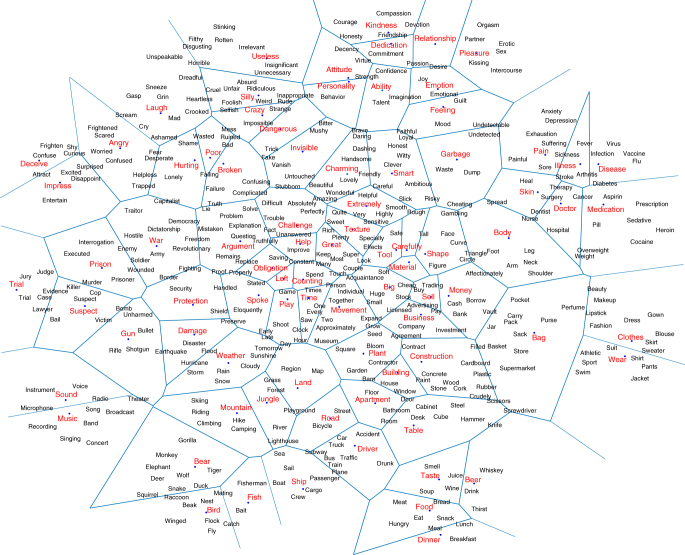
“Pereira et al. (2018) perform spectral clustering over a pre-trained English GloVe embedding space (Pennington et al., 2014) and manually label the obtained clusters.”
InfluentialSelf-citationZhou, F., Zhou, S., Long, Y., Flinker, A., & Lu, C. (2025) · Communications Biology · doi:10.1038/s42003-025-09377-x · Cited by 11
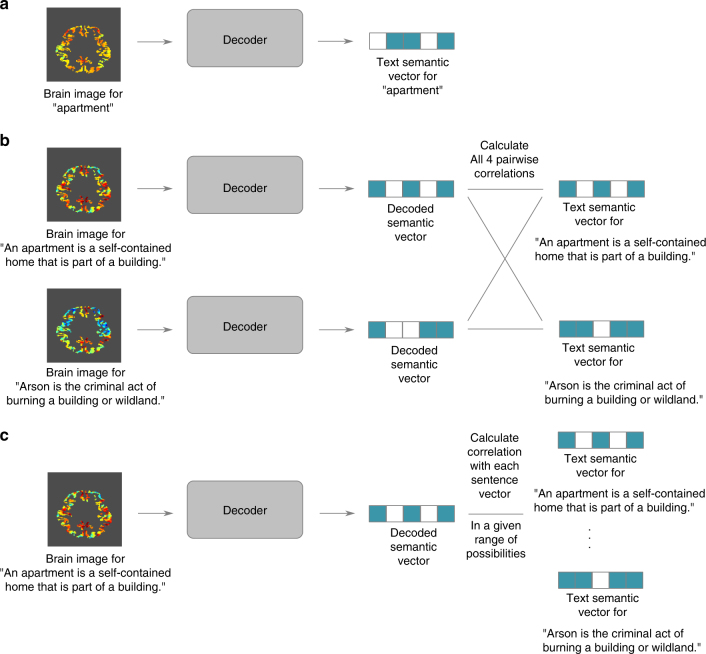
“A pairwise classi fi cation task was used to evaluate model performance 57 .”
Wu, M.-H., Anderson, A. J., Jacobs, R. A., & Raizada, R. D. S. (2022) · Neurobiology of Language · doi:10.1162/nol_a_00045 · Cited by 11
“Second, while previous studies have found better model performance with richer stimuli formats such as words associated with line drawings (Mitchell et al., 2008), images, sentences, and word clouds (Pereira et al., 2018), we showed participants individual words only.”
BackgroundResultInfluentialNeural decoding of speech with semantic-based classification
Lin, Y., & Hsieh, P. (2022) · Cortex · doi:10.1016/j.cortex.2022.05.018 · Cited by 11
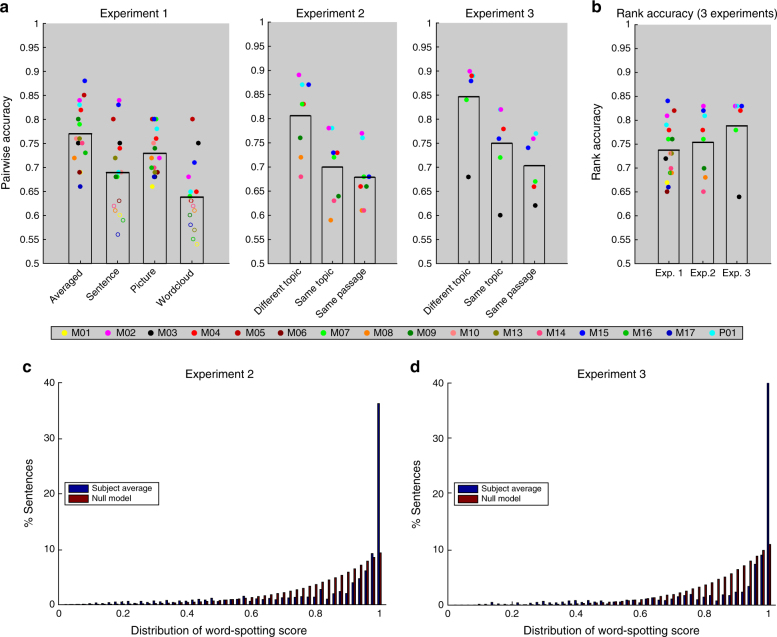
“To evaluate the performance of our classifiers, the rank accuracy score (Pereira et al., 2018) was calculated.”
Influential
Metadata
- Authors
- Pereira, F., Lou, B., Pritchett, B., Ritter, S., Gershman, S. J., Kanwisher, N., Botvinick, M., & Fedorenko, E.
- Affiliations
- Siemens (United States) (US)
- Massachusetts Institute of Technology (US)
- Google DeepMind (United Kingdom) (GB)
- Harvard University (US)
- McGovern Institute for Brain Research (US)
- Corresponding author
- Pereira, Francisco
- Fedorenko, Evelina
- ORCID
- Venue
- Nature Communications
- Published
- 2018-03-06
- Volume
- 9
- Issue
- 1
- Pages
- 963-963
- ISSN
- 2041-1723 (ISSN-L)
- PMC
- PMC5840373
- OpenAlex
- W2782213998
- Cited by
- 324
- References
- 52
- Citations by year
- 2026: 23 · 2025: 49 · 2024: 45 · 2023: 46 · 2022: 38 · 2021: 39 · 2020: 39 · 2019: 37 · 2018: 8
- FWCI
- 18.28
- Type
- journal article
- Language
- en
- Open access
- gold
- doi.org
- Licence
- cc-by
- creativecommons.org/licenses/by/4.0 (tdm)
- creativecommons.org/licenses/by/4.0 (vor)
- Locations
- Nature Communications (publishedVersion, cc-by)
- PubMed Central (publishedVersion, cc-by)
- PubMed (publishedVersion)
- Digital Access to Scholarship at Harvard (DASH) (Harvard University) (submittedVersion, cc-by)
- RePEc: Research Papers in Economics (submittedVersion)
- DOAJ (DOAJ: Directory of Open Access Journals) (submittedVersion)
- DOAJ (DOAJ: Directory of Open Access Journals) (submittedVersion, cc-by-sa)
- DSpace@MIT (Massachusetts Institute of Technology) (submittedVersion, cc-by-nc)
- OSF Preprints (OSF Preprints) (submittedVersion)
- Funders
- Johns Hopkins University
- Office of the Director of National Intelligence
- National Institutes of Health (5k99hd057522-02)
- Intelligence Advanced Research Projects Activity (FA8650-14-C-7358)
- McGovern Institute for Brain Research, Massachusetts Institute of Technology
- NIH Office of the Director
- Eunice Kennedy Shriver National Institute of Child Health and Human Development (K99 HD-057522, DP1HD091947, R00HD057522)
- Air Force Research Laboratory (FA8650-14-C-7358)
- Topics
- Life Sciences › Neuroscience › Cognitive Neuroscience › Neurobiology of Language and Bilingualism
- Social Sciences › Psychology › Developmental and Educational Psychology › Reading and Literacy Development
- Physical Sciences › Computer Science › Artificial Intelligence › Topic Modeling
- Keywords
- semantic decoding, brain decoding, linguistic meaning, semantic space, semantic vectors, text corpora, sentence meaning
- MeSH terms
- Adult, Brain Mapping, Female, Humans, Magnetic Resonance Imaging, Male, Physical Stimulation, Semantics
About these checks
Registry, retraction, Cites and statistics results are computed, not judged, with one exception: a printed reference that no index lists is read once by a model before it counts as a citation error. Claims are extracted by a model and kept only when their quote appears verbatim in the text; each cited source is then checked, with a model’s help, for whether it says what the claim relies on. Those verdicts can be wrong — read the claim’s quote and the cited source before relying on one.
Statistics and arithmetic are recomputed, not judged.
Confidence bands are shown only for fields calibrated on our annotated test set. None is calibrated yet, so no band is shown.
What counts as a claim ›How we measure confidence ›How we check this ›
Are you an author, or do you see a problem with this page? Request a review
Data sources
Bibliographic data: Semantic Scholar, OpenAlex, Crossref.
Contains information from the Semantic Scholar Academic Graph Datasets, made available under the ODC Attribution License (ODC-BY 1.0).
Semantic Scholar’s data is described in: Kinney, R., et al. (2023). The Semantic Scholar Open Data Platform. arXiv:2301.10140.
